

Trump admin touts new dietary guidelines, but will your child have healthier school lunches next fall?

Trump admin touts new dietary guidelines, but will your child have healthier school lunches next fall?
Kids eating lunch at school (Tetra Images/Getty Images)

(NEW YORK) — As President Donald Trump’s administration touts its new federal dietary guidelines, experts and officials suggest there’s a long road ahead before America’s students have healthier school meals.

With the Departments of Agriculture and Health and Human Services partnering to address chronic disease — aiming to place whole, nutrient-dense food at the center of diets — the administration believes it has taken a major step toward solving America’s youth health crises.

From Secretaries Brooke Rollins and Robert F. Kennedy Jr. to Food and Drug Administration Commissioner Marty Makary, there’s a full-scale push to make school meals healthier by next school year, but the USDA’s former Food and Nutrition Service Administrator Cindy Long said their changes won’t happen “overnight.”

Long — who was USDA’s Deputy Administrator for Child Nutrition under former President Barack Obama and during President Donald Trump’s first term — told ABC News the Healthy-Hunger Free Kids Act, which is the school meals bill that was signed into law in 2010, ignited a shift to healthier school meals over a decade ago.

Celebrating the newest dietary guidelines, the foundation of dozens of federal feeding programs, including school meals, Agriculture Secretary Brooke Rollins has said that her agency is submitting its proposed school meals rule by mid-spring. Meanwhile, implementing the meals in U.S. classrooms will see delays after the updated regulations, some health policy experts noted.

Dr. David Ludwig, a professor of nutrition at the Harvard School of Public Health, suggested the changes may take a while both in practice and culture.

“We have to address this on many levels,” Ludwig told ABC News, adding, “First, improving the guidelines that regulate food quality in schools. That’s foundational.”

Ludwig echoed the Trump administration’s 2025-2030 guidelines, which are updated every five years, emphasizing that new school meal ingredients must reduce sugar and other processed carbohydrates and increase whole foods.

“Layer two is adequate funding so that not only healthful but delicious foods can be prepared,” he said, adding, “It’s critical for children to understand that we don’t want to raise a generation that thinks healthy foods are going to be just bland.”

Updates will be made through formal rulemaking, the government’s multi-step process that includes opportunities for public comment, to ensure USDA supports children’s access to nutritious, high-quality meals at school, according to a USDA spokesperson.

However, Long told ABC News that some of the President Joe Biden administration’s changes to reduce added sugar and sodium to school meals are still being implemented.

“You can’t change this enormous system with 100,000 schools operating overnight,” she said, adding “You’ve got to allow time for people to be successful, for people to change menus, for them to procure the right products, for industry to be able to produce products that will help them bring down the sodium, bring down the added sugar etc.”

White House Senior Advisor Calley Means told ABC News there will be a “flurry” of regulation changes this year that will bolster kids’ meals at school. He bemoaned critics’ concerns that the administration lacks the funding to make the necessary changes.

“The government spends hundreds of billions of dollars on food procurement,” he said, adding, “We do not have a budget issue. There’s been a political will problem that President Trump and Bobby Kennedy and Brooke Rollins have solved. There’s care about this issue. We’re going to be driving common sense solutions.”

Parental control over school meals

University of Illinois Professor of Nutrition Dr. Donald Layman believes promoting healthier meal options — like increased protein and the subtraction of ultra-processed foods — signals a “total sea change” for parents.

“I think it gives parents a different structure,” he told ABC News, adding, “They’ve been told that, well, eggs were bad for you, or that meats were bad for you, and they’re left not knowing what to give their kids.”

“I’ve always felt that the issue was, how do we empower parents to do what they know is right, but they’ve been told they shouldn’t do,” Layman added.

Hilary Boynton — a California mom and former head of nutrition services at her kids’ school — said, “people are starting to recognize that they have agency over their own health and [they can] be empowered by that.”

In Summer Barrett’s home state of West Virginia, a mom who says she’s a part of the Make America Healthy Again Movement, said she’s grown frustrated with school meals containing excess amounts of sugar in Dunkin’ Stix Donuts breakfasts.

“You’re giving them 52 grams of sugar, and then you send them to class and you wonder, ‘oh, why can’t you sit still,’” Barrett said. “Why can’t you learn? Why can’t you focus?” Well, cause you just jacked them up on more sugar than they should have in an entire day,” she added.

The new guidelines may signal that school meal changes are to come, thanks to MAHA moms like Barrett who have been “hungry for this nutrition science for a long time,” according to FDA Commissioner Makary. Makary and Kennedy have already started visiting schools to help promote programs that serve scratch-cooked meals with Whole Foods like fruits and vegetables.

Meanwhile, Cindy Long told ABC that the administration’s changes will only build on prior policy wins.

“I’m hoping that this will just continue on the path of, sort of, continuing to make school meals stronger and stronger,” she said.

Copyright © 2026, ABC Audio. All rights reserved.
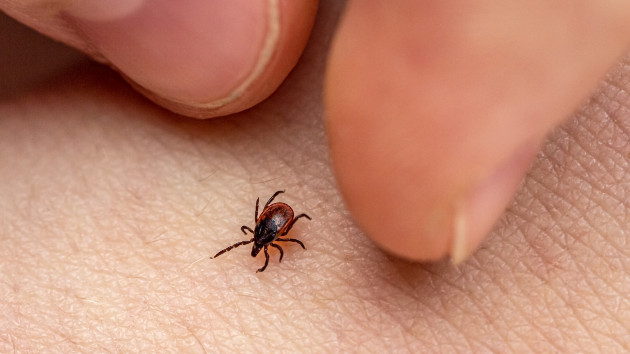
Weekly ER visits for tick bites reach highest level in nearly a decade. Will this season be worse?

Weekly ER visits for tick bites reach highest level in nearly a decade. Will this season be worse?
Photo of tick (rbkomar/Getty Images)

(NEW YORK) — Weekly visits to emergency rooms for tick bites are at the highest level since at least 2017, according to data from the Centers for Disease Control and Prevention (CDC).

During the most recent week, 71 per 100,000 ER visits were due to tick bites, compared to the average of about 30 per 100,000 ER visits for this time of year, more than double from what is typical this time of year.

Currently, the Northeast is reporting the most ER visits for tick bites, followed by the Midwest, Southeast, West and South Central regions, respectively, CDC data shows.

“We’re running well above historic average and even well above last year,” Dr. John J. Halperin, chair of the New Jersey Stroke Care Advisory Panel and member of the department of neuroscience at Atlantic Health Overlook Medical Center in New Jersey — who partly focuses on Lyme disease — told ABC News.

“The ticks have started a little earlier. There seems to be a lot of them. A lot of people are going to the emergency room,” he continued. “It’s not entirely clear how much of this is increased recognition and as people become more aware of this, more going to the emergency room. But there seems to be a clear increase in the number of ticks out there.”

May is typically when ER visits for tick bites peak each year, and it remains unclear if the upward trend will continue.

Halperin said it is possible that the monthly April average will level out and match prior years.

“Spring and early summer are prime time for getting bitten by the locally youngest form of ticks, which are the main ones who get us humans,” he said. “So, seeing a lot of them certainly means an increased risk.”

Tick-borne diseases have been on the rise in recent years and scientists suspect it is partly linked to climate change, which has caused shorter winters, earlier springs and hotter summers.

Dr. Christopher Bazzoli, an emergency medicine physician at Cleveland Clinic, said because of increased tick populations, in conjunction with warmer weather and heavy rains, it is likely some tick populations grow earlier in the season.

“Ticks tend to become active when the temp reaches 45 degrees [Fahrenheit] or more,” he told ABC News. “If [temperatures] stay higher into the fall, we could also see a longer tick season.”

Halperin said that in addition to climate change, there has been an increase in the recognition of certain tick-borne diseases.

“One big change … was the CDC changed what they would allow to be called a confirmed case of Lyme disease and really loosened the criteria,” he said. “So, there was a huge bump in the reported numbers.”

The CDC recommends that people avoid wooded and brushy areas with high grass and leaf litter and stay in the center of trails when hiking. The agency also recommends using Environmental Protection Agency-registered insect repellents containing at least 20% DEET,  20% picaridin as the listed active ingredient or other approved ingredients, but to avoid use for children under the age of 3.

“The thing to appreciate is these ticks have a strongly preferred habitat,” Halperin said. “They spend much of their lives in low brush. Their preferred reservoir host is the field mouse. Field mice carry Lyme disease … and if a tick lodges on that field mouse, it picks up the infection, and they can give it to us. The first thing you could do is stay away from areas where there might be field mice and ticks.”

The CDC also recommends treating outdoor clothing and gear with 0.5% permethrin, an insecticide and repellent, which remains effective even after multiple washes.

Halperin suggests doing a tick check at the end of the day. If you find one, he recommends using fine-tip tweezers, placing them between the skin and the tick and pulling to remove the tick.

Bazzoli recommended cleaning the area and taking a picture of the tick to identify it and what type of disease it could possibly be carrying.

Copyright © 2026, ABC Audio. All rights reserved.

What does the US blockade of Iran shipping mean for gas prices?

What does the US blockade of Iran shipping mean for gas prices?
Close-up of Chevron sign at a gas station, showing California gas prices, in Walnut Creek, California, April 8, 2025. (Photo by Smith Collection/Gado/Getty Images)

(NEW YORK) — The United States continued to mount a naval blockade of Iranian ports in the Strait of Hormuz on Thursday, exerting financial pressure on Tehran while at the same time choking off a source of oil amid a historic global shortage.

The move comes as Americans grapple with a surge in gasoline prices that threatens to eat away at household budgets and slow the economy.

Gasoline prices in the U.S. registered at $4.10 on average per gallon on Wednesday, standing about 35% higher than before the war, AAA data showed.

The blockade risks higher prices at the pump since oil trades on a global market, meaning a loss of supply in the Middle East could raise prices for Americans, some analysts said.

But, they added, the strategy may hasten a resolution of the war or reassure non-Iranian tankers otherwise hesitant to travel the strait, ultimately alleviating the oil shock and pushing down gas prices.

“This is an economic game of chicken,” Tyler Schipper, a professor of economics at the University of St. Thomas, told ABC News.

Ten vessels have been turned around at the Strait of Hormuz during the first 48 hours of the U.S. blockade, complying with U.S. orders, according to U.S. Central Command.

On Wednesday, the commander of the Khatam Al-Anbiya Central Headquarters of Iran’s armed forces said the U.S. blockade of Iranian ports is a “violation of the ceasefire,” in a statement published by the official Islamic Republic News Agency.

The war prompted Iran’s effective closure of the Strait of Hormuz, a critical waterway that facilitates the transport of 20 million barrels of oil per day, or about one-fifth of the global supply.

Iran continued to export nearly 2 million barrels of oil each day through the strait, blunting some of the supply loss, according to energy data firm Kpler.

Still, in March, oil prices notched their largest one-month gain ever, the International Energy Agency said in a new report on Tuesday.

The potential loss of Iranian oil exports amid the blockade could deepen the supply shock and raise gasoline prices further, some analysts said.

“The move toward a full blockade of the Strait of Hormuz is compounding global supply concerns and risks further disrupting flows,” GasBuddy petroleum analyst Patrick De Haan said in a post on X on Monday.

Car owners, De Haan added, “should prepare for another round of price increases.”

Jason Miller, a professor of supply chain management at Michigan State University, echoed such concern.

“It’s unclear to me how this moves to quickly solve the problem that vessels aren’t transiting the Strait of Hormuz,” Miller told ABC News. “Every day this continues, it gets worse and worse and worse.”

Price hikes have not come to pass over the initial days of the blockade, however.

West Texas Intermediate futures price, the benchmark index for U.S. trading, clocked in at about $92 a barrel on Wednesday, marking a nearly 10% drop since the blockade began at 10 a.m. Eastern Time on Monday.

Even so, U.S. oil prices remain about 40% higher than pre-war levels.

The national average price of a gallon of gas as of Wednesday stood 1.4% lower than a week earlier.

The ceasefire between the U.S. and Iran entered its second week, appearing to boost hopes of a resolution to the war.

President Donald Trump reiterated his desire to wind down the conflict, meanwhile, saying the war is “very close to over” in a portion of an interview with Fox News’ Maria Bartiromo that aired on Tuesday.

Rather than restrict oil supply, the U.S. blockade could ultimately add crude to the market if the naval presence reassures non-Iranian ships otherwise unwilling to sail through the strait, Dominic Pappalardo, chief multi-asset strategist at Morningstar Wealth, told ABC News.

“For countries other than Iran, does the blockade give them more trust for sending oil through the strait?” Pappalarado said. “If other countries start to gain confidence, you could see other shipments pick up for non-Iranian vessels pushing through the strait, which would help alleviate upward pressure on the price.”

As of Monday, tanker traffic remained well below pre-war levels after the blockade had taken effect, Kpler said in a post on X. Six vessels sailed through the strait on Monday, Kpler said, marking a decline from 14 vessels a day prior.

The conditions in the strait remain in flux, some analysts said, leaving a wide range of possible outcomes.

“There’s still tremendous uncertainty,” Miller said.

Copyright © 2026, ABC Audio. All rights reserved.

‘Massive’ Russian attack on Ukraine kills 16, injures at least 100, Ukrainian officials say

‘Massive’ Russian attack on Ukraine kills 16, injures at least 100, Ukrainian officials say
A large fire burns near a shopping center following an overnight Russian missile strike in the Podilskyi, Obolonskyi, Shevchenkivskyi and Desnianskyi districts, on April 16, 2026 in Kyiv, Ukraine. (Photo by Kostiantyn Liberov/Libkos/Getty Images)

(LONDON) — At least 16 people were killed and another 100 were injured in Ukraine as Russia targeted the country with a “massive” drone and missile attack on Wednesday and into Thursday morning, Ukrainian officials said.

Russia launched almost 700 drones and 19 ballistic missiles, along with cruise missiles, President Volodymyr Zelenskyy said. Ukraine shot down about 636 drones and “some” of the missiles, he added, saying, “Unfortunately, not all.”

At least 16 people were killed across Ukraine, officials said. Zelenskyy said at least 100 people had been reported wounded “as of now.”

“Tragically, there are fatalities in Odesa, Kyiv, and Dnipro,” he said in a social media post. “Among those killed is a boy — he was 12 years old. My condolences to the families and loved ones.”

Most of the missiles targeted Kyiv, the capital, the president said, but damage and deaths were also reported across the country. Some missiles or drones that made it through Ukraine’s defenses struck and damaged residential buildings, Zelenskyy said.

“Another night has proven that Russia does not deserve any easing of global policy or lifting of sanctions,” Zelenskyy said. “Russia is betting on war, and the response must be exactly that: we must defend lives with all available means, and we must also apply pressure for the sake of peace with the same full force.”

Russia has chosen to “deliberately terrorise civilians” with its attacks on residential areas, Antonio Costa, the European Council president, said on Thursday. The EU would continue to “increase pressure” on Moscow, he said.

“Russia must stop this war of terror,” Costa said. “A comprehensive, just, and lasting peace for Ukraine based on the principles of the U.N. Charter and international law must be achieved.”

Russian officials said on Thursday that Ukraine launched its own barrage of drones targeting several areas in Russia. Moscow said its military downed more than 200 drones. At least one Ukrainian drone struck a port on Russia’s Black Sea coast, along with other coastal cities, the local governor said.

Copyright © 2026, ABC Audio. All rights reserved.

Tylenol during pregnancy has no link to autism, large study finds

Tylenol during pregnancy has no link to autism, large study finds
In this stock image, an open bottle of Tylenol Extra Strength pain reliever is shown. (STOCK IMAGE/Getty Images)

(NEW YORK) — Taking acetaminophen, also known by the brand name Tylenol, during pregnancy had no effect on children developing autism, according to a study of over 1.5 million children in Denmark published this week. 

The study was published in JAMA Pediatrics. 

Researchers analyzed 1.5 million children born between 1997 and 2022. About 1.8% of those who were exposed to Tylenol during pregnancy developed autism compared to 3.0% of those who were not exposed to Tylenol.

A prior study out of Sweden looked at siblings, finding no causal link between autism and Tylenol exposure during pregnancy. There are genetic associations and environmental triggers that are likely involved, but neither Tylenol nor vaccines has been shown to be the cause of autism.  

The new study out this week comes after President Donald Trump and his administration had previously urged pregnant mothers to avoid Tylenol, without substantive evidence for the claims. 

“With Tylenol, don’t take it. Don’t take it,” Trump said during a press event at the White House in September. “If you can’t live, if your fever is so bad, you have to take one, because there’s no alternative to that.” 

The FDA then initiated a process to update the safety label on acetaminophen to suggest that its use during pregnancy and autism were linked. 

At the time, Kenvue, the maker of Tylenol, wrote in part of a statement, “We believe independent, sound science clearly shows that taking acetaminophen does not cause autism. We strongly disagree with any suggestion otherwise and are deeply concerned with the health risk this poses for expecting mothers.”

At the time, medical organizations, like the American College of Obstetrician & Gynecologists, immediately pushed back, noting that Tylenol was one of the few options for pregnant women to treat pain and fever, which can be harmful when left untreated.

It is generally not recommended for pregnant women to take ibuprofen, Advil, during pregnancy due to the risk of complications.

Nevertheless, the claims made by the administration have led to confusion. A prior study found that Tylenol use in emergency departments dipped 16% immediately following the announcement by the administration.

ABC News reached out to Kenvue, the maker of Tylenol, for a statement but did not immediately hear back. 

Copyright © 2026, ABC Audio. All rights reserved.

Growing number of trauma, brain injuries linked to e-bikes and e-scooters at 1 hospital: Study

Growing number of trauma, brain injuries linked to e-bikes and e-scooters at 1 hospital: Study
Stock photo of people commuting on e-bikes and scooters. (Maskot/STOCK PHOTO/Getty Images)

(NEW YORK) — E-bikes and e-scooters led to a growing number of trauma injuries at one New York City hospital, according to a new study published Wednesday.

About 7% of all trauma visits between 2018 and 2023 at Bellevue Hospital Center were due to micromobility injuries. Micromobility is the use of small, lightweight and low-speed modes of transportation such as bicycles, e-bikes and e-scooters.

The study showed a growing share of patients who sustained these injuries had accidents linked to e-bikes or e-scooters.

Hospital data showed that, by 2023, over half of all trauma cases related to bikes or scooters involved an e-bike or e-scooter, an increase from just 8% in 2018, according to the study, published in the journal Neurosurgery. 

The most common type of mechanism involved a collision with a motor vehicle followed by falls from the bike or scooter. 

Bellevue is a Level 1 Trauma center in a large metropolitan city, designed to treat the worst kinds of injuries. Over the study period, about 30% of patients suffered a traumatic brain injury, 26% had injury to the skull or face and 50% required surgery.

“Our study shows that micromobility injuries are producing serious brain and spinal trauma that demands neurosurgical care at a scale we haven’t seen before,” corresponding study author Dr. Hannah Weiss, a resident in the Department of Neurosurgery at NYU Grossman School of Medicine, said in a press release. “In a busy urban setting, we are seeing more and more of these injuries firsthand.”

Most patients seen for these injuries, nearly 69%, needed to be admitted to the hospital and nearly a third needed intensive care.

The majority of patients stayed at least three days in the hospital. Pedestrians who were struck had higher rates of traumatic brain injuries and were more likely to be admitted for intensive care. 

“The data point to actionable solutions — helmet use, safer bike lane design and enforcement — that could prevent many of these injuries and better protect both riders and pedestrians, who in our study often sustained even more severe brain injuries than the riders themselves,” Weiss said. 

About 20% of patients were intoxicated with alcohol, only 31% were using a helmet and injuries were more likely to occur in the evening hours, according to the study. 

“Our findings make clear that urban infrastructure must continue to improve to keep pace with the rapid rise of electric bikes and scooters,” Dr. Paul P. Huang, an associate professor in the department of neurosurgery at NYU Grossman School of Medicine and chief of neurosurgery at NYC Health + Hospitals/Bellevue, said in a press release. 

“Future studies should track these injuries across multiple cities and measure whether protected bike lanes, helmet programs, and speed enforcement actually reduce the number of brain and spine surgeries we perform,” Huang added,

Jade A. Cobern, MD, MPH, is a practicing physician, board-certified in pediatrics and general preventive medicine, and is a fellow of the ABC News Medical Unit. 

Copyright © 2026, ABC Audio. All rights reserved.

4 rescued, including child, after hunting party gets stuck on ice floe in Alaska: Coast Guard

4 rescued, including child, after hunting party gets stuck on ice floe in Alaska: Coast Guard
A still from a U.S. Coast Guard video showing the rescue of four people who became trapped on an ice floe during a seal hunting expedition naer Chefornak, Alaska, on April 12, 2026. (U.S. Coast Guard)

(ALASKA) — Four people, including a child, who got trapped on an ice floe during a seal hunting expedition in Alaska were safely rescued, the U.S. Coast Guard said Wednesday, calling it one of the most “challenging missions” the helicopter crew has ever flown.

The daring rescue occurred early Sunday, approximately 10 miles west of Chefornak, a remote village in the Yukon-Kuskokwim Delta region in southwestern Alaska.

Alaska State Troopers reported to the Coast Guard at 4:24 p.m. on Saturday that a “group of four people on a subsistence seal hunting expedition required assistance after being trapped on the ice for over 24 hours,” the Coast Guard said in a press release.

The group managed to free the 18-foot vessel overnight, but moving ice prevented it from reaching the shore, the Coast Guard said.

An MH-60 Jayhawk helicopter aircrew from Coast Guard Air Station Kodiak reached the scene at approximately 5 p.m. Sunday, and all four people — three adults and one child — were safely hoisted aboard, according to the Coast Guard, which released video footage of the rescue.

The conditions at the time included 28-degree air temperature and 29 mph winds, the Coast Guard said.

The individuals were transported back to Chefornak with no reported injuries, the Coast Guard said.

“Our entire crew agreed this was one of the most challenging missions any of us had ever flown,” Lt. Cmdr. Alexis Chavarria-Aguilar, pilot-in-command for the helicopter, said in a statement. “We battled nearly every Alaska-centric aviation weather hazard imaginable, such as flying over 800 miles in near-zero visibility through mountainous terrain, blowing snow and icing conditions.” 

“It was a long, difficult night, but I’m so proud of everyone involved who worked seamlessly together to bring four people home safely,” he added.

The Coast Guard noted that the hunting party had three forms of communication on their vessel — including satellite-based — which “greatly enhanced” the aircrew’s ability to find and rescue them.

Copyright © 2026, ABC Audio. All rights reserved.

Live Nation illegally monopolized the market for tickets, jury finds

Live Nation illegally monopolized the market for tickets, jury finds
Live Nation logo. (Photo by Jonathan Raa/NurPhoto via Getty Images)

(NEW YORK) — Live Nation illegally monopolized the market for tickets, protecting its position through pressure and leverage, jurors in Manhattan federal court found Wednesday.

This is a developing story. Check back for updates.

Copyright © 2026, ABC Audio. All rights reserved.

S&P 500 hits record high as US-Iran ceasefire enters second week

S&P 500 hits record high as US-Iran ceasefire enters second week
Traders work on the floor of the New York Stock Exchange. (Michael M. Santiago/Getty Images)

(NEW YORK) — The S&P 500 hit a record high on Wednesday as the ceasefire between the U.S. and Iran entered its second week, appearing to boost hopes of a resolution to the Middle East conflict.

The uptick in markets came hours after President Donald Trump reiterated his desire to wind down the conflict, saying the war is “very close to over” in a portion of an interview with Fox News’ Maria Bartiromo that aired on Tuesday.

The S&P 500 climbed 0.5% on Wednesday, registering at 7,005.78 points. The index reached a previous high of 7,002.28 points on Jan. 28.

The Dow Jones Industrial Average fell 125 points, or 0.2%, while the tech-heavy Nasdaq increased 1.1%.

Markets have swung dramatically over the weeks following the start of the U.S.-Israel attacks on Iran on Feb. 28, as investors weathered a historic global oil shock and digested mixed signals from Trump.

Stocks moved higher on a largely consistent basis in April, however, in response to an apparent willingness on the part of both sides to end fighting and negotiate a temporary truce.

The U.S. continues to mount a naval blockade of Iranian ports in the Strait of Hormuz, exerting pressure on Tehran by choking off a key source of revenue.

On Wednesday, the commander of the Khatam Al-Anbiya Central Headquarters of Iran’s armed forces said the U.S. blockade of Iranian ports is a “violation of the ceasefire,” in a statement published by the official Islamic Republic News Agency.

The war prompted Iran’s effective closure of the Strait of Hormuz, a critical waterway that facilitates the transport of about one-fifth of the global supply of oil and natural gas.

The disruption amounted to the “most severe oil supply shock in history,” the International Energy Agency (IEA) said in a new report on Tuesday. Oil and gasoline prices soared, prompting some economists to warn of a possible recession.

U.S. oil prices have fallen from a recent peak achieved in the early days of the war, but costs remain nearly 40% higher than pre-war levels.

U.S.-Iran talks in Pakistan over the weekend failed to secure a peace deal. Trump said that Iran’s alleged unwillingness to abandon its nuclear program was the key sticking point, and that the U.S. would respond with a blockade of the Strait of Hormuz, which began Monday.

Israel, meanwhile, has continued ground operations and intense strikes in Lebanon, where it is engaged with the Iran-backed Hezbollah militia. Israeli Prime Minister Benjamin Netanyahu said he supported the ceasefire with Iran, but that Lebanon was not covered by the agreement, despite Iranian protests.

ABC News’ David Brennan, Meredith Deliso, and Nadine El-Bawab contributed to this report.

Copyright © 2026, ABC Audio. All rights reserved.

SantaCon organizer charged for allegedly spending charity money on personal expenses

SantaCon organizer charged for allegedly spending charity money on personal expenses
People dressed as Santa Claus take part in the annual SantaCon celebration in New York City, December 13, 2025. (Mostafa Bassim/Anadolu via Getty Images)

(NEW YORK) — Federal prosecutors arrested the organizer of New York City’s controversial SantaCon bar crawl Wednesday after they say he allegedly kept a lot of the holiday joy for himself.

Stefan Pildes, 50, is facing federal wire fraud charges that accuse him of siphoning hundreds of thousands of dollars in charitable funds for his own use, including for concert tickets and vacations.

SantaCon is an event held annually in December in which thousands of attendees dress as Santa Claus and other holiday characters and travel to bars and restaurants throughout the day.

The event is billed as “a charitable, non-political, nonsensical Santa Claus convention that happens once a year to spread absurdist joy” that charges attendees tickets that cost between $10 and $20, the indictment said.

“When one Attendee, for example, asked what she would receive for purchasing a ticket, the SantaCon Email responded, in part, ‘your donation goes to charity and it is only a few bucks and that good feeling will warm your heart faster than whiskey and gingerbread,'” the indictment said.

But of nearly $3 million Pildes raised since 2019, he allegedly diverted more than half to an entity he used as a slush fund, according to an indictment unsealed in Manhattan federal court.

Prosecutors allege Pildes used the money for personal expenses, including $365,000 to renovate a lakefront property in New Jersey, $124,000 toward the lease of a “luxury Manhattan apartment,” a “$100,000 investment in a boutique resort in Costa Rica founded by a personal friend,” and a nearly $3,000 birthday dinner, the indictment said.

Pildes was expected to appear in court later Wednesday, and it was not immediately clear whether he had a lawyer.

He is charged with one count of wire fraud, which carries a maximum sentence of 20 years in prison, according to the U.S. Attorney’s Office for the Southern District of New York.

The bar crawl has become a controversial event in Manhattan with complaints from local leaders and residents accusing some intoxicated Santa-dressed revelers of causing disturbances during the day

The NYPD has issued several summonses and made some arrests at past SantaCons.

-ABC News’ Ivan Pereira contributed to this report.

Copyright © 2026, ABC Audio. All rights reserved.