
What Trump and Hegseth said after the Sept. 2 strike on an alleged drug-smuggling boat

What Trump and Hegseth said after the Sept. 2 strike on an alleged drug-smuggling boat
Al Drago/Bloomberg via Getty Images

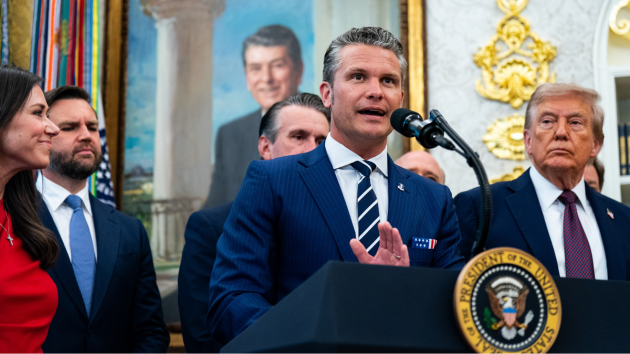
(WASHINGTON) — When President Donald Trump and Defense officials revealed on Sept. 2 that the U.S. military killed 11 alleged drug smugglers on a boat in the Caribbean Sea, they touted it as a success in their war against South American cartels.

Their initial comments were met with scrutiny due to the lack of details they provided. More questions arose months later after it was reported that survivors from the attack were killed in a subsequent strike. The White House later confirmed on Monday that there was more than one strike on the boat.

Trump first announced the strike on his social media site as a “kinetic strike against positively identified Tren de Aragua Narcoterrorists in the SOUTHCOM area of responsibility.”

The post included a video of the strike that showed only one hit.

Trump alleged that the boat was under the control of Venezuelan President Nicolas Maduro. Maduro denied the allegations and criticized the U.S. for the attack.

Trump said a day later that a “massive” amount of drugs was on the boat, but provided little detail.

“It was massive amounts of drugs coming into our country to kill a lot of people. And, everybody fully understands that fact. You see it, you see the bags of drugs all over the boat, and they were hit,” Trump told reporters at the White House on Sept. 3. “When they watch that tape, they’re going to say, ‘Let’s not do this.'”

That same day, Defense Secretary Pete Hegseth also touted the strike during a “Fox & Friends” interview and refuted a Maduro spokesperson’s suggestion that the video was AI-generated.

“That was definitely not artificial intelligence. I watched it live,” he said. “We knew exactly who was in that boat. We knew exactly what they were doing, and we knew exactly who they represented.”

The administration would go on to report 20 more strikes against boats in the Caribbean and eastern Pacific Ocean, killing 83 people.

Hegseth spoke about the U.S. operation on Oct. 23 at a White House event on fighting drug cartels, arguing that suspects on the boats would be treated “like foreign terrorist organizations on the offense.”

“So the Department of War is not going to degrade, or just simply arrest. We’re going to defeat and destroy these terrorist organizations to defend the homeland on behalf of the American people,” he said.

His remarks came a week after survivors were reported following a strike on a boat in the Caribbean. The survivors eventually were released to their home countries of Colombia and Ecuador, which prevented them from protesting their detention in a U.S. court.

When asked by ABC News’ Mary Bruce about how survivors would be treated in the future, Hegseth responded, “We’ve got protocol of how we’ll handle it,” but did not go into detail.

At the same event, Trump told reporters that he didn’t plan to ask Congress for authority or declare war against the cartels, and instead he declared bluntly, “We’re just going to kill people that are bringing drugs into our country.”

However, new questions arose about the legality of the attacks after a Nov. 28 Washington Post report that said the first strike on Sept. 2 initially left two survivors clinging to the wreckage and that before the strike Hegseth had given spoken orders to kill everyone on board.

The Post report, which cited two “two people with direct knowledge of the operation,” alleged that Adm. Mitch Bradley, then-head of the Joint Special Operations Command, ordered a second strike in order to comply with Hegseth’s initial orders and to ensure the survivors couldn’t call on other suspected traffickers to retrieve them and their cargo.

Members of Congress from both parties had expressed concerns with the drug cartel operation, but in the days following the Washington Post report, Republican and Democratic leaders on both the House and Senate armed services committees put out joint statements saying they were looking into the incident.

Hegseth pushed back against the Post’s report saying in an X post that the strikes were legal.

ABC News has confirmed that survivors from the initial strike were killed as a result.

Trump told reporters Sunday that he did not know about the details about the Washington Post’s report and defended Hegeseth.

“He said he did not say that, and I believe him,” Trump said when asked about the report and Hegseth’s alleged order.

Trump added that he wouldn’t have wanted a second strike.

“I wouldn’t have wanted that. Not a second strike. The first strike was very lethal. It was fine, and if there were two people around, but Pete said that didn’t happen. I have great confidence,” he said.

On Monday, White House press secretary Karoline Leavitt clarified that Adm. Frank “Mitch” Bradley gave the order for the second strike, but did not give any more details.

The next day, Hegseth doubled down on the administration’s efforts to attack alleged drug boats.

“We’ve only just begun striking narco-boats and putting narcoterrorists at the bottom of the ocean because they’ve been poisoning the American people,” he said at a Cabinet meeting on Tuesday.

Hegseth also clarified his earlier comments about watching the attack live.

“As you can imagine, the Department of War, we got a lot of things to do. So I didn’t stick around for the hour and two hours, whatever, where all the sensitive site exploitation digitally occurs,” he said. “So I moved on to my next meeting. A couple of hours later, I learned that the commander had made the — which he had the complete authority to do.”

“Admiral Bradley made the correct decision to ultimately sink the boat and eliminate the threat. He sunk the boat, sunk the boat, and eliminated the threat. And it was the right call. We have his back,” Hegseth added.

Hegseth said that he did not see any survivors while he watched the video.

“I did not personally see survivors, but I stand — because that thing was on fire. It was exploded and fire and smoke, you can’t see anything. You got digital, there’s — this is called the ‘fog of war.'”

Copyright © 2025, ABC Audio. All rights reserved.
What to know about the hepatitis B shot for infants ahead of CDC vaccine panel meeting

What to know about the hepatitis B shot for infants ahead of CDC vaccine panel meeting
ER Productions Limited/Getty Images

(NEW YORK) — The Centers for Disease Control and Prevention’s vaccine advisory committee appears set to amend the childhood immunization schedule, including potentially changing recommendations on a shot given to newborns.

The Advisory Committee on Immunization Practices (ACIP) is meeting Thursday and Friday. A draft agenda posted online on Monday provides little detail on what materials will be presented or which speakers will give presentations, but does mention a discussion about the hepatitis B vaccine on the first day as well as “votes.”

Although it’s not clear what will be voted on, past comments from Health and Human Services Secretary Robert F. Kennedy Jr. and ACIP members indicate the universal hepatitis B vaccine dose given just after birth will be at issue.

The ACIP may vote to remove the birth dose recommendation or delay vaccination to a later age.

Public health experts told ABC News there is no evidence to suggest the hepatitis B vaccine is unsafe and that vaccinating babies at birth has been key to virtually eliminating the virus among children. 

What is the hepatitis B vaccine?

The hepatitis B vaccine is typically a three-shot series. The CDC recommends the first dose given within 24 hours of birth, the second dose between 1 month and 2 months, and the third dose between 6 months and 18 months.

In addition to all infants, the vaccine is recommended for all children and adults aged 59 and younger as well as adults aged 60 and older with risk factors for hepatitis B.

The ACIP previously recommended that only babies screened and found to be high risk for hepatitis B receive a vaccine, but experts found that screening missed many hepatitis B-positive cases.

“Hepatitis B vaccine was initially recommended for older groups and eventually then for children, but not for newborns,” Dr. Susan Wang, a former CDC hepatitis B virus and vaccine expert, told ABC News. “We have learned over decades now of both the safety and the impact of the vaccine, and it was a very specific decision to move it, not just to infancy but … within 24 hours of birth.”

The ACIP recommended that infants begin receiving the vaccine within hours of birth in 1991 as part of strategy to stop hepatitis B transmission within the U.S.

Dr. William Schaffner, a professor of preventive medicine at Vanderbilt University Medical Center in Nashville, told ABC News vaccination is important because if a pregnant person is hepatitis B-positive at the time of birth, the infant has an 85% chance of developing an infection.

If the infant develops a hepatitis B infection, they have a 90% chance of developing chronic hepatitis B, which can predispose them to chronic liver disease, cirrhosis and liver cancer.

What effect has the vaccine has on hepatitis B cases?

During a Senate hearing earlier this year, Sen. Bill Cassidy, R-La., a physician, said that before the recommendation was put in place in 1991, as many as 20,000 babies every year contracted hepatitis B from their mothers in utero or during birth.

Today, fewer than 20 babies every year get hepatitis B from their mother, Cassidy said.

Schaffner, who was part of the 1991 ACIP committee that recommended the universal birth dose, called it a “brilliantly successful program.”

“Both from a clinical perspective and a public health perspective, this has been a program that is successful beyond the imaginings of us when we sat around that ACIP room debating this in 1991,” he said. “The cases are just coming down astoundingly.”

Schaffner said if the ACIP votes to delay the recommendation, he is worried some parents will never get their children vaccinated.

“A vaccine postponed is often a vaccine never received, that is sure to happen,” he said. “There will be some children born to hepatitis B-positive mothers who, because they don’t get their birth dose, will slip through the system. They will become infected and, when they get older, they will transmit the infection to others, and we won’t be able to interrupt the transmission of this virus in our population.”

What has RFK Jr., CDC panel said about the hepatitis B vaccine?

During a June interview on The Tucker Carlson Show, Kennedy falsely claimed the hepatitis B vaccine was associated with an increased risk of autism.

Numerous existing studies have examined whether vaccines, or their ingredients, cause autism and have failed to find any such link.

Kennedy and other federal public health officials, such as Dr. Marty Makary, commissioner of the U.S. Food and Drug Administration, have claimed hepatitis is mostly transmitted through sexual contact or needle sharing, and therefore babies don’t need a vaccine to protect against the infection.

They have suggested pregnant people be tested for hepatitis B and that only the babies of infected patients receive the shot at birth.

During an ACIP meeting in June, then-chair Martin Kulldorff, a former Harvard Medical School professor, questioned whether it was “wise” to administer shots “to every newborn before leaving the hospital.”

Wang said there are a few reasons why a testing-only strategy doesn’t work, the first being that even if every pregnant person were tested before delivery and only babies born to positive patients were vaccinated, the unvaccinated babies would be unprotected against the virus, which is highly contagious.

Another reason is that not all pregnant people get tested or, if they do, they don’t get tested in time or have receive their results quickly enough, Wang said. Under a testing-only strategy, this could prevent a newborn from getting a vaccine when they need it.

“The hepatitis B vaccine is inexpensive, extremely safe, and has a high value in terms of effectiveness,” she said. “There’s no downside. And again, this has been after decades of studying this and globally, millions and millions of infants getting vaccinated. So, the value and the benefit of it is so far outweighs any possible issue.”

What if the hepatitis B vaccine birth dose recommendation is changed?

Wang compared removing the universal hepatitis B vaccine birth dose to taking a seat belt off in a car.

“The purpose of having the seat belt there is to protect you from the risk of injury and death when you’re in a moving vehicle,” she said. “It’s the same thing with the vaccine.”

Wang explained that the vaccine is given early as a post-exposure prophylaxis in case an infant is infected from their mother, but they can also contract the virus from anyone who is infected, either around the infant or taking care of them.

She added that if an infant is exposed during their first 12 months of life, the risk of chronic hepatitis B infection is substantially higher than if they are exposed during adolescence or adulthood

“If you don’t interrupt transmission, if you don’t cut it off at the pass, namely, at birth, we’ll have hepatitis B-positive people in the next generation, who, when they get into their teenage and young adults and older adult years, will pass it on sexually to others, and we will maintain this virus in our population,” Schaffner said.

Additionally, insurers often rely on ACIP recommendations to determine what they will and won’t cover, experts told ABC News.

If certain vaccines aren’t recommended by the ACIP, it may lead to parents or guardians facing out-of-pocket costs if their children receive the shot. It could also mean the shots aren’t covered by the Vaccines for Children (VFC) program, a federally funded program that provides no-cost vaccines to eligible children.

Copyright © 2025, ABC Audio. All rights reserved.
California radiologist, wife fatally shot in driveway in targeted attack, police say

California radiologist, wife fatally shot in driveway in targeted attack, police say
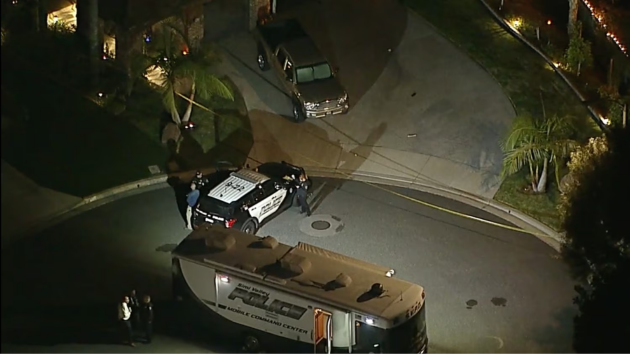
Law enforcement on the scene after two people were shot and killed in Simi Valley, Calif., Dec. 1, 2025. KABC.

(SIMI VALLEY, Calif.) — A California doctor and his wife were shot and killed in their Simi Valley home in a targeted attack, not a random incident, according to police. 

Dr. Eric Cordes and wife, Vicki, were shot multiple times in their open garage on Sunday. The couple was taken to a local hospital and later died of their injuries, the Simi Valley Police Department told ABC News. 

Simi Valley Police said they’re actively investigating the murders and they believe there is no threat to the community. 

Police would not reveal any information on possible suspects or the motive for the attack. 

Dr. Cordes worked with Focus Medical Imaging for several years before his killing, the radiology clinic told ABC News.”

Dr. Eric Cordes was a brilliant, hard working doctor, and a respected colleague. He served the Simi Valley community and surrounding areas throughout his entire 30 plus year career. His tragic passing will leave a huge hole that will take a long time to fill,” Focus Medical Imaging said. 

Adventist Health Simi Valley, where he also worked, called the couple’s killing a “shocking loss.”

“The Adventist Health Simi Valley community is heartbroken by the tragic deaths of our longtime colleague, Dr. Eric Cordes, and his wife, Vicki. Dr. Cordes was a highly respected, board-certified radiologist and beloved physician who served this community with compassion and excellence for nearly 30 years,” the hospital told ABC News in a statement. 

Copyright © 2025, ABC Audio. All rights reserved.
Trump asks judge to keep blocking release of final report on classified documents probe

Trump asks judge to keep blocking release of final report on classified documents probe
U.S. President Donald Trump delivers remarks during a meeting with New York City Mayor-elect Zohran Mamdani in the Oval Office of the White House on November 21, 2025, in Washington, DC. Trump congratulated Mamdani on his election win as the two political opponents met to discuss policies for New York City, including affordability, public safety, and immigration enforcement. (Photo by Andrew Harnik/Getty Images)

(WASHINGTON) — President Donald Trump is urging the federal judge who dismissed his criminal indictment for allegedly mishandling classified documents to continue blocking the public release of former special counsel Jack Smith’s final report on his investigation, according to a court filing Tuesday. 

U.S. District Judge Aileen Cannon, who dismissed Trump’s indictment on the eve of the 2024 Republican National Convention on the grounds that Smith’s appointment as a special counsel was unlawful, had previously granted a last-ditch request from from lawyers for Trump’s co-defendants to block the Biden Justice Department from making public the volume of Smith’s report that detailed Trump’s alleged mishandling of classified documents. 

Two separate watchdog groups had filed legal challenges requesting that Cannon lift her order, and last month an appeals court panel urged Cannon to issue some kind of ruling on the requests after months of silence. 

In Tuesday’s filing, an attorney representing Trump in his private capacity urged Judge Cannon to extend her order delaying the Smith report’s release, arguing it would “perpetuate Jack Smith’s unlawful criminal investigations and proceedings.” 

It’s not immediately clear when Cannon might issue her ruling on the requests, though the 11th U.S. Circuit Court of Appeals gave her a 60-day deadline on Nov. 3 to issue her response to the requests from American Oversight and Columbia University’s Knight First Amendment Institute. 

Trump pleaded not guilty in June 2023 to 40 criminal counts related to his handling of classified materials after leaving the White House in 2021, after prosecutors said he repeatedly refused to return hundreds of documents containing classified information and took steps to thwart the Biden Justice Department’s efforts to get the documents back.

Top political appointees at the Justice Department, including Trump’s former defense attorney-turned-deputy attorney general Todd Blanche, have previously said they would oppose making that volume of Smith’s final report public.

Copyright © 2025, ABC Audio. All rights reserved.
Suspect in DC shooting of 2 National Guard members formally charged with murder

Suspect in DC shooting of 2 National Guard members formally charged with murder
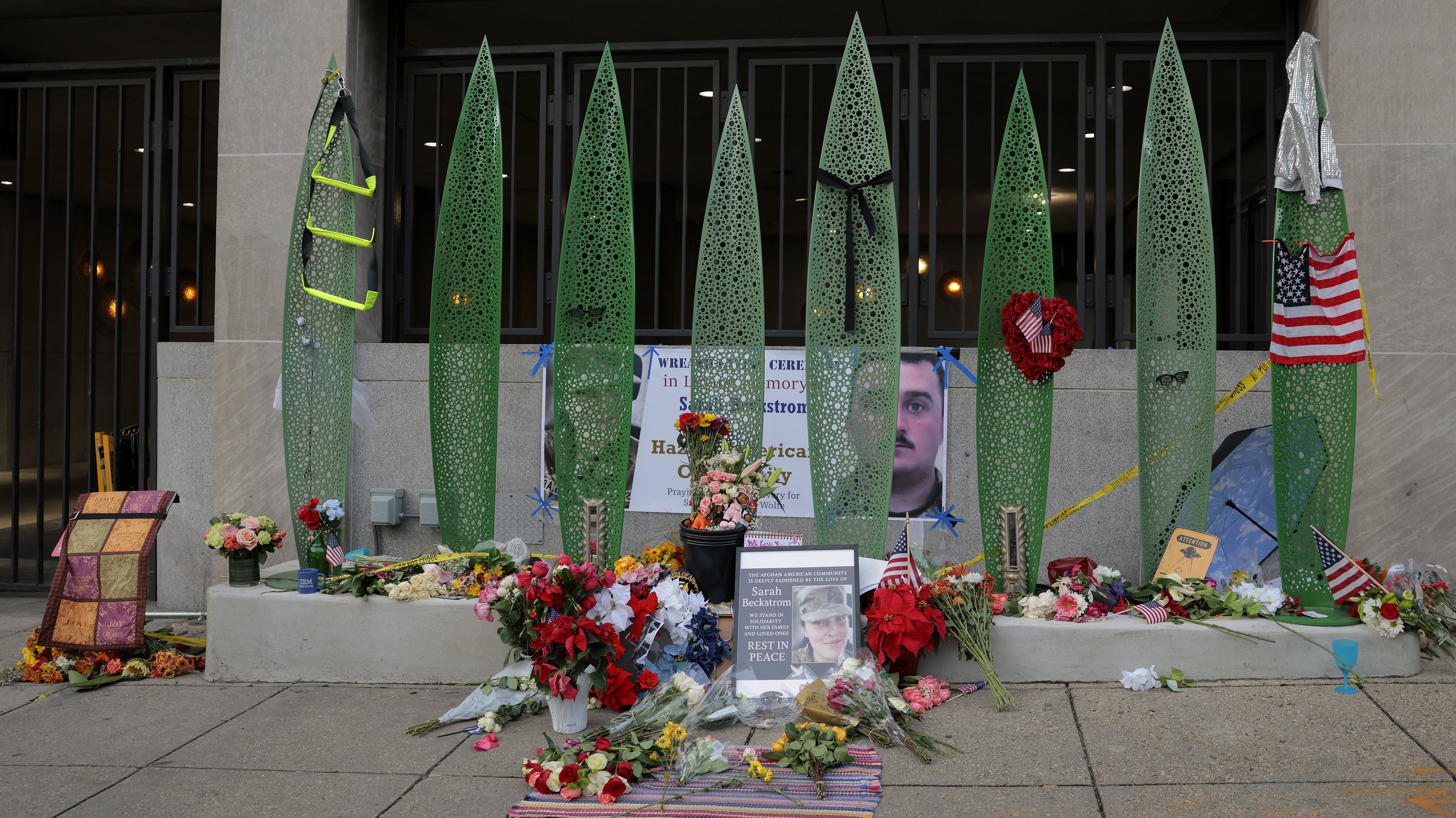
A makeshift memorial of flowers and American flags stands outside the Farragut West Metro station on Dec. 1, 2025, in Washington, D.C. (Photo by Heather Diehl/Getty Images)

(WASHINGTON) — Rahmanullah Lakanwal, the 29-year-old Afghan national accused of shooting two West Virginia National Guard members, killing one, in Washington, D.C., has been formally charged with murder.

Lakanwal, of Bellingham, Washington, appeared before a judge remotely on Tuesday from his hospital bed, where he is recovering from gunshot wounds he suffered when another National Guard member shot him during the incident.

Lakanwal was wearing a hospital gown and was lying in a hospital bed, covered in a blanket, during the remote court appearance.  

Through a Pashtu interpreter, Lakanwal was charged with one count of murder, two counts of assault with the intent to kill, and one count of possession of a firearm during a crime of violence. 

Lakanwal pleaded not guilty to the charges through a court-appointed attorney.

At one point during the hearing, Lakanwal, speaking in Pashtu, said through the interpreter, “I cannot open my eyes, I have pain in my ear.”

Lakanwal is charged with shooting Army Spc. Sarah Beckstrom, 20, and U.S. Air Force Staff Sgt. Andrew Wolfe, 24, members of the West Virginia National Guard, who were “ambushed” while conducting “high visibility patrols” on Nov. 25 just blocks from the White House, authorities said.

Beckstrom was killed and Wolfe was critically injured, authorities said.

New details of the attack emerged on Tuesday when authorities unsealed a criminal complaint against Lakanwal, a married father of five children.

Lakanwal, according to the complaint, shot Beckstrom from behind and was trying to reload after he was shot and just before he was subdued. An autopsy by the Washington, D.C., Medical Examiner’s Office determined that Beckstrom was shot once in the back of the head, according to the complaint.

Wolfe also was shot in the head during the attack, according to the complaint.

Witnesses told investigators that as Beckstrom and Wolfe fell to the ground after being shot, Lakanwal was heard shouting “Allahu Akbar,” an Arabic phrase meaning “God is great,” according to the complaint.

This is a developing story. Please check back for updates.

Copyright © 2025, ABC Audio. All rights reserved.
Former Honduran President Juan Orlando Hernandez freed from prison after Trump pardons drug trafficking conviction

Former Honduran President Juan Orlando Hernandez freed from prison after Trump pardons drug trafficking conviction
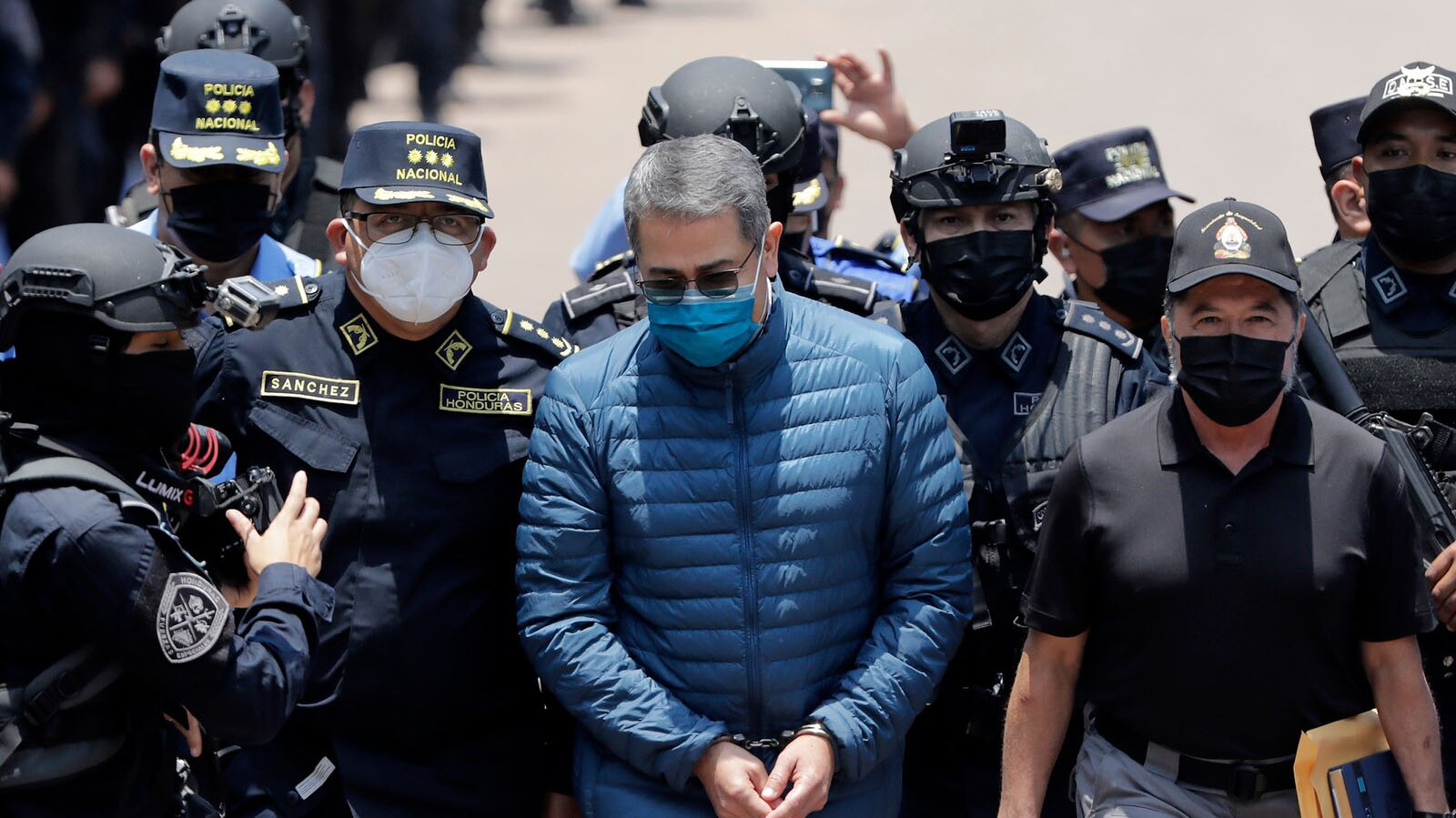
Former President of Honduras Juan Orlando Hernandez is escorted, April 21, 2022, by members of the Police Special Forces in Tegucigalpa, Honduras, to be extradited to United States after being indicted on drug traffickers charges. (Photo by Jorge Cabrera/Getty Images)

(WASHINGTON) — Former Honduran President Juan Orlando Hernandez, who was convicted in 2024 of trafficking drugs into the United States, has been freed from prison after he was granted a pardon by President Donald Trump, officials said.

The 57-year-old Hernandez was released from a federal prison in West Virginia, where he had been serving a 45-year sentence, according to a spokesperson for the Federal Bureau of Prisons and Hernandez’s attorney.

“After nearly four years of pain, waiting, and difficult trials, my husband Juan Orlando Hernandez RETURNED to being a free man, thanks to the presidential pardon granted by President Donald Trump,” Hernandez’s wife, Ana Garcia de Hernandez, said in a social media post.

Hernandez’s wife added, “Today we give thanks to God, because he is just and His timing is perfect. Thank you, Mr. President, for restoring our hope and for recognizing a truth that we always knew.”

Trump formally granted Hernandez a full pardon on Monday evening, Hernandez’s attorney, Renato Stabile, told ABC News.

“True to his word, I can confirm that President Trump has issued a full and unconditional pardon to former Honduran President Juan Orlando Hernandez,” Stabile said.

Stabile said Hernandez, a two-term president of Honduras, was released early Tuesday morning from the U.S. Penitentiary, Hazelton, a high-security prison in West Virginia.

“On behalf of President Hernandez and his family, I would like to thank President Trump for correcting this injustice,” Stabile said. “President Hernandez is glad this ordeal is over and is looking forward to regaining his life after almost four years in prison.”

Trump’s pardon of Hernandez came as a surprise to lawmakers on both sides of the aisle, who said the decision appears to contradict the Trump administration’s crackdown on drug trafficking from the Caribbean.

“Why would we pardon this guy then go after [Venezuelan president Nicolas] Maduro for running drugs into the United States? Lock up every drug runner! Don’t understand why he is being pardoned,” Sen. Bill Cassidy, R-La., said in a social media post over the weekend.

Sen. Tim Kaine, D-Va., called Trump’s decision to pardon Hernandez “shocking.”

“He was the leader of one of the largest criminal enterprises that has ever been subject to a conviction in U.S. courts, and less than one year into his sentence, President Trump is pardoning him, suggesting that President Trump cares nothing about narco-trafficking,” Kaine said on CBS’ “Face the Nation” on Sunday.

Hernandez was extradited to the United States in April 2022 under the Biden administration after he was indicted on charges of conspiring to import cocaine, using and carrying machine guns in furtherance of cocaine importation, and conspiring to use and carry machine guns in furtherance of cocaine importation.

Following Hernandez’s conviction in March 2024 in federal court in New York City, federal prosecutors said Hernandez helped drug cartels “move mountains of cocaine” into the United States and was “at the center of one of the largest and most violent drug-trafficking conspiracies in the world.”

One of the prosecutors on the case was Emil Bove, who later defended Trump on 34 counts of falsifying business records in connection with a hush money payment to adult film actress Stormy Daniels for which Trump was convicted of in 2024. Bove now sits on the bench as a judge for the 3rd U.S. Circuit Court of Appeals.

In a social media post on Friday, Trump announced, “I will be granting a Full and Complete Pardon to Former President Juan Orlando Hernandez who has been, according to many people that I greatly respect, treated harshly and unfairly.”

In a follow-up social media post on Saturday, Trump said, “The people of Honduras really thought he was set up.”

A one-time ally in the U.S. war on drugs, Hernandez was accused by U.S. federal prosecutors of taking bribes from drug cartels and helping them smuggle an estimated 400 tons of cocaine from Honduras to the United States.

Hernandez, prosecutors alleged, used his power to tip off his brother and other drug traffickers by alerting them to possible interdictions. Hernandez knew where the checkpoints were set up and advised the cartels how to avoid them, according to testimony at his trial.

Federal prosecutors from the Southern District of New York also alleged that Hernandez accepted $1 million in bribes to protect Joaquin “El Chapo” Guzman, the notorious boss of the Sinaloa Cartel in Mexico who is serving a life sentence in the United States.

During his trial, a federal prosecutor alleged Hernandez once boasted at a meeting with narco-traffickers that “together they were going to shove the drugs right up the noses of the gringos.”

Copyright © 2025, ABC Audio. All rights reserved.
Ahead of US meeting, Putin warns Russia is ready if Europe ‘wants to fight’

Ahead of US meeting, Putin warns Russia is ready if Europe ‘wants to fight’
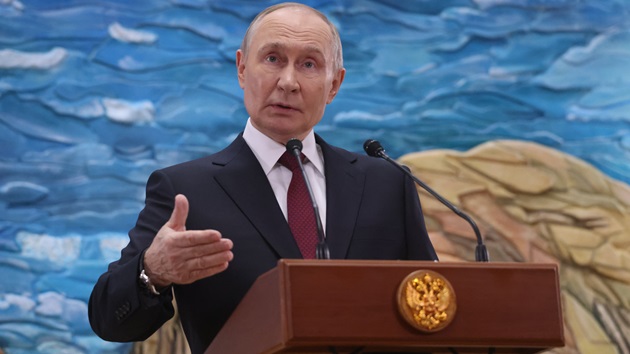
Russian President Vladimir Putin speaks during his press conference after the Summit of Collective Security Treaty Organization, on November 27, 2025 in Bishkek, Kyrgyzstan. Contributor/Getty Images

(LONDON) — President Vladimir Putin warned that Russia is ready to fight a war if Europe seeks one and claimed European countries are trying to make changes in President Donald Trump’s proposal on ending Russia’s war against Ukraine, ahead of his high-stakes meeting with U.S. special envoy Steve Witkoff in Moscow on Tuesday.

“We can clearly see that these changes are aimed at only one thing: to block the entire peace process,” Putin said in remarks to reporters while accusing Europe of being “on the side of war.”

“We are not going to fight Europe, I have said this a hundred times. But if Europe suddenly wants to fight and starts, we are ready right now,” Putin said.

Russia would allow Europe to return to negotiations on Ukraine if it takes into account the realities on the ground, Putin said.

Putin’s meeting with Witkoff is underway, Russian state media TASS reported Tuesday night local time. Trump’s son-in-law, Jared Kushner, is also taking part.

Earlier, Kremlin spokesperson Dmitry Peskov said the meeting had no time limit and would go on for “as long as necessary.”

Ahead of the meeting, the White House said it was “very optimistic,” as U.S. officials continue their push to end Russia’s war against Ukraine.

The sit-down follows a series of meetings between top U.S. and Ukrainian officials, during which the parties sought to revise the original peace-plan proposal presented by the Trump administration to Ukraine last month.

Witkoff and other top U.S. officials — including Kushner and Secretary of State Marco Rubio — met on Sunday in Florida with a Ukrainian delegation to attempt to find a deal that Ukraine and Russia might both accept to end the war.

“I think the administration feels very optimistic,” White House press secretary Karoline Leavitt told reporters on Monday, following the Florida meeting. “They had very good talks with the Ukrainians in Florida. And now, of course, Special Envoy Witkoff is on his way to Russia.”

The top Ukrainian official at the Florida talks said there had been progress, but, he added, “some issues still require further refinement.”

The Kremlin on Monday said a meeting between Witkoff and Putin was scheduled for Tuesday. Putin prepared in recent days by holding meetings with military commanders and a governor of a frontline territory, according to Russian officials.

“We have no doubt that this will be a very important step towards peace and a peaceful settlement,” Peskov told reporters in Moscow on Tuesday.

There was little expectation Putin would agree to a deal. The Russian leader signaled last week he would not compromise, repeating in hardline remarks his demand that Ukraine withdraw from territory he claims as Russian soil and saying it was “pointless” to negotiate with Ukrainian President Volodymyr Zelenskyy.

Putin then on Monday claimed without evidence that Russian forces had taken control of two Ukrainian cities where intense fighting has been happening for weeks in the eastern part of the country, a move intended perhaps to burnish the perception of Russia’s leading position on the battlefield.

Zelenskyy, who, along with Trump, was not directly involved with the talks in Florida, met on Monday with French President Emmanuel Macron in Paris. The meetings in France were “substantive and important — above all, focused on the steps that bring a just peace closer,” he said on social media. Zelenskyy landed on Tuesday in Dublin, where he’s expected to meet with Taoiseach Micheal Martin, the Irish prime minister.

As Zelenskyy pushed for European unity against Russian aggression, members of his delegation in Florida were sending updates on what was being discussed. He said on Monday that there were still several “tough issues” to work through in the negotiations, but did not elaborate. Ukraine’s potential relinquishment of some of its territory to Russia was thought to be part of the talks.

Zelenskyy on Monday also said he, Macron and British Prime Minister Keir Starmer had again been briefed by Witkoff and the head of the Kyiv delegation, Rustem Umerov, the secretary of Ukraine’s National Security and Defense Council. 

“Over two very productive days in the United States, we held many hours of meetings and negotiations,” Umerov said in a separate social media update on Monday. “We achieved significant progress, although some issues still require further refinement.”

Umerov and the rest of the negotiating team met with Zelenskyy in person on Tuesday, with the president saying they discussed “the matters that cannot be addressed over the phone.” He praised Ukrainian allies for their partnership. And he also accused Russia of beginning new disinformation campaigns prior to Putin’s meeting with Witkoff.

“Ukraine approaches all diplomatic efforts with utmost seriousness — we are committed to achieving a real peace and guaranteed security,” Zelenskyy said on social media. “This is exactly the level of commitment that must be compelled from the Russian side, and this task can be accomplished only together with our partners.”

The meeting in Moscow would be the sixth such Witkoff-Putin sit-down this year and it comes amid a redoubled effort by the White House to produce a peace deal in the almost 4-year-old conflict.

The meeting on Sunday included discussions of a revised 19-point peace plan that was developed a week ago during another round of American-Ukrainian talks in Geneva, Switzerland. Those talks reworked an earlier 28-point plan that the Trump administration had presented and that had alarmed Kyiv and European allies as heavily favoring Russia. Details about whether further revisions may have been made over the weekend had not been released as of Tuesday morning.

Speaking at the White House on Monday, Leavitt did not detail what the U.S. expected to happen during the negotiations in Moscow, instead deferring to those who would be at the meeting.

“We’ve put points on paper. Those points have been very much refined,” she said. “But as for the details, I will let the negotiators negotiate. But we do feel quite good, and we’re hopeful that this work can finally come to an end.”

ABC News’ Emily Chang and Patrick Reevell contributed to this report.

Copyright © 2025, ABC Audio. All rights reserved.
College student mysteriously dies after football tailgate in Texas, family says

College student mysteriously dies after football tailgate in Texas, family says
Stock image of police lights. Douglas Sacha/Getty Images

(AUSTIN, Texas) — Police are investigating the mysterious death of a Texas A&M student who died after a football tailgate this weekend, according to authorities and her family.

Austin police said they responded to a report of an unresponsive individual at an apartment complex around 12:45 a.m. Saturday. Brianna Aguilera was pronounced dead at the scene at 12:57 a.m., police said.

“At this time, the incident is not being investigated as a homicide, and there are no indications of suspicious circumstances,” police said in a statement.

Her cause of death has not been released, police said, adding that the investigation is ongoing.

According to Aguilera’s family, she died after going to a tailgate for the Texas A&M vs. University of Texas football game in Austin on Friday.

“The details surrounding what happened [after the tailgate] remain unclear,” Aguilera’s family wrote on GoFundMe.

“Our hearts are shattered,” the family said on GoFundMe.

“She was pursuing her dream of becoming a lawyer and was attending The Bush School of Government & Public Service at Texas A&M,” the family said. “She was a year shy of attaining her Aggie ring.”

Copyright © 2025, ABC Audio. All rights reserved.
Afghan national arrested over alleged bomb threat in Texas: DHS

Afghan national arrested over alleged bomb threat in Texas: DHS
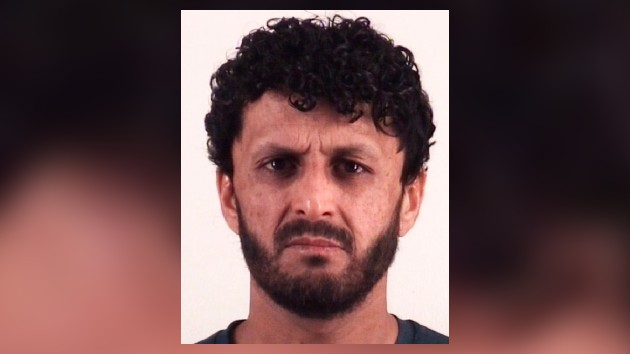
Mohammad Alokozay is shown in this Nov. 25 2025, booking photo. Tarrant County Corrections Center

(FORT WORTH, Texas) — Homeland Security said investigators arrested an Afghan national who allegedly made a social media post about “building a bomb” and threatened to blow up a building in Fort Worth, Texas.

Mohammad Dawood Alokozay’s arrest took place on Nov. 25, Tricia McLaughlin, an assistant secretary with DHS, said in a social media post Saturday.

Alokozay was arrested on state terror charges and is being held at a corrections center in Tarrant County, Texas, according to court records. He was hit with federal charges of transmitting a threatening communication in interstate commerce.

After his arrest one week ago, Alokozay confirmed to investigators that he made the statements in the video and that he deleted his TikTok account after being contacted by people who had seen his comments shared on social media, according to the criminal complaint unsealed Tuesday.

“He concluded that he was not afraid of deportation or getting killed,” prosecutors said in their criminal complaint. “When asked why Alokozay came to the United States, he responded that it was to kill the others on the call. Alokozay stated he wanted to conduct a suicide attack on Americans, too.”

It is not immediately clear when Alokozay will make his first appearance in federal court.   

Alokozay’s arrest came just a day before two National Guard members were allegedly shot by another Afghan national — 29-year-old Rahmanullah Lakanwal– in Washington, D.C.

One of the Guard members, U.S. Army Specialist Sarah Beckstrom, later died from her injuries. Lakanwal is now facing a first-degree murder charge.

McLaughlin alleged in an X post that Alokozay “posted a video of himself on TikTok indicating he was building a bomb with an intended target of the Fort Worth area.”

“He was arrested on Tuesday by the Texas Department of Public Safety and FBI JTTF and charged with making Terroristic Threats,” she added.

Attorney information for Alokozay was not immediately available.

McLaughlin said Immigration and Customs Enforcement has lodged a retainer for Alokozay.

-ABC News’ Jenna Harrison contributed to this report.

Copyright © 2025, ABC Audio. All rights reserved.
3 key questions about the US boat strikes that killed survivors

3 key questions about the US boat strikes that killed survivors
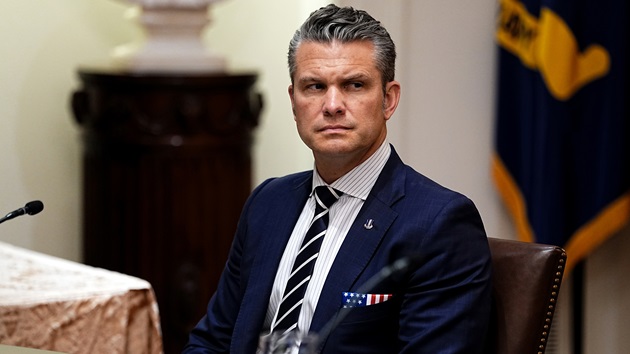
Pete Hegseth, US secretary of defense, during a meeting in the Cabinet Room of White House in Washington, DC, US, on Friday, Nov. 7, 2025.

(WASHINGTON) — Defense Secretary Pete Hegseth and a top military commander are facing serious questions about why the U.S. on Sept. 2 killed survivors of a military strike against a suspected drug boat, when the laws of war say survivors on the battlefield should be rescued.

The White House acknowledges that a second strike was ordered on a boat already hit by the military in the Caribbean Sea, and ABC News has confirmed that survivors from the initial strike were killed as a result.

Democrats say that alone could be enough to suggest a war crime occurred. The laws of war require either side in a conflict to provide care for wounded and shipwrecked troops.

Hegseth told Fox News the day after that he watched the operation unfold in real time and defended it as legal. He appears to be leaning on the same legal playbook carved out during the war on terror, in which the U.S. justified the killing of people transporting weapons that it said posed a threat to U.S. forces.

“We’re going to conduct oversight, and we’re going to try to get to the facts,” Sen. Roger Wicker, the Republican chairman of the Senate Armed Services Committee, told reporters on Monday. “And to the extent that we’re able to see videos and see what the orders were, we’ll have a lot more information other than just news reports.”

Here are three key questions about the orders to kill drug smugglers:

What did Hegseth order exactly?

A key question for lawmakers is what Hegseth’s initial “execute order” included and what intelligence was used to justify it.

According to The Washington Post, sources say Hegseth told the military to ensure that none of the 11 passengers aboard the boat should be allowed to survive. After the initial strike left two people clinging to the wreckage, the Post says, Adm. Mitch Bradley made the decision as head of the Joint Special Operations Command to launch a second strike to fulfill Hegseth’s initial order to kill everyone.

Hegseth called the report a “fabrication,” while his chief spokesman, Sean Parnell, said the allegations were a “fake news narrative that Secretary Hegseth gave some sort of ‘kill all survivors’ order.”

The Pentagon declined to answer questions though about what was included in Hegseth’s initial order.

On Monday, White House press secretary Karoline Leavitt would confirm only that a second strike occurred and didn’t address a question about survivors. When asked if Adm. Bradley had made the decision on his own, Leavitt suggested that was accurate, replying “And he was well within his authority to do so.” 

Why did Adm. Bradley order subsequent strikes after seeing survivors?

Several sources described Bradley, a former Navy SEAL, as a deeply experienced and widely respected commander. At the time of the Sept. 2 strike, Bradley had already spent time overseeing special operations missions in the Middle East under U.S. Central Command and had taken over Joint Special Operations Command, a global command devoted to preparing and executing special operations missions in some of the most challenging and complex operating environments.

When President Donald Trump nominated Bradley to take over U.S. Special Operations Command this fall, the Senate overwhelmingly approved his nomination by voice vote.

Eric Oehlerich, an ABC News contributor and former Navy SEAL who worked under Bradley’s command during the war on terror, said he has never seen Bradley push the bounds of the law.

Oehlerich said that if Bradley ordered subsequent strikes on Sept. 2, as the White House suggested, the decision would have relied on Hegseth’s initial order as well as findings by the intelligence community about why the alleged smugglers on the boats were a threat to the U.S.

Bradley also would have sought counsel from a military lawyer in the room, he said.

“There isn’t a single commander that’s sitting in a position of authority that does not have a lawyer as the closest person to him sitting there watching the entire time,” Oehlerich said.

The attack also would have been directly overseen by Hegseth himself, as he told Fox News on Sept. 3, saying he had watched it “live.” In a post on X on Monday, Hegseth suggested only that the operation was Bradley’s call.

“I stand by him and the combat decisions he has made — on the September 2 mission and all others since,” Hegseth wrote.

Bradley declined to comment but was expected to brief lawmakers later this week.

Who was killed? And were they a threat to the US?

Hegseth’s rationale for killing drug smugglers appears to be the same one used after 9/11 when Congress authorized the military to use force against targets linked to al-Qaida. That authority enabled commanders in places like Iraq and Syria to kill people transporting improvised explosive devices, which it said were an immediate threat to U.S. forces stationed in the region.

Earlier this year, President Donald Trump argued that people smuggling illegal narcotics were just as dangerous to Americans as al-Qaida terrorists. He declared several drug cartels would be deemed “foreign terrorist organizations.”

Legal experts have pushed back on the comparison of drug smugglers and al-Qaida or ISIS fighters. They also note that Congress hasn’t provided any kind of authorization for using force.

A key question remains as to who exactly is onboard the boats and what threat they posed exactly — an assessment that would have been done by the intelligence community and signed off on by Hegseth.

Rep. Jim Himes, the top Democrat on the House Intelligence Committee, said he is still waiting for information on the role U.S. intelligence played in the strikes and whether the attacks are having a strategic impact. Bradley was expected to brief House lawmakers on Thursday.

“If it is substantiated, whoever made that order needs to get the hell out of Washington,” said Sen. Thom Tillis, R-N.C. “And if it is not substantiated, whoever the hell created the rage bate should be fired.”

Copyright © 2025, ABC Audio. All rights reserved.