
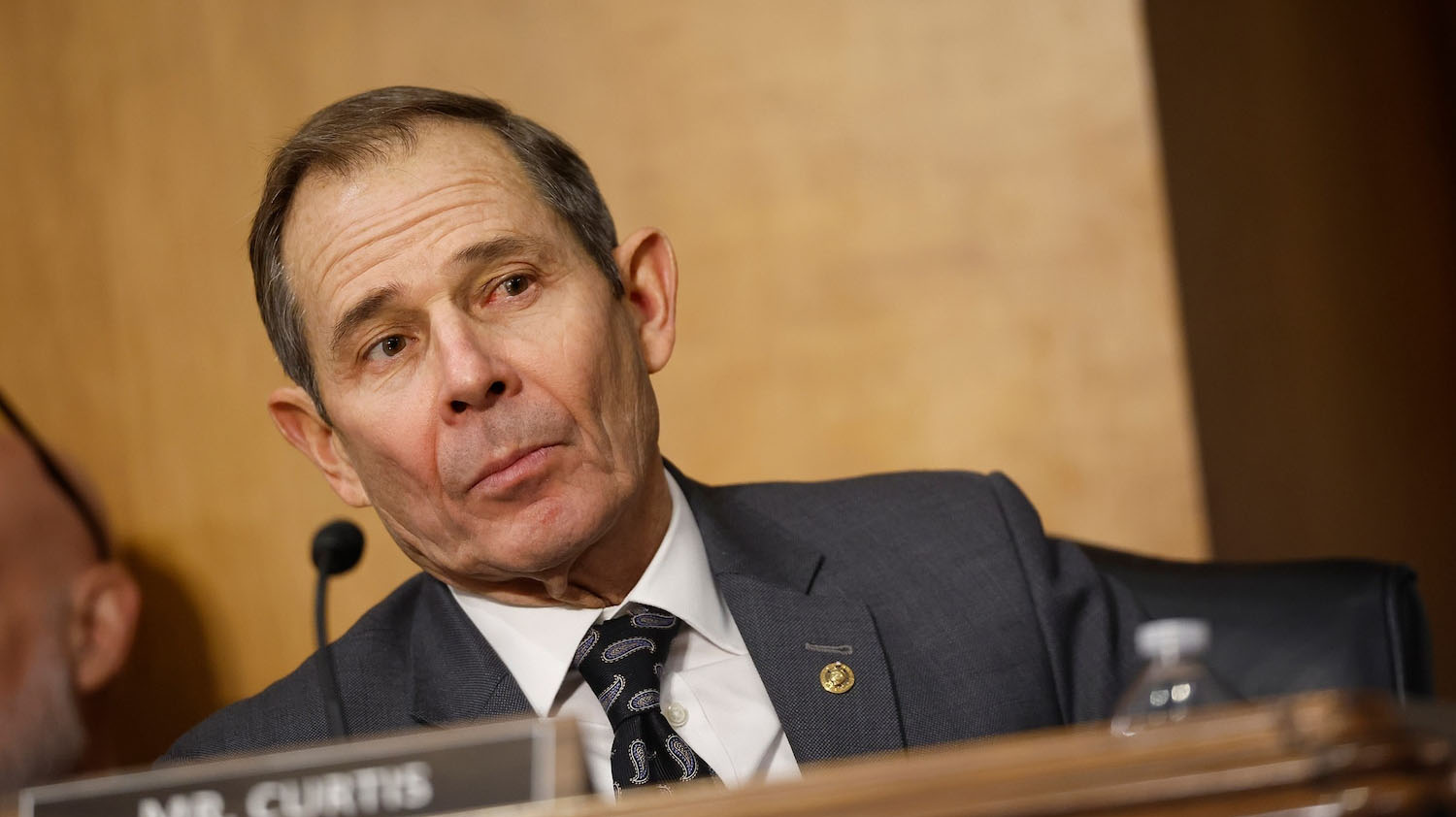
Luigi Mangione admits to shooting UnitedHealthcare CEO as he pleads guilty in federal case

Luigi Mangione admits to shooting UnitedHealthcare CEO as he pleads guilty in federal case
Luigi Mangione attends a pretrial appearance at Manhattan Criminal Court on Aug. 11, 2026, in New York City. (David Dee Delgado-Pool/Getty Images)

(NEW YORK) — Luigi Mangione admitted to shooting UnitedHealthcare CEO Brian Thompson as he pleaded guilty Friday to two federal stalking counts.

Mangione, wearing tan prison clothes, addressed the court himself, saying, “After years of enduring severe pain from a broken back … I learned UnitedHealth would be holding an investor conference in New York City.”

“I then researched the event online. I observed the annual conference of America’s largest healthcare organization with the stated mission to make the healthcare system better for everyone,” he said.

“I traveled to New York and emailed UnitedHealthcare with the intent to kill Brian Thompson … I shot Mr. Thompson in the back,” he said, adding, “I knew what I was doing was illegal.”

Earlier in the hearing, defense attorney Karen Friedman Agnifilo told the court, “Mr. Mangione is prepared to plead guilty to the indictment at this time,” and Mangione himself then affirmed he was prepared to plead guilty.

Members of Thompson’s family, including his wife and mother, are sitting in the front row of the courtroom, marking the first time they’re appearing in court. Thompson’s wife appeared to be crying as the hearing began. Executives from UnitedHealthcare are also in attendance.

When asked for his full name, Mangione replied, “Luigi Nicolas Mangione,” and he affirmed his age, 28, and schooling at the University of Pennsylvania.

He told the judge he took a sleep medication two days ago but said it did not cloud his judgment.

The judge asked Mangione if he understood that he’d give up his right to a trial if he pleaded guilty, and Mangione responded yes.

Federal prosecutor Dominic Gentile explained that Mangione stalked Thompson with the intent to kill him and his conduct resulted in Thompson’s death.

U.S. District Judge Margaret Garnett told Mangione a guilty plea would expose him to a possible life sentence. 

“Do you understand that?” the judge asked, and Mangione replied, “yes.”

The judge confirmed there is no plea deal.

A guilty plea could complicate Mangione’s murder prosecution in state court, where trial is scheduled to begin Sept. 8. His federal trial was set for Jan. 5.

Defense attorneys have already tried to dismiss the murder charges on double jeopardy grounds. The Manhattan District Attorney’s Office is prepared to move forward, arguing stalking and murder address different harms.

About three dozen members of the public — including at least one person who camped out in a tent overnight — lined up outside the courthouse Friday morning to try to secure a seat in the courtroom.

Mangione’s supporters are often outspoken during his hearings, but there were little-to-no demonstrators on Friday morning. And with the federal court limiting what members of the public can wear, Mangione’s supporters were not donning their normal shirts proclaiming his innocence.

Mangione is accused of gunning down Thompson on Dec. 4, 2024, in Midtown Manhattan, and he was captured in Pennsylvania after a five-day manhunt. Manhattan District Attorney Alvin Bragg announced that Mangione was indicted on first-degree murder charges on Dec. 17, 2024, and federal prosecutors announced separate charges of stalking and murder on Dec. 19, 2024. 

Mangione pleaded not guilty in the separate state and federal cases.

The charges in both cases have narrowed over the last year. In the federal case, Garnett in January threw out the murder and firearm charges, leaving two counts: stalking – travel in interstate commerce and stalking – use of interstate facilities.

In the state case, Judge Gregory Carro last September dismissed the first-degree murder and terrorism charges. In the state case, Mangione is still charged with murder in the second-degree, criminal possession of a forged instrument in the second-degree, and multiple counts of criminal possession of a weapon in the second-degree, third-degree and fourth-degree.

Copyright © 2026, ABC Audio. All rights reserved.
Luigi Mangione expected to plead guilty to federal charges, sources say

Luigi Mangione admits to shooting UnitedHealthcare CEO as he pleads guilty in federal case
Luigi Mangione attends a pretrial appearance at Manhattan Criminal Court on Aug. 11, 2026, in New York City. (David Dee Delgado-Pool/Getty Images)

(NEW YORK) — Luigi Mangione is expected to plead guilty Friday to federal charges accusing him of stalking and killing UnitedHealthcare CEO Brian Thompson, sources familiar with the matter told ABC News.

Mangione has come to this point once before and backed out. If he moves forward with the anticipated guilty plea, he is guaranteed no leniency. According to sources, there is no plea bargain with federal prosecutors and Mangione could face life in prison.

A guilty plea could complicate Mangione’s murder prosecution in state court, where trial is scheduled to begin Sept. 8. His federal trial was set for Jan. 5.

Defense attorneys have already tried to dismiss the murder charges on double jeopardy grounds. The Manhattan District Attorney’s Office is prepared to move forward, arguing stalking and murder address different harms.

Members of Thompson’s family, including his widow, and executives from UnitedHealthcare are expected in the federal courtroom in Manhattan for Friday’s 11 a.m. hearing. Members of Mangione’s family are not expected to attend, sources said.

About three dozen members of the public — including at least one person who camped out in a tent overnight — lined up outside the courthouse Friday morning to try to secure a seat in the courtroom.

Mangione’s supporters are often outspoken during his hearings, but there were little-to-no demonstrators on Friday morning. And with the federal court limiting what members of the public can wear, Mangione’s supporters were not donning their normal shirts proclaiming his innocence.

Mangione is accused of gunning down Thompson on Dec. 4, 2024, in Midtown Manhattan, and he was captured in Pennsylvania after a five-day manhunt. Manhattan District Attorney Alvin Bragg announced that Mangione was indicted on first degree murder charges on Dec. 17, 2024, and federal prosecutors announced separate charges of stalking and murder on Dec. 19, 2024.

Mangione pleaded not guilty in the separate state and federal cases.

The charges in both cases have narrowed over the last year. In the federal case, U.S. District Judge Margaret Garnett in January threw out the murder and firearm charges, leaving two counts: stalking – travel in interstate commerce and stalking – use of interstate facilities.

In the state case, Judge Gregory Carro last September dismissed the first-degree murder and terrorism charges. In the state case, Mangione is still charged with murder in the second-degree, criminal possession of a forged instrument in the second-degree, and multiple counts of criminal possession of a weapon in the second-degree, third-degree and fourth-degree.

Copyright © 2026, ABC Audio. All rights reserved.
Tropical Storm Lala forecast and track: Storm expected to become hurricane

Tropical Storm Lala forecast and track: Storm expected to become hurricane
Potential Tropical Cyclone – Forecast Tracker (ABC News)

(NEW YORK) — Tropical Storm Lala continues to track through the central Pacific Ocean and is forecast to strengthen into a hurricane as it approaches the Big Island of Hawaii on Saturday.

As of 5 a.m. ET, Lala is moving west-northwest at 10 mph with maximum sustained winds of 60 mph and is approximately 455 miles east-southeast of Hilo.

Hurricane warnings remain up for Hawaii County while tropical storm watches remain in place for Maui County, including the islands of Maui, Lanai, Molokai and Kahoolawe.

Lala is forecasted to continue gradually strengthening Friday into Saturday as it makes a close approach to the Big Island early Saturday.

While the exact timing and intensity of the impacts are still uncertain and will ultimately depend on how close Lala tracks to the Hawaiian islands, heavy rain, strong winds and rough surf impacts are likely this weekend.

Heavy rainfall and gusty winds will begin to impact the Big Island Friday, bringing the possibility of life-threatening mudslides and landslides, especially across areas with steep terrain.

Lala is forecasted to bring rainfall of 8 to 12 inches across Maui and the Big Island, with the highest totals reaching up to 25 inches across the higher elevations of the Big Island. The remainder of the Hawaiian Islands are forecasted to receive 4 to 6 inches of rainfall.

Large and dangerous surf, especially on the Big Island, is also expected this weekend. The greatest impacts are expected along exposed windward and southern shores. The prolonged period of heavy surf may cause localized coastal flooding and significant beach erosion.

Copyright © 2026, ABC Audio. All rights reserved.

Trump appeals to Supreme Court to allow White House ballroom construction to continue

Trump appeals to Supreme Court to allow White House ballroom construction to continue
Construction continues on the East Wing ballroom at the White House on August 10, 2026, in Washington, DC. U.S. President Donald Trump says he will appeal to the Supreme Court after a federal appeals court ruled that congressional approval is required to build the $400 million ballroom. (Photo by Andrew Harnik/Getty Images)

(WASHINGTON) — The Trump administration is asking the Supreme Court to allow construction of President Donald Trump’s White House ballroom to continue after a lower court put it on pause.

The administration on Friday asked the high court for an emergency stay of the injunction, which would halt substantial portions of the above-ground construction of the White House East Wing and ballroom while litigation plays out over its legality.

The injunction is set to take effect on Aug. 21 unless the Supreme Court acts.

The district court order would still allow below-ground construction or any other measures necessary to protect national security and the president’s safety.

Solicitor General John Sauer called the injunction “extraordinary and unlawful,” arguing that it would put the security of the president and his family at risk and override the advice of the nation’s top military, intelligence and law enforcement officials.

“If allowed to go into effect, the injunction would wrongfully install a single district judge as sole arbiter of what further construction is ‘strictly necessary’ to protect the safety of the President, his family, staff members, and visitors to the White House, including foreign dignitaries, and presidents and prime ministers of other countries,” Sauer wrote.

The district court concluded that President Donald Trump lacks the authority to overhaul the White House without congressional approval. A divided federal appeals court upheld the ruling earlier this month.

In his appeal to the justices to intervene, Sauer suggested halting construction would directly put the life of the president at risk, citing six “recent assassination attempts,” including “the threat of a missile attack against Air Force One on July 8.”

“The President of the United States of America is not a tenant, but rather the sole, elected head of the Executive Branch, and Congress has authorized him to renovate, secure, and protect the White House and its grounds, as other Presidents  have been allowed to do, without exception,” he wrote.

The government argued that it is likely to win on appeal in the case, insisting that the National Trust for Historic Preservation lacks standing to bring the lawsuit and that federal law has long allowed presidents to undertake the “care, maintenance, repair, alteration, refurbishment, and improvement … of the Executive Residence at the White House.”

The Supreme Court is expected to seek a response from the National Trust sometime in the next week before rendering a decision on the stay.

Sauer indicated that the administration also plans to ask the Supreme Court to take the case up for expedited oral argument and decision on the merits.

Separately, the administration’s filing appeared to provide new details about the state of the construction operation.

The government asserts that it is “on time” and “under budget” and that “0 taxpayer dollars are needed or required.”

Though there is no mention of the White House’s $1 billion funding request to Congress for White House hardening and enhancements for evolving threats and technology which have been widely seen by lawmakers as related to Trump’s ballroom.

Senate Democrats on Wednesday formally asked the Government Accountability Office (GAO) to conduct an audit of the project and its funding.

“The scale of this project, the destruction of historic architecture, the opaque and unorthodox combination of public funds with private funding sources, and the absence of standard federal review processes raise serious concerns about transparency, accountability, and stewardship of this national landmark,” the lawmakers wrote.

Sauer claimed in the filing that the project is 65% complete and that $200 million has been spent or committed to date.

He says a 250-person crew is working 20 hours a day, 7 days a week. The structure is said to be 5 stories deep and 70-feet above ground across 50,000 square feet. 

Copyright © 2026, ABC Audio. All rights reserved.
Suspected murderer who used disguises, multiple identities while on the run arrested

Suspected murderer who used disguises, multiple identities while on the run arrested
Isabelle Johnson, 38, has been charged with killing 43-year-old Jason Christopher Coulthart, according to the Walton County Sheriff’s Office. (Walton County Sheriff’s Office, Florida)

(FREEPORT, Fla.) — Isabelle Johnson, a suspected murderer who authorities say had been using multiple disguises and identities, has been arrested and taken into custody, according to the Walton County Sheriff’s Office.

“We got her,” officials said in a post on social media late Thursday. “Isabelle Johnson is in custody.”

Johnson, 38, has been charged with the murder of 43-year-old Jason Christopher Coulthart who was found dead in a shallow grave in June in Florida after he had gone missing in May, according to the Walton County Sheriff’s Office.

Investigators say Johnson used multiple identities to evade authorities, calling her a “master manipulator.”

Coulthart was reported missing on May 24 after he was last seen leaving the College Condominiums complex in Florida, according to the sheriff’s office.

Unidentified remains were found on a Freeport, Florida, property on June 25 — after investigators were able to identify where Coulthart’s body had been buried, according to the sheriff’s office.

A DNA match confirmed the remains were Coulthart’s in July, the sheriff’s office said.

Five others have been arrested and charged in connection with the murder, including two people accused of aiding Johnson evade investigators, the sheriff’s office said.

Copyright © 2026, ABC Audio. All rights reserved.

Kennedy Center board votes to close for renovations and add Trump’s name again, lawmaker says

Kennedy Center board votes to close for renovations and add Trump’s name again, lawmaker says
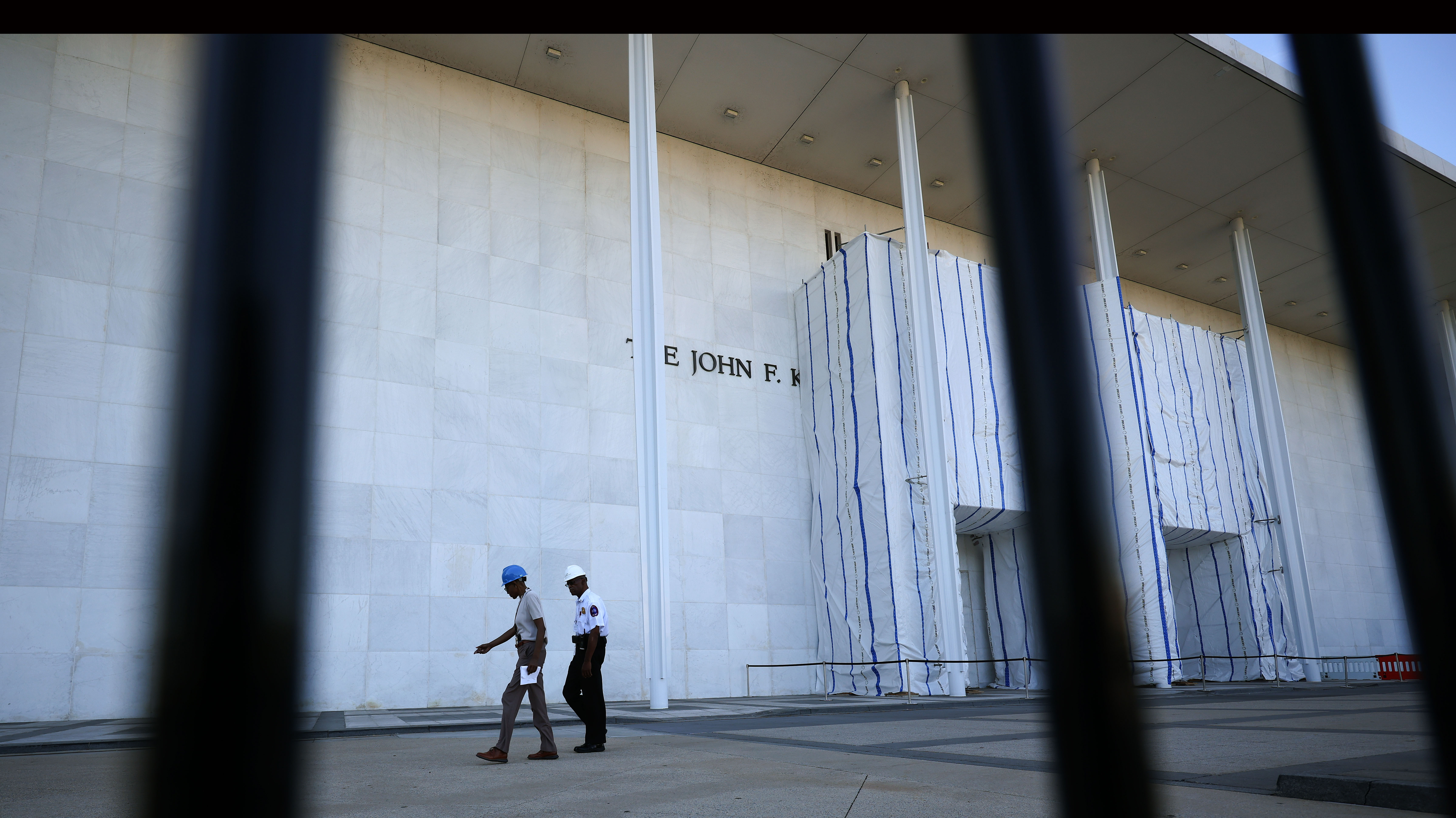
Tarps are hung on scaffolding outside The Kennedy Center on June 13, 2026, in Washington, D.C. (Tasos Katopodis/Getty Images)

(WASHINGTON) — The Kennedy Center board voted on Thursday to close the famed cultural institution for two years for renovations and to again add President Donald Trump’s name to the facade, Democratic Rep. Joyce Beatty, an ex-officio member of the board, said in a statement.

This is a developing story.

Copyright © 2026, ABC Audio. All rights reserved.
Democrats demand answers about conditions aboard USS Lincoln

Democrats demand answers about conditions aboard USS Lincoln
U.S. sailors tow an EA-18G Growler, assigned to Electronic Attack Squadron 133, on the flight deck of Nimitz-class aircraft carrier USS Abraham Lincoln, July 30, 2026. (U.S. Navy)

(WASHINGTON) — The top Democrat on the Senate Armed Services Committee sent a letter to Defense Secretary Pete Hegseth and acting Navy Secretary Hung Cao on Wednesday demanding more information about the extended deployment of the USS Abraham Lincoln amid the war with Iran and raising further questions about the Navy’s ability to preserve service members’ well-being while sustaining its current “operational tempo.” 

In his letter, Sen. Richard Blumenthal noted the Lincoln has been deployed for more than 250 days and has gone more than 200 days without a port call. 

“There have been widespread reports of shortages of basic supplies, water contamination, plumbing issues, deteriorating mental health, deck safety concerns, and disruptions in the mail system, which have caused many care packages en route to the ship to be lost in transit for months,” Blumenthal wrote. “These reports warrant immediate attention, but they also raise a broader question: whether the Navy can sustain the operational tempo now being demanded of its carrier force, particularly as this Administration repeatedly commits U.S. forces to conflicts of its own choosing and increasingly relies on aircraft carriers to sustain those operations.”

His letter comes amid reports that the sailors are exhausted and, according to Military Times, one family member alleges a sailor attempted to go overboard from the USS Abraham Lincoln.

A U.S. official confirmed to ABC News that a sailor went overboard last month from the Lincoln and was quickly recovered. The incident is under investigation, the official said. 

Hegseth on Thursday pushed back on reports of a sailor going overboard from the Lincoln and accounts of sailors struggling through an unusually long deployment have been “completely misrepresented.”

“We make sure every ship, every crew, every captain has everything we can provide them at every single moment,” Hegseth told Newsmax. “Some deployments are longer than others, and I have more respect and gratitude for those sailors than anybody.”

A Navy official told ABC News in a statement that the Lincoln has not seen an uptick in mental health issues and has “not identified an increase in reported suicidal ideation or suicide attempts aboard the ship.”

But it acknowledged sailors are strained.

“We know that extended deployments place a significant strain on our service members and their families, and we are grateful for the resilience and sacrifices they make in support of our nation’s security,” the statement said. 

A U.S. official told ABC News on Thursday that the Navy’s data shows its not uncommon for suicidal ideation to occur on deployed ships and that typically the rates are higher at the start of a deployment. The official said the data shows the Lincoln is following that trend and so far there have been no deaths or suicides since the it departed from San Diego last November.

The 5,000 sailors aboard the carrier have access to mental health assistance as well as chaplains, according to the official.

The ship was slated for a normal six-month deployment to the Pacific but has been extended on an unusually long nine-month deployment due to the war with Iran, where it was redirected earlier this year. It’s not clear when it will be allowed home and is currently serving in North Arabian Sea.

Cao told Lincoln families during a town hall last week that another carrier will eventually swap out with the Lincoln, though he did not provide a timeline.

A U.S. official told ABC News on Thursday that the aircraft carrier USS George Washington, which is homeported in Japan, will replace the Lincoln as part of a long-planned rotation of ships.

Blumenthal notes in his letter that the Lincoln is not an isolated case, highlighting the prolonged deployment of the aircraft carrier USS Gerald Ford earlier this year.  

“Recent carrier deployments have repeatedly stretched beyond their originally anticipated durations, suggesting that extended deployments may be becoming a feature rather than an exception of the Navy’s force-generation model,” Blumenthal wrote. 

Blumenthal wrote that Lincoln’s extended deployment is especially concerning because of the war. 

“The Administration has yet to adequately explain the objectives, end state, or anticipated duration of those operations. If the Administration intends to maintain a prolonged military campaign or an elevated carrier presence in the region, it must explain how it intends to ensure today’s operational requirements do not create tomorrow’s readiness crisis,” Blumenthal wrote. 

The letter requests responses from Hegseth and Cao about the Navy’s plan for sustaining carrier strike groups in the Middle East for the next 12 to 24 months, about who authorized extensions of the Lincoln’s deployments and when, and about what military objective the Lincoln’s extended deployment is aimed at achieving.

Blumenthal also requests an accounting of the “habitability, supply and quality-of-life problems” aboard the Lincoln, and he asks for further information on what metrics the Navy is using to address “fatigue, morale, mental health and crew readiness.”

Blumenthal is not the only Democrat to weigh in. 

Sen. Chris Coons, the top Democrat on the Senate Defense Appropriations subcommittee, told CNN on Thursday that reports of a sailor jumping from the ship are “another reminder of how the president and his team, while asking for a huge increase in defense spending for all sorts of exotic new undertakings like the Trump-class battleship or Golden Dome missile defense system, are not making the investments in the daily lives and the care and the support of our sailors and soldiers, airmen and marines that they deserve.”

Coons said this is an example of how the U.S. has “pushed our Navy to the limit.”

White House spokeswoman Olivia Wales said in a statement to ABC News, “President Trump and Secretary Hegseth are committed to ensuring that the brave American patriots serving our country in uniform are equipped with the resources necessary to counter any threat to the United States.” Coons said he is only aware of media reports about the Lincoln and has not been briefed on it. 

Coons blamed “unscheduled, unplanned deployments to the Southern Caribbean and the Eastern Pacific for repeated strikes against Venezuela and alleged drug boats, long deployments into the Middle East” and the “now six month war against Iran and deployments around the world because of increasing threats” for straining the Navy. 

Democrats earlier this year blocked the Senate from proceeding with consideration of the National Defense Authorization Act, a massive, must-pass defense bill that authorizes pay raises for the troops and funding for the military, due to their objection to the administration’s actions in Iran that Congress has not authorized. 

A number Democrats in Congress have posted concerns about the Lincoln. Sen Ruben Gallego called for the Navy to allow a bipartisan congressional delegation to visit the Lincoln and investigate.

Sen. Mary Kelly wrote that “long deployments are hard” but that “they are a lot harder when the mission isn’t well defined and there is no end in sight.”

Copyright © 2026, ABC Audio. All rights reserved.
Tropical Storm Lala forecast to impact Hawaiian Islands this weekend

Tropical Storm Lala forecast and track: Storm expected to become hurricane
Potential Tropical Cyclone – Forecast Tracker (ABC News)

(NEW YORK) — Tropical Storm Lala has formed in the central Pacific Ocean and is forecast to strengthen, possibly nearing hurricane strength, in the coming days as it approaches the Big Island of Hawaii on Saturday.

A hurricane watch was issued Thursday for the Big Island.

The storm is currently about 680 miles east-southeast from Hilo, Hawaii, on the east coast of the Big Island, as of Thursday afternoon. Winds are 40 mph.

Tropical Storm Lala could reach near-hurricane strength in the next several days as the storm is forecast to gradually strengthen.

The storm is currently moving west at 10 mph. It is expected to pass near or just south of the Big Island on Saturday and pass south of the other Hawaiian islands the rest of the weekend.

Heavy rain, strong winds and rough surf are likely this weekend. The exact timing and intensity of the impacts are still uncertain and will depend on the Lala’s exact track.

Heavy rainfall on the Big Island on Friday could bring life-threatening mudslides and landslides, especially in areas with steep terrain.

Copyright © 2026, ABC Audio. All rights reserved.
Indiana governor declares statewide disaster emergency as Midwest floodwaters rise

Indiana governor declares statewide disaster emergency as Midwest floodwaters rise
Flash flooding in Henry County, Indiana, caused this street to collapse, Aug. 12, 2026. (Henry County Sheriff’s Office)

(NEW YORK) — Amid floodwaters already up to the roofs of some homes and turning the streets of multiple cities into rushing rivers, Midwest residents are bracing for more severe storms on Thursday.

“When I looked out my window, I saw my fence floating past my window,” Karlie Frey, a resident of hard-hit Cambridge City, Indiana, told ABC Indianapolis affiliate station WRTV.

After being evacuated from her home on Wednesday via a rescue boat, Frey, who has lived in Cambridge City since 2009, said, “I’ve never seen it get this bad.”

Indiana, which recorded three storm-related deaths this week, was in the path of more severe storms expected to pound the Midwest on Thursday.

Indiana Gov. Mike Braun declared a statewide disaster emergency on Thursday.

“Hoosiers’ safety is my top priority. Our state response is fully mobilized, resources are moving where they’re needed, and we will continue working around the clock to support every impacted community,” Braun said in a social media post on Thursday.

Braun is expected to meet with first responders in Cambridge City and survey the damage there to “ensure state resources are available to support the response and recovery efforts,” the governor’s office said in a statement.

Meanwhile, rescue operations resumed on Thursday for one person in Delaware County, Indiana, who was among four people who reportedly went into the Mississinewa River on Wednesday during significant flooding, authorities said. Three others were rescued from the river on Wednesday night, officials noted.

Flood watches also remained in effect in Iowa, Kentucky and North Carolina, where showers and storms are possible on Thursday, keeping the threat of more flooding in place.

Like in recent days, storms expected from Des Moines, Iowa, to Lexington, Kentucky, and Knoxville, Tennessee, have the potential to train, or remain stationary, over the same areas, and could produce rainfall rates of 1 to 2 inches per hour.

The National Weather Service’s Storm Prediction Center said severe isolated storms on Thursday are expected to occur across Iowa and Illinois, including the cities of Des Moines, Cedar Rapids, Springfield and Peoria.

The storms are expected to be accompanied by damaging winds, large hail and possible tornadoes.

Dangerous heat will also be a factor from the Midwest and Plains to the Southeast, all the way down to South Florida. More than 100 million people in over 15 states are under heat alerts on Thursday as a heat dome remains parked over the country’s Mid-South region.

Extreme heat warnings are in effect for Wichita, Kansas City, St. Louis and Paducah, Kentucky. Heat indices, which include humidity, will make it feel 111 in St. Louis and 110 in Kansas City.

Meanwhile, authorities are continuing to assess the damage from storms, floods, and at least five tornadoes, including three in southwest Chicago suburbs, that devastated the Midwest over the past two days.

Images from flooded areas of Cambridge City and elsewhere in Henry County showed floodwaters up to the roofs of some homes and many flooded streets impassable.

In an interview with ABC’s “Good Morning America,” Cambridge City Town Council President Jim McLane described the flood in his small town of 1,700 people as “pretty devastating.”

McLane said he has lived in the area for 60 years and had never seen flooding “anything remotely compared to this.” He said flood waters rose “several feet higher than most people have seen it here before.”

McLane described a seven-to-eight-block area of flooded homes in Cambridge City, and said dozens of people had to be rescued by boat.

Henry County Sheriff John Sproles said more than 50 people were rescued on Wednesday from a flooded apartment complex in Henry County.

Henry County officials are also investigating a possible tornado that moved through New Castle, Indiana, on Wednesday, toppling trees and ripping the roof off a commercial building.

Sproles said he is concerned about additional rainfall hitting the area.

“Any more rain is really going to put us into much more significant problems,” he said.

Eric Stiles, who owns a plumbing company in Indiana, posted a video this week of damage caused by severe storms that hit Munster, Indiana, on Tuesday. The footage showed a line of massive trees uprooted in one residential neighborhood.

“It’s like driving through a war zone,” Stiles said in the video.

Copyright © 2026, ABC Audio. All rights reserved.

Potentially historic El Nino takes shape, with far-reaching US and global impacts expected

Potentially historic El Nino takes shape, with far-reaching US and global impacts expected
Typical El Nino impacts in winter months. (ABC News)

(NEW YORK) — El Nino conditions continue to intensify and are likely to be very strong, resulting in a potentially historic event in the coming months that could significantly influence our weather, the hurricane season and global temperatures, according to the latest forecast from the National Oceanic and Atmospheric Administration (NOAA).

The agency is now highly confident there will be a very strong El Nino during the upcoming Northern Hemisphere fall and winter seasons.

NOAA’s latest forecast says that between October and December, there is a 69% chance of a historic event that would exceed the strength of all previous El Nino events on record, dating back to 1950. The current event ranks as the second strongest on record for this time of the year, behind 1997.

“Our team has become more confident in the possibility of a very strong El Nino by the end of this year,” Michelle L’Heureux, a physical scientist at NOAA’s Climate Prediction Center, told ABC News.

“There is a greater than 90% chance of a ‘very strong’ El Nino, which is the highest chance to date, and expresses our confidence in the growth and development of a potentially historic El Nino event,” L’Heureux added.

NOAA noted that with an event of this magnitude, while the chances of experiencing impacts consistent with El Nino are greater, they are not guaranteed.

El Nino refers to the warmer-than-average phase of the El Nino–Southern Oscillation (ENSO), a natural cycle where sea surface temperatures across the central and eastern equatorial Pacific Ocean rise and fall. The cooler-than-average phase is called La Nina, while near-average conditions are known as ENSO-neutral.

NOAA ranks the strength of El Nino events by measuring the sea surface temperature departure from average (anomaly) across this region, classifying events as weak, moderate, strong or very strong.

While adjectives such as “super” and “extreme” are popular ways of describing the strength of an El Nino event on social media, NOAA and the WMO classify the strength as weak to moderate, strong and very strong. The WMO noted in a recent statement that “the term [[super]] is not part of standardized operational classifications.”

Typical El Nino impacts across the United States

Impacts from El Nino, similar to La Nina, tend to be most consistent and pronounced from late autumn through early spring following the event’s onset, NOAA said. There is usually a delay between the onset of the event and many of the associated effects.

Experts caution that the impacts on weather patterns are nuanced. Each season is different, and typical El Nino conditions don’t always materialize.

“The data is very clear that we can be more confident in certain impacts occurring during strong and very strong El Nino, but it is really important to emphasize that even if this ends up being a historic El Nino, there will be impacts in some locations that do not align with the expected El Nino impact,” L’Heureux added. “This is why our seasonal forecasts are expressed in terms of probabilities.”

Northeast: Typically, during El Nino, warmer-than-average temperatures are favored across the northern half of the United States during the winter months. However, its influence is less pronounced in the Northeast, compared to the Upper Midwest and Northwest.

El Nino typically increases the odds of above-average snowfall in the mid-Atlantic and coastal areas of the Northeast as storms often move up the coast. Farther inland, drier-than-average conditions and less snow are more likely.

South: Near- to below-average temperatures are favored along the southern tier of the U.S., especially from Texas to the Southeast.

For precipitation, wetter-than-average conditions are typically observed along the southern tier of the U.S., including parts of the Gulf Coast and Southeast. Below-average precipitation is frequently observed across parts of the south-central Mississippi Valley.

Midwest: Warmer-than-average temperatures are favored from the northern Plains into the Great Lakes. Drier-than-average conditions are frequently observed across parts of the Ohio Valley and Great Lakes regions.

El Nino typically increases the odds of above-average snowfall in the south-central Plains, with below-average snowfall favored in the northern Plains and Great Lakes regions.

West: During the winter months, warmer-than-average temperatures are likely across much of the Northwest. For precipitation, wetter-than-average conditions are typically observed across southern California and much of the Southwest, with below-average precipitation frequently observed across parts of the northern Rockies.

El Nino typically increases the odds of above-average snowfall in the southern Rockies, with below-average snowfall favored in the northern Rockies.

Meanwhile, above-average tropical activity in the eastern Pacific increases the likelihood of indirect impacts to the southwestern United States, such as sending more rain to the region and more frequent flash flood concerns.

Alaska: El Nino impacts in Alaska tend to be more pronounced than across much of the contiguous United States, with the strongest effects typically occurring during the winter and spring months. During winter, warmer- and drier-than-average conditions are more likely, with less snowfall and reduced snowpack.

Above average temperatures often persist into spring, while precipitation trends closer to average. However, warmer conditions typically mean more precipitation falls as rain rather than snow, prolonging snow deficits.

Hawaii: Rainfall is typically above average across Hawaii the year an El Nino event develops before conditions become drier during the winter months and remain dry well into the following year. The shift toward drier weather can increase the likelihood of drought and elevate the risk of wildfires.

Meanwhile, above-average tropical activity in the eastern Pacific increases the risk of impacts from tropical systems across the Hawaiian Islands.

How El Nino influences hurricane season activity

While El Nino is only one of several key factors that influence tropical activity, forecasts now indicate it will be a strong event through the peak of the hurricane season, making it the primary driver of activity in both the Atlantic and eastern Pacific in the coming months.

El Nino conditions often suppress tropical activity during the Atlantic hurricane season by producing unfavorable atmospheric winds. In the Eastern Pacific, the opposite occurs, with favorable conditions supporting above-average hurricane season activity.

Other factors, such as sea surface temperatures, also play an important role in tropical cyclone development and strength. Unseasonably warm ocean waters can partially offset the effects of unfavorable atmospheric winds, according to forecasters.

Global temperature records will likely be challenged

2024 ranked as the planet’s warmest year on record, following the last El Nino event, which emerged in mid-2023 and persisted through spring 2024, according to NOAA. However, the return of El Nino means global temperature records will likely be challenged again in the near future, especially since a very strong event is unfolding.

Record highs in global average temperature often occur during El Nino years, combined with the long-term global warming trend driven primarily by human-caused greenhouse gas emissions.

“Warmer ocean temperatures associated with El Nino, together with its tendency to favor warmer conditions in many areas, often contribute to warmer than normal global annual temperatures,” Jon Gottschalck, chief of the Operational Prediction Branch at NOAA’s Climate Prediction Center said.

According to the latest outlook from NOAA’s National Centers for Environmental Information, it’s virtually certain that 2026 will rank among the five warmest years on record, with a 99.9% chance.

However, the probability of it becoming the warmest year currently stands at less than 1%. These odds will likely rise significantly for 2027, based on the latest forecasts.

There is usually a delay between the onset of El Nino and its peak impact on global temperatures, NOAA says. As with the most recent event, its greatest influence often occurs in the months after it peaks, which can keep global temperatures elevated into the following year.

Copyright © 2026, ABC Audio. All rights reserved.