How the last-minute deal between Trump and Iran unfolded

How the last-minute deal between Trump and Iran unfolded
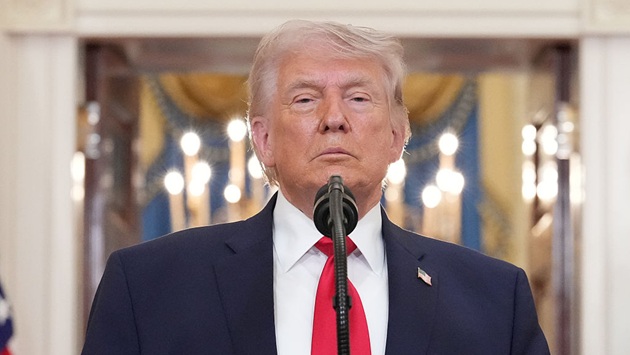
Alex Brandon-Pool/Getty Images

(WASHINGTON) — An 11th hour plea from the prime minister of Pakistan appears to have swayed both President Donald Trump and the Iranian regime to agree to a two-week ceasefire deal in exchange for temporarily opening the Strait of Hormuz, at least temporarily staving off Trump’s promise to bomb Iran back to the “stone ages.”

With just hours to go until Trump’s 8 p.m. ET Tuesday deadline, Pakistani Prime Minister Shehbaz Sharif — one of the key mediators attempting to the end the conflict — issued a public call to Trump, urging him to allow more time for negotiations.

“Diplomatic efforts for peaceful settlement of the ongoing war in the Middle East are progressing steadily, strongly and powerfully with the potential to lead to substantive results in near future,” Sharif said. “To allow diplomacy to run its course, I earnestly request President Trump to extend the deadline for two weeks.”

Sharif also implored Iran to open the Strait of Hormuz as a “goodwill gesture.”

Just after 6:30 p.m. ET, Trump posted on his social media platform that he would suspend military attacks.

“Based on conversations with Prime Minister Shehbaz Sharif and Field Marshal Asim Munir, of Pakistan, and wherein they requested that I hold off the destructive force being sent tonight to Iran, and subject to the Islamic Republic of Iran agreeing to the COMPLETE, IMMEDIATE, and SAFE OPENING of the Strait of Hormuz, I agree to suspend the bombing and attack of Iran for a period of two week,” he wrote.

“We received a 10 point proposal from Iran, and believe it is a workable basis on which to negotiate,” Trump continued, referring to an Iranian counterproposal transmitted to negotiators after rejecting plans for a longer ceasefire on Monday. “Almost all of the various points of past contention have been agreed to between the United States and Iran, but a two-week period will allow the Agreement to be finalized and consummated.”

Within the hour, Iran’s Supreme National Security Council claimed that the U.S. agreed to its plan which includes numerous concessions.

In a lengthy statement on Iranian state media, the council said the U.S. “committed in principle to non-aggression, continued Iranian control over the Strait of Hormuz, acceptance of enrichment, lifting of all primary and secondary sanctions.”

Foreign Minister Seyed Abbas Araghchi, meanwhile, said Iran would agree to a ceasefire if attacks against it are halted. He also said passage through the Strait of Hormuz would be allowed during the two-week period if coordinated with Iran’s armed forces.

The White House did not respond to specific questions Tuesday evening on whether the U.S. agreed to Iran’s 10-point plan — which includes lifting all primary and secondary sanctions and withdrawing combat troops from the region — or what it made of Iran saying the Strait of Hormuz would open with coordination from Iran’s military.

In response, White House press secretary Karoline Leavitt said in a statement:

“President Trump’s words speak for themselves: this is a workable basis to negotiate, and those negotiations will continue. The truth is that President Trump and our powerful military got Iran to agree to reopening the Strait of Hormuz, and negotiations will continue.”

Despite Trump calling Iran’s counterproposal a “workable basis” for negotiations, it contains many terms the U.S. and the president himself have long rejected and was previously described by administration officials as “maximalist.”

After the two-week ceasefire was announced, mediators began making arrangements to hold the first round of talks following the implementation of the ceasefire on Friday in Islamabad, but the White House said late Tuesday that it had not yet committed to any plans.

Before Sharif’s proposal was made public, two U.S. officials cautioned that although talks showed signs of progress, the Trump administration and Iranian regime still appeared to be far apart on core issues, expressing doubt that a broad deal could be reached on such a tight timeline.

One U.S. official also said the dynamic proposed by Sharif mirrored confidence-building measures under discussion behind closed doors, but up until the president and Iranian authorities accepted the terms, it was unclear whether both sides could be brought on board.

Fully reopening the Strait of Hormuz is a top priority for U.S. officials, who indicated that any agreement with Iran would have to lead to near-immediate progress on that front.

Asked about the state of negotiations with Iran on Tuesday morning, Secretary of State Marco Rubio said he hoped “to have more news” later in the day and called Iran’s control over the Strait of Hormuz “a big problem for the world.”

“The whole world’s been impacted unfortunately because Iran is violating every law known by striking commercial vessels in the Straits of Hormuz,” he said. “I mean this is a regime that doesn’t believe in laws, rules or anything like that — it’s a State Sponsor of Terrorism, so it’s not surprising that they’re now conducting terrorist activity against commercial vessels.”

Iran sees the strait as equally important and has signaled publicly and in private negotiations that it is highly reluctant to agree to any terms that would see it losing leverage over the waterway.

Iran’s counterproposal issued Monday stipulated that the country would fully open the Strait of Hormuz but set the rules for passage through the waterway and extract a toll of $2 million per vessel, a situation the Trump administration has repeatedly said would be untenable.

Copyright © 2026, ABC Audio. All rights reserved.
Todd Blanche, in 1st appearance as acting AG, shrugs off suggestion Trump will ‘pressure’ him to target opponents

Todd Blanche, in 1st appearance as acting AG, shrugs off suggestion Trump will ‘pressure’ him to target opponents
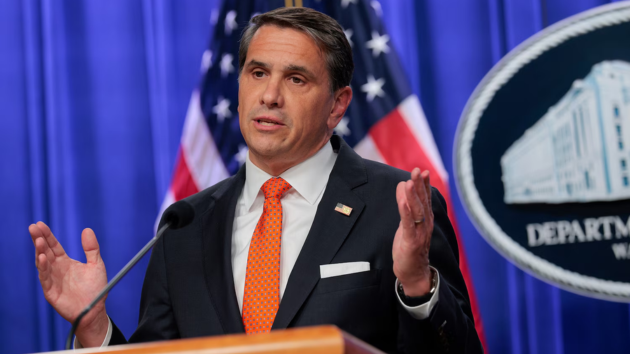
Acting U.S. Attorney General Todd Blanche speaks during a news conference at the Robert F. Kennedy Department of Justice building, April 7, 2026, in Washington. (Chip Somodevilla/Getty Images)

(WASHINGTON) — Acting Attorney General Todd Blanche used his first news conference Tuesday to shrug off any suggestion that he would use the Justice Department to more aggressively target perceived enemies of President Donald Trump, as he heaped praise on his ousted predecessor Pam Bondi. 

“First of all, we have thousands of ongoing investigations and prosecutions going on in this country right now, and it is true that some of them involve men women and entities that the president in the past has had issues with and that believe should be investigated,” Blanche said. “That is his right, and indeed it is his duty to do that, meaning, to lead this country.” 

Blanche denied he views President Trump’s public statements urging the prosecutions of his enemies as “pressure” on him in serving as the head of the DOJ. Trump, naming several of his perceived political foes in a September social media post, said, “JUSTICE MUST BE SERVED, NOW!!!

“I do not view this as pressure,” Blanche said. “I do not view this as something that is going to keep me up at night, except to make sure that we are investigating every case that we that we have to the fullest extent of the law and using all the resources we can.”

Trump announced Thursday that Bondi was being ousted as his attorney general in a post on his social media platform, saying she’ll move to a role working in the private sector. Blanche said it remains a mystery why Bondi was ousted, despite widespread reporting that it was due to Trump’s frustration with her lack of successful prosecutions against his political opponents and her handling of the Jeffrey Epstein files. 

“Nobody has any idea why the attorney general is no longer the attorney general and I’m the acting attorney general, except for President Trump,” Blanche said. 

Blanche, who previously served as Trump’s defense attorney in the cases brought against him by former special counsel Jack Smith and Manhattan District Attorney Alvin Bragg, repeatedly sparred with reporters at Tuesday’s press event, accusing the media of ignoring years of so-called “weaponization” under the Biden administration. 

“When I’m asked questions, or when I see reporting about shock and awe at this supposed weaponization of this Department of Justice, it means nothing to me, because it’s completely false,” Blanche said. “People say the president wants to go after his political enemies. No, the president has said time and time again that he wants justice.” 

With the news conference happening amid uncertainty over President Trump’s Tuesday morning threat to destroy the “civilization” of Iran, ABC News pressed Blanche on whether the DOJ is providing advice to the White House about what kind of military strikes could constitute potential war crimes. 

“The Department of Justice, as it always does, supports the Department of War, the White House, Department of State to the extent that’s involved, and our intelligence communities, to the extent that that’s something that’s appropriate, and we provide counsel to them, and we have been doing that, as you would expect,” said Blanche, who declined to engage on the topic of potential war crimes. 

Copyright © 2026, ABC Audio. All rights reserved.
Historians sue over Trump’s attempt to ignore Presidential Records Act

Historians sue over Trump’s attempt to ignore Presidential Records Act
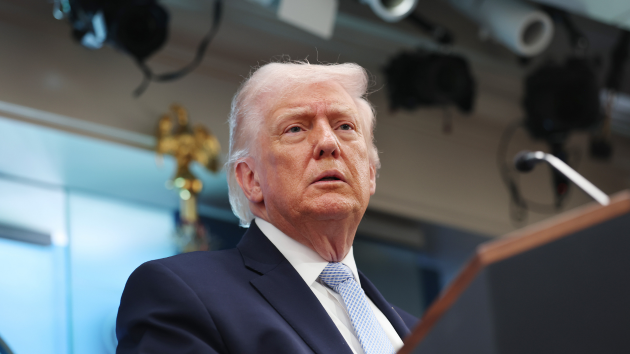
U.S. President Donald Trump attends a news conference in James S. Brady Press Briefing Room of the White House on April 06, 2026, in Washington, DC. President Trump spoke about the successful military mission to rescue a weapons systems officer whose F-15E Strike Eagle was shot down in Iran. (Photo by Anna Moneymaker/Getty Images)

(WASHINGTON) — The world’s largest association of historians is suing the Trump administration over a recent effort to justify the president keeping his official records rather than turning them over to the National Archives.

The American Historical Association and a second organization, American Oversight, filed the suit in Washington, D.C., District Court Monday, describing the case as an attempt to “preserve the historical record that belongs to the American people, before it is forever lost.”

“This case is about the preservation of records that document our nation’s history, and whether the American people are able to access and learn from that history,” the complaint said.

Last week, the Department of Justice’s Office of Legal Counsel issued an advisory opinion that stated Trump “need not further comply” with the decades-old law governing the handover of presidential records for public preservation after a president leaves office.

American Oversight, which is a nonprofit watchdog group, and the American Historical Association, which was founded in 1884 and is comprised of more than 10,000 historians, are asking a federal judge to declare that the Presidential Records Act is constitutional and to block Trump from using the opinion to justify keeping official records for himself.

“The Administration’s actions nullifying a law duly enacted by Congress, based on a legal determination that contravenes a decision of the Supreme Court, violate the separation of powers twice over,” the complaint said.

Passed by Congress in the wake of the Watergate scandal, the Presidential Records Act established that official presidential records — such as emails, phone records, and other materials created by White House staff over the course of their official duties — become public property and are maintained by the National Archives and Records Administration.  

After his first term in office, Trump was accused of violating the Presidential Records Act by storing boxes of sensitive presidential records at his Mar-a-Lago estate and taking steps to thwart the government’s efforts to retrieve them.

He was indicted for allegedly retaining classified information and obstructing justice, though the case was dismissed over U.S. District Judge Aileen Cannon’s concerns about the appointment of special counsel Jack Smith. 

Copyright © 2026, ABC Audio. All rights reserved.

FBI on scene of ICE-involved shooting in Patterson, California

FBI on scene of ICE-involved shooting in Patterson, California
Mountains outside Patterson, California. (David Paul Morris/Bloomberg via Getty Images)

(PATTERSON, Calif.) — The FBI is at the scene of an Immigration and Customs Enforcement-involved shooting that happened in Patterson, California, on Tuesday near the I-5, Acting ICE Director Todd Lyons said in a statement.

According to Lyons, ICE officers were attempting to arrest a man they claimed was an 18th Street gang member when he “weaponized his vehicle” and attempted to run over an officer.

Lyons claimed that the suspect is wanted in El Salvador for questioning in connection with a murder.

“Following their training, our officers fired defensive shots to protect themselves, their fellow agents and the public,” Lyons said.

The motorist was taken to a local hospital, Lyons said. The individual’s condition is unclear.

Earlier Tuesday, the Stanislaus County Sheriff’s Office issued a statement saying they were assisting with the shooting and had closed the on and off ramps in the area.

Patterson is an agricultural city in California’s San Joaquin Valley.

Copyright © 2026, ABC Audio. All rights reserved.
Closing arguments underway in Hawaii trial of doctor accused of trying to kill wife during hike

Closing arguments underway in Hawaii trial of doctor accused of trying to kill wife during hike
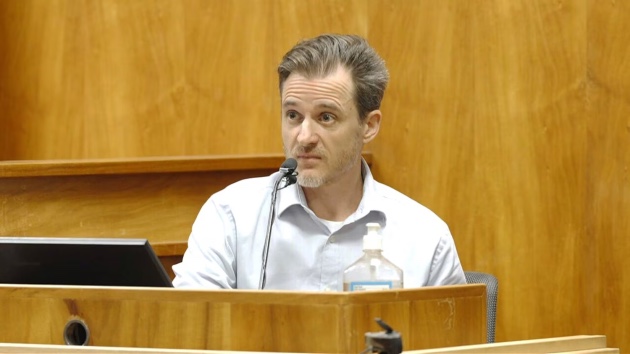
Gerhardt Konig testifies during his attempted murder trial in Honolulu, April 2, 2026. (Pool via ABC News)

(OAHU, Hawaii) — Closing arguments are underway in the trial of a Hawaii doctor accused of trying to kill his wife on a hiking trail.

Dr. Gerhardt Konig, 47, has pleaded not guilty to second-degree attempted murder. Prosecutors allege the anesthesiologist attacked his wife, Arielle Konig, near a cliff while on the Pali Puka Trail on Oahu on March 24, 2025, by pushing her near the edge and then beating her multiple times with a rock.

The defense, meanwhile, has alleged that Arielle Konig attacked her husband first, and that he hit her with the rock in self-defense.

The jury is expected to begin deliberations Tuesday afternoon local time. If they are unable to find Gerhardt Konig guilty of second-degree attempted murder, they will consider whether he is guilty of attempted manslaughter based upon extreme mental or emotional disturbance, first-degree attempted assault, second-degree assault or third-degree assault.

Both Gerhardt Konig and his wife, who have two young sons together, took the stand during the three-week trial in Honolulu, presenting widely differing accounts of what happened on the hike.

Arielle Konig testified that the two had traveled to Oahu from their home in Maui to celebrate her birthday. She said they had been working on repairing their marriage after her husband found what she characterized as “flirty” WhatsApp messages between her and a colleague in December 2024 in what she said was an “emotional affair.”

Arielle Konig testified that during the hike, her husband pushed her toward the edge of the cliff. As they wrestled on the ground with him on top, pinning her down, he produced a syringe and vial, she said.

Arielle Konig further testified that her husband proceeded to beat her with a rock as many as 10 times, and that she believed he was trying to knock her unconscious in order to drag her over the edge of the cliff. 

Arielle Konig testified that she fought back by biting her husband’s forearm and pleaded with him, saying, “You can’t do it,” and that “our kids will be orphans — you’ll go to jail and I’ll be dead.” 

“He’s saying, ‘You’re done. We’re done with you. We don’t need you anymore. You’re done. You’re done,'” she told the court.

Arielle Konig testified that she yelled, “He’s trying to kill me,” and screamed for help, and two female hikers happened upon them. One of the hikers told a 911 operator, “Someone’s currently being attacked on the top of Pali Puka. There’s a man trying to kill her,” according to audio of the call played in court.

Prosecutors showed photos of Arielle Konig’s bloodied face following the incident. She testified that she crawled away from her husband and was helped down the rest of the trail by the two women. She said she was treated at a hospital for “severe complex scalp lacerations” and showed the court scarring on her scalp. 

Gerhardt Konig testified in his own defense over two days, maintaining that he never intended to hurt his wife and acted in self-defense when he struck her with the rock.

He told the court that his wife pushed him near the edge after they got into an argument about her affair, and that she hit him with a rock first while they struggled on the ground. He admitted to hitting her with the rock while on top of her, saying he struck her twice, though he denied having any syringes or trying to pull her toward the cliff’s edge.

Gerhardt Konig testified that he felt suicidal after the incident.

“I just felt hopeless at that point in terms of everything,” he said. “I felt horrified about what I did to her, that I had caused this to her, that I had resorted to violence against my wife, the person who I love the most in the world. And I just kind of felt hopeless in terms of our relationship, too.”

Shortly after the incident, Gerhardt Konig testified, he made a FaceTime call to his 20-year-old son from his prior marriage, Emile Konig, to say goodbye.

His son testified about the FaceTime call during the trial. Asked by the prosecutor to recount what his father said during the call, Emile Konig responded, “That he would not be making it back to Maui and to take good care of the younger kids, and that Ari, my stepmom, had been cheating on him, and that he tried to kill her.” 

“During that call, the next plan that he said was to jump off the cliff,” Emile Konig testified, adding that his father said he was “at the end of his rope.” 

Gerhardt Konig pushed back against his son’s testimony and denied making any confession. He told the court that what he said during the call was, “She said I tried to kill her.”

Gerhardt Konig was arrested following an hourslong manhunt, prosecutors said.

Arielle Konig filed for divorce in May 2025, seeking full custody of the couple’s two children.  

Gerhardt Konig, who worked as an anesthesiologist on Maui, has been in jail since his arrest. Following his arrest, Maui Health said his medical staff privileges at Maui Memorial Medical Center have been suspended pending investigation. 

Copyright © 2026, ABC Audio. All rights reserved.
Trump’s timeline for attacking Iran’s critical infrastructure keeps shifting

Trump’s timeline for attacking Iran’s critical infrastructure keeps shifting
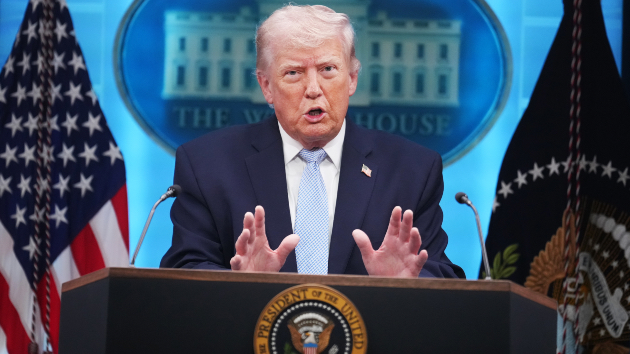
President Donald Trump conducts a news conference in the White House briefing room about the war in Iran on Monday, April 6, 2026. (Tom Williams/CQ-Roll Call, Inc via Getty Images)

(WASHINGTON) — President Donald Trump has set several deadlines for launching massive attacks on critical Iranian infrastructure if Tehran doesn’t make a peace deal includes reopening the vital Strait of Hormuz since U.S.-Israeli military operations against Iran began in February.

Here is a timeline of Trump’s deadlines so far:

March 2

Two days after the U.S. and Israel began attacking Iran, Trump told reporters at the White House, “We projected four to five weeks, but we have capability to go far longer than that.”

March 21

Trump gave a 48-hour ultimatum in a social media post calling on Iran to open the Strait of Hormuz, which is a trading route off the country’s southern coast that facilitates the transport of a huge amount of the world’s petroleum supply.

“the United States of America will hit and obliterate their various POWER PLANTS, STARTING WITH THE BIGGEST ONE FIRST!” he wrote.

March 23

Trump posted another message on social media, in all caps, announcing a five-day extension “SUBJECT TO THE SUCCESS OF THE ONGOING MEETINGS AND DISCUSSIONS.”

March 26

Trump said in a social media post that he was “pausing the period of Energy Plant destruction by 10 Days to Monday, April 6, 2026, at 8 P.M. Eastern Time.”

“Talks are ongoing and, despite erroneous statements to the contrary by the Fake News Media, and others, they are going very well,” he wrote.

The president later said he was inclined to provide a 10-day extension because Iran had allowed some oil-carrying ships to safely pass through the Strait of Hormuz.

Iranian officials did not comment publicly on the president’s threat. The next day, an Iranian missile struck Prince Sultan Air Base in Saudi Arabia.

April 4

The president went on social media around 10 a.m., claiming “time was running out.”

“48 hours before all Hell will reign down on them,” he wrote.

April 5

Trump made several statements to the press and on social media on Easter Sunday that the U.S. was setting a deadline of Tuesday, April 7 at 8 p.m. ET, which would be Wednesday, April 8, at 3:30 a.m. in Tehran.

He also posted profanity laden statement on the holiest day in the Christian calendar on social media, demanding that Iran open the strait or “Tuesday will be Power Plant Day, and Bridge Day, all wrapped up in one, in Iran.”

Trump told ABC News’ Rachel Scott that, if there was no deal in the next 48 hours, “We’re blowing up the whole country.”

April 6

The president held a news conference where he repeatedly made his threats against Iran’s leadership if they don’t come to an agreement with the U.S.

“The entire country can be taken out in one night, and that night might be tomorrow night,” he said.

April 7

The president made another threat on social media, indicating he could attack Iran in the night.

“A whole civilization will die tonight, never be brought back again. I don’t want it to happen, but it probably will,” he wrote.

Copyright © 2026, ABC Audio. All rights reserved.

Death of Vietnamese immigrant in Indiana facility is latest ICE detainee fatality

Death of Vietnamese immigrant in Indiana facility is latest ICE detainee fatality

(MIAMI COUNTY, Ind.) — A Vietnamese immigrant died in government custody last week, according to a notification sent to lawmakers from Immigration and Customs Enforcement, marking the latest detainee death during the Trump administration’s immigration crackdown.

Tuan Van Bui, a 55-year-old immigrant, died at the Miami Correctional Center in Indiana.

He is the 46th person to die in federal custody during the current Trump administration.

In its notification, ICE said that “onsite staff discovered Bui unresponsive and immediately initiated life-saving measures, including CPR. Staff immediately contacted emergency services personnel, who swiftly responded to the scene and initiated advanced life support interventions.”

The cause of death is under investigation.

ICE officials said that Bui was ordered removed by an immigration judge in 2005 and that he had been arrested “over a dozen times on charges including robbery, theft, assault, criminal conspiracy, reckless endangerment, possession of a controlled substance with intent to distribute/manufacture, carrying firearms, resisting arrest, and DUI.”

Court records show Bui filed a habeas petition challenging his detention in February. A district judge responded to the petition the day after Bui died, ordering the government to detail its plans for his removal by April 6. The government filed a status report on Monday, after Bui died, but the contents of that report are not public because the habeas petition is sealed.

According to an ABC News analysis of ICE data and the number of detainee deaths provided to Congress, the first 14 months of the second Trump administration represent the deadliest period for the federal detention system in recent years, with the exception of 2020, when the COVID-19 pandemic contributed to a spike in deaths.

Copyright © 2026, ABC Audio. All rights reserved.

Trump, hours until deadline, threatens Iran’s ‘whole civilization will die tonight’

Trump, hours until deadline, threatens Iran’s ‘whole civilization will die tonight’
U.S. President Donald Trump speaks during a news conference in James S. Brady Press Briefing Room of the White House on April 06, 2026 in Washington, DC. (Anna Moneymaker/Getty Images)

(WASHINGTON) — As his self-imposed Tuesday night deadline for Iran to make a deal or face massive U.S. attacks draws closer, President Donald Trump’s threatening rhetoric is becoming increasingly ominous, with a seemingly apocalyptic warning that a “whole civilization will die tonight” if Tehran doesn’t agree to his demands.

“A whole civilization will die tonight, never to be brought back again. I don’t want that to happen, but it probably will,” Trump wrote on his social media platform.

At the same time, continuing a series of mixed messages, Trump said “maybe something revolutionarily wonderful can happen” now that the U.S. is dealing with “different, smarter, and less radicalized” leaders in Iran.

“We will find out tonight, one of the most important moments in the long and complex history of the World,” the president wrote.

Trump’s issued an ultimatum to Iran to make a peace deal that includes reopening the critical Strait of Hormuz by 8 p.m. ET, or face bombardment of its critical infrastructure — including all its bridges, power plants and desalination facilities.

Trump first threatened to target Iran’s civilian infrastructure on March 21, saying the sites would be hit in 48 hours if no deal was made. He’s backed away and extended the deadline several times, citing what he described as successful talks.

But the past few days, he’s ratcheted up his threats. On Sunday, he told ABC News Senior Political Correspondent Rachel Scott that “we’re blowing up the entire country” if no agreement was reached.

On Monday, he told reporters in the White House briefing room that “the entire country could be taken out in one night” and the U.S. had plans that could wipe out Iran’s power plants and bridges, sending it back to the “stone ages,” within four hours.

In the background, negotiations were taking place between the U.S. and Iran via mediators like Pakistan.

According to a U.S. official and another person close to the ongoing talks, mediators are attempting broker a 45-day ceasefire between the U.S. and Iran ahead of Trump’s Tuesday deadline. Iran signaled it would not accept the mediators’ proposal on Monday, responding instead with its own 10-point plan, which a U.S. official described as maximalist. 

“We are dealing with them. I think it’s going well,” Trump said on Monday, adding that Vice President JD Vance and White House special envoy Steve Witkoff was involved in the negotiations.

“I think it’s going fine but we’ll have to see,” the president said.

Oscillating between threats of major attacks and talks of diplomacy, Trump was asked on Monday if the war was winding down or escalating.

“I don’t know. I can’t tell you,” he told reporters. “It depends what they do. This is a critical period.”

The New York Times and others reported on Tuesday that Iran told Pakistan it was no longer engaging in ceasefire talks. ABC News has not confirmed the report.

The White House, responding to the reports, told ABC News that the “only the president knows where things stand.” 

“The Iranian regime has until 8 p.m. Eastern Time to meet the moment and make a deal with the United States. Only the President knows where things stand and what he will do,” White House press secretary Karoline Leavitt said in a statement. 

Tehran has vowed a “regret-inducing” response should the U.S. wipe out its energy infrastructure. The Islamic Revolutionary Guard Corps on Tuesday told neighboring Gulf countries it will no longer show “restraint” in selecting regional targets for retaliation.

Iran’s deputy minister of sports and youth, Alireza Rahimi, invited people to form human chains around the country’s electricity power plants in a video message published on Monday, according to the government’s Telegram channel.

In the U.S., Trump’s increasingly grave threats have prompted some rare Republican pushback.

Sen. Ron Johnson, a Republican from Wisconsin, said he hopes Trump’s latest comments are “bluster.”

“I do not want to see us start blowing up civilian infrastructure … We are not at war with the Iranian people. We are trying to liberate them,” Johnson said on the “John Solomon Reports” podcast.

Some experts have warned that possible attacks on civilian infrastructure could constitute a war crime and violate international law.

“I’m not worried about it,” Trump said on Monday. “You know what’s a war crime? Having a nuclear weapon. Allowing a sick country with demented leadership have a nuclear weapon, that’s a war crime.”

ABC News’ Somayeh Malekian, Shannon Kingston and Justin Gomez contributed to this report.

Copyright © 2026, ABC Audio. All rights reserved.
Trump ally Sen. Ron Johnson breaks with president over Iran threats, as Democrats call on Congress to act

Trump ally Sen. Ron Johnson breaks with president over Iran threats, as Democrats call on Congress to act
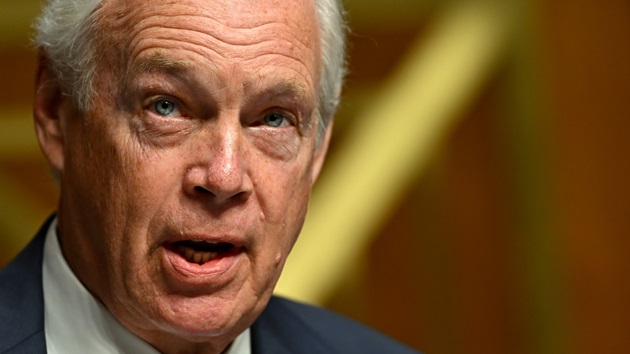
Senator Ron Johnson, a Republican from Wisconsin, speaks during a Senate Homeland Security and Governmental Affairs Committee hearing in Washington, DC, US, on Thursday, Feb. 12, 2026. (Graeme Sloan/Bloomberg via Getty Images)

(WASHINGTON) — Republican Sen. Ron Johnson broke with President Donald Trump on his threats to bomb civilian infrastructure in Iran, saying in a podcast, “I hope and pray” he is “using this as bluster.”

“I do not want to see us start blowing up civilian infrastructure … We are not at war with the Iranian people. We are trying to liberate them,” Johnson, a Trump ally who rarely breaks with the president, said on the “John Solomon Reports” podcast out on Monday.

Johnson’s comments came after Trump has threatened to bomb bridges and power plants, which would be devastating for Iranian civilians. Some experts have warned that such actions could violate international law; many Democrats are saying it amounts to war crimes.

Trump has said that he will target those bridges and power plants in Iran if they don’t open up the critical Strait of Hormuz — giving Iran a deadline of 8 p.m. ET Tuesday to act.

Other lawmakers reacted to Trump’s social media post on Tuesday, hours ahead of his self-imposed deadline, in which he threatened that a “whole civilization will die tonight, never to be brought back again” although he said “I don’t want that to happen.”

This comes on the heels of an Easter Sunday social media post where Trump threatened “Hell” if the Strait of Hormuz weren’t opened up.

Sen. Chuck Schumer, the Senate’s top Democrat, called President Trump an “extremely sick person” for threatening that a “whole civilization will die tonight.”

“Each Republican who refuses to join us in voting against this wanton war of choice owns every consequence of whatever the hell this is,” Schumer said in a post on X.

House Minority Leader Hakeem Jeffries also called on Republicans to act.

“Congress must immediately end this reckless war of choice in Iran before Donald Trump plunges us into World War III. It’s time for every single Republican to put patriotic duty over party and stop the madness. Enough,” Jeffries said in a statement posted on X.

ABC News has reached out to Senate Majority Leader John Thune and House Speaker Mike Johnson for comment.

Several House Democrats are calling on Congress to act as the war — now in its sixth week — continues.

Democratic Rep. Pramila Jayapal, of Washington, called Trump’s threat “outrageous, dangerous, and unhinged.”

“Trump’s illegal war in Iran has already led to enormous death and destruction, including a school bombing that killed over 100 children. Congress must immediately act to rein him in before more people die,” Jayapal wrote in a post on X.

Democratic Rep. Mike Quigley, of Illinois, said in a statement on X that Trump’s threat amounts to “mass murder” and that he is “urging every Cabinet Member and Republican leadership to call the President IMMEDIATELY.”

“The Iranian people do not deserve this,” Quigley wrote.

Democratic Rep. Mike Levin, of California, slammed Trump’s rhetoric, saying, “Threatening the annihilation of an entire civilization is dangerous beyond words, and hearing it from the person commanding our military should alarm every American.”

“This language is completely unacceptable from any president, let alone one who started this war without authorization from Congress and has no plan for what comes next,” Levin wrote.

Other conservative voices are breaking with Trump over his Iran threats.

Conservative broadcaster Tucker Carlson offered scathing criticism of the president, blasting his recent threats toward Iran and specifically Trump’s profanity-laden threat to Iran on Easter Sunday.

“It is really the most real thing this president has ever done, and also the most revealing on every level. It is vile on every level,” Carlson said of Trump’s Sunday post during “The Tucker Carlson Show” on Monday. 

Carlson scolded the president directly, saying, “how dare you speak that way,” adding that Trump’s post was a “mockery of Christianity.”

Trump fired back at Carlson in a social media post on Tuesday morning, calling him a “low IQ person that has absolutely no idea what’s going on.”

ABC News’ Allison Pecorin, Lauren Peller, Nicholas Kerr and Will Steakin contributed to this report.

Copyright © 2026, ABC Audio. All rights reserved.