(NEW YORK) — The husband of an American woman reported missing in the Bahamas after going overboard on a dinghy has spoken out for the first time, saying he is “heartbroken over the recent boat accident.”
The search is ongoing for Lynette Hooker, 55, of Michigan, according to the Royal Bahamas Police Force.
She and her husband, Brian Hooker, had departed Hope Town on the Abaco Islands for Elbow Cay around 7:30 p.m. on Saturday, according to the Royal Bahamas Police Force.
They were en route to their yacht, “Soulmate,” when bad weather caused Lynette Hooker to fall overboard, her husband told authorities. The strong currents took her out to sea, authorities said. She was holding the boat key when she went overboard, causing the 8-foot hard-bottom dinghy’s engine to shut off, police noted.
In a statement posted to social media on Wednesday, Brian Hooker, 58, said “unpredictable seas and high winds” caused his “beloved Lynette to fall from our small dinghy” near Elbow Cay.
“Despite desperate attempts to reach her, the winds and currents drove us further apart. We continue to search for her and that is my sole focus,” he said.
Brian Hooker subsequently paddled the boat back to shore, arriving at around 4 a.m. Sunday to a marina, where he reported his wife overboard to an individual who then alerted police, authorities said.
The search and rescue operation has been conducted by land, sea and air and involved multiple agencies, including the U.S. Coast Guard, the Royal Bahamas Police Force said.
Brian Hooker thanked the agencies “who have worked tirelessly in an ongoing effort to bring Lynette back to us.”
“Thank you to everyone for keeping Lynette in your thoughts and for your support of our family during this difficult time,” he said.
The investigation and search efforts are ongoing, police said Tuesday.
Lynette Hooker’s daughter, Karli Aylesworth, has called for a “full and complete investigation” into her mother’s disappearance.
She told ABC News her mother is fit and a good swimmer, and described what Brian Hooker told her about his wife’s disappearance.
“He said that my mom’s missing and that she fell out of the boat and that he threw a life jacket to her or something, and he doesn’t know if she got it or not,” she said.
“I just hope we find her,” she added.
The Hookers are avid sailors, documenting their travels on social media under the name “The Sailing Hookers.”
The U.S. State Department is “aware of reports regarding a missing American near Elbow Cay” and is “working with Bahamian authorities to provide assistance,” a spokesperson for the agency said Monday.
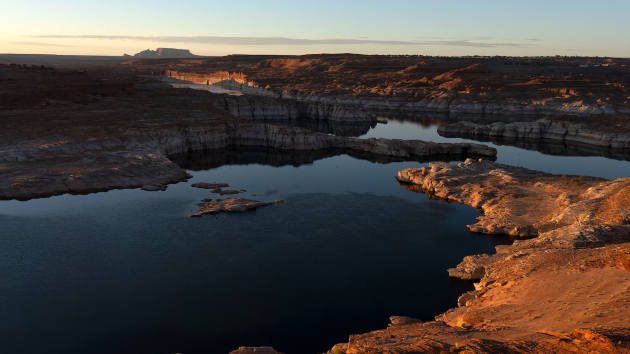
The sun rises over Lake Powell in Glen Canyon National Recreation Area, July 10, 2025, in Page, Ariz. (Rebecca Noble/Getty Images)
(NEW YORK) — March 2026 was a historic month for temperatures in the United States, fueled by an extraordinary and prolonged heat wave that shattered temperature records across much of the West, according to a new report released by the National Oceanic and Atmospheric Administration (NOAA).
Last month not only shattered the previous March record set in 2012, but it also marked the first time any month has exceeded the long-term average by more than 9 degrees Fahrenheit.
Daily record highs were widespread and persistent, especially in the Southwest, where some locations saw over 12 record-setting days. Around one-third of the population, 130 million Americans, saw their single-warmest March day on record.
Remarkably, 10 states recorded their warmest March on record: Arizona, California, Colorado, Idaho, Nevada, New Mexico, Oklahoma, Texas, Utah and Wyoming.
Several major cities in the West and Southern Plains also experienced their warmest March on record, many of them by a wide margin, including Dallas, San Antonio, Oklahoma City, Albuquerque, Denver, Salt Lake City, Phoenix, Las Vegas, San Francisco and Los Angeles.
Phoenix, Arizona, experienced nine 100 degrees Fahrenheit or greater days in March. Previously, the city had only experienced one triple-digit day in March since records began in 1895.
Human-amplified climate change is increasing the frequency and intensity of extreme heat events, according to the Fifth National Climate Assessment. It is also causing seasonal shifts, including milder, shorter winter seasons and spring warmth beginning earlier.
For much of the country, March was not only exceptionally warm but exceptionally dry, ranking as the driest March since 2013 across the Lower 48. However, unusually dry conditions have plagued many areas since the start of the year and beyond, with January to March 2026 also ranking as the driest on record.
According to the latest U.S. Drought Monitor report released on April 2, nearly 60% of the contiguous U.S. is experiencing drought conditions, an increase of about 5% from the beginning of March. The Lower 48 now has the largest extent of drought since November 2022.
Widespread, persistent drier-than-average conditions in March led to drought expansion and intensification across parts of the country.
Drought conditions worsened significantly in Nebraska last month, contributing to the state’s largest wildfire on record. The Morrill Fire scorched more than 640,000 acres. Florida is enduring its worst drought in 25 years, according to the National Integrated Drought Information System, with the dry conditions contributing to a heightened risk of wildfires this spring and prompting water restrictions in parts of the state.
In the western United States, well-above-average temperatures occurred during periods of well-below-average precipitation, which has had dramatic impacts on seasonal snowpack and water resources. With mountain snowpack sharply reduced, the region’s water supplies are facing mounting challenges and wildfire risk is elevated earlier than usual.
The Colorado River provides water for more than 40 million people and fuels hydropower resources in seven states: California, Arizona, Nevada, Colorado, New Mexico, Utah and Wyoming, according to the Bureau of Reclamation. Major reservoirs in the Colorado River Basin remain well below average, the agency’s latest data shows, heightening concerns about water availability across the region.
Lake Powell, the second-largest reservoir in the United States, is one of them. Water levels have dropped more than 10 feet so far this year and are forecast to continue a gradual decline through the months ahead. Despite the recent drop, the reservoir remains more than 8 feet above its record low set in April 2023. However, current projections suggest that level could be approached, or even challenged again, by late summer if dry conditions persist.
Over the next two weeks, NOAA’s Climate Prediction Center says there is an increased likelihood of near- to above-average precipitation across a large portion of the country, including much of the West, Midwest and South. Near- to below-average precipitation is more likely along the East Coast.
The outlook also indicates an increased probability of above-average temperatures across much of the nation, with the highest chances along the East Coast and in the South.
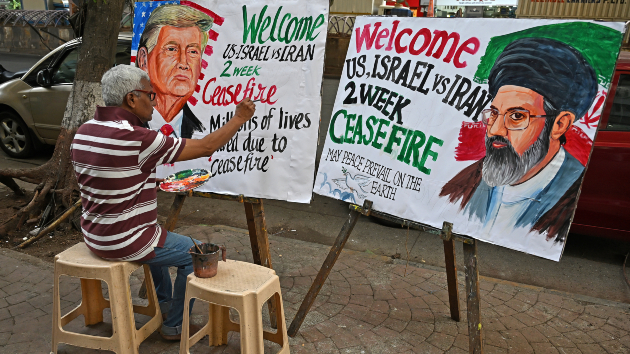
A teacher from Gurukul school of art paints a poster of US President Donald Trump (L) and Supreme Leader of Iran Mojtaba Khamenei (R) with a message welcoming two weeks of ceasefire between US and Iran outside their art school in Mumbai. (Ashish Vaishnav/SOPA Images/LightRocket via Getty Images)
(PARIS and LONDON) — Foreign leaders expressed hope for a full peace deal to end the U.S.-Israeli war against Iran in their reactions to Tuesday’s two-week ceasefire, which was first announced by President Donald Trump and later confirmed by Iranian officials.
British Prime Minister Keir Starmer said in a post to X that the ceasefire agreement “will bring a moment of relief to the region and the world. Together with our partners we must do all we can to support and sustain this ceasefire, turn it into a lasting agreement and re-open the Strait of Hormuz.”
Italian Foreign Minister Antonio Tajani likewise suggested the ceasefire was “a very positive development” which “moves us toward a peace agreement — for the civilian population, for the region, and for Israel — but also for our economy.”
German Friedrich Merz thanked Pakistan for its mediation efforts, adding in a post to X, “The aim now is to negotiate a lasting end to the war. We are in close coordination with our partners on this matter.”
Ursula von der Leyen, the president of the European Commission, said the ceasefire brought “much-needed de-escalation” and said that further negotiations are “crucial.”
Spanish Prime Minister Pedro Sanchez, who has been a prominent European critic of the war, said in a post to X that the ceasefire was “welcome news,” but added, “Momentary relief must not make us forget the chaos, the destruction, and the lives lost.”
“The Spanish government will not applaud those who set the world on fire just because they show up with a bucket,” Sanchez added. “What is needed now: diplomacy, international law, and PEACE.”
French President Emmanuel Macron stressed that the situation in Lebanon — another theater of the conflict in which Israel is fighting against the Iran-backed Hezbollah militia — is “critical.”
Macron said the ceasefire extended to Lebanon, as did Pakistani Prime Minister Shehbaz Sharif, though Israeli Prime Minister Benjamin Netanyahu said overnight that Lebanon was not included in the agreement. Israel continued intense strikes in Lebanon, including on Beirut, on Wednesday.
Macron called the ceasefire “a very good thing” and said the question of Lebanon is “one of the most delicate.” Hezbollah, Macron said, made a “strategic error” by attacking Israel and dragging Lebanon into the regional crisis, but said Israel’s strikes and occupation of southern Lebanon “cannot be a long-term response.”
Persian Gulf and other regional nations also welcomed the ceasefire in Iran, though several reported fresh Iranian drone and missile attacks on Wednesday.
Saudi Arabia’s Foreign Ministry expressed its support for the pause in a statement posted to X, while Qatar’s Foreign Ministry described the ceasefire as “an initial step toward de-escalation.” Doha also stressed “the necessity for the Islamic Republic of Iran to take the initiative to immediately cease all hostile acts and practices.”
Oman — traditionally a mediator of U.S.-Iranian talks — said in a Foreign Ministry statement that it affirmed “the importance of intensifying efforts now to find solutions capable of ending the crisis at its roots and achieving a permanent cessation of the state of war and hostile acts in the region.”
Jordan’s Foreign Ministry in a post to X “emphasized the importance of opening the Strait of Hormuz and ensuring freedom of international navigation without restrictions in accordance with international law.”
Egyptian President Abdel Fattah el-Sisi said in a post to X that the news “undoubtedly brought relief to the hearts of millions of peace-loving people across all corners of the earth,” adding that Cairo valued Trump’s “decision to heed the voice of reason.”
The Turkish Foreign Ministry released a statement expressing its backing for the peace process, adding, “We will continue to extend all necessary support for the successful conclusion of the negotiations to be held in Islamabad,” referring to Friday’s planned talks.
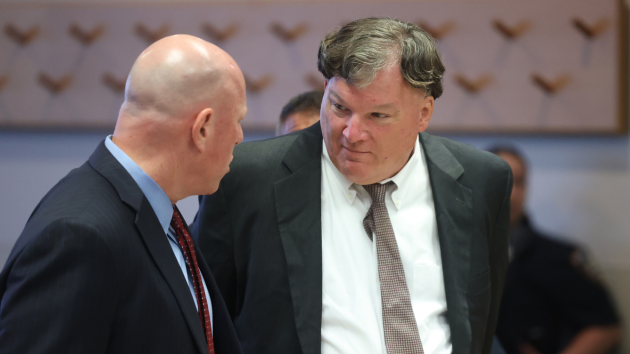
Alleged serial killer Rex A. Heuermann appears inside Judge Tim Mazzei’s courtroom with his attorney Michael Brown at Suffolk County Court in Riverhead for a frye hearing on July 17, 2025 in Riverhead, New York. (Photo by James Carbone-Pool/Getty Images)
Heuermann, a New York City architect, was arrested in 2023 and initially pleaded not guilty to killing seven women whose remains were found on Long Island. His trial had been set for September.
Heuermann’s ex-wife, Asa Ellerup, and his daughter are at the courthouse for Wednesday’s high-stakes hearing.
Heuermann’s victims date back to 1993, when Sandra Costilla was killed. Her remains were found in North Sea on Long Island.
Valerie Mack was killed in 2000 and Jessica Taylor was killed in 2003. Partial remains of Taylor and Mack were found near Gilgo Beach and in Manorville on Long Island.
Maureen Brainard-Barnes was killed in 2007 and found near Gilgo Beach.
Megan Waterman, Melissa Barthelemy and Amber Lynn Costello were killed between 2009 and 2010 and also recovered near Gilgo Beach.
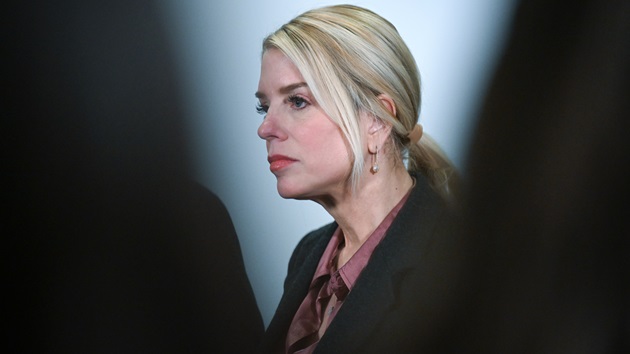
Former U.S. Attorney General Pam Bondi answers questions from the media at the United States Capitol on March 18, 2026 in Washington, DC. (Matt McClain/Getty Images)
(WASHINGTON) — Former Attorney General Pam Bondi is not expected to sit for a closed-door deposition next week, after the Department of Justice informed the House Oversight Committee on Wednesday that its subpoena is essentially moot because it sought Bondi’s testimony in an “official capacity as Attorney General” — and President Donald Trump removed her from office last week.
This is a developing story. Please check back for updates.
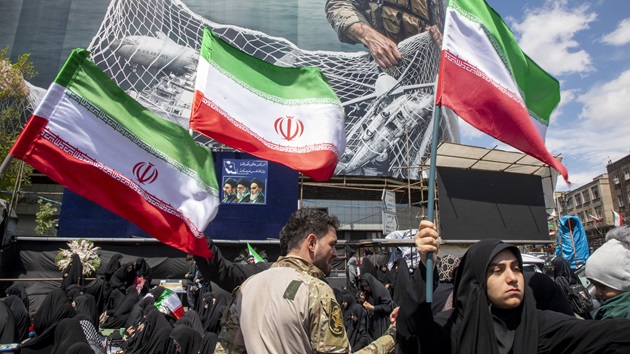
Iranians hold national flags as they gather in Tehran’s Revolution Square after the United States and Iran agreed to a two-week ceasefire, on April 8, 2026 in Tehran, Iran. (Majid Saeedi/Getty Images)
(LONDON) — As President Donald Trump pulled back from threats to annihilate “a whole civilization” when the Iranian regime agreed to a ceasefire and open the critical Strait of Hormuz, some people in the Islamic Republic expressed relief after juggling feelings ranging from despair to doom.
Trump had given the Iranian regime a deadline of 8 p.m. ET Tuesday — which would have been Wednesday, April 8, at 3:30 a.m. in Tehran — for the Iranian government to strike a peace deal or risk the destruction of all bridges and power plants in Iran.
He later extended the deadline to two more weeks as Iran agreed to open the Strait of Hormuz and work to forge a peace deal.
Sohreh, a 33-year-old journalist and resident of Tehran, told ABC News she felt an immediate sense of “relief” when she heard that a ceasefire agreement had been brokered.
“My heart was about to stop,” Sohreh said in a written message to ABC News of the hours she and other Iranian citizens spent on Tuesday bracing for the massive U.S. to strike on its power plants, bridges and infrastructure before the attack was called off. “I cried all day for Iran and prayed to a God I don’t believe in: ‘A miracle, please, send a miracle. I can’t live after the destruction of Iran.'”
Leading up to the ceasefire announcement, Iranians who have been in contact with ABC News throughout the conflict, which began with a Feb. 28 U.S.-Israel joint attack, recalled moments of joy as it appeared the Iranian regime was about to be toppled and disappointment that the Islamic Republican Guard Corps (IRGC) had refused to give up the fight.
An internet blackout imposed by the regime has made it challenging to communicate with people inside Iran, so it’s difficult to gauge how people in the country are feeling. Some have managed to get messages to ABC News.
“I am against the regime and I want them gone with every cell of my body. I have participated in the protests against the regime. But by no means I agree with a foreign power destroying what has been built by my people, for my people, and for the future of our children,” Fatemeh, a 40-year-old engineer who lives in Tehran, told ABC News in a written statement on Monday.
Citing security reasons, Iranians like Fatemeh and Sohreh who have communicated with ABC News, spoke on condition that their real names not be used.
Sohreh recalled a rollercoaster of emotions since the conflict began, from hope that the regime would be toppled to despair that it was hanging on and prolonging the pain of regular Iranians.
“I danced so much to the news of Khamenei’s death, so much that my legs hurt and I fell,” Sohreh said in a message to ABC News on Monday, referring to Ayatollah Ali Khamenei, the country’s supreme leader, who was assassinated in a strike on the first day of the conflict.
But as the war dragged on, Sohreh said she battled doubts that the U.S.-Israel attacks would bring the regime to its knees. “We ask ourselves what if the war continues?” she said.
“When they hit Asaluyeh, everyone was feeling terrible,” Sohreh said of Monday’s strike by Israel Defense Forces on Iran’s southern petrochemical infrastructure in the Persian Gulf port city of Asaluyeh. “We wonder what to do if they hit the infrastructure. They don’t belong to the Islamic Republic. They are built by our own children. They belong to Iran and the future of Iran.”
On Tuesday morning, Trump posted an ominous message on his social media platform, saying, “A whole civilization will die tonight, never to be brought back again.”
“I don’t want that to happen, but it probably will,” Trump wrote. “However, now that we have Complete and Total Regime Change, where different, smarter, and less radicalized minds prevail, maybe something revolutionarily wonderful can happen, WHO KNOWS?”
During a news conference on Wednesday morning, Defense Secretary Pete Hegseth declared “a historic and overwhelming victory on the battlefield.
“A capital V military victory,” said Hegseth, adding that the U.S. military had “achieved every objective.”
Hegseth said that prior to the ceasefire being announced, the U.S. military was prepared to carry out the threat Trump made on Tuesday morning.
“Had Iran refused our terms, the next target would have been their power plants, their bridges and oil and energy infrastructure, targets they could not defend and could not realistically rebuild. It would have taken them decades. And we were locked and loaded,” Hegseth said.
He added, “President Trump had the power to cripple Iran’s economy in minutes, but he chose mercy. He spared those targets because Iran accepted the ceasefire under overwhelming pressure.”
Trump’s ominous statement on Tuesday came after he told reporters on Monday during the annual White House Easter Egg Roll, “The Iranian people, when they don’t hear bombs go off, they’re upset.”
“They want to hear bombs because they want to be free,” Trump said without attributing where he was getting his information from.
He went on to claim that the only reason Iranian civilians have not taken to the streets en masse to demonstrate against the regime is that “they will be shot immediately, and that’s an edict. That’s in writing.”
Leila, a 36-year-old resident of Tehran who works as a manager of a shipping company, said she agreed with Trump, telling ABC News on Monday that when she doesn’t hear bombs, she feels “upset.” Leila, who described herself as anti-regime, said she longs for the day she sees American soldiers in Iran to save them.
In an earlier message Leila sent to ABC News on March 30, she said, “We don’t have fear from the missile attacks, we just get very happy to watch them burning the bases of the IRGC.”
Darius, a 38-year-old anthropologist from Tehran, told ABC News in a message sent on March 25 that he was initially anti-regime, but as the bombing continued, his opinion of the regime had started to change.
“The noise of the bombs and the fact that they are actually killing a lot of civilians pushes us more towards let’s say rallying around the flag,” Darius wrote. “We are fighting this war as a country and even though the Iranian state is not my cup of tea and even though I detest many of the things they do, still, I prefer to stand by their side against a Nazi in the White House.”
At least 3,546 people, including 244 children and 1,616 other civilians, have been killed in Iran due to the U.S.-Israeli strikes since the war began, the U.S.-based Human Rights Activists News agency reported on Sunday.
A trader works on the floor at the New York Stock Exchange (NYSE) in New York, US, on Monday, April 6, 2026. Signs of last-ditch efforts to secure a truce in the war that has rattled global markets spurred a cautious advance in stocks as oil retreated. (Photographer: Michael Nagle/Bloomberg via Getty Images)
(NEW YORK) — Stocks soared and oil prices plunged in early trading on Wednesday, just hours after the U.S. and Iran announced a two-week ceasefire.
The Dow Jones Industrial average surged 1,215 points, or 2.6%, while the S&P 500 climbed 2.5%. The tech-heavy Nasdaq jumped 3.4%.
As part of the accord, Iran says it will allow tankers passage through the Strait of Hormuz, a vital shipping route for oil and gas, as long as they coordinate with the nation’s military. Investors appeared optimistic that the agreement would ease one of the worst global oil shortages in decades.
U.S. oil prices plummeted 18% on Wednesday, registering at about $92 a barrel. Still, the price of oil remained well above pre-war levels of about $67 a barrel.
President Donald Trump touted the ceasefire in a social media post on Wednesday, saying there would be “no enrichment of Uranium,” despite the Iranians claiming that the U.S. agreed to its plan, which includes numerous concessions.
The president added that “the United States will, working with Iran, dig up and remove all of the deeply buried (B-2 Bombers) Nuclear ‘Dust.'”
The Iranian Supreme National Security Council’s statement on Tuesday included “acceptance of enrichment” in its 10-point plan.
Investors will likely pay close attention to a potential uptick in tanker traffic through the Strait of Hormuz.
Typically, scores of ships carry a fifth of the world’s oil through the strait each day, but Iran effectively closed the passage over the course of the war. That oil shortage sent crude prices soaring, and it threatened far-reaching price increases that some economists feared could tip the U.S. economy into a recession.
ABC News’ David Brennan, Jon Haworth and Nadine El-Bawab contributed to this report.
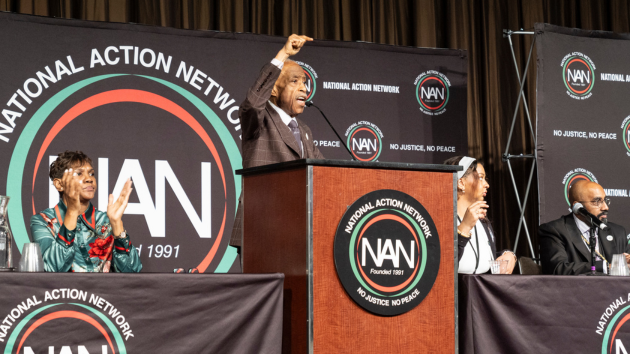
Reverend Al Sharpton speaks during last day of National Action Network Convention at Sheraton Times Square. (Photo by Lev Radin/Pacific Press/LightRocket via Getty Images)
(NEW YORK) — What is expected to be the biggest gathering of possible Democratic 2028 presidential hopefuls is set to happen at the convention for the National Action Network, an organization dedicated to fighting for civil rights and equality. In New York City this week, the potential candidates will gather to look to engage with Black civil rights leaders and voters.
The event, hosted by Rev. Al Sharpton, has become a hub for those considering a presidential run and will offer a preview of what the jostling for the Black vote in the 2028 election will look like.
“Two years out, we’ll see some of the people that have been thinking of running, and they’ll see us,” Sharpton told POLITICO in an interview about the gathering.
Former Vice President Kamala Harris, former Transportation Secretary Pete Buttigieg, Pennsylvania Gov. Josh Shapiro, Maryland Gov. Wes Moore, Illinois Gov. JB Pritzker, Kentucky Gov. Andy Beshear, Sen. Mark Kelly and Rep. Ro Khanna are among the potential 2028 Democratic candidates who will attend the convention, according to the National Action Network website.
Nearly all of the lawmakers have either expressed interest or have not shut down the idea about running for president. All of them are set to take part in a conversation with Sharpton.
The four-day-long National Action Network’s 35th anniversary convention is an opportunity for potential 2028 presidential candidates to connect with Black voters and test out their messaging ahead of the 2028 cycle.
Harris has not closed the door on running for president again, saying in a February podcast interview that she has not yet decided whether she would run again, adding that she might.
Sharpton told POLITICO not to count Harris out, calling her a strong force in the Black community.
“I wouldn’t ignore the fact that she’s absolutely a potent force in the Black community,” Sharpton told POLITICO. “I do not have any idea whether she’s going to try to go again, but I think she’s due all the respect for what she did, and the fact that she got more votes than any presidential candidate in American history, other than Trump. I think she has been ignored, and we’re going to raise that at our convention.”
The 2024 election showed President Donald Trump — who made an appearance at the convention in 2002, 14 years before he was first elected president — made gains with Black voters, a group that has been critical to the Democratic Party for decades.
According to the Pew Research Center, Trump nearly doubled his support among Black voters between 2020 and 2024, with 8% voting for him in 2020 compared to 15% in 2024. Still, 83% of Black voters backed Harris in the 2024 presidential election.
Janiyah Thomas, who served as Trump’s Black media director during the 2024 election, told ABC News in a phone interview that Trump’s gains with Black voters stemmed from his focus on issues that matter most to American households.
“Overall, the president made gains with Black voters because I think we cut out all the noise and just spoke to the kitchen table issues that really matter to all people, no matter what race, and I think people really love the president’s authenticity,” Thomas said.
And while Democrats are looking to win back Black voters who supported Trump, the convention will also give potential Democratic presidential candidates a chance to connect with the Black community, including those who previously struggled to garner support from Black voters.
Former Transportation Secretary Pete Buttigieg, a potential 2028 presidential candidate who struggled to garner support from Black voters during the 2020 presidential election, has increased his engagement with Black candidates by campaigning with Shawn Harris in his congressional election in Georgia and Chedrick Greene in his state Senate election in Michigan.
Alleged serial killer Rex A. Heuermann appears inside Judge Tim Mazzei’s courtroom with his attorney Michael Brown at Suffolk County Court in Riverhead for a frye hearing on July 17, 2025 in Riverhead, New York. (Photo by James Carbone-Pool/Getty Images)
(NEW YORK) — Accused Gilgo Beach, New York, serial killer Rex Heuermann might change his plea to guilty and admit to the murders at his scheduled court appearance on Wednesday, sources familiar with the case told ABC News.
Heuermann, a New York City architect, was arrested in 2023 and has pleaded not guilty to killing seven women whose remains were found on New York’s Long Island.
His trial is set for September.
The first victim was Sandra Costilla, killed in 1993. Valerie Mack was killed in 2000 and Jessica Taylor was killed in 2003. Partial remains of Taylor and Mack were found near Gilgo Beach and in Manorville on Long Island, while Costilla was found in North Sea on Long Island.
Maureen Brainard-Barnes was killed in 2007 and found near Gilgo Beach. Megan Waterman, Melissa Barthelemy and Amber Lynn Costello were killed between 2009 and 2010 and also recovered near Gilgo Beach.
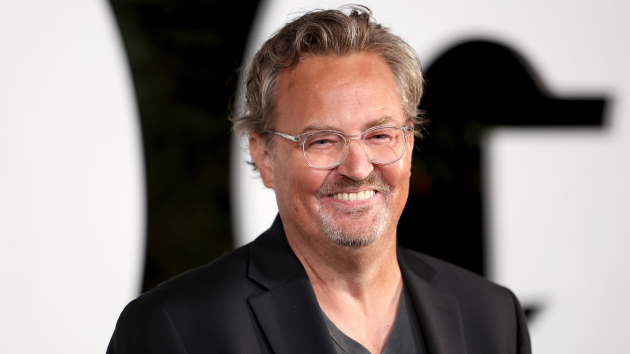
Matthew Perry attends the GQ Men of the Year Party 2022 at The West Hollywood EDITION on November 17, 2022 in West Hollywood, California. (Photo by Phillip Faraone/Getty Images for GQ)
(NEW YORK) — The woman reportedly known as the “Ketamine Queen” is set to be sentenced on Wednesday for providing the ketamine that killed Matthew Perry.
Jasveen Sangha admitted in a plea agreement to working with another dealer to provide the “Friends” actor with dozens of vials of ketamine, including the dose that led to his fatal overdose in October 2023 at the age of 54.
Sangha pleaded guilty last year to one count of maintaining a drug-involved premises, three counts of distribution of ketamine, and one count of distribution of ketamine resulting in death or serious bodily injury.
Sangha faces a maximum sentence of 65 years in prison. She is scheduled to be sentenced Wednesday morning local time in Los Angeles federal court.
Prosecutors said in court filings ahead of Sangha’s sentencing that she should serve 15 years in prison for her “cold callousness and disregard for life,” and that she’s shown little remorse, pointing to recorded jail communications in which, they say, Sangha talked about “obtaining ‘trademarks’ and securing book rights on the events of the case.”
In a sentencing memorandum filed last month, prosecutors said Sangha ran a “high-volume drug trafficking business out of her North Hollywood residence,” where she stored, packaged and distributed drugs, including ketamine and methamphetamine, since at least 2019. Prosecutors said Sangha continued to sell “dangerous drugs” even after learning she had sold ketamine that contributed to the overdose deaths of two men: Perry and, years earlier, Los Angeles resident Cody McLaury. McLaury died hours after Sangha sold him four vials of ketamine in 2019, prosecutors said.
“She didn’t care and kept selling,” prosecutors wrote. “Defendant’s actions show a cold callousness and disregard for life. She chose profits over people, and her actions have caused immense pain to the victims’ families and loved ones.”
Sangha “had the opportunity to stop after realizing the impact of her dealing – but simply chose not to,” which warrants a “significant” sentence, prosecutors also said.
The defense, meanwhile, said Sangha, who has been behind bars since her arrest in August 2024, should receive a sentence of time served due to her “demonstrated rehabilitation.”
“She has maintained sustained and exemplary sobriety, and actively engaged in recovery-oriented and rehabilitative programming while in custody, and has tremendously strong family and community support to facilitate successful reentry and reduce the risk of recidivism,” her attorneys, Mark Geragos and Alexandra Kazarian, wrote in a sentencing memorandum filed last month.
In response to the defense sentencing memorandum, prosecutors continued to argue that Sangha has shown a lack of remorse and claimed she has attempted to minimize the harm she’s caused.
“For example, defendant harmed two overdose victims, but her sentencing briefing does not even mention Cody McLaury and only references Matthew Perry in passing, in the context of defendant attempting to downplay her role in his death and to heap the blame on others,” prosecutors wrote in their response, filed last week.
They also argued that Sangha “expressed a similar lack of remorse in recorded jail communications” – including one on Dec. 25, 2024, during which prosecutors said an individual stated, “We’re gonna sell those book rights,” and Sangha allegedly responded, “Oh I know, the plan is in, the f—— trademark is going down,” according to the filing.
“Even if said in jest, this conversation suggests defendant does not appreciate the severity of her offenses, and instead sees her crimes as a potential future revenue stream,” prosecutors wrote. “It also shows that time in custody has, thus far, failed in getting defendant to adequately reflect upon the grave harms she has caused.”
Geragos has previously said that Sangha “feels horrible.”
“She’s felt horrible from day one,” Geragos told reporters outside the courthouse last year following Sangha’s guilty plea. “This has been a horrendous experience.”
In a victim impact statement filed ahead of the sentencing, Perry’s stepmother, Debbie Perry, said the pain caused by the defendant is “irreversible.”
“Please give this heartless woman the maximum prison sentence so she won’t be able to hurt other families like ours,” she wrote.
In addition to Sangha, four other people were charged and pleaded guilty in connection with Perry’s death: the other dealer, Erik Fleming; Kenneth Iwamasa, Perry’s live-in personal assistant; and two doctors, Mark Chavez and Salvador Plasencia.
Prosecutors said Sangha worked with Fleming to distribute ketamine to Perry, and that in October 2023, they sold the actor 51 vials of ketamine that were provided to Iwamasa.
“Leading up to Perry’s death, Iwamasa repeatedly injected Perry with the ketamine that Sangha supplied to Fleming,” the DOJ said in a press release last year. “Specifically, on October 28, 2023, Iwamasa injected Perry with at least three shots of Sangha’s ketamine, which caused Perry’s death.”
Iwamasa pleaded guilty in August 2024 to one count of conspiracy to distribute ketamine causing death and is scheduled to be sentenced on April 22.
Fleming pleaded guilty in August 2024 to one count of conspiracy to distribute ketamine and one count of distribution of ketamine resulting in death and is set to be sentenced on April 29.
Chavez and Plasencia have also been convicted for their roles in what prosecutors called a conspiracy to illegally distribute ketamine to Perry.
Chavez, who once ran a ketamine clinic, pleaded guilty in October 2024 to one count of conspiracy to distribute ketamine and was sentenced to eight months home confinement in December 2025.
Plasencia, who briefly treated Perry prior to the actor’s death, pleaded guilty in July 2025 to four counts of distribution of ketamine and was sentenced to 30 months in prison in December 2025.