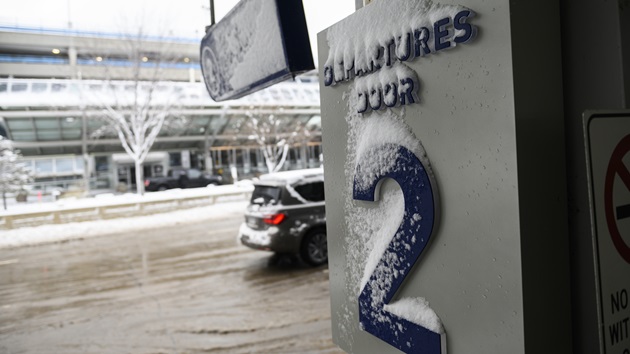
Signage outside Minneapolis-St. Paul International Airport is caked in snow after a blizzard struck overnight on November 27, 2019 in Bloomington, Minnesota. Stephen Maturen/Getty Images
(MINNEAPOLIS) — A 47-year-old man was struck and killed by a snowplow at the Minneapolis-Saint Paul International Airport, according to local officials.
The incident was reported shortly after 7:30 p.m. Tuesday at a parking lot near Terminal 2, according to Jeff Lea, a spokesperson for the Metropolitan Airports Commission, which operates the airport.
That parking lot serves the in-flight catering services company LSG Sky Chefs.
Temperatures were in the upper 20s with light snow falling in the area at the time of the incident. Over 200 flights out of the Minneapolis-Saint Paul airport were delayed on Tuesday.
The victim’s identity was not immediately released.
The Minnesota State Patrol is helping with the investigation, Lea said.
The city of Minneapolis on Wednesday declared a snow emergency starting at 9 p.m., which bans certain street parking.
“These rules help plows in clearing the streets so emergency vehicles and other traffic can get around,” city officials said.
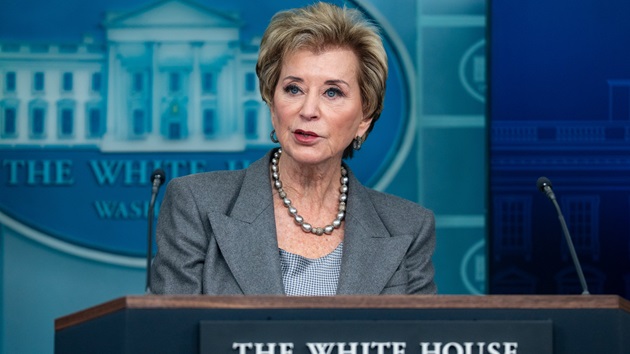
Linda McMahon, US education secretary, during a news conference in the James S. Brady Press Briefing Room of the White House in Washington, DC, US, on Thursday, Nov. 20, 2025. Bonnie Cash/UPI/Bloomberg via Getty Images
(WASHINGTON) — The Department of Education has moved to terminate one of former President Joe Biden’s most popular student loan forgiveness plans — impacting millions of Americans — through a proposed joint settlement with the state of Missouri on Tuesday.
The pending agreement ends the Saving on a Valuable Education or “SAVE” plan, which is home to over 7 million student loan borrowers. It marks a major victory for the Trump administration’s efforts to claw back Biden-era policies, including Biden’s numerous efforts to implement student loan debt cancellation.
Officials in the Trump administration’s Education Department, who’ve decried those policies for months, suggested that the administration is righting a wrong by ending the “deceptive scheme” of student loan forgiveness.
The Biden administration touted the plan for including $0 payments for anyone making $16 an hour or less, lowering monthly payments for millions of borrowers, and protecting borrowers from runaway interest if they are making their monthly payments.
“The law is clear: if you take out a loan, you must pay it back,” Under Secretary of Education Nicholas Kent said in a release from Secretary of Education Linda McMahon’s department on Tuesday. “Thanks to the State of Missouri and other states fighting against this egregious federal overreach, American taxpayers can now rest assured they will no longer be forced to serve as collateral for illegal and irresponsible student loan policies.”
The Biden administration launched the SAVE Plan, which it dubbed the most affordable payment plan ever, after the Supreme Court struck down Biden’s previous signature debt relief program in 2023.
SAVE was one of several income driven repayment (IDR) plans, which calculate payment size based on income and family size, aimed at easing the repayment process as a pandemic-era pause ended.
Several Republican-led states, including Missouri, sued the Biden administration over the plan, and a federal appeals court blocked the program in 2024.
The announcement on Tuesday would mark an end to those lawsuits.
McMahon, a vocal critic of student loan forgiveness, has said the administration will no longer allow American taxpayers to take on debts that are not their own.
“The Biden Administration’s illegal SAVE Plan would have cost taxpayers, many of whom did not attend college or already repaid their student loans, more than $342 billion over ten years,” McMahon wrote in a post on X. “We will not tolerate it.”.
Her agency’s already saddled Federal Student Aid (FSA) Office will provide support to borrowers currently enrolled in selecting a new, “legal repayment plan,” the department said.
The department said borrowers will have a limited time to find a new payment plan. However, FSA’s Loan Simulator tool will estimate monthly payments, determine repayment eligibility and select a new plan that best fits those borrowers’ needs and goals, the department said.
Some student loan advocates worry the proposed agreement unleashes chaos on borrowers.
“The 7+ million borrowers enrolled in SAVE will face higher monthly loan payments — and may lose out on months of progress toward loan forgiveness,” Michele Zampini, associate vice president of federal policy & advocacy at The Institute for College Access & Success (TICAS) wrote in a statement.
Protect Borrowers Deputy Executive Director and Managing Counsel Persis Yu said the move strips borrowers of the most affordable repayment plan that would help millions to stay on track with their loans while keeping a roof over their head.
“This settlement is pure capitulation–it goes much further than the suit or the 8th Circuit order requires,” Yu wrote in a statement to ABC News. “The real story here is the unrelenting, right-wing push to jack up costs on working people with student debt.”
Under that bill, the plans will be replaced with two separate repayment plans: a standard repayment plan and the Repayment Assistance Plan (RAP), a new income-based repayment plan coming July 1, 2026.
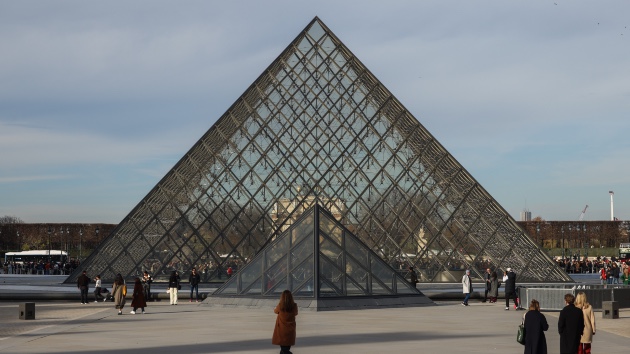
View of the Cour Napoleon, a historic courtyard in the Louvre Museum and the Louvre Pyramid in Paris, France on November 12th, 2025. (Photo by Beata Zawrzel/NurPhoto via Getty Images)
(PARIS and LONDON) — Nobody was monitoring the live feed.
As masked men hacked a hole in a window at the Louvre Museum in Paris in October, a security camera inside the gallery was picking up the spot where they were working, Noel Corbin, the head of France’s inspectorate general of culture told the country’s Senate at a hearing on Wednesday.
As men clambered into the world-famous museum, nobody was actively monitoring that specific feed, legislators were told. And, even as the robbers collected their loot — allegedly stealing French crown jewels worth some $102 million — the security staff at a bank of screens weren’t yet focused on the camera catching the robbery, Corbin said.
The camera’s zoom wasn’t “activated” until 9:38 a.m., about four minutes after the robbery began, the Senate was told. By then, the blink-and-you-miss-it robbery was all but over.
The Senate was told on Wednesday that there had been “insufficient screens” in the security guard’s control room to simultaneously view images from all the cameras in the museum.
While the live video feed from one the Apollo Gallery appeared to have been transmitted during the robbery, it wasn’t immediately clear why it wasn’t among those being monitored remotely by a live person. Another camera near the scene wasn’t working that day, Corbin said.
The latest details on apparent faults in security at the world’s most-visited museum came as the French government and law enforcement sought through a sprawling investigation to understand how those alleged lapses in procedure and equipment may have worked in favor of the robbers.
The robbery suspects fled on motorbikes, police said at the time of the heist. At least seven people have since been arrested, five of whom have been formally charged in connection to the heist, French officials said. But the irreplaceable jewels taken during the Sunday morning heist have not yet been recovered.
The Senate on Wednesday heard new details on what appeared to have happened during the heist, including that there had been “insufficient screens.” That lack of screens had been highlighted in a security audit carried out earlier in the year, one of five such audits that had been carried out in the last decade, the watchdog said.
One of those audits, the one carried out in 2019 by a private auditor, had specifically focused on the Apollo Gallery, the watchdog said, adding that another in 2015 had focused on the museum’s computer systems.
The Senate was told that the findings of those audits included details about security cameras, some of which were described as “obsolete.” It was not immediately clear if the camera faced at the window in the Apollo Gallery was characterized as such.
As the robbery unfolded, the Senate heard on Wednesday, members of a private Securitas security team arrived outside the museum quickly enough that they may have stopped the robbers from lighting their vehicle — a moving ladder — on fire, thus apparently saving crucial evidence that’s led to arrests.
But if they had arrived at least 30 seconds earlier they could have stopped the robbers from escaping, the Senate was told, with the watchdog adding that a quicker viewing of the live feed from the internal security camera might have made the difference.
Heavy rain fall (Photography by Keith Getter (all rights reserved)/Getty Images)
(NEW YORK) — An atmospheric river event has been slamming the Pacific Northwest with rain, and the flood threat is far from over.
In the last two days, 2 to 4 inches of rain fell at lower elevations and 4 to 10 inches was recorded at higher elevations across western Washington and Oregon.
On Wednesday, the rain will focus on hard-hit Washington, inundating the state with nearly constant rainfall. Four to 8 inches is forecast in higher elevations and 2 to 4 inches is expected in lower elevations.
Record flooding is forecast for some rivers, especially the Skagit River at Mount Vernon and Concrete, Washington, which could swell 3 to 5 feet above record levels.
The rain will continue in Washington on Thursday, but it will be much lighter. However, levees will be challenged starting Thursday afternoon.
Central and northern Idaho will also get heavy rain Wednesday and Thursday, which may lead to flooding.
Meanwhile, more winter storms are ahead for the Midwest and Northeast.
A storm that dumped snow in Minneapolis and Green Bay, Wisconsin, on Tuesday will move through the Great Lakes and the Northeast on Wednesday, bringing snow to higher elevations and rain to lower elevations. Three to 6 inches of snow is forecast for some areas in upstate New York and northwestern Pennsylvania.
The next winter storm will move into the Midwest on Wednesday night, bringing 3 to 6 inches of snow from Iowa to Kentucky on Thursday.
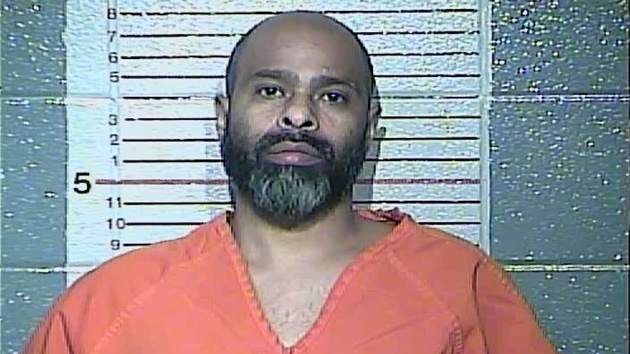
Jacob Lee Bard, 48, is accused of shooting and killing a person on the Kentucky State University campus on Dec. 9, 2025. (Franklin County Jail)
(FRANKFORT, Ky.) —One student is dead and another critically injured in a shooting Tuesday at Kentucky State University in Frankfort, according to police.
A suspect in the shooting, who is not a student at the university, is in custody, police said in a press release, identifying him as Jacob Lee Bard, 48, of Evansville, Indiana.
He has been booked into jail on charges of murder and first-degree assault.
Preliminary information indicates the shooting was caused by a personal dispute and was not a random active shooter situation, an official briefed on the situation told ABC News.
“This was not a mass shooting or a random incident based on what I’ve been told, and the suspected shooter is already in custody,” Kentucky Gov. Andy Beshear said in a video message. “That means that while this was scary, there is no ongoing threat and I believe our families are safe.”
The Frankfort Police Department said it responded to an incident on the school’s campus Tuesday afternoon “regarding an active aggressor.”
The shooting occurred near Whitney M. Young Jr. Hall, a residence hall on the south side of the campus, according to the school.
Two Kentucky State University students were shot in the incident, authorities said. One has since died while the other was transported to a hospital in stable but critical condition, Frankfort police said.
“At this time, there is no ongoing threat to the campus community,” the school said in a statement to students.
The investigation is ongoing. The university said it is working closely with local and state law enforcement.
All classes and activities at the campus, which is located approximately 25 miles northwest of Lexington, have been canceled for the rest of the week, school officials said.
“Today, indeed, was a senseless tragedy,” Kentucky State University President Koffi Akakpo said at a press briefing on Tuesday. “We’re mourning the loss of one of our students.”
Beshear urged people to pray for those affected and “for a world where these things don’t happen.”
“I’ll keep trying to build a Kentucky that we don’t see arguments ended in violence,” he said.
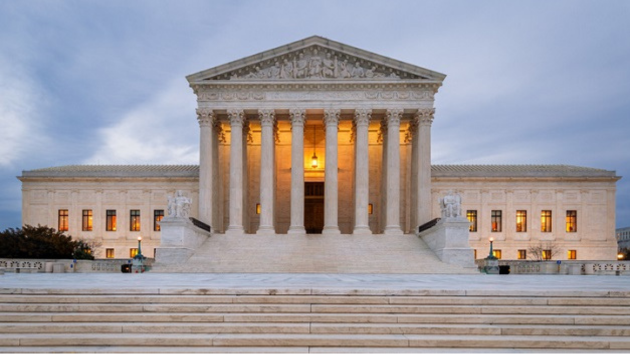
(WASHINGTON) — More than 20 years ago, the Supreme Court outlawed the execution of intellectually disabled people convicted of capital crimes as “cruel and unusual” punishment forbidden by the Eighth Amendment.
In a major case from Alabama before the Supreme Court on Wednesday, the justices are asked to clarify who qualifies as “intellectually disabled” and what role intelligence quotient — also known as IQ — test scores play in making the determination.
Joseph Clifton Smith, an Alabama man who brought the case, confessed to a 1997 murder during a robbery, but challenged his death sentence on grounds he has had “substantially subaverage intellectual functioning” since a young age.
Smith has taken five separate IQ tests over nearly 40 years, scoring 75 in 1979, 74 in 1982, 72 in 1998, 78 in 2014 and 74 in 2017.
People below 70 are generally considered to have an intellectual disability, but major American medical groups urge a holistic assessment that also looks at social and practical skills.
The groups note that standardized test scores alone should not be conclusive. Smith’s score of 72, for example, could be 69 when factoring the 3-point margin of error.
“Intellectual disability diagnoses based solely on IQ test scores are faulty and invalid,” attorneys for the American Psychological Association and American Psychiatric Association told the court in a legal brief. “But IQ test scores remain relevant; IQ tests are a scientifically valid means to ascertain estimates of an individual’s intellectual ability. The key is to understand both the value of IQ tests and their limits.”
Smith, who allegedly suffered physical and verbal abuse as a child, consistently functioned two grade-levels below his placement in school, according to court documents. Smith’s school classified him as “Educable Mentally Retarded” in 7th grade before he eventually dropped out.
Two lower federal courts ruled that a holistic analysis of Smith’s IQ scores and other evidence, including his behavioral history and school records, proved he is intellectually disabled and should spend life behind bars rather than face execution.
Alabama wants the justices to toss out that assessment.
“Joseph Smith is not intellectually disabled, and the Eighth Amendment does not override the death sentence he earned for murdering Durk Van Dam,” the state argued in its brief to the court. “Whether and how to weigh multiple IQ scores is left to state discretion.”
The state says intellectual disability can only be proven by an IQ score of 70 or less by a preponderance of the evidence.
The Supreme Court’s decision in the case will determine whether Smith lives or dies.
More broadly, the ruling could determine how many other borderline intellectually disabled people on death row could be able to convert their death sentences into life behind bars.
By one estimate, as many as 20% of the 2,100 people on death row in the U.S. may have some degree of intellectual disability, according to the Death Penalty Information Center.
A ruling in the case — Hamm v. Smith — is expected by the end of June 2026.
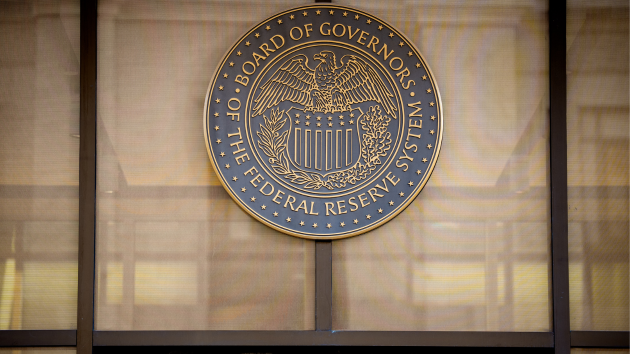
The Federal Reserve logo is visible on the William McChesney Martin Jr. Building on December 9, 2025 in Washington, DC. (Andrew Harnik/Getty Images)
(WASHINGTON) — The Federal Reserve is set to announce its latest adjustment of interest rates on Wednesday, potentially slashing borrowing costs for the third time this year in an effort to boost sluggish hiring.
Top officials at the Federal Reserve have displayed a rare degree of public disagreement over a possible interest rate cut. Inflation has picked up in recent months alongside the hiring slowdown, posing a risk of an economic double-whammy known as “stagflation.”
The Fed is stuck in a bind, since the central bank must balance a dual mandate to keep inflation under control and maximize employment. To address pressure on both of its goals, the Fed primarily holds a single tool: interest rates.
If the Fed holds interest rates steady as a means of protecting against tariff-induced inflation, it risks a deeper slowdown of the labor market. On the other hand, if the Fed lowers rates to stimulate the economy in the face of a hiring slowdown, it threatens to boost spending and worsen inflation.
“We have one tool,” Fed Chair Jerome Powell said at a press conference in Washington, D.C., in October. “You can’t address both of those at once.”
Lately, sentiment shifted in favor of a rate cut as some influential central bankers voiced openness toward the move, futures markets showed.
The chances of a quarter-point interest rate cut stand at about 87%, surging from a level as low as 30% last month, according to CME FedWatch Tool, a measure of market sentiment.
The prospects appeared to move in response to a murky jobs report and public statements from two allies of Powell on the committee charged with setting rates.
Last month, a jobs report for September sent mixed signals about the labor market. Employers added far more workers than expected in September, though hiring fell short of a breakneck clip. Meanwhile the unemployment rate ticked up to 4.4%, a low figure by historical standards but the highest recorded since October 2021.
New York Fed President John Williams, who is often in lockstep with Powell, days later voiced openness toward a rate cut, telling reporters he still saw “room for a further adjustment in the near term.”
Soon afterward, San Francisco Fed President Mary Daley took a similar position, telling reporters she sees room “for a further adjustment in the near term.” Daley, who isn’t voting on interest rates this year, is widely viewed as a supporter of Powell.
A quarter-point interest rate cut would reduce the Fed’s benchmark rate to a level between 3.5% and 3.75%.
That figure would mark a significant pullback from a peak in 2023. At the outset of the pandemic, interest rates stood at 0%.
Still, a reduction of interest rates could offer some relief for mortgage and credit card borrowers. Savers, however, stand to lose income as interest rates decline for accounts held at banks.
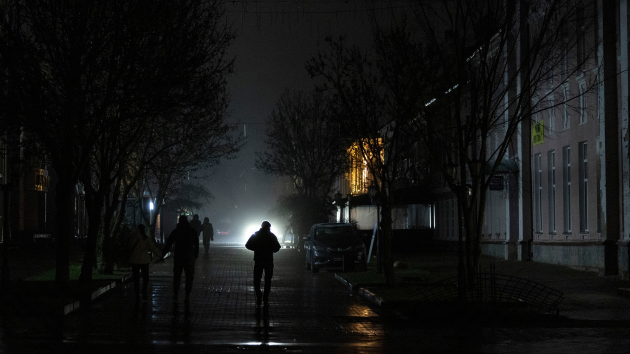
People walk through the streets of Sumy during emergency power cuts on December 9, 2025 in Sumy, Ukraine. (Maksym Kishka/Frontliner/Getty Images)
(LONDON) — Millions of Ukrainians have been plunged into frequent darkness and cold as Russian drones and missiles wage a systematic long-range campaign against the country’s energy grid for the fourth consecutive winter.
Even at the offices of Ukraine’s mammoth state-owned Naftogaz oil and gas conglomerate in Kyiv, emergency generators have been keeping the lights on.
“What I can see from my window — there is an absolutely dark city with only some lights,” CEO Sergii Koretskyi told ABC News during a video interview. “I’m sure people recognize this winter as the most difficult since the full-scale invasion started. We can see power cuts from four up to 10 hours a day.”
Russia’s nightly bombardments have increasingly targeted energy infrastructure in recent months, Ukrainian officials say, often involving hundreds of drones and dozens of missiles.
Ukrainian President Voloydmyr Zelenskyy has repeatedly appealed for more Western military aid to help blunt such strikes. “The Russians’ goal is to hurt millions of Ukrainians,” the president said in a social media post on Saturday.
Between October and December so far, Naftogaz recorded 11 “massive attacks on gas infrastructure across Ukraine,” Koretskyi said. “Our gas production infrastructure has suffered significant damage and destruction,” he added.
Naftogaz estimates the combined cost of covering its gas shortfall and repairing its production and storage infrastructure at more than $3 billion, Koretskyi said.
“We can see that the scale and intensity of strikes have changed dramatically,” Koretskyi added. This year’s bombardments have been even more punishing than those in the back end of last winter, he added, when Ukraine had 42% of its domestic gas production knocked out.
Throughout its full-scale invasion — which began in February 2022 following eight years of lower-intensity cross-border Russian aggression — Moscow has denied intentionally targeting civilians or civilian infrastructure.
The Russian Defense Ministry says it attacks Ukrainian fuel and energy targets that support the Ukrainian armed forces and Ukraine’s military-industrial enterprises.
Ukraine is also waging its own long-range strike campaign against Russian energy targets, particularly oil storage and refining facilities. Kyiv says the lucrative proceeds from Russian oil exports help fund Moscow’s ongoing invasion.
Koretskyi declined to say what proportion of the country’s gas production and storage capacities had been taken offline during this winter’s attacks, citing operational security and Moscow’s use of public statements and statistics to guide its strike campaign.
But virtually all of Ukraine’s regions now routinely face rolling blackouts, imposed to help protect the country’s grid while repairs are carried out, leaving millions with only hours of power.
Naftogaz says it supplies gas to 12.5 million households across Ukraine. Around 80% of the population using gas to heat their homes. Each night of Russian attacks threatens new blackouts for tens of thousands and sometimes hundreds of thousands of people.
“Their goal is clear — this is pure terrorism,” he said, “to put us into the darkness without heat during this winter season.”
Analysts have suggested that Western support could prove vital in helping Ukraine through this winter.
“Without substantial Western support — particularly air defense systems, transformers, and financial assistance for emergency repairs — blackouts are likely to be more regular, people will suffer in the cold, and economic activity may slow,” political consultant Kateryna Odarchenk wrote for the Center for European Policy Analysis this month.
Zelenskyy and his top officials have consistently pressed Western allies to provide more air defense systems and ammunition, to help Ukrainian defenders protect civilian centers, military sites and critical infrastructure.
Yuriy Boyechko, the CEO of the Hope For Ukraine charity, told ABC News that the current energy crisis is a result of inadequate air defenses in the face of “the relentless deluge of Russian missiles and drones.” He added, “The only viable solution is immediate, comprehensive air defense support from Western allies.”
The bombing has wrought holes in Ukraine’s energy network. As of December, Naftogaz estimated that Ukraine needed to import 4.4 billion cubic meters of gas through to the end of this heating season — which Ukraine’s government estimates will end by around March 31.
This is expected to cost some €1.9 billion — around $2.2 billion — Koretskyi said. Zelenskyy and his government have mobilized to secure the funding from foreign partners and financial institutions, but Naftogaz’s chief said a hole of around €600 million remains.
Kyiv is turning to private companies in gas-rich nations like the U.S. to help fill the gap. Companies require two permits to export natural gas — one from the Federal Energy Regulatory Commission and one from the Department of Energy.
This year already, more than 500 million cubic meters of American liquid natural gas (LNG) have been imported, with another 300 million cubic meters agreed for import earlier next year.
Through 2026, Koretskyi said, Ukraine would like to bring in another 1 billion cubic meters of American LNG. “We would like to build long-term relationships with U.S. LNG suppliers,” he said.
A recent agreement to import U.S. LNG through the Soviet-era Trans-Balkan pipeline running from Greece is also part of this drive, Ukrainian officials have said.
But as Russia’s attacks grow larger and more sophisticated, the cost and complexity of recovery grows. Naftogaz’s list of equipment needed for repairs is now 190 items strong, Koretskyi said. The estimated cost of this badly needed equipment is more than $900 million, he added.
“There are two lists of equipment — the first one for repairing or replacing those damaged or even destroyed, and the second is for a strategic reserve for upcoming potential attacks,” he explained. U.S. and European suppliers, Koretskyi said, could prove pivotal in filling the gaps.
“The lead time — of production time, delivery and installation — will take between eight and 18 months,” Koretskyi said. “So, we should be ready not just for this winter season, but for the next heating season.”
Meanwhile, the strikes and blackouts continue.
On Dec. 4, for example, the Kherson central heating plant in the southern frontline city was knocked offline after days of attacks by various Russian weapons systems. Kherson military administration head Oleksandr Prokudin said that disruption left more than 40,000 without heat.
“It’s like a nightmare,” Koretskyi said of life under rolling blackouts for many Ukrainians. “I do believe Ukrainians recognize the risk, the challenge, that Russia will continue bombing us.”
“Nobody can imagine what will happen in the coming months or weeks,” he added, suggesting that Ukrainians may have to summon reserves of resilience already tapped by almost four years of full-scale war.
“This is not a sprint, it’s a marathon,” Koretskyi said. “The war changes, upgrades and becomes different every day. The measures for survival, for protection, should be changed as well … That’s how we live.”
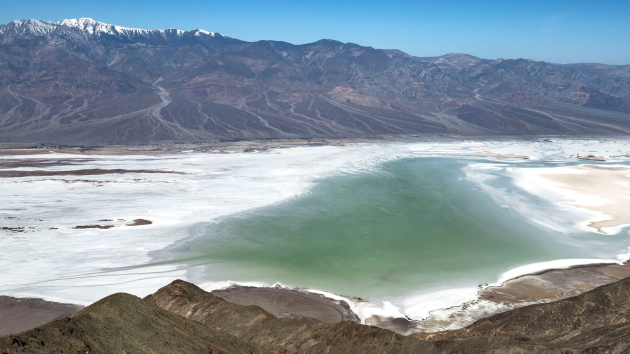
Badwater Basin, the site of Lake Manly, is viewed from Dante’s View showing the lake receding due to evaporation on April 21, 2024, near Furnace Creek, California. (George Rose/Getty)
(DEATH VALLEY NATIONAL PARK, Calif.) — An ancient lake that once existed at Death Valley National Park has reemerged after record rainfall in the region.
Several inches of water have formed in Badwater Basin, which lies at 282 feet below sea level, the lowest point in North America, according to a press release from the National Park Service.
During the Ice Ages, the basin — colloquially known as Lake Manly — was once a lake with depths of up to 700 feet.
Ice covered the Sierra Nevada between 128,000 and 186,000 years ago, allowing rivers to flow into a long valley that fed into Lake Manly, according to NASA. At the time, the lake measured nearly 100 miles long.
In modern times, the basin typically lies bare, without any significant moisture.
Death Valley just experienced its wettest fall on record, according to the National Weather Service. Between September and November, 2.41 inches of rain fell — more than what typically falls in the desert landscape in one year. November alone recorded 1.76 inches — breaking the record set in 1923 at 1.7 inches.
The lake is much more shallow than the one that formed in 2024 in the aftermath of Hurricane Hilary — an event that prompted the first tropical storm watch in California’s history.
On Aug. 20, 2024, alone, more than 2 inches of rain fell in Death Valley, according to the NPS.
This year’s rainfall will allow those who missed the last emergence of Lake Manly to see the rare phenomenon once again.
The water can’t drain out, since the basin is contained and at such a low elevation, said Andrew Heltzel, chief commercial officer of the Xanterra Travel Collection, an operator of lodges, restaurants and excursions at several of the most iconic national parks in the U.S., including Death Valley, Yellowstone and Grand Canyon.
“It’s almost impenetrable,” Heltzel told ABC News, describing the outskirts of the basin as “like a seal.”
The only way for the water to escape is through evaporation, which could take months.
When the water is present, it creates a stunning reflection of the surrounding mountain peaks.
“My advice would be to, if you are interested in seeing this, not to delay to get there,” Heltzel said. “It is getting smaller through evaporation every day.”
The “most exciting” aspect of the way the rain fell this time is that it could spark a superbloom of wildflowers in the spring, Heltzel said.
The pace and amount of rain that fell made for the “perfect ingredients” for a significant display of wildflowers to emerge, Heltzel said.
In 2024, too much rain fell too fast, and the soil was unable to absorb the moisture, Heltzel said.
“With the November rains, they came in gently enough that it was able to get into the ground and potentially give us those flowers as well as a second chance to see Lake Manly,” he said.
The last time a superbloom occurred was in 2016, according to the NPS.
The recent storms caused numerous road closures across the parks, with several paved roads covered in flood debris, according to the NPS. However, many of the park’s most popular sites remain open, including Zabriskie Point, Dantes View, Badwater Basin, and Mesquite Sand Dunes.
The National Park Service advised visitors to be aware that unpaved roads may be impassable due to storm damage and to be prepared for self-rescue when traveling on backcountry roads.
In February, Death Valley National Park will host the Dark Sky Festival, which can give visitors opportunities to sky gaze while also seeing Lake Manly, Heltzel said.
Death Valley has been designated as a Gold Tier Dark Sky Park, which signifies the highest rating of darkness, according to the NPS.
“The stargazing opportunities in Death Valley are second to none,” Heltzel said.
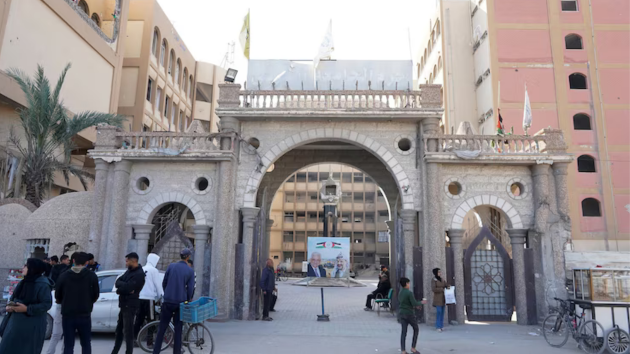
Al Azhar University in Gaza. (Diaa Ostaz/ABC News)
(GAZA STRIP) — After two consecutive years of war that upended nearly every aspect of life in the Gaza Strip, universities are slowly beginning to reopen, restoring a path to education despite extraordinary levels of destruction.
Before Oct. 7, 2023, Gaza had 17 higher-education institutions, comprising hundreds of buildings. Today, most of these facilities are in ruins, according to the Palestinian Ministry of Education and Higher Education.
More than 100 university buildings were destroyed during the war, while roughly 200 university employees were killed, the education ministry said. The devastation has raised doubts about whether higher education could resume at all. But at Al-Azhar University in Gaza, the administration and some students told ABC News they are determined not to let the war erase an entire generation’s future.
When ABC News visited the temporary campus where Al-Azhar has resumed in-person teaching, the damaged classrooms and improvised facilities reflected the depth of the crisis–yet they also highlighted the resilience of students returning with determination to continue their studies.
The university’s vice president, Dr. Muhammad Shubeir, said the decision to reopen was driven by necessity and by a sense of duty.
“During the difficult period of the war, we resumed the teaching,” online, Shubeir told ABC News. He said the staff worked from dangerous areas just to secure satellite internet. “We faced many risks, but thank God, we were able to continue until the war ended.”
As soon as conditions allowed, the administration said it moved toward restoring in-person learning, even though one of Al-Azhar’s largest campuses–its new facility in the Al Zahra area, which turned into the Netzarim corridor during the war — had been completely leveled.
“Despite losing everything at the university–especially the new campus that housed five colleges–we will begin anew with these buildings, gradually and voluntarily,” he told ABC News in an interview.
Shubeir said the university repeatedly stressed to all parties that it had no role in any conflict, and he recalled a phone call with an Israeli intelligence officer ordering the evacuation of the Zahra campus.
“Al-Azhar University is an academic institution that strives for a culture of peace, coexistence, and respect among all peoples,” Shubeir said. He said he reminded the officer that targeting educational institutions violates the Fourth Geneva Convention, though the warning did not stop the demolition.
The IDF told ABC News it found Hamas terrorist infrastructure in the university that was used for Hamas military activities.
IDF said soldiers on Oct. 30, 2024, identified armed terrorists and an anti-tank missile launching position in the Al-Azhar University area, and guided a fighter jet to strike.
“On Dec. 7, IDF soldiers destroyed enemy infrastructure disguised in buildings, that were used for Hamas’ military activities at Al-Azhar University in the Rimal neighborhood of the Gaza Strip,” IDF said in a statement.
“Terror infrastructures were located in the university campus, among them, an underground terror tunnel that leads from the university yard to a school about a kilometer away from it,” the IDF statement continued. “In addition, many weapons of explosive charges, rocket parts, launchers, explosives activation systems and a variety of technological means were found in the university.”
The financial damage to the school is immense, Shubeir said.
“The new university campus was erased from existence, resulting in a loss of $30 million,” he said. He estimated the total destruction of buildings, equipment, and movable assets at more than $40 million.
Still, he said the university’s message to the world remains unchanged. “In Gaza, there are people who want life. We want to live in peace and stability,” he said.
For some students, returning to campus has been both inspiring and overwhelming. Many have lost homes, academic materials, and years of normal schooling. Mira Al-Agha, a first-year pharmacy student, said her motivation to resume her studies came from her belief that education is the only sustainable path forward.
“Honestly, we have great faith in Al-Azhar University that it will definitely return,” she told ABC News. She said that despite limited facilities, university staff “are still working tirelessly, step by step.”
But she said the emotional toll remains heavy.
“We spent two years in places unsuitable for studying,” she said. “But the spirit of education makes you feel that you want to become something in this world. It gives you the motivation to continue.”
For Mira, transportation is one of the biggest obstacles–traveling from Khan Younis to Gaza City is expensive and unpredictable. She said students need better access to transportation, internet, and study spaces.
For dentistry students at Al-Azhar, the challenges are even greater. Much of their practical training relies on specialized labs and equipment — almost all of which were destroyed, the school said.
Dental student Abdul Rahman Amer, in the 5th level of the dentistry program, said the destruction initially shattered his hope.
“When I saw the building destroyed, I lost hope of ever completing our studies,” he told ABC News. But the university’s effort to secure temporary facilities revived his determination. “This gave us a glimmer of hope to resume our education,” he said.
Amer’s daily routine reflects the broader difficulties facing students. He leaves home before sunrise to catch transportation, which he says can cost around $50 per day.
“These aren’t luxuries,” he said, describing the difficulty of finding dental materials. “We help people and relieve their toothaches. But the tools are difficult to find, and the prices are exorbitant.” Still, he insists he will not give up. “Nothing will benefit me except finishing my studies,” he said.
The reopening of higher-education institutions–however limited–is a reminder that rebuilding Gaza begins with safeguarding its students’ futures, Shubeir said. For thousands of young people walking across damaged campuses each morning, education is not just learning; it is an act of resilience and a statement of survival, he added.
Shubeir said the world should understand that Gaza’s students are holding onto education as their last remaining path to a stable future.
“Our buildings were destroyed, but our will was not,” he said. He urged the international community to support efforts to rebuild academic life in Gaza, stressing that education is the foundation on which recovery must begin. “We want life, peace, and dignity,” he said. “Stand with us so we can protect this generation and give them the future they deserve.”