(WASHINGTON) — The judge overseeing former President Donald Trump’s federal election interference case was the victim of swatting Sunday night at her Washington, D.C., home, law enforcement sources told ABC News Monday.
Washington’s Metropolitan Police Department said in a statement it responded to a house in the District around 10 p.m. for a report of a shooting, which did not occur.
That home belonged to U.S. District Judge Tanya Chutkan, sources said, who has been the target of frequent Trump attacks in speeches and on his social media platform.
The situation was quickly contained and there was no further incident, law enforcement sources said.
The swatting incident came as Trump’s lawyers prepared to argue before a federal appeals court on Tuesday that Chutkan’s ruling rejecting Trump’s claim of “presidential immunity” should be reversed.
In recent weeks, state and federal officials have been the target of swatting incidents around the country, according to statements from their offices.
U.S. Marshals, which protect federal judges, did not comment.
(TALLAHASSEE, Fla.) — Christian Ziegler on Monday was voted out as chair of the Florida Republican Party, weeks after being pushed to resign from his position as police continue to investigate a rape accusation against him that he denies.
The vote to remove Zeigler occurred during a closed-door meeting on Monday afternoon in Tallahassee. The state party’s vice chair, Evan Power, was elected as the new chair.
“What we did today was come together and close this chapter and move on to move forward to continue to win elections in Florida,” Power told reporters after the meeting.
Ziegler was accused late last year of raping a woman with whom he and his wife, Moms for Liberty co-founder and Sarasota County School Board member Bridget Ziegler, had a consensual sexual relationship.
Bridget Ziegler has not publicly commented on the allegations against her husband and has not been accused of a crime.
Sarasota police have been investigating the sexual abuse claim but Christian Ziegler has not been charged with a crime.
An attorney for him has said in a statement to news outlets, in part, “We are confident that once the police investigation is concluded that no charges will be filed and Mr. Ziegler will be completely exonerated.”
Michael Thompson, Florida’s Lee County Republican chairman and a member of the state party, told ABC News on Monday that removing Ziegler was the right thing to do.
“[This vote] is basically going to send a message to everyone in the Republican Party and even outside the Republican Party that it doesn’t matter if you’re a publicly elected official or a party official, you’re gonna be held accountable,” Thompson said.
Florida Republicans have in recent years won a string of major political victories in a famous swing state.
Power, newly chosen as chairman, told reporters that “we’re going to start right now fundraising for the party. You can’t do anything in this party without money. So that’s our No. 1 priority. We’re going to start building the infrastructure in our county party so that we can continue to win and win big.”
Leading Republicans in the state, including Gov. Ron DeSantis, had called on Ziegler to step down after the rape accusation became public, but he declined.
Before being removed as chair, Ziegler was suspended during a meeting in December when party members voted to cut his salary and strip him of his duties as chairman.
In late November, DeSantis said the accusation against Ziegler was “very serious.”
“I don’t see how he can continue with that investigation ongoing given the gravity of those situations,” DeSantis said then. “And so, I think he should step aside and think he should attend to that. He’s innocent until proven guilty, but we just can’t have a party chair that is under that type of scrutiny.”
(RIVERSIDE, Calif.) — More than three decades after she was murdered by a notorious serial killer, police and prosecutors in Riverside, California, are hoping the public can help them identify the unknown victim.
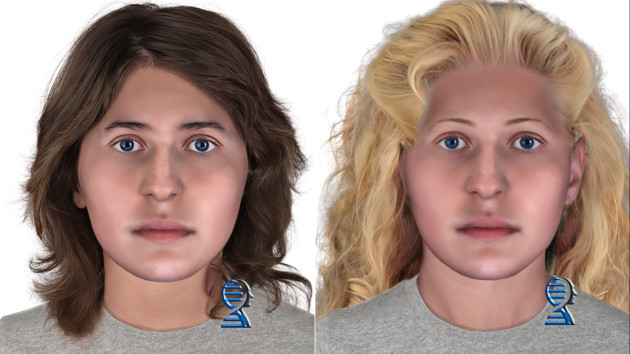
Riverside County officials launched a new, nationwide effort Monday to discover the identity of the woman who was murdered in 1992, the last unidentified victim of Keith Jesperson — the “Happy Face Killer.”
“Our goal is to identify this victim and provide closure to her family,” Riverside County District Attorney Mike Hestrin said in a statement.
Police have referred to her as “Claudia” because that is how Jesperson, who was convicted of her murder 14 years ago Monday, has referred to her. The authorities, though, do not know if that is her real name.
In a new law enforcement interview with investigators, details of which Riverside officials released Monday, they say Jesperson told them he met “Claudia” at a brake check area near Victorville, California, while he was working as a trucker. She was hitchhiking and took a ride with him, he reportedly said. During that ride, he told them, they argued about money, and he killed her in his truck. He admitted to dumping the body in Blythe.
Jesperson allegedly described her as having shaggy, wild blonde hair. She was wearing tight clothing, he said. She was about 20 to 30 years old in 1992. Investigators believe she was living in, or frequented, Southern California and Nevada.
Investigators hope that recent advances in DNA technology and tips from the public could help them discover her name.
Forensic investigators and genealogists have traced her to a now-deceased father who was from Cameron County, Texas, but traveled extensively. Half siblings were identified but they were not aware of the woman as none were biological matches to her mother. Her mother may have had ties to Louisiana or Texas, authorities said.
Jesperson terrorized the country in the ‘90s. A Canadian-born long-haul trucker and divorced father of three, Jesperson claimed to have killed women in five states: Washington, California, Florida, Wyoming and Oregon.
His killing spree lasted from 1990-1995, when he turned himself in to police.
The unidentified woman’s body was found on Aug. 30, 1992, along Highway 95 near Blythe, California. Jesperson pleaded guilty to her murder in 2010 and was given a sentence of 15 years to life.
He received the name the “Happy Face Killer” due to the smiley faces he drew on a letter he sent to a newspaper in which he bragged about his crimes.
(NEW YORK) — A company’s attempt to make the first commercial moon landing is in jeopardy after the spacecraft developed a “critical” fuel leak on Monday.
The Peregrine lunar lander, built by Astrobotic, launched with the Vulcan rocket from the United Launch Alliance — a joint venture between Lockheed Martin and Boeing — at 2:18 a.m. ET from Cape Canaveral Space Force Station in Florida.
Peregrine separated from the rocket about an hour later and was making its journey to the moon, which was set to take place on Feb. 23 and would have been the first U.S. soft moon landing mission in more than 50 years.
However, several hours in, Astrobotic said the lunar lander was experiencing a “propulsion anomaly” that was preventing it from orienting the solar panels toward the sun so it could collect power to operate. This was discovered to be a fuel leak.
Just before entering a “known period of communication outage,” the Astrobotic team said it developed and executed an improvised maneuver to reorient Peregrine’s solar panels toward the sun to collect sunlight.
While this helped charge the battery, it may not be enough for the moon landing to occur.
“Unfortunately, it appears the failure within the propulsion system is causing a critical loss of propellant,” Astrobotic said in a statement on the company’s website.
“The team is working to try and stabilize this loss, but given the situation, we have prioritized maximizing the science and data we can capture. We are currently assessing what alternative mission profiles may be feasible at this time.”
Astrobotic said the lunar lander is carrying 20 payloads from seven nations and 16 commercial customers, and among them are instruments from NASA.
The Pittsburgh-based company was one of several approved by NASA to build commercial lunar landers that the federal space agency, among others, would use to send instruments into space.
Among the five NASA instruments aboard Peregrine are those that would study the lunar exosphere, the amount of hydrogen in the lunar soil and radiation monitoring, according to NASA.
“NASA instruments aboard Peregrine will help NASA prepare for the Artemis program’s missions to enable a sustained human presence on the Moon,” Astrobotic said.
NASA and the Canadian Space Agency are preparing to send four astronauts to fly around the moon in the upcoming Artemis II mission later this year. If the mission is successful, Artemis III — a moon landing — is scheduled for 2025.
The Artemis team will be made up of three Americans — Victor Glover, Christina Hammock Koch and Reid Wiseman — and one Canadian, Jeremy Hansen.
“Each success and setback are opportunities to learn and grow,” Joel Kearns, deputy associate administrator for exploration at NASA’s Science Mission Directorate in Washington, said in a statement about Peregrine. “We will use this lesson to propel our efforts to advance science, exploration, and commercial development of the moon.”
If Astrobotic’s lunar lander does not make it the moon, another commercial company has the chance to do so. Intuitive Machines, based in Houston, has developed the Nova-C Lunar Lander, which is set to launch next month and will also carry five NASA payloads and commercial cargo. It will attempt to land near the south pole of the moon.
(NEW YORK) — For children under the age of 2, television screen time is associated with sensory differences later in toddlerhood, according to a new study.
Children who watched any television or DVDs at 12 months of age were twice as likely by 36 months to experience “atypical sensory processing” – that is, challenges in processing day-to-day sensory input – compared to others of that age. After 18 months of age, each extra hour of screen exposure was associated with around a 20% increased likelihood of sensory processing differences, according to the study, published Monday in JAMA Pediatrics.
For the study, researchers analyzed 1,500 caregiver surveys regarding their child’s sensory preferences, such as sensitivity to, preference for, or avoidance of different noises, lights, and textures. The study only looked at children who watched television, not smartphones or tablets, because the survey data was gathered prior to 2014.
The study, led by researchers at Drexel University, follows previous research showing how screen time impacts the ways kids speak, hear, feel and think.
A study published last year found that screen time for 1-year-olds was associated with developmental delays in problem-solving and communication as early as ages 2 and 4.
Examples of sensory processing issues can include everything from a child feeling uncomfortable in clothes to handling bright lights or loud noises differently than others, according to the Child Mind Institute, a nonprofit organization focused on kids’ mental health and learning disorders. Sensory processing issues run the spectrum from possibly minimally affecting a child’s life to interfering with their daily function.
Sensory issues can exist on their own, but are sometimes seen with conditions like autism, attention-deficit hyperactivity disorder (ADHD) and obsessive compulsive disorder (OCD), according to the Institute. The Drexel study was not able to comment on the prevalence of autism, ADHD, or OCD with screen time.
Dr. Karen Heffler, an associate psychiatry professor at Drexel University and lead author of the new study on screen time, said she became interested in research on the impact of screen time on young children after her own son was diagnosed with autism.
“I’m very interested in any potential factors that could help other families whose children are diagnosed with autism,” Heffler told ABC News, adding that this study adds data about screen time for very young children, especially those under one year of age. Prior studies have mostly focused on children older than a year.
The American Academy of Pediatrics (AAP) currently recommends against any screen time for children under the age of 2, excluding live video chats, like FaceTime with family members. The AAP further recommends a 1-hour per day time limit on screen time for children ages 2 to 5.
Research shows, however, that the majority of children under the age of 5 are watching more screen time than is recommended, due in part to the increasing prevalence of mobile devices as well as digital accessibility, content targeted to children, and increases in screen-time use during COVID-19.
Takeaways for parents on screen time and young kids
While experts agree that limiting screen time is generally better for brain development, they caution against concluding that the screen time itself is leading to sensory differences.
Dr. Emily Myers, a neurodevelopmental pediatrician at the University of Washington and Seattle Children’s Hospital, told ABC News that while non-interactive screen time does decrease opportunities for children to learn self-regulation skills and connection to their physical environment, there are cases where children might use screens more to self-regulate, because of pre-existing sensory differences.
She also said that home and family environments matter, too, and that screen time can sometimes be a proxy for something else going on in the home that might affect development.
The study out of Drexel University associated screen time only with sensory differences, and not necessarily with conditions like ADHD or autism, although past studies have shown that children with these conditions tend to also experience sensory differences.
However, although some specific sensory changes at 18 and 24 months of age can be associated with developing autism, it’s difficult to predict if sensory differences will positively or negatively impact that child’s lived experience, according to Dr. Jade Cobern, a pediatrician and neonatal hospitalist at Johns Hopkins.
“If the sensory differences are getting in the way of them meaningfully engaging in the world or they are distressing to a point that it becomes a problem, that’s when we start to worry about some of the negative impacts of these sensory differences,” Cobern said.
When she counsels parents on decreasing screen time, Myers said she acknowledges the modern ubiquitousness of screens, even for adults, saying, “It’s very difficult to unplug a specific age population when everyone around them has screens on all the time.”
Prior studies have identified lack of affordable alternative activities, parental fatigue, and burnout as barriers to decreasing screen time for children, and note that parents can often experience guilt when regulating screen time for their child.
In her practice, Myers recommends a more holistic approach to identifying possible barriers to decreasing screen time, such as assessing whether a family’s basic housing, food, and safety needs are being met. She said she also spends a lot of time on helping families promote relationships with their child, as well as problem-solving with them.
“I haven’t seen a lot of families actually have a lot of success with decreasing screen time,” Myers said. “Usually there’s some other really significant contextual factors which are interfering and need to be addressed, in addition to screen time.”
Cobern also recommends tailoring approaches to the specific family and patient, and collaboratively brainstorming accessible ways to decrease non-interactive screen time and increase healthy developmental activities, such as reading, playing with objects, and socializing with other children, even if those activities might entail screens.
“Everyone has to be realistic when we’re talking about how parents can support their children’s development,” Cobern said, adding of research like the Drexel study, “It’s not to shame screentime exposure because the reality is we live in a world where screens are part of our daily lives.”
She continued, “It really is inevitable that most kids will see some screen time even early in life, but it is something I encourage families to be mindful of.”
Angela Y. Zhang, MD (she/hers), is a pediatric resident at University of Washington/Seattle Children’s Hospital and a member of the ABC News Medical Unit.
(NEW YORK) — United Airlines said Monday that it has found loose bolts during inspections of its 737 Max 9 fleet in the wake of a door plug getting blown out of an Alaska Airlines plane over the weekend.
United won’t say how many planes had loose bolts.
“Since we began preliminary inspections on Saturday, we have found instances that appear to relate to installation issues in the door plug — for example, bolts that needed additional tightening,” United said in a statement. “These findings will be remedied by our Tech Ops team to safely return the aircraft to service.”
This is a developing story. Please check back for updates.
(WASHINGTON) — It’s a key question in a case that could not only set constitutional precedent but also have major consequences in the 2024 election: What is “presidential immunity” and how, if at all, does it apply to former President Donald Trump regarding his efforts to overturn his 2020 election loss?
On Tuesday, Trump’s claim of “absolute immunity” from prosecution in his federal election inference case will be put to the test in arguments before the U.S. Court of Appeals for the District of Columbia Circuit.
The former president, who denies all wrongdoing, contends his actions after the election and on Jan. 6, 2021, were related not to his role as a candidate but to his official constitutional duty to “take care that the laws be faithfully executed” — in this case to investigate alleged but unproven election fraud.
Because of that, he argues, he’s protected from criminal liability. He points as well to his being acquitted in his Senate impeachment trial on charges of “incitement of insurrection” as another shield from litigation.
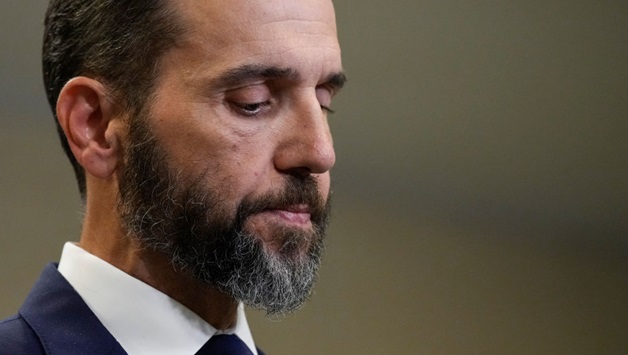
Special counsel Jack Smith asserts Trump “is wrong” and that his arguments “threaten to undermine democracy.”
The case, which is likely to wind up back before the U.S. Supreme Court, will chart new legal ground, experts told ABC News as they broke down the history and precedent of “presidential immunity.”
“These are novel issues and they’re going to have to create new law,” said attorney Stanley Brand, a former House of Representatives general counsel whose law firm represents several former Trump aides.
Trump has posted on social media that he will attend the Jan. 9 hearing. In the post, he also continued his claim that he was “entitled” as president to immunity, arguing he was no longer campaigning but “looking for voter fraud … and otherwise running our country.”
Here’s what you need to know.
What the Constitution, framers say about ‘presidential immunity’
David Schultz, a professor at the University of Minnesota and national expert in constitutional law, said there is “nothing in the text of the Constitution that speaks to immunity in one way or another.”
But there is textual evidence from the Constitution’s framers — including Benjamin Franklin and Alexander Hamilton — about how they viewed the issue.
“We have language from some framers indicating that even if there might have been some immunity while a person was president of the United States, once they’ve left office there’s no immunity and they could be charged with the crime,” Schultz said.
Such statements were used in a 2000 Department of Justice memo that found the Constitution permits a former president to be indicted and tried for the same offenses for which they were acquitted in an impeachment trial, Schultz noted.
Smith’s team, in its brief to the appeals court, also cited the nation’s founders. They wrote Trump’s immunity claim would essentially allow presidents to act criminally to remain in office, something “the Founders did not intend and would never have countenanced.”
What the courts have said so far
Trump has, in some shape or form, tried to claim immunity in nearly all the legal troubles that have come his way since leaving office and has so far been rebuffed.
In the federal election interference case specifically, U.S. District Judge Tanya Chutkan rejected Trump’s motion to dismiss the case on the basis of immunity. Chutkan blisteringly wrote that whatever immunities a sitting president may enjoy, the position “does not confer a lifelong ‘get-out-of-jail-free’ pass.”
And in a Jan. 6-related civil suit brought against Trump by some U.S. Capitol Police officers, a federal appeals court similarly ruled that the former president is not entitled to absolute immunity.
Last month, another court also shot down his attempt to claim immunity in a defamation suit brought by E. Jean Carroll.
Experts weigh in on Trump’s arguments
A group of legal experts, including former Trump White House attorney Ty Cobb and former impeachment special counsel Norman Eisen, sounded the alarm over Trump’s claim of “absolute immunity.”
In a call with reporters last week, Eisen called the idea “abhorrent to American law” while Cobb said it was important to “emphasize that no man is above the law, that is fundamentally the American approach to freedom and governance.”
University of Chicago law professor Aziz Huq told ABC News that while the questions presented are unique — as Trump is the first sitting or former president to be criminally indicted — he believed the arguments for immunity were “exceptionally weak.”
Specifically, he was skeptical of Trump’s defense that the Constitution’s impeachment clause or double jeopardy shields him from liability. Huq highlighted a statement from Senate Republican Leader Mitch McConnell, who said during Trump’s second impeachment trial that “impeachment was never meant to be the final forum for American justice.”
“We have a criminal justice system in this country,” McConnell said at the time. “We have civil litigation. And former presidents are not immune from being held accountable by either one.”
Brand, on the other hand, said he thought Trump could have success when it comes to arguing some of his conduct fell within the “outer perimeter” of his official duties — a phrase Trump’s team has focused on from a 1982 Supreme Court ruling involving Richard Nixon and questions of immunity. In that case, the court ruled presidents can’t be held liable in civil cases for actions they undertook as part of their official duties, though it said nothing of criminal cases after a president leaves office.
“It’s complicated,” Brand said. “Some of the things that are actually alleged, I think, could be conceived by a court as coming within his privilege. And while that might not require the dismissal of the entire case, it could wind up paring the evidence and some of the allegations.”
One thing both experts agreed on is that timing is critical to resolve the issue before the November election.
Brand said he didn’t see the issue getting resolved by March 4, which is currently the trial’s start date.
Smith tried to fast-track the case by asking the Supreme Court to weigh in on the immunity question but the justices declined to take it up on an expedited basis, instead sending it to the appeals court first.
“There is almost never a stop clock running in the background, and that makes this case very different from any other criminal case,” Huq said.
ABC News’ Katherine Faulders and Alexander Mallin contributed to this report.
(TALLAHASSEE, Fla.) — Christian Ziegler, who is facing a rape allegation that he denies, on Monday was voted out as the Florida Republican Party chair during a closed-door meeting in Tallahassee, a source familiar tells ABC News.
Ziegler is being investigated by police but has not been charged with a crime.
Florida Gov. Ron DeSantis had called for him to “step aside.”
This is a developing story. Please check back for updates.
If you or someone you know is struggling with thoughts of suicide, call or text the Suicide & Crisis Lifeline at 988 for free, confidential emotional support 24 hours a day, seven days a week.
(NEW YORK) — Five months after wildfires destroyed homes and lives on the Hawaiian island of Maui, residents are sounding the alarm on an ongoing mental health crisis facing those impacted by the destruction.
The Aug. 8 wildfires left thousands of businesses and residential buildings burned to the ground and killed at least 100 people. Thousands of people are still moving from hotel to hotel, shelter to shelter without a place to officially call home. Many are still without a job, with unemployment claims increasing by almost 400% since the tragedy, according to data from the Hawaii Department of Labor and Industrial Relations.
“The people of Maui are incredibly resilient, but there’s only so much you can take,” said Noelani Ahia, founder of grassroots organization Maui Medic Healers Hui.
“The juxtaposition of people on golf courses right next to people who don’t know where they’re going to sleep tomorrow is painful,” Ahia went on. “It’s really painful and hurtful.”
Ahia said she and roughly 600 volunteers — from doctors to counselors — traveled to the impacted communities within days of the wildfires to support residents’ physical and mental health needs. Months later, the work continues.
“The constant shuffling of people from one hotel to another, getting a notice under your door saying that you have to be out in 24 hours — all of these kinds of things keep people in that fight-or-flight [response],” she said.
The pain in the community is palpable, as residents cope with the compounding grief, loss and uncertainty, she said.
Concerns have spread among residents about a spike in suicides after the tragedy, prompting calls for action from officials to tackle what they say is a mental health crisis.
The Maui Police Department told ABC News that at least 10 people have died by suicide since the fires. Last year, there were eight deaths by suicide in the same period, according to Hawaii News Now.
It is unclear if the deaths are related in some way to the Aug. 8 wildfires. Concerns, however, remain high as the Maui Department of Health reports ongoing instances of suicide attempts and suicidal ideations among those recovering from the tragedy.
“It is on people’s minds,” said John Oliver, public health program manager of the state’s adult mental health division. “It’s a lot of stress and a lot of anxiety and a lot of depression.”
Mental health professionals urge people to be vigilant of their loved ones’ mental health in the aftermath of a tragedy.
“I’m always happy if we have somebody who’s referred to us who’s having suicidal thoughts because if they’re caught at that time, that’s important. It’s important to catch this early,” said Oliver. “Intervention earlier has much better outcomes than later so it’s important to start getting help as soon as you start feeling like you need it so that you don’t develop, say, Post-Traumatic Stress Disorder and some other conditions.”
PTSD could be loss of appetite, difficulty sleeping, wanting to socially withdraw or become short-tempered in a way that’s out of character, health experts said.
When new brush fires start to burn on the island, it reminds some residents of the wildfire scenes, according to Lauren Ampolos, a clinical director and psychologist based on Maui.
“We have to work on allowing people to understand that they’re still safe,” said Ampolos. “There were some fires that came up over the last few months, little brush fires, and those definitely put people on edge. I think that the community is still just a little bit sensitive.”
Ahia said the tragedy has likely exacerbated preexisting traumas, particularly within the native and immigrant communities that are facing longer-term fights for water rights, decolonization and housing.
Hawaii health officials have also noted a rise in calls and visits for mental health care, which they see as a positive sign. This means people are reaching out for help instead of potentially harmful alternatives, they say.
Post-tragedy access to mental health care services has increasingly become a priority in disaster response, service providers say. Past U.S. disasters, such as Hurricanes Katrina and Maria, appeared to spark a spike in suicides and other mental health complications in their wake, research has found.
Federal, state and local agencies have been on the ground in Maui to offer mental health resources and have invested millions of dollars in long-term mental health programs. Officials have said it could take years to rebuild the infrastructure in the hardest-hit areas of Lahaina.
The Substance Abuse and Mental Health Services Administration (SAMHSA) has given the Hawai’i State Department of Health a $17.3 million grant to provide emergency behavioral support, spotlighting the importance of such care in the aftermath of a tragedy.
“When there is a disaster, nearly every disaster survivor is affected in some way,” said SAMSHA Division Director Maryann Robinson in an interview.
Mental health professionals already in the Upcountry and Lahaina areas find themselves at the forefront of the need for mental health care following the wildfires.
“If you talk to individuals with trauma, oftentimes it’s very personal and they want to have that connection of being there physically,” said Oliver. His team at Lahaina Comprehensive Health Center is one of the few behavioral health centers in Lahaina that wasn’t impacted by the blaze. His clinic treats people of all ages and doesn’t turn people away based on their ability to pay. The clinic also works as a facilitative resource for other needs clients may have.
Other local programs for those in need can be found on the county’s Maui Nui Strong website of mental health resources.
Oliver said the number of calls and referrals is likely to keep climbing as people find space to prioritize mental health.
But if residents’ basic needs — like stable housing and financial security — aren’t met soon, Ampolos said these issues will continue to hinder the community’s recovery.
“It’s difficult to actually work through the trauma of a situation without addressing those things first, so I think that for some people, that’s very much still where they’re at — how do we get our basic needs met?” said Ampolos.
(LOS ANGELES) — Fast food workers defied skeptics roughly a decade ago with the “Fight for $15,” a campaign demanding an industry-wide pay floor at more than double the federal minimum wage.
That aspiration spread across the low-wage workforce, helping to achieve a base pay of $15 per hour in six states and dozens of cities that play host to tens of millions of workers.
Fast food workers in California will soon attain a higher baseline: $20 an hour. The fresh standard could hold significant implications for workers nationwide, experts told ABC News.
Low-wage workers in California across industries will certainly see a raise as their employers compete against the pay offered by fast food companies, economists said.
The approach in California has elicited copycat campaigns in other states and may become a fixture of demands among low-wage workers engaged in union drives.
“This creates a new benchmark,” Ken Jacobs, co-chair of the Labor Center at the University of California, Berkeley, told ABC News. “We went through the Fight for $15 and now $20 is out there as a new target wage.”
The National Restaurant Association, an industry trade group, did not immediately respond to ABC News’ request for comment.
In September, California Gov. Gavin Newsom, a Democrat, signed into law the measure that established a $20 an hour minimum wage for some 500,000 fast food workers. The pay floor will go into effect on April 1.
The minimum wage overall for workers in California, by contrast, stands at $16 an hour.
The disparity in minimum pay between fast food employees and the rest of the workforce sets up a dynamic referred to as “spillover effects,” in which a pay increase for one set of workers drives up the wages of a different group, Paul Wolfson, a research fellow at Dartmouth College who studies the minimum wage, told ABC News.
“Anyone in California making less than the new minimum wage in fast food will say, ‘Hey, I can get a job at Wendy’s, McDonald’s, or Taco Bell and make more money,'” Wolfson said.
At risk of a failure to recruit and retain workers, California-based employers in other sectors will likely respond by raising wages, economists said.
Even more, the legislation could influence the pay of workers beyond California, they added.
First off, workers within commuting distance of the California border could travel to the state for a job that qualifies for the $20 an hour minimum or pose a credible concern for current employers about the possibility, some economists said.
“It could have small effects right along the border,” Jacobs said, acknowledging that few major population centers are located in the area alongside California, unlike the region surrounding New York.
The new minimum wage for fast food workers could deliver a boost for low-wage workers nationwide, meanwhile, if it adds momentum to similar campaigns in other states or helps unionizing workers demand $20 an hour in collective bargaining, economists and advocates said.
The California law, however, would not put direct pressure on low-wage employers located far from the state, since workers are unlikely to move a long distance for the pay increase.
“The main issue here is a political question,” said Jacobs. “In other states or cities, do we see governments enact similar policies?”
Such a push appears to have begun. Nursing home workers in Minnesota are set to receive a pay increase in August after a newly established statewide board sets standards for the industry.
A bill pending in the Illinois legislature would create such a board for workers who educate and care for young children. A Massachusetts measure would set a minimum wage for rideshare drivers.
The approach allows hundreds of thousands of fast food workers to bargain collectively over the terms of their work at large companies across a given sector, rather than be forced to form a union at a single workplace and negotiate with one employer at a time, Paul Sonn, state policy program director at the nonprofit National Employment Law Project, told ABC News.
The strategy circumvents difficulties faced by traditional union drives under U.S. labor law, Sonn added.
Starbucks workers, for instance, have organized more than 360 stores since 2021. But the union and Starbucks have yet to reach an agreement on a labor contract at any of the stores.
In a previous statement to ABC News, a Starbucks spokesperson faulted the union Workers United for a failure to meet with company representatives over contract bargaining.
If employers refuse to bargain with workers, Sonn said, the sector-wide approach offers them a way to attain a raise.
“This is a way for workers to improve their industries when their employers are getting away with stalling,” he added.