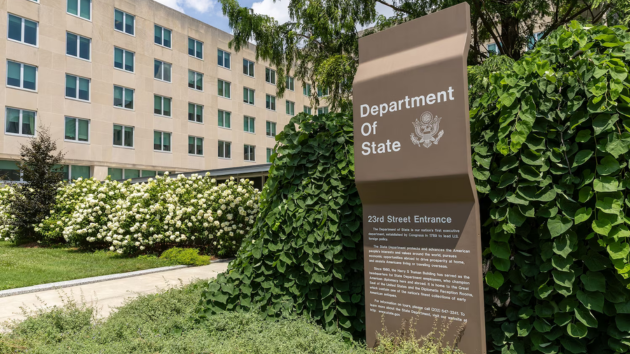
The Department of State building in Washington, July 11, 2025. Hu Yousong/Xinhua via Getty Images
(WASHINGTON) — The Trump administration is recalling dozens of career diplomats from overseas posts in the next month, according to a source familiar with the matter, the latest shakeup at the U.S. State Department.
More than two dozen senior diplomats have received notice that they must leave their roles in the next month, according to the source.
According to the American Foreign Service Association, the labor union that represents the U.S. foreign service and career diplomats, those affected by the recall report being notified by a phone call that they were being removed from their posts “abruptly,” with no explanation provided.
They were directed to vacate their posts by Jan. 15 or 16.
“This method is highly irregular,” a spokesperson for AFSA told ABC News.
“This is not normal practice. Career diplomats and ambassadors are not typically recalled in this manner. The lack of transparency and process breaks sharply with longstanding norms,” the spokesperson said.
Most of the impacted ambassadors are serving at U.S. diplomatic posts in Africa, but the removals also affect posts in Europe, Asia, the Middle East, and the Western Hemisphere.
A senior State Department official described the recall of the ambassadors as “a standard process in any administration.”
“An ambassador is a personal representative of the President, and it is the President’s right to ensure that he has individuals in these countries who advance the America First agenda,” they said.
The State Department declined to comment on specific numbers or ambassadors affected.
AFSA confirmed there is no official, verified list of recalled ambassadors.
There are various lists circulating that appear to be crowdsourced from people inside and outside the department, according AFSA.
POLITICO first reported on the removal of the diplomats.
The recall is the latest move by the Trump administration to reshape the State Department to align it more with its “America First” priorities. The recall comes after more than 1,300 officials and more than 240 foreign service officers were laid off earlier this year as part of what the administration said was a major reorganization aimed at increasing efficiency and reducing government size.
It is typically normal for new presidents to replace political appointments service in ambassador roles; however, career diplomats are typically allowed to continue serving in their roles.
The AFSA slammed the recall, saying it sends a “chilling signal” to career foreign service officers that their oaths to the Constitution take a backseat to political loyalty.
“Removing senior diplomats without cause undermines U.S. credibility abroad and sends a chilling signal to the professional Foreign Service: experience and an oath to the Constitution take a backseat to political loyalty. This is not how America leads,” the statement said.
AFSA says the recall represents “a steady erosion of norms, transparency, and professional independence in the Foreign Service.”
“Abrupt, unexplained recalls reflect the same pattern of institutional sabotage and politicization our survey data shows is already harming morale, effectiveness, and U.S. credibility abroad,” the spokesperson said.
AFSA is working with partners to confirm names one-by-one through direct contacts.
ABC News’ Luis Martinez and Josh Margolin contributed to this report.
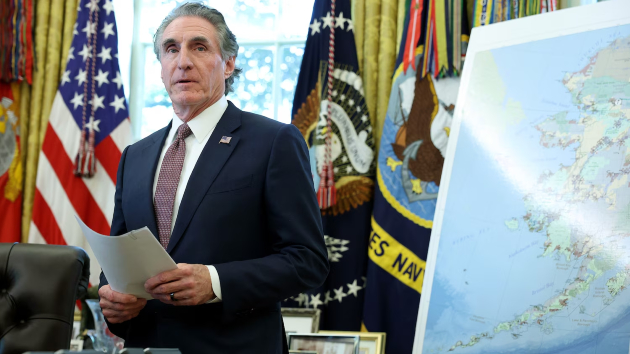
Interior Secretary Doug Burgum speaks during an event with President Donald Trump in the Oval Office at the White House on October 06, 2025 in Washington, DC. Anna Moneymaker/Getty Images
(WASHINGTON) — The Trump administration is pausing leases for five offshore wind projects due to “national security concerns” identified by the Department of Defense, Interior Secretary Doug Burgum announced on Monday.
“Today’s action addresses emerging national security risks, including the rapid evolution of the relevant adversary technologies, and the vulnerabilities created by large-scale offshore wind projects with proximity near our east coast population centers,” Burgum said in a press release about the move.
The administration did not disclose what national security risks the wind farms posed, saying that the Department of Defense found the threats in “completed classified reports.”
“As for the national security risks inherent to large-scale offshore wind projects, unclassified reports from the U.S. Government have long found that the movement of massive turbine blades and the highly reflective towers create radar interference called ‘clutter.’ The clutter caused by offshore wind projects obscures legitimate moving targets and generates false targets in the vicinity of the wind projects,” the Department of the Interior said in its press release.
The action affects projects off the coasts of Massachusetts, Rhode Island, Connecticut, Virginia and New York.
According to the Department of the Interior, that five leases that will be affected are: Vineyard Wind 1 (OCS-A 0501), Revolution Wind (OCS-A 0486), CVOW – Commercial (OCS-A 0483), Sunrise Wind (OCS-A 0487) and Empire Wind 1 (OCS-A 0512).
Connecticut Gov. Ned Lamont called the move “yet another erratic, anti-business move by the Trump administration that will drive up the price of electricity in Connecticut and throughout the region.”
“This project is nearing completion and providing good-paying clean energy jobs,” Lamont said in a statement.
Burgum wrote in an X post about the move that the projects were “expensive, unreliable, heavily subsidized offshore wind farms.”
Trump has made clear his distaste for windmills in many public events and on the campaign trail.
“Wind is the worst,” Trump said in a speech in Pennsylvania earlier this month. He added in his remarks, “We don’t want — we don’t approve windmills. We don’t approve it. I’m sorry.”
During an overseas trip to Scotland in July, Trump told Europe to “stop the windmills.”
“You’re ruining your countries. I really mean it. It’s so sad. You fly over and you see these windmills all over the place, ruining your beautiful fields and valleys and killing your birds. And if they’re stuck in the ocean, ruining your oceans. Stop the windmills,” Trump said.
Wind is the country’s largest source of renewable energy, accounting for about 10% of electricity generated in the United States, according to the Department of Energy. Proponents say renewable energy is instrumental in reducing the global reliance on fossil fuels, and the industry continues to grow worldwide despite political challenges.
The Sierra Club, an environmental organization, criticized the Trump administration’s action on Monday.
“The Trump administration’s vengeance towards renewable energy knows no end. Instead of progressing us forward as a nation, they are obsessed with attacking a growing industry that provides good clean energy jobs and affordable, clean electricity. Americans need cheaper and more reliable energy that does not come at the expense of our health and futures,” Melinda Pierce, the group’s legislative director, said in a statement.
This screen grab taken from a video posted on the X account of U.S. Secretary of Homeland Security Kristi Noem shows a U.S. Coast Guard aircraft flying over a crude oil tanker, last docked in Venezuela, before apprehending it on Dec. 20, 2025. Handout/US Secretary of Homeland Security via Getty Images
(WASHINGTON) — President Donald Trump last week announced a “complete blockade of all sanctioned oil tankers going into and out of Venezuela,” ratcheting up the pressure on Nicolás Maduro’s regime as 15,000 U.S. troops and 11 warships stand ready in nearby waters — and leaving questions over the scope of the apparent escalation.
A naval blockade is considered an act of war under international law. But Trump’s reference to “sanctioned” tankers indicated U.S. operations would continue as a law enforcement crackdown by the U.S. Coast Guard, which seized an oil tanker off the Venezuelan coast last week and another over the weekend.
A Coast Guard interdiction is not a military operation; it is a court-authorized enforcement of U.S. sanctions.
According to retired Marine Corps Col. Steve Ganyard, a former State Department official and an ABC News contributor, the president’s orders, announced on his social media platform, amount to a legal quarantine — and not a blockade — because the post references only legally sanctioned tankers.
But Trump also referred to the Venezuelan regime as a Foreign Terrorist Organization (FTO), which could implicate any oil tanker that enters Venezuelan waters.
It wasn’t clear how the administration could designate the government as terrorists — or whether Trump was making reference to Cartel de los Soles, which the administration designated as a terror organization and has said is headed by Maduro.
What impact could a quarantine or blockade have?
Trump’s post last week “leaves more questions than answers,” said Clayton Seigle, a senior fellow at the Center for Strategic and International Studies. “What exactly are we going to do? How are we going to do it?”
“None of that is really detailed,” he said.
Whether the escalated pressure will target sanctioned vessels — or all vessels — remains an open question, but both approaches would impact Maduro, Seigle said.
“If you cut off all oil exports, and the associated revenues — and that’s a big if –then I think in a matter of weeks, the regime in Caracas would face extreme pressure,” he said.
If the U.S. continues to target only sanctioned tankers, “then I think that it could be a more prolonged runway for the regime to try to work something out, find a compromise, or even plan a deliberate exit.”
The U.S. says it has killed more than 100 people in the 25 strikes it says it has carried out on alleged drug smuggling boats since September.
Experts have pointed to President John F. Kennedy’s quarantine of Cuba in 1962 as an analogue to Trump’s approach — with unknown possibilities inviting risk.
“What if a ship doesn’t stop? This was the debate in the Cuban Missile Crisis,” Seigle said. “It’s all fun and games if they pull over and let [themselves] get boarded.”
“What if they don’t? Are you opening fire? Are you sinking ships?”
The announced blockade, though, “looks like it’s a relatively low-risk military operation” designed “to prevent” such a “quagmire,” Seigle said.
“Because if it goes smoothly and they’re able to cut off a lot of Maduro’s oil revenue, then they have a reasonable chance of getting the political outcome that they want, which is Maduro fleeing.”
Yet Trump on Wednesday wouldn’t offer a comment when asked if he sought regime change in Venezuela. Instead, he repeated a claim he said was a premise for blocking tankers.
“You remember, they took all of our energy rights,” he said of Venezuela. “They took all of our oil from not that long ago, and we want it back. But they took it. They illegally took it.”
Trump did not specify which period of nationalizations undertaken by the Venezuelan governments aggrieved the U.S. in his view.
An international arbitration court in 2013 ordered Caracas to pay $8.7 billion to U.S. firm ConocoPhillips, penalizing Venezuela for expropriation of crude assets in 2007 which it found to be unlawful.
Operating in the shadows The U.S. has sanctioned hundreds of oil tankers around the world which it says are part of an illicit network often called the “shadow fleet.”
27 of those designated tankers are operating in Venezuelan waters, according to Seigle.
Venezuela, Russia, and Iran “share that sanctioned fleet,” he added, and Venezuela’s slice is the smallest of the three.
A full quarter of China’s oil imports are produced by those sanctioned countries, Seigle said, leaving the country with “an outsized concern.”
“This is going to raise eyebrows and maybe raise concerns in Beijing among strategic planners that are responsible for making sure that they have enough oil,” he said.
Sanctioned tankers represent less than a fifth of the oil exported from Venezuela, according to Seigle.
“But I think it can have outsized effects in a number of important areas, including whether and for how long Maduro can hold out in a leadership position in Caracas, and also with regard to Venezuela’s biggest oil customer, which is China.”
Why call Maduro’s regime terrorists?
|As a part of Trump’s lengthy post on social media, the president also said the “Venezuelan regime” was an FTO, which the State Department designated it as in November.
Trump and State officials, including Secretary of State Marco Rubio, have repeatedly said Maduro is a narco-terrorist and the head of a narco-terrorist organization, adding that Maduro is not the legitimate leader of Venezuela.
Trump is likely referring to the designation of the Cartel de los Soles when he points to the “Venezuelan Regime” in his post.
The State Department alleges in its designation that Maduro and other high-ranking officials head the Cartel de los Soles and have “corrupted Venezuela’s military, intelligence, legislature, and judiciary.”
Maduro’s government categorically denies the existence of the cartel.
Secretary of Defense Pete Hegseth said in November that the designation of Maduro as a terrorist gives the U.S. more military options in its anti-trafficking operation and public pressure campaign on the Venezuelan president.
The FTO designation “brings a whole bunch of new options to the United States,” Hegseth said. “It gives more tools to our department to give options to the president.”
Legal experts have told ABC that the designation does not in itself constitute an authorization of force. But administration officials have consistently pointed to these designations publicly when disclosing strikes on alleged drug traffickers.
Notably, while the Maduro regime has been targeted as a foreign terrorist organization, the country of Venezuela has not yet been placed on the official “State Sponsor of Terrorism” list.
Only Iran, North Korea, Syria and Cuba are currently listed as state sponsors of terrorism.
(NEW YORK) — This year is expected to be the busiest on record for holiday travel, but rough weather can make getting to your Christmas destination even harder.
Here’s a look at the Christmas week weather forecast:
Tuesday
The Northeast will get some pre-Christmas snow on Tuesday. New York City will see snowfall from about 6 a.m. to noon, while Boston will get hit from 11 a.m. to 11 p.m.
About 1 inch of snow is expected along the Interstate 95 corridor and about 3 to 6 inches of snow is possible in the inland Northeast.
On the West Coast, those driving to their Christmas destination should try to head out the door during the day on Tuesday, because a storm will move in Tuesday night, bringing heavy rain and strong winds.
Wednesday
On Christmas Eve, the weather will be calm across most of the country — but not on the West Coast.
Heavy rain is forecast to fall on burn scar areas in Southern California, prompting a level 3 out of 4 risk for excessive rain and flash flooding.
Some parts of Southern California could see 9 inches of rain just on Tuesday night and Wednesday. Debris flows and landslides are also possible.
Thursday
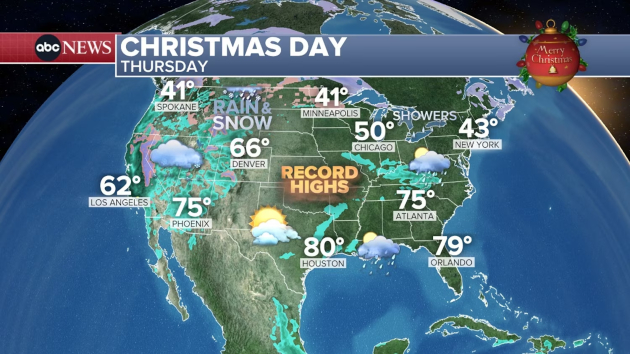
On Christmas Day, record high temperatures are possible for millions from the Midwest to the South.
Temperatures are forecast to soar to record highs of 66 degrees in Albuquerque, New Mexico, and Rapid City, South Dakota; 79 degrees in Midland, Texas; 77 degrees in St. Louis, Missouri; and 75 degrees in Atlanta.
While not record highs, temperatures could also jump to 80 degrees in Austin and Houston, 79 degrees in Miami and Orlando, Florida, and 72 degrees in Memphis, Tennessee. It’ll even warm up to 53 degrees in Washington, D.C.
One of the only parts of the country that has a good chance for a white Christmas is inland New England, where the snow from Tuesday could linger on the ground through Christmas Day.
Some mountainous areas in Washington, Oregon, Idaho, Montana, Colorado and California will also see a white Christmas.
Meanwhile, the rough weather will continue on the West Coast, with another round of rain and mountain snow moving in on Christmas Day.
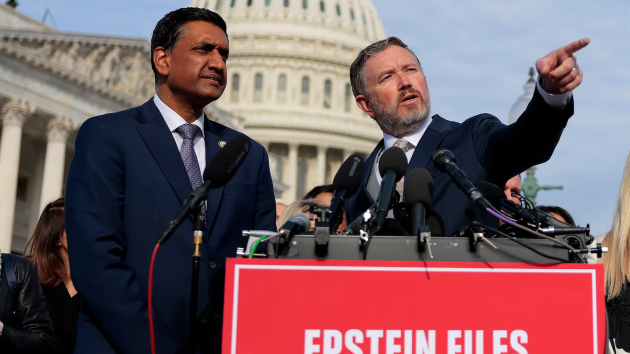
Rep. Thomas Massie speaks alongside Rep. Ro Khanna during a news conference on the Epstein Files Transparency Act outside the U.S. Capitol, November 18, 2025 in Washington. Heather Diehl/Getty Images
(WASHINGTON) — Minority Leader Chuck Schumer introduced legislation on Monday that would direct the Senate to initiate legal action to hold the Justice Department accountable for failing to release the complete files related to convicted sex offender Jeffrey Epstein by Friday’s deadline, which was mandated by the Epstein Files Transparency Act.
Schumer’s announcement came after Democratic Rep. Ro Khanna and Republican Rep. Thomas Massie announced on Sunday that they are pursuing “inherent contempt” charges against Attorney General Pam Bondi for not complying with the law to release the complete Epstein files.
If the effort passes, it could lead to Bondi’s arrest — though the pair is expected to introduce the resolution as “privileged” once the House returns in January, which would force a vote within two legislative days on the House floor, and it’s unclear if this effort would even be successful when it comes up for a vote.
“The law Congress passed is crystal clear: release the Epstein files in full so Americans can see the truth,” Schumer said in a statement. “Instead, the Trump Department of Justice dumped redactions and withheld the evidence — that breaks the law. Today, I am introducing a resolution to force the Senate to take legal action and compel this administration to comply.”
The DOJ faced a Friday deadline imposed by Congress and signed into law by the president to release a massive cache of records gathered during government investigations into the sex offender, who died in jail in 2019.
The Justice Department released thousands of files — ranging from investigative documents to grand jury testimony to snapshots taken by Epstein and his friends — but said it would fail to fully release all the files by the deadline. The law contains exceptions to protect victims and other circumstances, but critics say the DOJ is not following the letter and spirit of the law.
Schumer called the DOJ’s partial release on Friday a “blatant cover-up.”
“Pam Bondi and [Deputy Attorney General] Todd Blanche are shielding Donald Trump from accountability, and the Senate has a duty to act,” Schumer said.
Schumer is expected to force consideration of this bill on the Senate floor in January when the Senate returns from its holiday break. The bill would likely require unanimous consent to pass.
It is unclear if it would have that support, but the Senate unanimously passed the Epstein Transparency Act, which compelled the release of the Epstein documents.
On Sunday, Khanna and Massie, the co-authors of the Epstein Files Transparency Act, announced their intent to pursue inherent contempt proceedings.
The inherent contempt power permits Congress to rely on its own constitutional authority to detain and imprison a “contemnor” — someone held in contempt — until the individual complies with congressional demands like a subpoena or a monetary fine, according to the Congressional Research Service.
The power directs the Sergeant at Arms to arrest the individual who refuses to comply with a subpoena or fine, however, once the witness complies with the subpoena, they are released.
Notably, the resolution would not require passage in the Senate to be enforced.
“The quickest way, and I think most expeditious way, to get justice for these victims is to bring inherent contempt against Pam Bondi,” Massie said on “CBS News’ Face the Nation” on Sunday.
Khanna, who also appeared on the same program on Sunday, reiterated that inherent contempt is the right path at this point.
“We only need only need the House for inherent contempt, and we’re building a bipartisan coalition, and it would fine Pam Bondi for every day that she’s not releasing these documents. I’ll tell you why, I’ve talked to the survivors, why this is such a slap in the face,” Khanna said.
On NBC News’ “Meet the Press” on Sunday, Blanche said he wasn’t taking Massie and Khanna’s threats seriously because he said he believes they are in compliance with the law. Specifically regarding threats of legal action against the department, Blanche said, “Bring it on.”
A statement released Monday morning by attorneys representing a group of Epstein survivors said omissions in the files by either redactions or unreleased pages amounted to a failure.
“We are told that there are hundreds of thousands of pages of documents still unreleased,” the statement said.
(NEW YORK) — The Powerball jackpot has soared to one of the largest in the lottery game’s history.
The current jackpot is estimated to be $1.6 billion ahead of Monday night’s drawing. That would make it the fourth-largest in Powerball history and the fifth-largest among U.S. lottery jackpots.
The estimated cash value of the current jackpot is $735.3 million.
Both figures are before taxes.
A player who wins the Powerball jackpot can choose between the lump sum payment or an annuity option, in which one immediate payment is received followed by 29 annual payments that increase by 5% each year.
The odds of winning the jackpot are 1 in 292.2 million, according to Powerball.
The game’s jackpot was last won in September, when two tickets in Missouri and Texas split the $1.787 billion prize — Powerball’s second-largest jackpot ever.
The game’s largest prize ever was $2.04 billion, won on Nov. 7, 2022, in California.
Tickets are $2 per play and are sold in 45 states, the District of Columbia, Puerto Rico and the U.S. Virgin Islands. Monday night’s drawing is at 10:59 p.m. ET.
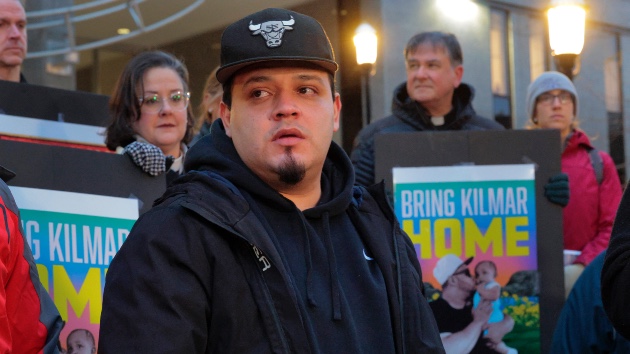
Kilmar Abrego Garcia attends a rally for him as he arrives for his first check-in at the U.S. Immigration and Customs Enforcement Baltimore Field Office the day after a federal judge ordered his release from a detention in Pennsylvania, on December 12, 2025 in Baltimore, Maryland. (Photo by Chip Somodevilla/Getty Images)
(NEW YORK) — The federal judge overseeing Salvadoran native Kilmar Abrego Garcia’s immigration case is scheduled to hear arguments Monday over whether ICE should be allowed to re-detain Abrego Garcia while the government attempts to deport him to Liberia or another country.
Abrego Garcia was released on Dec. 11 after the judge, U.S. District Judge Paula Xinis, found the government had detained him “without lawful authority.”
In part, Judge Xinis said he had not been issued a formal order of removal during his immigration proceedings in 2019, when a judge also barred the government from deporting him to his native El Salvador due to his fear of persecution.
Following Abrego Garcia’s release, an immigration judge “corrected” the error and added a removal order to his record, finding that it “was erroneously omitted.”
Abrego Garcia, who had been living in Maryland with his wife and children, was deported in March to El Salvador’s CECOT mega-prison, despite the 2019 court order barring his removal to that country, after the Trump administration claimed he was a member of the criminal gang MS-13, which he denies.
He was brought back to the U.S. in June to face human smuggling charges in Tennessee, after which Judge Xinis released him from ICE detention while he awaits trial. He is scheduled to go to trial on the Tennessee charges, to which he has pleaded not guilty, in January.
On Friday, his attorneys filed a motion seeking sanctions against the Trump administration for allegedly violating a court order that barred officials from making extrajudicial statements that could impact the case. After Abrego Garcia’s release from ICE detention, Chief Border Patrol Agent Gregory Bovino called him an “alien smuggler” and “wife beater” on national TV, his attorneys said.
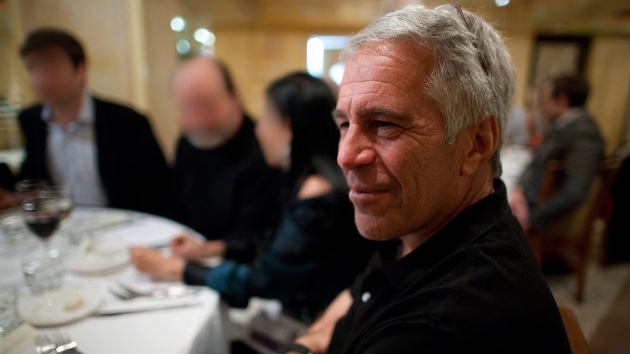
An undated photo from the estate of Jeffrey Epstein is part of a collection of images released Dec. 18, 2025, by Democrats on the House Oversight Committee. (House Oversight Committee Democrats)
(NEW YORK) — A group of alleged victims of Jeffrey Epstein accused the Department of Justice of missteps, including violations of the law, in its partial release of files related to the disgraced financier’s abuse of young women and girls.
The DOJ faced a Friday deadline imposed by Congress to release a massive cache of records gathered during government investigations into the sex offender, who died in jail in 2019.
Justice officials released thousands of files — ranging from investigative documents to grand jury testimony to snapshots taken by Epstein and his friends — but said it would fail to fully release all the files by the deadline.
“Instead, the public received a fraction of the files, and what we received was riddled with abnormal and extreme redactions with no explanation,” a group of 19 women, including two Jane Does, said in a statement released on Monday. “At the same time, numerous victim identities were left unredacted, causing real and immediate harm.”
The statement, which was released early Monday by attorneys representing the women, also pointed to what they said was missing from the files. Omissions by either redactions or unreleased pages amounted to a failure, they said.
“No financial documents were released,” the statement said. “Grand jury minutes, though approved by a federal judge for release, were fully blacked out — not the scattered redactions that might be expected to protect victim names, but 119 full pages blacked out. We are told that there are hundreds of thousands of pages of documents still unreleased.”
“These are clear-cut violations of an unambiguous law,” the statement added.
Some documents disclosed on Friday with significant redactions were reposted early Saturday with some or all of the redactions lifted, according to a review of the files by ABC News.
Deputy Attorney General Todd Blanche said on social media on Friday, as the initial files were being released, that “[a]dditional responsive materials will be produced as our review continues, consistent with the law and with protections for victims.” The DOJ on Sunday released a similar statement, adding that reviews of the material would continue “as we receive additional information.”
President Donald Trump in November had signed a bill that gave the Justice Department 30 days to release the materials.
The statement from alleged victims noted that DOJ officials had structured the release of documents in a way that made it “difficult or impossible” for Epstein’s alleged victims to find information that may be important to their cases. And they said they hadn’t been contacted about potential redactions or withholdings prior to the documents’ release.
“It is alarming that the United States Department of Justice, the very agency tasked with upholding the law, has violated the law, both by withholding massive quantities of documents, and by failing to redact survivor identities,” the women’s statement said.
The women called for “immediate” oversight from Congress “to ensure the Department of Justice fulfils its legal obligations.”
Separately on Sunday, Brittany Henderson and Brad Edwards — attorneys who represent more than 200 survivors of Epstein and his convicted co-conspirator Ghislaine Maxwell — had told ABC News that since the Epstein files were posted on Friday, they had been hearing from clients who have seen their names or other identifying information un-redacted documents in the DOJ’s disclosure.
Henderson and Edwards said they had been working through the weekend with federal officials in New York and D.C. to take down documents containing personal information of alleged victims, many of whom have never had their names disclosed in any context connected to Epstein.
In one instance, Henderson and Edwards said, a sealed document from settled civil litigation containing the names of more than two dozen alleged victims — was posted without redactions. That document was among those that have been removed from the DOJ’s site, the lawyers said.
The attorneys said that about 15 documents had by Sunday been pulled from the site — at least temporarily — as a result of their consultations with the government.
DOJ officials said in a social media statement on Sunday afternoon that they had “received incoming from individuals alleging to be victims and their lawyers, requesting that certain information be removed. Out of an abundance of caution, the material is temporarily removed for review and will be released again with appropriate redactions, if legally required.”
Blanche said earlier on Sunday in an interview on NBC News that the DOJ would be responsive to concerns raised by victims about potential exposure of identifying information and insisted, despite the slow release of materials, that DOJ is complying with the law.
“The statute also requires us to protect victims and—and so the reason why we are still reviewing documents and still continuing our process is simply that to protect victims,” he said. “So the same individuals that are out there complaining about the lack of documents that were produced on Friday are the same individuals who apparently don’t want us to protect victims.”
“The reality is anybody, any victim, any victim’s lawyers, any victim rights group, can reach out to us and say, ‘Hey, Department of Justice, there’s a document, there’s a photo, there’s something within the Epstein files that identifies me,'” he added. “And we will then, of course, pull that off and investigate.”
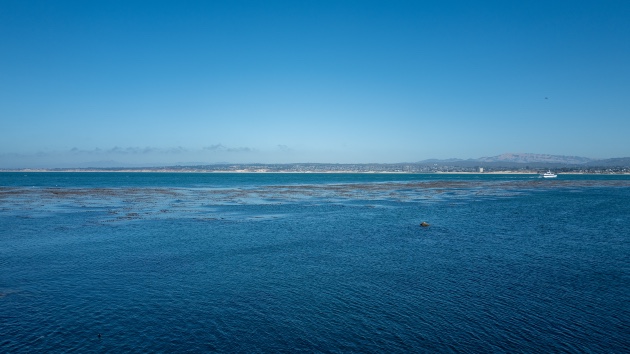
Waters of Monterey Bay, Monterey, California, August 5, 2025. (Photo by Smith Collection/Gado/Getty Images)
(MONTEREY, Calif) — A search is ongoing in California for a missing swimmer who may have been attacked by a shark, officials said.
The swimmer was reported missing just after noon on Sunday at Lovers Point in Pacific Grove in Monterey Bay, according to a joint statement from the Coast Guard and the cities of Pacific Grove and Monterey.
Two witnesses said the swimmer – who is a 55-year-old woman, according to ABC Fresno station KFSN – “may have encountered a shark,” the statement said. The swimmer’s family has been notified, officials said.
Boats and helicopters were deployed for Sunday’s search, which lasted until 8 p.m., officials said. The search will resume on Monday.
Lovers Point Beach in Pacific Grove and McAbee Beach and San Carlos Beach in Monterey are closed through Tuesday, the officials said.
ABC News’ Tristan Maglunog and Amanda Morris contributed to this report.
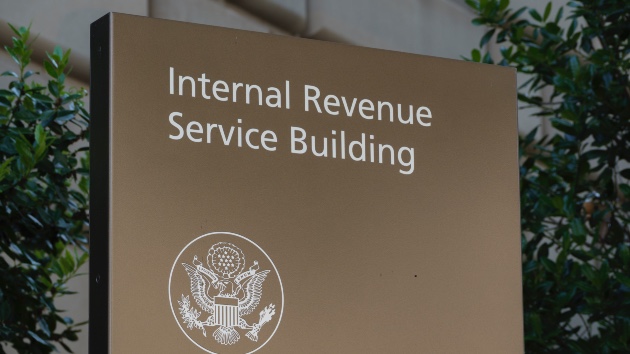
A sign is displayed outside of the Internal Revenue Service (IRS) Building on June 7, 2025 in Washington, DC. (Photo by Kevin Carter/Getty Images)
(WASHINGTON) — Heading into the new year, Senate Democrats are raising concerns about the Internal Revenue Service’s ability to handle the upcoming tax filing season, amid changes in leadership and to the workforce in the first year of the Trump administration.
In a letter to Treasury Secretary and acting IRS Commissioner Scott Bessent obtained first by ABC News, the group of 17 senators, led by Elizabeth Warren of Massachusetts, and Angus King, a Maine independent who caucuses with Democrats, wrote that they have “serious concerns” the IRS is “not prepared” for the next tax season, and that taxpayers “may face delays and difficulties in filing returns and receiving refunds.”
The Trump administration has conducted large-scale layoffs and voluntary buyouts — some of which have been reversed — at the IRS, which is also responsible this year for implementing new changes to the tax code following the passage of Republicans’ major tax and domestic policy bill.
Bessent has served as acting IRS commissioner since August after President Donald Trump removed Billy Long, a former GOP congressman, from the role two months after he was confirmed by the Senate and nominated Long to become the U.S. ambassador to Iceland.
Bessent became the seventh official to lead the agency in 2025, following Long and a string of other senior officials.
The law made permanent the 2017 GOP tax cuts, while boosting funding for border security and the Defense Department, scaling back some social safety net programs, and limiting taxes on tips and overtime for some workers.
In a statement to ABC News, Warren accused the Trump administration of enacting changes that will benefit wealthy Americans and make it harder for other Americans seeking help from the agency.
“Donald Trump’s endless attacks on the IRS are good news for his billionaire buddies and giant tax prep companies, but bad news for Americans getting ready for filing season. Americans rely on the IRS to file their taxes and get their tax refunds quickly and easily, and I’m pressing for answers,” she wrote.
The Democrats also cited a September report from the Treasury Department Inspector General for Tax Administration on the previous filing season.
While the watchdog called the 2025 filing season “successful” and found that the agency processed more tax returns compared to the same time period in the previous year, it also found that the Trump administration’s workforce reductions “had no significant impact” on the 2025 filing season — but that they could “impact key processing programs and customer service going forward.”
According to the inspector general’s office, the staffing losses on customer service and anti-fraud teams could lead to the agency processing fewer returns, assisting fewer taxpayers, and failing to prevent $360 million in fraudulent refunds from being paid out.
The Treasury Department did not immediately respond to questions from ABC News about the inspector general’s report and the concerns raised by Democrats.