
At least 88 new measles cases confirmed in South Carolina, bringing total to 646: Health officials

At least 88 new measles cases confirmed in South Carolina, bringing total to 646: Health officials

(SPARTANBURG COUNTY, S.C.) — At least 88 new measles cases in South Carolina have been confirmed amid the state’s outbreak, bringing the total number of infections to 646, state health officials said Tuesday.

The majority of cases have been found in the Upstate region and around Spartanburg County, which sits on the border with North Carolina.

This is a developing story. Please check back for updates.

Copyright © 2026, ABC Audio. All rights reserved.
At least 88 new measles cases confirmed in South Carolina, bringing total to 646: Health officials

At least 88 new measles cases confirmed in South Carolina, bringing total to 646: Health officials

(SPARTANBURG COUNTY, S.C.) — At least 88 new measles cases in South Carolina have been confirmed amid the state’s outbreak, bringing the total number of infections to 646, state health officials said Tuesday.

The majority of cases have been found in the Upstate region and around Spartanburg County, which sits on the border with North Carolina.

This is a developing story. Please check back for updates.

Copyright © 2026, ABC Audio. All rights reserved.

Uvalde defense witness suggests officer Gonzales couldn’t see gunman

Uvalde defense witness suggests officer Gonzales couldn’t see gunman
A memorial dedicated to the 19 children and two adults murdered on May 24,2022 during a mass shooting at Robb Elementary School is seen on January 05, 2026 in Uvalde, Texas. Brandon Bell/Getty Images

(CORPUS CHRISTI, Texas) — The Robb Elementary School gunman ducked behind a parked car when former Uvalde, Texas, school police officer Adrian Gonzales initially drove by him, an eyewitness told jurors on Tuesday.

That move, defense lawyers allege, prevented Gonzales from being able to clearly spot the gunman when he first arrived at the school on May 24, 2022.

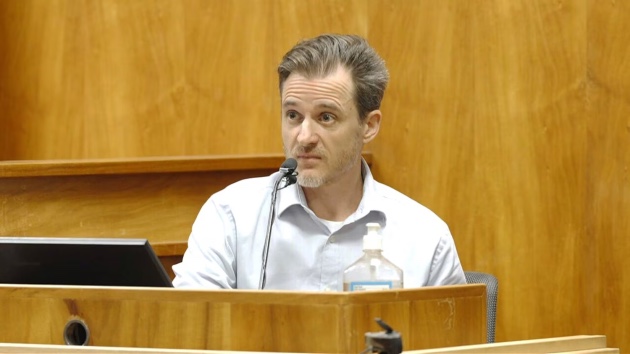
Claudia Rodriguez, a secretary at the funeral home that neighbored Robb, was the first witness called by the defense, and she told jurors that she witnessed gunman Salvador Ramos exit his car with a rifle after crashing into a ditch. 

Rodriguez said Ramos ducked behind a nearby parked car when Gonzales drove by him. 

“And at the time you see the white car [driven by Gonzales], you see the figure, kind of ducking down between the cars. Is that how you remember seeing it?” defense attorney Jason Goss asked. 

“Yes sir,” Rodriguez replied.

Rodriguez also testified that she tried to warn other arriving officers that the shooter entered the school, but they did not run in to stop him. 

“Gilbert [Limones, another funeral home employee,] and I are yelling at them upon their arrival and after they exited their car that he’s already inside,” she said.

“Did those officers then go immediately to where you told them and run inside the building?” Goss asked. 

“No. I believe, if I remember correctly, they got back into the car and went around the school towards the front of Robb,” she said. 

Prosecutors allege Gonzales, who is charged with child endangerment, did not follow his training and endangered the 19 students who died and an additional 10 surviving students.

Defense attorneys have sought to highlight that other officers arrived within the same timeframe as Gonzales but failed to act.

Gonzales has pleaded not guilty and his lawyers argue he is being unfairly blamed for a broader law enforcement failure that day.

Copyright © 2026, ABC Audio. All rights reserved.
ICE detainee dies of ‘presumed suicide’ at Texas detention facility, agency says

ICE detainee dies of ‘presumed suicide’ at Texas detention facility, agency says
An entrance to Fort Bliss is shown on June 25, 2018 in Fort Bliss, Texas. Joe Raedle/Getty Images

(EL PASO, Texas) — An undocumented immigrant died while in custody at a U.S. Immigration and Customs Enforcement detention facility in Texas, federal authorities said.

Victor Manuel Diaz, 36, of Nicaragua, died of a “presumed suicide” on Jan. 14 at Camp East Montana, a sprawling tent complex at the U.S. Army’s Fort Bliss base in El Paso, ICE said Sunday. The official cause of death remains under investigation, the agency said.

ICE said Diaz illegally entered the U.S. in March 2024 and an immigration judge ordered him removed in absentia in August 2025. 

Diaz had been in federal custody since Jan. 6, when ICE said its officers “encountered” him in Minneapolis amid the federal immigration crackdown in Minnesota. He was arrested for an immigration violation and ICE processed him as a final order of removal on Jan. 12, the agency said.

Two days later, security staff found Diaz unconscious and unresponsive in his room, ICE said. He was pronounced dead following life-saving measures by on-site medical staff and El Paso emergency medical services personnel, according to ICE.

“ICE is committed to ensuring that all those in custody reside in safe, secure and humane environments,” ICE said in a press release.

Diaz’s death is the second reported by ICE at the Camp East Montana detention facility this month.

On Jan. 3, Geraldo Lunas Campos, 55, of Cuba, was pronounced dead “after experiencing medical distress,” ICE said. His cause of death is under investigation, ICE said in a Jan. 9 press release.

The El Paso County medical examiner’s office said Tuesday that it does not have any record of Diaz, and the case and manner of death are pending for Lunas Campos.

If you are experiencing suicidal, substance use or other mental health crises, or are worried about a friend or loved one, please call or text the 988 Suicide & Crisis Lifeline. You will reach a trained crisis counselor for free, 24 hours a day, seven days a week. You can also go to 988lifeline.org.

Copyright © 2026, ABC Audio. All rights reserved.
Brutal, life-threatening cold invades Midwest and Northeast: Latest

Brutal, life-threatening cold invades Midwest and Northeast: Latest
Bitter Cold – Tuesday AM Wind Chills Map. ABC News

(NEW YORK) — A major arctic blast is stretching from the Midwest to the Northeast, bringing dangerously cold weather to 43 million people.

On Monday morning, the wind chill — what temperature it feels like — plunged to minus 30 degrees in Minneapolis; minus 27 degrees in Cedar Rapids, Iowa; minus 22 degrees in Chicago; and minus 22 degrees in Green Bay, Wisconsin.

The brutal Midwest wind chill continued on Tuesday morning, hitting minus 13 degrees in Chicago; minus 23 in Green Bay; and minus 12 in Cleveland.

The freeze hit the Northeast on Tuesday morning, with the wind chill dropping to minus 11 degrees in Pittsburgh, Pennsylvania; 7 degrees in Washington, D.C.; and 5 degrees in New York City.

The Arctic blast is also bringing heavy lake effect snow to the Midwest and Northeast. The heaviest lake effect snow is expected in western Michigan and western and upstate New York where, 6 to 12 inches of snow is forecast.

Click here for what you need to know to stay safe in the cold.

Copyright © 2026, ABC Audio. All rights reserved.

Stocks fall as Trump threatens tariffs on European countries over Greenland

Stocks fall as Trump threatens tariffs on European countries over Greenland
Photo of Wall Street (Matteo Colombo/Getty Images)

(NEW YORK) — Stocks tumbled in early trading on Tuesday as President Donald Trump threatened tariffs on multiple European countries as part of a push for U.S. control of Greenland.

The Dow Jones Industrial Average fell 735 points, or 1.4%, while the S&P 500 declined 1.5%. The tech-heavy Nasdaq dropped 1.8%.

The selloff came in the first trading session since Trump announced the new tariffs in a social media post on Saturday.

Under the proposed plan, eight European nations — including Denmark, France, Germany and the United Kingdom — will be slapped with 10% tariffs beginning on Feb. 1. Those levies are set to escalate to 25% on June 1, Trump said.

“This Tariff will be due and payable until such time as a Deal is reached for the Complete and Total purchase of Greenland,” Trump added.

Trump escalated the trade confrontation with Europe on Tuesday, threatening a 200% tariff on French wine if French President Emmanuel Macron opts to forego participation in Trump’s proposed “Board of Peace” for Gaza.

Greenland is a self-governing territory of the Kingdom of Denmark. Trump first raised the prospect of acquiring the minerals-rich island in his first term. Danish and Greenlandic politicians have repeatedly rebuffed such proposals.

European leaders, meanwhile, continued to push back on Trump’s ambitions and publicize their coordination efforts on the issue.

European Commission President Ursula von der Leyen said in a post on X that she met with a bipartisan congressional delegation to discuss both Russia’s war in Ukraine and recent tensions around Greenland.

Von der Leyen said she “addressed the need to unequivocally respect the sovereignty of Greenland and of the Kingdom of Denmark. This is of utmost importance to our transatlantic relationship.”

Treasury yields jumped on Monday, suggesting possible concern about economic instability stemming from the confrontation between Trump and European nations.

Since bonds pay a given investor a fixed amount each year, the specter of inflation risks devaluing the asset and, in turn, makes bonds less attractive. When demand for U.S. treasuries falls, bond yields rise.

This is a developing story. Please check back for updates.

ABC News’ David Brennan contributed to this report.

Copyright © 2026, ABC Audio. All rights reserved.

Alexander brothers set to face federal sex trafficking charges

Alexander brothers set to face federal sex trafficking charges
A display showing images of Alon, Oren, and Tal Alexander prior to a news conference in New York, Dec. 11, 2024. (Yuki Iwamura/Bloomberg via Getty Images)

(NEW YORK) — Their brand was ultra-lux real estate, and the lifestyle to match.

For more than a decade, brothers Oren and Tal Alexander built a rep of jetsetting glamour and partying at hot spots, flanked always by beautiful women.

What was actually going on behind the scenes, according to federal authorities, was criminal.

Along with a third brother, Alon, Oren and Tal Alexander were arrested in December 2024 on federal sex trafficking charges in a case that has splashed across the nation’s tabloids.

As the brothers prepare to go on trial, the case looms as a battle of he said, she said: whether, as their advocates say, their alleged behavior was simply boys partying hard —  or, as authorities allege, something far more sinister.

In a 16-page indictment, the US Attorney’s Office in Manhattan says that for well over a decade, the Alexander brothers conspired to “repeatedly and violently drug, sexually assault and rape dozens of women,” using the “promise of luxury experiences, travel and accommodations” as a tool “to lure and entice” and ultimately force sex.

Prosecutors have assembled a chorus of women accusers whose accounts they hope will take a jury through a journey of rendezvous, drugs and booze in places like the Hamptons, Aspen, Las Vegas and the Bahamas.

Some of the accusations date to a time before the #MeToo reckoning. The brothers could face 15 years to life in prison, if convicted on all the federal charges. Oren and Alon also face state charges in Florida. And collectively, the three are staring at dozens of civil lawsuits that remain on hold while the criminal cases proceed.

The brothers’ parents, Orly and Shlomy Alexander, maintain their sons are innocent and insist that that will become clear from the testimony in the criminal case.

“We have been living with this ordeal since allegations first surfaced in civil lawsuits and were widely amplified long before any criminal charges were brought. The impact on our family has been profound and deeply painful,” the parents said in a statement to ABC News. “We believe our sons are innocent, and that if they are judged on the evidence presented at trial — free from speculation or public narrative — the truth will prevail. We ask only for a fair process, grounded in facts, where their voices can finally be heard.”

The sons of Israeli immigrants, Oren, 38, and Tal, 39, forged reputations as star brokers in the cutthroat world of New York luxury real estate, with a portfolio that includes some of the all-time most expensive home sales in the United States. As Oren and Tal in 2022 started their own brokerage, Oren’s twin Alon took a job as president of the family’s security firm.

Promiscuous and privileged though they may have been, the Alexander brothers’ lawyers argue they are not guilty of sexual violence. The men leveraged their success and used it to attract women, who, their lawyers insist, participated willingly. Defense attorneys insist the brothers’ did not commit the crimes they’re charged with and that their accusers’ accounts are dubious and “speculative,” motivated by hopes for windfalls.

“The Alexanders were interested in meeting women, and they met women in virtually any place a man could meet a woman: nightclubs, bars, restaurants, beach parties, pool parties, their own homes, the homes of friends, etc.,” their defense said in a November brief filed with the court.

“None of these women were drugged or raped or anything of the sort,” the defense submitted to US District Judge Valerie Caproni, overseeing the case. “Rather, those who engaged in sex with one or more of the Alexander brothers did so consensually. Years later, they either regretted their voluntary decision or, through communicating with other supposed victims, rewrote history or developed a perspective that was different from reality.”

The brothers’ spokesman, Juda Engelmayer, was more pointed: “Many of these began as late-filed civil claims, not criminal cases, and they surfaced without the objective evidence serious allegations would traditionally produce, no contemporaneous reports, medical documentation, or forensic findings,” he said, noting that the alleged victims did not come forward at the time of the alleged assaults. “At the time, the Alexander brothers were young and navigating adult social environments, but that is not criminal conduct and bears no resemblance to trafficking. These accusations exist only within litigation, where financial recovery is the incentive, not proof.”

Ensemble allegations
In their filings, federal prosecutors alleged that the brothers employed a “pattern of behavior” of physical force and “drugged sexual assaults that were the hallmark of the defendants’ conspiracy.”

Prosecutors also point to a series of text message chats between the brothers and their friends about obtaining drugs, including Quaaludes, MDMA, cocaine, GHB and Ambien. The chemicals, federal authorities allege, were  “to incapacitate women to further their sex trafficking scheme.”

The Alexanders’ defense challenged the prosecutors’ evidence, including chalking up those conversations as “idle chatter.”  

“Even taking the Government’s factual allegations as true (which we do only for the purposes of this motion), there is not a single alleged instance of sex in exchange for something of value,” the defense said in a November filing. “In fact, the statements of the witnesses are precisely the opposite, specifically that they had sex against their will, either because they were drugged, drunk or forced.”

Prosecutors remain confident their case against the brothers is rock solid.

They have notified the court they plan to call seven alleged victims to prove the core of their charges, among them a woman who says she was only 16 years old when the sexual encounter occurred with Alon and Tal, who were 22 and 21 at the time.

Also expected to testify are other alleged victims, some of whom have filed civil lawsuits claiming assault by at least one of the brothers, and may also appear as witnesses in the state criminal case. Though their alleged assaults are not the subject of federal charges, the women may be called as witnesses to what prosecutors say illustrates a history of prior bad acts.

The federal judge has allowed one of the alleged victims in the Florida case to appear as a witness in New York. That woman, known in court papers as “M.G.,” says that in October 2021, she met Oren at a dinner, joined him and others on his boat, and a small group eventually went with him to his Miami home.

M.G. said her conversation with Oren was “flirty,” he gave her a drink, and it turned physical, according to her 2024 interview with a Miami Beach police detective. She alleged that it turned to unwanted and aggressive behavior, and he allegedly ripped her dress off.

When she ran downstairs and tried to open the backyard door, she said it “would not open,” and when she requested to be let out, she later told the detective, he sexually assaulted her with his fingers as she kept saying “no.” M.G. said when she could finally leave, she immediately told her friend what had happened, but that her friend “was pretty drunk.”

In her 2024 police interview, M.G.’s friend said she recalled being told Oren had “tried having sex with [M.G.] after she said no” but didn’t remember being told that Oren had penetrated M.G. in any way. The friend also did not recall the doors being locked when she texted M.G. and they decided to leave.

“I was like, ‘hey, where are you?’ And she said, ‘I think I’m in a room with Oren or something like that.’ And I was like, ‘I’m ready to leave. Let’s — let’s leave.’ And she’s like, ‘yes, please, let’s go.’ And then I just remember walking out of the house,” the friend said. She recalled M.G. seemed “distressed” and had told her “she didn’t want to sleep with him, and he was forcing it.”

In an October 2025 deposition with the Alexanders’ Florida attorneys, the friend reiterated Oren’s alleged advances and M.G.’s objections. But she also said there was nothing unusual about M.G.’s clothing when they left through the front door.

The Alexanders’ attorneys point to what they say are the women’s misaligned memories of the night as evidence the allegations cannot be proven in court.

“M.G’s story is like a C-grade Horror film,” Oren’s Florida defense attorneys Ed O’Donnell IV and Joel Denaro said in a statement to ABC News, adding “her best friend contradicts” several points of the alleged narrative.

“M.G.” did not respond to a request for comment from ABC News. 

Other alleged victims in the federal case have offered similar stories of their own alleged assaults, according to court documents.

Two of the alleged victims in the federal case said in June 2009, they were “invited by party promoters to the Hamptons to celebrate Alon and Oren’s birthday.” Though taken to the club on a party bus, the women learned it would not return them to Manhattan.

Alon “told [one of the women] that he had a nice house” where “there would be a fun afterparty, and invited [her] to stay there,” according to court documents. Both women agreed to go to the house. The night allegedly became a blur of what they said were drugged and repeated group rapes by the brothers, though they said they could only be remembered in “flashes of memory” between the two.

Clash of the narratives
A critical linchpin in each of the Alexanders’ cases will be the credibility of victims’ narratives, according to legal experts — a hallmark of sex-crimes cases.

“The prosecution of this type of case often comes with a unique set of challenges. As we saw during the prosecution of Sean Combs, consent can be a very complex issue,” said Matt Murphy, a former senior prosecutor in Orange County, Calif., referring to the recent case of hip-hop mogul Sean “Diddy” Combs.

“Jurors often struggle with things like continued contact, friendly text messages, alcohol use, and of course, pending civil suits,” said Murphy, now an ABC News legal contributor. “Prosecutorial success will depend heavily on victim credibility and solid corroboration. We’ll see.”

Some of the women who have come forward with their allegations have said they did so only after learning of others who said they had similar experiences with the brothers.

“Like, handfuls of girls … it was like everyone in Miami knew,” one of the alleged victims in the Florida case, identified in court papers as S.M., told a detective in August 2024, as seen in body-worn camera footage of the interview obtained by ABC News.

“Now I finally feel like, no one’s going to call me a liar ’cause I’m not the only one,” she told the detective.

S.M., who was a model at the time, said she went to an event where the group included Oren in October 2017. Afterward, she said she went with him to his apartment. Once there, she said, he gave her a glass of wine and a virtual reality headset to try, then led her to a bedroom, pushing her onto the bed, where she says he assaulted her as she told him, “no.”

The brothers’ attorneys have stressed that the real-time behavior from some of the alleged victims belies the narrative they have told prosecutors and the public.

The day after that alleged assault, S.M. posted a picture of herself in a bikini on social media with the caption, “Cloudy with a chance of awesome,” according to court filings. That night, the defense said, she went out with friends to a nightclub.

“I always am in a bikini and take pictures in bikinis because I’m a model,” S.M. explained to the defense during a September 2025 deposition in Florida, according to a transcript obtained by ABC News.

Days after her alleged assault, S.M. texted Oren a picture of them, together and smiling, taken at the event, according to court documents.

“You would acknowledge that by you sending him that picture three days later, it would indicate that you in no way thought that he sexually assaulted you back then,” the Alexanders’ Florida defense attorney Edward O’Donnell said during the deposition.

“I feel like I was in some sort of denial,” S.M. said. “I was hoping that it didn’t happen.”

Two weeks after her alleged assault, S.M. met up with Oren again. “I wanted him to make it right because I was — I didn’t want it to be true and I was hurting inside,” S.M. said during her deposition.

Their texts after the alleged assault tell a different story, O’Donnell argued.

“It would be nice to have dinner. Hopefully we can schedule something before you leave,” S.M. texted Oren on Nov. 2, 2017, according to court documents.

“Documented-wise, your actions, your photographs, your downloads, your videoing him, taking photographs of him, you sending him those pictures, all subsequent to you, the date you claim that you were sexually assaulted, all go against that your sex was non-consensual,” O’Donnell said.

S.M. insisted she did not consent to that encounter.

“I don’t have evidence of what happened in that room, but I know what happened in that room and how I chose to act afterwards,” S.M. responded during the deposition. “Whether it be naive or hopeful, doesn’t change that.”

S.M.’s attorney declined to comment to ABC News.

On Jan. 8, a grand jury returned one of several superseding indictments, adding an additional charge against Alon and Oren for allegedly drugging and assaulting a woman during a 2012 Bahamian cruise.

The two brothers had already been charged for allegedly slipping her a drugged drink and taking “turns raping” her; the additional count also charged them with allegedly engaging in sex with her “while she was physically incapable of declining participation.”

In a filing over the weekend, the Alexanders’ attorneys filed a motion to dismiss, arguing, among other things, that prosecutors have repeatedly made last-minute changes to the charges that have left insufficient time for the defense to fully investigate.

In particular, the defense cast doubt on the authenticity of a foreign birth certificate which would establish the alleged age of one of the females involved in some of the activity charged. Prosecutors allege that in 2009, Oren “recorded himself and another person engaging in sexual activity with a incapacitated 17-year-old girl in Manhattan.”

In their latest filing, the defense argued verifying such a birth certificate from a city “in an active war” is near-impossible, and more time is needed given the “central importance of the true birth date.” The judge has not yet weighed in.

The judge has scheduled jury selection to begin on Tuesday. The trial, which is scheduled to start on Jan. 26, is expected to last roughly a month.

Copyright © 2026, ABC Audio. All rights reserved.
1 year into Trump’s 2nd term, here are some of the seismic shifts in foreign and domestic policies

1 year into Trump’s 2nd term, here are some of the seismic shifts in foreign and domestic policies
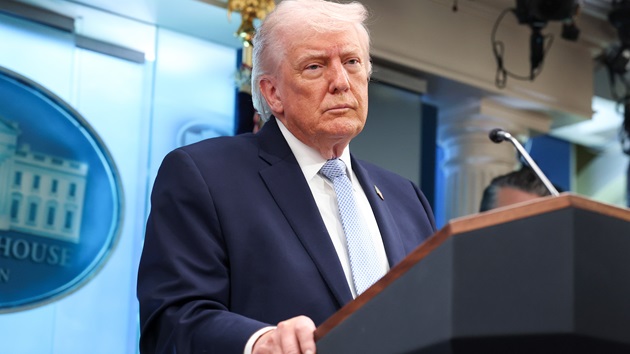
Donald Trump takes office for his second term as the 47th president of the United States. (Julia Demaree Nikhinson – Pool/Getty Images)

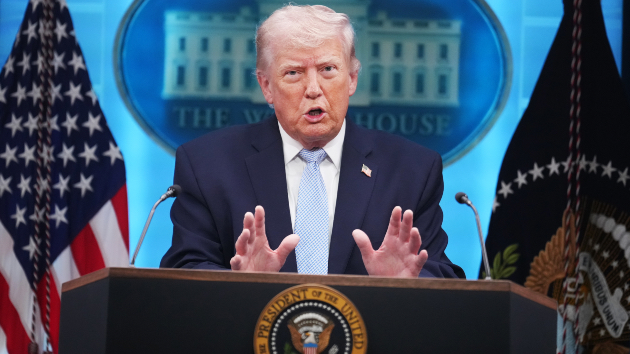
(WASHINGTON) — When President Donald Trump capped a historic political comeback on Inauguration Day last Jan. 20, he proclaimed the “Golden Age of America” had arrived, and in his first 12 months, the nation has experienced a whiplash of domestic and foreign policy changes, and political disputes that have stirred intense national debate.

Within hours of taking office, the president signed more than 200 executive actions, including rescinding nearly 80 actions under President Joe Biden, and pardoning 1,500 people convicted of crimes stemming from the Jan. 6 insurrection at the U.S. Capitol.

“From this day forward, our country will flourish and be respected again all over the world. We will be the envy of every nation, and we will not allow ourselves to be taken advantage of any longer. During every single day of the Trump administration, I will very simply put America First,” Trump vowed during his inaugural address.

A look at Trump’s first year shows a mixture of fulfilled promises, dramatic actions and ongoing controversies that show his political ambitions and the divided response from Americans.

Foreign policy

Trump ran on an agenda of “peace through strength,” promising to be a global peacemaker.

“My proudest legacy will be that of a peacemaker and unifier. That’s what I want to be, a peacemaker and a unifier,” Trump said during his address at the inauguration.

Since taking office, the president has made significant foreign policy decisions, from an on-the-ground operation to seize the leader of Venezuela, ratcheting tensions with Europe in an effort to seize Greenland and efforts to achieve peace in global conflicts from Ukraine to the Middle East.

The president achieved one of those goals by securing a ceasefire in the Israel-Hamas war that raged in Gaza. The delicate peace deal has held and recently moved into its second phase. The deal came after months of statecraft by Trump and many of his closest allies. 

Trump has also formulated what he calls the “Donroe Doctrine,” a play on words of the Monroe Doctrine that reimagines the American role in the Western Hemisphere. That change in vision was punctuated by an on-the-ground operation in Venezuela to capture then-President Nicolas Maduro and bring him to the U.S. to face charges for allegedly supporting cartels that brought narcotics into the U.S. 

That effort came after the administration carried out strikes on boats that were allegedly carrying drugs, killing more than 100 people. Those strikes have faced major questions from Democrats.

The president has also called for the U.S. to own Greenland and is ratcheting up tension with European allies as he tries to make good on his promised efforts to own Denmark’s semiautonomous territory. Those tensions have reached a fever pitch around Trump’s one-year mark in office as the president has not ruled out taking Greenland by force. 

Trump vowed on the campaign trail to end the war in Ukraine on Day 1 of his term in office. However, after many meetings with Ukrainian President Volodymyr Zelenskyy and a historic summit on American soil with Russian President Vladimir Putin, that promise has failed to materialize. The war between Russia and Ukraine continues to rage on and Trump has repeatedly said that ending the conflict is more complex than he expected it would be.

Immigration

Trump has followed through on his campaign pledge to aggressively crack down on illegal immigration.

In 2025, the United States experienced negative net migration for the first time in at least 50 years as a result of the Trump administration’s immigration crackdown, according to a report by the Brookings Institution, which added that the number is mostly due to a significant drop in entries into the U.S.

The Department of Homeland Security claims more than 622,000 people have been deported since the president took office.

Throughout the year, the administration significantly expanded Immigration and Customs Enforcement (ICE) operations nationwide, with the White House publicly celebrating rising ICE arrests in multiple states, despite their controversial tactics, deadly force, legal pushback and protests.

A Quinnipiac University poll found 57% of voters disapproving of how ICE is enforcing immigration laws, with 40% approving, largely unchanged from Quinnipiac’s previous polling in July. Most Democrats and independents disapprove of how ICE is enforcing laws; most Republicans approve.

The president surged federal law enforcement and even troops into cities such as Los Angeles, New Orleans and currently Minneapolis, Minnesota, to help carry out immigration enforcement there. However, many local officials have spoken out against the enforcement operations.

Federal restructuring (DOGE)

Trump has also made major changes to the federal government, executing on another of his major changes to the size and powers of the federal government. Trump worked alongside billionaire Elon Musk for the first months of his presidency to enact the policy of the Department of Government Efficiency (DOGE).

DOGE took a chainsaw to much of the government, including shuttering the U.S. Agency for International Development (USAID) and firing or laying off thousands of federal workers.

In May, after months working to reshape the federal workforce and government, Musk said that the DOGE effort, which he promised on the campaign trail would cut $2 trillion in federal spending, saved about $160 million after about five months.

“I think we’ve been effective, not as effective as I’d like, I think we could be more effective, but we made progress,” Musk said in May.

Economic policies

Trump enacted one of his biggest campaign promises during his first year in office: widespread tariffs on goods brought into the U.S. The goal of the tariffs was to onshore manufacturing and slash trade deficits.

On April 2, which Trump dubbed “Liberation Day,” the president announced sweeping tariff policies on almost all of America’s trading partners and went far beyond what many experts expected his tariff policy to look like. Just one day later, the stock market tanked in reaction, with stocks losing nearly $3.1 trillion in value. 

A few days later, the president paused those sweeping tariffs to give time for the administration to instead cut deals with nations. Trump said that investors had gotten “the yips,” which is why he pulled back. The administration set to work, promising to strike 90 deals in 90 days with America’s trading partners.

They fell short of that goal, but the White House has since reached deals or frameworks with dozens of America’s trading partners. The White House has also made significant carve-outs for some goods that cannot be produced or grown in the U.S. such as coffee and bananas. 

The president came into office promising a “manufacturing boom” and that his policies would create “millions and millions of blue-collar jobs and jobs of every type,” but the final jobs report of 2025 showed hiring in the American economy is cooling.

Roughly 50,000 new jobs were added to the workforce in December, slightly below expectations, but the unemployment rate did drop to 4.4%. Roughly two thirds of overall job gains last year were in the health care sector, while manufacturing, tech and government all lost more jobs than they added, according to the Bureau of Labor Statistics.

The latest CPI report shows inflation up 2.7% from a year ago. Costs continue to rise for energy, medical care and foods such as coffee and ground beef, while wholesale egg prices have dropped to their lowest levels since 2019, according to the USDA.

The typical American household is now spending $184 more a month to purchase the same goods and services as a year ago, and $590 more a month than three years ago, according to Moody’s Analytics.

The president kicked off a tour in December to talk to Americans directly about his administration’s efforts to bring down costs. Trump has continued to insist that “affordability” is a “hoax” that was invented by Democrats. 

Trump unveiled a health care plan, which he had promised for nearly a decade in early 2026. The administration unveiled his “great healthcare plan,” but the details are sparse, with top administration officials calling it “broad” and a “framework.”

Trump says he wants to give money directly to Americans so they can buy their own insurance, but it’s unclear how that would work, how much they will get or whether it would cover their health care costs. A recent poll found 52% of voters saying Trump has “hurt” the cost of health care.

The president has also planned to unveil a plan that would lower housing costs during an upcoming trip to Davos, Switzerland. It’s unclear what exactly the plan will entail, but the president has floated “steps to ban large institutional investors from buying more single-family homes” in an effort to improve housing costs.

Changes to the White House

Trump has also made his mark on the physical space of the White House. From ornamental changes to major tear downs, the president has made his mark on the historic home of the commander in chief. 

What started with gilded additions to the Oval Office and the usual redecorating quickly became more long-lasting changes to the White House. The president repaved the historic Rose Garden with white stone and added what he dubbed the “Presidential Walk of Fame” which includes portraits and politically charged plaques about American presidents through history. 

One of the biggest moves came in October of 2025, when Trump tore down the White House East Wing to make way for a 90,000 square foot ballroom. The major construction and rapid pace of the tear-down faced major criticism from many Democrats.

The president has made his mark on other D.C. landmarks too. The president’s hand-picked board of the Kennedy Performing Arts Center voted in mid-December to rename the structure the “Trump-Kennedy Center.”

The president has followed through of many of his campaign promises. Yet a recent Reuters-Ipsos poll finds that on every issue measured, Trump does not enjoy majority approval. With the midterm elections looming, it remains to be seen whether the president will have the political capital to push through his agenda throughout his historic second term.

Copyright © 2026, ABC Audio. All rights reserved.
1 year into Trump’s 2nd term, here are some of the seismic shifts in foreign and domestic policies

1 year into Trump’s 2nd term, here are some of the seismic shifts in foreign and domestic policies
Donald Trump takes office for his second term as the 47th president of the United States. (Julia Demaree Nikhinson – Pool/Getty Images)

(WASHINGTON) — When President Donald Trump capped a historic political comeback on Inauguration Day last Jan. 20, he proclaimed the “Golden Age of America” had arrived, and in his first 12 months, the nation has experienced a whiplash of domestic and foreign policy changes, and political disputes that have stirred intense national debate.

Within hours of taking office, the president signed more than 200 executive actions, including rescinding nearly 80 actions under President Joe Biden, and pardoning 1,500 people convicted of crimes stemming from the Jan. 6 insurrection at the U.S. Capitol.

“From this day forward, our country will flourish and be respected again all over the world. We will be the envy of every nation, and we will not allow ourselves to be taken advantage of any longer. During every single day of the Trump administration, I will very simply put America First,” Trump vowed during his inaugural address.

A look at Trump’s first year shows a mixture of fulfilled promises, dramatic actions and ongoing controversies that show his political ambitions and the divided response from Americans.

Foreign policy

Trump ran on an agenda of “peace through strength,” promising to be a global peacemaker.

“My proudest legacy will be that of a peacemaker and unifier. That’s what I want to be, a peacemaker and a unifier,” Trump said during his address at the inauguration.

Since taking office, the president has made significant foreign policy decisions, from an on-the-ground operation to seize the leader of Venezuela, ratcheting tensions with Europe in an effort to seize Greenland and efforts to achieve peace in global conflicts from Ukraine to the Middle East.

The president achieved one of those goals by securing a ceasefire in the Israel-Hamas war that raged in Gaza. The delicate peace deal has held and recently moved into its second phase. The deal came after months of statecraft by Trump and many of his closest allies. 

Trump has also formulated what he calls the “Donroe Doctrine,” a play on words of the Monroe Doctrine that reimagines the American role in the Western Hemisphere. That change in vision was punctuated by an on-the-ground operation in Venezuela to capture then-President Nicolas Maduro and bring him to the U.S. to face charges for allegedly supporting cartels that brought narcotics into the U.S. 

That effort came after the administration carried out strikes on boats that were allegedly carrying drugs, killing more than 100 people. Those strikes have faced major questions from Democrats.

The president has also called for the U.S. to own Greenland and is ratcheting up tension with European allies as he tries to make good on his promised efforts to own Denmark’s semiautonomous territory. Those tensions have reached a fever pitch around Trump’s one-year mark in office as the president has not ruled out taking Greenland by force. 

Trump vowed on the campaign trail to end the war in Ukraine on Day 1 of his term in office. However, after many meetings with Ukrainian President Volodymyr Zelenskyy and a historic summit on American soil with Russian President Vladimir Putin, that promise has failed to materialize. The war between Russia and Ukraine continues to rage on and Trump has repeatedly said that ending the conflict is more complex than he expected it would be.

Immigration

Trump has followed through on his campaign pledge to aggressively crack down on illegal immigration.

In 2025, the United States experienced negative net migration for the first time in at least 50 years as a result of the Trump administration’s immigration crackdown, according to a report by the Brookings Institution, which added that the number is mostly due to a significant drop in entries into the U.S.

The Department of Homeland Security claims more than 622,000 people have been deported since the president took office.

Throughout the year, the administration significantly expanded Immigration and Customs Enforcement (ICE) operations nationwide, with the White House publicly celebrating rising ICE arrests in multiple states, despite their controversial tactics, deadly force, legal pushback and protests.

A Quinnipiac University poll found 57% of voters disapproving of how ICE is enforcing immigration laws, with 40% approving, largely unchanged from Quinnipiac’s previous polling in July. Most Democrats and independents disapprove of how ICE is enforcing laws; most Republicans approve.

The president surged federal law enforcement and even troops into cities such as Los Angeles, New Orleans and currently Minneapolis, Minnesota, to help carry out immigration enforcement there. However, many local officials have spoken out against the enforcement operations.

Federal restructuring (DOGE)

Trump has also made major changes to the federal government, executing on another of his major changes to the size and powers of the federal government. Trump worked alongside billionaire Elon Musk for the first months of his presidency to enact the policy of the Department of Government Efficiency (DOGE).

DOGE took a chainsaw to much of the government, including shuttering the U.S. Agency for International Development (USAID) and firing or laying off thousands of federal workers.

In May, after months working to reshape the federal workforce and government, Musk said that the DOGE effort, which he promised on the campaign trail would cut $2 trillion in federal spending, saved about $160 million after about five months.

“I think we’ve been effective, not as effective as I’d like, I think we could be more effective, but we made progress,” Musk said in May.

Economic policies

Trump enacted one of his biggest campaign promises during his first year in office: widespread tariffs on goods brought into the U.S. The goal of the tariffs was to onshore manufacturing and slash trade deficits.

On April 2, which Trump dubbed “Liberation Day,” the president announced sweeping tariff policies on almost all of America’s trading partners and went far beyond what many experts expected his tariff policy to look like. Just one day later, the stock market tanked in reaction, with stocks losing nearly $3.1 trillion in value. 

A few days later, the president paused those sweeping tariffs to give time for the administration to instead cut deals with nations. Trump said that investors had gotten “the yips,” which is why he pulled back. The administration set to work, promising to strike 90 deals in 90 days with America’s trading partners.

They fell short of that goal, but the White House has since reached deals or frameworks with dozens of America’s trading partners. The White House has also made significant carve-outs for some goods that cannot be produced or grown in the U.S. such as coffee and bananas. 

The president came into office promising a “manufacturing boom” and that his policies would create “millions and millions of blue-collar jobs and jobs of every type,” but the final jobs report of 2025 showed hiring in the American economy is cooling.

Roughly 50,000 new jobs were added to the workforce in December, slightly below expectations, but the unemployment rate did drop to 4.4%. Roughly two thirds of overall job gains last year were in the health care sector, while manufacturing, tech and government all lost more jobs than they added, according to the Bureau of Labor Statistics.

The latest CPI report shows inflation up 2.7% from a year ago. Costs continue to rise for energy, medical care and foods such as coffee and ground beef, while wholesale egg prices have dropped to their lowest levels since 2019, according to the USDA.

The typical American household is now spending $184 more a month to purchase the same goods and services as a year ago, and $590 more a month than three years ago, according to Moody’s Analytics.

The president kicked off a tour in December to talk to Americans directly about his administration’s efforts to bring down costs. Trump has continued to insist that “affordability” is a “hoax” that was invented by Democrats. 

Trump unveiled a health care plan, which he had promised for nearly a decade in early 2026. The administration unveiled his “great healthcare plan,” but the details are sparse, with top administration officials calling it “broad” and a “framework.”

Trump says he wants to give money directly to Americans so they can buy their own insurance, but it’s unclear how that would work, how much they will get or whether it would cover their health care costs. A recent poll found 52% of voters saying Trump has “hurt” the cost of health care.

The president has also planned to unveil a plan that would lower housing costs during an upcoming trip to Davos, Switzerland. It’s unclear what exactly the plan will entail, but the president has floated “steps to ban large institutional investors from buying more single-family homes” in an effort to improve housing costs.

Changes to the White House

Trump has also made his mark on the physical space of the White House. From ornamental changes to major tear downs, the president has made his mark on the historic home of the commander in chief. 

What started with gilded additions to the Oval Office and the usual redecorating quickly became more long-lasting changes to the White House. The president repaved the historic Rose Garden with white stone and added what he dubbed the “Presidential Walk of Fame” which includes portraits and politically charged plaques about American presidents through history. 

One of the biggest moves came in October of 2025, when Trump tore down the White House East Wing to make way for a 90,000 square foot ballroom. The major construction and rapid pace of the tear-down faced major criticism from many Democrats.

The president has made his mark on other D.C. landmarks too. The president’s hand-picked board of the Kennedy Performing Arts Center voted in mid-December to rename the structure the “Trump-Kennedy Center.”

The president has followed through of many of his campaign promises. Yet a recent Reuters-Ipsos poll finds that on every issue measured, Trump does not enjoy majority approval. With the midterm elections looming, it remains to be seen whether the president will have the political capital to push through his agenda throughout his historic second term.

Copyright © 2026, ABC Audio. All rights reserved.

Supreme Court weighs state limits on carrying guns on private property

Supreme Court weighs state limits on carrying guns on private property
The Supreme Court of the United States SCOTUS in Washington D.C. (Nicolas Economou/NurPhoto via Getty Images)

(NEW YORK) — Three years after affirming a constitutional right of Americans to carry a gun for self-defense, the U.S. Supreme Court on Tuesday will consider whether states can limit the carry of firearms on private property open to the public without first receiving the property owner’s consent.

The case involves a Hawaiian law and similar measures in four other states –- California, Maryland, New York and New Jersey –- where lawmakers set a strict “default rule” prohibiting the possession of handguns in privately-owned places where other members of the public might congregate, unless the owner affirmatively gives permission.

The laws govern locations such as stores, shopping malls, bars, restaurants, theaters, arenas, farms, and private beaches. It does not involve public property, which is subject to different rules.

“This law is extremely restrictive. It bans public carry in 96.4% of the publicly available land in the County of Maui,” said Alan Beck, an attorney for three Maui residents and members of the Hawaii Firearms Coalition who are challenging the law.

“They’d like to carry dropping off money at the ATM late at night or just going to have lunch at a restaurant,” Beck said. “They are unable to carry in any private business that is open to the public that is unwilling to put up a sign saying ‘guns allowed.'”

While property owners have the inherent right to exclude guns from their premises, Beck says the onus should be on them to make their wishes clear, otherwise expect that members of the public can freely exercise their Second Amendment rights as a matter of standard practice.

Unlike Hawaii, 45 states permit licensed handgun owners to presume they can legally carry their weapons onto private property open to the public, unless the owner explicitly bans guns by issuing verbal instructions or posting a sign.

“The express purpose of this law is to make it so that less people exercise their constitutional rights,” Beck said.

Hawaii officials argue in court documents that never in the nation’s history has there been a “right to armed entry onto private property without consent” and that its law is meant to protect a property-owner’s right to exclude guns without having to take extra steps.

“The basic principle is that private property owners are empowered to set the rules for their property, and the state can make it easier for private property owners to do so,” said Douglas Letter, chief legal officer at Brady, a gun safety group.

“Hawaii’s law is obviously eminently reasonable,” Letter added. “Visitors simply must get a private property owner’s permission to bring a firearm onto that property.”

The Supreme Court will evaluate the Hawaii law using a test laid out in a landmark 2022 decision in which Justice Clarence Thomas, writing for the conservative majority, said only gun regulations consistent with “the Nation’s historical tradition of firearm regulation” can stand.

Hawaii points to an 1865 Louisiana law and 1771 New Jersey law as imposing nearly identical property restrictions as its current measure. The plaintiffs say they are “outlier” examples and not the historic norm. The Ninth Circuit U.S. Court of Appeals upheld Hawaii’s law, holding that “a national tradition likely exists of prohibiting the carrying of firearms on private property without the owner’s oral or written consent.”

Beck and co-counsel Kevin O’Grady said they expect the justices will likely reverse that ruling in their favor. “Just because Hawaii is giving lip service to the Second Amendment when they’re doing the kind of things they’re doing — and doing these mental gymnastics to try to justify this law,” O’Grady said, “it will not be tolerated by the U.S. Supreme Court.”

A decision in the case is expected by the end of June.

Copyright © 2026, ABC Audio. All rights reserved.