Ohio authorities are searching for a suspect after a dentist and his wife were found murdered inside their home earlier this week.
Columbus Police Patrol officers responded to the home of Spencer Tepe, 37, and Monique Tepe, 39, on Tuesday morning after a welfare check was requested, according to an incident report viewed by ABC News.
When officers arrived, they found the couple suffering from apparent gunshots wounds. Paramedics arrived and the pair were declared dead shortly after, police said.
Spencer Tepe had multiple gunshot wounds while Monique Tepe had at least one gunshot wound to the chest, according to local ABC News affiliate WSYX.
Police did not find obvious signs of forced entry and no firearms were recovered at the home. Currently, the deaths are not believed to be a murder-suicide, WSYX reported.
Two small children were also found in the residence unharmed, according to the incident report.
The welfare check was requested after Spencer Tepe did not show up for work at Athens Dental Deport. The owner, Dr. Mark Valrose, called 911, telling dispatchers Tepe was always on time for work.
“I’m on vacation, but this individual, Spencer, works with me, and he did not show up to work this morning. And we cannot get a hold of him or his family,” Valrose told dispatchers, according to audio of a 911 call reviewed by ABC News. “He’s been reliable, and we cannot get in touch with him, his wife, his family, anybody that lives in that house.”
Police records indicate that authorities were initially contacted at 9:03 a.m. and that an officer responded to the home at 9:22 a.m. but received no answer and left, WSYX reported.
A person called police at 9:58 a.m., reporting that they heard children inside and nobody was answering the door, according to audio reviewed by ABC News.
A third 911 call was placed after the same person reported that they could see Spencer Tepe’s body inside the home and that he appeared dead, according to the audio call.
Columbus Police scanner audio shared by Broadcastify indicates that the 911 caller believed they heard one of the children yelling before calling again to report the body in the house.
The Tepes were married in 2021 and were one month shy of celebrating their five-year anniversary, Spencer Tepe’s brother-in-law, Rob Misleh, told WSYX.
Authorities are asking anyone with information to contact the Columbus Police Homicide Unit at (614) 645-4730 or Central Ohio Crime Stoppers at (614) 461-TIPS (8477).
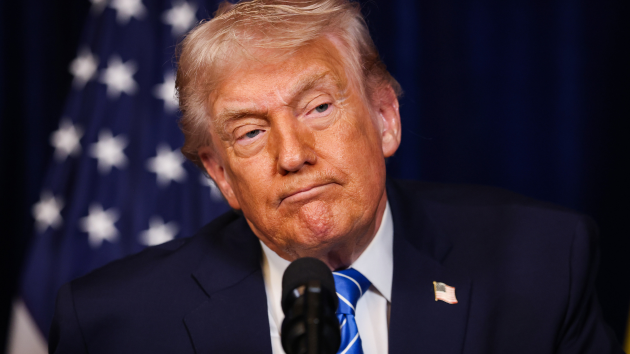
(WASHINGTON) — For weeks, President Donald Trump has said that he received an MRI at Walter Reed National Military Medical Center in October, but when asked about the procedure by the Wall Street Journal in an interview published Thursday, Trump and his doctor said that he actually got a CT scan instead.
“It wasn’t an MRI,” Trump told the Journal. “It was less than that. It was a scan.”
Last month, Trump maintained that he got an MRI, telling reporters on Air Force One that he would “absolutely” release the results.
The White House has not specifically said why Trump received the scan. In November, Trump claimed the MRI was part of his yearly physical.
Trump’s physician, Navy Capt. Sean Barbabella told the Journal that the president had received a CT scan — not an MRI. Barbabella said Trump’s doctors initially told him they would perform either an MRI or a CT scan.
Both magnetic resonance imaging (MRI) and computed tomography (CT) scans are imaging methods used by health care professionals to look at organs and structures inside the body to help diagnose a variety of conditions. While an MRI scan uses a large magnet and radio waves to generate a picture, a CT scan uses X-rays.
On Dec. 1, the White House released the results of Trump’s advanced imaging tests, describing them as “perfectly normal.” Barbabella said then that the imaging helps confirm Trump’s overall health and identifies any early issues before they become serious.
Barbabella told the Journal that the CT scan was done “to definitively rule out any cardiovascular issues” and showed no abnormalities.
Barbabella told ABC News in a statement on Thursday that the president remains “in exceptional health and perfectly suited to execute his duties as Commander in Chief.”
In late October, Trump first said he had an MRI as part of the “advanced imaging” tests he received at Walter Reed.
“I got an MRI. It was perfect,” Trump said at the time. “I mean, I gave you the full results. We had an MRI and the machine, you know, the whole thing, and it was perfect.”
Even though Trump said multiple times that he had received an MRI, White House press secretary Karoline Leavitt told ABC News on Thursday that Trump’s “physicians and the White House have always maintained the president received advanced imaging.”
Although the advanced imaging was taken as a preventative measure, according to the White House and Barbabella, Trump told the Wall Street Journal that he now regrets getting it done, saying in the interview that it’s being used as “ammunition” against him.
“In retrospect, it’s too bad I took it because it gave them a little ammunition. I would have been a lot better off if they didn’t, because the fact that I took it said, ‘Oh gee, is something wrong?’ Well, nothing’s wrong,” Trump said.
In his Wall Street Journal interview, Trump said that the large dose of aspirin he takes daily has caused him to bruise easily, adding that he’s refused his doctors’ advice to take a lower dose, adding that he has taken that specific aspirin for 25 years.
“They say aspirin is good for thinning out the blood, and I don’t want thick blood pouring through my heart,” Trump said told the Wall Street Journal. “I want nice, thin blood pouring through my heart. Does that make sense?”
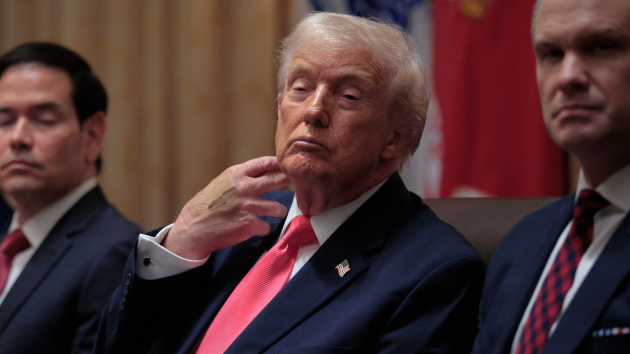
In the Wall Street Journal article, Trump pushed back against criticism that he has struggled to keep his eyes open during several White House events, appearing to fall asleep.
“I’ll just close. It’s very relaxing to me,” Trump said to the Wall Street Journal about not falling asleep at White House events. “Sometimes they’ll take a picture of me blinking, blinking, and they’ll catch me with the blink.”
One of the most notable recent examples of this occurred during Trump’s Cabinet meeting in December and his November announcement to reduce the cost of weight-loss medication.
The Wall Street Journal reports that staff has counseled Trump to try to keep his eyes open during public events and that White House Chief of Staff Susie Wiles has urged Cabinet members to shorten their presentations.
The Administrator for the Centers for Medicare & Medicaid Services, Mehmet Oz, who was at the November event where Trump appeared to doze off, told the Journal he believes Trump became bored.
(NEW YORK) — Zohran Mamdani, the state assemblyman and democratic socialist who catapulted to national attention during the 2025 race for New York City mayor, was sworn in at midnight on New Year’s Day 2026 in a ceremony that ushered in historic leadership for America’s largest city, as he becomes the city’s first Muslim mayor and first mayor of South Asian descent.
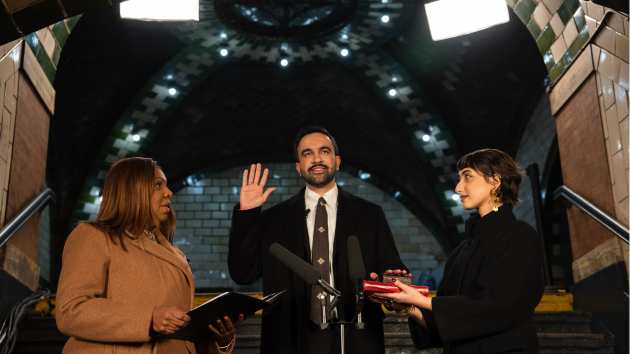
He took the oath office in during a private ceremony by New York Attorney General Letitia James, in the now-decommissioned original City Hall subway station, which is known for its ornate arches and tiled ceiling.
In a short speech after being sworn in by James, Mamdani said, “This is truly the honor and the privilege of a lifetime.”
He also called the old station a “testament to the importance of public transit to the vitality, the health, the legacy of our city,” as he pivoted to announcing his pick for Department of Transportation commissioner.
Mamdani was sworn in during the midnight ceremony on a centuries-old Qur’an from the New York Public Library’s collections, the library said Wednesday.
Previous New York City mayors have also been formally sworn in at midnight, and can choose what book they use for the ceremony. Outgoing incumbent Mayor Eric Adams was sworn in using a family Bible.
At his public inauguration ceremony, set for 1 p.m. ET Thursday on the steps of New York City Hall, Mamdani will be sworn in by Vermont Sen. Bernie Sanders, a Brooklyn-born independent and fellow democratic socialist who has been an ideological ally.
Rep. Alexandria Ocasio-Cortez, a fellow democratic socialist who represents a swath of the Bronx, will also deliver remarks.
“I think this is an important day for New Yorkers and even for the United States. The Mamdani inaugural on Jan. 1 is going to attract a global audience,” Mitchell Moss, a professor of urban policy at New York University, told ABC News.
Moss said that having Sanders be a part of the inauguration makes a statement “that this is a national event … so I think that [Mamdani is] identifying his ideological roots and his connection to national politics.”
Laura Tamman, a political science professor at Pace University, told ABC News that “Ocasio-Cortez was, similarly to [Mamdani], really underestimated by the Democratic establishment, and has gone on to become a really important leader in the party.”
Mamdani’s transition team has also said that Cornelius Eady, a prolific poet and a National Book Award finalist, will read a new poem at Mamdani’s inauguration, and that the inauguration will include a block party open to the public.
Sen. Chuck Schumer, D-N.Y., the longtime top New York Democrat and the current Senate Minority Leader, is attending the inauguration, a spokesperson for Schumer confirmed to ABC News on Thursday. Schumer never formally endorsed Mamdani during his mayoral campaign.
Mamdani triumphed over independent candidate former New York Gov. Andrew Cuomo and Republican candidate Curtis Sliwa after campaigning largely on making the city more affordable, although he often faced questions over his relative lack of political experience and feasibility of his proposals. His campaign promises included a rent freeze for rent-stabilized apartments, free bus fares and free childcare for children aged 6 weeks to 5 years.
During the campaign, he took stances on policing and public safety more moderate than how he had spoken about policing previously, and committed during his campaign to keeping on New York City’s current police commissioner, Jessica Tisch.
Mamdani will also face the challenge of translating his campaign promises into reality, which will include working with the state government, which controls taxes, and the city council on various city proposals.
At an event on Tuesday with reporters, Mamdani focused largely on administration appointments and the road ahead.
“I will demand excellence from my team, from myself, and also, I will ensure that we create the conditions where that excellence is possible to deliver on,” he said while responding to questions about the city’s Law Department.
Moss said that “no one expects a new mayor to do everything they promise, but they have to be making progress on their promises.”
“So Mamdani has to have some wins this year, which lay the ground for bigger wins in the future. And I think the key part is that he has identified what he wants,” Moss said.
The new mayor will also have to navigate the liberal-leaning city’s relationship with the Republican-controlled federal government. In November, Mamdani met with President Donald Trump in what was widely expected to be a contentious meeting, but ended up being very cordial.
During the meeting, Trump and Mamdani said they agreed on many things, after they had criticized each other for months during the campaign.
“I think you’re going to have, hopefully, a really great mayor; and the better he does, the happier I am,” Trump said at the time.
Neera Tanden, president of the liberal-leaning Center for American Progress, said on ABC’s “This Week” on Sunday that Mamdani “has to get the rents down. He has to make sure the city runs well.”
“But I think a lot of people look at the fact that he was able to get Donald Trump to basically compliment him,” she added.
ABC News’ Ivan Pereira contributed to this report.
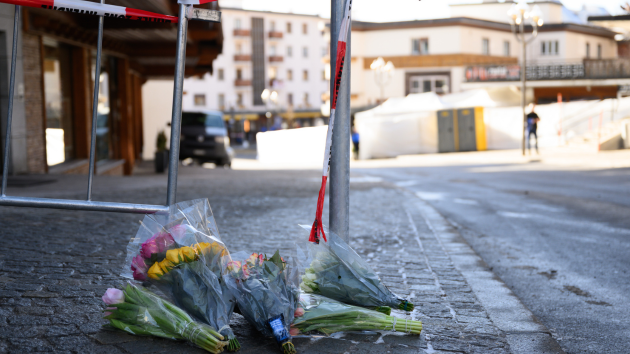
(LONDON) — Around 40 people were killed and 115 others were injured early on New Year’s Day, when a fire ripped through a popular bar in a resort town in the Swiss Alps, police said.
The Swiss president said the fire caused one of the worst tragedies that the country has ever experienced.
A blaze of “undetermined origin” broke out at the Le Constellation bar in Crans-Montana at about 1:30 a.m. local time, the Cantonal Police of Valais said in a statement.
Investigators were working on Thursday to determine the cause of the fire, officials said during a morning press conference. The incident was not being investigated as an attack, they added.
“A large contingent of police, firefighters, and rescue personnel immediately responded to the scene to assist the numerous victims,” police said in their statement.
A no-fly zone was put in place over Crans-Montana, police said in their statement. The resort town is popular with skiers and sits in Switzerland’s southern Sierre District in the Canton of Valais.
Police have not released the identities of those who were killed in the blaze. Officials on Thursday said it was likely, given the popularity of the area with travelers, that some of the deceased were tourists who traveled to the Alpine town to ski and to celebrate New Year’s Eve.
The French Foreign Affairs Ministry said in a statement that at least two French nationals were among the injured. Both were being treated in local hospitals, the ministry said. French officials were “in constant contact with the Swiss authorities in case other nationals are affected,” the ministry added.
ABC News’ Tom Soufi-Burridge contributed to this report.
(WASHINGTON) In the latest reversal of his signature economic policy, President Donald Trump is rolling back tariffs on furniture, kitchen cabinets and vanities.
Higher tariff rates on those goods that were set to take effect Jan. 1 will now be delayed for another year, according to a White House fact sheet.
In October, the White House imposed a 25% tariff on upholstered furniture, kitchen cabinets and vanities. Rates for cabinets and vanities were set to go up to 50% in 2026, while upholstered wooden furniture — like sofas or chairs — were set to increase to 30%.
This move means that, for now, the 25% tariff stays in effect on all those goods until at least Jan. 1, 2027.
The White House cited “productive negotiations with trade partners to address trade reciprocity and national security concerns with respect to imports of wood products.”
Furniture prices have already been going up — the latest inflation report shows living room, kitchen and dining room furniture prices increased 4.6% in November compared to one year ago.
When the White House first announced the tariffs, stocks of companies that import furniture from overseas like Restoration Hardware, Wayfair and Williams Sonoma traded lower.
Amid many households’ concerns about affordability and rising prices, President Trump has already rolled back tariffs on more than 200 foods like coffee and bananas.
(LONDON) — December saw a new record number of Ukrainian long-range drones shot down by Russian forces, according to statistics published by the Russian Defense Ministry and analyzed by ABC News, with Moscow claiming to have destroyed more than 4,300 over the course of the month.
Through December, Russia’s Defense Ministry claimed to have shot down 4,379 Ukrainian long-range drones, at a rate of around 141 each day.
ABC News cannot independently verify the data released by either Russia or Ukraine. It is possible that both sides may seek to exaggerate the effectiveness of their air defenses, or to amplify the attacks against them as proof that their enemies are not interested in pursuing a peace deal.
The total number of Ukrainian drones being reported as shot down by Moscow is still significantly less than the number of munitions launched into Ukraine by Russian forces, as detailed in the daily after-action reports from the Ukrainian air force.
But the gap between the two figures appeared to have narrowed in December compared to recent months, according to data released by both sides and analyzed by ABC News.
In December, Ukraine’s air force said Russia launched a total of 5,307 long-range munitions — 5,131 drones and 176 missiles. Of the drones, nearly 81% were shot down or suppressed, while around 64% of missiles were also defeated, the air force said.
The scale of Russia’s attacks on Ukraine through December were similar to previous months, all of which were slightly down on the record-breaking month of July.
Over the course of July, Ukraine’s air force said Russia launched 6,443 munitions — 6,245 drones and 198 missiles — into the country.
This year has seen an exponential increase in the scale of long-range cross-border strikes by both Russia and Ukraine, according to data released by each side, as the combatants try to destabilize their opponent’s economy and sap their ability to marshal military and financial resources to fight the ongoing war.
Neither side provides detailed data on the scale of their own attacks or their targets, though often release statements describing the targets as military, energy or industrial sites. Both sides accuse the other of intentionally attacking civilian targets.
Both Kyiv and Moscow do offer limited information on their day-to-day air defensive actions.
Ukraine’s air force publishes what it says is a daily tally of Russian drone and missile strikes, including information as to how many munitions were intercepted and how many hit targets. Russia’s Defense Ministry only publishes figures of Ukrainian drones it claims were shot down.
The last month of the year saw the reported number of Ukrainian drones surpass even the most intense months of 2025, which has seen the largest barrages of the war, according to data published by both Ukraine and Russia.
The days on which Russia reported the highest number of drones shot down this year were on Dec. 24, when 387 drones were reported destroyed, and on Dec. 11, when 336 drones were recorded as having been intercepted.
Until December, the largest number of Ukrainian drones reported having been downed by Russian forces was in October, when Moscow said it destroyed 3,641 drones at a rate of over 117 per day.
In November, Russia reported downing 3,392 Ukrainian drones at a rate of 113 per day. December saw a 29% increase in reported Ukrainian drones shot down versus November, according to Russian data.
It is unlikely that Russian data offers a full picture of Ukraine’s offensive drone activities. But the numbers appear indicative of Kyiv’s efforts to grow its drone and missile arsenals, the reach of those munitions and the intensity with which it can attack targets inside Russia.
Ukraine’s military confirms the targets of some long-range strikes. When Kyiv does describe the targets, officials say they’re military sites or industrial energy facilities. Over the past year, Ukraine has adopted a special focus on attacking Russian oil refining and transport facilities.
Among the targets claimed struck by Ukraine’s military in December were oil refineries, oil tankers, oil rigs and pipeline infrastructure.
Ukrainian officials have been clear on the value they place on Kyiv’s long-range strike capabilities — and on their intention to further expand their drone and missile arsenals to reach deeper into Russia. To date, the majority of Ukrainian strikes are believed to have been conducted using relatively cheap, Ukrainian-made drones.
“Our production potential for drones and missiles alone will reach $35 billion next year,” Ukrainian President Volodymyr Zelenskyy said in October. “Despite all the difficulties, Ukrainians are creating their national defense product that, in certain parameters, already surpasses many others in the world.”
“Never before in history has Ukrainian defense been so long-range and so felt by Russia,’ Zelenskyy said. “We must make the cost of war absolutely unacceptable for the aggressor — and we will.”
Russian officials have broadly sought to downplay the Ukrainian attacks, with most reports of damage or casualties attributed to falling debris from intercepted drones, rather than craft that found their mark.
But plentiful publicly available information — including video footage and photographs of the attacks — indicate that a significant number of Ukrainian drones do get through Russian air defenses and impact at sensitive military and industrial sites.
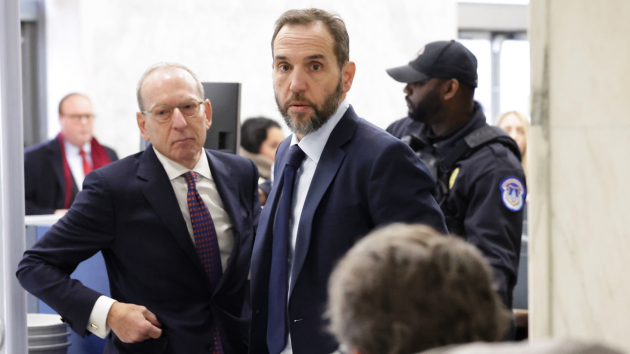
(Washington) Former special counsel Jack Smith defended his decision to bring charges twice against President Donald Trump — telling lawmakers in a closed-door deposition earlier this month that his team “had proof beyond reasonable doubt in both cases” that Trump was guilty of the charges in the 2020 election interference and classified documents cases.
And Smith fervently denied that there was any political influence behind his decision — contrary to what the Republicans on the House Judiciary Committee, who requested the testimony, alleged — such as pressure from then-President Joe Biden or Attorney General Merrick Garland.
“No,” Smith responded continuously.
Just over an hour before the closed testimony on Dec. 17, the Department of Justice sent an email to Smith’s lawyers preventing him from discussing the classified documents case, according to the 255-page transcript of the deposition, released Wednesday by the Judiciary Committee along with a video of the hearing.
This meant Smith was unable to answer most questions on that case and the deposition — intended to ask questions about the alleged weaponization of the DOJ against Trump and his allies — mainly focused on the 2020 election case instead.
Smith’s counsel said the DOJ also refused to send a lawyer to advise Smith on whether his statements were in line with their determination of what he could or could not say regarding the cases, according to the deposition. Smith did say, however, that Trump “obstructed” the classified documents investigation “to conceal his continued retention of those documents.”
Trump repeatedly denied the allegations in both felony cases, which were unprecedented against an American president, and decried them as part of a “witch hunt.” Smith, one of Trump’s frequent targets on social media, ultimately dropped the cases after Trump’s reelection because he said that he was constitutionally prohibited from prosecuting a sitting president.
Smith asserted in his final report that “but for Mr. Trump’s election and imminent return to the Presidency, the Office assessed that the admissible evidence was sufficient to obtain and sustain a conviction at trial.”
During the deposition, Smith argued, as he had in the past, that Trump “President Trump engaged in a criminal scheme to overturn the results of the 2020 election and to prevent the lawful transfer of power.”
When asked if Trump was responsible for the violence at the Capitol on Jan. 6, Smith said “Our view of the evidence was that he caused it and that he exploited it and that it was foreseeable to him.”
Smith argued that Trump’s claims that he won the 2020 election were not protected free speech because they were intended to target a government function.
“There is no historical analog for what President Trump did in this case. As we said in the indictment, he was free to say that he thought he won the election. He was even free to say falsely that he won the election,” Smith said. “But what he was not free to do was violate Federal law and use knowing — knowingly false statements about election fraud to target a lawful government function. That he was not allowed to do. And that differentiates this case from any past history.”
And Smith said Trump wrote a tweet that “without question in my mind endangered the life of his own Vice President” during the Jan. 6 attack on the Capitol.
Smith said several witnesses who said they voted or campaigned for Trump — including the Speaker of the House in Arizona and Speaker of the House in Michigan — were the foundation of the case.
“We had an elector in Pennsylvania who is a former Congressman who was going to be an elector for President Trump who said that what they were trying to do was an attempt to overthrow the government and illegal. Our case was built on, frankly, Republicans who put their allegiance to the country before the party,” Smith said.
Asked why Smith did not charge any of the alleged co-conspirators, Smith said “As we stated in the final report, we analyzed the evidence against different co-conspirators. We — my staff determined that we did have evidence to charge people at a certain point in time. I had not made final determinations about that at the time that President Trump won reelection, meaning that our office was going to be closed down.”
Smith said he had evidence that Trump ordered the alleged co-conspirators to place phone calls to senators the night of Jan. 6 to try and delay the certification vote.
The committee pressed Smith why he did not speak with Trump allies Steve Bannon, Roger Stone or Peter Navarro as part of their investigation.
“We pursued the investigative routes that we thought were the most fruitful,” Smith argued. “I didn’t think it would be fruitful to try to question them.”
And they pressed him on seizing phones of members of Congress. Smith said only Scott Perry had his phone seized and no senators did.
“I don’t recall that,” Smith said when asked if he wanted a search warrant for the content of any text messages from members of Congress.
Smith said he just wanted toll records and confirmed that he approved the subpoenas.
“If Donald Trump had chosen to call a number of Democratic Senators, we would have gotten toll records for Democratic Senators. So responsibility for why these records, why we collected them, that’s — that lies with Donald Trump,” Smith said.
Smith recalled that Jim Jordan, the Judiciary Committee chair, was in direct contact with White House on Jan. 6, according to an interview his team conducted with Mark Meadows.
Meadows stated that Jordan was scared. “I’ve never seen Jim Jordan scared of anything,” Meadows said, according to Smith.
Smith said he is “eyes wide open” that he believes Trump will seek retribution against him.
“I came here. I was asked to come here,” he added.
(WASHINGTON) — U.S. Southern Command said it targeted three vessels traveling in a convoy in undisclosed international waters — leaving “narco-terrorists” as survivors after they jumped overboard, according to a social media statement.
The strikes occurred on Dec. 30, according to the post on X.
“Three narco-terrorists aboard the first vessel were killed in the first engagement,” the statement said. “The remaining narco-terrorists abandoned the other two vessels, jumping overboard and distancing themselves before follow-on engagements sank their respective vessels.”
At least six people survived the Dec. 30 strikes, which took place in the Eastern Pacific, according to a U.S. official.
The U.S. Coast Guard was notified to begin searching for the survivors in a search and rescue operation, the statement said.
The U.S. Coast Guard confirmed that a search-and-rescue operation was underway, and that Coast Guard C-130 aircraft had been deployed for the operation. The Coast Guard has put out a signal to other mariners for the survivors in distress.
In a statement shared with ABC News, the Coast Guard said, “on December 30th, the U.S. Coast Guard was notified by the Department of War of mariners in distress in the Pacific Ocean.”
“The U.S. Coast Guard is coordinating search and rescue operations with vessels in the area, and a Coast Guard C-130 aircraft is en route to provide further search coverage,” it said.
Several hours after announcing the Dec. 30 strikes, Southern Command posted on social media that another series of strikes — carried out on New Year’s Eve — had targeted two more vessels alleged to be engaged in drug trafficking. The post did not specify where the strike took place.
A total of five people were killed — three in the first vessel and two in the second, according to the post.
There have now been at least 34 strikes — and at least 115 people killed — in the U.S. military campaign in the Caribbean and Eastern Pacific targeting alleged drug traffickers since September.
In the posts about the strikes, the military said the vessels targeted were operated by designated terrorist organizations and that intelligence confirmed the vessel were “were transiting along known narco-trafficking routes and engaged in narco-trafficking.”
The U.S. campaign targeting alleged drug boats came under scrutiny last month after the Trump administration acknowledged survivors of an initial series of strikes on an alleged drug vessel on Sept. 2 were killed in a follow-up series of strikes.
In another attack in the Caribbean in October, two survivors of a strike on a submarine suspected of carrying drugs were later returned to the countries of origin — Ecuador and Colombia — to be detained and prosecuted, President Donald Trump said.
On Oct. 27, a mariner, now presumed dead, also survived U.S. strikes.
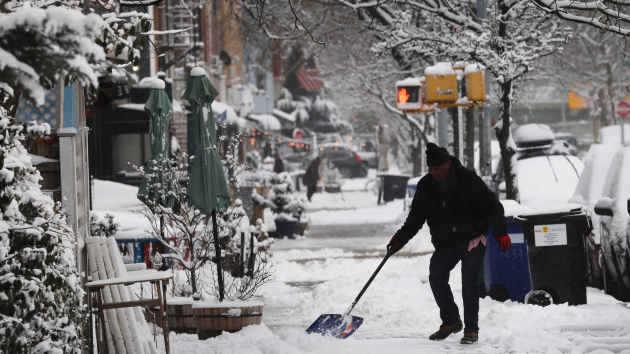
(New York) New Year’s Day was met with snow and cold temperatures from the Northeast to the Great Lakes while much of California braces for heavy rains.
Rochester and Buffalo received six inches of snow while Pittsburgh received four inches and Cleveland up to two inches.
A snow squall quickly moved through the Northeast and parts of the I-95 corridor earlier this morning, bringing heavy snow and gusty winds that briefly reduced visibility down to a quarter mile.
While the clipper system has mostly moved out, coastal New England from Cape Cod up to Bangor, Maine, could see snow continuing into this afternoon.
An additional inch of snow is possible for Cape Cod up to Boston, while parts of southern Maine could get an additional three inches to nine inches through this afternoon.
Behind the snow squall is a blast of arctic air that will sweep through and bring blustery conditions. It will be in the teens in New York City and around the mid-20s for Washington, D.C.
Detroit, Michigan, is expecting a windchill of 7 degrees and in Alpena, in northern Michigan, a windchill of 2 degrees.
Single digit to near zero wind chills are expected further north tomorrow.
Lake-effect snow is expected to briefly slow down Thursday morning but pick back up later in the afternoon and continue through the rest of week.
Through Friday, Oswego and Watertown in upstate New York could see between 12 inches and 24 inches. Buffalo and Erie, Pennsylvania, could see six inches to 12 inches and Bangor, Maine, could see three inches to six inches.
Cold weather is also expected to hit the south with temperatures in the 30s possible Thursday morning from the Florida Panhandle into southern Georgia.
Warmer temperatures are expected to return slowly this weekend for the Southeast and by Monday temperatures should be back above average.
Meanwhile, in Southern California, more than 17 million Americans are under a flood watch through Thursday night due to heavy rains.
In the Los Angeles area, heavy rain showers are expected between 3 a.m. and 10 a.m., with a possibility of flash flooding. No flash flood alerts have been issued so far.
The 137th annual Rose Parade in Pasadena — California’s famed New Year’s Day tradition known for its flower-covered floats — will see rain Thursday morning for the first time since 2006.
A flood watch is also in place in northern and central California over the weekend.
Rain will spread inland and north over much of the western U.S. on Thursday with mountain snow falling across the southern Sierra Nevada into parts of the southern Rockies.
The National Weather Service said excessive runoff may result in flooding of rivers, creeks, streams, and other low-lying and flood-prone locations.
ABC News’ Kenton Gewecke and Dan Peck contributed to this report.
(WASHINGTON) — The Department of Justice is asking for help reviewing 5.2 million pages of unreviewed documents related to convicted sex offender Jeffrey Epstein, seeking to enlist 400 lawyers total from its criminal and national security divisions along with the U.S. attorneys’ offices in Florida and New York, according to people familiar with the matter.
As Deputy Attorney General Todd Blanche told ABC News Chief Justice Correspondent Pierre Thomas in an interview earlier this month, the DOJ already had nearly 200 lawyers working to review the files.
But in recent days, department leadership has made clear to the workforce that more help is needed.
The New York Times was first to report the development.
The review of the documents is expected to take much of January, the sources said.
The reorienting of resources from both the criminal and national security divisions has already raised concerns among current and former DOJ officials given the department has already diverted many of those resources towards immigration enforcement, according to sources familiar with the matter.
At this point, the next release of documents is not expected until the end of next month, according to the sources.
Congress passed the Epstein Files Transparency Act in November mandating the release of the DOJ’s files on Epstein. The measure required the DOJ to release all of the documents, with certain exceptions like protecting victim privacy and ongoing investigations, by Friday, Dec. 19. Missing the deadline, the DOJ said it has been delayed by the vetting process to protect victims.
It’s not immediately clear why the Department of Justice is only now claiming that it has just discovered upward of 5 million pages of documents from its investigations into Epstein, who died by suicide in 2019 in his jail cell awaiting trial on sex trafficking charges.
In February, Attorney General Pam Bondi admonished the U.S. Attorney’s office for the Southern District of New York after she said they had only just alerted her to the existence of hundreds of thousands of documents that they had not previously provided to her office. It’s not clear why they are only now claiming to be alerted to this vast volume of alleged unreviewed material.