(ALBANY, N.Y.) — New York Gov. Kathy Hochul signed two bills into law Tuesday that will expand hate crime education and training in the state, saying there is a “rising tide of hate” across the country and violence prevention is the state’s “highest priority.”
The first bill will require people convicted of hate crimes to undergo training on hate crime prevention and education as part of their sentence. The training is currently optional but not a requirement. The court or local agencies must authorize the programs, training sessions or counseling sessions.
The second bill launches a statewide campaign run by New York’s Division of Human Rights that will promote acceptance, inclusion, tolerance and understanding of the diversity of New Yorkers. In addition, public and private organizations will work to develop educational materials to be published online, on social media and on other platforms to reach the public, according to the bill.
“It’s heartbreaking to know that there are acts of violence and hatred that exist throughout our country and within our own city, in our own state,” Hochul said at a press conference Tuesday.
Last week, two men were arrested in connection with an alleged threat to attack synagogues in New York City. Hochul thanked the early warning system and law enforcement officials for their apprehension, but warned that these kinds of attacks are on the rise.
“Domestic violence extremism is the greatest threat to homeland security,” Hochul said.
“This hatred, this violence, will not be tolerated; not now, not ever,” Hochul said.
The two bills are a part of Hochul’s efforts to fight and prevent hate crimes. They are supported by $245 million in federal funding to support homeland security preparedness, counter terrorism and emergency preparedness in the state, and $96 million in state and federal funding, to safeguard nonprofit, community-based organizations at risk of hate crimes and attacks.
Hochul announced $9 million in Homeland Security grants last month for bomb squads, tactical teams, infrastructure protection, local government and cybersecurity and will redirect $10 million in state funds to support county governments. In addition, Hochul encouraged community-based organizations to apply for funding for the $50 million set aside to strengthen safety measures and protect against hate crimes.
“Why not New York? Why shouldn’t we be the place that teaches the rest of the nation, how you can do things differently?” Hochul said.
A gunman opened fire last May in a Tops supermarket store in Buffalo, New York, killing 10 Black people. A grand jury in New York returned a 25-count indictment charging the 18-year-old gunman with carrying out a “domestic act of terrorism motivated by hate.”
After the Buffalo shooting, Hochul established a domestic terrorism unit within New York’s intelligence center that focuses on social media. Hochul called on New Yorkers to take action and report warning signs when they see them.
“I’d much rather be in the business of preventing crimes and preventing acts of hatred and trying to solve them afterward,” Hochul said.
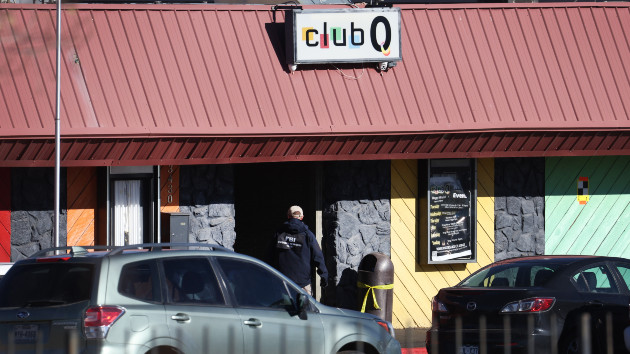
(COLORADO SPRINGS, Colo.) — The man suspected of opening fire at an LGBTQ nightclub in Colorado’s second-largest city over the weekend was previously arrested in an alleged bomb threat incident last year, ABC News has learned. But authorities said it’s unclear whether the state’s red flag law could have prevented the mass shooting.
According to a press release posted online last year by the El Paso County Sheriff’s Office, deputies responded to a report of a bomb threat on Rubicon Drive in the Lorson Ranch neighborhood of Colorado Springs, just south of the city’s airport, on the afternoon of June 18, 2021. A woman had called, saying “her son was threatening to cause harm to her with a homemade bomb, multiple weapons, and ammunition,” the sheriff’s office said. She was not at home at the time and was not sure where her son was.
Deputies were deployed to the woman’s home and realized that the suspect — identified as then-21-year-old Anderson Lee Aldrich — was actually at another residence on Pilgrimage Road, about a mile away. They contacted Aldrich by telephone and he “refused to comply with orders to surrender,” the sheriff’s office said.
A tactical support unit was called in and approximately 10 homes in the immediate surrounding area were evacuated, while an emergency notification was sent to cellphones of residents within a quarter-mile radius, according to the sheriff’s office.
A crisis negotiations unit ultimately was able to get Aldrich to comply with orders. He walked out the front door of the home and was taken into custody that evening, officials said. The regional explosives unit then cleared both residences and did not find any explosive devices, the sheriff’s office said.
Aldrich was booked into the El Paso County Jail on two counts of felony menacing and three counts of first-degree kidnapping, according to the sheriff’s office. Colorado Springs ABC affiliate KRDO reported on the incident at the time.
Aldrich, now 22, allegedly began shooting a long gun as soon as he entered Club Q in Colorado Springs late Saturday night. At least five people were killed and 17 others were wounded by the gunshots, according to the Colorado Springs Police Department.
Police said “two heroes” confronted Aldrich and fought with him, stopping him from shooting more people. Officers responded to the scene and detained Aldrich just after midnight, less than six minutes after the first 911 call came in, according to police.
Aldrich was injured in the alleged incident and remains hospitalized. As of Monday, he was being held without bond on 10 “arrest only” charges — five counts of first-degree murder and five counts of committing a bias-motivated crime causing bodily injury, according to online court records for Colorado’s El Paso County. Colorado’s Fourth Judicial District Attorney Michael Allen, who serves El Paso and Teller counties, told reporters Monday that those charges “are only preliminary” and subject to change once formal charges are filed.
The court has sealed the arrest warrant and supporting documentation connected with Aldrich’s latest arrest. According to the motion by prosecutors, if the records were “released, it could jeopardize the ongoing case investigation.”
Law enforcement officers briefed on the investigation confirmed to ABC News that Aldrich was previously arrested in an alleged bomb threat incident in June 2021, after the El Paso County Sheriff’s Office was alerted that he was in possession of a homemade bomb.
Officials briefed on the investigation told ABC News the gun Aldrich allegedly used in Saturday’s shooting was a legally purchased assault-style rifle and that his 2021 arrest may not have appeared on background checks because the case does not appear to have been adjudicated.
Homeowner from 2021 bomb threat incident speaks out
Colorado Springs resident Leslie Bowman told ABC News that she was renting a room to Aldrich’s mother, Laura Voepel, at the time of the bomb threat incident in June 2021. Bowman’s home on Pilgrimage Road was where the police standoff with Aldrich and his ultimate arrest took place, she said.
Authorities initially went to Voepel’s mother’s house on Rubicon Drive before responding to Bowman’s residence on Pilgrimage Road, according to Bowman.
“[Aldrich] apparently had an altercation with his grandparents and threatened them with a weapon,” Bowman told ABC News via telephone on Sunday. “He left their house, which was less than five minutes from my house, …and came over to my house and Laura let him in. And I know that he brought in a gun.”
Bowman said Aldrich livestreamed a “shocking” video via his mother’s Facebook account from inside Bowman’s home while authorities were outside, showing himself with a gun as well as a helmet and vest that resembled body armor. Security cameras at Bowman’s home also captured Aldrich entering the residence that day and surrendering to authorities hours later. ABC News has obtained the since-deleted Facebook Live video as well as the aforementioned footage from Bowman’s Ring doorbell camera.
“I was told at the time that there were explosives involved. But I’ve also since been told that maybe there wasn’t,” she told ABC News. “I didn’t get any follow up from the police or the DA or anyone about the case after the incident to testify or anything else. I just didn’t get any follow-ups and so I had very little information on what they did actually find.”
Voepel lived there for a total of roughly 15 months and moved out two days after the incident, according to Bowman.
Last month, on Oct. 18, deputies from the El Paso County Sheriff showed up at Bowman’s home seeking to conduct a wellness check on Voepel, according to Bowman, who said she hasn’t heard from Voepel or Aldrich since the alleged bomb threat incident last year.
After reading a local news report, Bowman said she learned that the case against Aldrich was dropped in court at some previous date and the records were sealed.
“I just thought it was really strange,” she told ABC News. “But again, I was like, well, I haven’t heard from these people in over a year, nobody was hurt and [I’m] just going to move on with my life.”
On Sunday morning, when Aldrich was identified as the suspect in the nightclub shooting, Bowman said she was “shocked and horrified.”
“It made me very upset and angry that this person who did what he did last year, obviously had violent intentions, was let go and now five people are dead,” she told ABC News. “I think there’s a lot of questions that need to be answered.”
Bowman said the only other incident involving Aldrich being aggressive toward her happened at her home one night when she returned from a long road trip and Voepel complained to her about a problem with the bathroom.
“I was like: ‘Well, you know, it’s late, I’m exhausted. I’ll have to deal with this tomorrow.’ And she and I kind of got into it a little bit,” Bowman recalled. “Andy got in my face and, because I was standing at her bedroom door, he told me to get out and slammed the door in my face.”
“I just kind of chalked it up to, you know, teenage guy, you know, trying to be aggressive and protect his mom kind of thing,” she added. “I just let it go and there weren’t really any problems with him after that. You know, just that one kind of display of aggression and everything else was fine up until the bomb threat situation.”
Motive ‘has the trappings of a hate crime,’ mayor says
Colorado Springs Mayor John Suthers told ABC News that the suspect “had considerable ammo” and “was extremely well armed” when he allegedly walked in to Club Q. While a motive remains under investigation, Suthers said “it has the trappings of a hate crime.”
“But we’re going to have to see what the investigation shows in terms of, you know, social media and things like that to make a clear determination exactly what the motive was,” the mayor said in an interview on Monday.
Club Q co-owner Nic Grzecka told ABC News that Aldrich was a stranger to their long-established venue.
“He’s never spent money on a credit card or ID ever scanned in our business that we know of,” Grzecka said in an interview on Sunday. “I think this was a community of target for him.”
Authorities decline to discuss suspect’s criminal history
Although the suspect may not have been known at the LGBTQ nightspot, which has been serving the Colorado Springs community for two decades, Aldrich was clearly known to local law enforcement. However, Colorado has very strict privacy laws when it comes to cases that were dismissed. Once dismissed, cases are sealed and authorities are prohibited from mentioning their existence, which apparently is why officials initially had not been forthcoming about Aldrich’s prior arrest.
ABC News and other news organizations have petitioned the court in Colorado to unseal the records regarding Aldrich’s 2021 arrest.
During a press conference on Sunday morning, police declined to say whether Aldrich is the same person arrested in last year’s bomb threat incident.
Colorado’s state court system announced via Twitter on Sunday that “there are no public records available under the name Anderson Lee Aldrich related to this weekend’s shooting in Colorado Springs, or any other matter in Colorado.” A spokesperson for the district attorney’s office in Colorado Springs has not responded to questions from ABC News, other than referring to the state court system’s tweet.
When given details of Aldrich’s previous arrest, El Paso County Sheriff Bill Elder told ABC News that he did not recall and had no information about the June 2021 incident.
“I have 900 employees, so, you know 550 sworn [deputies] — it’s the largest county in Colorado,” Elder said via telephone on Sunday. “I wouldn’t have any clue.”
Elder also told ABC News that he doesn’t know whether more enforcement of Colorado’s red flag law in El Paso County would have made a difference in the shooting at Club Q. The state’s red flag law, which went into effect in 2020, allows relatives, household members and law enforcement to ask a judge to order the seizure of a gun owner’s weapons if that owner is believed to be a risk to themselves or others.
“I don’t know anything specific about the shooter, so I don’t know if it would have mattered or not,” Elder said.
When asked whether Aldrich should have been allowed to possess weapons following his arrest in June 2021, the Colorado Springs mayor told ABC News that state law “prevents law enforcement at this point in time from commenting on any prior criminal activity.”
“But I think the district attorney will go to court today and we’ll be able to comment on any prior interaction with the police fairly quickly, hopefully in the next couple of days,” Suthers said in Monday’s interview.
ABC News’ Matt Gutman, Jenna Harrison, Julia Jacobo, Aaron Katersky, Jennifer Leong, Lisette Rodriguez, Kevin Shalvey, Jennifer Watts and Robert Zepeda contributed to this report.
(MOSCOW, Idaho) — University of Idaho student Ethan Chapin was “one of the most incredible people you’ll ever know,” his mother said before his memorial service.
Chapin, from Conway, Washington, was among four Idaho students stabbed to death in an off-campus house in the early hours of Nov. 13. Chapin didn’t live in the house but was sleeping over with his girlfriend, 20-year-old Xana Kernodle, who was also among the victims. No arrests have been made.
Chapin, a triplet, was born right before his sister and brother, who also attend the University of Idaho.
“We’re here to honor the life and legacy of our son and brother,” his mother, Stacy Chapin, told reporters before Monday’s memorial service, with her family standing by her side.
At Idaho, Ethan Chapin was in the Sigma Chi fraternity and was majoring in recreation, sport and tourism management, university president Scott Green said.
The 20-year-old “lived his best life” at college, his obituary said. “He loved the social life, intramurals and tolerated the academics.”
He loved sports, from golf to basketball to surfing to pickleball, his family said.
“He laughed continuously. He smiled when he woke up and was still smiling when he went to bed,” his obituary said. “He was kind to all and a friend to all.”
The murders of Ethan Chapin, Kernodle and two of Kernodle’s roommates remain a mystery.
On the night of Nov. 12, Ethan Chapin and Kernodle went to the Sigma Chi house, while the other two victims, Madison Mogen, 21, and Kaylee Goncalves, 21, went to a bar downtown, according to police. All four were home around 1:45 a.m., police said.
Two other roommates — who survived the attack and are not considered suspects — also went out that night and returned home by 1 a.m., police said.
It’s believed the four students were killed between 3 a.m. and 4 a.m. on Nov. 13, according to Moscow Mayor Art Bettge.
The two surviving roommates were in the basement and slept through the murders, police said. On the morning of Nov. 13, the roommates called friends over to their house because they thought one of the victims on the second floor had passed out and wasn’t waking up, police said.
At 11:58 a.m., a 911 call from one of the roommate’s phones requested help for an unconscious person, according to police. The 911 caller’s identity has not been released but police said “multiple people talked with the 911 dispatcher.”
Officers responded and found the four victims on the second and third floors, police said.
Authorities said they do not believe anyone at the house at the time of the 911 call was involved in the murders.
Police urge anyone with information, or anyone who saw anything suspicious on the night of Nov. 12, to call the tip line at 208-883-7180 or send an email to tipline@ci.moscow.id.us.
(BUFFALO, N.Y.) — Alleged Buffalo supermarket shooter Payton Gendron is due in an Erie County courtroom Monday morning for an appearance during which he is expected to plead guilty to state charges.
An initial hearing for Gendron’s anticipated change of plea was canceled because of the storm that dropped multiple feet of snow on parts of western New York.
Gendron is charged in a 25-count indictment with carrying out a “domestic act of terrorism motivated by hate” along with 10 counts of murder in the first degree, 10 counts of murder in the second degree as a hate crime, three counts of attempted murder as a hate crime and one count of criminal possession of a weapon.
Gendron fatally shot 10 Black people at the Topps supermarket “because of the perceived race and/or color” of the victims, the indictment said.
Gendron became the first defendant to be charged under the state’s relatively new statute domestic terrorism motivated by hate, which was adopted in 2020 by then-Gov. Andrew Cuomo. It followed the El Paso Walmart shooting that targeted Latinos. The statute is named for Josef Neumann, who was stabbed to death at a rabbi’s home during Hanukkah of 2020.
“That charge only has one sentence if the defendant is found guilty of that charge: life in prison without parole,” Erie County District Attorney John Flynn said at the time the indictment was unsealed.
The charge against Gendron reflects the white supremacist rhetoric and invective that was found on social media posts linked to him, including a belief in the racist conspiracy theory known as replacement.
(COLORADO SPRINGS, Colo.) — The man suspected of gunning down multiple people at a LGBTQ nightclub in Colorado’s second-largest city over the weekend could face murder and hate crime charges.
The suspect — identified as Anderson Lee Aldrich, 22, of Colorado Springs — is currently being held without bond on 10 “arrest only” charges — five counts of first-degree murder and five counts of committing a bias-motivated crime causing bodily injury, according to online court records for Colorado’s El Paso County.
However, those charges “are only preliminary,” according to Colorado’s Fourth Judicial District Attorney Michael Allen, who serves El Paso and Teller counties.
“There have been reports that charges have been filed. That is not true,” Allen said at a press conference in Colorado Springs on Monday afternoon. “Any case like this, an arrest warrant will be written up that is supported by probable cause affidavit and that will be submitted to a judge for approval of the arrest of a suspect. That has occurred here in this case.”
“Any charges associated with an arrest warrant are only preliminary charges,” he added. “Very customary that final charges may be different than what’s in the arrest affidavit. Typically, there will be more charges than what is listed in the arrest affidavit. So don’t be surprised when you see a different list of charges when we finally file formal charges with the court.”
Aldrich allegedly began shooting a long gun as soon as he entered Club Q in Colorado Springs late Saturday night. At least five people were killed and 17 others were wounded by the gunshots, according to the Colorado Springs Police Department, which named the deceased victims as Daniel Aston, Kelly Loving, Ashley Paugh, Derrick Rump and Raymond Green Vance.
Police said “two heroes” — identified as Thomas James and Richard Fierro — confronted Aldrich and fought with him, stopping him from shooting more people. Officers responded to the scene and detained Aldrich just after midnight, less than six minutes after the first 911 call came in, according to police.
Aldrich was injured in the alleged incident and remains hospitalized. Once medical personnel determine he can be released to authorities, Aldrich’s first court appearance will be scheduled, which Allen said he expects to happen “in the next few days.” That appearance will be done via video link from jail, according to the district attorney.
“We will advise the suspect at that time of arrest charges and his bond status,” Allen told reporters. “He is being held without bond, so he will not have the opportunity to be bonded out.”
“Within a few days of that first appearance is when we will return to the courtroom and file formal charges with the court,” he added.
The El Paso County district court has sealed the arrest warrant and supporting documentation connected with Aldrich’s arrest. According to the motion by prosecutors, if the records were “released, it could jeopardize the ongoing case investigation.”
In June 2021, Aldrich was arrested in an alleged bomb threat incident after his mother alerted authorities that he was “threatening to cause harm to her with a homemade bomb, multiple weapons, and ammunition,” according to a press release posted online last year by the El Paso County Sheriff’s Office. While no explosives were found in his possession, Aldrich was booked into the El Paso County Jail on two counts of felony menacing and three counts of first-degree kidnapping, according to the sheriff’s office.
Aldrich’s 2021 arrest may not have appeared on background checks because the case does not appear to have been adjudicated, officials briefed on the investigation told ABC News.
ABC News and other news organizations have petitioned the court in Colorado to unseal the records regarding Aldrich’s 2021 arrest.
Colorado’s red flag law, which went into effect in 2020, allows relatives, household members and law enforcement to ask a judge to order the seizure of a gun owner’s weapons if that owner is believed to be a risk to themself or others. It’s unclear whether that law would have stopped the suspect from targeting Club Q, according to El Paso County Sheriff Bill Elder, who did not recall the circumstances surrounding Aldrich’s 2021 arrest when asked by ABC News.
Club Q has been serving the Colorado Springs community for two decades and was considered a safe haven for LGBTQ people. The nightspot hosts a weekly drag show and live DJ on Saturday nights, according to its website.
Club Q co-owner Nic Grzecka told ABC News that Aldrich was a stranger to their long-established venue.
“He’s never spent money on a credit card or ID ever scanned in our business that we know of,” Grzecka said in an interview on Sunday. “I think this was a community of target for him.”
Colorado Springs Mayor John Suthers told ABC News that the suspect “had considerable ammo” and “was extremely well armed” when he allegedly walked in to Club Q. While a motive remains under investigation, Suthers said “it has the trappings of a hate crime.”
“But we’re going to have to see what the investigation shows in terms of, you know, social media and things like that to make a clear determination exactly what the motive was,” the mayor said in an interview on Monday.
(DELPHI, Ind.) — A judge presiding over the Delphi, Indiana, double murder case will hear arguments Tuesday on whether the probable cause affidavit and other documents related to the suspect’s arrest should be unsealed.
Richard Allen of Delphi was arrested last month for the 2017 murders of best friends Abby Williams, 13, and Libby German, 14. The eighth graders were on a hiking trail in rural Delphi when they were killed.
At an Oct. 31 news conference announcing the arrest, Carroll County prosecutor Nicholas McLeland would not say when Allen, 50, became a suspect or if he knew Abby or Libby.
“Per the court order, we cannot talk about the evidence that’s in the probable cause [affidavit],” McLeland said.
Police also have not released how Abby and Libby were killed.
“There’s a lot of questions we have that are unanswered … but all in due time that will come,” Libby’s grandfather and guardian, Mike Patty, told ABC News after the arrest.
Allen, who was taken into custody on Oct. 26 and charged with two counts of murder, has entered a not guilty plea, according to prosecutors.
Police still ask anyone with information about the case to submit a tip at abbyandlibbytip@cacoshrf.com or 765-822-3535.
Helen H. Richardson/MediaNews Group/The Denver Post via Getty Images
(COLORADO SPRINGS, Colo.) — A U.S. Army veteran who stopped a suspected gunman from fatally shooting more people after he allegedly killed five people at an LGBTQ nightclub in Colorado says he isn’t a hero, and he’s mourning the people who died, including his daughter’s boyfriend.
“There are five people I could not help, one of which was family to me,” Richard Fierro said during a press conference outside his home Monday night.
“I feel no joy. That guy is still alive… and my family is not,” he said, referring to his daughter’s boyfriend, Raymond Green Vance, who was among those killed in the shooting.
Five people were killed and 17 others were injured from gunshot wounds after a suspect, Anderson Lee Aldrich, 22, allegedly began shooting as soon as he walked into Club Q in Colorado Springs on Saturday night, according to police. Aldrich is facing five counts of murder and five counts of bias-motivated crime causing bodily injury, which is Colorado’s hate crime law.
Fierro and another person, Thomas James — both of whom authorities have described as heroes — confronted Aldrich and fought with him, ultimately saving more lives, police said.
Fierro told reporters that he and his family were at Club Q to watch his daughter’s junior prom date perform in the drag show that night.
He said he grabbed the suspect’s pistol from him and began “wailing” on him and beating him while telling a bystander to get the gun the suspect had been using. The suspect used a legally purchased assault-style rifle, according to officials briefed on the investigation
“I told him I was going to kill him,” Fierro said.
He asked a drag performer to kick the suspect, he said, adding that she stomped the suspect’s face with her high heel.
“I tried to finish him,” Fierro said.
According to the Colorado Springs Police Department and the mayor’s office, the suspect was beaten so severely that he remains hospitalized as of Monday night.
While Fierro may reject the hero label, others have praised his “heroic actions.”
“Richard actually was able to take a handgun from the waist of the suspect and use that to hit him and immobilize him and disable him,” Colorado Springs Mayor John Suthers told ABC News Live Prime’s Linsey Davis on Monday. “And in doing that, I am absolutely confident, and I think most people so familiar with this incident are confident that he saved numerous lives.”
Fierro said his daughter was injured in the incident and is recovering from her injuries while grieving for Vance.
Fierro was in the U.S. Army for 14 years and served in Iraq three times and Afghanistan once, Army spokesperson Sgt. Pablo Saez told ABC News.
Fierro said he left the military because he was “physically broken,” but that his Army training kicked in when the shooting began.
“I got into [a] mode and I needed to save my family,” he said. “It’s the reflex. Go to the fight. Stop the action. Stop the activity. Don’t let no one get hurt.”
(COLORADO SPRINGS, Colo.) — Within hours of the mass shooting in Colorado Springs that left five people dead and at least 19 injured, support services have been set up for the victims, their families and the LGBTQ community at large.
Members of the Colorado Springs community have mobilized, launching fundraisers to help cover medical and funeral expenses and sharing locations of where blood can be donated.
Additionally, mental health services are being offered to anyone affected by the attack at Club Q, a nightclub that primarily serves LGBTQ patrons.
Here are some ways to support the effort and resources for those in need:
Monetary donations
Several groups have set up fundraisers, where people can donate to help cover medical and funeral costs as well as to provide help to families in the aftermath.
Club Q shared a link on its Facebook page Sunday afternoon to an official donation site run by Colorado Gives 365.
Colorado Gives 365 is run by the Colorado Healing Fund, a non-profit that sets up donations for those who are the victims of mass casualties in the state as well as their families, which was activated in the wake of the shooting.
Additionally, the crowdfunding platform GoFundMe has verified at least four fundraisers.
Blood donations
Vitalant, a nonprofit organization that collects blood donations, shared on Facebook that it sent out 70 units of blood products to hospitals in the area.
“Our hearts go out to the victims of the Club Q shooting and their loved ones,” Vitalant said in a statement. “We stand ready to provide additional blood products if requested.”
The group said donors who want to make appointments in the coming days can do so online or by calling 1-877-25-VITAL (84825).
Additionally, people can donate at blood donation centers at Children’s Hospital Colorado at the Anschutz Medical Campus in Aurora or at UC Health Garth Englund Blood Center in Fort Collins, which helps support patients in northern Colorado.
Mental health services
The city of Colorado Springs announced on its website that the Colorado Springs Police Department will be holding a Community Resource Expo on Monday, November 21; Tuesday, November 22; and Wednesday, November 23 from 8:00 a.m. MT to 7:00 p.m. MT.
“The expo will provide mental health resources, spiritual support, emotional support animals, childcare, emergency financial resources, LGBTQ+ support, meals, and other services,” the site reads.
Additionally, the city has a rolling list of providers offering therapy to those impacted by the shooting, including some offering free sessions. As of Monday morning, 102 providers were listed.
Club Q shared on Facebook that a drop-in center is being set up at the Satellite Hotel in Colorado Springs.
“GLAAD and One Colorado will be on site all week to provide counseling services or if you just need to be with family or just need a hug,” the post read.
UC Health recommends if someone is experiencing a mental health crisis, they can call 911; 988, a new nationwide number specifically for those suffering from suicidal thoughts; or The Trevor Project, a suicide prevention and mental health support group for LGBTQ youth.
(NEW YORK) — Sam Olbekson was first exposed to architecture at age five, when his uncle was a construction worker on a project to build the Minneapolis American Indian Center.
Decades later, Olbekson, 51, now runs his own architecture firm, Full Circle Indigenous Planning. He’s also MAIC’s board president, designing an addition to the building which will begin construction next month.
A citizen of the White Earth Nation of Ojibwe in Minnesota, Olbekson split his childhood between the area’s reservations and urban Native American populations, observing and experiencing their impoverished living conditions. Inspired by his childhood interest in art, math, and social justice, he went onto study architecture in college and later earned a graduate degree in urban design.
“I can come back now to tribal communities and do that large scale master planning,” he said. “Architecture is about an individual building. But designing the entire community was a goal of mine.”
Olbekson currently works with Native clients across the country on projects ranging from schools to clinics, centering Indigenous cultural values and perspectives on environmental sustainability.
After Native Americans were forcibly displaced from, even killed on their land, then relegated to scattered reservations, Olbekson said architecture today can reinforce tribes’ legal sovereignty over their land as well as their “cultural sovereignty,” both reflecting their traditions and envisioning their future.
“It’s about what the next seven generations will need to thrive as contemporary Native American nations.” he said. “Shaping your built environment is so important to any community because our environment shapes us.”
Designing buildings that build community
In the past, Olbekson said many non-Native architects have assumed the role of “outside experts” designing for, not with, tribal communities, failing to meet their unique cultural needs as a result.
Instead, Olbekson said his approach maintains his clients’ authorship over their projects, engaging tribes’ political and cultural leaders, as well as local artists and builders.
“I always start off by not drawing, but just simply asking, ‘What is the meaning of this place? Who are you as a people?'” he said.
For example, Olbekson said the Minneapolis American Indian Center, which houses an art gallery, was originally designed in a brutalist style with sharp angles.
“But those angular spaces don’t really work for gathering,” which Olbekson noted is key to many Native cultures.
He observed the building was also very “introverted,” lacking a “clear sense of entry” connecting it to the broader neighborhood.
“Tribal communities usually have a welcoming song, and there’s a ceremony about that. So how can a building have this sense of ceremonial welcoming?” he said.
Their solution, Olbekson said, was to create an open floor plan, making the building “one space” rather than multiple siloed rooms. The redesign also features large windows and a round, central gathering space that flows into other areas, including a café serving Indigenous food.
When designing Mino-bimaadiziwin Apartments, an affordable housing project for the Red Lake Nation in Minneapolis, Olbekson said he similarly contemplated how a six-story 110-unit building could express the community’s cultural values.
“How do you design streets that create connections rather than cul de sacs that create divisions?” he said. “How do you create a neighborhood?”
To start, they ensured the apartments included larger units to accommodate Indigenous family structures where, often, six to eight people live in the same intergenerational household.
But beyond apartments, the building also houses other facilities, including the Red Lake Nation Embassy, a wellness clinic, basketball court, community kitchen, daycare, garden with medicinal plants and a room where residents can take online classes at the tribal college.
Such multi-service hubs are essential to Native communities, who disproportionately lack access to stable housing and safe, reliable transportation, Olbekson said.
He noted they also reflect Indigenous views on the inextricability of shelter, food, recreation, healthcare, education and their holistic necessity for a community’s overall growth and well-being.
At the groundbreaking for Mino-Bimaadiziwin, which means “live the good life” in Ojibwe, Red Lake Tribal Chairman Darrell Seki told the crowd: “This building is for you. For you to take care of your families, your children, the next generation.”
Part of a system
Sustainable, regenerative design is also paramount to many tribes who’ve traditionally built their structures from materials in their environments, tying to their creation stories, Olbekson said.
“Each culture has a different way of thinking about the land, but the commonalities are that everything is related, that we exist with the land, not on the land,” he said. “We’re part of a system.”
Accordingly, Olbekson said they built Mino-bimaadiziwin Apartments using the Red Lake Nation’s local cedar timber, signifying their reservation’s location in the Northwest Minnesota woods, and incorporated motifs from nature into the building’s interior aesthetic — for example, fractal patterns and cool tones representing the tribe’s Turtle Clan.
But respecting the land and topography also means knowing where not to build, Olbekson said.
While designing several projects along a confluence of rivers called Bdote, Olbekson said they deliberately located the Wakan Tipi Center at a distance from its namesake and Dakota sacred site Wakan Tipi Cave to honor its sanctity.
In traditional times, sacred sites were all connected around this river landscape, he said, but “in modern times, they’re separated by highways and bridges, different arbitrary city borders.”
Olbekson said by “decolonizing the process” and removing those borders, the project could place jurisdictional authority and cultural direction into the hands of the Dakota people, the land’s original stewards.
Ideally, Olbekson said every tribal nation would have an architect from their own community. But the American Institute of Architects reported that less than 0.44% of their members were Indigenous in 2021.
To increase the ranks of Native architects and awareness of the profession, Olbekson, an American Indian Council of Architects and Engineers board member, said he always offers to speak with students at schools in tribal communities whenever he works on a project.
“Then they can see someone that looks like them, that has their history, maybe the challenges they’re experiencing right now and see that it’s possible, this is a thing that is reachable for them,” he said.
“As designers, we shape our schools,” he added. “But those schools, in turn, shape our future generations. Our buildings are shaping future cultural leaders.”
(COLORADO SPRINGS, Colo.) — A 22-year-old is set to be charged with hate crimes for allegedly killing five people and injuring many others with a legally purchased assault-style rifle at an LGBTQ nightclub in Colorado, according to officials briefed on the investigation.
The suspect, Anderson Lee Aldrich, allegedly began shooting as soon as he walked into Club Q in Colorado Springs late Saturday night, Colorado Springs Police Chief Adrian Vasquez said.
At least two people, whom authorities described as heroes, then confronted Aldrich and fought with him, which saved more lives, police said.
During a press conference on Monday, police identified Thomas James and Richard Fierro as the people who stopped the suspected gunman. Fierro was in the U.S. Army for 14 years and served in Iraq three times and Afghanistan once, Army spokesperson Sgt. Pablo Saez told ABC News.
Seventeen people were injured from gunshot wounds, police said.
Aldrich is facing five counts of murder and five counts of bias-motivated crime causing bodily injury, which is Colorado’s hate crime law.
Watch Colorado Gov. Jared Polis discuss the deadly shooting at an LGBTQ nightclub tomorrow on “The View.”
A second gun was also recovered at the scene, police said. Aldrich had “considerable ammo” and was “extremely well armed,” Colorado Springs Mayor John Suthers told “Good Morning America” on Monday.
Among those killed was Daniel Aston.
“He was smart, he was funny, he was talented. He was an amazing human being,” Aston’s fiance, Wyatt Kent, told ABC News.
When gunfire erupted in the club, Kent said two people fell on top of him, protecting him.
Kent said a woman who fell on him “was moaning,” and he told her to “keep squeezing my hand.” She had been shot in the chest and “passed away on top of me,” he said.
Kent credits that woman for saving his life.
The first 911 call came in at 11:56 p.m. Saturday and an officer was dispatched to the scene seconds later, Lt. Pamela Castro, spokesperson for the Colorado Springs Police Department, told reporters. The first officer arrived at midnight, and the suspect was detained by 12:02 a.m., Castro said.
Bartender Michael Anderson told ABC News he heard pops, and when he looked up he saw “the shadow of a grown man wielding a rifle.”
Anderson said he ducked down and heard glass shatter and bottles break. He said he then ran outside to the patio to hide.
“It was absolute chaos. People were running, screaming. And the screaming intensified as people became aware of what was happening,” he said. “No one ever expected that here.”
“I am haunted by some of the things I saw,” he said.
Aldrich was injured and remains in the hospital, police said. Medical personnel will determine when he is released to authorities, Castro said.
The court has sealed the arrest warrant and supporting documentation connected with Aldrich’s arrest. According to the motion by prosecutors, if the records were “released, it could jeopardize the ongoing case investigation.”
Aldrich was arrested in a June 2021 bomb threat incident after the El Paso County Sheriff’s Office was alerted that he was in possession of a homemade bomb, law enforcement officers briefed on the investigation told ABC News. He was charged with two counts of felony menacing and three counts of first-degree kidnapping, but no explosives were found in his home, Colorado Springs radio station KRDO reported.
Aldrich’s 2021 arrest may not have appeared on background checks because the case does not appear to have been adjudicated, according to officials briefed on the investigation.
ABC News and other news organizations have petitioned the court in Colorado to unseal the records about Aldrich’s 2021 arrest.
Colorado’s red flag law, which went into effect in 2020, allows relatives, household members and law enforcement to ask a judge to order the seizure of a gun owner’s weapons if that owner is believed to be a risk to themself or others.
It is unclear whether the law would have stopped the suspect from targeting the club, El Paso County Sheriff Bill Elder told ABC News.
Elder did not recall the circumstances surrounding Aldrich’s 2021 arrest, he said.
Club Q is a safe haven for the LGBTQ community, the police chief said. The club hosts a weekly drag show and live DJ on Saturday nights, according to its website.
The owner of Club Q, Nic Grzecka, told ABC News that they didn’t recognize the suspect and had never seen him inside their business.
Active shooter protocol was also activated, Grzecka said, which is something Club Q has had in place since the 2016 Pulse nightclub shooting in Orlando, Florida.
“Our prayers and thoughts are with all the victims and their families and friends,” the club said in a statement posted on Facebook. “We thank the quick reactions of heroic customers that subdued the gunman and ended this hate attack.”
The shooting unfolded on the eve of the annual Transgender Day of Remembrance.
President Joe Biden said in a statement that “the LGBTQI+ community has been subjected to horrific hate violence in recent years,” drawing comparisons to the Pulse nightclub shooting.
“Places that are supposed to be safe spaces of acceptance and celebration should never be turned into places of terror and violence. Yet it happens far too often,” Biden said. “We must drive out the inequities that contribute to violence against LGBTQI+ people. We cannot and must not tolerate hate.”
Colorado Sen. John Hickenlooper tweeted that the LGBTQ community needs to be protected from “this hate.”
Colorado Sen. Michael Bennet tweeted that he was “sending strength to those who were injured, the survivors, and Colorado’s LGBTQ community.”
“As we seek justice for this unimaginable act, we must do more to protect the LGBTQ community and stand firm against discrimination and hate in every form,” Bennet said.
“Our hearts are broken for the victims of the horrific tragedy in Colorado Springs, and their loved ones.” GLAAD President and CEO Sarah Kate Ellis said in a statement Sunday. “This unspeakable attack has robbed countless people of their friends and family and an entire community’s sense of safety. You can draw a straight line from the false and vile rhetoric about LGBTQ people spread by extremists and amplified across social media, to the nearly 300 anti-LGBTQ bills introduced this year, to the dozens of attacks on our community like this one.”
Colorado Gov. Jared Polis said, “My heart breaks for the family and friends of those lost, injured and traumatized.”
ABC News’ Luke Barr, Matt Gutman, Teddy Grant, Jenna Harrison, Ahmad Hemingway, Luis Martinez, Amanda Morris, Molly Nagle, Alyssa Pone, Robert Zepeda and Sabina Ghebremedhin contributed to this report.