(MIAMI) — A Florida man had his election fraud charges dismissed on Friday, making him the first of 20 people who Gov. Ron DeSantis announced had been charged with voter fraud in August, to beat his case.
The ruling by a Miami judge may now pave the way for similar motions and rulings in the other 19 election fraud cases, which garnered national attention and controversy when they were announced on Aug. 18. DeSantis said at the time that they were the “opening salvo” by Florida’s newly funded Office of Election Crimes and Security to crack down on voter fraud.
Robert Lee Wood, who faced one count of making a false affirmation on a voter application, and one count of voting as an unqualified elector, had his charges dismissed on the grounds that the prosecutor lacked jurisdiction to bring them.
Wood was facing up to five years in prison and $5,000 in fines and fees, for allegedly illegally voting in the 2020 election.
When the charges were announced on Aug 18, DeSantis said local prosecutors had been “loath” to take up election fraud cases.
“Well, now we have the ability with the attorney general and statewide prosecutor to bring those on behalf of the State of Florida,” he added at the press conference.
But a judge found on Friday that the statewide prosecutor did not have jurisdiction over one case in Miami.
In order for the statewide prosecutor to have jurisdiction, the crimes alleged must have occurred in at least two judicial circuits.
The judge found with the defense, which argued that the act of applying to vote and voting only occurred in Miami Dade. All 20 cases are being prosecuted by the statewide prosecutor.
In order for the Attorney General’s office to have jurisdiction, the crimes that they allege must have occurred in at least two judicial circuits.
State prosecutors argued that the crimes were committed in Leon County in addition to Miami Dade County, because the defendants’ applications and votes were later transmitted to the Department of State in Tallahassee.
The defense argued the alleged offenses only happened in Miami Dade.
The judge found with the defense.
Larry Davis, the attorney for Wood, said that his motion to dismiss on grounds of jurisdiction has been circulated to attorneys representing the other election fraud defendants.
The statewide prosecutor can now appeal the case. If unsuccessful, a similar case could be brought by the Democrat Miami Dade State Attorney Katherine Fernandez.
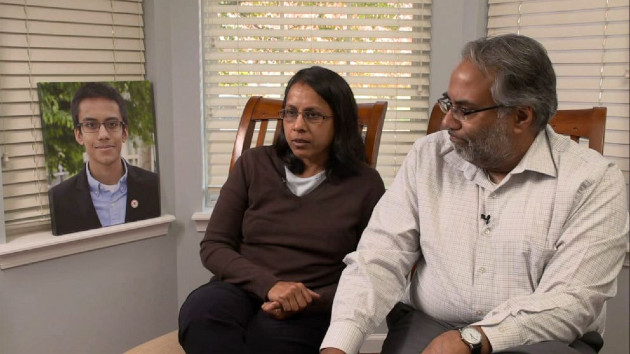
(NEW YORK) — The 20-year-old Purdue University student stabbed to death in his dorm room was effusive, close with his family and wise beyond his years, according to his parents.
Varun Manish Chheda, a senior majoring in data science, was found dead in his room on the school’s West Lafayette, Indiana, campus on Oct. 5 after his roommate called 911, university police said. The roommate, 22-year-old Ji “Jimmy” Min Sha, was arrested and charged with Chheda’s murder.
Although Varun was a busy college student, he always stayed in touch with his mom, dad and little sister. He’d call his mom between classes, share his Wordle score with her, and check in over text each morning and night, his mother, Seema Dedhiya, told ABC News in an exclusive interview.
On Varun’s final night alive, Dedhiya said she texted her son her usual evening message: “Eat well, sleep well. … Finish your homework.”
“He said, ‘Yes, Mom, I’ve done it all,'” she recalled.
She said Varun’s final text to her at 11:45 p.m. read, “Goodnight, Mama.”
Early on the morning of Oct. 5, two police officers came to the family’s door in Indianapolis with the tragic news. The 20-year-old suffered multiple stab wounds in an “unprovoked” attack, according to Purdue University Chief of Police Lesley Weite.
Seema Dedhiya and her husband, Manish Chheda, said they had no sense of problems with Varun’s roommate and said their son rarely mentioned him. They described Varun as a peacemaker, which they said made his violent death all the more shocking.
Varun was a minimalist and environmentalist. He never asked his parents for money and insisted he didn’t need a nicer car or nicer computer, they said.
He was passionate about Taekwondo, strategy games and especially science, said his father, Manish Chheda.
Varun was recently studying medical genomics and “was even thinking maybe of following in my footsteps and becoming a physician,” he said.
“How it would’ve turned out, we just only can guess at this point,” he said. “I think he would’ve been involved in … helping people face-to-face or in a research realm.”
He was a kind big brother and a thoughtful friend, his dad said, recalling the time Varun encouraged a friend to donate his long hair to cancer survivors.
“We think he did a lot of good in the time he had,” Manish Chheda said. “We’re proud of that.”
Asked what she’ll miss most, Dedhiya replied through tears: his laugh, his hugs, “his brilliance” and “all the conversations.”
“I miss him terribly,” Dedhiya said.
Manish Chheda said he doesn’t know when he’ll “be psychologically ready” to return to his work as a doctor.
“I need to be more focused than I am right now. We’re gonna get help, we’re gonna get counseling,” he said.
The family will “never be normal again,” but he said he hopes they’ll find a “new normal.”
“You can’t lose someone like this and ever get over it. But we have to try,” he said.
Sha has not entered a plea. As he headed to his first court appearance on Oct. 7, Sha told reporters “I am very sorry” when asked if he had a message to the victim’s family. Sha also said, “I was blackmailed,” but did not elaborate.
His defense attorney did not immediately respond to ABC News’ request for comment.
(NEW YORK) — As Florida officials and residents continue to clean up and assess the damage caused by Hurricane Ian, they’re discovering the storm has turned some electric vehicles into incendiary devices on roads, parking lots and even on the backs of tow trucks.
Electric vehicles that were flooded and damaged by the storm have been catching fire without warning in incidents throughout the hardest hit areas in the state, according to State Fire Marshal Jimmy Patronis, who told ABC News his team has counted at least nine such incidents. In some cases, the EVs would burst into flames, stay on fire, then reignite hours later.
The National Highway Traffic Safety Administration (NHTSA) has warned that EVs can ignite weeks after contact with saltwater.
As storms increase in ferocity, and the sale of EVs increases worldwide, it’s a phenomenon we are likely to see much more of says Eric Fredrickson of Call2Recycle, a non-profit which specializes in transporting lithium-ion batteries to recycling facilities.
“Part of what we’re dealing with right now is that this is the first major storm that we’ve had in an area where we have a high penetration of electric vehicles. So we’re seeing these fires in these incidents more than we have with any of the other storms,” he said.
It’s also a challenge for firefighters who have to use between 8,000 to 12,000 gallons of water to put out the fires, more than 10 times as much as a gas engine-based vehicle, according to James Hammond, the assistant chief of operations at North Collier Fire Control & Rescue District.
“It’s just a constant flow trying to cool them down and stop the battery,” Hammond told ABC News.
Hammond said his teams would typically spend an hour putting out a traditional gas-powered vehicle, but have spent five or six hours dousing electric vehicles.
Saltwater flooding is the main factor behind these fires, according to the National Highway Traffic Safety Administration. The flooding creates a chain reaction in the engine and the batteries that made the parts more likely to catch on fire, the agency said.
The biggest concerns, according to firefighters and safety experts, is that it is still unknown what could spark the blaze in the first place. Something as simple as turning the wheel following the saltwater damage could start the fire in the vehicle, experts said.
The issue has gotten so bad that some tow truck drivers in Florida have refused to pick up flood-damaged EVs. Tim Baker, a tow truck driver, told ABC News that one car he picked up caught on fire after he brought it to his lot.
“They have the potential to catch fire pretty much any time,” he told ABC News.
NHTSA responded to a request by Florida state fire marshal Jimmy Patronis, who asked for guidance on the problem stating, “Lithium-ion vehicle battery fires have been observed both rapidly igniting and igniting several weeks after battery damage occurred. Timing of the fire initiation is specific to the battery design, chemistry and damage to the battery pack.”
The agency recommends that flooded EVs be parked at least 50 feet from any structures, vehicles or combustibles.
“Always assume the battery and associated components are energized and fully charged,” the NHTSA said in its letter to the state.
Patronis also called on automakers to work with the state to come up with solutions and procedures when dealing with the flooded EVs.
“As [EVs] grow in popularity, this is a potential threat that we’re going to have to deal with,” he told ABC News. “I want to create solutions that work, other than just providing water to try to control the temperature of a battery that is burning out of control.”
One solution is education, according to Fredrickson.
“We’re definitely going to see more cars flooded by saltwater if we don’t take steps to educate consumers about the consequences and the risks of an electric vehicle that gets flooded by saltwater,” he said.
Fredrickson said the simplest way of avoiding an EV car fire is moving the car away from a potential flood area before a major storm, and if a car is submerged in salt water unplugging it from the wall before power is restored could be key to preventing it from bursting into flames.
That’s a concern going forward, according to Bobby Schneider of the Energy Security Agency, a company contracted to help mitigate EV car fires.
He said there could still be hundreds of EVs stored in people’s garages in Florida that could turn into potential fire hazards once power is returned to the grid.
Schneider said that with the increased use of EVs, thousands of fire departments and first responders across the country need to be trained in “the uniqueness and particulars of the hybrid and electric vehicles.”
(WASHINGTON) — In the wake of the Supreme Court overruling Roe v. Wade, the Pentagon announced Thursday that it will provide travel funding and approval for troops and their dependents to seek abortions outside of the states where they are based and where abortion is now illegal.
The moves are intended to address concerns about whether the U.S. military would be able to provide support to female service members who could be forced to travel away from the states where they were based in order to seek a legal abortion.
Defense Secretary Lloyd Austin issued a memo on Thursday outlining new policies that will be put in place later this year. They are an outgrowth of a review of existing Defense Department policies that Austin had ordered following the Supreme Court’s decision in June.
The new policies will increase protections for the privacy of those involved and provide legal guarantees to military health care providers, who carry out the limited number of abortions covered by the Hyde Amendment, in states where abortion is not legal.
The military services already provide leave time to service members who have to travel for abortions, but the new policies will make it possible for service members to get the time off and be reimbursed for the travel costs to an out-of-state health care provider. The funding would not cover the cost of abortion services.
“I am committed to the department taking all appropriate action, within its authority and consistent with applicable federal law, as soon as possible to ensure that our service members and their families can access reproductive health care and our health care providers can operate effectively,” Austin said in the memo announcing the new policy.
“The practical effects of recent changes are that significant numbers of Service members and their families may be forced to travel greater distances, take more time off from puwork, and pay more out of pocket expenses to receive reproductive health care,” Austin continued.
“In my judgment, such effects qualify as unusual, extraordinary, hardship, or emergency circumstances for Service members and their dependents and will interfere with our ability to recruit, retain, and maintain the readiness of a highly qualified force,” he added.
Like the rest of the federal government, the U.S. military’s health care system remains covered by the Hyde Amendment that allows abortions only in cases of rape, incest, or where the mother’s safety is at risk.
A defense official told reporters Thursday that since 2016 the U.S. military’s medical professionals have covered 91 abortion procedures that were allowed under the Hyde Amendment restrictions.
Military service members who had wanted an abortion for a reason not covered by the Hyde Amendment had to look to outside health care providers to carry out the procedure.
The length of time that service members have to notify their commanders of a pregnancy will be increased to 20 weeks, a big change from the current rule that notifications take place two weeks following a positive pregnancy test.
The new policies will also provide legal cover for military doctors who have had to provide abortions covered under the Hyde Amendment in states where abortion is now illegal. There had been concerns that military medical professionals who carried out such procedures at federal military medical facilities in states where abortion is now outlawed could face the threat of local prosecution.
(NEW YORK) — Students in K-8 schools in Texas are being sent home with child identification kits, meant to help identify kids in the unlikely event they go missing, get abducted, or are trafficked.
The kits are being distributed by local schools as required by an amendment to Texas’ education code law that passed in the state legislature in the spring of 2021. Texas Senate Bill 2158 mandates the Texas Education Agency provide “inkless, in-home fingerprint and DNA identification kits” such as the kits from the National Child Identification Program to kindergarten, elementary and middle school students and their parents or custodians.
The TEA confirmed to ABC News’ Good Morning America that the state agency provided funding to The Safety Blitz Foundation to work with the state’s 20 educational service centers to distribute the child ID kits through school districts and that the initiative first began in the fall of 2021.
In an email to GMA, the Safety Blitz Foundation said it had partnered with the state of Texas to send out more than 3.8 million child ID kits so far this year.
According to the National Child Identification Program, such kits, which are also sold for $9.95 on its website, include an ID card for printing fingers, inkless solution, a DNA section, a section to record a child’s physical description, space for a photograph, and a section to record doctors’ phone numbers. The kits have been endorsed by the FBI for at least two decades and are a program the American Football Coaches Association founded back in 1997.
Dallas Independent School District, the second largest school district in Texas, said it received 92,400 kits from the TEA and began distributing the kits this week. The district told parents and caregivers they have the option to participate or opt out of the program.
“Once received, parents can complete the form with their child’s information and store it in a secure location at home. Each kit includes instructions in English and Spanish; participation is entirely voluntary,” the district said in a statement.
The TEA also told GMA the kits are intended to be kept by parents and caregivers and provided to law enforcement if an incident does occur and the information would help an investigation.
The timing of the kits’ distribution comes just four months after the Robb Elementary School shooting in Uvalde, Texas, which resulted in the deaths of 19 students and two teachers. After the May 24 shooting, victims’ families were asked to provide DNA samples to help identify their loved ones. Now, some question whether the new child ID kits being distributed could be used to identify children in future school shootings and say more action needs to be done when it comes to gun regulations and protecting students in schools.
“It was almost like the state just throwing their hands up and saying, ‘We can’t do anything about the guns. We’re not going to change any of the laws. So, therefore, the next best thing is to make sure that we can identify your K through eighth grader if they are killed in any type of school incident,'” Anthony Crutch, a Texas parent, told ABC News station KTRK-TV.
A financial analysis by the Texas Legislative Budget Board estimated last April the kit distribution program would cost about $8 million to implement.
(NEW ORLEANS) — For 28 years, Kunta Gable, Leroy Nelson and Bernell Juluke were wrongfully imprisoned, convicted as teens for a fatal drive-by shooting in New Orleans that they did not commit.
The three men were finally freed Wednesday when a state judge vacated their murder convictions after prosecutors cited the interference of two notoriously corrupt police officers in their case.
Gable, Nelson and Juluke have reunited with their families and are now adjusting back to normal life.
Michael Admirand, Juluke’s attorney, said in a statement to ABC News that they are grateful to the court, the prosecutor and the District Attorney’s Office’s Civil Rights Division for their work in “correcting this grave injustice.”
“Mr. Juluke maintained his innocence from the moment of his wrongful arrest. I am relieved that he has finally been vindicated, if dismayed that it took so long,” Admirand said. “Nothing can make up for the three decades Mr. Juluke and his family lost because of his wrongful conviction, but thanks to the Court’s action yesterday, at least they will have their future together.”
Gable, Nelson and Juluke were arrested on Aug. 22, 1994, shortly after the shooting death of Rondell Santinac at the Desire housing development. Gable and Nelson were 17 at the time while Juluke was 18.
The state judge ordered the three men released, responding to a joint motion by a trio of defense lawyers and District Attorney Jason Williams’ Civil Rights Division.
After an extensive investigation by the division, which involved reviewing records and re-interviewing remaining witnesses, the motion outlined numerous flaws in the original case.
According to the district attorney, the state failed to disclose significant evidence that would have exculpated Gable, Nelson and Juluke, including a record of manipulating cases by investigating police officers, Len Davis and Sammie Williams, who were the first on the scene of Santinac’s murder.
Davis, who headed a small cadre of New Orleans police officers and their drug dealing operation, and Williams were infamous for tampering with murder scene evidence at the housing project to protect their network of local drug dealers and cover up the homicides they committed, according to the district attorney’s investigation.
Davis was even known as the “Desire Terrorist” for his dealings in the Desire and Florida projects, the motion said. He was later convicted for ordering the death of a woman, Kim Groves, because she had filed a complaint against him in a separate matter.
He was sentenced to the death penalty in 2005 and remains in federal prison.
Williams said in a statement to ABC News that Davis was widely known to have “wreaked havoc on marginalized New Orleanians.”
“There is extensive documented evidence that while operating under color of law he engaged in illegal drug trafficking, framed individuals who got in his way and even went so far as to order the murder of a private citizen who dared to report his systematic abuses,” Williams said.
Williams called it “unfathomable” that no agency had reviewed any of Davis’ cases during his “reign of terror” for 28 years until now.
The motion said the state also relied heavily on the testimony of their only eyewitness, Samuel Raiford, who claimed to be driving the vehicle with Santinac in the passenger seat. However, his statements, the motion said, were riddled with inconsistencies.
Still, prosecutors “vigorously defended” Raiford’s credibility, using it to undermine the defendants’ alibi witnesses as well as two additional witnesses claiming to have seen the crime and contending the defendants were not perpetrators, according to the motion.
(LOS ANGELES) — Making his first public comments since a recording of council members making racist and offensive comments was released online, Los Angeles City Councilmember Kevin De León said he does not plan on stepping down from his position, apologizing to his constituents for not stepping up and shutting down the conversation.
“I’m so sorry to the city of L.A. for not stepping up and being the leader that they expect me to be,” De León said in an interview with CBS News Los Angeles. “I’m sorry to my constituents. I’m sorry to my colleagues. I’m sorry to the family of Mike Bonin, to my family, to all those who have supported me.”
The city council has been the subject of public outcry and protests after a recording posted to Reddit earlier this month captured former City Council President Nury Martinez making allegedly racist and offensive comments about her colleagues and about a council member’s son while discussing redistricting. The Los Angeles Times reviewed the recording and confirmed it as authentic.
ABC News has not independently confirmed the authenticity of the recording.
The recording has prompted the California Department of Justice to open an investigation into the city’s redistricting process in an effort to restore public trust.
Martinez resigned from her leadership position and from the council last week, under pressure from protesters and officials.
While the alleged comments were not made by De León, there has been public outcry from protesters and fellow council members, calling on him and council member Gil Cedillo, who was also on the recording, to resign from the council. Calls for their resignations have gone as high up as President Joe Biden.
During the interview, De León apologized several times, but remained adamant that his district deserves representation, saying he plans to continue to do so.
“I have to do the really damn hard work to repair and to restore the breach of trust that I have lost with so many folks,” De León said.
De León said the meeting captured on the recording was called by Martinez and that he had attended it to be a voice for his district.
In statements released on Monday and Tuesday, Martinez apologized to her colleagues, Bonin and his family.
In the Wednesday interview, De León said he called Bonin to apologize, but it went to voicemail.
The LA Council resumed its meetings Wednesday, closing the chambers to members of the public after protesters caused delays and prevented a meeting from starting last week.
The council also named a new president on Tuesday.
De León did not immediately respond to ABC News’ request for comment.
(NEW YORK) — A spooky species of orchid at risk of disappearing forever as climate change worsens natural disasters, could soon garner conservation protections from the federal government.
The “ghost orchid,” an elusive species in the orchid family that primarily resides deep in the swamps of South Florida, was announced as a candidate to receive protections under the Endangered Species Act on Wednesday, according to the U.S. Fish and Wildlife Service.
Protections for the critically endangered flower are of the utmost importance because its survival is at risk every time a hurricane blows over Florida, Melissa Abdo, a regional director of the National Parks Conservation Association, told ABC News.
Historically, hurricanes have severely impacted communities of ghost orchids. After Hurricane Irma hit Southwest Florida in 2017, the high winds caused the destruction of 30% of ghost orchids’ host trees, along with 30% of ghost orchids within the Florida Panther Wildlife Refuge alone. Between 2017 and 2018, nearly 50 mature ghost orchards in the preserve were lost, Abdo said.
There are fewer than 750 mature orchids left in the wild in the U.S., Abdo said, and conservationists have not even had a chance to survey damage to the flower’s population caused by Hurricane Ian, a Category 4 storm that decimated parts of Southwest Florida last month.
They destruction could be extensive, she added.
“Park staff and conservationists alike want to do all they can to protect this really rare and beautiful plant, but they need more help,” Abdo said.
When in bloom, the long spurs at the bottom of the ghost orchid resemble some popularized versions of cartoon ghosts. However, most of the time, all that is visible in the rare plant are the tangled jumble of green roots clinging to the trunks of its host trees.
The rare flowering then occurs during the peak of the hot, humid summer in Southwest Florida, Abdo said.
Although the species is “incredibly iconic,” they are only found in a tiny pocket of Southwest Florida, Abdo said. The current range of ghost orchids in Florida includes the Big Cypress National Preserve, Florida Panther National Wildlife Refuge, Fakahatchee Strand Preserve State Park, Audubon’s Corkscrew Swamp Sanctuary and additional conservation and tribal areas in Collier, Hendry and possibly Lee counties. The flower is also found in Cuba.
The ghost orchids live in such remote locations that it took six months of searching through deep swamps of the Everglades for Abdo to find one in the wild for the first time, she said, describing the places where the flowers choose to bloom as “habitats truly out of fairy tales.”
Climate change and poaching are the biggest threats to the species, Abdo said. In addition to the increase of frequency of intense storms that climate change is expected to bring, drought continues to dry up the swampy marshes of the Everglades, leaving less habitat for the ghost orchids to thrive.
“The situation has been dire for some time,” she said.
In addition, because the flower blooms so infrequently, it has an overall slow reproduction rate — imperiling it even more, Abdo said.
“The ghost orchid is a testament to how biodiversity can have a monumental impact on our collective spirit and imagination,” said Elise Bennett, Florida director and attorney at the Center for Biological Diversity. “Its rare and cryptic beauty has captivated authors, photographers and filmmakers alike. I really hope federal officials make haste and protect this gorgeous specter of our swamps before it’s too late.”
(NEW YORK) — Family members of Irene Gakwa, a 32-year-old Black woman who went missing in Wyoming, are still seeking answers to what happened to her over 7 months into the search.
“It gets harder and harder each day,” Chris Gakwa, her older brother, said in an interview with ABC News.
Before she went missing, Irene Gakwa, a native of Kenya, spoke daily to her mother and father who reside in Kenya through Whatsapp, but those conversations came to an end Feb. 24 – the last time her family says they heard from her. Her brothers filed a missing person’s report March 20 after not hearing from her for almost a month.
Irene Gakwa moved to the United States from Kenya in 2019 in hopes of attending nursing school, her family says. She had attended the College of Western Idaho and “did well,” according to her brother.
“When she first moved here, it was a little different. It took her a little while to get used to everything,” Kennedy Wainaina, her oldest brother told ABC News. “It was good to see her let loose and make friends with people.”
Wainaina and Chris Gakwa who both reside in Idaho, say they would see their sister almost every weekend until she met her boyfriend, Nathan Hightman.
“We’re a very close family,” Chris Gakwa told ABC News. “She would come to hang out with us…she had some friends and would hang out, but things didn’t go well when she met Nate…That’s when things started going downhill and I feel like Nate is the one who kind of pushed her away from the family.”
Her brothers say they only met Hightman a couple times after Irene Gakwa met him on Craigslist – adding they were not aware how long the couple were dating. Irene moved over 700 miles away from Boise, Idaho, to Gillette, Wyoming, with Hightman without her family’s knowledge, her brothers say.
“From day one when I met him, I just didn’t like him to tell you the truth but I never told her,” Chris Gakwa told ABC News. “I just knew he was trouble.”
He says the couple had a rocky relationship and Irene Gakwa would call Chris’ wife when they were having issues.
At one point, authorities in Gillette, Wyoming, investigated claims by Hightman that Irene Gakwa “stole money” to purchase airline tickets to Kenya, according to the Gillette Police Department. But police found no merit to the allegations and dropped the case against her, they said.
In April, almost a month after Irene Gakwa’s disappearance, Hightman became “a person of interest,” according to a press release from the police department in Gillette, Wyoming. The press release stated Hightman had been charged with a handful of felonies – including two counts of theft, one count of unlawful use of a credit card and two counts of crimes against intellectual property. Irene Gakwa was listed as the victim of these crimes. The press release also stated, “Irene went missing under suspicious circumstances.”
Hightman was arrested for these charges, but later released on a $10,000 bond, Gillette Police Deputy Chief Brent Wasson said in the press release. Hightman pleaded not guilty to the charges, Wasson said.
Hightman did not immediately respond to a request for comment from ABC News. Current attorney information for Hightman was not immediately available.
His former attorney Steven Titus told the Gillette News Record in May that “he had not had time to talk with Hightman at length” about the five felony charges and that his client has consistently said he had nothing to do with Irene Gakwa’s disappearance. Titus also told the paper that police did not have enough probable cause to charge Hightman for her disappearance, which brought on the five non-violent charges instead.
Irene Gakwa’s brothers and Stacy Koester, a volunteer from Gillette who leads a search team to find the woman, claim they have not been updated by police as often as they said they should’ve been.
“Every time we reach out to them, they give us the same answers,” Koester, who never met Irene Gakwa and updates her brothers regularly on the search, told ABC News. “They keep saying there are no updates to provide and they’ll keep working on the case…it’s like we’re going in circles.”
The Gillette Police Department did not comment on the family’s claims regarding their response, but Wasson provided ABC News with a press release about an Oct. 13 search of Hightman’s residence.
“Analysis of evidence has led to the development of additional cause to return to the residence that Irene shared with Nathan Hightman. Detectives applied for and were granted additional search warrants to further the investigation,” the release said.
No further updates on the search were provided by Wasson and no arrests have been made since then.
“I’ve had several deaths in my family…my mother and two sisters, so I know what missing a family member feels like,” Koester said regarding her interest in the search.
Koester says she has reached out to and tried to schedule meetings with Wyoming Gov. Mark Gordon, unsuccessfully. Despite her failed efforts, Koester says she leads a search team of 15 to 20 people for Irene weekly. They search for any evidence that may help find her – including a 55-gallon metal drum that police said they believe was burned in Hightman’s backyard around the time she was reported missing and that they have asked for public assistance in locating.
The governor’s office did not immediately respond to ABC News’ requests for comment.
Dusty Martin, the owner of Gillette car dealership Auto Scene, says Hightman and Irene Gakwa sold her silver Acura in January right before she was reported missing.
“The whole encounter was very odd,” Martin told ABC News in an interview. “Nathan was an odd character and I thought it was weird because Irene had to okay everything with him. Every move she made, she had to look at him,” Martin said.
The couple sold the car to Martin for $2,000, he says. Hightman was “very persistent” in selling the car although it was registered and titled in her name, according to Martin. Irene Gakwa said they were going to trade her car in for a new one, so Martin says he insisted on showing some cars he had in his lot, but Hightman told Martin they had already found one.
As the search for Irene Gakwa continues, Koester says she ‘s been trying to draw attention to the case through social media, creating a TikTok dedicated to bringing the missing woman home. The account has garnered over 62,000 likes.
“I just feel like if Irene was white with blonde hair and blue eyes, police would be having a press conference every week,” Koester, who is white, told ABC News. She noted the law enforcement response to the disappearance of Gabby Petito, a 22-year-old white woman who went missing last year and was later found dead. “I feel personally that [Irene’s] case didn’t get the attention it deserved.”
Despite the lack of media coverage that Irene Gakwa’s family and supporters say the case has been receiving, they won’t be giving up on the search anytime soon. The family created a website detailing what they say is a timeline that led up to her disappearance.
“I wish I could do more, but we try to do the best we can,” Wainaina said.
“I’ve never met her, but I want to help find her and help her family in any way that I can,” Koester said.
(JACKSON, Miss.) — The Environmental Protection Agency announced Thursday that it will open a federal civil rights investigation looking at Mississippi’s use of federal funds in Jackson and if the majority Black residents were discriminated against by not funding improvements to the water supply.
The EPA investigation will look into if Mississippi’s Department of Health and Mississippi Department of Environmental Quality “discriminated against the majority Black population of the City of Jackson on the basis of race in the funding of water infrastructure and treatment programs and activities in violation of Title VI of the Civil Rights Act of 1964.”
In August, historic flooding in Mississippi severely damaged a major pump at the main water treatment facility in Jackson, leaving about 150,000 of the city’s mostly Black residents without drinkable water. Jackson is 82.5% Black and white Jackson residents only account for 16.2 % of residents, according to the U.S. Census Bureau.
Thursday’s announcement comes nearly a month after the NAACP filed a Title VI Complaint for Investigation with EPA Administrator Michael Regan, requesting “an immediate investigation into the use of federal funds related to drinking water in Jackson and to seek the rapid adoption of comprehensive enforcement remedies.”
The NAACP in its complaint claim that state officials held a “decades-long pattern and practice of discriminating against the city of Jackson when it comes to providing federal funds to improve local water systems,” according to a statement on Thursday.
NAACP President Derrick Johnson, a Jackson resident who was one of several residents named in the initial EPA complaint, applauded Regan and the Biden administration for opening an investigation.
“This action is only the first step. NAACP and its partners will continue to press the Biden Administration and Congress to hold state officials accountable and ensure that Jackson officials and residents are active participants in the decision-making that will be required to fix the unacceptable problems with Jackson’s water,” Johnson said in a statement.
Liz Sharlot, Director of Communications for the Mississippi State Department of Health and the Agency spokesperson, told ABC news in a statement that compliance had been adhered to for all residents.
“The Mississippi State Department of Health is a regulatory agency that ensures compliance, offers education and guidance, and protects the public health safety of all Mississippians,” Sharlot said.
“The Agency also works with all eligible public water systems needing funds to improve their plants through the State Revolving Loan Fund,” she added.