(NEW YORK) — Climate change and human activity are causing the world’s hydrological cycle to spin out of balance, according to a new report from the World Meteorological Organization.
Global water cycles are becoming “increasingly erratic” due to droughts, extreme rainfall and the increased melting of snow, ice and glaciers — all of which are a threat to long-term water security, the 2022 State of Global Water Resources report, released Thursday, found.
About 3.6 billion people already face inadequate access to water at least a month per year, according to the United Nations. That number is expected to increase to 5 billion by 2050, officials said.
Extreme glacier loss is occurring from the Tibetan Plateau to mountain ranges in the Himalayas, the Alps and the Andes — all of which threaten the water security for millions of people who live on the rivers supplied by the melting.
“Glaciers and ice cover are retreating before our eyes,” WMO Secretary-General Petteri Tallas said in a statement.
In addition, rising temperatures have accelerated, causing the atmosphere to hold more moisture and facilitate more heavy downpour episodes that lead to flooding, Tallas said, adding that the “overwhelming majority” of disasters are water-related.
More than 50% of the global catchment areas in large river basins experienced deviations from normal discharge conditions in 2022, according to the report. Most of these areas were drier than normal, but a smaller percentage of basins displayed above or much above normal conditions.
Hotter temperatures are also causing more evaporation and much more intense droughts, Tallas said.
Throughout 2022, anomalies in soil moisture and evaporation also experienced deviations, according to the report. Places like Europe saw increased evaporation and decreased soil moisture and river flows during the summer due to a major heat wave and drought, which led to challenges in agriculture as well as the shutdown of some hydrological power plants due to lack of cooling water, according to the report.
Severe droughts impacted other parts of Europe in Summer 2022, posing transportation challenges on the Danube and Rhine rivers in Germany, and disrupting nuclear power production in France. In the U.S., the navigation on the Mississippi River was affected by extremely low water levels due to the continuous drought occurring in the region.
The switch from La Nina in 2022 to El Nino conditions in 2023 will likely also have a major impact on water cycles around the world, the researchers said.
The WMO is calling for improved monitoring and data-sharing across borders, as well as an increase in investments to facilitate international collaboration, in order to help society cope with increasing water extremes, whether it be too much or too little. They are also calling for more early warnings, and coordinated water management policy, according to the report.
(MIAMI) — The U.S. Attorney’s Office in the Southern District of Florida announced Thursday that it charged 17 employees of the Broward County Sheriff’s Office with wire fraud after they allegedly tried to defraud the government in pandemic relief loans.
The defendants, who were charged in separate cases, allegedly received $495,171 in assistance from the Paycheck Protection Program (PPP), the Economic Injury Disaster Loan (EIDL) program and used the proceeds “to unjustly enrich themselves.”
“No matter the amount, we will not allow limited federal tax dollars, which were intended to provide a lifeline to small businesses as they struggled to stay afloat during the economically devastating pandemic lockdown, to be swindled by those who were employed in a position of trust and cast aside their duty to uphold and abide by the law,” Markenzy Lapointe, the U.S. Attorney for the Southern District of Florida, said in a statement.
The U.S. Attorney’s Office charged the defendants in separate indictments that were issued between September 14 and Oct. 11. Their charges include wire fraud, which comes with a maximum sentence of 20 years in prison if convicted, the U.S.Attorney’s Office said.
In several of the indictments, the defendants allegedly lied about their income in the application for the assistance, according to the U.S. Attorney’s Office.
Broward County Sheriff Gregory Tony said in a statement that his office received a tip that employees were participating “in fraudulent schemes to defraud the federal government,” and immediately launched an internal investigation.
“BSO Public Corruption Unit detectives determined more than 100 employees had submitted applications for the PPP loans. Only the employees who did not obtain the loans legally were subject to criminal investigation,” Tony said in a statement.
The sheriff told reporters that all of the charged employees were in the process of being terminated.
“We still have to follow proper protocols and since these are protected members with union rights and other different statutory obligations from the investigation practices that we have to follow, but I’m not going to sugarcoat or dance around this — at the end of the day, they will be gone,” Tony told reporters at a news conference.
Lapointe said there was no “conspiratorial component” among the 17 charged.
Attorney information for the defendants, who the U.S. Attorney’s Office said were all employed by the sheriff’s office at the time of their alleged defrauding schemes, was not immediately available.
Matt Cowart, president of IUPA Local 6020, the union representing BSO law enforcement deputies, said in a statement to ABC affiliate WPLG that the union was not “privy to all of the investigative facts.”
“Regardless, employees and all citizens are entitled to and shall receive due process through the court system. The Broward Sheriff’s Office (BSO) is a large agency and contains approximately 5,500 employees,” he said in a statement.
Elijah McClain in an undated photo. — Family photo
(BRIGHTON, Colo.) — A jury in Adams County, Colorado, has found Randy Roedema guilty of criminally negligent homicide and assault in the third degree in the death of 23-year-old Elijah McClain.
Roedema and Jason Rosenblatt were the two officers first tried in connection to McClain’s death.
Rosenblatt was found not guilty on charges of reckless manslaughter, assault in the second degree and criminally negligent homicide.
The two men, along with Officer Nathan Woodyard, who was first on the scene, and two paramedics, pleaded not guilty. The trial of Roedema and Rosenblatt lasted almost a month, with opening arguments starting on Sept. 20.
The prosecution argued that the two officers violated department protocol by using excessive force against McClain. Prosecutor Jonathan Bunge argued that the two men failed to de-escalate the situation.
“When Elijah is on the ground handcuffed, he’s saying over and over and over again, ‘I can’t breathe. Please help me,'” said Bunge during opening arguments, adding that McClain vomited after the chokehold and was drowning in vomit.
“There was no doubt that there was forcible restraint and heard the testimony from Dr. Beuther who said that ketamine is a sedative, but when someone is in respiratory distress they are at greater risk,” said Special Assistant Attorney General Duane Lyons during closing arguments.
The defense argued that the officers followed their department policies and training, instead blaming McClain’s death on the EMTs who later arrived at the scene and gave McClain a shot of ketamine. The EMTs also claimed they were following department protocol at the time.
“There’s little doubt that this case is a tragedy. But if you take the emotion out of this case, which is what you must do, the [prosecution falls] woefully short,” said Don Sisson, Officer Roedema’s attorney, during closing arguments. “They cannot prove Randy’s actions or inactions were criminal in any way.”
Following the verdict, Attorney General Phil Weiser released a statement thanking the jury and calling attention to Elijah McClain and the McClain family.
“Today’s verdict is about accountability; everyone is accountable and equal under the law. And hopefully today’s verdict is another step in the healing process for the Aurora community and the state. I recognize that some people may not agree with the verdict, but we all must respect the jury system, which is a pillar of our democratic republic,” he said in a statement. “The people who served on the jury are our neighbors, regular Coloradans who interrupted their lives for weeks to hear the evidence in the case, to deliberate, and to deliver justice. I thank the members of the jury for their service.
“We are here today because Elijah McClain mattered. He was just 23 years old when he died, and he had his whole life ahead of him. His mother, Sheneen McClain, has had to relive that tragic night repeatedly for the last five years. Yet I, and all of us, are inspired by her courage and devotion to her son. Sheneen has been incredibly resilient and determined to not let anyone forget about Elijah. I want to thank Sheneen for her strength, grace, and understanding. Elijah’s memory lives on as a blessing,” his statement read.
Interim Chief of Police of Aurora, Colorado, Art Acevedo, also posted a statement on X in reaction to the verdicts.
“I know many have been waiting a long time for the involved parties to have their day in court,” his statement read. “As a nation, we must be committed to the rule of law. As such, we hold the American judicial process in high regard. We respect the verdict handed down by the jury and thank the members of the jury for their thoughtful deliberation and service. Due to the additional pending trials, the Aurora Police Department is precluded from further comment at this time.”
McClain died after being stopped by police on his way home from a convenience store in August 2019. A passerby called 911 to report McClain as acting “sketchy” with a ski mask on; however, the caller said there was no weapon and that no one was in danger at the time.
In police body camera footage, McClain can be heard saying, “I have a right to where I am going.”
One of the officers told McClain he had a right to stop him because he was “being suspicious.”
Woodyard then placed McClain in a carotid hold and all three officers moved McClain by force to the grass and restrained him. McClain can be heard pleading with officers in body cam footage, saying he can’t breathe correctly.
When EMTs arrived at the scene, McClain was given a shot of 500 milligrams of ketamine for “rapid tranquilization in order to minimize time struggling,” according to department policy, and was loaded into an ambulance where he had a heart attack, according to investigators.
McClain’s cause of death, which was previously listed as “undetermined,” was listed in the amended report as “complications of ketamine administration following forcible restraint.” The manner of death remained listed as “undetermined” as it was in the initial report.
The EMTs at the scene, Jeremy Cooper and Lt. Peter Cichuniec, will be tried together at a later date in connection with McClain’s death.
Woodyard will be tried separately because he was first on the scene and applied the hold, according to a court order.
(WASHINGTON) — The U.S. State Department will be arranging chartered flights for American citizens who are currently in Israel, the White House announced Thursday.
The details on the flights are still being worked out, but those citizens will be flown out from Israel “to sites in Europe” starting Friday, White House National Security Council spokesman John Kirby told reporters.
“I would add that we’re also exploring other options to expand the capacity of doing this, including exploring whether it’s possible to help Americans leave by land and by sea,” he said.
On ABC News Live at 8:30 p.m. on Thursday, Oct. 12, ABC News’ James Longman, Matt Gutman and Ian Pannell look at the horrendous toll from Hamas’ massacre, the Israelis and Palestinians caught in the middle and what comes next.
State Department spokesperson Matthew Miller said in a statement that the administration expects “these initial travel options to facilitate the safe departure of thousands of U.S. citizens per week.”
“The overall security situation, availability and reliability of commercial transportation, and U.S. citizen demand will all influence the duration of this departure assistance,” he said.
Miller added that “senior State Department officials are actively working with airline carriers and international partners on how best to provide additional options to U.S. citizens seeking to depart Israel or conduct onward travel to the United States.”
The U.S. Embassy in Israel sent a message to Americans alerting them that “it will take some period of time to schedule everyone seeking to depart.”
The message indicated that the expatriates would be transported by air to Athens, Greece, or Frankfurt, Germany, or by sea from Haifa to Cyprus.
“You will not be able to choose your destination. We will assign you to the next available flight or ship,” the embassy said.
Pets will not be permitted on the flights, the embassy said.
The ex-pats will have to “sign an agreement to repay the U.S. government prior to departure,” as required by U.S. law, and make their own arrangements for lodging in whatever country they arrive in, according to the embassy.
Delta Airlines said it’s partnering with the U.S. government to help set up flights.
United Airlines said it’s “in close touch” with the State Department as it looks to add charter flights for Americans in Israel.
On Wednesday, the airline announced it would add flights from Athens to Newark to help travelers in the region. United said Thursday it added extra flights and capped fares between Athens to Newark, and will also use larger aircraft for its Athens to Washington flight.
On Wednesday, the State Department elevated its advisory for travel for Israel and the West Bank to a Level 3, “reconsider travel,” due to “terrorism and civil unrest,” and it currently has a “do not travel” advisory for Gaza.
ABC News’ Matt Gutman and Amanda Maile contributed to this report.
(NEW YORK) — Former President Donald Trump is on trial in New York in a $250 million lawsuit that could alter the personal fortune and real estate empire that helped propel Trump to the White House.
Trump, his sons Eric and Don Jr., and Trump Organization executives are accused by New York Attorney General Letitia James of engaging in a decade-long scheme in which they used “numerous acts of fraud and misrepresentation” to inflate Trump’s net worth while lowering his tax burden. The former president has denied all wrongdoing and his attorneys have argued that Trump’s alleged inflated valuations were a product of his business skill.
Here’s how the news is developing. All times Eastern.
Oct 12, 3:58 PM EDT
Trump Organization assistant VP says CFO had final say
Trump Organization assistant vice president Patrick Birney testified that CFO Allen Weisselberg and controller Jeffrey McConney had the final say on Trump’s financial documents when he worked under them.
“I was not the final decision maker,” Birney said.
Birney joined the Trump Organization in 2015, a few years after he graduated from the University of Michigan. He began helping with Trump’s statement of financial condition in 2016 and eventually took over preparing the vital financial document, though he acknowledged in court that he initially lacked some basic knowledge about accounting and finance.
Asked if he ever had valued a property using a capitalization rate, he replied, “I don’t think so.”
Birney said he would often turn to McConney if he needed specific documents, and that he reviewed drafts of the statement with Weisselberg.
“He would review drafts with me that I would provide him,” Birney said. He later added, “Allen Weisselberg had the authority to approve everything.”
Oct 12, 3:45 PM EDT
Trump Organization assistant VP takes the stand
Former Trump Organization CFO Allen Weisselberg has completed his direct examination, although he might be called back to testify by either the attorney general or the defense, Judge Arthur Engoron said.
“I am lifting the prohibition on discussing the case with counsel or anyone else,” Engoron said about Weisselberg.
Trump Organization assistant vice president Patrick Birney, who took over managing Trump’s statement of financial condition after controller Jeffrey McConney, took the stand following Weisselberg.
Oct 12, 3:06 PM EDT
Ex-Trump CFO testifies about family members’ roles
Ex-Trump CFO Allen Weisselberg, under questioning from state attorney Louis Solomon, addressed the degree to which Donald Trump’s three adult children — Don Jr., Eric, and Ivanka — were involved in the day-to-day running of the Trump Organization during the period from 2011-2022.
“They wanted to get up to speed on how the business was running,” Weisselberg said, noting that Trump’s run for president accelerated their engagement in the company.
Emails entered into evidence from around that time suggested that the three Trump children requested financial information about the company’s operations.
During one email exchange, Weisselberg directly asked Eric Trump to delay paying off a loan related to Trump’s Seven Springs estate so it wouldn’t affect the former president’s cash balance.
“If we have to pay off the loan I would like to do it post June 30th as that is the date of your dad’s annual financial statement … to keep his cash balance as high as possible,” the April 2015 email said.
Oct 12, 2:38 PM EDT
Ex-Trump CFO Allen Weisselberg returns to the stand
Former Trump Organization CFO Allen Weisselberg has returned to the stand, nine months after he was sentenced to five months in prison for evading more than $1.7 million in taxes on unreported income in the form of company-provided perks.
One day before his sentencing in January, Weisselberg signed a severance agreement with his former employer saying that if he complied with all the conditions of the agreement, he would receive $2 million spread out over two years, according to court records.
One of those conditions, state attorney Louis Solomon highlighted in court, prevented Weisselberg from voluntarily cooperating with an investigation of his former company or boss.
“I didn’t give it a lot of thought, to be honest,” Weisselberg said when asked about the section of the agreement preventing him from cooperating with investigators.
“Is it just a coincidence that under this severance agreement, you are being paid $2 million, which is coincidentally the exact amount you were ordered to pay under your guilty plea?” Solomon asked.
“Coincidence,” Weisselberg replied.
Oct 12, 1:38 PM EDT
Bank’s loans to Trump were ‘good credit decision,’ says exec
Deutsche Bank’s $378 million in loans to the Trump Organization was a “good credit decision,” the bank’s former risk management executive told the court at the end of more than a day of testimony.
“I think we did a reasonably thorough analysis of the information,” former Deutsche Bank executive Nicholas Haigh testified under cross-examination by the defense.
An internal Deutsche Bank group evaluated Trump’s financial information, personally visited Trump Organization offices to review bank and brokerage records, and conducted some appraisals of property explicitly used as collateral, according to Haigh.
Though the value that Deutsche Bank determined for the properties often differed by hundreds of millions of dollars compared to the Trump-provided value, the entities continued to have what internal bank documents described as a “long and satisfactory relationship.”
“Using a Deutsche Bank-adjusted value for the assets, the net worth still exceeded $2.5 billion,” Haigh said, referring to Trump’s net worth as it related to a loan covenant.
When Trump decided to run for president and won the election, Deutsche Bank was supportive of the business relationship, though management was careful to monitor their particularly high-profile client, according to internal bank documents presented at trial.
“Note that the relationship continues to be monitored at the highest levels of senior management within the firm and any issues arising from the Guarantor’s status as President of the United States are immediately addressed, taken to the appropriate Reputation Risk committee, and discussed with appropriate legal counsel,” a credit report said.
When asked directly if the decision to work with Trump was a “good credit decision” by defense attorney Clifford Robert, Haigh responded, “I generally agree with that.”
During redirect questioning, state attorney Kevin Wallace stopped short of directly asking Haigh if he would have still done business with Trump had he known about the inflated value of Trump’s assets. But he asked Haigh whether Trump’s financial information could have been incomplete.
“You have no way of knowing if there was information that wasn’t provided to you?” Wallace asked.
“That is correct,” Haigh said, marking the end of his questioning.
Oct 12, 10:19 AM EDT
New York AG not in attendance for 2nd day
As the trial’s eighth eighth day gets underway, New York Attorney General Letitia James is absent from court for a second day.
While James attended the first six days of the trial, she did not appear at the proceedings yesterday.
Roughly a dozen lawyers and staff from the New York attorney general’s office have been attending the trial each day.
Oct 12, 8:44 AM EDT
Defense to scrutinize Deutsche Bank’s due diligence
Trump attorney Jesus Suarez will continue his cross examination of former Deutsche Bank risk management executive Nicholas Haigh when Trump’s civil trial resumes this morning.
Deutsche Bank was the Trump Organization’s largest single lender between 2011 and 2022, loaning the former president upwards of $300 million through the bank’s private wealth management division.
Describing himself as an “ultimate decider” of the loans’ riskiness, Haigh testified Wednesday that his decision-making process relied on Trump’s financial statements — documents that the New York attorney general alleges were fraudulent.
“I assumed that the representations of the assets and liabilities were broadly accurate,” Haigh said yesterday.
Earlier witnesses have testified about how Trump’s financial documents were drafted, finalized, and sent to banks — but Haigh is the first witness to testify from the perspective of the banks, which the attorney general says were allegedly deceived by Trump’s inflated financial statements.
Suarez, during his first hour cross examining Haigh on Wednesday, said Deutsche Bank was a sophisticated company that profited from the loans.
Haigh also acknowledged that the bank failed to conduct its own independent appraisals of Trump’s top properties, and did not rigorously examine his financial information.
Oct 11, 5:54 PM EDT
Trump’s business drew little scrutiny from bank, defense says
Deutsche Bank was a serious company in business with Donald Trump to make money, defense attorney Jesus Suarez said during his cross examination of former Deutsche Bank executive Nicholas Haigh.
At the height of its relationship with the Trump Organization, the company loaned Trump over $378 million and failed to commission independent appraisals of Trump’s properties, Haigh acknowledged. While the bank listed lower estimates for the value of Trump’s assets year after year, it continued to do business with Trump and his company.
“We … the bank hadn’t done all the due diligence one would do in the sense of the opinion of value you see in an appraisal,” Haigh said, at one point agreeing with the defense’s characterization that the bank’s internal value services group conducted “sanity checks” on the numbers.
The direct examination of Haigh by state attorney Kevin Wallace also left a central question about Deutsche Bank’s activity unanswered.
In a letter to the court and in previous arguments, lawyers for the attorney general suggested that Haigh might have turned away Trump’s business if he had known that Trump’s assets were inflated in value.
“As this Court noted during summary judgment arguments, Mr. Haigh testified during OAG’s investigation that he may not have authorized lending to the borrower if he had at that time been aware of the inflated asset values contained in Mr. Trump’s SFCs [statements of financial condition],” a lawyer for the attorney general wrote to the court in a letter last week.
Wallace never directly posed the hypothetical to Haigh during his direct examination, leaving the question unresolved.
Court subsequently adjourned for the day, with Suarez telling the court he plans to continue his cross examination of Haigh through Thursday afternoon.
Oct 11, 4:06 PM EDT
Bank wouldn’t extend Trump credit to buy Buffalo Bills, exec says
Former president Donald Trump and his company bid $1 billion in 2014 in an attempt to purchase the Buffalo Bills football team.
The only problem was that Trump needed a bank to help finance his bid.
Former Deutsche Bank executive Nicholas Haigh testified that when Trump turned to his bank for help, bank executives declined, fearing it would increase their financial exposure to Trump.
“Deutsche Bank was not willing to increase its credit exposure to Donald Trump at that time,” Haigh said.
But the bank was still willing to help Trump by sending a letter to support his bid, according to Haigh — on the condition that Trump Organization controller Jeffrey McConney certify that the company was still in compliance with the covenants of the three outstanding loans the bank had given Trump.
McConney verified that Trump had over $300 million in liquid assets in 2014, and that it suffered no material decrease in the value of his illiquid assets, according to a document entered into evidence today.
With that verification, Deutsche Bank issued a letter that Trump had the “financial wherewithal” to fund his bid.
Trump’s effort to purchase the Bills was ultimately unsuccessful.
Following this line of questioning, state attorney Kevin Wallace concluded his direct examination of Haigh. But he never asked Haigh if he would have approved Trump’s loans had he known about the inflated assets alleged by the attorney general.
In a letter to the court and in previous arguments, lawyers for the attorney general had suggested that the hypothetical question would be a central element of Haigh’s testimony.
Oct 11, 1:58 PM EDT
Trump had to maintain $2.5B net worth for loan, banker says
When Donald Trump negotiated a $125 million loan from Deutsche Bank related to his Trump National Doral golf club, the former president agreed to maintain a minimum net worth of $2.5 billion as a condition of the loan, former bank executive Nicholas Haigh testified.
The loan memorandum prepared by Deutsche Bank included a covenant that the “Guarantor shall maintain a minimum net worth of $2.5 billion excluding any value related to the Guarantor’s brand value,” according to a document marked as evidence today.
The New York attorney general alleges that Trump’s actual net worth at the time of the loan agreement was only $1.5 billion, an amount that would have triggered a default.
Retired Deutsche Bank executive Nicholas Haigh testified that he was involved in the decision to set the $2.5 billion figure, which he believed would protect the bank from exposure if the property failed or the broader market declined.
“It was set in order to make sure the bank was fully protected under adverse market conditions,” Haigh testified.
To calculate Trump’s net worth, Deutsche Bank looked at what Haigh described as Trump’s four “trophy properties,” all in Manhattan: Trump Tower, 40 Wall Street, Trump Park Avenue, and Niketown — a ground lease for a property adjoining Trump Tower.
Since the properties themselves were not provided as collateral for the loan, Deutsche Bank did not commission independent appraisals for the properties, and instead used a modified version of Trump’s own numbers.
“The bank normally only commissions appraisals on assets taken as collateral,” Haigh said.
Deutsche Bank adjusted their assessment in 2012, when they learned of a separate appraisal of Trump Tower that offered a lower value of the property than what Trump had provided.
“The bank felt that it had an independent view on the value of the asset,” Haigh said of the appraisal that prompted his bank to lower their value for Trump Tower from $1.2 billion to $992 million.
Oct 11, 11:59 AM EDT
Bank relied on Trump’s financial statement to secure loan
Deutsche Bank relied on the strength of Donald Trump’s “financial profile” when deciding to loan the former president roughly $125 million related to the purchase of the Trump National Doral golf club in 2011, according to retired Deutsche Bank executive Nicholas Haigh.
Haigh testified that because Trump used the golf course and spa as collateral — relatively “unusual” assets that Deutsche Bank would struggle to sell in the event of a foreclosure — the bank leaned on the strength of Trump’s larger portfolio.
“[Trump] is guaranteeing he will repay our loan — all the money due on the loan,” Haigh said about the terms of the loan. “He is also guaranteeing if the result is losing money, he will pay the cost of that shortfall.”
Haigh said that he personally reviewed Trump’s statement of financial condition when determining whether to sign off on the loan.
“My conclusion was the client owned a lot of real estate, which was not surprising,” Haigh said about his findings after reading Trump’s financial statement.
Previous witnesses in the trial have offered insights into how Trump’s annual financial statement was drafted, finalized, and provided to banks to fulfill loan obligations. Haigh is the first witness to testify from the perspective of the banks, which considered the statements when deciding whether to do business with Trump.
Oct 11, 10:56 AM EDT
‘Nobody forgot to check off a box,’ judge says about lack of jury
Responding to lingering questions about the lack of a jury at the ongoing civil trial, Judge Engoron stated on the record that Trump would not have been entitled to a jury trial.
“We are having a non-jury trial because we are hearing a non-jury case,” Engoron said, dispelling claims that the trial lacks a jury because Trump’s lawyers simply forgot to check off a box or file a motion.
“It would have not helped to make a motion. Nobody forgot to check off a box,” Engoron said.
During her opening statement, Trump’s lawyer Alina Habba said the former president would have preferred a jury trial, and Trump himself has made multiple posts on his Truth Social platform about the alleged injustice stemming from the lack of a jury.
“The AG checked off non-jury, and there was no motion for a jury,” Engoron said about the process in Trump’s case — but he added that if a motion for a jury trial had been filed, he would have rejected it because the attorney general asked for “equitable” relief, which does not entitle participants to a jury trial.
“I would like to say thank you, your honor,” Habba said about the clarification.
Oct 11, 10:36 AM EDT
New York AG not attending trial today
New York Attorney General Letitia James is absent from the courtroom this morning.
James attended the first six days of the trial, which started last Monday.
Former President Trump and Trump Organization VP Eric Trump both attended the first three days of the trial.
Oct 11, 9:39 AM EDT
Bank exec told AG he was unaware of inflated valuations
While the Trump Organization’s relationship with Deutsche Bank goes back 30 years, the attorney general alleges in her complaint that in 2011, Trump began doing business with the private wealth managers at the bank, rather than bankers who specialized in commercial real estate.
“In essence, rather than obtain credit facilities through the wing of Deutsche Bank with an expertise in commercial real estate, Mr. Trump began to seek funds from a wing of Deutsche Bank focused on servicing ultrawealthy clients,” the attorney general’s complaint said. “Hence, Mr. Trump’s personal guaranty, and his representations regarding his finances that backed up that guaranty, featured prominently in Mr. Trump’s loan transactions through the [private wealth management] wing of Deutsche Bank.”
During the attorney general’s investigation, Deutsche Bank credit risk executive Nicholas Haigh told investigators that he “may not have authorized” Trump’s loans if he was aware of the inflated values in Trump’s financial statements, according to a letter the state submitted to the court.
Oct 11, 9:04 AM EDT
Deutsche Bank executive set to take stand
Donald Trump’s civil fraud trial is set to resume this morning with the testimony of Nicholas Haigh, a credit risk executive who worked at Deutsche Bank when it issued loans to the former president.
Deutsche Bank was the largest single lender to the Trump Organization between 2011 and 2022, according to the New York attorney general.
Owing approximately $340 million to the bank at one point, the Trump Organization used Deutsche Bank to secure favorable loans related to its purchase of the Old Post Office Hotel in Washington, D.C., the Trump International Hotel and Tower in Chicago, Illinois, and Trump National Doral golf club in Florida, according to the AG’s complaint.
Oct 10, 5:23 PM EDT
Ex-CFO can’t say who OK’d statements after Trump became president
Ex-CFO Allen Weisselberg, who testified earlier Tuesday that Trump approved his financial statements before they were finalized during the years between 2011 and 2016, was unable to recall who approved financial statements after Trump was elected president in 2016.
While he recalled discussing some elements of the statements with Trump Organization VP Eric Trump, he declined to say that either Eric or VP Don Jr. had final say regarding the statements.
Court then adjourned for the day.
Court is set to resume Wednesday morning with the testimony of Deutsche Bank risk manager Nicholas Haigh, who is testifying early due to a scheduling conflict.
Weisselberg is scheduled to return to the witness stand later Wednesday.
Oct 10, 4:40 PM EDT
Ex-CFO OK’d financial documents used to prevent loan default
Ex-Trump CFO Allen Weisselberg testified that he certified that Trump’s financial statements were “true, correct and complete” so the documents could be provided to lenders to prevent a breach of contract resulting in a loan default.
“Please see the attached report required per our loan documents, for the above referenced loan,” a Trump Organization employee would write to lenders like Wells Fargo, according to examples entered into evidence.
The employee would include a certification, signed by Weisselberg, attesting to the accuracy of Trump’s financial documents.
“Did you understand that if you failed to provide this, the Trump organization would be in breach of its obligations under the loan agreement?” state attorney Louis Solomon asked Weisselberg for each email.
“Yes,” Weisselberg replied.
Oct 10, 3:37 PM EDT
Weisselberg says Trump signed off on financial statements
Donald Trump would approve his financial statements before they were finalized between 2011 and 2016, ex-Trump CFO Allen Weisselberg testified.
Weisselberg said that Trump often had feedback about the notes sections of the statements, which contained more detailed descriptions of Trump’s properties.
“‘Don’t use the word beautiful. Use the word magnificent,'” Weisselberg offered as an example of the kind of feedback Trump would provide.
Earlier Tuesday, Weisselberg testified that he did not meet with Trump or attorney Michael Cohen to review the statements. Returning to the topic after the lunch break, Weisselberg described Trump’s final review of the document as a regular occurrence before he became president.
“Did you ever send it to the Mazars [accountants] … as a final version before Mr. Trump signed off on it?” state attorney Louis Solomon asked.
“Not that I can remember, no,” Weisselberg said.
Oct 10, 2:18 PM EDT
Ex-CFO suggested 30% ‘brand premium’ for golf course valuations
Ex-Trump CFO Allen Weisselberg explained the Trump Organization’s process for valuing its marquee properties as a complicated, months-long process during which the firm’s controller, Jeffrey McConney, would reach out to appraisers and brokers to better determine their value.
“This took months to prepare. It was not a simple task,” Weisselberg said, adding that he reviewed McConney’s final product at a “30,000-foot level.”
But Weisselberg acknowledged that he often intervened in the process to push McConney in a certain direction.
In one example, Weisselberg testified that he suggested McConney add a 30% brand premium for seven of Trump’s golf courses — adding tens of millions of dollars in value without disclosing the reasoning.
“Was the 30% premium you directed Mr. McConney to add to the fixed assets disclosed in the statement of financial condition?” Solomon asked.
“No,” Weisselberg said.
During a later portion of his direct examination, Weisselberg testified he sent Trump Organization employee Patrick Birney — who took over handling Trump’s financial statements from McConney — a newspaper clipping about a nearby Palm Beach property in order to support the valuation of Trump’s Mar-a-Lago Club.
“Patrick — hold for next year DJT f/s, Let’s see what it ends up selling for,” a handwritten note from Weisselberg on the clipping said.
Weisselberg acknowledged his hesitancy to use that property’s asking price to help value Mar-a-Lago.
“Anyone can ask anything for a dollar amount. Doesn’t mean it’s going to sell,” Weisselberg said.
Oct 10, 2:01 PM EDT
Ex-CFO acknowledges firm’s fundamental failures of responsibility
Ex-Trump CFO Allen Weisselberg acknowledged under questioning that the Trump Organization failed to fulfill some of the basic promises detailed in letters between the firm and its external accountant, Mazars USA.
“Do you believe the Trump Organization fulfilled that fundamental responsibility?” state attorney Solomon asked Weisselberg regarding a 2017 letter from Mazars that outlined the Trump Organization’s responsibility to select the accounting principles used in financial statements.
“No,” Weisselberg responded.
Asked about a separate letter outlining the Trump Organization’s responsibility to comply with generally accepted accounting principles, or GAAP, Weisselberg initially suggested that the Trump Organization fully relied on Mazars to comply with the accounting standards.
“We relied on Mazars to understand GAAP,” Weisselberg said.
“You were relying on Mazars to make a representation back to Mazars?” Solomon said, prompting Weisselberg to reverse his statement.
When questioned about the seemingly boilerplate accounting obligations to which the Trump Organization agreed, Weisselberg appeared to struggle to articulate who at the Trump Organization fulfilled the basic responsibilities as outlined.
Oct 10, 1:21 PM EDT
Weisselberg denies discussing financial statements with Trump
After initially evading the state’s question, ex-Trump CFO Allen Weisselberg denied that he ever met with Trump to discuss his financial statements.
“Did you ever meet with Donald Trump or Michael Cohen where there was discussion of the statement of financial condition before it was finalized?” state attorney Louis Solomon asked.
Weisselberg initially responded that he did not recall such a meeting happening, before answering more definitively.
“No. I don’t believe it happened,” Weisselberg said.
Judge Engoron, appearing skeptical of the answer, asked Weisselberg to confirm.
“Could it have happened, and you just don’t remember?” Engoron asked.
“I am saying it did not happen,” Weisselberg responded.
The attorney general’s opening statement for the case included a portion of the deposition of former Trump attorney Michael Cohen, who claimed that Trump met with him and Weisselberg to direct them to increase his net worth, in order “to be higher on the Forbes list” of billionaires.
“Allen and I were tasked with taking the assets, increasing each of those asset classes in order to accommodate that eight-billion-dollar number [Trump requested],” Cohen said in the deposition.
Oct 10, 11:55 AM EDT
Weisselberg concedes Trump’s triplex is smaller than valuation
Former Trump Organization CFO Allen Weisselberg testified that Trump’s triplex apartment in Trump Tower is 10,996 square feet — which is a third the size that Trump claimed on financial documents.
In October 1994, Trump signed a document that certified his penthouse triplex is 10,996 square feet, but his statements of financial condition for several years beginning in 2012 listed the apartment as 30,000 square feet.
An attorney with the New York attorney general’s office showed the page with Trump’s signature to Weisselberg, who appeared to struggle to explain the discrepancy.
“It was always in my mind a de minimis asset on the statement of financial condition,” Weisselberg said. “I never even thought about the apartment.”
Louis Solomon of the attorney general’s office confronted Weisselberg with emails from Forbes magazine seeking clarity about the apartment’s size, as well as a letter signed by Weisselberg certifying the 30,000 square foot figure to the Trump Organization’s then-accountant, Mazars USA.
Weisselberg offered a lengthy take on the discrepancy, prompting Judge Arthur Engoron to intercede.
“Your role is to answer the questions, not to give speeches. Please just answer the questions,” Engoron said.
“Forbes was right, the triplex was actually only 10,996, right?” Solomon asked.
“Right,” Weisselberg finally conceded.
“I’ve been through quite a bit the last two years,” Weisselberg said at one point during the morning’s questioning. The former CFO moved to Florida following three months in jail after he pleaded guilty last year to criminal fraud charges and subsequently testified against the Trump Organization.
Oct 10, 9:47 AM EDT
Weisselberg to be questioned about valuations
Ex-Trump CFO Allen Weisselberg is expected to face questions this morning about his work valuing properties like Trump’s triplex apartment in Trump Tower and Trump’s 40 Wall Street building, as well as the Trump Organization’s efforts to secure loans from banks and Weisselberg’s direct conversations with the former president.
Weisselberg is the second named defendant to testify in the ongoing civil trial.
Trump Organization controller and co-defendant Jeffrey McConney, who concluded his testimony on Friday, was deemed a hostile witness by Judge Arthur Engoron, giving the state more latitude in their questions.
Oct 10, 9:08 AM EDT
Ex-CFO Weisselberg last year pled guilty to tax fraud
Ex-Trump Organization CFO Allen Weisselberg’s expected testimony this morning comes six months after he was released from New York City’s Rikers Island jail complex after pleading guilty last year to 15 felony charges related to a long-running scheme to avoid $1.7 million in taxes while working for the Trump Organization.
As a condition of his plea deal, Weisselberg testified last year in the Manhattan district attorney’s criminal trial of the Trump Organization itself.
“Are you embarrassed about what you did?” Trump Organization attorney Alan Futerfas asked Weisselberg during the criminal trial last November.
“More than you can imagine,” replied Weisselberg, who testified that Trump himself was unaware of his tax evasion scheme.
The Trump Organization was convicted and later paid a $1.6 million fine imposed by the judge overseeing the case.
Oct 10, 8:22 AM EDT
Ex-Trump CFO Allen Weisselberg expected to take stand
Former Trump Organization chief financial officer Allen Weisselberg is expected to testify when former President Donald Trump’s civil fraud resumes this morning.
A named defendant in the case alongside Trump and his adult sons, Weisselberg allegedly supervised and approved the inflated valuations in Trump’s financial statements at the center of the state’s case, according to prosecutors.
He’s also alleged to have personally met with the former president each year between 2011 and 2016 to review and get approval for the fraudulent financial statements.
“Mr. Trump made known through Mr. Weisselberg that he wanted his net worth on the Statements to increase — a desire Mr. Weisselberg and others carried out year after year in their fraudulent preparation of the Statements,” New York Attorney General Letitia James wrote in her initial complaint.
(NEW YORK) — Nearly 34 years ago, the abduction of an 11-year-old boy from a dark road in rural Minnesota terrified the community and went on to become one of the biggest mysteries in the state’s history.
Jacob Wetterling was kidnapped at gunpoint a half-mile from his St. Joseph home just after 9 p.m. on Oct. 22, 1989. He was never seen alive again.
The chilling case, which remained unsolved until 2016, is the focus of a new “20/20” airing Friday, Oct. 13 at 9 p.m. ET. It features interviews with investigators, one of the boys who witnessed the abduction, and details from Jacob’s parents, Patty and Jerry Wetterling, about their long quest for answers in their son’s disappearance.
On the night he was kidnapped, Jacob was riding his bike with his 10-year-old brother Trevor, and his best friend Aaron Larson to the Wetterling residence from a nearby convenience store. The three boys had gone to rent a video and buy some candy.
A masked man suddenly approached them, ordered them to turn off their flashlights, and lay face down in a ditch, according to police.
“I still remember my first reaction was, I think I let out a laugh almost, because I thought this must be a joke,” Larson told ABC News. “It became real pretty quick.”
The man took Jacob and told Larson and Trevor Wetterling to run away and not look back or else he would shoot them. He then kidnapped Jacob.
The boys ran home, where Rochelle Curtis, the Wetterling’s neighbor, was babysitting Trevor and Jacob’s 8-year-old sister. Curtis’ father came over and called Jacob’s parents, who were at a dinner party, to alert them to the situation and then dialed 911.
“Who would take a child?” Patty recalls thinking about during the 20-minute drive home. “That’s all I kept — who would do this?”
“We had no idea what we were walking into,” Patty said.
Police launched an investigation and began looking for clues at the abduction site. They found tire tracks on a long driveway adjacent to the road, along with adult and child-sized footprints. With the community and parents on edge, the hunt for Jacob Wetterling quickly became one of the biggest search missions in Minnesota history.
“It was massive. There were resources I didn’t know about. Ham radio operators. There’s a small pilot’s association, and they were taking up little private planes,” Patty said.
Jacob’s kidnapping quickly made national news. The idea that Jacob Wetterling was taken while doing something as innocently as riding his bicycle back home seemed to shake the community — and the nation — to its core, leading police to stop at nothing to find him.
Shortly after Jacob’s abduction, investigators in the Wetterling case learned of an incident that occurred over nine months earlier. In January 1989, 12-year-old Jared Scheierl was abducted by a man while walking home from a café in Cold Spring, Minnesota. The man put Jared in the backseat of his car, drove him to a remote location, and sexually assaulted him.
When the assailant dropped him off, Jared said he told him to run and not look back or he would shoot — similar to the statements the masked man made to Trevor and Aaron on the night Jacob was abducted.
Since Jared survived the attack, he was able to meet with police and give them detailed descriptions of the suspect’s car, clothing, and voice.
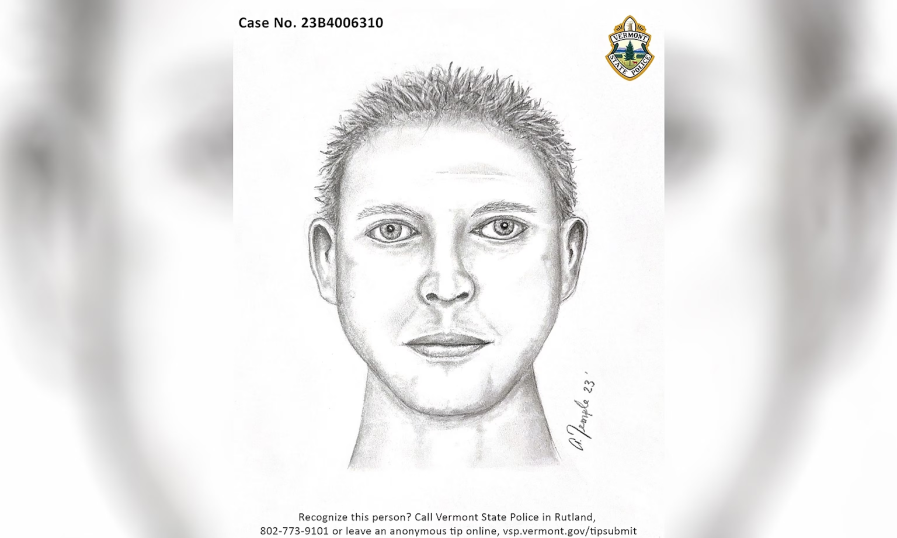
A composite sketch of the suspect was drawn and released after authorities noticed the similarities between Jared and Jacob’s abduction — the abductor was a man in his forties or fifties, had a deep raspy voice, and said he had a gun.
But as years began to pass with no answers about Jacob, the community feared they would never learn what happened.
Investigators looked into Dan Rassier, the neighbor whose driveway was near Jacob’s abduction site and where authorities had found those tire tracks and shoe prints. Rassier had told police he had seen a car quickly turn around in his driveway that night and was convinced the vehicle was involved in the kidnapping. However, 14 years later, a man would come forward claiming to be the driver of that vehicle. Police would then turn their focus onto Rassier.
Rassier denied any involvement and a search of his property turned up empty. He was eventually cleared as a person of interest when the case was finally solved in 2016.
More than two decades after Jacob’s kidnapping, blogger Joy Baker discovered an article from 1987 detailing five incidents involving boys followed or assaulted by an unknown male in the nearby town of Paynesville, Minnesota, which were being investigated by local police.
Baker shared her research with Jared Scheierl, who believed his case sounded similar to the Paynesville cases. He, the Wetterlings, and Baker all thought the same man could be behind the Paynesville assaults, Jared’s abduction, and Jacob’s kidnapping, as authorities first suspected in 1990.
In 2014, the FBI’s Child Abduction Rapid Deployment team did a cold case review of the entire Wetterling investigation and began taking a closer look at a longtime person of interest, Paynesville resident Danny Heinrich.
“He was just a name that we heard at the very beginning, and he was probably one of those five to seven that they couldn’t clear just because his name kept coming up,” Patty said.
Heinrich was questioned by the FBI shortly after Jacob’s disappearance and his shoes, car tires, and hair samples were collected, but he was not charged with a crime. The shoes and tires visually matched the tire tracks and footprints impressions found at the abduction site – but because they lacked specific characteristics, investigators couldn’t say they were an exact match.
During the FBI’s review, investigators also took a look at Jared’s assault based on the similarities between his incident and Jacob’s. Advances in DNA testing provided them with a break in the case in 2012 after they determined that unknown male DNA discovered on Jared’s clothing was a match to hairs belonging to Heinrich that had been stored as evidence. Heinrich was never charged with Jared’s abduction and assault because the statute of limitations had run out by the time the DNA link was discovered.
Investigators sought a search warrant for Heinrich’s residence, where he now lived in Annandale, Minnesota. In that search warrant, law enforcement alleged Heinrich’s involvement in eight Paynesville incidents.
During the search, investigators found child pornography in Heinrich’s home, leading to his arrest on federal charges in October 2015. Authorities also announced that Heinrich was a person of interest in Jacob’s abduction.
Nearly a year after his arrest, Heinrich agreed to a plea deal and led authorities to farmland near Paynesville where he had buried Jacob’s remains. Heinrich confessed to abducting, assaulting, killing, and later burying Jacob. While driving out that night, Heinrich said he had noticed the three boys riding to the store, so he decided to pull into the Rassier driveway and wait for them.
As part of the plea agreement, Heinrich pleaded guilty to one count of child pornography and was sentenced to 20 years in prison. He also agreed to testify about the details of his crimes against Jacob and admitted in court to Jared’s abduction and assault.
In exchange, prosecutors agreed not to charge Heinrich with Jacob’s murder. Heinrich wasn’t charged in the eight Paynesville incidents, as the statute of limitations had run out and there was a lack of evidence. Heinrich denied any involvement in those cases to the police.
(NEW YORK) — A “ring of fire” solar eclipse will dazzle sky watchers this Saturday for the first time since June 2021.
This year, the solar eclipse will be directly visible in multiple states from Oregon, California, Nevada, Utah and Colorado in the West to Arizona, New Mexico and Texas in the south. It will also be visible in Mexico, Central America and South America, according to NASA.
“This is a really unique event and why we’re so excited about it is that the next total eclipse happens in April 2024 but then not again until 2044, and the next annular eclipse seen in this part of the country is actually going to be in 2046. It’s going to be a long stretch that we will not see this phenomenon again,” Dr. Kelly Korreck, an astrophysicist and NASA program manager for the 2023 and 2024 eclipses, said in a Sept. 26 teleconference.
What is a “ring of fire” solar eclipse?
There are different types of solar eclipses, including a total solar eclipse, a partial solar eclipse, a hybrid solar eclipse and an annular solar eclipse, according to NASA.
The Oct. 14 eclipse will be an annular solar eclipse, which, according to the agency, is when the moon in its orbit crosses between the sun and the Earth and is at or near its farthest point from Earth. When this happens, the moon, sun and Earth line up but the moon looks smaller than the sun, allowing a “ring” of the sun’s light to remain visible around the moon. This gives the annular solar eclipse its “ring of fire” nickname.
When will the “ring of fire” solar eclipse be visible?
According to NASA, the “ring of fire” annular solar eclipse will be visible “between 1 and 5 minutes for most places, depending on where you view it from.” It will appear in Oregon first at approximately 9:13 a.m. PDT and will wrap up in Texas by about 12:03 p.m. CDT.
Who will be able to see the “ring of fire” solar eclipse?
According to NASA scientist Alex Lockwood, over 6.5 million people in the U.S. will be able to see the solar eclipse directly and another 68 to 70 million will be within a 200-mile viewing distance of the eclipse’s path of annularity.
But nearly everyone in the lower 48 states should be able to see at least some of the upcoming solar eclipse this weekend.
“Everyone actually in the entire contiguous United States can witness a partial solar eclipse, if not the annular solar eclipse itself on this date for a few minutes,” said Lockwood, who is also a strategic content and integration lead for NASA’s Science Mission Directorate.
How do you watch the solar eclipse?
Before heading out to see the solar eclipse, people need to make sure they have the proper solar eclipse glasses to watch the “ring of fire” phenomenon safely. Doing so without the correct eye protection is extremely dangerous.
“You need certified ISO 12312-2 compliant solar eclipse glasses,” Lockwood said. “There are plenty of safe sellers of these glasses online and we encourage folks to find a safe pair.”
NASA notes that viewing an annular solar eclipse with other tools, such as binoculars, a camera lens, sunglasses or a telescope, that do not have a “special-purpose solar filter secured over the front of the optics will instantly cause severe eye injury.”
Although they may look similar to dark or tinted sunglasses, eclipse glasses are not the same and adhere to the ISO 12312-2 international standard. There are also handheld solar viewers that are compliant with the standard that can be used to view the “ring of fire.”
Eclipse glasses that are scratched, torn or damaged in any way should not be used and children should be supervised when using solar viewers, according to NASA.
Another way to view the annular solar eclipse is through an indirect viewing method like a pinhole projector, which projects the sun’s image onto a nearby surface and can allow you to see the sun without facing it. NASA cautions viewers not to look at the sun directly through a pinhole projector device.
For anyone who wants to watch the annular solar eclipse online, NASA will be broadcasting live coverage on Oct. 14 from 11:30 a.m. to 1:15 p.m. EDT on NASA TV, NASA’s website, and on NASA’s social media platforms, including Facebook, X and YouTube. You can also track the annular solar eclipse’s path on NASA’s tracker.
When will the next solar eclipse appear?
The next solar eclipse will occur in about six months on April 8, 2024, according to NASA. The April solar eclipse however, will be a total solar eclipse, where the moon will completely align over the sun, blocking the sun’s visibility and causing the sky to darken.
(NEW YORK) — Former President Donald Trump is on trial in New York in a $250 million lawsuit that could alter the personal fortune and real estate empire that helped propel Trump to the White House.
Trump, his sons Eric and Don Jr., and Trump Organization executives are accused by New York Attorney General Letitia James of engaging in a decade-long scheme in which they used “numerous acts of fraud and misrepresentation” to inflate Trump’s net worth while lowering his tax burden. The former president has denied all wrongdoing and his attorneys have argued that Trump’s alleged inflated valuations were a product of his business skill.
Here’s how the news is developing. All times Eastern:
Oct 12, 8:44 AM EDT
Defense to scrutinize Deutsche Bank’s due diligence
Trump attorney Jesus Suarez will continue his cross examination of former Deutsche Bank risk management executive Nicholas Haigh when Trump’s civil trial resumes this morning.
Deutsche Bank was the Trump Organization’s largest single lender between 2011 and 2022, loaning the former president upwards of $300 million through the bank’s private wealth management division.
Describing himself as an “ultimate decider” of the loans’ riskiness, Haigh testified Wednesday that his decision-making process relied on Trump’s financial statements — documents that the New York attorney general alleges were fraudulent.
“I assumed that the representations of the assets and liabilities were broadly accurate,” Haigh said yesterday.
Earlier witnesses have testified about how Trump’s financial documents were drafted, finalized, and sent to banks — but Haigh is the first witness to testify from the perspective of the banks, which the attorney general says were allegedly deceived by Trump’s inflated financial statements.
Suarez, during his first hour cross examining Haigh on Wednesday, said Deutsche Bank was a sophisticated company that profited from the loans.
Haigh also acknowledged that the bank failed to conduct its own independent appraisals of Trump’s top properties, and did not rigorously examine his financial information.
Oct 11, 5:54 PM EDT
Trump’s business drew little scrutiny from bank, defense says
Deutsche Bank was a serious company in business with Donald Trump to make money, defense attorney Jesus Suarez said during his cross examination of former Deutsche Bank executive Nicholas Haigh.
At the height of its relationship with the Trump Organization, the company loaned Trump over $378 million and failed to commission independent appraisals of Trump’s properties, Haigh acknowledged. While the bank listed lower estimates for the value of Trump’s assets year after year, it continued to do business with Trump and his company.
“We … the bank hadn’t done all the due diligence one would do in the sense of the opinion of value you see in an appraisal,” Haigh said, at one point agreeing with the defense’s characterization that the bank’s internal value services group conducted “sanity checks” on the numbers.
The direct examination of Haigh by state attorney Kevin Wallace also left a central question about Deutsche Bank’s activity unanswered.
In a letter to the court and in previous arguments, lawyers for the attorney general suggested that Haigh might have turned away Trump’s business if he had known that Trump’s assets were inflated in value.
“As this Court noted during summary judgment arguments, Mr. Haigh testified during OAG’s investigation that he may not have authorized lending to the borrower if he had at that time been aware of the inflated asset values contained in Mr. Trump’s SFCs [statements of financial condition],” a lawyer for the attorney general wrote to the court in a letter last week.
Wallace never directly posed the hypothetical to Haigh during his direct examination, leaving the question unresolved.
Court subsequently adjourned for the day, with Suarez telling the court he plans to continue his cross examination of Haigh through Thursday afternoon.
Oct 11, 4:06 PM EDT
Bank wouldn’t extend Trump credit to buy Buffalo Bills, exec says
Former president Donald Trump and his company bid $1 billion in 2014 in an attempt to purchase the Buffalo Bills football team.
The only problem was that Trump needed a bank to help finance his bid.
Former Deutsche Bank executive Nicholas Haigh testified that when Trump turned to his bank for help, bank executives declined, fearing it would increase their financial exposure to Trump.
“Deutsche Bank was not willing to increase its credit exposure to Donald Trump at that time,” Haigh said.
But the bank was still willing to help Trump by sending a letter to support his bid, according to Haigh — on the condition that Trump Organization controller Jeffrey McConney certify that the company was still in compliance with the covenants of the three outstanding loans the bank had given Trump.
McConney verified that Trump had over $300 million in liquid assets in 2014, and that it suffered no material decrease in the value of his illiquid assets, according to a document entered into evidence today.
With that verification, Deutsche Bank issued a letter that Trump had the “financial wherewithal” to fund his bid.
Trump’s effort to purchase the Bills was ultimately unsuccessful.
Following this line of questioning, state attorney Kevin Wallace concluded his direct examination of Haigh. But he never asked Haigh if he would have approved Trump’s loans had he known about the inflated assets alleged by the attorney general.
In a letter to the court and in previous arguments, lawyers for the attorney general had suggested that the hypothetical question would be a central element of Haigh’s testimony.
Oct 11, 1:58 PM EDT
Trump had to maintain $2.5B net worth for loan, banker says
When Donald Trump negotiated a $125 million loan from Deutsche Bank related to his Trump National Doral golf club, the former president agreed to maintain a minimum net worth of $2.5 billion as a condition of the loan, former bank executive Nicholas Haigh testified.
The loan memorandum prepared by Deutsche Bank included a covenant that the “Guarantor shall maintain a minimum net worth of $2.5 billion excluding any value related to the Guarantor’s brand value,” according to a document marked as evidence today.
The New York attorney general alleges that Trump’s actual net worth at the time of the loan agreement was only $1.5 billion, an amount that would have triggered a default.
Retired Deutsche Bank executive Nicholas Haigh testified that he was involved in the decision to set the $2.5 billion figure, which he believed would protect the bank from exposure if the property failed or the broader market declined.
“It was set in order to make sure the bank was fully protected under adverse market conditions,” Haigh testified.
To calculate Trump’s net worth, Deutsche Bank looked at what Haigh described as Trump’s four “trophy properties,” all in Manhattan: Trump Tower, 40 Wall Street, Trump Park Avenue, and Niketown — a ground lease for a property adjoining Trump Tower.
Since the properties themselves were not provided as collateral for the loan, Deutsche Bank did not commission independent appraisals for the properties, and instead used a modified version of Trump’s own numbers.
“The bank normally only commissions appraisals on assets taken as collateral,” Haigh said.
Deutsche Bank adjusted their assessment in 2012, when they learned of a separate appraisal of Trump Tower that offered a lower value of the property than what Trump had provided.
“The bank felt that it had an independent view on the value of the asset,” Haigh said of the appraisal that prompted his bank to lower their value for Trump Tower from $1.2 billion to $992 million.
Oct 11, 11:59 AM EDT
Bank relied on Trump’s financial statement to secure loan
Deutsche Bank relied on the strength of Donald Trump’s “financial profile” when deciding to loan the former president roughly $125 million related to the purchase of the Trump National Doral golf club in 2011, according to retired Deutsche Bank executive Nicholas Haigh.
Haigh testified that because Trump used the golf course and spa as collateral — relatively “unusual” assets that Deutsche Bank would struggle to sell in the event of a foreclosure — the bank leaned on the strength of Trump’s larger portfolio.
“[Trump] is guaranteeing he will repay our loan — all the money due on the loan,” Haigh said about the terms of the loan. “He is also guaranteeing if the result is losing money, he will pay the cost of that shortfall.”
Haigh said that he personally reviewed Trump’s statement of financial condition when determining whether to sign off on the loan.
“My conclusion was the client owned a lot of real estate, which was not surprising,” Haigh said about his findings after reading Trump’s financial statement.
Previous witnesses in the trial have offered insights into how Trump’s annual financial statement was drafted, finalized, and provided to banks to fulfill loan obligations. Haigh is the first witness to testify from the perspective of the banks, which considered the statements when deciding whether to do business with Trump.
Oct 11, 10:56 AM EDT
‘Nobody forgot to check off a box,’ judge says about lack of jury
Responding to lingering questions about the lack of a jury at the ongoing civil trial, Judge Engoron stated on the record that Trump would not have been entitled to a jury trial.
“We are having a non-jury trial because we are hearing a non-jury case,” Engoron said, dispelling claims that the trial lacks a jury because Trump’s lawyers simply forgot to check off a box or file a motion.
“It would have not helped to make a motion. Nobody forgot to check off a box,” Engoron said.
During her opening statement, Trump’s lawyer Alina Habba said the former president would have preferred a jury trial, and Trump himself has made multiple posts on his Truth Social platform about the alleged injustice stemming from the lack of a jury.
“The AG checked off non-jury, and there was no motion for a jury,” Engoron said about the process in Trump’s case — but he added that if a motion for a jury trial had been filed, he would have rejected it because the attorney general asked for “equitable” relief, which does not entitle participants to a jury trial.
“I would like to say thank you, your honor,” Habba said about the clarification.
Oct 11, 10:36 AM EDT
New York AG not attending trial today
New York Attorney General Letitia James is absent from the courtroom this morning.
James attended the first six days of the trial, which started last Monday.
Former President Trump and Trump Organization VP Eric Trump both attended the first three days of the trial.
Oct 11, 9:39 AM EDT
Bank exec told AG he was unaware of inflated valuations
While the Trump Organization’s relationship with Deutsche Bank goes back 30 years, the attorney general alleges in her complaint that in 2011, Trump began doing business with the private wealth managers at the bank, rather than bankers who specialized in commercial real estate.
“In essence, rather than obtain credit facilities through the wing of Deutsche Bank with an expertise in commercial real estate, Mr. Trump began to seek funds from a wing of Deutsche Bank focused on servicing ultrawealthy clients,” the attorney general’s complaint said. “Hence, Mr. Trump’s personal guaranty, and his representations regarding his finances that backed up that guaranty, featured prominently in Mr. Trump’s loan transactions through the [private wealth management] wing of Deutsche Bank.”
During the attorney general’s investigation, Deutsche Bank credit risk executive Nicholas Haigh told investigators that he “may not have authorized” Trump’s loans if he was aware of the inflated values in Trump’s financial statements, according to a letter the state submitted to the court.
Oct 11, 9:04 AM EDT
Deutsche Bank executive set to take stand
Donald Trump’s civil fraud trial is set to resume this morning with the testimony of Nicholas Haigh, a credit risk executive who worked at Deutsche Bank when it issued loans to the former president.
Deutsche Bank was the largest single lender to the Trump Organization between 2011 and 2022, according to the New York attorney general.
Owing approximately $340 million to the bank at one point, the Trump Organization used Deutsche Bank to secure favorable loans related to its purchase of the Old Post Office Hotel in Washington, D.C., the Trump International Hotel and Tower in Chicago, Illinois, and Trump National Doral golf club in Florida, according to the AG’s complaint.
Oct 10, 5:23 PM EDT
Ex-CFO can’t say who OK’d statements after Trump became president
Ex-CFO Allen Weisselberg, who testified earlier Tuesday that Trump approved his financial statements before they were finalized during the years between 2011 and 2016, was unable to recall who approved financial statements after Trump was elected president in 2016.
While he recalled discussing some elements of the statements with Trump Organization VP Eric Trump, he declined to say that either Eric or VP Don Jr. had final say regarding the statements.
Court then adjourned for the day.
Court is set to resume Wednesday morning with the testimony of Deutsche Bank risk manager Nicholas Haigh, who is testifying early due to a scheduling conflict.
Weisselberg is scheduled to return to the witness stand later Wednesday.
Oct 10, 4:40 PM EDT
Ex-CFO OK’d financial documents used to prevent loan default
Ex-Trump CFO Allen Weisselberg testified that he certified that Trump’s financial statements were “true, correct and complete” so the documents could be provided to lenders to prevent a breach of contract resulting in a loan default.
“Please see the attached report required per our loan documents, for the above referenced loan,” a Trump Organization employee would write to lenders like Wells Fargo, according to examples entered into evidence.
The employee would include a certification, signed by Weisselberg, attesting to the accuracy of Trump’s financial documents.
“Did you understand that if you failed to provide this, the Trump organization would be in breach of its obligations under the loan agreement?” state attorney Louis Solomon asked Weisselberg for each email.
“Yes,” Weisselberg replied.
Oct 10, 3:37 PM EDT
Weisselberg says Trump signed off on financial statements
Donald Trump would approve his financial statements before they were finalized between 2011 and 2016, ex-Trump CFO Allen Weisselberg testified.
Weisselberg said that Trump often had feedback about the notes sections of the statements, which contained more detailed descriptions of Trump’s properties.
“‘Don’t use the word beautiful. Use the word magnificent,'” Weisselberg offered as an example of the kind of feedback Trump would provide.
Earlier Tuesday, Weisselberg testified that he did not meet with Trump or attorney Michael Cohen to review the statements. Returning to the topic after the lunch break, Weisselberg described Trump’s final review of the document as a regular occurrence before he became president.
“Did you ever send it to the Mazars [accountants] … as a final version before Mr. Trump signed off on it?” state attorney Louis Solomon asked.
“Not that I can remember, no,” Weisselberg said.
Oct 10, 2:18 PM EDT
Ex-CFO suggested 30% ‘brand premium’ for golf course valuations
Ex-Trump CFO Allen Weisselberg explained the Trump Organization’s process for valuing its marquee properties as a complicated, months-long process during which the firm’s controller, Jeffrey McConney, would reach out to appraisers and brokers to better determine their value.
“This took months to prepare. It was not a simple task,” Weisselberg said, adding that he reviewed McConney’s final product at a “30,000-foot level.”
But Weisselberg acknowledged that he often intervened in the process to push McConney in a certain direction.
In one example, Weisselberg testified that he suggested McConney add a 30% brand premium for seven of Trump’s golf courses — adding tens of millions of dollars in value without disclosing the reasoning.
“Was the 30% premium you directed Mr. McConney to add to the fixed assets disclosed in the statement of financial condition?” Solomon asked.
“No,” Weisselberg said.
During a later portion of his direct examination, Weisselberg testified he sent Trump Organization employee Patrick Birney — who took over handling Trump’s financial statements from McConney — a newspaper clipping about a nearby Palm Beach property in order to support the valuation of Trump’s Mar-a-Lago Club.
“Patrick — hold for next year DJT f/s, Let’s see what it ends up selling for,” a handwritten note from Weisselberg on the clipping said.
Weisselberg acknowledged his hesitancy to use that property’s asking price to help value Mar-a-Lago.
“Anyone can ask anything for a dollar amount. Doesn’t mean it’s going to sell,” Weisselberg said.
Oct 10, 2:01 PM EDT
Ex-CFO acknowledges firm’s fundamental failures of responsibility
Ex-Trump CFO Allen Weisselberg acknowledged under questioning that the Trump Organization failed to fulfill some of the basic promises detailed in letters between the firm and its external accountant, Mazars USA.
“Do you believe the Trump Organization fulfilled that fundamental responsibility?” state attorney Solomon asked Weisselberg regarding a 2017 letter from Mazars that outlined the Trump Organization’s responsibility to select the accounting principles used in financial statements.
“No,” Weisselberg responded.
Asked about a separate letter outlining the Trump Organization’s responsibility to comply with generally accepted accounting principles, or GAAP, Weisselberg initially suggested that the Trump Organization fully relied on Mazars to comply with the accounting standards.
“We relied on Mazars to understand GAAP,” Weisselberg said.
“You were relying on Mazars to make a representation back to Mazars?” Solomon said, prompting Weisselberg to reverse his statement.
When questioned about the seemingly boilerplate accounting obligations to which the Trump Organization agreed, Weisselberg appeared to struggle to articulate who at the Trump Organization fulfilled the basic responsibilities as outlined.
Oct 10, 1:21 PM EDT
Weisselberg denies discussing financial statements with Trump
After initially evading the state’s question, ex-Trump CFO Allen Weisselberg denied that he ever met with Trump to discuss his financial statements.
“Did you ever meet with Donald Trump or Michael Cohen where there was discussion of the statement of financial condition before it was finalized?” state attorney Louis Solomon asked.
Weisselberg initially responded that he did not recall such a meeting happening, before answering more definitively.
“No. I don’t believe it happened,” Weisselberg said.
Judge Engoron, appearing skeptical of the answer, asked Weisselberg to confirm.
“Could it have happened, and you just don’t remember?” Engoron asked.
“I am saying it did not happen,” Weisselberg responded.
The attorney general’s opening statement for the case included a portion of the deposition of former Trump attorney Michael Cohen, who claimed that Trump met with him and Weisselberg to direct them to increase his net worth, in order “to be higher on the Forbes list” of billionaires.
“Allen and I were tasked with taking the assets, increasing each of those asset classes in order to accommodate that eight-billion-dollar number [Trump requested],” Cohen said in the deposition.
Oct 10, 11:55 AM EDT
Weisselberg concedes Trump’s triplex is smaller than valuation
Former Trump Organization CFO Allen Weisselberg testified that Trump’s triplex apartment in Trump Tower is 10,996 square feet — which is a third the size that Trump claimed on financial documents.
In October 1994, Trump signed a document that certified his penthouse triplex is 10,996 square feet, but his statements of financial condition for several years beginning in 2012 listed the apartment as 30,000 square feet.
An attorney with the New York attorney general’s office showed the page with Trump’s signature to Weisselberg, who appeared to struggle to explain the discrepancy.
“It was always in my mind a de minimis asset on the statement of financial condition,” Weisselberg said. “I never even thought about the apartment.”
Louis Solomon of the attorney general’s office confronted Weisselberg with emails from Forbes magazine seeking clarity about the apartment’s size, as well as a letter signed by Weisselberg certifying the 30,000 square foot figure to the Trump Organization’s then-accountant, Mazars USA.
Weisselberg offered a lengthy take on the discrepancy, prompting Judge Arthur Engoron to intercede.
“Your role is to answer the questions, not to give speeches. Please just answer the questions,” Engoron said.
“Forbes was right, the triplex was actually only 10,996, right?” Solomon asked.
“Right,” Weisselberg finally conceded.
“I’ve been through quite a bit the last two years,” Weisselberg said at one point during the morning’s questioning. The former CFO moved to Florida following three months in jail after he pleaded guilty last year to criminal fraud charges and subsequently testified against the Trump Organization.
Oct 10, 9:47 AM EDT
Weisselberg to be questioned about valuations
Ex-Trump CFO Allen Weisselberg is expected to face questions this morning about his work valuing properties like Trump’s triplex apartment in Trump Tower and Trump’s 40 Wall Street building, as well as the Trump Organization’s efforts to secure loans from banks and Weisselberg’s direct conversations with the former president.
Weisselberg is the second named defendant to testify in the ongoing civil trial.
Trump Organization controller and co-defendant Jeffrey McConney, who concluded his testimony on Friday, was deemed a hostile witness by Judge Arthur Engoron, giving the state more latitude in their questions.
Oct 10, 9:08 AM EDT
Ex-CFO Weisselberg last year pled guilty to tax fraud
Ex-Trump Organization CFO Allen Weisselberg’s expected testimony this morning comes six months after he was released from New York City’s Rikers Island jail complex after pleading guilty last year to 15 felony charges related to a long-running scheme to avoid $1.7 million in taxes while working for the Trump Organization.
As a condition of his plea deal, Weisselberg testified last year in the Manhattan district attorney’s criminal trial of the Trump Organization itself.
“Are you embarrassed about what you did?” Trump Organization attorney Alan Futerfas asked Weisselberg during the criminal trial last November.
“More than you can imagine,” replied Weisselberg, who testified that Trump himself was unaware of his tax evasion scheme.
The Trump Organization was convicted and later paid a $1.6 million fine imposed by the judge overseeing the case.
Oct 10, 8:22 AM EDT
Ex-Trump CFO Allen Weisselberg expected to take stand
Former Trump Organization chief financial officer Allen Weisselberg is expected to testify when former President Donald Trump’s civil fraud resumes this morning.
A named defendant in the case alongside Trump and his adult sons, Weisselberg allegedly supervised and approved the inflated valuations in Trump’s financial statements at the center of the state’s case, according to prosecutors.
He’s also alleged to have personally met with the former president each year between 2011 and 2016 to review and get approval for the fraudulent financial statements.
“Mr. Trump made known through Mr. Weisselberg that he wanted his net worth on the Statements to increase — a desire Mr. Weisselberg and others carried out year after year in their fraudulent preparation of the Statements,” New York Attorney General Letitia James wrote in her initial complaint.
(NEW YORK) — The Powerball frenzy continued on Wednesday as numbers were drawn for the $1.73 billion jackpot.
The winning numbers drawn for the jackpot prize were: 22, 24, 40, 52, 64 and red Powerball 10. The power play was 2.
One ticket had all the numbers. It was sold in Frasier Park, California, which is located between Los Angeles and Bakersfield in Kern County.
The grand prize, which had an estimated lump sum payout of $756.6 million, continued its ascent through billion-dollar territory after no ticket matched all six numbers drawn on Monday night, Powerball said.
Monday’s jackpot was the third-largest prize in Powerball history, officials previously said, making Wednesday’s prize now the second-largest.
Florida had at least one ticket on Monday that matched five and got the power play number, all adding up to a $2 million win. There were match five winners who won $1 million in California, Indiana, Oregon and Virginia.
The last billion-dollar Powerball prize — the jaw-dropping $2.04 billion — was won in California in November of last year. The next largest prize — $1.586 billion — was won in Jan. 2016 in California, Florida and Tennessee.
Lottery officials said that while the odds of winning the big jackpot may be astronomical, the chances of winning a smaller prize were much better at 1 in 24.9.
Jackpot winners can either take the money as an immediate cash lump sum or in 30 annual payments over 29 years. Both advertised prize options do not include federal and jurisdictional taxes.
Powerball tickets cost $2 and are sold in 45 U.S. states as well as Washington, D.C., Puerto Rico and the U.S. Virgin Islands.
Powerball drawings are broadcast live every Monday, Wednesday and Saturday at 10:59 p.m. ET from the Florida Lottery draw studio in Tallahassee. The drawings are also livestreamed online at Powerball.com.
(CASTLETON, Vt.) — Police have released a sketch of a person of interest in connection with the shocking killing of a retired university dean who was shot in the head while walking on a Vermont trail last week.
Honoree Fleming, 77, was found dead on a trail on Oct. 5 in Castleton, Vermont State Police said. She died from a gunshot wound to the head. The medical examiner determined the manner of death was homicide, police said.
On Wednesday, police released a sketch of a person witnesses reported seeing on the trail prior to the discovery of Fleming’s body.
Capt. Scott Dunlap, commander of the Vermont State Police Major Crime Unit, called it their “best lead” yet, as no suspects have been identified nearly a week after the deadly shooting.
“It’s somebody that we want to talk to in regards to her death,” Dunlap told reporters during a press briefing Wednesday.
More than one person saw the man on the trail, and the composite sketch was made based on their accounts, according to Dunlap.
“We’ve had witnesses that came across him acting very strangely, oddly,” said Dunlap, who did not provide any additional details on the person’s behavior.
The person of interest was described by witnesses as a white man in his 20s, approximately 5’10” with short red hair. He was last seen wearing a dark-colored T-shirt and carrying a black backpack, police said.
It is unclear if the killing was random or targeted, Dunlap said, urging the public to “remain vigilant.”
Authorities asked residents to contact police if they recognize or believe they see the person of interest.
“Do not confront this person,” Castleton Police Department Chief Peter said during the briefing. “Do not try to do anything on your own.”
Fleming, who lived in the town, was out for her regular evening walk when she was shot, Dunlap said.
She was a retired dean of education and “beloved teacher” at Vermont State University Castleton Campus, the university said. She was the wife of Ro Powers, a Pulitzer Prize-winning journalist and New York Times bestselling author.
Vermont Gov. Phil Scott called her death “tragic.”
“We are still trying to find out why. That’s the piece that’s missing,” Scott told ABC Burlington affiliate WVNY on Tuesday. “I know our law enforcement is doing all they can to find any leads.”
Scott said he knows residents are feeling frustrated and scared amid the investigation.
“We need a lead, we need something to go on,” he said. “Our law enforcement team is working nonstop to try to find the killer who did this.”