
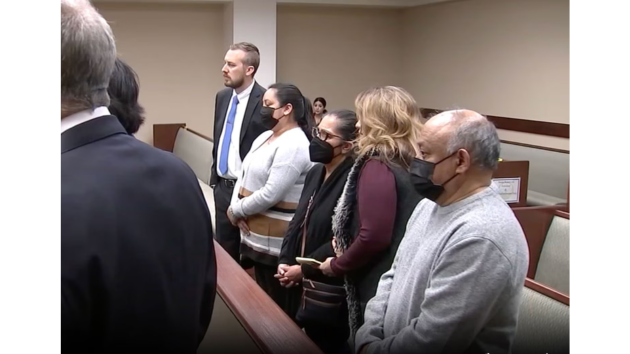
Foster parents of several Turpin siblings sentenced on child abuse charges

Foster parents of several Turpin siblings sentenced on child abuse charges
KABC

(RIVERSIDE COUNTY, CALIFORNIA) — The foster parents who took in several of the Turpin children after they were rescued from their home of abuse in 2018 were sentenced on child abuse charges Friday.

Marcelino Olguin was sentenced to seven years in state prison and was taken away in handcuffs after his sentencing was read in court in Riverside County, California.

His wife, Rosa Olguin, and their daughter, Lennys Olguin, were sentenced to four years each of probation. They cried during the sentencing.

The judge ordered that the defendants not make contact with the nine victims, which included several of the Turpin siblings.

None of the victims or their attorneys were in court for the sentencing.

A victim impact statement from one of the victims, identified by the initials JT, was read aloud in court during the sentencing hearing.

“All I wanted was to finally have a loving family and recover from my trauma but unfortunately I did not receive that,” the statement read in part.

Riverside County District Attorney Mike Hestrin, whose office prosecuted the case, said the sentencing “marks a significant step in delivering justice to the victims who endured unimaginable abuse.”

“These children were placed in a position of vulnerability after surviving intense trauma, only to be further exploited by someone who was entrusted with their care,” he said in a statement. “We are committed to holding accountable those who prey on innocent children. Our office remains steadfast in pursuing justice for all victims of abuse and ensuring that those who violate the trust placed in them are held accountable.”

The three foster parents pleaded guilty last month to child endangerment and false imprisonment. Marcelino Olguin was the only one charged with three counts of lewd and lascivious acts on a child under 14.

The three foster parents were arrested in 2021 and initially pleaded not guilty.

The six youngest Turpin children were placed with the Olguin family at various times beginning in 2018, a lawyer for one of the Olguins previously told ABC News. Four were still living there at the time of the arrests, according to the attorney.

Six Turpin siblings filed a lawsuit in 2022 against Riverside County and ChildNet, the private foster care agency tasked with protecting them, alleging they suffered “severe abuse and neglect” for years in the care of the foster family.

Elan Zektser and Roger Booth, legal representatives for the Turpin family victims, said they plan to hold a press conference on Monday to address the sentencing as well as where the civil case stands.

“This press event comes at a pivotal moment, as the public has awaited further details on both the criminal outcomes and the civil action involving the County’s oversight of the foster care system,” a press release from the attorneys stated.

A spokesperson for Riverside County told ABC News after the civil complaint was filed that it does not comment on pending legal matters or specific juvenile cases due to confidentiality laws.

A ChildNet spokesperson also told ABC News at the time that the organization was unable to disclose facts or discuss the allegations in the complaint.

A 2022 report issued by outside investigators hired by Riverside County found that the 13 Turpin siblings had been “failed” by the social services system that was supposed to care for them and help transition them into society.

“Some of the younger Turpin children were placed with caregivers who were later charged with child abuse,” the 630-page report found. “Some of the older siblings experienced periods of housing instability and food insecurity as they transitioned to independence.”

In response to the report upon its release, Riverside County Supervisor Karen Spiegel said in a statement, “This is the time to act and I will support all efforts to meet the challenge.”

The Turpin case garnered national attention following the children’s rescue from captivity in their parents’ Perris, California, home in January 2018.

The 13 Turpin siblings were rescued after Jordan Turpin, then 17, executed a daring escape in the middle of the night and called 911. Authorities subsequently discovered that their parents had subjected the siblings, who ranged in age from 2 to 29 at the time, to brutal violence and deprived them of food, sleep, hygiene, education and health care.

Their parents, David and Louise Turpin, pleaded guilty to 14 felony counts in 2019 and were sentenced to 25 years to life in prison with the possibility of parole.

Copyright © 2024, ABC Audio. All rights reserved.

New details revealed in Delphi girls’ double murder as opening arguments begin

New details revealed in Delphi girls’ double murder as opening arguments begin
Lindsey Jacobson/ABC News, FILE

(NEW YORK) — Details about the murder of two teenage girls in Delphi, Indiana, in 2017 were revealed for the first time Friday during the trial of the man accused of killing them.

Richard Allen is charged in the murders of Abby Williams, 13, and Libby German, 14. The two friends were found dead a day after they went out for a walk on a hiking trail in February 2017.

Allen has pleaded not guilty to four counts of murder.

Police have never released how the eighth graders were killed. During opening statements Friday in the long-awaited trial in Carroll County, Indiana, the prosecutors provided the jurors with details about the murders.

“You’re going to see the crime scene,” prosecutor Nick McLeland said. “It was a gruesome scene. Libby was completely naked. Her throat was cut, blood all over. Abby’s throat was also cut.”

McLeland said the case is about three things: the “bridge guy,” an unspent bullet found at the crime scene and the brutal murders of Libby and Abby, who were found dead near the Monon High Bridge.

According to McLeland, Libby posted a photo of Abby on Snapchat while they were crossing over the Monon High Bridge. After the girls crossed the bridge, they saw a man behind them, so Libby started a recording on her phone at 2:13 p.m. on Feb. 13, 2017, he said.

McLeland said the man pulled out a gun and ordered the girls “down the hill.” The girls complied and then, the video on the cellphone stopped recording.

According to McLeland, Allen testified that he was on the trail that day. Investigators also found a gun in his house, and testing showed a bullet found at the crime scene cycled through that gun.

McLeland said Allen also confessed to committing the crime to his wife and mother voluntarily while in jail.

Defense attorney Andrew Baldwin said in his opening statement that there is reasonable doubt in the case, arguing that the state’s investigation was botched from the beginning.

Baldwin questioned the timeline and cellphone evidence in the state’s case, holding up a phone to the jury and saying, “Forensic data on these phones don’t lie.”

Baldwin said the prosecution claims Abby and Libby were dead by 4 p.m. on Feb. 13, 2017, and their bodies were never moved until they were recovered the next day. He said the prosecution’s timeline puts Allen in a parking lot near the trial at 1:30 p.m. but his cellphone data shows he was gone by 2:15 p.m.

Addressing the unspent round found at the crime scene, Baldwin said law enforcement commonly used that type of bullet, but police never investigated if an officer was missing one. He also said the owner of the property where the girls were found owns a similar weapon but his gun was never tested.

The defense also argued Allen’s mental health was in decline while in prison, which led to him to confess to the crime.

The defense told jurors they believe the girls were killed somewhere else and their bodies were returned to the crime scene — that searchers saw no bodies or girl’s clothing in the creek on the night of Feb. 13, and witnesses near the crime scene also never heard any screams.

Baldwin also said hair found in Abby’s hand was a possible match to a female relative of Libby, and not Allen. The defense revealed the evidence for the first time during proceedings earlier in the week.

Ahead of opening statements, Judge Frances Gull ruled the composite sketches of a person of interest in the case released by the Indiana State Police early in the investigation will not be used during the trial.

Prosecutors had filed a motion seeking to prevent defense attorneys from referencing the sketches, arguing they were for generating leads in the case and were not used to identify Allen as a suspect in the case.

Copyright © 2024, ABC Audio. All rights reserved.

Menendez brothers murder case gets reevaluated based on new evidence, next hearing in November

Menendez brothers murder case gets reevaluated based on new evidence, next hearing in November
Ted Soqui/Sygma via Getty Images, FILE

(NEW YORK) — The Menendez brothers face the possibility of freedom after serving more than 30 years in prison, with their case being reviewed for possible resentencing by the Los Angeles County District Attorney following the emergence of significant new evidence.

On Aug. 20, 1989, Lyle Menendez, then 21, and Erik Menendez, then 18, gunned down their parents in their Beverly Hills mansion. Jose Menendez was a wealthy 45-year-old entertainment executive, while 47-year-old Kitty Menendez was a homemaker.

The brothers were sentenced to life in prison after being convicted at their second retrial, following mistrials in the first trial.

“It was from the jump, one of the biggest cases in Los Angeles and in the country; no one could believe that these two young men had killed their parents this way,” ABC’s Terry Moran, who covered the trial, told “Impact X Nightline.”

The fact that they killed their parents 36 years ago was always clear. However, the reason they did it has always divided and captivated the nation.

During their initial trial, defense attorney Leslie Abramson contended that Lyle and Erik shot their parents in self-defense. She argued that the brothers feared their parents would kill them if they disclosed the years of alleged molestation they had suffered at their father’s hands.

The first trial ended in a mistrial on Jan. 13, 1994, due to a deadlocked jury. After a second trial, the brothers were found guilty of first-degree murder in 1996 and received two consecutive life prison terms without the possibility of parole.

A fresh legal filing has been submitted with even more distressing details of Jose Menendez’s alleged abuse.

According to the brothers’ attorneys, Erik Menendez penned a letter describing his father’s alleged abuse to his cousin.

Another alleged victim of their father, a former member of Puerto Rican boy band Menudo, also spoke out in 2023 Peacock documentary “Menendez + Menudo: Boys Betrayed.” Roy Rosselló alleged that he was abused by José Menendez when he was 14.

The Menendez brothers have seemingly gone from public enemies to victims as a powerful movement builds online to set the brothers free.

Their story is now under a modern lens, casting a new perspective on an alleged trauma that was barely understood at the time — that men could also be victims of sexual abuse. Some people say this reexamination challenges long-held beliefs and prompts people to rethink their understanding of this complex issue.

“I have always thought that if the Menendez brothers were the Menendez sisters, they’d be free today, would have been convicted,” Moran said. “But an abuse victim often gets some kind of clemency.”

Prison reform advocate Kim Kardashian called for their release.

‘We are all products of our experiences,” Kardashian wrote in a personal essay about the brothers. “Time changes us, and I doubt anyone would claim to be the same person they were at 18.”

Actor Rosie O’Donnell has befriended the brothers.

“They were not horrible kids,” O’Donnell told “Impact X Nightline.” “They were severely, sadistically tortured by a pedophile predator father, and a very compliant and also involved mother, who had no interest in them.”

In the ’90s, Dr. William Vicary, a former psychiatrist, was a key witness for the defense in the case after defense attorney Leslie Abramson hired him to evaluate Erik Menendez. Vicary later received probation of his medical license for admitting to altering notes from those meetings.

“In the ’80s and ’90s, the public had very little knowledge about this type of sexual abuse, especially fathers abusing their own sons,” Vicary told “Impact X Nightline.” “Back then, there were many people that just dismissed this outright.”

Others like Alan Abrahamson, who covered the trial for the LA Times, still believe the brothers killed their parents for money and that the jury got it right, given their lavish spending spree in the aftermath of the killings.

“The parents were sitting in the den watching TV,” Abrahamson told “Impact X Nightline.” “Did they have any weapons? No.”

Los Angeles County District Attorney George Gascón announced earlier this month that he was reviewing new evidence in the case against the brothers.

Some family members said the Menendez brothers should have been charged with manslaughter instead of murder. A group of relatives, including Kitty Menendez’s sister, agree.

The family members held a news conference in LA on Wednesday, hoping it would influence the appeal of their sentencing. The court has scheduled one hearing for November 2024.

Copyright © 2024, ABC Audio. All rights reserved.
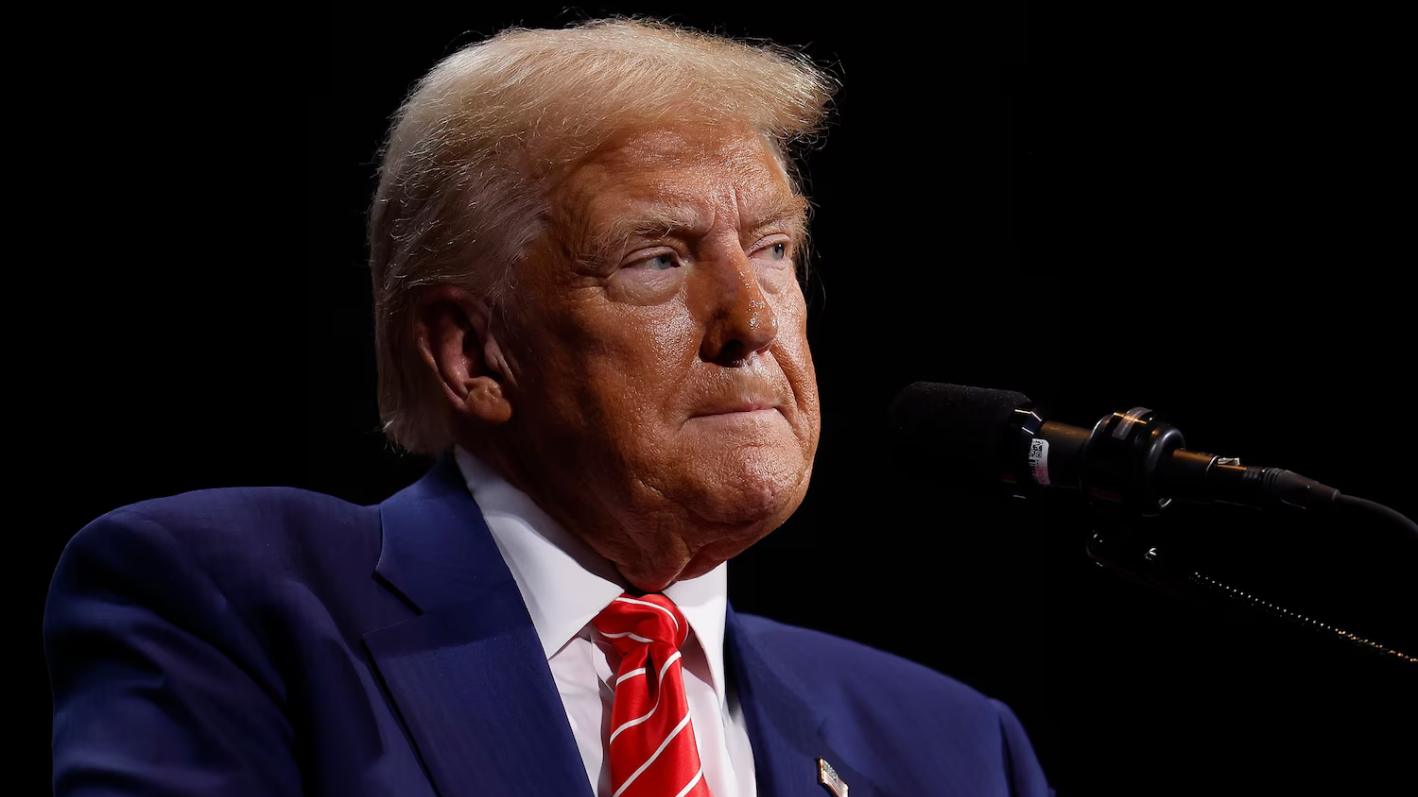
Unsealing of redacted filing offers limited look at evidence in Jan. 6 case against Trump

Unsealing of redacted filing offers limited look at evidence in Jan. 6 case against Trump
Kevin Dietsch/Getty Images

(NEW YORK) — The judge overseeing Donald Trump’s federal election interference case on Friday unsealed the redacted appendix of evidence gathered by special counsel Jack Smith, offering a glimpse of the evidence that could be seen by a jury if the former president’s case goes to trial.

The highly redacted appendix is an attachment to the immunity motion filed earlier this month by Smith that included new details about Trump and his allies’ actions leading up to the Jan. 6 assault on the Capitol.

The majority of the appendix’s 1,889 pages are redacted, and the remaining documents are largely comprised of public materials, including transcripts released by the House select committee on Jan. 6, court transcripts, Trump’s social media posts, excerpts from Vice President Mike Pence’s autobiography, and fraudulent electoral certificates signed by Trump’s “fake electors.”

The patchwork of evidence includes a portion of an interview between a former White House employee and an investigator from the House Jan. 6 committee regarding Trump’s conduct when he learned of the riot at the Capitol.

According to the employee, Trump inquired why he could not watch the entirety of his speech at the Ellipse earlier that day.

“‘Sir, they cut it off because they’re rioting down at the Capitol.’ And he was like, ‘What do you mean?'” the employee said.

The employee told congressional investigators that he set up a television in the Oval Office dining room and brought Trump a Diet Coke while he watched his speech, which was interrupted by coverage of the riot.

“I said, ‘It’s like they’re rioting down there at the Capitol,'” the employee said. “And he was like, ‘Oh really?’ And then he was like, ‘All right, let’s go see.'”

The unsealing of the appendix came a day after the judge in the case, U.S. District Judge Tanya Chutkan, denied Trump’s last-minute request to delay the release of the material until after the presidential election.

Chutkan, in Thursday’s ruling, pushed back on Trump’s argument that the release was politically motivated to influence the 2024 presidential election.

“There is undoubtedly a public interest in courts not inserting themselves into elections, or appearing to do so. But litigation’s incidental effects on politics are not the same as a court’s intentional interference with them,” Chutkan wrote in her order.

“As a result, it is in fact Defendant’s requested relief that risks undermining that public interest: If the court withheld information that the public otherwise had a right to access solely because of the potential political consequences of releasing it, that withholding could itself constitute — or appear to be — election interference,” she wrote.

Trump last year pleaded not guilty to federal charges of undertaking a “criminal scheme” to overturn the results of the 2020 election in order to remain in power.

Smith subsequently charged Trump in a superseding indictment that was adjusted to respect the Supreme Court’s July ruling that Trump is entitled to immunity from criminal prosecution for official acts undertaken as president — a decision that effectively delayed any potential trial until after the November election.

Copyright © 2024, ABC Audio. All rights reserved.
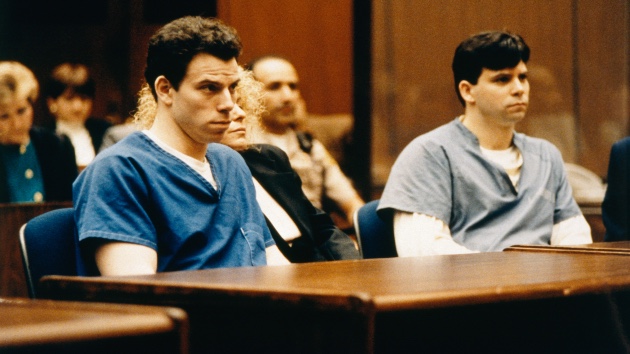
Here are the Menendez brothers’ potential tracks to freedom

Here are the Menendez brothers’ potential tracks to freedom
Ted Soqui/Sygma via Getty Images

(LOS ANGELES)  — Lyle and Erik Menendez are currently serving life behind bars for the murders of their parents in the family’s Beverly Hills home. But after more than three decades in prison, a renewed interest in the headline-grabbing trial has the brothers pursuing two tracks to potential freedom.

The Menendez case dates back to August 1989, when Lyle Menendez, then 21, and Erik Menendez, then 18, shot and killed their parents, Jose and Kitty Menendez.

Prosecutors alleged Lyle and Erik Menendez killed their wealthy parents for financial gain, while the defense argued the brothers acted in self-defense after enduring years of sexual abuse by their father.

Their first trials — which captured the nation’s attention with cameras in the courtroom — ended in mistrials.

In 1996, at the end of a second trial — in which the judge barred much of the sex abuse evidence — Lyle and Erik Menendez were convicted of first-degree murder and sentenced to two consecutive life prison terms without the possibility of parole.

The sensational case gained new attention this fall with the release of the Netflix drama “Monsters: The Lyle and Erik Menendez Story” and the Netflix documentary “The Menendez Brothers.”

The brothers currently have two potential paths to their release before the Los Angeles County District Attorney’s Office.

Resentencing

One track involves a review of their sentence based on factors including rehabilitation, which Los Angeles County District Attorney George Gascón is evaluating.

Gascón said he plans to make his resentencing decision this month. If Gascón recommends resentencing, his recommendation will go to a judge to decide whether the brothers will be released, receive a lesser sentence or get a new trial.

Gascón told ABC News in October any recommendation for resentencing would take into account the decades the brothers already served and their behavior in prison.

Mark Geragos, the Menendez brothers’ lawyer, called Erik and Lyle model prisoners who worked tirelessly to reform themselves with no expectation they’d be released.

“Given the totality of the circumstances, I don’t think that they deserve to be in prison until they die,” Gascón told ABC News.

Gascón said since he’s been in office, they have resentenced over 300 people, of which four have reoffended.

The other track concerns the brothers’ petition filed last year for a review of new evidence not presented at the original trial. Through the habeas corpus petition, the court could reverse the conviction or reopen proceedings.

Gascón said his office is evaluating allegations from a member of the boy band Menudo who said he was molested by Jose Menendez, and a letter Erik Menendez wrote to a cousin eight months before the murders detailing his alleged abuse.

Erik Menendez’s cousin testified about the alleged abuse at trial, but Erik Menendez’s letter — which would have corroborated the cousin’s testimony — wasn’t unearthed until several years ago, according to Geragos.

“The combination of those two we believe provide more than ample basis to set aside the result of the second trial,” Geragos said at a press briefing earlier this month.

Geragos said the district attorney could either oppose the habeas and decide to litigate it, or “they could concede the habeas and say, give them a new trial.”

“I’m hoping that sometime before Thanksgiving, which is when the next response is due, that the DA will either concede the habeas or join us in asking for resentencing,” Geragos said.

The next court date in the case is scheduled for Nov. 26, Gascón said.

Family calls for release

Nearly two dozen relatives have urged the district attorney to recommend the brothers be resentenced and released.

Lyle and Erik Menendez “were failed by the very people who should have protected them — by their parents, by the system, by society at large,” Kitty Menendez’s sister, Joan Andersen VanderMolen, said at a news conference on Wednesday.

“Their actions, while tragic, were the desperate response of two boys trying to survive the unspeakable cruelty of their father,” she said of the murders. “As their aunt, I had no idea of the extent of the abuse they suffered.”

Behind bars, the siblings “persevered,” Anamaria Baralt, niece of Jose Menendez, said. “They have sought to better themselves and serve as a support and inspiration for survivors all over the world. Their continued incarceration serves no rehabilitative purpose.”

Copyright © 2024, ABC Audio. All rights reserved.

Florida’s farmlands, iconic orange groves recovering following back-to-back hurricanes

Florida’s farmlands, iconic orange groves recovering following back-to-back hurricanes
Everoak Farms volunteers harvest sugar cane that could be salvaged after heavy winds and water from Hurricane Milton wrecked and flooded crops on the Orlando, Florida, farm. (Rich Pope/Orlando Sentinel/Tribune News Service via Getty Images)

(TALLAHASSEE, Fla. ) — Florida’s agricultural fields — including the state’s iconic orange groves and berry farms — are routinely damaged by strong storms that roll through the state.

Some of the Sunshine State’s most important farms are now recovering from two of the 2024 season’s most powerful hurricanes, which struck one after the other.

On Sept. 27, Hurricane Helene became the strongest hurricane to strike Florida’s Big Bend. Less than two weeks later, on Oct. 10, Hurricane Milton made landfall near Siesta Key. After both Category 4 storms brought life-threatening storm surge to the Gulf Coast, they turned toward the heart of the state, destroying farmland with strong winds and heavy rains, experts told ABC News.

While the state is no stranger to hurricanes, its agriculture industry is threatened every time a strong hurricane rolls in, Angela Lindsay, associate professor and disaster specialist at the University of Florida’s Institute of Food and Agricultural Sciences (IFAS), told ABC News.

Florida’s groves were heavily impacted by the recent hurricanes, which tore through regions with some of the most productive citrus acreage in the state, Matt Joyner, executive vice president and CEO of Florida Citrus Mutual, the state’s largest citrus trade association, told ABC News.

Hurricane-force winds caused defoliation — or the leaves to fall off — damaged limbs and branches and even downed entire trees, snapping them at the roots, Lindsay said. While oranges are not yet ready for harvest, they are currently near maturity and heavier, making it easier for high winds to pull the fruit from their branches, Joyner said.

“We know that we have a lot of fruit on the ground for this year’s crop,” Joyner said.

At Showcase of Citrus, an orange grove in Clermont, Florida, near Orlando, the gusts from Milton bent some trees at a 45-degree angle, owner John Arnold told ABC News.

Floods often kill the citrus groves, especially young orange trees planted in low-lying areas, Arnold said, adding that several of his young orange trees were lost to flooding.

Mitigation is difficult, the farmers said. Complicating matters even further is the uncertainty of the forecast up until just a few days before landfall, making it difficult to tend to hundreds and thousands of acres in a short amount of time, Michael Hill, co-founder and CEO of H&A Farms in Mount Dora, Florida, told ABC News.

Citrus trees can be staked in order to provide support from the hurricane-force winds, Lindsay said. Some farmers have tried wrapping the trees in tarp-like material, but that technique is not commonly used, Lindsay added.

“I’ve seen storms that tipped over entire groves of mature trees,” Arnold said.

There’s not much that can be done to protect crops in the ground, said Hill, who grows strawberries and blueberries — two of the most vulnerable crops in the state, after citrus, experts say.

A tree fell on Hill’s home in Eustis, Florida, but once the storm passed, all he cared about was the state of his fields.

“That’s the least of my worries,” he said of the downed tree.

About 60% of the plastic mulch the strawberries were planted in on Hill’s farm were torn up by Milton, he said. Hill and his workers are attempting to re-lay the plastic while keeping the plants alive in a cooler.

For the dairy industry, the cows still need to be milked, but the stressed cows likely produce much less, Jeb Smith, president of the Florida Farm Bureau Federation, told ABC News.

“It may be a month before they’re able to get back to where production should be,” Smith said.

Structural damage often includes buildings and fences that require re-building, Smith said. Showcase of Citrus sustained some damage to its screen buildings for growing grapefruit, Arnold said. A barn at H&A Farm was destroyed by Milton’s hurricane-force winds, and the entire facility lost power for days, Hill said.

Once the storm rolls through, farmers try to save whatever fruit fell to the ground and attempt to stake damaged trees in an attempt to support what’s remaining, Lindsay said.

Milton was the fourth named storm to hit many of the farms in Central Florida in 14 months, following Hurricane Irma in September 2023 and Debby in early September 2024, Smith said.

“It leads to more impact, when you have blow after blow,” Smith said.

In 2022, Florida’s agriculture industry generated $182.6 billion in revenue and supported more than 2.5 million jobs, according to the Florida Department of Agriculture & Consumer Services. While citrus is Florida’s signature crop, the state is an important producer of many other agricultural products. Florida is the second-largest producer of all oranges, strawberries, sweet corn and non-Valencia oranges in the country. More than 40 vegetables are grown commercially in the state, which ranks in the top three on production value of tomato, bell pepper, snap bean, squash, cabbage and cucumber, according to the University of Florida.

Sugarcane, timber, cattle and dairy are also major commodities for the state, according to the U.S. Department of Agriculture.

Other storms in the recent past have been just as devastating, the experts said.

Farmers were in disbelief over the amount of fruit that had been blown to the ground after Hurricane Irma in 2017 and Hurricane Ian in 2022, Lindsay said. The citrus industry saw a 1,000% loss as a result of Ian, Smith said.

In 2018, after Hurricane Michael struck the panhandle, researchers and officials couldn’t even get to some of the fields — many of which contain row crops of tomatoes and cotton — to assess the damage because of the damaged roadways, Lindsay said.

“We were using drones to look at them,” she said. “There wasn’t a lot there.”

Hurricane Ian in 2022 led to an estimated $7.9 billion in agricultural losses and impacted nearly 5 million acres, a report by the university found. Hurricane Irma in 2018 caused about $1.3 billion in losses, impacting about 1.9 million acres, according to an IFAS report.

Milton resulted in losses between $1.5 billion and $2.5 billion, in addition to the estimated $1.5 billion in damage caused by Idalia, Debby and Helene in the 13 months prior, according to a preliminary assessment by the Florida Department of Agriculture and Consumer Services released Thursday.

Every named storm in recent memory that has passed through central Florida has caused damage to Arnold’s farmland, he said.

“Just as we replant trees and rehabilitate groves and look to recover and move into better seasons, we’re getting hit with these storms,” Joyner said. “It’s really been difficult for growers to kind of regain their footing and move forward.”

In addition to crop insurance, there are several programs in place for farmers, including loan and recovery programs by the USDA’s Farm Service Agency, Lindsay said. The data collected by IFAS is sent to federal officials, who then determine the amount of aid to be distributed to farmers.

Once the damage is assessed, farmers then must make long-term decisions on how to move forward, Smith said.

“Some of these producers will have impacts years down the road,” Smith said, adding that the adverse impacts on the citrus industry can even last for decades.

Hurricanes are just one of the hazards Florida farmers face regularly. The last few years have been tough on the industry, with citrus farmers experiencing widespread greening, a disease that impacts citrus trees, Arnold said.

Combined with freezes, market prices, other diseases, labor challenges and inflation, farmers in the state have left many farms struggling to keep afloat, Hill said.

“When you see Florida strawberries in your stores this year, know that it came from a farmer that chose not to give up,” Hill said.

Copyright © 2024, ABC Audio. All rights reserved.

Robert Roberson ‘shaken baby syndrome’ execution on hold after Texas Supreme Court decision

Robert Roberson ‘shaken baby syndrome’ execution on hold after Texas Supreme Court decision
Ilana Panich-linsman/Innocence Project/AFP via Getty Images

(AUSTIN, Texas) — In an 11th-hour turn of events, Robert Roberson, the first person set to be executed in the U.S. based on the largely discredited “shaken baby syndrome” hypothesis, was granted a temporary hold on his death sentence.

Late Thursday evening, the Texas Supreme Court issued a temporary stay in the case, delaying the looming execution and capping, for now, a back-and-forth series of legal maneuvers, including an earlier decision by the U.S. Supreme Court not to intervene in the case.

When he learned of the last-minute delay of his execution, Roberson, who was convicted of murder in the death of his 2-year-old daughter, was “shocked,” and then “praised God, thanked his supporters and proclaimed his innocence,” said Amanda Hernandez, director of communications for the Texas Department of Criminal Justice, during a news conference Thursday evening.

The Texas high court’s ruling came after Travis County District Court Judge Jessica Mangrum initially put a temporary hold on Roberson’s execution to allow him to testify in a legislative hearing next week — something sought by a bipartisan group of state lawmakers who had subpoenaed Roberson to appear in a bid to delay the execution.

The temporary hold came through less than two hours before Roberson was scheduled to be executed. Shortly thereafter, however, the Texas Court of Criminal Appeals reversed it, putting the execution back on track.

In response, state lawmakers quickly sought a temporary stay by the state’s Supreme Court, which ultimately granted the request.

Notably, Roberson’s execution warrant was only valid through Oct. 17.

A legislative hearing at which Roberson is set to testify is scheduled for noon on Monday in the Texas State Capitol.

“For 22 years, this man has been held in prison — on death row — and we’re hoping that with this ruling today we’ll be able to bring light and get to truth,” Texas State Rep. John Bucy told reporters after the Texas Supreme Court issued its order halting the execution.

Monday’s hearing, in part, will examine laws in Texas targeting “junk science” or unreliable forensic science evidence.

“We needed Robert to be there as a first-hand account, to be able to testify to how it’s been used in his case,” Bucy said.

Roberson was found guilty of the murder of his 2-year-old daughter, Nikki, based on the testimony from a pediatrician who described swelling and hemorrhages in her brain to support a “shaken baby syndrome” diagnosis, even though there is limited evidence that this is a credible diagnosis.

The hypothesis has come under serious scrutiny in biomechanical studies, as well as a growing body of medical and legal literature. The medical examiner at the time also suspected that Nikki sustained multiple head injuries and considered the death a homicide in the official autopsy.

Roberson is autistic, according to his legal team, which affects how he expresses emotions — a concern that also arose during the trial.

Since his conviction, newly presented evidence found that Nikki had pneumonia at the time of her death and had been prescribed respiratory-suppressing drugs by doctors in the days leading up to her death.

A medical expert who performed post-mortem toxicology reports and reexamined her lung tissue said they found that chronic interstitial viral pneumonia and acute bacterial pneumonia were damaging her lungs, causing sepsis and then septic shock, likely leading to vital organ failure.

Over 30 medical and scientific experts have written to the Texas Board of Pardons and Paroles, asking it to reconsider Roberson’s sentence because it hinged on the “shaken baby syndrome.”

A bipartisan group of 86 Texas House of Representatives members have also spoken in support of Roberson’s clemency request, arguing that a state law enables reviews of wrongful convictions based on changes in scientific evidence. In Roberson’s case, they believe that the new evidence should have led to a new trial.

In his plea to halt the execution to the Supreme Court, Roberson argued that his federal due process rights were violated when Texas’ highest court refused to consider his bid to reopen the case based on “substantial new scientific and medical evidence.”

The plea itself followed two previous efforts: to have his sentence commuted to life in prison and to have his execution delayed. Both requests were denied by the Texas Board of Pardons and Paroles.

In its statement of opposition to the Supreme Court on Wednesday, the state of Texas claimed that there has been no violation of Roberson’s constitutional rights that would warrant intervention from the higher court.

It said that its own courts have adequately considered and rejected Roberson’s requests to review the evidence, writing: “As noted by the [Criminal Court of Appeal’s] opinion on direct review and Judge [Kevin] Yeary’s recent concurrence, ‘the tiny victim suffered multiple traumas’ that are inconsistent with a short fall from a bed or complications from a virus.”

Before the flurry of back-and-forth decisions in Texas on Thursday, the U.S. Supreme Court denied Roberson’s request for a stay and his petition that the justices take up the case.

Copyright © 2024, ABC Audio. All rights reserved.

Charges dropped against deaf Black man who was punched by Phoenix police

Charges dropped against deaf Black man who was punched by Phoenix police
Jeremy Hogan/Getty Images

(PHOENIX) — All charges were dropped Thursday against Tyron McAlpin, a disabled Black man in Arizona who had been facing charges of felony assault and resisting arrest after a pair of Phoenix police officers punched him and shocked him with a stun gun. McAlpin is deaf and has cerebral palsy.

The incident, which took place on Aug. 19, was captured on both surveillance video and police body-worn camera. The officers said they were investigating an assault at a nearby Circle K, and McAlpin fit the description of the suspect given by a bystander. However, the original description of the suspect was for a white man who had been creating a disturbance in the store. They also claimed that McAlpin became combative and tried to run when they approached him.

McAlpin’s lawyers said the video shows otherwise.

In the video, police are seen pulling up to McAlpin and ordering him down to the ground. He doesn’t appear to immediately comply. The video then shows the officers punching him 10 times in the head and shocking him with a stun gun four times while yelling: “Get your hands behind your back.” McAlpin’s attorney said he didn’t know what was going on and could not hear the commands.

A union for the department’s officers argued that people should know what to do if a police car comes up and uniformed officers approach and that the officers had to force McAlpin to comply, not knowing he was deaf at the time. The union also said McAlpin took a fighting stance and bit the officers.

“After reviewing all evidence presented, Maricopa County Superior Court Commissioner Nick Saccone determined there was sufficient evidence for the felony charges against the suspect due to his actions against the officers,” Phoenix Law Enforcement Association President Darrell Kriplean said in the weeks after the incident. A Maricopa County judge ruled that there was probable cause for the arrest and that there was cause for the charges.

The Phoenix Police Department said it stood behind its officers and suggested people avoid making judgments about the incident until all the evidence was reviewed. The police department also said that it is investigating the arrest.

On Thursday, Maricopa County Attorney Rachel Mitchell made an announcement that all charges against McAlpin had been dismissed.

“I promised I would personally review the case including a large volume of video recordings, police reports, and other materials that have been forwarded to my office,” she said.

With the support of senior attorneys and after hearing from members of the community, Mitchell said, “I have now completed my review and have made the decision to dismiss all remaining charges against Mr. McAlpin.”

The incident came after the Department of Justice in June released a report concluding that the Phoenix Police Department engaged in civil rights violations including racial discrimination and bias against the disabled. Their investigation found “systemic problems” within the department’s policies, training, supervision and accountability systems that were “perpetuated” for years.

The DOJ opened its investigation in August 2021 after complaints about use of excessive force among Phoenix police. The department said it welcomed this inquiry to help them understand how they can better serve the community.

Copyright © 2024, ABC Audio. All rights reserved.

2nd suspect in Michigan home invasion where perpetrators posed as utility men charged with murder

2nd suspect in Michigan home invasion where perpetrators posed as utility men charged with murder
amphotora/Getty Images

(NEW YORK) — The second suspect who was arrested earlier this week in connection to the deadly Michigan home invasion on Oct. 11 that left 72-year-old Rochester Hills businessman Hussein Murray dead has been formally charged with multiple counts, including felony murder, police said.

“Joshua Zuazo, 39, of Dearborn, is charged in a three-count warrant issued today by prosecutors with felony murder – a life offense if convicted – and two counts of unlawful imprisonment – 15-year felonies,” said the Oakland County Sheriff’s Office in a statement announcing the charges. “The warrant was signed late [Thursday] afternoon by 52-3 District Judge Laura Polizzi.”

Zuazo is now being held in the Oakland County Jail and is expected to be arraigned on the charges on Friday at 1:15 p.m. ET.

Murray was found dead Friday last Friday in the basement of his Rochester Hills home, according to the sheriff’s office. His wife, who called 911, had been tied up with her hands duct-taped.

The woman told law enforcement officials that the night before the attack, the two suspects had also shown up to the home claiming to be responding to a gas leak, but they were not allowed inside.

When they showed up again on Friday, they were let into the home, and her husband went with them into the basement, “ostensibly to look for the leak,” according to the sheriff’s department.

When they came back upstairs without her husband, they tied her up and taped her hands, the woman said. She did not see him come out afterward and “assumed he had been kidnapped.”

In home security camera footage released by the sheriff’s department, the since-arrested suspect can be seen wearing a utility worker’s uniform and a mask while holding a clipboard.

“We’re DTE. We’re checking for gas leaks,” the man can be heard saying in the video, naming the Michigan-based energy company.

The other suspect, Carlos Jose Hernandez, 37, was arrested last Saturday, according to the Oakland County Sheriff’s Office. He has been charged with murder, and law enforcement officials are seeking his extradition from Louisiana.

“I want to reiterate how proud I am of our whole team and what they did to quickly move this case forward, not only taking our suspects off the street, but bringing evidence to the prosecutor to move this into her court for the next phase,” Oakland County Sheriff Michael Bouchard said in a statement Thursday.

ABC News’ Julia Reinstein contributed to this report.

Copyright © 2024, ABC Audio. All rights reserved.
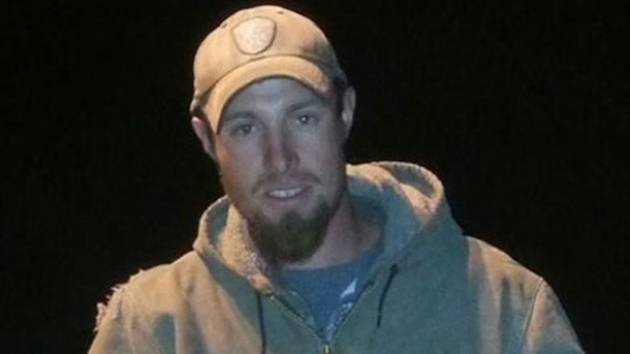
Incident reported as a possible bear attack was actually vicious murder, investigators say

Incident reported as a possible bear attack was actually vicious murder, investigators say
Gallatin County Sheriff’s Office

(GALLATIN COUNTY, MT) — Investigators are asking for help solving a “vicious” murder that was so brutal a 911 caller had reported it as a possible bear attack, according to the Gallatin County Sheriff’s Office.

A friend found 35-year-old Dustin Kjersem dead in a tent on Saturday morning about 2.5 miles up Moose Creek Road, in a fairly remote camping area in Montana, according to Gallatin County Sheriff Dan Springer.

Kjersem was last heard from on Oct. 10 as he was leaving to go camping for the weekend. He had plans to meet with a friend on Friday afternoon, according to the sheriff’s office.

After he did not make it to the meetup location, Kjersem’s friend went looking for him and ultimately found him dead.

When investigators responded to the scene of the crime, a Montana Fish, Wildlife and Parks agent with expertise in bear attacks did not find any signs of bear activity at the scene, prompting investigators to treat the incident as a murder, according to the sheriff’s office.

This was further confirmed through evidence gathered during an autopsy which determined multiple wounds led to his death.

Investigators are not sure what the murder weapon was, but the weapon was something “hard enough to cause significant damage to the skull as well as some flesh areas of the body,” Springer said at a press conference Wednesday. 

“This incident was a vicious attack, and detectives are working hard to develop and track down leads. A suspect has not been arrested at this time,” the sheriff’s department said in a statement.

It has not yet been determined what time he was killed and investigators have not identified any suspects in the murder.

Kjersem had lots of equipment at the campsite with him and it was “very well kept,” according to Springer.

The remote location of the murder makes it difficult for the investigation due to limited cellphone services, which typically can be very helpful to investigators, Springer said.

“If you are out in the woods, I need you to be paying attention, you need to remain vigilant. Please, just call us,” Sheriff Dan Springer said at a press conference Wednesday.

The sheriff’s office said people have reached out to them already, giving them multiple leads that they will explore as the investigation into what happened continues.

“If you were in the Moose Creek area, or anywhere in Gallatin Canyon, between Thursday afternoon and early Saturday morning and noticed anything unusual — whether you saw Dustin, Dustin’s truck, noticed suspicious activity, have footage from game cameras or in-vehicle cameras from the area or observed something out of place — please come forward. Even the smallest detail could be crucial to the investigation,” the Gallatin County Sheriff’s Office said in a statement on Facebook.

Copyright © 2024, ABC Audio. All rights reserved.