

Where does inflation stand in the swing-state cities that could decide the election?

Where does inflation stand in the swing-state cities that could decide the election?
Justin Sullivan/Getty Images

(WASHINGTON, D.C.) — Inflation has fallen over the final months of the presidential campaign, carrying potential implications for a tight race between former President Donald Trump and Vice President Kamala Harris.

More than half of adults list inflation as a top issue for the country, making it the highest-ranking concern by a wide margin over issues like immigration, crime and abortion, according to an Ipsos poll conducted late last month.

Price increases nationwide have largely returned to normal. However, the presidential race is widely expected to hinge on the results in seven closely contested battleground states, placing importance on where inflation stands in those key locations.

An analysis by ABC News found that inflation rates vary significantly across four major cities situated in battleground states: Detroit, Michigan; Phoenix, Arizona; Atlanta, Georgia; and Philadelphia, Pennsylvania.

In each of those states, the average polling margin between the two candidates is no more than two percentage points, according to FiveThirtyEight.

Here’s what to know about what inflation looks like in swing-state cities and what that means for the election:

Detroit, Michigan

Consumer prices rose 3.5% in Detroit over the year ending in August, according to data from the U.S. Bureau of Labor Statistics (BLS). That figure stands a percentage point above the national average and marks the highest inflation rate of the four cities examined by ABC News.

The surge in prices has stemmed in large part from rapidly rising housing costs, Gabriel Ehrlich, an economist at the University of Michigan, told ABC News. The trend marks a recent turnabout from sluggish housing prices that had taken hold in the city in the aftermath of the 2008 Great Recession.

Back then, a crisis in the auto industry caused rising unemployment, an exodus from Detroit and diminishing demand for homes. As Detroit has since improved its economic performance, however, the population has begun to grow and housing prices have started to soar. Housing costs climbed 6.2% in Detroit over the year ending in August, which stands more than a percentage point higher than the national average.

Even if the improved economic performance has contributed to the rise in housing prices, that silver lining offers little solace for city residents paying high costs, Ehrlich said.

“That’s a hard sell,” he added.

Phoenix, Arizona

In Phoenix, the inflation rate clocks in at 2.3%, according to BLS data for August, the most recent month on record. That pace of price increases is slightly lower than the national average.

Like Detroit, housing prices play a significant role in the dynamic behind costs in Phoenix – but it’s for the opposite reason. Housing prices there are rising at a pace of 3.5%, well below the national average of more than 6%.

The moderate pace of current housing price increases in Phoenix marks welcome relief after a bruising stretch of skyrocketing costs, Lee McPheters, director of the JPMorgan Chase Economic Outlook Center at Arizona State University, told ABC News. Since 2017, housing prices in the Phoenix area have doubled, he added.

The price increases have slowed, however, as Phoenix has made a concerted effort to ramp up home construction and address its dearth of supply.

Phoenix is expected to build roughly 20,000 apartments in 2024, granting it the fourth-highest apartment construction rate of any U.S. city, a RentCafe study in August found. That total would amount to a 88% increase from the apartment construction rate achieved two years prior, according to the Maricopa Association of Governments.

“There’s of course been the same housing shortage issues in Phoenix that you see across the country,” McPheters said. “The difference here is that Arizona responded.”

Atlanta, Georgia

As of August, the inflation rate in Atlanta stands at 1.7%, which clocks in nearly a percentage point lower than the national average and is the lowest pace for any of the swing-state cities examined by ABC News.

Prices in Atlanta have risen at a slower pace than the national average for a range of essential products, including housing, meat, poultry, fish and eggs.

Gasoline prices have dropped nationwide over the past year but they’ve fallen even more in Atlanta. The same trend applies to the price of new and used cars, the latter of which has fallen a staggering 11% over the past year.

Philadelphia, Pennsylvania

Consumer prices in the Philadelphia area climbed 3.4% over the year ending in August, BLS data showed. The city’s inflation rate registers nearly a percentage point higher than the national average.

In Philadelphia, prices for many food and beverage products are rising faster than the national average. Over the past year, prices for meat, poultry, fish and eggs have climbed at more than twice the national average pace. Cereal and bakery products have surged 2.5% over the past year in Philadelphia, even though prices for such goods have fallen by 1% nationwide.

The prices for nonalcoholic beverages in Philadelphia have climbed more than six times faster than the national average over the past year.

Erasmus Kersting, a professor of economics at Villanova University, said the sharp increase in prices for some food items may owed to a lack of competition among grocery stores in Philadelphia. In the absence of fierce competition, grocery stores retain the latitude to raise prices without fear of a rival offering a better deal on comparable products, Kersting explained.

Two supermarket chains, Giant and ShopRite, accounted for 56% of the local grocery market in 2022, according to the Philadelphia Business Journal.

“Grocery store prices have gone up a lot,” Kersting told ABC News. “Some of this has to do with market structure. How many competitors do grocery stores have?”


Copyright © 2024, ABC Audio. All rights reserved.

Black bear hunting season begins in New Jersey

Black bear hunting season begins in New Jersey
STOCK PHOTO/Getty Images

(NEW JERSEY) —  Bear hunting season has begun in New Jersey – a controversial decision that state officials say is intended to curb the population of black bears interacting with humans.

Segment A of bear hunting season began on Monday and will last through Oct. 19, with the first three days open for bowhunters only. The final three days, from Oct. 17-19, will be open for bowhunters and muzzleloader rifles, according to the New Jersey Division of Fish and Wildlife (NJFW).

For Segment B of black bear season, lasting Dec. 9-14, bear hunting will be permitted in New Jersey for shotgun and muzzleloader rifles only, according to the NJFW. Hunting hours during both segments begin 30 minutes before sunrise and end 30 minutes after sunset.

Hunters are limited to one bear over 75 pounds – or 50 pounds dressed – per segment, regardless of the number of permits the hunter holds, according to the Division of Fish and Wildlife. Hunters are not permitted to harvest black bears weighing less than 75 pounds live or 50 pounds dressed, nor can they hunt any adult bears in the presence of cubs.

The NJFW also said they may close the season early or extend it, depending on the number of bears harvested.

If the cumulative harvest rate reaches 30% of bears tagged in 2024, the season will be closed, according to the division. If the harvest rate doesn’t reach 20% for the period, the hunt will be extended to Dec. 18-Dec. 21.

This year marks the third opening of bear hunting season in New Jersey since 2022, when the NJFW’s Fish and Game Council voted unanimously to reinstate the state’s annual bear hunt, citing a significant increase in bear sightings around the state.

Animal conservationists criticized the decision at the time, telling ABC News that the measure wouldn’t lead to a decrease in human and bear interactions.

“New Jersey’s reactive bear management approach is ineffective, as it focuses on managing the bears, not managing the source of the problem,” Anjuli Ramos-Busot, New Jersey director of the Sierra Club, said in a statement in December 2023, after the bear hunting season was extended.

The black bear population in New Jersey has been increasing and expanding its range since the 1980s, with sightings in all 21 counties in the state, according to the NJFW.

In 2020, there were more than 3,150 black bears in the region north of Interstate 78 and west of Interstate 287 alone, a roughly 30% increase from the 2019 estimated population of 2,208 for the same region, according to the New Jersey Department of Environmental Protection (NJDEP), which further notes that the population is expected to grow to 4,000 bears by 2027.

Dense populations of black bears can also lead to inadequate natural sources of food for the animals and territory for young males, causing wider dispersion of bears into areas where they are even more likely to come into conflict with people as they seek to feed from human trash, pet food left outside, seed from bird feeders, and agricultural crops, poultry and livestock, according to the NJFW.

Bear-involved incidents reported to the NJDEP from January 2022 through October 2022 increased by 237% compared to the same period in 2021, according to state data. The incidents included 62 aggressive encounters with humans, one attack on a human, 12 attacks on dogs, 12 home entries, 15 attempted home entries, 84 instances of property damage exceeding $1,000, and 52 attacks on protected livestock, according to the data.

The number of incidents decreased by more than 37% between 2022 and 2023, after bear hunting was reinstated, according to state data.

“Analysis of data from New Jersey reveals no correlation between the number of bears killed and human safety,” Wendy Keefover, senior strategist for native carnivore protection for the Humane Society of the United States, told ABC News via email. “Instead, researchers know that the most effective way for reducing conflicts with bears is to reduce access to human-food attractants.”

It is especially important during this time of year for residents to remove unsecured garbage cans and bird feeders, as bears preparing to go into hibernation typically eat about 20,000 calories per day, Keefover said.

“Hunting bears will never stop negative interactions with bears, but taking commonsense precautions like using bear-resistant trash cans and taking down bird feeders will,” Keefover said.

A total of 11,000 black bear hunting permits are available to properly licensed hunters and farmer hunters every year, according to the state. Firearm black bear hunters are required to wear a hat of solid fluorescent hunter orange or an outer garment containing at least 200 square inches of fluorescent orange material visible from all sides at all times while bear hunting, regulations state.

The 2022 reinstatement of bear hunting in New Jersey came four years Gov. Phil Murphy enforced a ban on the sport months after taking office in 2018. Murphy had run on a campaign promise that the bear hunts would not exist while he was in office.

“While I committed to ending the bear hunt, the data demands that we act now to prevent tragic bear and human interactions,” Murphy told reporters in a news conference in November 2022.


Copyright © 2024, ABC Audio. All rights reserved.
This is how long hunting season for black bears lasts in New Jersey

Black bear hunting season begins in New Jersey
STOCK PHOTO/Getty Images

(NEW JERSEY) —  Bear hunting season has begun in New Jersey – a controversial decision that state officials say is intended to curb the population of black bears interacting with humans.

Segment A of bear hunting season began on Monday and will last through Oct. 19, with the first three days open for bowhunters only. The final three days, from Oct. 17-19, will be open for bowhunters and muzzleloader rifles, according to the New Jersey Division of Fish and Wildlife (NJFW).

For Segment B of black bear season, lasting Dec. 9-14, bear hunting will be permitted in New Jersey for shotgun and muzzleloader rifles only, according to the NJFW. Hunting hours during both segments begin 30 minutes before sunrise and end 30 minutes after sunset.

Hunters are limited to one bear over 75 pounds – or 50 pounds dressed – per segment, regardless of the number of permits the hunter holds, according to the Division of Fish and Wildlife. Hunters are not permitted to harvest black bears weighing less than 75 pounds live or 50 pounds dressed, nor can they hunt any adult bears in the presence of cubs.

The NJFW also said they may close the season early or extend it, depending on the number of bears harvested.

If the cumulative harvest rate reaches 30% of bears tagged in 2024, the season will be closed, according to the division. If the harvest rate doesn’t reach 20% for the period, the hunt will be extended to Dec. 18-Dec. 21.

This year marks the third opening of bear hunting season in New Jersey since 2022, when the NJFW’s Fish and Game Council voted unanimously to reinstate the state’s annual bear hunt, citing a significant increase in bear sightings around the state.

Animal conservationists criticized the decision at the time, telling ABC News that the measure wouldn’t lead to a decrease in human and bear interactions.

“New Jersey’s reactive bear management approach is ineffective, as it focuses on managing the bears, not managing the source of the problem,” Anjuli Ramos-Busot, New Jersey director of the Sierra Club, said in a statement in December 2023, after the bear hunting season was extended.

The black bear population in New Jersey has been increasing and expanding its range since the 1980s, with sightings in all 21 counties in the state, according to the NJFW.

In 2020, there were more than 3,150 black bears in the region north of Interstate 78 and west of Interstate 287 alone, a roughly 30% increase from the 2019 estimated population of 2,208 for the same region, according to the New Jersey Department of Environmental Protection (NJDEP), which further notes that the population is expected to grow to 4,000 bears by 2027.

Dense populations of black bears can also lead to inadequate natural sources of food for the animals and territory for young males, causing wider dispersion of bears into areas where they are even more likely to come into conflict with people as they seek to feed from human trash, pet food left outside, seed from bird feeders, and agricultural crops, poultry and livestock, according to the NJFW.

Bear-involved incidents reported to the NJDEP from January 2022 through October 2022 increased by 237% compared to the same period in 2021, according to state data. The incidents included 62 aggressive encounters with humans, one attack on a human, 12 attacks on dogs, 12 home entries, 15 attempted home entries, 84 instances of property damage exceeding $1,000, and 52 attacks on protected livestock, according to the data.

The number of incidents decreased by more than 37% between 2022 and 2023, after bear hunting was reinstated, according to state data.

“Analysis of data from New Jersey reveals no correlation between the number of bears killed and human safety,” Wendy Keefover, senior strategist for native carnivore protection for the Humane Society of the United States, told ABC News via email. “Instead, researchers know that the most effective way for reducing conflicts with bears is to reduce access to human-food attractants.”

It is especially important during this time of year for residents to remove unsecured garbage cans and bird feeders, as bears preparing to go into hibernation typically eat about 20,000 calories per day, Keefover said.

“Hunting bears will never stop negative interactions with bears, but taking commonsense precautions like using bear-resistant trash cans and taking down bird feeders will,” Keefover said.

A total of 11,000 black bear hunting permits are available to properly licensed hunters and farmer hunters every year, according to the state. Firearm black bear hunters are required to wear a hat of solid fluorescent hunter orange or an outer garment containing at least 200 square inches of fluorescent orange material visible from all sides at all times while bear hunting, regulations state.

The 2022 reinstatement of bear hunting in New Jersey came four years Gov. Phil Murphy enforced a ban on the sport months after taking office in 2018. Murphy had run on a campaign promise that the bear hunts would not exist while he was in office.

“While I committed to ending the bear hunt, the data demands that we act now to prevent tragic bear and human interactions,” Murphy told reporters in a news conference in November 2022.


Copyright © 2024, ABC Audio. All rights reserved.

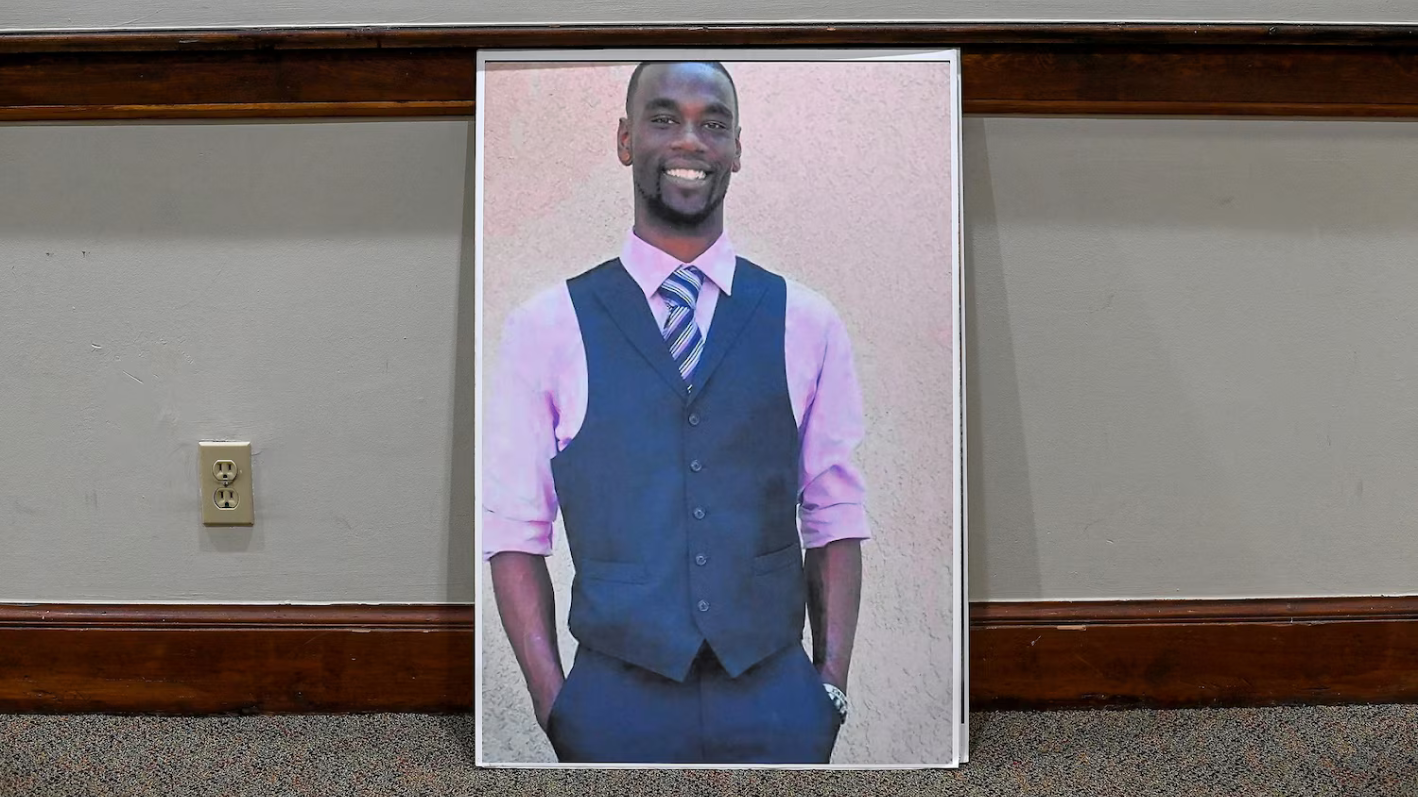
Two former officers seek acquittal of obstruction charge in beating death of Tyre Nichols

Two former officers seek acquittal of obstruction charge in beating death of Tyre Nichols
Joshua Lott/The Washington Post via Getty Images

(NEW YORK) — Attorneys for two former Memphis police officers convicted of obstruction in the beating death of Tyre Nichols filed motions for acquittal on Friday, both arguing that the government failed to prove the charge during the federal trial.

Tadarrius Bean, Justin Smith and a third former Memphis police officer, Demetrius Haley, were initially charged with four counts in the beating death of Nichols, who ran from officers during a routine January 2023 traffic stop.

Bean, Smith and Haley were found guilty of the charge of obstruction through witness tampering on Oct. 3 when a jury returned mixed results in the federal case.

“There is absolutely no record evidence that supports an individual finding of Mr. Bean guilty of obstruction of justice,” Bean’s attorney John Perry argued in Friday’s motion. Meanwhile, Smith’s attorney Martin Zummach argued in his motion that “the government’s own proof established that Justin Smith had no intentional knowing desire to obstruct justice or withhold information in the reporting process or persuaded, or attempted to persuade, a witness in order to hinder or delay any investigation.”

Asked for further comment, Perry referred ABC News to the motion on Monday, saying that “it speaks for itself.”

“With God’s help, I will do my best to speak through and within the judicial process on behalf of Justin,” Zummach told ABC News via email on Monday.

ABC News reached out to the U.S. Department of Justice (DOJ) but requests for comment were not immediately returned.

All three former officers were also initially charged with three additional counts — violating Nichols’ civil rights through excessive use of force, unlawful assault, failing to intervene in the assault and failing to render medical aid. Bean and Smith were found not guilty on those charges.

Meanwhile, Haley was acquitted of depriving Nichols of his civil rights causing death but found guilty on the lesser charge of depriving him of his civil rights resulting in bodily injury. He was also found guilty of conspiracy to commit obstruction.

The former officers did not take the stand in their own defense during the federal trial and pleaded not guilty to all charges.

According to the DOJ, Bean and Smith each face a maximum penalty of 20 years in prison, while Haley faces a maximum penalty of 10 years in prison for both the violations of depriving an individual of their civil rights “and for being deliberately indifferent to the known serious medical needs of a person in his custody.” Haley faces a maximum penalty of 20 years in prison for witness tampering charges, the department noted.

A federal judge for the U.S. District Court for the Western District of Tennessee on Oct. 7 ordered Haley to be held without bond until sentencing on Jan. 22, 2025, according court documents, but ruled that Bean and Smith were allowed to be on supervised release until the sentencing date.

According to court documents, Haley’s attorney filed a motion on Oct. 10 for Haley’s bond to be reinstated, arguing that the judge “erred in concluding that Mr. Haley was convicted of a crime of violence and subject to mandatory detention,” citing the fact that Haley was “acquitted of violating civil rights resulting in death and convicted of the lesser included offenses of violating civil rights resulting in bodily injury.”

ABC News reached out to the court but requests for comment were not immediately returned.

Body camera footage shows Nichols, 29, fled after police pulled him over on Jan. 7, 2023, for allegedly driving recklessly, then shocked him with a Taser and pepper-sprayed him.

Officers allegedly then beat Nichols minutes later after tracking him down. After the police encounter, Nichols was transferred to the hospital in critical condition. Nichols died in the hospital on Jan. 10, 2023.

Two additional officers – Emmitt Martin III and Desmond Mills Jr. – were also charged in the federal case and testified during the trial for Bean, Smith and Haley after pleading guilty to some of the federal charges.

The five former officers charged in the case were all members of the Memphis Police Department SCORPION unit — a crime suppression unit that was disbanded after Nichols’ death. All of the officers were fired for violating MPD policies.

All five former officers are also facing state felony charges, including second-degree murder, in connection with Nichols’ death. Bean, Smith and Haley pleaded not guilty to these charges. They pleaded not guilty to these charges.

Copyright © 2024, ABC Audio. All rights reserved.
7-Eleven to close hundreds of US locations before end of 2024

7-Eleven to close hundreds of US locations before end of 2024
Tim Boyle/Getty Images

(NEW YORK) — 7-Eleven will close more than 400 of its “underperforming stores” across the U.S. and Canada in an effort to reduce costs and bolster earnings before the end of the year.

Seven & I Holdings, the Tokyo-based parent company of the convenience store chain, announced the news during an earnings call last week, saying 444 stores will be shuttered due to the cumulative factors of inflation, slower customer traffic, and declining cigarette sales.

“All of these have impacted our sales and merchandise gross profit,” the CEO and President Joe DePinto said on the call.

As a result of the “macroeconomic conditions and evolving industry trends,” DePinto added that the company has revised its earning guidance.

The company reported a 7.3% decline in store traffic back in August and and said during its latest earnings reporting that the pattern corresponds with the “pullback of the middle- and low-income consumer.”

The total number of closures accounts for just over 3% of the more than 13,000 7-Eleven stores in North America.

Copyright © 2024, ABC Audio. All rights reserved.

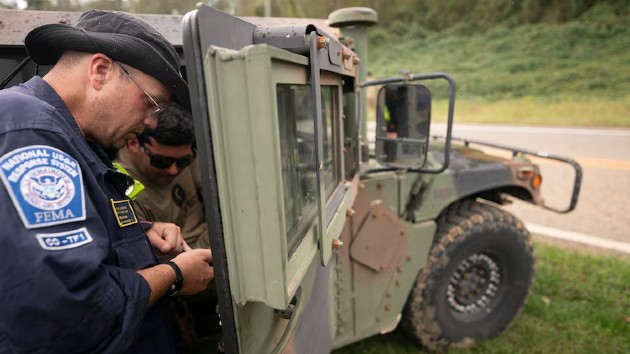
‘There have been threats’ against FEMA workers in North Carolina, sheriff says

‘There have been threats’ against FEMA workers in North Carolina, sheriff says
Sean Rayford/Getty Images, FILE

(ASHE COUNTY, N.C.) — There have been threats against Federal Emergency Management Agency (FEMA) employees responding to Hurricane Helene in North Carolina, according to a local sheriff.

“Recently in the mountain region, there have been threats made against them,” Ashe County Sheriff Phil Howell posted on Facebook regarding the alleged threats against FEMA employees. “This has not happened in Ashe County or the surrounding counties,” Howell added. “Out of an abundance of caution, they have paused their process as they are assessing the threats.”

Ashe County is located about three hours northeast of Asheville, NC, which was hard-hit by Helene. Sheriff Howell did not specify in his post who allegedly made the threats.

Threats to FEMA employees have been consistent during the Hurricane response, along with misinformation, federal authorities told ABC News.

Search and rescue efforts in the affected areas continue, a federal source told ABC News. However, while FEMA assesses potential threat information, disaster survivor assistance teams are currently working at fixed locations and secure areas instead of going door to door, out of an abundance of caution, the source said, adding that FEMA will monitor threat information and make adjustments to this posture on a regular basis in coordination with local officials.

A FEMA spokesperson told ABC News that the agency continues to support communities impacted by Helene and to help survivors apply for assistance.

“For the safety of our dedicated staff and the disaster survivors we are helping, FEMA has made some operational adjustments,” the spokesperson said. “Disaster Recovery Centers will continue to be open as scheduled, survivors continue to register for assistance, and we continue to help the people of North Carolina with their recovery.”

Sheriff Howell said that FEMA locations in Ashe County are open this week.

“Stay calm and steady during our recovery, help folks and please don’t stir the pot,” he said.

FEMA Administrator Deanne Criswell told ABC News Friday during a press briefing that threats to FEMA employees are a “shame” and a “distraction.”

“We continuously monitor the social media, channels, other outlets where we’re seeing this information, because we want to make sure we’re providing for the safest environment for our employees, and making sure that they know that their safety is first and foremost for us as they go out into these communities,” Criswell said in response to a question from ABC News.

FEMA hires people from local communities when disaster hits, Criswell said, noting that “many” leave their families behind to go and help communities who are impacted by disaster.


Copyright © 2024, ABC Audio. All rights reserved.

Delphi double murder trial to begin: Everything you need to know about the case

Delphi double murder trial to begin: Everything you need to know about the case
Lindsey Jacobson/ABC News, FILE

(DELPHI, IN.) — Jury selection begins Monday in the long-awaited trial of a Delphi, Indiana, man accused of killing two teenage girls while they hiked on a local trail in broad daylight in 2017.

The case garnered national intrigue, and remained a mystery for over five years until suspect Richard Allen was arrested in October 2022. He’s pleaded not guilty to murder charges.

Here’s everything you need to know about the case.

The murders

On Feb. 13, 2017, best friends Abby Williams, 13, and Libby German, 14, were enjoying a day off from school in their hometown of Delphi, a quiet, small town of nearly 3,000 residents in central Indiana.

They were on a hiking trail, walking, chatting and snapping photos, when they disappeared.

Their bodies were found the next day.

Abby, who was raised by her single mother, hoped to pursue a career in forensic science.

Libby, a gifted athlete raised by her grandparents, wanted to work with the FBI and solve crimes.

Police have never released how the eighth graders were killed.

According to video recovered from one of the victim’s phones, Abby or Libby mentioned “gun” as a man approached them, and a .40-caliber unspent round was found less than 2 feet away from one of the bodies, according to a probable cause affidavit. But court documents also mention the involvement of a knife in the killings.

‘Down the hill’

In the aftermath of the shocking double slayings, authorities released a clip of the suspect’s voice — a recording of him saying “down the hill” — which was recovered from Libby’s phone.

According to the probable cause affidavit, a man was seen and heard telling the girls, “Guys, down the hill,” and Abby and Libby then went down the hill.

Authorities also released a grainy image of the suspect, who they say was on the trail the day the girls went missing. State police later circulated a brief video clip recovered from Libby’s phone that showed the suspect walking on the bridge near where the girls were last seen.

The arrest

For more than five years, the case remained unsolved, haunting Delphi residents.

Police released disparate sketches of possible suspects, and authorities announced that, while investigating the case, they “uncovered” a fake Snapchat and Instagram profile called “anthony_shots,” where the user used photos of a male model and communicated with underage girls in an attempt to meet them. The man suspected to be behind the “anthony_shots” account was later identified and not linked to Abby and Libby’s murders.

No suspect was named in the murders until Allen was arrested in October 2022.

Community members were shocked to learn that the suspect was a 50-year-old husband, father and Delphi resident who worked at the local CVS.

“How can somebody do that and then just go on living life like nothing happened?” Libby’s grandfather, Mike Patty, told ABC News hours after the arrest was announced.

Allen admitted to police that he was on the trail that day, but he denied any involvement in the murders, according to court documents.

Police analysis of Allen’s gun determined that the unspent round discovered within 2 feet of one of the victims “had been cycled through Richard M. Allen’s Sig Sauer Model P226,” the probable cause affidavit said.

“When asked about the unspent bullet, [Allen] did not have an explanation of why the bullet was found between” the girls’ bodies, the probable cause affidavit said.

When Allen voluntarily spoke to police on Oct. 26, 2022, he said he never allowed anyone to borrow that gun, which he said he owned since 2001, the document added.

Video from Libby’s phone showed a man wearing a dark jacket and jeans on the trail. In an October 2022 interview, Allen told investigators that he wore jeans and a blue or black Carhartt jacket that day on the trail, and Allen’s wife confirmed to police that he owns a blue Carhartt jacket, according to the probable cause affidavit.

Investigators believe Allen is the grainy suspect seen on Libby’s cellphone video. Investigators also claim he forced Abby and Libby down the hill to the spot where they were killed, according to the probable cause affidavit.

Investigators believe Allen was seen walking back to his car with “clothes that were muddy and bloody,” according to the probable cause affidavit.

Allen allegedly confessed to the killings several times in a jail phone call with his wife in April 2023, according to unsealed court documents.

“Soon after” that call with his wife, Allen’s attorneys filed an emergency motion saying his mental state had declined and he should be moved, alleging Westville Correctional Facility was unfit, the document said. He was evaluated by two psychiatrists and a psychologist who determined he didn’t need involuntary medication and didn’t need to be moved, according to the document.

The trial

The trial will be held at Delphi’s Carroll County courthouse. But jurors will be selected from residents of Allen County, which is over 100 miles away and encompasses Fort Wayne, Allen County Judge Frances Gull ruled last year.

Jury selection begins Monday in Fort Wayne, and once the jury is selected, the case will move to Delphi.

Gull said it makes sense to keep the trial in Carroll County, where witnesses and families live, saying the expense to move the proceedings would be “extraordinary.”

But she added, “It’s painfully clear that it would be impossible to find a jury in Carroll County not involved in this case.”

Copyright © 2024, ABC Audio. All rights reserved.

Arrest made in fatal Michigan home invasion where perpetrators posed as utility men

Arrest made in fatal Michigan home invasion where perpetrators posed as utility men
Oliver Helbig/Getty Images

(OAKLAND, Calif.) — A suspect has been arrested and charged with murder in connection to a Michigan home invasion in which two men are believed to have gained entry by posing as utility workers.

The Oakland County Sheriff’s Office identified him as Carlos Jose Hernandez, 37, and said they are seeking his extradition from Louisiana.

The second suspect remains at large, and the sheriff’s office is urging anyone with information that could lead to an arrest to get in touch.

On Friday, a 72-year-old man was found dead in the basement of his Rochester Hills home, according to the sheriff’s office. His wife, who called 911, had been tied up with her hands duct-taped.

It is not yet clear how the man, identified as Hussein Murray, was killed.

“Because of the gruesome nature of the injuries, it was not immediately clear if he had been shot or bludgeoned to death,” the sheriff’s department said in a press release.

The woman told law enforcement officials that the night before the attack, the two suspects had also shown up to the home claiming to be responding to a gas leak, but they were not allowed inside.

When they showed up again on Friday, they were let into the home, and her husband went with them into the basement, “ostensibly to look for the leak,” according to the sheriff’s department.

When they came back upstairs without her husband, they tied her up and taped her hands, the woman said. She did not see him come out afterward and “assumed he had been kidnapped.”

In home security camera footage released by the sheriff’s department, the since-arrested suspect can be seen wearing a utility worker’s uniform and a mask while holding a clipboard.

“We’re DTE. We’re checking for gas leaks,” the man can be heard saying in the video, naming the Michigan-based energy company.

In a statement after the incident, DTE urged customers to “be alert for DTE Energy impersonators.”

“If anyone arrives at your home or business claiming they are from DTE, please ask to see a badge with a photo ID. If the person refuses to show their badge, do not allow them entry into your home. If the person becomes agitated or acts in a strange manner, call 911 immediately,” the company said.

In an interview with a Detroit ABC affiliate WXYZ, Sheriff Michael J. Bouchard described Murray as “a loving guy, owned a business, cared about his neighborhood and his community.”

“[He] shouldn’t have been a target of this — no one should ever be a target of this,” Bouchard said.

Murray owned a jewelry and pawn shop, according to WXYZ.

Bouchard said they believe Murray’s killing was “very targeted.”

“It wasn’t random,” Bouchard said. “They’re not just knocking on doors and doing this.”

Copyright © 2024, ABC Audio. All rights reserved.
When DEI is gone: A look at the fallout at one Texas university

When DEI is gone: A look at the fallout at one Texas university
Mireya Acierto via Getty Images

(NEW YORK) — Universities across the country have transformed at the command of anti-diversity, equity and inclusion (DEI) legislation. At the University of Texas-Austin, the legislation led to resource cancellations, office closures, and staff firings — pushing some students to create alternatives to their school’s defunct diversity programs.

Texas Gov. Greg Abbott signed SB 17 into law in 2023, barring public institutions of higher education from having diversity, equity, and inclusion offices, as well as programs, activities, and training conducted by those offices. The law also restricts training or hiring policies based on race, gender identity or sexual orientation.

His office told ABC News in a recent statement that the legislation was intended to ensure people “advance based on talent and merit at public colleges and universities in Texas.”

Abbott’s office criticized universities for using DEI offices to “advance political agendas and exclude conservative viewpoints on college campuses. These efforts adversely affect our students, limit exposure to diverse thought, and destroy our education system,” read the statement from Abbott’s press secretary Andrew Mahaleris.

ABC News spoke to UT Austin students and a terminated faculty member about the compounding impact the loss of diversity programs has had on campus.

The Monarch Program

The long list of potential college life logistics – like how to pay for school, open an independent bank account or get a job – is even longer for undocumented students and those with temporary status.

These students are not eligible for federal student aid, federal work-study, are limited in their access to grants and scholarships and, in some cases, cannot accept paying jobs while in school.

With limited guidance and limited options, Arely, a student at UT Austin who asked to be referenced by only her first name out of privacy concerns, said her status created many unknowns and uncertainties for her future when applying to colleges. As a Deferred Action for Childhood Arrivals (DACA) recipient, Martinez told ABC News she worked hard to be at the top of her high school class so she could get into a good school.

DACA is a U.S. government policy that allows some undocumented immigrants to remain in the United States temporarily and work. Recipients must have entered the United States illegally before their 16th birthday and be younger than 31 years old on June 15, 2012, according to the U.S. Citizens and Immigration Services website.

“It was always kind of told to me, like, your education is going to be the only way you’re going to be able to kind of push forward and build something out for yourself – it’s through your education,” said Arely.

At UT Austin, students like Arely had a place to turn to for answers. Monarch, an on-campus student program for undocumented and temporary status students, hosted workshops on those logistical concerns, mental health resources at little to no cost, career fairs specifically geared toward undocumented students, panel discussions with undocumented grads, and a donor-based scholarship.

“Those are the things that I would help students navigate,” said Alicia Moreno, the former Monarch Student Program Coordinator. “Like working with campus partners to create resources and help students understand what their options were because many students that I heard – before they ran into Monarch – they believed their options were really slim.”

Monarch was a way for the university to ensure students could succeed despite the barriers they face due to their status, Moreno said.

“A lot of my college experience would have definitely been way more different had Monarch not been there,” said Arely. “I can’t imagine in what situation I would have been had I not had that support system.”

Arely, who worked at the center, said the Monarch team also would get requests from faculty and staff asking to hold trainings regarding the challenges undocumented students face.

“A lot of these students had gone their whole college career having access to these resources, and now they were suddenly taken away and ripped out of their hands,” said Arely. “Especially for, like, incoming freshmen who had maybe specifically applied to UT Austin because of this program, and now they’re going to get to the UT campus and they’re going to realize that program that was supposed to support them and acknowledge them is no longer there.”

Moreno was one of about 60 people whose positions were terminated following the closure of DEI offices and related initiatives, according to a joint letter from the Texas NAACP & Texas Conference of American Association of University Professors.

The university initially stated that some programs would be shifted to other divisions or renamed to complement ongoing operations. Monarch, according to students and former staff, was also initially not targeted by SB 17 since it does not specifically refer to any race or ethnicity.

However, university officials later stated that the law changed the scope of some programs, making them broader and creating overlap between existing programs.

“We know these programs and the dedicated staff who run them will continue to have positive impacts on our campus and community,” read the university’s letter referring to the programs that remained.

The terminations came shortly after state Sen. Brandon Creighton, who introduced the legislation, warned universities against simply renaming their DEI programs, threatening to freeze funding.

“I was getting ready to prepare for the next year. My office was just painted. I had just gotten that Exemplary Service Award, and then – boom! – we were all terminated,” Moreno said.

Students say they have been left to pick up the pieces without the dedicated resources to support them. Victoria Uriostegui-Garcia, a member of a student-run group called Rooted, said her organization has become a substitute for the services once provided by Monarch. It is one of several student-run organizations to take on the responsibilities of the now-shuttered offices.

“It falls on students again to provide their own resources, which is a very heavy burden,” said Uriostegui-Garcia. “We’re going to try our best.”

Students lead the charge

Among the centers and programs shut down by UT Austin were Multicultural Engagement Center, the Gender and Sexuality Center, and the Fearless Leadership Institute – a professional development program for African American & Hispanic women.

However, UT Austin is not the only school facing these restrictions. Schools across the state — and in some states across the country — have seen similar mass closures and firings following the implementation of anti-DEI legislation.

At least nine states have implemented legislation restricting DEI in education: Alabama, Florida, Idaho, lowa, North Dakota, South Dakota, Tennessee, Texas and Utah.

Supporters of anti-DEI legislation, like Creighton, have applauded the changes made by SB 17. Creighton argued that it returned the university to “a merit-based operational framework, ensuring that every student, faculty, and staff member is afforded equal opportunities and not silenced by DEI-oriented policies,” he said in a March 2024 statement.

UT Austin states that it remains vigilant in ongoing efforts to ensure the university’s compliance with the state law, defining DEI offices as any office that implements programs or training with reference to race, ethnicity, gender identity, or sexual orientation, “influences hiring or employment practices” with respect to those identities or promotes “differential treatment of or providing special benefits to individuals” on the basis of identity.

I recognize that strong feelings have surrounded SB 17 from the beginning and will shape many Longhorns’ perceptions of these measures,” said university president Jay Hartzell. “It is important that we respect the perspectives and experiences of our fellow Longhorns as the changes we are announcing today take effect. It is also important that this continues to be a welcoming, supportive community for all.”

UT Austin did not respond to ABC News’ requests for further comment.

Alex and Sophia, members of Texas Students for DEI who asked to be referenced by only their first names out of privacy concerns, say the services were targeted for specific groups who have historically faced discrimination or barriers to success, but were open to all students.

Alex noted, for example, that a closet of free clothes located in the gender center was open to all: “If it meant that you got kicked out of the home, or if it meant that you needed clothes for a job — hey, there’s clothes available, no questions asked.”

Alex and Sophia say many students they have spoken to did not know about SB 17 until it passed and they started seeing their centers close on campus.

Student organizations have stepped up to the plate, hoping to foster community in a time when resources backed by the university have shrunk. They say schools across the state have “over-complied” with the law — leading to a chilling effect of classroom curriculum and discussion concerning race, gender and sexual orientation.

“Even now, if you read some of the syllabi for some classes, they’ll have a disclaimer at the end saying no material in this class is pertaining to SB 17 or falls under the guidelines of SB 17,” said Sophia, despite the UT Austin website stating explicitly that academic instruction and research is not to be impacted by the law. “They’re expecting to be censored. They’re expecting the state to want to do things against them, and so they’re, they feel less comfortable talking about these topics openly, which ultimately affects our education.”

She continued, “We are a university, we’re a place of learning, and learning requires people to be open about information in a way that isn’t censored, and when a state tries to censor that, they ultimately harm themselves.”

With SB 17 passed, students are worried the state will continue to embrace other anti-DEI initiatives. They hope to safeguard from further efforts by educating the college community about what DEI is and what it means.

“It isn’t just one university. It’s all of us. And silence isn’t really the way out,” said Alex.

Copyright © 2024, ABC Audio. All rights reserved.

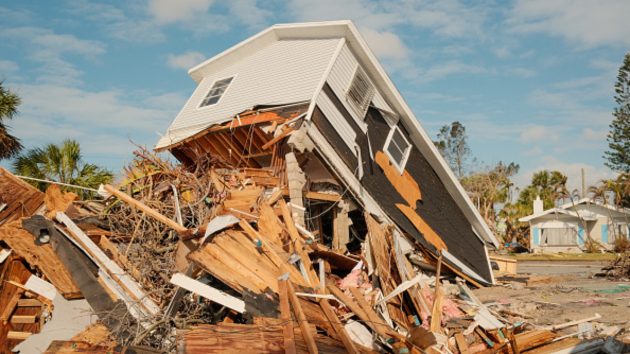
Biden to announce over $600M in Florida resiliency projects following hurricanes

Biden to announce over 0M in Florida resiliency projects following hurricanes
Biden to announce over $600M in Florida resiliency projects following hurricanes
Tristan Wheelock/Bloomberg via Getty Images

(WASHINGTON) — President Joe Biden will travel on Sunday to Florida areas ravaged by the back-to-back hurricanes, and announce federal funding for projects to strengthen the electrical grid, according to the White House.

Biden will be touring St. Petersburg, one of the hardest hit Florida cities from Hurricane Milton last week, and reveal $612 million for six Department of Energy projects in the southeast.

Two of the projects are focused in Florida and provide a combined $94M in federal funds, according to the White House.

Gainesville Regional Utilities will use the funding to help mitigate the effects of increasingly extreme weather in north central Florida, “through storm hardening, as well as faster restoration through deployment of self-healing devices and tools that will enable more efficient and precise dispatching of field teams during outages,” the White House said in a statement.

Switched Source, a private utility technology developer, will work with Florida Power and Light to deploy Phase-EQ, which “optimizes power flow in distribution circuits, will unlock over 200 MW of system capacity, and improve reliability on circuits serving communities that are most susceptible to prolonged outages,” according to the White House.

“These investments are part of the president’s commitment to making long-term investments that protect, enhance, and upgrade our nation’s electric grid, especially in the face of extreme weather events,” the White House said in a statement.

Hurricane Milton made landfall in Florida as a Category 3 storm on Wednesday evening. At least 16 people were killed in the storm and over a million remain without power.

Biden has spoken to numerous state and local officials, including Florida Gov. Ron DeSantis, who he said was “very cooperative.” When asked if he would meet with DeSantis on Sunday, Biden said yes so long as the governor was available.

Copyright © 2024, ABC Audio. All rights reserved.