
Ex-Louisville officer guilty of violating Breonna Taylor’s civil rights

Ex-Louisville officer guilty of violating Breonna Taylor’s civil rights
ftwitty/Getty Images

(LOUISVILLE, Ky.) — A jury on Friday found former Louisville police officer Brett Hankison guilty of violating Breonna Taylor’s civil rights during a fatal botched police raid, in a retrial of the federal case against him.

The guilty verdict came hours after the jury acquitted Hankison of a second count of violating the civil rights of three of Taylor’s neighbors, who lived in an adjacent apartment that was also struck by gunfire during the raid. After the partial verdict was delivered, jurors, who remained deadlocked on the count specifically related to Taylor, were instructed by the judge to continue deliberating.

The jury returned a guilty verdict on that count shortly before 9:30 p.m., according to Louisville ABC affiliate WHAS.

Family and friends of Taylor hugged each other and cheered after leaving court late Friday night.

Speaking to reporters after the verdict, Tamika Palmer, Taylor’s mother, thanked prosecutors and jurors. “They stayed the course,” Palmer said of prosecutors, who retried the case after Hankison’s first federal trial ended in a mistrial last year when the jury was unable to reach a unanimous decision after deliberating for several days.

As deliberations this time around stretched late into the evening Friday, Palmer said she began to feel defeated. “The later it got, the harder it got, and I’m just glad to be on the other side,” she said.

“Now, I just want people to continue to say Breonna Taylor’s name,” her mother said.

Taylor was fatally shot during the March 2020 raid. The three officers fired dozens of rounds after her boyfriend fired one round at them, striking one of the officers.

Hankison fired 10 rounds through Taylor’s sliding glass door and window, which were covered with blinds and curtains, prosecutors said. Several of the rounds traveled into Taylor’s neighbor’s apartment, where three people were at the time. None of the 10 rounds hit anyone.

Prosecutors argued Hankison’s use of force was unjustified, put people in danger and violated the civil rights of Taylor and her three neighbors. The indictment alleged Hankison deprived Taylor of the right to be free from unreasonable seizures and deprived her neighbors of the right to be free from the deprivation of liberty without due process of law.

Several witnesses, including Louisville’s current police chief, testified during the trial that the former officer violated Louisville police policy requiring officers to identify a target before firing, according to The Associated Press.

The defense argued during the trial that Hankison had joined a poorly planned raid and that he fired his weapon after believing someone was advancing toward the other officers, the AP reported.

The charges carry a maximum sentence of life in prison if convicted.

The plainclothes officers were serving a warrant searching for Taylor’s ex-boyfriend, who they alleged was dealing drugs, when they broke down the door to her apartment. He was not at the residence, but her current boyfriend, Kenneth Walker, thought someone was breaking into the home and fired one shot with a handgun, striking one of the officers in the leg. The three officers returned fire, shooting 32 bullets into the apartment.

The original indictment alleged Hankison had also violated Walker’s civil rights, though Walker was removed from the charge at the beginning of the retrial.

The retrial marked the third trial for Hankison, following the initial mistrial as well as a state trial in 2022, in which he was acquitted of multiple wanton endangerment charges.

Like in his previous trials, Hankison took the stand during the retrial, getting emotional at times over two days of testimony, according to WHAS, the ABC affiliate in Louisville covering the case in the courtroom.

Hankison told the jurors he was “trying to stay alive, [and] trying to keep my partners alive,” according to WHAS.

Hankison insisted “the only person my bullet could have struck was the shooter,” saying there was “zero risk” of hitting anyone outside the threat, according to WHAS.

He said that night was the first time he fired his gun in nearly 20 years of policing, according to the AP.

Hankison was fired from the Louisville Metro Police Department for violating department procedure when he “wantonly and blindly” fired into the apartment.

The two other officers involved in the raid were not charged. Kentucky Attorney General Daniel Cameron called Taylor’s death a “tragedy” but said the two officers were justified in their use of force after having been fired upon by Walker.

Copyright © 2024, ABC Audio. All rights reserved.

2 killed, several hurt in Halloween night shooting in Orlando, mayor announces local state of emergency

2 killed, several hurt in Halloween night shooting in Orlando, mayor announces local state of emergency
WFTV

(ORLANDO, Fl) — The mayor of Orlando, Florida, is cracking down in the city’s entertainment district after two people were killed and several others injured in a Halloween night shooting.

The suspect, 17-year-old Jaylen Dwayne Edgar, has been taken into custody, Orlando police said.

Officers responded to reports of shots fired just after 1 a.m. Friday, and within minutes, the officers witnessed a second shooting, police said.

One person was killed at the first scene and the second victim was killed at the second scene, police said.

Nine people, aged 18 to 39, were injured, some critically, police said.

The suspect walked by more than 10 officers just before opening fire, Orlando Police Chief Eric Smith said.

Surveillance video captured the chaos of people fleeing the scene as officers apprehended the suspect.

Edgar has been charged with two counts of first-degree murder with a firearm and six counts of attempted first-degree murder with a firearm, police said.

A motive is unknown, Smith said.

Orlando Mayor Buddy Dyer said he’s issuing a local state of emergency for establishments in the downtown entertainment area, which will ban alcohol sales after midnight and implement a curfew from 1 a.m. to 5 a.m.

“It’s unfortunate that the changes in the state concealed weapons laws [in 2023] have made it even easier for people to carry guns,” Dyer said at a news conference.

“You can legally carry a firearm unless you fall into a certain kind of category: underage, convicted felon,” Smith explained. “For most people, it allows them, without getting a concealed weapons permit, to carry a gun concealed.”

ABC News’ Jason Volack contributed to this report.

Copyright © 2024, ABC Audio. All rights reserved.
Daniel Penny trial: Opening statements begin Friday as protesters gather outside

Daniel Penny trial: Opening statements begin Friday as protesters gather outside
Spencer Platt/Getty Images

(NEW YORK) — Opening statements begin Friday in the trial of Daniel Penny, who is charged in the death of Jordan Neely, a homeless man who was acting erratically on a New York City subway car, by putting him in a fatal chokehold on May 1, 2023.

The sounds of a sidewalk protest over the death of Neely were audible in the 13th-floor courtroom ahead of opening statements. Protesters were heard calling Penny a “subway strangler.”

Judge Max Wiley said he would instruct jurors to ignore “noise outside the courthouse.”

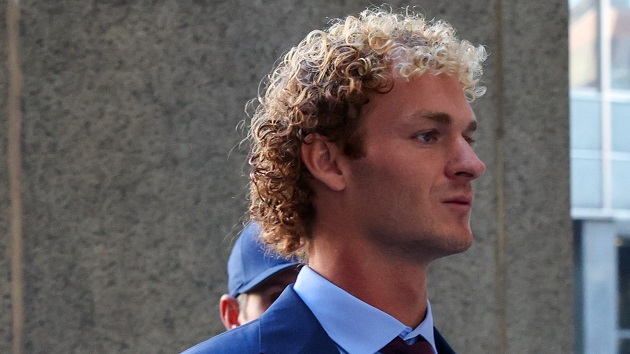
Penny, in a slate blue suit, strode confidently into the courtroom and took his seat at the defense table.

The former Marine has pleaded not guilty to charges of second-degree manslaughter and criminally negligent homicide in Neely’s death. Wiley denied Penny’s bid to dismiss his involuntary manslaughter case in January.

The jury of seven women and five men, four of whom are people of color, will be asked to do something prosecutors concede is difficult: convict someone of an unintentional crime.

To convict, prosecutors must prove Penny’s use of lethal force was unjustifiable and that Penny acted recklessly and consciously disregarded the substantial risk of putting Neely in the chokehold for so long. Prosecutors do not have to prove Penny intended to kill Neely, which defense attorneys have said Neely did not intend to do.

The trial is expected to last between four and six weeks, according to Wiley.

The case has fueled political narratives about urban crime and captivated a city in which the subway is indispensable.

What happened that day

While there is no doubt that Penny’s actions led to Neely’s death, witness accounts differ regarding the events that led up to Penny applying the fatal chokehold, according to various sources.

Many witnesses reported that Neely, 30, who was homeless at the time of his death and was known to perform as a Michael Jackson impersonator, had expressed that he was homeless, hungry and thirsty, according to prosecutors. Most of the witnesses also recounted that Neely indicated a willingness to go to jail or prison.

Some witnesses also reported that Neely threatened to hurt people on the train, while others did not report hearing those threats, according to police sources.

Additionally, some witnesses told police that Neely was yelling and harassing passengers on the train. However, others have said that while Neely had exhibited erratic behavior, he had not been threatening anyone in particular and had not become violent, according to police sources who spoke with ABC News following the incident.

According to prosecution court filings, some passengers on the train that day said they didn’t feel threatened. One said they weren’t “really worried about what was going on,” while another called it “like another day typically in New York. That’s what I’m used to seeing. I wasn’t really looking at it if I was going to be threatened or anything to that nature, but it was a little different because, you know, you don’t really hear anybody saying anything like that.”

Other passengers, however, described being fearful, according to court filings. One said they “have encountered many things, but nothing that put fear into me like that,” while another said Neely was making “half-lunge movements” and coming within a “half a foot of people.”

Neely had a documented history of mental health issues and arrests, including alleged instances of disorderly conduct, fare evasion and assault, according to police sources.

Less than 30 seconds after Penny allegedly put Neely into a chokehold, the train arrived at the Broadway-Lafayette Station, according to court records.

“Passengers who had felt fearful on account of being trapped on the train were now free to exit the train. The defendant continued holding Mr. Neely around the neck,” said prosecutor Joshua Steinglass in a court filing objecting to Penny’s dismissal request.

According to prosecutors, footage of the interaction, which began about two minutes after the incident started, captures Penny holding Neely in the chokehold for about four minutes and 57 seconds on a relatively empty train, with a couple of passengers nearby.

Prosecutors said that about three minutes and 10 seconds into the video, Neely ceases all purposeful movement.

“After that moment, Mr. Neely’s movements are best described as ‘twitching and the kind of agonal movement that you see around death,'” prosecutors said.

The case is expected to feature testimony of passengers who were aboard the subway at the time, as well as a roughly six-minute video of the choke hold.

Jury to hear eyewitness statements

Before opening statements on Friday, Wiley granted a defense request to allow some of the statements that eyewitnesses to the chokehold made to police that were captured on body-worn cameras.

One witness, a Ms. Rosario, was captured on body-worn camera 15 minutes after the incident aboard the F train.

“I can see most of that statement coming in as an excited utterance,” Wiley said.

The judge declined to allow a part of her statement in which an officer is heard asking whether she thought Neely was on drugs.

A Mr. Latimer is captured a minute later and Wiley said his statement is “well within the immediacy of the event” and could be admitted.

“This person displays emotion, excitement as he’s describing what happened. It’s narrative,” Wiley said.

Most of the passengers who were aboard the train and who witnessed the event are expected to testify at trial.

Jury will see evidence that Neely did not have a weapon

The judge also previously ruled that the jury will see evidence that shows Neely was unarmed.

Penny’s defense had sought to preclude evidence or testimony about the lack of a weapon recovered from a search of Neely’s body but in a written opinion issued Thursday, Wiley said such evidence and testimony is relevant to the case.

“The fact that Mr. Neely was unarmed provides additional relevant information to aid the jury, namely, it clarifies what could have been perceived by someone in the defendant’s position,” Wiley wrote. “The possibility that a person in the defendant’s situation could have been reasonable in mistakenly believing that Mr. Neely had been armed is appropriate for consideration by the jury and well within their capability.”

The defense worried that including evidence that Neely was unarmed could bolster sympathy for the victim but Wiley said it would help the jury decide whether Penny’s actions were justified.

Penny’s lawyers and Neely’s family speak ahead of the trial

Members of Neely’s family were seated with the spectators for opening statements Friday.

“I loved Jordan. And I want justice for Jordan Neely. I want it today. I want justice for everybody and I want justice for Jordan Neely,” his uncle, Christopher Neely, said before entering court.

Prosecutors in the Manhattan district attorney’s office are expected to concede that Neely may have seemed scary to some subway riders, but will argue Penny continued the chokehold well past the point where Neely stopped moving and posed any kind of threat.

Penny’s attorneys have said that they were “saddened at the loss of human life,” but that Penny saw “a genuine threat and took action to protect the lives of others,” arguing that Neely was “insanely threatening” to passengers aboard the subway train.

While Penny’s defense will argue that he had no intent to kill Neely, prosecutor Steinglass has noted that the second-degree manslaughter charge only requires prosecutors to prove Penny acted recklessly, not intentionally.

“We are confident that a jury, aware of Danny’s actions in putting aside his own safety to protect the lives of his fellow riders, will deliver a just verdict,” Penny’s lawyers, Steven Raiser and Thomas Kenniff, said earlier this year, after Penny’s request to dismiss the charge was denied.

“This case is simple. Someone got on a train and was screaming so someone else choked them to death,” Neely family attorney Donte Mills said in a past statement to ABC News. “Those two things do not and will never balance. There is no justification.”

“Jordan had the right to take up his own space. He was allowed to be on that train and even to scream. He did not touch anyone. He was not a visitor on that train, in New York, or in this country,” Mills added.

Copyright © 2024, ABC Audio. All rights reserved.
Mom, daughter shot dead by home intruder in New Jersey

Mom, daughter shot dead by home intruder in New Jersey
WPVI

(WILLINGBORO, N.J.) — Police are searching for the gunman who shot and killed a mother and daughter during a home invasion in New Jersey.

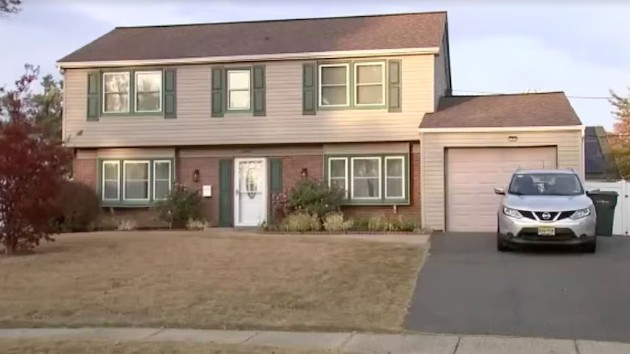
Catherine Nunez, 33, and her mother, Marisol Nunez, 54. were found dead in an upstairs bedroom of their home in Willingboro early Wednesday, the Burlington County Prosecutor’s Office said.

It appears the intruder broke a first-floor window to enter the home, prosecutors said.

No arrests have been made, prosecutors said.

Authorities said they believe the crime wasn’t random and don’t think other residents in the neighborhood are at risk.


Copyright © 2024, ABC Audio. All rights reserved.

Clubhouses offer potential solutions for those with severe mental illness

Clubhouses offer potential solutions for those with severe mental illness
ABC News

(NEW YORK) — When Jordan Neely boarded the subway on May 1, 2023, he was homeless, ranting about having nothing to eat or drink and said he was willing to die, according to authorities. Perceptions of Neely’s final moments differ, but each account tells a similar story at its core: Neely appeared to be experiencing a mental health crisis when Daniel Penny put him in the chokehold that ended his life.

Opening arguments are set to begin in Penny’s trial in Neely’s death Friday. Penny, a former Marine, was charged with second-degree manslaughter and criminally negligent homicide in Neely’s death. He has pleaded not guilty. Jury selection began Monday.

Neely’s loved ones believe his story could have been different. To experts, Neely, who was known to city mental health professionals and law enforcement officials, has become a symbol of the need to look toward effective solutions to get homeless and mentally ill people off the streets and into care.

“Our system does not prioritize the seriously mentally ill,” Carolyn Gorman, a policy analyst at the public policy think tank Manhattan Institute, told ABC News. “Almost always, the individuals who are involved in these tragedies have a known mental illness, have been cycling through homelessness, through incarceration through the health care system. They’re known to authorities, and they haven’t fallen through the cracks. They’ve actually just been ignored by all of these systems.”

New York City’s clubhouses — member-run facilities that offer support to those with serious mental health conditions — are proving that recovery and rehabilitation are possible, with some lawmakers like Rep. Ritchie Torres, D-N.Y., hoping to expand the availability and access to these institutions for more residents.

Fountain House, which touts itself as the pioneer of the modern clubhouse model, aims to put an end to the “punitive, ineffective and costly” approaches to those with mental illness, who cycle through jails, emergency rooms, shelters and the streets without proper care or support to lead healthy and happy lives, the organization said.

The goal is to give members a sense of stability and community. At the clubhouses, they get a helping hand to obtain an education, find work, achieve health goals while readily having access to clinical care, housing assistance and other supportive services.

“What we are looking to do is to help people truly recover, and so that means help them return to jobs, be neighbors, and live out in the community and to have meaningful relationships,” Ian Campbell, Fountain House’s Senior Director of Employment and Learning, told ABC News.

However, Gorman, of the Manhattan Institute, said that despite their effectiveness, clubhouses won’t be the solution for all people dealing with severe mental illnesses.

“Fountain House is definitely one model. And it’s a model that works well. But some patients just do need a higher level of oversight and intensive care than a place like the clubhouse model can provide. And that is inpatient treatment,” or hospitalization, said Gorman.

Clubhouses set an example for mental health care

What makes the clubhouse model so successful, Campbell said, is that they fill gaps not filled in a clinical setting. They support members with both economic barriers as well as the loneliness or isolation that patients are likely to also be experiencing.

“The U.S. has historically spent most of its mental health care dollars on clinical treatment, such as medication and therapy, with a fraction allocated to fund the community-based social supports people also need to manage their mental illness,” read a Fountain House report.

About 15% of people with severe mental illness successfully return to work, according to the National Alliance on Mental Illness — but at Fountain House, 25 to 30% of their active membership has returned to work.

A New York University study on Fountain House found that its services save Medicaid costs by up to 21% by reducing hospitalizations and ER visits as well as increasing primary care visits, increased outpatient mental health visits, and increased pharmacy visits – “essentially a better adherence to other forms of treatment that can further support members’ recovery,” Fountain House said in a statement.

Researchers at Fountain House also found that the roughly 60,000 people clubhouses nationwide serve each year yield an estimated savings of over $11,000 per person — or at least $682 million total each year.

Fountain House also touts that members who enroll in degree or certificate-seeking educational programs have a 90% average semester completion rate.

For Torres, mental health care is personal.

“About 15 years ago, I found myself at the lowest point in my life. I had dropped out of college. I found myself struggling with depression. I even attempted suicide and underwent hospitalization for a period of time,” Torres told ABC News. “I felt as if the world around me had collapsed, and I never thought seven years later, I would become the youngest elected official in America’s largest city, and then seven years later, become a member of the United States Congress.”

He has called for more federal funding for community-based programs like Fountain House.

“The challenge of mental illness is often compounded by the problem of loneliness, and clubhouses represent the creation of a community,” he said. “It is an elegant solution to the problem of loneliness. It provides community where none exists. It fills the human gap that’s often left by isolation, and so I would love to see the proliferation of clubhouses across the country.”

And for those who may need more assistance than an outpatient resource can offer, Gorman believes the focus should be on the rehabilitative efforts, not punitive ones.

“Involuntary treatment and inpatient treatment are last resorts, they are only tried when everything else fails,” Gorman said. “I think if we do not consider those options, then we have to be ready to admit that we already are institutionalizing the mentally ill, but in jails and prisons. These are punitive settings, not therapeutic settings. So it’s hard to see how this is more humane.”

A clubhouse success story

Carmen Murray-Williams, now 65, had been homeless on-and-off since she was 14, when she left her home amid a “rough” and “uncomfortable” living situation with her family.

“There were times where I couldn’t find any help. I was so tired that I would get a cardboard box, flatten it down on the ground wherever I was, and sleep there. And once or twice, I woke up, and I found myself buried in snow,” Murray-Williams told ABC News. “I said, I really have to get out of the situation. And I kept knocking on doors … I prayed all the time. I mean, every chance I got, I prayed.”

She said she lived on the streets until she was about 17, when her grandmother found her, took her in, and convinced her to continue her education. She got her GED and was excited to start college, but her grandmother’s death left her both heartbroken and homeless once more.

“She’s my everything,” Murray-Williams said. “She got me to believe that life keeps going on and you don’t have to worry about your age and whatnot. Just keep on trying. I love my grandmother. I miss her.”

Life continued to present challenges for Murray-Williams, who had lost contact with the rest of her family. She recalls her past addiction to crack cocaine, an accidental fall from an apartment balcony that broke her back, and a boyfriend who opened credit cards from a joint bank account, putting her thousands of dollars in debt.

And one day, she said, “I absolutely lost my mind. I just started screaming and hollering or turn up things” and the police were called on her. She was diagnosed with bipolar disorder at the age of 42 following the outbursts.

After receiving inpatient treatment for her disorder, she was accepted as a member of Fountain House to get her back on her feet.

Fountain House members like Murray-Williams have access to supportive resources — including meals, job training, education, and housing assistance — while developing social supports to build relationships and reintegrate into their community.

“We’ll have a morning meeting and we decide who does what chores. After that, we start doing the chores that they give us. Chores could be putting data entry into the computer or could be cleaning up the front of the clubhouse,” Murray-Williams said. Clubhouse members help the organization function; they prepare meals, man the phones, and fundraise.

“If you’re in the horticulture unit, which is now ‘home and garden,’ you do the gardens. And we do a lot here. I go to the gym and wellness unit twice a week,” she said.

Murray-Williams has a jam-packed schedule, which includes running the Bingo gathering multiple times a week — “my favorite days of the week” — and helps lead a dance exercise group.

“Getting to 65 and still being here? I didn’t think I was gonna make it to 65,” Murray-Williams said. “But I’m just grateful for every day and every opportunity that I get.”

Copyright © 2024, ABC Audio. All rights reserved.

At least 2 killed, 6 injured in Orlando Halloween night shooting

At least 2 killed, 6 injured in Orlando Halloween night shooting
kali9/Getty Images

(ORLANDO, Fla.) — At least two people are dead and six others have been injured in a Halloween night shooting in downtown Orlando, police said.

Police in Orlando, Florida, first received reports of a shooting at around 1 a.m. and immediately responded to the scene, the Orland Police said in an early morning press conference on Friday morning.

Authorities confirmed that at least two people were killed and six others have been injured in the shooting and that a 17-year-old suspect was taken into custody.

The victims were taken to hospital and range in age from 19 to 39, according to the Orlando Police Department.

Authorities also said there were approximately 100 officers working the downtown area at the time of the shooting.

This is a developing story. Please check back for updates.

Copyright © 2024, ABC Audio. All rights reserved.

DNA on beer can helped lead to suspect in brutal campsite killing: Sheriff

DNA on beer can helped lead to suspect in brutal campsite killing: Sheriff
Gallatin County Sheriff’s Office in Bozeman, Montana. Via Google Maps Street View

(BIG SKY, Mont.) — A Montana man has been charged in the killing of a fellow camper that was so brutal it was initially reported by a 911 caller as a possible bear attack.

Daren Christopher Abbey, 41, of Basin, Montana, has been charged with deliberate homicide in the killing of Dustin Kjersem, authorities announced at a news conference Thursday evening.

Gallatin County Sheriff Dan Springer said Abbey confessed to the killing after investigators zeroed in on him based on DNA collected from a beer can inside the slain man’s tent.

The sheriff said it does not appear the two men knew each other and that they met in a “chance encounter” as Abbey searched for a campsite.

“There does not appear to be any connection between our victim and our suspect,” Springer told reporters Thursday.

Kjersem’s body was found dead in a tent on Oct. 12 in a fairly remote camping area in the Moose Creek area.

The sheriff said Kjersem arrived in the Moose Creek area on Oct. 10 for a camping trip and had set up a wall tent, complete with a wood stove, beds and lamps.

That same night, Abbey was also in the area looking for a place to camp and noticed Kjersem had already taken the campsite, the sheriff said.

Abbey told investigators Kjersem “welcomed him to the campsite” and offered him a beer, the sheriff said.

Then at some point Abbey hit Kjersem with a piece of wood, stabbed him in the neck with a screwdriver and then hit him with an ax, the sheriff said.

The motive for the attack is still unknown, the sheriff said.

“We have a bit of his story, but … we don’t really know what the true story is,” Springer said.

The sheriff said Abbey later returned to the crime scene to remove items from the campsite that he believed might have evidence to tie him to the killing, including a cooler, firearms and the ax.

Kjersem was last heard from on Oct. 10 as he was leaving to go camping for the weekend. He had plans to pick up his girlfriend on the following day and take her out to the campsite, the sheriff said. When he didn’t show, she grew concerned and went with a friend to the campsite and found his body inside his tent.

The initial 911 call reported it as a possible bear attack.

When investigators responded to the scene of the crime, a Montana Fish, Wildlife and Parks agent with expertise in bear attacks did not find any signs of bear activity at the scene, prompting investigators to treat the incident as a homicide, according to the sheriff’s office.

An autopsy determined multiple wounds led to his death. Kjersem’s injuries included “significant damage” to his skull, Springer previously said.

Abbey’s DNA was identified on the beer can by analysts with the Montana State Crime Lab on Oct. 25, authorities said. Abbey was located in the Butte area. He was initially arrested on Oct. 26 on a probation violation.

Copyright © 2024, ABC Audio. All rights reserved.

Free Election Day childcare is being offered in some states for parents to vote

Free Election Day childcare is being offered in some states for parents to vote
Kena Betancur/AFP via Getty Images

(NEW YORK) — With Election Day around the corner, American parents may be considering paying for childcare to ease the voting process. But in some states, heading to the polls while your child is being cared for can be free of charge.

In swing state North Carolina, 11-time Olympic track and field medalist Allyson Felix paired up with the nonprofit Chamber of Mothers to offer up to two hours of paid child care through Politisit.

In Western North Carolina, which was devastated by the impacts of Hurricane Helene, Politsit is offering parents reimbursement for up to a full day’s worth of childcare.

“You should never have to choose between your profession, your passions, and motherhood,” Felix said in a statement. “I’m honored to partner with Chamber of Mothers to tell moms that this election, you don’t have to choose between voting and motherhood. This election, you can do both.”

A Knight Foundation study released in 2020, which surveyed 12,000 non-voters, found that more than 60% of the most disconnected non-voters are women, and within that figure, many were single women with children.

For reimbursement, eligible parents can fill out this Politsit form and indicate how much the childcare will cost.

In California, the company Bumo, which offers education-based child care for children six months to six years of age, has donated $20,000 in free childcare services that are being offered in Los Angeles and San Francisco on Election Day.

Similarly, Los Angeles-based child care center Brella is offering up to a full day of free child care for kids three months to six years of age.

New York-based Vivvi child care centers are offering caregivers in New York City and Westchester who are headed to the polls a full day of free services.

Politisit and partner organizations are also offering free care opportunities in California, Houston, Texas, Chicago, Illinois, New York City and Brooklyn, Pennsylvania, New Jersey, Maryland, North Carolina, Georgia and Alabama.

“Childcare is expensive and shouldn’t be a barrier to voting,” the organization said on its website, adding, “We believe that parents shouldn’t have to choose between voting and care for their children.”

Copyright © 2024, ABC Audio. All rights reserved.

Arrest made in alleged murder of female soldier on Army base

Arrest made in alleged murder of female soldier on Army base
U.S. Army Fort Leonard Wood/Facebook

(FORT LEONARD WOOD, Mo.) — An Army specialist has been charged with the murder of a fellow soldier whose body was found on an Army base last week.

Spc. Wooster Rancy, 21, is accused in the murder of Sarah Roque, a 23-year-old sergeant, officials said Thursday.

Last week, Roque was found dead in a dumpster at Fort Leonard Wood in Missouri.

Rancy also faces obstruction of justice charges, officials said. He is currently in pretrial confinement ahead of a preliminary hearing.

A combat engineer, Rancy is originally from Miami and joined the Army in 2022, officials said.

It is not yet clear what led to Rancy’s arrest or the motive in the killing.

Roque, of Ligonier, Indiana, was reported missing after she failed to report for duty last week.

In a press conference after her body was found, Maj. Gen. Christopher Beck said her death was being investigated as a homicide.

“As a commander and a leader, this is a tragedy,” Beck said. “This is something that we never want to happen, we never want for the family to have to endure, or for the unit to have to endure.”

Roque served as a mine dog handler, officials said. Since she enlisted in 2020, she was awarded the Army Commendation Medal, National Defense Service Medal, Good Conduct Medal and the Army Service Ribbon.

“Sarah not only served our country bravely and honorably as a soldier, she was also a daughter, a sister and a friend to many,” Beck said.

Copyright © 2024, ABC Audio. All rights reserved.

‘I did it’: Delphi murder suspect’s alleged phone confessions to wife played in court

‘I did it’: Delphi murder suspect’s alleged phone confessions to wife played in court
Lindsey Jacobson/ABC News, FILE

(Delphi, IND.) — Delphi, Indiana, murder suspect Richard Allen allegedly confessed to the crime in multiple jail phone calls to his wife, which were played for the jury on Thursday.

In one call, Allen told his wife, Kathy, “I did it. I killed Abby and Libby.”

“No, you didn’t,” she said. Allen replied, “Yes, I did.”

“Why would you say that?” Kathy said. “I know you didn’t. There’s something wrong.”

In another call, Allen told his wife, “I think maybe I’ve lost my mind. … I need you to know I did this.”

She replied, “No, you haven’t. You’re unwell.”

Allen is accused of killing Libby German, 14, and Abby Williams 13, on a hiking trail in February 2017. He’s pleaded not guilty to murder.

In a separate call, Allen said to his wife, “If I get the electric chair or the death penalty, will you be there for me? I killed Abby and Libby.”

In another call, Allen said, “I did it, Kathy. I did it. Do you still love me?”

She replied, “Yes, I do. But you didn’t do it.”

“I don’t want to upset you. I’m sorry,” Allen told his wife. “I don’t know what I’m doing. I don’t know if I’ve lost my mind.”

“I feel like I’m already in hell,” he told her later in the call. “I don’t understand what’s going on.”

Allen also allegedly confessed to corrections officers and a prison psychologist, according to their testimonies. But Allen’s mental state while in custody has come into question.

A psychologist testified this week that Allen could be classified as having serious mental illness. Allen was in solitary confinement for 13 months, which she said can be detrimental to a person’s mental health.

The psychologist said she believed Allen suffered from “situational psychosis” in jail. She said Allen would have episodes of psychosis and then it would go into remission.

Allen’s strange behavior in custody included hitting his head on the wall, washing his face in the toilet, refusing food, eating paper, smearing feces in his cell and putting feces on his face for two hours, according to testimony from corrections officers.

On the day of the murders, Libby and Abby saw a man behind them on the bridge, and Libby started recording on her phone, prosecutors said. The man — known as “bridge guy,” from the video of his voice released to the public — pulled out a gun and ordered the girls to go “down the hill,” prosecutors said.

Indiana State Police trooper Brian Harshman, who said he listened to 700 of Allen’s calls and monitored his texts and video chats, testified Thursday that after listening to the calls, he believes Allen is the voice on Libby’s “bridge guy” video.

The psychologist testified that Allen told her he ordered the girls “down the hill” and intended to rape them, but then he saw something — either a person or a van — and was startled.

Harshman told the jurors he believed Allen was startled by a van belonging to resident Brad Weber. Weber, who lives near the crime scene, owns a 2000 Ford Econoline van. Harshman said the time it would’ve taken Weber to drive home from work fits with the timing of the murders.

Defense attorney Brad Rozzi said police never investigated how many vans were registered in the county at the time of the murders. Rozzi also noted that numerous people were suspected of being the man in the “bridge guy” video, including Weber.

Copyright © 2024, ABC Audio. All rights reserved.