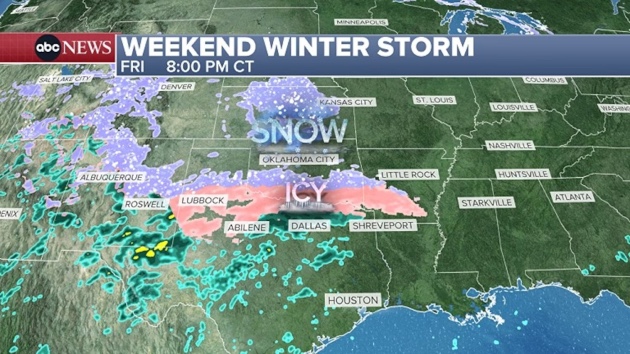
(NEW YORK) — More than 120 million people are on alert for a brutal storm that’s going to bring dangerous ice and snow to the South, bitter cold to the Midwest, and a massive snowfall to the Northeast.
South
The storm moves into the South on Friday afternoon. By the evening, Dallas will see a wintry mix and Oklahoma and Kansas will get some snow.
On Saturday morning, the temperature is forecast to fall to 27 degrees in Dallas; 8 degrees in Oklahoma City; 14 degrees in Little Rock, Arkansas; and 19 degrees in Nashville, Tennessee.
As temperatures drop on Saturday, extremely dangerous snow and ice will move in from Dallas to Little Rock to Memphis, Tennessee.
Residents should be prepared for dangerous travel conditions and widespread power outages, which could leave people without electricity or heat.
The lack of heat will be very dangerous in several major cities — including Dallas, Little Rock and Memphis — where the bitter cold is expected to continue well after the storm passes.
Texas Gov. Greg Abbott said he was activating state emergency response resources, saying the freezing rain, sleet and snow “could create hazardous travel conditions into the weekend and cause impacts to infrastructure.”
By Saturday afternoon, the snow and ice could stretch as far east as Georgia and the Carolinas.
The governors of Georgia, North Carolina and South Carolina have declared states of emergency.
Midwest
This unforgiving arctic blast will strike the Midwest late Thursday into Friday, bringing extremely dangerous temperatures.
On Friday morning, the wind chill — what temperature it feels like — is forecast to plunge to minus 39 degrees in Minneapolis, minus 32 in Chicago and minus 39 in Madison and Green Bay, Wisconsin. In these conditions, frostbite can develop in just 10 minutes.
Northeast
The brutal cold will strike the Northeast on Friday night, with below-freezing temperatures expected for New York City and Philadelphia.
Then on Sunday, the storm will hit the Northeast, bringing likely plowable snow from Washington, D.C., to New York City to Boston.
The snow totals are not yet clear, but by the Monday morning commute, 6 to 12 inches is possible in some areas.
Airline travel alerts
Many airlines are issuing travel alerts and waiving rebooking fees ahead of the storm.
American Airlines and Delta Air Lines have waived rebooking fees, allowing passengers to rebook their flights at no additional cost.
United has issued travel waivers for cities expected to be affected, allowing those who bought tickets on or before Tuesday to rebook without a fee if their travel is affected.
Southwest said it’s monitoring the weather and will issue any advisories or make any changes as needed.
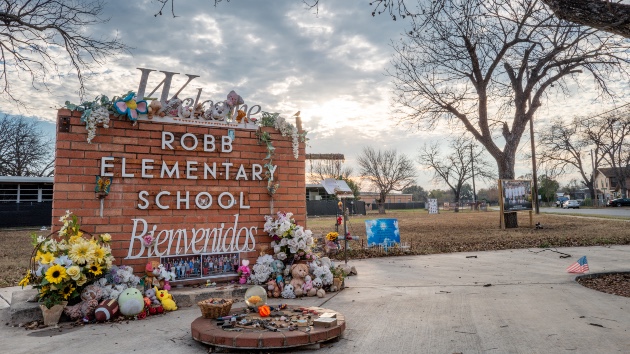
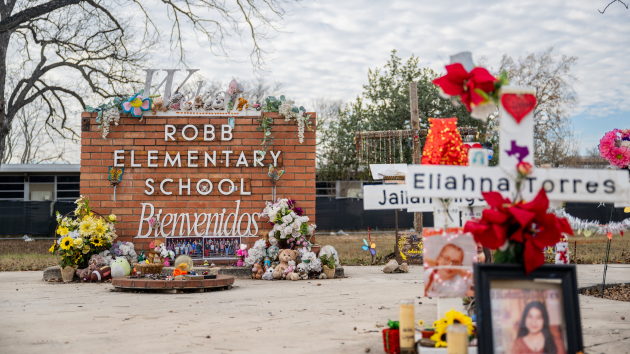
A memorial dedicated to the 19 children and two adults murdered on May 24,2022 during a mass shooting at Robb Elementary School is seen on January 05, 2026 in Uvalde, Texas. (Photo by Brandon Bell/Getty Images)
(UVALDE, Texas) — Javier Cazares, whose 9-year-old daughter Jackie was killed in the Uvalde, Texas, mass shooting, said he feels failed again after a jury on Wednesday night acquitted former school district police officer Adrian Gonzales on all 29 counts of child endangerment.
“We had a little hope, but it wasn’t enough,” Cazares said outside court. “Again, we are failed. I don’t even know what to say.”
Prosecutors had alleged Gonzales did not follow his training and endangered the 19 students who died and an additional 10 students who survived the May 24, 2022, Robb Elementary School mass shooting. Gonzales’ lawyers argued he was unfairly blamed for a broader law-enforcement failure that day.
Cazares said he was hopeful that the jury might have reached a different conclusion, but “prepared for the worst.”
“I need to keep composed for my daughter. It has been an emotional rollercoaster since day one. I am pissed,” he said.
Jackie’s uncle, Jesse Rizo, told reporters he was concerned about the message the verdict might send to police officers who respond to future mass shootings.
“I respect the jury’s decision, but what message does it send?” he said. “If you’re an officer, you can simply stand by, stand down, stand idle, and not do anything and wait for everybody to be executed, killed, slaughtered, massacred.”
Jackie’s aunt, Julissa Rizo, pushed back on the defense narrative that Gonzales responded as best he could, telling ABC News, “That’s not true.”
“There were two monsters on May 24. One was the shooter, and the other one was the one that never went in, that could have avoided this,” she said.
Defense attorney Jason Goss told reporters that he believes the acquittal clears Gonzales’ name.
“The evidence showed that not only did he not fail, but he put himself in great danger,” Goss said.
Gonzales told ABC News he plans on “picking up the pieces and moving forward.”
Defense attorney Nico LaHood said he will continue to pray for the victims’ families.
“We understand that their separation from their loved one is going to be felt as long as they walk on this earth, and we don’t ignore that. We acknowledge that,” he said. “We’re just going to continue to pray for them.”
Cazares said he will attend the trial of the other officer charged, former Uvalde Schools Police Chief Pete Arredondo.
Arredondo, who was the on-site commander on the day of the Robb Elementary shooting, is also charged with endangerment or abandonment of a child and has pleaded not guilty. His case has been delayed indefinitely by an ongoing federal lawsuit filed after the U.S. Border Patrol refused repeated efforts by Uvalde prosecutors to interview Border Patrol agents who responded to the shooting, including two who were in the tactical unit responsible for killing the gunman at the school.
ABC News’ John Quiñones and Emily Shapiro contributed to this report.
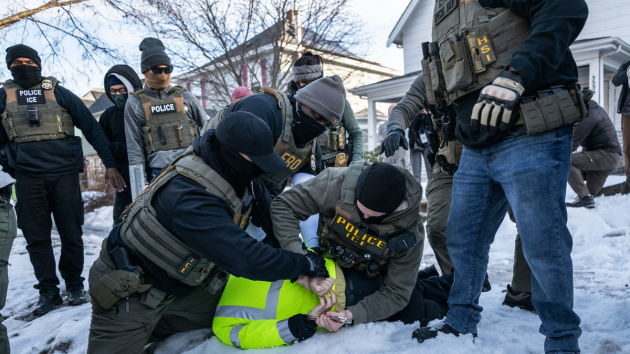
Federal law enforcement agents detain a demonstrator during a raid in south Minneapolis, Minnesota, US, on Tuesday, Jan. 13, 2026. Minnesota officials are suing over the unprecedented surge of US immigration authorities in the state, taking the Trump administration to court days after a federal agent shot and killed a Minneapolis woman. (Victor J. Blue/Bloomberg via Getty Images)
(NEW YORK) — A U.S. Immigration and Customs Enforcement (ICE) memo issued in May authorizes agents to enter the homes of those suspected of being in the U.S. illegally with an administrative warrant — not a warrant signed by a judge — in order to make immigration arrests, according to a whistleblower group, which says it has shared the “secretive” memo with Congress.
Traditionally, ICE agents have needed a warrant signed by a judge in order to enter the home of someone suspected of being in the U.S. illegally. However, the guidance allegedly given by ICE in May suggests they can rely on administrative warrants, which are authored by officials within the Department of Homeland Security — and in most cases by ICE agents.
“Although the U.S. Department of Homeland Security has not historically relied on administrative warrants alone to arrest aliens subject to final orders of removal in their place of residence, the DHS Office of General Counsel has recently determined that the U.S. Constitution, the Immigration and Nationality Act, and the immigration regulations do not prohibit relying on administrative warrants for this purpose,” the May 12, 2025, memo signed by Acting ICE Director Todd Lyons stated, according to the anonymous whistleblower complaint, which included a copy of the memo.
The group Whistleblower Aid says it represents two anonymous U.S. government officials. The whistleblower group argues the ICE memo violates the Fourth Amendment and DHS’ own policy manual.
Typically, ICE arrests have been limited to public places because the administrative warrants, known as Form I-205, have not been considered a warrant issued by a “neutral and detached magistrate,” the whistleblower group said in its complaint to Congress.
“Only a warrant issued by a ‘neutral and detached magistrate’ would authorize ICE Agents to enter or search nonpublic areas such as an alien’s residence,” the group said.
“Upon information and belief, and consistent with the May 12 Memo, instructors for new ICE recruits are directed to teach that Form I-205 allows ICE agents to arrest aliens in their home – without consent to enter the residence and without judicial warrant,” the whistleblower complaint stated.
In a statement, DHS Assistant Secretary for Public Affairs Tricia McLaughlin said: “Every illegal alien who DHS serves administrative warrants/I-205s have had full due process and a final order of removal from an immigration judge. The officers issuing these administrative warrants also have found probable cause. For decades, the Supreme Court and Congress have recognized the propriety of administrative warrants in cases of immigration enforcement.”
At least one Democratic senator is already calling for an investigation.
“Every American should be terrified by this secret ICE policy authorizing its agents to kick down your door and storm into your home,” Sen. Richard Blumental, D-Conn., said in a statement. “It is a legally and morally abhorrent policy that exemplifies the kinds of dangerous, disgraceful abuses America is seeing in real time. In our democracy, with vanishingly rare exceptions, the government is barred from breaking into your home without a judge giving a green light.”
According to the whistleblower complaint, the May ICE memo provides this guidance to agents for using administrative warrants to enter homes: “Prior to entering a residence to conduct an administrative immigration arrest pursuant to form I-205, officers and agents must ensure the Form I-205 is properly completed and is supported by a final order of removal issued by an immigration judge, the BIA, a U.S. district court or a magistrate judge. This is essential because it establishes probable cause. Officers and agents must also have reason to believe that the subject alien resides at and is currently located at the address where the Form I-205 is to be served.”
The memo says agents must “knock and announce” and state their purpose and if they are refused admittance, they are authorized to use “only a necessary and reasonable amount of force to enter the alien’s residence.”
The memo, according to the disclosure, was tightly held at DHS.
“The May 12 Memo has been provided to select DHS officials who are then directed to verbally brief the new policy for action,” the complaint states. “Those supervisors then show the Memo to some employees, like our clients, and direct them to read the Memo and return it to the supervisor.”
The agents are verbally given this training, but not in writing, the complaint said.
Rosanna Berardi, an immigration attorney, said the ICE memo “represents a fundamental Fourth Amendment challenge and another chapter of the Trump Administration ignoring long-established legal precedence and acting like the legislative branch.”
She said the way the policy is being implemented is also concerning.
“Reports indicate it’s being rolled out through verbal instructions that contradict written training materials, creating a dangerous accountability vacuum,” Berardi told ABC News in an email.
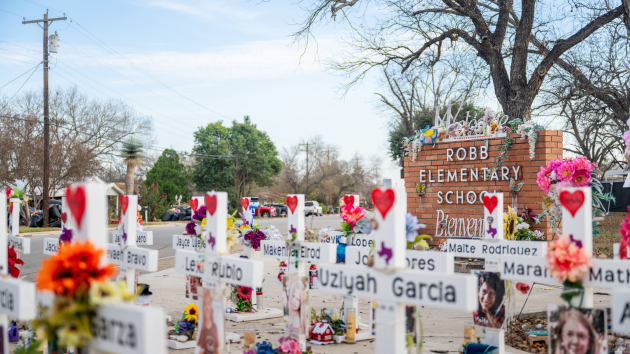
A memorial dedicated to the 19 children and two adults murdered on May 24,2022 during a mass shooting at Robb Elementary School is seen on January 05, 2026 in Uvalde, Texas. (Brandon Bell/Getty Images)
(UVALDE, Texas) — A jury has acquitted former Uvalde, Texas, school police officer Adrian Gonzales for his response to the Robb Elementary shooting in May 2022.
After more than seven hours of deliberations, the jury returned a not guilty verdict Wednesday evening on all 29 counts of child endangerment.
As the verdict was read, Gonzalez bowed his head as he heard it. Several of those sitting in the gallery started crying. He hugged his lawyers, shook hands and appeared to be tearing up.
Gonzales was among the first officers to respond to the mass shooting, in which 19 students and two teachers were killed. It took 77 minutes before law enforcement mounted a counterassault to end the rampage.
Prosecutors alleged Gonzales did not follow his training and endangered the 19 students who died and an additional 10 surviving students.
Lawyers for Gonzales, who pleaded not guilty, argued he was unfairly blamed for a broader law-enforcement failure that day.
Ex-officer: Focused on ‘picking up the pieces’ When he walked out of the courtroom on Wednesday night after the jury acquitted him, Gonzales was a man of few words.
“I want to start by thanking God for this — my family, my wife and these guys — he put them in my path,” he told reporters, referring to his lawyers. “Thank you for the jury, for considering all the evidence.”
When ABC News’ John Quiñones asked him, “What does moving on look like to you?” he answered succinctly.
“Picking up the pieces and moving forward,” Gonzales said.
Asked about the frustration of some of the families of victims about the verdict, defense attorney Nico LaHood said he’s “sorry that they feel that way” and vowed to pray for them.
“We pray for them. We’re sorry that they feel that way. We understand that their separation from their loved one is going to be felt as long as they walk on this earth, and we don’t, we don’t ignore that. We acknowledge that we’re just going to continue to pray for them. So I’m very sorry that they feel that way,” he said.
According to LaHood — who said he spoke with some of the jurors after the verdict — the jury was saddened by the trial but couldn’t see through some gaps in the prosecution’s case.
“They were very mindful and deliberate,” LaHood said. “Obviously, they were saddened, because they know what the other families are mourning still, but they said there were a lot of gaps in the evidence, and some of it didn’t make sense.”
Jason Goss, another attorney for Gonzales, told reporters that he believes the verdict clears his client’s name.
“The evidence showed that not only did he not fail, but he put himself in great danger,” Goss said. “So, you can imagine how somebody who has had the entire country look at him as somebody who was not willing to do his duty. He is a proud man who does do his duty. And he went in there. When it was time for him to go, he went in there.”
Families of the victims react
For Jacinto Cazares — whose 9-year-old daughter Jackie died in the shooting — the verdict was yet another instance of the legal system failing to deliver justice after one of the worst mass shootings in US history.
“We had a little hope, but it wasn’t enough,” he said outside the court. “Again, we are failed. I don’t even know what to say.”
Cazares said he was hopeful that the jury might have reached a different conclusion but “prepared for the worst.”
“I need to keep composed for my daughter. It has been an emotional roller coaster since day one. I am pissed,” he said.
Jesse Rizo, Jackie’s uncle, told reporters he was concerned about the message the verdict might send to police officers who respond to future mass shootings.
“I respect the jury’s decision, but what message does it send?” he said. “If you’re an officer, you can simply stand by, stand down, stand idle, and not do anything and wait for everybody to be executed, killed, slaughtered, massacred.”
When asked about the defense case by ABC’s John Quiñones, Jackie’s aunt Julissa Rizo pushed back on the defense narrative that Gonzales acted heroically that day.
“The defense said he did as much as he could,” Quiñones said.
“That’s not true,” she responded. “There were two monsters on May 24. One was the shooter, and the other one was the one that never went in, that could have avoided this.”
How the trial unfolded Each of the 29 counts Gonzales faced carried a maximum penalty of two years in prison, and h. could have spent the rest of his life in prison if he was convicted.
Prosecutors claimed Gonzales had a unique opportunity to stop the carnage when he arrived and learned gunman Salvador Ramos’ location from a teaching aide. The aide testified that she repeatedly urged Gonzales to intervene, but said the officer did “nothing” in those crucial moments. Prosecutors also argued Gonzales failed to act once he got inside the school.
Before jurors were sent to deliberate, District Attorney Christina Mitchell gave an impassioned plea, saying, “I know this case is difficult, and it has been difficult. But we cannot continue to let children die in vain.”
The defense argued that Gonzales did everything he could in that moment — including gathering critical information, evacuating children and entering the school — and said Gonzales acted on the information he had. The defense also highlighted that other officers arrived in the same timeframe as Gonzales and that at least one officer had an opportunity to shoot the gunman before he entered the school.
This case marks the second time in U.S. history that prosecutors have sought to hold a member of law enforcement criminally accountable for their response to a mass shooting.
In 2023, a Florida jury acquitted Scot Peterson, a former Broward County sheriff’s deputy, who was charged with child neglect and culpable negligence for his alleged inaction during the 2018 shooting at Marjory Stoneman Douglas High School in Parkland, Florida. Peterson’s lawyers argued his role as an armed school resource officer did not amount to a caregiving post needed to prove child neglect in Florida, and that the response to the shooting was muddled by poor communication.
Former Uvalde Schools Police Chief Pete Arredondo — who was the on-site commander on the day of the Robb Elementary shooting — is also charged with endangerment or abandonment of a child and has pleaded not guilty. Arredondo’s case has been delayed indefinitely by an ongoing federal lawsuit filed after the U.S. Border Patrol refused repeated efforts by Uvalde prosecutors to interview Border Patrol agents who responded to the shooting, including two who were in the tactical unit responsible for killing the gunman at the school.
“What happened to Uvalde on May 24 can happen anywhere, at any time,” she said. “If it’s going to happen, and if we have laws mandating what the responsibility of a law enforcement peace officer is for a school district, then we better be ready to back it up.”
Terry Rozier #2 of the Miami Heat in action against the Boston Celtics during the second half at Kaseya Center on February 10, 2025, in Miami, Florida. (Carmen Mandato/Getty Images)
(BROOKLYN) — A federal judge in Brooklyn handed down a two-year prison sentence Wednesday to a gambler who prosecutors say defrauded sports betting platforms by using non-public information to place highly profitable wagers tied to the performance of NBA players allegedly in on the scheme.
Timothy McCormack is the first defendant to be sentenced for his role in a sweeping conspiracy allegedly involving former NBA players Terry Rozier and Jontay Porter that McCormack blamed on a gambling addiction.
“I’ve struggled with a gambling addiction for more than half my life,” McCormack said.
Judge LaShann DeArcy Hall expressed some sympathy. “He has an addiction,” she said. “I don’t believe the conduct Mr. McCormack engaged in defines him.”
The judge also agreed with federal prosecutors that McCormack undermined the integrity in sports.
“There is no question this is a serious crime,” DeArcy Hall said. “Sports matters to me as an individual, as it should to society.”
The sentence fell below the four-year sentence the government sought.
A federal prosecutor conceded McCormack was “not as culpable as some of his co-conspirators” but said he contributed to a “cold, hard fraud.”
“Without people like the defendant, these schemes can’t work,” the prosecutor, David Berman, told the judge.
Defense attorney Jeffrey Chartier pushed for a sentence without prison time.
“He was a degenerate gambler,” Chartier said. “It’s one of the ones you could make a movie about.”
Chartier said the betting platforms are “thriving” off of people like his client and told reporters there is “absolutely” some irony in the fact those betting platforms are considered victims in the case.
Porter, a former Toronto Raptor player, pleaded guilty in 2024 to a single count of wire fraud conspiracy in connection with a gambling scheme. He was banned for life from the league and is awaiting sentencing.
Former Miami Heat star Rozier faces federal charges of wire fraud and money laundering. He has pleaded not guilty.
McCormack must report to prison April 20. He then must serve a year of supervised release during which time the judge said he is prohibited from gambling. The judge omitted a secondary prohibition on traveling to a casino, finding it unnecessary.
“Gambling is available on anybody’s phone,” DeArcy Hall said.
An NBA memo from October obtained by ABC News said, “With sports betting now occupying such a significant part of the current sports landscape, every effort must be made to ensure that players, coaches, and other NBA personnel are fully aware of the dire risks that gambling can impose upon their careers and livelihoods; that our injury disclosure rules are appropriate; and that players are protected from harassment from bettors.”
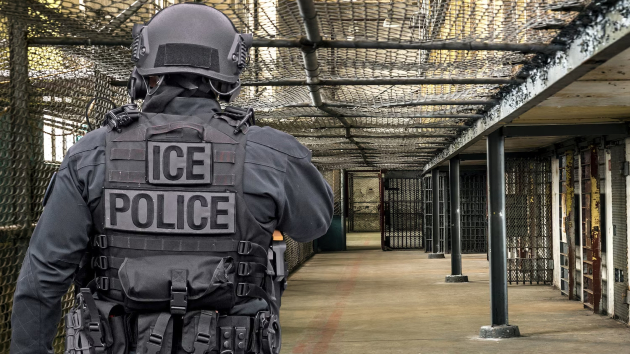
ICE Police and Immigration & Deportation (Douglas Rissing/Getty Images)
(NEW YORK) — The Department of Homeland Security has now picked another state on which to focus its immigration enforcement action: Maine.
On Wednesday, DHS launched “Operation Catch of the Day” — an operation targeting criminal illegal migrants in the state, according to a DHS spokesperson.
This is a developing story. Please check back for updates.
A memorial dedicated to the 19 children and two adults murdered on May 24, 2022 during a mass shooting at Robb Elementary School is seen on January 06, 2026 in Uvalde, Texas. (Brandon Bell/Getty Images)
(CORPUS CHRISTI, Texas) — Deliberations are underway in the trial of former Uvalde schools police officer Adrian Gonzales on Wednesday after prosecutors and defense lawyers delivered their closing arguments.
Before jurors were sent to deliberate, District Attorney Christina Mitchell gave an impassioned plea, saying, “I know this case is difficult, and it has been difficult. But we cannot continue to let children die in vain.”
“What happened to Uvalde on May 24 can happen anywhere, at any time,” she said. “If it’s going to happen, and if we have laws mandating what the responsibility of a law enforcement peace officer is for a school district, then we better be ready to back it up.”
At issue is whether Gonzales — one of the first officers to arrive at Robb Elementary on May 24, 2022 — ignored his training and endangered dozens of students when he responded to the shooting, which became one of the worst mass shootings in U.S. history.
Nineteen students and two teachers died, with police officers waiting 77 minutes to confront the gunman. While the shooting response has been the subject of hearings and investigations, the case against Gonzales marks the first criminal trial related to the shooting and the delayed police response.
Prosecution’s closing argument
The jury has an opportunity to “set the bar” for how officers should respond to school shootings, prosecutor Bill Turner said on Wednesday.
“If it’s appropriate to stand outside hearing [hundreds of] shots while children are being slaughtered, that is your decision to tell the state of Texas,” Turner said.
While teachers and students were sheltering in their classrooms — doing exactly what their training taught them to do in an active shooter scenario — the police officer trained to help them failed to act, Turner said. Turner argued that each gunshot fired at Robb Elementary was “notice to Adrian Gonzalez to advance toward the gunfire,” but he failed to follow his training and act in the crucial first minutes of the shooting.
“If you have a duty to act, you can’t stand by while the child is in imminent danger,” Turner said.
Turner pointed jurors to the testimony of teaching aide Melodye Flores, a key prosecution witness who said she pleaded with Gonzales to intervene. Turner argued that the warning from Flores and the clear sound of gunfire should have triggered Gonzales to act.
“The training is, you hear shots, you go to the gunfire. He heard shots, and Melodye Flores was pointing where to go to the gunfire. There’s nothing complicated about that,” Turner said.
Defense’s closing argument
Convicting Gonzales will send a clear message to officers who respond to this country’s next mass shooting, defense attorney Jason Goss said.
“What you tell police officers is, ‘Don’t go in. Don’t react. Don’t respond,'” Goss warned jurors. “We cannot have law enforcement feel that way.”
Goss argued that prosecutors tried to “massage the facts” of the case and “twist them all into a pretzel” to argue Gonzales failed to act. According to Goss, Gonzales did the best he could with the information he had when he arrived at Robb Elementary. While other officers arrived within the same timeframe, only Gonzales is being penalized for attempting to take action that day, he argued.
Goss attempted to empathize with the jurors and the families of victims, arguing he understood the desire for criminal accountability. But he reminded jurors, “The monster who hurt those kids is dead.”
But convicting Gonzales, Goss argued, would do “an injustice” for the victims of the shooting.
“You do not honor their memory by doing an injustice in their name,” he said.
What is he charged with?
Gonzales was charged with 29 felony counts of abandoning/endangering children — one count for each of the 19 students who died in the shooting and the 10 children who survived in classroom 112.
Each count carries a maximum penalty of two years in prison, and Gonzales could spend the rest of his life in prison if he is convicted. While juries in Texas sometimes determine criminal sentences, Gonzales has opted to be sentenced by Judge Sid Harle if he is convicted.
What happened to the police chief’s case?
Along with Gonzales, prosecutors also charged former Uvalde schools Police Chief Pete Arredondo, who was the scene commander during the Robb shooting. His case has been indefinitely delayed due to a pending civil lawsuit involving the tactical unit that ultimately breached the classroom and killed the shooter.
Are there any comparable cases?
According to Phil Stinson — a professor at Bowling Green State University in Ohio who maintains a database of police officers who have been arrested — the case against Gonzales is uncommon but not unprecedented.
Prosecutors in Florida attempted to similarly charge a law enforcement officer for his response to the 2018 shooting at Marjory Stoneman Douglas High School in Parkland, Florida. Seventeen were killed when a gunman opened fire that day, Feb. 14, 2018, in Parkland.
A jury in 2023 acquitted Scot Peterson, the former Broward County sheriff’s deputy, after he was charged with child neglect and culpable negligence for his alleged inaction following the shooting.
A memorial dedicated to the 19 children and two adults murdered on May 24, 2022 during a mass shooting at Robb Elementary School is seen on January 06, 2026 in Uvalde, Texas. (Brandon Bell/Getty Images)
(CORPUS CHRISTI, Texas) — As soon as Wednesday afternoon, a Texas jury will begin deliberating whether a law enforcement officer should be held criminally responsible for failing to act in the face of one of the worst mass shootings in U.S. history.
At issue is whether Gonzales — one of the first officers to arrive at Robb Elementary on May 24, 2022 — ignored his training and endangered dozens of students when he responded to the shooting.
Nineteen students and two teachers died, with police officers waiting 77 minutes to confront the gunman. While the shooting response has been the subject of hearings and investigations, the case against Gonzales marks the first criminal trial related to the shooting and the delayed police response.
Prosecution’s closing argument
The jury has an opportunity to “set the bar” for how officers should respond to school shootings, prosecutor Bill Turner said on Wednesday.
“If it’s appropriate to stand outside hearing [hundreds of] shots while children are being slaughtered, that is your decision to tell the state of Texas,” Turner said.
While teachers and students were sheltering in their classrooms — doing exactly what their training taught them to do in an active shooter scenario — the police officer trained to help them failed to act, Turner said. Turner argued that each gunshot fired at Robb Elementary was “notice to Adrian Gonzalez to advance toward the gunfire,” but he failed to follow his training and act in the crucial first minutes of the shooting.
“If you have a duty to act, you can’t stand by while the child is in imminent danger,” Turner said.
Turner pointed jurors to the testimony of teaching aide Melodye Flores, a key prosecution witness who said she pleaded with Gonzales to intervene. Turner argued that the warning from Flores and the clear sound of gunfire should have triggered Gonzales to act.
“The training is, you hear shots, you go to the gunfire. He heard shots, and Melodye Flores was pointing where to go to the gunfire. There’s nothing complicated about that,” Turner said.
Defense’s closing argument
Convicting Gonzales will send a clear message to officers who respond to this country’s next mass shooting, defense attorney Jason Goss said.
“What you tell police officers is, ‘Don’t go in. Don’t react. Don’t respond,'” Goss warned jurors. “We cannot have law enforcement feel that way.”
Goss argued that prosecutors tried to “massage the facts” of the case and “twist them all into a pretzel” to argue Gonzales failed to act. According to Goss, Gonzales did the best he could with the information he had when he arrived at Robb Elementary. While other officers arrived within the same timeframe, only Gonzales is being penalized for attempting to take action that day, he argued.
Goss attempted to empathize with the jurors and the families of victims, arguing he understood the desire for criminal accountability. But he reminded jurors, “The monster who hurt those kids is dead.”
But convicting Gonzales, Goss argued, would do “an injustice” for the victims of the shooting.
“You do not honor their memory by doing an injustice in their name,” he said.
What is he charged with?
Gonzales was charged with 29 felony counts of abandoning/endangering children — one count for each of the 19 students who died in the shooting and the 10 children who survived in classroom 112.
Each count carries a maximum penalty of two years in prison, and Gonzales could spend the rest of his life in prison if he is convicted. While juries in Texas sometimes determine criminal sentences, Gonzales has opted to be sentenced by Judge Sid Harle if he is convicted.
What happened to the police chief’s case?
Along with Gonzales, prosecutors also charged former Uvalde schools Police Chief Pete Arredondo, who was the scene commander during the Robb shooting. His case has been indefinitely delayed due to a pending civil lawsuit involving the tactical unit that ultimately breached the classroom and killed the shooter.
Are there any comparable cases?
According to Phil Stinson — a professor at Bowling Green State University in Ohio who maintains a database of police officers who have been arrested — the case against Gonzales is uncommon but not unprecedented.
Prosecutors in Florida attempted to similarly charge a law enforcement officer for his response to the 2018 shooting at Marjory Stoneman Douglas High School in Parkland, Florida. Seventeen were killed when a gunman opened fire that day, Feb. 14, 2018, in Parkland.
A jury in 2023 acquitted Scot Peterson, the former Broward County sheriff’s deputy, after he was charged with child neglect and culpable negligence for his alleged inaction following the shooting.
A memorial dedicated to the 19 children and two adults murdered on May 24, 2022 during a mass shooting at Robb Elementary School is seen on January 06, 2026 in Uvalde, Texas. (Brandon Bell/Getty Images)
(CORPUS CHRISTI, Texas) — As soon as Wednesday afternoon, a Texas jury will begin deliberating whether a law enforcement officer should be held criminally responsible for failing to act in the face of one of the worst mass shootings in U.S. history.
At issue is whether Gonzales — one of the first officers to arrive at Robb Elementary on May 24, 2022 — ignored his training and endangered dozens of students when he responded to the shooting.
Nineteen students and two teachers died, with police officers waiting 77 minutes to confront the gunman. While the shooting response has been the subject of hearings and investigations, the case against Gonzales marks the first criminal trial related to the shooting and the delayed police response.
Prosecution’s closing argument
The jury has an opportunity to “set the bar” for how officers should respond to school shootings, prosecutor Bill Turner said on Wednesday.
“If it’s appropriate to stand outside hearing [hundreds of] shots while children are being slaughtered, that is your decision to tell the state of Texas,” Turner said.
While teachers and students were sheltering in their classrooms — doing exactly what their training taught them to do in an active shooter scenario — the police officer trained to help them failed to act, Turner said. Turner argued that each gunshot fired at Robb Elementary was “notice to Adrian Gonzalez to advance toward the gunfire,” but he failed to follow his training and act in the crucial first minutes of the shooting.
“If you have a duty to act, you can’t stand by while the child is in imminent danger,” Turner said.
Turner pointed jurors to the testimony of teaching aide Melodye Flores, a key prosecution witness who said she pleaded with Gonzales to intervene. Turner argued that the warning from Flores and the clear sound of gunfire should have triggered Gonzales to act.
“The training is, you hear shots, you go to the gunfire. He heard shots, and Melodye Flores was pointing where to go to the gunfire. There’s nothing complicated about that,” Turner said.
How did defense lawyers approach the case?
Defense lawyers spent less than three hours on Tuesday calling two witnesses before resting their case. Gonzales declined to testify in his own defense.
Gonzales’ lawyers have argued that he not only followed his training that day but also highlighted that other officers had similar — if not better — opportunities to stop the shooter.
They accused prosecutors of “Monday-morning quarterbacking” Gonzales’ actions that day and argued he acted appropriately based on the limited information he had in the moment. They also highlighted that Gonzales attempted to enter the building with other officers but was directed by his commanding officer to retreat to call in for SWAT support.
What is he charged with?
Gonzales was charged with 29 felony counts of abandoning/endangering children — one count for each of the 19 students who died in the shooting and the 10 children who survived in classroom 112.
Each count carries a maximum penalty of two years in prison, and Gonzales could spend the rest of his life in prison if he is convicted. While juries in Texas sometimes determine criminal sentences, Gonzales has opted to be sentenced by Judge Sid Harle if he is convicted.
What happened to the police chief’s case?
Along with Gonzales, prosecutors also charged former Uvalde schools Police Chief Pete Arredondo, who was the scene commander during the Robb shooting. His case has been indefinitely delayed due to a pending civil lawsuit involving the tactical unit that ultimately breached the classroom and killed the shooter.
Are there any comparable cases?
According to Phil Stinson — a professor at Bowling Green State University in Ohio who maintains a database of police officers who have been arrested — the case against Gonzales is uncommon but not unprecedented.
Prosecutors in Florida attempted to similarly charge a law enforcement officer for his response to the 2018 shooting at Marjory Stoneman Douglas High School in Parkland, Florida. Seventeen were killed when a gunman opened fire that day, Feb. 14, 2018, in Parkland.
A jury in 2023 acquitted Scot Peterson, the former Broward County sheriff’s deputy, after he was charged with child neglect and culpable negligence for his alleged inaction following the shooting.
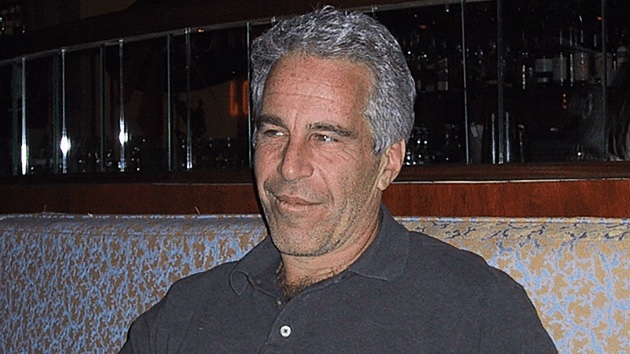
Jeffrey Epstein is seen in this image released by the Department of Justice in Washington, December 19, 2025 (U.S. Justice Department)
(WASHINGTON) — A federal judge in New York on Wednesday declined to appoint a special master to oversee the Justice Department’s production of the remaining Epstein files, despite “legitimate concerns” about whether the DOJ is faithfully complying with the Epstein Files Transparency Act.
The Dec. 19 deadline the law imposed for the release of all files related to the late sex offender Jeffrey Epstein has come and gone, and at least two members of Congress say the Justice Department is still in possession of as many as two million potentially relevant documents.
Federal prosecutors in the Southern District of New York said last week they’re still reviewing and redacting material from the investigations into Epstein and co-conspirator Ghislaine Maxwell to comply with court orders about protecting victims.
Several Epstein victims wrote letters supporting legislators’ push for a neutral monitor.
In his opinion released Wednesday, U.S. District Judge Paul Engelmayer said the “questions raised by the Representatives and the victims are undeniably important and timely” and raise “raise legitimate concerns about whether DOJ is faithfully complying with federal law.”
However, the judge concluded he lacks jurisdiction to supervise the Justice Department’s compliance with the Epstein Act.
“The Representatives have not articulated how the criminal statutes under which Maxwell was charged would empower the Court to enforce the EFTA,” Engelmayer wrote.
The opinion also said the members of Congress — Thomas Massie, R-Ky., and Ro Khanna, D-Calif. — have no role in the matter.
“The Representatives do not seek to opine on any live issue before the Court,” Engelmayer wrote. “And the appointment of a neutral to supervise DOJ’s compliance with the EFTA is far afield from any matter pending before the Court.”
Congress passed the Epstein Files Transparency Act in November, following blowback the Trump administration received seeking the release of materials related to their probe of Epstein, who died by suicide in a New York jail in 2019. President Donald Trump signed the act into law on Nov. 19.
Materials released to date include a trove of photographs and court records, including a complaint to the FBI about Epstein that was filed years before he was first investigated for child sex abuse, and documents containing previously unknown details about plans for Epstein’s 2019 arrest.
The files released so far, however, have yet to show evidence of wrongdoing on the part of famous, powerful men, against the expectations of many of those who have been pushing for the files’ release.