$400 GPS device could have prevented deadly mid-air crash near DC: NTSB chair

0 GPS device could have prevented deadly mid-air crash near DC: NTSB chair
$400 GPS device could have prevented deadly mid-air crash near DC: NTSB chair
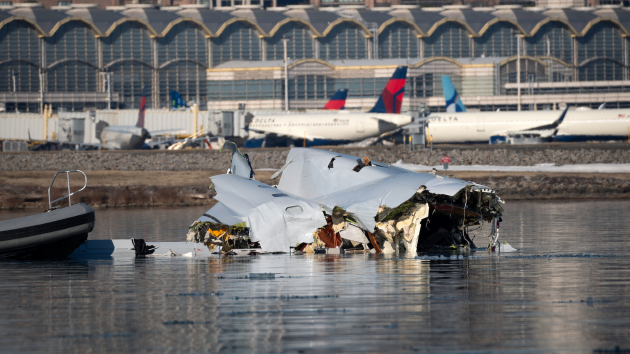
In this U.S. Coast Guard handout, the Coast Guard investigates aircraft wreckage on the Potomac River on January 30, 2025 in Washington, DC. (Petty Officer 1st Class Brandon Giles/ U.S. Coast Guard via Getty Images)

(WASHINGTON) — The National Transportation Safety Board on Tuesday presented a cockpit visual simulation demonstrating what contributed to the deadly mid-air collision between an Army helicopter and an American Airlines jet near Washington, D.C., last year.

The simulation indicates it was very difficult for both aircraft to see each other before the January 2025 crash that occurred as the jet was landing at Ronald Reagan National Airport, killing 67 people, according to the NTSB.

The first video shows the last three minutes before the collision from the viewpoint of the right seat of the helicopter. 

Around 8:46:15, a magenta circle with a label “Flight 5342” appears just above the horizon on the right side of the upper portion of the screen.  The label “Flight 5342” fades out about 8:46:35. The magenta circle tracks the lights of Flight 5342 and remains visible until the airplane becomes visually recognizable about a minute later.

 After a Traffic Alert and Collision Avoidance System warning indicated in the transcript, the local controller on the ATC recording is heard asking the pilots if they have the CRJ (Flight 5342) in sight and the pilots confirm they do. It remains unclear what they thought they had in sight. There was only one controller working both the helicopter and plane traffic, the NTSB said.

 The simulation screen goes black at the moment of the collision. 

The second animation shows the viewpoint of pilots from Flight 5342 as the plane approaches the runway to land. According to the cockpit voice recorder transcript shared by the NTSB, the last words about one second before the crash from both the first officer and the captain were “oh” and “ohhh ohhhh” as the animation shows the helicopter colliding with the plane. 

About 90% of wreckage from both aircraft was recovered by the NTSB.  

A third animation shows what the local controller from the DCA tower saw at the time of the crash as they were handling the air traffic and issuing instructions. Based on the recordings, the NTSB said Flight 5342 was not warned by the controller of the nearby helicopter at any point. A conflict alert came 26 seconds before the collision between the two aircraft as they were 1.6 miles apart, according to the NTSB. 

According to the NTSB, the local tower said they were concerned about the close proximity of the helicopter and Flight 5342. 

“This coupled with the conflict alert that was active at the time, the controller should have issued a safety alert, which would have included updated traffic advisory information and an alternate course of action if feasible, neither were done. In this case, had a safety alert been issued, it would have increased the situation awareness of both crews and alerted them of their closing proximity to one another. Additionally, a timely safety alert may have allowed action to be taken by one or both crews to avoid avert the collision,” NTSB investigator Brian Soper said at the hearing.

NTSB Chair Jennifer Homendy also said that a $400 GPS device known as ADSB-In could have prevented the DCA crash. The NTSB has recommended ADSB-In be required in aircraft 17 times since 2006, but the FAA has repeatedly disregarded the recommendation, she said.

The system would have alerted the American Airlines crew 59 seconds before the crash that they were going to collide, and the helicopter crew would have been alerted 48 seconds before the crash, the NTSB chair said. The Army has since installed the system.

DCA controller overwhelmed

The controller working the night of the crash was handling both helicopter and plane traffic and had been doing so for four hours, NTSB investigators said.

A human behavior investigator said the controller’s mental awareness had diminished over time. He should have given a definitive warning of the impending collision and he should have given clear avoidance instructions, the investigator said.

NTSB investigators said the last communication between the helicopter and the controller where they asked the pilot if they have the AA5342 in sight was “not a safety alert by definition, but it was an attempt to de-conflict.” 

Ninety seconds before the collision, the local controller working in the tower became overwhelmed as he was handling aircraft both on ground and in the air. On the night of the collision, the controller was working two controller positions. This is a routine practice which is usually done later at night when the aircraft volume goes down. 

The NTSB said, “keeping the local control and helicopter control positions combined on the night of the accident, increased the local controller’s workload and reduced his situation awareness.”

Investigators said the controller could have asked for the positions to be decombined because of being overwhelmed, but it would have taken at least a couple of minutes before anyone else could take over. Additionally, the assistant local controller and the supervisor overseeing operations at the time could have served as an extra set of eyes to help the local controller.

However, Homendy revealed that at the time, the assistant controller was writing down information on helicopters and the supervisor did not exhibit situational awareness as they learned during the interview that the supervisor only recalled one helicopter in the area at the time when there were five.

Following the crash, the NTSB issued recommendations for better training to be provided for controllers so they can recognize safety issues and threats in the environment.

NTSB chair’s concerns

Ahead of Tuesday’s hearing, Chair Homendy said she fears that some of the agency’s safety recommendations, which will be issued at the conclusion of the hearing, may once again go unimplemented. 

“Of course I’m concerned. We have 300 aviation recommendations that still haven’t been implemented. Those recommendations were issued because somebody died or was injured, and they have not been implemented yet. So here we are again,” Homendy told ABC News.

“So yes, at the end of this, I am concerned that we’re going to issue recommendations and that they won’t be implemented,” Homendy said. “I can tell you, and anyone who knows me knows I vigorously advocate for the implementation of our recommendations. I don’t care when it is. Could be 50 years later, as I did with positive train control, and I will not hold back on these.” 

At Tuesday’s hearing, NTSB investigators will present their investigative findings to board members and the public. NTSB board members, including Homendy, will then question investigators and the parties to the investigation. 

At the end of the hearing, the board members will vote on the probable cause of the crash and the agency’s safety recommendations. The NTSB can only make recommendations and does not have the authority to enforce them, therefore they are not always adopted.

Though a formal final report will be released two weeks after the hearing, this hearing will mark the end of what Homendy described as “one of the most complex investigations” conducted by the agency, which they had aimed to conclude by the first anniversary of the mid-air collision. 

Homendy told ABC News the investigation “was not easy and it was definitely not straightforward.” 

“We will start in one direction and then take it in a different direction, depending on what we’re finding, and then we’ll exclude things that didn’t have anything to do with the investigation. But we have to do our due diligence to make sure that we’re tracking all of that down, all that evidence to support that it wasn’t a factor, while also looking at the issues that were,” Homendy said. 

Homendy said the helicopter altimeter discrepancy is what surprised her the most in this investigation. 

“The altimeters I did not see coming, that we would have some problems with how the altimeters were reading,” Homendy said.

During last year’s three-day investigative hearing, investigators said they found discrepancies in the altitude data shown on radio and barometric altimeters on Army helicopters after conducting test flights following January’s accident.

It is likely that the helicopter crew did not know their true altitude due to notoriously faulty altimeters inside this series of Black Hawks, according to the investigation. At their closest points, helicopters and planes flew within 75 feet of each other near DCA, an astonishingly close number. During the hearings, the NTSB was told Army Black Hawks can often have wrong readings and a margin of error of +-200 feet.

Another key focus of Tuesday’s hearing is the close proximity of the helicopter route to the runways at Reagan National Airport. According to the NTSB, which cited FAA surveillance data, there were over 15,000 close-proximity events between helicopters and commercial aircraft at DCA between October 2021 and December 2024. 

Homendy said warnings about the close proximity were raised by people, but they were ignored. 

“Years ago, that hot spot was identified and [people] repeatedly tried to say that the helicopter route needed to be moved, and nobody listened. It was like the ultimate in government bureaucracy,” Homendy said. 

“They were completely ignored. Told it couldn’t be done, not responded to, said it would probably be too political. Those are quotes from our interviews, but they went nowhere.” 

At last year’s hearing, FAA officials cited “bureaucratic process” as a deterrent to addressing these issues.

Other topics expected to be discussed include the approval of helicopter routes near DCA,  the experience level of the air traffic controllers working in the tower at the time of the crash, the visibility study, and the testing of the barometric altimeters.  

When asked what stays with her from this investigation, Homendy pointed to a personal item recovered with the wreckage. 

“In the hangar, we had the Black Hawk laid out. We had the wreckage laid out for 5342 and on the side next to 5342 there were some personal effects, and a lot of people mentioned different things, but every time I passed, there was a brown teddy bear, just eight inches maybe, and it was muddy and dried mud, dried water, and I just kept looking at the teddy bear, and that’s the thing that sticks with me,” Homendy said. 

Copyright © 2026, ABC Audio. All rights reserved.

Person shot in incident involving Border Patrol in Arizona, sheriff says

Person shot in incident involving Border Patrol in Arizona, sheriff says

(NEW YORK) — A person was shot in an incident involving U.S. Border Patrol in Arivaca, Arizona, a Pima County Sheriff’s Department spokesperson told ABC News.

The shooting occurred early Tuesday morning, the Santa Rita Fire District said. Emergency responders provided first aid at the scene and the person was taken to a hospital in unknown condition, officials said.

The FBI described the incident as “an alleged assault on a federal officer” and said “the subject was taken into custody.”

Pima County Sheriff spokesperson Angelica Carrillo said, “All we have to release at this, at this point, is that a U.S. Border Patrol agent was involved in a shooting here in Arivaca, and that the FBI Phoenix office has called the sheriff’s department to assist in this investigation.”

The sheriff’s office said it’s leading the use-of-force investigation involving the agent, at the request of the FBI.

“We ask the community to remain patient and understanding as this investigation moves forward,” the sheriff’s department said.

This is a developing story. Please check back for updates.

Copyright © 2026, ABC Audio. All rights reserved.

Nearly 800 cases in South Carolina’s record-breaking measles outbreak

Nearly 800 cases in South Carolina’s record-breaking measles outbreak
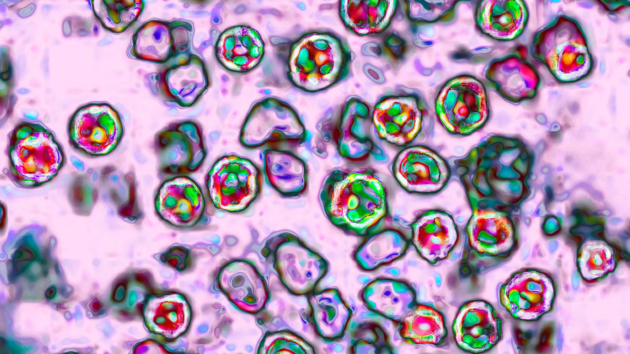
The measles virus. (BSIP/Universal Images Group via Getty Images)

(SOUTH CAROLINA) — The record-breaking measles outbreak in South Carolina continues to grow with 89 new cases reported since the last update on Friday.

This brings the total number of cases in the outbreak to 789. 

At least 557 people are currently in quarantine across the state, including students from various schools.

This is South Carolina’s largest measles outbreak in over 30 years, a spokesperson for the state’s health department told ABC News. 

There have been at least 416 confirmed measles cases across the United States so far this year, the latest CDC data shows.

CDC data shows that the majority of cases occur among people under 19. About 2% of all measles cases in the U.S. have been hospitalized.

Dr. Kristin Moffitt, an infectious diseases physician at Boston Children’s Hospital, previously told ABC News she is “very alarmed” by the increase in measles cases in the U.S. over the last year or two.

“I’m very worried about our current year already,” she told ABC News. “Exceeding 2,000 cases in the last year is indeed alarming [and] … I am worried that even our current year is off to a very concerning start.”

Moffitt said that declining vaccination rates across the U.S. are behind the recent increase in measles cases.

“This is entirely due to declining vaccination rates,” she said. “It’s very clear based on where these outbreaks are occurring.”

The CDC currently recommends that people receive two doses of the MMR vaccine, the first at ages 12 to 15 months and the second between 4 and 6 years old. One dose is 93% effective, and two doses are 97% effective against measles, the CDC says.

However, federal data shows vaccination rates have been lagging in recent years. During the 2024-2025 school year, 92.5% of kindergartners received the MMR vaccine, according to data. This is lower than the 92.7% seen in the previous school year and the 95.2% seen in the 2019-2020 school year, before the COVID-19 pandemic.

The national trends mirror those see in counties across the U.S. A recent map from ABC News — a collaboration with researchers from Boston Children’s Hospital, Harvard School of Medicine and Icahn School of Medicine at Mt. Sinai that allows people to type in their ZIP code and see the measles risk in their area — found a wide range of risks in areas across the U.S.

Some counties and ZIP codes fell into the “lowest risk,” with 85% or more of children under 5 years old receiving one or more measles vaccine dose to “very high risk,” with fewer than 60% of children under age 5 receiving one or more measles vaccine doses.

ABC News’ Mary Kekatos and Dr. Richard Zhang contributed to this report.

Copyright © 2026, ABC Audio. All rights reserved.

Detainees say they heard Cuban man being slammed to the ground before his death in ICE custody

Detainees say they heard Cuban man being slammed to the ground before his death in ICE custody
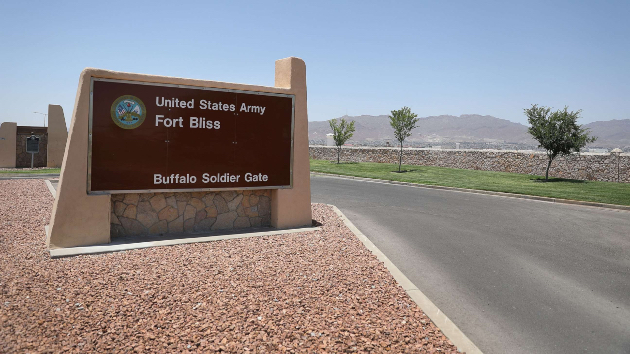
In this June 25, 2018, file photo, an entrance to Fort Bliss is shown, in Fort Bliss, Texas. (Joe Raedle/Getty Images, FILE)

(EL PASO, Texas) — Several detainees at a Texas immigration detention facility claim in sworn court declarations that they heard a Cuban immigrant, whose death was later ruled a homicide, pleading for medication shortly before hearing what sounded like guards slamming him to the ground.

Geraldo Lunas Campos died in ICE custody on Jan. 3 at Camp East Montana, according to the Department of Homeland Security.

He is the third detainee to die at the detention center since it opened last year as a tent facility on the grounds of the Fort Bliss Army base outside El Paso.

In an autopsy report released last week, the El Paso County deputy medical examiner determined that Campos died from “asphyxia due to neck and torso compression.”

Attorneys for the Campos family filed an emergency petition last week to prevent alleged witnesses from being deported. The petition, which was granted by a federal judge, cites reports alleging that guards at the facility choked and asphyxiated Campos.

Some of those witnesses submitted sworn declarations this week alleging that they heard Campos ask guards for his asthma medication on the day he died.

“The guard then said, ‘Shut up or we’re going to make you faint,'” wrote Henry Bolano, a detainee, in English and Spanish. “The last thing I heard was Geraldo speak in a voice that sounded like he couldn’t breathe. He said, ‘Let go of me. You’re asphyxiating me.'”

“Then there was silence,” Bolano wrote.

Santo Jesus Flores, another detainee, said he heard a “struggle ensue” that sounded like “the slamming of a person’s body against the floor or the wall” after Campos asked for his medication.

“I heard Geraldo scream that he could not breathe,” Flores said. “I could hear them trying to revive him, but they could not keep him alive.”

A DHS spokesperson did not respond to a request for comment from ABC News regarding the detainees’ sworn declarations.

According to DHS, Campos was detained in July during an immigration enforcement action in New York. He had prior convictions including sexual contact with a minor and criminal possession of a weapon, according to the DHS and court records.

In a statement released following his death, a DHS spokesperson said Campos was pronounced dead after “experiencing medical distress.”

“Lunas became disruptive while in line for medication and refused to return to his assigned dorm,” the statement said. “He was subsequently placed in segregation. While in segregation, staff observed him in distress and contacted on-site medical personnel for assistance.”

Copyright © 2026, ABC Audio. All rights reserved.

Aircraft had difficulty seeing each other before deadly mid-air crash near DC: NTSB

0 GPS device could have prevented deadly mid-air crash near DC: NTSB chair
$400 GPS device could have prevented deadly mid-air crash near DC: NTSB chair
In this U.S. Coast Guard handout, the Coast Guard investigates aircraft wreckage on the Potomac River on January 30, 2025 in Washington, DC. (Petty Officer 1st Class Brandon Giles/ U.S. Coast Guard via Getty Images)

(WASHINGTON) — The National Transportation Safety Board on Tuesday presented a cockpit visual simulation demonstrating what contributed to the deadly mid-air collision between an Army helicopter and an American Airlines jet near Washington, D.C., last year.

The simulation indicates it was very difficult for both aircraft to see each other before the January 2025 crash that killed 67 people as the jet was landing at Ronald Reagan National Airport, according to the NTSB.

The first video shows the last three minutes before the collision from the viewpoint of the right seat of the helicopter. 

Around 8:46:15, a magenta circle with a label “Flight 5342” appears just above the horizon on the right side of the upper portion of the screen.  The label “Flight 5342” fades out about 8:46:35. The magenta circle tracks the lights of Flight 5342 and remains visible until the airplane becomes visually recognizable about a minute later.

 After a Traffic Alert and Collision Avoidance System warning indicated in the transcript, the local controller on the ATC recording is heard asking the pilots if they have the CRJ (Flight 5342) in sight and the pilots confirm they do. It remains unclear what they thought they had in sight. There was only one controller working both the helicopter and plane traffic, the NTSB said.

The simulation screen goes black at the moment of the collision. 

The second animation shows the viewpoint of pilots from Flight 5342 as the plane approaches the runway to land. According to the cockpit voice recorder transcript shared by the NTSB, the last words about one second before the crash from both the first officer and the captain were “oh” and “ohhh ohhhh” as the animation shows the helicopter colliding with the plane. 

About 90% of wreckage from both aircraft was recovered by the NTSB.  

A third animation shows what the local controller from the DCA tower saw at the time of the crash as they were handling the air traffic and issuing instructions. Based on the recordings, the NTSB said Flight 5342 was not warned by the controller of the nearby helicopter at any point. A conflict alert came 26 seconds before the collision between the two aircraft as they were 1.6 miles apart, according to the NTSB. 

According to the NTSB, the local tower said they were concerned about the close proximity of the helicopter and Flight 5342. 

“This coupled with the conflict alert that was active at the time, the controller should have issued a safety alert, which would have included updated traffic advisory information and an alternate course of action if feasible, neither were done. In this case, had a safety alert been issued, it would have increased the situation awareness of both crews and alerted them of their closing proximity to one another. Additionally, a timely safety alert may have allowed action to be taken by one or both crews to avoid avert the collision,” NTSB investigator Brian Soper said at the hearing.

Ahead of Tuesday’s hearing, Chair Jennifer Homendy said she fears that some of the agency’s safety recommendations, which will be issued at the conclusion of the hearing, may once again go unimplemented. 

“Of course I’m concerned. We have 300 aviation recommendations that still haven’t been implemented. Those recommendations were issued because somebody died or was injured, and they have not been implemented yet. So here we are again,” Homendy told ABC News.

“So yes, at the end of this, I am concerned that we’re going to issue recommendations and that they won’t be implemented,” Homendy said. “I can tell you, and anyone who knows me knows I vigorously advocate for the implementation of our recommendations. I don’t care when it is. Could be 50 years later, as I did with positive train control, and I will not hold back on these.” 

At Tuesday’s hearing, NTSB investigators will present their investigative findings to board members and the public. NTSB board members, including Homendy, will then question investigators and the parties to the investigation. 

At the end of the hearing, the board members will vote on the probable cause of the crash and the agency’s safety recommendations. The NTSB can only make recommendations and does not have the authority to enforce them, therefore they are not always adopted.

Though a formal final report will be released two weeks after the hearing, this hearing will mark the end of what Homendy described as “one of the most complex investigations” conducted by the agency, which they had aimed to conclude by the first anniversary of the mid-air collision. 

Homendy told ABC News the investigation “was not easy and it was definitely not straightforward.” 

“We will start in one direction and then take it in a different direction, depending on what we’re finding, and then we’ll exclude things that didn’t have anything to do with the investigation. But we have to do our due diligence to make sure that we’re tracking all of that down, all that evidence to support that it wasn’t a factor, while also looking at the issues that were,” Homendy said. 

Homendy said the helicopter altimeter discrepancy is what surprised her the most in this investigation. 

“The altimeters I did not see coming, that we would have some problems with how the altimeters were reading,” Homendy said.

During last year’s three-day investigative hearing, investigators said they found discrepancies in the altitude data shown on radio and barometric altimeters on Army helicopters after conducting test flights following January’s accident.

It is likely that the helicopter crew did not know their true altitude due to notoriously faulty altimeters inside this series of Black Hawks, according to the investigation. At their closest points, helicopters and planes flew within 75 feet of each other near DCA, an astonishingly close number. During the hearings, the NTSB was told Army Black Hawks can often have wrong readings and a margin of error of +-200 feet.

Another key focus of Tuesday’s hearing is the close proximity of the helicopter route to the runways at Reagan National Airport. According to the NTSB, which cited FAA surveillance data, there were over 15,000 close-proximity events between helicopters and commercial aircraft at DCA between October 2021 and December 2024. 

Homendy said warnings about the close proximity were raised by people, but they were ignored. 

“Years ago, that hot spot was identified and [people] repeatedly tried to say that the helicopter route needed to be moved, and nobody listened. It was like the ultimate in government bureaucracy,” Homendy said. 

“They were completely ignored. Told it couldn’t be done, not responded to, said it would probably be too political. Those are quotes from our interviews, but they went nowhere.” 

At last year’s hearing, FAA officials cited “bureaucratic process” as a deterrent to addressing these issues.

Other topics expected to be discussed include the approval of helicopter routes near DCA,  the experience level of the air traffic controllers working in the tower at the time of the crash, the visibility study, and the testing of the barometric altimeters.  

When asked what stays with her from this investigation, Homendy pointed to a personal item recovered with the wreckage. 

“In the hangar, we had the Black Hawk laid out. We had the wreckage laid out for 5342 and on the side next to 5342 there were some personal effects, and a lot of people mentioned different things, but every time I passed, there was a brown teddy bear, just eight inches maybe, and it was muddy and dried mud, dried water, and I just kept looking at the teddy bear, and that’s the thing that sticks with me,” Homendy said. 

Copyright © 2026, ABC Audio. All rights reserved.
‘Doomsday Clock’ 2026: This is how close we are to self-annihilation, scientists say

‘Doomsday Clock’ 2026: This is how close we are to self-annihilation, scientists say
The 2025 Doomsday Clock time is displayed after the time reveal held by The Bulletin of the Atomic Scientists at the United States Institute of Peace on January 28, 2025 in Washington, DC. Kayla Bartkowski/Getty Images

(WASHINGTON) — The “Doomsday Clock” — a symbolic clock that represents how close humanity is to global catastrophe — has moved closer to midnight.

The Bulletin of the Atomic Scientists announced Tuesday that the clock is now 85 seconds to midnight, with midnight representing the apocalypse.

The organization cited nuclear weapons, climate change and biological threats as the three biggest concerns to humanity and the motivation to move the clock closer to midnight.

The new time is four seconds closer to midnight than the 2025 Doomsday Clock.

The clock, set by the Bulletin of the Atomic Scientists, a nonprofit media organization comprised of world leaders and Nobel laureates.

It is “a design that warns the public about how close we are to destroying our world with dangerous technologies of our own making,” according to the group.

Intended to be a metaphor and graphic reminder of the perils humans must address, the Doomsday Clock was established in 1947 by Albert Einstein, Manhattan Project director J. Robert Oppenheimer and University of Chicago scientists who helped develop the first atomic weapons as part of the Manhattan Project.

When it was introduced — two years after the U.S. dropped atomic bombs on Hiroshima and Nagasaki in Japan — it was set to seven minutes before midnight.

Since then, the clock has been adjusted both forward and backward multiple times.

The farthest the clock has been adjusted from midnight was at 17 minutes in 1991, after then-President George H.W. Bush and Soviet President Mikhail Gorbachev announced reductions in the nuclear arsenals of their respective countries and the Strategic Arms Limitation Treaty was revived.

In 2025, the clock moved to 89 seconds before midnight. The 2024 and 2023 Doomsday Clock was set to 90 seconds before midnight.

ABC News’ Bill Hutchinson contributed to this report.

Copyright © 2026, ABC Audio. All rights reserved.

Causes of last year’s deadly mid-air collision in DC to be announced by NTSB

0 GPS device could have prevented deadly mid-air crash near DC: NTSB chair
$400 GPS device could have prevented deadly mid-air crash near DC: NTSB chair
In this U.S. Coast Guard handout, the Coast Guard investigates aircraft wreckage on the Potomac River on January 30, 2025 in Washington, DC. (Petty Officer 1st Class Brandon Giles/ U.S. Coast Guard via Getty Images)

(WASHINGTON) — Ahead of Tuesday’s National Transportation Safety Board hearing into last year’s deadly mid-air collision at Ronald Reagan Washington National Airport, Chair Jennifer Homendy said she fears some of the agency’s safety recommendations, which will be issued at the conclusion of the hearing, may once again go unimplemented.

“Of course I’m concerned. We have 300 aviation recommendations that still haven’t been implemented. Those recommendations were issued because somebody died or was injured, and they have not been implemented yet. So here we are again,” Homendy told ABC News.

“So yes, at the end of this, I am concerned that we’re going to issue recommendations and that they won’t be implemented,” Homendy said. “I can tell you, and anyone who knows me knows I vigorously advocate for the implementation of our recommendations. I don’t care when it is. Could be 50 years later, as I did with positive train control, and I will not hold back on these.”

At Tuesday’s hearing, NTSB investigators will present their investigative findings to board members and the public. NTSB board members, including Homendy, will then question investigators and the parties to the investigation.

At the end of the hearing, the board members will vote on the probable cause of the crash and the agency’s safety recommendations. The NTSB can only make recommendations and does not have the authority to enforce them, therefore they are not always adopted.

Though a formal final report will be released two weeks after the hearing, this hearing will mark the end of what Homendy described as “one of the most complex investigations” conducted by the agency, which they had aimed to conclude by the first anniversary of the mid-air collision. 

Homendy told ABC News the investigation “was not easy and it was definitely not straightforward.”

“We will start in one direction and then take it in a different direction, depending on what we’re finding, and then we’ll exclude things that didn’t have anything to do with the investigation. But we have to do our due diligence to make sure that we’re tracking all of that down, all that evidence to support that it wasn’t a factor, while also looking at the issues that were,” Homendy said.

Homendy said the helicopter altimeter discrepancy is what surprised her the most in this investigation.

“The altimeters I did not see coming, that we would have some problems with how the altimeters were reading,” Homendy said. 

During last year’s three-day investigative hearing, investigators said they found discrepancies in the altitude data shown on radio and barometric altimeters on Army helicopters after conducting test flights following January’s accident.

It is likely that the helicopter crew did not know their true altitude due to notoriously faulty altimeters inside this series of Black Hawks, according to the investigation. At their closest points, helicopters and planes flew within 75 feet of each other near DCA, an astonishingly close number. During the hearings, the NTSB was told Army Black Hawks can often have wrong readings and a margin of error of +-200 feet.

Another key focus of Tuesday’s hearing is the close proximity of the helicopter route to the runways at Reagan National Airport. According to the NTSB, which cited FAA surveillance data, there were over 15,000 close-proximity events between helicopters and commercial aircraft at DCA between October 2021 and December 2024.

Homendy said warnings about the close proximity were raised by people, but they were ignored.

“Years ago, that hot spot was identified and [people] repeatedly tried to say that the helicopter route needed to be moved, and nobody listened. It was like the ultimate in government bureaucracy,” Homendy said. 

“They were completely ignored. Told it couldn’t be done, not responded to, said it would probably be too political. Those are quotes from our interviews, but they went nowhere.” 

At last year’s hearing, FAA officials cited “bureaucratic process” as a deterrent to addressing these issues.

Other topics expected to be discussed include the approval of helicopter routes near DCA,  the experience level of the air traffic controllers working in the tower at the time of the crash, the visibility study, and the testing of the barometric altimeters.  

When asked what stays with her from this investigation, Homendy pointed to a personal item recovered with the wreckage.

“In the hangar, we had the Black Hawk laid out. We had the wreckage laid out for 5342 and on the side next to 5342 there were some personal effects, and a lot of people mentioned different things, but every time I passed, there was a brown teddy bear, just eight inches maybe, and it was muddy and dried mud, dried water, and I just kept looking at the teddy bear, and that’s the thing that sticks with me,” Homendy said. 

Copyright © 2026, ABC Audio. All rights reserved.
San Francisco issues warning as mountain lion roams city streets

San Francisco issues warning as mountain lion roams city streets
Mark Newman/Getty Images

(SAN FRANCISCO) — A young mountain lion has been spotted prowling the streets of downtown San Francisco as officials have warned people in the area to take caution.

The San Francisco Department of Emergency Management issued an alert late Monday evening saying that the mountain lion was spotted in the Pacific Heights neighborhood near the intersection of Octavia Street and Pacific Avenue, just north of Lafayette Park.

One man walking his dogs, who spoke to ABC News’ San Francisco station KGO, said says he’ll be avoiding Lafayette Park for now.

“We love to see things like this like so much wildlife in the city. But a little bit concerned because you know little puppies. So we are not coming in until we know everything is safe,” said Manuel Cases, San Francisco resident.

City officials said, “if you see the mountain lion, slowly back away, do not run” and urged people to contact San Francisco’s Animal Care & Control if they see or come into contact with the animal.

Copyright © 2026, ABC Audio. All rights reserved.

All 6 on board private jet presumed dead after crash during takeoff at Maine airport: Police

All 6 on board private jet presumed dead after crash during takeoff at Maine airport: Police

(BANGOR, Maine) — All six people on board a private jet are presumed to be dead after the plane crashed while taking off from Bangor International Airport in Maine during the winter storm, according to police.

No victims were taken to the hospital, Bangor police said on Monday. The victims’ identities have not been released.

The Bombardier Challenger 600 crashed around 7:45 p.m. Sunday as the deadly storm slammed the Northeast, according to the Federal Aviation Administration.

At the time of the crash, the Bangor International Airport was open, with deicing operations underway and both commercial and private planes landing and departing, Bangor International Airport Director Jose Saavedra said on Monday.

First responders were at the scene of the crash within a minute, Saavedra said.

“The snowstorm started taking effect into the vicinity right around that time,” he said.

“This is normal for us to deal with weather events, and we had crews on site to address the weather event,” he said.

The airport will be closed for at least 24 hours as airport officials wait for National Transportation Safety Board investigators to arrive, Saavedra said.

Copyright © 2026, ABC Audio. All rights reserved.

Judge hears arguments as state of Minnesota seeks temporary halt to ongoing ICE operation

Judge hears arguments as state of Minnesota seeks temporary halt to ongoing ICE operation
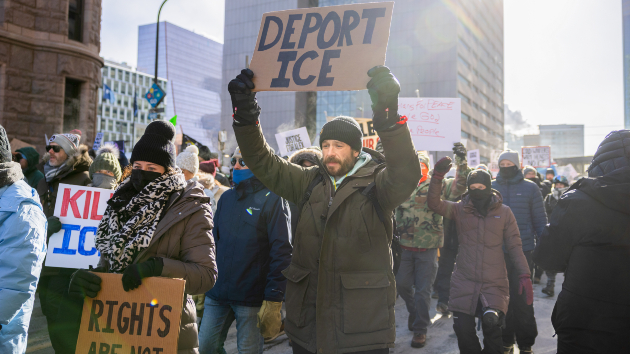
Demonstrators against the ongoing Immigration and Customs Enforcement (ICE) deployment march during a protest in Minneapolis, Minnesota, US, on Sunday, Jan. 25, 2026. (Jaida Grey Eagle/Bloomberg via Getty Images)

(MINNEAPOLIS) — A federal judge heard arguments Monday on the state of Minnesota’s request for a temporary restraining order to halt the Trump administration’s immigration enforcement operation in the state.

The hearing came two days after the death of 37-year-old Alex Pretti in what was the second shooting of a U.S. citizen this month by federal immigration enforcement agents in Minneapolis.

An attorney representing the state said in Monday’s hearing that the enforcement action, dubbed “Operation Metro Surge,” is the nation’s single largest escalation of immigration enforcement, despite Minnesota not having the largest number of non-citizens with criminal convictions.

“Yet the federal government has sent an unprecedented force of thousands of masked agents armed with assault rifles to spread through our region in roving patrols that are racially profiling and inflicting violence on people,” argued state attorney Lindsey Middlecamp.

Brian Carter, another state attorney, argued that there’s a lack of precedent because “the conduct [from the federal government] is so outrageously unlawful we’ve never seen it before.”

“In the 250 years of this nation’s history, we have never seen a federal government attack states based on personal animosity,” Carter argued.

“Well, we’ve seen the federal government take very robust responses to states that aren’t yielding to federal authority,” U.S. District Judge Katherine Menendez interrupted.

“Absolutely, but that’s based on the rule of law,” Carter responded.

When Judge Menendez asked what exactly the state wants her to do, Carter said, “End Operation Metro Surge.”

“The whole Operation Metro Surge is an illegal means to an illegal end, so just ending the whole thing is the appropriate remedy there,” Carter said.

“You understand the federal government has a lot of power in this area, so I’m trying to figure out what principle you’re asking me to apply that will sort out legal federal law enforcement from this 10th Amendment argument,” Judge Menendez said.

An attorney representing the federal government called the state’s request to end Operation Metro Surge “staggering.”

“The effect of their requested relief would be essentially removing the officers whom the president has concluded should be there to enforce federal immigration law,” said attorney Brantley Mayers. “It’s pretty staggering.”

Mayers argued that the requested relief should be subject to “a heightened standard.”

“They’re challenging one law enforcement initiative,” replied Judge Menendez. “They’re not challenging the enforcement of immigration law writ large.”

Mayers said that if the judge issues an order to end Operation Metro Surge, it “would be very difficult to implement.”

“If it’s difficult to implement, does that mean I can do nothing?” Judge Menendez asked.

Mayers responded by saying such an order would create a “very difficult separation of powers problem.”

The judge also said she is “grappling” with the alleged illegalities identified by the state, pointing to other lawsuits filed in Minnesota.

“Isn’t the answer to the flood of illegality to fight each illegal act?” Judge Menendez asked, noting that the conduct of federal agents is already the subject of separate litigation.

Menendez also questioned how she should draw the line between legitimate federal pressure and illegal coercion.

“How do I decide when a law enforcement response crosses the line from a legitimate response to one that violates the 10th Amendment?” she asked.

Carter argued that there are “4,000 masked, armed federal agents engaged in systemic, pervasive, and illegal violent behavior” that is “so far out on the other side of the line.”

“We’ve got retaliation, we’ve got racial profiling, we’ve got warrantless entries into homes,” Carter said.

Middlecamp said that U.S. Attorney General Pam Bondi’s letter to Gov. Tim Walz Saturday in which she sought information about the state’s voter rolls and records on Medicaid and Food and Nutrition Service programs as a condition for ICE agents pulling back on enforcement, “can only be described as a ransom note.”

“President Trump himself took to social media last night to reaffirm those very purposes. Their message is clear,” Middlecamp said. “Minnesota can either change its laws and policies or suffer an invasion of masked armed forces. This is precisely the type of coercion and commandeering that violates the 10th Amendment.”

Middlecamp argued there has been “excessive force and unsupported detentions and arrests of legal observers” and said that DHS agents have been collecting photos and license plates of observers so they can confront them.

“Even though they are not charged with a crime or reasonably suspected of a crime, there has been indiscriminate use of chemical irritants,” she said.

The attorney argued that Operation Metro Surge is having “clear impacts on the sovereign interest to create and protect public safety, public health, and public education.”

Sara Lathrop, an attorney for the city of Minneapolis, said the weekend’s shooting “demonstrated in a terrifying way that the current situation is absolutely untenable.”

“The relief we need needs to be ordered now to take down the temperature,” Lathrop said.

In response, Judge Menendez said that “not all crises have a fix from a district court injunction.”

Carter, the state attorney, wrapped up arguments by saying the state came to the court to “protect its sovereignty.”

“The state of Minnesota comes here today to protect its sovereignty, to stop the harm to its sovereign rights under the Constitution that sets states up as independent sovereigns,” Carter said. “If we can’t come to the court and vindicate those rights, where else does a state go?”

Judge Menendez did not issue an order immediately following the hearing.

“I do not intend in any way for the depth of my analysis or whatever time I take to write to be seen as a belief that this is unimportant,” she said. “It’s because it’s extremely important that I’m doing everything I can to get it right,” the judge said.

Copyright © 2026, ABC Audio. All rights reserved.