
Federal judge denies DOJ request to delay Trump admin paying nearly $2B in foreign aid to nonprofits

Federal judge denies DOJ request to delay Trump admin paying nearly B in foreign aid to nonprofits
Federal judge denies DOJ request to delay Trump admin paying nearly $2B in foreign aid to nonprofits
Ulrich Baumgarten via Getty Images

(WASHINGTON) — U.S. District Judge Amir Ali denied the Department of Justice’s request to push the midnight deadline by which the Trump administration needs to pay more than $1.9 billion in foreign aid.

The case is now in the hands of a panel of three appellate judges – each nominated to the bench by Democratic presidents – who will decide whether to issue an emergency stay of the deadline.

In his decision denying the request to stay his deadline, Judge Ali criticized the Trump administration for waiting until Tuesday to raise the argument that they lack the ability to restart the funding.

“This is not something that Defendants have previously raised in this Court, whether at the hearing or any time before filing their notice of appeal and seeking a stay pending appeal. That is so even though Plaintiffs’ motion to enforce explicitly proposed compliance on this time frame,” Ali wrote.

Ali ordered the Trump administration on Tuesday to dole out delayed payments that could total nearly $2 billion, according to a USAID official, to multiple nonprofit groups, determining the Trump administration violated the terms of a temporary restraining order issued two weeks ago regarding freezing foreign aid.

A top official with the United States Agency for International Development claims that complying with Tuesday’s court order would require paying foreign aid groups nearly $2 billion, arguing the payments “cannot be accomplished” in the timeframe set by the court.

Lawyers with the Department of Justice asked Ali in a late-night filing on Tuesday to issue a stay of his order that requires the Trump administration to pay by Wednesday at 11:59 p.m. any outstanding debts to foreign aid groups for work completed prior to Feb. 13. The Trump administration initially tried to freeze the payments via an executive order before Judge Ali ordered the payments to resume two weeks ago.

DOJ lawyers argued that fulfilling the payments is not only technically impossible but would also prevent the Trump administration from ensuring the payments are “legitimate.”

“The order apparently requires the Government to expend taxpayer dollars without regard to any processes for ensuring that the expenses are legitimate—even though Executive Branch leadership harbors concerns about the possibility of waste and fraud and is in the process of developing revised payment processing systems to address those concerns,” DOJ attorney Indraneel Sur wrote in a late-night filing.

According to Peter Marocco, the deputy administrator of USAID and director of foreign assistance at the State Department, complying with the court order would require dispersing $1.5 billion between 2,000 payment requests at USAID and an additional $400 million in payments at the State Department.

Judge Amir Ali, a Biden-era appointee, excoriated Trump administration attorneys during a lengthy hearing on Tuesday over its failure to pay the groups for work they conducted prior to President Trump’s Jan. 20 executive order, which froze all foreign aid for 90 days. Ali also signed an order to enforce a temporary restraining order he signed on Feb. 13, ruling the groups must be paid by 11:59 p.m. Wednesday.

“Plaintiffs submitted evidence that defendants have not lifted the suspension or freeze of funds as the [temporary restraining order] required. Defendants have not rebutted that evidence, and when asked today, defendants were not able to provide any specific examples of unfreezing funds pursuant to the Court’s TRO,” Judge Ali said after a two-hour hearing today.

Lawyers with the Department of Justice acknowledged that the Trump administration ignored the temporary restraining order, which prohibited them from freezing foreign aid funds since the order was issued. Instead, they argued that they should not be required to pay back the money because of “sovereign immunity.”

During an extended exchange with Ali, a DOJ lawyer struggled to answer basic questions about the Trump administration’s compliance with the temporary restraining order, which prevented the administration from freezing funds.

“I’m not sure why I can’t get a straight answer from you on this. Are you aware of an unfreezing of the disbursement of funds for those contracts and agreements that were frozen before February 13?” Ali asked. “Are you aware of steps taken to actually release those funds?”

“I’m not in a position to answer that,” DOJ attorney Indraneel Sur said.

“We’re 12 days in and you’re here representing the government…and you can’t answer me whether any funds that you’ve kind of acknowledged or covered by the court’s order have been unfrozen?” Judge Ali responded.

“All I can do, really, is say that the preparations are underway for the joint status report on compliance,” Sur said.

At one portion of the lengthy court hearing, Sur attempted to offer a legal justification for the Trump administration’s noncompliance, prompting a stern response from the judge about his order, the terms of which he said were “clear as day.”

“The purpose of this hearing is to understand and to hear arguments on the motion to enforce TRO. It is not an opportunity to re-litigate the TRO,” Ali said.

The DOJ filed a notice of appeal Tuesday.

A lawyer representing the nonprofits who brought the case argued that the lack of a response from the Trump administration amounts to defiance of the court order.

“What the court’s colloquy with the government has revealed is that the government has done nothing to make the flow of payments happen,” he said. “As far as we are aware, there’s been zero directives from the agency with respect to the unfreezing of funds.”

Copyright © 2025, ABC Audio. All rights reserved.

‘There is no more American dream’: Migration into US slows, reverses south

‘There is no more American dream’: Migration into US slows, reverses south
ABC News

(NEW YORK) — Migration to the United States has largely stopped, frozen in place amid prohibitive new restrictions put in place by President Donald Trump’s administration. Thousands of migrants are now giving up mid-journey and going home.

From Mexico to Panama, a region dominated in recent years by migrant flows heading north, reverse migration is in full swing. The exact number of people going south is impossible to count, but anecdotally there is no question the numbers are in the thousands and quickly rising.

“There is no more American dream,” one migrant told international news agency AFP. “There’s no hope now, none.”

Former President Joe Biden’s administration also played a big role in slowing down arrivals to the southern border. And though funneling asylum claims through the CBP One app was enough to stop most migrants from moving forward toward the border, it did not persuade them to go back home. There was still hope.

But through fast action and strong deterrents, Trump has been remarkably effective at curbing irregular migration to the United States. As important to that effort as actual policy changes has been the public messaging surrounding it.

With migration trending back southward, it is apparent that migrants have lost hope.

Each day, hundreds of migrants line up outside an immigration office in southern Mexico.

They’re putting their names on a list for future repatriation flights sponsored by the Mexican government. They are primarily Venezuelan and Colombian, the two biggest recent emigration hot spots.

However, little info about the flights is available — so many are choosing not to wait, instead walking and riding buses along the same path that took them north just a few months ago.

As a result, at border checkpoints in Guatemala, Honduras, Nicaragua, Costa Rica and Panama, there are now migrants walking south.

In a tiny Indigenous town along the Panamanian Atlantic coast, hundreds of migrants sit and wait to board rickety boats that will cross the sea, landing in Colombia. Each ticket costs $250.

For those that don’t have the money, they will have to walk back through the Darien Gap jungle, the perilous land bridge between Central and South America that many crossed just months before.

It’s entirely possible that February numbers will reflect that, for the first time, more migrants will head south through the Darien Gap than north.

Crossings north into Panama last month were down 94% year over year, the lowest total crossings since February 2021.

The reason everyone is going home is twofold: One, the Trump administration has effectively made it impossible to apply for asylum, blocking nearly all entries to the U.S. Two, the climate of fear among migrants in the U.S. is palpable.

Migrants know the hostile environment that awaits them and are instead choosing the better of two bad options: Head back home and tough it out.

Copyright © 2025, ABC Audio. All rights reserved.

Menendez brothers: Newsom orders parole board to investigate whether they’d pose ‘unreasonable risk’ to public if released

Menendez brothers: Newsom orders parole board to investigate whether they’d pose ‘unreasonable risk’ to public if released
Vince Bucci/AFP via Getty Images

(LOS ANGELES) — California Gov. Gavin Newsom told the Menendez brothers’ attorney he’s ordering the parole board to launch a “comprehensive risk assessment” investigation into whether the brothers pose “an unreasonable risk to the public” if released.

“The Governor’s primary consideration when evaluating commutation applications is public safety, which includes the applicant’s current risk level, the impact of a commutation on victims and survivors, the applicant’s self-development and conduct since the offense, and if the applicant has made use of available rehabilitative programs, addressed treatment needs, and mitigated risk factors for reoffending,” the governor’s office said in the letter to defense attorney Mark Geragos. “The Governor’s Office will make the findings of the Board’s risk assessment investigation available to the court and the District Attorney.”

Lyle and Erik Menendez, who are serving life in prison without the possibility of parole, have submitted a request for clemency to Newsom. In November, the governor said he’d defer to Los Angeles County District Attorney Nathan Hochman’s “review and analysis” of the case before making any decisions.

Besides clemency, the brothers have been pursuing two other paths to freedom.

One is the brothers’ habeas corpus petition, which was filed in 2023 for a review of two new pieces of evidence not presented at trial: a letter Erik Menendez wrote to his cousin eight months before the murders detailing his alleged abuse from his father, and allegations from a former boy band member who revealed in 2023 that he was raped by Jose Menendez.

Hochman announced Friday he’s asked the court to deny the brothers’ habeas corpus petition, arguing the new evidence isn’t credible or admissible.

The other is resentencing.

In October, then-LA County District Attorney George Gascón announced he supported resentencing for the brothers. Gascón recommended their sentences of life without the possibility of parole be removed, and said they should instead be sentenced for murder, which would be a sentence of 50 years to life. Because both brothers were under 26 at the time of the crimes, they would be eligible for parole immediately with the new sentence.

The DA’s office said its resentencing recommendations take into account many factors, including rehabilitation in prison and abuse or trauma that contributed to the crime. Gascón praised the work Lyle and Erik Menendez did behind bars to rehabilitate themselves and help other inmates.

Weeks after Gascón’s announcement, he lost his race for reelection to Hochman.

When Hochman came into office on Dec. 3, he promised to review all the facts before reaching his own decision. Hochman has yet to announce if he is in support of or against resentencing for the brothers.

A hearing regarding the resentencing case is set for March 20 and 21.

The Menendez brothers’ case began in 1989, when Lyle Menendez, then 21, and Erik Menendez, then 18, shot and killed their parents, Kitty and Jose Menendez, in the family’s Beverly Hills home.

The defense claimed the brothers acted in self-defense after enduring years of sexual abuse by their father. Prosecutors alleged they killed for money.

Their first trial ended in a mistrial. Lyle and Erik Menendez were convicted in 1996 following their second trial.

The brothers were sentenced to two consecutive life prison terms without the possibility of parole.

This is a developing story. Please check back for updates.

Copyright © 2025, ABC Audio. All rights reserved.

New York City Mayor Eric Adams asks court to toss case against him due to prosecutorial misconduct

New York City Mayor Eric Adams asks court to toss case against him due to prosecutorial misconduct
Michael M. Santiago/Getty Images

(NEW YORK) — The corruption case against New York Mayor Eric Adams should be dropped because of “an extraordinary flurry” of leaks by prosecutors, his attorney said in a new court filing Wednesday.

The attorney, Alex Spiro, accused “someone within the government” of leaking a letter written by then-acting U.S. Attorney Danielle Sassoon, who resigned in protest of an order to dismiss the bribery and campaign finance charges.

The letter, dated Feb. 12, said the Justice Department agreed to dismiss criminal charges as part of a quid pro quo to secure the mayor’s help with President Trump’s crackdown on illegal immigration.

“The disclosure of this letter to the press was part of an extraordinary flurry of leaked internal Justice Department correspondence that included memoranda from the Acting Deputy Attorney General to the Southern District and an unhinged resignation letter by one of the former line prosecutors on this case,” Spiro said.

The line prosecutor Spiro references is Hagan Scotten, whose resignation letter said only a “fool” or “coward” would carry out the order to drop the mayor’s case.

“In addition to violating Mayor Adams’s fundamental constitutional rights and ability to receive a fair trial, the government’s leaks violated numerous statutory and court rules, including the Justice Department’s own longstanding policies aimed at curbing prosecutorial misconduct,” Spiro said. “Simply put, the government’s conduct has destroyed whatever presumption of innocence Mayor Adams had left.”

The judge, Dale Ho, declined to immediately grant the Trump administration’s motion to dismiss the case and appointed Paul Clement, a former U.S. solicitor general, to examine the government’s motives.

In the new motion filed first thing Wednesday morning, Adams asked the court to toss the case for a new reason — prosecutorial misconduct.

“The Court should act swiftly and dismiss this case with prejudice to prevent further irrevocable harm to Mayor Adams,” the motion said.

Copyright © 2025, ABC Audio. All rights reserved.

Woman takes ‘reverse’ discrimination case to Supreme Court over hiring of gay co-workers

Woman takes ‘reverse’ discrimination case to Supreme Court over hiring of gay co-workers
Andrew Harnik/Getty Images

(WASHINGTON) — Marlean Ames had earned positive performance reviews for nearly 15 years in her job at the Ohio Department of Youth Services. But in 2019 when she applied for a promotion, she got passed over for the position and was subsequently demoted.

A gay woman got the job she’d applied for, while a gay man was assigned the job she once had. Her supervisor at the time was also gay. Ames is a straight woman.

The Supreme Court on Wednesday will take up Ames’ case of alleged “reverse discrimination” and her bid to revive a lawsuit against her employer under Title VII of the Civil Rights Act of 1964, which prohibits discrimination on the basis of sex and sexual orientation.

Lower courts dismissed Ames’ claim, ruling that she had failed to meet the standard of proof for discriminatory intent against a “member of a majority group.”

The Sixth Circuit U.S. Court of Appeals said Ames did not demonstrate “background circumstances to support the suspicion that the defendant is that unusual employer who discriminates against the majority.”

Ames argues that the “background circumstances” requirement — applied only to plaintiffs from majority groups, such as white and straight people — is an onerous burden that creates an unlevel playing field. She alleges circumstantial evidence alone in her case is enough to warrant a trial.

“If Ames were gay and the employees hired in preference of her were not, she would have established the elements necessary for her prima-facie case,” her attorneys argued in briefs before the high court. “But because Ames falls on the majority group side of the majority/minority fault line, she has no legal recourse.”

Prima facie, Latin for “on the face of it,” is a legal term to indicate that there are sufficient facts to support a claim.

Ohio argues that the “background circumstances” requirement is not an extra burden but rather a clarification of existing standards set by the US Supreme Court in 1973, equally applied to all.

“That the specific facts that give rise to a suspicion of discrimination differ from plaintiff to plaintiff does not mean that some parties carry a heavier prima facie burden than others,” the state argues in its brief. “It just reflects that the precise requirements of a prima facie case can vary depending on the context.”

In the case McDonnell Douglas Corp. v. Green, the Court established a three-part test for determining employment discrimination under Title VII. First, a plaintiff must show a “prima facie case of discrimination;” if that’s met, an employer must provide some legitimate, nondiscriminatory explanation for the dispute; and then, the burden falls back on the plaintiff to prove that the reason is a “pretext” for discrimination.

The Supreme Court will decide whether the “background circumstances” requirement for plaintiffs like Ames is unfair. A decision, which is expected by the end of June, could, if it’s in her favor, make it easier for nonminorities to bring claims of “reverse” employment discrimination.”

Copyright © 2025, ABC Audio. All rights reserved.

As New Orleans’ Mardi Gras goes into full swing, security boosted to historic levels

As New Orleans’ Mardi Gras goes into full swing, security boosted to historic levels
Michael DeMocker/Getty Images

(NEW ORLEANS) — More cops than confetti are expected to be prevalent on parade routes when Mardi Gras goes into full swing in New Orleans this weekend.

City officials said security has been ramped up to historic levels in the wake of a New Year’s Day terror attack on Bourbon Street that killed 14 people and injured dozens of others.

The annual Big Easy carnival has been designated by the U.S. Department of Homeland Security as a Special Event Assessment Rating 1, signifying the festivities require extensive federal interagency support, according to New Orleans Mayor Latoya Cantrell.

“This is one of the first moments in our history where Mardi Gras is a SEAR 1-rated event,” Cantrell said.

Mardi Gras is the third big test for New Orleans since the horrific Jan. 1 truck-ramming and shooting rampage on Bourbon Street in the French Quarter was allegedly carried out by a 42-year-old U.S. Army veteran investigators say was inspired by the ISIS terrorist group.

A day after the attack, the city hosted the Sugar Bowl college football playoff game and on Feb. 11 it hosted the Super Bowl, both held at the Caesars Superdome under tight security that included hundreds of federal, state and local law enforcement officers.

“First of all, we know that we’re battle-tested and we’re just looking forward to a healthy and safe, and fun Mardi Gras season,” Cantrell said at a news conference on Thursday. “We’ve come off the heels of a successful Sugar Bowl, a successful Super Bowl and we’re now ready and prepared for the greatest freak show on Earth.”

Mardi Gras officially kicked off in the city on Jan. 6 and runs through Fat Tuesday, or Mardi Gras Day, on March 4. Between now and Fat Tuesday, about 40 parades are planned.

Banned from parade routes

Collin Arnold, New Orleans’ director of Homeland Security, said this year’s Mardi Gras will be noticeably different from previous years, as a number of items revelers usually bring to the multiple parades have been banned.

The New Orleans City Council recently approved a list of banned items, including confetti of any kind as well as confetti launchers; charcoal and gas barbecue grills; mylar balloons; portable generators; upholstered furniture; ladders over six feet high; and private drones.

The traditional throwing of beads will not be affected by the new security measures, officials said.

Revelers have also been warned not to leave coolers or ice chests unattended on the parade routes — a measure directly related to the terrorist attack. Investigators said the suspect allegedly packed improvised explosive devices in coolers he planted along Bourbon Street in advance of the rampage.

“Bring them if you have them. Keep them near you, but if you do see an unattended cooler and you’re getting that sense that there’s nobody there, please report that immediately to the NOPD’s non-emergency line,” Arnold said.

No coolers will be allowed in the French Quarter, officials said.

Mayor Cantrell said a makeshift memorial to the victims of the terrorist attack has been relocated for Mardi Gras from a Bourbon Street sidewalk to the Presbytere State Museum near the French Quarter’s Jackson Square.

“But I need you to know it is in coordination and with real reverence with the families and victims of Jan. 1,” Cantrell said.

‘100% all hands on deck’

New Orleans Police Superintendent Anne Kirkpatrick said another security measure being taken as a result of the attack is erecting hundreds of barricades on a nearly 3-mile stretch of St. Charles Avenue in the French Quarter, a major parade route.

The suspect in the New Year’s Day attack is alleged to have driven a rented pickup truck up on a sidewalk to get around a police car blocking Bourbon Street, according to investigators. The perpetrator proceeded to drive at high speed down the French Quarter thoroughfare, mowing down victims before he was killed in a gunfight with police officers, according to investigators.

Kirkpatrick said the barricades set up on the non-parade side of St. Charles Avenue will force vehicle traffic to take what she described as a “serpentine course” to get through the area.

“That will slow anybody down who thinks they’re going to use a vehicle as a weapon,” Kirkpatrick said.

Kirkpatrick said that 600 of the police department’s 900 officers working 12-hour shifts have been assigned to patrol the Mardi Gras parades. She said the remaining 300 officers will be on duty during Mardi Gras to service the rest of the city.

“We’re 100% all hands on deck,” Kirkpatrick said.

Kirkpatrick said that besides uniformed officers, 100 plainclothes officers will be embedded in the crowds.

She said K-9 units and bomb-sniffing dogs will also be deployed along parade routes. State National Guard troops are also being sent to New Orleans to help boost security.

“You’re going to see SWAT teams, you’re going to see Bearcats,” she said referring to armored vehicles.

The Orleans Parish Sheriff’s Office said it is sending 200 deputies to help patrol Mardi Gras in New Orleans, and the Louisiana State Police said it will deploy another 150 troopers to New Orleans to enhance security in the Central Business District, on local highways and in the French Quarter.

Col. Robert Hodges, the state police superintendent, said the French Quarter has been designated as an “Enhanced Security Zone” requiring the most security. He said ice chests or coolers will not be allowed in the French Quarter and that any container larger than 4.5 inches by 6.5 inches will be subject to searches.

‘Strong hotel occupancy’

The popularity of Mardi Gras does not seem to have been diminished by the terrorist attack, according to New Orleans hospitality officials.

“We’re expecting very strong hotel occupancy,” said Kelly Shultz, senior vice president of New Orleans & Company, formerly known as the New Orleans Convention & Visitors Bureau.

Shultz said Saturday night hotel occupancy for the second weekend of Mardi Gras was 95% compared to 83% during the same night last year.

Shultz said a Tulane University survey found that Mardi Gras alone generates about $900 million in economic revenue annually.

Copyright © 2025, ABC Audio. All rights reserved.
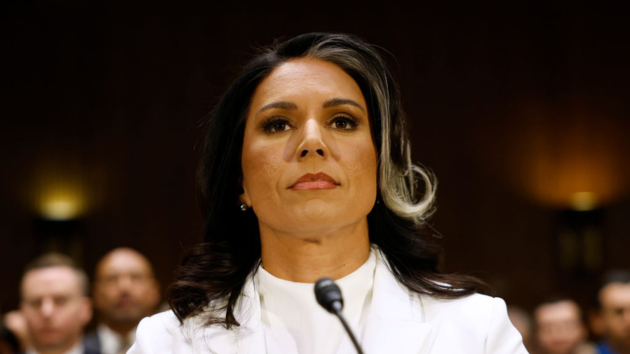
100 intelligence staffers to be fired for engaging in explicit chats: Gabbard

100 intelligence staffers to be fired for engaging in explicit chats: Gabbard
Kevin Dietsch/Getty Images

(WASHINGTON) — More than 100 intelligence community employees will be terminated and have their security clearances revoked as the intelligence community investigates group chats that allegedly discussed explicit behavior, officials said.

The chats, which were hosted on a chat system for the intelligence community that was maintained by the National Security Agency, took place on a secure intranet called Intelink in two server channels titled “LBTQA” and “IC_Pride_TWG,” according to intelligence community officials.

“This behavior is unacceptable and those involved WILL be held accountable,” Director of National Intelligence Tulsi Gabbard posted on X.

She said the “disgusting chat groups” were immediately shut down when President Donald Trump issued his executive order ending diversity, equity and inclusion initiatives in the federal government, which she called the “DEI insanity the Biden Admin was obsessed with.”

“Our IC must be focused on our core mission: ensuring the safety, security, and freedom of the American people,” Gabbard said.

Deputy Chief of Staff Alexa Henning said in a post on X Tuesday evening, “The DNI sent a memo directing all intelligence agencies to identify the employees who participated in the NSA’s ‘obscene, pornographic, and sexually explicit’ chatrooms and to terminate their employment and revoke their security clearances. Deadline: Friday.”

Gabbard, in an interview on Fox News, said on Tuesday: “There are over 100 people from across the intelligence community that contributed to and participated in this — what is really just an egregious violation of trust, what to speak of, like, basic rules and standards around professionalism. I put out a directive today that they all will be terminated and their security clearances will be revoked.”

Gabbard added: “​​Today’s action in holding these individuals accountable is just the beginning of what we’re seeing across the Trump administration, which is carrying out the mandate the American people gave him: Clean house, root out that rot and corruption and weaponization and politicization, so we can start to rebuild that trust in these institutions that are charged with an important mission of serving the American people, ensuring our safety, security and freedom.”

The chat conversations were first reported by the conservative magazine City Journal.

Copyright © 2025, ABC Audio. All rights reserved.

Egg prices predicted to soar more than 41% in 2025: USDA

Egg prices predicted to soar more than 41% in 2025: USDA
Lindsey Nicholson/UCG/Universal Images Group via Getty Images

(NEW YORK) — Egg prices are predicted to increase by 41.1% in 2025, according to a report released by the Department of Agriculture (USDA) on Tuesday.

In January, the federal agency had predicted a 20% increase.

The predicted price hike comes as a result of rising bird flu cases, which have had a substantial impact on farms.

According to the report, retail egg prices went up by 13.8% in January, after rising by 8.4% in December.

Overall, egg prices in January were 53% higher than the year before, according to the report.

The national average price for eggs hit $4.95 a dozen for shoppers in January, according to an earlier report from the U.S. Bureau of Labor Statistics.

An increasing number of commercial egg layers are being affected by the bird flu outbreak. The report estimated 18.8 million commercial egg layers were affected by bird flu in January, the report stated.

In another report published by the USDA on Feb. 14, the agency said wholesale egg prices had gone up $0.40 over a 30-day period.

“Offerings are very light to light with little chance for improvement in the near-term as highly pathogenic avian influenza (HPAI) continues to impact productive flocks,” the USDA said in the Feb. 14 report.

According to the Centers for Disease Control and Prevention, there have been 70 cases of bird flu recorded among humans, most of which have been mild.

One person has died. The victim — who was exposed to non-commercial backyard flock and wild birds — was over age 65 and had underlying medical conditions, officials said.

Copyright © 2025, ABC Audio. All rights reserved.

9 injured after NYC subway station fills with smoke: FDNY

9 injured after NYC subway station fills with smoke: FDNY
Jeenah Moon/Bloomberg via Getty Images

(NEW YORK) — Nine people suffered minor injuries after a New York City subway station filled with smoke Tuesday afternoon, authorities said.

The incident occurred at the 191st Street station in Manhattan.

The 1 train hit “some kind of piece of equipment” as it entered the station, FDNY Deputy Assistant Chief Mike Woods told reporters at the scene. That object then made contact with the third rail, creating sparks and a “smoke condition,” he said.

Emergency responders assessed nine people, who all suffered from “minor smoke inhalation-type related injuries,” Woods said. Some patients were transported to local hospitals, while others declined medical treatment, he said.

Despite the heavy smoke, Woods said there was “no active fire in the train” and that the situation was “under control.”

There was some damage to the tracks, he said. The rail at the station had to be replaced, the MTA said.

Woods called the investigation “complex” due to the depth of the subway station.

The FDNY has turned the scene over to transit personnel for further investigation and repairs.

Authorities do not believe anyone was responsible for leaving the object on the tracks, but transit officials will continue their investigation.

Delays were reported along parts of the 1 line following the incident, the MTA said.

Copyright © 2025, ABC Audio. All rights reserved.

These US cities could see surge in disease-spreading pests this spring

These US cities could see surge in disease-spreading pests this spring
Nancy Lane/MediaNews Group/Boston Herald via Getty Images

(NEW YORK) — Deviations from normal weather patterns are putting several regions in the U.S. at risk for an uptick of disease-spreading pests as winter turns to spring, according to a new analysis.

A surge in disease-spreading pests like ticks, mosquitoes, cockroaches and rodents is expected in regions that experienced especially warm or wet winters this season, according to the National Pest Management Association’s bi-annual Public Health Pest Index.

These pests can spread dangerous diseases such as Lyme disease, West Nile virus, Salmonella, plague, and hantavirus, said Jorge Parada, medical adviser for NPMA with a focus on infectious disease, in a statement. These types of pests can also trigger asthma and allergies, Parada said.

Warm winters typically allows more rats to survive, while unusual weather patterns — such as snow in New Orleans — can present a host of new pest problems, Jim Fredericks, senior vice president of public affairs for NPMA, told ABC News.

Ticks and mosquitoes survive better when it is moist, so regions that experienced especially wet winters will likely see those pests on the rise during the spring, Fredericks said.

“If the temperatures are above 50 degrees Fahrenheit, ticks will be active and in search of food,” Fredericks said.

Changes in climate — both in terms of warmer temperatures as well as the extreme weather events occurring as global temperatures rise — will have a greater impact on the threats these pests pose in the future, Fredericks said. The range for pests like ticks are also spreading due to warmer temperatures, Fredericks said.

The top U.S. cities named on the pest index include:

Boston: “Brutal” snowstorms and cold snaps pushed rodents indoors in search of warmth and food sources, according to the NPMA. In addition, a forecasted warmer start to spring could give ticks a jumpstart to the season.

Cleveland: “Mild, soggy conditions” during the winter could allow for pest populations like cockroaches and ticks to flourish as temperatures rise, the analysis found.

“The pathogens that they carry that could cause food-borne illness,” Fredericks said, adding that rodent dander and urine can also exacerbate asthma symptoms.

Denver: “A frigid and snow-packed” start to the season will likely drive house mice into homes and businesses, while white-footed mice activity inside structures could increase in rural areas, according to the NPMA.

“The white-footed mouse is actually one of the vectors for hantavirus,” Fredericks said.

Grand Rapids, Michigan: “Record-breaking” snowfall is expected to drive rats and mice indoors, and heavy rain forecasted for the area could lead to a rise in tick populations as temperatures rise, according to the NPMA.

Louisville, Kentucky: Rats and mice are expected to enter structures due to extreme cold and historic snowfall. Tick activity may also begin earlier than usual due to a warm spring.

New Orleans: Historic snowfall in the region sent rats and cockroaches into homes, and mosquitoes are expected to make a “fierce comeback” as temperatures climb, the analysis found.

Salt Lake City: Winter conditions could send house mice and white-footed mice indoors.

San Antonio: “Record-breaking warmth” during the winter allowed mosquitoes, cockroaches and ticks to stay active, and a “pest boom” is expected come spring — with a surge in bites, infestations and pest-related health concerns forecasted.

Seattle: A warm, dry start to winter could lead to an increase in rodent and cockroach activity indoors and an increase in tick populations could occur with the spring rains, according to the NPMA.

Washington, D.C.: A “rollercoaster” winter that started unusually warm and ended in heavy snowfall has made rodent activity climb significantly in the nation’s capital, the report states. Tick populations could surge if spring arrives early.

Florida: The group has issued a statewide warning for Florida, pointing to the Sunshine State’s humid climate that allows disease-carrying pests to thrive year-round, the report stated. Although the winter brought dry, cool conditions, a surge is expected this spring as rising temperatures and humidity create ideal breeding conditions.

“We have all of the mosquito species here,” Ryan Carney, an assistant professor at the University of South Florida’s Department of Integrative Biology, told ABC News. “There’s a huge diversity, over 90 species of mosquitoes. Fourteen of those are anopheles, which spread malaria.”

Mosquitoes are the deadliest animal on the planet, killing more than 1 million people per year from the diseases they carry, and Florida is no stranger to outbreaks of mosquito-borne illness. In 2023, nearly 200 people contracted dengue fever, and there were more than 1,500 cases of Zika in the state from 2016 to 2018, Carney said.

A citizen science project run by USF creates artificial intelligence algorithms to help identify and stop disease-carrying mosquitoes before they are able to infect humans and other large mammals.

“These citizen sciences, especially for mosquitoes, are a way that people can report these sightings of mosquitoes or mosquito bites, and that helps us scientists understand the biodiversity of mosquitoes in the area,” Carney said.

Copyright © 2025, ABC Audio. All rights reserved.