
Fire danger weather continues in the Great Plains, while record-breaking temperatures bake the Southwest

Fire danger weather continues in the Great Plains, while record-breaking temperatures bake the Southwest
Fire weather alerts. (ABC News)

(LOS ANGELES) — Widespread elevated fire weather danger is expected to continue across parts of the Rockies and Great Plains on Sunday, as the Southwest is forecast to see another day of record-shattering March heat wave temperatures.

Wind gusts across the Plains are forecast on Sunday to reach 30 to 60 mph. Combined with very low humidity and dry fuels, conditions could be conducive for rapid wildfire growth and spread.

The National Weather Service has issued red flag fire-danger warnings for much of the Rockies.

While not currently on alert, parts of the mid-Atlantic and Northeast will also see dry and breezy conditions on Sunday, with dry fuels contributing to an increased fire threat.

Meanwhile, the Southwest will continue to bake as a record-shattering March heat wave continues on Sunday, a day after several record-high temperature marks were matched or exceeded.

At least 18 cities across California, Arizona, Colorado, Wyoming, Nevada and Utah either broke or tied daily records on Saturday, including Yuma, Ariz., which hit a new daily record of 102 degrees; Death Valley, Calif., which reached 100; Phoenix, which saw temperatures soar to 96; and Las Vegas, which hit 92.

Relief from the Southwest heat wave is expected to come later this week, but not before another day of record-breaking temperatures.

Daily record highs are possible on Sunday and Monday in Las Vegas and Phoenix, with some daily record highs possibly being challenged in the Great Plains on Monday.

As the workweek progresses, a pattern change will bring warmer than normal temperatures and messy weather for the eastern half of the nation.

Overnight Monday and into Tuesday, a weak system is forecast to pass from the Upper Midwest through the Great Lakes, bringing showers and thunderstorms, some of which could be strong enough to produce gusty winds, isolated small hail, and spotty flooding.

By late Tuesday and into Wednesday, the system will continue to pass through the Great Lakes and eventually into the Northeast, spreading scattered showers and rain into the Northeast.

More messy weather is forecast through Wednesday and Thursday across the eastern half of the nation, mainly with scattered showers and some thunderstorms.

As April arrives on Wednesday, the weather pattern will start to change, likely bringing warmer-than-normal temperatures for the eastern half of the country. The West could also experience warmer-than-normal temperatures returning as April progresses.

What’s likely to remain consistent across the West is drier-than-normal weather, adding to an ongoing drought and record-low snowpack across the West.

Copyright © 2026, ABC Audio. All rights reserved.
Intensifying drought could trigger water shortages and prolonged fire season in the West

Intensifying drought could trigger water shortages and prolonged fire season in the West
Jacob Lake, Arizona, Burned trees from the Dragon Bravo Fire. The wildfire burned 145,000 acres on the north rim of the Grand Canyon and in Kaibab National Forest. (Photo by: Jim West/UCG/Universal Images Group via Getty Images)

(NEW YORK) — Several regions in the West could be facing worsening drought conditions, increased wildfire risk, and reduced water supplies due to record-breaking temperatures and minimal winter snowpack.

Much of the West has been coping with prolonged drought conditions that are now being worsened by historically low seasonal snowpack and persistent record-breaking temperatures. With mountain snowpack sharply reduced, the region’s water supplies are facing mounting challenges and elevated wildfire risk is occurring earlier than usual.

More than half of the West continues to experience drought conditions of varying intensity, according to the U.S. Drought Monitor. The ongoing drought was compounded by the region’s warmest winter on record, according to the National Oceanic and Atmospheric Administration (NOAA).

The drought and record-warm winter were followed by unprecedented, record-breaking heat in March, further intensifying conditions across the region.

Rounds of rain and mountain snow are expected to impact parts of the West in the coming weeks.

However, a full recovery is unlikely in the near term, meaning many detrimental impacts could persist, or even intensify, through the rest of the year. However, the long-term outlook remains uncertain, with the strength of the upcoming monsoon season and the potential development of El Niño and other influential factors.

Record low snowpack
Every major river basin and state in the West is experiencing a snow drought, a period of abnormally little snowpack for the time of year, according to NOAA.

The snow drought has significantly worsened in recent weeks following the unprecedented record-breaking March heat in the region. Snowpack is a significant indicator of drought conditions but not the only one.

Many major river basins, including the Colorado River Basin, are experiencing record-low season-to-date snowpack levels. A key metric in assessing these conditions is snow water equivalent, the amount of water contained within the snowpack. It serves as a critical indicator of the West’s water supply, helping determine how much runoff will flow into rivers and reservoirs during the spring melt.

When there is a snow drought in the West, it means “there will be a lack of available water due to the low snowpack to meet the water supply demands of the critical economic sectors we have,” Jason Gerlich, regional drought early warning system coordinator for the NOAA-National Integrated Drought Information System, told ABC News.

While many areas received average or above-average precipitation in the fall and early winter, warmer temperatures led much of it to fall as rain rather than snow, resulting in unusually low snowpack, which typically acts as a natural reservoir.

“If winter precipitation is falling as rain instead of snow, our relationship with water in the West becomes even shakier,” said Casey Olson, a climate scientist with the Utah Climate Center. “A gallon of winter rain that immediately runs off downstream is not nearly as helpful come July as a gallon of snowpack that melts in April or May. They are not equivalent gallons of precipitation in terms of our ability to use them when we need them the most.”

Snowpack across the western United States typically peaks in late March or early April, marking a critical point in the region’s water supply outlook. While additional mountain snowfall remains possible through April, and in some higher elevations, into May, recovery to normal snowpack is not climatologically possible at this point, Gerlich noted.

Drought on its own already stresses water supplies, agriculture, and ecosystems. But when winter fails to deliver significant mountain snow, those impacts can intensify. In some states, up to about 75 percent of water supplies can come from melting snow, according to the USGS.

Mounting water supply concerns
The Colorado River provides water for more than 40 million people and fuels hydropower resources in seven states: California, Arizona, Nevada, Colorado, New Mexico, Utah and Wyoming, according to the U.S. Bureau of Reclamation. Major reservoirs in the Colorado River Basin remain well below average, the agency’s latest data shows, heightening concerns about water availability across the region.

Lake Powell, the second largest reservoir in the United States, is one of them. Water levels have dropped roughly 7 feet so far this year and are forecast to continue a gradual decline through the months ahead. Despite the recent drop, the reservoir remains more than 8 feet above its record low set in April 2023.

However, current projections suggest that level could be approached, or even challenged again, by late summer if dry conditions persist.

Denver Water, the city’s public water utility, announced water restrictions for the first time since 2013 on Wednesday, seeking a 20% reduction in water use.

“The snowpack within Denver Water’s collection system has deteriorated significantly and continues to decline,” said Nathan Elder, Denver Water’s manager of water supply. “Snowpack levels in both basins are now the lowest observed in the past 40 years, with accelerated melting underway.”

Experts warn that restrictions are likely to expand in multiple states as the year progresses, barring significant changes.

Wildfire concerns increase; Long-term risk remains uncertain
A large portion of the West will likely face an elevated wildfire risk this spring and summer driven by low snowpack, dry soils, and above-average temperatures, leaving vegetation drier and more flammable than usual.

However, experts say the long-term wildfire outlook for the region is less certain than it might seem and the risk could vary in intensity in the coming months, depending on conditions.

“Low snowpack and fire don’t have a one-to-one relationship, but low snowpack can lead to an early start to the fire season,” Gerlich said.

The record-breaking March heat further dried the landscape, priming it for wildfires earlier than usual. Parts of Colorado, Wyoming and New Mexico have already seen impactful wildfires this year. Experts say the long-term wildfire outlook hinges on how several key conditions develop over the next few months.

“One positive right now is that the last few years have resulted in limited growth of the fine fuels that are quick to burn, so that does help temper fire risk for areas in the West, however, the lack of snowpack this year presents conditions through the high timber forests where fire risk this summer could be very high,” Olson added.

The latest outlook from the National Interagency Fire Center shows an overall near-average risk of significant wildland fires across the West through May with a more widespread above-average risk unfolding across the Four Corners region, including parts of Colorado, New Mexico, Utah, and Arizona in June.

“The Southwest looks to continue with the warm and dry seasonal pattern. One source of optimism is for the possibility of an active monsoon pattern this summer,” said Olson. “An active monsoon system in general should provide some relief to portions of the Southwest states, the question remains exactly where that relief would focus, and we won’t have a good handle on that until later this spring.”

Copyright © 2026, ABC Audio. All rights reserved.
Persistent heat and dangerous wildfire conditions could impact these parts of the US this weekend

Persistent heat and dangerous wildfire conditions could impact these parts of the US this weekend
ABC News

(NEW YORK) — A large swath of the country is expected to face dangerous heat and fire weather conditions this weekend, forecasts show.

The National Weather Service has issued red flag warnings for more than 47 million Americans from the Great Plains to the Southeast on Saturday due to widespread critical fire weather danger. 

Wind gusts in the Plains are expected to reach 30 to 60 mph on Saturday. Combined with very low humidity and dry fuels, conditions could be conducive for rapid wildfire growth and spread.

Gusty winds and dry conditions will also be in place from the Gulf Coast inland across the Southeast, including cities such as Lake Charles, Louisiana; Jackson, Mississippi; Birmingham, Alabama; Tallahassee, Florida; Charleston, South Carolina; and Asheville, North Carolina.

Meanwhile, a temperature roller coaster is expected in other parts of the country this weekend.

A cooldown has swept across the Midwest and Northeast following warm spring days earlier in the week.

Places in the Midwest and Northeast, like Chicago and New York City, will be noticeably cooler for Saturday, but will rebound to seasonable highs by the beginning of the new workweek.

In some regions, temperatures on Saturday will be at least 10 to 20 degrees cooler than Friday — following record high temperatures on Wednesday and Thursday and seasonably warm temperatures on Friday — forecasts show.

On Friday, some regions in the mid-Atlantic broke or tied their daily record highs for March 27, including Savannah, Georgia, which reached 89 degrees Fahrenheit, and Columbia, South Carolina, which reached 88 degrees.

As March wraps up, a pattern change will bring likely warmer than normal temperatures for the eastern half of the nation and near normal temperatures for the western half for the beginning of April.

But record-shattering heat will continue in the Southeast, with no relief coming this weekend.

Friday saw another day of record-breaking temperatures.

Phoenix reached 102 degrees; Death Valley reached 101 degrees; and Tucson, Arizona, reached 98 degrees.

Daily record highs are possible again this weekend for Las Vegas and Phoenix.

Between March 15 and March 26, more than 100 monthly records were broken or tied, and 700 daily records were broken or tied across the country, according to the National Weather Service.

Since March 1, there have been more than 1,100 daily records broken or tied across the nation.

Copyright © 2026, ABC Audio. All rights reserved.
Judge hears arguments over seizure of Fulton County 2020 election records

Judge hears arguments over seizure of Fulton County 2020 election records
Ballots are counted on election night at the Fulton County Elections Hub and Operation Center on November 5, 2024 in Fairburn, Georgia. (Photo by Megan Varner/Getty Images)

(WASHINGTON) — The FBI’s application for the warrant that led to the search and seizure of more than 650 boxes of 2020 election records from a Fulton County, Georgia, election site in January lacked any kind of evidence of intentional misconduct and relied on incorrect information, an elections expert with twenty years of experience told a federal judge Friday. 

Testifying as Fulton County’s first witness in its lawsuit against the Trump administration, Ryan Macias told the court that his review of the claims made by the FBI in their application lacked a “basis in reality.”

“The content of the witnesses is incorrect and in many cases contradictory,” he said. “The information in there is not based in reality.” 

Lawyers with the Department of Justice attempted to cast doubt on Macias’ testimony by arguing he lacks direct knowledge of the testimony in the case and is inexperienced in criminal investigations, though he was only qualified as an expert on election administration. Macias worked for both the federal government and California to administer elections as well as consulted for Fulton County in 2020.

Assistant Attorney General Tysen Duva broadly claimed, without citing any examples, that criminal investigations regularly stem from matters where initial investigations found no evidence of wrongdoing. 

“Are you aware that happens all the time?” Duva asked Macias. 

“No,” Macias responded. 

“That’s because you don’t know,” Duva responded. 

During his direct examination, Macias went through each of the claims made in the FBI’s application for the warrant to debunk and cast doubt on each allegation. 

“Do ballot images have any impact on the final tabulation of ballots?” asked attorney Kamal Ghali, referencing the claim that election officials produced inconsistent numbers of ballot images from the 2020 election. 

“No they do not,” Macias said. 

“Is the absence of ballot images evidence of misconduct?” Ghali asked. 

“No it is not,” he responded. 

Fulton County Superior Court Clerk Ché Alexander testified that the FBI refused her request to help her make an inventory of the election records they seized from her office. She testified that she was at her office during the raid and asked to make an inventory to secure the chain of custody for more than 600 boxes of records, including original ballots from the election. 

“I asked the agent to go box by box to understand what they were taking and they said absolutely not,” Alexander testified, though the FBI likely did an inventory of their own.

“I have a personal interest to do my job to keep those records safe and secure,” Alexander said. “I am under a court order to maintain records I do not have.”

DOJ lawyers sought to cast doubt on her claims, including by playing a video from a 2023 court proceeding when a lawyer for her office urged a judge to allow the removal of the records. According to the attorney, Fulton County wanted to make room for incoming records related to the 2024 election. 

“Her obligation is over at this point,” the attorney for Fulton County said in 2023. “It has a significant impact on operations. The records cannot just be kept there forever.” 

DOJ attorney Peter Cooch argued that the search of the office was effectively doing Alexander a favor, remarking, “Now that the records are sealed, the space is available to you now.” 

DOJ lawyers also played body camera footage from the raid in which Fulton County’s elections director can be heard saying, “If you want to take off 700 boxes of ballots, have at it … They can go play paper airplanes for all I care.”

Attorney Abbe Lowell, representing the Fulton County officials, argued that the search was based on incorrect information from unreliable witnesses related to claims that are years beyond the statute of limitations. 

“A week doesn’t go by without someone in the administration making an allegation of voter fraud,” Lowell said before reminding the judge that the investigation itself originated from an attorney who tried to overturn the 2020 election who was previously sanctioned for making false claims about the outcome. Lowell said the reliance on the unreliable witnesses would make “George Orwell smile in his grave.” 

DOJ attorneys have insisted that the search was based on evidence of potential misconduct and accused Fulton County officials of speculating about “some kind of grand conspiracy.” 

“It just seems like a loosey-goosey theory,” said DOJ attorney Michael Weisbuch. “They don’t like the vibe of what’s happening because that’s not a constitutional standard.” 

U.S. District Judge JP Boulee, a Trump appointee, will decide on Fulton County’s request to force the Trump administration to return the sensitive records taken from the election site. 

After election officials raised concerns about the basis for the January 2026 search, Judge Boulee last month ordered the Department of Justice to publicly release the application for the warrant, which revealed that the investigation was triggered by an attorney and close ally of President Trump who sought to overturn the results of the 2020 election.

According to the unsealed court records, the investigation centers on long-debunked allegations of voter fraud that have already been thoroughly investigated. 

Fulton County election officials have since pushed for the return of the records, arguing that the investigation focuses on “human errors that its own sources confirm occur in almost every election … without any intentional wrongdoing whatsoever.”

“The Affidavit omits numerous material facts — including from the very reports and publicly-disclosed investigations that the Affiant cites — that confirm the alleged conduct was previously investigated and found to be unintentional,” attorneys for the Fulton County officials argued. 

In a late setback ahead of Friday’s hearing, Judge Boulee quashed an attempt to force the FBI agent behind the search warrant to testify, concluding that questioning the agent could reveal “process and scope of the DOJ’s investigation,” which remains ongoing. 

President Donald Trump has long criticized the outcome of the 2020 election results in Georgia, personally pushing to overturn the results after his loss and later being indicted in two criminal cases over his actions. Those cases have since been dismissed, and Trump has continued to push for criminal accountability for what he baselessly alleged was a stolen election. 

Through a call with Director of National Intelligence Tulsi Gabbard — who was present at the January raid — President Trump personally addressed some of the agents who conducted the search and told them they were doing great work by investigating Georgia’s elections, ABC News previously reported

“I was at Fulton County, sir, at the request of the president and to work with the FBI to observe this action that had long been awaited,” Gabbard told lawmakers earlier this month when asked about her presence at the search. “It is my role based on statute that Congress has passed to have oversight over election security to include counterintelligence.” 

Copyright © 2026, ABC Audio. All rights reserved.
How police arrested a suspect in the 1990 ‘Lovers’ Lane’ cold case murders in Houston

How police arrested a suspect in the 1990 ‘Lovers’ Lane’ cold case murders in Houston
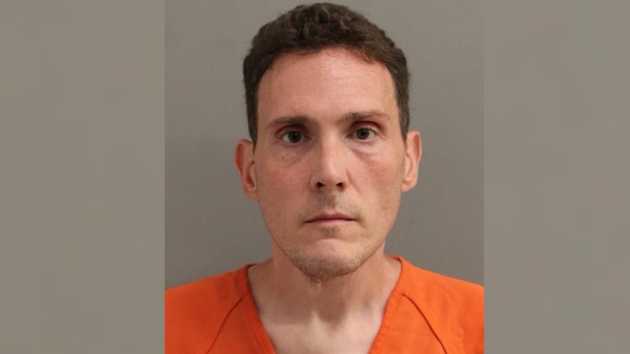
Floyd William Parrott, 64, was arrested in connection with the 1990 murders of Cheryl Henry and Andy Atkinson, the Houston police said. (Houston Police Department)

(HOUSTON, Texas) — A man who had a history of impersonating law enforcement has been arrested in a 1990 cold case double murder known as the “Lovers’ Lane” killings, authorities said.

Floyd William Parrott, 64, is charged with capital murder for the killings of Cheryl Henry, 22, and Garland “Andy” Atkinson, 21, Houston police said.

The victims’ car was found parked in a cul-de-sac on Aug. 23, 1990, police said. Henry and Atkinson, who had been dating for a few weeks, were found near the car, according to court documents. Both of their necks were cut with knives and they were tied up with rope, documents said, and Henry was raped.

At least 100 people were looked at as potential suspects over the decades, but Parrott was not one of them, Harris County District Attorney Sean Teare said at a news conference on Friday.

In late 2025, a Houston police sergeant was looking into a tip that named Parrott, and the sergeant found a Houston police report from 1996 in which Parrott was named as the suspect in a sex assault, court documents said. Parrott claimed the sex was consensual, documents said, and a grand jury declined to indict, Teare said.

The DNA from the 1996 case was “recently placed” into CODIS, the national law enforcement DNA database, documents said, and that DNA was found to be a match to swabs from Cheryl Henry’s sexual assault exam at her autopsy.

“A June 1990 sexual assault case also had a case-to-case hit,” court documents said.

Teare said Parrott impersonated law enforcement in the late 1980s, the 1990s and the 2000s.

In May 1988, Parrott was arrested for impersonating a police officer, court documents said. He was again arrested for impersonating a police officer in May 1990, and he was out on bond when the June 1990 sex assault and the August 1990 murders occurred, court documents said.

Parrott lived in the Houston area for most of his life and left a few years ago, Teare said. He was arrested in Lincoln, Nebraska, on Wednesday and is awaiting extradition to the Harris County, police said. Investigators interviewed Parrott on Wednesday and he denied knowing Cheryl Henry, according to court documents.

“Cheryl was my best friend. We did everything together,” Henry’s younger sister Shane Henry, said at the news conference.

“Hearing that the person responsible has finally been caught does not bring her back,” she said, “… but it does bring a sense of relief knowing that justice is moving forward.”

Teare said the DA’s office believes Parrott committed “numerous different types of crimes.”

“If you recognize this individual and he pulled you over … call us,” he said.

“If you met him once, if you met him at a club, if you knew him at all, reach out,” he said. 

Teare said the DA’s office can be reached at 713-274-5640.

Copyright © 2026, ABC Audio. All rights reserved.
How police arrested a suspect in the 1990 ‘Lovers’ Lane’ cold case murders in Houston

How police arrested a suspect in the 1990 ‘Lovers’ Lane’ cold case murders in Houston
Floyd William Parrott, 64, was arrested in connection with the 1990 murders of Cheryl Henry and Andy Atkinson, the Houston police said. (Houston Police Department)

(HOUSTON, Texas) — A man who had a history of impersonating law enforcement has been arrested in a 1990 cold case double murder known as the “Lovers’ Lane” killings, authorities said.

Floyd William Parrott, 64, is charged with capital murder for the killings of Cheryl Henry, 22, and Garland “Andy” Atkinson, 21, Houston police said.

The victims’ car was found parked in a cul-de-sac on Aug. 23, 1990, police said. Henry and Atkinson, who had been dating for a few weeks, were found near the car, according to court documents. Both of their necks were cut with knives and they were tied up with rope, documents said, and Henry was raped.

At least 100 people were looked at as potential suspects over the decades, but Parrott was not one of them, Harris County District Attorney Sean Teare said at a news conference on Friday.

In late 2025, a Houston police sergeant was looking into a tip that named Parrott, and the sergeant found a Houston police report from 1996 in which Parrott was named as the suspect in a sex assault, court documents said. Parrott claimed the sex was consensual, documents said, and a grand jury declined to indict, Teare said.

The DNA from the 1996 case was “recently placed” into CODIS, the national law enforcement DNA database, documents said, and that DNA was found to be a match to swabs from Cheryl Henry’s sexual assault exam at her autopsy.

“A June 1990 sexual assault case also had a case-to-case hit,” court documents said.

Teare said Parrott impersonated law enforcement in the late 1980s, the 1990s and the 2000s.

In May 1988, Parrott was arrested for impersonating a police officer, court documents said. He was again arrested for impersonating a police officer in May 1990, and he was out on bond when the June 1990 sex assault and the August 1990 murders occurred, court documents said.

Parrott lived in the Houston area for most of his life and left a few years ago, Teare said. He was arrested in Lincoln, Nebraska, on Wednesday and is awaiting extradition to the Harris County, police said. Investigators interviewed Parrott on Wednesday and he denied knowing Cheryl Henry, according to court documents.

“Cheryl was my best friend. We did everything together,” Henry’s younger sister Shane Henry, said at the news conference.

“Hearing that the person responsible has finally been caught does not bring her back,” she said, “… but it does bring a sense of relief knowing that justice is moving forward.”

Teare said the DA’s office believes Parrott committed “numerous different types of crimes.”

“If you recognize this individual and he pulled you over … call us,” he said.

“If you met him once, if you met him at a club, if you knew him at all, reach out,” he said. 

Teare said the DA’s office can be reached at 713-274-5640.

Copyright © 2026, ABC Audio. All rights reserved.
Tiger Woods involved in rollover crash in Florida: Sheriff

Tiger Woods involved in rollover crash in Florida: Sheriff

(JUPITER ISLAND, Fla.) –Tiger Woods was involved in a rollover crash in Jupiter Island, Florida, on Friday afternoon, the Martin County Sheriff’s Office said.

His condition was not immediately clear.

ABC News has reached out to Woods’ reps for comment.

The golfer was seriously hurt in a 2021 crash that occurred in Southern California.

The SUV he was driving, a 2021 Genesis GV80, was found several feet away from the center divider, in an area that had a “high-frequency” of accidents, officials said at the time.

Authorities said there was no “evidence of impairment” in that crash, adding that the wreck was “purely an accident.”

Following the accident, Woods told Golf Digest in an interview that he began a rehabilitation process that included three months in a hospital-type bed in his home.

In 2017, Woods was arrested on suspicion of driving under the influence in Jupiter, Florida. An incident report at the time said that he was asleep and “had to be woken up.” Woods was later released on his own recognizance.

Woods shared a statement after the incident apologizing to his family, friends and fans.

This is a developing story. Please check back for updates.

Copyright © 2026, ABC Audio. All rights reserved.
NYPD, FBI disrupt alleged plot to kill a Palestinian activist

NYPD, FBI disrupt alleged plot to kill a Palestinian activist
In this May 15, 2025, file photo, Nerdeen Kiswani speaks at a Nakba day protest in Brooklyn, New York. (Alexi Rosenfeld/Getty Images, FILE)

(NEW YORK) — The NYPD and the FBI said they have disrupted an alleged plot to kill a Palestinian activist, according to law enforcement officials and unsealed court documents.

Authorities arrested Alexander Heifler in Hoboken on Thursday night on charges of unlawfully possessing and unlawfully making firearms. He is also accused of plotting to “go after” activist Nerdeen Kiswani, co-founder of Within Our Lifetime, who is an organizer of many of the pro-Palestinian protests in New York City.  

Kiswani is not identified by name in the criminal complaint, but she posted on social media the FBI informed her she was the alleged target.

This is a developing story. Please check back for updates.  

Copyright © 2026, ABC Audio. All rights reserved.

Hackers breached FBI Director Kash Patel’s emails prior to tenure as director: Sources

Hackers breached FBI Director Kash Patel’s emails prior to tenure as director: Sources
Federal Bureau of Investigation Director Kash Patel testifies during a Senate Intelligence Committee hearing on worldwide threats in the Hart Senate Office Building on March 18, 2026 in Washington, DC. (Kevin Dietsch/Getty Images)

(WASHINGTON) — Hackers breached FBI Director Kash Patel’s personal email, according to sources familiar with the situation. 

The majority of the emails were from prior to 2019, according to sources, and appear to be from before his tenure at the FBI. There were a few emails from 2022, sources told ABC News. 

“The FBI is aware of malicious actors targeting Director Patel’s personal email information, and we have taken all necessary steps to mitigate potential risks associated with this activity. The information in question is historical in nature and involves no government information,” the FBI said in a statement Friday.

It is unclear which country hacked the director’s old emails, however, Iranian-linked hackers online have claimed credit for the hack. 

“The Department of State’s Rewards for Justice program offers up to a $10 million reward for information leading to the identification of the Handala Hack Team out of Iran — a group that has frequently targeted U.S. government officials,” the FBI said.

Reuters was the first to report the breach. 

This is a developing story. Please check back for updates.

Copyright © 2026, ABC Audio. All rights reserved.

Secret Service agent on Jill Biden detail shoots self in the leg, official says

Secret Service agent on Jill Biden detail shoots self in the leg, official says
Former US First Lady Jill Biden listens to former US President Joe Biden (off frame) as he delivers his farewell address to the nation from the Oval Office of the White House on January 15, 2025 in Washington, DC. (Mandel Ngan – Pool/Getty Images)

(PHILADELPHIA) — A U.S. Secret Service agent assigned to former first lady Jill Biden’s detail shot himself in the leg on Friday morning as the result of a “negligent discharge,” according to an agency official.

Dr. Jill Biden was not in the vicinity of the shooting, the official said.

The agent “suffered a non-life-threatening injury following a negligent discharge while handling a service weapon at the Philadelphia International Airport during a protective assignment,” the Secret Service said in a statement.

“There were no reported injuries to any other individuals and the special agent is being evaluated at an area hospital in stable condition,” the agency said.

There is no threat associated with this incident, the Secret Service official said earlier.

Emergency medical services responded to the scene and transported the agent to Penn Presbyterian Medical Center where he was listed in stable condition, the Philadelphia Police Department said.

The scene is being held for the investigation and there have been no disruptions to airport operations, the police department said.

The Secret Service’s Office of Professional Responsibility “will be reviewing the facts and circumstances of this incident,” the agency said.

This is a developing story. Check back for updates.

Copyright © 2026, ABC Audio. All rights reserved.