
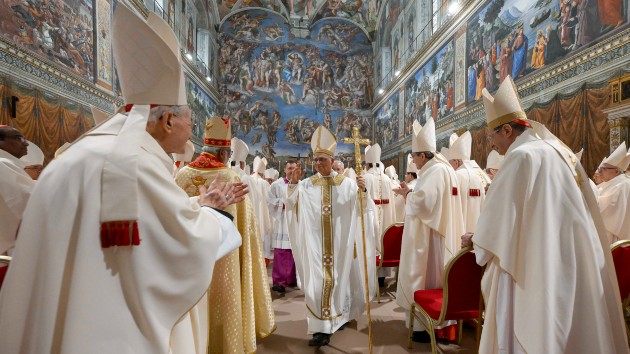
Pope Leo XIV’s family tree shows Black roots in New Orleans

Pope Leo XIV’s family tree shows Black roots in New Orleans
(Photo by Francesco Sforza Vatican Media via Vatican Pool/Getty Images)

(NEW YORK) — Robert Francis Prevost, the Chicago-born man who became Pope Leo XIV on Thursday, has Black family roots in New Orleans, Louisiana, records show.

ABC News has obtained several records, including U.S. Census records from the early 1900s, demonstrating that the first American pope’s family tree reflects the complex racial history of this country.

Both of Leo XIV’s maternal grandparents, Joseph Martinez and Louise Baquié, are described as Black or mulatto in several census documents.

On their 1887 marriage license, Martinez listed his birthplace as Haiti, and birth records show that he was born in Santo Domingo, Dominican Republic. Chris Smothers, professional genealogist for 15 years and historian studying at Simmons University, told ABC News that these were the same territories at the time. Baquié’s birth records show she was born in New Orleans.

Despite Martinez being born abroad, his father — the pope’s great-grandfather — was found to be from Louisiana, Smothers said, emphasizing the pope’s ancestry in the American South.

“It’s clear that the Pope has centuries-long ties to free people of color in Louisiana,” Smothers told ABC News.

On the 1900 census, while his family lived in New Orleans, both Leo XIV’s maternal grandparents and his aunts — Irma and Margaret — were identified as Black. However, in 1920, after the family migrated to Chicago and had the pope’s mother Mildred, that decade’s census reflected their race as white.

Like so many families fleeing the South at that time, they could have shifted their racial identity. Smothers called this a common “survival strategy” at the time.

“In that intervening period, they not only migrated from New Orleans to Chicago in the period between 1910 and 1912 but they also changed their racial identifiers, which is very common,” Jari Honora, a genealogist and family historian at the Historic New Orleans Collection, told ABC News. “Many families did this as a question of their livelihoods as an economic decision, they passed for white.”

ABC News also obtained photos of those grandparents from the local genealogists working on uncovering this lineage. The pope’s brother, John Prevost, recognized the photos and confirmed to ABC News that they depict their grandparents.

While John Prevost knew about his grandparents’ connection to Haiti and the family’s time in New Orleans, he told ABC News that their family never discussed racial matters.

Creoles in New Orleans have been a part of Louisiana history for almost as long as it has been a state and have contributed enormously to the culture of Louisiana. The word Creole commonly describes mixed-race people of color.

“To be, you know, Creole in Louisiana, to be a free person of color in New Orleans in that time really indicates that there was at some point an enslaved person that had to fight for their freedom,” Smothers said, though genealogists have yet to find direct evidence linking the pope’s ancestry to any enslaved individual.

In a statement released Thursday night, New Orleans Mayor Latoya Cantrell said “the City of New Orleans is a melting pot of different religions and beliefs. We are thrilled to welcome Pope Leo XIV, who embodies morality, unity, and inclusivity.”

Genealogists continue to dig into the pope’s records to find out more information about his ancestry. For now, it seems that Pope Leo is not only the first American pope, but he also represents the melting pot of backgrounds in the U.S.

“They were a Creole of color family — Creole indicating their cultural background that they are rooted in this place in Louisiana, which, of course, has its origins of the French and Spanish colony with a significant West African population. And of color indicating that they were a racial mix. They were a combination of all of those ethnic backgrounds,” Honora said.

Honora also pointed to the symbolic nature of the pope’s ancestry.

“The story, the trajectory does not surprise me. But the fact that a descendant of that family … is the pope, you know, really adds the element of surprise,” he said.

Copyright © 2025, ABC Audio. All rights reserved.
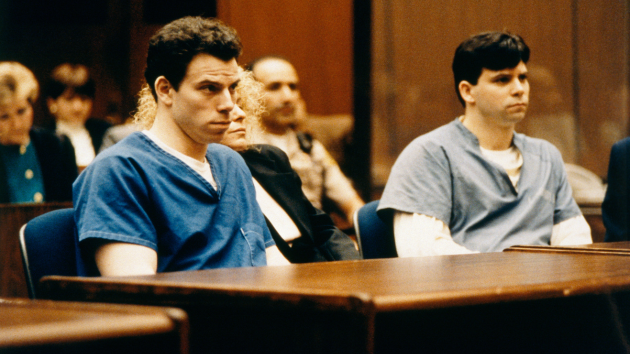
Menendez brothers’ resentencing hearing will be next week; risk assessment says they pose moderate risk if released

Menendez brothers’ resentencing hearing will be next week; risk assessment says they pose moderate risk if released
Photo by Ted Soqui/Sygma via Getty Images

(LOS ANGELES) — Erik and Lyle Menendez‘s much-anticipated resentencing hearing will move forward on May 13 and 14, a judge ruled on Friday, as new details about the brothers’ alleged behavior behind bars were revealed in court.

A hearing was held Friday to determine whether the brothers’ resentencing case should include information from the California Board of Parole’s newly completed risk assessment, which was conducted as a part of a separate clemency path. The risk assessment came at the request of Gov. Gavin Newsom as a part of the brothers’ clemency bid; the brothers are pursuing multiple avenues to freedom, and the clemency path is separate from the resentencing path.

Judge Michael Jesic indicated he will take some of the risk assessment into account, but that the information in it is preliminary and attorneys can’t question the forensic psychologists who performed the examinations.

The risk assessment said Erik and Lyle Menendez pose a moderate risk to the community if they’re released.

The assessment revealed the brothers possessed illegal cellphones in prison, among numerous other violations. Erik Menendez had a phone as recently as January of this year, which Los Angeles County District Attorney Nathan Hochman stressed was during the resentencing effort when he should have been on his best behavior.

Erik Menendez allegedly bought and traded drugs and allegedly helped inmates commit tax fraud years ago, according to the assessment. The psychologists found Lyle Menendez to be narcissistic.

The assessment said the brothers had a likelihood to not follow the law out of prison if they ignored rules in prison.

Jesic appeared to dismiss many of the findings.

The assessment likely includes the positive work the brothers have done in prison, too. Hochman’s predecessor, George Gascón, has praised them for furthering their education, rehabilitating themselves and starting programs to help other inmates.

Also at Friday’s hearing, defense attorney Mark Geragos withdrew his attempt to get Hochman kicked off the case after making allegations against his background and alleging the DA hired a crisis public relations firm to go after the brothers. Hochman denied that, saying the PR firm was not for the brothers but for his campaign, and that the PR firm ended its work after he was elected in November.

Friday’s hearing followed a dramatic court appearance on April 17, which was initially set to be the brothers’ resentencing hearing. However, on April 16, the district attorney’s office in a filing urged Jesic to delay the resentencing hearing if he couldn’t obtain a copy of the risk assessment report in time for court.

Hochman, who wants to keep the brothers behind bars, argued the risk assessment is relevant to the resentencing case, while Geragos noted a strong desire for the assessment to be used only for the June 13 parole hearing.

For next week’s resentencing hearing, Geragos said he will have seven witnesses rather than his previously planned 20 witnesses. Two experts are expected to testify.

Erik and Lyle Menendez — who are serving life in prison without the possibility of parole for the 1989 murders of their parents, Jose and Kitty Menendez — have the support of over 20 family members in their efforts to be freed after 35 years behind bars.

Their resentencing case gained momentum in October when Gascón announced he was in support of resentencing.

Gascón recommended the brothers’ sentences of life without the possibility of parole be removed, and said they should instead be sentenced for murder, which would be a sentence of 50 years to life. Because both brothers were under 26 at the time of the crimes, they would be eligible for parole immediately with the new sentence.

Gascón’s office said its resentencing recommendations take into account many factors, including rehabilitation in prison and abuse or trauma that contributed to the crime.

In November, Gascón lost his reelection bid to Hochman, who in March filed a motion to withdraw the resentencing petition, calling the brothers’ claims of self-defense part of a litany of “lies.” The judge denied the request by Hochman.

Copyright © 2025, ABC Audio. All rights reserved.

Ohio high school student dies following injury in lacrosse match

Ohio high school student dies following injury in lacrosse match
Photo by Grant Halverson/NCAA Photos via Getty Images

(BAY VILLAGE, Ohio) — A sophomore at a high school in Ohio has died after sustaining an injury during a lacrosse match, according to Bay High School, where he played.

Dylan Veselic was playing in a game for the school, located in Bay Village, against Olmsted Falls on Tuesday when he was injured.

The school did not release what injuries Veselic suffered during the game, but Veselic was taken into surgery Tuesday evening and he died on Thursday morning, a district official confirmed to ABC News.

“With heavy hearts, the Veselic Family shares the news that Dylan has passed away from injuries suffered during a lacrosse game,” the school said in a statement on its website.

“Dylan was a well-liked and respected young man who touched the lives of many with his kindness, character and spirit. We extend our deepest condolences to his family during this unimaginably difficult time. Our thoughts and prayers are with them, and we hope they find comfort in the love and support of our community,” Bay High School Principal Jason Martin said in a statement on Thursday.

“We are also deeply grateful to our neighboring communities for their outpouring of compassion and support. The response and comments throughout the day from his teachers, coaches, teammates and classmates have been a powerful reminder of the positive impact he had on those around him and the enduring mark he has left on all of us,” Martin said.

Matt Spellman, the athletic director of Bay Village Schools, said the team and coaches are grateful for the support they have been shown by surrounding teams and communities.

“Dylan was an amazing student, always wearing a smile on his face while supporting his fellow teammates. He was kind, hardworking, and dedicated, consistently showing leadership, empathy, and a positive attitude both on the field and in the classroom. Dylan’s enthusiasm, determination, and willingness to help others made him a role model for his peers,” Spellman said.

The school district posted photos of tributes that had popped up around campus for Veselic, including a rock painted with his number and signs created by younger students.

Copyright © 2025, ABC Audio. All rights reserved.
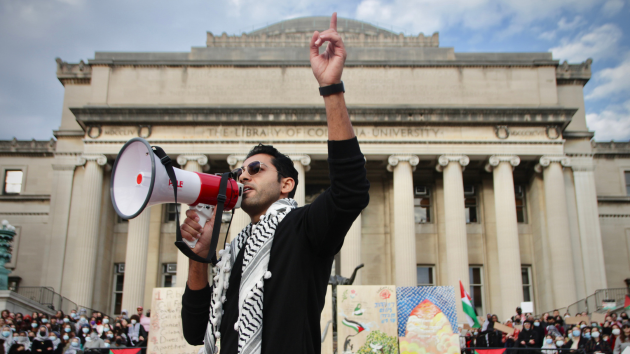
Columbia student arrested during citizenship interview can remain free, court says

Columbia student arrested during citizenship interview can remain free, court says
Photo by Mukta Joshi/Getty Images

(NEW YORK) — Mohsen Mahdawi, the Columbia University student who was arrested last month during his citizenship interview, can remain free from custody while his case proceeds, a federal appeals court said on Friday.

The three-judge panel for the U.S. Court of Appeals for the 2nd Circuit denied an effort by the Trump administration to stay a federal judge’s ruling ordering Mahdawi’s release.

Mahdawi, who co-founded a university organization called the Palestinian Student Union with detained Columbia student Mahmoud Khalil, was born in a refugee camp in the West Bank before moving in 2014 to the U.S. where he has been a legal resident for 10 years.

His lawyers believe that, like Khalil, he is being targeted by the Trump administration under Immigration and Nationality Act section 237(a)(4)(C)(i), which asserts that the secretary of state can deem a person deportable if they have reasonable ground to believe that the person’s presence or activities in the U.S. could have adverse foreign policy consequences.

U.S. District Judge Geoffrey Crawford last week ordered Mahdawi released from detention while his case proceeds, finding that Mahdawi presents no flight risk and saying that the Columbia University student should remain in Vermont, where he has a home, and attend school remotely.

On Friday, the appeals court agreed with Judge Crawford’s order and concluded that the government has not shown any “irreparably injury from either his release on bail or continued presence in the District of Vermont pending his removal proceedings.”

The three-judge panel also said the government is “unlikely to succeed” on its arguments that Judge Crawford did not have jurisdiction over Mahdawi’s habeas petition and said the Justice Department was also “unlikely to succeed” on its claims that the district court lacked the authority to order Mahdawi’s release.

“The practical effect of the relief the government seeks would be Mahdawi’s re-detention,” the judges said. “Individual liberty substantially outweighs the government’s weak assertions of administrative and logistical costs.”

Mahdawi, who is expected to graduate from Columbia next month, was arrested at a U.S. Citizenship and Immigration Services office in Vermont, where he was taking his last step in the process to become a U.S. citizen.

In an interview with ABC News after his release, Mahdawi recounted his arrest and detainment, saying that he feared his citizenship interview was a “trap.”

“It was a moment of like, should I be happy or should I be cautious when I received the notice?” Mahdawi told ABC News about receiving the notice for his citizenship interview. “And I sense that this might be a trap. And for sure, indeed, it was an alarm bell where I directly reached out to my legal team in order to navigate, you know, the pros and cons and this risk that I think that I may lose my freedom.”

In response to the government’s allegations against him, Mahdawi and his lawyers have disputed accusations that he ever threatened Israelis or those of the Jewish faith.

“So for them to accuse me of this is not going to work, because I am a person who actually has condemned antisemitism,” Mahdawi told ABC News. “And I believe that the fight against antisemitism and the fight to free Palestine go hand in hand, because, as Martin Luther King said, injustice anywhere is a threat to justice everywhere.”

Copyright © 2025, ABC Audio. All rights reserved.
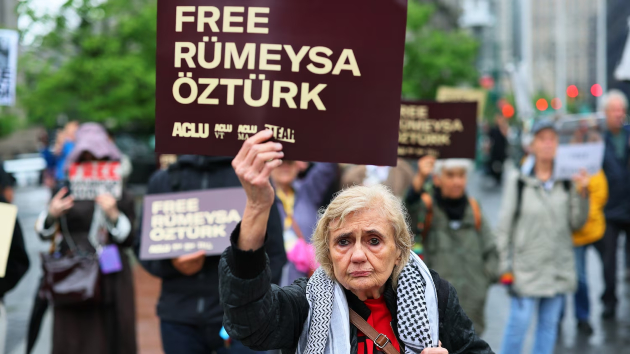
Judge orders release of Tufts University doctoral student from ICE custody

Judge orders release of Tufts University doctoral student from ICE custody
Michael M. Santiago/Getty Images, FILE

(NEW YORK) — A federal judge in Vermont has ordered that a Tufts University doctoral student be released on bail from ICE custody after her visa was revoked by the Trump administration.

Rumeysa Ozturk testified remotely at her bail hearing Friday from the detention facility in Louisiana where she has been held since ICE agents detained her near her home in Massachusetts on March 25.

Her lawyers argued that the Turkish national and former Fulbright scholar is being targeted by the Trump administration because of a column she co-wrote in her student newspaper criticizing the university’s response to resolutions approved by the Tufts Community Union Senate.

Those resolutions called on the university to “acknowledge the Palestinian genocide, apologize for University President Sunil Kumar’s statements, disclose its investments and divest from companies with direct or indirect ties to Israel,” she wrote in the op-ed.

The judge ordered her released on bail while the government’s case against her proceeds.

In sworn declarations and court hearings, Ozturk and her lawyers stressed the urgent need for her to be released, noting she has had at least 12 asthma attacks since she was detained. They also accused the detention facility of being overcrowded and unsanitary, which they said may be affecting her well-being.

Wearing a hijab, glasses, and an orange jumpsuit, Ozturk testified via Zoom about the humanitarian work she is involved in as part of her studies in child development. She also testified about her involvement in school groups and projects.

Ozturk told the judge that she organized an event she called “collective grieving for children experiencing war and conflicts” that aimed to help children “from Gaza to Israel, from Russia to Ukraine … from all parts of the world.”

“I think as people who are working in academia for child development and well-being, it is sometimes possible that we forget the emotional touch or grief extending to children that we don’t necessarily work with,” she said. “But that doesn’t mean that we don’t grieve for other children, all of them are ours, from all parts of the world experiencing very sad events including war and conflict.”

Ozturk said during the hearing that, should she be released on bail, Tufts has offered her several housing options she hopes to take up in order to finish her Ph.D.

At one point during the hearing, she was granted a break to take asthma medication after appearing at several points to clutch her chest as she struggled to speak. She testified she had an asthma attack at an airport in Atlanta when she was being transported to Louisiana.

“I was afraid and I was crying,” she testified, adding that her daily maintenance inhaler was not initially provided to her.

Secretary of State Marco Rubio said last week that the government revoked Ozturk’s visa due to her pro-Palestinian activism.

“If you apply for a visa to enter the United States and be a student, and you tell us the reason you are coming to the United States is not just because you want to write op-eds, but because you want to participate in movements that are involved in doing things like vandalizing universities, harassing students, taking over buildings, creating a ruckus — we’re not going to give you a visa,” stated Rubio, who said that the State Department may have revoked more than 300 student visas since the beginning of the second Trump administration.

Copyright © 2025, ABC Audio. All rights reserved.
Murder victim ‘speaks’ beyond the grave in AI generated video at sentencing

Murder victim ‘speaks’ beyond the grave in AI generated video at sentencing
Brian A. Jackson/South Florida Sun Sentinel

(NEW YORK) — The family of an Arizona man killed in a road rage incident nearly four years ago brought him back last week as an AI-generated image to face the man responsible for his killing give an impact statement to the judge.

The video message created by Christopher Pelkey’s sister that used his likeness and voice during the May 1 sentencing was the first time the technology was used in an Arizona court at a sentencing, according to records.

Pelkey was killed in November 2021 by Gabriel Paul Horcasitas, who was ultimately convicted of manslaughter charges. The AI-generated Pelkey spoke to Horcasitas in court and sought forgiveness.

“In another life, we probably could have been friends,” the avatar said in the video. “I believe in forgiveness and in God who forgives. I always have and I still do.”

Stacey Wales, Pelkey’s sister, told ABC affiliate KNXV that the slain victim’s friends and family “agreed this capture was a true representation of the spirit and soul of how Chris would have thought about his own sentencing as a murder victim.”

Wales said she wrote the script for the video and noted that her brother was a forgiving, God-fearing man.

Dozens of other family members also provided victim impact statements and expressed anger over Horcasitas’ actions.

Prosecutors asked the judge for Horcasitas to be sentenced to nine and a half years in prison, but Judge Todd Lang ultimately issued a 10 and a half year sentence. Lang said he was moved by the AI-generated video.

“I loved that AI, thank you for that. As angry as you are, as justifiably angry as the family is, I heard the forgiveness,” the judge said during the sentencing. “I feel that that was genuine.”

Horcasitas’s attorney, Jason Lamm, told ABC News that he was not given advanced notice about the video. He argued in court that Pelkey was the one who instigated the road rage incident and what the judge heard was a “kinder, more gentle” version of Pelkey.

“I appreciate the fact that victims have the right to address the court, and this was a cathartic endeavor for Stacey Wells, but this was cringe,” Lamm told ABC News.

He said he has filed a notice of appeal for his client and that the use of the AI-generated video will likely be one of the points of contention.

“This will be a bellwether case not just for Arizona but also courts around the country to rule on the use of AI in victim impact statements,” Lamm said.

Arizona Supreme Court Chief Justice Ann Timmer provided a statement to KNXV about the use of AI in court cases.

“AI has the potential to create great efficiencies in the justice system and may assist those unschooled in the law to better present their positions. For that reason, we are excited about AI’s potential. But AI can also hinder or even upend justice if inappropriately used,” she said in her statement.

“A measured approach is best. Along those lines, the court has formed an AI committee to examine AI use and make recommendations for how best to use it. At bottom, those who use AI—including courts—are responsible for its accuracy,” she added.

Copyright © 2025, ABC Audio. All rights reserved.
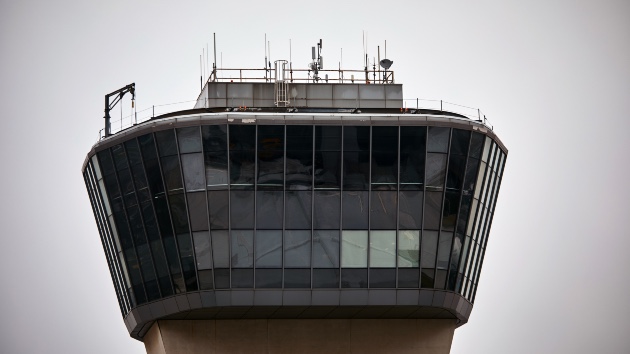
Radar screens at Newark airport went black again overnight

Radar screens at Newark airport went black again overnight
Andres Kudacki/Getty Images

(NEWARK, N.J.) — Radar screens at New Jersey’s Newark Liberty International Airport went black again early Friday morning.

The brief outage happened at 3:55 a.m.

Air traffic controllers could be heard telling a FedEx plane that their screens went dark and then asking the aircraft to tell their company to put pressure on to get the problem fixed.

In another transmission, a controller told an arriving private jet that the airport just had a brief radar outage and to stay at or above 3,000 feet in case the controllers couldn’t get in touch during the aircraft’s descent.

Last week, an outage at Newark caused ATC computer screens to go dark for roughly 60 to 90 seconds and prevented controllers from talking to aircraft during that time, according to multiple sources with knowledge of the incident. As a result, the Federal Aviation Administration briefly halted all departures to the airport.

Following the outage, several controllers went on medical leave, calling the experience a traumatic event. The controllers are entitled to at least 45 days away from the job and must be evaluated by a doctor before they can return to work.

The facility where controllers work the airspace around Newark airport is located in Philadelphia and was already short on air traffic controllers.

This increased shortage sparked massive delays and cancellations at Newark over the last two weeks.

On Thursday, the Department of Transportation announced plans for a new, “state-of-the-art” air traffic control system to replace the “antiquated” system, saying it will improve safety and cut back on delays.

Changes include swapping out old telecommunications for “new fiber, wireless and satellite technologies”; “installing new modern hardware and software”; replacing 618 old radars; and building six new air traffic control centers and replacing towers, the Transportation Department said.

Transportation Secretary Sean Duffy said he hopes to have the system built in the next three to four years.

Duffy didn’t ballpark a price tag, simply saying it will cost “billions.” Duffy said he will ask for the full amount up-front from Congress, which has previously signaled support over calls for the modernization of ATC systems.

This is a developing story. Please check back for updates.

Copyright © 2025, ABC Audio. All rights reserved.

1 boy killed, 2 hurt in stabbing outside their high school; 2 classmates arrested

1 boy killed, 2 hurt in stabbing outside their high school; 2 classmates arrested
mbbirdy/Getty Images

(SANTA ANA, Calif.) — One student was killed and two others were wounded in a stabbing outside their Southern California high school, and two of their classmates have been arrested, authorities said.

The students were attacked during a fight in front of Santa Ana High School at about 3:25 p.m. Wednesday, shortly after dismissal, according to school officials and police in Santa Ana, which is about 30 miles southeast of Los Angeles.

A 14-year-old boy was hospitalized in critical condition and later died from his injuries, police said. He was identified later in the week by the Orange County coroner as Armando Morales.

A 15-year-old boy and 16-year-old boy were hospitalized in stable condition, police said. The Santa Ana Police Department later identified the boys as brothers.

The attack appeared to be gang-related, Santa Ana police spokesperson Natalie Garcia told reporters.

Garcia said Wednesday that police were searching for the two unidentified suspects. On Thursday, police said the suspects — a 15-year-old boy and a 17-year-old boy — were identified and turned themselves in.

“Based on interviews with the parents, witness statements, and other video surveillance, both suspects were arrested and booked into juvenile hall for murder and attempted murder,” Garcia told reporters.

The unidentified boys were taken to Juvenile Hall and booked for murder and attempted murder, police said.

“Our thoughts are with the family of the student who passed, and with all those impacted by this senseless act of violence,” the Santa Ana Unified School District said in a statement.

“Out of an abundance of caution, there will be an increased presence of Santa Ana School Police on and around Santa Ana HS on Thursday,” the district added.

Copyright © 2025, ABC Audio. All rights reserved.

Chicago reacts to the election of the city’s own Pope Leo XIV

Chicago reacts to the election of the city’s own Pope Leo XIV
(Photo by Francesco Sforza – Vatican Media via Vatican Pool/Getty Images)

(CHICAGO) — When Sherry Stone learned that childhood friend Robert Prevost was elected the 267th pope of the Roman Catholic Church on Thursday, she got on her computer and did what few people can do: She emailed him a note of congratulations.

“I told him we’re thinking of having our next grade school reunion at the Vatican,” she said.

The election of a former Hyde Parker named Barack Obama to the White House in 2009 catapulted this city into a joyous frenzy for months, and having produced a president still remains a source of pride.

When news broke Thursday about Prevost’s election as the first American pope, the mood throughout the city was similar. Immediately, memes went viral showing Pope Leo XIV holding a hot dog, dipping his Italian beef into gravy and gripping a bottle of Malort, the city’s unofficial liqueur. Outside Wrigley Field, the Chicago Cubs marked the moment by announcing on its legendary sign: “Hey Chicago, He’s a Cubs Fan!” Similarly, Bennison’s, a bakery in Evanston, just north of the city, announced a new sugar cookie with Prevost’s likeness that it promised was “as divine as the moment.”

Illinois Gov. JB Pritzker released a statement calling the news “historic.”

“Pope Leo XIV ushers in a new chapter that I join those in our state welcoming in at a time when we need compassion, unity, and peace,” he said.

Chicago Mayor Brandon Johnson used the news to send a more informal message to the new pope: “Everything dope, including the pope, comes from Chicago!” he posted on X. “Congratulations to the first American Pope Leo XIV! We hope to welcome you back home soon.”

While Leo spent two decades in northern Peru, where he became a bishop and a naturalized citizen, his early roots are in the southwest side, an area known for its legacy of steel mills and auto plants, White Sox and Blackhawks fans, rows of brick bungalows and neighborhood churches and grade schools.

Born in Chicago in 1955, Leo attended St. Mary’s of the Assumption, a now-shuttered grade school on the city’s edge, and he grew up in Dolton, a southwest suburb located just across the street from the school. He later earned his Master of Divinity in 1982 from Catholic Theological Union in Hyde Park, which is situated along the lakefront, and was ordained the same year. He started his ministry with the Augustinian Province of Chicago and later was named prior general of the worldwide Augustinian Order, according to the Catholic Theological Union.

The Rev. William Lego, who is also a member of Augustinian Order, attended grade school, high school and seminary with Leo before both men became young priests. He said on Thursday that he is still getting used of calling “Father Bob” by his new name.

“He was always very intelligent, never jumped to conclusions, he held people with respect, and he listened. I’m sure that’s what he will bring to the papacy,” said Lego.

As for their shared Chicago roots, Lego added, “There will always be a note of pride.”

As with Obama, many locals have a personal connection with Leo. Because their last names both ended with a “P” at the time, Nadia Weer sat next to Leo for eight years in the classroom. She said even back then he was so devout and studious his nickname was “Father Robert.”

“We always assumed he would be a priest,” she said. “He was true blue. He was good. I’m really proud of him. You like people to be successful when they deserve it. And Robert does deserve it.”

The intensity Leo had with his faith, even as a young boy, impressed Stone, who said he once told people he wanted to eventually lead the church as pope.

“Midwest people are very even keeled. I think having grown up in that environment that he’ll be a centralist pope. He’ll bring people together. He’ll be one of the great popes,” she said.

Leo’s brother John Prevost told ABC News on Thursday that Leo never “questioned” his vocation in life and that, as a child, he often “played priest” using the ironing board as his altar.

“I don’t think he’s ever thought of anything else,” John Prevost said.

Many remembered Leo’s family as similarly dedicated to their faith. His father, a school principal on Chicago’s South Side, volunteered at the Archdiocese of Chicago in the 1990s. Janet Sisler, associate superintendent of schools for the archdiocese at the time, remembered that “Father Bob” would stop by when he returned to his hometown.

It was obvious, there was “a family history of being dedicated to their faith and dedicated to service,” she said. “He grew up in that life and continued to imbue his life decisions with service of faith and the promotion of justice.”

Chicago’s roots in the labor movement were likely an influence, as well.

“He came from a family where both his mother and father worked. He understood how people can have a commitment to work and to family and to their faith,” she said. “This is a new pope who understands the importance of community and the importance of church interacting in a positive way to serve the world.”

Copyright © 2025, ABC Audio. All rights reserved.

Destined to be pope: Brother says Leo XIV always wanted to be a priest

Destined to be pope: Brother says Leo XIV always wanted to be a priest
John Prevost, brother of newly elected Pope Leo XIV, Robert Prevost, speaks with ABC News in New Lenox, Illinois, May 8, 2025. Image via ABC News.

(CHICAGO) — When Robert Prevost was in the first grade, his neighbor told him he would be the first American pope, his brother told ABC News.

On Thursday, that prophecy came true, when Prevost, a 69-year-old cardinal, was elected to be the 267th pontiff — and the first from the United States.

Before he was Pope Leo XIV, Prevost grew up the youngest of three brothers in the South Chicago suburb of Dolton.

He always wanted to be a priest, his older brother, John Prevost, told ABC News outside his home in Illinois on Thursday.

“He knew right away. I don’t think he’s ever questioned it. I don’t think he’s ever thought of anything else,” John Prevost said.

As a child, Pope Leo XIV “played priest,” John Prevost said. “The ironing board was the altar.”

The pope is a White Sox fan, his brother confirmed. “He’s a regular, run-of-the-mill person,” he said.

Leo started to emerge as a frontrunner for the papacy in the days before the conclave began, according to the Rev. James Martin, a papal contributor to ABC News.

John Prevost said he spoke to his brother on Tuesday, before the cardinals went into the secretive conclave, and told his younger brother that he also believed he could be the first American pope. At the time, his younger brother called it “nonsense” and “just talk,” saying, “‘They’re not going to pick an American pope,” John Prevost said.

“He just didn’t believe it, or didn’t want to believe it,” John Prevost said.

John Prevost said he expects his brother will follow in the late Pope Francis’ footsteps as a voice for the disenfranchised and poor.

“I think they were two of a kind,” John Prevost said. “I think because they both were in South America at the same time — in Peru and in Argentina — they had the same experiences in working with missions and working with the downtrodden. So I think that’s the experience that they’re both coming from.”

Louis Prevost, the eldest of the three Prevost brothers, was feeling under the weather and lying in bed at his home in Florida when the big moment came.

“My wife called to tell me there’s white smoke from the chapel,” he said.

Louis Prevost said he tuned in to the live broadcast of the Vatican announcement.

“They started reading his name, and when he went, ‘blah, blah, blah, Roberto,’ immediately I knew — that’s Rob,” he said. “I was just thankful I was still in bed lying down, because I might have fallen down.”

Louis Prevost said he got out of bed and started “dancing around like an idiot.”

“It’s just incredible,” he said. “I’m suddenly wide awake and feeling wonderful.”

He described his brother as “down to earth,” someone who has a good sense of humor and is “smart as a whip.” He loved his work as a missionary in Peru and being with the people, and through his work with the Vatican has traveled the world, Louis Prevost said.

“I thought I had done traveling in the Navy, but, my God, he blew me away,” he said.

His brother surmised that global experience may have stood out to the other cardinals in electing him pope.

Louis Prevost said his brother seemed to always know his calling, and that as young as 4 or 5, the family knew he was destined for great things in the Catholic Church. When his brothers were playing cops and robbers, Leo would “play priest” and distribute Holy Communion with Necco wafers, Louis Prevost said.

“We used to tease him all the time — you’re going to be the pope one day,” he said. “Neighbors said the same thing. Sixty-some years later, here we are.”

Copyright © 2025, ABC Audio. All rights reserved.