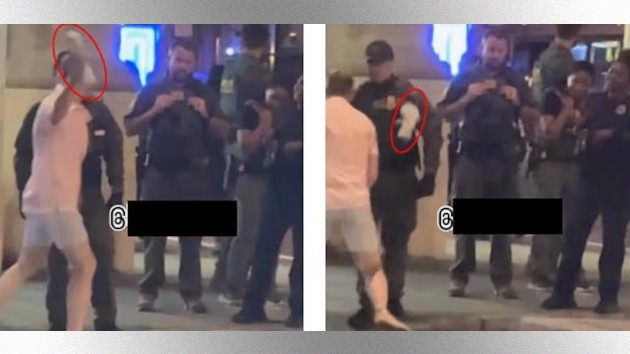
Images from a court document shows Sean Charles Dunn throwing a Subway sandwich at a CBP officer in Washington, D.C., August 10, 2025. U.S. District Court
(WASHINGTON) — Prosecutors failed to secure an indictment against the man accused of throwing a sandwich at a Customs and Border Patrol agent in Washington, D.C., sources familiar with the matter confirmed to ABC News on Wednesday.
It’s not immediately clear whether prosecutors with the D.C. U.S. Attorney’s Office would make another attempt at seeking a felony assault indictment against Sean Dunn.
Prosecutors similarly failed to convince a federal grand jury in D.C. to indict a woman, Sidney Reid, accused by the government of assaulting and FBI agent during an inmate swap with ICE, despite three separate attempts.
The D.C. U.S. Attorney’s Office instead moved this week to charge the woman with a misdemeanor which would not require sign off from a grand jury.
Under the federal Speedy Trial Act, prosecutors technically have 30 days from the date of Dunn’s arrest to continue to seek his indictment or they will similarly have to choose between dropping the case altogether or moving to charge him with misdemeanor offenses.
The video of Dunn’s confrontation with a CBP agent earlier this month went viral and provoked an all-out public relations blitz from the White House and Justice Department touting his arrest and the federal assault charge against him.
The White House went as far as releasing a video showing a cadre of heavily armed agents carrying out his arrest, despite his attorney saying he had previously offered to surrender willingly.
Dunn’s attorney and the D.C. U.S. Attorney’s Office did not immediately respond to a request for comment from ABC News.
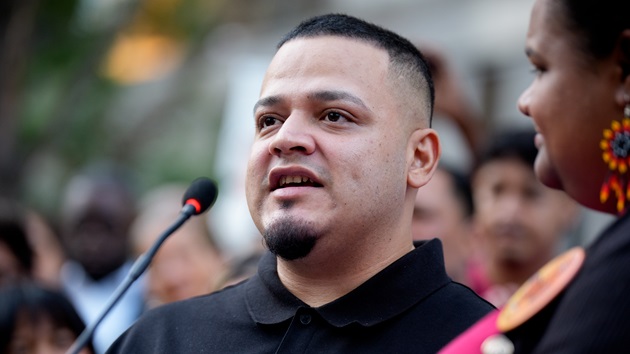
Kilmar Abrego Garcia speaks during a rally and prayer vigil for him before he enters a U.S. Immigration and Customs Enforcement (ICE) field office on August 25, 2025 in Baltimore, Maryland. Andrew Harnik/Getty Images
(WASHINGTON) — A federal judge has temporarily blocked the Trump administration from deporting Kilmar Abrego Garcia until at least early October.
U.S. District Judge Paula Xinis said Wednesday she will extend her temporary restraining blocking his removal until Abrego Garcia’s latest deportation challenge in court is resolved.
Judge Xinis scheduled an evidentiary hearing for Oct. 6 in the case challenging Abrego Garcia’s deportation to Uganda. She said during a hearing on Wednesday that she will issue a ruling within 30 days of the Oct. 6 hearing.
The judge also said that Abrego Garcia, who is currently being held in a detention center in Virginia, must remain in custody within a 200-mile radius of the court in Maryland.
Judge Xinis said she will not order Abrego Garcia released from immigration custody, saying that issue should be decided by an immigration judge. On Monday, Abrego Garcia’s attorneys moved to reopen his immigration case and apply for asylum.
Abrego Garcia, a Salvadoran native, was deported in March to El Salvador’s CECOT mega-prison — despite a 2019 court order barring his deportation to that country due to fear of persecution — after the Trump administration claimed he was a member of the criminal gang MS-13, which his family and attorneys deny.
He was brought back to the U.S. in June to face charges in Tennessee of allegedly transporting undocumented migrants within the U.S. while he was living in Maryland, to which has pleaded not guilty.
After being released on Friday while awaiting trial, he was taken into immigration custody upon checking in with the ICE office in Baltimore on Monday, and transferred to a detention center in Tennessee where authorities said he could be deported to Uganda on immigration charges.
Attorneys for Abrego Garcia filed an emergency motion Monday to reopen his immigration case to seek asylum, arguing that because Abrego Garcia was deported and then brought back to the U.S., he is now eligible to apply for asylum within one year of his last entry into the U.S.
In the filing, the attorney also said that reopening the case is warranted to allow Abrego Garcia to designate Costa Rica as the country of removal should be be deported.
(MINNEAPOLIS) — At least two people were killed and more than a dozen were hurt in a shooting during morning drop-off at Annunciation Catholic School in Minneapolis, multiple sources told ABC News.
The shooter is “contained” and there’s “no active threat to the community,” city officials said. The suspect is believed to be deceased from a self-inflicted gunshot wound, sources said.
Students in pre-K to eighth grade attend the school. Young children wearing their uniforms were seen leaving the school holding their parents’ hands.
“I’m praying for our kids and teachers whose first week of school was marred by this horrific act of violence,” Minnesota Gov. Tim Walz wrote on social media.
“My husband’s a firefighter, and he got a phone call this morning [that] said that there was a incident at Annunciation, and that’s where my niece and nephew go to school … so he just took off on foot,” Emily Feste told Minneapolis ABC affiliate KSTP. “We heard about 15 minutes ago that they’re safe. But it’s so awful and it’s so scary.”
Walz said state authorities are at the scene. Agents from the FBI and the Bureau of Alcohol, Tobacco, Firearms and Explosives also responded.
President Donald Trump wrote on Truth Social that he’s been “fully briefed on the tragic shooting.”
“The White House will continue to monitor this terrible situation. Please join me in praying for everyone involved!” he wrote.
The Department of Homeland Security is monitoring the shooting, DHS Secretary Kristi Noem said in a statement.
“I am praying for the victims of this heinous attack and their families,” she said.
This is a developing story. Please check back for updates.
ABC News’ Pierre Thomas, Jack Date, Luke Barr, Aaron Katersky, Sasha Pezenik and Michael Pappano contributed to this report.
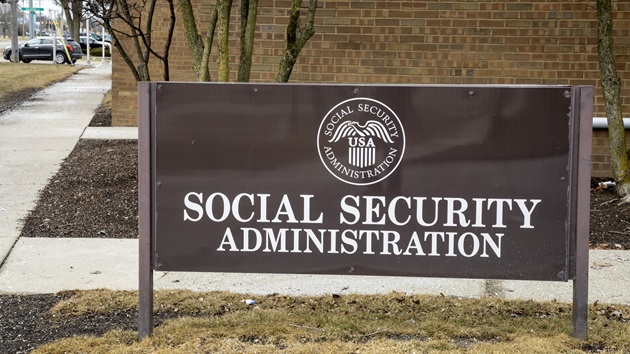
A Social Security Administration office in suburban Detroit. Jim West/UCG/Universal Images Group via Getty Images
(WASHINGTON) — A whistleblower complaint filed on Tuesday alleges that the Department of Government Efficiency uploaded a copy of all federal Social Security numbers and information to an unsecured server in June, creating “enormous vulnerabilities.”
The complaint, filed by Social Security Administration Chief Data Officer Chuck Borges, alleges that a live copy of the “entire country’s Social Security information” is now being held by a “vulnerable cloud environment” that lacks oversight from the agency or the ability to track who is accessing the data.
Borges, who began his role at SSA in January 2025, alleges that the database of Social Security information contains all data that has been submitted through the application process for a United States Social Security card, “including the name of the applicant, place and date of birth, citizenship, race and ethnicity, parents’ names and social security numbers, phone number, address, and other personal information.”
“Should bad actors gain access to this cloud environment, Americans may be susceptible to widespread identity theft, may lose vital healthcare and food benefits,” the complaint reads, claiming the file risks “the security of over 300 million Americans’ Social Security data.”
A spokesperson for SSA told ABC News that the agency stores all data in safe environments and that the data mentioned in the complaint stored in a “long-standing environment used by SSA.”
“Commissioner [Frank] Bisignano and the Social Security Administration take all whistleblower complaints seriously. SSA stores all personal data in secure environments that have robust safeguards in place to protect vital information,” the SSA spokesperson said.
“The data referenced in the complaint is stored in a long-standing environment used by SSA and walled off from the internet. High-level career SSA officials have administrative access to this system with oversight by SSA’s Information Security team. We are not aware of any compromise to this environment and remain dedicated to protecting sensitive personal data,” the spokesperson said.
Borges claims he had raised concerns within the agency, “and to date has not been made aware of any remedial action.”
A Navy veteran, Borges previously held positions at the General Services Administration, the Office of Management and Budget, and the Centers for Disease Control.
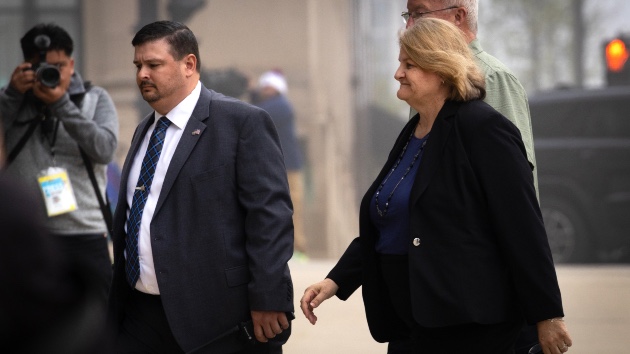
Milwaukee County Circuit Judge Hannah Dugan walks into the Milwaukee Federal Courthouse on May 15, 2025 in Milwaukee, Wisconsin. Judge Dugan has been charged with trying to help Eduardo Flores-Ruiz, an undocumented immigrant, elude federal arrest while he was making an appearance in her courtroom on April 18. (Photo by Scott Olson/Getty Images)
(MILWAUKEE) — A federal judge in Wisconsin has denied Milwaukee County Circuit Court Judge Hannah Dugan’s motion to dismiss federal charges alleging that she concealed an undocumented immigrant to prevent his arrest by immigration authorities.
In the decision, issued Tuesday, the judge did not agree with Dugan’s argument of judicial immunity.
“There is no basis for granting immunity simply because some of the allegations in the indictment describe conduct that could be considered ‘part of a judge’s job,'” Judge Lynn Adelman wrote.
The order follows an earlier magistrate judge’s recommendation to have the case continue.
Dugan was arrested in April and charged in a two-count federal indictment alleging she knowingly concealed a person sought for arrest by immigration authorities and for obstruction of official Department of Homeland Security removal proceedings. She has pleaded not guilty.
Her criminal case will go forward with a scheduling hearing set for Sept. 3.
Lawyers for Dugan, in part citing the U.S. Supreme Court’s decision in President Donald Trump’s immunity case, had argued she has judicial immunity for official acts and her prosecution is unconstitutional. Prosecutors, meanwhile, had contended in court filings that her motion to dismiss the charges ignored “well-established law that has long permitted judges to be prosecuted for crimes they commit.”
According to federal prosecutors, Dugan encountered federal agents who were at Milwaukee County Circuit Court on April 18 to arrest an undocumented man appearing in her courtroom on a battery charge.
Prosecutors say that after speaking to the agents, Dugan directed them to the chief judge’s office down the hall and then sent the man and his attorney out a non-public door in an alleged attempt, authorities claim, to help him evade arrest on immigration violations.
The man was later arrested.
Dugan was arrested and charged a week following the incident.
The Wisconsin Supreme Court suspended Dugan in the wake of her arrest, stating in an order that it found it was “in the public interest that she be temporarily relieved of her official duties.”
(KANSAS CITY, Kan.) — A 26-year-old Kansas police officer was killed when police say a suspect intentionally plowed into him while fleeing authorities during a pursuit.
Kansas City, Kansas, Police Officer Hunter Simoncic was deploying stop sticks in response to the pursuit early Tuesday when the suspect drove toward him and struck him, then continued to flee the area, police said.
Simoncic was transported to an area hospital, where he was pronounced dead, police said.
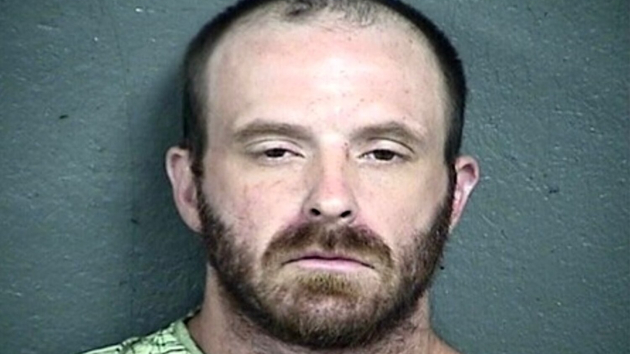
The suspect — Dennis Mitchell III, 31, of Kansas City — was taken into custody after crashing the vehicle and was arrested on suspicion of first-degree murder, according to the Kansas Bureau of Investigation.
“This was an intentional act, a willful act, to evade custody by striking the officer,” Kansas City Police Chief Karl Oakman said during a press briefing Tuesday, calling the death of the officer “devastating.”
“It’s just difficult. It makes no sense,” he said. “I have no words for it.”
The incident unfolded shortly around 12:30 a.m., when officers with the Kansas City, Kansas, Police Department were dispatched to a call of shots fired, according to the KBI. Officers shortly found Mitchell unconscious in the driver’s seat of a truck, the KBI said.
“As officers approached the driver, he woke up and fled the scene,” the KBI said in a release.
Mitchell abandoned the vehicle for another truck that was “stashed in the woods” and continued fleeing from officers, Oakman said.
During the pursuit, Simoncic exited his vehicle to stage stop sticks, in an attempt to safely puncture and deflate the tires on the fleeing vehicle, police said.
“The suspect continued through the stop sticks and veered his vehicle directly at Officer Simoncic, striking him at the scene,” Oakman said.
Shortly before 1 a.m., Mitchell crashed the truck, KBI said. He was taken into custody and treated at an area hospital before being booked into the Wyandotte County Jail, according to the KBI.
He also faces charges of vehicular homicide, fleeing or attempting to elude a police officer, theft, criminal possession of a firearm, and aggravated failure to appear, the KBI said. Formal charges are pending, police said. It is unclear if he has an attorney at this time.
Police later learned that both trucks driven by the suspect had been reported stolen, according to the KBI.
Oakman said the suspect has several outstanding warrants, but did not go into detail amid the investigation, which is being conducted by the KBI.
Simoncic was following protocol in deploying the stage sticks, the police chief said.
“This was a situation that we do across the metro thousands of times a year, deploying stop sticks, and this individual felt the need to run Hunter down and kill him,” Oakman said. “That is not a vehicle accident. This was an intentional act of homicide on a police officer.”
Simoncic, who was from Galesburg, Kansas, graduated from the Kansas City, Kansas, Police Department Police Academy in 2023. He is survived by his mother, father and brother, Oakman said.
Kansas City, Kansas, Mayor Tyrone Garner condemned the “shameful acts of violence” in the community.
“I went to the hospital — what words do you say to a family, a brother, a mother and a father, grieving, knowing that that life has been snuffed out and it didn’t have to be?” Garner said during the press briefing.
Simoncic volunteered to read and mentor children in local schools, the mayor said, adding, “That says a lot about the type of individual he was.”
“My heart hurts for this police department, for our chief, for his command staff, for all the men and women of the Kansas City, Kansas, Police Department, for all our public safety professionals, for our community,” Garner said. “I just don’t have a lot of words to say to comfort this community. And sometimes, saying, ‘Thoughts and prayers,’ just isn’t enough. It’s just going to take a lot more than that.”
(VENTURA COUNTY, Calif.) — Authorities in Southern California announced Tuesday the arrest of 14 people accused of running what they called the largest organized retail theft operation targeting Home Depot in the company’s history, with nine facing felony charges.
The suspects are allegedly linked to 600 thefts at 71 different Home Depots, with losses exceeding $10 million across multiple Southern California counties, officials said.
“They basically had been able to pull off over 600 different thefts from Home Depots in the surrounding counties,” Los Angeles County District Attorney Nathan Hochman said. “They must have thought life was grand. They’ve been making millions of dollars, didn’t look like anyone was going to stop them.”
Police say David Ahl, who a ran a storefront called ARIA Wholesale in Tarzana, was at the center of the operation. Ahl faces 48 felony counts including conspiracy, organized retail theft, grand theft, receiving stolen property, and money laundering, authorities said.
He remains in custody at Ventura County jail with bail set at $500,000 and faces up to 32 years in prison if convicted. Attorney information for Ahl was not immediately available.
Ventura County Sheriff Jim Fryhoff said Ahl’s “boosters” would systematically steal expensive electrical components like breakers, dimmers, and switches, sometimes hitting every Home Depot in Ventura County in a single day. The stolen goods were then allegedly delivered to Ahl’s business or home in trash bags or Home Depot boxes.
The investigation also led to the arrest of Ahl’s brother-in-law, who allegedly sold stolen merchandise through eBay. Ahl’s ex-wife and her boyfriend were accused of running a “nearly identical” fencing operation.
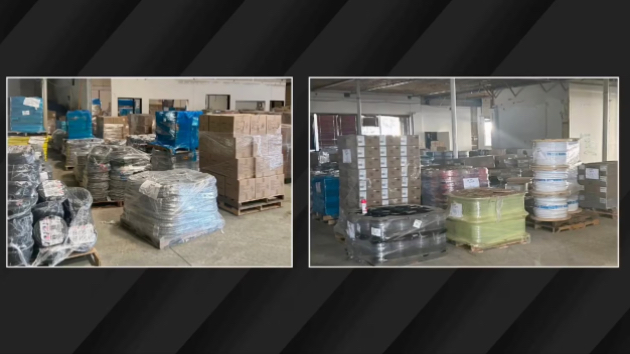
During searches, investigators seized an estimated $3.7 million in Home Depot property and $800,000 in what they described as “dirty money” from alleged money laundering operations.
Surveillance footage shown by officials captured suspects in action, including one who allegedly climbed around security measures when Home Depot placed high-value items behind cages and on higher shelves.
“This wasn’t shoplifting. It was a criminal enterprise that allegedly stole millions of dollars, and it was finally stopped here in Ventura County,” Erik Nasarenko, the county’s district attorney, said in a press conference Tuesday.
Home Depot Regional Asset Protection Manager Darlene Hermosillo emphasized that organized retail crime affects more than just profits.
“It’s about protecting the well-being and safety of our customers, our associates and the communities in which we serve,” she said in a press conference Tuesday.
The investigation was funded through a state grant program targeting organized retail theft. All defendants remain in custody with bail set between $250,000 and $500,000.
Jeffrey Greenberg/Universal Images Group via Getty Images
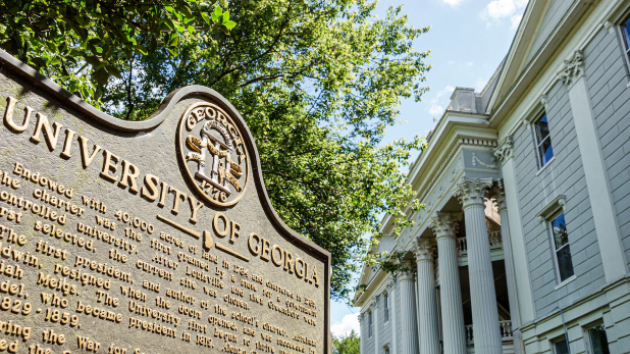
(ATHENS, Ga.) — The University of Georgia has paused pledging for one of its fraternities amid an investigation into alleged hazing off-campus.
The university said it is conducting a review of the Sigma Chi fraternity “following a third-party complaint.” The Athens-Clarke County Police Department said it is also investigating the reported incident.
The university received an email complaint from an Athens-based professional on Aug. 12 that reported “‘gross student misconduct and abuse’ in reference to ‘hazing by male Greek Life leaders,'” a University of Georgia Police Department complaint stated.
The complainant reported that “incoming freshmen were punched and forced to drink copious amounts of alcohol beyond their capacity” from Aug. 9 to Aug. 10, the complaint stated.
One of two fraternities cited in the complaint has been allowed to resume activities following a “thorough review,” university spokesperson Rod Guajardo said.
A review into the other fraternity, Sigma Chi, is ongoing, with all potential new member activity currently paused, Guajardo said.
“Pausing all potential new member activity for an individual organization while a review is conducted is standard operating procedure,” Guajardo said in a statement.
The complaint was referred to the Athens-Clarke County Police Department because the fraternity is located off-campus, the school said.
A spokesperson for the Athens-Clarke County Police Department confirmed to ABC News it is investigating the incident, but that no further details are available at this time.
ABC News has reached out to the Sigma Chi headquarters for comment and has not yet received a response.
Hazing is against federal law. Georgia also has an anti-hazing law that deems hazing a misdemeanor of a high or aggravated nature that is punishable by up to one year in jail.
“Students and organizations are prohibited from participating in, condoning, encouraging, requiring, or allowing opportunity for hazing,” UGA states on its website.
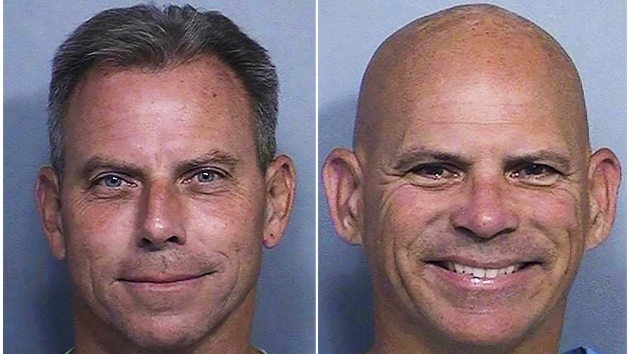
This combination of two booking photos provided by the California Department of Corrections shows Erik Menendez, left, and Lyle Menendez. Photo Credit: CDCR
(NEW YORK) — Lyle and Erik Menendez have been behind bars for 35 years, and when both brothers were denied parole last week, their case reached another barricade.
But the brothers still have three potential paths to freedom:
This May, a judge resentenced them to 50 years to life in prison, making them immediately eligible for parole under youth offender parole laws. The judge said he was moved by the supportive letters from prison guards and was amazed by the work the brothers had accomplished to better the lives of their fellow inmates.
In separate hearings, commissioners stressed how the brothers repeatedly broke rules in prison, like illegal cellphone use.
“While cellphones may seem like something innocuous,” ABC News legal contributor Brian Buckmire said, the parole commissioners focused on “the criminality that allowed those cellphones to get into the prison,” like smuggling and bribes. “The money that was associated with trying to get those cellphones in oftentimes go to gangs within the prison,” Buckmire explained.
The brothers can apply for parole again in three years. With good behavior in prison, that wait can potentially be shortened to 18 months.
Clemency
A second possible path to release is clemency, which California Gov. Gavin Newsom can grant at any time.
“He can provide clemency in the form of commutation, further reducing the sentence of the brothers, making them eligible for release even today,” Buckmire said. “Or, a pardon, giving them a full forgiveness of the crime.”
“That has some political undertones,” Buckmire continued, “and no one knows just yet what information the governor will take from this parole hearing to use to either grant clemency or not.”
Bid for a new trial
The third path is the brothers’ habeas corpus petition, which they submitted in 2023 to try to get another trial based on new evidence not originally presented in court.
The petition presents two pieces of new evidence. One is allegations from a former member of the boy band Menudo, who revealed in the 2023 docuseries “Menendez + Menudo: Boys Betrayed” that he was raped by Jose Menendez. The second is a letter Erik Menendez wrote to his cousin eight months before the murders detailing his alleged abuse; the cousin testified about the alleged abuse at trial, but the letter — which would have corroborated the cousin’s testimony — wasn’t unearthed until several years ago, according to the brothers’ attorney.
Defense attorneys argue that the “newfound information … would have resulted in a lesser penalty at trial,” Buckmire said.
Los Angeles County District Attorney Nathan Hochman, who is firmly opposed to the brothers’ release, filed a response to the habeas corpus petition this month, stating that he “concluded that this petition does not come close to meeting the factual or legal standard to warrant a new trial.”
“The central defense of the Menendez brothers at trial has always been self-defense, not sexual abuse. The jury rejected this self-defense defense in finding them guilty of the horrific murders they perpetrated; five different appellate state and federal courts have affirmed those convictions, and nothing in the so-called ‘new’ evidence challenges any of those determinations,” Hochman said in a statement. “Our opposition to this ‘Hail Mary’ effort to obtain a new trial over 30 years later makes clear that justice, the facts, and the law demand the convictions stand.”
The petition is pending. The final decision will be made by a judge.
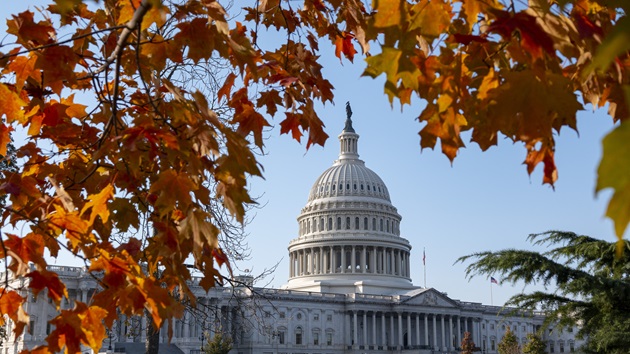
The U.S. Capitol is surrounded by colorful leaves on trees during a warm, fall day on November 7, 2023 in Washington DC. Kevin Carter/Getty Images
(NEW YORK) — The latest fall season outlook by the National Oceanic and Atmospheric Administration (NOAA) is out, and it’s calling for balmy and possibly hot conditions for much of the country in the fall.
The seasonal outlook from NOAA’s Climate Prediction Center forecasts whether parts of the country will be above, below or near average for parts of the country for the meteorological fall — September through November.
NOAA’s outlook puts much of the country with a higher chance of a warmer fall than normal, with the highest chance of warmer-than-average temperatures in the Southwest and New England. This means that most of the country will likely be milder than what is usually expected from September to November.
However, this outlook doesn’t forecast variations that happen over days, weeks, or over one month but rather what the overall average would likely look like.
September in a particular region could feature typical fall conditions, but October and November could end up well above normal, swaying the three-month average to above normal for the entire season. What the outlook means for a specific local area depends on the typical climate around it.
For example, average high temperatures for Phoenix, one of the hottest cities in the country, range from 104 degrees at the beginning of fall to 70 degrees towards the end of fall. New York City ranges from 76 degrees at the start of fall to 54 degrees through November.
While the seasonal outlook highlights what is likely for the fall and where abnormal warmth is likely, it doesn’t tell where any extreme heat would be or for how long it would be. It also doesn’t tell where any drastic cooldowns would be or for how long, if there are any.
What previous falls have taught us
According to the Environmental Protection Agency and NOAA, falls in the Contiguous United States have been getting warmer since the early 1900s, with the last few falls being warmer than the 30-year average.
A warmer fall has more impacts than just keeping the warmer weather and holding off on the winter jackets. According to Climate Central, warmer falls can prolong potentially dangerous summer-like heat and increase the demand and cost of cooling during warmer fall days.
The extended warmth affects the fall foliage — a natural spectacle that dazzles the country every fall and boosts local tourism. According to Columbia University, warmer falls can delay the start of changing leaves, shorten the fall foliage season overall, and reduce the vibrancy and color quality of fall foliage.
Why so warm?
A big part of what forecasters look for when predicting the temperature, and even their seasonal precipitation outlook, are climate patterns in the Pacific Ocean. The most influential one that forecasters look at is the El Nino-Southern Oscillation (ENSO). The ENSO is a natural variation of warmer, neutral and cooler waters along the equatorial waters of the eastern Pacific.
This natural variation is one of the biggest driving forces of large-scale weather patterns over the Pacific Ocean, and eventually over North America.
Forecasters at the Climate Prediction Center are expecting the ENSO to shift from a neutral pattern to a cooler pattern, or La Nina, by November. This would likely put the U.S. in a dominant weather pattern for much of the fall that sees the southern half of the country experience drier and warmer weather, while the Pacific Northwest and Ohio Valley will get wetter-than-normal conditions.