Fight over Trump National Guard deployment in California continues in appeals court

Fight over Trump National Guard deployment in California continues in appeals court
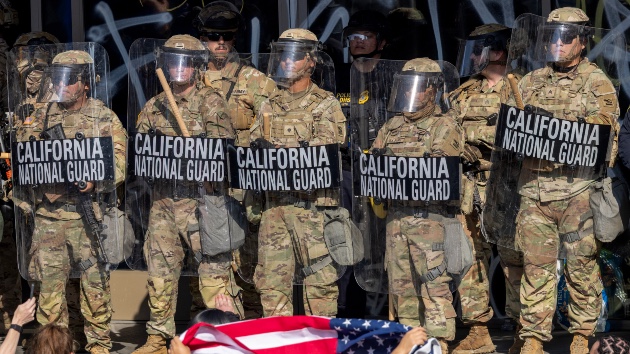
David McNew/Getty Images

(LOS ANGELES) — The legal battle over the Trump administration’s deployment of the National Guard in California continued in a federal appeals court on Tuesday.

The Ninth Circuit Court of Appeals presided over a remote hearing regarding California’s challenge to President Donald Trump‘s federalization of the state’s National Guard troops amid protests over immigration enforcement in the Los Angeles area.

Meanwhile, Los Angeles Mayor Karen Bass, who had instituted a curfew within downtown LA amid the protests, announced Tuesday she was lifting the measure.

“The curfew, coupled with ongoing crime prevention efforts, have been largely successful in protecting stores, restaurants, businesses and residential communities from bad actors who do not care about the immigrant community,” Bass said in a statement. “I am lifting the curfew effective today, and as we continue quickly adapting to chaos coming from Washington, and I will be prepared to reissue a curfew if needed. My priority will continue to be ensuring safety, stability and support in the Downtown neighborhoods.”

The hourlong hearing took place before a three-judge appeals court panel — made up of two judges nominated by Trump and one nominated by former President Joe Biden.

Brett Shumate, representing the federal government, said the appeals court should grant the Trump administration’s request for a stay of a lower court’s order, which would have blocked would have blocked Trump’s deployment of the troops and returned control of the California National Guard to Gov. Gavin Newsom, who did not consent to the Guard’s activation.

Shumate said the “extraordinary” court order, which was put on hold by the appeals court, interferes with the president’s commander-in-chief powers and “upends the military chain of command.”

Shumate argued that Trump acted within his discretion in calling up the National Guard “based on his determination that the violent riots in Los Angeles constituted a rebellion against the authority of the United States and rendered him unable to execute federal laws.”

He continued, “Yet the district court improperly second-guessed the president’s judgment about the need to call up the guard in order to protect federal property and personnel from mob violence in Los Angeles.”

Shumate also argued that Trump has “unreviewable” powers as commander-in-chief to deploy troops as he sees fit for any reason.

Meanwhile, Samuel Harbourt — the attorney representing the state of California and Newsom — asked the appeals court to deny the federal government’s motion, calling the federalization of the National Guard an “unprecedented, unlawful executive action.”

“To be sure, Los Angeles has seen certain episodes of unrest and even violence in recent days, including violence directed at state and local law enforcement officials. The state has strongly condemned these acts, and it has responded forcefully to them,” he said, going on to argue that the federal government provided no evidence that they “even contemplated more modest measures to the extreme response of calling in the National Guard and militarizing the situation.”

Harbourt said diverting thousands of National Guardsmen for a deployment up to 60 days takes them away from “critical work” such as wildfire prevention and drug interdiction, defies state sovereignty and “would allow defendants to further escalate tensions” in Los Angeles.

The judges did not issue a ruling on Tuesday or give any indication on when they would decide, while acknowledging that there is another hearing set by the lower court judge, U.S. District Judge Charles Breyer, on Friday.

To send thousands of National Guardsmen to Los Angeles, Trump invoked Section 12406 of Title 10 of the U.S. Code on Armed Services, which allows a federal deployment in response to a “rebellion or danger of a rebellion against the authority of the Government of the United States.” In his order, Trump said the troops would protect federal property and federal personnel who are performing their functions.

Breyer, the lower court judge, had called Trump’s actions “illegal.”

“At this early stage of the proceedings, the Court must determine whether the President followed the congressionally mandated procedure for his actions. He did not,” Breyer said in his June 12 order granting the temporary restraining order sought by Newsom. “His actions were illegal — both exceeding the scope of his statutory authority and violating the Tenth Amendment to the United States Constitution. He must therefore return control of the California National Guard to the Governor of the State of California forthwith.”

The order did not limit Trump’s use of the Marines, which had also been deployed to LA.

In a press conference after the district court’s order, Newsom said he was “gratified” by the ruling, saying he would return the National Guard “to what they were doing before Donald Trump commandeered them.”

In its appeal to the Ninth Circuit, administration lawyers called the district judge’s order “unprecedented” and an “extraordinary intrusion on the President’s constitutional authority as Commander in Chief.”

Some 4,000 National Guardsmen and 700 Marines were ordered to the Los Angeles area following protests over immigration raids. California leaders claim Trump inflamed the protests by sending in the military when it was not necessary.

Copyright © 2025, ABC Audio. All rights reserved.
Minnesota shootings latest: Witness recalls moment she spotted suspect

Minnesota shootings latest: Witness recalls moment she spotted suspect
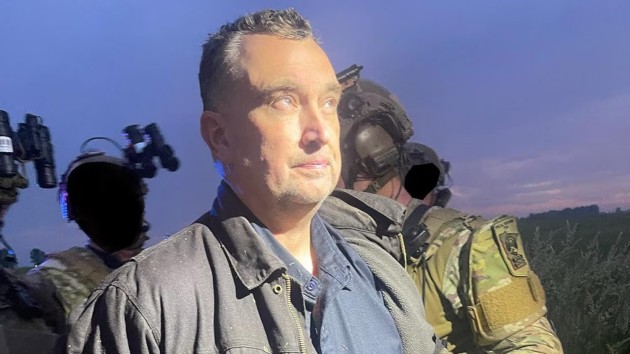
Vance Boelter, 57, was arrested near his farm in Green Isle, Minnesota. Ramsey County Sheriff’s Office

(GREEN ISLE, Minn.) — Wendy Thomas was on the phone with her father when she saw someone in a field in Green Isle, Minnesota, on Sunday night.

Thomas watched as the person reached a culvert and squatted, she told Minneapolis ABC affiliate KSTP.

“I was like, ‘Dad, that’s somebody,'” she told the outlet. “He said, ‘Hang up and call somebody.'”

Moments later, Thomas was flagging down a member of law enforcement, she said, and telling them about the man she’d seen out by the culvert. What followed was the arrest of the suspected Minnesota gunman, Vance Boelter, whom local, state and federal law enforcement had been trying to locate for about 43 hours.

Boelter is accused of killing Democratic Minnesota state Rep. Melissa Hortman and her husband, Mark, and wounding Democratic state Sen. John Hoffman and his wife, Yvette, in “political assassinations,” acting U.S. Attorney for the District of Minnesota Joseph Thompson said. 

Boelter allegedly showed up to their doors in the middle of the night early Saturday impersonating a police officer and wearing a realistic-looking mask, officials said, noting that two other lawmakers were spared the night of the shootings.

Boelter allegedly surveilled his victims’ homes and took notes, Thompson said. In a search of a home in north Minneapolis tied to Boelter, authorities seized a list of public officials that had a notation under Melissa Hortman’s name reading, “married Mark 2 children 11th term,” according to the affidavit. Another notebook included an added notation next to Melissa Hortman’s name reading, “Big house off golf course 2 ways in to watch from one spot,” the affidavit said.

He “stalked his victims like prey” and “shot them in cold blood,” Thompson said.

Boelter is facing federal charges including stalking and firearms charges and state charges including first-degree murder, officials said. He made a brief appearance in federal court on Monday.

A motive remains under investigation. But Minnesota state Sen. Scott Dribble, who worked with Hortman, told ABC News on Monday that he was “very concerned about the nature of the rhetoric that’s occurring with politics, especially among right-wing extremists.”

Dribble pointed to what he saw as a change in recent years for “those at the highest levels to engage in rhetoric of dehumanization, politicizing instruments of government, politicizing our military, and really calling for a violent response rather than really having vigorous policy debates.”

Minnesota Lt. Gov. Peggy Flanagan said “every elected official of every stripe and party has to turn down the temperature.” Elected representatives and government staffers should in difficult times be displaying their “humanity” and reaching across the aisle, Flanagan told ABC News on Monday.

“Our community, our families, you know, taking care of each other, stepping up for one another. And that needs to continue to be the message during this time of divisive rhetoric,” she said.

“The way our nation moves forward is not through hate. It is not through violence,” Minnesota Gov. Tim Walz added in a statement Monday. “It is through humility, and grace, and compassion.”

On Tuesday, President Donald Trump refused to call Walz, who ran alongside Kamala Harris last November, to offer condolences.

“I don’t want to call him,” Trump said. “I think the governor of Minnesota is so whacked out. I’m not calling him. Why would I call him? I could call and say, ‘Hi, how you doing?’ Uh, the guy doesn’t have a clue. He’s a mess. I could be nice and call, but why waste time?”

Walz’s spokesperson said in response, “Governor Walz wishes that President Trump would be a President for all Americans, but this tragedy isn’t about Trump or Walz. It’s about the Hortman family, the Hoffman family, and the State of Minnesota, and the Governor remains focused on helping all three heal.”

Meanwhile, Senate Democrats and Republicans on Tuesday received a briefing focused on member safety after it was revealed that a number of members of Congress were included on Boelter’s alleged lists of potential targets — but lawmakers were tight-lipped on the safety details.

Sen. Tina Smith, D-Minn. — who was on the suspect’s list, according to law enforcement sources — said, “I think it’s important for member safety that we don’t talk a lot about what is being done to keep us safe in order to keep us safe.”

Senator Minority Leader Chuck Schumer said there’s a bipartisan push for additional funding to be appropriated for member safety.

“The violence, the threats, against elected officials including people in the Senate has dramatically increased, and that means we need more protection, more money,” Schumer said.

ABC News’ Pierre Thomas, Katherine Faulders, Mike Levine, Alexander Mallin and Brittany Shepherd contributed to this report.

Copyright © 2025, ABC Audio. All rights reserved.

Death toll rises from devastating flash flooding in West Virginia as rain threat continues

Death toll rises from devastating flash flooding in West Virginia as rain threat continues
Ty Wright/Getty Images

(NEW YORK)– The death toll has climbed to seven in the wake of heavy rains and devastating flash flooding in West Virginia, Gov. Patrick Morrisey said on Tuesday, as he warned the threat isn’t over.

“Flood watches continue throughout West Virginia,” Morrisey said on social media. “With the ground already saturated, there is the possibility of further flash flooding. Please continue to heed local warnings and do not attempt to drive through high waters.”

Two people remain missing as of Tuesday, the governor’s office said.

A state of emergency is in effect and the West Virginia National Guard and Federal Emergency Management Agency officials are on the ground in Marion County, the governor said.

Flash flooding struck Ohio County in the northern part of the state on Saturday night, dumping about 3 to 4 inches of rain over a short time period, according to the governor’s office.

The flash flooding continued on Sunday in Marion County, dropping 3 inches of rain in the city of Fairmont over a short time period, state officials said.

On Sunday, a residential building in Fairmont partially collapsed.

Footage from the scene showed water rushing out of the severely damaged structure as emergency crews responded to the scene.

Displaced residents are being housed at Fairmont State University, officials said.

ABC News’ Darren Reynolds and Victoria Arancio contributed to this report.

Copyright © 2025, ABC Audio. All rights reserved.

West Virginia death toll rises amid devastating flash flooding

Death toll rises from devastating flash flooding in West Virginia as rain threat continues
Ty Wright/Getty Images

(NEW YORK)– The death toll has climbed to seven in the wake of heavy rains and devastating flash flooding in West Virginia, Gov. Patrick Morrisey said on Tuesday.

Two people were unaccounted for as of Monday, according to the governor.

“West Virginia has been hit very, very hard,” Morrisey said.

A state of emergency is in effect and the West Virginia National Guard and Federal Emergency Management Agency officials are on the ground in Marion County, he said.

Flash flooding hit the city of Wheeling and the towns of Triadelphia and Valley Grove. Roughly 3 to 4 inches of rain fell in the area in a short period of time, prompting significant flash flooding along US 40 (National Road), Middle Wheeling Creek, Little Wheeling Creek and various runs and streams through Ohio County.

On Sunday, a residential building in the city of Fairmont, in Marion County, partially collapsed, prompting the emergency declaration, according to the governor.

Footage from the scene showed water rushing out of the severely damaged structure as emergency crews responded to the scene.

Displaced residents are now being housed at Fairmont State University, officials said.

The cause of the collapse has not been determined, the governor said Monday.

Officials said they are monitoring the situation as more rain is in the forecast over the next few days.

ABC News’ Darren Reynolds and Victoria Arancio contributed to this report.

Copyright © 2025, ABC Audio. All rights reserved.

Federal appeals court set to hold hearing over Trump National Guard deployment in California

Fight over Trump National Guard deployment in California continues in appeals court
David McNew/Getty Images

(LOS ANGELES) — The legal battle over the Trump administration’s deployment of the National Guard in California heads to a federal appeals court on Tuesday.

The Ninth Circuit Court of Appeals will preside over a remote hearing regarding California’s challenge to President Donald Trump’s federalization of the state’s National Guard troops amid protests over immigration enforcement in the Los Angeles area.

Last week, a federal judge in California issued a temporary restraining order that would have blocked Trump’s deployment of the troops and returned control of the California National Guard to Gov. Gavin Newsom, who did not consent to the Guard’s activation.

However, following an appeal by the Trump administration, a panel of three judges on the Ninth Circuit Court of Appeals issued an administrative stay of the lower court’s order, dealing the Trump administration a temporary reprieve to what would have been a major reversal of its policy on the protests in Los Angeles.

The three-judge panel — made up of two judges nominated by Trump and one nominated by former President Joe Biden — scheduled the hearing on the matter for Tuesday afternoon.

The district judge’s order called Trump’s actions “illegal.”

“At this early stage of the proceedings, the Court must determine whether the President followed the congressionally mandated procedure for his actions. He did not,” U.S. District Judge Charles Breyer said in his June 12 order granting the temporary restraining order sought by Newsom. “His actions were illegal — both exceeding the scope of his statutory authority and violating the Tenth Amendment to the United States Constitution. He must therefore return control of the California National Guard to the Governor of the State of California forthwith.”

The order did not limit Trump’s use of the Marines, which had also been deployed to LA.

In a press conference after the district court’s order, Newsom said he was “gratified” by the ruling, saying he would return the National Guard “to what they were doing before Donald Trump commandeered them.”

In its appeal to the Ninth Circuit, administration lawyers called the district judge’s order “unprecedented” and an “extraordinary intrusion on the President’s constitutional authority as Commander in Chief.”

Some 4,000 National Guardsmen and 700 Marines were ordered to the Los Angeles area following protests over immigration raids. California leaders claim Trump inflamed the protests by sending in the military when it was not necessary.

Copyright © 2025, ABC Audio. All rights reserved.
Judge extends block on Trump ban prohibiting Harvard students from entering US

Judge extends block on Trump ban prohibiting Harvard students from entering US
Joseph Prezioso/AFP via Getty Images

(CAMBRIDGE, Mass.) — A temporary restraining order on President Donald Trump barring foreign Harvard University students from entering the U.S. will remain in effect until next Monday while a federal judge considers arguments made for a preliminary injunction.

The temporary block was due to expire on Thursday before being extended Monday by U.S. District Court Judge Allison Burroughs.

Harvard’s lawyers argued Trump’s proclamation violates its First Amendment rights and is outside the authority of the executive branch. Listing the actions taken by the government against Harvard in recent weeks, attorney Ian Gershengorn argued in a court hearing Monday in Boston that the move was retaliation and viewpoint discrimination against the institution.

Gershengorn argued the president is not restricting entry, but instead limiting what you do and who you associate with after you enter. The permissible way to classify a class of aliens is based on the character of the alien, he argued.

The government pushed back, arguing the administration does not “trust” Harvard and that it did not monitor the “aliens” that it brought into the U.S. The government said bringing in foreigners is a privilege not a right, according to Tiberius Davis, counsel to the assistant attorney general.

“We don’t trust Harvard to vet, host, monitor or discipline” foreigners, Davis argued. Davis also raised concerns about Harvard’s “foreign entanglements” with the Chinese government and said it did not provide sufficient information to the government on foreign students — which Harvard has denied.

Harvard University filed the lawsuit against the government after U.S. Department of Homeland Security Secretary Kristi Noem announced it was canceling Harvard’s Student and Exchange Visitor Program certification, which would bar the school from enrolling foreign students.

The suit was later amended to include the proclamation and Harvard moved to request a second block on Trump’s proclamation. That would have gone into effect for at least six months before it was blocked by Burroughs.

The judge questioned arguments made by the government over its concerns about Harvard that motivated the proclamation.

“I can’t imagine that anything that you just described applies only to Harvard,” Burroughs said.

Davis argued the government is free to investigate other institutions and said that “a lot of these other universities are willing to” do more to address issues on campus.

Davis also argued that different government agencies chose to terminate grants with Harvard because they believed the institution was not following the law, saying that move was not retaliation either. Davis also said Harvard is not being singled out with grant terminations because other institutions have suffered the same.

The government argued it is not singling out Harvard, but rather other institutions have been more willing to take action to address issues on campus, while Harvard has not, Davis said.

“There’s a lack of evidence of retaliation here,” Davis said in court.

Burroughs said if the point is to root out antisemitism, “Why aren’t we letting in people from Israel?”

Davis argued antisemitism was just one part of the issue, along with foreign entanglements and not providing sufficient information to the government. Because of their other conduct on campus and their inattentiveness to it “we don’t trust them,” Davis said.

“They don’t have to pull over everybody who’s speeding. Frankly they can’t do that,” Davis said.

Pushing back on arguments that it did not monitor its students, Harvard said it is the government’s responsibility to vet students being allowed into the country.

“The vetting is done by the State Department in their visa process,” Gershengorn said.

At one point in the Monday hearing, the judge asked Harvard’s attorneys why it did not name the president in its lawsuit, asking if he needed to appear in this case.

Gershengorn said it sued the people who are tasked with implementing the proclamation.

Gershengorn argued Trump’s usage of the proclamation to block entry of foreign Harvard students is a “vast new authority to regulate the domestic conduct of domestic institutions,” a departure from how this proclamation has been used in the past. Gershengorn said it has been used to block the entry of individuals or nationals of a country that have “done something bad.”

The question is not whether the action is lawful or not, Gershengorn argued. If lawful action is taken as a First Amendment-motivated action, it is no longer lawful, he added.

Gershengorn said what Harvard has suffered over the last two months is probably the most “irregular” and “improper” action any institution has suffered.

Harvard pushed back against claims there is widespread violence on campus, saying the story the government cites identified two incidents of violence on the basis of religion. The government is “throwing things at the wall to see what sticks,” Gershengorn said.

Harvard has alleged that the administration is in an “escalating campaign of retaliation” against the school. After Harvard publicly refused to comply with demands made by the Trump administration, the administration responded by freezing more than $2.2 billion in grants and $60 million in contracts to the school.

In April, Harvard filed a separate lawsuit over the funding.

Copyright © 2025, ABC Audio. All rights reserved.
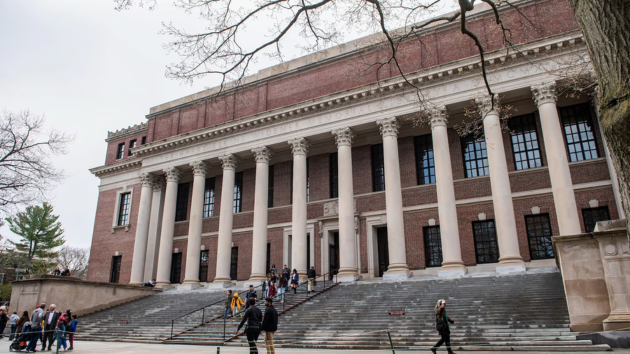
Chilling details emerge in Minnesota shootings as Vance Boelter faces federal charges: ‘Stuff of nightmares’

Chilling details emerge in Minnesota shootings as Vance Boelter faces federal charges: ‘Stuff of nightmares’
Hennepin County Sheriff’s Office

(GREEN ISLE, Minn.) — The man suspected of shooting and killing a Minnesota lawmaker and her husband as well as shooting and wounding a second lawmaker and his wife “stalked his victims like prey” and “shot them in cold blood,” acting U.S. Attorney for the District of Minnesota Joseph Thompson said.

“His crimes are the stuff of nightmares,” Thompson said at a news conference as he outlined the “chilling” details.

Vance Boelter, 57, is accused of killing Minnesota state Rep. Melissa Hortman and her husband, Mark, and wounding state Sen. John Hoffman and his wife, Yvette.

Boelter, who was arrested overnight near his farm in Green Isle, Minnesota, is facing federal charges and state charges, including first-degree murder, officials said.

Boelter allegedly surveilled his victims’ homes and took notes, Thompson said.

Two other lawmakers were spared that night, Thompson revealed as he outlined the four homes that Boelter allegedly drove to early Saturday.

Boelter allegedly first drove to Hoffman’s home in Champlin, Minnesota, in a black SUV with emergency lights turned on and a license plate that said “police,” Thompson said.

Hoffman’s “chilling” security camera footage showed the suspect in a black tactical vest, body armor and a “hyper-realistic silicon mask,” Thompson said. Armed with a flashlight and a 9 mm Beretta handgun, Boelter allegedly knocked on the front door and repeatedly shouted, “This is the police, open the door!” Thompson said.

When Sen. Hoffman and his wife came to the door, the suspect shined the flashlight in their faces, said there was a shooting reported in the house and asked if the couple had weapons, Thompson said.

The Hoffmans shouted, “You’re not a cop!” Thompson said, and then the suspect announced that “this is a robbery” and he forced his way into the home.

When Sen. Hoffman tried to push the suspect out of the house, Boelter shot him and his wife, Thompson said.

The Hoffmans’ daughter called 911, Thompson said.

At 2:24 a.m., Boelter allegedly drove to a state representative’s house in Maple Grove, Thompson said. That lawmaker was not home as she and her family were on vacation, Thompson said, and Boelter left the scene.

After the Hoffmans were shot, officers proactively went to the home of his fellow lawmaker, former Speaker of the Minnesota House of Representatives Melissa Hortman, in the nearby town of Brooklyn Park.

Around 3:35 a.m., when officers arrived at the Hortmans’ house, they saw an SUV “with police-style lights” in the driveway and “immediately saw Defendant, still dressed as a police officer, shoot an adult man … through the open door of the home,” according to court records.

The gunman engaged in a shootout with responders and then fled the scene on foot, authorities said.

The officers who confronted the suspect likely prevented other shootings, according to Drew Evans, superintendent of the Minnesota Bureau of Criminal Apprehension.

A target list was recovered from the suspect’s car outside the Hortmans’ house with a list of dozens of Minnesota Democrats, including Hoffman, Hortman, Gov. Tim Walz, U.S. Rep. Ilhan Omar, U.S. Sen. Tina Smith and state Attorney General Keith Ellison, according to law enforcement sources familiar with the matter.

The shootings sparked a massive, two-day manhunt that included 20 SWAT teams, helicopters and unmanned aerial vehicles, authorities said.

Boelter was armed when he was taken into custody late Sunday in a rural area, authorities said, but he was taken into custody without incident.

ABC News’ Pierre Thomas, Katherine Faulders, Mike Levine and Alexander Mallin contributed to this report.

Copyright © 2025, ABC Audio. All rights reserved.
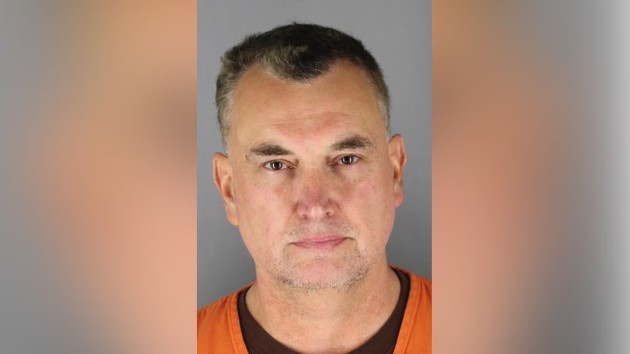
2 court security officers stabbed at criminal courthouse in Manhattan: Sources

2 court security officers stabbed at criminal courthouse in Manhattan: Sources
An exterior view of Manhattan Criminal Court on December 23, 2024 in New York City. Adam Gray/Getty Images

(NEW YORK) — Two court security officers were stabbed while screening people at the metal detectors at the Manhattan criminal courthouse on Monday morning, according to a state courts spokesperson.

One court officer was slashed in the face and the other was slashed in the neck, according to law enforcement sources. Both were taken to a local hospital in stable condition, sources said.

“Several Court Officers immediately rushed to stop the assailant, subduing him near a bank of magnetometers, disarming him, and taking him into custody,” state courts spokesperson Al Baker said in a statement.

Baker described the incident, which was caught on surveillance video, as an apparent “targeted attack.”

An investigation is ongoing, Baker said.

Copyright © 2025, ABC Audio. All rights reserved.
States agree to $7.4 billion settlement with Purdue Pharma in opioid litigation

States agree to .4 billion settlement with Purdue Pharma in opioid litigation
States agree to $7.4 billion settlement with Purdue Pharma in opioid litigation

(NEW YORK) — All 50 states as well as Washington, D.C., and four U.S. territories have agreed to sign a $7.4 billion settlement with the company and once-prominent family behind OxyContin, officials announced Monday.

The settlement resolves pending litigation against Purdue Pharma, which, under the leadership of the Sackler families, invented, manufactured and aggressively marketed opioid products for decades, according to the lawsuits. States and cities across the country said it fueled waves of addiction and overdose deaths.

The attorneys general in 55 states and territories have signed on to the historic settlement, which they said will end the Sacklers’ ownership of Purdue and bar them from making, selling or marketing opioids in the U.S.

California, Colorado, Connecticut, Delaware, Florida, Illinois, Massachusetts, Oregon, Pennsylvania, Tennessee, Texas, Vermont, Virginia and West Virginia led the team that negotiated the settlement, which marks the largest of its kind involving the opioid crisis, officials said.

“As Pennsylvania families and communities suffered during an unprecedented addiction crisis, Purdue and the Sacklers reaped the mammoth profits from their products,” Pennsylvania Attorney General Dave Sunday said in a statement. “This monumental settlement achieves the top priority of getting as much money as quickly as possible to prevention, treatment, and recovery programs across the Commonwealth. My office will continue engagement with municipal leaders to ensure millions of dollars reach every corner of the state.”

This is a developing story. Please check back for updates.

Copyright © 2025, ABC Audio. All rights reserved.

West Virginia death toll rises amid deadly flash flooding, building collapse

West Virginia death toll rises amid deadly flash flooding, building collapse
Douglas Sacha/Getty Images

(WHEELING, W.Va.) — The death toll in West Virginia has climbed to six after heavy rains and devastating flash flooding struck the state, according to Gov. Patrick Morrisey.

Two people are unaccounted for, according to the governor’s office, and a state of emergency is in effect.

Flash flooding occurred throughout the city of Wheeling and the towns of Triadelphia and Valley Grove. Roughly 3 to 4 inches of rain fell in the area in a short period of time, prompting significant flash flooding along US 40 (National Road), Middle Wheeling Creek, Little Wheeling Creek and various runs and streams through Ohio County.

On Sunday, a residential building in the city of Fairmont, in Marion County, partially collapsed, prompting the emergency declaration, according to the governor.

Footage from the scene showed water rushing out of the severely damaged structure as emergency crews responded to the scene.

“As flash floods continue throughout North Central West Virginia, emergency officials are on the scene in Marion County at a partial apartment collapse,” Morrisey said in his emergency declaration.

“State resources are being dispatched to the region immediately. Please — stay off the roads. Do not underestimate the strength and speed of these floods. Pray for our friends and neighbors during this challenging time for our state.”

There have been no hospitalization for injuries due to the collapse and an emergency shelter for those who were living in the apartment building has been set up in the Falcon Center on the Fairmont State campus, according to ABC Clarksburg, West Virginia, affiliate, WBOY-TV.

Multiple cars in the apartment parking lot were also totaled, the outlet reported.

Morrisey mobilized the National Guard to support local emergency operations.

ABC News’ Darren Reynolds and Victoria Arancio contributed to this report.

Copyright © 2025, ABC Audio. All rights reserved.