
Hard-hit Texas county had no flood warning sirens despite years of discussions

Hard-hit Texas county had no flood warning sirens despite years of discussions
Jim Vondruska/Getty Images

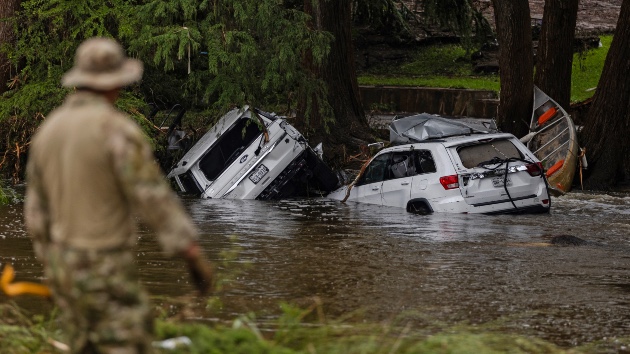
(NEW YORK) — As state and local officials in Texas have come under scrutiny over the lack of sirens to warn people of impending flash flooding on the Guadalupe River that killed more than 100 people, records reviewed by ABC News show authorities of one of the hardest hit counties have had discussions about implementing such an alert system for nearly a decade.

The destructive flooding hit in the early morning hours of the Fourth of July, causing the Guadalupe River in Kerr County to rise by 26 feet in less than an hour, spilling its banks and flooding multiple summer camps and RV parks along the winding river.

On Monday, the death toll from the flooding climbed to more than 100, according to officials. At least 84 of the deaths occurred in Kerr County, including 27 children at Camp Mystic, an all-girls Christian summer camp near the banks of the Guadalupe, authorities said.

Ten girls and a counselor from Camp Mystic remained unaccounted for on Monday as search-and-rescue efforts stretched into their fourth day.

Since the catastrophe, local officials have faced questions about how warnings were sent out to the community, why evacuations weren’t ordered in low-lying areas and why there were no audible warning systems to alert campers along the Guadalupe.

“There should have been sirens here,” Texas Lt. Gov. Dan Patrick told Fox News on Monday, adding that the subject will likely come up in a special session of the state legislature to analyze what occurred during the flooding.

Patrick added, “Had we had sirens around this area, up and down — the same type of sirens they have in Israel when there’s an attack coming, that would have blown very loudly — it’s possible that would have saved some of these lives.”

‘I’ve spent hours in those helicopters pulling kids out of trees’

Records reviewed by ABC News show that many of the same questions have been under discussion, specifically in Kerr County, for nearly a decade.

The minutes from a March 28, 2016, meeting of the Kerr County Commissioners’ Court, show that former Kerr County Sheriff Rusty Hierholzer pushed the commission to upgrade the county’s flood-warning system. At the time, Hierholzer told the commission that he was in favor of placing high-decibel outdoor sirens along the river that could go off and be heard from a distance of 3 miles when water gauges indicated flooding, according to the online minutes of the meeting.

According to the meeting minutes, first reported by The Wall Street Journal, then-Commissioner Tom Moser said there are state-of-the-art warning systems, including those with sirens, in other parts of the state, “even though this [Kerr County] is probably one of the highest flood-prone regions in the entire state.”

Hierholzer told the commission that the sirens, in addition to the county’s CodeRED emergency notification system, would work to quickly spread the word of imminent danger, according to the meeting minutes.

In that meeting, according to the minutes, Hierholzer raised what he called the “most important” issue — that of warning the summer camps along the Guadalupe, recalling a 1987 flash flood in which 10 children from the Pot O’ Gold Ranch Christian camp in Comfort, Texas, were killed attempting to evacuate the camp in a bus.

“I’ve spent hours in those helicopters pulling kids out of trees,” Hierholzer told the commission, according to the meeting minutes.

At the time, Hierholzer added that a lot of people in the county were not signed up for CodeRED alerts and that it was difficult to get people to sign up for the phone alerts.

“So yes, you need both. You need the sirens, and you need CodeRED to try to make sure we’ll notify everybody we can when it’s coming up,” Hierholzer said, according to the meeting minutes.

Moser, according to the meeting minutes, told his fellow commissioners that upgrading the warning system to include sirens was “not hugely expensive,” adding that the units would cost around $40,000 each.

The Kerr County Commissioners’ Court applied for a nearly $1 million FEMA grant, according to the meeting minutes. The county’s application was not selected, but it was not immediately clear why.

Moser could not be reached for comment by ABC News on Monday. He told The Wall Street Journal on Sunday that the county considered paying for the upgrade of its flood warning system, but eventually decided not to include it in its annual budget.

“It was probably just, I hate to say the word, priorities. Trying not to raise taxes,” Moser told the newspaper.

Reached by ABC News by phone on Monday, Hierholzer declined to comment on the statements he made to the commissioners more than nine years ago.

“This is probably one of the worst disasters Kerr County has ever seen. So right now, I don’t want to get into all this kind of political stuff — what we could’ve, would’ve, should’ve done,” Hierholzer told ABC News.

Officials concede they were caught off guard

Kerr County officials said during a news conference on Saturday that they were caught off guard by the torrential rains that caused the Guadalupe River to rise to near-historic levels in a matter of minutes.

“We didn’t know this flood was coming,” Kerr County Judge Rob Kelly said. “We have floods all the time. This is the most dangerous river valley in the United States, and we deal with floods on a regular basis. When it rains, we get water. We had no reason to believe that this was going to be anything like what’s happened here, none whatsoever.”

But during a news conference on Sunday, Texas Gov. Greg Abbott said the state began preparing for the storm last Wednesday by pre-positioning assets and resources in flood-prone areas of the state, including Kerr County.

Chief W. Nim Kidd of the Texas Division of Emergency Management said alerts were also sent out.

“From a technical perspective, there were multiple warning systems that are out there, and all of us can choose to sign up for warning systems in certain areas depending on the local government that they’re in and the way their system works,” Kidd said during the governor’s press conference. But he added that some places have spotty cell phone reception.

Kidd added, “There can be all kinds of alert systems that are sent, and we know that some general messaging was sent early, some urgent warnings were sent at various times. But just sending the message is not the same as receiving the message, having a plan to do something when you receive the message and then the ability to implement that plan.”

During a news conference on Monday, Kerrville City Manager Dalton Rice said staff at some of the summer camps on the Guadalupe were monitoring the rising river at 3:30 a.m. on the day of the flood and managed to move campers to higher ground.

Asked by reporters why mandatory evacuations were not issued by the city or county, Rice said, “Evacuations are a delicate balance because if you evacuate too late, you then risk putting buses, or cars, or vehicles, or campers on roads … trying to get them out, which can make it more challenging because these flash floods happen very quickly.”

When pressed on why evacuations were not announced far in advance of the storm, Rice added, “It’s like disasters in Texas everywhere — it’s very tough to make those calls because what we also don’t want to do is cry wolf.”

Copyright © 2025, ABC Audio. All rights reserved.

Federal judge recommends case against Milwaukee judge who allegedly helped undocumented man evade arrest continue

Federal judge recommends case against Milwaukee judge who allegedly helped undocumented man evade arrest continue
ftwitty/Getty Images

(MILWAUKEE) — A federal magistrate judge in Wisconsin has recommended that the case against a Milwaukee judge accused of helping an undocumented man evade arrest by immigration authorities not be dismissed.

Judge Hannah Dugan, 65, was arrested in April and charged in a two-count federal indictment alleging that she knowingly concealed a person sought for arrest by immigration authorities and for obstruction of official Department of Homeland Security removal proceedings.

Lawyers for Dugan, in part citing the U.S. Supreme Court’s decision in President Donald Trump’s immunity case, have argued she has judicial immunity for official acts and that her prosecution is unconstitutional.

Late Monday — in a non-binding decision — U.S. Magistrate Judge Nancy Joseph issued a 37-page report and recommendation, reaching the conclusion that there is no shield from prosecution in this case.

The recommendation will be presented to U.S. District Judge Lynn Adelman, who will make the final decision on the motion.

“It is well-established and undisputed that judges have absolute immunity from civil lawsuits for monetary damages when engaging in judicial acts,” the magistrate judge wrote in her decision. “This, however, is not a civil case. And review of the case law does not show an extension of this established doctrine to the criminal context. Accordingly, I recommend that Dugan’s motion to dismiss the indictment on judicial immunity grounds be denied.”

Joseph noted that while many of Dugan’s alleged actions could arguably be considered judicial acts, that does not mean prosecution is barred “where the indictment alleges that the acts were done ‘corruptly’ or to facilitate a violation of the criminal law.”

“What matters is whether the judge, even in performing her official duties, is accused of committing a crime,” Joseph wrote.

According to federal prosecutors, Dugan encountered federal agents in Milwaukee County Circuit Court on April 18, who were there to arrest an undocumented man appearing in her courtroom on a battery charge.

According to prosecutors, after speaking to the agents, Dugan directed them to the chief judge’s down the hall and then sent the man and his attorney out a non-public door in an alleged attempt, authorities claim, to help him evade arrest on immigration violations.

The man was later arrested.

The magistrate judge also recommended that Dugan’s motion to dismiss the case based on the contention that her prosecution violates the 10th Amendment’s separation of powers be denied.

The magistrate stressed that her recommendation is not a ruling on the merits of the case or on facts disputed by the parties.

“Dugan is presumed innocent, and innocent she remains, unless and until the government proves the allegations against her beyond a reasonable doubt to a jury at trial,” Joseph wrote.

The parties in the case have 14 days to file any written objections to Joseph’s report and recommendation.

“We are disappointed in the magistrate judge’s non-binding recommendation, and we will appeal it,” one of Dugan’s attorney Steven Biskupic said in a statement to the Associated Press. “This is only one step in what we expect will be a long journey to preserve the independence and integrity of our courts.”

Dugan has pleaded not guilty to the federal indictment. The case had been set for trial for July 21, but was pushed back until the immunity issue was settled. A new trial date has not been set.

The Wisconsin Supreme Court suspended Dugan in the wake of her arrest, stating in an order that it found it was “in the public interest that she be temporarily relieved of her official duties.”

Copyright © 2025, ABC Audio. All rights reserved.

10 arrested after ambush on Texas ICE detention facility, officials say

10 arrested after ambush on Texas ICE detention facility, officials say
amphotora/Getty Images

(ALVARADO, Texas) — State and federal officials announced on Monday that 10 people were arrested for engaging in a “planned ambush” on an ICE detention facility in Texas over the Fourth of July holiday.

The individuals were charged with attempted murder of a federal officer, according to court records.

The incident occurred at the Prairieland Detention Facility in Alvarado, Texas, on Friday, according to Nancy Larson, the U.S. attorney for the Northern District of Texas.

At approximately 10:37 p.m., 10 to 12 individuals dressed in black, military-style clothing began shooting fireworks and engaging in acts of vandalism at the facility, Larson said during a press conference.

Larson said the incident “was a planned ambush with the intent to kill ICE corrections officers.”

Some individuals drew correction officers out of the facility using the fireworks while others damaged vehicles and vandalized the facility with graffiti, Larson said.

When an Alvarado police officer arrived on the scene, one of the individuals shot him in the neck. Another individual shot 20 to 30 rounds at the facility correction officers, according to Larson.

All assailants fled the scene, though all have since been apprehended, the U.S. attorney said.

Bradford Morris, who goes by Megan, was one of the suspects that allegedly fled the scene, according to court records. He was stopped a short while later, with a magazine clip and Kevlar vests.

Morris allegedly told police that he met some people online who wanted to “make a little noise” at the detention center, according to court records.

Law enforcement found 12 sets of body armor, spray paint, a flag saying “resist fascism, fight oligarchy,” flyers saying “fight ice terror with class war free all political prisoners,” more fireworks, weapons and cell phones across multiple searches over the weekend.

Police also found two AR-15s nearby, according to court records.

No employees at the Prairieland Detention Facility were harmed during the shooting incident and the officer who was shot is expected to recover, according to Josh Johnson, the acting field office director for ERO Dallas.

The U.S. attorney’s office has charged the individuals with three counts of attempted murder of a federal officer, and each of the suspects is also charged with three counts of discharging a firearm in relation to a crime of violence.

The FBI is working alongside local and state law enforcement on this investigation.

Copyright © 2025, ABC Audio. All rights reserved.
Travis Decker search: Father accused of murdering 3 daughters possibly spotted in Idaho by campers

Travis Decker search: Father accused of murdering 3 daughters possibly spotted in Idaho by campers
Chelan County Sheriff’s Office

(FAIRFIELD, Idaho) — A possible sighting of Travis Decker — the dad accused of murdering his three daughters over a month ago — is being investigated in the wake of a family saying they may have spotted the fugitive father in Idaho late last week, according to the U.S. Marshals Service.

Paityn Decker, 9; Evelyn Decker, 8; and Olivia Decker, 5, were found dead near the Rock Island Campground in Chelan County, Washington, on June 2, after they left home for a planned visit with their father on May 30, according to police.

It’s been over one month since the girls’ bodies were found, and the manhunt for Decker, an Army veteran, continues.

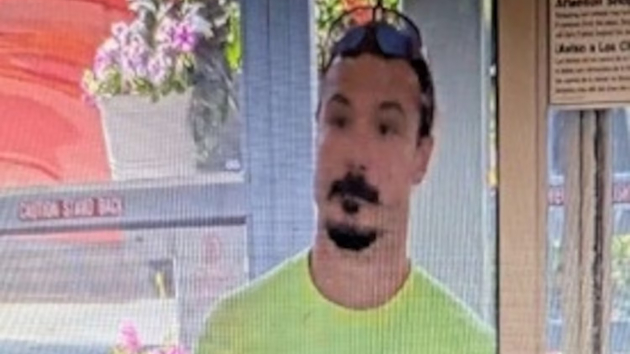
On Saturday, the U.S. Marshals Service received a tip from a family camping in the Bear Creek area of Sawtooth National Forest — about 32 miles north of Fairfield, Idaho — saying they saw someone “consistent with the description of Travis Decker,” the U.S. Marshals Service said in a press release on Sunday.

The person was described as a white male, anywhere from 5 feet, 8 inches tall to 5 feet, 10 inches tall, wearing a black mesh cap, black gauged earrings, a cream colored T-shirt, black shorts, low-top sneakers and a black Garmin-style watch, officials said. He also had a long ponytail, an “overgrown” beard and mustache and was carrying a black JanSport backpack, officials said.

The U.S. Marshals Greater Idaho Fugitive Task Force, a statewide cooperative to “locate and arrest violent state and federal fugitives,” will investigate the possible sighting, with the help of local Idaho officials.

The U.S. Marshals Service is also still offering a $20,000 reward for information leading directly to Decker’s arrest.

“This suspect should be considered armed and dangerous,” the U.S. Marshals Service said on July 3.

Last week, officials revealed that bloody handprints found on the tailgate of Decker’s truck — which was found near the girls’ bodies — matched the father’s DNA profile.

Chelan County officials said last week that drones and cadaver and tracking dogs are continuing to be used in the search efforts. The National Park Service is also planning to send out “swift water search and rescue teams in the near future to conduct more searches of bodies of water around the crime scene,” officials said.

An affidavit previously revealed that Decker’s Google searches leading up to the murders allegedly included “how does a person move to Canada” and “how to relocate to Canada.”

Decker is currently wanted for three counts of first-degree murder and three counts of kidnapping, police said.

Officials said anyone who has any information on Decker or knows of his whereabouts should not attempt to contact him, but instead call 911 or the U.S. Marshals Communication Center immediately.

Copyright © 2025, ABC Audio. All rights reserved.
Texas flash flooding disaster raises questions about rescue and recovery efforts

Texas flash flooding disaster raises questions about rescue and recovery efforts
Jim Vondruska/Getty Image

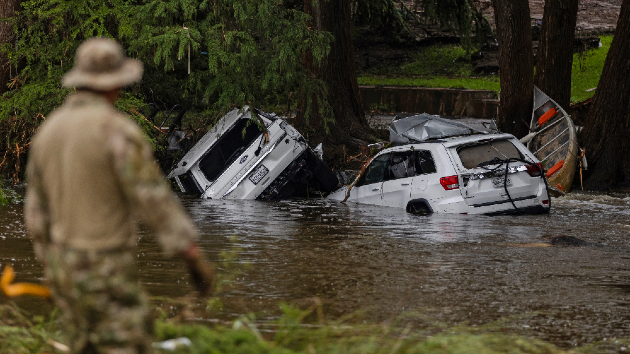
(NEW YORK) — The catastrophic flash floods in Texas have left communities reeling, claiming at least 90 lives and displacing families across the Hill Country. As recovery operations continue, safety concerns have intensified — not just for the current disaster but for how future flash flood events will be managed.

Officials say the tragedy has spotlighted confusion surrounding how disasters are categorized and managed, particularly around terms like response, rescue and recovery. Understanding these distinctions is essential to grasping how emergency teams work during such events.

How disaster response is organized

In the U.S., large-scale disaster management follows a tiered structure called the Incident Command System (ICS). This well-established framework is designed to ensure consistent coordination during crises, whether it’s a terrorist attack like 9/11, a major hurricane like Katrina, or the devastating floods currently hitting Texas.

Under ICS, the response is managed at local, state and federal levels. Texas Gov. Greg Abbott emphasized that all three tiers are currently active in the flood response, with resources being shared across jurisdictions. The terminology used under ICS is standardized, helping ensure that all agencies involved are aligned in their actions and goals.

As of this week, Abbott extended the state’s disaster declaration to cover 15 counties, while President Donald Trump approved a federal disaster declaration for Kerr County, one of the hardest-hit areas.

Response vs. Rescue vs. Recovery

Disaster operations follow a general pattern: response, then rescue, then recovery.

The Response Phase begins when the ICS is activated. This involves setting up an Emergency Operations Center and appointing an incident commander to coordinate efforts across all agencies.

The Rescue Phase prioritizes saving lives. In an event like the Texas floods, it would typically include:
– Land-based search teams using GPS grid searches.
– K9 search-and-rescue dogs.
– Boat and helicopter rescues carried out by the U.S. Coast Guard and Texas National Guard.
– A U.S. military “Reaper” drone providing aerial surveillance to guide rescue teams.

Importantly, the safety of responders is a top priority — ensuring they don’t become additional victims.

A family reunification process is also underway to help reconnect loved ones affected by the flooding.

Eventually, operations will shift to the Recovery Phase, which focuses on finding those still missing and restoring the devastated infrastructure. Abbott said that this transition in Texas will not happen until all missing people are accounted for. For comparison, after 9/11, the shift from rescue to recovery at Ground Zero occurred around 24 to 48 hours post-impact.

Investigations and mental health support

Due to the tragic loss of life, evidence recovery is now part of the process. Investigators may need to conduct forensic or criminal inquests to determine the cause of deaths and evaluate any liability.

Mental health support teams are already in place. The trauma of such a disaster affects victims, families and even the rescuers. Crisis counselors, FBI and state victim support specialists and grief support services should be available and will be a key part of the long-term response.

The long road ahead

Recovery will include debris removal, damage assessments and rebuilding efforts — a difficult road that will require extensive state and federal support.

Meanwhile, officials are urging all Texans to be vigilant and prepared for future weather emergencies.

What to do in a flash flood

If you’re in a flood-prone area, here are key safety tips:

– Always be weather aware and monitor alerts.
– Leave early if conditions deteriorate.
– Have an emergency kit and communication plan.
– Seek high ground immediately when flooding is imminent.

Several resources can help you stay informed:

– FEMA Mobile App — Provides real-time alerts and shelter information.
– Weather alert apps — Multiple are available for download and can offer advanced warnings.

For all types of disasters, meteorologists say that it’s important to have at least two ways of receiving important weather alerts. Your phone should have the Emergency Alert System activated, but you’ll also need a NOAA (National Oceanic and Atmospheric Administration) weather radio because it does not require cell service or electricity to operate.

“I really believe every person in the country should have a NOAA weather radio,” ABC News Chief Meteorologist Ginger Zee said. “This is battery powered and will wake you from a dead sleep. The timely warnings from NWS that night can be programmed to go off and would wake folks and give them at least a few minutes, if not longer, to seek higher ground.”

How you can help

The American Red Cross is one of several organizations assisting with victim support, shelter and supplies.

Donald J. Mihalek is an ABC News contributor, retired senior Secret Service who served on the president’s detail and as an NSSE coordinator for UNGA contingency operations. He was also a police officer and served in the U.S. Coast Guard helping coordinate search and rescue operations.

Richard Frankel is an ABC News contributor and retired FBI special agent who was the special agent in charge of the FBI’s Newark Division and, prior to that, the FBI’s New York Joint Terrorism TASK force. He was involved in the investigation and recovery efforts of TWA Flight 800, the 9/11 attacks and the 2013 Westgate Mall attack in Kenya.

The opinions expressed in this story are not those of ABC News.

Copyright © 2025, ABC Audio. All rights reserved.
At least 1 dead as Chantal brings record-breaking flooding to North Carolina

At least 1 dead as Chantal brings record-breaking flooding to North Carolina
ABC News

(CHATHAM COUNTY, N.C.) — Crews in North Carolina are “overwhelmed” with water rescues and search efforts on Monday after Chantal, then a tropical storm, made landfall a day earlier, causing record-breaking flooding in the central part of the state and at least one death, officials said.

While the storm has dissipated as of Monday morning, Chantal — the third named storm of the Atlantic hurricane season — brought up to 6 inches of rain in some areas, causing many to be displaced from their homes.

A woman in Chatham County, North Carolina, died on Sunday after she drove into the floodwaters and was swept approximately 100 feet off the roadway, according to the North Carolina State Highway Patrol.

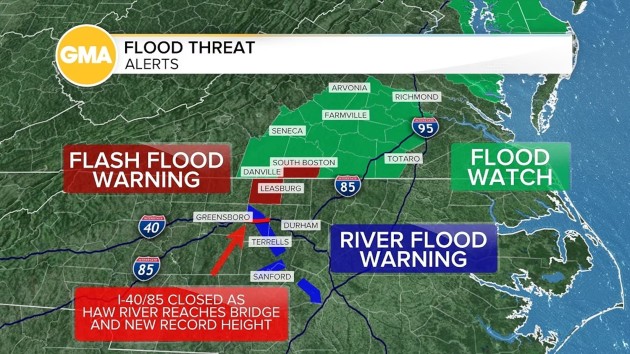
More than 120 roads have closed due to flooding and a portion of Highway 902 collapsed and was washed away, officials said.

“Just because the water may have subsided in some areas it is still dangerous to travel in some places,” Chatham County Sheriff Mike Roberson said on Monday.

In Orange County, North Carolina, the storm brought 5 to 9 inches of rain, causing flooded roads along with fallen trees and power lines. The counties of Alamance, Moore and Orange have declared states of emergency, according North Carolina Gov. Josh Stein.

“I urge all North Carolinians to listen to any guidance from local weather and local emergency management officials and be aware of any road warnings and closures before they leave the house,” Stein said in a statement.

The Eno River near Huckleberry Springs — just outside of Durham, North Carolina — rose more than 20 feet in less than six hours as of Monday morning, and the Haw River near Burlington grew from 2 feet to 32.5 feet in just 13 hours.

More than 33,000 customers were still without power in North Carolina as of noon on Monday and the town of Hillsborough, North Carolina, issued a notice asking residents to boil their water as flooding from the Eno River impacted the local water treatment plant.

The town will have a “limited supply of water until the river recedes and the drinking water can be processed to refill the water tanks,” officials said.

Chantal will continue to move northeast on Monday, with flood watches in effect for northeast Virginia through central New Jersey. About 2 to 3 inches of rain is possible in these areas, with the storm hitting Baltimore and Philadelphia on Monday afternoon and New York City seeing light rain on Monday evening into Tuesday morning.

ABC News’ Kenton Gewecke and Ahmad Hemingway contributed to this report.

Copyright © 2025, ABC Audio. All rights reserved.
Judge denies government’s request to dismiss Abrego Garcia’s wrongful deportation case

Judge denies government’s request to dismiss Abrego Garcia’s wrongful deportation case
Genaro Molina/Los Angeles Times via Getty Images

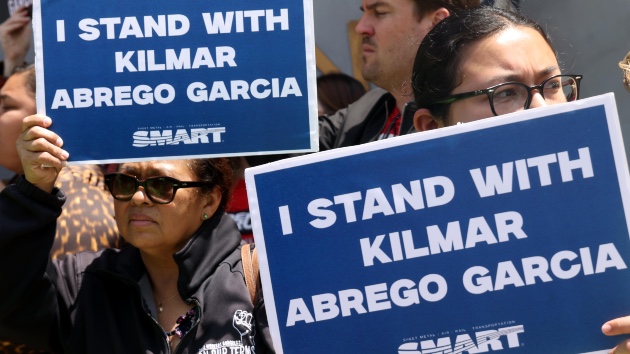
(NEW YORK) — The federal judge overseeing Kilmar Abrego Garcia’s wrongful deportation case in Maryland has denied the Trump administration’s request to dismiss the case.

U.S. District Judge Paula Xinis, at a hearing Monday in Maryland, pressed DOJ attorneys on why they claimed in May court filings that they could not return Abrego Garcia to the U.S. after securing an indictment against him in Tennessee on charges of human smuggling.

“Your client secured an indictment against Mr. Abrego Garcia on May 21 … how could you six days later say you had no power to produce him?” Judge Xinis asked. “Why else would you file a criminal indictment against someone who you can’t produce? It’s illogical.”

Abrego Garcia, who was deported in March to El Salvador’s CECOT mega-prison despite a 2019 court order barring his deportation to that country due to fear of persecution, was brought back to the U.S. last month to face charges in Tennessee of allegedly transporting undocumented migrants within the U.S. while he was living in Maryland. He has pleaded not guilty.

Judge Xinis, pointing to a filing submitted by the DOJ in May that said the U.S. government did not have the power to bring Abrego Garcia back from detention in El Salvador, repeatedly asked DOJ layers about the timeline of the criminal probe and whether the Tennessee indictment played a role in his release.

“Those are powerful arguments to say ‘I don’t have the power’… yet, at the same time, you’re putting in place the power of the prosecutorial arm to charge an individual, who you say will never come back to the United States, with a crime,” Judge Xinis said.

“You began a criminal investigation … on April 28, which was a month after this case began, and common sense would dictate that the only possible defensible use of investigative criminal resources would be if you eventually secured an indictment to bring Mr. Abrego Garcia back,” Judge Xinis said.

When DOJ attorney Bridget O’Hickey said the investigation into Abrego Garcia in Tennessee did not begin on April 28, Judge Xinis said the attorney was contradicting the government’s sworn testimony in the criminal case.

“That’s noteworthy to me, because I do believe that your client has taken a different position in front of the Tennessee court,” Judge Xinis said.

O’Hickey said Abrego Garcia was not indicted “with the purpose of bringing him back.”

“He was indicted because he was under investigation for those criminal charges,” O’Hickey said.

When Judge Xinis asked the plaintiffs how they found out Abrego Garcia was returned to the U.S., Simon Sandoval-Moshenberg said, “We found out on ABC News.”

Judge Xinis was also scheduled to hear arguments Monday over whether Abrego Garcia should be transferred to Maryland as he awaits trial in Tennessee.

Abrego Garcia’s attorneys filed an emergency motion last week seeking to have him returned to Maryland as he awaits trial, but government attorneys say they will seek to deport him to a country other than his native El Salvador, where he is prohibited from being sent due to a 2019 court order.

The magistrate judge overseeing the Tennessee case is expected to release him on bond as he awaits trial, setting up a battle over his potential removal.

In a court filing last week, Abrego Garcia’s attorneys said he had been subjected to severe mistreatment including “beatings, severe deprivation, inadequate nutrition and psychological torture” while he was held in CECOT, arguing that he “could face persecution or torture if removed directly to various other countries, including but not limited to countries with notorious human rights abuses like Libya, South Sudan, and Eritrea.”

The next hearing in Abrego Garcia’s criminal case is set for July 16 in Tennessee.

Robert McGuire, acting U.S. attorney for the Middle District of Tennessee, filed a motion last week to set a jury trial date “within 70 days of his initial appearance.”

Copyright © 2025, ABC Audio. All rights reserved.
Suspect dead after opening fire on entrance of Texas Border Patrol building

Suspect dead after opening fire on entrance of Texas Border Patrol building
Obtained by ABC News

(MCALLEN, Texas) — A suspect is dead after opening fire at the entrance of the Border Patrol sector annex in McAllen, Texas, on Monday morning, authorities said.

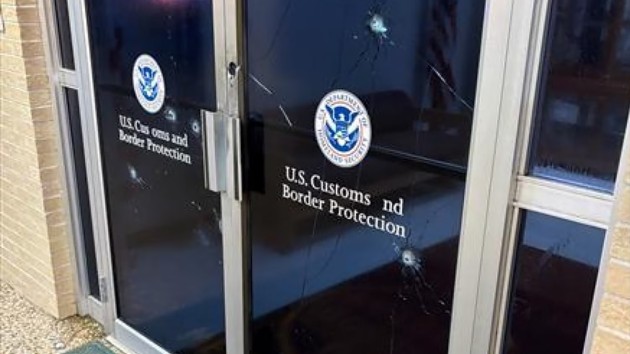
The suspect, identified as 27-year-old Ryan Louis Mosqueda, fired at the federal building that houses the U.S. Border Patrol offices at the McAllen International Airport, McAllen Police Chief Victor Rodriguez said at a news conference. The suspect never made it inside the building but fired “many, many rounds at the building,” Rodriguez said.

A photo of the door of the building showed the damage from bullets striking the glass.

Mosqueda was “neutralized” by Border Patrol agents and local police, according to McAllen police and the Department of Homeland Security.

Two officers and a Border Patrol employee were injured, including one officer who was shot in the knee, DHS said. He is expected to be fine, police said.

There is no known motive, Rodriguez said.

Mosqueda was reported missing from a Weslaco, Texas, address at 4 a.m., police said, adding they don’t have more details on the missing person’s report.

Mosqueda has a Michigan address and arrived in a car with Michigan tags, Rodriguez said. His car had additional weapons and ammunition inside, Rodriguez said.

City officials said all flights at McAllen International Airport were delayed following the incident.

Copyright © 2025, ABC Audio. All rights reserved.

Suspect dead after active shooter incident at Texas Border Patrol sector annex

Suspect dead after active shooter incident at Texas Border Patrol sector annex

(MCALLEN, Texas) — A suspect is dead following an active shooter incident at the entrance of the Border Patrol sector annex in McAllen, Texas, according to a Department of Homeland Security official.

Border Patrol agents and local police “neutralized” the shooter, according to DHS.

One McAllen police officer was struck in the leg, apparently when officers returned fire at the suspect, according to two officials familiar with the incident.

City officials said all flights at nearby McAllen International Airport are delayed.

This is a developing story. Please check back for updates.

Copyright © 2025, ABC Audio. All rights reserved.

Judge to hear arguments over transfer of Abrego Garcia to Maryland from Tennessee

Judge denies government’s request to dismiss Abrego Garcia’s wrongful deportation case
Genaro Molina/Los Angeles Times via Getty Images

(NEW YORK) — The federal judge overseeing Kilmar Abrego Garcia’s deportation case in Maryland will hear arguments Monday over whether Abrego Garcia should be transferred to Maryland as he awaits trial on human smuggling charges in Tennessee.

Abrego Garcia’s attorneys filed an emergency motion last week seeking to have him returned to Maryland should he released on bond, but government attorneys say they will seek to deport him to a country other than his native El Salvador, where he is prohibited from being sent due to a 2019 court order.

U.S. District Judge Paula Xinis, who has been handling Abrego Garcia’s Maryland case, will also hear arguments from the Trump administration seeking to have Abrego Garcia’s Maryland case dismissed.

Abrego Garcia, who was deported in March to El Salvador’s CECOT mega-prison despite a 2019 court order barring his deportation to that country due to fear of persecution, was brought back to the U.S. last month to face charges in Tennessee of allegedly transporting undocumented migrants within the U.S. while he was living in Maryland. He has pleaded not guilty.

The magistrate judge overseeing the Tennessee case is expected to release him on bond as he awaits trial, setting up a battle over his potential removal.

In a court filing last week, Abrego Garcia’s attorneys said he had been subjected to severe mistreatment including “beatings, severe deprivation, inadequate nutrition and psychological torture” while he was held in CECOT, arguing that he “could face persecution or torture if removed directly to various other countries, including but not limited to countries with notorious human rights abuses like Libya, South Sudan, and Eritrea.”

The next hearing in Abrego Garcia’s criminal case is set for July 16 in Tennessee.

Robert McGuire, acting U.S. attorney for the Middle District of Tennessee, filed a motion last week to set a jury trial date “within 70 days of his initial appearance.”

Copyright © 2025, ABC Audio. All rights reserved.