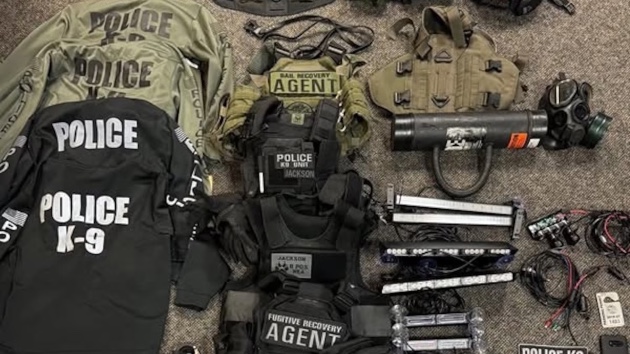
(SANTA ROSA, Calif) — A Northern California military veteran was arrested for posing as a cop and a bounty hunter, according to the Sonoma County Sheriff’s Office.
Gregg Jackson, 40, from Santa Rosa, California, was arrested earlier this week for impersonating a law enforcement officer, specifically “using a vehicle outfitted with red and blue emergency lights and was identifying himself as a bounty hunter,” the sheriff’s office announced on Tuesday.
Jackson had been on a pretrial release for felony charges and “as part of the terms of his release, he was subject to search of his home and vehicle,” the sheriff’s office said.
While officials were searching his home, they said they found “several items that falsely identified him as a police officer.”
“During the investigation, it was determined that he was not licensed to operate as a Fugitive Recovery Agent,” officials said.
Jackson was arrested and booked for impersonating a police officer and two violations of his pretrial release conditions, officials said.
As of Friday, he remains in custody at the Sonoma County Main Adult Detention Facility and bail has been set at $56,000, officials said.
The case remains under investigation and officials said they believe Jackson “may have unlawfully acted as a Fugitive Recovery Agent in multiple states.”
The suspect’s friend, Tim Sutton, told San Francisco ABC station KGO he was “completely blown away” when he heard the news of Jackson’s arrest. He also revealed that Jackson is a military veteran and has post-traumatic stress disorder.
“The idea of Gregg doing that with malicious intent does not sound like the Gregg I know, he’s an easy-going guy to talk to,” Sutton told KGO.
Jackson has previously been arrested for driving under the influence, assault with a deadly weapon and carrying a concealed weapon with a prior conviction, according to court records.
His next court appearance is scheduled for Friday at 2 p.m. local time, according to court records.
The public defender’s office representing Jackson did not immediately respond to ABC News’ request for comment.
(NEW YORK) — The risk of the catastrophic flooding that struck Texas Hill Country as people slept on July 4 and left at least 120 dead was potentially underestimated by federal authorities, according to an ABC News analysis of Federal Emergency Management Agency data, satellite imagery and risk modeling.
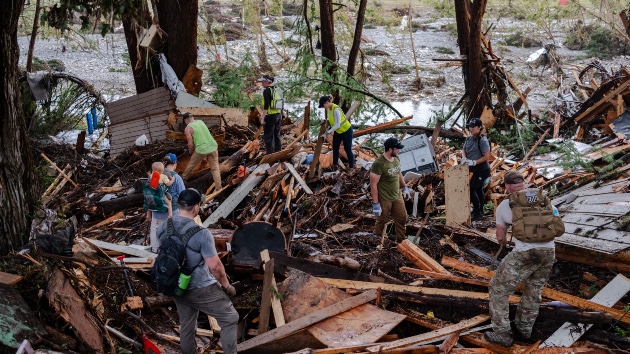
Some of the youth camps and recreational areas most devastated by the extreme weather were established on land designated by the FEMA as “special flood hazard areas” or in the river’s floodway, making them especially vulnerable to the July 4 flash floods that exceeded some federal estimates for a worst-case scenario.
At some points, water extended for hundreds of feet outside the Guadalupe River’s banks and beyond FEMA estimates, according to satellite data. First Street, a risk modeling company, told ABC News that the company believes that more than double the 8 million homes nationwide that are designated by FEMA to be in flood zones are actually at risk, finding that government models are outdated and fail to consider extreme weather events. Devastated camp ‘predominantly in a flood zone’
Along the river banks in Kerr County, the all-girls Camp Mystic was overrun by flood waters, which claimed the lives of 27 campers and counselors and swept multiple buildings from their foundations. According to FEMA maps, more than a dozen of the 36 cabins were located within areas designated as high risk for potential flooding on the river and nearby Cypress Creek.
“We knew this camp was predominantly in a flood zone, and even the areas that we showed that were outside were right on the edge of a flood zone,” said Jeremy Porter, the head of climate implications research at First Street, which provides climate data for companies like Zillow and Redfin.
Multiple buildings at Camp Mystic, including four cabins, were built within the Guadalupe River’s “regulatory floodway,” where most new construction is severely limited due to flood risk and to “protect human life and health,” according to Kerr County’s Flood Damage Prevention Order from 2020. The document noted that the stretch of land where Camp Mystic is situated is “an extremely hazardous area due to the velocity of flood waters which carry debris, potential projectiles and erosion potential.”
An additional 12 cabins at Camp Mystic were built on land designated as “special flood hazard areas,” where residents face a 1% chance of flooding annually and are normally required to have flood insurance.
“These should guide where you should or should not construct, whether you should have mitigation processes in place, like putting homes on elevated beds,” said Jonathan Sury, a senior staff associate at the National Center for Disaster Preparedness at Columbia University in Manhattan.
But some of those structures at the nearly 100-year-old camp were built decades before FEMA began issuing its flood maps in the 1960s and were likely permitted to remain despite modern construction regulations, Porter noted.
A row of cabins at Camp Mystic sat directly behind the “special flood hazard area” and was deemed a lower risk for typical flooding. However, the extreme flash-flooding over Independence Day weekend inundated even the area thought to be at lower risk for flooding, satellite and radar analysis show.
‘Outdated’ maps
At its maximum point, the floodwaters were recorded to be more than 500 feet from the Guadalupe River banks, and more than 200 feet from the edge of the FEMA Special Flood Hazard Area, according to the satellite data. The satellite data was collected and provided to ABC News by ICEYE, a company operating synthetic aperture radar satellites, which can obtain real-time data worldwide by using radar pulses to generate data. The data collected measures the depth of the water in a given location.
Other areas along the Guadalupe River were not only vulnerable to flooding but also saw a higher-than-expected water level, exceeding the area marked for a 0.2% annual chance of inundation. Experts told ABC News that Texas practices “very little oversight” over youth camps, and state officials last week approved Camp Mystic’s emergency plans.
At the Heart O’ the Hills Camp for Girls – where 1 person was killed – at least seven structures were built in the Special Flood Hazard Area. The data shows that the floodwater reached up to 220 feet from the riverbed.
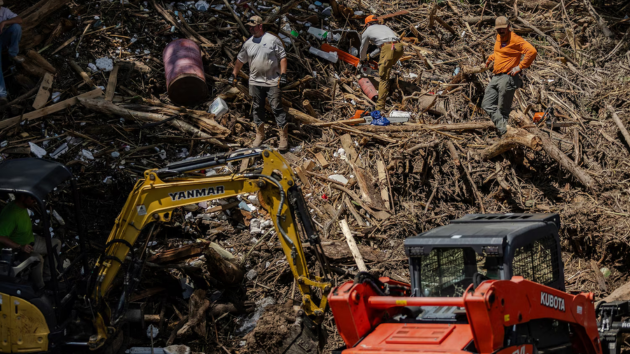
Floodwaters devastated RV parks north of the other camps on the Guadalupe River. More than 60 RV spots had been situated in the FEMA-designated Special Flood Hazard Area. Satellite data shows the area was covered in floodwater spanning the entire RV park.
Lorena Guillen, the owner of the Blue Oak RV Park, told ABC News that she was familiar with where her business fell on the FEMA flood map and never considered that the floodwaters could reach as far as they did last week.
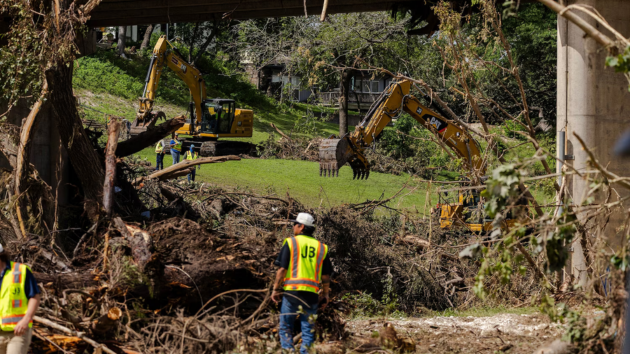
“It’s always come up…but there was nothing that would give us an indication that the flood was going to get all the way up 35, 40 feet high in 40 minutes,” she said. “Everything is gone. And there is so much debris, so much cleanup to do that it is going to take, it’s going to take months and months.”
Requests for comment to the camps and FEMA were not immediately answered.
“Our City of Kerrville and Kerr County leadership are committed to a transparent and full review of processes and protocols,” the Kerr County Joint Information Center said in an email. “The special session [of the state legislature] will be a starting point in which we will begin this work, but our entire focus since day one has been rescue and reunification.”
According to Porter, the extent of the flooding at Camp Mystic and other areas is representative of a broader problem with FEMA’s modeling, which places 8 million properties across the country at risk of a 100-year flood.
FEMA’s flood maps are generally used by the government to determine what insurance requirements are needed for homeowners, according to Lidia Cano Pecharroman, a researcher at MIT Department of Urban Studies and Planning.”When planning for flooding we cannot be over-reliant on these maps,” she said. “They are a useful tool but they are based on limited modeling and data.”
FEMA’s model considers factors like coastal storm surge and risks of flooding along river channels, but does not take into account heavy precipitation, such as the extreme rains that swept across Texas last week, Porter said.
“They’re outdated in the sense that they’re not climate corrected,” Porter said. “As those intensities increase of those rainfall events, we’re getting more rainfall happening all at once. It’s filling the waterways, and we’re seeing rapid increases in the river levels.”
First Street estimates that there are more than 2.2 times the number of properties at risk of hundred-year floods than FEMA’s model suggests.
“It’s a devastating event that occurred, but people should look at it and say, you know, if we know our risk, we should retrofit our buildings,” said Porter. “We should make sure that they’re designed to a standard that can withstand the risk that exists in an area right outside of that flood zone.”
(CAMARILLO, Calif.) — The FBI offered a $50,000 reward for a person who appeared to point and fire a weapon at federal law enforcement officers in Southern California on Thursday.
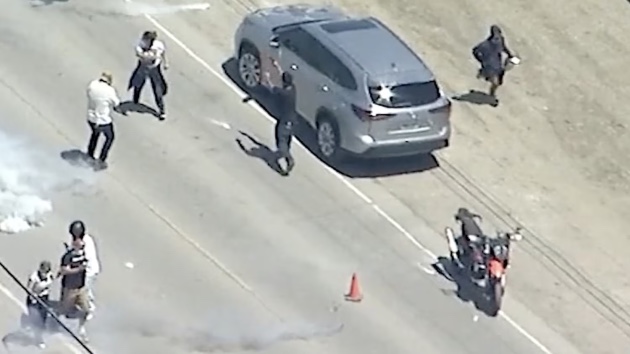
The alleged shooting occurred in Camarillo, in Ventura County, where protesters and federal agents were clashing over immigration raids. It allegedly happened just before 2:30 p.m. on Laguna Road, U.S. Attorney Bill Essayli said in a statement.
“FBI has issued a $50,000 award for information leading to the conviction of an Unknown Subject who appeared to fire a pistol at Federal Law Enforcement Officers near Camarillo,” Essayli said on social media.
Essayli, who heads the Central District of California office, added a photo of the suspect. He also shared a video of the incident that was shot by ABC News’ Los Angeles station KABC. The person in the photo and video appeared to be wearing a black T-shirt and a white medical mask.
“Make no mistake: anyone who targets our agents will face the full force of federal prosecution,” U.S. Customs and Border Protection said in a statement posted on social media.
This is a developing story. Please check back for updates.
(WASHINGTON) — Since the attempted assassination of Donald Trump last year, the Secret Service has streamlined operations, ensured its workforce is up to meeting its “current and future demands,” enhanced partnerships, modernized the training the service goes through and innovate its technologies, according to a report outlining the changes the agency has made.
On July 13, 2024, an assassin opened fire on a Trump rally in Butler, Pennsylvania, killing one and injuring three others. Trump was hit in the ear by a bullet.
Secret Service Director Sean Curran, who was leading Trump’s protective detail in Butler, said he has kept his experience of July 13 “top of mind” since being appointed director and said the agency has taken “many steps to ensure such an event can never be repeated in the future.”
“Nothing is more important to the Secret Service than the safety and security of our protectees,” Curran said. “As director, I am committed to ensuring our agency is fully equipped, resourced, and aligned to carry out our important mission each and every day.”
The attempted assassination has been the subject of at least three reviews by two of the three branches of government and an independent review — all of which concluded the agency failed on July 13.
The Secret Service said of the more than 40 recommendations made in the wake of the assassination attempt, the agency has implemented 21 of them, 16 are in progress, and nine are addressed to non-Secret Service stakeholders.
“Among the reforms implemented are changes to the Secret Service’s protective operations policies to ensure clear lines of accountability and improved information sharing with local law enforcement partners, the creation of an Aviation and Airspace Security division dedicated to maintaining the agency’s critical aerial monitoring capabilities, and modifications to the agency’s resourcing process, in order to ensure that assets are better accounted for and appropriately applied,” according to the release.
On Wednesday, an official told ABC News that six agents have been issued suspensions for failures connected to the attempted assassination, including the head of the Secret Service’s Pittsburgh field office.
The suspensions, ranging from 10 to 42 days, was issued in recent months and the agents have the right to appeal, according to the official, who was briefed on the agency’s actions.
On Fox News’ “Fox and Friends” on Thursday morning, Department of Homeland Security Secretary Kristi Noem said Trump is “satisfied” with the report and its outcome.
“We changed communication channels and protocol on how Secret Service works with local law enforcement and how they talk during these security events,” she said. “The big, beautiful bill gave them more resources that they needed as far as training and equipment, drone technology, counterdrone technology, all of that was something that needed to be addressed and I’m thankful we have funding we can.”
Derek Mayer, the former deputy special agent in charge of the Secret Service’s Chicago field office told ABC News the agency “continues to improve and evolve every day.”
“All law enforcement agencies learn from events that take place and develop new procedures that make them better,” said Mayer, who now serves as the chief security officer at P4 Security Solutions. “The Secret Service is no different. There were recommended reforms which came from the findings in the Congressional Report and also from the Secret Service’s Mission Assurance Report. These improvements will enhance communication, provide state of the art technology and provide upgrades to ballistic glass and physical security. There has also been the creation of new divisions to guarantee the highest level of standards.”
Mayer said the agency is investing in technology and “human talent” going forward.
(WASHINGTON) — In the wake of the flooding event in central Texas, some governors and mayors are raising concerns over how current or potential cuts to agencies that are part of the federal government’s response to major weather events will impact how effectively the government can respond in the future.
The Federal Emergency Management Agency and the National Oceanic and Atmospheric Administration — the latter of which oversees the National Weather Service — have lost hundreds of staff members through layoffs or early-retirement programs, and both face the potential of budget cuts. Budget cuts to NOAA are mostly directed at its climate programs, not forecasting.
Democratic Kentucky Gov. Andy Beshear, speaking with ABC News on Monday, told ABC News that he still feels FEMA helps states like his effectively respond to emergencies and assists through resources such as extra rescue teams and helicopters.
Beshear said he is also concerned about cuts at the National Weather Service.
“The Kentuckians who work for the National Weather Service do an amazing job, and even short staffed, and they are short staffed … I stay awake at night wondering when we don’t have full coverage, or wondering when someone is so tired from how hard they’ve worked, if something’s going to get missed and we’re going to be less safe the next time,” he said.
Beshear emphasized that he did not want to speculate about if any cuts or vacant positions impacted the emergency response in Texas, adding “that needs to ultimately be a fact-based question that’s not politicized, because at a time when this many families are hurting, the last thing they need is a political back and forth.”
There has been no indication of any staffing issues or other concerns related to FEMA, NOAA or NWS connected to the flooding event in central Texas. NOAA told ABC News on Tuesday that NWS planned for extra staffing at the NWS Austin/San Antonio local office ahead of the event and that the local office had five NWS employees working compared to the two who would normally be scheduled.
Department of Homeland Security Secretary Kristi Noem, whose agency oversees FEMA, told the FEMA Advisory Council on Wednesday that how FEMA responded “to Texas is exactly how President Trump imagined that this agency would operate, immediately making decisions, getting them resources and dollars that they need.”
Louisiana’s Republican Gov. Jeff Landry, speaking to reporters on Wednesday after a meeting of the FEMA Review Council, responded to a question about uncertainty over federal funds being interrupted during a potential future disaster by emphasizing his faith in the government’s ability to respond and to get funds states need to them.
“Do you think the president of the United States or members of Congress, certainly those in the Senate, of affected states, would not allow the money to get where it needs to be?” Landry told reporters.
Landry added later, “I am not convinced that the federal government is not going to be there when we need it … It’s not like we’re taking the federal government completely out of the process. What we’re trying to do, what I think they’re trying to do, and certainly what I am advocating for, is a more streamlined process.”
Some mayors shared their concerns about cuts to FEMA and NOAA with ABC News.
Mayor Quinton Lucas of Kansas City, Missouri, a Democrat, said he is very concerned about staffing cuts at NWS given frequent flooding in his city. Those cuts have to be, he said, “one of the most backward things that this country could possibly do … it can’t just be the television meteorologists who rely on information from the National Weather Service.”
But Mayor Dan Davis, the Republican mayor of the city of Manvel, Texas, told ABC News that his city has dealt with hurricanes and other weather events using resources they already have — including a combination of the Texas Department of Emergency Management, the National Weather Service and local agencies and meteorologists. The city also has a full-time staff emergency management coordinator.
He also said he believes the state can provide funding for systems that can help with the city’s emergency response, as long as municipalities apply for those grants. He said, as hurricane season approaches, Manvel secured a grant at the Texas Department of Emergency Management for backup generators for its critical infrastructure.
While Manvel was not impacted by the dramatic flooding in central Texas, the tragedy has rippled across the state.
“You just start tearing up and crying, because I have a daughter that’s 9 years old, and my daughter very well could have been at that camp,” he said.
D.C. Reeves, the Republican mayor of Pensacola, Florida, acknowledged that cuts or changes at the agencies are “a big part of our conversation. It’s a timely question.”
The city just recently introduced its first city emergency coordinator, he added, separating out that role from what used to be done by the city’s fire chief so that the city can be more prepared to manage emergencies.
Florida cities work heavily with county-by-county emergency operation centers as well, he said, adding that “if we ever had a hurricane bearing down on us, or any type of weather event, they are the point person.”
ABC News’ Luke Barr, Kyle Reiman and Dan Peck contributed to this report.
(Texas) — Animal rescue groups are stepping up to take in displaced pets amid the deadly flooding in central Texas, relocating them and keeping them safe until they can be reunited with their owners.
“When the floods occurred, we knew right away from other emergency response situations, such as the fires in Los Angeles, that we have shelters that are full of animals and what we are going to need in any event like this was to make room for displaced pets, lost pets and provide that relief for families that are already going through complete tumultuous situations to maybe have one less thing to worry about,” Marc Peralta, chief program officer for Best Friends Animal Society, said in an interview on ABC News Live.
The organization and its partners airlifted about 130 cats and dogs that were already available in shelters so there was room and time for displaced pets to be able to stay in the community, be safe and hopefully get reunited with their families, Peralta said.
At least 120 people were killed after catastrophic flooding swept through Texas in the overnight hours of the Fourth of July.
Peralta said the organization can facilitate longer stays of pets in emergency situations to allow for reunification, but at some point those pets can be put up for adoption.
“Just like any pet in a shelter, they can go up for adoption. But a lot of times if situations like this occur, we will extend wait periods just to make sure that we are giving ample amount of time because we always want them to go back home first, especially if we know they are stranded or lost,” Peralta said.
Many of the local organizations Best Friends Animal Society is working with on the ground are operating based on donations and there are wish lists available online for anyone interested in purchasing specific things needed by shelters on the ground.
If you are able to take in a pet through adoption or rescue, it will also help make room for other animals who need help because of the flooding, Peralta said.
“Just like for people, we’re just kind of scratching the surface in understanding what the actual devastation is for animals in the area is as well,” Peralta said.
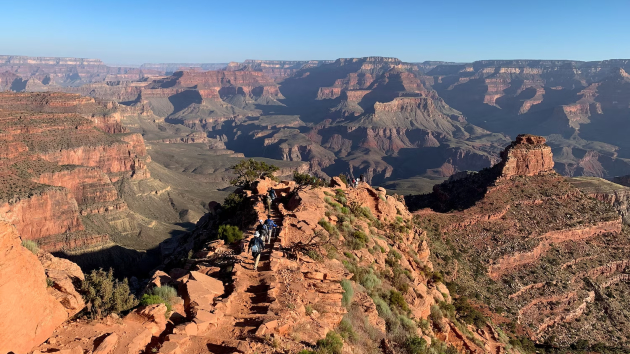
(NEW YORK) — A 67-year-old man from Alvarado, Texas, died on the South Kaibab Trail in the Grand Canyon National Park while attempting to reach the Colorado River, according to the National Park Service.
The Grand Canyon Regional Communications Center received a report of an unresponsive hiker on the trail, below Cedar Ridge, on July 8, just before noon, according to NPS. Bystanders began CPR while National Park Service medical personnel and volunteers responded on foot, according to the NPS.
The man was attempting to reach the river for an overnight stay at Phantom Ranch, NPS said. Attempts to resuscitate him were unsuccessful.
The hiker had turned around at Skeleton Point and was making his way back up the trail when the incident occurred, according to the NPS.
Summer temperatures on exposed parts of the trail can exceed 120 degrees, creating extremely hazardous conditions for hikers, according to the NPS.
“In addition to the heat, pre-existing medical conditions can compound physical stress, making summer hiking particularly risky, especially during the peak heat hours of 10 a.m. to 4 p.m. Park rangers strongly advise against hiking in the inner canyon during those hours and urge all visitors to take extreme caution when planning hikes during the summer months,” NPS said in a statement.
An investigation into the incident is being conducted.
(NEW YORK) — Svetlana Dali — the woman found guilty of stowing away on a Delta flight from New York to Paris last year — was sentenced on Thursday to time served with one year of supervised release after she told the judge she sneaked onto the plane because the U.S. military had poisoned her.
“My actions were directed toward only one purpose: to save my life,” Dali said through a Russian interpreter before the sentence was handed down.
Dali, a Russian citizen and U.S. permanent resident who recently lived in Philadelphia, blamed her attempts to stow away on an outbound flight on “circumstances beyond my control,” claiming in a labyrinthine statement that lasted more than a half hour that the U.S. military subjected her to poisonous chemicals.
“I was forced to escape from the United States because I was poisoned,” Dali said. “I can draw a conclusion that I was poisoned by those military chemicals in the United States.”
Dali has already been in jail the past seven months, which federal prosecutors said was sufficient as her sentencing guidelines range was zero to six months in prison.
“Stowaway travel is a serious offense that endangers both the offender and other air passengers. Deterrence is particularly important in stowaway cases, as publicized incidents encourage copycat behavior that threatens the safety of air travel and undermines the integrity of airport security systems,” prosecutors said in a sentencing memorandum that noted agreement with the defense.
Judge Ann Donnelly conceded Dali has had a “difficult life” but imposed a sentence of time served, noting the need for deterrence.
“When someone gets onto a plane without a seat, without a ticket, it’s a danger,” Donnelly said. “It’s possible that other people would try to do the same thing and that’s a situation our society cannot tolerate.”
Over the objection of the defense, Donnelly also included a year of supervised release. She insisted it was not meant to be punitive but to help Dali get treatment for mental illness.
“I hope you will work with all the people who are trying to help you,” Donnelly said.
A Brooklyn jury convicted Dali of a federal stowaway charge back in May.
Dali sneaked onto overnight Delta Flight 264 traveling from John F. Kennedy International Airport in New York City to Paris-Charles de Gaulle Airport in France on Nov. 26, 2024, without having a ticket and deliberately bypassed multiple boarding pass and identification checkpoints.
In a video obtained by ABC News, Dali can be seen walking up to gate B38 at Terminal 4 while other passengers have their boarding passes and passports checked for the Paris flight. After gate attendants assisted a separate group of customers and ushered them toward the jet bridge, Dali followed immediately behind, the video shows.
Once aboard, she went straight into one of the plane’s bathrooms and hid there with her bags for several hours to avoid detection, prosecutors said. When a flight attendant noticed, Dali faked vomiting to excuse her lengthy time in the bathroom.
After a flight attendant asked for her name and boarding pass, Dali gave two fake names and failed to produce any boarding pass or identification, prosecutors said. Alarmed, the flight attendant told Dali to sit in a seat reserved for flight crew as the plane came in for landing.
Dali was flown back to the United States on Dec. 4, 2024. Authorities had attempted to fly her back sooner, but she was twice unable to be transported due to her disruptive behavior, prosecutors said.
During a two-hour law enforcement interview, Dali admitted to flying as a stowaway and intentionally evading airport security officials and Delta employees so that she could travel without buying a ticket.
After being released from custody in early December 2024, Dali allegedly cut off her ankle monitor and traveled to Buffalo, where she tried unsuccessfully to cross over the Peace Bridge into Canada on a bus on Dec. 16, 2024. She has been in custody ever since.
Prosecutors believe Dali attempted to fly as a stowaway on two earlier occasions.
Two days before sneaking onto the Delta flight in New York, Dali snuck into a secure area at Bradley International Airport in Connecticut. Once inside the terminal, she hid inside a bathroom for a lengthy period to avoid detection. She also appeared to try to access a Jet Blue flight by getting in the boarding line but was turned away by gate agents.
In February 2024, Customs and Border Protection agents discovered Dali hiding in a bathroom within a secure area of the Miami International Airport. She claimed she had arrived on an Air France flight and was waiting for her husband but CBP found no records of her on any Air France flight that day.
Dali, who pleaded not guilty, took the witness stand during her trial. She admitted she did not have a boarding pass when she walked onto the flight.
Instead, Dali said she walked through to “where the people were boarding the flights and then I just walked into the airplane.”
Despite the sentence of time served, Dali will not immediately be free from custody.
Connecticut State Police said there is an active case against her for the incident at Bradley International Airport.
Benjamin Hanil Song, a former United States Marine Corps reservist, has been charged in connection with his role in the shooting of an Alvarado police officer at the detention center, according to the Johnson County Sheriff’s Office. FBI
(ALVARADO, Texas) — The FBI is searching for a 12th person the agency says was involved in the ambush of law enforcement officers at the Prairieland Detention Center in Alvarado, Texas, last week.
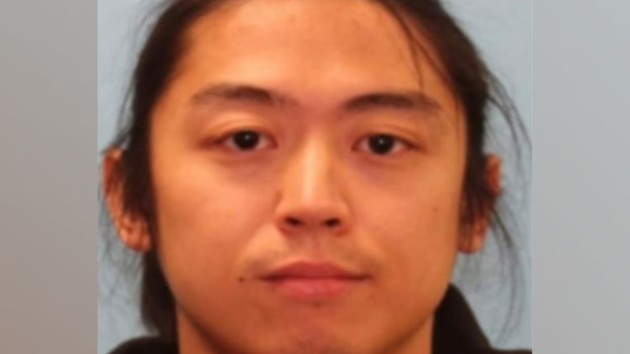
Benjamin Hanil Song, a former United States Marine Corps reservist, has been charged in connection with his role in the shooting of an Alvarado police officer at the Immigration and Customs Enforcement detention facility, the Johnson County Sheriff’s Office announced Thursday.
Song is accused of joining 10 others in an organized attack against officers at the Prairieland Detention Center just after 10:30 p.m., on July 4. Officials say he should be considered armed and dangerous.
Song has been charged with three counts of attempted murder of federal agents and three counts of discharging a firearm in relation to a crime of violence.
A group of individuals dressed in black, military style clothing began shooting fireworks toward the detention center, then spraying graffiti on vehicles and a guard structure in the parking lot at the facility, according to officials.
“Correctional officers called 911 to report suspicious activity. An Alvarado police officer responded to the scene and, upon exiting his vehicle, the officer was shot in the neck by a defendant positioned in nearby woods. Another alleged assailant across the street fired 20 to 30 rounds at unarmed correctional officers who had stepped outside the facility,” the sheriff’s office said in a statement Thursday.
The injured officer was treated and released following the shooting.
Song allegedly purchased four of the guns that were found in connection with the shooting, including two AR-style rifles found at the scene, according to officials.
“One of the abandoned rifles at the scene had a binary trigger, used to ‘double’ a regular rate of fire, allowing a shooter to fire more rapidly than a standard semiautomatic gun,” the sheriff’s office said.
Ten assailants who were charged in a criminal complaint on Monday fled from the detention center, but were apprehended by additional responding officers.
Song was not found, but cellphone location data indicated his phone was within several hundred meters of the Prairieland Detention Center the day of the ambush until the next morning, according to the sheriff’s office.
An 11th suspect, Daniel Rolando-Sanchez Estrada, is the husband of one of the attackers, and was arrested on charges of conspiracy to tamper with evidence while attempting to execute a search warrant, according to ICE’s account on X. He allegedly had “insurrectionist propaganda” at his home titled “Organizing for Attack! Insurrectionary Anarchy,” ICE said.
On July 6, a vehicle registered to Song was found on the same block of another suspect’s residence.
The 10 others charged in Monday’s complaint include Cameron Arnold, Savanna Batten, Nathan Baumann, Zachary Evetts, Joy Gibson, Bradford Morris, Maricela Rueda, Seth Sikes, Elizabeth Soto and Ines Soto.
If convicted, Song faces up to life in prison.
“We are committed to apprehending Song and are offering a reward of up to $25,000 for information leading to his arrest and conviction. If you have any information, please call 1-800-CALL-FBI or you can submit a digital tip to fbi.govprairieland,” FBI Dallas Special Agent in Charge R. Joseph Rothrock, said in a statement Thursday.
A blue alert — which are issued for at-large suspects when a police officer has been seriously injured or killed — was also issued late Wednesday for Song by the Texas Department of Public Safety.
(WASHINGTON) — Attorneys for a fired DOJ official-turned-whistleblower released a series of emails and texts Thursday that they say bolster claims that Emil Bove — a top Trump appointee to the Justice Department now in line for a powerful judicial appointment — repeatedly suggested defying orders from courts to enforce the administration’s immigration policies.
The messages, from former immigration attorney Erez Reuveni, provide a real-time look at the internal scramble among top Justice Department and other administration officials as they sought to defend the legality of several rushed deportation efforts that have since become the subject of high-stakes legal challenges.
According to lawyers for Reuveni and Senate Democrats who released the messages, they also provide clear support for Reuveni’s initial whistleblower disclosure, which came just a day before Bove was set to appear for his confirmation hearing for a seat on the 3rd U.S. Circuit Court of Appeals.
According to the complaint, Reuveni said that in a March 14 meeting on the eve of the administration carrying out its initial wave of deportations under the Alien Enemies Act, Bove remarked that DOJ “would need to consider telling the courts “f— you” in response to any order that sought to enjoin the removals.
In a series of texts released by Reuveni from March 15 — the day that U.S. District judge James Boasberg ordered the administration to turn around two planes carrying migrants deported under the AEA before they arrived in El Salvador, Reuveni said, “This doesn’t end with anything but a nationwide injunction” before adding, “And a decision point on f— you.”
“It’s a question if drew gets out without a sanction,” another attorney replied, an apparent reference to Drew Ensign, a career DOJ official who was tasked with defending the administration’s AEA deportations in the Boasberg case.
Later in the evening, Reuveni again texted, “guess its find out time on the f— you,” an apparent reference, again, to Bove’s alleged remark.
While it’s unclear what impact the texts could have on Bove’s nomination, they could ultimately serve to provide Judge Boasberg with evidence to carry out his contempt proceedings against the Trump administration, which are currently on hold by a D.C. Circuit Court of Appeals panel.
The texts also provide insight into the Justice Department’s initial deliberations regarding the administration’s resistance to returning Kilmar Abrego Garcia, who was deported in March to El Salvador’s CECOT mega-prison — despite a 2019 court order barring his deportation to that country due to fear of persecution — after the Trump administration claimed he was a member of the criminal gang MS-13, which his family and attorneys deny.
In one email, Reuveni argued that by defying an order to bring Abrego Garcia back from El Salvador, the administration risked “making very bad law here that jeopardizes many far more important initiatives of the current administration over one person.”
The messages also suggest that before Abrego Garcia’s case became the subject of nationwide attention, officials from the State Department and DHS appeared more than willing to facilitate his return — a sharp contrast to remarks from officials like Stephen Miller, who has repeatedly questioned Abrego Garcia’s character and labeled him a “terrorist.”
“I agree he should be brough back to the US if El Sal will release him back to us, and we should take steps to help ensure his safety in the meantime,” one State Department official said in an email.
“I’m with Erez, we want to make sure everyone knows this gentleman is alright if it takes us time to get el sal to send him back,” a DHS lawyer replied.
During his confirmation hearing, Bove vigorously disputed Reuveni’s whistleblower complaint and denied he ever instructed department officials to defy court orders. When pressed, however, on whether he ever made the remark about potentially having to tell the courts, ‘f— you,’ Bove responded he could not recall making such a statement.
In a statement Thursday responding to Reuveni’s release of the messages, Attorney General Pam Bondi described him as “a leaker asserting false claims seeking five minutes of fame” in order to sink Bove’s nomination.
“As Mr. Bove testified and as the Department has made clear, there was no court order to defy, as we successfully argued to the DC Circuit when seeking a stay, when they stayed Judge Boasberg’s lawless order,” Bondi said. “And no one was ever asked to defy a court order. This is another instance of misinformation being spread to serve a narrative that does not align with the facts.”