A person prepares to pump gas at a Valero gas station on June 16, 2026 in Austin, Texas. (Brandon Bell/Getty Images)
(NEW YORK) — Gas prices in the United States topped $4 per gallon on average Monday as an escalation of the Iran war renewed fears of a global oil shortage.
Prices at the pump have jumped 13 cents per gallon, or 3%, over the past week, AAA data showed, with the average price per gallon now at $4.003.
The recent cost rise brings gasoline prices back to a level achieved soon after the Iran war began in late February. The Middle East conflict prompted Iranian closure of the Strait of Hormuz, the maritime trading route that facilitates transportation of about one-fifth of global oil supply. The historic oil disruption sent gasoline prices surging.
Gas prices temporarily fell below $4 a gallon last month after the U.S. and Iran struck a preliminary agreement aimed at ending the war. Before the Iran war, fuel costs had last exceeded $4 a gallon in August 2022 following the Russian invasion of Ukraine.
An exchange of strikes between the U.S. and Iran in recent days has reignited large-scale fighting and dampened prospects of a resolution.
President Donald Trump on Sunday said the U.S. hit Iran “hard” in honor of the U.S. service members who were killed by Iran over the weekend.
U.S. Central Command said two service members were killed in an attack on Jordan on Friday, and that a third service member remained missing. Another service member was killed in Iraq on Saturday, CENTCOM said.
The U.S. resumed its naval blockade of the Strait of Hormuz last week, reversing a key commitment made as part of the agreement. That move came after Iran fired upon oil tankers in the strait.
The Iran war triggered one of the largest oil shocks ever recorded, sending the national average price of gasoline as high as $4.56 a gallon on May 21, AAA data showed.
Oil and gasoline prices began to fall in late May, however, as Iran and the U.S. appeared willing to strike an agreement that would reopen the strait. By late June, those prices gad fallen fell to their lowest level since before the war began.
Relief at the pump helped bring down prices overall. Inflation dropped more than expected in June as gas prices eased, federal government data on Tuesday showed.
Gas prices rose 3.5% in June compared to a year earlier, marking a retreat from a year-over-year inflation rate of 4.2% in the prior month. The reading for June marked the lowest inflation since March, though the pace of price increases remains more than a percentage point higher than its pre-war level.
Even after easing last month, overall inflation stands markedly higher than the Federal Reserve’s target rate of 2%.
ABC News’ David Brennan contributed to this report.
(NEW YORK) — A man with a history of anti-Immigration and Customs Enforcement (ICE) activity set off an “incendiary device” outside a Manhattan federal building that houses an immigration court, authorities said.
Video captured the moment the suspect poured a liquid and then ignited it outside 26 Federal Plaza, sparking a massive fire. FBI Assistant Director in Charge James Barnacle said the suspect used fireworks to set the blaze.
Two people — a federal employee and a civilian — suffered minor injuries and were treated and released, officials said.
Barnacle called it an “anti-government attack on a federal facility.” He said the suspect had an incendiary device, a pellet gun and a sign reading “ICE Off Our Streets.”
The suspect was taken into custody, the FBI said, and the FBI New York Joint Terrorism Task Force is investigating.
This is a developing story. Please check back for updates.
(NEW YORK) — A dozen purported members of the Bad Boys 7, a set of the Trinitarios, were indicted Monday on racketeering conspiracy charges that accused them of five murders, including the carjacking death last August of Ariela La Langosta, a nightlife influencer with more than half a million followers on Instagram.
She was shot multiple times and found dead in her car on the Cross County Parkway in Mount Vernon.
La Langosta, 33, whose real name was Ariela Mejia-Polanco, was a mother of two.
Her family said she left her job at Ikon New York around 4:30 that Sunday morning. The Westchester County Police Department said she was found deceased a few hours later, about 8 a.m., behind the wheel of her car on the eastbound Cross County Parkway near the Broad Street exit in Mount Vernon.
An undated photo of 18-year-old Nolan Xavier Wells, whose body was believed to be recovered after going missing on July 4, 2026. (Courtesy of the Wells Family)
(OCEAN SPRINGS, Miss.) — Family and friends of Mississippi teenager Nolan Wells will gather on Monday for his funeral as authorities continue to investigate the circumstances surrounding his death.
Rev. Al Sharpton is scheduled to deliver a eulogy at the service at Center Pointe Church in Wells’ hometown, Ocean Springs.
The 18-year-old went missing on the 4th of July after going on a boat trip with his high school friends to the popular, undeveloped Horn Island, just south of Ocean Springs, Mississippi, according to officials and family attorney Ben Crump.
“[The friends] left [Horn Island] and went back without Nolan,” Jackson County Sheriff John Ledbetter said. “From what we understand, he chose to stay there.”
Wells’ body was recovered two days later, according to officials.
Authorities said they believe the college football player drowned and don’t suspect foul play, but the sheriff’s office stressed that investigators are “working diligently to determine exactly what occurred.”
Wells’ family is desperate for answers and sent his body to Washington, D.C., for an independent autopsy, Crump noted.
Ledbetter told ABC News that the sheriff’s office welcomes the family’s independent investigation.
“By all means, that’s more information looking into the death of Nolan that will be made available and another set of eyes looking at it,” he said.
“We’re working towards the same goal as the family — we want a thorough investigation,” the sheriff said.
Wells’ mother, Christine Wonsley, told ABC News her son was a “bright light,” recalling that “his smile, his energy was just, just so infectious.”
An undated photo of 18-year-old Nolan Xavier Wells, whose body was believed to be recovered after going missing on July 4, 2026. (Courtesy of the Wells Family)
(OCEAN SPRINGS, Miss.) — Family and friends of Mississippi teenager Nolan Wells will gather on Monday for his funeral as authorities continue to investigate the circumstances surrounding his death.
Rev. Al Sharpton is scheduled to deliver a eulogy at the service at Center Pointe Church in Wells’ hometown, Ocean Springs.
The 18-year-old went missing on the 4th of July after going on a boat trip with his high school friends to the popular, undeveloped Horn Island, just south of Ocean Springs, Mississippi, according to officials and family attorney Ben Crump.
“[The friends] left [Horn Island] and went back without Nolan,” Jackson County Sheriff John Ledbetter said. “From what we understand, he chose to stay there.”
Wells’ body was recovered two days later, according to officials.
Authorities said they believe the college football player drowned and don’t suspect foul play, but the sheriff’s office stressed that investigators are “working diligently to determine exactly what occurred.”
Wells’ family is desperate for answers and sent his body to Washington, D.C., for an independent autopsy, Crump noted.
Ledbetter told ABC News that the sheriff’s office welcomes the family’s independent investigation.
“By all means, that’s more information looking into the death of Nolan that will be made available and another set of eyes looking at it,” he said.
“We’re working towards the same goal as the family — we want a thorough investigation,” the sheriff said.
Wells’ mother, Christine Wonsley, told ABC News her son was a “bright light,” recalling that “his smile, his energy was just, just so infectious.”
Cup of coffee with beans (Ricky Herawan / 500px/Getty Images)
(NEW YORK) — Drinking up to five cups of coffee a day is safe for most adults, and regular coffee consumption may be linked to a lower risk of stroke, diabetes and heart failure, according to a new scientific statement from the American Heart Association (AHA).
The official report, published Monday in the journal Circulation, addresses years of conflicting advice regarding caffeine and the heart.
“Coffee is potentially linked to lower risks of type 2 diabetes, stroke, and heart failure, though its relationship with blood pressure is complex and data isn’t entirely consistent across the board,” said Dr. Jennifer Miao, a board-certified cardiologist and ABC News Medical Unit Fellow.
For decades, doctors frequently advised people with heart issues to avoid stimulants. However, this comprehensive review marks a major shift by distinguishing between natural coffee beans and synthetic caffeine.
While older guidelines relied heavily on lower-quality studies, the AHA panel integrated recent clinical trials showing that even for patients who have had a procedure to address an irregular heart rhythm, daily coffee can cut the risk of the condition returning by 39%.
Habitual coffee consumption was also associated with a 20% to 30% lower risk of developing type 2 diabetes.
The AHA warns that your daily brewing method drastically impacts these potential health benefits, however. These heart-healthy links apply strictly to paper-filtered or instant coffee. Unfiltered options, including a French press, espresso, or Turkish coffee, retain a natural compound called cafestol. Cafestol raises low-density lipoprotein, or LDL, the “bad” cholesterol that can clog arteries over time.
Crucially, these positive heart associations do not translate to highly concentrated synthetic caffeine products like energy drinks, shots, or pills. The AHA notes that high-caffeine energy drinks are consistently linked to cardiovascular harm. These products are associated with sudden spikes in blood pressure and acute episodes of irregular heart rhythms, even in healthy adults.
“The AHA distinguishes between coffee and energy drinks, which can pose significant cardiovascular harm,” said Miao. “In large amounts, energy drinks can trigger life-threatening heart rhythm issues and even cardiac arrest.”
Your ideal caffeine limit is heavily influenced by your genetics. Inherited variations in a liver enzyme gene called CYP1A2 dictate how fast your body metabolizes stimulants. While some people can easily clear 400 milligrams of caffeine, which is about three to five cups of coffee, others may experience sleep disruption and blood pressure spikes with far less caffeine.
Doctors still caution that anyone with an underlying heart problem or existing risks of developing heart disease or stroke should talk to their provider about what amount of coffee or caffeine may be safe for them to consume.
“Consume caffeine in moderation, not solely for potential health benefits,” Miao advised. Everyone’s sensitivity is different, so if you have any underlying conditions or concerns, please talk to your doctor.”
Yonathan Daniel, M.D., is an internal medicine resident physician at NYU Langone Health and a member of the ABC News Medical Unit
Wildfire smoke from Canada shrouds the sun as it rises behind the Chrysler Building in New York City, July 17, 2026. (Gary Hershorn/ABC News)
(NEW YORK) — Dangerous wildfire smoke is impacting more than a dozen states on Saturday morning as air quality alerts span from the Upper Midwest and Great Lakes to New England, south through the Northeast and Mid-Atlantic.
More than 900 wildfires are burning across Canada, sending smoke into the Northeast and Mid-Atlantic, though a storm system moving through Saturday could help clear some of the haze.
The Midwest and Upper Great Lakes are expected to see poor air quality through the weekend as northwesterly winds push a plume of smoke into the region.
Meanwhile, the Storm Prediction Center has issued a Level 3 of 5 risk for severe storms across parts of the Ohio Valley, Northeast and Mid-Atlantic. Major cities along the Interstate 95 corridor, including New York, Philadelphia, Baltimore and Washington, D.C., could be affected. Pittsburgh, Cleveland and Buffalo are also expected to see strong storms.
The rounds of showers and storms will bring the threat of damaging winds, hail, a few tornadoes and chances for flash flooding in certain areas.
Flood watches are in effect for parts of the Northeast, including New York City and Philadelphia, through Saturday evening as heavy rainfall could trigger flash flooding.
Elsewhere, monsoonal moisture is expected to extend from West Texas and southern New Mexico into central and northern Arizona and southern Utah, where daytime heating could trigger thunderstorms capable of producing heavy rainfall and flash flooding.
A severe storm threat also extends into parts of Virginia and the Carolinas, where scattered storms could produce damaging winds and heavy rainfall as Charlotte, Raleigh and Virginia Beach are among the cities that could be affected.
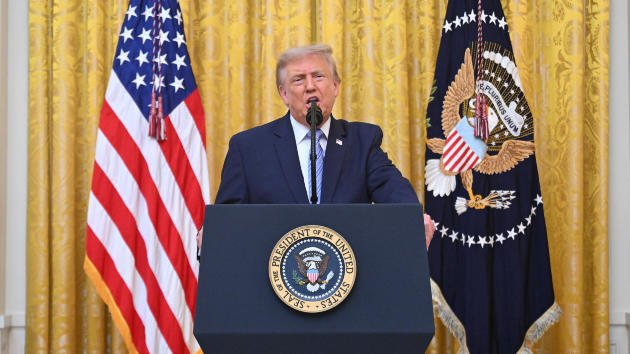
U.S. President Donald Trump addresses the nation from the East Room of the White House on July 16, 2026 in Washington, DC. (Saul Loeb/Pool – Getty Images)
(WASHINGTON) — Newly-declassified documents touted by President Donald Trump during his address on election security Thursday cast doubt on some of his claims about “shocking vulnerabilities” in the country’s election infrastructure.
While Trump claimed during his address that the nation’s election systems are vulnerable to “hacking, exploitation, and foreign interference,” the intelligence reports released by the White House concluded overall that the main infrastructure used to conduct elections in the United States “would be difficult to manipulate on a wide enough scale to alter the election outcome.”
“Great damage has been done to our country. Our elections were left vulnerable to being rigged and stolen, and the trust of the American people was lost,” Trump said, without providing evidence.
‘Difficult to manipulate at scale’
The documents noted that although some internet-connected election infrastructure — like voter registration databases and pollbooks — are vulnerable to cyberattacks, the systems used to tabulate, transmit, and display election results cannot be manipulated on a wide scale, and audits and paper trails “would uncover such efforts in the nearly all U.S. states.”
“We assess that hostile actors could also manipulate systems that count or tabulate votes — such as voting machines — on a localized basis, but it probably would be difficult to coordinate a campaign to alter voting results on a wide scale,” said an August 2020 report from the National Intelligence Council. “Similarly, foreign actors would have difficulty coordinating a large scale campaign to manipulate mail-in voting, and robust postal tracking probably would detect any large-scale effort.”
The report concluded that cyber attacks could potentially delay voting but “probably would not affect the integrity of certified results.”
While another report said that foreign adversaries such as Russia, China, Iran, and North Korea “have the capability to access and potentially manipulate data in U.S. election-related computer systems,” the report did not identify “specific plans to interfere with the functioning of these systems” or past instances when results were changed due to the actions of foreign actors.
“We assess that vote tabulation systems would be difficult to manipulate on a wide enough scale to compromise election results,” said a January 2020 report from the National Intelligence Council.
“Although an adversary could manipulate voting results across multiple jurisdictions and enough states to influence a presidential election, we judge that conducting such a campaign would be difficult and that postelection audits and paper trails very likely would uncover such an effort,” that report said.
According to the August 2020 report from the National Intelligence Council, the only country that was observed attempting to target or manipulate election systems during the 2020 election was Russia, which used “a range of measures primarily to denigrate former Vice President Biden” and share largely favorable information about President Trump.
‘Delays on Election Day’
According to the National Intelligence Council’s January 2020 report, the systems vulnerable to disruption are official election websites or registration databases — which are often publicly accessible — or poll books, which are used by election officials to look up eligible voters.
The report said that bad actors could “alter data to potentially prevent individual voters or groups of voters from voting, causing delays on Election Day or forcing voters to use provisional ballots” — but those actions wouldn’t affect the votes themselves.
“We assess that cyber operations targeting the electronic tabulation of results could delay results reporting from affected jurisdictions, potentially creating public uncertainty but probably not affecting the integrity of certified results,” the report noted.
According to a 2026 report from the Cybersecurity and Infrastructure Security Agency, election-related software is “subject to the same security concerns as most other software systems.” The report called for election officials to be transparent about issues to improve public trust.
“By openly acknowledging incidents and describing mitigation steps, vendors and localities can show that they are proactively defending critical infrastructure rather than obscuring vulnerabilities. This transparency encourages continuous improvement, drives investment in stronger defenses, and reinforces that protecting elections is a collective national priority,” the report said.
‘Russia, China, Iran’
A January 2020 memo from the National Intelligence Council warned that countries like Russia, China, Iran and North Korea “have the capability to access and potentially manipulate data in U.S. election-related computer systems” — but a subsequent report said such manipulation would be hard to do on a widespread basis.
“We judge that Russia, China, Iran, as well as many nonstate actors, have the capability to conduct such activities, although it would be difficult for them to manipulate voting processes at scale and without detection,” the report said.
Russia and China have pushed back against those claims.
The January 2020 report noted that Russia “almost certainly” surveyed election networks in 2016, accessed election infrastructure in two states, and exfiltrated voter data from one state.
According to the August 2020 report, Russia sought to amplify discord in the United States ahead of the 2020 election, spread false claims about then-candidate Joe Biden, and boost positive information about Trump.
The 2020 CIA memo noted that China probed presidential campaigns in every election since 2008 to get insights on U.S.-China issues.
According to the memo, the intelligence community detected Chinese state-sponsored cyber actors specifically targeting the Biden campaign “to gather intelligence that could enable future operations.”
“The IC assesses that China does not currently intend to covertly interfere to try to sway the outcome of the election, although this activity could enable such operations,” the report said.
An August 2020 report from the National Intelligence Council concluded that China “did not intend to try to affect the election” though it “prefers that President Trump be defeated.”
“We assess that China prefers that the President whom Beijing sees as unpredictable and tough on China does not win reelection,” the report said.
However, an October 2020 memo noted the overall intelligence community believed that China considered but did not deploy influence efforts for the upcoming 2020 election. The memo said that Chinese leadership believed Trump appeared likely to lose and that “there is little point to taking the risk of an influence effort because they believe their preferred outcome is probable.”
“As early as [REDACTED] this year, Chinese [REDACTED] assessed that the pandemic and economic downturn had diminished the President’s reelection prospects and since then Beijing has been planning for either electoral outcome and conducting outreach to both candidates and their campaigns, [REDACTED],” the memo said.
The August 2020 report noted that Iran “is conducting an influence campaign to undermine the current President and US democratic institutions, and to divide the country in advance of the 2020 elections.”
However, the report noted that Iran is focusing on covert online influence — such as sharing memes and recirculating news reports that are critical of Trump.
“Iran could attempt to manipulate or attack election infrastructure as it has in elections in the Middle East and South Asia — but we do not have any information indicating that it intends to do so in the United States,” the report said.
‘An election outside of Venezuela’
The release of documents included a CIA assessment from June 2026 summarizing the last two decades of intelligence related to Venezuela’s manipulation of voting systems, following longstanding claims by Trump’s far-right supporters of Venezuela’s involvement in 2020 election interference.
The memo said that Venezuelan government officials developed the capability to manipulate electronic voting systems in their own elections, including replicating and overwriting voting data to make fraudulent votes legitimate.
However, the report noted that the intelligence “did not definitively confirm that large-scale electronic fraud was successfully executed in specific Venezuelan elections.”
Notably, the report noted that there was no evidence that the Venezuelan government was able to manipulate election results outside of their own country, because their ability to rig elections “rested in part on its ability to control every stage of the electronic voting process.”
“Neither [the voting machine company] Smartmatic nor the Venezuelan Government had the capability — that is the level of control or access required — to manipulate the outcome of an election outside of Venezuela in a predictable fashion,” the report said.
‘False narratives’
In addition to assessing technological vulnerabilities in the election system, a newly-declassified memo from the National Intelligence Council explicitly raised concerns about adversaries exploiting most Americans’ lack of knowledge about voting systems to “undermine confidence in U.S. democratic processes.”
“Much of the voting public probably knows little about the process of administering U.S. elections, which could allow false narratives to gain traction,” said the January 2020 memo.
The memo noted that efforts to “publicly invalidate such claims could take weeks or months” and that “disproving claims would also be impossible if adversaries evaded U.S. intelligence collection.”
“A widely publicized compromise of election infrastructure probably would undercut public confidence in the election, even if the compromise was not used to manipulate election-related data or systems,” the memo said.
U.S. President Donald Trump addresses the nation from the East Room of the White House on July 16, 2026 in Washington, DC. (Saul Loeb/Pool – Getty Images)
(WASHINGTON) — Newly-declassified documents touted by President Donald Trump during his address on election security Thursday cast doubt on some of his claims about “shocking vulnerabilities” in the country’s election infrastructure.
While Trump claimed during his address that the nation’s election systems are vulnerable to “hacking, exploitation, and foreign interference,” the intelligence reports released by the White House concluded overall that the main infrastructure used to conduct elections in the United States “would be difficult to manipulate on a wide enough scale to alter the election outcome.”
“Great damage has been done to our country. Our elections were left vulnerable to being rigged and stolen, and the trust of the American people was lost,” Trump said, without providing evidence.
‘Difficult to manipulate at scale’
The documents noted that although some internet-connected election infrastructure — like voter registration databases and pollbooks — are vulnerable to cyberattacks, the systems used to tabulate, transmit, and display election results cannot be manipulated on a wide scale, and audits and paper trails “would uncover such efforts in the nearly all U.S. states.”
“We assess that hostile actors could also manipulate systems that count or tabulate votes — such as voting machines — on a localized basis, but it probably would be difficult to coordinate a campaign to alter voting results on a wide scale,” said an August 2020 report from the National Intelligence Council. “Similarly, foreign actors would have difficulty coordinating a large scale campaign to manipulate mail-in voting, and robust postal tracking probably would detect any large-scale effort.”
The report concluded that cyber attacks could potentially delay voting but “probably would not affect the integrity of certified results.”
While another report said that foreign adversaries such as Russia, China, Iran, and North Korea “have the capability to access and potentially manipulate data in U.S. election-related computer systems,” the report did not identify “specific plans to interfere with the functioning of these systems” or past instances when results were changed due to the actions of foreign actors.
“We assess that vote tabulation systems would be difficult to manipulate on a wide enough scale to compromise election results,” said a January 2020 report from the National Intelligence Council.
“Although an adversary could manipulate voting results across multiple jurisdictions and enough states to influence a presidential election, we judge that conducting such a campaign would be difficult and that postelection audits and paper trails very likely would uncover such an effort,” that report said.
According to the August 2020 report from the National Intelligence Council, the only country that was observed attempting to target or manipulate election systems during the 2020 election was Russia, which used “a range of measures primarily to denigrate former Vice President Biden” and share largely favorable information about President Trump.
‘Delays on Election Day’
According to the National Intelligence Council’s January 2020 report, the systems vulnerable to disruption are official election websites or registration databases — which are often publicly accessible — or poll books, which are used by election officials to look up eligible voters.
The report said that bad actors could “alter data to potentially prevent individual voters or groups of voters from voting, causing delays on Election Day or forcing voters to use provisional ballots” — but those actions wouldn’t affect the votes themselves.
“We assess that cyber operations targeting the electronic tabulation of results could delay results reporting from affected jurisdictions, potentially creating public uncertainty but probably not affecting the integrity of certified results,” the report noted.
According to a 2026 report from the Cybersecurity and Infrastructure Security Agency, election-related software is “subject to the same security concerns as most other software systems.” The report called for election officials to be transparent about issues to improve public trust.
“By openly acknowledging incidents and describing mitigation steps, vendors and localities can show that they are proactively defending critical infrastructure rather than obscuring vulnerabilities. This transparency encourages continuous improvement, drives investment in stronger defenses, and reinforces that protecting elections is a collective national priority,” the report said.
‘Russia, China, Iran’
A January 2020 memo from the National Intelligence Council warned that countries like Russia, China, Iran and North Korea “have the capability to access and potentially manipulate data in U.S. election-related computer systems” — but a subsequent report said such manipulation would be hard to do on a widespread basis.
“We judge that Russia, China, Iran, as well as many nonstate actors, have the capability to conduct such activities, although it would be difficult for them to manipulate voting processes at scale and without detection,” the report said.
Russia and China have pushed back against those claims.
The January 2020 report noted that Russia “almost certainly” surveyed election networks in 2016, accessed election infrastructure in two states, and exfiltrated voter data from one state.
According to the August 2020 report, Russia sought to amplify discord in the United States ahead of the 2020 election, spread false claims about then-candidate Joe Biden, and boost positive information about Trump.
The 2020 CIA memo noted that China probed presidential campaigns in every election since 2008 to get insights on U.S.-China issues.
According to the memo, the intelligence community detected Chinese state-sponsored cyber actors specifically targeting the Biden campaign “to gather intelligence that could enable future operations.”
“The IC assesses that China does not currently intend to covertly interfere to try to sway the outcome of the election, although this activity could enable such operations,” the report said.
An August 2020 report from the National Intelligence Council concluded that China “did not intend to try to affect the election” though it “prefers that President Trump be defeated.”
“We assess that China prefers that the President whom Beijing sees as unpredictable and tough on China does not win reelection,” the report said.
However, an October 2020 memo noted the overall intelligence community believed that China considered but did not deploy influence efforts for the upcoming 2020 election. The memo said that Chinese leadership believed Trump appeared likely to lose and that “there is little point to taking the risk of an influence effort because they believe their preferred outcome is probable.”
“As early as [REDACTED] this year, Chinese [REDACTED] assessed that the pandemic and economic downturn had diminished the President’s reelection prospects and since then Beijing has been planning for either electoral outcome and conducting outreach to both candidates and their campaigns, [REDACTED],” the memo said.
The August 2020 report noted that Iran “is conducting an influence campaign to undermine the current President and US democratic institutions, and to divide the country in advance of the 2020 elections.”
However, the report noted that Iran is focusing on covert online influence — such as sharing memes and recirculating news reports that are critical of Trump.
“Iran could attempt to manipulate or attack election infrastructure as it has in elections in the Middle East and South Asia — but we do not have any information indicating that it intends to do so in the United States,” the report said.
‘An election outside of Venezuela’
The release of documents included a CIA assessment from June 2026 summarizing the last two decades of intelligence related to Venezuela’s manipulation of voting systems, following longstanding claims by Trump’s far-right supporters of Venezuela’s involvement in 2020 election interference.
The memo said that Venezuelan government officials developed the capability to manipulate electronic voting systems in their own elections, including replicating and overwriting voting data to make fraudulent votes legitimate.
However, the report noted that the intelligence “did not definitively confirm that large-scale electronic fraud was successfully executed in specific Venezuelan elections.”
Notably, the report noted that there was no evidence that the Venezuelan government was able to manipulate election results outside of their own country, because their ability to rig elections “rested in part on its ability to control every stage of the electronic voting process.”
“Neither [the voting machine company] Smartmatic nor the Venezuelan Government had the capability — that is the level of control or access required — to manipulate the outcome of an election outside of Venezuela in a predictable fashion,” the report said.
‘False narratives’
In addition to assessing technological vulnerabilities in the election system, a newly-declassified memo from the National Intelligence Council explicitly raised concerns about adversaries exploiting most Americans’ lack of knowledge about voting systems to “undermine confidence in U.S. democratic processes.”
“Much of the voting public probably knows little about the process of administering U.S. elections, which could allow false narratives to gain traction,” said the January 2020 memo.
The memo noted that efforts to “publicly invalidate such claims could take weeks or months” and that “disproving claims would also be impossible if adversaries evaded U.S. intelligence collection.”
“A widely publicized compromise of election infrastructure probably would undercut public confidence in the election, even if the compromise was not used to manipulate election-related data or systems,” the memo said.
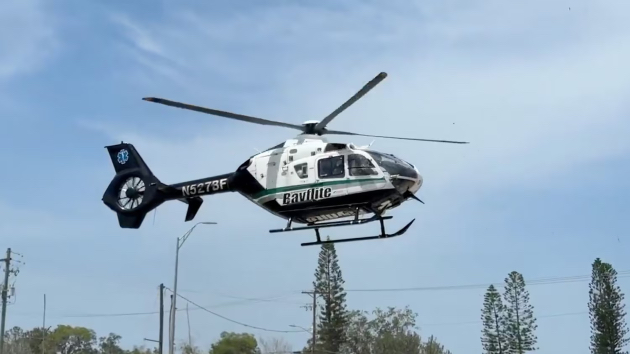
A helicopter airlifts two deputies to the hospital after they were shot on July 16, 2026 in Ruskin, Fla. (Hillsborough County Sheriff’s Office)
(RUSKIN, Fla.) — Two deputies were airlifted to a Florida hospital Thursday after they were shot while approaching a suspect who was accused of holding a woman hostage overnight, according to the Hillsborough County Sheriff’s Office.
The suspect, identified as 34-year-old Chris Dmuchowski, was shot by a third responding deputy and died after being transported to the hospital, the sheriff’s office said.
Both deputies are receiving care and are expected to make a full recovery, according to an update from the sheriff on Friday.
Deputies arrived on the scene on West Shell Point Road in Ruskin, Florida, after a report that the suspect had taken his ex-girlfriend hostage overnight, Hillsborough County Sheriff Chad Chronister said in a press briefing Thursday.
The suspect allegedly restrained his ex-girlfriend at her residence and threatened to kill her, and then released her after she regained consciousness in the morning, Chronister said.
That morning, she went to a sheriff’s office building to request an order of protection, after which authorities sent a drone to the scene upon identifying the suspect and learning of his criminal record, according to the sheriff.
An exchange of gunfire ensued in the parking lot outside of the residence after the suspect exited the building, the sheriff said.
“Our suspect ambushed our deputies from the moment they arrived on scene,” Chronister said. “He was intent on taking the life of a deputy sheriff.”
The suspect opened fire at two deputies, striking one in the face and another in the neck area, after which a third deputy approached and shot the suspect multiple times, Chronister said.
Chronister said on Friday that one of the deputies was preparing to go into surgery. He had multiple fractures on his hand and wrist and had gotten stitches on his face where the bullet struck, according to the sheriff.
The other deputy who was shot in the neck experienced no damage to vital arteries and hopes to be released Friday, Chronister said.
Dmuchowski was a one-time convicted felon on charges of tampering with physical evidence.
The sheriff’s office said there is no threat to public safety at this time.
“Thank you to every single deputy who was on scene and responded to this scene today,” Chronister said.