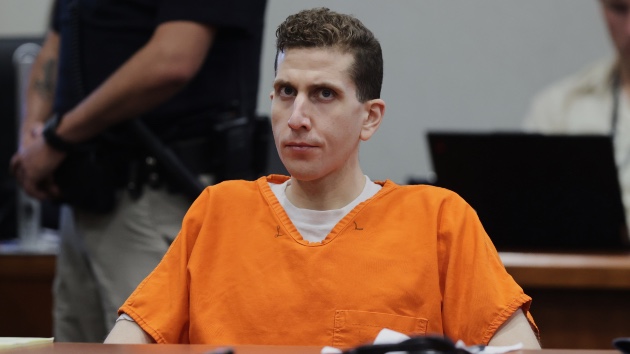
(BOISE, Idaho) — Though the motive behind University of Idaho killer Bryan Kohberger’s violent attack remains unknown, the former police chief says “new information could come out still.”
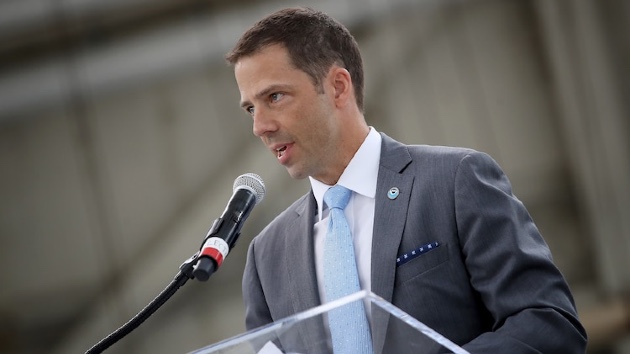
“There’s always cases that, you know, 10 years later, somebody says something,” James Fry, who was the Moscow police chief at the time of the murders, told ABC News moments after Kohberger was sentenced to life behind bars on Wednesday.
After nearly three years and an exhaustive, expensive investigation, Fry admitted he wishes he knew more about the motive. Moscow police said they don’t know which victim was the specific target and have not found any link between Kohberger and the victims.
“You’re always wanting to get the families the why,” he said, but “sometimes they don’t get to have the why.”
Fry sat down with ABC News for his first network interview since the nondissemination order was lifted, allowing him to open up about the yearslong investigation that’s defined the department and the killer who terrorized his community.
The victims — roommates Kaylee Goncalves, Madison Mogen and Xana Kernodle, and Kernodle’s boyfriend, Ethan Chapin — were stabbed to death at the girls’ off-campus house on Nov. 13, 2022.
Police reports released for the first time on Wednesday reveal just how gruesome the crime scene was and noted that Goncalves and Kernodle suffered from defensive wounds.
Goncalves was stabbed 34 times and described as “unrecognizable as her facial structure was extremely damaged,” a report said. Kernodle was in an “intense struggle” and had over 50 stab wounds, a report said.
That’s done by someone who is “cold, filled with rage,” Fry said. “Angry, very angry.”
“I think it was a fight for their life,” Fry said, noting Kernodle may have encountered Kohberger when she went into the kitchen after getting her food delivery.
Two roommates survived, including Dylan Mortensen, who told police she saw a man in a mask with “bushy eyebrows” in the house on the night of the murders.
Asked why Mortensen may have been spared, Fry said there are a lot of theories, including that Kohberger may have been exhausted from the stabbings or he could’ve felt he’d been in the house too long.
“I don’t know — only he has that answer,” Fry said.
On July 2, weeks before the trial was set to start, Kohberger pleaded guilty to all counts. On Wednesday, Kohberger was sentenced to four consecutive life sentences on the four first-degree murder counts and the maximum penalty of 10 years on the burglary count.
When Fry sat down in the jury box at sentencing, he was directly across from Kohberger, marking the first time he saw him face-to-face.
“He should be ashamed of what he did,” Fry said. “He destroyed lives, families, communities. Changed everybody that ever worked that case, changed my university.”
“It’s not human what happened,” he said.
In the end, Fry said he feels some vindication. He had promised his community and the victims’ families that this case would not go cold. During the nearly seven-week manhunt, in which the department divulged little-to-no information, that became a valid concern. Fry was receiving death threats, sleeping with a loaded shotgun near his bed and covering office windows with butcher paper to keep people from seeing inside. All while searching for, and eventually finding, the killer, who will now spend the rest of his life behind bars.
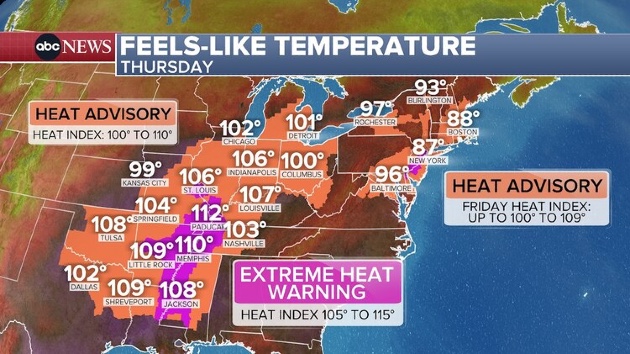
(NEW YORK) — At least 130 million people from Texas to Maine are under alert for dangerous heat and humidity over the next few days.
Hot and sticky temperatures will make it feel as high as 115 degrees in parts of the Mississippi River Valley. Even Niagara Falls will get no relief from the sweltering conditions; the tourist destination will feel like the mid-to-upper 90s on Thursday.
The heat index in Chicago, which factors in humidity, will make it feel in the triple digits and nighttime and early-morning temperatures will provide little comfort. As of 4 a.m. Thursday, the actual temperature was 80 degrees, or 85 with the heat index.
Texas will be just as hot on Thursday, as the heat index is expected to make it feel 107. Up north in Detroit, it’s forecast to feel 102.
Dangerous heat will spread to the Mid-Atlantic and Northeast as temperatures in the I-95 corridor from Washington, D.C., to Portland, Maine, will make it feel like it’s in the mid-90s on Thursday.
Maine is under a heat advisory mainly for Friday as the heat index will make Portland, Maine, feel like it’s 100 degrees.
New York City, Boston and Philadelphia are also bracing for extreme temperatures. On Friday, the feels-like temperature is expected to be reach 104 in New York City, 103 in Boston, 106 in Philadelphia and 109 in Washington, D.C., and Baltimore.
Meanwhile, the Midwest and the Southeast is expected to see hot and humid weather stretch into the weekend and into early next, as the heat indices are expected to make it feel 110 degrees in some parts.
Most of the Southeast, including Atlanta, is expected to see a level four out four “extreme heat risk” on Monday and Tuesday as a potentially life-threatening heat wave continues in the region.
Besides the heat, the Midwest, specifically Kansas and Missouri, is expected to see a summer flash flooding continue. Strong thunderstorms on Thursday could cause flooding across the region, which is still recovering from flash floods earlier this week.
Heavy thunderstorms are expected to develop over the Midwest on Thursday afternoon and through the night, with rainfall totals forecast to reach 2 to 4 inches or higher in some areas along the I-70 corridor. The Kansas City region may see the brunt of storms with multiple rounds of heavy rain possible.
(MARTIN COUNTY, Fla.) — A woman was attacked by an alligator while swimming in waist-deep water with her boyfriend and dog in Florida, according to the Martin County Sheriff’s Office.
The attack occurred on Wednesday, when the 27-year-old woman and her boyfriend took their boat out in the South Fork of the St. Lucie River in Stuart, Florida, the sheriff’s office said in a statement.
While the two were swimming in waist-deep water with their dog, “an alligator bit the hand and wrist of the female” and momentarily pulled her underwater, officials said.
The gator released the woman, with her boyfriend “swiftly” jumping in to “save her life,” Martin County Sheriff’s Office Lt. Michael McCarthy told reporters on Wednesday.
The woman’s boyfriend drove her to the boat ramp at Charlie Leighton Park in Palm City, Florida, and the victim was flown to HCA Florida Lawnwood Hospital in Fort Pierce, Florida, officials said.
The sheriff’s office said the woman — who has not been identified — suffered “several broken bones” in her hand and wrist, along with minor lacerations and scuffing on the top of her hand and wrist.
The dog and the boyfriend were not injured in the attack, officials said.
Florida Fish and Wildlife Conservation responded to the scene and are “awaiting their trapper to locate the alligator,” the sheriff’s office said. FWC confirmed to ABC News the trapper has not yet captured the gator and will continue “removal efforts” on Thursday.
The status of the woman’s condition as of Thursday remains unclear.
Martin County Sheriff’s Office and HCA Florida Lawnwood Hospital did not immediately respond to ABC News’ request for comment.
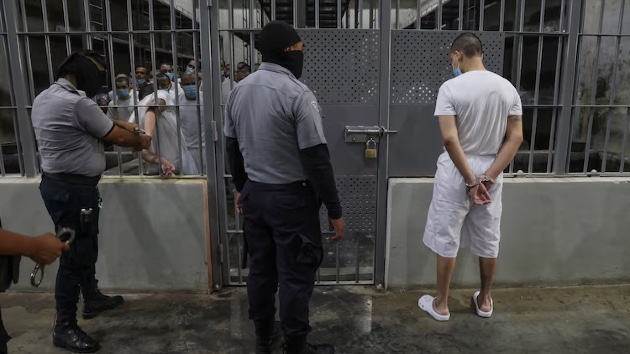
(NEW YORK) — One week after more than 250 Venezuelan nationals were released to their home country from a mega-prison in El Salvador, a federal judge is holding a hearing Thursday to determine what due process rights the men may be entitled to after they were removed from the U.S. under the Alien Enemies Act.
In June, U.S. District Judge James Boasberg ruled that the men, who were then being held in El Salvador’s CECOT facility, were entitled to practice their due process rights to challenge their detentions.
Boasberg had ordered the Trump administration to come up with a plan to allow the men to challenge their detentions from El Salvador by June 11, but a federal appeals court put that deadline on hold.
With the men now in Venezuela, Boasberg scheduled a conference Thursday to determine the next steps in a class-action lawsuit filed by the families of the removed men.
In March the Trump administration invoked the Alien Enemies Act — an 18th century wartime authority used to remove noncitizens with little-to-no due process — to deport two planeloads of alleged migrant gang members to the CECOT mega-prison in El Salvador by arguing that the Venezuelan gang Tren de Aragua is a “hybrid criminal state” that is invading the United States.
An official with the U.S. Immigration and Customs Enforcement acknowledged shortly afterward that “many” of the men deported on March 15 lacked criminal records in the United States — but said that “the lack of specific information about each individual” actually “demonstrates that they are terrorists with regard to whom we lack a complete profile.”
In a filing last week, lawyers for the former detainees argued that they should still be able to practice the due process rights they were deprived of when they were removed from the country with little notice under an authority that multiple judges have ruled is unlawful.
“Plaintiffs respectfully request that this Court request an immediate status update from the government as to whether it is prepared to bring the members of the class back to the United States for habeas proceedings,” they argued.
As part of a series of lawsuits that began in March when Trump issued the proclamation invoking the Alien Enemies Act, Judge Boabserg has sharply criticized the conduct of the Trump administration and considered holding officials in contempt. In an order last month, Boasberg rebuked the Trump administration for detaining the men on “flimsy, even frivolous, accusations” and failing to provide them with a meaningful opportunity to exercise their rights.
“Defendants instead spirited away plane loads of people before any such challenge could be made. And now, significant evidence has come to light indicating that many of those currently entombed in CECOT have no connection to the gang and thus languish in a foreign prison on flimsy, even frivolous, accusations,” Judge Boasberg wrote.
UnitedHealth Group faces a criminal and civil investigation from the Department of Justice, the company disclosed on Thursday.
The company in an SEC filing said it was complying with the requests from the DOJ. UnitedHealth said it reached out “proactively” to the DOJ after media reports about a probe into its Medicare practices.
“The Company has now begun complying with formal criminal and civil requests from the Department. The Company has full confidence in its practices and is committed to working cooperatively with the Department throughout this process,” UnitedHealth said.
UnitedHealth’s announcement that it faces a federal investigation adds to an increasingly tumultuous year for the country’s largest healthcare company.
The company was thrown into the spotlight after last year’s fatal shooting of UnitedHealthcare CEO Brian Thompson in New York, sparking a national conversation about frustrations with healthcare companies.
UnitedHealth Group’s CEO abruptly left the company in May, and the company’s stock price plunged following a series of reports in The Wall Street Journal about civil and criminal probes into the company. The WSJ reported in May that the DOJ’s healthcare-fraud unit was investigating possible Medicare fraud at the company, adding to investigations of potential antitrust violations and its Medicare billing practices.
The company was the worst performer on the Dow Jones Industrial Average during the first half of 2025. Its stock price declined by 1.5 percent in morning trading following the announcement.
In a filing with the Securities and Exchange Commission, UnitedHealth said it has “full confidence” in its practices. It added that a court-appointed monitor found no wrongdoing after a decade-long probe into its Medicare Advantage business.
“The Company is committed to maintaining the integrity of its business practices and serving as reliable stewards of American tax dollars,” UnitedHealth said.
The Department of Justice did not immediately respond to a request for comment.
This is a developing story. Check back for updates.
Luiz C. Ribeiro/New York Daily News/Tribune News Service via Getty Images
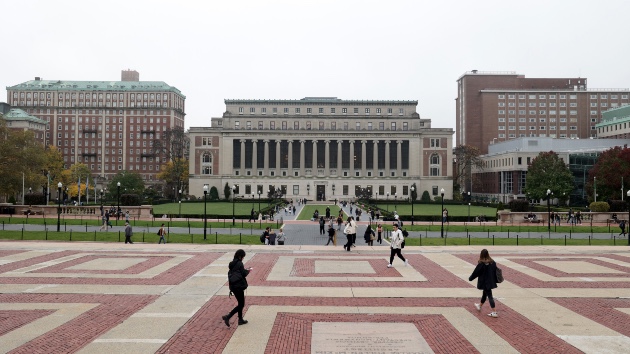
(NEW YORK) — Columbia University has agreed to pay $200 million over the next three years to resolve claims it discriminated against Jewish students — an agreement the university said will restore hundreds of millions of dollars in federal grants the Trump administration had terminated or paused earlier this year.
“While Columbia does not admit to wrongdoing with this resolution agreement, the institution’s leaders have recognized, repeatedly, that Jewish students and faculty have experienced painful, unacceptable incidents, and that reform was and is needed,” the university said in a statement.
In addition, the school agreed to pay $21 million to settle investigations brought by the U.S. Equal Employment Opportunity Commission.
Columbia also agreed to submit to a federal monitor that will assure compliance with admissions and hiring practices and provide certain information about foreign students to immigration authorities.
In a social media post Wednesday evening, President Donald Trump celebrated the agreement.
“Columbia has agreed to pay a penalty of $200 Million Dollars to the United States Government for violating Federal Law, in addition to over $20 Million to their Jewish employees who were unlawfully targeted and harassed,” Trump said in the post.
“Numerous other Higher Education Institutions that have hurt so many, and been so unfair and unjust, and have wrongly spent federal money, much of it from our government, are upcoming,” Trump added.
The agreement puts an end to a months-long dispute between Columbia and the Trump administration over federal funding.
In March, the Trump administration said it was canceling $400 million worth of grants and contracts to the university citing what it called “the school’s continued inaction in the face of persistent harassment of Jewish students.”
Later that month, the university agreed to nine demands from the Trump administration, including banning masks and stricter controls over its Middle East studies department.
The university said the agreement announced Wednesday builds on steps it previously took as part of negotiations with the administration and “builds on Columbia’s broader commitment to combating antisemitism.”
As a result of the agreement, the university said “a vast majority” of the federal grants which were terminated or paused in March would be reinstated and that “Columbia’s access to billions of dollars in current and future grants will be restored.” That includes grants terminated by the National Institutes of Health and the Department of Health and Human Services.
Earlier this week, the school said it was disciplining more than 70 students over two pro-Palestinian protests on the campus in the spring — including a protest in May when students took over Butler Library.
The campus was roiled by protests last spring over the Israel-Hamas war. In late April 2024, pro-Palestinian protesters barricaded themselves inside Hamilton Hall, leading to several arrests. The students involved were later expelled, suspended or had their degrees temporarily revoked.
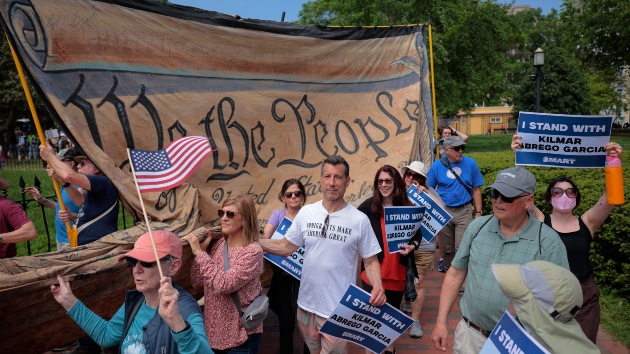
(NEW YORK) — A magistrate judge in Tennessee has paused accused MS-13 gang member Kilmar Abrego Garcia’s release from criminal custody for 30 days, shortly after a separate judge ruled he should be returned to Maryland if released while awaiting trial.
Abrego Garcia has been awaiting his release on bail after pleading not guilty last month to human smuggling charges in Tennessee.
“Abrego shall therefore remain in the custody of the United States Marshal pending further order, as previously directed,” U.S. Magistrate Judge Barbara Holmes said Wednesday.
Abrego Garcia’s attorneys requested the stay on Monday because they were advised by the government that if Abrego Garcia were released, the Department of Homeland Security would begin removal proceedings.
“Given the uncertainty of the outcome of any removal proceedings, Mr. Abrego respectfully requests that, should the Court deny the government’s motion for revocation, the issuance of an order releasing Mr. Abrego be delayed for 30 days to allow Mr. Abrego to evaluate his options and determine whether additional relief is necessary,” his lawyers wrote on Monday.
Wednesday’s ruling came shortly after U.S. District Judge Paula Xinis ordered the Trump administration to return Abrego Garcia to Maryland and blocked the administration from detaining and deporting him upon his release from criminal custody.
Xinis ruled that the U.S. government “shall restore Abrego Garcia to his ICE Order of Supervision out of the Baltimore Field Office.”
Judge Xinis said her order to have Abrego Garcia placed under ICE supervision in Maryland, where he was living with his wife and children before he was mistakenly deported in March, is necessary to “provide the kind of effective relief to which a wrongfully removed alien is entitled upon return.”
The federal judge said her order, which also requires the government to provide 72 hours’ notice if it intends to deport him to a third country, is “narrowly tailored” to allow the Trump administration to initiate “lawful immigration proceedings upon Abrego Garcia’s return to Maryland.”
The immigration proceedings may or may not include “lawful arrest, detention and eventual removal,” Xinis said.
This decision follows a separate ruling in Abrego Garcia’s criminal case where U.S. District Judge Waverly Crenshaw denied the government’s motion to revoke a magistrate judge’s order for Abrego Garcia’s release. Judge Crenshaw said on Wednesday that Abrego Garcia “shall be released upon the issuance of the Magistrate Judge’s release order with conditions.”
Judge Crenshaw said he was not persuaded that “Abrego’s unlawful removal from the United States now presents a risk that he will fail to appear in court to avoid similar treatment in the future.”
In his memo, Judge Crenshaw said that testimony provided by Peter Joseph, a Homeland Security agent, that Abrego Garcia transported both Barrio 18 and MS-13 gang members cuts against “the already slim evidence demonstrating Abrego is a member of MS-13.”
“For the Court to find that Abrego is member of or in affiliation with MS13, it would have to make so many inferences from the Government’s proffered evidence in its favor that such conclusion would border on fanciful,” Judge Crenshaw wrote.
Abrego Garcia, a Salvadoran native, was deported in March to El Salvador’s CECOT mega-prison — despite a 2019 court order barring his deportation to that country due to fear of persecution — after the Trump administration claimed he was a member of the criminal gang MS-13, which he denies.
He was brought back to the U.S. last month to face charges in Tennessee of allegedly transporting undocumented migrants within the U.S. while he was living in Maryland.
Homeland Security Assistant Secretary Tricia McLaughlin slammed Wednesday’s rulings in a series of posts on X.
“MS-13 gang member, human trafficker and criminal illegal alien will never walk America’s streets again,” McLaughlin said in one post.
“The fact this unhinged judge is trying to tell ICE they can’t arrest an MS-13 gang member, indicted by a grand jury for human trafficking, and subject to immigration arrest under federal law is LAWLESS AND INSANE,” she said in another.
Abrego Garcia’s immigration attorney called the rulings “a powerful rebuke of the government’s lawless conduct and a critical safeguard for [Abrego Garcia’s] due process rights.”
“A federal judge has now barred ICE from taking him back into custody in Tennessee, and ordered that any future deportation attempt must come with advance notice,” Simon Sandoval-Moshenberg told ABC News. “After the government unlawfully deported him once without warning, this legal protection is essential. We are grateful the court recognized that Kilmar’s rights and safety are at stake, and that the government’s past actions give serious cause for concern.”
(LA CROSSE, Wis.) — A 22-year-old graduate student who disappeared after leaving a bar early Sunday morning has been found dead in the Mississippi River, according to the La Crosse Police Department.
Eliotte Heinz, a graduate student at Viterbo University in La Crosse, Wisconsin, was last seen on Sunday at approximately 3:22 a.m. near the Mississippi River, police said. According to her missing person poster, Heinz was allegedly seen leaving Bronco’s Bar in La Crosse at approximately 2:30 a.m.
Heinz’s body was found in the Mississippi River near Brownsville, Minnesota, on Wednesday, police said.
“This was not the outcome we had hoped for throughout this search. Our thoughts are with Eliotte’s family, friends and all those who knew Eliotte. We are grateful for the outpouring of support from so many within the La Crosse community, the State of Wisconsin and nationally to locate Eliotte,” police said in a statement on Wednesday.
Police said they are continuing to investigate and “will await the results of an autopsy for an official cause of death.”
Viterbo University said in a statement the community is “heartbroken by this loss” and extends “our deepest sympathies to her families and friends.”
“There are no words that can ease the pain of losing someone so young, with so much life ahead of her. Our hearts go out to to Eliotte’s family. We hold them in our prayers and stand with them in their grief,” Viterbo University President Rick Trietley.
Earlier Tuesday, police had said the search for Heinz remained active, with “numerous resources” being utilized as they continue to receive tips.
Members of the community gathered to search for Heinz and hand out copies of her missing person poster.
Heinz’s family had asked for residents in the area to review home security camera footage from early Sunday morning between 2 a.m. and 6 a.m., saying “even the smallest detail could make a difference.”
“The outpouring of supporting in the search efforts for Eliotte has been overwhelming, and we are deeply grateful for the kindness, prayers and encouragement from the community and beyond,” the family said in a statement shared on the university’s social media on Tuesday prior to the discovery of her body.
Viterbo will hold a memorial service for Heinz this fall, “in coordination with her family once students return to campus,” the university said in a statement.
(WASHINGTON) — Lawmakers from both parties have so far rejected steep cuts to the National Oceanic and Atmospheric Administration (NOAA) proposed by the Trump administration and reiterated their support for a fully staffed National Weather Service (NWS) during recent committee meetings, which included key appropriations markup sessions.
While the House and Senate spending bills for fiscal year 2026 are still in the early stages of the legislative process, initial drafts indicate bipartisan pushback against the significant cuts outlined in the administration’s budget proposal, released earlier this year.
For fiscal year 2026, which begins Oct. 1, the Trump administration proposed cutting NOAA’s budget by roughly 25%, including the elimination of its research division, the Office of Oceanic and Atmospheric Research (OAR) and making major reductions to other key offices such as the National Centers for Environmental Information (NCEI), the world’s largest provider of weather and climate data.
The budget proposal stated, “The FY 2026 budget eliminates all funding for climate, weather, and ocean Laboratories and Cooperative Institutes. It also does not fund Regional Climate Data and Information, Climate Competitive Research, the National Sea Grant College Program, Sea Grant Aquaculture Research, or the National Oceanographic Partnership Program.”
The House Appropriations Subcommittee on Commerce, Justice, Science and Related Agencies advanced a spending bill with bipartisan support last week that would fund NOAA at levels mostly in line with budgets of previous years.
The fiscal year 2026 Commerce, Justice, Science appropriations bill provides roughly $5.8 billion to NOAA in 2026, a 6% decrease from the previous year. However, it restores a majority of funding for NOAA’s Operations, Research and Facilities (ORF) account, which includes OAR. While specific spending details have not yet been released, this would likely spare many critical research labs and climate institutes from potential cuts.
During the July 15 markup session, Subcommittee Chairman Hal Rogers, R-Ky., expressed his support for the National Weather Service, emphasizing the recent toll of devastating flooding hitting the country.
“Flooding has inflicted much pain on this nation over the last few months,” he said. “From my district in Kentucky to Texas, now is the time to ensure the National Weather Service is equipped with the funding it needs to warn and protect our citizens.”
At the start of the markup session, Rosa DeLauro, D-Conn., the subcommittee’s ranking Democrat, voiced concerns over both the proposed NOAA budget and recent staffing and funding cuts at the National Weather Service.
“Weather forecasts are not waste, fraud and abuse,” she said. “I ask my colleagues, did anyone come to your town halls and complain that the National Weather Service has too many meteorologists? Too many people issuing advisories, watches and warnings on severe storms?”
DeLauro also cited concerns from Bill Turner, Connecticut’s state emergency management director, who said the situation is “a very fragile house of cards right now, and we need them to continue… It really could be catastrophic in a lot of ways for our state if they go down that path of stopping the National Weather Service and their functionality.”
The bill now advances to the full committee for a markup on Thursday, July 24.
The Senate’s version of the bill allocates approximately $6.14 billion to NOAA for fiscal year 2026, just below the $6.18 billion approved for 2025. While this represents a modest overall decrease, the Senate Committee on Appropriations voted to boost spending for the agency’s Operations, Research and Facilities (ORF) account, adding $68.7 million. The increase means more available funding that could go to key offices such as OAR, NWS and NESDIS (National Environmental Satellite, Data, and Information Service).
The current Senate bill explicitly signals support for NOAA’s mission, including weather and climate research.
“The Committee strongly supports Climate Laboratories and Cooperative Institutes for their critical role in delivering high-quality weather information and driving economic benefits across the United States,” the bill states.
The bill also addresses staffing concerns at local NWS offices across the country and provides additional funding to ensure they become fully staffed.
The bill’s authors write, “Insufficient staffing levels risk compromising public safety and the NWS’s mission to protect lives and property. The Committee provides an additional $10,000,000 for Analyze, Forecast and Support and urges the NWS to prioritize recruitment, retention, and training initiatives to ensure all weather forecast offices (WFOs) are fully staffed.”
While introducing the bill, Jerry Moran, R- Kan., chairman of the Senate Appropriations Subcommittee on Commerce, Science and Justice, said, “NOAA, and particularly the National Weather Service, is a hugely important component of what this bill funds, and this bill recognizes that importance.” He added that the bill “fully funds the National Weather Service” and “eliminates any reduction in the workforce.”
However, Brian Schatz, D-Hawaii, raised concerns that the bill still gave too much discretion to the Office of Management and Budget (OMB) to determine the staffing levels needed to fulfill the agency’s mission and statutory obligation — “the Office of Management and Budget which clearly made the judgment that the National Weather Service has too many human beings working,” Schatz said.
He introduced an amendment that would have required the administration to maintain full-time staffing at levels in place as of Sept. 30, 2024, but it was rejected along party lines.
The Senate Committee on Appropriations approved the Fiscal Year 2026 Commerce, Justice, Science, and Related Agencies Appropriations Act on July 17 by a vote of 19-10.
What does the Trump Administration want to cut? The administration’s budget proposal calls for eliminating the Office of Oceanic and Atmospheric Research (OAR) as a NOAA Line Office, with several of its functions transferred to the National Weather Service and the National Ocean Service. OAR leads NOAA’s weather and climate research and develops many of the forecasting tools meteorologists rely on to produce timely and accurate forecasts.
The proposed budget would include shutting down NOAA’s nationwide network of research labs and cooperative institutes. Among them is the Global Systems Laboratory in Boulder, Colorado, where the High-Resolution Rapid Refresh (HRRR) model, a critical tool in modern weather forecasting, was first developed more than a decade ago. The HRRR model helps meteorologists track everything from severe thunderstorms to extreme rainfall to wildfire smoke.
The Global Monitoring Laboratory, also based in Boulder, oversees operations at Mauna Loa Observatory on Hawaii’s Big Island. This observatory has maintained the world’s longest continuous observation of atmospheric carbon dioxide and has been crucial to our understanding of how human-caused greenhouse gas emissions fuel global warming.
NOAA’s Atlantic Oceanographic and Meteorological Laboratory (AOML) in Miami, Florida, plays a vital role in operational hurricane forecasting. The lab develops cutting-edge tropical weather models that have significantly improved forecast accuracy in recent decades. National Hurricane Center (NHC) forecasters set a record for forecast track accuracy in 2024, according to a NOAA report. NHC issued 347 official forecasts during the 2024 Atlantic hurricane season, and its track predictions set accuracy records at every forecast time period.
Who will lead NOAA next? Earlier this month, during a confirmation hearing, Dr. Neil Jacobs, President Donald Trump’s nominee to head NOAA, said he supports the administration’s proposal to significantly cut the agency’s budget arguing the reductions could be achieved by shifting work from research to operations without impacting “mission essential functions.”
Jacobs also said if confirmed, he would “ensure that staffing the weather service offices is a top priority,” adding that, “It’s really important for the people to be there because they have relationships with the people in the local community. They’re a trusted source.”
NOAA’s 2025 budget costs Americans less than $20 per person this year.
ABC News reached out to NOAA for comment, but did not immediately hear back.
(NEW YORK) — A federal judge has blocked the Trump administration, including U.S. Immigration and Customs Enforcement, from detaining Kilmar Abrego Garcia upon his release from criminal custody in Tennessee.
Abrego Garcia has been awaiting his release on bail after pleading not guilty last month to human smuggling charges in Tennessee.
U.S. District Judge Paula Xinis ruled on Wednesday that the U.S. government “shall restore Abrego Garcia to his ICE Order of Supervision out of the Baltimore Field Office.”
Judge Xinis also ordered the government to provide written notice to Abrego Garcia and his attorneys if they intend to remove him to a third country.
This decision follows a separate ruling in Abrego Garcia’s criminal case where U.S. District Judge Waverly Crenshaw denied the government’s motion to revoke a magistrate judge’s order for Abrego Garcia’s release. Judge Crenshaw said on Wednesday that Abrego Garcia “shall be released upon the issuance of the Magistrate Judge’s release order with conditions.”
Abrego Garcia, a Salvadoran native, was deported in March to El Salvador’s CECOT mega-prison — despite a 2019 court order barring his deportation to that country due to fear of persecution — after the Trump administration claimed he was a member of the criminal gang MS-13, which he denies.
He was brought back to the U.S. last month to face charges in Tennessee of allegedly transporting undocumented migrants within the U.S. while he was living in Maryland.
The government has indicated it intends to detain Abrego Garcia and deport him to a third country if he is released from custody.