(MINNEAPOLIS, Minn.) — As Minneapolis public schools prepare to begin the first day of classes on Tuesday, police confirmed three more children were injured in last week’s shooting at the Annunciation Catholic School.
Minneapolis Police Department on Monday announced the revised number of injured, bringing the total amount of victims who were injured by gunfire to 21.
Authorities said 18 children between the ages of 6 and 15 were hurt in the shooting, along with three adults in their 80s who were attending mass at the time of the incident on Wednesday.
The gunfire erupted during morning Mass, when a 23-year-old shooter opened fire through the windows of the school’s church, police said.
Two children, 8-year-old Fletcher Merkel and 10-year-old Harper Moyski, died in the shooting, their families confirmed on Thursday.
“Yesterday, a coward decided to take our 8-year-old son, Fletcher, away from us. Because of their actions, we will never be allowed to hold him, talk to him, play with him, and watch him grow into the wonderful young man he was on the path to becoming,” Jesse Merkel, Fletcher’s father, said on Thursday.
Harper’s parents remembered her as a “bright, joyful and deeply loved 10-year-old whose laughter, kindness, and spirit touched everyone who knew her.”
Hennepin Healthcare said four patients — three children and one adult — remain hospitalized at the Hennepin County Medical Center.
While other Minneapolis schools are coming back into session with a substantially increased visible patrol presence, Annunciation will remain closed.
Police continue to actively investigate the shooter and have yet to determine a motive.
The shooter, who previously attended the school, died at the scene from a self-inflicted gunshot wound, authorities said last week.
“There has been conversation” with the shooter’s mother, Minneapolis Police Assistant Chief Christopher Gaiters said on Friday, though he did not elaborate.
Annique London, one mother of three daughters who all attended Annunciation in recent years, told ABC News she and her children feel a mix of community support and anxiety as school starts.
London’s daughter recently graduated from Annunciation — which teaches children in pre-K to eight grade — and will start high school nearby.
“She’s going to the public school Southwest High School and is terrified to go to school. And I don’t think she’s unique. I don’t even think the public school administration has yet come to terms with the support that might be needed for some students,” London said.
ABC News’ Ahmad Hemingway, Christiane Cordero and Briana Stewart contributed to this report.
At least five people have been killed and 30 others injured in shootings across Chicago over Labor Day weekend, including a drive-by attack that left seven victims wounded late Saturday night, according to police.
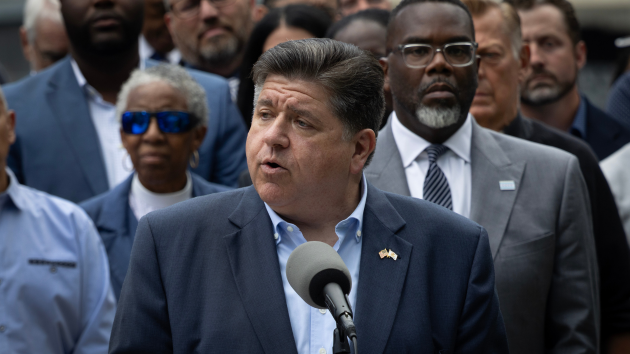
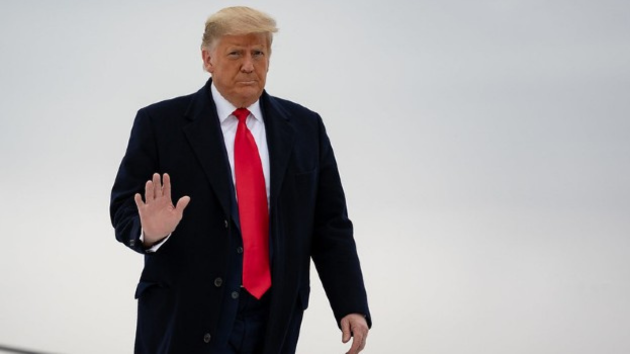
The violent holiday weekend came as President Donald Trump renewed threats to send federal agents and National Guard troops to Chicago over the objections of Illinois Gov. JB Pritzker and Chicago Mayor Brandon Johnson.
Trump on Saturday sent a warning to the Illinois Gov. JB Pritzker in a post on his social media platform, referencing recent crime in Chicago and saying Pritzker “better straighten it out, FAST, or we’re coming!”
Illinois Gov. Pritzker, a Democrat, responded in a news conference a week ago to an earlier Trump threat to “straighten out Chicago, just like we did D.C.,” by saying that the president’s plan was “unprecedented and unwarranted. It is illegal, it is unconstitutional, it is un-American.”
Mayor Johnson responded last week by saying in part that he had “grave concerns about the impact of any unlawful deployment of National Guard troops to the city of Chicago,” and calling Trump’s approach “uncoordinated, uncalled for, and unsound.” Johnson also said that deploying the National Guard in Chicago could “inflame tensions between residents and law enforcement.”
On Saturday, Mayor Johnson signed an executive order dubbed the “Protecting Chicago Initiative,” which he described in a news conference as “the most sweeping campaign of any city in the country to protect ourselves from the threats and actions of this out-of-control administration,” and which “directs our department of law to pursue any and every legal mechanism to hold this administration accountable for violating the rights of Chicagoans.”
“We have received credible reports that we have days, not weeks, before our city sees some type of militarized activity by the federal government,” Johnson said, in part. “We take these threats seriously and we find ourselves in a position where we must take immediate, drastic action to protect our people from federal overreach.”
At least 20 separate shootings occurred in Chicago between 10:32 p.m. Friday and 3 a.m. Sunday morning, according to a review by ABC News of police incident reports published online.
The victims included a 17-year-old girl who was inside her home when a bullet came through a front window and hit her in the arm, a 31-year-old man who was shot in the leg after getting caught in the crossfire of gunmen shooting at each other from two vehicles, and a 25-year-old woman who was shot and injured while driving down a street, all according to the incident reports.
Fewer than five hours after Trump posted a message on social media on Saturday criticizing Pritzker’s handling of crime in Chicago, a mass shooting occurred in the Bronzeville neighborhood of Chicago’s South Side that left seven people wounded.
“He better straighten it out, FAST, or we’re coming!,” Trump said in his post about Pritzker.
The shooting in Bronzeville occurred about 11:10 p.m. on Saturday on South State Street, according to police. A group of people were gathered outside in the area when a vehicle drove by and at least one occupant opened fire on the crowd. All seven people shot, five men and two women ranging in age from 28 to 32, were taken to hospitals with non-life-threatening injuries to their lower extremities, police said. No suspects have been arrested.
The first of five homicides that police say occurred over the long holiday weekend happened at 11:56 p.m. on Friday at the South Shore apartment complex on East Essex Street, where two women were discovered shot, according to police.
A 25-year-old woman was found in the apartment suffering from two gunshot wounds to her stomach and one to her leg, according to a police incident report. She was taken to the University of Chicago Medical Center where she was pronounced dead, according to authorities. The victim’s name was not immediately released.
The second victim, a 23-year-old woman, suffered gunshot wounds to both legs and was in fair condition at the University of Chicago Medical Center.
Investigators were interviewing a person of interest in the East Essex Street homicide but no arrests have been announced, according to police.
Elsewhere, two men were shot, one fatally, in the East Garfield Park neighborhood of Chicago around 11 a.m. on Saturday, according to police. The victims were standing outside on North Sawyer Avenue when a dark SUV approached them and a gunman exited the vehicle and opened fire, according to a police incident report.
A 29-year-old man, whose name was not immediately released, was shot multiple times and taken to Mount Sinai Hospital where he was pronounced dead, according to police. The second victim, a 32-year-old man, suffered a gunshot wound to his right side and was in stable condition at Mount Sinai, police said. No arrests have been announced in the incident.
Also on Saturday, gunfire erupted in the Altgeld Gardens neighborhood. Around 7:46 p.m., a 43-year-old woman was standing outside on E. 131st Street when five armed men approached her and opened fire, striking her multiple times, according to police. The victim, whose name was not immediately released, was taken to Christ Hospital where she was pronounced dead, police said.
No arrests have been announced in the Altgeld Gardens homicide.
Around 1:39 a.m. on Sunday, a 46-year-old man, whose name was not immediately released, was killed in a triple shooting that occurred in the Pilsen neighborhood of Chicago’s Lower West Side, according to police. The victims were standing on West 17th Street when a gunman walked up to them and opened fire, police said.
The two other victims, a 41-year-old man and a 43-year-old man, suffered gunshot wounds to their legs and were in good condition at Mount Sinai Hospital, police said.
Around 2:52 a.m. on Sunday, a 33-year-old man was killed in the West Inglewood neighborhood on the Southwest Side of Chicago, police said. The victim got into a argument inside a residence with a man who shot him in the head, according to police. The victim, whose name was not immediately released, was pronounced dead at the scene, according to police. No arrests were announced.
The series of shootings came after President Donald Trump said last week that he is prepared to order National Guard troops to American cities in addition to those in the nation’s capital, but that he wanted local officials to request his help.
Trump threatened to make Chicago the next city he would target after he declared what he said was a public safety emergency in Washington, D.C., and he put the city’s police force under federal control on Aug. 11.
Violent crime in Chicago has dropped significantly in the first half of the year, according to official data released by the city. Shootings are down 37% and homicides have dropped by 32% compared to the first half of 2024, while total violence crime dropped by over 22%, according to the crime statistics.
“Do not come to Chicago, you are neither wanted here nor needed here,” Pritzker further said in response to Trump during a news conference last week. “Donald Trump wants to use the military to occupy a U.S. city to punish its dissidents and score political points. If this were happening in any other country, we would have no trouble calling it what it is – a dangerous power-grab.”
(NEW YORK) — A 10-year-old Texas boy was shot and critically injured when he allegedly attempted a door-knocking prank on a neighbor, police said.
The shooting unfolded around 10:55 p.m. on Saturday at a home on Membrough Street in southeast Houston, Shay Awosiyan, a spokesman for the Houston Police Department, told ABC News on Sunday.
“A 10-year-old was apparently knocking on neighbors’ doors and running away when someone apparently fired shots,” Awosiyan said.
Awosiyan said one person was detained at the scene of the shooting and was being questioned, but no charges have been filed.
The injured child, who was out committing the prank with friends, was treated at the scene by the Houston Fire Department and taken to a nearby hospital, where he was in critical condition on Sunday afternoon, Awosiyan said.
The investigation continued on Sunday, but police released no additional details.
The prank allegedly committed in Houston is similar to what’s being dubbed the “Door Kicking Challenge,” a national trend based on an old prank called “Ding Dong Ditch,” in which groups of kids record videos of themselves kicking and banging on doors of homes and apartments before running away and then posting the videos on social media platforms such as TikTok.
In July, a 58-year-old Texas homeowner was arrested and charged with aggravated assault when he allegedly fired multiple rounds at a vehicle fleeing his home in Frisco after someone banged on the front door, according to a statement from the Frisco Police Department.
The driver of the car that was shot at around 10:50 p.m. on July 28 and two passengers contacted police to file a complaint, showing officers three bullet holes in the vehicle, according to police.
“However, during subsequent interviews, all admitted to ding, dong, ditching in a random neighborhood when they were confronted by a male with a firearm,” the Frisco police said in a statement.
In June, police in Chandler, Arizona, released video footage of a group of juveniles committing the “Door Kicking Challenge,” alleging the group pulled the prank on the same home at least 18 times, prompting the homeowner to move out.
“Let’s be clear: These ‘pranks’ can have serious consequences and lead to charges such as criminal damage, disorderly conduct, or harassment,” the Chandler Police Department said in a message to parents in the community. “Parents — please take a moment to talk with your children. Know where they are, who they’re with, and what they’re doing.”
Police in Fort Worth, Texas, posted a similar community message in May after receiving more than 20 complaints of young people committing the “Door Kicking Challenge.”
“It can be mistaken as an attempted break-in, potentially prompting dangerous or defensive responses from homeowners…,’ the Fort Worth Police Department said in a statement. “What may seem like a prank can result in very real trouble and/or danger.”
(NASHVILLE) — It was long believed that Pauline Mullins Pusser, the wife of the legendary Tennessee sheriff Buford Pusser, was shot and killed in an ambush meant for her husband, but new evidence suggests that it was the late sheriff who killed his wife.
A Tennessee Bureau of Investigation report uncovered “inconsistencies in Buford Pusser’s statements to law enforcement and to others,” District Attorney Mark Davidson said at a press conference Friday.
Law enforcement uncovered physical, medical, forensic, ballistic and reenactment evidence that contradicted the McNairy County sheriff’s account of his wife’s 1967 murder.
The sheriff’s story inspired the movie “Walking Tall” in 1973 and several sequels, a 2004 remake and several books, Davidson said.
Buford Pusser died in a car accident in 1974.
“This case is not about tearing down a legend, it is about giving dignity and closure to Pauline and her family and ensuring that the truth is not buried with time,” Davidson said.
The sheriff had reported that his wife volunteered to ride along with him in the dark, early morning hours on a disturbance call. He claimed that a car pulled alongside his and fired several shots toward them, killing Pauline and injuring him in what he claimed was an ambush intended for him carried out by unknown assailants, according to Davidson.
The sheriff, who was also shot in the ambush, recovered from his injuries and no viable suspects were found and no charges were filed.
Investigators now believe that Pauline Pusser was shot outside the vehicle then placed inside the vehicle, which is not what Buford Pusser has told investigators at the time of the murder.
“This was a cold case for decades but in 2022 TBI agents took another look at the archive file and coordinated with our office. That work accelerated in 2023 and in 2024, Pauline Mullins Pusser was exhumed for an autopsy,” Davidson said.
“It’s been said that the dead cannot cry out for justice, it is the duty of the living to do so. In this case that duty is being carried out 58 years later,” Davidson said.
Investigators used modern forensic science and investigative techniques that were not available in 1967, officials said.
A new autopsy also revealed cranial trauma suffered by Pauline Pusser does not match crime scene photographs of the interior of the vehicle she was allegedly killed in. Blood splatter on the outside of the vehicle also contradicts Buford Pusser’s account of the murder, Davidson said.
A forensic investigator also determined that a gunshot wound to Buford Pusser’s cheek was a close contact wound, not long range as he had described, and was likely self inflicted, Davidson said. Blood splatter analysis also indicated that someone was injured both inside and outside the vehicle, he said.
Official White House Photo by Shealah Craighead. Via Flickr
(NEW YORK) — A federal appeals court has ruled that most of President Donald Trump’s sweeping global tariffs are unlawful, potentially dealing a significant blow to the president’s effort to reshape the country’s trade policy unilaterally.
In a 7-4 decision, the U.S. Court of Appeals for the Federal Circuit rejected Trump’s authority to carry out most of his tariffs, agreeing with the lower court that Trump’s actions were “invalid as contrary to law.” However, the court delayed the impact of its decision through mid-October to allow the Trump administration to appeal to the Supreme Court, as the tariffs remain in effect.
“Because we agree that [International Emergency Economic Powers Act’s] grant of presidential authority to ‘regulate’ imports does not authorize the tariffs imposed by the Executive Orders, we affirm,” the majority wrote.
The decision in effect tees up one of the most consequential legal questions for the Supreme Court about the scope of the president’s authority on trade policy.
After Oct. 14, the court will return the case to the lower court to decide how the Supreme Court’s recent decision limiting nationwide injunctions affects the decision.
Trump reacts to decision In a post on his social media platform Friday evening, Trump rebuked the appeals court’s decision, warning that a court order blocking the tariffs “would literally destroy the United States of America.”
Previewing the legal challenge expected in the coming weeks, Trump called on the Supreme Court to rule that he has the power to impose tariffs unilaterally.
“Now, with the help of the United States Supreme Court, we will use them to the benefit of our Nation, and Make America Rich, Strong, and Powerful Again! Thank you for your attention to this matter,” Trump wrote.
What the decision says In its decision Friday, the appeals court determined that only Congress, not the president alone, has the authority to impose tariffs, setting up a high-profile legal question for the Supreme Court regarding the scope of the president’s power.
The decision centers on whether the authority to “regulate” imports, included in the International Emergency Economic Powers Act, means the president can issue tariffs on his own.
Seven of the 11 judges said that the rarely used law does not give Trump the power to implement either his “reciprocal” tariffs or the “trafficking” tariffs imposed on Canada, Mexico and China aimed at stopping the flow of fentanyl across U.S. borders, writing that “tariffs are a core Congressional power.”
“We discern no clear congressional authorization by IEEPA for tariffs of the magnitude of the Reciprocal Tariffs and Trafficking Tariffs,” the majority wrote. “Given these considerations, we conclude Congress, in enacting IEEPA, did not give the President wide-ranging authority to impose tariffs of the nature of the Trafficking and Reciprocal Tariffs simply by the use of the term ‘regulate . . . importation.'”
A subset of four judges from the majority took the decision even further, determining that IEEPA does not give Trump the power to issue any tariffs, not just the two types of tariffs in question.
“The Government’s interpretation of IEEPA would be a functionally limitless delegation of Congressional taxation authority,” they wrote.
In a minority opinion, four other judges disagreed, suggesting Trump’s declaration of a national emergency is enough of an “unusual and extraordinary threat” to justify the tariffs.
“IEEPA’s language, as confirmed by its history, authorizes tariffs to regulate importation,” the judges wrote.
How the case came about A group of small businesses and a coalition of states sued to block the tariffs earlier this year, arguing that President Trump had overstepped his authority under the rarely used International Emergency Economic Powers Act (IEEPA) when he issued a flurry of tariffs in April.
The following month, the New York-based Court of International Trade declared the tariffs were unlawful and encroached on Congress’s authority to regulate trade. The Trump administration quickly appealed the decision, which was stayed as the legal process played out.
The U.S. Court of Appeals for the Federal Circuit heard oral arguments on the tariffs in July, during which time the panel of judges appeared skeptical that Trump could justify the tariffs based on a national emergency.
The judges noted that the text of the IEEPA never explicitly mentions “tariffs” and that no other president has attempted to utilize the law in the same manner as Trump has.
“One of the major concerns I have is that IEEPA doesn’t mention tariffs anywhere,” one judge remarked during the arguments in June. “Here, IEEPA doesn’t even say tariffs — doesn’t even mention it.”
Ahead of Friday’s decision, U.S. Solicitor General John Sauer preemptively asked the court to stay their decision to prevent “serious harms” to ongoing negotiations and the country’s trade policy.
Trump administration officials had previously warned that losing the ability to issue tariffs would “lead to dangerous diplomatic embarrassment,” threaten ongoing negotiations between Russia and Ukraine, and “threaten broader U.S. strategic interests at home and abroad.”
(NEW YORK) — A federal appeals court has found that the Trump administration likely acted unlawfully when it ended protections for nearly 600,000 Venezuelans to live and work in the United States, upholding a lower court’s decision to postpone the government’s termination.
The 9th Circuit Court of Appeals also upheld District Judge Edward Chen’s authority to issue a final decision in the case, which challenged the termination of Temporary Protected Status (TPS) for Venezuelans ahead of a deadline previously issued by the Biden administration.
“In enacting the TPS statute, Congress designed a system of temporary status that was predictable, dependable, and insulated from electoral politics,” the three-judge panel wrote in Friday’s ruling.
“Moreover, Plaintiffs have demonstrated that they face irreparable harm to their lives, families, and livelihood, that the balance of equities favors a grant of preliminary relief, and that nationwide relief is appropriate,” the court added.
The government argued that a district judge could not challenge Homeland Security Secretary Kristi Noem’s decision to end the protections.
Although the DHS secretary has wide discretion to extend or end protections for TPS holders, Venezuelan plaintiffs — represented by the National TPS Alliance, the National Day Labor Organizing Network and other advocacy groups — argued a secretary could not reverse a predecessor’s decision.
On Friday, the 9th Circuit Court of Appeals unanimously disagreed with the government, paving the way for Chen to make a final decision in the case.
Because of Noem’s decision to reverse former DHS Secretary Alejandro Mayorkas’ extension of protections, around 350,000 TPS holders from Venezuela lost status in April. Another estimated 250,000 are set to lose protections in September depending on the outcome of the case.
Chen had halted the administration’s efforts to end protections while the case continued, but his order was overturned by the Supreme Court in May.
ABC News has reached out to the Department of Homeland Security for comment on Friday’s ruling but has not yet received a response.
Emi Maclean, a senior staff attorney at the ACLU of Northern California, said the “severe effects” of the Trump administration’s decisions are already being felt by Venezuelans previously protected by the program.
“Individuals who have been deported, who have been separated from infant children, who are living in their car after they lost legal status… who have fled a country in crisis and sought refuge in the United States,” she said. “The government and the courts abandoned them to really devastating circumstances.”
The appeals court seemed to echo those sentiments in Friday’s ruling.
“The TPS statute is designed to constrain the Executive, creating predictable periods of safety and legal status for TPS beneficiaries. Sudden reversals of prior decisions contravene the statute’s plain language and purpose,” the court wrote. “Here, hundreds of thousands of people have been stripped of status and plunged into uncertainty. The stability of TPS has been replaced by fears of family separation, detention, and deportation. Congress did not contemplate this, and the ongoing irreparable harm to Plaintiffs warrants a remedy pending a final adjudication on the merits.”
Chen can now issue a final ruling, though it will likely get appealed to the Supreme Court if the Trump administration finds it unfavorable.
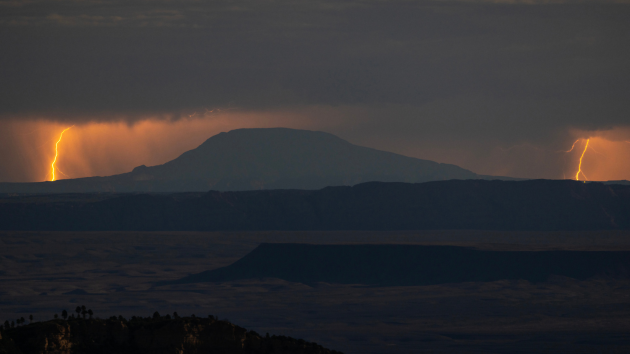
(NEW YORK) — Monsoon season — the weather pattern that has been creating inclement conditions in the western U.S. — is expected to last for another few weeks following a massive dust storm in the Phoenix region.
The North American Monsoon is an annual climate phenomenon that occurs in the Southwest U.S. during the warm summer months.
In the Southwest, strong heat from the sun causes a significant rise in temperatures during the summer. But, since bodies of water don’t rise in temperature as fast as on land, it causes an effect where moist air is drawn toward the hot dry air over land.
The monsoon season is a result of the moist air moving onto the hot land, which causes the atmosphere to become unstable. The monsoon is typically found in areas of large, elevated landmasses, like the Southwest, and in parts of India, near the Himalayan mountains.
Indian monsoons are associated with heavy rain lasting for months, but the North American monsoon behaves differently, according to Climate.gov. The monsoon generally involves daily patterns of mostly dry mornings with storms developing later in the day, with most of the heavy rain occurring in the afternoon and evening hours — also known as a diurnal cycle.
The Southwest experiences the monsoon when moisture from the Gulf of California and eastern Pacific is transported to California, southern Nevada and Arizona. The monsoon season typically develops around May or June but can increase substantially in July and August, especially if there are tropical systems in the eastern Pacific Ocean.
While the unstable atmosphere can produce thunderstorms, it is not one particular storm but rather an overall pattern that promotes them. A monsoon thunderstorm can be slow-moving and persistent, resulting in thunderstorms that drop very heavy rain in very dry parts of the region, which can lead to flash flooding.
Some of the thunderstorms can be strong and deliver heavy rain and frequent lighting, , according to Climate.gov. Periods of rainy days are often interspersed with drier periods during the North American Monsoon.
Much of the West has been experiencing monsoon conditions over the past week, bringing some of the wettest days of the year to the region.
The summer thunderstorms in the desert can produce very strong winds, which can kick up dust in the desert. The dust storm can have very strong winds that can do damage and reduce visibility, making travel nearly impossible. Dust storms can arrive suddenly in the form of an advancing wall of dust and have visibilities of one-fourth of a mile or less, according to the National Weather Service.
On Monday, the dust storms – also known as a haboob – engulfed the Phoenix metro area, creating low visibility and knocking out power for thousands of people. A cloud of dust hundreds of feet high could be seen moving over the region.
Flooding rains and more wind gusts followed the dust storm. The wind event — which saw gusts of up to 70 mph — was so severe that some flights out of the Phoenix Sky Harbor International Airport were grounded and air traffic controllers were forced to evacuate the tower.
Because of the sporadic nature of the thunderstorms, the severity and impact of the monsoon can vary season to season
In Tucson, Arizona, so far this monsoon season has only produced just under 2 inches of rain as of Friday, which is among the drier monsoon seasons on record. However, in 2021, the monsoon caused 12.79 inches of precipitation in Tucson.
Rainfall from the monsoon is very important for the region, according to Climate.gov. Arizona and New Mexico receive more than 50% of its average annual precipitation from July to September, during the monsoon season.
Once the summer months are over, and the land cools down, the monsoon season ends — typically in late September or early October in the Southwest. Wind patterns revert back to the westerly pattern, ending the monsoon.
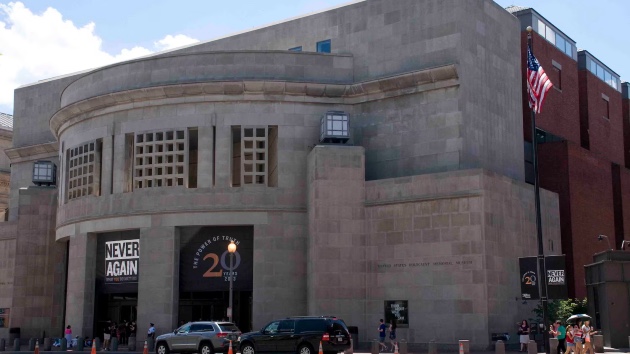
Holocaust Museum in Washington, DC. (Education Images/Universal Images Group via Getty Images)
(WASHINGTON) — An exhibit at the United States Holocaust Memorial Museum that takes a critical look at the United States’ response to Nazi Germany is slated to temporarily close after Labor Day for upgrades, sparking concern among some staff over what potential changes could be made amid President Donald Trump’s sweeping review of museums and their programming, sources tell ABC News.
On Sept. 2, the Holocaust Memorial Museum in Washington, D.C., is scheduled to temporarily close its “Americans and the Holocaust” exhibit through Feb. 2026 to conduct an “upgrade,” according to an internal email sent to staff in June and obtained by ABC News.
The staff-wide email, sent after Trump signed an executive order in March directing federal agencies and the Smithsonian to eliminate what he called divisive and “anti-American” content from museums and national parks, informed staff that exhibit teams at the museum would work to “upgrade the gallery and the exhibition.”
“The current plan is to close the exhibition on September 2, 2025 (the day after Labor Day) and reopen on February 28, 2026 (just before the busy season),” the email read. “Once closed, Technical Services, Operations, Exhibit Experience, and Collections Services will work together to upgrade the gallery and the exhibition. Once the work is completed, ‘Americans and the Holocaust’ can remain open through 2032 with little to no additional support. Please feel free to reach out with questions and concerns.”
The email does not state specifically if or what would be upgraded or list any planned changes to the exhibit’s editorial content. It was sent to staff prior to the Trump administration’s recent letter to the Smithsonian Institution requesting a “comprehensive internal review” of eight of its museums. While the Holocaust Memorial Museum is not part of the Smithsonian Institution, it receives millions in federal funding as well as private donations.
Sources tell ABC News that news that the temporary closure of the “Americans and the Holocaust” exhibit has increased concerns among some staffers who had been worried about the museums’ direction under the new administration, after Trump in April fired and replaced five Democrats appointed to the board of the museum.
The concern also comes as other Holocaust museums are facing criticism over editorial changes, including New York City’s Museum of Jewish Heritage, which reportedly removed images of Trump from an exhibit on hate speech last September. The museum’s vice chair told Jewish Currents that the exhibit opened just “prior to the election” and that she felt the museum “should not have any political candidates in any of our exhibits.”
When asked for comment, a spokesperson for the United States Holocaust Memorial Museum confirmed the planned closure of the exhibit and told ABC News that “there are no changes to the editorial content.”
“The Americans and the Holocaust exhibition was originally scheduled to be open for five years and has now been on display for more than seven. As a result, the gallery and exhibition needed work such as HVAC systems repairs, upgrading audio visual equipment and interactive tables, renewing copyrights that expired, and other maintenance,” the spokesperson said. “Therefore in 2024 we made the decision to close it temporarily during our lower visitation season to do this work which will be completed over the next few months so that the exhibition can remain open into 2032.”
A White House official told ABC News, “There are no plans to review the Holocaust Museum” and said that the closure of the exhibit is unrelated to the administration’s review of the Smithsonian museums.
In its letter to the Smithsonian Institution earlier this month, the White House lists eight museums that will be part of its initial Smithsonian review, and does not include the Holocaust Memorial Museum. “Additional museums will be reviewed in Phase II,” the letter says.
The “Americans and the Holocaust” exhibit, introduced in 2018 to mark the museum’s 25th anniversary, presents a critical look at how the United States responded to the Holocaust and how factors like “the Depression, isolationism, xenophobia, racism, and antisemitism shaped responses to Nazism and the Holocaust in the United States,” according to the museum’s public website.
One section of the exhibit examines “Obstacles to Immigration” and details how the 1924 National Origins Act was “designed to exclude ‘undesirable’ European immigrants, especially Italians, Slavs, and Jews.”
“Jews who hoped to flee Germany and Nazi-occupied territories faced additional obstacles,” the exhibit currently reads. “The Nazi regime implemented policies intended to pressure Jews to leave, but forced them to surrender most of their assets before doing so. At the same time, those who wished to immigrate to the United States had to prove that they would not become an economic burden after they arrived, which usually required finding a U.S. sponsor.”
The exhibit states that world-renowned physicist Albert Einstein, “himself a refugee from Germany,” said in 1941 that the United States had created a “wall of bureaucratic measures” that prevented immigration.
One part of the exhibit asks, “Could the Allies have stopped the killing?” and states, “Beyond the military goal of defeating Nazism, the United States could have publicized information about Nazi atrocities, pressured the Allies and neutral nations to help endangered Jews, and supported resistance against the Nazis. These acts together might have reduced the death toll but would not have prevented the Holocaust.”
The exhibit also includes a copy of the Treasury Department’s report to then-President Roosevelt, which described the mass murder of Europe’s Jews as “one of the greatest crimes in history,” and states that “State Department staff had tried to ‘cover up their guilt’ through lies and misrepresentations.”
Since taking office, President Trump has sought to leave his mark on the museum, which sources say has heightened some staff concerns that an overhaul could be underway. His firing of Holocaust Museum board members appointed by President Joe Biden included the removal of Doug Emhoff, the former second gentleman of the United States, and led to Trump naming eight new board members.
Weeks after the new board members were put in place, staffers received the email informing them that the “Americans and the Holocaust” exhibit would be closing in September.
In recent months, some Trump-appointed members of the museum’s board, known as the United States Holocaust Memorial Council, have publicly called for an overhaul of the museum. Board member Martin Oliner, who was appointed by Trump during his first term, penned a June op-ed titled “Make the Holocaust Memorial Council great again,” in which he said that “in its current form” the museum was not fulfilling its “important role.”
“Thankfully, U.S. President Donald Trump, who has made combating antisemitism a priority of his second term, appears to understand these challenges and has begun cleaning house at the museum,” the op-ed stated.
Oliner, wrote that “the museum was designed when it was thought that antisemitism was a thing of the past, and it has moved on to combating other types of hate,” arguing that “a planned $150 million renovation of the main exhibit hall could make the museum even more woke and disconnected, a liberal monument to the dangers of immigration enforcement and conservative politics.”
The museum needs to show that “antisemitism is the world’s oldest hatred” and “teach its visitors about the story of Jewish survival,” Oliner wrote.
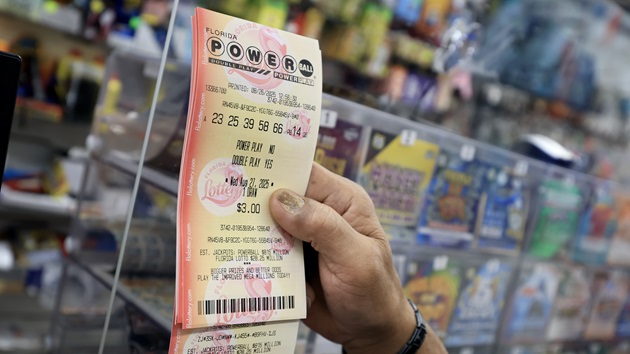
A customer holds a Powerball lottery ticket after purchasing it at the Downtown Miami Souvenirs store on August 26, 2025 in Miami, Florida. (Joe Raedle/Getty Images)
(NEW YORK) — The dream of becoming America’s next billionaire is up for grabs this Saturday night as the Powerball jackpot climbed to $1 billion, sending ticket sales soaring across the nation ahead of the Labor Day weekend drawing.
Game officials increased the jackpot estimate Friday morning from $950 million after reviewing national ticket sales, Powerball said. The winner could opt for a cash payment of $453.1 million before taxes.
“We’re bringing extra excitement to Labor Day Weekend with a Powerball jackpot that’s climbed to a billion dollars!” Powerball Product Group Chair and Iowa Lottery CEO Matt Strawn said in a press release.
The game hasn’t seen a jackpot winner since May 31, when a California player claimed a $204.5 million prize. During this 39-drawing streak, the game has created 62 million-dollar winners and 608 tickets worth $50,000 or more.
Wednesday’s drawing saw six tickets match all five white balls — 9, 12, 22, 41 and 61 — with red Powerball 25, each winning $1 million or more.
Winners of Saturday’s jackpot can choose between annual payments or the lump sum. The annuity option provides one immediate payment followed by 29 annual payments that increase by 5% each year.Powerball tickets cost $2 per play and are sold in 45 states, the District of Columbia, Puerto Rico and the U.S. Virgin Islands. The odds of winning the jackpot are 1 in 292.2 million, while the overall odds of winning any prize are 1 in 24.9.
The game has generated more than $36 billion for good causes supported by U.S. lotteries since its first drawing in 1992, Powerball noted. More than half of ticket sale proceeds remain in the jurisdiction where the ticket was sold, according to Powerball.
The current jackpot ranks sixth among Powerball’s largest prizes. The record stands at $2.04 billion, won by a California player in November 2022, followed by the $1.765 billion prize claimed in California in October 2023.
Other notable jackpots include the $1.586 billion split among winners in California, Florida and Tennessee in January 2016, the $1.326 billion won in Oregon in April 2024, and the $1.08 billion claimed in California in July 2023.
Saturday’s drawing will be broadcast live at 10:59 p.m. ET from the Florida Lottery draw studio in Tallahassee and streamed on Powerball’s website.
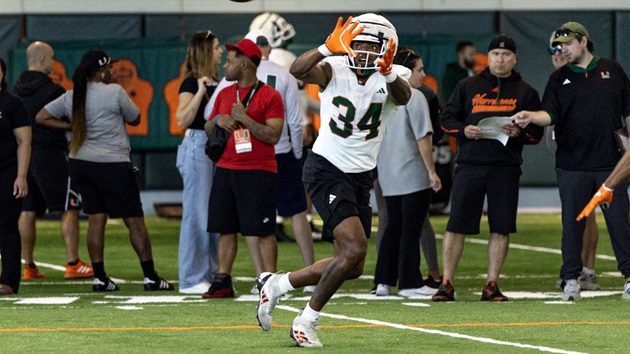
Miami Hurricanes’ Adarius Hayes catches a pass during spring practice at the Carol Soffer Indoor Practice Facility at the University of Miami on Wednesday, March 5, 2025, in Coral Gables, Florida. (D.A. Varela/Miami Herald/Tribune News Service via Getty Images)
(MIAMI) — University of Miami football player Adarius Hayes has been arrested and charged with vehicular homicide following a monthslong investigation into a car crash that killed three people in Florida, police said Friday.
Hayes, 20, turned himself into the Largo Police Department and was transported to the Pinellas County Jail on Friday, police said.
Hayes was “traveling at a high rate of speed and maneuvering aggressively through traffic” shortly before colliding with another vehicle on May 10, Largo police said.
Three people, including two children, were killed in the crash, police said.
The two-vehicle crash occurred at an intersection in Largo, police said. Hayes was driving a Dodge Durango, which collided with a Kia Soul that was “lawfully executing a left-hand turn,” police said.
“It was discovered during the investigation that approximately five seconds prior to the fatal crash, Hayes made a rapid and dangerous maneuver, changing lanes from the curb lane to the median lane, crossing three lanes of traffic while overtaking other vehicles,” the Largo Police Department said in a press release. “Moments later, Hayes abruptly re-entered the curb lane, again crossing all three lanes without signaling.”
A search warrant on Hayes’ vehicle determined that he was traveling 78.9 mph in a 40 mph zone at the time of the crash, police said.
Two children who were traveling in the backseat of the Kia Soul were ejected from the car and were pronounced dead at the scene, police said. The driver of the Kia Soul was transported with life-threatening injuries to an area hospital, where she died the following day, police said.
An adult front passenger in the Kia Soul was taken to a hospital with serious injuries and survived, police said.
Officers spoke with multiple eyewitnesses and reviewed video surveillance as part of their investigation into the crash, police said.
“The investigation concluded that Adarius Hayes’ egregious speed, aggressive and reckless lane changes, and complete disregard for surrounding traffic conditions demonstrated a willful and deliberate disregard for the safety of others, constituting reckless driving,” police said. “These actions directly led to the tragic deaths of the three victims.”
Hayes, who is a sophomore at Miami, was one of the top linebacker recruits in the country in 2024. A star at Largo High School, he was ranked as the 78th-best overall player in the country and sixth-best linebacker in the country by ESPN. He chose the Canes over such powerhouse programs as Alabama, Florida and Georgia.
He played sparingly as a freshman, mostly on special teams, but was expected to play a bigger role in 2025. Miami, ranked No. 10 in the country, hosts No. 6 Notre Dame in both schools’ first game of the season on Sunday.
This is a developing story. Please check back for updates.