
Authors of color speak out against efforts to ban books on race

Authors of color speak out against efforts to ban books on race
FG Trade/iStock

(CHICAGO) — At the American Library Association, annual reports are collected to monitor efforts by parents and political groups to ban books from libraries and schools across the country.

Deborah Caldwell-Stone, the director of non-profit ALA’s Office for Intellectual Freedom, has worked with such reports for about 20 years — and she says she’s never seen such a widespread effort to remove books on racial and gender diversity from the shelves the way she’s seeing it right now.

“What we’re observing right now is an unprecedented volume of challenge reports that seem to be connected to a loosely organized campaign to remove certain books,” Caldwell-Stone said. “Before, you might get one or two challenge reports a week and now we’re getting multiple reports per day.”

Though the reports for 2021 are still coming in, 273 books were targeted in 2020 — and Caldwell-Stone says the number is expected to be higher this year. Reports of challenges are based on media stories and voluntary reports sent to the organization. But the vast majority of book challenges remain unreported.

The increase comes as the controversy over the concept of race in education picks up steam, as states across the country challenge education about racism and discrimination through legislative action.

“In recent months, a few organizations have advanced the proposition that the voices of the marginalized have no place on library shelves,” ALA, which fights censorship, wrote in a recent statement against the efforts. “Falsely claiming that these works are subversive, immoral, or worse, these groups induce elected and non-elected officials to abandon constitutional principles, ignore the rule of law, and disregard individual rights to promote government censorship of library collections.”

In June 2021, about 150 organizations including the ALA penned an open letter against legislative efforts to restrict education and readings about racism and American history.

Now, some authors of color are speaking out, saying that books are a tool for children and young adults to learn, ask questions and see new or nuanced perspectives about the world around them.

“The mind of an adult begins in the imagination of a kid,” said poet and author Kwame Alexander, whose books tackling racial issues have been challenged in the fight to ban certain books from educational spaces. “When you talk about representation, you talk about creating a space for literature in a child’s life that is all-inclusive of the kind of world that we claim we want for them, that the world is kind of loving and compassionate and empathetic.”

No Left Turn in Education is one of the groups leading the calls against certain books on race and sexuality. Its website contains a long list of books, warning parents that they allegedly spread anti-police messages, themes of critical race theory, and education on sexuality.

“These are the books that are used to spread radical and racist ideologies to students,” a statement on the website reads. “They demean our nation and its heroes, revise our history, and divide us as a people for the purpose of indoctrinating kids to a dangerous ideology.”

No Left Turn in Education did not respond to ABC News’ request for comment.

Focus on ‘critical race theory’

Critical race theory, an academic concept that analyzes how racism affects or drives U.S. laws, has become a target of Republican legislators in states across the country despite the subject not being officially taught in K-12 classrooms. At least 29 states have introduced or implemented bills that aim to place limitations on lessons about race and inequality being taught in American schools, in the name of stopping “critical race theory” in its tracks.

Proponents say that some lessons blame children for actions of generations past or make them feel guilty for being white.

“We can and should teach this history without labeling a young child as an oppressor or requiring he or she feel guilt or shame based on their race or sex,” said Oklahoma Gov. Kevin Stitt when he signed a bill into law in his own state in May. “I refuse to tolerate otherwise during a time when we are already so polarized.”

In a statement sent to ABC News, Stitt said that some forms of the curriculum “define and divide young Oklahomans” based on their race or sex.

The language in the law is almost identical to at least 24 other proposed bills across the country. Lawmakers in several states are aiming to ban educators from teaching that “an individual, by virtue of the individual’s race or sex, is inherently privileged, racist, sexist or oppressive, whether consciously or subconsciously,” that “a meritocracy is inherently racist or sexist, or designed by a particular race or sex to oppress members of another race or sex” and that “this state or the United States is fundamentally or irredeemably racist or sexist.”

This push has led to the increasing call on school boards and libraries to remove books that deal broadly with racial issues — a misinterpretation of what critical race theory is, according to Caldwell-Stone.

“There was a real focus on books that dealt with Black American history, the experiences of Black persons that talked about racism, the history of racism and slavery in the United States, all under the claim that they dealt with critical race theory,” Caldwell-Stone said.

Many educators, however, say that it’s not critical race theory that’s being taught in K-12 schools, but that it’s basic U.S. history on racial issues in America. They argue that anti-critical race theory laws only serve to restrict conversation about racism and oppression in America.

Encouraging diverse perspectives

A diverse array of books, the authors say, is a major factor in getting children to learn about new perspectives and to look at society in nuanced or complex ways.

Author and artist Lulu Delcare, who writes multilingual children’s books centering on the Latino experience, says she has looked to books to learn about people and identities.

“Many decades ago, one of my daughters came out as gay. And for me, I didn’t know how to react to this because I grew up in … an extremely prejudiced family and guess what? I turned to books,” Delcare said. “The very first thing that I did was to tell her I loved her no matter what. The second thing that I did was to go to the library.”

Delcare and author Sheetal Sheth joined the non-profit Reading Is Fundamental to encourage young readers to embrace literature from diverse perspectives.

These authors fear that if children don’t have inclusive reading material, they may not be prepared to see the complexities of the world around them. Specifically, they may not be able to understand and address racism or discrimination, Alexander says.

Alexander’s book, “The Undefeated” has landed itself on some banned books lists. The book of poetry is described as a “love letter to Black life in the United States,” and covers slavery, the civil rights movement and more.

Many books on banned lists cover similar issues.

“Human beings are afraid of things they can’t see, things they can’t imagine things they don’t have any connection with,” Alexander said. “If you look at the background of any of the people who are banning books, I would posit that there were no poetry books by Langston Hughes and Nikki Giovanni on their shelves as kids. There was no “House on Mango Street” by Sandra Cisneros on their middle school shelf.”

Fostering ‘cognitive empathy’

A study from the Frontiers in Psychology research journal found that reading books can support empathy if it highlights differences between groups of people, and seeks to minimize bias between those different groups of people.

It also found that “identification with characters who are dissimilar from the readers is the most valuable contribution of children’s storybooks to cognitive empathy.”

Alexander said that a lack of diversity in education has helped shape some of the efforts to ban books now.

“They didn’t have an opportunity as children to be able to experience the full capacity of the world,” he said. “And so therefore, when they became adults, their imaginations are so limited, that all they can see is what they know. And so they’re afraid of things they don’t know. So that could be slavery. You know, that could be the tragedy and the triumphs of Black people in America. That could be the experiences of LGBTQ+.”

Caldwell-Stone says the organization is also seeing a rising number of challenges to books on LGBTQIA topics amid a wave of anti-transgender legislation.

Authors urge parents and educators to promote banned books and literature despite calls, in hopes of preparing children for an ever-intensifying social and political climate.

“It’s a product of the political climate that we’re in,” Sheth said. “The idea that you would take away a book where they might see themselves or be able to have a conversation or whether it be a window to them or a mirror for them — if you want to teach our kids empathy, and kindness and love, the best place to start is in the books that they read.”

Copyright © 2021, ABC Audio. All rights reserved.

Suspect arrested in murder of Hollywood executive’s wife at couple’s Beverly Hills home

Suspect arrested in murder of Hollywood executive’s wife at couple’s Beverly Hills home
BlakeDavidTaylor/iStock

(LOS ANGELES) — Police have arrested a suspect in the murder of the wife of famed music executive Clarence Avant at the couple’s Beverly Hills home.

Beverly Hills investigators have identified Los Angeles resident Aariel Maynor, 29, as a suspect seen in multiple surveillance videos, including city cameras, heading eastbound out of Beverly Hills shortly after 81-year-old Jacqueline Avant was shot, Beverly Hills Police Chief Mark Stainbrook told reporters during a news conference Thursday.

Maynor accidentally shot himself in the foot while in the process of another burglary, Stainbrook said.

Around 3:30 a.m. Wednesday, about an hour after Jacqueline Avant was found with a gunshot wound to her head, the Los Angeles Police Department Hollywood Division responded to a report of a shooting at a residence in the 6000 block of Graciosa Drive in Hollywood. When officers arrived, they found Maynor in the backyard, Stainbrook said.

After a “thorough” investigation, investigators determined that Maynor was allegedly in the process of committing a burglary when he shot himself by mistake, Stainbrook said.

He has been in police custody after he was treated at the hospital. An assault-style rifle was also found in the backyard of the home, Los Angeles Police Department Deputy Chief Blake Chow told reporters.

Beverly Hills Police officers responded to the 1100 block of Maytor Place just before 2:30 a.m. Wednesday, where they found that Jacqueline Avant had been shot, according to the department. She later died at the hospital.

“Somewhere in the night we had a watch commander that started to put two and two together and reached out to Beverly Hills,” Chow said.

Police believe Maynor is the only suspect, Stainbrook said.

“Our deepest gratitude to The City of Beverly Hills, the BHPD and all law enforcement for their diligence on this matter,” the Avant and Sarandos family said in a statement. “Now, let justice be served.”

Jacqueline Avant was also the mother-in-law of Netflix CEO Ted Sarandos.

It is unclear if anything was taken from the Avants’ home, but the back sliding glass door was shattered, Stainbrook said.

Clarence Avant was featured in the 2019 Netflix documentary “The Black Godfather” and in October was inducted into the Rock and Roll Hall of Fame. The 90-year-old is popular among A-list celebrities such as Oprah, Jay-Z and former President Barack Obama.

Police read a statement from the Avant family Wednesday afternoon during a press conference, which described Jacqueline Avant as “an amazing woman, wife, mother, philanthropist, and a 55-year resident of Beverly Hills.”

ABC News’ Nicholas Kerr and Alex Stone contributed to this report.

Copyright © 2021, ABC Audio. All rights reserved.

Epstein’s former house manager testifies, calls Ghislaine Maxwell ‘lady of the house’

Epstein’s former house manager testifies, calls Ghislaine Maxwell ‘lady of the house’
Marilyn Nieves/iStock

(NEW YORK) — The former house manager of Jeffrey Epstein’s Palm Beach, Florida, estate testified on Thursday that the very first time he met Ghislaine Maxwell, in approximately 1991, she made it very clear to him that she occupied a central role in Epstein’s affairs.

“She right away took over,” Juan Alessi told the jury on the fourth day of Maxwell’s criminal trial on multiple charges of child sex trafficking. “And right away she mentioned to me she was going to be the lady of the house.”

Alessi, 72, said that from about 1991 to 2002 he was responsible for overseeing Epstein’s house and its staff, and that in that role he communicated with Maxwell on “a daily basis” as she passed along orders for him from Epstein.

Maxwell, Epstein’s former girlfriend and longtime associate, faces a six-count indictment for allegedly conspiring with and aiding Epstein in his sexual abuse of underage girls between 1994 and 2004. She has been held without bail since her arrest in July 2020 and has pleaded not guilty to the charges and proclaimed her innocence.

Alessi’s testimony could provide prosecutors an important connection between Maxwell and the government’s key witness. “Jane” has previously testified that she suffered sexual abuse by Epstein beginning in 1994 when she was 14 years old and continuing for several years, and she has accused Maxwell of facilitating and sometimes even participating in that abuse.

Alessi testified that, on multiple occasions, his orders included picking up “Jane” and driving her to and from Epstein’s house at the behest of both Epstein and Maxwell.

“Do you remember Mr. Epstein instructing you to pick [Jane] up?” asked Assistant U.S. Attorney Maurene Comey.

“Yes,” he said.

“Do you remember Miss Maxwell instructing you to pick [Jane] up?” Comey asked.

“Yes,” he said.

He picked her up, he said, because, “I don’t think she had a license.”

Alessi testified that he didn’t have any knowledge of what “Jane” did while she was at the house. He just “brought her to Miss Maxwell at her desk,” he said, and “from there, it was not my job to see where they were.”

On Tuesday, “Jane” testified that she recalled being picked up for visits to Epstein’s house by a man who worked at the house.

“I don’t remember his name, but he was a sweet Latin American man,” she said.

Alessi, who was born in Ecuador, said he also recalled seeing Jane with luggage “maybe twice” at Epstein’s house, and described an occasion where he drove Jane, along with Epstein, Maxwell and Maxwell’s dog, a Yorkie named Max, to the Palm Beach airport to board Epstein’s private plane. “Jane” testified on Tuesday that she traveled to both New York and New Mexico with Epstein and Maxwell, where she suffered further abuse, and that her travel was sometimes arranged by Maxwell.

Alessi testified that during his decade-plus tenure working for Epstein, he witnessed “two females … who appeared to be underage.” He identified “Jane” — now a 41-year-old woman who testified earlier this week — and Virginia Roberts, as the two females who appeared to him to be under age.

Roberts — who is one of Maxwell’s most high-profile accusers — is not expected to testify in this trial.

Alessi described being in the driver’s seat as Maxwell jumped out on a car ramp in front of Mar-a-Lago to talk to Roberts. The next time Alessi saw her, he said, was later that day at Epstein’s Palm Beach home.

According to Alessi, during his time working for Epstein, there were “other girls constantly flying in” to the Palm Beach estate with Epstein and Maxwell.

One of Alessi’s key responsibilities, according to a “Household Manual” that Alessi testified looked like an updated version of one originally by Maxwell and presented to him near the end of his tenure, was discretion.

“I am sorry to say that it was degrading to me,” Alessi said.

During his testimony, prosecutors highlighted a passage in the manual that read: “Remember that you see nothing, hear nothing, say nothing, except to answer a question directed at you. Respect their privacy.”

Asked to describe what he interpreted that instruction to mean, Alessi replied, “that I was supposed to be blind, deaf and dumb, and say nothing.”

Another passage displayed in court instructed the staff to “NEVER disclose Mr. Epstein or Ms Maxwell’s activities or whereabouts to anyone.”

“Do not be bullied and do not show any reaction or impatience, simply be firm,” the manual states.

Late in the afternoon Thursday, Alessi testified that he saw people who would come in to give Epstein massages, and that “98% of them were females.” He added that Epstein took a majority of his massages in his bathroom — attached to Epstein’s master bedroom — which Alessi said was shared with Maxwell.

Alessi said that he “never” went inside the room when Epstein was receiving the massages and that the door was “never” open during the massages. But Alessi said he would go into the room after massages “to clean up.”

Asked by Comey if he ever found something “unexpected” after Epstein’s massages, Alessi said he did on several occasions in the mid-1990s.

“I remember finding a large dildo. It looked like a huge man’s penis with two heads,” which he said he returned to a wicker basket in Maxwell’s bathroom, which is where he said it he was told to put it.

According to Alessi, other items he observed in the wicker basket — which he said was kept inside a garbage can — included pornography tapes and a black leather costume.

Maxwell’s attorneys are expected to begin their cross-examination of Alessi on Friday morning.

Copyright © 2021, ABC Audio. All rights reserved.

2 Utah police officers shot by rape, robbery suspect: Authorities

2 Utah police officers shot by rape, robbery suspect: Authorities
ABC 4 News

(TAYLORSVILLE, Utah) — Two Utah police officers are recovering after they were shot by a rape and robbery suspect Wednesday night, police said.

One officer, with the West Valley City department, was shot twice; he was initially in critical condition but has since been upgraded to stable condition, the department said. The second officer, with the Unified Police Department, was treated and released Wednesday night, the department said.

At about 10 p.m., the officers found the alleged suspect, wanted in rape and robbery cases, parked in a 711 parking lot in Taylorsville with a baby inside the car, West Valley City police said.

Officers negotiated with suspect, 20-year-old Anei Joker, to release the 9-month-old, which he did, though he refused to leave the car himself, police said.

Joker later got out of the car and fired at the officers, striking two of them, police said.

Officers returned fire, hitting the suspect, who was taken to the hospital where he died, police said.

The suspect has with history with police and was known to be armed and dangerous, Roxanne Vainuku, public information officer for the West Valley City Police, said at a news conference.

The baby wasn’t hurt, Vainuku said, adding that it’s unclear what the 9-month-old’s relationship was to the suspect.

ABC News’ Timmy Truong contributed to this report.

Copyright © 2021, ABC Audio. All rights reserved.

Family of Casey Goodson react to former sheriff deputy’s murder charges

Family of Casey Goodson react to former sheriff deputy’s murder charges
Family of Casey Goodson

(COLUMBUS, Ohio) — Former Ohio sheriff’s deputy Jason Meade was charged with murder on Thursday in the fatal shooting of a Black man who was shot and killed while entering his grandmother’s house last December.

In March, the Franklin County Coroner said that Casey Goodson was shot in his back five times, according to ABC affiliate WSYX in Columbus, Ohio. Meade was charged with two counts of murder and one count of reckless homicide.

Goodson’s mother, Tamala Payne, said it had been “a year of grief and a year of pain” at a press conference Thursday morning.

“I’m overwhelmed with joy,” she said in response to the charges. “My emotions are everywhere. We did it y’all. We did it.”

Meade’s attorney, Mark C. Collins, said in a statement that his client “acted within his lawful duties as an officer of the law when he pursued Mr. Goodson,” and said Meade fired his weapon at Goodson in “fear for his life as well as those inside the house.”

Meade turned himself in Thursday and plans to plead not guilty, Collins said.

The attorney for Goodson’s family, Sean Walton, announced that they also filed a federal civil rights lawsuit against Meade and Franklin County on Thursday. The lawsuit alleges excessive force, wrongful death and that the practices of the Franklin County Sheriff’s office contributed to Goodson’s death.

Franklin County has declined to comment on the civil lawsuit, citing pending litigation, WSYX reported.

Payne said she ultimately wants Meade convicted and given a life sentence for her son’s killing.

“We are fully aware that this is only the beginning of the fight,” she said at the press conference. “This was the first part of the fight. The ultimate fight is the conviction and I want a life sentence, that’s what I’m fighting for.”

Payne also said that Thursday’s indictment showed that her family’s portrayal of Goodson was accurate.

“Casey is exactly who we say he is,” she said. “Casey was a good son. He was a loving son. Casey was a good grandson. Casey was a good brother, a good role model. Casey was exactly who we portrayed Casey to be.”

Initially, U.S. Marshal Peter Tobin said Meade confronted Goodson after Goodson waved a gun at him. According to the Associated Press, he later withdrew those remarks, saying they were based on “insufficient information.”

Payne argued that the indictment showed that the claim Goodson was waving a gun is a lie, though Collins, Meade’s attorney, pushed back on that claim in a statement, alleging that Goodson was “waving the firearm erratically and tracked Meade with the weapon,” as he drove by Meade’s vehicle.

Following Meade’s indictment, Franklin County Sheriff Dallas Baldwin said in a statement that he asked his staff to review the investigation so the agency could learn from this situation.

“This office has a professional obligation to do everything in its power to ensure the community and our deputies are kept safe,” he said. “As I’ve said from the very beginning, I pray for everyone involved in this tragedy.”

Walton said that the family’s lawsuit would bring some level of accountability to Goodson’s family, who he said had been traumatized by the shooting.

“Since that day, they’ve had to deal with this daily sadness and grief for nearly a year,” he said. “So this day could not come soon enough. But they stayed strong, they never wavered, and they told the truth. And the truth will prevail in this case.”

Nine members of Goodson’s family, including four children, were in his grandmother’s home when he was shot, Walton said.

Copyright © 2021, ABC Audio. All rights reserved.

Florida teen stabbed to death by ‘homeless drifter,’ police say

Florida teen stabbed to death by ‘homeless drifter,’ police say
Palm Beach County Sheriff’s Office

(MIAMI) — Investigators arrested a homeless man in Miami, who, they said, was responsible for the homicide of a 14-year-old boy in Palm Beach Gardens, Florida.

Police said they took Semmie Lee Williams Jr., a 39-year-old “homeless drifter,” into custody on Wednesday night on the charge of stabbing Ryan Rogers to death on Nov. 15.

According to an affidavit, Rogers’ autopsy revealed that he had been stabbed numerous times in the head and face and his cause of death was stab wounds.

DNA evidence from a pair of headphones found near Rogers’ body was entered into a database and provided a positive match to Williams, police said.

Police said they located Williams in Miami and found DNA belonging to Rogers on a bloody bandana.

The homicide was a “completely random act,” Palm Beach Gardens Police Chief Clint Shannon said in a press conference Tuesday morning.

He described the incident as an “innocent child victim having a chance encounter with a very violent criminal.”

Rogers left his house on his bike on Nov. 15 around 6:40 p.m. local time and was reported missing later that night by his mother when he didn’t return home. His body was found the next day on Central Boulevard near an I-95 overpass, police said.

On Nov. 25, police ruled Rogers’ death a homicide and announced a reward for information linked to it.

Williams has been charged with first-degree murder with a weapon and was presented in court Tuesday morning, where his bond was denied. He holds a criminal record and has been previously convicted for domestic violence, battery and aggravated assault.

Shannon called Williams “an animal who probably shouldn’t be out on our streets” and thanked the public officers and investigators who “removed a very dangerous monster from our street” in the Tuesday morning press conference.

Williams’ next court date is set for Jan. 3, 2022, according to local ABC affiliate WPBF.

Copyright © 2021, ABC Audio. All rights reserved.

COVID-19 live updates: First omicron case in US identified in California

COVID-19 live updates: First omicron case in US identified in California
Lubo Ivanko/iStock

(NEW YORK) — As the COVID-19 pandemic has swept the globe, more than 5.2 million people have died from the disease worldwide, including over 780,000 Americans, according to real-time data compiled by Johns Hopkins University’s Center for Systems Science and Engineering.

Just 59.4% of the population in the United States is fully vaccinated against COVID-19, according to data from the Centers for Disease Control and Prevention.

Here’s how the news is developing. All times Eastern:

Dec 02, 9:33 am
Unvaccinated people will be barred from most businesses in Germany

Unvaccinated people in Germany will be barred from most businesses, except for grocery stores and pharmacies, officials announced Thursday.

In Germany, shops and restaurants check vaccination status at entrances.

Nearly 69% of Germans are fully vaccinated. The country has reported several cases of the omicron variant.

-ABC News’  Joe Simonetti

Dec 02, 8:33 am
Mask mandate on public transportation extended through March 18

Required masks on public transportation, including airplanes, rails and buses, will be extended through March 18, according to a new plan from the Biden administration.

Tighter requirements for travel into the U.S. will go into place early next week, the administration said. The rule calls for proof of a negative test within one day of travel to the U.S. for all passengers, regardless of their vaccination status or nationality.

President Joe Biden also announced a plan Thursday allowing for free rapid tests.

Senior administration officials say the more than 150 million Americans with private insurance will be able to submit for reimbursement to their insurance companies through the same rule that allows tests on site to be covered by insurance. To reach uninsured Americans and those on Medicare or Medicaid, the Biden administration will send 50 million at-home tests to 20,000 federal sites around the country to be handed out for free.

The Department of Health and Human Services, Department of Labor and Treasury Department will put out guidance by Jan. 15 to determine exactly how many tests will be covered and at what frequency, the plan said, and it will not retroactively cover tests already purchased.

-ABC News’ Cheyenne Haslett, Justin Gomez

Dec 01, 5:32 pm
CDC orders airlines to share contact info for travelers from southern Africa

The Centers for Disease Control and Prevention is directing airlines to provide the agency with the names and contact information of passengers who have entered the United States since Nov. 29 and had been in southern Africa the prior two weeks. Airlines must turn the information over within 24 hours of the flight’s arrival into the U.S.

The directive, in effect indefinitely, applies to travelers from the Republic of Botswana, the Kingdom of Eswatini, the Kingdom of Lesotho, the Republic of Malawi, the Republic of Mozambique, the Republic of Namibia, the Republic of South Africa and the Republic of Zimbabwe.

The order, which does not mention the omicron variant specifically, is to “prevent the importation and spread of a communicable disease of public health importance.”

Delta and United are currently the only two carriers that offer flights between the U.S. and countries covered by the CDC order.

ABC News’ Cheyenne Haslett, Sam Sweeney and Mina Kaji

Dec 01, 3:23 pm
California governor on omicron case: ‘This is not surprising’

Gov. Gavin Newsom said the first detected case of the omicron variant in the U.S. being found in California “is not surprising” due to the state’s “aggressive testing protocols” and genomic sequencing.

During a previously scheduled press briefing Wednesday afternoon, he shared a timeline on the San Francisco resident who tested positive for the case. The person left South Africa on Nov. 21 and landed in the U.S. on Nov. 22, developed symptoms a few days later around Nov. 25 and got tested on Nov. 28, he said. The test came back positive on Nov. 29, he said.

On Nov. 30, initial lab testing determined the sample could be omicron, and a full sequencing confirmed it was early Wednesday morning, San Francisco health officials said.

Newsom encouraged Californians to get vaccinated and receive a booster shot as the winter approaches.

Dec 01, 3:02 pm
California omicron case ‘not a cause for us to panic,’ health director says

The individual who tested positive for the first case of the omicron variant detected in the U.S. had received a full dose of the Moderna COVID-19 vaccine but was not yet eligible for a booster dose, according to San Francisco Department of Public Health Director Dr. Grant Colfax.

The person developed symptoms upon returning from South Africa, got tested in San Francisco and has since recovered, Colfax told reporters during a briefing Wednesday.

“They did the right thing and got tested and reported their travel history,” he said.

Colfax said the case is “not a cause for us to panic,” and that San Francisco “is prepared” for this.

The health department has no plans at this time to change its current COVID-19 health orders, Colfax said.

Copyright © 2021, ABC Audio. All rights reserved.

New York scientists double down on efforts to track new omicron variant

New York scientists double down on efforts to track new omicron variant
Niphon Khiawprommas/iStock

(ALBANY, N.Y.) — With mounting concerns over the potential threat of the newly discovered omicron variant, U.S. scientists are racing to try to determine whether there are any confirmed cases of the new variant circulating around the country.

Among those is the New York State Department of Health’s Wadsworth Center Labs in Albany, New York, where for months, scientists have been on the lookout for dangerous variants, while monitoring the genetic changes in the COVID-19 virus.

In order to track new variants, the team sequences the virus’s genetic material to identify its lineage, strain and mutations, as well as to see how the virus is evolving, and which viruses are entering the state of New York.

The lab has been on high alert since the discovery of the omicron variant, analyzing positive COVID-19 samples from across the state to see if the variant is already present within the community.

On Wednesday, scientists in California confirmed the first known case of omicron in the U.S.

It is “absolutely, entirely possible,” that the omicron variant is already circulating in many other communities across the country, Dr. Kirsten St. George, director of virology and chief of the Laboratory of Viral Diseases at the Wadsworth Center, told ABC News on Tuesday.

“We only sequence a subset of samples in New York and elsewhere in the country. We’re not sequencing 100% of positive specimens. It is entirely possible that it is already here, and we have yet to sequence the specimen that it’s in,” St. George said on Tuesday, prior to the news of the U.S.’ first confirmed case.

St. George said she was taken aback when she first saw a 3D image, shared by South Africa, of omicron’s mutations.

“You could see the individual mutations marked on that protein, and it was really pretty jaw dropping, because it had so many more mutations than anything we’ve ever seen. It was a fairly startling thing to look at,” St. George said, adding that “the evolutionary change on that protein was more extensive than anything we had seen.”

Omicron is concerning because it has mutations not seen before, and scientists still do not know how it will clinically affect those it infects, St. George said, adding that “there are mutations that we unfortunately know can be associated with reduced efficacy of immunity.”

The lab has been sequencing over 800 COVID-19 samples per week, researchers explained, a number that has been greatly enhanced with the establishment of a sequencing consortium, which comprises four other sequencing laboratories around the state, and also by collaboration with other labs across the state.

“These are known positive COVID samples that have been collected from throughout New York state and they’re sent to us and we’re preparing them for whole genome sequencing,” Alexis Russell, a research scientist for the lab, told ABC News.

With multiple labs, throughout the country, sequencing different percentages of the positive specimens, and sharing data as soon as it is available, “we will know immediately when we see it, when it comes through the pipeline,” St. George said

Following the discovery of the omicron variant, South Africa, one of the first countries where the newest variant was first discovered, has begun to experience an uptick in coronavirus infections. According to St. George, it is possible that omicron is behind South Africa’s latest surge.

“The correlation of the emergence of that variant in South Africa, combined with the rapid increase in positivity and increase in case count, is quite suspicious,” St. George said. “I think it’s quite possible that it correlates with that variant and that it is probably a rapidly transmissible variant.”

However, it is “very unlikely” that the increase in COVID-19 cases seen in the U.S., in recent weeks, is the result of the omicron. St. George said, “I think if that were the case, we would have seen it already in our sequencing pipeline.”

It is still too early to know whether omicron will turn out to be more transmissible than delta, St. George said, though some of the existing PCR tests just happen to pick up an omicron marker, making it easier to detect than delta.

Positive samples for omicron have shown a phenomenon called “S-gene-dropout,” which means that a target gene, linked to COVID-19 variants, appears to be missing from the new variant, allowing it to be distinguished easily from the dominant delta variant.

“It is a very suspicious indicator when you see it, a convenient indicator,” St. George explained, making it potentially easier to detect omicron as compared to delta.

The discovery of new variants is not unexpected, St. George said, but it becomes particularly worrisome when it replicates at high numbers, increasing the chances of a mutation emerging.

“The more virus that it’s producing, the more chance it has of producing a virus with a mutant. And then the more people who are infected, the higher the risk again, the higher the chance of producing it,” St. George added.

It is possible that omicron could prove to be stronger than the delta variant, which has been shown to be far more transmissible than prior variants.

“The competition against delta is quite dramatic. It certainly looks as if it’s got a very good fitness advantage against it, at this point,” St. George said.

However, researchers cautioned that there are also times when viruses do develop mutations that seem to give them fitness advantages over dominant variants, but they ultimately “sort of burn out,” and subside.

The protective measures that should be taken against omicron remain the same as with the other variants, wear masks, especially inside, and in crowds, wash your hands and get vaccinated.

“Even though we know that this virus has mutations that can be associated with evading immunity, be it prior infection, immunity or vaccine associated immunity. You have a better chance of not getting sick and having a decreased amount of viral replication in your system if your immune system is already primed with a vaccine,” St. George said.

Copyright © 2021, ABC Audio. All rights reserved.
Daunte Wright’s family honors his memory as Kim Potter trial begins

Daunte Wright’s family honors his memory as Kim Potter trial begins
Wright Family

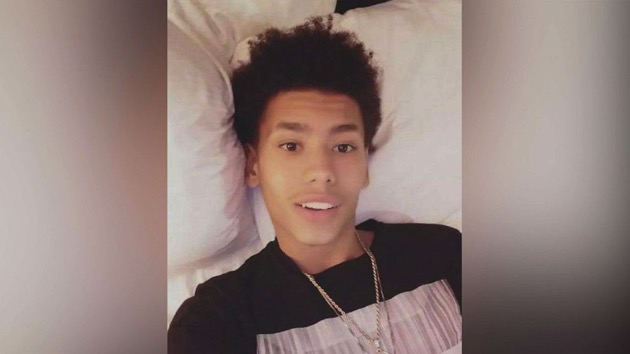
(NEW YORK) — The family of Daunte Wright is spending their first holiday season without him.

“On Thanksgiving, we sat there and we watched so many videos of my nephew,” Wright’s aunt Naisha Wright said tearfully in an interview with ABC News. “It was just such a beautiful thing, because everybody had a memory of him either cracking jokes or trying to dance — because he could not dance, but he tried.”

The 20-year-old Black man was fatally shot in Minnesota during a traffic stop in April by then-police officer Kim Potter.

Potter, who resigned from the Brooklyn Center Police Department two days later, is now headed to trial. She is charged with first-degree and second-degree manslaughter. She has pleaded not guilty to both charges.

Officers initially pulled Wright over for an expired registration tag on his car but determined that he had an outstanding warrant for a gross misdemeanor weapons charge and tried to detain him, according to former Brooklyn Center Police Chief Tim Gannon, who also resigned after the incident.

As officers tried to arrest him, Wright freed himself and tried to get back in his vehicle.

During the struggle, the defense says Potter accidentally grabbed her firearm instead of her stun gun when she shot him. After he was shot, he drove off and crashed the car a few blocks away.

Wright’s mother, Katie Wright, told ABC News in an interview two days after the shooting that her son had called her during the traffic stop.

“I know my son was scared. He’s afraid of the police, and I just seen and heard the fear in his voice,” his mother said. “But I don’t know why, and it should have never escalated the way it did.”

She described her son as “an amazing, loving kid” who “had a big heart,” “bright” smile and “loved basketball.”

Naisha Wright said she wants the world to remember her nephew as a popular young man with a knack for humor — earning himself a large group of close friends and being coined as an “honorary nephew” to those who knew the family. She also said he had a bright outlook toward a future of taking care of his family, particularly his 2-year-old son.

“He had a 2-year-old son that’s not going to be able to play basketball with him. He had sisters and brothers that he loved so much,” his mother said in April. “He just had his whole life taken away from him. We had our hearts pulled out of our chests. He was my baby.”

“I’m just remembering that smile on that boy’s face,” his aunt said. “The memory of this young man trying to live his life … trying to be a father, becoming a father at a young age and trying to do something for his son.”

Naisha Wright said he had hoped to “take care of his son, giving and doing whatever it was that he needed to do for his son.”

Civil rights attorney Ben Crump has been retained by the family and has slammed the defense’s argument that Wright may still be alive if he had not tried to escape police custody.

“We must look past the shameless victim blaming that has been and will be directed toward Daunte,” Crump said. “Daunte Wright should not have been stopped or shot. He should be here with us, hugging his parents, siblings and young son during this holiday season.”

ABC News’ Stephanie Wash and Sabina Ghebremedhin contributed to this report.

Copyright © 2021, ABC Audio. All rights reserved.

4th student dies from Michigan school shooting, 15-year-old charged as adult: Latest

4th student dies from Michigan school shooting, 15-year-old charged as adult: Latest
mbbirdy/iStock

(OXFORD TOWNSHIP, Mich.) — A fourth student has died following Tuesday afternoon’s shooting at a Michigan high school.

Justin Shilling, 17, died at about 10:45 a.m. Wednesday in the wake of the shooting at Oxford High School in Oxford Township, sheriff’s officials said. Three other students, ages 14 to 17, died Tuesday. Seven people, including a teacher, were injured.

The suspected gunman, 15-year-old Ethan Crumbley, was taken into custody and is being charged as an adult, Oakland County Prosecutor Karen McDonald said at a news conference Wednesday.

There’s no indication that the victims were specifically targeted, Oakland County Sheriff Michael Bouchard said Wednesday.

McDonald said she is confident prosecutors can prove the shooting was premeditated “well before the incident.”

A law enforcement official told ABC News that investigators are actively pursuing information that, Monday night, an undetermined number of students appeared to see a Snapchat video warning of a shooting on Tuesday. Some students who saw the video stayed home from school, though no calls were placed to police regarding the video, the official said.

According to the sheriff’s office, “the suspect had been involved in a meeting over behavior issues the prior day and the day of the shooting.”

“Nothing of concern was noted in his school file prior to the first meeting,” the sheriff’s office said. “There are also no documented cases of bullying of the suspect with the school.”

Crumbley has been charged with one count of terrorism causing death; four counts of first-degree murder; seven counts of assault with intent to murder; and 11 counts of possession of a firearm in commission of a felony, she said. Additional charges are possible, McDonald said.

A judge entered a not guilty plea for Crumbley in his first court appearance Wednesday afternoon. He will be moved to Oakland County Jail and held in isolation with bond, the judge said. His next court appearance is scheduled for Dec. 13.

The teen allegedly took his father’s semiautomatic handgun, a 9 mm Sig Sauer pistol, with him to school, officials said.

The teen allegedly came out of a bathroom and began shooting. He never went into a classroom and was apprehended in a hallway, Bouchard said.

Thirty spent shell casings have been recovered, the sheriff said. The suspect had 18 live rounds left, he said.

The suspect’s father purchased the weapon on Black Friday and officials are looking into how the family stored its guns and how much access the teen had to them, according to a source briefed on the investigation. The suspect had apparently used the gun prior to the school shooting, the source said.

McDonald said prosecutors are considering charges against both of the suspect’s parents.

The first three students killed in the Tuesday shooting were Madisyn Baldwin, 17, Tate Myre, 16, and Hana St. Juliana, 14.

Four of the seven injured victims remained in the hospital on Wednesday, the sheriff said. Among those in the hospital is a 17-year-old girl who is in critical condition with a gunshot wound to the chest, he said.

Copyright © 2021, ABC Audio. All rights reserved.