
Former police officer charged with violating George Floyd’s civil rights testifies

Former police officer charged with violating George Floyd’s civil rights testifies
Brandon Bell/Getty Images

(MINNEAPOLIS) — A fired Minneapolis police officer charged alongside two former colleagues with violating George Floyd’s civil rights during the fatal arrest took the witness stand in his own defense on Tuesday.

Tou Thao, 35, is the first defendant charged in the high-profile federal case to speak publicly about his actions during the 2020 episode that prompted nationwide protests and resulted in the murder conviction of his then-senior officer Derek Chauvin in state court last year.

Thao’s co-defendants, J. Alexander Kueng, 28, and Thomas Lane, 38, have also informed U.S. District Court Judge Paul Magnuson that they will testify in the trial taking place in St. Paul, Minnesota.

Thao was among the first witnesses called by the defense a day after prosecutors rested their case.

He testified that as part of his training in the Minneapolis Police Department he was taught to use his knees to keep a suspect pinned to the ground, according to ABC affiliate station KSTP in St. Paul.

Thao’s attorney Robert Paule, displayed for the jury a photo of Thao taken during training in 2009 at the police academy. It showed him and another cadet pinning a handcuffed actor posing as a suspect to the ground in a prone position. Thao explained that he and the other cadet were using their knees to restrain the suspect.

Thao testified that using a knee as leverage prevents a suspect from rolling around or getting up.

“Just to be clear, is this something that was typically taught at the academy when you were there?” Paule asked as he showed the jury several photos of police cadets in training sessions with their knees on the backs and necks of actors pretending to be suspects.

Thao replied, “Yes.”

Several training supervisors from the Minneapolis Police Department testified for the prosecution that all three defendants appeared to ignore their training as the handcuffed Floyd was being held to the ground and became unconscious. Kueng was captured on police body-camera footage played for the jury saying he couldn’t detect Floyd’s pulse.

Prosecutors alleged that none of the defendants did anything to stop Chauvin’s excessive use of force or provide medical assistance to Floyd when he needed it most.

Officer Nicole Mackenzie, the department’s medical support coordinator, testified she personally instructed Lane and Kueng, both rookie police officers at the time of the episode with Floyd, in a police academy “emergency medical responder” class that covered first aid and ethics in care. She also said records show that Thao took a refresher course covering the same topics.

All three men are charged with using the “color of the law,” or their positions as police officers, to deprive Floyd of his civil rights by allegedly showing deliberate indifference to his medical needs as Chauvin kneeled on the back of the handcuffed man’s neck for more than nine minutes, ultimately killing him.

Kueng and Thao both face an additional charge alleging they knew Chauvin was kneeling on Floyd’s neck but did nothing to stop him. Lane, who appeared to express concern for Floyd’s well-being during the encounter, does not face the additional charge.

They have all pleaded not guilty to the charges.

Chauvin was convicted in Minnesota state court in April of second-degree unintentional murder, third-degree murder and second-degree manslaughter. He was sentenced to 22 1/2 years in prison.

Chauvin, 45, also pleaded guilty to federal civil rights charges stemming from Floyd’s death and the abuse of a 14-year-old boy he bashed in the head with a flashlight in 2017. He admitted in the signed plea agreement with federal prosecutors that he knelt on the back of Floyd’s neck even as Floyd complained he could not breathe, fell unconscious and lost a pulse.

This is a developing story. Please check back for updates.

Copyright © 2022, ABC Audio. All rights reserved.

Nine-year-old Houston girl in critical condition after being struck by gunfire

Nine-year-old Houston girl in critical condition after being struck by gunfire
Douglas Sacha/Getty Images

(HOUSTON) — A 9-year-old girl is in critical condition after being hit by a bullet while riding in the back of her parents’ truck, police said.

A man making a transaction at a drive-thru ATM located at 2900 Woodridge Drive said he was robbed at gunpoint Monday night and exchanged gunfire with the suspect, according to Houston police.

One of those rounds struck the back window of a pickup truck, police said. The truck was occupied by a family of four — a mother, father and two children.

It’s not clear whether the robbery suspect returned fire, according to police.

The 9-year-old girl was shot and transported to Memorial Hermann Hospital. No one else was harmed in the incident, police said.

Charges are currently pending against a suspect arrested in the shooting, police said. The suspect’s name and booking photo will be released once charges are finalized.

Houston Chief of Police Matt Slinkard told reporters at a press conference that all evidence was being reviewed.

Copyright © 2022, ABC Audio. All rights reserved.
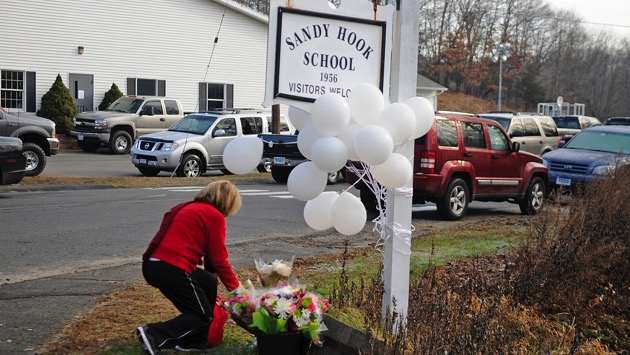
Sandy Hook families settle with Remington marking first time gun maker is held liable for mass shooting

Sandy Hook families settle with Remington marking first time gun maker is held liable for mass shooting
Cloe Poisson/Tribune News Service via Getty Images via Getty Images

(NEW YORK) — Remington Arms agreed Tuesday to settle liability claims from the families of five adults and four children killed in the massacre at Sandy Hook Elementary School, according to a new court filing, marking the first time a gun manufacturer has been held liable for a mass shooting in the U.S.

The settlement comes nearly eight years after the families sued the maker of the Bushmaster XM15-E2S semiautomatic rifle that was used in the 2012 mass shooting in Newtown, Connecticut.

More details will be announced at a news conference from the families.

On Dec. 14, 2012, Adam Lanza, 20, forced his way into Sandy Hook Elementary School, and in the course of 264 seconds, fatally shot 20 first-graders and six staff members.

The rifle Lanza used was Remington’s version of the AR-15 assault rifle, which is substantially similar to the standard issue M16 military service rifle used by the U.S. Army and other nations’ armed forces, but fires only in semiautomatic mode.

The families argued Remington negligently entrusted to civilian consumers an assault-style rifle that is suitable for use only by military and law enforcement personnel and violated the Connecticut Unfair Trade Practices Act through the sale or wrongful marketing of the rifle.

Remington, which filed for bankruptcy protection in July 2020, had argued all of the plaintiffs’ legal theories were barred under Connecticut law and by a federal statute — the Protection of Lawful Commerce in Arms Act — which, with limited exceptions, immunizes firearms manufacturers, distributors and dealers from civil liability for crimes committed by third parties using their weapons.

Copyright © 2022, ABC Audio. All rights reserved.

‘SIM swap’ scams netted $68 million in 2021: FBI

‘SIM swap’ scams netted  million in 2021: FBI
Tongchai Cherdchew / EyeEm/ Getty Images

(WASHINGTON) — The FBI has warned of criminals increasingly using “SIM swap” scams in which criminals obtain cellphone SIM cards from unknowing victims and steal their personal information, including their cell phone numbers and bank account details.

These scams netted criminals $68 million in 2021 alone, the FBI said, and it received more than 1,611 complaints. From 2018 to 2020, the FBI reports, victims suffered $12 million in losses.

Criminals are able to obtain an individual’s SIM card through phishing tactics by pretending to be the victim’s mobile carrier, according to the FBI.

“Once the SIM is swapped, the victim’s calls, texts, and other data are diverted to the criminal’s device,” the FBI said. “This access allows criminals to send ‘Forgot Password’ or ‘Account Recovery’ requests to the victim’s email and other online accounts associated with the victim’s mobile telephone number.”

Alarmingly, “the criminal uses the codes to login and reset passwords, gaining control of online accounts associated with the victim’s phone profile,” the FBI said.

The FBI urged the public to be aware of suspicious emails and not to advertise financial ownership in cryptocurrency or other financial assets.

Copyright © 2022, ABC Audio. All rights reserved.

San Francisco school board recall continues to put political spotlight on education

San Francisco school board recall continues to put political spotlight on education
Stella/Getty Images

(SAN FRANCISCO) — As school board meetings across the nation become increasingly contentious, parental pushback over COVID-19 related regulations and virtual learning has brought things to a head in San Francisco. There, voters are headed to the ballot box Tuesday to decide the fate of three school board members in an unprecedented recall election.

San Francisco School Board President Gabriela López and board members Faauuga Moliga and Alison Collins could all be recalled Tuesday.

The recall effort began in January of last year as tensions rose during the pandemic with parents claiming board members misplaced priorities, focusing their attention on social issues rather than pandemic reopening strategies at a time when many other school districts were open.

In April, board members dropped their plans to rename a third of the city’s public schools honoring historical figures linked to injustices following backlash from parents. The board said it would revisit the plan after students returned to in-person learning.

“They would spend the first seven hours talking about renaming schools or they would spend the first seminar talking about whether a gay dad was diverse enough to be on the Parent Advisory Council,” Autumn Looijen, campaign co-lead at Recall the SF School Board, told ABC News. “These things are important. But when you’re facing this urgent crisis, they’re not what you should be focusing on.”

Each member will be voted on individually and it only takes a simple majority for the recall to be successful. If the recall goes through, San Francisco Mayor London Breed, who backs the recall, will be in charge of appointing replacements to serve out their remaining terms until an election is held for the three positions in November.

The recall is energizing an influx of voters. As of Monday, more than 500,000 mail-in ballots were issued and more than 115,100 ballots were returned, according to the San Francisco Board of Elections.

Among those voting are noncitizens, who are eligible to vote in local school board elections in San Francisco.

In this election, noncitizens in San Francisco are taking advantage of that right more than ever. At least 258 noncitizens are eligible to vote and over 120 have already cast their ballots in this historic election. That’s a significant increase from the previous school board election in 2020, when only 31 noncitizens voted.

However, it’s not just those that live, work and have children in San Francisco getting involved in support of the recall. Financial documents show the election has largely been funded by donations from big donors who don’t have children in the public school district.

Campaign finance records show some of the biggest financial contributors are 95-year-old billionaire Arthur Rock and PayPal COO David Sacks, who contributed close to $400,000 and more than $74,000, respectively.

The large contributions from the super-wealthy are a sticking point for many against the recall.

“Everyone who is following this campaign knows that billionaires are trying to buy out public education outright,” Frank Lara, executive vice president of United Educators of San Francisco, said in an ad encouraging people to vote “No” in Tuesday’s election.

The recall efforts continue to thrust the topic of education into the spotlight as it increasingly becomes integrated into political playbooks. Virginia Gov. Glenn Youngkin seized on the issue during his successful run for governor following comments from Democratic gubernatorial candidate Terry McAuliffe that parents shouldn’t be telling schools what to teach during a debate.

It is a trend that is not lost on Collins as she reflects on how she got to the point of fighting for her job.

“Honestly, I think that’s part of a national trend that we’re seeing. There’s an unprecedented number of recalls and also just outrage campaigns happening around school boards,” Collins said to ABC News.

In 2022, 25 school board recall efforts are being launched against 66 officials nationwide, according to data tracked by Ballotpedia. There are six in California alone. It follows a year where more than twice the average of recalls were launched at 92, according to Ballotpedia.

Now, López, Moliga and Collins wait for polls to close and votes to be tallied on an election viewed as another referendum on strict COVID policies heading into the midterms.

Tuesday’s election is the first time since 1983 that San Francisco voters are considering removing an elected official from office, which is when then-Mayor Dianne Feinstein survived the recall vote.

Looijen and fellow parent Siva Raj’s efforts, which started around a kitchen table last year, are showcasing the new avenues parents are taking when it comes to their children’s academic futures after some say virtual learning upended student achievement.

“I think there’s a common thread that public education is a vital government service. It’s one of the critical public services that we expect in any of these situations. And when you take that away, you will have angry, frustrated parents. It’s guaranteed,” Raj said.

Copyright © 2022, ABC Audio. All rights reserved.

New storm to bring possible severe weather toward South, Midwest

New storm to bring possible severe weather toward South, Midwest
DBenitostock/Getty Images

(NEW YORK) — It was a wild weekend along the East Coast, which had record high temperatures on Saturday and then up to a half-foot of snow in some areas on Sunday.

Bitter cold followed the snow to the region Monday where wind chills reached the single digits and even below zero for parts of the Northeast.

The freezing temperatures will last into Tuesday and then things will begin to warm up.

By mid-week, the attention will turn to a new storm moving from the west, with severe weather possible in the South from Texas Louisiana.

Damaging winds, hail and a few tornadoes are possible on Wednesday into Thursday from Dallas to Birmingham, Alabama. To the north, an icy mix of sleet and freezing rain is expected from Oklahoma to Indiana as well.

Snow is expected from Colorado to Michigan, which had up to a foot of snow already this week.

Copyright © 2022, ABC Audio. All rights reserved.

American Airlines flight forced to divert after passenger tries to open cockpit door

American Airlines flight forced to divert after passenger tries to open cockpit door
Jetlinerimages/Getty Images

(NEW YORK) — An unruly passenger attempted to enter the cockpit of an American Airlines plane on Sunday, forcing the scheduled flight from Los Angeles to Washington, D.C., to divert to Kansas City, the airline said.

“He’s trying to get in the cockpit,” the pilot told air traffic controllers. “We’ve got four passengers now trying to contain this gentleman.”

According to accounts from those on board, passengers held the man and eventually a flight attendant used a coffee pot to subdue him as the plane descended.

“We have two armed people on board that are securing him right now,” the pilot explained.

American Airlines said in a statement that “the flight landed safely at MCI at 2:28 p.m. local time, and law enforcement was requested to meet the flight on arrival.”

“We’re grateful to our crew members, who are consistently dedicated to the safety and care of our customers and who handled the circumstances with the utmost skill and professionalism,” the airline added.

The FBI in Kansas City confirmed the man had been taken into custody, but was unable to comment further due to the “ongoing matter.”

Authorities have not released his identity.

Sunday’s incident is just the latest in a troubling spike of unruly passenger cases with airlines reporting a staggering 6,375 reports of misconduct to the Federal Aviation Administration (FAA) since January 2021.

The agency is still enforcing its zero-tolerance policy for in-flight disruptions which could lead to fines as high as $52,500 and up to 20 years in prison.

In November, the FAA revealed some unruly passengers could start to face criminal prosecution after establishing an information-sharing protocol with the Department of Justice.

Copyright © 2022, ABC Audio. All rights reserved.

Judge says he’ll dismiss Sarah Palin’s libel suit against New York Times

Judge says he’ll dismiss Sarah Palin’s libel suit against New York Times
iStock/nirat

(NEW YORK) — A federal judge in New York said on Monday that he will dismiss former Alaska Gov. Sarah Palin’s libel suit against the New York Times, but only after the jury now deliberating returns a verdict.

Deliberations in the case in U.S. District Court in Manhattan began late Friday and continued Monday.

Without the jury present in court, Judge Jed Rakoff told the attorneys in the trial that he has decided to dismiss the case because Palin had not met the high standard of showing that The Times had acted with actual malice when it published an erroneous editorial that erroneously linked Palin’s political action committee to a mass shooting.

In explaining his decision to dismiss the case, Rakoff said the inevitable appeal would benefit from knowing how the jury deliberations turned out.

Palin, 58, sued The Times in 2017, roughly nine years after she was tapped to be Sen. John McCain’s GOP vice presidential nominee, claiming the newspaper deliberately ruined her burgeoning career as a political commentator and consultant by publishing an erroneous editorial that defamed her.

The editorial that prompted the lawsuit was published just days after a gunman opened fire on GOP politicians practicing for a congressional charity baseball game in a Washington, D.C., suburb, injuring six, including Republican Rep. Steve Scalise.

The Times’ editorial board wrote on June 14, 2017, that prior to the 2011 Arizona mass shooting that killed six people and left then-Arizona Rep. Gabby Giffords with a traumatic brain injury, Palin’s political action committee had fueled a violent atmosphere by circulating a map that put the electoral districts of Giffords and 19 other Democrats under stylized crosshairs.

Two days later, The Times published a correction saying the editorial had “incorrectly described” the map and “incorrectly stated that a link existed between political rhetoric and the 2011 shooting.”

During the trial in U.S. District Court in Manhattan, Palin portrayed herself as the biblical David going up against the Philistine giant Goliath with just a slingshot. Palin, in her testimony, accused The Times of deliberately fabricating lies to sully her reputation.

“It was devastating to read a false accusation that I had anything to do with murder,” Palin testified. “I felt powerless — that I was up against Goliath. The people were David. I was David.”

During the trial, which was delayed for several days due to Palin testing positive for COVID-19, The Times former editorial page editor, James Bennet, testified that while he was responsible for the erroneous information in the editorial, it was an honest mistake and that he meant no harm.

“I’ve regretted it pretty much every day since,” testified Bennet, who resigned from his job in June 2020 over publishing a highly criticized op-ed by U.S. Sen. Tom Cotton, R-Arkansas, advocating a military response to civic unrest in American cities.

The jury in Palin’s case was instructed to decide whether Bennet acted with “actual malice” or with “reckless disregard for the truth” when he inserted the disputed information into the editorial.

In his closing argument, The Times lawyer David Axelrod told the jury the case was “incredibly important because it’s about freedom of the press.”

Axelrod said the First Amendment protects journalists “who make an honest mistake” when they write about a person like Sarah Palin.

“That’s all this was about — an honest mistake,” said Axelrod, adding that Palin’s lawsuit made no claims that she was deprived of income because of the editorial.


Copyright © 2022, ABC Audio. All rights reserved.

Jury seated in federal hate crimes trial of 3 men convicted of murdering Ahmaud Arbery

Jury seated in federal hate crimes trial of 3 men convicted of murdering Ahmaud Arbery
Mint Images/Getty Images

(BRUNSWICK, Ga.) — A jury was seated and opening statements got underway Monday in the federal hate crimes trial of three white Georgia men stemming from the murder of Ahmaud Arbery a 25-year-old Black man who was out for a jog in 2020 when he was chased and gunned down.

The 16 jurors, including four alternates, were empaneled on Monday morning following a lengthy selection process that started on Feb. 7. The jury is comprised of eight whites, three Blacks and one Hispanic. Alternates are three white members and one Pacific Islander.

Opening statements in the high profile case against 64-year-old retired police officer Gregory McMichael, his 36-year-old son Travis McMichael and their neighbor William “Roddie” Bryan, 52, commenced on Monday afternoon.

Prosecutor Bobbi Bernstein began her presentation by apologizing to the jury for having to read to them racial slurs and descriptions she said Travis McMichael used in text messages and on social media to describe Black people. Bernstein told the jury they will hear evidence that all three men used racially-charged language when discussing Black people in private.

Bernstein also said she will present evidence that Bryan told investigators that after Travis McMichael shot Arbery he allegedly heard him yell a racist epithet at the victim as he lay dying on the pavement, evidence that was excluded from the defendants’ state trial in which they were all convicted of murder and sentenced to life in prison.

Bernstein told the panel that while it is not illegal to use racial slurs, “these slurs can provide you with evidence as to why a defendant did what he did.”

She told the jurors that if Arbery had been white, “he would have been home in time for Sunday dinner.” Instead, she said, Arbery spent his last moments of life “bleeding to death, alone and scared in the middle of the street.”

Defense attorney Amy Lee Copeland attempted to distance herself from her client, Travis McMichael, conceding in her opening statement that the younger McMichael left a digital footprint of using “words that I don’t use and has opinions I don’t share.”

“But these words are not a crime,” Copeland said.

Gregory McMichael’s attorney, A.J. Balbo, said his client was not “an angel,” but was also not a racist. Balbo said Arbery was not followed because he was a Black man, but because he was “the man” the McMichaels recognized in security videos trespassing at a neighbor’s home that was under construction.”

“The killing of Ahmaud Arbery was a tragic and horrible event that didn’t need to happen and could have been prevented in so many ways,” Balbo told the jury.

Bryan’s attorney, Pete Theodocion, painted his client as someone who doesn’t look at people through a racial prism, saying there is no excuse for racism. He asked the jury not to look at evidence against the other defendants and use it against Bryan.

The trial in U.S. District Court in Brunswick, Georgia, is expected to last seven to 10 days.

All three men are charged with one count of interference with Arbery’s civil rights and with one count of attempted kidnapping. The McMichaels were also charged with one count each of using, carrying, and brandishing a firearm, and Travis McMichael faces an additional count of discharging a firearm during and in relation to a crime of violence.

If convicted, the men face a maximum sentence of life in prison.

The McMichaels and Bryan were convicted last year on state murder charges in Arbery’s death. They were all sentenced to life in prison.

Arbery was fatally shot after the McMichaels saw him jogging in their Satilla Shores neighborhood near Brunswick, Georgia. They said they assumed Arbery was a burglar, armed themselves and chased him in their pickup truck. The McMichaels’ neighbor, Bryan, joined the pursuit, blocking the victim’s escape path with his truck and recorded video on a cellphone of Travis McMichael fatally shooting Arbery three times with a shotgun during a struggle.

If convicted in the federal case, the men must first serve their state sentences before being transferred to federal prison.

In the now-defunct plea deal filed with the court on Jan. 30, Gregory and Travis McMichael agreed to plead guilty to count one of an indictment alleging they interfered with Arbery’s right to enjoy the use of a public road he was jogging on “because of Arbery’s race and color.”

In exchange for the guilty pleas, prosecutors were to dismiss the other charges and allow the McMichaels to serve the first 30 years of confinement in federal prison before being transferred back to the Georgia Department of Corrections to serve out the remainder of their state sentences.

The same plea agreement was not given to Bryan.

Judge Lisa Wood rejected the McMichaels’ plea deal after Arbery’s parents, Wanda Cooper-Jones and Marcus Arbery, strongly objected and claimed it was forged without their consent. Assistant U.S. Attorney General Kristen Clarke said in a statement that prosecutors were in constant communication with the Arbery family’s attorneys and had been assured the family would not object to the agreement.

Wood claimed she turned down the deal because it would have locked her into the three-decade federal prison sentence, saying she didn’t know if that was “the precise, fair sentence in this case.”

Following Wood’s decision, Gregory and Travis McMichael, who are being represented by court-appointed public defenders due to financial hardship, withdrew their guilty pleas and opted to go to trial.


Copyright © 2022, ABC Audio. All rights reserved.

Jury seated in federal hate crimes trial of three men convicted of murdering Ahmaud Arbery

Jury seated in federal hate crimes trial of 3 men convicted of murdering Ahmaud Arbery
Mint Images/Getty Images

(BRUNSWICK, Ga.) — A jury has been seated in the federal trial of three white Georgia men charged with hate crimes stemming from the murder of Ahmaud Arbery, a 25-year-old Black man who was out for a jog in 2020 when he was chased and gunned down.

The 16 jurors, including four alternates, were empaneled on Monday morning following a lengthy selection process that started on Feb. 7.

Opening statements in the high profile case against retired police officer Gregory McMichael, his 36-year-old son Travis McMichael and their neighbor William “Roddie” Bryan, 52, are set to begin on Monday afternoon.

The jury is comprised of eight whites, three Blacks and one Hispanic. Alternates are three white members and one Pacific Islander.

The trial in U.S. District Court in Brunswick, Georgia, is expected to last seven to 10 days.

All three men are charged with one count of interference with Arbery’s civil rights and with one count of attempted kidnapping. The McMichaels were also charged with one count each of using, carrying and brandishing a firearm, and Travis McMichael faces an additional count of discharging a firearm during and in relation to a crime of violence.

If convicted, the men face a maximum sentence of life in prison.

The McMichaels and Bryan were convicted last year on state murder charges in Arbery’s death. They were all sentenced to life in prison.

Arbery was fatally shot after the McMichaels saw him jogging in their Satilla Shores neighborhood near Brunswick, Georgia. They said they assumed Arbery was a burglar, armed themselves and chased him in their pickup truck. The McMichaels’ neighbor, Bryan, joined the pursuit, blocking the victim’s escape path with his truck and recorded video on a cellphone of Travis McMichael fatally shooting Arbery three times with a shotgun during a struggle.

If convicted in the federal case, the men must first serve their state sentences before being transferred to federal prison.

In the now-defunct plea deal filed with the court on Jan. 30, Gregory and Travis McMichael agreed to plead guilty to count one of an indictment alleging they interfered with Arbery’s right to enjoy the use of a public road he was jogging on “because of Arbery’s race and color.”

In exchange for the guilty pleas, prosecutors were to dismiss the other charges and allow the McMichaels to serve the first 30 years of confinement in federal prison before being transferred back to the Georgia Department of Corrections to serve out the remainder of their state sentences.

The same plea agreement was not given to Bryan.

Judge Lisa Wood rejected the McMichaels’ plea deal after Arbery’s parents, Wanda Cooper-Jones and Marcus Arbery, strongly objected and claimed it was forged without their consent. Assistant U.S. Attorney General Kristen Clarke said in a statement that prosecutors were in constant communication with the Arbery family’s attorneys and had been assured the family would not object to the agreement.

Wood claimed she turned down the deal because it would have locked her into the three-decade federal prison sentence, saying she didn’t know if that was “the precise, fair sentence in this case.”

Following Wood’s decision, Gregory and Travis McMichael, who are being represented by court-appointed public defenders due to financial hardship, withdrew their guilty pleas and opted to go to trial.

Copyright © 2022, ABC Audio. All rights reserved.