(NEW YORK) — Officials have identified a set of human remains that surfaced earlier this year in Lake Mead, as the reservoir deals with a historic drought.
The remains, found May 7 at Callville Bay, on the Nevada side of the lake, are one of several that have been uncovered in the lake since May 1, when human remains were found in a barrel.
The Clark County coroner identified the remains as Thomas Erndt, who is believed to have drowned over two decades ago.
County officials said the remains were identified through investigative information, DNA analysis and reports of the original incident.
Erndt, a 42-year-old from Las Vegas, reportedly drowned on Aug. 2, 2002, although officials said Wednesday that the official cause and manner of death are undetermined.
The Las Vegas Review Journal published a death notice on Aug. 8, 2002, that said Erndt jumped from a boat, was missing and presumed drowned, according to an article from the newspaper Wednesday.
The remains, described by officials as “skeletal,” were found by two sisters, Lindsey and Lynette Melvin, who said they were paddleboarding on the lake because the water was too shallow to go snorkeling.
The pair told Las Vegas ABC affiliate KTNV-TV that they found the remains when they stopped to explore a sand bar that they said had been underwater before the drought lowered water levels in the lake.
The Melvins said they initially thought the skeletal remains were from a big horn sheep. However, once they saw a human jawbone with teeth still attached, they reported it to the National Park Service.
“We just really hope that the family of that person finally gets answers and hope their soul is laid to rest peacefully,” Lynette Melvin told KTNV in May.
Authorities have uncovered human remains in Lake Mead five times since May. The first set, found in a barrel on May 1, had a gunshot wound and is being investigated as a homicide, officials said. The remains belonged to someone who died in the mid-1970s to early ‘80s based on his clothing and footwear, police said.
Following the discovery of Erndt’s remains on May 7, officials uncovered partial remains on July 25 near Swim Beach on the Nevada side of the lake’s west end, according to a statement from the National Park Service. A second set of partial remains was discovered in the same area on Aug. 7.
Officials are still working to determine if these remains are related.
The latest discovery of remains was on Aug. 15, found again at Swim Beach.
Photography by Keith Getter (all rights reserved)/Getty Images
(NEW YORK) — Torrential rain has pounded Mississippi, sparking flooding and forcing evacuations from an assisted living home and a day care.
Dozens of seniors were evacuated Wednesday from the Peach Tree Village assisted living facility in Brandon, Mississippi, just outside of Jackson, after fast-moving waters rose halfway up the doors, officials said. Firefighters pulled residents to safety by using ropes to cross the waist-deep waters.
Several towns saw 5 to 10 inches of rainfall on Wednesday. Jackson set a new daily record with 5.05 inches.
Parts of Louisiana and Mississippi are expected to get hit with more rain on Thursday, but it won’t be as widespread as Wednesday’s deluge.
A flood watch remains in effect Thursday from eastern Texas to the western tip of the Florida panhandle.
(NASHVILLE, Tenn.) — Tennessee’s “trigger” law banning abortions went into effect Thursday, making providing abortions a felony in the state.
The Tennessee near-total abortion ban, which was enacted in 2019, criminalizes performing or attempting to perform an abortion, only making exceptions for cases where it is necessary to prevent death or serious and permanent bodily injury to the mother, according to the law.
Trigger laws are written to go into effect after an event occurs, in this case the law was written to go into effect 30 days after a Supreme Court ruling that overturns Roe v. Wade, overturning federal protections for abortion rights, in whole or in part. While the Supreme Court released its opinions in June, the formal judgement was issued by the court in July.
In a letter to the Tennessee Code Commission last month, the state’s attorney general, Herbert Slatery III, announced the effective date of the law, called the Human Life Protection Act, is Aug. 25.
Under the law, performing or attempting to perform an abortion is a Class C felony.
For an abortion to be legal under the law’s exception, it must be performed or attempted by a licensed physician, the physician must determine the abortion was necessary to prevent the death or serious injury of the pregnant woman and the abortion must provide the best opportunity for the fetus to survive, unless that threatens the life of the pregnant woman or could cause serious injury, according to the law.
Under the ban, abortions cannot be authorized based on a “claim or diagnosis” relating to mental health, including claims that the woman would “engage in conduct that would result in her death or substantial and irreversible impairment of a major bodily function,” according to the law.
The law does not criminalize women or pregnant people seeking an abortion.
Tennessee’s heartbeat law was already in effect, as of June 28, banning all abortions after embryonic cardiac activity is detected, which generally occurs around six weeks, before many women or pregnant people know they are pregnant.
(LOS ANGELES) — A California man has pleaded guilty to importing wild animals into the country, federal prosecutors in Los Angeles announced Wednesday.
Prosecutors said Jose Manuel Perez, 30, smuggled more than 1,700 wild animals, including 60 reptiles, worth $739,000 into the U.S. and was arrested at the U.S.-Mexico border in February. Officials found reptiles hidden in his clothing in small bags, prosecutors said.
When he was caught crossing into the U.S., federal agents said he had about 60 reptiles on him — including some in his pants.
He pleaded guilty to two counts of smuggling goods into the country and one count of wild trafficking, according to the U.S. Attorney’s Office in Los Angeles.
Perez, who also went by the name Julio Rodriguez, used social media to arrange and smuggle animals into the U.S. between January 2016 and February 2022, federal prosecutors said.
The wildlife, which came from Mexico and Hong Kong, included Yucatan box turtles, baby crocodiles, Mexican box turtles and beaded lizards, federal prosecutors said, and he didn’t declare them through U.S. Customs or obtain the required permits through the Convention on the International Trade of Endangered Species of Wild Fauna and Flora (CITES).
Perez worked with others in his smuggling operation, according to federal prosecutors. His sister, Stephany Perez, 26, was allegedly involved and is scheduled to go on trial in February, prosecutors said.
Jose Manuel Perez faces a maximum of 20 years in federal prison for each count of smuggling and up to five years in prison for wildlife trafficking, according to federal prosecutors.
His attorney did not immediately provide a comment to ABC News.
(UVALDE, Texas) — In a March 3, 2021, school board meeting, Uvalde police chief Pete Arredondo, raised concerns about security issues in schools.
Uvalde school board officials unanimously voted Wednesday to fire Pete Arredondo, the school district’s police chief, exactly three months after the school shooting that killed 19 students and two teachers.
The termination is effective immediately.
Arredondo was not in attendance at his termination hearing out of concerns over his safety, his attorney, George Hyde, said in a 17-page statement released shortly before the community gathered Wednesday evening.
Hyde claimed that the district did not file proper legal procedures in proceeding with disciplinary action and that follow-up requests for access to district complaints or investigations “have been ignored by the district,” calling the proceedings an “illegal and unconstitutional public lynching.”
Arredondo has been the target of criticism for the delayed response to the May 24 tragedy.
School officials have continued to face pressure to hold officers accountable for the 77 minutes it took before law enforcement breached a classroom door and killed the 18-year-old gunman.
The Uvalde Consolidated Independent School District recommended that Arredondo be fired. The Uvalde school board canceled its July 23 special session to consider the district’s recommendation “in conformity with due process requirements, and at the request of his attorney.”
School board members agreed in an Aug. 15 meeting to hire outside attorneys ahead of the hearing.
Parents and community members have called on officials to fire Arredondo immediately, with some calling for the firing of other members of Uvalde’s school district police force who were present during the shooting.
According to an investigative report by the Texas House of Representatives into the events of May 24, the school district’s written active shooter plan assigned Arredondo “to assume command and control” during an active shooter incident.
“But as events unfolded, he failed to perform or to transfer to another person the role of incident commander,” the report from the state House read. “This was an essential duty he had assigned to himself in the plan mentioned above, yet it was not effectively performed by anyone.”
The report goes on to describe the general consensus from witnesses that officers on the scene either “assumed that Chief Arredondo was in charge, or that they could not tell that anybody was in charge of a scene described by several witnesses as ‘chaos’ or a ‘cluster.'”
Uvalde:365 is a continuing ABC News series reported from Uvalde and focused on the Texas community and how it forges on in the shadow of tragedy.
In an interview with The Texas Tribune, Arredondo said he did not consider himself the commanding officer on the scene. He has said he was not made aware of the 911 calls coming from the children in the attacked classrooms.
Arredondo has defended the police response to the incident.
“We responded to the information that we had and had to adjust to whatever we faced,” Arredondo said. “Our objective was to save as many lives as we could, and the extraction of the students from the classrooms by all that were involved saved over 500 of our Uvalde students and teachers before we gained access to the shooter and eliminated the threat.”
Fifteen months before the school shooting, Arredondo at a school board meeting mentioned some of the security issues that investigators found played critical roles in the failures connected with the May 24 massacre, including problems with police radios and school doors left open.
In other remarks, Arredondo pointed out the need for more active shooter training.
Arredondo resigned from his city council post and is currently on leave from his position as UCISD police chief.
He is calling for the board to “immediately reinstate him, with all back pay and benefits and close the complaint as unfounded,” his attorney said Wednesday.
(LOS ANGELES) — After nearly two weeks of testimony, a jury has reached a verdict in Vanessa Bryant’s invasion of privacy trial over photos taken at the scene of the 2020 helicopter crash that killed her husband, basketball star Kobe Bryant, and their 13-year-old daughter.
The jury deliberated for several hours before reaching the verdict, which is expected to be read shortly.
The federal trial began on Aug. 10, with the jury hearing from those in law enforcement, first responders and the family of the victims, including Vanessa Bryant. Attorneys gave closing statements on Tuesday and Wednesday.
Vanessa Bryant filed a lawsuit several months after the 2020 crash against Los Angeles County, alleging that first responders took graphic photos of human remains at the scene as “souvenirs” and shared them with others. She is claiming she suffered emotional distress and sued for an undisclosed amount of damages for negligence and invasion of privacy.
Kobe Bryant and their daughter, Gianna, were headed to a basketball game at his Mamba Sports Academy in Thousand Oaks along with others connected to the basketball program on Jan. 26, 2020, when the helicopter they were traveling in crashed in Calabasas. All nine people on board were killed.
Vanessa Bryant took the stand in Los Angeles federal court on Friday, telling the jury she lives in fear every day that the photos could be leaked and wants “justice for my husband and my daughter.”
Orange County financial adviser Chris Chester is also suing the county over photos taken of his wife and daughter, who were killed in the same crash. In July, U.S. District Judge John Walter decided to consolidate Bryant’s and Chester’s cases into one trial.
Chester took the witness stand on Thursday, telling the jury he was in “disbelief” after hearing reports that deputies and firefighters took and shared photos of his wife, Sarah, and their 13-year-old daughter, Payton.
“It was grief on top of grief,” he said, calling for “justice and accountability.”
Throughout the trial, the defense maintained that the photos have not surfaced online since the tragedy. Multiple county fire and sheriff’s personnel have also testified that they deleted whatever crash-site pictures they had on their cellphones.
Both Bryant’s and Chester’s lawsuits argue that the photos were shared before being deleted by first responders.
The jury was instructed that they could find either the county sheriff’s office or fire department, or both, to be liable, and that Bryant or Chester, or both, were warranted damages.
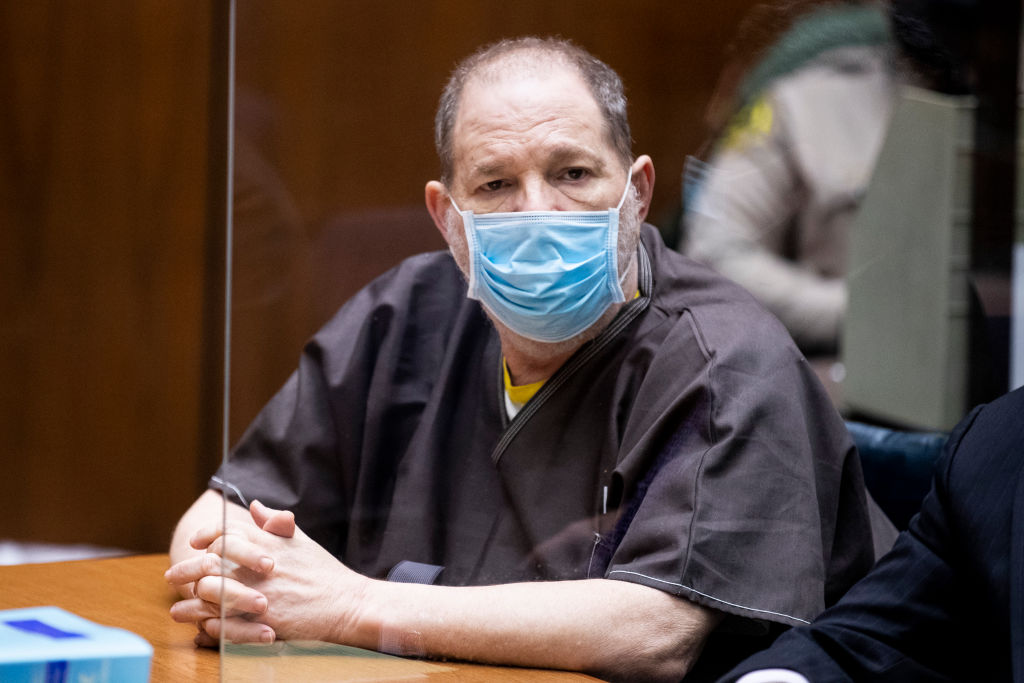
(NEW YORK) — Disgraced former Hollywood producer Harvey Weinstein has been granted an appeal in his New York sexual assault case.
The New York Court of Appeals, the state’s highest court, agreed Wednesday to hear his appeal of his 2020 sex crimes conviction in Manhattan.
Weinstein, 70, was sentenced to 23 years following a landmark trial during the #MeToo movement that found him guilty of criminal sexual assault and rape in the third degree.
He has argued certain testimony allowed at trial was improper and a juror who wrote a novel about “predatory older men” should have been disqualified.
Weinstein’s attorneys have until Oct. 18 to file a brief with the court to begin the appellate process, the docket shows.
The Appellate Division’s First Department previously upheld Weinstein’s conviction, but outgoing Chief Judge Janet DiFiore granted Weinstein’s motion for leave to file an appeal.
In a statement provided to ABC News, Harvey Weinstein said, “I am innocent of these charges, and I am so grateful to my attorneys for working hard and smart of this. Their hard work will help me prove my innocence in the end. I look forward to this opportunity to be heard by the New York Court of Appeals.”
A spokesman for Weinstein said in a statement to ABC News that the court’s decision “demonstrates that there is, in fact, merit to the appeal. There was plenty wrong with the trial and conviction and Harvey’s attorneys will do what is needed to prove his innocence of the charges.”
The Manhattan District Attorney’s office, which brought the charges against Weinstein, declined to comment Wednesday.
The sentence included 20 years for criminal sexual assault in the first degree, which stems from an accusation from former “Project Runway” production assistant Mimi Haley. It also included three years for rape in the third degree, stemming from an accusation from Jessica Mann.
Weinstein faced a minimum of probation and a maximum of four years in prison on the rape conviction, and between five and 25 years on the criminal sexual assault conviction.
He was found not guilty in that trial of the more serious charges of predatory sexual assault and of rape in the first degree.
Weinstein is currently jailed in Los Angeles awaiting trial there on sex crime charges. He faces four felony sexual assault charges for allegedly attacking two women in separate incidents in February 2013 within a day of each other.
(BEVERLY, Mass.) — A convict was indicted Wednesday in the murder of a college student who was found strangled to death more than 35 years ago, officials said.
The body of 20-year-old Claire Gravel was discovered in the woods on June 30, 1986, in Beverly, Massachusetts.
In the intervening years, authorities have interviewed dozens of witnesses and persons of interest in the cold case, Essex District Attorney Jonathan Blodgett told reporters during a press briefing Wednesday.
A grand jury indicted 63-year-old John Carey in her death Wednesday morning, Blodgett said. Carey is currently serving a 20-year sentence at a Concord prison after he was convicted in 2008 of attempting to strangle another woman to death in Massachusetts.
“For 36 years, Claire Gravel’s family and friends have had nothing but questions about her death,” Blodgett said. “Today, we were able to give them some of the answers.”
Evidence recovered from Gravel’s clothing “was instrumental in solving this case,” Blodgett said, noting that investigators continually review cold cases “hoping that new techniques and a fresh look would result in a breakthrough.”
Carey, who had been a person of interest in the case, will be arraigned on a first-degree murder charge at a later date, Blodgett said. It is unclear if the suspect has an attorney.
Blodgett said prosecutors have not yet speculated on a motive in Gravel’s murder, but said “we feel confident” based on the evidence presented to the grand jury “that we have the right person.”
Gravel, a student at Salem State from North Andover, was last seen alive the day before her body was found. After a night at a local bar with members of her softball team, a friend dropped Gravel off at her apartment at around 1:30 a.m. on June 29. Three workers found her body in the woods off Route 128 in Beverly on the afternoon of June 30. The medical examiner determined that she had been strangled to death.
Blodgett said he has been in touch with Gravel’s family, who expressed “relief” that a suspect has been identified in her murder.
“I want to thank everyone for their tireless and relentless pursuit of justice for Claire,” he said.
(NEW YORK) — Indiana’s new abortion law will go into effect on Sept. 15, which would ban abortion in nearly all cases with limited exceptions including rape and incest.
Indiana was the first state to pass new legislation restricting reproductive rights after Roe v. Wade was overturned on June 24.
Dr. Katherine McHugh, a practicing doctor who provides abortion services in Indiana, spoke with ABC News’ podcast “Start Here” about how her practice has been shifting following the overturning of Roe v. Wade and how the new state law will impact her practice.
START HERE: Dr. McHugh, can you just tell me about where you work and what the last couple months have been like?
MCHUGH: Yeah, absolutely. Thanks so much for having me and for taking on this issue. I am primarily in Indianapolis, although I travel all over the state of Indiana providing abortion care. And over the last two months, we have seen a real change in our patient demographic. We’ve seen an influx of patients from outside of the state, they are coming to us from other states that have already banned abortion.
And this has all been in the setting of anticipating an abortion ban in Indiana as well. So we’ve been able to increase access over the last few months and been very fortunate that we have been able to take care of a lot of people that needed healthcare and at the same time, working with collaborative networks and strengthening those referral places because we know that we will be sending our own patients away in just a few short weeks.
The patients that we’re seeing are the ones that can afford childcare, that can afford the gas money, they can afford to take time off of work. We’re also seeing much earlier patients, patients whose pregnancies are much earlier in their gestation. People are scared. People are nervous about what it means to be pregnant in a place or in a time when all of their options are not available to them. So that is probably the most common thing that I talked about with patients, is how scared they are to be pregnant.
START HERE: That makes me curious, if there’s this fear of pregnancy from women seeking abortions, I’m wondering about the fears of women who are pregnant who aren’t seeking abortions or don’t know if they want an abortion. Is it getting more complicated, for example, for women I was mentioning earlier, who are suffering miscarriages or other abnormalities early on?
MCHUGH: That has been a complicated topic for physicians and certainly a very challenging experience for patients. Patients who have a miscarriage that is diagnosed, but the fetus still has a heartbeat– that is very complicated in states like Kentucky and Ohio that have what they’re called heartbeat bans, which means that they can’t have an abortion after the time that you can see fetal cardiac activity. So that means that even if the patient is bleeding, even if the cervix is open, and there is no way that the pregnancy is able to continue, they cannot interfere, the physicians cannot interact.
START HERE: Oh, there’s still technically a heartbeat.
MCHUGH: There is a heartbeat even though there is not a viable pregnancy. I’ve seen several people coming from surrounding states where the physicians in those states are unclear enough about the legality of interfering in what is, in the legal sense, a continuing pregnancy even though medically speaking it is not a viable pregnancy, that the patients have to come to Indiana where that doesn’t exist yet. It doesn’t have that same legal impact here in Indiana.
I saw a patient recently who came to me from out-of-state and she had a situation where she was pregnant, and she was bleeding so she went to an emergency room and had an ultrasound to evaluate what was going on. What the doctors there saw was that her pregnancy was inside the uterus, so it wasn’t an ectopic pregnancy, but she had significant bleeding and the cervix had started to open. The pregnancy already had and still had a heartbeat. She was about seven weeks pregnant.
So at this point the doctors were faced with a really challenging moment where they didn’t know what they were allowed to do legally. Could they offer what is standard of care, which would be to offer some sort of termination of this pregnancy? And they decided they could not. The reason that this situation would warrant terminating a pregnancy is called an inevitable abortion or a pregnancy that is not able to be continued. And in the intervening time, the woman or the pregnant person can lose a lot of blood and become infected, can get very very sick and can even die from this.
START HERE: So it feels like you’re sentencing this woman to, best-case scenario, a very painful miscarriage, worst-case scenario is much worse than that. And those are the two options.
MCHUGH: Exactly right. And so this is a very common scenario we diagnose inevitable abortion all the time. For this particular patient, she was able to come to Indiana, she saw me in one of my clinics, and we were able to provide that pregnancy termination for her, save her uterus and potentially save her life. But in her home, state physicians did not feel that they were legally able to do that. So they sent her away.
START HERE: Wow, I see and then they come to you because right now it’s legal where you are. But on September 15th, I believe, this new law goes into effect in Indiana. It outlaws virtually all abortions that are not the result of rape or incest or that endanger the life of the mother. Even in those circumstances, though, there are timelines to deal with. And I found this interesting, there are also timelines for fetal abnormalities, right, what happens in those situations?
MCHUGH: Yeah, great question. That part of the new law echoes our previous laws, where we had the ability to terminate a pregnancy up to 22 weeks. However, what’s different is under the new law, if the government doesn’t agree with the medical opinion that this was a lethal anomaly, suddenly instead of it just you know, quote unquote being a medical decision that is controversial, now it’s a felony. So this becomes much more complicated to navigate from a medical perspective. You know, it’s already very complicated and very emotional to tell a patient with a desired pregnancy that the baby they’re carrying is not going to live, that they are carrying a baby with profound anomalies that is not able to live outside. That is a devastating day for everyone involved.
And now we are also faced with telling patients that offering them their options which include abortion, which is a compassionate way to treat this pregnancy and this fetal anomaly, and yet if the government does not agree with our medical diagnosis or medical plan of care, treatment plan, then we have the threat of a felony charge which carries six years in jail.
START HERE: So if the stakes are that high for someone like you all of a sudden, what are you going to do starting September 15th?
MCHUGH: After this ban goes into effect, I will no longer be able to provide abortion care in Indiana. This is an integral part of my practice and reason for going into obstetrics and gynecology and so I will move that part of my practice out of state.
START HERE: Oh, you’re gonna have to like move your practice because of this?
MCHUGH: Yeah, the closest state to me is Illinois, so I will work to find a place in Illinois where I can work. The rest of my career will also adjust, to accommodate for the travel and so forth.
START HERE: It’s the moment that your state becomes one of the states that you have been helping up until now.
MCHUGH: Exactly right.
START HERE: Dr. Katie McHugh in Indiana, for now, thank you so much.
(LOS ANGELES) — After closing arguments concluded, the jury began deliberations Wednesday in Vanessa Bryant’s invasion of privacy trial over photos taken at the scene of the 2020 helicopter crash that killed her husband, basketball star Kobe Bryant, and their 13-year-old daughter, Gianna.
Bryant and Orange County financial adviser Chris Chester, whose wife and daughter were also killed in the crash, are suing Los Angeles County for negligence and violation of privacy, alleging that first responders took graphic photos of human remains at the scene as “souvenirs” and shared them with others.
Bryant filed the lawsuit several months after the 2020 crash and U.S. District Judge John Walter in July decided to consolidate Bryant’s and Chester’s cases into one trial.
The judge instructed the jury to consider liability and any damages due in the case separately; meaning one or both the Los Angeles Fire Department and the Los Angeles Sheriff’s Department can be found liable, and one or both Bryant and Chester can be found to warrant damages.
Jury deliberations officially began at 11:24 a.m. local time. Judge Walter asked attorneys for both sides to remain in the building. If a decision is reached, Walter said he wants to move quickly with the proceedings.
Throughout the trial, the defense maintained that the photos have not surfaced online since the tragedy. Multiple county fire and sheriff’s personnel have also testified that they deleted whatever crash-site pictures they had on their cellphones.
Both Bryant’s and Chester’s lawsuits argue that the photos were shared before being deleted by first responders.
Bryant is claiming she suffered emotional distress and is suing for an undisclosed amount of damages.
Kobe and Gianna Bryant were headed to a basketball game at his Mamba Sports Academy in Thousand Oaks, California, along with others connected to the basketball program on Jan. 26, 2020, when the helicopter they were traveling in crashed north of Los Angeles. All 9 people on board were killed.