
How K-12 schools are planning for monkeypox outbreaks as a new year starts

How K-12 schools are planning for monkeypox outbreaks as a new year starts
State and County Health Departments

(NEW YORK) — As children and teens continue to head back to classrooms, questions are arising about how much of a risk K-12 schools are when it comes to the spread of monkeypox.

More than 18,400 cases have been diagnosed in the United States since mid-May, as of Wednesday, according to the Centers for Disease Control and Prevention.

Most of the cases have occurred among men who have sex with men, a group that includes people who identify as gay, bisexual, transgender and nonbinary. However, the CDC has said anyone — regardless of sexual orientation — is at risk of monkeypox if they come into close, personal contact with a patient.

Of those cases, 31 have been in children, according to state officials from across the country. Texas has the most confirmed pediatric cases with nine followed by California with six and Georgia with three.

Although the risk to most children is low, school officials are keeping an eye out for possible infections.

“So, superintendents are obviously aware of monkeypox,” Noelle Ellerson Ng, associate executive director of advocacy and governance at AASA, The School Superintendents Association, told ABC News.

Ng said most schools she’s spoken with are not currently creating new health guidelines to address monkeypox because they’ve already had policies and strategies in place for communicable diseases, many most recently used to address COVID-19.

“So, it’s making sure those are current, up-to-date, that they know what they are, that their school health staff are versed in them,” she said. “And then just diligence on behalf of the administrative team and the health team to know what local and state health policy guidance is and then topping off with the CDC guidance and recommendations.”

Two weeks ago, ahead of most children heading back to school, the CDC released monkeypox guidance for K-12 schools, day cares and other settings serving children and adolescents.

The federal health agency said the disease risk to most Americans under age 18 is low but that schools “should follow their everyday operational guidance that reduces the transmission of infectious diseases.” Examples include staying home when sick, proper hand-washing etiquette and “routine cleaning and disinfection practices.”

The CDC also recommends schools consult their local or state health departments for questions about what to do if someone develops symptoms and testing for monkeypox, as well as notifying parents if a case is diagnosed among a student or an adult.

Linda Mendonça, president of the National Association of School Nurses, said the guidance has been especially helpful for school nurses, who are often required to relay health information to the community.

“It certainly is helpful to have that, and it provides us talking points and information to share with our school communities,” Mendonça told ABC News. “For instance, letting you know, parents know to keep children home when they’re sick; to make sure we’re washing hands cleaning and disinfecting and doing all of those things that we would do for pretty much any kind of infectious situation that we might have in the school setting.”

Already some schools have announced they’re following these policies. On Monday, Fort Bend Independent School District in Texas announced a high school student had tested positive for monkeypox.

The district said it will keep up with the cleaning protocols set in places for schools, including using UV-C disinfecting lamps — which use ultraviolet light — in classrooms and other facilities.

Last week, after two elementary school students tested positive in Newton County School System in Georgia, the district said parents were notified and parents considered close contacts would receive communication on next steps.

“NCSS facilities employees will thoroughly clean and disinfect classrooms and other areas at both schools this afternoon to ensure ongoing safe and healthy learning and work environments for students and staff. Both schools will be open tomorrow,” the district said in a statement.

According to the CDC, as of Aug. 21, out of 151 cases of monkeypox in those under the age of 20, only 17 have been in those aged 15 and younger.

Dr. Perry Halkitis, dean of Rutgers School of Public Health, told ABC News that while there is a risk of transmission from touching infected bedding, towels or clothing of a monkeypox patient or contaminated surfaces, the riskiest mode of transmission is sexual encounters with someone who is positive or prolonged skin-to-skin contact with an infected person.

“Of the children out there, I’m most concerned about adolescents who begin to engage in sexual behavior,” he said. “It usually begins like [ages] 15, 16, 17, 18. Those are the kids I would be most concerned about.”

“The parents who should be the most conscious, the most aware, the most opening conversations with their children are the ones who are potentially have children who are engaging in really intimate behaviors with others, which could lead to the transmission of monkeypox,” he added.

However, while he encourages parents to ask questions of what schools are doing to make sure kids are protected in general, he advises mothers and fathers not to panic.

“I think the more important thing I would say to these parents is let’s be aware that we’re still dealing with something called COVID-19, that there’s a new booster going to be available sometime in the fall,” Halkitis said. “Let’s talk about whether or not your child is vaccinated for that.”

Copyright © 2022, ABC Audio. All rights reserved.

North Dakota community shaken after farmer among four dead in suspected murder-suicide

North Dakota community shaken after farmer among four dead in suspected murder-suicide
kali9/Getty Images

(NEW YORK) — A small community in rural North Dakota is searching for answers after a farmer was found dead in his wheat field along with three other men in what authorities described as a murder-suicide.

The Towner County Sheriff’s Office said its deputies were dispatched to a wheat field south of Cando on Monday, after receiving a report of four unresponsive individuals. All four men had died from apparent gunshot wounds and a .357-caliber revolver was found near one of the bodies, according to the sheriff’s office.

“Evidence from the scene indicates that this incident was a murder-suicide and there is no known threat to the public,” the sheriff’s office said in a statement Tuesday.

On Wednesday, the sheriff’s office released the identities of the deceased: Douglas Dulmage, 56, of Leeds, North Dakota; Justin Bracken, 34, of Leeds, North Dakota; Richard Bracken, 64, of Leeds, North Dakota; and Robert Bracken, 59, of Cando, North Dakota.

Dulmage owned the property and lived with his wife and two daughters in nearby Leeds, a town of about 500 people. The other three men, who authorities believe are related, worked for Dulmage and were helping him harvest the wheat, according to Fargo ABC affiliate WDAY-TV.

Dulmage’s body was found in his combine harvester, according to his close friend, Pat Traynor.

“He was a pillar of the community; it’s a total devastating loss,” Traynor told WDAY. “He epitomized what it was like to be in the country, in terms of friendliness, kindness, empathy, people helping each other.”

Dulmage was also a volunteer firefighter in his hometown and a longtime member of the North Dakota Farm Bureau. He currently served as the president of the Benson County Farm Bureau.

“It is hard to understand why something like this would happen in a rural farming community,” Daryl Lies, president of the North Dakota Farm Bureau, said in a statement Wednesday. “When evil presents itself, it can be devastating but we must remember there is more good than evil in our world. Doug’s dedication to agriculture and love for his family will forever be remembered.”

The community is planning on helping the Dulmage family with harvesting the rest of the crop.

“If we could all be a bit more like Doug, the world would be a much better place,” Traynor told WDAY.

Copyright © 2022, ABC Audio. All rights reserved.

Baggage handler dies when hair gets stuck in belt loader

Baggage handler dies when hair gets stuck in belt loader
Douglas Sacha/Getty Images

(NEW ORLEANS) — A contract baggage handler unloading a Frontier flight has died after her hair became stuck in the belt loader.

The incident occurred Tuesday at approximately 10:20 p.m. at Louis Armstrong International Airport in New Orleans when the unnamed woman who was employed by GAT Airline Ground Support, which contracts with Frontier, was working to offload an inbound aircraft after it landed when her hair somehow managed to get stuck in the belt loader.

The circumstances surrounding the incident are unclear but GAT CEO Mike Hough confirmed to ABC News in a statement that the female victim was severely injured and subsequently died as a result of the incident.

“What we know so far is that her hair became entangled with the machinery of the belt loader,” said Hough. “We are heartbroken and are supporting her family and her friends as best as we are able.”

ABC News’ New Orleans affiliate WGNO-TV obtained a statement from Kevin Dolliole, director of Aviation for Louis Armstrong New Orleans International Airport, regarding the incident.

“We are deeply saddened about the tragic loss of GAT Airline Ground Support team member,” Dolloile said. “The Louis Armstrong New Orleans International Airport extends its sincere condolences to her family and friends, and also to our partners at GAT and Fontier Airlines. [The victim] was a part of our Airport family, and we will continue to support one another in any way we can during this trying time.”

Hough asked people to send well wishes to the victim’s family as well as to everyone at their New Orleans station in the aftermath of the accident.

Copyright © 2022, ABC Audio. All rights reserved.

Boston Children’s Hospital receives bomb threat following harassment over transgender care

Boston Children’s Hospital receives bomb threat following harassment over transgender care
Lane Turner/The Boston Globe via Getty Images

(BOSTON) — Boston Children’s Hospital received a bomb threat late Tuesday night following weeks of harassment and threats against doctors for providing gender-affirming care, according to officials.

“We remain vigilant in our efforts to battle the spread of false information about the hospital and our caregiver,” the hospital said in a statement to ABC News. “We are committed to ensuring the hospital is a safe and secure place for all who work here and come here. We will provide additional information as we are able.”

A threatening phone call came into the hospital around 8 p.m., according to the hospital and police. The Boston police bomb squad responded to the scene. There was no bomb found, the Boston Police Department told ABC News.

Officials said it is an ongoing investigation and it is unclear if the call is related to the ongoing harassment.

“We moved swiftly to protect our patients and employees, and we are working with law enforcement and outside experts as they closely investigate this situation,” the hospital said.

Boston Children’s Hospital is home to the nation’s first pediatric and adolescent transgender health program, according to the hospital. After it posted a now-removed informational video about the gender-affirming care it provides for patients, far-right social media accounts and commentators began harassing the institution, according to the hospital.

Gender-affirming surgeries are only offered for people 18 years old and older, and a patient must take various steps before they are eligible for surgery.

However, the hospital says that misinformation about this and its trans care has been spreading online — sparking backlash and threats against the center and its staff.

“We are deeply concerned by these attacks on our clinicians and staff fueled by misinformation and a lack of understanding and respect for our transgender community,” reads a past statement from the hospital to Boston.com concerning the attacks.

Copyright © 2022, ABC Audio. All rights reserved.
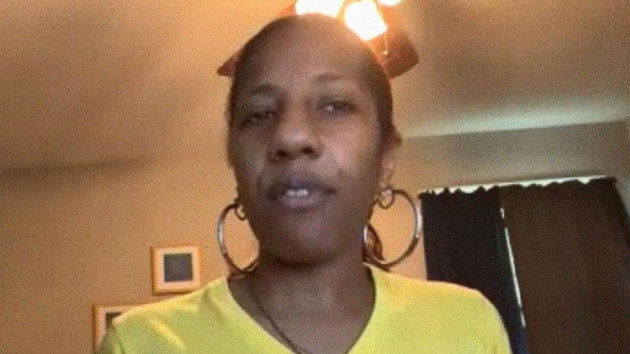
Mom says son was mistakenly put on school bus and dropped off alone on first day of school

Mom says son was mistakenly put on school bus and dropped off alone on first day of school
ABC News

(NEW YORK) — A North Carolina mom is speaking out after she said her son’s school mistakenly placed him on a school bus he was never supposed to be on.

Tracy Williamson told ABC News’ Good Morning America she went to the school to pick up her 6-year-old son Avery at the end of his first day of school but couldn’t locate him.

When Williamson asked staff at her child’s school where he was, she said they told her he was on school grounds. However, she said she later learned he had been placed on a school bus by accident.

“I’m like, immediately, ‘So y’all lost my kid?’ So they’re like, ‘No, he’s not lost. He should be in the cafeteria,'” Williamson said.

But Avery was not on school property or even on the school bus anymore. Williamson said the bus driver had dropped him off and Avery was later found by a neighbor near his family’s home, crying.

“The bus driver let him get off the bus when he really shouldn’t have. So yeah, that’s when I was definitely in panic mode,” Williamson said.

Williamson said she couldn’t track her son down for at least two hours.

“The principal assured me, ‘OK, because he’s 6, he’s not allowed to get off the bus.’ So I’m like, ‘OK, the bus driver originally said [there were no kids on the bus],’ ” she added. “They’re like, ‘Well, maybe he fell asleep.’ The bus driver said, ‘No, I dropped that kid off.'”

Cumberland County Schools, the school district in which Avery’s school is located, responded to ABC News about the incident in a statement.

“Our top priority is the safety of our students. While we regret this situation happened, we are grateful that the student is safe,” the district said. “District and school officials are looking into this situation to determine exactly what happened and how we can prevent it from happening in the future.”

The American School Bus Council, a group of school bus providers, manufacturers and government officials, doesn’t keep track of how often children end up on the wrong school bus or get dropped off at the wrong location. The coalition does say, however, that kids are 70 times more likely to get to school safely on a bus than in a car.

A company called Zum is also currently working with school districts in four states — Illinois, Texas, Washington, and California — to manage student transportation and give parents the ability to track their children through a smartphone app that sends out notifications when school buses arrive at a location and when a child has boarded a bus.

Copyright © 2022, ABC Audio. All rights reserved.

600 Mississippi National Guardsmen to be deployed to help with water distribution in Jackson

600 Mississippi National Guardsmen to be deployed to help with water distribution in Jackson
Brad Vest/Getty Images, FILE

(JACKSON, Miss.) — Six hundred Mississippi National Guard members will deploy to Jackson starting Thursday to help with water distribution, officials said Wednesday, as they grapple with an ongoing water crisis plaguing residents.

No timeline was given when the water pumps at Jackson’s O.B. Curtis Water Treatment Plant will be fixed, but 72 hours of bad weather has caused significant service interruptions at the plant, Gov. Tate Reeves said at a press conference Wednesday.

“There is a tremendous amount of work to be done at the O.B. Curtis plant,” he said. “There will be future interruptions; they are not avoidable at this point.”

Jackson has been using backup pumps since the main pumps were damaged, Reeves said Monday.

Officials said there would be no reliable running water in Jackson, which will impact up to 180,000 people until the pump is fixed.

State officials also warned residents not to drink the water from the pipes if they could avoid it, adding that if they must use the water, then boil it first.

“Don’t open your mouth in the shower and don’t give your pets the water,” Jim Craig, the senior deputy and director of the state’s office of health protection, said at Wednesday’s news conference.

The city has been under a boil water notice since July 29.

Reeves declared a state of emergency on Tuesday, allowing state officials to better help in Jackson.

The White House approved Reeves’ request for federal assistance Tuesday night.

“An emergency exists in the State of Mississippi and ordered Federal assistance to supplement the state’s response efforts due to the emergency conditions resulting from a water crisis,” the White House said in a press release.

Copyright © 2022, ABC Audio. All rights reserved.

Jackson residents face clean water crisis — as state, local leaders point fingers

Jackson residents face clean water crisis — as state, local leaders point fingers
Michael M. Santiago/Getty Images, FILE

(JACKSON, Miss.) — Jackson, Mississippi’s water supply is wholly unsafe to drink, officials said on Monday, with water pressure so low from long-failing treatment systems compounded by river flooding this week that cooking and cleaning — and firefighting, flushing toilets and bathing — would be widely unavailable for the state capital’s 180,000 residents save for critical outside aid.

The emerging disaster has drawn attention to the strained relationship between the city’s Democratic leadership and the Republican governor and legislature.

When Gov. Tate Reeves held an emergency press conference on Monday with the Mississippi Emergency Management Agency, Jackson’s mayor, Chokwe Antar Lumumba, was not in attendance even as Lumumba, separately, had been in discussions with the Department of Health that same day.

And on Tuesday, at a news conference of his own, Lumumba said that the issues had at last spurred aid for the Magnolia State’s largest city after years of petitioning Reeves and the GOP-controlled legislature.

“We feel like we’ve been going at it alone for the better part of two years — lifting up the fact that these are challenges that are, first and foremost, beyond partisan. These are human rights challenges,” Lumumba said Wednesday on ABC News Live.

Reeves did not invite Lumumba to his Monday presser, according to a spokesperson for the mayor, who said that as of Tuesday evening, the two men had not spoken directly about the water problems. They subsequently a useful conversation on Wednesday morning, after the mayor initially reached out to Reeves, who then returned his call.

President Joe Biden also spoke to Lumumba on Wednesday morning.

Both Reeves and Lumumba have made emergency declarations and Reeves deployed the National Guard to assist on Tuesday.

The infrastructure issues with Jackson’s water system, coupled with flooding from a nearby river which damaged one of the area’s major processing facilities, fueled the latest — but not the first — water crisis.

The city’s archaic system has been in the spotlight before for being on the risk of failure, most recently in the winter of 2021. The city had been under a separate boil water notice since late July for a water-quality issue.

“Even when we’re not contending at that present moment with low pressure … we are in a constant state of emergency,” Lumumba said at Tuesday’s news conference. “And so now we are excited to have finally welcomed the state to the table and all of the valuable resources that they bring.”

On ABC News Live, Lumumba said that “we’ve had great disparity in the funding of the resources of Jackson compared to other portions of our state, over generations.”

“I think that it is time that we represent a new model … that we demonstrate from the city level to the state level and beyond that we’re all on board in trying to make certain that residents, that people, human beings, don’t have to deal with the challenge of not having the basic resource of water,” he said.

On Monday, the five state senators who represent the city of Jackson called for a special legislative session.

That day, the state’s two other top Republicans, Lt. Governor Delbert Hosemann and House Speaker Phillip Gunn, also released statements laying blame with local leaders.

“It is apparent the cities served by the system do not have the assets to address this issue in a timely manner and effectively for the longer term. I believe it is time for the State to take an active role in finding a solution—both short term and long term,” Hosemann said.

Gunn said: “I’ve been contacted by hospitals, businesses, and schools pleading that something be done to address the water crisis in Jackson. Unfortunately, the city leadership has not presented a permanent solution or a comprehensive plan. These groups have turned to the state for help, and it seems we will have to evaluate what options might be available.”

Reeves, too, has faced scrutiny. Critics have long accused the governor of stoking the flames of cultural warfare during his two-year tenure rather than addressing some of the state’s critical needs — especially in Jackson. In the days before and during the flooding that worsened the water problems, Reeves was active on social media sounding off on a range of other issues including Biden’s student loan forgiveness plan and Second Amendment rights.

Since taking office in 2020, Reeves’ greatest legislative focus has been on income tax breaks in the state.

Jackson residents voted in 2014 to approve a 1 cent local sales tax to pay for improvements to their roads and water and sewer systems. After the winter water emergency in 2021, the city council sought another election, subject to legislative approval, that would double that tax to 2 cents.

Reeves weighed in at the time and invoked the city’s history of utility mismanagement. “I do think it’s really important that the City of Jackson start collecting their water bill payments before they start going and asking everyone else to pony up more money,” he said.

Gunn, the state’s House speaker, told a conservative radio show last week that the required $1 billion to fix the city’s water system — to help with repairs, upgrades and staffing, which is the No. 1 problem, officials have said — may be too large of a price tag for even the state.

“I’m on the verge of saying that the state has got to step in and take over,” he said. “But the size of the problem is so great that I’m not even sure the state can meet the needs. It’s going to require federal help.”

On Wednesday, Reeves announced that the federal disaster declaration for Jackson had been approved by the White House, freeing up further funds to assist residents.

“The White House is watching critically in terms of what is taking place here. And so we look forward to additional support from them,” Lumumba said at Tuesday’s news conference.

“We have open arms to welcome the coordination and welcome the support … This is what we’ve been asking for,” he said.

ABC News’ Justin Gomez contributed to this report.

Copyright © 2022, ABC Audio. All rights reserved.

19-year-old man charged with murder in random shooting rampage in Detroit

19-year-old man charged with murder in random shooting rampage in Detroit
Catherine Falls Commercial/Getty Images

(DETROIT) — A search is underway for a suspect who shot four randomly selected victims over the span of 2 hours and 25 minutes on Sunday morning in Detroit, police said.

A 19-year-old man faces murder charges for allegedly killing three people and wounding a fourth in a series of random, unprovoked shootings in Detroit on Sunday, officials said.

Dontae Ramon Smith was charged Wednesday with three counts each of first-degree murder, as well as one count of assault with intent to murder, one count of animal cruelty and four counts of felony firearm in connection with the shooting rampage, the Wayne County Prosecutor’s Office announced.

“There are four separate cases at this time because the incidents were initially thought to be unrelated,” the office said, noting that the cases will be consolidated for preliminary court hearings.

Smith was arraigned and remanded to jail on the murder charges Wednesday. Upcoming court proceedings include a probable cause conference on Sept. 14 and a preliminary examination on Sept. 21. Attorney information was not immediately available.

The suspect was arrested on Monday, roughly 12 hours after allegedly committing the last shooting, when someone close to him recognized him in a surveillance photo police officials released during a search for him and contacted authorities, officials said.

“Yesterday, I made a plea to family and friends of the shooter to turn him in. It didn’t seem likely that he could be taken into custody without incident,” Detroit Mayor Mike Duggan said during a news conference on Monday announcing the arrest. “But, in fact, somebody close to him did respond. It was that community input that allowed the police officers to take this individual into custody without any further violence.”

Police Chief James White said investigators are probing the suspect’s movements prior to his arrest to determine if he targeted anyone else.

“I will tell you that it’s a 19-year-old and we don’t see any criminal history at this time, and we have some indication that there is mental illness,” White said.

The random shootings all occurred on the west side of Detroit in the span of 2 hours and 25 minutes Sunday morning.

The sole survivor of the rampage, a 76-year-old man, described being shot while out walking his dog. The dog was also shot in the foot, prosecutors said.

An all-hands-on-deck search involving multiple law enforcement agencies — including the FBI, the Bureau of Alcohol, Tobacco, Firearms and Explosives, and the Department of Homeland Security — took place Sunday afternoon after police determined the same gun was used in all four shootings, authorities said.

White said a 9mm handgun was recovered from a residence where the assailant was arrested. He said ballistic tests done immediately on the firearm confirmed suspicions from shell casings collected at each crime scene that it was used in all of the shootings.

When asked whether detectives have determined a motive for the rampage, White said, “Obviously, there is nothing that should motivate you to do something this tragic.”

Commander Michael McGinnis of the Detroit Police Department laid out a timeline of the shootings, saying the first occurred at 4:45 a.m. when a 28-year-old man was approached by the suspect and shot.

Prosecutors said the victim, identified as Chayne Lewis Lee of Detroit, was discovered lying in the doorway of a church by police officers.

McGinnis said the shooting was unprovoked and that the suspect walked away briefly before returning and shooting the victim several more times, killing him.

McGinnis noted that no one called 911 to report the first shooting, a detail both White and Duggan said they found troubling.

“I know from the time I spent with the officers yesterday, they’re going to be haunted for a long time. They very likely could have prevented two and probably three tragedies had they had an immediate notice,” Duggan said.

Detroit does not have a ShotSpotter gunfire detection system like many large cities, which immediately notifies police of the location of gunshots, Duggan and White said.

White added, “What we don’t want to happen is gunshots to become commonplace in our community. We don’t want to become desensitized to someone shooting in our community. There should never be a condition ever that someone uses a gun in our community that’s unaccounted for.”

McGinnis said the second shooting happened 30 minutes after the first shooting. In that episode, a 911 caller reported that a woman in her 40s was lying on a sidewalk with multiple gunshot wounds. He said the victim was found three blocks from the first shooting.

The victim, who died at the scene, has yet to be identified.

McGinnis said that as officers were investigating the second shooting, they responded to the sound of gunshots nearby and found another woman fatally shot. He said the woman had been waiting for a bus when the suspect walked by her, returned and shot her without provocation.

He said the suspect walked away, but returned and shot the woman again before fleeing.

The victim, identified by the prosecutor’s office as 43-year-old Lari Briscol of Detroit, was pronounced dead at the scene.

At 7:08 a.m., a 76-year-old man out walking his dog was confronted by the suspect, who allegedly shot him and his dog in yet another unprovoked attack. The victim suffered a bullet wound to the leg, and neighbors who heard the gunshots likely saved the man’s life by coming to his aid and putting a tourniquet on his leg and getting him to a hospital immediately, McGinnis said.

The victim, identified by the prosecutor’s office as John Palik of Detroit, was treated at the hospital and both he and his dog survived the attack.

White said the suspect did not rob or attempt to rob any of the victims.

White said technology played a key role in cracking the case, explaining that it allowed investigators to quickly analyze shell casings from each of the crime scenes and determine that the same gun was used in all four shootings.

“If someone uses a weapon in our community, we’re going to use every resource we have to lock you up and we make no apologies about that,” White said. “Enough is enough. This is unacceptable and it needs to stop.”

ABC News’ Alex Stone contributed to this report.

Copyright © 2022, ABC Audio. All rights reserved.

Jackson mayor speaks on water crisis, next steps in recovery

Jackson mayor speaks on water crisis, next steps in recovery
Brad Vest/Getty Images

(NEW YORK) — The main pump at the main water treatment facility in Jackson, Mississippi, shut down due to flooding that worsened longstanding issues, leaving up to 180,000 people without access to running water in their homes.

A state of emergency was declared on Tuesday by Gov. Tate Reeves and it was announced public schools would shift their classes online.

Jackson Mayor Chokwe Lumumba spoke with “ABC News Prime” about the roots of this water crisis, which have been unfolding over multiple years, how the city plans to recover with a focus on equity and sustainability, and how people tuning in can help.

PRIME: Joining me now is the mayor of Jackson, Chokwe Lumumba. Mayor, first off, thank you so much for taking the time to speak with us during such a challenging time for you.

LUMUMBA: Thank you for having me, and thank you for lifting up the challenges that my community is suffering from.

PRIME: Of course. So now that a state of emergency has been declared, what is your first order of business here with these funds to help your community?

LUMUMBA: Well, first, let me reiterate that we were excited and we welcomed this support with open arms. We feel like we’ve been going it alone for the better part of two years, lifting up the fact that these are challenges that first and foremost are beyond partisan. These are human rights challenges.

And so we’ve been saying that it’s not a matter of if our systems would fail, but when our systems fail, and we’ve seen it far too frequently. So we’ve talked with the State Department of Health and MEMA, who have assured us that they’re going to have boots on the ground to help supplement our staffing needs and the critical repairs. They have committed to approximately 50% of the cost of the repairs in a shorter time frame to get to those contracts, due to the fact that it’s under an emergency condition.

PRIME: And so, mayor, spell it out for us. How did we get here? How do we get to this point?

LUMUMBA: Yeah. This is due to decades, decades and decades, of possibly 30 years or more of deferred maintenance, a lack of capital improvements made to the system, a lack of a human capital, a workforce plan that accounted for the challenges that our water treatment facility suffers from. We’ve had hotter summers, colder winters and more precipitation each year. And it’s taking a toll on our infrastructure. And so we need the support to not only create sustainability and equity in our system, but to also weatherize our system.

PRIME: A major overhaul, certainly. And mayor, water has been a crisis in your city for some time now. In fact, in November of last year, our congressional correspondent Rachel Scott went to Jackson and reported on an elementary there that had no water. The kids had to use porta potties. They also had no water at home. You were interviewed at that time, and this is a sentiment that you’ve already reiterated this evening: that it’s not a matter of if these systems will fail, but rather when these systems will fail. And unfortunately, what we’re seeing right now, you were right. But previous to this, how high up have you taken your concerns? And do you feel that anyone was receptive to the gravity of the situation?

LUMUMBA: Well, first and foremost, I believe that the moment in which you’re recounting, I believe that the administrator of the EPA was with me and he was looking at the concerns of our water distribution system, touring the school, and was scheduled for that tour, only right before he came, for the school to have to redirect its students to another location due to the persistent water challenges. This is something that we don’t only suffer from citywide.

But more precisely, inequitably, we suffer in the southern portion of our city most disproportionately. And so it’s something that, we not only need to create sustainability but equity, realizing that some of the most impoverished parts of our city are feeling the brunt of this challenge more consistently and worse off than the rest of our city. And so this is something that, you know, I believe we have to continue to ring the alarm around, something that we have to continue to call on all levels that have responsibility.

PRIME: And make sure those dollars go where they need to go. And you’ve said Jackson in some ways is a poster child for a community that suffers from environmental justice issues. So tell us a little bit more about what you mean by that.

LUMUMBA: Well, you know, just as we review the EPA’s Justice40 initiative, when it talks about income disparities and the diversity of communities that it had in mind, Jackson is the primary example of a community that fits and checks all of the boxes of those initiatives. When we talk about the fact that we’ve had great disparity in the funding of the resources in Jackson compared to other portions of our state over generations, I think that it is time that we represent a new model, that we represent a new day, and we demonstrate from the city level to the state level. And beyond that, we’re all on board trying to make certain that residents, that people, that human beings don’t have to deal with the challenge of not having the basic resource of water.

PRIME: Right. And water really is a statewide issue there. What is your message to other mayors who could be facing similar challenges here?

LUMUMBA: Well, I would say that, you know, as we have dealt with these persistent challenges, we know just how dehumanizing this can be. We know how humiliating it can be. And so, you know, as we push forward for a better Jackson, a better state, a better nation, we need to push for dignity, economy which reflects the sustainable development goals, that give people dignity, that reveals a better quality of life for them each and every day.

PRIME: Sure. And I know right now we don’t have a timeline for when this will be fixed. So how can people around the country that might be watching right now? How can they help?

LUMUMBA: Well, I would encourage them to reach out to the city. They can do so through our website www.jacksonms.gov, through our Constituent Services division, if they look to provide water donations, if they can help just lift up to those in leadership that support.

PRIME: Okay. Certainly a little highlight there. Mayor Chokwe Lumumba, thank you so much for joining us.

LUMUMBA: Thank you.

Copyright © 2022, ABC Audio. All rights reserved.

Swimming discouraged at several SoCal beaches due to high bacteria levels

Swimming discouraged at several SoCal beaches due to high bacteria levels
KABC-TV

(LOS ANGELES) — Health officials are urging people to stay out of the water at several popular Southern California beaches due to high bacteria levels.

The Los Angeles County Department of Public Health issued an alert cautioning residents to avoid swimming and surfing in the waters at four beaches: Santa Monica Pier in Santa Monica; Mother’s Beach in Marina Del Rey; Inner Cabrillo Beach in San Pedro; and Topanga Canyon Beach in Malibu.

“These warnings have been issued due to bacterial levels exceeding health standards when last tested,” the health department said.

The four impacted beaches remain open, though the health department warns that ocean water bacteria levels that exceed state standards could cause illness.

The advisories come amid an excessive heat warning for parts of Los Angeles County and ahead of Labor Day weekend.

At least one surfer was not deterred by the health department’s warning.

“I’ve been a surfer for nearly 40 years now and the bacteria levels come and go with storms and other things. And unless there’s like a severe sewage spill or something like that, I’m pretty much out there regardless if the waves are good,” Richard Evans told ABC Los Angeles station KABC at Topanga Canyon Beach on Tuesday.

Koji Funakoshi told the station his throat hurt “a little bit worse than normal” after surfing at the beach Tuesday morning.

“I think it’s better not to be in the water. It’s safer not to,” Dr. Russ Kino told KABC, warning that you could experience gastrointestinal issues such as diarrhea and stomach cramps.

Most of the region’s beaches are not under advisory.

The waters off the Santa Monica Pier and parts of Mother’s Beach are among the most polluted in California based on levels of bacteria in the ocean, according to the environmental group Heal the Bay. Santa Monica Pier and a portion of Mother’s Beach received Fs in the group’s latest beach “report card,” released in June.

Topanga Canyon Beach received an A, while portions of Cabrillo Beach received an A and D in the latest report card.

Copyright © 2022, ABC Audio. All rights reserved.