
Man accused of ‘maliciously’ igniting fire that caused the deadly Palisades Fire: DOJ

Man accused of ‘maliciously’ igniting fire that caused the deadly Palisades Fire: DOJ
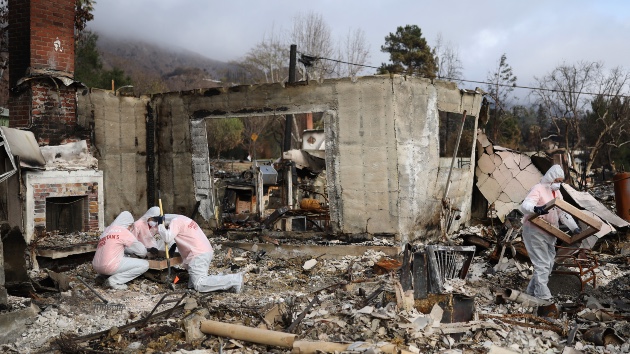
Volunteers with Samaritan’s Purse search for meaningful personal items for members of the Alvarado family in the rubble of their home which burned in the Eaton Fire on February 05, 2025 in Altadena, California. (Photo by Mario Tama/Getty Images)

(LOS ANGELES) — An arrest has been made in connection with the Palisades Fire, which caused widespread destruction in Los Angeles County and killed a dozen people earlier this year, the Department of Justice announced on Wednesday.

Jonathan Rinderknecht, 29, is accused of “maliciously” igniting a fire on Jan. 1 in the Pacific Palisades that ultimately erupted into the Palisades Fire, the Department of Justice said.

The New Year’s Day brush fire was suppressed by fire crews but continued to smolder underground before high winds caused it to surface and spread nearly a week later, “causing what became known as the Palisades Fire, one of the most destructive wildfires in Los Angeles City history,” acting U.S. Attorney Bill Essayli said during a press conference on Wednesday.

Rinderknecht has been charged by criminal complaint with destruction of property by means of fire. He was arrested on Tuesday near his residence in Florida and is scheduled to make his first court appearance in Orlando federal court on Wednesday, officials said.

The Palisades Fire erupted on Jan. 7, burning more than 23,000 acres over more than three weeks and destroying nearly 7,000 structures, according to California fire officials.

It ignited the same day as the Eaton Fire, which burned more than 14,00 acres in Los Angeles County, destroying more than 9,400 structures and killing 19 people, according to officials.

The fires started burning during strong Santa Ana winds, which, combined with dry conditions, helped their ability to spread quickly. This spread prompted mass evacuations.

The Palisades Fire decimated the Pacific Palisades neighborhood of Los Angeles.

What became known as the Lachman Fire was detected at 12:12 a.m. on Jan. 1 on a hilltop in the Pacific Palisades, according to the DOJ.

Rinderknecht, who the DOJ said was working as an Uber driver at the time and once lived in the Pacific Palisades — had dropped a customer off in the area of the fire, according to the complaint. Two of his passengers that night allegedly told law enforcement later that he appeared “agitated and angry,” the complaint stated.

The complaint alleges Rinderknecht caused the fire by lighting a combustible material, such as vegetation or paper, with an open flame, likely a lighter.

He attempted to contact 911 several times to report the fire, before ultimately getting through once he had cell service, according to the complaint. He allegedly made a three-minute screen-recording of his iPhone while attempting to call 911 and asking ChatGPT, “Are you at fault if a fire is lift [sic] because of your cigarettes?” according to the complaint.

“Based on my training and experience and this investigation, this indicates that RINDERKNECHT wanted to preserve evidence of himself trying to assist in the suppression of the fire and he wanted to create evidence regarding a more innocent explanation for the cause of the fire,” a special agent with the Bureau of Alcohol, Tobacco, Firearms and Explosives wrote in an affidavit in the complaint.

Essayli said the suspect left in his car but then returned and filmed firefighters responding to the blaze.

There is no indication that anyone else was in the area at the time the fire started, Essayli said.

Investigators interviewed Rinderknecht on Jan. 24, during which he allegedly lied about where he was when he saw the Lachman Fire, according to the DOJ.

“He claimed he was near the bottom of a hiking trail when he first saw the fire and called 911, but geolocation data from his iPhone carrier showed that he was standing in a clearing 30 feet from the fire as it rapidly grew,” the DOJ said in a press release.

Essayli said he didn’t want to discuss motive, though he pointed to digital evidence included in the complaint of an image Rinderknecht allegedly generated in July 2024 using ChatGPT, showing in part “a burning forest and a crowd fleeing from it.”

“You could see some of his thought process in the months leading up, where he was generating some really concerning images up on ChatGPT, which appears to show a dystopian city being burned down,” Essayli said.

The charge is punishable by up to 20 years in federal prison if convicted, the DOJ said.

Essayli said the DOJ will make determinations on additional charges against Rinderknecht in the coming days.

Los Angeles Police Chief Jim McDonnell called the investigation into the Palisades Fire “extremely intensive and thorough.”

“I’m proud of the professionalism and dedication shown by our detectives and the team who work collaboratively with our federal, state and local partners,” he said during the press briefing. “That teamwork ultimately led to the arrest of the suspect responsible for this devastating crime.”

Over the past eight months, investigators pursued more than 200 leads, conducted hundreds of interviews and collected more than 13,000 pieces of evidence, including fire debris, digital data and DNA samples, as part of the probe, according to Kenny Cooper, special agent in charge of the Bureau of Alcohol, Tobacco, Firearms and Explosives’ Los Angeles Field Division.

“We have a lot of different data that all concluded where this fire started, and the fire behavior from that origin, from that Lachman Fire, was clearly established in the Palisades Fire,” Cooper said at the press briefing.

Los Angeles Mayor Karen Bass said the city will release the Los Angeles Fire Department’s report on the Palisades Fire “shortly,” now that an arrest has been made.

“More than 9 months ago, our city faced one of the most devastating periods our region had ever seen. Lives were tragically lost. Thousands of homes were destroyed. Our heroic firefighters fought the blaze valiantly with no rest,” she said in a statement. “Each day that families are displaced is a day too long and as we are working tirelessly to bring Angelenos home, we are also working towards closure and towards justice — and today is a step forward in that process.”

Copyright © 2025, ABC Audio. All rights reserved.
2 arrested, 2 at large in burglary of Saints player Cam Jordan’s home

2 arrested, 2 at large in burglary of Saints player Cam Jordan’s home
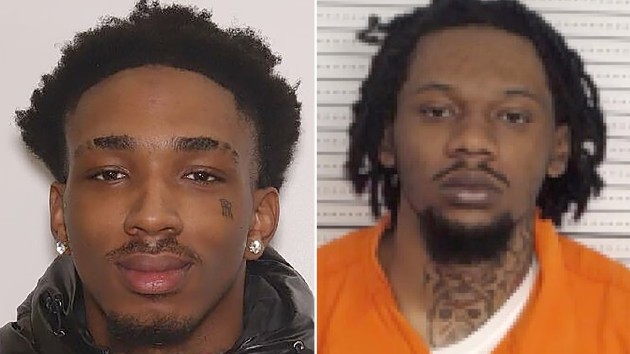
Authorities are searching for two suspects from the Atlanta area: Jahaun Suber, 20, and Devell Ortiz, 19. Jefferson Parish Sheriff Joseph Lopinto

(NEW ORLEANS) — Two suspects have been arrested and two more are at large in connection with a burglary at the home of New Orleans Saints defensive end Cam Jordan.

The four suspects allegedly broke in through a back door while the house was empty on Sept. 14 — the day of a Saints home game, Jefferson Parish Sheriff Joseph Lopinto said.

Jordan spoke out about the break-in on social media on Tuesday, saying, “Yah that Sunday sucked… the most important things, my family, was and is safe.”

It appears no one else was targeted; the suspects, who are from the Atlanta area, drove back to Georgia right after the burglary, Lopinto said at a news conference.

Two men — Donald Robinson, 28, and Jadon Brown, 19 — were arrested after being identified within 24 hours of the break-in, according to the sheriff’s office.

Authorities are still searching for the two other suspects, identified as Jahaun Suber, 20, and Devell Ortiz, 19, the sheriff’s office said.

Charges have not been finalized but will likely include simple burglary and possession of stolen property, the sheriff said. The FBI is working with local officials on the case and federal charges are possible, the sheriff added.

Some of the property has been recovered, but Lopinto didn’t disclose what was stolen.

It is not clear if the suspects are linked to other burglaries, the sheriff added.

The Saints lost the Sept. 14 home game to the San Francisco 49ers 26-21.

Jordan, who has played his entire 15-year career for the Saints, is an eight-time Pro Bowler and has 124 career sacks, second-most among active players.

This is the latest in a string of burglaries targeting professional athletes. Other victims of break-ins include Kansas City Chiefs stars Patrick Mahomes and Travis Kelce, Cincinnati Bengals quarterback Joe Burrow and Los Angeles Lakers guard Luka Dončić.

Copyright © 2025, ABC Audio. All rights reserved.

Man arrested, faces federal charge in connection with Palisades Fire: DOJ

Man accused of ‘maliciously’ igniting fire that caused the deadly Palisades Fire: DOJ
Volunteers with Samaritan’s Purse search for meaningful personal items for members of the Alvarado family in the rubble of their home which burned in the Eaton Fire on February 05, 2025 in Altadena, California. (Photo by Mario Tama/Getty Images)

(LOS ANGELES) — An arrest has been made in connection with the Palisades Fire, which caused widespread destruction in Los Angeles County and killed a dozen people earlier this year, the Department of Justice announced on Wednesday.

Jonathan Rinderknecht, 29, is accused of igniting a fire on Jan. 1 in the Pacific Palisades that ultimately erupted into the Palisades Fire, the Department of Justice said.

The brush fire was suppressed by fire crews but continued to smolder underground before high wind caused it to surface and spread nearly a week later, “causing what became known as the Palisades Fire, one of the most destructive wildfires in Los Angeles City history,” acting U.S. Attorney Bill Essayli said during a press conference on Wednesday.

Rinderknecht has been charged by criminal complaint with destruction of property by means of fire. He was arrested on Tuesday near his residence in Florida and is scheduled to make his first court appearance in Orlando federal court on Wednesday, officials said.

The fire erupted on Jan. 7, burning more than 23,000 acres over more than three weeks and destroying nearly 7,000 structures, according to California fire officials.

It ignited the same day as the Eaton Fire, which burned more than 14,00 acres in Los Angeles County, destroying more than 9,400 structures and killing 19 people, according to officials.

The fires started burning during strong Santa Ana winds, which, combined with dry conditions, helped their ability to spread quickly. This spread prompted mass evacuations.

The Palisades Fire decimated the Pacific Palisades neighborhood of Los Angeles.

This is a developing story. Please check back for updates.

Copyright © 2025, ABC Audio. All rights reserved.
Indiana woman reported missing after ‘suspicious’ fire in her house: Sheriff’s office

Indiana woman reported missing after ‘suspicious’ fire in her house: Sheriff’s office
Britney Gard is seen in an undated photo released by the Putnam County Sheriff’s Office. Putnam County Sheriff’s Office

(PUTNAM COUNTY, Ind.) — An Indiana woman was reported missing last week following a “suspicious” fire in her house, authorities said. 

Britney Gard, 46, last had contact with her family the evening of Sept. 30, according to the Putnam County Sheriff’s Office. She is considered a missing endangered person “due to her unknown whereabouts,” the sheriff’s office said.

Authorities responded to her home on Oct. 1, following a 911 call for a fire at her home in Bainbridge, located about 40 miles west of Indianapolis, the sheriff’s office said. Smoke was reported coming from the residence around 7:40 p.m., the office said.

Fire crews extinguished the blaze, which investigators believe is “suspicious in nature,” Putnam County Sheriff Jerrod Baugh said in a statement on Friday. The cause of the fire remains under investigation, Baugh said in an update on Wednesday.

No one was found in the fire-damaged home, and attempts by family and friends to contact Gard following the fire have been unsuccessful, the sheriff’s office said. She was not located following a drone-assisted search of the area and searches of a pond on the property following the fire, the sheriff’s office said.

Gard was supposed to attend her daughter’s volleyball game on Oct. 1, but did not show up, her sister, Stephanie Bowen, told Indianapolis ABC affiliate WRTV.

“Her car’s at home, her purse is at home. She’s nowhere to be found, and the house is on fire. It makes no sense,” Bowen told WRTV.

“I just feel like there’s something here bigger that we don’t know,” she said.

The search continued this week for the mother of two, with dozens of people, including her sisters, looking through cornfields and wooded areas near Gard’s property on Monday, WRTV reported.

Drones have continued to be deployed in the area, and conservation officers with the Indiana Department of Natural Resources have been conducting searches of the ponds at the residence and in the surrounding area, the sheriff’s office said Wednesday.

Detectives have also been working with the FBI and Indiana State Police, “looking for any leads into the current and past locations of any and all devices that could lead investigators to the location of Britney Gard,” Baugh said Wednesday.

Baugh asked anyone with information about her whereabouts to contact the sheriff’s office.

“As this is an active investigation and the location of missing Putnam County resident Britney Gard remains unknown, the Putnam County Sheriff’s Office will not be releasing detailed information about the scene, the ongoing investigation, or any speculation as to the whereabouts or condition of Ms. Gard,” Baugh said Wednesday.

Bowen urged people to be “vigilant” and to check their home security cameras.

“Britney, we love you,” she told WRTV. “We hope to see you safely return home.”

Copyright © 2025, ABC Audio. All rights reserved.

Arrest made in connection with Palisades Fire: Sources

Man accused of ‘maliciously’ igniting fire that caused the deadly Palisades Fire: DOJ
Volunteers with Samaritan’s Purse search for meaningful personal items for members of the Alvarado family in the rubble of their home which burned in the Eaton Fire on February 05, 2025 in Altadena, California. (Photo by Mario Tama/Getty Images)

(LOS ANGELES) — An arrest has been made in connection with the Palisades Fire, which caused widespread destruction in Los Angeles County and killed a dozen people earlier this year, sources close to the investigation confirmed to ABC News.

Federal and local law enforcement officials are scheduled to announce a “significant development” in the criminal investigation into the fire on Wednesday.

The fire erupted on Jan. 7, burning more than 23,000 acres over more than three weeks and destroying nearly 7,000 structures, according to California fire officials.

It ignited the same day as the Eaton Fire, which burned more than 14,00 acres in Los Angeles County, destroying more than 9,400 structures and killing 19 people, according to officials.

This is a developing story. Please check back for updates.

Copyright © 2025, ABC Audio. All rights reserved.
Trump says Chicago mayor and Illinois governor ‘should be in jail’ for not protecting ICE agents

Trump says Chicago mayor and Illinois governor ‘should be in jail’ for not protecting ICE agents
Brian Cassella/Chicago Tribune/Tribune News Service via Getty Images

(NEW YORK) — President Donald Trump is ramping up a war of words with the mayor of Chicago and the governor of Illinois, suggesting in a social media post on Wednesday that they “should be in jail” for refusing to protect ICE agents.

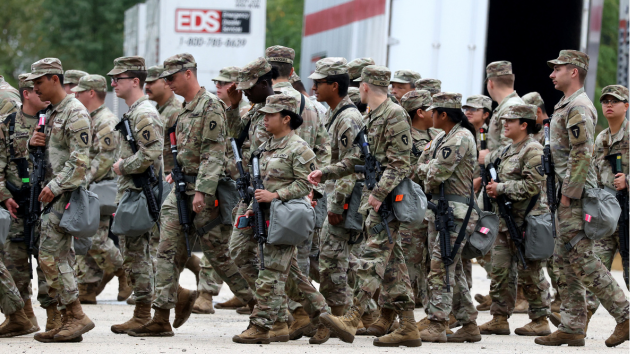
Trump’s social media post came as Texas National Guard troops arrived in Illinois on Monday night and were preparing to be deployed in Chicago.

“Illinois will not let the Trump administration continue on their authoritarian march without resisting,” Illinois Gov. JB Pritzker said on Tuesday as the Texas National Guard troops appeared at an Army Reserve training center in the Chicago suburb of Elwood.

“We will use every lever at our disposal to stop this power grab because military troops should not be used against American communities,” Pritzker said.

The military deployment drew outrage from Democratic leaders, as well as from Chicago Mayor Brandon Johnson.

“Donald Trump declared war on Chicago. That’s what he did. What the Trump administration is doing is intentionally fomenting chaos,” Johnson said on Tuesday. “The federal government is out of control. This is one of the most dangerous times in our nation’s history.”

Trump fired back on Wednesday on social media.

“Chicago Mayor should be in jail for failing to protect ICE Officers!” the president wrote. “Governor Pritzker also.”

Johnson responded in a social media post on Wednesday, writing, “This is not the first time Trump has tried to have a Black man unjustly arrested. I’m not going anywhere.”

Pritzker also reacted to Trump’s post, writing on social media on Wednesday, “I will not back down.”

“Trump is now calling for the arrest of elected representatives checking his power,” Pritzker said. “What else is left on the path to full-blown authoritarianism?”

The back-and-forth between the Illinois leaders, both Democrats, came as after Trump threatened to invoke the Insurrection Act in Chicago. The act, which dates back to 1807, empowers the president to nationally deploy the military and federalize National Guard units to suppress civil disorder, insurrection, or an armed rebellion against the federal government.

Speaking to reporters in the Oval Office on Monday afternoon, Trump said he did not yet see the need to use the Insurrection Act, but “if I had to enact it, I’d do it, if people were being killed and courts were holding us up, or governors or mayors were holding us up.”

Meanwhile, the Texas National Guard has been seen at an Army Reserve training center in the southwest suburbs of Chicago, ABC News has learned.

Groups of soldiers were seen walking the grounds of training center in Elwood, with most of the troops apparently having arrived on Monday night, according to ABC News’ Chicago station WLS.

Pritzker said at a news conference on Monday that over the weekend, he called on Abbott “to immediately withdraw his support of this decision” to send the Texas National Guard members to Chicago.

Earlier Tuesday, Abbott had replied to Pritzker on social media, saying, “I fully authorized the President to call up 400 members of the Texas National Guard to ensure safety for federal officials.”

The deployment drew outrage from Democratic leaders, as well as Chicago Mayor Johnson.

“Donald Trump declared war on Chicago. That’s what he did. What the Trump administration is doing is intentionally fomenting chaos,” Johnson said on Tuesday. “The federal government is out of control. This is one of the most dangerous times in our nation’s history.”

Copyright © 2025, ABC Audio. All rights reserved.

Texas National Guard seen at training center in Chicago suburbs

Trump says Chicago mayor and Illinois governor ‘should be in jail’ for not protecting ICE agents
Brian Cassella/Chicago Tribune/Tribune News Service via Getty Images

(NEW YORK) — Members of the Texas National Guard have been seen at an Army Reserve Training Center in the southwest suburbs of Chicago, ABC News has learned.

Texas Gov. Greg Abbott on Monday shared a photo on social media showing what he called the state’s “elite” National Guard boarding a plane, but he did not say where they were headed.

Groups of soldiers have been seen walking the grounds of that Elwood training center, with most of the troops apparently having arrived on Monday night, according to ABC News’ Chicago station WLS.

“Illinois will not let the Trump administration continue on their authoritarian march without resisting,” Illinois Gov. JB Pritzker said. “We will use every lever at our disposal to stop this power grab because military troops should not be used against American communities.”

Pritzker said at a news conference on Monday that over the weekend, he called on Abbott “to immediately withdraw his support of this decision” to send the Texas National Guard members to Chicago.

Earlier Tuesday, Abbott had replied to Pritzker on social media, saying, “I fully authorized the President to call up 400 members of the Texas National Guard to ensure safety for federal officials.”

The deployment drew outrage from Democratic leaders, as well as Chicago Mayor Brandon Johnson.

“Donald Trump declared war on Chicago. That’s what he did. What the Trump administration is doing is intentionally fomenting chaos,” Johnson said on Tuesday. “The federal government is out of control. This is one of the most dangerous times in our nation’s history.”

Copyright © 2025, ABC Audio. All rights reserved.

Central witness undermines case against James Comey, prosecutors concluded: Sources

Central witness undermines case against James Comey, prosecutors concluded: Sources
Photo by Alex Wong/Getty Images

(WASHINGTON) — Federal prosecutors investigating former FBI Director James Comey for allegedly making false statements to Congress determined that a central witness in their probe would prove “problematic” and likely prevent them from establishing their case to a jury, sources familiar with their findings told ABC News.

Daniel Richman — a law professor who prosecutors allege Comey authorized to leak information to the press — told investigators that the former FBI director instructed him not to engage with the media on at least two occasions and unequivocally said Comey never authorized him to provide information to a reporter anonymously ahead of the 2016 election, the sources said.

Comey, who was indicted last month on charges of making a false statement and obstruction related to 2020 testimony before the Senate Judiciary Committee, is due to appear in a Virginia courtroom for the first time for his arraignment Wednesday — but Justice Department officials have privately expressed that the case could quickly unravel under the scrutiny of a federal judge and defense lawyers. 

According to prosecutors who investigated the circumstances surrounding Comey’s 2020 testimony for two months, using Richman’s testimony to prove that Comey knowingly provided false statements to Congress would result in “likely insurmountable problems” for the prosecution.

Investigators detailed those conclusions in a lengthy memo last month recommending that the office not move forward in charging Comey, according to sources familiar with the memo’s contents.

Lindsey Halligan, a Trump loyalist hand-picked to replace the U.S. attorney for the Eastern District of Virginia who resisted bringing prosecutions against Trump’s political foes, still moved forward in presenting the case before a grand jury in Alexandria, Virginia, and secured two out of three counts she sought against Comey over his 2020 congressional testimony.

During grand jury proceedings, prosecutors have no obligation to present evidence favorable to a defendant — but such evidence must be handed over to the defendant before trial.

Halligan’s deputy raised similar concerns about the case the same week the former White House aide-turned-prosecutor asked a grand jury to indict Comey, bolstering the conclusion that no single piece of evidence could demonstrate that Comey lied to Congress and warning against relying on Richman, who she described to colleagues as a hostile witness, sources said.  

Prosecutors further expressed concerns about the department’s ability to take the case to trial quickly due to problems identifying all the relevant materials that would need to be handed over to Comey’s lawyers, sources said. They also raised alarms over the potential for Comey’s defense to cite the statute of limitations for the case, which derives from testimony in 2017 and was only reinforced by Comey during his 2020 testimony in response to a question from Republican Sen. Ted Cruz.

Comey, who is expected to plead not guilty to the charges, denies wrongdoing and has argued that he is being targeted for political reasons. His indictment came just days after Trump’s unprecedented demand that his Justice Department act “now” to bring cases against the former FBI director and others.

“Nothing is being done. What about Comey, Adam ‘Shifty’ Schiff, and Leticia???” Trump wrote in a social media post last month, directly addressing Attorney General Pam Bondi and referring to California Sen. Adam Schiff and New York Attorney General Letitia James. “We can’t delay any longer, it’s killing our reputation and credibility. They impeached me twice, and indicted me (5 times!), OVER NOTHING. JUSTICE MUST BE SERVED, NOW!!!”

Halligan alleges that Comey intentionally misled Congress in 2017 and 2020 when he testified that he never authorized another person at the FBI to provide information to the media anonymously. The allegation is that Comey authorized Richman to speak to the press anonymously, contradicting his testimony.

Trump later accused Comey of breaking the law by sharing his memos, arguing they contained classified information, though Richman later told ABC News in a statement that none of the documents had any classification markings.

When prosecutors met with Richman in September, he told them that he never served as an anonymous source for Comey or acted at Comey’s direction while he was FBI director, sources familiar with his interview told ABC News. In at least two cases when Richman asked if he should speak with the press, Comey advised him not to do so, sources said.

Investigators who reviewed material from Comey’s emails, including his correspondence with Richman, could not identify an instance when Comey approved leaking material to a reporter anonymously, sources told ABC News.  

Richman, a longtime friend of Comey, has previously acknowledged his role as an intermediary between Comey and reporters after Comey was fired from his role as FBI director, including leaking memos written by Comey about his interactions with Trump following his termination.

Federal prosecutors have focused their inquiry on Comey’s actions as FBI director — including the alleged leak of information about the Trump and Clinton campaigns ahead of the 2016 election — to find evidence that Comey intentionally mislead Congress.

As ABC News previously reported, career prosecutors in the office not only determined that the vast amount of evidence they collected in their investigation would be insufficient to convince a jury to convict him at a trial, but would also fail to meet a lower standard of reaching probable cause to even bring a case. 

Copyright © 2025, ABC Audio. All rights reserved.

‘It can be a loss of life’: First responders detail the deadly cost of rural hospital closures

‘It can be a loss of life’: First responders detail the deadly cost of rural hospital closures
ABC News

(CHIPPEWA FALLS, Wis.) — From the deck his father built by hand, Eric Halfen watches strangers comb through the artifacts of his life. The auctioneer’s chant ricochets across the yard, where everything from board games and mugs to the family’s home itself is being sold.

Eric grew up in this home in Chippewa Falls, Wisconsin. His father, Terry Halfen, poured the cement for the foundation and laid the bricks one by one. When Terry was diagnosed with cancer in late 2023, Eric moved back home to care for him.

Terry was being treated at the nearby hospital, Sacred Heart in Eau Claire, Wisconsin, but it shut down with little notice last year, terminating almost 1400 employees. The city demanded the state open an investigation and called the closure “abrupt and devastating.” But the state never opened one.

“It caused doctors to leave the area,” Eric said. “They didn’t have the proper doctor to do the procedures.”

So every day, Eric drove hours to a hospital farther away — sometimes six hours in a day for multiple trips — to sit by his father’s bedside. This past June, the family finally brought Terry back home. Just 48 hours later, he was gone.

Eric said that had Sacred Heart stayed open, “it would’ve been a lot less traumatic on him.”

While Eric can’t say for certain that it would have helped his father live longer, doctors and paramedics tell ABC News they’ve already seen conditions worsen in irreversible ways — even deaths — because of the region’s shuttered hospitals.

On the same day Sacred Heart closed its doors in Eau Claire, another hospital — St. Joseph’s in Chippewa Falls — also shuttered in neighboring Chippewa Falls because of financial difficulties.

There were only four major hospitals in the region. Now half are gone, sending shockwaves through the community and the rural areas they served.

A nationwide crisis

What’s happened to this part of western Wisconsin is part of a much larger crisis. Across the country, hospitals are vanishing, and a new wave of Medicaid cuts could accelerate the collapse.

President Donald Trump’s Big Beautiful Bill slashes nearly $1 trillion in Medicaid funding over the next decade. The administration says this cuts wasteful spending and will create a $50 billion fund for rural hospitals. But many health experts say that’s not nearly enough.

Already, nearly 100 rural hospitals have closed or eliminated inpatient services in the last decade, threatening health care access to some of the more than 16 million people living in rural communities who rely on Medicaid.

While the full impact of Medicaid cuts could take years to unfold, doctors say the system is already buckling. Many rural hospitals are already operating on razor-thin or negative margins, and they see these looming Medicaid changes could push them over the edge.

A representative for Hospital Sisters Health System, the owner of those two shuttered hospitals in Eau Claire and Chippewa Falls, said in a statement to ABC News that closing them down “was one of the most difficult and heartbreaking decisions.”

“These hospitals served their communities for more than a century and we recognize the personal impact this has had on the patients, colleagues and families who relied on us for care,” the statement continued, citing challenges including shrinking margins, workforce shortages, a growing number of patients without commercial insurance coverage, declining population and the fallout from the COVID-19 pandemic.

“Closures that are occurring across the country should be a wake-up call about the crisis rural health care providers are facing,” the representative said.

Impacted care

Dr. Brady Didion, a family physician who used to practice at St. Joseph’s, remembers the cascading fallout after the hospitals closed.

“People missing out on care, people having delayed care, diagnoses weren’t made. Appropriate imaging lab and surgical services weren’t made,” he said. “A lot of people and families suffered.”

Didion later left the area and now practices at a rural hospital 50 miles away, where he still feels the impact. The closure of Sacred Heart and St. Joseph’s means fewer places to transfer critical patients, with the remaining hospitals past capacity.

“I know that we have had delays in care such that it resulted in someone getting irreversible progression in their disease state or even dying,” Didion said.  “I’ve literally been up all night on the phone trying to call to get someone care who needed it in our small hospital because these places were full.”

Day to day, that means keeping sicker patients longer, leveling with families about wait times and planning transfers that can take hours instead of minutes.

“It’s not just inconvenience — it is really loss of time, which in a critical disease state is super important and it can be a loss of life,” he said.

Toll on patients and staff

When a hospital closes, the rest of the community is left to pick up the pieces — including emergency services.

Chippewa Falls Fire Station Chief Jason Thom told ABC News his crews no longer have the option of stabilizing critical patients at St. Joseph’s Hospital, which once sat just down the street.

Now, he says, transport times often stretch an hour, or they rely on helicopters, but those aren’t always available.

The longer rides, Thom adds, take a toll on both patients and staff.

“It could be detrimental to the patient because we can do a lot of things; however, we can’t do everything. If they require a surgical procedure or in the event of somebody having a heart attack… we can maintain and get them there as quickly as we can. At that point, hope for the best that those patients are going to survive,” Thom said.

Inside the remaining hospitals, the spillover is visible.

“One of the local hospitals — the ambulance garage, it has two bays in it, which used to be for the ambulances to pull in and unload patients — is now set up basically as a triage area with beds in it for the overflow,” Thom says. “Waiting rooms are typically full. Patient rooms are full.”

The paramedics at the station say they are seeing patients wait longer to call 911 — and by the time they do, they’re often much sicker. The longer drives, combined with overwhelmed emergency departments, compound the delay.

Many residents can’t get regular doctor appointments now, and some hesitate to seek help because they can’t afford a ride home from a hospital that’s farther away.

“They’re more sick when we see them,” Brooke Sommerfeld, a paramedic at the station, told ABC News. “And so you’re kind of watching them… decompose almost in the back of the ambulance when you have them,” she said.

“It’s overwhelming,” she adds. “We know what we’re doing; we are trained in our skills, but at the same time, when you know… ultimately what they need is somewhere an hour away… it makes us feel almost helpless.”

Copyright © 2025, ABC Audio. All rights reserved.

‘It can be a loss of life’: First responders on the cost of rural hospital closures

‘It can be a loss of life’: First responders detail the deadly cost of rural hospital closures
ABC News

(CHIPPEWA FALLS, Wis.) — From the deck his father built by hand, Eric Halfen watches strangers comb through the artifacts of his life. The auctioneer’s chant ricochets across the yard, where everything from board games and mugs to the family’s home itself is being sold.

Eric grew up in this home in Chippewa Falls, Wisconsin. His father, Terry Halfen, poured the cement for the foundation and laid the bricks one by one. When Terry was diagnosed with cancer in late 2023, Eric moved back home to care for him.

Terry was being treated at the nearby hospital, Sacred Heart in Eau Claire, Wisconsin, but it shut down with little notice last year, terminating almost 1400 employees. The city demanded the state open an investigation and called the closure “abrupt and devastating.” But the state never opened one.

“It caused doctors to leave the area,” Eric said. “They didn’t have the proper doctor to do the procedures.”

So every day, Eric drove hours to a hospital farther away — sometimes six hours in a day for multiple trips — to sit by his father’s bedside. This past June, the family finally brought Terry back home. Just 48 hours later, he was gone.

Eric said that had Sacred Heart stayed open, “it would’ve been a lot less traumatic on him.”

While Eric can’t say for certain that it would have helped his father live longer, doctors and paramedics tell ABC News they’ve already seen conditions worsen in irreversible ways — even deaths — because of the region’s shuttered hospitals.

On the same day Sacred Heart closed its doors in Eau Claire, another hospital — St. Joseph’s in Chippewa Falls — also shuttered in neighboring Chippewa Falls because of financial difficulties.

There were only four major hospitals in the region. Now half are gone, sending shockwaves through the community and the rural areas they served.

A nationwide crisis

What’s happened to this part of western Wisconsin is part of a much larger crisis. Across the country, hospitals are vanishing, and a new wave of Medicaid cuts could accelerate the collapse.

President Donald Trump’s Big Beautiful Bill slashes nearly $1 trillion in Medicaid funding over the next decade. The administration says this cuts wasteful spending and will create a $50 billion fund for rural hospitals. But many health experts say that’s not nearly enough.

Already, nearly 100 rural hospitals have closed or eliminated inpatient services in the last decade, threatening health care access to some of the more than 16 million people living in rural communities who rely on Medicaid.

While the full impact of Medicaid cuts could take years to unfold, doctors say the system is already buckling. Many rural hospitals are already operating on razor-thin or negative margins, and they see these looming Medicaid changes could push them over the edge.

A representative for Hospital Sisters Health System, the owner of those two shuttered hospitals in Eau Claire and Chippewa Falls, said in a statement to ABC News that closing them down “was one of the most difficult and heartbreaking decisions.”

“These hospitals served their communities for more than a century and we recognize the personal impact this has had on the patients, colleagues and families who relied on us for care,” the statement continued, citing challenges including shrinking margins, workforce shortages, a growing number of patients without commercial insurance coverage, declining population and the fallout from the COVID-19 pandemic.

“Closures that are occurring across the country should be a wake-up call about the crisis rural health care providers are facing,” the representative said.

Impacted care

Dr. Brady Didion, a family physician who used to practice at St. Joseph’s, remembers the cascading fallout after the hospitals closed.

“People missing out on care, people having delayed care, diagnoses weren’t made. Appropriate imaging lab and surgical services weren’t made,” he said. “A lot of people and families suffered.”

Didion later left the area and now practices at a rural hospital 50 miles away, where he still feels the impact. The closure of Sacred Heart and St. Joseph’s means fewer places to transfer critical patients, with the remaining hospitals past capacity.

“I know that we have had delays in care such that it resulted in someone getting irreversible progression in their disease state or even dying,” Didion said.  “I’ve literally been up all night on the phone trying to call to get someone care who needed it in our small hospital because these places were full.”

Day to day, that means keeping sicker patients longer, leveling with families about wait times and planning transfers that can take hours instead of minutes.

“It’s not just inconvenience — it is really loss of time, which in a critical disease state is super important and it can be a loss of life,” he said.

Toll on patients and staff

When a hospital closes, the rest of the community is left to pick up the pieces — including emergency services.

Chippewa Falls Fire Station Chief Jason Thom told ABC News his crews no longer have the option of stabilizing critical patients at St. Joseph’s Hospital, which once sat just down the street.

Now, he says, transport times often stretch an hour, or they rely on helicopters, but those aren’t always available.

The longer rides, Thom adds, take a toll on both patients and staff.

“It could be detrimental to the patient because we can do a lot of things; however, we can’t do everything. If they require a surgical procedure or in the event of somebody having a heart attack… we can maintain and get them there as quickly as we can. At that point, hope for the best that those patients are going to survive,” Thom said.

Inside the remaining hospitals, the spillover is visible.

“One of the local hospitals — the ambulance garage, it has two bays in it, which used to be for the ambulances to pull in and unload patients — is now set up basically as a triage area with beds in it for the overflow,” Thom says. “Waiting rooms are typically full. Patient rooms are full.”

The paramedics at the station say they are seeing patients wait longer to call 911 — and by the time they do, they’re often much sicker. The longer drives, combined with overwhelmed emergency departments, compound the delay.

Many residents can’t get regular doctor appointments now, and some hesitate to seek help because they can’t afford a ride home from a hospital that’s farther away.

“They’re more sick when we see them,” Brooke Sommerfeld, a paramedic at the station, told ABC News. “And so you’re kind of watching them… decompose almost in the back of the ambulance when you have them,” she said.

“It’s overwhelming,” she adds. “We know what we’re doing; we are trained in our skills, but at the same time, when you know… ultimately what they need is somewhere an hour away… it makes us feel almost helpless.”

Copyright © 2025, ABC Audio. All rights reserved.