
California wildfire victims tell David Muir about struggle to rebuild a year after blaze

California wildfire victims tell David Muir about struggle to rebuild a year after blaze
World News Tonight anchor David Muir speaks with Alessandro Vigilante who lost his Pacific Palisades home in the 2025 wildfires. ABC News

(CALIFORNIA) — A year ago, the deadly wildfires in Southern California left behind a trail of destruction and forced desperate families to flee for their lives.

Charred vehicles filled the streets in Los Angeles’ Pacific Palisades neighborhood, where the flames reduced houses to ash-covered shells.

The embers are gone and the dust has settled a year later, but most of those houses are still vacant lots and families remain stuck in limbo.

“World News Tonight” anchor David Muir returned to the neighborhood to mark the anniversary of the disaster and reunited with some of the residents he met in January 2025. Many said they are still struggling to pick up the pieces and some are making the tough decision to leave their the neighborhood they once called home.

Nearly 24,000 acres burned in the Palisades fire alone, with nearly 7,000 structures — most of them homes — going up in smoke. The blaze erupted on Jan. 7, 2025, along with the Eaton fire that destroyed more than 9,000 buildings. Together, the fires claimed the lives of at least 31 people.

A year ago in Pacific Palisades, Alessandro Vigilante raced to his two boys’ school to pick them and flee the fires, while his wife stayed behind to grab their most important documents before their house burned down.

Hours later, Muir met the father of two as he returned to see what was left of his home for the first time. Vigilante and his family lost everything, but were thankful to still have each other.

“We’ll figure out the rest,” he told Muir last year.

Today, the site of Vigilante’s home is an empty grass-covered lot surrounded by a white picket fence — the only thing that remains of his old home. Speaking with Muir again, he said getting insurance money was not an easy process.

“Literally, we had the last check, like, two weeks ago,” he told Muir, nearly a year after the fires.

Pointing to the lot, Vigilante reflected on that process.

“You don’t expect to have to discuss anything. It’s a total loss,” he said. “Basically looking at every single detail that they can think of from the handles that you had on the doors to the type of countertops. And again, that was mind-blowing, because I’m like, well, when we signed the policy, that’s the moment you should have decided whether my house was worth that much or not. Now it’s too late.”

Vigilante decided to sell the lot rather than rebuild, he noted, even though he said the land is now half the value it was when he moved in four years before.

“It’s OK. It was a chapter of our life,” he said, with a sigh.

Down the street from Vigilante, Liz Jones showed Muir the empty lot where she now plans to rebuild her family’s home from the ground up.

Last year, she saw the charred remains of her daughter’s car in one of Muir’s reports. That’s when she knew her home was gone.

“Is that when reality set in?” Muir asked her last year.

“One hundred percent,” Jones said.

Jones said she and her husband were determined to rebuild, and they are among the lucky few who were able to get some insurance money. Jones continued to carry her pride for the community around her neck, with a necklace that spelled out “Palisades.”

Preston and Kelsey Hayes had just broken ground on their new home when Muir met them at the site.

A year ago, the couple, who have two children, donned protective gear and masks to survey the damage and wondered if they would ever come back.

“Were you concerned at all about the soil and what might be contaminated from the fires?” Muir asked the couple at the construction site.

“Yeah for sure,” Preston Hayes said.

“And you felt reassured by the tests?” Muir asked.

“Yes,” Kelsey Hayes said.

As they looked out across their neighborhood a year after the fires, they knew that their neighbors would not all be as fortunate.

“We want the community to be the same. I don’t think it will be, unfortunately,” Preston Hayes said.

Copyright © 2026, ABC Audio. All rights reserved.

Harvey Weinstein would consider pleading guilty, defense says; tentative trial date set

Harvey Weinstein would consider pleading guilty, defense says; tentative trial date set
Former film producer Harvey Weinstein appears in Manhattan Criminal Court on August 13, 2025 in New York City. (Photo by Pool/Getty Images)

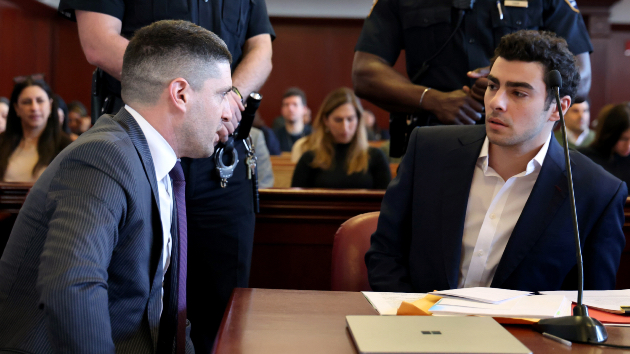
(NEW YORK) — A judge in New York has set a tentative date of March 3 for Harvey Weinstein’s re-trial on a charge of raping Jessica Mann.

A defense lawyer said Thursday that Weinstein would consider pleading guilty to the charge — third-degree rape — however, Weinstein made a statement in court insisting that he has never attacked anyone.

If Weinstein ultimately stands trial again, it would be the third time he goes on trial in Manhattan. His initial conviction was overturned on appeal. His second trial ended in a conviction on the Mimi Haley count, an acquittal on the Kaja Sokola count and a mistrial on the Mann count.

Earlier on Thursday, Judge Curtis Faber rejected Weinstein’s bid for a new trial in Haley’s case, ruling juror complaints about decorum in the deliberation room were adequately addressed.

The defense had argued two jurors subsequently claimed they were pressured to convict, but Farber said Thursday, “The Court’s response to the jurors’ complaints appropriately balanced the competing interests of investigating the allegations while avoiding any unnecessary taint of the deliberating jury.”

Weinstein, 73, remains in custody at Rikers Island in New York City after nearly six years of confinement. A representative for the disgraced Hollywood producer said he is “medically fragile and in legal limbo.”

Copyright © 2026, ABC Audio. All rights reserved.
Former Uvalde educator recounts asking 911, ‘Where are the cops?’ in emotional testimony

Former Uvalde educator recounts asking 911, ‘Where are the cops?’ in emotional testimony
A memorial dedicated to the 19 children and two adults murdered on May 24,2022 during a mass shooting at Robb Elementary School is seen on January 05, 2026 in Uvalde, Texas. Brandon Bell/Getty Images

(CORPUS CHRISTI, Texas) —  Editor’s note: Some of the testimony described below may be distressing to some readers.

Robb Elementary School’s former afterschool coordinator, Emilia “Amy” Marin-Franco, held back tears and visibly shook in her seat when she testified on Thursday in the trial of former Uvalde, Texas, school police officer Adrian Gonzales.

Gonzales, who was one of nearly 400 law enforcement officers to respond to the Robb Elementary School mass shooting, is charged with child endangerment for allegedly ignoring his training during the botched police response. Nineteen students and two teachers were killed, and investigations have faulted the police response and suggested that a 77-minute delay in police mounting a counterassault could have contributed to the carnage.

Gonzales has pleaded not guilty and his legal team says he did all he could to help students.

Marin testified that on May 24, 2022, she saw a man crash his truck near the school. She was one of the first people to call 911 — first to report the crash, and then realized he was armed and heading to the school. 

Jurors heard her 911 call, in which Marin simultaneously tried to get police to respond while encouraging students to hide.

“There is a guy with a gun. … Oh my god. I think he came on campus now,” she told a dispatcher, while telling students, “Come on guys, hurry.”

In deeply emotional testimony, she told the jury, “I kept asking the operator, ‘Where are the cops? Where are the cops?’ And I tell her, ‘There are kids running everywhere.'”

Marin told jurors that she feared for her and her students’ lives as she sheltered in a classroom and heard countless gunshots. 

“They were like, nonstop,” she said. “I thought, ‘He’s going to kill me, he’s going to kill me, he’s going to kill me. I’m going to die, I’m going to die.'”

She testified that she tried to come up with a plan to disarm the shooter if he were to find her. 

“I’m looking at the floor and I’m thinking, ‘I’ll tackle him from his ankles and knock him down with my shoulder. Get up on the counter, when he comes in, jump on his back, poke his eyes out, take his gun away from him,'” she said. 

A prosecutor tried to ask Marin to describe what that moment was like.

“The feeling of that type of fear is something that only someone can understand who’s been through a mass shooting,” she said. “You won’t understand if you haven’t experienced it and I don’t wish it on anybody.”

“Is it an ugly feeling?” the prosecutor asked. 

“It haunts me to this day,” she said.  

In the immediate aftermath of the shooting, Marin was falsely accused of leaving a door open that allowed the shooter to enter. She testified about removing a rock that was briefly used to prop the door open. During a brief cross-examination, defense attorneys used the testimony to highlight how Robb Elementary had issues with doors remaining unlocked. 

Earlier on Thursday, Judge Sid Harle sided with defense lawyers and instructed jurors to completely disregard the testimony of former teacher Stephanie Hale, who was a key prosecution witness.

Hale returned to the stand for an hour Thursday morning in an effort to salvage her testimony, but defense lawyers ultimately argued that allowing her testimony to stand would endanger Gonzales’ right to a fair trial.

“There’s no doubt that this was crucial to the [defense] strategy,” Harle said. “I don’t think I have any choice, having denied the mistrial — other than to craft a remedy that will protect the due process rights and hopefully avoid any appellate review that would result in this case being reversed —  so I am reluctantly going to instruct the jury to disregard her testimony in its entirety.”

Before instructing the jury, the judge personally thanked Hale for her testimony and emphasized that she was not at fault.

“I want to emphasize that you did absolutely nothing wrong. It’s not on you,” the judge said. “I want to tell you, just from personal experience, memories of traumatic events change.”

When Hale was on the stand Thursday, defense attorney Jason Goss attempted to point out that her original account — provided to state investigators four days after the 2022 shooting — differed from what she told the jury on Tuesday. 

Hale testified that she saw the shooter near the south side of Robb Elementary and saw him firing toward her and her students. Defense lawyers alleged she never gave that information to state investigators. 

“Seeing a shooter, and being shot at, are important details, you would agree with that?” Goss said. 

“It depends on who you are,” she responded. “I don’t know. I guess possibly.”

Goss pointed out inconsistencies in her description of events over the last three years, such as how she learned about the shooter and his location. 

“I’m not very good with directions,” Hale remarked about the location of the shooter. 

During re-direct examination, Hale clarified that she told the grand jury about seeing clouds of dust near the playground, which suggested to her that she and her students were being shot at. She acknowledged, however, that she did not initially see the shooter with her own eyes. 

Hale told defense lawyers that it was “kind of implied” that she saw the shooter based on her comments about seeing the dust clouds. 

Copyright © 2026, ABC Audio. All rights reserved.
What to know about Renee Good, 37-year-old woman killed in Minneapolis ICE shooting

What to know about Renee Good, 37-year-old woman killed in Minneapolis ICE shooting
People tend to a memorial for Renee Nicole Good near the site of her shooting on January 8, 2026 in Minneapolis. (Stephen Maturen/Getty Images)

(MINNEAPOLIS) — Renee Good, a 37-year-old mother and Minneapolis resident, has been identified by officials as the woman fatally shot by an Immigration and Customs Enforcement officer in Minneapolis on Wednesday.

Videos of the incident where Good is seen in her maroon Honda SUV as ICE agents confronted her have gone viral and sparked outcry from people around the country who say that Good was unnecessarily killed.

According to Department of Homeland Security spokesperson Tricia McLaughlin, Good was allegedly “attempting to run over our law enforcement officers” with her car when an ICE officer fatally shot her.

Minneapolis Mayor Jacob Frey and Minnesota Gov. Tim Walz have disputed the federal government’s claims surrounding what led up to the shooting, saying video of the incident shows the agent’s actions were not self-defense.

Information about Good, along with messages of sympathy, has been pouring out since the shooting.

Good was a 2020 graduate from Old Dominion University in Virginia, according to the school’s president, Brian Hemphill, who said it is “with great sadness that Old Dominion University mourns the loss of one of our own.”

She graduated from the College of Arts and Letters with a degree in English, according to Hemphill.

“May Renee’s life be a reminder of what unites us: freedom, love, and peace,” he said in a statement. “My hope is for compassion, healing, and reflection at a time that is becoming one of the darkest and most uncertain periods in our nation’s history.”

Gov. Tim Walz said that Good is survived by a 6-year-old child and a wife, saying he offers his “deepest sympathies” to her family “on an unimaginable tragedy.”

Good was also the mother of two other children, but a relative told the Minneapolis Star Tribune they believed the kids “lived with her extended family.”

DHS, along with President Donald Trump and Homeland Security Secretary Kristi Noem, has called the agent’s actions “self-defense” and said he followed ICE training.

Noem said during a press conference on Wednesday that Good was using her car as a “deadly weapon” and said it was an “act of domestic terrorism.”

Minneapolis police said preliminary information indicates that she was in her car and blocking the road.

“At some point, a federal law enforcement officer approached her on foot, and the vehicle began to drive off,” police said. “At least two shots were fired … the vehicle then crashed on the side of the roadway.”

“There is nothing to indicate that this woman was the target of any law enforcement investigation or activity,” police added.

Good had gunshot wounds to the head and was transported to an area hospital, where she died, according to city officials.

Following the shooting, a large crowd gathered in the area, which is less than a mile from where George Floyd was killed in May 2020.

Gov. Walz said he has issued a “warning order” to prepare the Minnesota National Guard, saying there are soldiers in training and prepared to be deployed “if necessary,” while urging “peaceful resistance.”

Copyright © 2026, ABC Audio. All rights reserved.

US attorney who subpoenaed Letitia James lacked ‘lawful authority,’ judge rules

US attorney who subpoenaed Letitia James lacked ‘lawful authority,’ judge rules
New York Attorney General Letitia James stands silently during a press conference at the office of the Attorney General, on Dec. 15, 2025, in New York. (Michael M. Santiago/Getty Images, FILE)

(NEW YORK) — Subpoenas issued to New York Attorney General Letitia James as part of a civil rights investigation into her fraud case against Donald Trump are invalid because the U.S. attorney in Albany who issued them lacked lawful authority, a federal judge ruled Thursday.  

“The subpoenas are unenforceable due to a threshold defect,” U.S. District Judge Lorna Schofield determined, writing that John Sarcone “was not lawfully serving as Acting U.S. Attorney when the subpoenas were issued.”

Sarcone’s appointment bypassed the requirements that govern who can exercise the power of a U.S. attorney, the judge said, similar to the way a judge ruled in November that Lindsey Halligan lacked the authority to bring charges against James and former FBI Director James Comey in Virginia.

Sarcone, like Halligan, was neither Senate confirmed nor appointed by the federal judiciary in the Northern District of New York.  

Sarcone issued subpoenas to James as part of an investigation into whether she violated President Trump’s civil rights when she sued him over a decade’s worth of alleged business fraud.

Trump was found liable in 2024 for overstating his net worth, resulting in banks and insurance companies giving him more favorable terms. The half billion-dollar judgment was subsequently thrown out on appeal and is currently before the state’s highest court, though the finding stands.  

James argued that Sarcone’s subpoenas were issued as an act of retaliation, but Judge Schofield said she did not need to address that at this stage because her ruling tossed out the subpoenas due to the faulty “workaround” Trump used to try to give Sarcone authority he did not have.

“Since August 2025, courts in New Jersey, Nevada and California have held that similarly installed acting U.S. Attorneys lacked lawful authority,” Schofield said, referencing, among other examples, Trump’s unsuccessful attempt to install his former personal attorney Alina Habba as acting U.S. attorney for New Jersey.

“This decision is an important win for the rule of law and we will continue to defend our office’s successful litigation from this administration’s political attacks,” a spokesman for James said Thursday. 

Copyright © 2026, ABC Audio. All rights reserved.
The US experienced nearly two dozen billion-dollar weather and climate disasters in 2025

The US experienced nearly two dozen billion-dollar weather and climate disasters in 2025
Cal Fire Firefighters do a prescribed burn ahead of oncoming new wildfire called ‘Hughes Fire’ as it tore through northern Los Angeles County, burning over 9,000 acres just hours after it was first reported in California, United States on January 22, 2025. Jon Putman/Anadolu via Getty Images

(NEW YORK) — The United States experienced nearly two dozen billion-dollar weather and climate disasters in 2025, causing at least 276 fatalities and costing a total of $115 billion in damages. For the first time, however, the comprehensive analysis detailing the annual impact of these disasters wasn’t released by the National Oceanic and Atmospheric Administration (NOAA). 

Discontinued by the Trump administration in 2025, the Billion-Dollar Weather and Climate Disaster dataset and accompanying website are now hosted and maintained by Climate Central, a non-profit climate science organization. The group hired Adam Smith, the former lead scientist for NOAA’s U.S. Billion-Dollar Weather and Climate Disasters program, to continue his work at Climate Central.

Last year, there were 23 separate billion-dollar weather and climate disasters, the third-highest annual total on record, behind 2023 and 2024, according to the new report released Thursday by Climate Central. The past year was also the 15th straight year with 10 or more billion-dollar disasters.

The costliest event of 2025 was the devastating Los Angeles wildfires in January, which caused more than $61 billion in damage, according to the analysis. Severe weather events, including severe thunderstorms and tornado outbreaks, accounted for 91% of all billion-dollar disasters last year, the analysis showed.

A record-breaking 28 billion-dollar disasters occurred in 2023, according to NOAA’s National Centers for Environmental Information. Extreme weather events, which ranged from severe thunderstorms to hurricanes to wildfires, killed at least 492 people and impacted large swaths of the country.  

With data going back to 1980, the Billion-Dollar Weather and Climate Disaster database is a public record of every significant U.S. weather and climate event that has caused at least $1 billion in damages, adjusted for inflation. Government agencies, insurers, and media outlets frequently rely on the database to report the economic impact of these disasters. 

However, last May, NOAA announced that it was retiring the resource, stating there would be no updates beyond calendar year 2024. While all past reports, spanning 1980-2024, will remain accessible on the agency’s website, they will no longer be updated and no new events will be added moving forward. NOAA said that the decision to “retire” the billion-dollar weather and climate disaster product was “in alignment with evolving priorities, statutory mandates, and staffing changes.” 

There have been 426 billion-dollar disasters recorded in the United States since 1980, with a total cost exceeding $3.1 trillion, according to Climate Central. The frequency of billion-dollar disasters has increased dramatically since the early 1980s, driven by rising extreme weather events and the growing number of people, homes and businesses in harm’s way.  

While climate change may not be directly responsible for causing these disasters, human-amplified climate change is making naturally occurring events more intense and more impactful.

Copyright © 2026, ABC Audio. All rights reserved.
Amid search for answers in Minneapolis ICE shooting, Trump says woman killed tried to ‘run over’ agent

Amid search for answers in Minneapolis ICE shooting, Trump says woman killed tried to ‘run over’ agent
U.S. President Donald Trump addresses a House Republican retreat at The John F. Kennedy Center for the Performing Arts on January 06, 2026 in Washington, DC. Alex Wong/Getty Images

(MINNEAPOLIS) — President Donald Trump said the 37-year-old woman who was fatally shot by an Immigration and Customs Enforcement officer in Minneapolis on Wednesday was at fault because she tried to “run over” the officer, according to an interview with The New York Times published on Thursday.  

“I want to see nobody get shot. I want to see nobody screaming and trying to run over policemen either,” Trump told the publication, calling it a “vicious situation.”

State and local officials have pushed back on the assertions from the White House and DHS Secretary Kristi Noem, with Minneapolis Mayor Jacob Frey calling the claims about the driver “b——-” and telling ICE to “get the f— out” and Gov. Tim Walz calling it “propaganda.”

The fatal shooting was captured on video by bystanders. In the video, which ABC News has verified, the driver, who was identified by city council members as Renee Nicole Good, is driving her SUV on a road near ICE officers. As one officer reaches for the SUV’s door handle, the vehicle lurches backward and then begins moving forward, rightward, seemingly away from the officers. One of the officers can be seen firing into the moving vehicle.

Protesters gathered on the city’s streets on Wednesday. And the FBI said in a statement, “Consistent with our investigative protocol, the incident is under review, and we are working closely with our law enforcement partners.”

Noem on Wednesday described the driver’s actions as an “act of domestic terrorism,” saying that an “anti-ICE rioter weaponized her vehicle against law enforcement.”

“An ICE officer, fearing for his life, the lives of his fellow law enforcement and the safety of the public, fired defensive shots,” Tricia McLaughlin, the assistant secretary of Homeland Security, said in a statement posted on social media.

State officials on Wednesday pushed back on such characterizations. The state’s attorney general, Keith Elllison, said in a statement that he was “heartbroken” over the shooting, but was also “angry. Very angry.” He accused the Trump administration of “weaponizing the federal government against the people of Minnesota.”

The death amounted to a “policy failure,” Ellison told ABC News in an interview, adding that there would be “an analysis on the use of force here.” Ellison said that the blame appeared to lie in part with Trump, who authorized the deployment, adding, “That’s not to take responsibility from the officer who used deadly force in a situation that does not appear to call for it.” 

Walz said on social media, “I’ve seen the video. Don’t believe this propaganda machine. The state will ensure there is a full, fair, and expeditious investigation to ensure accountability and justice.”

Minnesota Department of Public Safety Commissioner Bob Jacobson said Wednesday that the department’s Bureau of Criminal Apprehension is working in conjunction with the FBI to investigate the shooting.

The FBI said in a statement on Wednesday, “Consistent with our investigative protocol, the incident is under review, and we are working closely with our law enforcement partners.”

Officials have not released the name of the officer who opened fire.

Trump on Wednesday had said the officer acted in “self defense.”

“The woman driving the car was very disorderly, obstructing and resisting, who then violently, willfully, and viciously ran over the ICE Officer, who seems to have shot her in self defense,” he said in a post on social media. 

When Trump was pressed by the Times on how he drew his conclusions about the incident, the president reportedly had an aide play a video clip from a laptop to reinforce his point.

Asked if he believed firing into a vehicle similar to Wednesday’s shooting is acceptable, Trump reportedly stuck to his position, saying of Good that she “behaved horribly.”

“And then she ran him over. She didn’t try to run him over,” Trump said, according to the repot.

Before playing the clip to the Times reporters in the Oval Office, Trump said, “With all of it being said, no, I don’t like that happening.”

When reporters told him the clip he was showing did not appear to show an ICE officer was run over, he told them, “it’s a terrible scene.” 

“I think it’s horrible to watch,” Trump said. “No, I hate to see it.”

Ellison told ABC News that after he viewed the video, it was “clear to me” that the deadly force came as the driver was attempting to “evade” the officers, including the one who fatally shot her. 

“Renee Good deserves justice, and my office will not look away,” Ellison said on social media on Wednesday evening. “As Attorney General, I will do everything in my power to pursue the truth and ensure accountability and transparency.”

Copyright © 2026, ABC Audio. All rights reserved.

Uvalde officer trial: Judge tosses testimony of key prosecution witness

Former Uvalde educator recounts asking 911, ‘Where are the cops?’ in emotional testimony
A memorial dedicated to the 19 children and two adults murdered on May 24,2022 during a mass shooting at Robb Elementary School is seen on January 05, 2026 in Uvalde, Texas. Brandon Bell/Getty Images

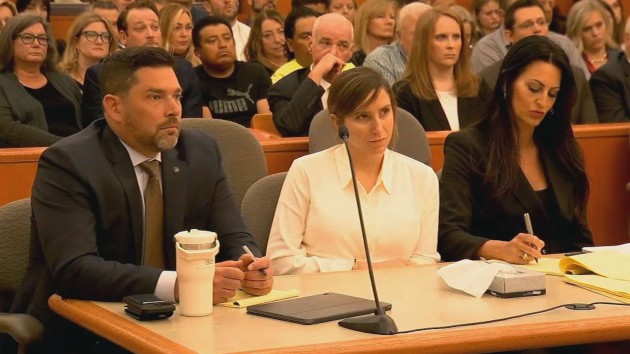
(CORPUS CHRISTI, Texas) — A judge sided with defense lawyers on Thursday and is instructing jurors to completely disregard the testimony of a former teacher who is a key prosecution witness in the trial of former Uvalde, Texas, school police officer Adrian Gonzales.

Former teacher Stephanie Hale returned to the witness stand for an hour on Thursday in an effort to salvage her testimony, but defense lawyers ultimately argued that allowing her testimony to stand would endanger Gonzales’ right to a fair trial.

“There’s no doubt that this was crucial to the [defense] strategy,” Judge Sid Harle said. “I don’t think I have any choice, having denied the mistrial — other than to craft a remedy that will protect the due process rights and hopefully avoid any appellate review that would result in this case being reversed —  so I am reluctantly going to instruct the jury to disregard her testimony in its entirety.”

Before instructing the jury, the judge personally thanked Hale for her testimony and emphasized that she was not at fault.

“I want to emphasize that you did absolutely nothing wrong. It’s not on you,” the judge said. “I want to tell you, just from personal experience, memories of traumatic events change.”

When Hale was on the stand Thursday, defense attorney Jason Goss attempted to point out that her original account — provided to state investigators four days after the May 2022 shooting — differed from what she told the jury on Tuesday. 

“Seeing a shooter, and being shot at, are important details, you would agree with that?” Goss said. 

“It depends on who you are,” she responded. “I don’t know. I guess possibly.”

Gonzales, who was one of nearly 400 law enforcement officers to respond to the Robb Elementary School mass shooting, is charged with 29 counts of child endangerment for allegedly ignoring his training during the botched police response.

Gonzales has pleaded not guilty. His legal team says he did all he could to help students and maintains he’s being scapegoated.

If convicted on all counts, Gonzales could spend the rest of his life in prison.

Nineteen students and two teachers were killed in the shooting. Investigations faulted the police response and suggested that a 77-minute delay in police mounting a counterassault could have contributed to the carnage.

This is a developing story. Please check back for updates.

Copyright © 2026, ABC Audio. All rights reserved.

Judge rejects Harvey Weinstein’s bid for new trial

Harvey Weinstein would consider pleading guilty, defense says; tentative trial date set
Former film producer Harvey Weinstein appears in Manhattan Criminal Court on August 13, 2025 in New York City. (Photo by Pool/Getty Images)

(NEW YORK) — A judge in New York has rejected Harvey Weinstein’s bid for a new trial, ruling juror complaints about decorum in the deliberation room were adequately addressed.

Weinstein was convicted of the 2006 sexual assault of Mimi Haley, a one-time production assistant on the Weinstein-produced reality show “Project Runway.” 

The defense said two jurors subsequently claimed they were pressured to convict. 

Judge Curtis Farber decided on Thursday, “The Court’s response to the jurors’ complaints appropriately balanced the competing interests of investigating the allegations while avoiding any unnecessary taint of the deliberating jury.”

Weinstein is now consulting with his attorneys about when he will be re-tried for the rape count he faces in connection with an alleged 2013 assault of Jessica Mann. The judge declared a mistrial on that one count after the jury failed to reach a unanimous verdict. The Manhattan district attorney’s office said it would retry Weinstein on that count.  

Weinstein, 73, remains in custody at Rikers Island in New York City after nearly six years of confinement. A representative for the disgraced Hollywood producer said he is “medically fragile and in legal limbo.”

Copyright © 2026, ABC Audio. All rights reserved.

Agriculture secretary says new dietary guidelines are ‘a whole flipping of the narrative’

Agriculture secretary says new dietary guidelines are ‘a whole flipping of the narrative’
Secretary of Agriculture Brooke Rollins speaks with ABC News, Jan. 7, 2026. ABC News

(NEW YORK) — U.S. Secretary of Agriculture Brooke Rollins said she wants to “get Americans away from the highly processed packaged foods,” saying those foods are driving the obesity epidemic in America, following the release on Wednesday of new federal dietary guidelines.

“This is a whole flipping of the narrative,” Rollins said in an exclusive interview on “Good Morning America” that aired on Thursday. “It’s a flipping of what we’ve known over the last couple of decades.”

Health and Human Services Secretary Robert F. Kennedy Jr. announced the new federal dietary guidelines on Wednesday, encouraging Americans to limit highly processed food and reduce refined carbohydrates.

The new recommendations essentially turn the old food pyramid upside down, encouraging Americans to eat whole foods like fruits and vegetables, to incorporate healthy fats, to prioritize protein-rich meals including red meat and to consume full-fat dairy and whole grains with no added sugars.

“Today was a reset of all of that in these dietary guidelines focusing on eating real food, nutrient dense foods, saturated fat, meats, fruits and vegetables, whole milk, all of that now becomes front and center,” said Rollins. “And that’s real, that’s unprecedented.”

Other recommendations include limiting added sugars and highly processed foods like potato chips or cookies, as well as sweetened beverages like energy drinks, soda, and diet sodas due to their artificial sweeteners.

The guidance puts a new focus on what the administration is calling “healthy fats,” such as full-fat dairy like yogurt and cheese, and using olive oil, beef tallow or butter as a cooking oil, a recommendation that Kennedy Jr. has championed This is in contrast to the American Heart Association recommendation to “limit high-fat animal products including red meat, butter, lard and tallow, which are linked to increased cardiovascular risk.”

“Our goal is to get Americans away from the highly processed packaged foods, which is the driver in the obesity epidemic that’s facing our country right now,” Rollins told “GMA” on Thursday.

Some of these choices, however, could be costly for many Americans as they face rising grocery prices, including ground beef, which has risen 16% over the past year, according to officials.

“This is just about a general awareness amongst America on what is healthy and what we should be eating,” Rollins continued.

The guidelines also say Americans should “limit alcoholic beverages.” Previously, the dietary guidelines said adults ages 21 and over should stick to two drinks or fewer per day for men and one drink or fewer per day for women.

“The recommendation is just minimize, minimize, minimize, minimize,” Rollins said. “We’re not saying everyone should stop eating sugar and stop drinking anything. That’s not it. It’s just working to trend away from where we’ve gotten to in the last couple decades.”

The new Dietary Guidelines for Americans, which are updated every five years, come as Kennedy has made nutrition policy a cornerstone of his “Make America Healthy Again” agenda.

“Let’s focus on these good, nutritious foods,” Rollins said. “This will change everything.”

Copyright © 2026, ABC Audio. All rights reserved.