

More US hospitals are ending gender-affirming care for minors. How this could impact patients

More US hospitals are ending gender-affirming care for minors. How this could impact patients
Anna Moneymaker/Getty Images

(NEW YORK) — Two U.S. hospitals are the latest to announce they will be ending some, or all, of their pediatric gender-affirming care services at the end of the month.

Kaiser Permanente, a health care company that manages 40 hospitals across several states — including California, Oregon and Virginia — said it is pausing gender-related surgeries for patients under age 18 on Aug. 29. It noted that other gender-related care will continue.

Children’s National Hospital in Washington, D.C. said it will also stop prescribing gender-affirming medications on Aug. 30. It follows a move the hospital made in late January to pause all puberty-blockers and hormone prescriptions for minors.

Since President Donald Trump’s second term began in January, at least 17 major hospital systems in at least nine states and the District of Columbia have paused, discontinued, canceled or ended pediatric gender services, according to an ABC News tally, amid mounting legal and regulatory concerns.

In January, Trump signed an executive order stating the U.S. would not “fund, sponsor, promote, assist, or support” gender transition of those under age 19 and would “rigorously enforce all laws that prohibit or limit these destructive and life-altering procedures.”

Transgender adults and youth may experience extreme psychological distress due to a mismatch in their gender presentation and identity. They experience significantly higher rates of suicide than the general population, but some studies suggest gender-affirming care eases those feelings of distress.

While some individuals and groups have called for a slower approach to gender-affirming care for minors, other pediatric gender care experts and advocates have said ending such care can have a harmful effect on patients’ mental health and well-being.

They say the government is interfering in conversations meant to be held only between patients, their families and doctors, and that doctors are not being allowed to follow the established medical guidelines that medical associations like the American Academy of Pediatrics, the Endocrine Society and the World Professional Association for Transgender Health have endorsed.

“This is health care provided by licensed clinicians according to standards of care that have been around for many years,” Kellan Baker, a senior adviser for health policy with the Movement Advancement Project, a nonprofit think tank that focuses on LGBTQ+ issues, told ABC News.

“To have the government interfering … overreaching into the private conversations between patients and families and their doctors and telling doctors that they cannot provide the care that they know that their patients need — that is a very serious government overreach,” he added.

Evidence for gender-affirming care
Gender-affirming care may include medical, surgical, mental health and non-medical services. It can range from allowing a child to pick their pronouns to more invasive treatments typically prescribed for older teens.

Early gender affirming care can be “crucial” to overall health and well-being, allowing a child to focus on social transitions and can help build up confidence while dealing with the health care system, the federal Office of the Assistant Secretary for Health wrote during the Biden administration.

Gender-affirming care is supported by multiple major medical organizations. Studies have shown many of the treatment options are generally safe and that care can have a positive impact on mental health, which psychotherapy alone cannot provide, some experts said.

Some experts have questioned the significance of the interventions on long-term mental health as well as the possibility of regret and point out potential risks on future fertility.

“It’s deeply disappointing that hospital systems have relented to the political pressure, not scientific pressure, to end these sorts of programs,” Dr. Marci Bowers, a gynecologic and reconstructive surgeon at Mills-Peninsula Medical Cener in Burlingame, California, told ABC News. “We have decades of evidence-based information that suggests that gender-related health care is beneficial to patients and their families with very, very, very scant incidences of regret or disappointment in that care.”

A spokesperson for Children’s National Hospital told ABC News it was discontinuing the prescription of gender-affirming medications in light of “escalating legal and regulatory risks” to the hospital, its providers and families.

“We know this change will have a significant impact on affected patients, families and staff, and our care teams are working directly with families of current patients to support them,” the statement read, in part. “Mental health and other support services for patients remain available. LGBT patients are always welcome at Children’s National for other medical needs and treatment.”

Similarly, a spokesperson for Kaiser Permanente pointed ABC News to actions from the administration, including the Department of Justice issuing subpoenas to doctors and clinics providing gender-affirming care to transgender youth.

“As the legal and regulatory environment for gender-affirming care continues to evolve, we must carefully consider the significant risks being created for health systems, clinicians, and patients under the age of 19 seeking this care,” the statement read, in part. “After significant deliberation and consultation with internal and external experts, including our physicians, we’ve made the difficult decision to pause surgical treatment for patients under the age of 19 in our hospitals and surgical centers.”

The hospital said it would work to identify clinicians performing surgery if a patient’s planned operation was canceled and, if a clinician is available, the hospital said it will work with patients and their families to coordinate care and provide coverage for surgical treatment.

Bowers — the Mills-Peninsula gynecologic and reconstructive surgeon — said if somebody is in treatment and that treatment is suddenly withdrawn, it can be extremely difficult, and patients can experience psychosocial and personal setbacks. She said treatment gave patients a psychological boost.

‘When you look and you talk to these individuals, they are happier about themselves,” she said. “They’re happier about their bodies. They’re happier about their choice of friends, how they see themselves in the world. They’re more optimistic. So those are softer measures, but they’re important, and those things matter.”

She also said withdrawing medical care can be a major disruption to patients’ lives because families may have to move to receive care that is now no longer being provided locally.

Baker — the Movement Advancement Project’s health policy adviser — said he sees the actions from the administration as a “campaign of terror” against health care institutions, doctors and families, and that decisions about continuing or discontinuing gender-affirming care should remain between patients and their health care providers.

“This is about health care providers working together with patients and parents to get kids what they need,” Baker said. “It’s nothing more. It’s nothing less. All that trans people are trying to do is live their lives, and all the parents of trans kids are trying to do is love their kids.”

Concern after HHS report
Not all experts are opposed to the closures. Dr. Kristopher Kaliebe, a child and adolescent psychiatrist and professor at the University of South Florida Morsani College of Medicine, believes the retrenchment reflects long-standing scientific concerns.

“Clinicians have quietly recognized for years that the evidence base for these interventions in minors is weak,” he told ABC News. “There’s no strong proof that they improve mental health, and we simply don’t know the long-term outcomes.”

In May, the Department of Health and Human Services (HHS) released what it called a “comprehensive review” of transgender care for children and teens, calling for broader use of psychotherapy for young people with gender dysphoria rather than gender-affirming care.

The authors of the review were not named, so their credentials have not been reviewed and the paper has not yet been peer-reviewed by independent scientists yet — a step this is typically necessary before changing any guidelines that health care providers follow.

The more than 400-page document details possible harm from medical interventions for youth, including the use of puberty blockers and potentially associated risks, such as infertility.

It follows systematic reviews from Sweden, Finland and the U.K. that have resulted in the three countries restricting gender-affirming care. England’s National Health Service ended prescribing puberty blockers for minors experiencing gender dysphoria outside of clinical trials. Sweden and Finland have followed psychotherapy-first models.

Kaliebe called the HHS review a needed step, saying, “For the first time, the federal government acknowledged openly that these interventions are experimental and that we need high-quality data, especially long-term tracking of outcomes.”

However, Bowers dismissed the HHS review as derivative, saying the team that put the report together didn’t appear to conduct its own review and rather “pirated” reviews conducted overseas.

“There were a lot of other mischaracterizations throughout that report,” Bowers said. “Most experts, frankly, scoff at what they saw. … It’s disappointing. It sounds more like politics than it does practical and factual matter.”

Baker concurred, referring to the report as a “really shocking government document,” suggesting it was commissioned right after Trump’s January executive order with a pre-determined outcome.

“I’m a health services researcher by training … and I’m very familiar with evidence-based medicine and systematic reviews, and one of the ways that you need to make sure that you’re approaching work like that is to not have your thumb on the scale,” he said. “You don’t go in with a research question that has already been decided, where the outcome has already been decided. That’s not good science. It’s not science at all.”

He said producing the report so quickly after the executive order was issued — a little over three months — was too short of a timeline for a thorough review and he criticized not having the names of the authors on the report to ensure there were no conflicts of interest and that the authors were experts in their field.

Experts have said they are in favor of more research being conducted — Kaliebe emphasized the need for rigorous tracking of harms and a clearer study of psychotherapeutic approaches.

Bowers argued that while stronger research is welcome, cutting off services altogether harms real people.

“We know from decades of clinical experience that when care is affirming, young people are happier and healthier,” she said. “That’s what parents see, even if politics obscures it.”

If you or someone you know is struggling with thoughts of suicide, free, confidential help is available 24 hours a day, seven days a week. Call or text the national lifeline at 988.


Copyright © 2025, ABC Audio. All rights reserved.

750 HHS employees send signed letter to RFK Jr. asking him to stop spreading misinformation

750 HHS employees send signed letter to RFK Jr. asking him to stop spreading misinformation
Elijah Nouvelage/Getty Images

(WASHINGTON) — More than 750 employees across the Department of Health and Human Services sent a signed letter to members of Congress and Health Secretary Robert F. Kennedy Jr. on Wednesday morning, calling on the secretary to stop spreading misinformation.

The letter states the deadly shooting that occurred at the Atlanta headquarters of the Centers for Disease Control and Prevention on Aug. 8 was “not random” and was driven by “politicized rhetoric.”

Authorities said the 30-year-old gunman — who killed a police officer in the attack — had been harboring yearslong grievances with the COVID-19 vaccine. He believed he suffered negative health effects after he got the vaccine, and the Georgia Bureau of Investigation found written documents at his home indicating that he wanted to make his discontent known.

The signatories are accusing Kennedy of endangering the lives of HHS employees by spreading misinformation.

Kennedy, who oversees the CDC, has peddled vaccine skepticism throughout his career. Before becoming health secretary, Kennedy falsely called the COVID-19 vaccine the “deadliest vaccine ever made.”

HHS did not return ABC News’ request for comment.

“Health and Human Services Secretary Robert F. Kennedy, Jr., is complicit in dismantling America’s public health infrastructure and endangering the nation’s health by repeatedly spreading inaccurate health information,” the letter states.

The employees pointed to various examples, such as Kennedy referring to the CDC as a “cesspool of corruption” in a post on X and falsely claiming mRNA vaccines “failed to protect effectively” against COVID and flu.

The letter said such “dangerous and deceitful statements and actions” contributed to the harassment and violence experienced by CDC employees.

Dr. Shiv Prasad, a scientific review officer at the National Institutes of Health who signed the letter, said he felt compelled to do so for many reasons.

“Like my colleagues at the CDC, I am concerned about several things,” Prasad, speaking in his personal capacity and not on behalf of NIH or HHS, told ABC News. “One is the misinformation that’s being spread, especially concerning vaccines and COVID-19 and it has a way of vilifying federal workers who are working every day to ensure the health of Americans.”

He went on, “I’m concerned about the safety of HHS workers … I think we are all potential targets now.”

The letter called on Kennedy to take a number of actions by Sept. 2, including not spreading inaccurate health information, affirming the scientific integrity of the CDC and guaranteeing the safety of the HHS workforce.

Prasad added that he would also like to see action from Dr. Jay Bhattacharya, the director of NIH. Bhattacharya recently supported Kennedy’s decision to cancel $500 million in federal funding for mRNA vaccine development, saying the decision was made because “the mRNA platform is no longer viable.”

Prasad said he and his colleagues would like Bhattacharya “to consider the effect of his words, potential effect on NIH staff, because he has made some comments in the past about the origins of COVID-19 and certainly recently with the NIH moving away from mRNA vaccine technology.”

“These things are not accepted by the field and, again it’s misinformation, and it could lead to it could put us at risk,” he continued.

ABC News’ Cheyenne Haslett contributed to this report.

Copyright © 2025, ABC Audio. All rights reserved.
California resident tests positive for plague

California resident tests positive for plague
Stock image of hospital patient. Sorrasak Jar Tinyo/Getty Images

(SOUTH LAKE TAHOE, Calif.) — A resident in South Lake Tahoe, California, has tested positive for plague, according to local health officials.

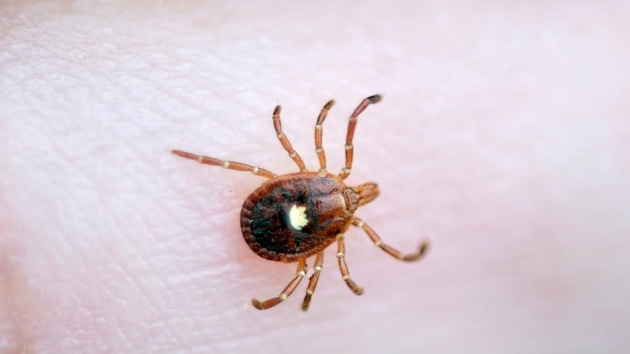
The person is believed to have been bitten by an infected flea while camping, officials said.

In a separate incident last month, a person in Arizona died from plague.

Plague is a disease caused by a type of bacteria that usually results in about seven cases nationally each year, according to the Centers for Disease Control and Prevention.

It occurs naturally in areas of the western U.S., where it circulates among wild rodents and other animals. Humans usually get infected through the bite of an infected rodent flea or by handling an infected animal. Symptoms, including fever, nausea, weakness and swollen lymph nodes, usually show up within two weeks of exposure, according to health officials.

“Plague is naturally present in many parts of California, including higher elevation areas of El Dorado County,” Kyle Fliflet, El Dorado County’s acting director of public health, said in a statement. “It’s important that individuals take precautions for themselves and their pets when outdoors, especially while walking, hiking and or camping in areas where wild rodents are present.”

The disease can be cured with antibiotics, which must be given quickly to prevent serious illness or death. At least 15 people have died from plague since 2000, the latest CDC data shows.

The risk to the public of exposure as well as the risk of human-to-human transmission remains low, according to health officials.

Copyright © 2025, ABC Audio. All rights reserved.

Leading pediatrician group recommends COVID vaccine for infants, toddlers in contrast with RFK Jr.

Leading pediatrician group recommends COVID vaccine for infants, toddlers in contrast with RFK Jr.
Joe Raedle/Getty Images

(ATLANTA) — The American Academy of Pediatrics (AAP) said on Tuesday that children ages 6 months to 23 months should receive a COVID-19 vaccine, in contrast with federal health officials.

The recommendations are part of the AAP’s annual childhood immunization schedule, which includes guidance for COVID, flu and RSV vaccines for those aged 18 and younger.

The AAP has been releasing its own recommendations since the 1930s, but in a rare occurrence, the recommendations differ from those put out by the Centers for Disease Control and Prevention (CDC).

The group also recommended Americans age 18 and under receive a COVID vaccine if they are at high risk of severe COVID, live in a long-term care facility or congregate setting, if they have never been vaccinated against COVID or if they live with someone at high risk for severe COVID.

It comes after Health and Human Services secretary Robert F. Kennedy Jr. announced in late May that the CDC would no longer recommend the COVID vaccine for healthy children.

The CDC, which is under Kennedy’s purview, later updated the guidance to a “shared clinical decision making” model — leaving the decision to vaccinate children to parents alongside advice from a doctor.

The prior recommendations were that everyone aged 6 months and older get vaccinated against COVID with the most up-to-date shot.

The contrasting vaccine recommendations highlight the growing rift between federal health officials and medical organizations on vaccine policy.

“The academy has been making pediatric immunization recommendations since the 1930s, that has not changed,” Dr. Susan J. Kressly, president of the AAP, told ABC News. “But what has changed is that this year, we’re doing it in the environment of misinformation, which makes it more important than ever that we provide clear and confident guidance, because the majority of American families really depend on us for this guidance.”

Children between 6 months old and 23 months old are at the highest risk of severe COVID-19, and the vaccine can protect against serious illness, according to the AAP.

“We know that this age group, that’s the highest risk for severe disease,” Kressly said. “And so we want to make sure that those children who are at highest risk and did not live through the pandemic — they were not exposed to COVID viruses during the pandemic — we want to make sure that they are protected as best as possible.”

Although medical organizations may differ in their vaccine recommendations, insurers often rely on the CDC’s vaccine panel, known as the Advisory Committee on Immunization Practices (ACIP), recommendations to determine what they will and won’t cover.

If certain vaccines aren’t recommended by the ACIP, it may lead to parents or guardians facing out-of-pocket costs if their children receive the shot. It could also mean the shots aren’t covered by the Vaccines for Children (VFC) program, a federally funded program that provides no-cost vaccines to eligible children.

“We need to work with our like-minded policy makers who understand the importance of keeping VFC vaccines available in every community for those children who depend on them,” Kressly said. “At the same time, there are children in this country whose vaccines are paid for through commercial insurance, and we are having continuing conversations with major payers to make sure that those can be vaccines are available as well. Vaccination is part of high-quality preventive care, and we are confident that we can work with the payers to make sure that translated into policy.”

Copyright © 2025, ABC Audio. All rights reserved.
Measles outbreak that sickened more than 700 declared over in Texas

Measles outbreak that sickened more than 700 declared over in Texas
In this Feb. 27, 2025, file photo, signs point the way to measles testing in the parking lot of the Seminole Hospital District across from Wigwam Stadium, in Seminole, Texas. Jan Sonnenmair/Getty Images, FILE

(TEXAS) — A measles outbreak in Texas that infected more than 700 people has officially been declared over, state health officials announced on Monday.

The outbreak was the largest in the state in more than 30 years and led to the deaths of two unvaccinated school-aged children.

Health officials declared the outbreak over after more than 42 days without a new case, a cut-off based on the time between when a person is exposed to when they get sick.

In late January, a cluster of cases was reported in western Texas near Gaines County — near the border with New Mexico — which had one of the lowest vaccination rates in the state.

A total of 762 cases were recorded with more than two-thirds of infections among children, according to the Texas Department of State Health Services (DSHS). Nearly 100 people were hospitalized.

Infections spread to other parts of the state as well as New Mexico, where another unvaccinated person died after contracting measles.

“I want to highlight the tireless work of the public health professionals across the state who contributed to the containment of one of the most contagious viruses,” Dr. Jennifer Shuford, commissioner of the DSHS, said in a press release. “We arrived at this point through a comprehensive outbreak response that included testing, vaccination, disease monitoring and educating the public about measles through awareness campaigns.”

Texas health officials warned that the state is likely to experience additional cases this year given ongoing outbreaks in other parts of the U.S. and the world.

“The end of this outbreak is certainly encouraging, but measles remains one of the most contagious viruses we face, and continued vigilance is critical given ongoing outbreaks both in the U.S. and globally,” said Dr. John Brownstein, an epidemiologist and ABC News medical contributor.

Nationally, over 1,350 cases of measles have been reported across at least 40 states, according to the Centers for Disease Control and Prevention (CDC). It is the highest number of measles cases seen in the U.S. since 1992.

The virus was declared eliminated by health officials in 2000 after a full year of no continuous spread, but declining vaccination rates have led to a growing number of outbreaks annually, experts say. An estimated 92% of cases nationally this year are unvaccinated or have unknown vaccination status.

“Vaccination rates in many communities remain far too low, leaving large pockets of children vulnerable to measles and other preventable diseases — and that’s why we’re likely to continue seeing outbreaks,” Brownstein said.

The 2024-2025 school year had a record number of non-medical vaccine exemptions, with an estimated 286,000 kindergarteners attending school without documentation of receiving the shot that protects against measles, according to CDC data.

“Measles isn’t happening in isolation — we’re seeing a broader resurgence of vaccine-preventable diseases, from pertussis to polio threats, which underscores the urgent need to maintain high vaccination coverage and public trust in immunization,” Brownstein added.

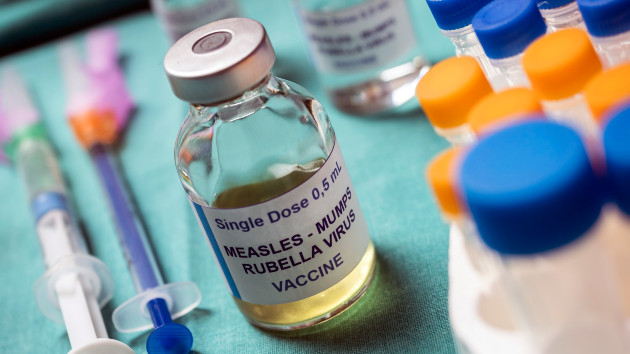
The measles, mumps and rubella (MMR) vaccine is recommended for children in the U.S. to receive after their first birthday, followed by a second dose in between ages four and six. Two doses of the vaccine have been shown to be 97% effective against infection.

Copyright © 2025, ABC Audio. All rights reserved.
Draft of new ‘MAHA’ report suggests RFK Jr. won’t target pesticides

Draft of new ‘MAHA’ report suggests RFK Jr. won’t target pesticides
Anna Moneymaker/Getty Images

(NEW YORK) — The draft of an upcoming government report suggesting ways to improve the health of American children does not recommend severe restrictions on pesticides and ultra-processed foods, according to a copy of the document obtained by ABC News.

The draft’s language, if left unchanged, would constitute a win for the agriculture industry and a potential setback for Health and Human Services (HHS) Secretary Robert F. Kennedy Jr. and his “Make America Healthy Again” (MAHA) allies, who have railed against the use of chemical additives in America’s food supply, arguing that they harm children.

A person familiar with the draft cautioned that the language could still change before it’s released to the public.

“Unless officially released by the administration, any document purporting to be the MAHA report should be dismissed as speculative literature,” White House deputy press secretary Kush Desai said in response to ABC News’ request for comment.

An HHS spokesperson declined to verify the document’s authenticity.

The New York Times first reported details of the new draft report.

The report will be the second “MAHA” report released by the Trump administration following one published in May. Both were composed by officials in the White House and across different federal agencies, including Kennedy’s HHS.

The May report detailed the factors officials said were worsening the health of American children and called for a second report, within 100 days, to recommend policies to address those factors.

The earlier report — which was dogged by the revelation that some studies it cited were nonexistent — cited damning statistics about the effect of chemical food additives, tying them to cancer and developmental disorders.

The draft of the new report does not signal any intention to eliminate pesticides from America’s food.

Instead, the draft calls for “more targeted and precise pesticide applications” and research programs that would “help to decrease pesticide volumes.”

The report also stated the Environmental Protection Agency “will work to ensure that the public has awareness and confidence in EPA’s robust pesticide review procedures and how that relates to the limiting of risk for users and the general public.”

Regarding ultra-processed foods, the new report states only that HHS, the U.S. Department of Agriculture and the Food and Drug Administration would work to develop a “government-wide definition for ‘ultra-processed food.'”

In his January confirmation hearing, Kennedy declared that “something is poisoning the American people, and we know that the primary culprits are changing food supply, a switch to highly chemical intensive processed foods.”

Meanwhile, some “MAHA” influencers have loudly demanded changes to the country’s food supply, putting their faith in Kennedy to leverage his position of power to uproot the agriculture industry.

But this summer, agriculture groups lobbied intensely against the inclusion of anti-pesticide recommendations in the new report.

They appeared to find an ally in Secretary of Agriculture Brooke Rollins, who indicated to reporters this month that the upcoming report would spare pesticides.

“There is no chance that our current system of agriculture can survive without those crop protection tools,” she said at a press conference in a Washington. “I feel very confident that his, and our, commitment to make sure that farmers are at the table remains paramount, and that the report will reflect that.”

Copyright © 2025, ABC Audio. All rights reserved.
CDC launches new national campaign to tackle mental health, substance use among teens

CDC launches new national campaign to tackle mental health, substance use among teens
Photo Illustration by Thomas Fuller/SOPA Images/LightRocket via Getty Images

(WASHINGTON) — The Centers for Disease Control and Prevention (CDC) launched a new campaign on Tuesday aimed at tackling mental health and substance use among teens ahead of the upcoming school year.

The federal campaign, entitled Free Mind, aims to provide teens and their parents or caregivers with “resources and information about substance use, mental health and the connection between the two.”

The efforts revolve around the messaging that “drugs and mental health don’t mix” according to the landing page of the new campaign on the CDC’s website.

“When you deal with lots of emotions, you might be tempted to turn to drugs and alcohol or cope by misusing medications that are not prescribed to you,” the website states.

Substance use, however, can cause or worsen anxiety, sadness, anger and depression, according to the CDC. It can also affect a patient’s memory or mood.

The CDC describes that drug overdose crisis as “constantly evolving” and “an important public health issue.”

More than 80,000 Americans died from a drug overdose last year, according to CDC data. In the last four years, 75% of overdose deaths among pre-teens and teenagers ages 10 to 19 involved illegally made fentanyl.

The number of teens reporting poor mental health has increased in the past decade, with 40% of high school students stopping regular activities because of persistent feelings of sadness or hopelessness in 2023. One in five students have seriously considered attempting suicide, according to the CDC.

“Teens may use alcohol and other substances to help them cope with stress, anxiety, and depression,” said Dr. Allison Arwady, director of the CDC’s National Center for Injury Prevention and Control, in a press release.

The agency said it spoke with adolescents. about their perceptions surrounding substance use in order to develop the messaging and branding for the new campaign. The initiative “seeks to resonate with this age group by addressing the connections between substance use and mental health, risk factors that contribute to drug use, and strategies to keep them safe,” according to the CDC.

Resources were also created for parents and caregivers around youth substance use and mental health challenges.

“Talking openly about mental health and substance use, and knowing when to get professional help, is critical to helping teens stay healthy,” Arwady said. “That’s why this campaign supports youth, parents, and caregivers in having those conversations early, before an issue arises.”

If you or someone you know is struggling with thoughts of suicide – free, confidential help is available 24 hours a day, 7 days a week. Call or text the national lifeline at 988.

Copyright © 2025, ABC Audio. All rights reserved.

Senate confirms Trump nominee Susan Monarez as CDC director. Here’s what to know

Senate confirms Trump nominee Susan Monarez as CDC director. Here’s what to know
Kayla Bartkowski/Getty Images

(WASHINGTON) — The Senate confirmed Susan Monarez as director of the Centers for Disease Control and Prevention (CDC).

Monarez was confirmed by a vote of 51-47 along party lines on Tuesday evening. Sens. Mark Kelly (D-Ariz.), Sen. Bill Hagerty (R-Tenn.) and Dan Sullivan (R-Alaska) were absent.

She is the first CDC director nominee who required Senate confirmation after Congress passed a law requiring it in 2022.

Monarez holds a PhD, but she is the first CDC director without a medical degree since 1953.

In a post on X, the CDC wrote a congratulatory message to Monarez, saying that she “brings decades of distinguished experience in health innovation, disaster preparedness, global health, and biosecurity to [the CDC].”

“Dr. Monarez will lead [the CDC’s] efforts to prevent disease and respond to domestic and global health threats” and advancing Health and Human Services Secretary Robert F. Kennedy Jr.’s “mission to Make America Healthy Again.”

Here’s what to know about Monarez:

According to her biography on the CDC website, Monarez worked on initiatives including the ethical use of artificial intelligence, addressing disparities in maternal morbidity and mortality and improving the national organ donation and transplantation programs.

Monarez also worked in the public sector under former presidents George W. Bush, Barack Obama and Joe Biden, as well as during Trump’s first term. That work included strategies to combat antimicrobial resistance.

Prior to the CDC, Monarez worked in the Advanced Research Projects Agency for Health, a federal research funding agency that focuses on biomedical and health breakthroughs. In January 2023, she was appointed deputy director of the agency.

Monarez was named acting CDC director in January, stepping down after she was nominated for the permanent position in March. It came after President Donald Trump’s first pick, Dr. David Weldon, had his nomination pulled by the White House due to a lack of votes.

Weldon was expected to be grilled on his past comments questioning vaccine safety, such as falsely suggesting vaccines are linked to autism.

During her confirmation hearing last month, Monarez expressed support for vaccines, in contrast with Kennedy, who has expressed some skepticism.

When questioned on the discredited theory that childhood vaccinations are linked to autism, Monarez stated that she has “not seen a causal link between vaccines and autism.”

In a statement, Dr. Richard Besser, president and CEO of the Robert Wood Johnson Foundation and former acting director of the CDC, responded to Monarez’s confirmation, expressing concern over “attacks” on the agency from the administration.

“These attacks have already had major consequences, from exacerbating the worst outbreak of measles to hit our country in a generation to cutting billions of dollars in funding to state and local health departments,” he said in a statement.

Besser noted that Monarez “must fight” for the CDC, in addition to leading it.

“Our nation’s entire public health system depends on CDC having the tools it needs to respond to pandemics, reduce chronic disease, and address health inequities that continue to leave too many communities behind,” the statement continued. “That starts with a director willing to speak the truth, defend science, and stand up for the health of every American.”

Copyright © 2025, ABC Audio. All rights reserved.

1st pill for obstructive sleep apnea could be around the corner

1st pill for obstructive sleep apnea could be around the corner
Roberto Machado Noa/LightRocket via Getty Images

(NEW YORK) — The first oral pill for obstructive sleep apnea (OSA) could be around the corner after pharmaceutical company Apnimed Inc. reported positive results from its stage III clinical trial.

Currently, many people diagnosed with OSA patients require a machine that covers their nose or both the nose and mouth during sleep and delivers air through a mask to help keep their airways open.

Apnimed’s lead candidate AD109 showed “clinically meaningful and statistically significant reductions” in airway obstruction after 26 weeks, the company said in a press release.

AD109, a once-a-day pill, is a neuromuscular modulator that increases upper airway muscle tone, which is how contracted the muscles are in the upper airway.

OSA patients treated with the medication saw a nearly 50% reduction in the severity from baseline at week 26, compared to 6.8% of those in the placebo group.

The reduction was “significant” at the end of the study period, which concluded at 51 weeks. At the end of the trial, nearly 23% of participants saw “complete disease control.”

The results were part of Apnimed’s 12-month study looking at the safety and efficacy of AD109 in adults with mild, moderate and severe OSA.

AD109 was well-tolerated among participants with only mild or moderate adverse events. Which was consistent with prior studies, according to Apnimed. No serious adverse events were reported in the trial.

“With two large Phase 3 studies now demonstrating a consistent and significant efficacy profile for AD109, we are closer to delivering the first oral pharmacotherapy for over 80 million U.S. adults with OSA,” Dr. Larry Miller, CEO of Apnimed, said in a statement. “Given the scale of unmet need in OSA, where the majority of patients remain untreated, we believe AD109, as a simple once-daily oral drug, has the potential to expand and reshape the treatment landscape, which would represent a significant commercial opportunity for Apnimed.”

OSA is a sleep disorder in which the airways become narrowed or blocked while sleeping, causing breathing to pause, according to MedlinePlus.

Soon after falling asleep, people experience loud and heavy snoring. The snoring is often interrupted by a long silent period during which breathing stops and then followed by a loud snort and gasp as the patient attempts to breathe.

This can cause excessive daytime sleepiness and affect quality of life, mental well-being and cardiovascular health.

In addition to a CPAP machine, there are lifestyle changes that people with sleep apnea can make including avoiding alcohol or medications that cause drowsiness and losing excess weight.

Recently, the U.S. Food and Drug Administration (FDA) expanded approval of Eli Lilly’s obesity medication Zepbound to include treating moderate to severe obstructive sleep apnea for people with obesity.

The clinical trial did examine patients with a wide range of “weight classes” and did not see differences in efficacy based on weight.

Apnimed plans to file a New Drug Application with the FDA in early 2026, according to Miller.

Copyright © 2025, ABC Audio. All rights reserved.
Measles cases in US over 4.5 times higher than all of last year

Measles cases in US over 4.5 times higher than all of last year
Jan Sonnenmair/Getty Images

(NEW YORK) — Measles cases in the United States are continuing to rise after breaking a decades-long record just two weeks ago.

There are now 1,319 confirmed measles cases across 39 states, according to data from the Centers for Disease Control and Prevention (CDC) updated Wednesday. This is the highest nationwide measles figure seen since 1992.

National cases are more than 4.5 times higher than the entirety of last year, which had an estimated 285 cases reported.

So far, two children and one adult have died from the virus this year, the first deaths from measles in a decade. About one to three of every 1,000 children infected with measles die from respiratory and neurologic complications, according to the CDC.

An overwhelming majority of this year’s cases — 92% — are among those who were unvaccinated or whose vaccination status is unknown, CDC data shows.

Measles was declared eliminated from the U.S. in 2000 due to a highly effective vaccination program, according to the CDC

Childhood vaccination rates to protect against measles have been declining in recent years, CDC data shows.

The rate of kindergarteners receiving state-required vaccinations dropped from 95% in the 2019-2020 school year to less than 93% in the 2023-2024 school year, according to CDC data. A 95% threshold is the ideal level to protect for herd immunity, public health experts note.

This leaves about 280,000 U.S. kindergarteners, or 7.3%, without protection from the virus.

A measles vaccine became available in 1963. Prior to that, nearly all children got measles by the time they were 15 years old. It led to an estimated 500 deaths and 48,000 hospitalizations each year before the shot was widely available, according to the CDC.

Children in the U.S. are recommended to receive the two-dose measles, mumps, and rubella (MMR) vaccine with the first dose at 12 to 15 months of age and the second between 4 and 6 years old. One dose is 93% effective, and two doses are 97% effective, the CDC says.

A booster shot is not typically recommended for adults who already have immunity from the virus through vaccination or prior infection.

Copyright © 2025, ABC Audio. All rights reserved.