(NASHVILLE, Tenn.) — When Cathey Stoner gave birth to a baby boy last month, it was a miracle years in the making.
Stoner delivered the child after serving as a surrogate for her twin sister, Sarah Sharp, who could not carry a pregnancy after being diagnosed with choriocarcinoma, a rare and fast-growing cancer that occurs in a woman’s uterus.
The newborn baby, named John Ryder Sharp and born on Aug. 18, is the biological child of Sharp and her husband, Richard.
“Her offering that to me was the biggest act of love that anyone’s ever extended to me or my family,” Sharp, 33, said of her sister carrying her child. “Surrogacy is a beautiful gift that you can give somebody and I will forever be grateful.”
Sharp, who, like her sister, lives in the Nashville area, was diagnosed with choriocarcinoma in 2018, about one year after she gave birth to her now 4-year-old daughter Charlotte.
She underwent seven rounds of chemotherapy in an attempt to beat the cancer while also saving her uterus. She was declared cancer free in December 2018, but by her first checkup, in January, the cancer had returned.
She began a new course of chemotherapy and also underwent a hysterectomy, which successfully removed the cancer but left her without the hope of giving birth to another child.
Just before Sharp underwent the hysterectomy, Stoner told her sister for the second time in her cancer battle that she would carry any future children for her.
“We kind of laughed a little bit again but for me, in the back of my mind, it was something to hold onto,” Sharp told “Good Morning America” in June. “It was something to help me move myself forward mentally. It was hope and grace and the future all in one.”
Once Sharp finished her cancer treatments, she prepared to become a mom again, and turned to her sister for help.
Stoner, mom to a 4-year-old son and a 6-year-old daughter, said she had no hesitation about helping her sister expand her family in any way she could.
“We decided to knock on the doors and see if they opened,” Stoner told “GMA” in June. “There was a lot of waiting, but it went really smooth.”
By the end of 2020, the two sisters, whose story is featured in the new issue of People magazine, were celebrating the news that Stoner was pregnant.
“From the beginning I’ve felt differently in this pregnancy because I know it’s my nephew and not my son, and I have loved every step of the way,” said Stoner, who was the baby’s gestational carrier. “I tell people, ‘I’m just carrying my nephew.'”
“To be able to go to the doctor for such a happy reason is really healing for all of us,” she added, noting that her sister was with her at every doctor’s appointment during the pregnancy.
(JACKSON, Miss.) — Mississippi health officials are urging expectant mothers to get vaccinated after a “significant” number of COVID-19 fatalities in pregnant women during the state’s delta surge.
The state health department is investigating eight reports of pregnant women who died from COVID-19 in the past four weeks, all of whom were unvaccinated, Mississippi State Health Officer Dr. Thomas Dobbs said at the top of a COVID-19 briefing Wednesday.
“We do know that COVID is especially problematic and dangerous for pregnant women,” Dobbs said. “We also know it can be deadly for the baby in the womb.”
Compared to the rate pre-pandemic, the health department has seen a “doubling of the rate of fetal demise, or the death of the baby in the womb after 20 weeks,” Dobbs said. “It’s been a real tragedy.”
The warning comes as a majority of pregnant women nationwide have yet to be vaccinated. About three out of four pregnant women in the U.S. have not yet received a COVID-91 vaccine, according to the latest data from the Centers for Disease Control and Prevention.
Pregnant women are at higher risk for severe illness if they contract COVID-19, including “intensive care unit admission, invasive ventilation, extracorporeal membrane oxygenation, and death,” compared to nonpregnant women, according to the CDC.
As of Monday, at least 147 pregnant women had died from COVID-19 nationwide during the pandemic, according to CDC data.
The American College of Obstetricians and Gynecologists, the professional association for OB-GYNs, recommends that all eligible people, including pregnant and breastfeeding women, get the COVID-19 vaccine.
Last month, the CDC also strengthened its recommendation for vaccination in pregnant women, with Director Dr. Rochelle Walensky saying, “it has never been more urgent to increase vaccinations as we face the highly transmissible Delta variant and see severe outcomes from COVID-19 among unvaccinated pregnant people.”
After reporting four COVID-19 fatalities in pregnant women earlier in the pandemic, Mississippi did not have any others again for almost a year, until this past July, state data shows.
“Delta is different, and delta is deadly, and we need to do everything we can to prevent transmission,” Dobbs said.
The health department was still gathering details on the most recent maternal fatalities and the status of the infants, with more information to come next week. It was confirmed that several of the infants were born prematurely, “but are alive,” Dobbs said Wednesday. The health department reported a pediatric death due to COVID-19 on Wednesday, but that was not related to any of the maternal deaths, he said.
Health officials pleaded with pregnant women who had not yet been vaccinated to get the shot, along with the general public. Only 47.6% of Mississippi residents ages 12 and up are fully vaccinated, fourth-lowest in the U.S., compared to 62.5% nationwide, according to CDC data.
“It’s getting easier and easier to find Mississippians that have a story about the tragedy from the delta variant,” Jim Craig, senior deputy and director of health protection for the Mississippi’s health department, said during the briefing. “Don’t let that be a pregnant mom and expectant family.”
(NEW YORK) — Henry Ray Fischbach, a jazz singer from New York City, was playing a show at a neighborhood restaurant in July when he collapsed mid-performance.
“I was feeling fine until that last number and as I was performing that song, I started to feel very light-headed and weak,” Fischbach, who goes by the stage name Henry Ray, told Good Morning America. “I thought I was just very dehydrated.”
Fischbach, 66, had actually gone into cardiac arrest and his heart stopped beating.
As his wife and fellow concertgoers screamed for help, three doctors who happened to stop by the restaurant for an after-work drink rushed the stage to help.
“We could see he was on the floor and on his side,” said Dr. Matthew Simhon, an orthopedic surgery resident at NewYork-Presbyterian/Columbia University Irving Medical Center. “His skin was very blue. We didn’t feel any pulse. He wasn’t breathing whatsoever.”
Simhon and his colleagues, Dr. Andrew Luzzi, also an orthopedic surgery resident at NewYork-Presbyterian/Columbia University Irving Medical Center, and Dr. Marc Dyrszka, a spine surgeon affiliated with NewYork-Presbyterian Och Spine, immediately began doing chest compressions on Fischbach to bring him back to life.
The trio of doctors worked on him for more than 10 minutes, until paramedics arrived with a more advanced defibrillator that successfully got Fischbach’s heart beating again.
Once he was in the ambulance on the way to the hospital, Fischbach was alert and able to realize how severe his condition had been.
“One of the EMTs in the ambulance told me, ‘You just died twice,'” recalled Fischbach. “He told me that there were doctors in the audience, but I had been unaware during the show that I was standing a few feet away from guys who would change my life, who would save my life.”
Fischbach was rushed to NewYork-Presbyterian/Columbia University Irving Medical Center, where he had a stent put in his left coronary artery to relieve the blockage.
During his time in the hospital and after being discharged home, Fischbach never knew the names of the three doctors who had saved his life and never got to thank them.
That changed on Aug. 27, when, just one month after suffering cardiac arrest, Fischbach returned to the stage at the same restaurant where he collapsed.
“I got the chance to express the inexpressible, the gratitude for saving my life,” said Fischbach. “I dedicated that evening to the three of them and the gift of life and the gift of being able to celebrate music that evening.”
“They are the nicest, most humble doctors,” he added. “It’s amazing and they’re just like, ‘This is what we do.'”
Simhon and Luzzi said they were just grateful to be in the “right place at the right time.”
“Out of hospital cardiac arrest survival rate is very low, so it felt really good that we were able to contribute to his good outcome,” said Simhon. “It was really amazing that we were able to return him back to his life.”
Luzzi described seeing Fischbach back on stage after saving his life as a “mix of emotions.”
“Relief is one, gratitude is another for being in the right place at the right time and surprise is another one,” he said. “He was back in relatively short order up and dancing and singing again, which is pretty unusual.”
Both doctors also stressed the importance of people learning CPR and chest compressions so they too can step in and help in an emergency.
“To be able to do CPR, it really is the difference between life and death,” said Luzzi. “Unless someone else there also knew CPR and did what we did, [Fischbach] very likely would not have survived.”
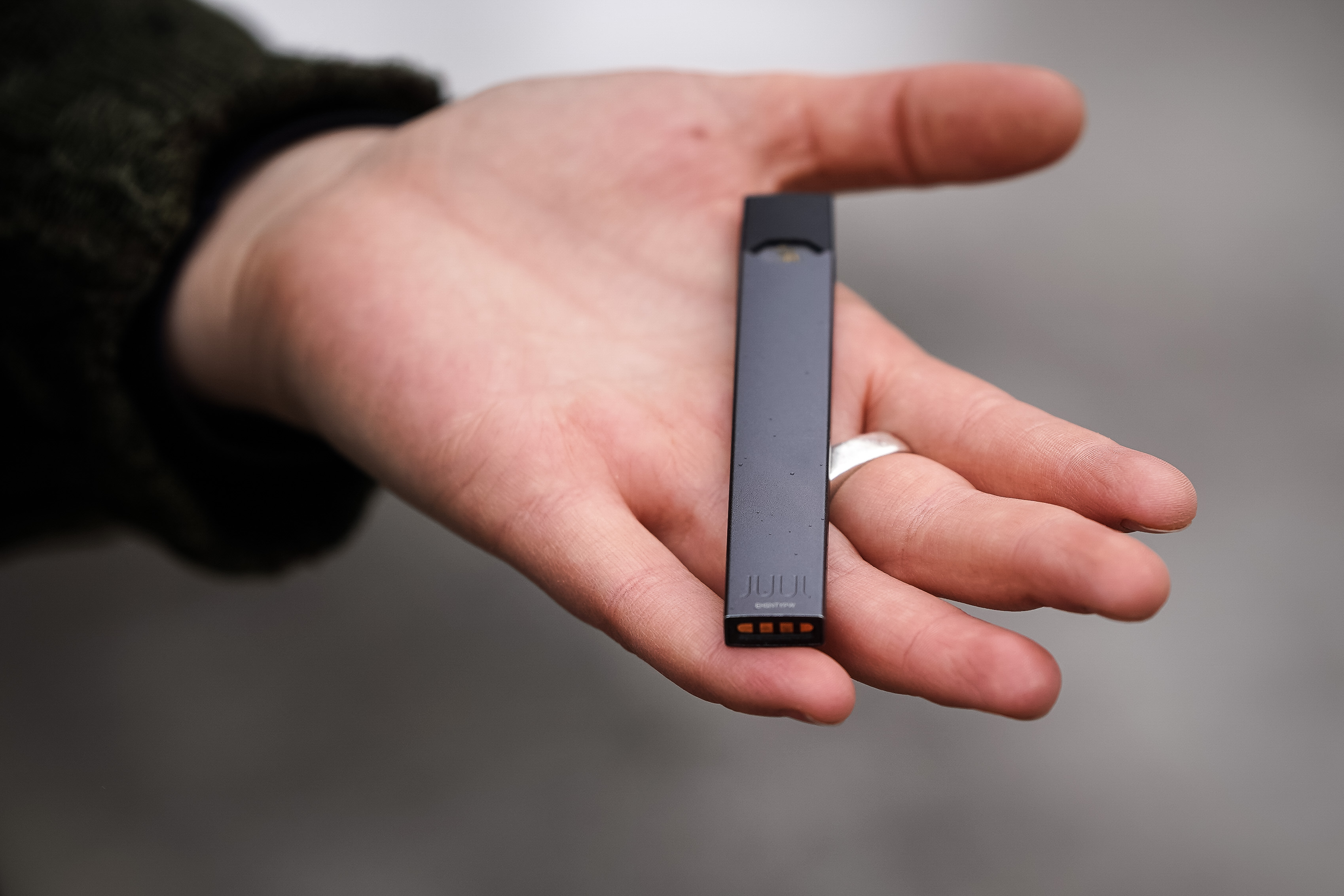
(WASHINGTON) — After banning sale of nearly 950,000 lesser-known e-cigarette products, the Food and Drug Administration has delayed its decision related to products made by Juul, the largest e-cigarette manufacturer.
The FDA had a court-ordered Sept. 9 deadline to review 6.5 million applications for so-called “new tobacco products,” primarily electronic nicotine-containing products, from over 500 companies to determine whether these devices are safe and can stay on the market.
On Thursday, the FDA said it had reviewed more than 90% of those applications, saying it would “continue to work expeditiously on the remaining applications … many of which are in the final stages of review,” according to a statement.
But Juul is the biggest e-cigarette maker in the U.S. and its products comprise the lion’s share of the market.
The Campaign for Tobacco Free Kids called the move “a significant step in the right direction,” but failure to ban all e-cigarettes “leaves kids at risk.” The American Lung Association, meanwhile, said it was “deeply disappointed” by the delayed decision on Juul and other products.
After years of mounting concern about the youth vaping epidemic, the FDA in recent years has taken progressively tougher regulatory actions over the e-cigarette industry, first prohibiting the sale of candy- and fruit-flavored products that are more appealing to children, and later requiring even more products to cease sales.
E-cigarettes were originally envisioned as a replacement for traditional cigarettes among adults who already smoke. But “the biggest threat with e-cigarettes is that it’s easy to try nicotine for the first time,” said Marielle Brinkman, a tobacco and cancer researcher at The Ohio State University.
E-cigarettes contain high amounts of addictive nicotine and are easy to conceal and use. In a statement, the FDA said flavored e-cigarette products are “extremely popular among youth, with over 80% of e-cigarette users ages 12 through 17 using them.”
These children and teens are typically not regular smokers, but are at risk of becoming addicted to nicotine through vaping. E-cigarettes can also harm brain development in youth, according to the Centers for Disease Control and Prevention, and pose risks of developing other illnesses in the future.
Mitch Zeller, director of the FDA’s Center for Tobacco Products, has said that according to current regulations, “the burden is on the [manufacturer] to provide evidence to demonstrate that the marketing of their product meets the … standard ‘appropriate for the protection of the public health.'”
In a statement, Juul Labs said, “We respect the central role of the FDA and the required thorough science- and evidence-based review of our applications, which is key to advancing harm reduction and earning a license to operate. We remain committed to transitioning adult smokers away from combustible cigarettes while combating underage use.”
Some studies show a benefit of e-cigarettes in helping smokers quit. However, the FDA must decide whether these products have enough potential benefit that outweighs the risks presented for youth. Given their highly addictive nature and the risk of illnesses linked to e-cigarettes, the standard is very high for companies to convince the FDA they help people quit smoking.
Adela Wu is a neurosurgery resident at Stanford Hospital and contributor to the ABC News Medical Unit. Sony Salzman is the unit’s coordinating producer.
(NEW YORK) — Levi Quartucci, an 11-year-old from Wimberley, Texas, caught COVID-19 several days after starting back to school in person.
During his battle with the virus, the sixth-grade student, who is too young to be vaccinated, was hospitalized with a high-grade fever and then found to have pneumonia in his lungs, according to his parents, Katie and Joe Quartucci.
Levi, who recovered after four days in the hospital, is part of a spike in pediatric cases of COVID-19 that is happening as millions of students return to classrooms.
In the last week alone, nearly 252,000 children in the U.S. tested positive for COVID-19, marking the largest increase of pediatric cases in a week since the pandemic began, according to a newly released weekly report from the American Academy of Pediatrics and the Children’s Hospital Association.
Describing his experience with COVID-19, Levi told Good Morning America, “I just felt horrible throughout the whole time.”
“I would say to take it seriously,” Levi’s dad, Joe Quartucci, said of COVID-19. “And to really protect yourselves from what can be a really, really dangerous and awful disease.”
In addition to the number of kids infected with COVID-19, the rate of pediatric hospital admissions per 100,000 people is also at one of its highest points of the pandemic, up by 600% since the Fourth of July, according to federal data.
Across the U.S., just under 2,400 children are hospitalized with a confirmed or suspected COVID-19 infection.
“The number of children who are hospitalized or who have severe outcomes from COVID-19 remains really small,” said Dr. Edith Bracho-Sanchez, a pediatrician at Columbia University. “However, as more and more children get COVID-19, we are going to see more children being hospitalized and more children with severe outcomes.”
The rise in kids with COVID-19 has coincided with not only with the return to in-person learning in most schools, but also the easing of lockdown restrictions across the country, as well as stalled vaccination rates among eligible people.
The rise is also happening as the more infectious delta variant spreads across the U.S., and as COVID-19 vaccines remain unavailable for children under the age of 12.
“Until we have more specific data, there is no question that the delta variant is at a minimum more infectious and going for the people who are unvaccinated, which includes children,” Bracho-Sanchez said. “The timing of it all is so unfortunate.”
As parents worry about their kids’ health, they are again facing the same questions of how to best protect both their physical health and mental well-being, weighing everything from play dates to visits with grandparents.
Here are five tips for parents from Bracho-Sanchez:
1. Make sure everyone in your household who is eligible is vaccinated.
“With the rates of infections that we are seeing, if there are unvaccinated adults or teens in your household, go ahead and get that shot,” Bracho-Sanchez said.
The Pfizer COVID-19 vaccine was granted full FDA approval for people ages 16 and older in August. It was authorized for use in children ages 12 to 15 by the FDA in May.
The two other COVID-19 vaccines available in the United States, Moderna and Johnson & Johnson, are currently available for anyone 18 years and older in the U.S. Moderna filed for emergency use authorization with the FDA for its vaccine in adolescents in June but is still awaiting a decision.
2. Keep wearing face masks and following safety guidelines.
Kids ages 2 and older should always wear face masks in indoor public settings, according to Bracho-Sanchez.
She noted that parents and siblings who are vaccinated should also continue to wear face masks indoors because of the rates of breakthrough infections in the U.S.
“We know at this point that masks are an incredibly effective tool,” Bracho-Sanchez said. “I really think children older than 2 can learn how to wear masks if we model it for them, if we normalize it for them, if we help them through.”
Both the Centers for Disease Control and Prevention and the American Academy of Pediatrics recommend that schools embrace universal mask policies.
3. Prioritize what’s important to you and your kids.
Throughout the pandemic, families have been forced to make decisions about what activities are safe, from attending family events to joining after-school activities.
Bracho-Sanchez recommends parents reexamine what is important for their family and make decisions accordingly. For example, a priority may be that a child remain in school in-person, in which case all other decisions would be based on making sure it meant the child remains in school.
“It’s sort of prioritizing and ranking, knowing that the more contacts we have and the more we are indoors, the higher the risk is,” Bracho-Sanchez said. “And try to weigh that with the true benefit that kids could have from participating in some of these activities.”
4. Use pods to socialize again.
In the early days of the pandemic, “quarantine pods” became a way for families and friends to stay social while staying as safe as possible with people who were following similar COVID-19 protocols.
Bracho-Sanchez recommends taking a similar approach now given the high rates of COVID-19 cases among kids.
“The truth is right now I would probably not get together with a family who’s been indoor dining and going to large events,” she said. “Personally, I would get together outdoors with friends and neighbors who I know have been keeping similar measures in place and some restrictions in place.”
Bracho-Sanchez said it is also OK to ask the vaccination status of people who are around your child, whether it be a caregiver, a sports coach or the parents of a friend who have invited your child for a play date.
5. Make sure to get a flu shot.
After a summer that saw an unexpected surge in RSV (respiratory syncytial virus), a respiratory virus that can be dangerous to young children, Bracho-Sanchez said parents should pay attention to the upcoming flu season and make sure their child gets a flu shot.
“I’m concerned about the unpredictability of it all,” she said. “I just want every family to take the reasonable precautions that they are able to take, and that includes a flu shot.”
(NEW YORK) — When plus-sized supermodel Tess Holliday opened up this spring about her struggle with anorexia, she also spoke about the backlash she received, saying, “I understand that people look at me and I don’t fit what we have seen presented as the diagnosis for anorexia.”
“I’ve had a lot of messages from folks that are anorexic that are livid and angry because they feel like I’m lying,” Holliday also said.
The negative comments slung Holliday’s way hit close to home for Susie Sebastian, 30, who says she too does not fit the typical stereotype of anorexia.
“The reactions kind of proved my biggest fear in advocating for myself and for the eating disorder community,” Sebastian, of Parkville, Maryland, told Good Morning America. “A big fear I have is that if I speak out about [my eating disorder], people will think this is not real.”
Sebastian’s reaction was also one that rang true for Aja Pryor, 29, of Florence, New Jersey.
“I’ve had the same experience every single time where I was just kind of looked at like there’s really nothing wrong with you because you don’t fit the type for having an eating disorder,” said Pryor. “Because I’m not skinny I’m deemed as atypical, and that’s actually made it harder to recover.”
“It’s made it actually extremely hard to recover, and my story is not uncommon,” she said.
Many of them are medically overweight, or fat as society would call them, yet their weight loss is encouraged, even as it’s caused by the eating disorder.
While less than 6% of people with eating disorders are medically diagnosed as “underweight,” those people are twice as likely to be diagnosed with an eating disorder than people in larger bodies, according to NADA.
Pryor said she started showing signs of an eating disorder at age 12, but did not receive treatment for it for years because of her size.
When she did finally enter an inpatient treatment center, after losing weight and suffering medically because of it, Pryor said she was congratulated on her weight loss.
“Before you go into residential treatment, you have to get medical work done, and the doctor that I saw congratulated me on my weight loss,” she said, adding that at other points in her life when she also lost weight and suffered symptoms like hair loss and low blood pressure, people, including doctors, would tell her, “You’ve lost so much weight. I’m so proud of you.”
Pryor said the cultural stereotypes around eating disorders have even affected the way she thought about herself and her own recovery.
Describing her reaction when she was told she would need residential treatment, Pryor said, “I was shocked because in my mind, I was still over a certain number of pounds. I thought I’m still in a larger body, I’m not skinny by any means, so it just was weird to me.”
Pryor and Sebastian both said they are speaking out now at a time when they know many more people are struggling with eating disorders, the most common of which are anorexia nervosa, bulimia nervosa and binge-eating disorder.
The coronavirus pandemic has brought on a mental health crisis in the U.S., of which eating disorders are a major part.
Throughout the pandemic, the National Eating Disorder Association (NEDA) has seen a spike of more than 70% in the number of calls and online chat inquiries to its hotline compared to the same time period last year.
The Emily Program, a national network of eating disorder treatment centers, has seen inquiries both online and by phone “fly off the charts” during the pandemic, Jillian Lampert, Ph.D., Emily Program’s chief strategy officer, told GMA earlier this year.
Throughout the pandemic, eating disorders have remained second only to opioid overdose as the deadliest mental illness, with eating disorders responsible for one death every 52 minutes in the U.S., according to data shared by the NADA.
Sebastian said she has had to work hard to overcome the stigma of being overweight and not being able to focus on losing weight because she has an eating disorder.
“Still to this day, I have to remind myself, ‘You were diagnosed with an eating disorder,'” she said. “I know for me mentally that intentional weight loss is not a healthy goal for me, so it is definitely a hard balance to strike.”
Research shows that not only do people who are in larger bodies have eating disorders at high rates, they also suffer similar medical consequences as people who are considered underweight.
Their study also found that patients with atypical anorexia nervosa may carry a heavier psychological burden than those who are underweight, with researchers attributed to “heightened preoccupations with food avoidance and more negative feelings about body shape and weight.”
Anorexia nervosa’s seriousness as a mental disorder shatters another common misconception about eating disorders that they are a lifestyle choice. The misconception is one that is particularly damaging to people who are in larger bodies.
“Society teaches us that if you’re not skinny, you’re bad and you need to lose weight,” said Pryor. “I go through periods still where I don’t think I qualify for an eating disorder just because of the way that I look.”
People who are struggling should be looked at through the lens of their symptoms, and not their body size, according to Samantha DeCaro, PsyD, director of clinical outreach and education at The Renfrew Center, an organization of residential and outpatient eating disorder treatment programs across the country.
“We do a lot of work trying to educate the public but also providers that you cannot look at someone and know what kind of eating disorder they have and you cannot look at someone and know the severity of the eating disorder,” she said. “For people in larger bodies, the eating disorder can get minimized and it can get missed entirely.”
Behaviors to look for in people with eating disorders include isolating, feeling depressed and anxious, eating alone, avoiding events where there is food, avoiding entire food groups, talking excessively about food, calories and weight, exercising even when tired or injured, using the bathroom after every meal or spending excessive time in the bathroom and weighing multiple times a day, according to DeCaro.
In addition to weight loss, physical symptoms for eating disorders can include thinning hair and swollen glands in the face, explained DeCaro.
“There are so many people who have the ability to catch an eating disorder — school counselors, teachers, parents, caregivers, doctors, nurses, dentists, therapists and dietitians,” she said. “We need to focus on the signs and symptoms of eating disorders outside of size and appearance.”
The misdiagnoses and stigma that can accompany people with eating disorders can lead them to not seek medical help, which can delay critical treatment, according to DeCaro.
“People can recover at any stage of an eating disorder and any age, but the longer an eating disorder goes on, the more difficult it can be to treat,” she said. “There are many folks in larger bodies who are just avoiding seeking out medical and mental health treatment because of the fear they will continue to be prescribed that treatment plan.”
If you or someone you know is battling an eating disorder, contact the National Eating Disorders Association (NEDA) at 1-800-931-2237 or NationalEatingDisorders.org.
(LOS ANGELES) — Vaccines work to dramatically reduce the risk of developing COVID-19, but no vaccine is perfect. Now, with 174 million people already fully vaccinated, a small portion are experiencing a so-called “breakthrough” infection, meaning they test positive for COVID-19 after being vaccinated.
But doctors say this virus — which can be deadly for an unvaccinated person — most often leads to much milder symptoms those who already got their shots, with a recent Centers for Disease Control and Prevention analysis finding vaccinated people are 29 times less likely to require hospitalization and four times less likely to be infected with COVID-19, even when the delta variant is predominant.
“We know vaccination is not 100%,” said Dr. Jay Bhatt, an internist and adjunct faculty at the UIC School of Public Health and an ABC News contributor. “That being said, we know that most people in the ICU are unvaccinated individuals.”
Still, breakthrough infections do happen.
The CDC has very specific guidance about what vaccinated people should do if they are exposed to someone with COVID-19, or if they test positive themselves.
If a vaccinated person is exposed to the virus — meaning a close contact has tested positive — they don’t need to quarantine, but they should get a COVID test three to five days after that exposure. And they should wear a mask in public indoor spaces, like the grocery store, while awaiting test results.
But if a vaccinated person receives a positive test result or has symptoms after exposure, they should isolate for 10 days. A repeat test is not needed at the end of the 10-day isolation period, though the person should be fever-free for at least 24 hours before ending quarantine.
Vaccination status does not change isolation recommendations for those who test positive because they can still be contagious, though the CDC reports that the contagious period may be shorter than in those who are unvaccinated and viral load lessens after five days.
Since those who are vaccinated and infected with COVID-19 are still able to transmit the virus, their close contacts should also be contacted and tested. A close contact is a person who has spent more than 15 minutes with a COVID-19 positive person while unmasked and less than 6 feet apart.
Fully vaccinated people who test positive may also be eligible for authorized COVID-19 treatments, if their doctor says it’s necessary. Therapies such as monoclonal antibodies can still be given to COVID-positive patients in a high-risk category, even if they are vaccinated. “Monoclonal antibodies are intended for those with COVID-19 who are high risk, which includes those over 65, and those who have chronic disease, cancer or are immunocompromised,” Bhatt said. “The chances of allergic reactions or adverse events are relatively low.”
Monoclonal antibodies, laboratory-made proteins which mimic the immune system’s antibodies, work best when given in the first few days after a positive test result or symptom onset. After receiving monoclonal antibodies, further COVID-19 vaccination, such as a booster, should be delayed by 90 days to optimize response to the vaccine.
Other treatments, such as steroids or antivirals like Remdesivir, are more commonly given for hospitalized and severe cases, which are less likely to occur in vaccinated individuals.
While breakthrough infections are likely to be mild, it’s important to follow recommended guidelines to reduce the spread of infection. Wearing masks in large crowds and staying home when not feeling well will help protect both vaccinated and unvaccinated people.
Priscilla Hanudel, M.D., is an emergency medicine physician in Los Angeles and a contributor to the ABC News Medical Unit.
(NEW YORK) — Much has been made about people of color being hesitant to get a COVID-19 vaccine. Numbers have shown that Black and Latino vaccination rates are lagging behind those of white people in America.
About 40% of Black people and 45% of Latinos have been at least partially vaccinated as of Aug. 16, compared to 50% of white people, according to the latest data by the Kaiser Family Foundation.
And as of Aug. 16, 72% of people eligible for the COVID-19 vaccine were at least partially vaccinated, according to the Centers for Disease Control and Prevention. So far, researchers only have race or ethnicity data of 58% of the vaccinated population, of which 58% is white, 10% Black and 17% Hispanic.
There have been myriad efforts to explain the racial and ethnic vaccine rate disparity. Misinformation online has been blamed. Throughout the course of the COVID-19 pandemic, many were exposed to a slew of misleading health information, including hoaxes about the COVID-19 vaccines, some specifically targeted at Blacks and Latinos. Other experts identify structural barriers to vaccines, including health literacy, vaccine safety concerns, and physical access as contributing factors. Distrust of the medical system and government was also cited as an underlying source of vaccine disparity.
Misinformation plays a small role in vaccine deliberation in people of color, study finds
Recent research by First Draft, a nonprofit focused on combating misinformation, found misinformation to only play a small role in vaccine deliberation among Black and Latino communities, but it also concluded that the role of misinformation should not be understated as it may be effective on people who exhibit higher levels of mistrust in institutions.
Brandi Collins-Dexter, a digital ethnographer who tracks the spread of disinformation within the Black community, said many vaccine hoaxes draw on both historical and modern instances of racism.
Latinos have also been subject to widespread vaccine-related misinformation due to social media platforms’ lack of ability to accurately detect misinformation written in Spanish. A study conducted by Change Research on behalf of Voto Latino, in March found that 51% of unvaccinated Latino respondents stated they would not get vaccinated against COVID-19 and found the primary agent driving such resistance was Facebook and its role in spreading misinformation.
In 2020, an analysis by Avaaz, a nonprofit organization that investigates disinformation, found that Facebook did not post warning labels on 70% of Spanish-language misinformation, compared to 29% of English-language content.
For instance, a Facebook post written in Spanish claimed that one could kill the virus by drinking a lot of water and gargling with water, salt or vinegar, according to the Avaaz report. Though the original post has been taken down, its clones continue to replicate online.
The Markup, a nonprofit organization using a data-driven approach to investigate tech companies like Facebook, found in May that Facebook was still full of anti-vaccine groups and misinformation despite the company’s commitment to shut down unauthorized health groups and curb COVID-19 vaccine misinformation.
“The most common reason respondents gave for not wanting to get vaccinated, or being unsure about getting vaccinated, is fear that the vaccine is not safe… 37% of Latinx respondents said they had seen material or information that made them think the COVID-19 vaccine is not very safe or not very effective,” said Lauren Goldstein, the lead researcher on the Voto Latino poll.
The federal government, recognizing the racial and cultural disparity in vaccination rates, has organized outreach programs to try and reach out to minority communities that have been more reluctant to receive the COVID-19 vaccine. For example, the Department of Health and Human Services launched “culturally resonant” mass media campaigns in partnership with trusted messengers like faith leaders to reinforce the safety of the COVID-19 vaccines, according to a report published by the Office of the Assistant Secretary for Planning and Evaluation.
The federal government has also addressed structural barriers to getting vaccinated – including transportation, time and vaccine site locations – by expanding mobile vaccine options to homebound individuals and setting up pop-up vaccine clinics in underserved areas.
But the challenges in reaching these communities are more deeply rooted and go beyond disinformation – many simply lack access, experts say.
‘Time to stop blaming the vaccine hesitant’
Though the media frequently places blame for the Black community’s distrust on the notorious Tuskegee syphilis study in 1932, the current distrust stems from more contemporary issues such as access, said Karen Lincoln, a professor at University of Southern California specializing in social work.
According to preliminary results from a voter survey conducted by HIT Strategies, the majority of Black respondents are willing to get vaccinated and do not know how, waiting to see how the vaccine develops over time, or could be incentivized immediately.
“It is time to stop blaming vaccine-hesitant individuals and arm people with the information and tools they need to overcome the real and perceived barriers that they are experiencing,” said Terrance Woodbury, founding partner and CEO of HIT Strategies.
“The most common reason respondents gave for not wanting to get vaccinated, or being unsure about getting vaccinated, is fear that the vaccine is not safe… 37% of Latinx respondents said they had seen material or information that made them think the COVID-19 vaccine is not very safe or not very effective,” said Lauren Goldstein, the lead researcher on the poll.
For older African American adults, culturally tailored health information – using plain or colloquial language – can help enhance understanding and receptiveness, Lincoln said, but there is currently a lack of structured intervention with tailored information about the vaccines.
“There’s no real focus on tailoring information or an overall focus on language because the expectation is that if we speak English, we can read English. And that’s not necessarily the case,” said Lincoln.
In addition to gaps in health literacy, Lincoln said that the older adults she works with cite a variety of reasons for waiting on getting vaccinated. Some are more concerned about other medical or personal issues, for instance, in which case vaccines are simply not a priority, said Lincoln.
But an underlying sense of distrust toward medical institutions always persists, Lincoln said, which is no different during the COVID-19 pandemic.
When vaccinations first became available, there was not enough focus on equitable distribution, during which white and affluent people got vaccinated first. So when vaccine sites later started popping up in Black neighborhoods, some may have experienced a cognitive dissonance between the existing health gaps and a sudden heightened level of concern for the Black community, Lincoln said.
“It’s really hard to reconcile. What does that mean and what do I believe? It can cause a level of confusion and I think that feeds into this larger discussion around hesitancy,” Lincoln said.
For Latinos as well, mistrust toward official institutions may play a role in engendering vaccine deliberation. The First Draft research found that often, vaccination sites are perceived as “deportation traps” by Latinos, especially by undocumented immigrants.
Though there are hopes that the formal Food and Drugs Administration approval of the Pfizer vaccine would increase vaccination rates, Lincoln said those who were already distrustful of official institutions may remain hesitant.
“There are other factors that we need to consider to ensure that people have true access to the vaccine,” said Lincoln.
(FLAT ROCK, Mich.) — A gas leak that likely originated at a Ford Motor Company assembly plant in Michigan has prompted health officials to recommend that residents evacuate as the fumes from the fuel drift to nearby neighborhoods.
The Michigan Department of Health and Human Services and the Wayne County Health Department have urged people living east of Interstate 75 in Flat Rock, Michigan, about 30 miles southwest of Detroit, to leave their homes until further notice due to the possible presence of hazardous fumes from the fuel spill, according to a joint news release from the agencies.
The chemical of concern is the carcinogen benzene, a flammable and colorless liquid used to make other chemicals and can be hazardous to humans, according to the Michigan state health agency. Benzene is typically found in gasoline, crude oil and tobacco smoke.
Breathing in large amounts of Benzene, which has a sweet odor, can cause sleepiness, dizziness, headaches, vomiting or rapid heart rate. Long and short-term exposure can increase the risk of cancer, cause blood problems and harm the immune system, state health officials said.
More than 6 parts per billion of Benzene has been measured in sanitary sewers and some homes, but not every home, officials said.
“We don’t believe there is any imminent danger to residents at this time,” MDHHS Director Elizabeth Hertel told reporters at a news conference Sunday. “However, we are acting out of an abundance of caution at this time.”
On Friday, the Michigan Department of Environment, Great Lakes and Energy identified the Ford Motor Company assembly plant at Flat Rock as the fuel source of benzene found in Detroit sewers.
Initial estimates indicate that between 1,000 and 3,000 gallons of fuel leaked from the plant, said Michigan Department of Environment, Great Lakes and Energy spokeswoman Jill Greenberg, the Detroit Free Press reported. Firefighting foam is being used to suppress the vapors.
A representative for Ford did not immediately respond to ABC News’ request for comment.
It is unclear when the leak occurred, but Ford discovered “what originally looked like a small leak in a pipe that carries gasoline used to fuel vehicles built at the plant” on Wednesday afternoon, Bob Holycross, vice president of sustainability, environment and safety engineering for Ford, said in a statement Friday.
“We shut down the fuel pipe, called in experts to remove gas from a containment tank and the primary storage tank, and notified officials of what we found,” Holycross said. “We believed then that the leak was contained to our property.”
Personnel are “urgently” working to address the fuel spill at the plant, which was closed over the Labor Day weekend, Holycross said, apologizing for the leak.
Although the evacuations are contained to a specific region, a larger area is expected to have been impacted by the gas leak, health officials said.
Michigan Gov. Gretchen Whitmer declared a state of emergency last week in response to the spill.
“My top priority is ensuring that every resource is available to the city of Flat Rock, Wayne County, and Monroe County to determine where the odor originated so that we can clean up the affected area and prevent further harm,” Whitmer said in a statement.
(NEW YORK) — Vaccine hesitancy has subsided in the face of the delta surge, with the share of Americans who are disinclined to get a coronavirus shot now just half what it was last January. Support for mask mandates is broad and President Joe Biden’s approval for handling the pandemic has dropped sharply.
Alongside the steep rise in cases, there’s been a jump in perceived risk of catching the virus, from 29% in late June to 47% now, the latest ABC News/Washington Post poll finds. Yet worries about the consequences of infection are moderate, expressed by 39%, partly reflecting broad awareness of vaccine efficacy.
While 75% of adults have gotten a shot, per data from the Centers for Disease Control and Prevention, some hesitancy persists. Among unvaccinated adults, about 7 in 10 are skeptical of the vaccines’ safety and effectiveness, 9 in 10 see vaccination as a personal choice rather than a broader responsibility and just 16% have been encouraged by someone close to them to get a shot. Each is an impediment to uptake.
Further, few unvaccinated Americans, 16%, say the FDA’s approval of the Pfizer vaccine makes them more likely to get a shot; 82% say it makes no difference. And among those who work, again just 16% say they’d get a shot if their employer required it; many more say they’d quit.
The poll, produced for ABC News by Langer Research Associates, finds approval of Biden’s handling of the pandemic dropping steeply, from 62% in June to 52% now. Forty-one percent disapprove, with the rest undecided. (Biden’s overall approval rating is just 44%, pulled down by criticism of his handling of the Afghanistan pullout, as reported Friday.)
Policies
On the policy front, the survey finds broad support for mask mandates, with smaller majorities lining up behind vaccine requirements:
Sixty-seven percent support school districts requiring students, faculty and staff to wear masks. As many support state or local orders requiring masks in public places.
Fifty-nine percent support school vaccine mandates for teachers and staff; 54% support this for students if a vaccine is approved for their age group. Public school parents, though, are less apt to support student mandates – 47% vs. 56% among others.
Close to half of all adults, 52%, support businesses requiring vaccination for employees who come into work – but that ranges from 45% among people who work for pay to 66% of all others. Many fewer people who work for an employer, 18%, say their employer currently has a vaccine mandate in place.
Marking the strength of vaccine resistance among some Americans, if a workplace mandate were imposed, three-quarters of unvaccinated workers say they’d quit their job (42%) or seek a health or religious exemption (35%). If those who sought an exemption didn’t get one, most say they’d then quit. In all, assuming no exemptions, 72% of unvaccinated workers not currently facing a workplace mandate threaten to walk if faced with one.
On the issue of vaccine information, one-third of unvaccinated Americans say they’ve heard or read things about the vaccines that have swayed them against getting a shot. (Many may have been predisposed to be receptive to that kind of information in the first place.) Just 4% say they’ve been swayed in favor, likely because nearly all such people are vaccinated by now. Sixty-two percent of the unvaccinated report no impact of what they’ve heard or read.
The survey touches on a few items unrelated to the pandemic. In one result, Biden has a 45-49% approval rating for handling the economy, with approval down 7 percentage points since it last was measured in April. Also 53% support $3.5 trillion in federal spending on new or expanded social programs, educational assistance and efforts to address climate change. Forty-one percent are opposed.
Vaccine attitudes
As noted, 47% of Americans think they have a high or moderate risk of getting sick from the coronavirus, up sharply from 29% in June as the delta variant has surged. Still, just 39% are worried about it, with only 7% very worried. (Worry is broader among vaccinated people, at 45% vs. the unvaccinated at 22%.)
In a different question in January, many more expressed concerns about infection: 60% overall were worried that they or a family member might get sick. That peaked at 69% at the start of the pandemic in the United States in March 2020.
About 7 in 10 Americans see the vaccines as safe and as many call them effective. Yet there are compunctions. Many fewer — 43% — call them very safe or very effective. And 27% don’t think they’re safe or effective. Vaccine hesitancy soars among people who hold these doubts; in a statistical analysis called regression, they’re crucial predictors of not getting a shot. As noted, among the unvaccinated, seven in 10 question vaccine safety and efficacy.
Another key predictor of vaccine uptake is the sense that it’s a responsibility to protect others, not just a personal choice. Yet the public only divides on this: 50% call it a personal choice; 48%, a broader responsibility. Among unvaccinated people, the share calling it a personal choice soars to 91%, and 8 in 10 of them feel strongly about this. Among the vaccinated, by contrast, 62% say it’s a responsibility to others.
Two other predictors of getting vaccinated, albeit weaker ones, are a sense that people who care about you want you to get a shot and one’s level of worry about getting infected.
In the first, fewer than half of adults overall, 47%, say someone who cares about them has encouraged them to get vaccinated. About as many, 43%, say those who care about them have stayed out of it; 5% say they’ve been actively discouraged from taking action.
Notably, among unvaccinated adults, only 16% say people who care about them have encouraged them to get a shot, versus 58% among vaccinated adults — evidence of how establishing a social norm of vaccination is another way to encourage uptake.
Groups
Lingering vaccine hesitancy — defined as people who say they definitely or probably will not get the coronavirus vaccine (as noted, 17% overall) — is especially high among rural residents (36%), very conservative people (36%), Republicans (30%), conservatives overall (30%), evangelical white Protestants (28%) and those with no more than a high school diploma (26%).
Attitudinally hesitancy peaks among those who lack confidence in the vaccines’ safety (57%) and effectiveness (52%). It’s 33% among those who think they have no risk of getting sick from the coronavirus and essentially the same (32%) among those who see getting vaccinated as personal choice rather than a broader responsibility.
By contrast, hesitancy is lowest among those with a post-graduate degree (6%), liberals (6%), Democrats (4%), those who’ve been encouraged to get vaccinated by people close to them (4%), those with confidence in the vaccines’ effectiveness (4%) or safety (2%) and those who see getting vaccinated as a broader responsibility (1%).
Methodology
This ABC News/Washington Post poll was conducted by landline and cellular telephone Aug. 29-Sept. 1, 2021, in English and Spanish, among a random national sample of 1,006 adults. Results have a margin of sampling error of 3.5 percentage points, including the design effect. Partisan divisions are 30-24-36%, Democrats-Republicans-independents. In addition to traditional sample weights for age, race/ethnicity, sex and education, results were adjusted to reflect CDC vaccination rates.
The survey was produced for ABC News by Langer Research Associates with sampling and data collection by Abt Associates of Rockville, Maryland. See details on the survey’s methodology here.