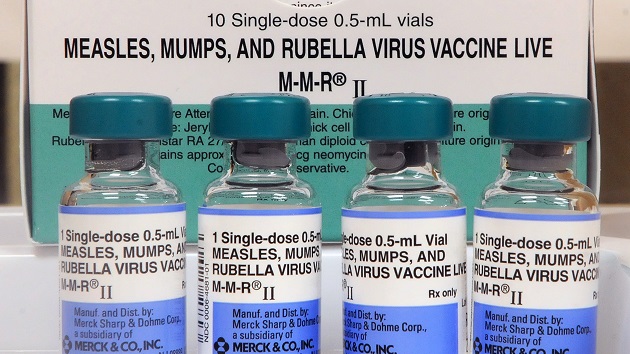
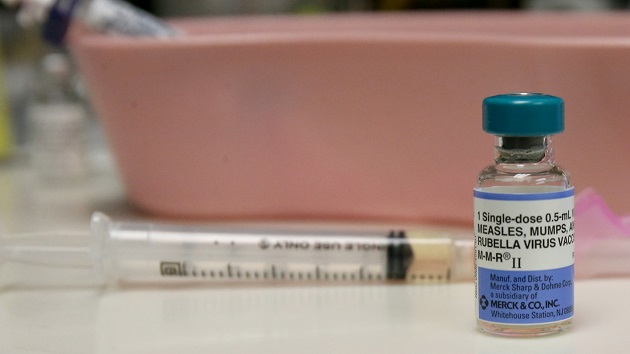
(LUBBOCK, Texas) — The measles outbreak in western Texas is continuing to grow with 20 additional cases confirmed, bringing the total to 279 cases, according to new state data published Tuesday.
Almost all of the cases are in unvaccinated individuals or in individuals whose vaccination status is unknown, according to the Texas Department of State Health Services (DSHS). Just two cases are among fully vaccinated individuals. At least 36 people have been hospitalized so far, the state said.
In the Texas outbreak, children and teenagers between ages 5 and 17 make up the majority of cases, at 120, followed by children ages 4 and under making up 88 cases, the DSHS data shows.
“Due to the highly contagious nature of this disease, additional cases are likely to occur in the outbreak area and the surrounding communities,” the DSHS said in its update.
Two likely measles deaths have been reported so far in the U.S. The first reported death was an Texas, according to the DSHS. The child did not have any known underlying conditions, according to the department.
This is a developing story. Please check back for updates.
Roy Rochlin/Getty Images for Find Your Light Foundation
(WASHINGTON) — The Department of Health & Human Services (HHS) appears to have taken down a webpage from the Office of the Surgeon General (OSG) that included an advisory on gun violence.
In June 2024, then-U.S. Surgeon General Vivek Murthy issued an advisory declaring gun violence to be a public health crisis in America, calling for an evidence-based approach to public health change as well as a ban on assault weapons and large-capacity magazines for civilian use.
“Firearm violence is an urgent public health crisis that has led to loss of life, unimaginable pain, and profound grief for far too many Americans,” Murthy said in a statement at the time.
The OSG issued a press release at the time showing that at least 10 national medical organizations — including the American Medical Association, American Academy of Pediatrics, American College of Surgeons, American Public Health Association and the YWCA — wrote statements in support of the advisory.
However, the webpage where the advisory existed currently displays a “Page Not Found” message.
“We’re sorry, but there is no www.hhs.gov page that matches your entry. Possible reasons: The page may have been moved, it no longer exists, or the address may have been typed incorrectly,” the website states, as of Monday.
The White House did not immediately reply to ABC News’ request for comment.
In a statement to ABC News, the HHS said that the department “and the Office of the Surgeon General are complying with President Trump’s Executive Order on Protecting Second Amendment Rights.”
Last month, President Donald Trump issued an executive order, directing the Attorney General to review “[a]ll Presidential and agencies’ actions from January 2021 through January 2025 that purport to promote safety but may have impinged on the Second Amendment rights of law-abiding citizens.”
HHS Secretary Robert F. Kennedy Jr. has previously stated he believes in the Second Amendment but that he wants to determine the cause of mass shootings.
In a 2023 live stream on X with Elon Musk, Kennedy falsely claimed there is “tremendous circumstantial evidence” that people using antidepressants were more likely to commit school shootings. Experts previously told ABC News there is no evidence to suggest that patients with mental health disorders, or those who are on medications for disorders, are more likely to be violent.
Firearm-related injuries are the leading cause of death in the U.S. among kids and teens. Gun-related suicides have risen among all age groups from 2012 to 2022; the greatest rise has been among 10–14-year-olds, according to Murhty’s advisory.
Gun violence prevention programs, such as GIFFORDS — which was founded by former Congresswoman Gabrielle Giffords — criticized the Trump administration for the removal of the advisory.
“By removing this important public health advisory with lifesaving resources, President Trump has chosen to prioritize gun industry profits over protecting kids and families,” Emma Brown, executive director of GIFFORDS, said in a statement. “Guns have been the number one killer of American children and adolescents since 2020, and non-partisan health care experts have understood gun violence as a public health crisis for years.”
ABC News’ Medical Unit’s Dr. Jade Cobern contributed to this report.
(NEW YORK) — Transgender adults who received gender-affirming hormone therapy had a significantly lower risk of moderate-to-severe depression over four years compared to those who did not receive such care, according to a new study published in the journal JAMA Network Open.
The study tracked 3,592 transgender, nonbinary, and gender-diverse adults and found that those prescribed hormones like estrogen or testosterone had a 15% lower risk of depression symptoms, reinforcing the mental health benefits of this treatment.
The findings “support the mental health-promoting role of hormones” and their status as “a medically necessary treatment,” said Sari Reisner, an associate professor of epidemiology at University of Michigan School of Public Health and one of the study’s authors. “Hormones play a vital role in the mental health of trans people who need them.”
The study acknowledges that other factors, such as mental health treatment, social support and other influences on mood, could have affected the findings. It also did not track the duration patients received gender-affirming hormone therapy or whether they underwent other forms of gender-affirming care, such as surgery.
Transgender people in the U.S. are two to three times more likely to have a history of depression, according to the Centers for Disease Control and Prevention. The study warns that mental health disparities continue to worsen in transgender and gender diverse communities, as access to gender-affirming care becomes more difficult.
Dr. Alexes Hazen, a New York City plastic surgeon specializing in gender-affirming procedures, says she has seen a rise in depression among her patients in recent months. Many have expressed concerns over the wave of state laws restricting or banning gender-affirming care, which has made finding treatment more difficult and left many feeling hopeless.
“Unfortunately, some states are not as friendly to patients and care providers,” Hazen said. “Some states have publicly stated their allegiance to trans and nonbinary folks, and those places will become safe havens for care.”
As barriers to gender-affirming care grow, the new study underscores its importance for mental health in transgender patients. These services “address the pervasive mental health inequities that trans people experience,” Reisner said, emphasizing that access to this care is both medically necessary and essential for reducing depression risk.
“Our findings underscore the importance of protecting and upholding the right to accessible healthcare for trans people,” Reisner said,
Hazen recommended community-based health centers that cater to LGBTQ+ patients as a key resource for gender-affirming care. The study also reinforced the importance of these clinics, arguing that the gender-affirming treatment they provide improves access and supports mental health, particularly for those in underserved communities.
Alice Gao, MD, MPH, is a family medicine resident at Temple Northwest Community Family Medicine and a member of the ABC News Medical Unit.
(NEW YORK) — Dr. Kimberly Shriner remembers the first COVID-19 patient who came into Huntington Hospital in Pasadena, California, in March 2020.
He was a 35-year-old man who arrived at the hospital short of breath.
“He went straight to our intensive care unit. We were very suspicious that he had COVID,” Shriner, an infectious disease specialist and the hospital’s medical director of infectious disease and infection prevention, told ABC News.
Testing was minimal at the time, but eventually the results came back and confirmed that he had COVID. The patient was eventually sedated and intubated, and he died 24 hours later. Shriner said the next few patients admitted to the hospital for COVID-19 followed similar trajectories, becoming more and more short of breath before eventually dying of their illness.
“As physicians, we understand death,” Shriner said. “We understand that we can’t save every patient, but when you’re having 100% mortality with your first experience with this thing, it was pretty overwhelming and daunting. That first week [was] particularly surreal.”
Tuesday, March 11, marked five years since the World Health Organization (WHO) declared the global outbreak of COVID-19 to be a pandemic. The U.S. is in a much better situation now, with fewer hospitalizations and deaths — and vaccines to prevent severe illness from COVID, frontline health care workers say.
However, they add that, as Americans become more removed from the early days of COVID, it may be hard to remember what it was like — especially for those who were treating patients.
“Everybody was worried, doctors, nurses,” Dr. Matthew Sims, director of infectious disease research for Corewell Health, a non-profit health care system located in Michigan, told ABC News. “It was absolutely crazy, and I think that people have forgotten. I think people have forgotten the horror of what COVID was like in the beginning and, I mean, it was a horror situation.”
Quickly changing world
Shriner said one of the indicators of how quickly the world was changing was the evolution of her hospital’s meetings about the virus and how to prepare as information was starting to come out of China.
“Meetings were held in a very tiny, little meeting room. Nobody was wearing masks or anything,” she said. “And then as things began to evolve, and we saw it was happening, that the rooms got started getting bigger, and then we started meeting with masks on, and then, eventually, went virtual.”
Shriver recalled that the situation was “very terrifying” on a personal and professional level.
“If we’d known how difficult it was going to be, I think we would have been even more disturbed,” she said.
Sims said it became clear how quickly patients could get infected in March 2020. Not long after the WHO declared a global pandemic, he came on shift that week to be the infectious disease doctor rotating in the hospital.
“We had two confirmed cases admitted at that point. By the end of the week I spent on, we had over 100 confirmed cases admitted,” he told ABC News. “It was absolutely devastating to the hospital, to the health care system as a whole … It was a crazy time.”
The state of hospitals
Both Sims and Shriner said the lack of early testing at the time was a source of frustration. Since routine testing wasn’t available, results often took days — or even weeks — to return.
Additionally, hospital labs often had to confirm results with state departments of health.
Sim said as the hospitals became full, it sometimes became a race against the clock to try and treat patients.
“I remember one of the most devastating cases I saw was a young man, relatively young, young kids at home,” he said. “A little overweight, I think he was a diabetic, but he just got super sick, and we were trying to get remdesivir, which was compassionate use at the time,” referencing an antiviral drug later approved to treat COVID-19.
Sims said the hospital had to call up the company manufacturing the drug, tell them about the patient and then get approval from the U.S. Food and Drug Administration (FDA) to use doses on the patient.
“And we got approval, and then they have to ship it to us,” Sims said. “It was all being shipped as fast as possible, but before it could even get here, that patient got too sick to even use it, and the patient died. A week before, he was home with his kids, his wife, et cetera, in normal state of health, and then, all of a sudden, got this terrible virus and died.”
As it became clear how contagious the virus was, hospital staff were required to always wear masks. Shriner said she still has a scar or imprint on her nose from having to wear a mask for 18 hours a day.
One of things she remembers most was the lack of sound, other than machines, whenever she visited ICUs.
“As the months progressed, we ended up having six different intensive care units because the patients were so sick,” she said. “We had many, many patients that were on ventilators. You’d walk into these areas, and it was just silence. All you heard were the ventilators going and seeing people in full protective gear all the time.”
To handle the influx of patients, both hospitalized and in emergency departments, Shriner said her hospital stopped all non-emergency surgeries to be able to have extra physicians available.
COVID-19 vaccines arrive
On Dec. 11, 2020, the FDA granted Pfizer-BioNTech the first emergency use authorization for a COVID-19 vaccine for those aged 16 and older. Three days later, nurse Sandra Lindsay became the first person to receive a COVID-19 vaccine in the U.S. as distribution began.
Both Shriner and Sims felt a sense of relief that a tool was finally available to help stem the spread of disease.
Shriner said she was the first person in her hospital to receive the COVID-19 vaccine, even though she didn’t want to be.
“I didn’t want to be the first person. I was perfectly fine with letting other people go ahead of me,” she said. “And [the CEO] said to me, ‘You have to be.’ She said, ‘If you don’t get vaccinated, nobody else is going to do it.'”
Shriner said the distribution of the vaccine “was a sign of the way out. It was very hopeful.”
Lessons learned
Both Sims and Shriner say COVID-19 taught health care workers many lessons, including how to share information quickly, how to diligently monitor diseases and how to scale up health care capacity.
Sims said another valuable discovery was better communicating to the public that information during a public health crisis can change rapidly.
One example is that early studies would come out suggesting certain drugs might help treat patients. Eventually additional information would be published proving the opposite.
“We were learning, and we were learning in such a rapid [way], it was hard to communicate,” he said. “I think if we had any failure, it was that in that rapid push to communicate.”
Sims noted how that created some uncertainty.
“We didn’t get the message across enough that some of what we’re learning may be wrong, and we will tell you that as we learn,” Sims said. “We’re going to tell you what we know now that may not be the same thing we know tomorrow.”
Shriner added that stay-at home orders and lockdowns were hard on people and, if another pandemic happens, she is hopeful there would be different decisions on what should be locked down.
“Maybe we don’t have such stringent lockdown rules and isolation rules,” she said. “You know, the outdoor restaurant became a great thing. You know, think of all the home delivery services really took off. And so, a lot of good things came out of it, but they were hard won.”
Antonio Perez/Chicago Tribune/Tribune News Service via Getty Images
(GAINES COUNTY, Texas) — The number of measles cases associated with an outbreak in western Texas has grown to 259, with 36 cases reported over the last three days, according to new data released Friday.
Almost all of the cases are in unvaccinated individuals or in individuals whose vaccination status is unknown. Two cases have occurred in persons vaccinated with two doses, according to the Texas Department of State Health Services (DSHS). Breakthrough infections, when a vaccinated person is infected are rare, as the measles vaccine provides up to 97% protection after 2 doses.
At least 34 people have been hospitalized so far.
In the Texas outbreak, children and teenagers between ages 5 and 17 make up the majority of cases, with 115, followed by children ages 4 and under comprising 86 cases, according to the data.
DSHS said in its update that it expects more cases to be confirmed in the area and in surrounding communities.
Two likely measles deaths have been reported so far in the U.S. One is a confirmed death associated with measles, while the other has been definitively linked to the measles virus but the cause of death officially remains under investigation.
Gaines County is the epicenter of the Texas outbreak, with 174 cases confirmed among residents, according to the DSHS. State health data shows the number of vaccine exemptions in Gaines County has grown dramatically in the last dozen years.
In 2013, roughly 7.5% of kindergartners in the county had parents or guardians who filed for an exemption for at least one vaccine. Ten years later, that number rose to more than 17.5% – one of the highest in all of Texas, according to state health data.
The Centers for Disease Control and Prevention (CDC) has confirmed hundreds of cases in at least 12 states so far this year, including Alaska, California, Florida, Georgia, Kentucky, New Jersey, New Mexico, New York City, Pennsylvania, Rhode Island, Texas and Washington
The majority of nationally confirmed cases are in people who are unvaccinated or whose vaccination status is unknown. Of those cases, 4% are among those who received just one dose of the MMR (measles, mumps and rubella) inoculation and 2% are among those who received the required two doses, according to the CDC.
Measles is one of the most contagious diseases known to humans. Just one infected patient can spread measles to up to nine out of 10 susceptible close contacts, according to the CDC.
Health officials have been urging anyone who isn’t vaccinated to receive the MMR vaccine.
The CDC currently recommends that people receive two vaccine doses, the first at ages 12 to 15 months and the second between 4 and 6 years old. One dose is 93% effective, and two doses are 97% effective, the CDC says. Most vaccinated adults don’t need a booster.
Measles was declared eliminated from the U.S. in 2000 due to the highly effective vaccination program, according to the CDC. However, CDC data shows vaccination rates have been lagging in recent years.
ABC News Youri Benadjaoud contributed to this report.
(WASHINGTON) — The former director for the Centers for Disease Control and Prevention (CDC) called for stronger, nationwide guidance on infant vaccine doses for measles prevention in a new opinion paper published Friday.
In the face of a growing measles outbreak — with more than 200 cases confirmed in western Texas — the federal health agency issued an alert on March 7 saying parents in the outbreak area should consider getting their children an early third dose of the measles, mumps, rubella (MMR) vaccine.
The CDC currently recommends people receive two vaccine doses, the first at ages 12 to 15 months and the second between 4 and 6 years old. The third early dose would occur starting at 6 months old.
Texas health officials have also recommended early vaccination for infants living in outbreak areas.
However, in the new opinion paper published in the medical journal JAMA, Dr. Rochelle Walensky and her co-authors say the CDC should issue a more direct nationwide recommendation.
“Right now, there is a higher risk of measles exposure in New Mexico than Mexico City, so our vaccine recommendations should reflect that,” co-author Dr. Benjamin Rader, a computational epidemiologist at Boston Children’s Hospital and assistant professor at Harvard Medical School, told ABC News.
The suggested recommendations include that infants living in any high-risk area within the U.S. be advised to get an early dose of the MMR vaccine and that infants planning to visit high-risk areas — domestically or internationally — should get an early dose.
The authors say that, historically, unvaccinated children traveling internationally to measles-endemic reasons have resulted in the most cases of the disease in the U.S.
However, due to recent measles outbreaks in the U.S. and low vaccination rates, there is “a growing domestic hazard,” signaling the need for a policy change.
“With measles outbreaks increasing domestically, infants traveling to affected areas face significant risk,” said co-author Dr. John Brownstein, an epidemiologist and ABC News contributor. “Expanding early MMR vaccination beyond international travel to include high-risk U.S. regions is a necessary step to protect vulnerable populations.”
The CDC did not immediately return ABC News’ request for comment.
If an infant gets their first MMR vaccine at 6 months, they will cumulatively get three shots throughout childhood, rather than the standard two shots.
Young children under the age of 5 make up one-third of all measles cases in the U.S. this year and have the highest rate of hospitalization of any age group from measles, CDC data shows.
This group is also at risk for being more likely to suffer measles complications including hospitalization, pneumonia, encephalitis — swelling of the brain — and even death.
(WASHINGTON) — Measles is continuing to spread across the United States, as outbreaks grow in western Texas and New Mexico.
Between the two states, 256 cases have been confirmed as of Thursday, mostly in those who are unvaccinated or with unknown vaccination status, according to state health officials. At least one unvaccinated school-aged child in Texas has died and another suspected death is being investigated in New Mexico in an unvaccinated adult. At least 10 other states have also confirmed cases, according to the Centers for Disease Control and Prevention.
As health care professionals work to care for patients, they are also attempting to combat the proliferation of misinformation about how to prevent and treat the disease, some tell ABC News.
Health and Human Services Secretary Robert F. Kennedy Jr. has been one of the prominent voices on measles, making comments that public health experts say are not accurate.
In multiple interviews, Kennedy has claimed that vitamin A and cod liver oil are effective treatments for measles. He also said that poor diet contributes to severe cases of measles and that — while vaccines prevent illness — they also cause severe illnesses and even death.
Some public health experts told ABC News these statements are not rooted in scientific evidence and could be quite dangerous for the public.
“I think it’s really important to try to stay away from these ideas of fringe theories or ideas that have not been scientifically proven,” Kirsten Hokeness, director of the school of health and behavioral sciences at Bryant University, in Rhode Island, told ABC News.
Vitamin A as a form of treatment
During an interview on Fox News with Sean Hannity on Tuesday, Kennedy said that HHS was currently providing vitamin A to measles patients for treatment. He claimed vitamin A can “dramatically” reduce measles deaths.
The World Health Organization recommends two doses of vitamin A in children and adults with measles to restore low vitamin A levels, which can help prevent eye damage and blindness.
However, experts who spoke with ABC News said it is not an antiviral treatment against measles (meaning it does not prevent infections), nor is there one available.
“Because it has been described that patients with vitamin A deficiency can have a more severe course, the WHO recommends low doses of vitamin A for children diagnosed with measles,” Dr. Carla Garcia Carreno, a pediatric infectious disease specialist at Children’s Medical Center Plano in Texas, told ABC News. “This is a supplementation in case of deficiency, and it is not intended to treat the virus. High doses of vitamin A can have serious consequences.”
“Neither vitamin A nor cod liver oil will treat measles,” she concluded.
Poor diet linked to severe measles disease
Kennedy has claimed that poor nutrition plays a role in causing severe measles disease and that a healthy diet can lessen severity.
While malnutrition can be a factor in severe disease, malnutrition and nutritional deficits in measles patients have historically been seen in underdeveloped countries, according to experts.
Additionally, studies have found that mass nutritional supplementation “followed by an increase in vaccination coverage” can reduce measles infection and mortality.
“Certainly, good nutrition can promote a healthy immune system, and it’s a good idea for everyone to try to maintain good nutrition, but it’s certainly not a substitute for vaccination,” Dr. Scott Weaver, director of the Institute for Human Infections and Immunity at the University of Texas Medical Branch, told ABC News. “There’s no evidence that it can prevent infection, no evidence that it can prevent an infected person from spreading the virus and contributing to one of these outbreaks.”
“So, I want to be very clear, good nutrition is absolutely no substitute for vaccination to prevent someone’s own risk for developing severe, maybe fatal, measles,” he added.
Claims about the safety of the measles vaccine
The CDC currently recommends that people receive two doses of the measles, mumps, rubella vaccine, the first at ages 12 to 15 months and the second between 4 and 6 years old.
One dose is 93% effective, and two doses are 97% effective, the CDC says. Most vaccinated adults don’t need a booster.
Kennedy has said vaccines do “stop the spread of the disease” but also said they cause “adverse events.”
“It does cause deaths every year. It causes all the illnesses that measles itself [causes], encephalitis and blindness, et cetera,” he told Hannity, without providing evidence.
Weaver said there is no vaccine that is without risks but that the MMR vaccine is incredibly safe and effective.
“There’s no evidence that it has severe outcomes … similar to what the measles virus infection causes,” he told ABC News. “It certainly can cause very minor reactions at the site of injection, like just about every vaccine, but it’s one of the safest vaccines that’s ever been developed.”
Weaver added that the risks of complications from a measles infection far outweigh any risks from the MMR vaccine.
As for Kennedy’s unfounded claim that the MMR vaccine causes death, a 2015 CDC review published in the journal Vaccine found such claims are deaths reported to the U.S. Vaccine Adverse Event Reporting System – a voluntary reporting system “that accepts any submitted report of an adverse event without judging its clinical significance or whether it was caused by a vaccination.”
The review found that many of the deaths reported to VAERS claiming to be linked to the MMR included children who has serious underlying medical conditions or had deaths that were unrelated to the vaccine, including accidental deaths.
“These complete VAERS reports and any accompanying medical records, autopsy reports and death certificates have been reviewed in depth by FDA and CDC physicians and no concerning patterns have emerged that would suggest a causal relationship with the MMR vaccine and death,” the review stated.
Questioning ‘benefits’ of measles and fatality rate
Kennedy claimed in an interview with Fox News senior medical analyst Dr. Marc Seigel over the weekend that is “almost impossible” for measles to kill a healthy individual.
Some people who contract measles may suffer severe complications as a result of infection. While those most at risk include children younger than age 5, pregnant people and those with weakened immune systems, anybody can experience complications.
About in 1 in 5 unvaccinated people who contract measles are hospitalized and about 1 in 20 children with measles develop pneumonia, which is the most common cause of death in young children who get infected.
About one in 10 children infected with measles develop ear infections as well, which can lead to hearing loss, data shows.
Additionally, about 1 out of every 1,000 children with measles will develop encephalitis — which is the swelling of the brain and can lead to brain damage — and up to 3 out of every 1,000 children with measles will die from respiratory and neurologic complications, the CDC says.
Recently, Texas health officials reported the death of an unvaccinated school-aged child, the first death from measles recorded in the U.S. in a decade. The child was healthy and had no preexisting conditions, officials said.
“The CDC estimates that 1 in 5 people [who] get infected with measles ends up in the hospital,” Hokeness said. “So, this approach to relying on sort of this natural immunity doesn’t make sense when we have a vaccine which prevents it in the first place.”
“But, in short, there’s really no benefit to this idea of natural immunity and naturally acquiring the virus. That’s why we’ve developed the vaccines that work so well,” she added.
Kennedy also claimed in his interview that natural immunity from measles may protect against cancer and heart disease. There is no evidence to suggest either of those are true, experts said.
“If you want to take your chances with getting natural infection, hoping that there might be some very small benefit to that, it’s a very big risk to take, because you may very well get severe measles infection,” Weaver said.
Overall, experts advised relying on scientifically proven medical information.
“We should leverage the knowledge that we’ve gained over the years and not spend our time focusing on alternative possibilities,” she said.
(LONDON) — Europe saw the highest number of measles cases last year in more than 25 years, according to a new report published Thursday from the World Health Organization (WHO) and UNICEF.
There were an estimated 127,350 measles cases in the European region last year, which is double the number of cases for 2023 and the highest number since 1997. The region consists of 53 countries in Europe and Central Asia.
Children under 5 years old accounted for more than 40% of cases in the region, and more than half of the cases required hospitalization, according to the report. Additionally, a total of 38 deaths were reported based on preliminary numbers.
The European region accounted for one-third of all measles cases globally last year, with 500,000 people missing their first dose of the measles vaccine.
“Measles is back, and it’s a wake-up call. Without high vaccination rates, there is no health security,” Dr. Hans P. Kluge, WHO Regional Director for Europe, said in a press release. “As we shape our new regional health strategy for Europe and Central Asia, we cannot afford to lose ground. Every country must step up efforts to reach under-vaccinated communities. The measles virus never rests — and neither can we.”
It comes as global vaccination rates for measles have been on the decline since the COVID-19 pandemic, leading to a higher number of cases and outbreaks worldwide.
A WHO report published last year found a 20% increase in measles cases between 2022 and 2023 — infecting a total of 10.3 million people globally in the latter year.
More than 22 million children missed their routine measles vaccine in 2023. Only 83% of children received their first measles dose that year, and only 74% received their second dose.
A threshold of 95% vaccination coverage is needed to prevent outbreaks from occurring, according to the WHO.
Meanwhile, the U.S. is dealing with its worst measles outbreak since 2019. More than 250 cases have been reported in an outbreak in Texas and New Mexico, which is close to the 285 total measles cases reported in the entirety of last year nationwide.
Almost all of the cases are in unvaccinated individuals or in individuals whose vaccination status is unknown, health officials said.
Two likely measles deaths have been reported so far in the U.S. One is a confirmed death associated with measles, while the other occurred in a New Mexico resident who tested positive for measles after dying and the cause of death remains under investigation.
The death in Texas of an unvaccinated school-aged child was the first measles death recorded in the U.S. in a decade, according to data from the Centers for Disease Control and Prevention.
Similarly to global rates, CDC data showed U.S. vaccination rates have been lagging in recent years.
During the 2023–24 school year, just. 92.7% of kindergartners met vaccination requirements for the measles, mumps, rubella vaccine, according to an October 2024 CDC report. The report also found that exemptions from school vaccination requirements increased to 3.3% from 3% the year before.
(AUSTIN, Texas) — The measles outbreak in western Texas is continuing to grow with 25 cases confirmed over the last five days, bringing the total to 223 cases, according to new data published Tuesday.
Almost all of the cases are in unvaccinated individuals or in individuals whose vaccination status is unknown, with 80 unvaccinated and 138 of unknown status, according to the Texas Department of State Health Services (DSHS). At least 29 people have been hospitalized so far.
Just five cases have occurred in people vaccinated with one dose of the measles, mumps, rubella (MMR) vaccine, according to the data.
This is a developing story. Please check back for updates.
(WASHINGTON) — Tuesday marks five years since the World Health Organization (WHO) declared the global outbreak of COVID-19 to be a pandemic.
Since then, millions of Americans have been hospitalized, and more than 1.2 million people have died.
Additionally, millions of adults and children are still feeling the effects of their illness and have been diagnosed with long COVID.
Here’s a look at the disease in the U.S. by the numbers.
Hospitalizations
In the last 28 days, ending about Feb. 16, 2025, about 3,800 Americans were hospitalized due to COVID-19, according to data from the WHO.
During the week ending Feb. 22, the most recent week for which data is available, data from the Centers for Disease Control and Prevention (CDC) shows that just 1.3% of inpatient beds were occupied by COVID-19 patients as well as 1.3% of intensive care unit beds.
Additionally, during the week ending March 1, the rate of COVID-19-associated hospitalizations was 1.4 per 100,000 people. The peak for the 2024-25 season was 4.2 per 100,000 people during the week ending Jan. 4, which is much lower than the peak of 35.6 per 100,000 people during the 2021-22 season.
Deaths
Since the pandemic began, more than 1.22 million Americans have died from COVID-19 as of March 6, 2025, according to the latest CDC data. The U.S. crossed the 1 million mark on May 12, 2022.
During the week ending March 1, there were 274 deaths recorded from COVID, according to CDC provisional data. This is the lowest number recorded since the pandemic began.
Meanwhile, the age-adjusted death rate currently sits at 0.1 per 100,000 people, which has remained relatively consistent since spring 2024 and is among the lowest rates recorded since the pandemic.
By comparison, during the height of the omicron wave in winter 2021-22, the death rate was 53 times higher at 5.3 per 100,000. The highest-ever death rate was recorded the week ending Jan. 9, 2021, at 6.5 per 100,000.
Studies have suggested COVID-19 vaccines, combined with mitigation measures, helped save hundreds of thousands of lives in the U.S.
Long COVID
Long COVID is a condition that occurs when someone infected with COVID-19 is within three months of the initial diagnosis and lasts at least two months.
As of August 2024, a federal survey found that 17.9% of adults have experienced long COVID — equivalent to about 47.6 million Americans, according to 2024 U.S. Census Bureau estimates.
Meanwhile, 5.3% of adults — equivalent to about 14.1 million Americans — reported they were currently experiencing long COVID symptoms at the time of the survey. Of those currently experiencing long COVID, nearly a quarter said they had significant activity limitations.
Another recent federal study, published in the journal JAMA Pediatrics in February, showed approximately 1.01 million children, or 1.4%, are believed to have ever experienced long COVID as of 2023 and about 293,000, or 0.4%, were experiencing the condition when the survey was being conducted.
Vaccines
In June 2024, the CDC recommended that everyone ages 6 months and older receive an updated 2024-2025 COVID-19 vaccine to protect against severe illness, hospitalization and death.
The updated vaccines target the JN.1 lineage of the virus, an offshoot of the omicron variant. There are formulations from Pfizer-BioNTech and Moderna available for those 6 months old and older and from Novavax available for those aged 12 and older.
The CDC, however, has previously stated vaccination coverage remains low, meaning “many children and adults lack protection from respiratory virus infections provided by vaccines.”
As of Feb. 22, 2025, only 23.2% of adults and 11.9% of children were vaccinated with the updated vaccine, CDC data shows.
Additionally, despite evidence showing the vaccine is safe for pregnant women, the CDC estimates that just 13.8% of pregnant women have received the updated vaccine.