
RFK Jr. claims measles can be treated with vitamin A, linked to poor diet. Here’s what science says.

RFK Jr. claims measles can be treated with vitamin A, linked to poor diet. Here’s what science says.
(DIGICOMPHOTO/SCIENCE PHOTO LIBRARY/Getty Images)

(WASHINGTON) — Measles is continuing to spread across the United States, as outbreaks grow in western Texas and New Mexico.

Between the two states, 256 cases have been confirmed as of Thursday, mostly in those who are unvaccinated or with unknown vaccination status, according to state health officials. At least one unvaccinated school-aged child in Texas has died and another suspected death is being investigated in New Mexico in an unvaccinated adult. At least 10 other states have also confirmed cases, according to the Centers for Disease Control and Prevention.

As health care professionals work to care for patients, they are also attempting to combat the proliferation of misinformation about how to prevent and treat the disease, some tell ABC News.

Health and Human Services Secretary Robert F. Kennedy Jr. has been one of the prominent voices on measles, making comments that public health experts say are not accurate.

In multiple interviews, Kennedy has claimed that vitamin A and cod liver oil are effective treatments for measles. He also said that poor diet contributes to severe cases of measles and that — while vaccines prevent illness — they also cause severe illnesses and even death.

Some public health experts told ABC News these statements are not rooted in scientific evidence and could be quite dangerous for the public.

“I think it’s really important to try to stay away from these ideas of fringe theories or ideas that have not been scientifically proven,” Kirsten Hokeness, director of the school of health and behavioral sciences at Bryant University, in Rhode Island, told ABC News.

Vitamin A as a form of treatment

During an interview on Fox News with Sean Hannity on Tuesday, Kennedy said that HHS was currently providing vitamin A to measles patients for treatment. He claimed vitamin A can “dramatically” reduce measles deaths.

The World Health Organization recommends two doses of vitamin A in children and adults with measles to restore low vitamin A levels, which can help prevent eye damage and blindness.

However, experts who spoke with ABC News said it is not an antiviral treatment against measles (meaning it does not prevent infections), nor is there one available.

“Because it has been described that patients with vitamin A deficiency can have a more severe course, the WHO recommends low doses of vitamin A for children diagnosed with measles,” Dr. Carla Garcia Carreno, a pediatric infectious disease specialist at Children’s Medical Center Plano in Texas, told ABC News. “This is a supplementation in case of deficiency, and it is not intended to treat the virus. High doses of vitamin A can have serious consequences.”

“Neither vitamin A nor cod liver oil will treat measles,” she concluded.

Poor diet linked to severe measles disease

Kennedy has claimed that poor nutrition plays a role in causing severe measles disease and that a healthy diet can lessen severity.

While malnutrition can be a factor in severe disease, malnutrition and nutritional deficits in measles patients have historically been seen in underdeveloped countries, according to experts.

Additionally, studies have found that mass nutritional supplementation “followed by an increase in vaccination coverage” can reduce measles infection and mortality.

“Certainly, good nutrition can promote a healthy immune system, and it’s a good idea for everyone to try to maintain good nutrition, but it’s certainly not a substitute for vaccination,” Dr. Scott Weaver, director of the Institute for Human Infections and Immunity at the University of Texas Medical Branch, told ABC News. “There’s no evidence that it can prevent infection, no evidence that it can prevent an infected person from spreading the virus and contributing to one of these outbreaks.”

“So, I want to be very clear, good nutrition is absolutely no substitute for vaccination to prevent someone’s own risk for developing severe, maybe fatal, measles,” he added.

Claims about the safety of the measles vaccine

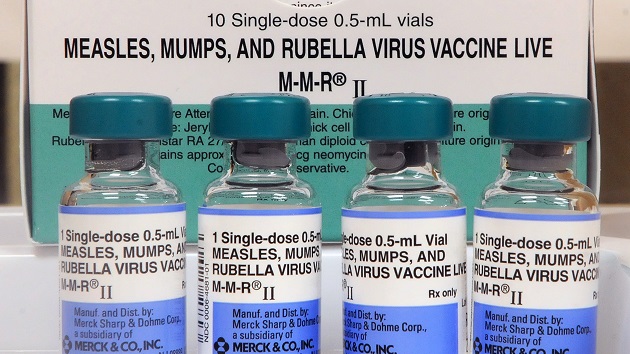
The CDC currently recommends that people receive two doses of the measles, mumps, rubella vaccine, the first at ages 12 to 15 months and the second between 4 and 6 years old.

One dose is 93% effective, and two doses are 97% effective, the CDC says. Most vaccinated adults don’t need a booster.

Kennedy has said vaccines do “stop the spread of the disease” but also said they cause “adverse events.”

“It does cause deaths every year. It causes all the illnesses that measles itself [causes], encephalitis and blindness, et cetera,” he told Hannity, without providing evidence.

Weaver said there is no vaccine that is without risks but that the MMR vaccine is incredibly safe and effective.

“There’s no evidence that it has severe outcomes … similar to what the measles virus infection causes,” he told ABC News. “It certainly can cause very minor reactions at the site of injection, like just about every vaccine, but it’s one of the safest vaccines that’s ever been developed.”

Weaver added that the risks of complications from a measles infection far outweigh any risks from the MMR vaccine.

As for Kennedy’s unfounded claim that the MMR vaccine causes death, a 2015 CDC review published in the journal Vaccine found such claims are deaths reported to the U.S. Vaccine Adverse Event Reporting System – a voluntary reporting system “that accepts any submitted report of an adverse event without judging its clinical significance or whether it was caused by a vaccination.”

The review found that many of the deaths reported to VAERS claiming to be linked to the MMR included children who has serious underlying medical conditions or had deaths that were unrelated to the vaccine, including accidental deaths.

“These complete VAERS reports and any accompanying medical records, autopsy reports and death certificates have been reviewed in depth by FDA and CDC physicians and no concerning patterns have emerged that would suggest a causal relationship with the MMR vaccine and death,” the review stated.

Questioning ‘benefits’ of measles and fatality rate

Kennedy claimed in an interview with Fox News senior medical analyst Dr. Marc Seigel over the weekend that is “almost impossible” for measles to kill a healthy individual.

Some people who contract measles may suffer severe complications as a result of infection. While those most at risk include children younger than age 5, pregnant people and those with weakened immune systems, anybody can experience complications.

About in 1 in 5 unvaccinated people who contract measles are hospitalized and about 1 in 20 children with measles develop pneumonia, which is the most common cause of death in young children who get infected.

About one in 10 children infected with measles develop ear infections as well, which can lead to hearing loss, data shows.

Additionally, about 1 out of every 1,000 children with measles will develop encephalitis — which is the swelling of the brain and can lead to brain damage — and up to 3 out of every 1,000 children with measles will die from respiratory and neurologic complications, the CDC says.

Recently, Texas health officials reported the death of an unvaccinated school-aged child, the first death from measles recorded in the U.S. in a decade. The child was healthy and had no preexisting conditions, officials said.

“The CDC estimates that 1 in 5 people [who] get infected with measles ends up in the hospital,” Hokeness said. “So, this approach to relying on sort of this natural immunity doesn’t make sense when we have a vaccine which prevents it in the first place.”

“But, in short, there’s really no benefit to this idea of natural immunity and naturally acquiring the virus. That’s why we’ve developed the vaccines that work so well,” she added.

Kennedy also claimed in his interview that natural immunity from measles may protect against cancer and heart disease. There is no evidence to suggest either of those are true, experts said.

“If you want to take your chances with getting natural infection, hoping that there might be some very small benefit to that, it’s a very big risk to take, because you may very well get severe measles infection,” Weaver said.

Overall, experts advised relying on scientifically proven medical information.

“We should leverage the knowledge that we’ve gained over the years and not spend our time focusing on alternative possibilities,” she said.

Copyright © 2025, ABC Audio. All rights reserved.

Europe saw highest number of measles cases last year in more than 25 years: WHO

Europe saw highest number of measles cases last year in more than 25 years: WHO
Lian Yi/Xinhua via Getty Images

(LONDON) — Europe saw the highest number of measles cases last year in more than 25 years, according to a new report published Thursday from the World Health Organization (WHO) and UNICEF.

There were an estimated 127,350 measles cases in the European region last year, which is double the number of cases for 2023 and the highest number since 1997. The region consists of 53 countries in Europe and Central Asia.

Children under 5 years old accounted for more than 40% of cases in the region, and more than half of the cases required hospitalization, according to the report. Additionally, a total of 38 deaths were reported based on preliminary numbers.

The European region accounted for one-third of all measles cases globally last year, with 500,000 people missing their first dose of the measles vaccine.

“Measles is back, and it’s a wake-up call. Without high vaccination rates, there is no health security,” Dr. Hans P. Kluge, WHO Regional Director for Europe, said in a press release. “As we shape our new regional health strategy for Europe and Central Asia, we cannot afford to lose ground. Every country must step up efforts to reach under-vaccinated communities. The measles virus never rests — and neither can we.”

It comes as global vaccination rates for measles have been on the decline since the COVID-19 pandemic, leading to a higher number of cases and outbreaks worldwide.

WHO report published last year found a 20% increase in measles cases between 2022 and 2023 — infecting a total of 10.3 million people globally in the latter year.

More than 22 million children missed their routine measles vaccine in 2023. Only 83% of children received their first measles dose that year, and only 74% received their second dose.

A threshold of 95% vaccination coverage is needed to prevent outbreaks from occurring, according to the WHO.

Meanwhile, the U.S. is dealing with its worst measles outbreak since 2019. More than 250 cases have been reported in an outbreak in Texas and New Mexico, which is close to the 285 total measles cases reported in the entirety of last year nationwide.

Almost all of the cases are in unvaccinated individuals or in individuals whose vaccination status is unknown, health officials said.

Two likely measles deaths have been reported so far in the U.S. One is a confirmed death associated with measles, while the other occurred in a New Mexico resident who tested positive for measles after dying and the cause of death remains under investigation.

The death in Texas of an unvaccinated school-aged child was the first measles death recorded in the U.S. in a decade, according to data from the Centers for Disease Control and Prevention.

Similarly to global rates, CDC data showed U.S. vaccination rates have been lagging in recent years.

During the 2023–24 school year, just. 92.7% of kindergartners met vaccination requirements for the measles, mumps, rubella vaccine, according to an October 2024 CDC report. The report also found that exemptions from school vaccination requirements increased to 3.3% from 3% the year before.

Copyright © 2025, ABC Audio. All rights reserved.

Texas measles cases grow to 223, mostly among children and teens

Texas measles cases grow to 223, mostly among children and teens
Subaas Shrestha/NurPhoto via Getty Images

(AUSTIN, Texas) — The measles outbreak in western Texas is continuing to grow with 25 cases confirmed over the last five days, bringing the total to 223 cases, according to new data published Tuesday.

Almost all of the cases are in unvaccinated individuals or in individuals whose vaccination status is unknown, with 80 unvaccinated and 138 of unknown status, according to the Texas Department of State Health Services (DSHS). At least 29 people have been hospitalized so far.

Just five cases have occurred in people vaccinated with one dose of the measles, mumps, rubella (MMR) vaccine, according to the data.

This is a developing story. Please check back for updates.

Copyright © 2025, ABC Audio. All rights reserved.

5 years ago, the WHO declared COVID a pandemic. Here’s a look at the disease by the numbers

5 years ago, the WHO declared COVID a pandemic. Here’s a look at the disease by the numbers
Justin Sullivan/Getty Images

(WASHINGTON) — Tuesday marks five years since the World Health Organization (WHO) declared the global outbreak of COVID-19 to be a pandemic.

Since then, millions of Americans have been hospitalized, and more than 1.2 million people have died.

Additionally, millions of adults and children are still feeling the effects of their illness and have been diagnosed with long COVID.

Here’s a look at the disease in the U.S. by the numbers.

Hospitalizations

In the last 28 days, ending about Feb. 16, 2025, about 3,800 Americans were hospitalized due to COVID-19, according to data from the WHO.

During the week ending Feb. 22, the most recent week for which data is available, data from the Centers for Disease Control and Prevention (CDC) shows that just 1.3% of inpatient beds were occupied by COVID-19 patients as well as 1.3% of intensive care unit beds.

Additionally, during the week ending March 1, the rate of COVID-19-associated hospitalizations was 1.4 per 100,000 people. The peak for the 2024-25 season was 4.2 per 100,000 people during the week ending Jan. 4, which is much lower than the peak of 35.6 per 100,000 people during the 2021-22 season.

Deaths

Since the pandemic began, more than 1.22 million Americans have died from COVID-19 as of March 6, 2025, according to the latest CDC data. The U.S. crossed the 1 million mark on May 12, 2022.

During the week ending March 1, there were 274 deaths recorded from COVID, according to CDC provisional data. This is the lowest number recorded since the pandemic began.

Meanwhile, the age-adjusted death rate currently sits at 0.1 per 100,000 people, which has remained relatively consistent since spring 2024 and is among the lowest rates recorded since the pandemic.

By comparison, during the height of the omicron wave in winter 2021-22, the death rate was 53 times higher at 5.3 per 100,000. The highest-ever death rate was recorded the week ending Jan. 9, 2021, at 6.5 per 100,000.

Studies have suggested COVID-19 vaccines, combined with mitigation measures, helped save hundreds of thousands of lives in the U.S.

Long COVID

Long COVID is a condition that occurs when someone infected with COVID-19 is within three months of the initial diagnosis and lasts at least two months.

As of August 2024, a federal survey found that 17.9% of adults have experienced long COVID — equivalent to about 47.6 million Americans, according to 2024 U.S. Census Bureau estimates.

Meanwhile, 5.3% of adults — equivalent to about 14.1 million Americans — reported they were currently experiencing long COVID symptoms at the time of the survey. Of those currently experiencing long COVID, nearly a quarter said they had significant activity limitations.

Another recent federal study, published in the journal JAMA Pediatrics in February, showed approximately 1.01 million children, or 1.4%, are believed to have ever experienced long COVID as of 2023 and about 293,000, or 0.4%, were experiencing the condition when the survey was being conducted.

Vaccines

In June 2024, the CDC recommended that everyone ages 6 months and older receive an updated 2024-2025 COVID-19 vaccine to protect against severe illness, hospitalization and death.

The updated vaccines target the JN.1 lineage of the virus, an offshoot of the omicron variant. There are formulations from Pfizer-BioNTech and Moderna available for those 6 months old and older and from Novavax available for those aged 12 and older.

The CDC, however, has previously stated vaccination coverage remains low, meaning “many children and adults lack protection from respiratory virus infections provided by vaccines.”

As of Feb. 22, 2025, only 23.2% of adults and 11.9% of children were vaccinated with the updated vaccine, CDC data shows.

Additionally, despite evidence showing the vaccine is safe for pregnant women, the CDC estimates that just 13.8% of pregnant women have received the updated vaccine.

Copyright © 2025, ABC Audio. All rights reserved.

What we still don’t know about COVID 5 years after the WHO declared a pandemic

What we still don’t know about COVID 5 years after the WHO declared a pandemic
TPG/Getty Images

(WASHINGTON) — Five years ago, the World Health Organization declared the COVID-19 outbreak to be a pandemic, leading to stay at-home orders and shutdowns across the U.S. and world.

The nation looks much different since then, and scientists and researchers have learned a lot about the virus, including how it infects people, the best forms of treatment and what puts someone at risk for long COVID.

There are still many questions, however. Health care professionals are working to find answers, such as how many people have truly died, how long the virus spread undetected in the U.S. and its origins.

“We know this emerged in China, around the city Wuhan. That’s very clear,” Dr. Cameron Wolfe, an infectious diseases specialist and a professor of medicine at Duke University School of Medicine, told ABC News. “We know when [the] medical community identified it, but we don’t know quite how long it was circulating before then. I think it’s caused some of the consternation.”

How many people have died of COVID-19?

As of March 6, at least 1,222,603 Americans have died of COVID-19, according to data from the Centers for Disease Control and Prevention.

The U.S. currently has the highest number of deaths of any country in the world, according to the WHO.

Experts, however, believe the true death toll is higher.

“More than a million people is a tragedy into itself, let’s start with that obvious fact,” Wolfe said. “I think the numbers are really hard to pin down for one key reason.”

Determining the exact cause of death can be complicated, Wolfe explained. Someone could die of COVID pneumonia — a lung infection caused by the virus — or die from a heart attack after contracting COVID.

Another example is an older adult who contracts COVID-19. They may become dehydrated, break a bone — because dehydration negatively impacts bone health — and suffer fatal complications, Wolfe said.

“How you count those outcomes is really important because, to me, that person wouldn’t have had their heart attack or that person wouldn’t have become dehydrated and fallen over and landed in the hospital if not for COVID triggering that event in the first place,” he said. “So, I actually think it’s really important to count those as COVID-associated mortalities, but they’re hard to count. They’re hard to track.”

Globally, more than 7 million people have died due to COVID-19, WHO data shows, although the agency says the pandemic caused an estimated 14.83 million excess deaths around the world in 2020 and 2021.

What is the mechanism behind long COVID

Scientists are not sure what causes long COVID but have identified certain risk factors such as an underlying health condition. Long-COVID symptoms can last for weeks, months or even years and can include — but are not limited to — fever, fatigue, coughing, chest pain, headaches, difficulty concentrating, sleep problems, stomach pain and joint or muscle pain, according to the CDC.

Research has found that patients with long COVID tend to have lower cortisol levels and lower testosterone levels.

“There are several questions that we still do not have answers for. What is the mechanism of the disease? Why do some people get more sick than others?” Dr. Fernando Carnavali, an internal medicine physician and a member of the team at Mount Sinai’s Center for Post-COVID Care, told ABC News.

Carnavali said scientists are using machine learning to study groups of long COVID patients in an attempt to determine the mechanisms that cause the condition.

“Do we have a single answer? Not as of yet, and most likely, perhaps we’ll have more than one answer,” he said.

Carnavali said the mechanism may not be the same for every long COVID patient. Additionally, people may have different symptoms due to different genetic predispositions.

“Some of the deficits that we have five years ago still remain, but I think that we should all understand and be hopeful that … researchers using machine learning will [provide] us some of the answers that we need as clinicians,” he said.

When did COVID enter the United States?

It’s still not exactly clear when the virus first entered the U.S. The first confirmed case in the country was Jan. 20, 2020, in a man in his 30s in Washington state, who developed symptoms after a trip to Wuhan.

However, studies have suggested the virus may have been circulating undetected for months beforehand.

Although the WHO was first notified on Dec. 31, 2019, about the mysterious pneumonia-like illness that originated in Wuhan, experts say it is likely that in an age of global travel, the virus was in the U.S. before then.

“It’s more likely circulated before Jan. 1 [2020]. It doesn’t seem unreasonable, November, December,” Dr. Lisa Olson-Gugerty, an associate teaching professor for Syracuse University and practicing family nurse practitioner in emergency medicine, told ABC News. “COVID masquerades itself as a flu-like illness, upper respiratory-like illness, like many other viral illnesses. It’s not easy to say, ‘Hey, I think this must be a new thing, and I’m going to tell everyone.'”

She went on, “I think it takes a bit of collective time to recognize a new viral strain, and it doesn’t seem unreasonable [there were] cases that could have been recognized as COVID before the date of release of information.”

Where did the virus come from?

There are two theories about where the virus, known as SARS-CoV-2, originated.

At least four U.S. agencies believe the virus was a result of natural transmission and that the virus jumped from animals to humans at a wet market.

The FBI, the CIA and the Department of Energy – the latter with “low confidence” — believe the COVID-19 pandemic “most likely” was the result of a laboratory leak in China.

Additionally, an April 2023 report from Senate Republicans conceded that “both hypotheses are plausible” but that the evidence points to the virus emerging from an accidental lab leak in Wuhan — and there may even have been multiple leaks.

If the virus did come from an animal, there are questions about which species may have spilled the virus over from animals to humans.

“I’ve seen a lot of conflicting information,” Olson-Gugerty said. “Did it come from a bat? Did it get into raccoon dogs or civet cats? Or was it a lab-created virus in Wuhan, China? There does seem to be a jury that’s out.”

Wolfe said we may never know the true origins of SARS-CoV-2, but trying to answer the question helps scientists and public health professionals learn how to mitigate the spread so a pandemic — or even widespread illness — doesn’t happen again.

“This was the same question that happened during the Ebola pandemic, when we had to say, ‘Where did this come from? How can we educate people to minimize this future risk?'” he said. “It was important to examine where COVID-19 came from to try and put things in place that would stop that happening.”

He added, “We certainly, I would say, have better safety mechanisms now in place … so there are some good things that have come out of this.”

Copyright © 2025, ABC Audio. All rights reserved.

CDC asks researchers to assess how their projects align with Trump administration priorities

CDC asks researchers to assess how their projects align with Trump administration priorities
Jessica McGowan/Getty Images

(WASHINGTON) — The Centers for Disease Control and Prevention sent a survey on March 6 asking some federally funded researchers to assess how their work aligns with the priorities of President Donald Trump’s administration, according to documents obtained by ABC News.

CDC-funded researchers were asked whether their research would help combat “Christian persecution,” defend women and children against “gender ideology extremism” or help curb illegal immigration.

They were also surveyed about whether their research included any diversity or climate change initiatives — among other questions that roughly align with recent executive orders.

On Friday, the agency clarified that the survey was only applicable to CDC partners doing work outside the United States.

It’s not clear how many researchers received the email, which was sent by the CDC’s Global Health Center.

“Receiving this survey was deeply unsettling. It’s hard not to see it as an attempt to inject politics into scientific research, forcing us to align with ideological priorities rather than urgent public health needs,” said one researcher who received the survey.

Researchers who received the survey also told ABC News that they were concerned their answers would be used to jeopardize ongoing research or could be used to justify further cuts, especially to research conducted abroad.

“I worry about how these responses might be used to justify funding cuts, especially for critical public health initiatives,” one researcher said.

Earlier this week, a similar survey was sent to foreign aid programs supported by the United States Agency for International Development, according to reporting by The New York Times.

The survey comes amid federal firings, budget cuts and grant cuts to federally funded research, though some of those actions have been blocked in court.

Several hundred people gathered in the nation’s capital on March 7 for the Stand Up for Science rally, and there are similar rallies planned in more than 30 other cities.

In 2023, the federal government funded roughly $60 billion in scientific research, according to the Association of American Universities. Prior government-funded research has led to technologies such as MRIs and GPS.

Copyright © 2025, ABC Audio. All rights reserved.

40 new cases of measles reported in Texas as outbreak grows to 198: Officials

40 new cases of measles reported in Texas as outbreak grows to 198: Officials
Antonio Perez/Chicago Tribune/Tribune News Service via Getty Images

(GAINES COUNTY, Texas) — The number of measles cases associated with an outbreak in western Texas has grown to 198, with 40 cases reported over the last three days, according to new data released Friday.

Almost all of the cases are in unvaccinated individuals or in individuals whose vaccination status is unknown, with 80 unvaccinated and 113 of unknown status. At least 23 people have been hospitalized so far, according to the Texas Department of State Health Services (DSHS).

Just five cases have occurred in people vaccinated with one dose of the measles, mumps, rubella (MMR) vaccine.

Children and teenagers between ages 5 and 17 make up the majority of cases, followed by children ages 4 and under.

So far just one death has been reported in an unvaccinated school-aged child, according to DSHS. The child did not have any known underlying conditions, according to the department.

The Texas death was the first measles death recorded in the U.S. in a decade, according to data from the Centers for Disease Control and Prevention.

A possible second measles death was recorded on Thursday after an unvaccinated New Mexico resident tested positive for the virus. The New Mexico Department of Health said the official cause of death is still under investigation.

Gaines County is the epicenter of the outbreak, with 137 cases confirmed among residents, according to DSHS. More than 90% of cases have been identified in just six counties, which account for less than 1% of the state’s total population, the department said.

State health data shows the number of vaccine exemptions in Gaines County have grown dramatically.

Roughly 7.5% of kindergarteners in the county had parents or guardians who filed for an exemption for at least one vaccine in 2013. Ten years later, that number rose to more than 17.5% — one of the highest in all of Texas, according to state health data.

The CDC has separately confirmed 164 cases in nine states so far this year in Alaska, California, Georgia, Kentucky, New Jersey, New Mexico, New York, Rhode Island and Texas.

The total, however, is likely an undercount due to delays in reporting from states to the federal government.

The majority of nationally confirmed cases are in people who are unvaccinated or whose vaccination status is unknown. Of the cases, 3% are among those who received one dose of the MMR shot and 2% are among those who received two doses.

Measles is one of the most contagious diseases known to humans. Just one infected patient can spread measles to up to nine out of 10 susceptible close contacts, according to the CDC.

Health officials have been urging anyone who isn’t vaccinated to receive the MMR vaccine.

The CDC currently recommends that people receive two vaccine doses, the first at ages 12 to 15 months and the second between 4 and 6 years old. One dose is 93% effective, and two doses are 97% effective. Most vaccinated adults don’t need a booster.

Texas health officials are recommending — for those living in the outbreak area — that parents consider an early dose of MMR vaccine for children between ages 6 months and 11 months and that adults receive a second MMR dose if they only received one in the past.

Earlier this week, the CDC said in a post on X that it was on the ground in Texas, partnering with DSHS officials to respond to the measles outbreak.

Measles was declared eliminated from the U.S. in 2000 due to the highly effective vaccination program, according to the CDC. However, CDC data shows vaccination rates have been lagging in recent years.

ABC News’ Youri Benadjaoud contributed to this report.

Copyright © 2025, ABC Audio. All rights reserved.

Over a dozen new measles cases in Texas outbreak in less than a week: Officials

Over a dozen new measles cases in Texas outbreak in less than a week: Officials
Photo by RONALDO SCHEMIDT/AFP via Getty Images

(TEXAS) — The number of measles cases associated with an outbreak in Texas has grown to 159 — an increase of 13 cases in the past five days, authorities said on Tuesday.

The Texas Department of State Health Services updated its website with the new numbers Tuesday afternoon and said the majority of the cases are in unvaccinated individuals or those whose vaccination status is unknown, with 80 unvaccinated and 74 of unknown status.

At least 22 people have been hospitalized, two more than the last update on Friday, according to the DSHS.

“Due to the highly contagious nature of this disease, additional cases are likely to occur in the outbreak area and the surrounding communities,” the DSHS said.

Five cases have occurred in people vaccinated with one dose of the measles, mumps, rubella vaccine, a number that did not change from the last DSHS update on Feb. 28.

Youths between ages 5 and 17 make up the majority of cases with 74, followed by 53 cases among children 4 and under, the DSHS said. The virus was found in 27 people who are 18 or older, according to the agency.

The number of fatalities from measles remains at one: an unvaccinated, school-aged child who lived in the outbreak area. The DSHS said Tuesday that the child had no underlying conditions.

The death marks the first time in a decade that someone has died in the United States from the measles, according to data from the Centers for Disease Control and Prevention.

Gaines County in West Texas is the epicenter of the outbreak, with 107 cases, up from 98 on Friday, according to DSHS. Terry County, which neighbors Gaines County, had the second highest number of measles cases with 22.

At least four measles cases were reported in three counties not associated with the West Texas outbreak — Harris, Rockwall and Travis counties.

State health data shows the number of vaccine exemptions in the county has grown dramatically. Roughly 7.5% of kindergarteners in the Gaines county had parents or guardians who filed for an exemption for at least one vaccine in 2013. Ten years later, that number rose to more than 17.5% — one of the highest in all of Texas, according to state health data.

The CDC has separately confirmed 164 measles cases in eight other states this year: Alaska, California, Georgia, New Jersey, New Mexico, New York and Rhode Island. The total, however, is an undercount due to delays in reporting from states to the federal government.

About 95% of nationally confirmed cases are in people who are unvaccinated or whose vaccination status is unknown. Of the cases, 3% are among those who received one dose of the MMR shot.

Measles is one of the most contagious diseases known to humans. Just one infected patient can spread measles to up to 9 out of 10 susceptible close contacts, according to the CDC.

Health officials have been urging anyone who isn’t vaccinated to receive the MMR vaccine.

The CDC currently recommends that people receive two vaccine doses, the first at ages 12 to 15 months and the second between 4 and 6 years old. One dose is 93% effective, and two doses are 97% effective. Most vaccinated adults don’t need a booster.

Measles was declared eliminated from the United States in 2000 due to the highly effective vaccination program, according to the CDC. However, CDC data shows vaccination rates have been lagging in recent years.

In a statement posted on social media earlier Tuesday, the CDC said it has sent a rapid response team from the agency’s Epidemic Intelligence Service to Texas “to tackle urgent public health issues like disease outbreaks.”

“The measles outbreak in Texas is a call to action for all of us to reaffirm our commitment to public health. By working together — parents, healthcare providers, community leaders, and government officials, we can prevent future outbreaks and protect the health of our nation,” Health and Human Services Secretary Robert F. Kennedy Jr. said in a statement on Tuesday. “Under my leadership, HHS is and will always be committed to radical transparency to regain the public’s trust in its health agencies.”

In an interview that aired Tuesday on Fox News, Kennedy said the CDC’s rapid response team had treated 108 patients in the first 48 hours of arriving in Texas. He said patients are being treated with Budesonide, a steroid; Clarithromycin, an antibiotic; vitamin A; and cod liver oil, which has high concentrations of vitamins A and D.

“They’re getting very, very good results,” Kennedy said.

Kennedy has long questioned the effectiveness and safety of MMR and other vaccines, but told Fox News that the federal government has sent 2,000 doses of MMR to Texas to fight the measles outbreak.

“What we’re trying to do is really to restore faith in government and make sure that we are there to help them with their needs and not particularly to dictate what they ought to be doing,” Kennedy said.

ABC News’ Youri Benadjaoud contributed to this report.

Copyright © 2025, ABC Audio. All rights reserved.

CDC says it is monitoring unknown disease in Congo

CDC says it is monitoring unknown disease in Congo
Nathan Posner/Anadolu Agency via Getty Images

(WASHINGTON) — The U.S. Centers for Disease Control and Prevention is closely monitoring an unknown disease that has killed dozens in the Democratic Republic of Congo, the agency said in a statement on Monday.

“CDC is monitoring the situation closely and engaging with DRC officials on what support the agency can offer,” the agency’s spokesperson said.

At least 1,096 people have been sickened and 60 people have died from the disease, the World Health Organization said Thursday in its most recent update.

This is the third time in the past few months officials have identified increases in illness and deaths in a different area of Congo, triggering “follow-up investigations to confirm the cause and provide needed support,” the WHO said in a statement on Thursday.

For example, there was a separate report of an unknown disease in December of last year in the central African country that was later attributed to illnesses from malaria and respiratory illnesses.

The symptoms for this latest cluster of disease include fever, headache, chills, sweating, stiff neck, muscle aches, multiple joint pain and body aches, a runny or bleeding from the nose, cough, vomiting and diarrhea, the WHO said.

Initial lab tests have been negative for Ebola and Marburg virus disease, the WHO said.

Around half of samples tested have been positive for malaria, which is common in the area, according to the WHO. Tests continue to be carried out for meningitis, and officials said they are also looking into food and water contamination.

The WHO said it has delivered emergency medical supplies, including testing kits and “developed detailed protocols to enhance disease investigation.”

“The WHO is supporting the local health authorities reinforce investigation and response measures, with more than 80 community health workers trained to detect and report cases and death,” the organization said.

Copyright © 2025, ABC Audio. All rights reserved.
Amid growing Texas outbreak, how contagious is measles?

Measles virus particle, illustration. (Photo by KATERYNA KON/SCIENCE PHOTO LIBRARY/Via Getty)

(NEW YORK) — Measles has been spreading across the U.S. for the last several weeks, sickening people in at least nine states amid a growing outbreak in western Texas.

Several people have been hospitalized and at least one unvaccinated school-aged child in Texas has died, marking the first U.S. measles fatality in a decade.

Some may believe that measles is a harmless childhood illness that causes a fever and a rash, clearing after a few days. However, it can also lead to serious health complications, especially in children younger than 5 years old.

Measles is highly contagious in a totally unprotected group. One infected patient would be able to spread the illness to an average of 18 people.

How contagious is measles?

Measles is one of the most contagious viruses known to humans. Just one infected patient can spread measles to up to nine out of 10 susceptible close contacts, according to the Centers for Disease Control and Disease (CDC).

“So, if you have a bunch of unvaccinated kids in the school or in a daycare, nine out of 10 would likely be infected,” Dr. Peter Hotez, professor of pediatrics and molecular virology at Baylor College of Medicine in Houston, told ABC News. “That’s why you often see measles as your first breakthrough epidemic … once vaccination rates go down below 90% because this virus is so highly infectious and can transmit so easily.”

Another way to describe how contagious measles is its basic reproduction number (R0), a theoretical number that suggests how many people an infected patient may infect in a totally susceptible or unvaccinated population.

The R0 for measles ranges from 12 to 18, meaning if no one had any immunity, an infected person could transmit the virus up to an average of 18 people.

“Contrast that with the seasonal flu, and we’re going through a pretty severe flu season,” Dr. Nicholas Cozzi, EMS and disaster medicine medical director at Rush University Medical Center in Chicago, told ABC News. “One person with the flu can infect up to three people. And so, measles, one of the most infective viruses that we have, can infect almost four times as many people as the flu.”

Why is measles so contagious?

Hotez said that it takes a very small amount of virus, or a few measles virus particles, to infect somebody.

It can be transmitted through direct contact with infectious droplets or through the air when an infected person coughs, sneezes or breathes, according to the CDC.

Measles virus can linger in the air and live on surfaces for up to two hours after an infected person has left a room.

Hotez said this is why there was a recent concern when a person infected with measles visited two colleges campuses in Texas and visited establishments to have lunch and dinner.

“So, each place that individual went, you had to worry that he or she left a trail of virus in the atmosphere,” he said. “So even after that individual left, another unvaccinated individual walking into the restaurant or walking into the same classroom space where this visitor was at could become infected.”

Measles complications

Some people who contract measles may suffer severe complications as a result of infection. Those most at risk include children younger than age 5, pregnant people and those with weakened immune systems.

About in one in five unvaccinated people who contract measles are hospitalized and about one in 20 children with measles develop pneumonia, which is the most common cause of death in young children who get infected.

About one in 10 children infected with measles develop ear infections as well, which can lead to hearing loss, according to Hotez.

Additionally, about one out of every 1,000 children with measles will develop encephalitis — which is the swelling of the brain and can lead to brain damage — and one to three out of every 1,000 children with measles will die from respiratory and neurologic complications, the CDC says.

Vaccine availability drives down cases

In the decade before the measles vaccine became available, nearly all children contracted measles by age 15, according to the CDC.

The federal health agency estimates that 3 to 4 million in the U.S. were sickened by measles every year, about 48,000 were hospitalized and about 400 to 500 people died. About 1,000 people suffered encephalitis.

In 1963, the first measles vaccine became available, followed by an improved vaccine in 1968. CDC data show that cases fell from 385,165 confirmed cases in 1963 to 26,686 cases in 1973.

In 1971, the measles, mumps, rubella (MMR) vaccine became available and, in 1989, the Advisory Committee on Immunization Practices, the American Academy of Pediatrics and the American Academy of Family Physicians recommended children receive a second MMR dose.

By 2000, annual recorded cases had fallen to just 85 and measles was declared eliminated, meaning it was without continuous spread for at least 12 months.

MMR vaccine is like a shield

The CDC currently recommends that children receive two vaccine doses, the first at 12 to 15 months and the second between 4 and 6 years old. One dose is 93% effective, and two doses are 97% effective. Most vaccinated adults don’t need a booster.

Cozzi, from Rush University Medical Center, described the MMR vaccine as a shield and measles as an enemy trying to pierce the shield with arrows.

“So, if you’re protected and you have that vaccine, you have a shield in front of you,” he said. “And if something were to get past that shield, it may infect you, but it’s less severe.”

He noted that people who have the measles vaccine can still be infected.

“However, just like the flu, their symptoms and their duration of illness is much less,” he said.

Cozzi said this is evident in Texas, where an outbreak is occurring. As of Friday, just five of the 146 cases were vaccinated – and with just one dose of the MMR vaccine. The remaining cases are among those who are unvaccinated or with unknown vaccination status.

Rise in vaccine hesitancy, exemptions

Despite the protectiveness of the MMR vaccine, CDC data show vaccination rates have been lagging in recent years and the percentage of exemptions have risen.

An October 2024 CDC report found that vaccination coverage among kindergartners decreased from 95.2% during the 2019–2020 school year to 92.7% in the 2023–2024 school year.

While medical exemptions have held steady for the past decade between 0.2% and 0.3%, non-medical vaccine exemptions rose to 3.1% during the 2023-24 school year, which is the highest figure recorded in at least 13 years.

Cozzi said there has been an increase in vaccine hesitancy after the COVID-19 pandemic, which has seen some kindergartners not receiving the MMR vaccine. The same has been true of the polio and DTaP vaccines, with the latter protecting against diphtheria, tetanus and pertussis.

“The onus is really on us as physicians and health care clinicians to have good, honest conversations with our families and our parents, discussing all of the positive things with vaccines — hearing them, understanding their concern — but still providing that proactive nature to prevent all of the severe infections like measles, especially the very devastating consequences that it can have, specifically for those unvaccinated individuals,” he said.

Copyright © 2025, ABC Audio. All rights reserved.