Raquel Natalicchio/Houston Chronicle via Getty Images
(NEW YORK) — Measles cases are continuing to spread throughout the U.S. with outbreaks in at least six states.
Public health experts have previously said lagging vaccination rates are to blame for the rise in cases, at least partly due to vaccine hesitancy and vaccine fatigue left over from the COVID-19 pandemic.
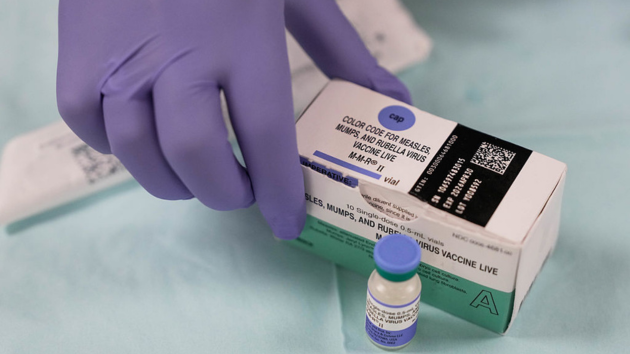
However, even a small uptick in MMR (measles, mumps and rubella) vaccination could prevent millions of infections, according to new research.
The study, published in JAMA last week, used a model to simulate the spread of vaccine-preventable infectious diseases across the U.S., evaluating different scenarios with different vaccination rates over a 25-year period.
The Centers for Disease Control and Prevention (CDC) currently recommends that people receive two vaccine doses — the first at 12 to 15 months and the second between 4 and 6 years old. One dose is 93% effective and two doses are 97% effective against measles, the CDC says. Most vaccinated adults don’t need an additional dose.
At current vaccination rates, the model predicts measles could once again become endemic — constantly present — in the U.S. with an estimated 851,300 cases over 25 years. If vaccination rates decline by just 10%, the model estimates 11.1 million cases of measles over 25 years.
CDC data show vaccination rates have been lagging in recent years. During the 2023 to 2024 school year, 92.7% of kindergartners received the MMR vaccine, according to data. This is lower than the 93.1% seen the previous school year and the 95.2% seen in the 2019 to 2020 school year, prior to the COVID-19 pandemic.
“That result — that we’re already at this tipping point for measles in the U.S. — was a really striking finding that somewhat surprised us as well,” Dr. Nathan Lo, study co-author and an infectious diseases physician at Stanford Medicine, told ABC News.
“We continue to see measles outbreaks, but, by doing the study … you start to crystallize that result that even under the current levels of vaccine decline, there is a very feasible scenario where, over time, our country has measles return where it’s a common household disease again.”
Dr. William Schaffner, a professor of preventive medicine at Vanderbilt University Medical Center in Nashville, who was not involved in the study, said the findings are a “well-thought-out worst-case scenario.”
“I’m not entirely sure that would actually happen because … the general level of vaccination remains pretty high, but there are pockets of unvaccinated children, and what you’re seeing now is the fact that this virus has been reintroduced several times from other parts of the world,” he told ABC News. “I think it’s a bit of a worst-case scenario but, as a worst-case scenario, it’s scary and, in that sense, reasonable.”
However, the model estimated that just a 5% increase in vaccination would lead to only 5,800 cases over the same 25-year period.
This is because when more than 95% of people in a community are vaccinated, most are protected from measles through community immunity, also known as herd immunity, according to the CDC.
“My hope is that this study can provide that data to parents to say, ‘This is the benefit of continuing to vaccinate your child. This is the kind of alternate reality that we’re preventing. And yes, the risks aren’t here right now, but perhaps not too far off,'” Lo said.
Schaffner said there are pockets of the U.S. where MMR vaccination rates are 80% or less and vaccination rates would need to increase substantially in those areas to reduce the number of cases long-term.
However, “if we increase the level of vaccination by a small amount that would reduce the risk of other small outbreaks here and there,” Schaffner said.
The study also found that a 50% drop in vaccinations would lead to an estimated 51.2 million cases over 25 years, but Lo thinks that would only occur if there were a large-scale policy change by the Department of Health and Human Services or the CDC to reduce or remove the childhood vaccine recommendation.
As of Friday, the CDC has confirmed nearly 900 measles cases in at least 29 states. That number is likely an undercount due to delays in states reporting cases to the federal health agency.
In western Texas, an outbreak has been spreading with 663 reported cases of measles, according to new data published Tuesday by the state Department of State Health Services. At least 87 people have been hospitalized over the course of the outbreak.
Measles was declared eliminated from the U.S. in 2000 due to the highly effective vaccination program, according to the CDC. However, an outbreak lasting 12 months or more would threaten to end measles elimination status in the U.S. The Texas outbreak began in January of this year.
To drive vaccination rates up, Lo and Schaffner recommend that parents who haven’t vaccinated their children yet speak to their pediatrician to address their concerns.
“We have to provide recommendations and let people know the facts that these vaccines are very effective and that they are safe,” Schaffner said. “But we have to do more to try to reach out and provide reassurance, and this has to be done very much on a local basis.”
For example, when it comes to the community affected in Texas, Schaffner said they need local influencers they trust to turn to.
“Speak with your local physician, health care provider, the person who cares for your children,” Schaffner said. “Have a conversation with them, and that’s our best hope for regaining some of this trust which public health had and which has slipped away.”
Ricky Carioti/The Washington Post via Getty Images
(WASHINGTON) — For John Robinson, a retired coal miner who spent his career in the Virginia mines helping to power America into the 21st century, not a moment passes that he isn’t feeling the full effects of his black lung diagnosis.
With the support of a burdensome oxygen machine, Robinson joined a handful of other retired Central Appalachian miners to sit down with ABC News’ Jay O’Brien in the heart of coal country.
“You are suffocating. You are suffocating. And that’s what’s going to kill you,” Robinson told O’Brien. “I got a wife and two kids and two grandbabies, you know, and I want to live.”
Black lung, the debilitating respiratory illness common in coal miners, has made a staggering resurgence in the past 25 years, particularly among the younger generation of miners as they cut through more rock to access deeper, hard-to-reach coal seams, exposing them to harmful dust particles called silica — which experts say is about 20 times more toxic to the lungs than pure coal dust.
And even as President Donald Trump vows to reinvigorate America’s coal industry, critics say his administration has stripped away key protections for the miners. In his first 100 days in office, Trump’s administration has decimated the National Institute of Occupational Safety and Health, or NIOSH, the federal agency that protects miners from black lung, and paused enforcement of a new safety rule that would lower the level of silica dust in the mines.
“You don’t take care of the miners, you ain’t going to mine coal,” another miner told O’Brien. “The machine don’t run by itself, you know what I’m saying?”
“There is no block of coal worth any man’s life,” said another miner.
Some of the more than 800 NIOSH employees placed on administrative leave — around two-thirds of the entire workforce, sources said — have taken matters into their own hands, setting up a guerilla “war room” around a Morgantown, West Virginia, dining table to do what little federal work they can before they’re officially laid off in June, while campaigning for their important work to continue.
“So, what is going to happen now to the average coal miner if this work isn’t being done?” O’Brien asked Dr. Scott Laney, a veteran NIOSH epidemiologist who was placed on administrative leave.
“It’s going to lead to premature mortality and death in these miners,” Laney said. “There’s just no getting around it.”
A spokesperson for the U.S. Department of Health and Human Services said in a statement to ABC News that “the Trump Administration is committed to taking care of coal miners, who play a vital role in supporting America’s energy,” and that a black lung surveillance program previously run by NIOSH would be folded into a new bureau called the Administration for a Healthy America.
But the spokesperson did not say when the program’s work would fully resume or how the work would continue without any of the experienced employees who have been laid off.
“Somebody has to continue to do the work to protect the coal miners, to protect U. S. workers — the work that NIOSH does,” said Dr. Noemi Hall, another NIOSH epidemiologist on administrative leave. “They can’t just stop everything. Yeah, we just can’t stand for that.”
For current miners, the stakes couldn’t be higher — or more urgent.
Sources said hundreds of unread X-rays conducted as part of the Coal Workers’ Health Surveillance Program, the NIOSH program that screens and monitors the respiratory health of miners, remain in limbo, with no doctors to analyze the results and report them to patients.
“[Those miners] will go on continuing to be exposed at the rates that they are,” Laney said. “Their disease will progress more quickly than it ever should have.”
ABC News obtained a letter sent by HHS this month to coal mine operators telling them the Coal Workers’ Health Surveillance Program was paused, saying, “We cannot accept any miner’s respiratory health screenings (x-ray, spirometry, or forms) at this time.”
“Nobody else in the federal government does the work that we do to protect U.S. workers,” Hall said. “Nobody else, you know, specifically at CDC, nobody else at NIH, nobody else in the United States does what we do. When we are gone, when our work is gone, our research is gone — nobody steps up to take our place.”
Amanda Lawson, who works at a health center in West Virginia, told ABC News that last week three miners came in and had horrible X-rays. She says she’s already feeling the effects of the NIOSH cuts.
“There’s nobody to send them to get them some protection and get them moved out of the dust,” Lawson said. Without NIOSH’s right-to-transfer program, those miners will remain working in the mines, rather than being transferred to safer working conditions.
On Capitol Hill, even some of Trump’s most fervent supporters have rebuked Trump and Health and Human Services Secretary Robert F. Kennedy Jr. for their removal of those positions.
Sen. Shelly Moore Capito, R-W.V., said earlier this month that she harbors “strong disagreements with the administration,” and Rep. Riley Moore, a congressman who represents the West Virginia’s Morgantown area, said the NIOSH cuts were a “mistake that we are working to roll back.”
“I believe in the President’s vision to right size our government, but I do not think eliminating the NIOSH coal programs and research will accomplish that goal,” Capito wrote in a letter to Kennedy earlier this month, urging him to reinstate NIOSH employees, whose work she called a “vital health program.”
The HHS spokesperson did not answer a question about Capito’s concerns.
Robinson’s wife Vonda says she’s spoken to members of Congress about the Coal Workers’ Health Surveillance Program cuts.
“If we’re going to have coal and we’re going to have to produce it for America and we’ll have a coal industry, we’ve got to have coal miners and we have to take care of our coal miners,” Vonda Robinson told ABC News.
“I don’t think the people in Washington have any, well, had any idea what the Coworkers Health Surveillance Program even did,” Anita Wolfe, who was the director of the program for 20 years, told ABC News. She says she’s also spoken to members of Congress.
Wolfe says a critical part of the program has been its state-of-the-art mobile unit that’s equipped with an X-ray machine. She said the vehicle would often be parked in easily accessible locations to make it easier for the miners to get screenings. It’s now parked at the NIOSH facility in Morgantown.
“It breaks my heart,” Wolfe said. “I mean, the miners liked that mobile.”
In deep red coal country, several of the miners who met with ABC News have faith that Trump will reinstate protections for coal miners.
“If they’ll give Trump time and let him work out his — he’s got a plan,” Robinson told O’Brien. “I mean, he knows what he’s doing. He’s a smart man.”
“What if he doesn’t?” O’Brien asked.
“I feel sorry for the miners,” Robinson replied.
ABC News’ Cheyenne Haslett contributed to this report.
(WASHINGTON) — The first 100 days of President Donald Trump’s second term have been filled with mass firings, cancellations of research grants, university funding cuts and questions over what should be studied.
Thousands of people have been let go at federal agencies and critical research has been put on hold. Additionally, Health and Human Services Secretary Robert F. Kennedy Jr. has questioned the safety and efficacy of vaccines and antidepressant medications despite dozens of studies proving they are safe and effective.
Doctors and public health specialists critical of the administration tell ABC News they view these actions as an “attack” on science, damaging the reputation of respected agencies and by questioning what is believed to be established science.
“It’s completely unprecedented,” Steve Cohen, senior vice dean of Columbia University’s School of Professional Studies and a professor of public affairs at Columbia’s School of International and Public Affairs, told ABC News. “It’s frankly a little unhinged. I’ve never seen anything like it.”
The White House did not respond to ABC News’ request for comment.
An HHS official told ABC News that framing the actions of the admiration as an “attack” is “fundamentally dishonest.”
“Further reviewing pharmaceutical products with gold standard science and common sense is not an'”attack on science’ — it’s what the American people have asked for and deserve,” the official said. ” Let’s be clear: Secretary Kennedy is not anti-vaccine — he is pro-safety, pro-transparency, and pro-accountability.”
Thousands of layoffs
Earlier this month, HHS began to lay off 10,000 workers as part of a massive restructuring plan.
Sources previously told ABC News that affected offices included most of the Centers for Disease Control and Prevention’s Office on Smoking and Health, key offices in the Center for Tobacco Products, most of the National Institute for Occupational Safety and Health, and the entire assisted reproductive technology team at the CDC.
There have also been local impacts in communities due to federal layoffs. ABC News previously reported in March, the CDC was poised to send its lead ‘disease detectives’ to Milwaukee amid an ongoing lead crisis in schools, but the entire division was cut under sweeping HHS layoffs, leaving local health officials without help they were relying on.
Erik Svendsen, the director of the division that oversaw the CDC’s Childhood Lead Poisoning Prevention branch, previously told ABC News that what’s happening in Milwaukee is a real world example of the impact of their absence.
“Without us, there is no other unit at the federal level that is here to support them in doing what they need to do,” he said.
On Monday, officials in Milwaukee announced two additional schools are closing due to this crisis
Despite Kennedy saying some programs and employees would soon be reinstated because they were mistakenly cut, it still leaves thousands of federal employees without jobs.
Scientists have also been laid off at NASA, the Environmental Protection Agency, the Department of Agriculture and the National Oceanic and Atmospheric Administration.
Cohen said these firings have put studies on hold and have greatly reduced the capacity of the federal government to review research.
“Scientists inside agencies, whether they’re environmental scientists or medical scientists or people focusing on vaccines or drugs, are being fired, and so some of the research capacity in Washington, in the federal government is being eliminated, and also their ability to judge proposals from universities,” he said.
“The only place I haven’t seen [firings] happen yet are the laboratories,” Cohen added.
Cuts that are currently proposed or have already been implemented include the elimination of the Office of Infectious Disease and HIV Policy, created by Brett Giroir, the former U.S. assistant secretary for health.
Giroir, who helped convince Trump in his first term to set a goal to end the HIV epidemic in the U.S., wrote in a post on social media last week that the president could ruin his legacy and mission with such cuts.
Canceling research grants, funding cuts to universities
Millions of dollars’ worth of grants have been terminated at the National Institutes of Health related to studies involving LGBTQ+ issues, gender identity and diversity, equity and inclusion (DEI) because they do not “effectuate” the “priorities” of President Donald Trump’s administration, according to copies of termination letters sent to grant recipients and viewed by ABC News.
Dr. Harold Varmus, a cancer researcher at Weill Cornell Medicine in New York City and former director of the NIH, said these terminations are “detrimental” because they may be affecting people in the middle of clinical trials, or affecting the early stages of experimental work.
Research projects focusing on minority populations have major benefits, Varmus noted.
“The purpose of health research in this country is to address problems faced by everybody and to explore every facet of a population that may affect their health,” he said. “To single out certain categories of individuals who would not be appropriate to study seems ludicrous to me … one of the great strengths of America is that we are diverse.”
Universities have also been threatened with funding cuts — or have seen funds frozen — if they don’t fulfill their obligations under Title VI of the Civil Rights Act to protect Jewish students on campus and to end race-based programs.
Cohen believes universities are at odds with the administration because some on the political right view universities as “left wing.” By “weakening the finances of universities, they can force them to change the ideologies that they believe are being promoted in the classrooms,” he argued.
The problem with this idea, according to Cohen, is that the administration’s actions are hurting the least ideological parts of universities, such as engineering schools or medical centers. At Columbia, for example, several institutes and centers are conducting Alzheimer’s research, he said.
“Those are the places that are being attacked,” Cohen said. “It’s pretty ironic, but the greatest danger, actually, is that one of America’s fundamental economic strengths is the creativity and the innovation of our scientists, and that is now under attack by the Trump administration.”
Questioning safety, efficacy of vaccines
Kennedy has shared vaccine skepticism in the past and has continued to do so as HHS secretary.
In the wake of several ongoing measles outbreaks and over 800 cases so far this year, Kennedy has shared contradicting views about vaccines.
In a post on X on April 6, he said that “most effective way to prevent the spread of measles” is to receive the measles, mumps, rubella (MMR) vaccine. However, in a post later that evening, he said more than 300 children have been treated with an antibiotic and a steroid, neither of which are cures for measles.
Dr. Peter Hotez, a professor of pediatrics and molecular virology at Baylor College of Medicine in Houston, said the statements Kennedy has made in support of the MMR vaccine are “half-hearted.”
“The reason I say ‘half-hearted’ or insufficient is because each time he talks about using the MMR vaccine, he qualifies it,” Hotez told ABC News. “He then draws this false equivalency between either getting the MMR vaccine or this cocktail of interventions that would do absolutely nothing.”
Last month, HHS confirmed that the CDC will study “all the potential culprits” including whether vaccines cause autism despite numerous existing studies already showing there is no link.
Hotez said epidemiologic studies show that children who received either the MMR vaccine, or vaccines containing thimerosal — a compound used as a preservative in vaccines — are not more likely to be diagnosed autism than kids who didn’t receive those vaccines.
Additionally, Hotez said about 100 genes have been identified that are involved in the development of autism, many by the Broad Institute at Harvard and the Massachusetts Institute of Technology.
He believes rising rates of autism diagnoses are likely due to wider testing and expanding diagnostic criteria. Hotez added that there could be an environmental exposure influencing autism genes, but that it’s not vaccines.
In 2017, he discussed with Kennedy an investigation looking at “about half a dozen chemical exposures” in early pregnancies but Kennedy “had no interest,” according to Hotez, who later documented these conversations in a book he published in 2018.
“He apparently seems to not understand the science or doesn’t care about the science. He’s got his fixed beliefs and doesn’t want to let any of the facts or scientific findings get in the way of his fixed belief,” Hotez said. “And it’s completely irresponsible having someone like that as Health and Human Services secretary.”
Claims around antidepressant use
Earlier this year, Trump issued an executive order to study the use of several medications including antidepressants and antipsychotics.
The order called for the formation of the “Make America Healthy Again” commission — to be chaired by Kennedy — with an aim to understand chronic diseases.
Among the goals of the commission is to “assess the prevalence of and threat posed by the prescription of selective serotonin reuptake inhibitors, antipsychotics, mood stabilizers, stimulants, and weight-loss drugs.”
Dr. Joseph Saseen, associate dean for clinical affairs and a professor in the departments of clinical pharmacy and family medicine at the Skaggs School of Pharmacy and Pharmaceutical Sciences at the University of Colorado, said there are plenty of studies and analyses in the medical literature looking at the prevalence of SSRIs.
“We have an overwhelming amount of information,” he told ABC News. “These medicines, particularly SSRIs, are the most frequently prescribed antidepressants for patients with major depressive disorder. There is a plethora of information evaluating efficacy in a broad range of patient populations for which these medicines are indicated.”
Saseen says these medications do have side effects, just like any drug, but the benefits significantly outweigh the risks for most people in the general population who have major depressive disorder and anxiety disorders.
Kennedy has also falsely linked the use of antidepressants to school shootings and claimed during his Senate confirmation hearings that members of his family had a harder time stopping SSRI use than heroin use.
Experts have said there is no evidence that equates ending the use of antidepressants to ending the use of heroin or to suggest that people on SSRIs are more likely to be violent.
Saseen said it’s reasonable to question scientific research, either to reaffirm or dispute findings, but it must be done following the scientific method.
“Question it the real way, not the cowardly way,” he said. “The cowardly way is labeling things as threats or as bad without taking a scientific approach. The key is you need to use appropriate methodologies, not vocal inflections and very triggering and polarizing words to create an uprising.”
ABC News’ Dr. Jade Cobern, Cheyenne Haslett, Will McDuffie and Sony Salzman contributed to this report.
Brian B. Bettencourt/Toronto Star via Getty Images
(NEW YORK) — New treatments and simple blood tests could change how doctors detect and treat Alzheimer’s disease, according to a new report from the Alzheimer’s Association.
Blood tests to detect Alzheimer’s are not yet approved for everyday use, but in research studies, they have improved the accuracy of diagnosis by up to 91%. Right now, doctors rely on brain scans called PET scans to find amyloid plaques or do a spinal tap to check for abnormal levels of proteins like beta-amyloid and tau.
These tests are expensive, invasive and not always easy to access. Blood tests could make it much simpler to find early signs of the disease and be more widely available.
“If you get a diagnosis early, you’re actually able to access treatments that you cannot take later on in the disease process,” Elizabeth Edgerly, PhD, a clinical psychologist and Alzheimer’s Association spokesperson, said in an interview with ABC News.
The report highlights that diagnosing Alzheimer’s earlier could open the door to treatments when they have the best chance of working, helping people stay mentally sharper for longer and giving families more time to plan for the future.
In the past two years, the FDA has approved two new drugs — Leqembi and Kisunla — that can slow the progression of early Alzheimer’s. While they are not cures, they can help people preserve memory and thinking skills longer, offering more time with a better quality of life.
This marks a major shift from older Alzheimer’s treatments, which could only manage symptoms without slowing down the disease much. However, these new drugs carry significant challenges, including high costs, the need for frequent brain scans to monitor serious side effects and the risk of swelling or bleeding in the brain. In addition, only people in the early stages of Alzheimer’s are eligible to receive these treatments.
“Ultimately, we would love to see an array of treatments that are available that tackle different aspects of Alzheimer’s, different factors that are contributing to it,” Edgerly said.
She noted that more than 140 different treatments are now in development, aiming to target different symptoms and stages of the disease.
The report also lays out an updated understanding of Alzheimer’s risk factors, dividing them into two categories. Some risks — like age, genetics and family history — cannot be changed. Others — including diet, exercise, blood pressure, cholesterol, hearing and vision health — are within a person’s control. Addressing the modifiable risks can have a significant impact on a person’s Alzheimer’s risk, the report noted.
In fact, Edgerly said that nearly half of all dementias could be preventable by taking better care of modifiable risks earlier in life.
“I could help reduce my risk of getting Alzheimer’s in later life if I’m really good about treating high blood pressure in my 40s and 30s,” she explained.
The report also announced the launch of ALZ-NET, a new nationwide tracking system that follows patients in real time to collect data on the long-term safety and effectiveness of the new medications, and to better understand who benefits most from early intervention.
Alzheimer’s disease, the most common cause of dementia, is a neurodegenerative condition that can start developing 20 years before symptoms appear. It is the seventh leading cause of death in the U.S.
Currently, more than 7 million Americans are living with Alzheimer’s, many of whom remain undiagnosed, according to the report. By the year 2060, that number is expected to grow to more than 13 million.
Edgerly said she hoped that faster diagnosis and earlier access to treatment will improve care for Alzheimer’s and other dementia patients.
“The opportunities it would present to find people earlier in the process without having to go through six months or a year to get to that diagnosis would make a huge difference in helping people access treatments during the timeframe where they could be helpful,” she said.
Dr. Allen Chang is the chief resident of the Geriatric Medicine Subspecialty Residency Program at Dalhousie University and a member of the ABC News Medical Unit.
(NEW YORK) — A new study in the New England Journal of Medicine suggests that some people with early-stage cancers may be able to skip surgery after being treated with the immunotherapy drug dostarlimab.
In the study, 82 out of 103 participants responded so well to the drug that they no longer needed an operation.
While the results are promising, the study was conducted at a single hospital — Memorial Sloan Kettering Cancer Center in New York City — and some patients have not been followed long enough to know if their cancer might return over time.
And because the study included many different types of cancer, there were relatively few patients with each specific cancer type, making it difficult to interpret the results for larger groups of patients.
It also focused on a very select type of patient whose tumors had a “mismatch repair defect,” a genetic problem that prevents cells from fixing DNA damage and makes it more likely they would respond to immunotherapy.
“They kind of selected themselves, in that they had a specific genetic alteration, and that genetic alteration occurs about 2% to 3% of all cancer patients,” said Dr. Luis Diaz, one of the study’s authors and head of the Division of Solid Tumor Oncology at MSK.
When people are diagnosed with early-stage cancers that form a lump or mass, they often need major surgery to try to remove it — and despite surgery, they can also face aggressive treatments like chemotherapy or radiation.
Because these cancers often affect organs in the belly or digestive system, surgery can have a major impact on a patient’s life. Some people lose part or all of their esophagus or stomach, making it hard or impossible to eat normally. Others may need a bag to collect stool or lose the ability to get pregnant.
All 49 patients with early-stage rectal cancer who received six months of immunotherapy were able to avoid surgery.
“And it’s after six months of treatment, their tumors were completely gone,” said another one of the study’s authors, Dr. Andrea Cercek, head of the Colorectal Section at MSK. “They didn’t need any other treatment.”
Two years later, 92% remained cancer-free. Among the first group to reach the five-year mark, all four patients were still disease-free — and two of them had gone on to have two children each.
“The amazing thing is they would not have been able to conceive or carry children had they gone through standard therapy,” Diaz said.
As for patients with other early-stage cancers, 35 of 54 were cancer-free after undergoing immunotherapy and were able to avoid surgery. However, two patients still chose to proceed with surgery — one for peace of mind and the other to remove medical hardware related to the cancer.
Of the five patients whose cancers came back, most were successfully treated again.
Cercek explained that, while immunotherapy alone may not yet help most cancer patients avoid surgery, their work opens the door for the future.
“Just close your eyes and just imagine that one day you’re diagnosed with cancer and you don’t have your esophagus or your stomach or your rectum or your bladder, and you can avoid that,” Diaz said. “For these 3% we can completely eliminate the need for surgery. It’s quite transformational.”
By combining different approaches with this type of immunotherapy, Cercek hoped they can replicate their success in more types of cancer.
“So, we are continuing this trial and we are working on expanding the study outside of Memorial with more patients so that we can offer this therapy as a standard of care,” Cercek said.
Luis Gasca — an internal medicine resident at the Mayo Clinic in Rochester, Michigan, and a member of the ABC News Medical Unit — contributed to this report.
(NEW YORK) — The number of measles cases in the U.S. has risen to 884, according to new Centers for Disease Control and Prevention data published Friday.
Cases have been confirmed in 29 states including Alaska, Arkansas, California, Colorado, Florida, Georgia, Hawaii, Illinois, Indiana, Kansas, Kentucky, Louisiana, Maryland, Michigan, Minnesota, Missouri, Montana, New Jersey, New Mexico, New York, Ohio, Oklahoma, Pennsylvania, Rhode Island, Tennessee, Texas, Vermont, Virginia and Washington.
At least six states including Indiana, Kansas, Michigan, New Mexico, Ohio and Texas are reporting outbreaks, meaning three or more related cases.
In Texas, where an outbreak has been spreading in the western part of the state, at least 624 cases have been confirmed as of Tuesday, according to the Texas Department of State Health Services.
Dr. Marschall Runge, dean of the University of Michigan Medical School and CEO of Michigan Medicine, said the number of cases — at the national level and in Texas — is likely an undercount.
“I think it’s likely that there are a lot of unreported cases in children who weren’t particularly sick or didn’t come to medical attention,” he told ABC News.
This is a developing story. Please check back for updates.
(NEW YORK) — Whooping cough cases are on the rise in the United States, according to data from the Centers for Disease Control and Prevention.
For the week ending April 12, at least 8,064 whooping cough cases have been recorded nationwide. This is more than double the 3,835 cases recorded at the same time last year.
Whooping cough, or pertussis, is especially dangerous for babies and young children, and several deaths have been recorded this year.
In Washington, health officials confirmed a death in a child under age 5, which is the first in the state since 2011. In Louisiana, two young infants have died from whooping within the past seven months. In Idaho, officials reported an adult resident died from whooping cough in February 2025.
“Last year, the United States had about 35,000 cases of pertussis and about 10 deaths, give or take,” Chad Neilsen, head of infection control and prevention for Nemours Children’s Health in Florida, told ABC News. “If we continue this pace, we’ll have close to 70,000 cases of pertussis, making it one of the worst years we’ve seen in the U.S. in quite some time.”
If that occurs, it would be the highest number of whooping cough cases recorded since 1950, CDC data shows.
Whooping cough cases have been recorded in all 50 states, according to Nielsen, who believes the increase in cases is due to a decline in vaccination rates.
A vaccine for whooping cough was introduced in the late 1940s and the number of cases each year has since dropped dramatically, decreasing more than 90% compared to the pre-vaccine era.
Before the vaccine, there were an estimated 200,000 cases annually among children and up to 9,000 children died, according to the CDC.
There are two types of vaccines used today to protect against whooping cough: diphtheria, tetanus, and pertussis (DTaP) vaccine for babies and children younger age 7 and tetanus, diphtheria, and pertussis (Tdap) vaccines for children aged 7 and older, adults and pregnant women.
However, vaccination rates have been declining. According to a 2024 provisional CDC report, more than 7% of children between 6 months old and 6 years old who developed whooping cough were unvaccinated. This is much higher than any figure recorded since at least 2021.
Additionally, only 92.3% of kindergarteners were vaccinated against whooping cough in the 2023-24 school year, compared to about 95% before the COVID-19 pandemic began, CDC data shows.
“We think [the lack of vaccinations] is probably the primary driver of these cases right now in the U.S.,” Neilsen said.
He said he believes the reasons for the drop in vaccination rates include misinformation about the safety and efficacy of vaccines as well as vaccine fatigue leftover from the pandemic.
These bacteria attach to the cilia in the upper respiratory system and release toxins. The toxins damage the cilia, tiny, hair-like structures found on the surface of cells, and cause the upper airways to swell, according to the CDC.
Whooping cough is spread from person-to-person through coughing and sneezing. Infected people can be contagious for weeks without knowing they have whooping cough.
Early symptoms often resemble a common cold — runny nose, cough and low-grade fever — and typically last for one to two weeks. Symptoms, however, can progress to rapid, violent cough coughing fits that can last up to 12 weeks.
Infants under age one, pregnant women and immunocompromised people are at highest risk, but anybody can develop the condition.
Babies who contract whooping cough may have a cold-like illness, struggle to breathe or have apnea, the CDC said.
Whooping cough can be treated with antibiotics and receiving treatment early can reduce the severity of the infection. Most whooping cough symptoms can be managed at home, according to the CDC.
To drive vaccination rates up, Neilsen said it’s important to explain the seriousness of whooping cough to the public.
“Pertussis, like measles, are not just run-of-the-mill diseases,” he said. “These can cause harm … to some of our youngest people. These are diseases that children get [and] they become extremely ill.”
He said the other important thing is to address the concerns of vaccine-hesitant parents, educating them on the safety and efficacy of the vaccine.
Nielsen added that people may have forgotten how contagious or life-threatening whooping cough is because of how effective the vaccine has been at reducing cases.
“We’ve got new doctors who have never seen measles, they’ve never seen pertussis,” Neilsen said. “It was only something they saw on textbooks. The vaccines were so successful.
ABC News Youri Benadjaoud contributed to this report.
(NEW YORK) — During a press conference on Tuesday, Health and Human Services Secretary Robert F. Kennedy Jr. unveiled a plan to start phasing out eight synthetic food dyes in the American food supply.
HHS and the U.S. Food and Drug Administration are looking to revoke authorization for two synthetic food colorings and to work with food manufacturers to eliminate six remaining synthetic dyes used in foods such as cereal, snacks, ice creams and yogurts.
Kennedy has previously been vocal about his opposition to artificial dyes, claiming they are harmful and calling for them to be removed from foods and beverages.
Studies have linked dyes to behavioral changes as well as to cancer in animals, suggesting this may extend to humans.
Some nutritionists and dietitians say that it’s best to avoid artificial food dyes, while others say more research needs to be done and the potential negative effects are still unclear.
What are synthetic dyes and where are they found?
Many years ago, some synthetic dyes were produced from by-products of coal processing, according to the FDA. Today, many dyes are petroleum-based and made through chemical processes.
They appear in many different types of foods including candies, ice cream, frozen desserts, crackers, chips, energy bars, cereals, beverages and more.
Halle Saperstein, a clinical dietitian at Henry Ford Health in Detroit, told ABC News her research has found there are about 36,000 products with Red No. 40, about 8,000 products that contain Red No. 3 and about one in 10 products that contain another type of synthetic food dye.
“The other thing to note is that many products contain multiple petroleum food dyes, not just one specific one,” she said.
Sandra Zhang, a registered dietician nutritionist and pediatric dietitian at the Frances Stern Nutrition Center at Tufts Medical Center in Boston, said synthetic dyes are very prevalent and are mostly used in packaged, processed foods that can be found in supermarkets and grocery stores.
“Synthetic food dyes are not found in nature, so they are man-made entirely,” Zhang said. “And so, they have no nutritional properties or benefits whatsoever. They are made only to enhance the appearance of foods.”
What have studies shown?
Research has suggested that some synthetic food dyes may be associated with behavioral issues in children and teenagers.
A 2012 meta-analysis from Oregon Health and Science University found artificial food colors may affect children’s behavior and exacerbate symptoms of attention-deficit/hyperactivity disorder.
Another 2012 study found artificial food coloring is not a major cause of ADHD but can affect children whether or not they are diagnosed with the condition.
Additionally, a 2022 analysis from the California Environmental Protection Agency and two California universities found that there may be an association between synthetic food dyes and behavioral issues even in children without a diagnosed behavioral disorder.
In 2019, the FDA said an advisory committee did not establish a “causal link” between synthetic color additives and behavioral effects, but did recommend further research on the issue.
Are synthetic food dyes safe?
Experts are divided on the issue. Saperstein said she sees a credible link between behavior and synthetic food dye consumption based on the studies she’s read.
Zhang said she’s not sure if there’s a link between behavioral issues and synthetic food dyes and that more research needs to be done.
“At least from my patient care experience, I’m not observing … a kid consuming Gatorade every day makes a huge difference” in their behavior, she said.
She added, however, that scientific research linking dyes to neurobehavioral changes was done on animals.
Whether or not synthetic dyes are safe to consume, experts agree it is best to limit artificial food coloring consumption when possible.
Jennifer Pomeranz, an associate professor of public health policy and management at NYU School of Global Public Health, said she believes there is no need for artificial food dyes in the food supply because they don’t act as preservatives and they don’t have any nutritional benefits.
“There are natural dyes that [companies] can use,” she said. “And frankly, there’s really no need for such a brightly colored food supply.”
Earlier this year, under the administration of former President Joe Biden, the FDA said it was moving to ban the use of Red No. 3 in foods, beverages and medications after it was found to cause cancer in rats.
On the heels of Kennedy’s Tuesday announcement about eliminating other synthetic dyes, the International Association of Color Manufacturers, the trade association for the color additives industry, released a statement criticizing the HHS decision.
“Color additives have been rigorously reviewed by global health authorities, such as the U.S. Food and Drug Administration, the European Food Safety Authority, and the Joint FAO/WHO Expert Committee on Food Additives, with no safety concerns,” the statement read. “Requiring reformulation by the end of 2026 ignores scientific evidence and underestimates the complexity of food production”
What about natural alternatives?
During Tuesday’s press conference, FDA Commissioner Dr. Marty Makary mentioned watermelon juice and carrot juice as natural alternatives to synthetic dyes.
Some food manufacturers use concentrated forms of natural pigments found in fruits and plants — such as beets, blackberries, paprika, saffron, tamarind and turmeric — as dyes.
As the food industry shifts to natural dyes, more research should be done to study their safety and to formulate regulations on the concentration levels, Zhang said.
The FDA said on Tuesday it is fast-tracking the review of four new natural color additives: calcium phosphate, Galdieria extract blue, gardenia blue and butterfly pea flower extract.
Gardenia blue and butterfly pea flower extract come from plants, Galdieria extract blue comes from algae and calcium phosphate is a chemical compound.
Expert say food companies use synthetic dyes to color their products because they are cheaper compared to natural dyes. Some companies have stated their products are safe for consumption, and they are following federal standards set by the FDA.
Saperstein said another reason companies might use synthetic dyes is psychological, because people are more drawn to brightly colored foods than foods with muted colors.
“We’ve seen stories of companies switching [to natural dyes] and they feel it’s not bright enough, so they switch back,” Pomeranz said.
(WASHINGTON) — The Department of Health and Human Services and the Food and Drug Administration announced on Tuesday a series of measures to phase out eight artificial food dyes and colorings from America’s food supply by the end of next year.
Speaking at a news conference, FDA Commissioner Dr. Marty Makary said the agencies are looking to revoke authorization for two synthetic food colorings and to eliminate six remaining synthetic dyes used in cereal, ice cream, snacks, yogurts and more.
“Today, the FDA is taking action to remove petroleum-based food dyes from the U.S. food supply and from medications. For the last 50 years, American children have increasingly been living in a toxic soup of synthetic chemicals,” he told reporters. “The FDA is also announcing plans today to authorize four additional natural color additives using natural ingredients in the coming weeks, while also accelerating the review and approval of other natural ingredient colors.”
Makary claimed studies have found a like between petroleum-based synthetic dyes and health conditions, including attention-deficit/hyperactivity disorder, obesity, diabetes, cancer and gastrointestinal issues.
‘Why are we taking a gamble?” he said. “While America’s children are sick and suffering, 41% of children have at least have at least one health condition, and one in five are on medication. The answer is not more Ozempic, more ADHD medication and more antidepressants. There’s a role for those medications, but we have to look at underlying root causes.
HHS Secretary Robert F. Kennedy Jr. was also due to speak at the news conference.
Former President Joe Biden’s administration in January started the process to ban one artificial dye, Red No. 3, which will need to be removed from food by January 2027 and from medications by 2028 because it was shown to cause cancer in rats.
Kennedy is now seeking to remove the six other petroleum-based dyes approved by the FDA. This includes Green No. 3, Citrus Red No. 2, Red No. 40, Orange B, Yellow No. 5, Yellow No. 6, Blue No. 1 and Blue No. 2. The agency is also taking steps to revoke the authorization for two synthetic food colorings — Citrus Red No. 2 and Orange B — within the coming months.
The department is also authorizing four new natural color additives.
It is not yet clear what enforcement mechanism Kennedy will seek to implement the new changes.
The timeline to phase out synthetic dyes comes after Kennedy told food industry leaders at a meeting last month that he wanted their companies to remove artificial dyes from their products by the end of his four-year term, according to a memo describing the meeting, which was obtained by ABC News.
Kennedy’s announcement Tuesday speeds up that process — and alert companies that Kennedy intends to make good on his warning quickly.
From candy to breakfast cereal to medication, synthetic food dyes are in a wide range of products that Americans consume. Studies suggest their vibrant color makes food more appealing and could even increase appetite.
The health effects of the dyes are not fully understood, but many other countries have either banned the additives outright or required food packaging warning labels about the health risks.
All dyes have the potential to spark allergic reactions for a small minority. Several dyes have been linked to hyperactivity and behavioral problems in children or have been shown to cause cancer in mice or rats — but none have shown to cause cancer in humans.
Already, red and blue states alike have taken matters into their own hands in removing artificial food dyes from certain foods. Both West Virginia and California have passed laws to ban a handful of food dyes from school lunches, with plans to extend the ban to a broader, statewide level too.
In West Virginia, the ban on artificial dyes in school lunch will go into effect in August, making it the first state in the country to implement such restraints. In California, it will take effect in 2028.
Twenty-six other states, from Iowa to Washington and from to Texas to Vermont, are considering similar legislation around banning food dyes or other chemical additives in foods, according to a list compiled by the Environmental Working Group, an advocacy organization that focuses on chemicals and toxins.
The Office of Environmental Health Hazard Assessment within California’s Environmental Protection Agency in 2021 concluded a two-year study into seven synthetic food dyes that found associations with certain neurobehavioral outcomes in some children.
Researchers also found that the FDA’s current level of “acceptable daily intake” levels for the dyes may be too high to protect children from the potential behavioral impact, the report said.
(AUSTIN, Texas) — The measles outbreak in western Texas has now reached 624 cases, with 27 new infections confirmed over the last five days.
Nearly all of the cases are among unvaccinated individuals or among those whose vaccination status is unknown, according to new data published by the Texas Department of State Health Services (DSHS) on Tuesday.
Currently, 10 cases are among residents who have been vaccinated with one dose of the measles, mumps and rubella (MMR) vaccine, while 12 cases are among those vaccinated with two doses.
At least 64 measles patients have been hospitalized so far, according to the DSHS, with the majority of cases presenting in children and teenagers between ages 5 and 17, followed by children ages 4 and under.
Gaines County, which borders New Mexico, remains the epicenter of the outbreak, with 386 cases confirmed so far, DSHS data shows.
This is a developing story. Please check back for updates.