
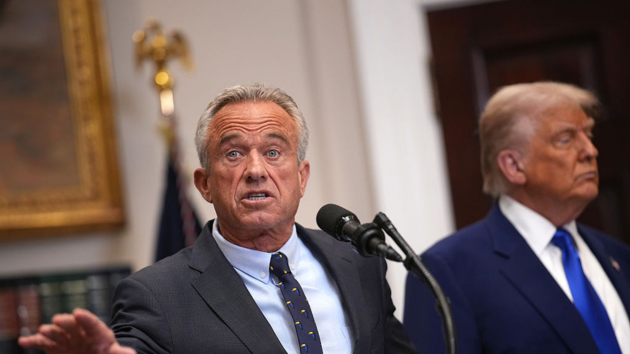
CDC asks researchers to assess how their projects align with Trump administration priorities

CDC asks researchers to assess how their projects align with Trump administration priorities
Jessica McGowan/Getty Images

(WASHINGTON) — The Centers for Disease Control and Prevention sent a survey on March 6 asking some federally funded researchers to assess how their work aligns with the priorities of President Donald Trump’s administration, according to documents obtained by ABC News.

CDC-funded researchers were asked whether their research would help combat “Christian persecution,” defend women and children against “gender ideology extremism” or help curb illegal immigration.

They were also surveyed about whether their research included any diversity or climate change initiatives — among other questions that roughly align with recent executive orders.

On Friday, the agency clarified that the survey was only applicable to CDC partners doing work outside the United States.

It’s not clear how many researchers received the email, which was sent by the CDC’s Global Health Center.

“Receiving this survey was deeply unsettling. It’s hard not to see it as an attempt to inject politics into scientific research, forcing us to align with ideological priorities rather than urgent public health needs,” said one researcher who received the survey.

Researchers who received the survey also told ABC News that they were concerned their answers would be used to jeopardize ongoing research or could be used to justify further cuts, especially to research conducted abroad.

“I worry about how these responses might be used to justify funding cuts, especially for critical public health initiatives,” one researcher said.

Earlier this week, a similar survey was sent to foreign aid programs supported by the United States Agency for International Development, according to reporting by The New York Times.

The survey comes amid federal firings, budget cuts and grant cuts to federally funded research, though some of those actions have been blocked in court.

Several hundred people gathered in the nation’s capital on March 7 for the Stand Up for Science rally, and there are similar rallies planned in more than 30 other cities.

In 2023, the federal government funded roughly $60 billion in scientific research, according to the Association of American Universities. Prior government-funded research has led to technologies such as MRIs and GPS.

Copyright © 2025, ABC Audio. All rights reserved.
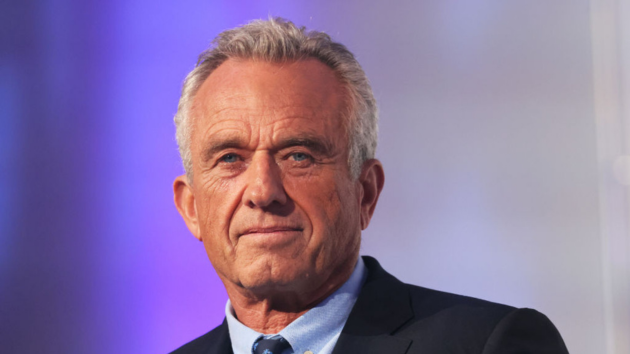
40 new cases of measles reported in Texas as outbreak grows to 198: Officials

40 new cases of measles reported in Texas as outbreak grows to 198: Officials
Antonio Perez/Chicago Tribune/Tribune News Service via Getty Images

(GAINES COUNTY, Texas) — The number of measles cases associated with an outbreak in western Texas has grown to 198, with 40 cases reported over the last three days, according to new data released Friday.

Almost all of the cases are in unvaccinated individuals or in individuals whose vaccination status is unknown, with 80 unvaccinated and 113 of unknown status. At least 23 people have been hospitalized so far, according to the Texas Department of State Health Services (DSHS).

Just five cases have occurred in people vaccinated with one dose of the measles, mumps, rubella (MMR) vaccine.

Children and teenagers between ages 5 and 17 make up the majority of cases, followed by children ages 4 and under.

So far just one death has been reported in an unvaccinated school-aged child, according to DSHS. The child did not have any known underlying conditions, according to the department.

The Texas death was the first measles death recorded in the U.S. in a decade, according to data from the Centers for Disease Control and Prevention.

A possible second measles death was recorded on Thursday after an unvaccinated New Mexico resident tested positive for the virus. The New Mexico Department of Health said the official cause of death is still under investigation.

Gaines County is the epicenter of the outbreak, with 137 cases confirmed among residents, according to DSHS. More than 90% of cases have been identified in just six counties, which account for less than 1% of the state’s total population, the department said.

State health data shows the number of vaccine exemptions in Gaines County have grown dramatically.

Roughly 7.5% of kindergarteners in the county had parents or guardians who filed for an exemption for at least one vaccine in 2013. Ten years later, that number rose to more than 17.5% — one of the highest in all of Texas, according to state health data.

The CDC has separately confirmed 164 cases in nine states so far this year in Alaska, California, Georgia, Kentucky, New Jersey, New Mexico, New York, Rhode Island and Texas.

The total, however, is likely an undercount due to delays in reporting from states to the federal government.

The majority of nationally confirmed cases are in people who are unvaccinated or whose vaccination status is unknown. Of the cases, 3% are among those who received one dose of the MMR shot and 2% are among those who received two doses.

Measles is one of the most contagious diseases known to humans. Just one infected patient can spread measles to up to nine out of 10 susceptible close contacts, according to the CDC.

Health officials have been urging anyone who isn’t vaccinated to receive the MMR vaccine.

The CDC currently recommends that people receive two vaccine doses, the first at ages 12 to 15 months and the second between 4 and 6 years old. One dose is 93% effective, and two doses are 97% effective. Most vaccinated adults don’t need a booster.

Texas health officials are recommending — for those living in the outbreak area — that parents consider an early dose of MMR vaccine for children between ages 6 months and 11 months and that adults receive a second MMR dose if they only received one in the past.

Earlier this week, the CDC said in a post on X that it was on the ground in Texas, partnering with DSHS officials to respond to the measles outbreak.

Measles was declared eliminated from the U.S. in 2000 due to the highly effective vaccination program, according to the CDC. However, CDC data shows vaccination rates have been lagging in recent years.

ABC News’ Youri Benadjaoud contributed to this report.

Copyright © 2025, ABC Audio. All rights reserved.

Over a dozen new measles cases in Texas outbreak in less than a week: Officials

Over a dozen new measles cases in Texas outbreak in less than a week: Officials
Photo by RONALDO SCHEMIDT/AFP via Getty Images

(TEXAS) — The number of measles cases associated with an outbreak in Texas has grown to 159 — an increase of 13 cases in the past five days, authorities said on Tuesday.

The Texas Department of State Health Services updated its website with the new numbers Tuesday afternoon and said the majority of the cases are in unvaccinated individuals or those whose vaccination status is unknown, with 80 unvaccinated and 74 of unknown status.

At least 22 people have been hospitalized, two more than the last update on Friday, according to the DSHS.

“Due to the highly contagious nature of this disease, additional cases are likely to occur in the outbreak area and the surrounding communities,” the DSHS said.

Five cases have occurred in people vaccinated with one dose of the measles, mumps, rubella vaccine, a number that did not change from the last DSHS update on Feb. 28.

Youths between ages 5 and 17 make up the majority of cases with 74, followed by 53 cases among children 4 and under, the DSHS said. The virus was found in 27 people who are 18 or older, according to the agency.

The number of fatalities from measles remains at one: an unvaccinated, school-aged child who lived in the outbreak area. The DSHS said Tuesday that the child had no underlying conditions.

The death marks the first time in a decade that someone has died in the United States from the measles, according to data from the Centers for Disease Control and Prevention.

Gaines County in West Texas is the epicenter of the outbreak, with 107 cases, up from 98 on Friday, according to DSHS. Terry County, which neighbors Gaines County, had the second highest number of measles cases with 22.

At least four measles cases were reported in three counties not associated with the West Texas outbreak — Harris, Rockwall and Travis counties.

State health data shows the number of vaccine exemptions in the county has grown dramatically. Roughly 7.5% of kindergarteners in the Gaines county had parents or guardians who filed for an exemption for at least one vaccine in 2013. Ten years later, that number rose to more than 17.5% — one of the highest in all of Texas, according to state health data.

The CDC has separately confirmed 164 measles cases in eight other states this year: Alaska, California, Georgia, New Jersey, New Mexico, New York and Rhode Island. The total, however, is an undercount due to delays in reporting from states to the federal government.

About 95% of nationally confirmed cases are in people who are unvaccinated or whose vaccination status is unknown. Of the cases, 3% are among those who received one dose of the MMR shot.

Measles is one of the most contagious diseases known to humans. Just one infected patient can spread measles to up to 9 out of 10 susceptible close contacts, according to the CDC.

Health officials have been urging anyone who isn’t vaccinated to receive the MMR vaccine.

The CDC currently recommends that people receive two vaccine doses, the first at ages 12 to 15 months and the second between 4 and 6 years old. One dose is 93% effective, and two doses are 97% effective. Most vaccinated adults don’t need a booster.

Measles was declared eliminated from the United States in 2000 due to the highly effective vaccination program, according to the CDC. However, CDC data shows vaccination rates have been lagging in recent years.

In a statement posted on social media earlier Tuesday, the CDC said it has sent a rapid response team from the agency’s Epidemic Intelligence Service to Texas “to tackle urgent public health issues like disease outbreaks.”

“The measles outbreak in Texas is a call to action for all of us to reaffirm our commitment to public health. By working together — parents, healthcare providers, community leaders, and government officials, we can prevent future outbreaks and protect the health of our nation,” Health and Human Services Secretary Robert F. Kennedy Jr. said in a statement on Tuesday. “Under my leadership, HHS is and will always be committed to radical transparency to regain the public’s trust in its health agencies.”

In an interview that aired Tuesday on Fox News, Kennedy said the CDC’s rapid response team had treated 108 patients in the first 48 hours of arriving in Texas. He said patients are being treated with Budesonide, a steroid; Clarithromycin, an antibiotic; vitamin A; and cod liver oil, which has high concentrations of vitamins A and D.

“They’re getting very, very good results,” Kennedy said.

Kennedy has long questioned the effectiveness and safety of MMR and other vaccines, but told Fox News that the federal government has sent 2,000 doses of MMR to Texas to fight the measles outbreak.

“What we’re trying to do is really to restore faith in government and make sure that we are there to help them with their needs and not particularly to dictate what they ought to be doing,” Kennedy said.

ABC News’ Youri Benadjaoud contributed to this report.

Copyright © 2025, ABC Audio. All rights reserved.
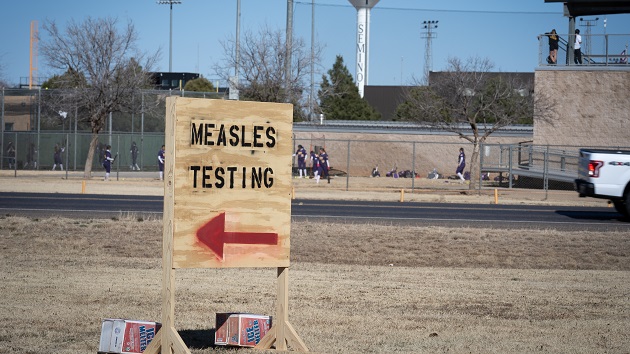
CDC says it is monitoring unknown disease in Congo

CDC says it is monitoring unknown disease in Congo
Nathan Posner/Anadolu Agency via Getty Images

(WASHINGTON) — The U.S. Centers for Disease Control and Prevention is closely monitoring an unknown disease that has killed dozens in the Democratic Republic of Congo, the agency said in a statement on Monday.

“CDC is monitoring the situation closely and engaging with DRC officials on what support the agency can offer,” the agency’s spokesperson said.

At least 1,096 people have been sickened and 60 people have died from the disease, the World Health Organization said Thursday in its most recent update.

This is the third time in the past few months officials have identified increases in illness and deaths in a different area of Congo, triggering “follow-up investigations to confirm the cause and provide needed support,” the WHO said in a statement on Thursday.

For example, there was a separate report of an unknown disease in December of last year in the central African country that was later attributed to illnesses from malaria and respiratory illnesses.

The symptoms for this latest cluster of disease include fever, headache, chills, sweating, stiff neck, muscle aches, multiple joint pain and body aches, a runny or bleeding from the nose, cough, vomiting and diarrhea, the WHO said.

Initial lab tests have been negative for Ebola and Marburg virus disease, the WHO said.

Around half of samples tested have been positive for malaria, which is common in the area, according to the WHO. Tests continue to be carried out for meningitis, and officials said they are also looking into food and water contamination.

The WHO said it has delivered emergency medical supplies, including testing kits and “developed detailed protocols to enhance disease investigation.”

“The WHO is supporting the local health authorities reinforce investigation and response measures, with more than 80 community health workers trained to detect and report cases and death,” the organization said.

Copyright © 2025, ABC Audio. All rights reserved.

Amid growing Texas outbreak, how contagious is measles?

Measles virus particle, illustration. (Photo by KATERYNA KON/SCIENCE PHOTO LIBRARY/Via Getty)

(NEW YORK) — Measles has been spreading across the U.S. for the last several weeks, sickening people in at least nine states amid a growing outbreak in western Texas.

Several people have been hospitalized and at least one unvaccinated school-aged child in Texas has died, marking the first U.S. measles fatality in a decade.

Some may believe that measles is a harmless childhood illness that causes a fever and a rash, clearing after a few days. However, it can also lead to serious health complications, especially in children younger than 5 years old.

Measles is highly contagious in a totally unprotected group. One infected patient would be able to spread the illness to an average of 18 people.

How contagious is measles?

Measles is one of the most contagious viruses known to humans. Just one infected patient can spread measles to up to nine out of 10 susceptible close contacts, according to the Centers for Disease Control and Disease (CDC).

“So, if you have a bunch of unvaccinated kids in the school or in a daycare, nine out of 10 would likely be infected,” Dr. Peter Hotez, professor of pediatrics and molecular virology at Baylor College of Medicine in Houston, told ABC News. “That’s why you often see measles as your first breakthrough epidemic … once vaccination rates go down below 90% because this virus is so highly infectious and can transmit so easily.”

Another way to describe how contagious measles is its basic reproduction number (R0), a theoretical number that suggests how many people an infected patient may infect in a totally susceptible or unvaccinated population.

The R0 for measles ranges from 12 to 18, meaning if no one had any immunity, an infected person could transmit the virus up to an average of 18 people.

“Contrast that with the seasonal flu, and we’re going through a pretty severe flu season,” Dr. Nicholas Cozzi, EMS and disaster medicine medical director at Rush University Medical Center in Chicago, told ABC News. “One person with the flu can infect up to three people. And so, measles, one of the most infective viruses that we have, can infect almost four times as many people as the flu.”

Why is measles so contagious?

Hotez said that it takes a very small amount of virus, or a few measles virus particles, to infect somebody.

It can be transmitted through direct contact with infectious droplets or through the air when an infected person coughs, sneezes or breathes, according to the CDC.

Measles virus can linger in the air and live on surfaces for up to two hours after an infected person has left a room.

Hotez said this is why there was a recent concern when a person infected with measles visited two colleges campuses in Texas and visited establishments to have lunch and dinner.

“So, each place that individual went, you had to worry that he or she left a trail of virus in the atmosphere,” he said. “So even after that individual left, another unvaccinated individual walking into the restaurant or walking into the same classroom space where this visitor was at could become infected.”

Measles complications

Some people who contract measles may suffer severe complications as a result of infection. Those most at risk include children younger than age 5, pregnant people and those with weakened immune systems.

About in one in five unvaccinated people who contract measles are hospitalized and about one in 20 children with measles develop pneumonia, which is the most common cause of death in young children who get infected.

About one in 10 children infected with measles develop ear infections as well, which can lead to hearing loss, according to Hotez.

Additionally, about one out of every 1,000 children with measles will develop encephalitis — which is the swelling of the brain and can lead to brain damage — and one to three out of every 1,000 children with measles will die from respiratory and neurologic complications, the CDC says.

Vaccine availability drives down cases

In the decade before the measles vaccine became available, nearly all children contracted measles by age 15, according to the CDC.

The federal health agency estimates that 3 to 4 million in the U.S. were sickened by measles every year, about 48,000 were hospitalized and about 400 to 500 people died. About 1,000 people suffered encephalitis.

In 1963, the first measles vaccine became available, followed by an improved vaccine in 1968. CDC data show that cases fell from 385,165 confirmed cases in 1963 to 26,686 cases in 1973.

In 1971, the measles, mumps, rubella (MMR) vaccine became available and, in 1989, the Advisory Committee on Immunization Practices, the American Academy of Pediatrics and the American Academy of Family Physicians recommended children receive a second MMR dose.

By 2000, annual recorded cases had fallen to just 85 and measles was declared eliminated, meaning it was without continuous spread for at least 12 months.

MMR vaccine is like a shield

The CDC currently recommends that children receive two vaccine doses, the first at 12 to 15 months and the second between 4 and 6 years old. One dose is 93% effective, and two doses are 97% effective. Most vaccinated adults don’t need a booster.

Cozzi, from Rush University Medical Center, described the MMR vaccine as a shield and measles as an enemy trying to pierce the shield with arrows.

“So, if you’re protected and you have that vaccine, you have a shield in front of you,” he said. “And if something were to get past that shield, it may infect you, but it’s less severe.”

He noted that people who have the measles vaccine can still be infected.

“However, just like the flu, their symptoms and their duration of illness is much less,” he said.

Cozzi said this is evident in Texas, where an outbreak is occurring. As of Friday, just five of the 146 cases were vaccinated – and with just one dose of the MMR vaccine. The remaining cases are among those who are unvaccinated or with unknown vaccination status.

Rise in vaccine hesitancy, exemptions

Despite the protectiveness of the MMR vaccine, CDC data show vaccination rates have been lagging in recent years and the percentage of exemptions have risen.

An October 2024 CDC report found that vaccination coverage among kindergartners decreased from 95.2% during the 2019–2020 school year to 92.7% in the 2023–2024 school year.

While medical exemptions have held steady for the past decade between 0.2% and 0.3%, non-medical vaccine exemptions rose to 3.1% during the 2023-24 school year, which is the highest figure recorded in at least 13 years.

Cozzi said there has been an increase in vaccine hesitancy after the COVID-19 pandemic, which has seen some kindergartners not receiving the MMR vaccine. The same has been true of the polio and DTaP vaccines, with the latter protecting against diphtheria, tetanus and pertussis.

“The onus is really on us as physicians and health care clinicians to have good, honest conversations with our families and our parents, discussing all of the positive things with vaccines — hearing them, understanding their concern — but still providing that proactive nature to prevent all of the severe infections like measles, especially the very devastating consequences that it can have, specifically for those unvaccinated individuals,” he said.

Copyright © 2025, ABC Audio. All rights reserved.

Texas measles outbreak grows to 146 cases, children and teens most impacted

Texas measles outbreak grows to 146 cases, children and teens most impacted
Ronaldo Schemidt/AFP via Getty Images

(GAINES COUNTY, Texas) — The number of measles cases associated with an outbreak in western Texas has grown to 146, according to new data released Friday.

Almost all of the cases are in unvaccinated individuals or individuals whose vaccination status is unknown, with 79 unvaccinated and 62 of unknown status. At least 20 people have been hospitalized so far, according to the Texas Department of State Health Services (DSHS).

Just five cases have occurred in people vaccinated with one dose of the measles, mumps, rubella (MMR) vaccine.

Children and teenagers between ages 5 and 17 make up the majority of cases with 70, followed by 46 cases among children ages 4 and under.

So far just one death has been reported in an unvaccinated school-aged child, according to DSHS. It marks the first measles death in the U.S. in a decade, according to data from the Centers for Disease Control and Prevention.

Gaines County is the epicenter of the outbreak, with 98 cases confirmed among residents, according to DSHS. State health data shows the number of vaccine exemptions in the county have grown dramatically.

Roughly 7.5% of kindergarteners in the county had parents or guardians who filed for an exemption for at least one vaccine in 2013. Ten years later, that number rose to more than 17.5% — one of the highest in all of Texas, according to state health data.

The CDC as separately confirmed 93 cases in eight states so far this year in Alaska, California, Georgia, New Jersey, New Mexico, New York, Rhode Island and Texas.

The total, however, is an undercount due to delays in reporting from states to the federal government.

The majority of nationally confirmed cases are in people who are unvaccinated or whose vaccination status is unknown. Of the cases, 4% are among those who received one dose of the measles, mumps, rubella (MMR) shot.

Measles is one of the most contagious diseases known to humans. Just one infected patient can spread measles to up to nine out of 10 susceptible close contacts, according to the CDC.

Health officials have been urging anyone who isn’t vaccinated to receive the MMR vaccine.

The CDC currently recommends that people receive two vaccine doses, the first at ages 12 to 15 months and the second between 4 and 6 years old. One dose is 93% effective, and two doses are 97% effective. Most vaccinated adults don’t need a booster.

Measles was declared eliminated from the U.S. in 2000 due to the highly effective vaccination program, according to the CDC. However, CDC data shows vaccination rates have been lagging in recent years.

ABC News’ Youri Benadjaoud contributed to this report.

Copyright © 2025, ABC Audio. All rights reserved.

Some experts question RFK Jr. calling measles outbreak ‘not unusual’

Some experts question RFK Jr. calling measles outbreak ‘not unusual’
Al Drago/Bloomberg via Getty Images

(WASHINGTON) — In his first public comments on the measles outbreak hitting West Texas and New Mexico, Health and Human Services Secretary Robert F. Kennedy Jr., a prominent vaccine skeptic whose first steps in combatting the outbreak will be closely watched, said his department was monitoring the situation daily but called it “not unusual.”

“Incidentally, there have been four measles outbreaks this year in this country. Last year there were 16. So, it’s not unusual, we have measles outbreaks every year,” Kennedy said Wednesday at the White House.

However, some public health experts were quick to point out that the outbreak in Texas has defied America’s recent history with highly contagious disease.

Prior to this outbreak, the U.S. had not seen a death from measles since 2015. And in 2000, years after the U.S. implemented a two-dose vaccine schedule, measles was declared eliminated from the U.S., meaning that the disease had stopped spreading within the country.

Only in recent years have cases and outbreaks been rising, according to data from the Centers for Disease Control and Prevention.

The outbreak in West Texas and New Mexico is already drawing close to the halfway mark of total cases seen nationally last year, when there were at least 285 cases of measles – which were also the highest numbers since 2019, according to the CDC’s latest figures.

And while there were 16 outbreaks last year, that was a four-time increase from the number of outbreaks in 2023, when there were just four outbreaks. The U.S. has nearly hit that 2023 number already, just two months into 2025.

Dr. Paul Offit, director of the Vaccine Education Center and an attending physician in the Division of Infectious Diseases at Children’s Hospital of Philadelphia, called Kennedy’s comments about measles cases happening “every year” an attempt to normalize an outbreak that has been anything but normal.

“First of all, we eliminated measles from this country by the year 2000. The reason measles have come back is because a critical percentage of parents have chosen not to vaccinate their children, because they’ve gotten misinformation and disinformation from people like him and his Children’s Health Defense,” Offit told ABC News.

Children’s Health Defense, a group founded by Kennedy, advocates against the recommended vaccine schedule for children.

“It’s unconscionable enough that he’s done that, but that he sort of glibly says, well, measles outbreaks occur every year — the point is they don’t have to occur at all, because we’ve shown we could eliminate this disease,” Offit said.

ABC News has reached out to HHS about RFK Jr.’s comments.

The increase in cases and outbreaks over the last few years coincides with decreasing vaccination coverage for measles among kindergarteners nationally from 95.2% during the 2019-2020 school year to 92.7% in the 2023-2024 school year – leaving about 280,000 kindergartners at risk, according to the CDC.

Kennedy, prior to taking his role as HHS secretary, said the measles vaccine is effective at preventing measles, but has also suggested that it’s not necessary because people who die from measles are typically malnourished or have other comorbidities.

“The measles vaccine definitely eliminates measles, or, you know, close to eliminates it,” Kennedy said in 2022.

But he went on to question the deadliness of the disease.

“In 1963, it was killing only 400 kids a year. Mainly, they were kids who had malnutrition, or had some other devastating co-morbidity,” Kennedy said. “Those were the kids who were dying.”

Kennedy has also questioned that the deaths of 83 people – mostly young children – in Samoa in 2019 were caused by measles, despite widespread evidence that the deaths were due to an outbreak of the disease caused by under-vaccination in the American territory.

“Nobody died in Samoa from measles. They were dying from a bad vaccine,” Kennedy told an interviewer last year.

20% of kids with measles in the U.S. require hospitalization, said Dr. Peter Hotez, co-director of the Texas Children’s Hospital Center for Vaccine Development and dean of the National School of Tropical Medicine at Baylor College of Medicine, often for measles pneumonia, measles diarrhea, measles encephalitis or deafness from measles otitis, an ear infection — many of which can be life-threatening conditions.

“This is a bad, bad actor. And I’m really concerned that this thing is continuing to accelerate and expand,” Hotez said Wednesday night in an interview on MSNBC.

Doctors in West Texas have described shock and feaver-treating a disease they thought was something of the past.

“This is the first time I’ve had any professional experience with a measles outbreak,” Dr. Lara Johnson, pediatrician and Chief Medical Officer at Covenant Children’s and Covenant Health in Lubbock, who is currently treating measles patients from the outbreak in West Texas, told ABC news.

“I saw one travel-related case when I was in medical school, very briefly, but at that time, back in around 2000, we really thought that we’d eradicated measles from the United States and didn’t have any anticipation of seeing any outbreaks here,” she said.

The outbreak in Texas is a prime example of the risk posed to unvaccinated communities. Vaccine exemptions among children in Gaines County, the epicenter of the outbreak, have grown dramatically in the past few years. Roughly 7.5% of kindergarteners had filed an exemption for at least one vaccine in 2013. 10 years later, that number rose to over 17.5% – one of the highest in all of Texas, state health data shows.

As the response to the outbreak in Texas and New Mexico continues, with cases expected to significantly rise, public health experts like Hotez and Offit say they’re watching Kennedy, as leader of the nation’s health department, to encourage swift surveillance and widespread vaccination.

“I want him to say to the American public that there’s a safe way to prevent these outbreaks from happening so that we don’t have the tragedy like what just happened in West Texas,” Offit said. “There’s so much in medicine you don’t know. There’s so much we can’t do. This we know. This we can do.”

Copyright © 2025, ABC Audio. All rights reserved.

What to know about measles

What to know about measles
Natalya Maisheva via Getty Images

(NEW YORK) — Before there was a vaccine in 1963, measles infected millions and killed hundreds of people in the U.S. every year. Now, with the first measles death occurring in over a decade, doctors warn that declining vaccination rates are bringing the disease back, putting more people — especially children — at risk.

Here are five things to know about measles.

What is measles?

Measles is a highly contagious virus that can cause serious illness. One in nine people who are exposed to the measles virus will become infected if they don’t have immunity through previous infection or vaccination, according to the Centers for Disease Control and Prevention.

Symptoms often begin one to two weeks after exposure. Early symptoms can look like other common respiratory illnesses starting with a high fever, cough, runny nose, red eyes and white spots in the mouth.

Dr. Ari Brown, a pediatrician in Austin, Texas, who treated measles decades ago, warns measles “doesn’t look like measles initially, and so that’s what’s so scary … this could look like flu.”

A distinct red rash typically appears three to five days later, usually starting on the face and spreading down the body.

What is the earliest my child can get vaccinated?

The CDC recommends all children receive two doses of the MMR (measles, mumps and rubella) vaccine, with the first dose given between 12-15 months and the second dose when they reach 4-6 years old.

In some circumstances, children as young as 6 months old may receive the vaccine, and a second dose can be given as soon as 28 days after the first, according to the CDC.

Dr. Lara Johnson, a pediatrician and the chief medical officer at Covenant Children’s and Covenant Health in Lubbock, Texas, said people worried about their vaccination status should talk to their doctor.

“One of the messages that’s really important in the context of this outbreak is, if you’re behind on your vaccinations, now’s a great time to get caught up,” Johnson told ABC News.

Can you get measles if you are fully vaccinated?
One dose of the MMR vaccine is 93% effective against measles and two doses are 97% effective, according to the CDC.

That means that 3 out of 100 vaccinated people may get sick if exposed to the virus, but these infections are usually less severe than in unvaccinated people who get sick, according to the CDC.

Most people who were vaccinated as children won’t need any additional measles vaccines. But adults who only had one measles vaccination or people who were vaccinated in the 1960s may be candidates for an additional vaccination.

Anyone unsure of their vaccination status should have a discussion with their doctor. There’s no harm in getting an additional dose of the MMR vaccine. According to the CDC, people born before 1957 are immune to the virus because almost everyone at the time was infected with measles, mumps and rubella during their childhood.

Anyone living in a high-risk area should speak to their doctor about whether they need a booster, according to the CDC.

What can pregnant women do to stay safe?

Measles in pregnancy is associated with a higher risk of miscarriage, low birth weight and preterm birth, according to the American College of Obstetricians and Gynecologists. However, women should not receive the MMR vaccine while they are pregnant because it is a live vaccine.

If a pregnant person is exposed to measles, they should talk to their doctor as soon as possible — within six days — to know if they should receive a post-exposure prophylaxis with measles immunoglobulin (an injection of antibodies that can help reduce the severity of illness for high-risk people), according to the CDC.

Can measles kill you?

Measles can cause complications like pneumonia, brain swelling, long-term hearing loss and death — as is the case in the current Texas outbreak.

In the decade before the measles vaccine, the CDC estimates 3 to 4 million people were infected and 400 to 400 people died from the virus every year in the United States.

Other long-term complications include subacute sclerosing panencephalitis (SSPE), a rare but fatal complication that can develop seven to ten years after recovery. SSPE causes a gradual loss of mental abilities, which progresses to a vegetative state and eventually leads to death, according to the National Institutes of Health.

There is no specific treatment for measles, so doctors say the best way to prevent complications of measles is to get vaccinated.

“The vaccine is so effective,” Dr. Summer Davies, a pediatrician currently treating hospitalized patients at Texas Tech University Health Science Center and Covenant Children’s, told ABC News.

Davies said the best way to protect yourself, your children and your community is to get the vaccine, even “if you’re not worried yourself about getting it.”

This is not just like any other virus, Davies said.

“Some people think, ‘Oh, this is just a virus like the flu. I’ll get it, maybe get a fever and rash and get over it,’” Davies said. “But it can be really severe, as we have seen here.”

Johnson said that measles is not just an issue from the past, but something that could progress in the future without proper vaccinations.

“[Measles] seems like something from the past,” Johnson said. “But if we don’t continue to vaccinate and do things that we did in order to make these illnesses of the past, then they’ll be illnesses of the present.”

-Dr. Amanda Hargett-Granato and Jade A Cobern contributed to this report. Hargett-Granato is a pediatric resident at Mayo Clinic and member of the ABC News Medical Unit. Cobern, MD, MPH, board-certified in pediatrics and general preventive medicine, is a medical fellow of the ABC News Medical Unit.

Copyright © 2025, ABC Audio. All rights reserved.

Over 60 deaths linked to ‘unknown disease’ in Congo: WHO

Over 60 deaths linked to ‘unknown disease’ in Congo: WHO
A general view of the World Health Organization (WHO) on April 28, 2009, in Geneva, Switzerland. (Harold Cunningham/Getty Images)

(DEMOCRATIC REPUBLIC OF CONGO) — At least 60 people have died and over 1,000 more have been sickened by a deadly “unknown disease” spreading in a region of the Democratic Republic of Congo, the World Health Organization said.

Local health officials in Congo are partnering with the World Health Organization to investigate.

The phrase “unknown disease” primarily means that the disease has not yet been identified.

In previous cases, the cases are linked to a known disease, but a lack of available testing leads to lack of certainty.

For example, there was a separate report of an “unknown disease” in December of last year in Congo that was later attributed to illnesses from malaria and respiratory illnesses.

Local health officials have identified a surge of cases and deaths three times in different areas of the country in recent months.

A total of 1,096 sick people have been identified along with 60 deaths. Symptoms include fever, headache, chills, sweating, stiff neck, muscle aches, multiple joint pain and body aches, a runny or bleeding from nose, cough, vomiting and diarrhea.

Initial lab tests have been negative for Ebola and Marburg. Around half of samples tested have been positive for malaria, which is common in the area. Tests continue to be carried out for meningitis. Officials are also looking into food and water contamination.

Early investigations traced the outbreak’s origin to three kids, all under 5 years old, who developed symptoms after eating a bat carcass.

Symptoms included fever, headache, diarrhea and fatigue – which later progressed to signs associated with hemorrhagic fevers and death.

“The remote location and weak healthcare infrastructure increase the risk of further spread,” the WHO notes in its report.

Copyright © 2025, ABC Audio. All rights reserved.

Major medical groups push back against Trump administration’s ‘sex-based definitions’

Major medical groups push back against Trump administration’s ‘sex-based definitions’
Al Drago/Bloomberg via Getty Images

(WASHINGTON) — Some major medical associations are pushing back against the Department of Health and Human Services’ updated definitions of biological sex in federal policy in the wake of President Donald Trump’s executive order.

HHS issued new guidance on Feb. 19 where it said it “recognizes there are only two sexes: male and female,” adding: “HHS will use these definitions and promote policies acknowledging that women are biologically female and men are biologically male.”

“There is extensive scientific research that supports the complexity of sex and gender beyond binary classifications,” American Psychological Association CEO Arthur C. Evans Jr., Ph.D., told ABC News in a statement. “The new restrictive definition of sex ignores decades of science, increasing harm to youth and families, while undermining critical mental health outcomes.”

The new HHS guidance for the federal government defines “sex” as “a person’s immutable biological classification as either male or female.” It further defines “female” as “a person of the sex characterized by a reproductive system with the biological function of producing eggs (ova)” and “male” as “a person of the sex characterized by a reproductive system with the biological function of producing sperm.” It additionally defines the definition of a “woman” as “an adult human female” and a “man” as “an adult human male.”

The updated HHS guidance also includes definitions for “father” as describing a “male parent” and “mother” as describing a “female parent.”

The HHS guidance doesn’t mention intersex individuals — people born with sex characteristics that don’t fit typical definitions of male or female. The National Institutes of Health estimates that about .018% of the population is considered intersex.

The federal government previously defined “sex” in broader terms.

The Centers for Disease Control and Prevention, one of HHS’ agencies, defines sex as “an individual’s biological status as male, female, or something else. Sex is assigned at birth and associated with physical attributes, such as anatomy and chromosomes.”

The CDC’s website defines gender as “the cultural roles, behaviors, activities and attributes expected of people based on their sex.”

After Trump took office, the administration ordered the CDC and the Food and Drug Administration to remove certain public health websites, including the CDC’s page with more gender-inclusive definitions, which were then taken offline. A judge granted a temporary restraining order to restore the pages after organizations filed lawsuits.

A banner at the top of the CDC page currently states: “Per a court order, HHS is required to restore this website as of 11:59PM ET, February 14, 2025. Any information on this page promoting gender ideology is extremely inaccurate and disconnected from the immutable biological reality that there are two sexes, male and female.”

The HHS did not include its own definition of gender in its updated guidance posted Feb. 19.

The second Trump administration has issued a number of executive orders targeting the transgender population, and a number of lawsuits have been filed to challenge them.

Human biology is complex, and not all individuals fit neatly into binary categories, Evans told ABC News. 

“We cannot just ignore the biological science that some people are born with a difference of sex development (DSD),” Evans said in his statement. “DSD are congenital conditions where the development of anatomical, chromosomal or gonadal sex is atypical. It is important that we support access to psychological and medical interventions for such individuals who do not fall into the male or female category, putting them at a higher risk of depression and anxiety.”

Evans also said the new HHS definitions excluded the concept of gender identity.

“It is crucial to recognize the psychological science on the validity of gender identity, as it allows for a more accurate understanding of individual experiences beyond the binary framework of biological sex,” he said. “Research consistently shows that affirming both sex and gender identity is vital for promoting mental health and well-being.”

In its updated guidance, HHS Secretary Robert F. Kennedy Jr. said the Trump administration “is bringing back common sense and restoring biological truth to the federal government. The prior administration’s policy of trying to engineer gender ideology into every aspect of public life is over.”

The American College of Obstetricians and Gynecologists said in a statement that it will not change its current definitions of sex and gender, and will use inclusive language “to recognize and affirm all people who seek and receive care from obstetrician-gynecologists.”

The ACOG also called on researchers to diversify studies by including gender-expansive participants and to report study participant characteristics inclusively by using language beyond traditional binary descriptors.

The American Academy of Family Physicians noted its long-standing policy on care for transgender and nonbinary patients, saying in a statement that it will continue to recognize that “diversity in gender identity and expression is a normal part of human existence and does not represent pathology.” It further asserted that “medical decisions are best made by patients, their families and their physicians, supported by medical evidence.”

The American Academy of Pediatrics said it will comply with all applicable executive orders as the law requires. “The AAP continues to hold that medical decisions are best made by patients, their families and their physicians, supported by medical evidence,” the organization said in a statement.

The American Medical Association’s policy on the Medical Spectrum of Gender, first enacted in 2018, appears to remain unchanged. It “affirms that an individual’s genotypic sex, phenotypic sex, sexual orientation, gender and gender identity are not always aligned or indicative of the other, and that gender for many individuals may differ from the sex assigned at birth,” according to the policy.

HHS spokesperson Andrew Nixon told ABC News the department has no comment.

ABC News has reached out to the White House for comment.

White House press secretary Karoline Leavitt said on Thursday, a day after HHS updated its guidance, that Trump “reestablished the scientific and biological truth that there are only two sexes in this country — male and female — that those are biologically based determinations.  They are not based and can never be based on gender identity.”

Dr. Allia Vaez is a family medicine resident at Southern Regional AHEC and a member of the ABC News Medical Unit. 

Copyright © 2025, ABC Audio. All rights reserved.