
RFK Jr. defends widespread HHS cuts, response to measles outbreak during House hearing

RFK Jr. defends widespread HHS cuts, response to measles outbreak during House hearing
Bill Clark/CQ-Roll Call, Inc via Getty Images

(WASHINGTON) — Health and Human Services Secretary Robert F. Kennedy Jr., before a House committee Wednesday morning, defended the massive cuts to the department’s workforce and laid out his priorities for the Trump administration’s proposed budget — all while he is expected to field questions about his history of promoting conspiracy theories and controversial comments about vaccines.

Kennedy is appearing before the House Appropriations Committee Wednesday morning. He will then head to the Senate Health, Education, Labor, and Pensions (HELP) Committee in the afternoon. The appearances mark the first time Kennedy has testified before Congress since his confirmation hearings in late January, and he may be forced to confront statements he made that critics say are evidence of promises broken.

In his opening statement before the House committee, Kennedy said his goal at HHS is to focus on the chronic disease epidemic and deliver effective services for those who rely on Medicare, Medicaid and other services by cutting costs to taxpayers.

“We intend to do more, a lot more with less. The budget I’m presenting today supports these goals and reflects two enduring American values, compassion and responsibility,” Kennedy said in his opening statement.

Kennedy said the new budget addresses priorities including tackling mental health and addiction; addressing nutrition, physical activity and healthy lifestyles; equipping the FDA to expand food safety experts; eliminating diversity, equity and inclusion funding; strengthening cybersecurity and rebuilding.

Democratic Rep. Rosa DeLauro, ranking Member of the House Appropriations Committee, slammed Kennedy and the Trump’s administration for the cuts to HHS, including the elimination of entire divisions.

In April, HHS began laying off about 10,000 workers and consolidating 28 institutes and centers into 15 new divisions.

Including the roughly 10,000 people who have left over the last few months through early retirement or deferred resignation programs, the overall staff at HHS is expected to fall from 82,000 to around 62,000 — or about a quarter of its workforce.

“Mr. Secretary, you are gutting the life-saving work of the Department of Health and Human Services and its key agencies while the Republicans in this Congress say and do nothing,” DeLauro said. “Because of these cuts people will die.”

In a video statement posted on X prior to the layoffs, Kennedy said that he plans to bring to the agency a “clear sense of mission to radically improve the health of Americans and to improve agency morale.”

Kennedy has defended the cuts as necessary to weed out wasteful spending at one of America’s largest departments, but he has drawn criticism for laying off people who are responsible for regulating tobacco usage, monitoring lead exposure in children and diagnosing black lung disease in miners.

The secretary himself has appeared not to know about some of the cuts, telling CBS News last month he was “not familiar” with several cuts cited by the outlet.

Before the House committee, Kennedy also rebuked criticism of his agency’s response to the measles outbreak.

“We are doing a better job at CDC today than any nation in the world controlling this measles outbreak. I’m happy to elaborate on that afterward,” Kennedy said.

DeLauro replied that Kennedy’s comparison of the U.S. response to measles to the response of other countries was unfair.

“Mr. Secretary, you keep comparing the U.S. to other countries compare us to Europe, but the Europe you are referring to is the WHO European region has 53 countries in Europe and in Asia, including those with low vaccine vaccination rates like Romania and that has never eliminated measles,” she said. “If you compare us to western Europe countries that we often compare ourselves to, like Great Britain, they have seen no measles death.”

Kennedy argued that the U.S. is doing better than other countries in the Americas with smaller populations, including Canada and Mexico.

Kennedy said several times during his hearing in January that he supports vaccines, although he refused to unequivocally say that vaccines don’t cause autism, despite numerous existing studies already showing there is no link.

“I support the measles vaccine. I support the polio vaccine. I will do nothing as HHS secretary that makes it difficult or discourages people from taking either of those vaccines,” Kennedy said.

However, in March, the HHS confirmed that the Centers for Disease Control and Prevention will study whether vaccines cause autism.

Democratic Rep. Mark Pocan asked Kennedy if he would vaccinate his own children today with the measles vaccine, chickenpox vaccine or polio vaccine, and Kennedy refused to say he would.

“My opinions about vaccines are irrelevant,” Kennedy said. “That question directly, it will seem like I’m giving advice to other people, and I don’t want to be doing that.”

“But that’s kind of your jurisdiction, because CDC does give advice, right?” Pocan replied.

DeLauro scolded Kennedy for promoting vaccine skepticism in the wake of a measles outbreak spreading across the U.S.

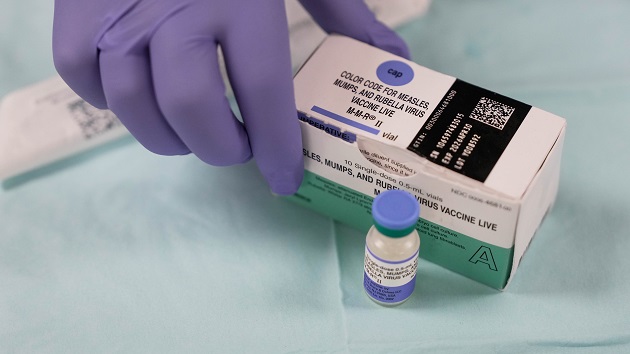
In the wake of several ongoing measles outbreaks across the U.S. and over 1,000 cases so far this year, Kennedy has shared contradicting views about vaccines.

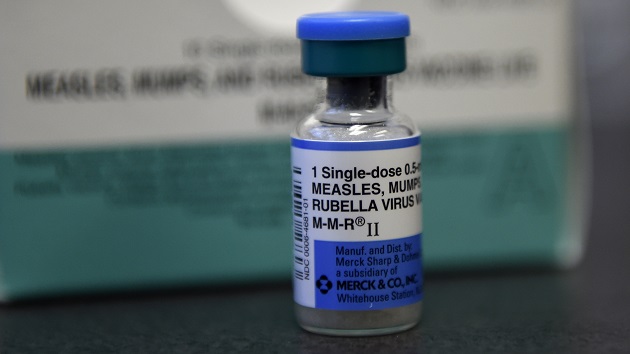
In a post on X on April 6, Kennedy said that the “most effective way to prevent the spread of measles” is to receive the measles, mumps, rubella (MMR) vaccine. However, in a post later that evening, he said more than 300 children have been treated with an antibiotic and a steroid, neither of which are recognized treatments or cures for measles.

Kennedy’s embrace of anti-vaccine ideas nearly put his confirmation in jeopardy, as he faced resistance from Louisiana Republican Sen. Bill Cassidy, a physician who heads the HELP committee. Cassidy expressed concerns about Kennedy’s views on vaccines before ultimately voting to move him through the confirmation process in February.

Cassidy said, at the time, that Kennedy assured him he would not alter vaccine policy without “ironclad” scientific evidence. The senator added that Kennedy and Trump officials promised him an “unprecedentedly close collaborate working relationship” with the secretary.

Kennedy’s controversial moves on fluoride came up with Republican Rep. Mike Simpson, a dentist, telling Kennedy he was concerned about the secretary’s comments on it.

Last month, Kennedy said he plans to assemble a task force and ultimately change the Centers for Disease Control and Prevention’s guidance to stop recommending adding fluoride to drinking water and other products. He has claimed that fluoride in drinking water affects children’s neurological development.

The Food and Drug Administration said it will conduct a scientific review of fluoride-containing supplements sometimes used to strengthen children’s teeth by late October with the aim of removing them from the market.

“I’ve seen the benefits having been a practicing dentist for 22 years. … You don’t prevent cavities by fluoride killing the bacteria in the mouth,” Simpson said. “What it does is make the enamel more resistant to decay. So, I want to see the studies on this and where we’re headed with this.”

Previous reviews by public health experts and dental professionals have not shown any serious health risks with the addition of fluoride.

ABC News’ Cheyenne Haslett and Anne Flaherty contributed to this report.

Copyright © 2025, ABC Audio. All rights reserved.

RFK Jr. defends widespread HHS cuts during House hearing

RFK Jr. defends widespread HHS cuts, response to measles outbreak during House hearing
Bill Clark/CQ-Roll Call, Inc via Getty Images

(WASHINGTON) — Health and Human Services Secretary Robert F. Kennedy Jr., before a House committee Wednesday morning, defended the massive cuts to the department’s workforce and laid out his priorities for the Trump administration’s proposed budget — all while he is expected to field questions about his history of promoting conspiracy theories and controversial comments about vaccines.

Kennedy is appearing before the House Appropriations Committee Wednesday morning. He will then head to the Senate Health, Education, Labor, and Pensions (HELP) Committee in the afternoon. The appearances mark the first time Kennedy has testified before Congress since his confirmation hearings in late January, and he may be forced to confront statements he made that critics say are evidence of promises broken.

In his opening statement before the House committee, Kennedy said his goal at HHS is to focus on the chronic disease epidemic and deliver effective services for those who rely on Medicare, Medicaid and other services by cutting costs to taxpayers.

“We intend to do more, a lot more with less. The budget I’m presenting today supports these goals and reflects two enduring American values, compassion and responsibility,” Kennedy said in his opening statement.

Kennedy said the new budget addresses priorities including tackling mental health and addiction; addressing nutrition, physical activity and healthy lifestyles; equipping the FDA to expand food safety experts; eliminating diversity, equity and inclusion funding; strengthening cybersecurity and rebuilding.

Democratic Rep. Rosa DeLauro, ranking Member of the House Appropriations Committee, slammed Kennedy and the Trump’s administration for the cuts to HHS, including the elimination of entire divisions.

In April, HHS began laying off about 10,000 workers and consolidating 28 institutes and centers into 15 new divisions.

Including the roughly 10,000 people who have left over the last few months through early retirement or deferred resignation programs, the overall staff at HHS is expected to fall from 82,000 to around 62,000 — or about a quarter of its workforce.

“Mr. Secretary, you are gutting the life-saving work of the Department of Health and Human Services and its key agencies while the Republicans in this Congress say and do nothing,” DeLauro said. “Because of these cuts people will die.”

In a video statement posted on X prior to the layoffs, Kennedy said that he plans to bring to the agency a “clear sense of mission to radically improve the health of Americans and to improve agency morale.”

Kennedy has defended the cuts as necessary to weed out wasteful spending at one of America’s largest departments, but he has drawn criticism for laying off people who are responsible for regulating tobacco usage, monitoring lead exposure in children and diagnosing black lung disease in miners.

The secretary himself has appeared not to know about some of the cuts, telling CBS News last month he was “not familiar” with several cuts cited by the outlet.

Before the House committee, Kennedy also rebuked criticism of his agency’s response to the measles outbreak.

“We are doing a better job at CDC today than any nation in the world controlling this measles outbreak. I’m happy to elaborate on that afterward,” Kennedy said.

DeLauro replied that Kennedy’s comparison of the U.S. response to measles to the response of other countries was unfair.

“Mr. Secretary, you keep comparing the U.S. to other countries compare us to Europe, but the Europe you are referring to is the WHO European region has 53 countries in Europe and in Asia, including those with low vaccine vaccination rates like Romania and that has never eliminated measles,” she said. “If you compare us to western Europe countries that we often compare ourselves to, like Great Britain, they have seen no measles death.”

Kennedy argued that the U.S. is doing better than other countries in the Americas with smaller populations, including Canada and Mexico.

Kennedy said several times during his hearing in January that he supports vaccines, although he refused to unequivocally say that vaccines don’t cause autism, despite numerous existing studies already showing there is no link.

“I support the measles vaccine. I support the polio vaccine. I will do nothing as HHS secretary that makes it difficult or discourages people from taking either of those vaccines,” Kennedy said.

However, in March, the HHS confirmed that the Centers for Disease Control and Prevention will study whether vaccines cause autism.

Democratic Rep. Mark Pocan asked Kennedy if he would vaccinate his own children today with the measles vaccine, chickenpox vaccine or polio vaccine, and Kennedy refused to say he would.

“My opinions about vaccines are irrelevant,” Kennedy said. “That question directly, it will seem like I’m giving advice to other people, and I don’t want to be doing that.”

“But that’s kind of your jurisdiction, because CDC does give advice, right?” Pocan replied.

DeLauro scolded Kennedy for promoting vaccine skepticism in the wake of a measles outbreak spreading across the U.S.

In the wake of several ongoing measles outbreaks across the U.S. and over 1,000 cases so far this year, Kennedy has shared contradicting views about vaccines.

In a post on X on April 6, Kennedy said that the “most effective way to prevent the spread of measles” is to receive the measles, mumps, rubella (MMR) vaccine. However, in a post later that evening, he said more than 300 children have been treated with an antibiotic and a steroid, neither of which are recognized treatments or cures for measles.

Kennedy’s embrace of anti-vaccine ideas nearly put his confirmation in jeopardy, as he faced resistance from Louisiana Republican Sen. Bill Cassidy, a physician who heads the HELP committee. Cassidy expressed concerns about Kennedy’s views on vaccines before ultimately voting to move him through the confirmation process in February.

Cassidy said, at the time, that Kennedy assured him he would not alter vaccine policy without “ironclad” scientific evidence. The senator added that Kennedy and Trump officials promised him an “unprecedentedly close collaborate working relationship” with the secretary.

Kennedy’s controversial moves on fluoride came up with Republican Rep. Mike Simpson, a dentist, telling Kennedy he was concerned about the secretary’s comments on it.

Last month, Kennedy said he plans to assemble a task force and ultimately change the Centers for Disease Control and Prevention’s guidance to stop recommending adding fluoride to drinking water and other products. He has claimed that fluoride in drinking water affects children’s neurological development.

The Food and Drug Administration said it will conduct a scientific review of fluoride-containing supplements sometimes used to strengthen children’s teeth by late October with the aim of removing them from the market.

“I’ve seen the benefits having been a practicing dentist for 22 years. … You don’t prevent cavities by fluoride killing the bacteria in the mouth,” Simpson said. “What it does is make the enamel more resistant to decay. So, I want to see the studies on this and where we’re headed with this.”

Previous reviews by public health experts and dental professionals have not shown any serious health risks with the addition of fluoride.

ABC News’ Cheyenne Haslett and Anne Flaherty contributed to this report.

Copyright © 2025, ABC Audio. All rights reserved.
US drug overdose deaths fell by nearly 27% last year, reaching lowest levels since 2019: CDC

US drug overdose deaths fell by nearly 27% last year, reaching lowest levels since 2019: CDC
Manusapon Kasosod/Getty Images

(NEW YORK) — Drug overdose deaths dropped in the United States last year to the lowest levels seen in five years, according to a new federal report published Wednesday morning.

The provisional report from the Centers for Disease Control and Prevention’s National Center for Health Statistics found nationwide drug overdose deaths fell from 110,037 in 2023 to 80,391 in 2024.

This represents a decline of 26.9% and the lowest figure of annual drug overdose deaths since 2019, according to the report.

This is the second year in a row that drug overdose deaths have dropped after year-over-year increases were seen during the COVID-19 pandemic, and researchers say they’re cautiously optimistic about the declines.

“We should have a guarded enthusiasm here because what we’re seeing is almost the return to the overdose death rates that we had before the pandemic,” Dr. Petros Levounis, a professor and chair of the department of psychiatry and associate decant of Rutgers New Jersey Medical School, who was not involved in the report, told ABC News.

“So essentially, we have corrected the bump and the increase in overdose deaths we experienced with the pandemic,” he added.

The report found the biggest drop in deaths by drug type was seen in fatalities linked to synthetic opioids, including fentanyl, which fell from 76,282 to 48,422 between 2023 and 2024.

Declines were also seen in overdose deaths from psychostimulants, such as methamphetamine; cocaine; and natural or semi-synthetic drugs such as morphine.

Additionally, nearly every state across the country saw decreases in drug overdose deaths. Louisiana, Michigan, New Hampshire, Ohio, Virginia, West Virginia and Wisconsin, as well as Washington, D.C., saw declines of 35% or more from 2023 to 2024, according to the report.

By comparison, South Dakota and Nevada each saw slight increases in 2024 compared to 2023, the report found.

Lavounis, who is also the director of Rutgers’ Northern New Jersey Medications for Addiction Treatment Center of Excellence, said public health officials should also pay attention to Alaska, where opioid overdoses have steadily been increasing since at least 2018.

Overdose rates in Alaska have reached historic levels, according to CDC data, due to a proliferation of fentanyl

Fentanyl is up to 50 times more potent than heroin and 100 times more potent than morphine and can be deadly even in small doses, according to the CDC. Other drugs may be laced with deadly levels of fentanyl, and a user is not able to see it, taste it, or smell it.
Experts told ABC News they believe there a few reasons behind the drop in overdose deaths. One reason is the more widespread use of naloxone, the overdose reversal drug.

The U.S. Food and Drug Administration approved Narcan for over-the-counter use in March 2023.

Narcan, made by the company Emergent BioSolutions, is given as a nasal spray and naloxone — the active ingredient in the medication — can quickly restore one’s breathing if an individual is experiencing an opioid overdose, though its effect is temporary and some people may need additional doses.

Harm reduction groups and other experts have been pushing for easier access to naloxone as one strategy to help prevent some of the tens of thousands of overdose deaths that occur each year in the U.S.

Dr. Allison Lin, an addiction psychiatrist at University of Michigan Medical School, who was not involved in the report, said there has also been wider use of medications to treat opioid use disorder as well as an increase of public awareness of the dangers of opioid use.

“These are the things that we know, at least from a research perspective, to be lifesaving,” she told ABC News. “We’ve been battling this overdose epidemic for now over a decade, and so there’s been tremendous efforts invested by communities, by the federal government, by our state governments, anything from prevention to overdose education.”

Lin said although the data is encouraging, it’s too soon to say the overdose crisis in the U.S. is over and that public health officials should continue their efforts to drive down overdose death rates.

“It’s nice to celebrate all the hard work that people have been putting in; we’re starting to see some rewards from that,” she said. “But it’s not time to like move from the gas pedal, I would say.”

Copyright © 2025, ABC Audio. All rights reserved.
HHS reverses NIOSH firings that stripped coal miners’ health protections

HHS reverses NIOSH firings that stripped coal miners’ health protections
Ricky Carioti/The Washington Post via Getty Images

(MORGANTOWN, WV) — The Department of Health and Human Services on Tuesday reversed the firings of more than 100 federal employees with the National Institute for Occupational Safety and Health, the federal institute that helps protect coal miners from black lung, according to Republican Sen. Shelley Moore Capito.

Roughly 200 employees of the NIOSH office in Morgantown, West Virginia, were put on administrative leave in April and informed they would be formally fired in June. Some were temporarily brought back roughly two weeks ago, but until Tuesday they were told they would still be terminated next month.

In a letter sent Tuesday, a copy of which was obtained by ABC News, HHS said, “You previously received a notice regarding the Department of Health and Human Services’ (HHS) upcoming reduction in force (RIF). That notice is hereby revoked. You will not be affected by the upcoming RIF.”

The move comes after public pressure from Capito, and follows a series of ABC News reports detailing the impact the firings would have on black lung health care programs for coal miners.

Capito, announcing the reversals on X, said, “The heath and safety of our WV workers, including our miners, is of the utmost important and I will always advocate for their wellbeing.”

Critics said the initial firings, part of President Donald Trump’s efforts to slash the size of the federal government, belied his vow to reinvigorate America’s coal industry.

NIOSH has offices in several other states covering a range of issues from vehicle safety to firefighter health care. It’s unclear if any employees in those offices were also rehired.

ABC News reached out to HHS for comment.

The announcement came just hours before a federal judge ordered HHS Secretary Robert F. Kennedy Jr. to temporarily halt its dismissal of NIOSH officials who oversee the black lung surveillance program.

“Losing the services of these experienced and dedicated employees is an aspect of the irreparable harm to the miners and the public that cannot and should not be ignored,” U.S. District Judge Irene Berger wrote in her order Tuesday.

It was not immediately clear whether the ruling had anything to do with the Trump administration’s decision to reinstate the workers earlier Tuesday.

Judge Berger’s ruling came after a veteran coal miner named Henry Wiley, in April, challenged the Trump administration’s removal of the NIOSH employees, arguing that terminations endangered him and other miners.

The judge wrote Tuesday that Wiley and a handful of NIOSH officials who testified in a hearing last week persuaded her of the importance of NIOSH’s health screening program and a waiver called Part 90, which allows miners with early-stage black lung disease to transfer to roles out of the mines.

If the NIOSH dismissals were allowed to go forward, Berger wrote, “thousands of miners will go without screening for black lung, and those with black lung will be deprived of access to the Part 90 transfer option.”

Berger referenced Kennedy directly, writing, “Does the Secretary of the Department of Health and Human Services genuinely believe that a miner diagnosed with black lung is not being injured when the program designed to confirm his condition and provide him with workplace protections to prevent its progression is rendered inaccessible? This court does not share such a belief.”

Berger ordered the Trump administration to grant “full restoration of the NIOSH Respiratory Health Division, rescission of the [reduction in force letters], and compelling continued health surveillance” through the health surveillance program and Part 90.

She gave Kennedy three weeks to report in writing when the court’s orders have been satisfied.

In a statement to ABC News, plaintiffs attorney Sam Petsonk said, “This opinion gives life to our foundational principles of judicial review, empowering ordinary citizens like these coal miners to defend their rights.”

“We’re glad to see the Administration already taking some initial steps in the direction of complying with the order. America’s coal miners deserve nothing less, and in fact they deserve a heck of a lot more,” Petsonk said.

An HHS spokesperson told ABC News that Kennedy has been working hard to maintain NIOSH’s critical functions as HHS streamlines its operations, and that the Trump administration is committed to supporting coal miners and firefighters.

Copyright © 2025, ABC Audio. All rights reserved.
Extreme heat could make pregnancy riskier for millions of women: Report

Extreme heat could make pregnancy riskier for millions of women: Report
Oscar Wong via Getty Images

(WEST PALM BEACH, FL) — As human-induced climate change continues warming the planet, pregnancy risks are increasing, according to a new analysis by Climate Central.

Climate Central, a nonprofit science and communications organization, analyzed daily temperature data from 2020 to 2024 in 940 cities across 247 counties and territories. Researchers looked for “extreme heat days,” which are defined by temperatures that go beyond what’s normal in the area 95% of the time.

The high temperatures are associated with an increased risk of preterm birth and threats to maternal health; therefore, Climate Central has coined the phrase “pregnancy heat-risk days.”

Over the last four years, nearly one-third of the countries that Climate Central surveyed experienced at least one additional month of pregnancy heat-risk days on average, according to the new report.

For most of those countries, the pregnancy heat-risk days doubled — a pattern that can be linked to climate change, researchers showed.

“Even a single day of extreme heat can raise the risk of serious pregnancy complications,” said Climate Central’s vice president of science, Kristina Dahl, in a statement. “Climate change is increasing extreme heat and stacking the odds against healthy pregnancies worldwide, especially in places where care is already hard to access.”

Extreme heat can increase the risks of pregnancy complications and is linked to high blood pressure, diabetes, hospitalizations, premature births or even death, according to major health organizations such as the World Health Organization and the Centers for Disease Control and Prevention.

The United States has experienced an increase of 12 pregnancy heat-risk days each year on average.

The analysis found that West Palm Beach, Florida, experienced the most significant increase in pregnancy heat-risk days in the U.S. — jumping 48% between 2020 and 2024. Going by state, Utah saw the biggest increase, with 23 additional days, a 72% increase since 2020.

The analysis also found that all of Hawaii’s pregnancy heat-risk days can be attributed to climate change. In other words, pregnant people living in Hawaii would never have been subjected to the risk of extreme heat if not for the changing climate.

“Extreme heat is now one of the most pressing threats to pregnant people worldwide, pushing more pregnancies into high-risk territory, especially in places already struggling with limited healthcare access,” said Dr. Bruce Bekkar, a women’s health physician and expert on how climate change impacts human health.

“Cutting fossil fuel emissions isn’t just good for the planet — it’s a crucial step toward protecting pregnant people and newborns around the world,” Bekkar said.

After West Palm Beach, the cities rounding out the five hardest-hit in nation’s states and territories are: Miami, Florida; San Juan, Puerto Rico; Odessa, Texas; and Salt Lake City, Utah.

After Utah, the hardest-hit states are: Colorado, New Mexico, Arizona and Hawaii.

The analysis by Climate Central has not been peer-reviewed, and it does not differentiate between different types of pregnancy complications.

Copyright © 2025, ABC Audio. All rights reserved.
RFK Jr. to testify before House, Senate committees amid layoffs, overhaul at HHS

RFK Jr. to testify before House, Senate committees amid layoffs, overhaul at HHS
Andrew Harnik/Getty Images

(WASHINGTON) — Health and Human Services Secretary Robert F. Kennedy Jr. is set to testify before two congressional committees on Wednesday to discuss, among many topics, the Trump administration’s proposed budget and its impact on HHS.

Kennedy will appear before the House Appropriations Committee Wednesday morning and the Senate Health, Education, Labor, and Pensions (HELP) Committee in the afternoon.

Last month, the HELP Committee called Kennedy to testify on the restructuring of the department.

In April, HHS began laying off about 10,000 workers and consolidating 28 institutes and centers into 15 new divisions.

Including the roughly 10,000 people who have left over the last few months through early retirement or deferred resignation programs, the overall staff at HHS is expected to fall from 82,000 to around 62,000 — or about a quarter of its workforce.

In a video statement posted on X prior to the layoffs, Kennedy said that he plans to bring to the agency a “clear sense of mission to radically improve the health of Americans and to improve agency morale.”

Kennedy has defended the cuts as necessary to weed out wasteful spending at one of America’s largest departments, but he has drawn criticism for laying off people who are responsible for regulating tobacco usage, monitoring lead exposure in children and diagnosing black lung disease in miners.

The secretary himself has appeared not to know about some of the cuts, telling CBS News last month he was “not familiar” with several cuts cited by the outlet.

Wednesday will mark the first time Kennedy has testified before Congress since his confirmation hearings in late January, and he may be forced to confront statements he made that critics say are evidence of promises broken.

Kennedy said several times during his hearing in January that he supports vaccines, although he refused to unequivocally say that vaccines don’t cause autism, despite numerous existing studies already showing there is no link.

“I support the measles vaccine. I support the polio vaccine. I will do nothing as HHS secretary that makes it difficult or discourages people from taking either of those vaccines,” Kennedy said.

However, in March, the HHS confirmed that the Centers for Disease Control and Prevention will study whether vaccines cause autism.

Additionally, in the wake of several ongoing measles outbreaks across the U.S. and over 1,000 cases so far this year, Kennedy has shared contradicting views about vaccines.

In a post on X on April 6, Kennedy said that the “most effective way to prevent the spread of measles” is to receive the measles, mumps, rubella (MMR) vaccine. However, in a post later that evening, he said more than 300 children have been treated with an antibiotic and a steroid, neither of which are recognized treatments or cures for measles.

Kennedy’s embrace of anti-vaccine ideas nearly put his confirmation in jeopardy, as he faced resistance from Louisiana Republican Sen. Bill Cassidy, a physician who heads the HELP committee. Cassidy expressed concerns about Kennedy’s views on vaccines before ultimately voting to move him through the confirmation process in February.

Cassidy said, at the time, that Kennedy assured him he would not alter vaccine policy without “ironclad” scientific evidence. The senator added that Kennedy and Trump officials promised him an “unprecedentedly close collaborate working relationship” with the secretary.

Currently, Cassidy does not believe Kennedy has violated the commitments he made to him, a person familiar with the senator’s thinking told ABC News.

The men speak multiple times per week and have maintained a productive relationship, three people with knowledge of their dynamic said.

An HHS spokesperson said Kennedy “maintains a professional and respectful relationship with Senator Cassidy, grounded in a shared commitment to public health and evidence-based policymaking.”

Cassidy plans to tell Kennedy on Wednesday that the secretary can “set the record straight” about how HHS will “maintain its critical duties and implement change important to Americans’ health,” according to an excerpt of Cassidy’s remarks, which were obtained by ABC News.

ABC News’ Cheyenne Haslett and Anne Flaherty contributed to this report.

Copyright © 2025, ABC Audio. All rights reserved.
Robert F. Kennedy Jr. submerges in creek with high bacteria levels, including E. coli

Robert F. Kennedy Jr. submerges in creek with high bacteria levels, including E. coli
Michael M. Santiago/Getty Images

Health and Human Services Secretary Robert F. Kennedy Jr. shared photos of himself submerged in Washington, D.C.’s Rock Creek with his grandchildren, despite longstanding warnings that high bacterial levels make the Potomac River tributary unsafe.

“Mother’s Day hike in Dumbarton Oaks Park with Amaryllis, Bobby, Kick, and Jackson, and a swim with my grandchildren, Bobcat and Cassius in Rock Creek,” RFK Jr. wrote alongside four photos from the outing posted to X on Sunday.

The photos show the 71-year-old member of President Donald Trump’s administration both sitting in the water and completely submerging in the shallow creek.

Longstanding warnings from the National Park Service (NPS), however, say to stay out of the water because of high bacteria levels.

“Rock Creek has high levels of bacteria and other infectious pathogens that make swimming, wading, and other contact with the water a hazard to human (and pet) health,” the federal agency warns on a webpage for the park.

Staying out of the water also helps to protect the natural landscape from erosion and negative impacts to wildlife as well, according to the NPS.

Washington, D.C., has banned swimming in waterways for over 50 years because of the widespread contamination.

According to the Environmental Protection Agency, Rock Creek has been found to have “fecal contamination” from sewage and high levels of bacteria, including E. coli.

Despite the federal warnings and signs in the area detailing the risks, people have been known to still swim or wade in the water.

ABC News has reached out to Robert F. Kennedy Jr. for a comment.


Copyright © 2025, ABC Audio. All rights reserved.
Who is Dr. Casey Means? A look at Trump’s pick for US surgeon general

Who is Dr. Casey Means? A look at Trump’s pick for US surgeon general
( Nathan Posner/Anadolu via Getty Images)

(WASHINGTON) — Earlier this week, President Donald Trump announced he will be nominating Dr. Casey Means for U.S. surgeon general, replacing his former pick, Dr. Janette Nesheiwat, after questions emerged about her credentials.

Means has been prominent in the “Make America Healthy Again” movement championed by Health and Human Services Secretary Robert F. Kennedy Jr.

In a post on social media, Trump said Means would work closely with Kennedy “to ensure a successful implementation of our Agenda in order to reverse the Chronic Disease Epidemic, and ensure Great Health, in the future, for ALL Americans.”

Means describes herself online as a “former surgeon turned metabolic health evangelist” who is “striving to create a happier and healthier world and planet.”

Here is what we know about Means’ background and what her views are on various health topics.

Medical background

Means graduated from Stanford University in 2009 with a bachelor’s degree in human biology and a doctor of medicine degree from Stanford School of Medicine in 2014, according to her LinkedIn profile.

She was a resident physician at Oregon Health and Science University with the goal of becoming an otolaryngology surgeon, also known as a head and neck surgeon, but she dropped out in her fifth year.

“During my training as a surgeon, I saw how broken and exploitative the healthcare system is and left to focus on how to keep people out of the operating room,” she wrote on her website.

Means went on to study functional medicine, which looks to prevent disease and illness. She is not board-certified in a medical specialty.

The Oregon Medical Board currently lists her medical license as inactive.

Following her exit from the residency, she was a guest lecturer at Stanford for less than a year and an associate editor at the International Journal of Disease Reversal and Prevention for two and a half years, according to LinkedIn.

Over the course of her career, she co-founded Levels, an app that allows people to track their food. along with biometric data like sleep and glucose monitoring, to see how their diet is impacting their health.

Rise to prominence

Means wrote a book with her brother, Calley Means, titled “Good Energy,” which was published in May 2024 and allegedly takes a look at why Americans are sick and how to fix it.

The Means siblings appeared on podcasts, including The Tucker Carlson Show in August 2024 and The Joe Rogan Experience in October 2024.

On Tucker Carlson’s show, Casey Means said birth control is being “prescribed like candy” and that Ozempic has a “stranglehold on the U.S. population.”

The siblings rose to prominence within the Trump campaign and among Trump allies, including Kennedy. They appeared at a September 2024 roundtable discussion on health with Kennedy hosted by Sen. Ron Johnson, R-Wisc.

“The message I’m here to share and reiterate is that American health is getting destroyed,” Casey Means said during her opening remarks. “It’s being destroyed because of chronic illness.”

Meanwhile, Calley Means currently serves as White House senior adviser and special government employee. He has worked closely with Kennedy and has touted many of his health proposals.

Controversial views

Casey Means’ views mirror those of Kennedy’s with a focus on tackling the chronic disease epidemic, creating a healthier food supply and expressing vaccine skepticism.

She has called for the removal of ultra-processed foods in school lunches and has advocated for organic, regenerative foods in school meals.

In 2021, she wrote in a post on X that glucose “as a molecule has caused more destruction of the human mind and body than any other substance in human history.”

Glucose is a naturally occurring molecule that our body depends on for energy.

Casey Means has expressed skepticism about the safety of childhood vaccines and has called for more research on the “safety of the cumulative effects” of vaccines when following the Centers for Disease Control and Prevention (CDC) vaccine schedule, she wrote in her Good Energy newsletter.

“There is growing evidence that the total burden of the current extreme and growing vaccine schedule is causing health declines in vulnerable children. This needs to be investigated,” she continued.

She has also criticized the administration of hepatitis B vaccine among infants, which is recommended by the CDC.

There is currently no evidence to suggest that childhood vaccines or the current CDC vaccine schedule are unsafe.

ABC News’ Katherine Faulders and Kelsey Walsh contributed to this report.

Copyright © 2025, ABC Audio. All rights reserved.
US surpasses 1,000 measles cases for 1st time in 5 years: CDC

US surpasses 1,000 measles cases for 1st time in 5 years: CDC
Jan Sonnenmair/Getty Images

(NEW YORK) — The U.S. has surpassed 1,000 measles cases for the first time in five years, according to new data from the Centers for Disease Control and Prevention (CDC) published Friday.

A total of 1,001 cases have been confirmed in 30 states including Alaska, Arkansas, California, Colorado, Florida, Georgia, Hawaii, Illinois, Indiana, Kansas, Kentucky, Louisiana, Maryland, Michigan, Minnesota, Missouri, Montana, New Jersey, New Mexico, New York, North Dakota, Ohio, Oklahoma, Pennsylvania, Rhode Island, Tennessee, Texas, Vermont, Virginia and Washington.

The last time the U.S. recorded more than 1,000 cases occurred in 2019, when there were 1,274 confirmed infections over the course of a year, CDC data shows.

The CDC says 13% of measles patients in the U.S. this year have been hospitalized, the majority of whom are under age 19.

Among the nationally confirmed cases, CDC says about 96% are among people who are unvaccinated or whose vaccination status is unknown.

Meanwhile, 2% are among those who have received just one dose of the measles, mumps, rubella (MMR) vaccine and 2% are among those who received the required two doses, according to the CDC.

This is a developing story. Please check back for updates.

Copyright © 2025, ABC Audio. All rights reserved.
Why it feels like allergy season is getting longer, more severe

Why it feels like allergy season is getting longer, more severe
Angelika Warmuth/picture alliance via Getty Images

(NEW YORK) — Temperatures are beginning to warm up, indicating the arrival of spring — and of allergy season for millions of Americans.

Research shows that allergy seasons may be hitting people harder by starting earlier, lasting longer and creating more pollen.

Growing seasons — the time of year that conditions allow plants to grow — start earlier and last longer than they did 30 years ago, according to a report from the Allergy and Asthma Foundation of America.

Additionally, pollen concentrations have increased up to 21% across North America over the last three decades, data from the USA National Phenology Network shows.

Allergists told ABC News a mix of climate change and more carbon emissions has led to plants in many areas having longer growing seasons and higher pollen counts.

“Research has definitely shown that the seasons are indeed expanding,” Dr. William Reisacher, an otolaryngic allergist at Weill Cornell Medicine and New York-Presbyterian Hospital, told ABC News. “We’re seeing longer pollinating seasons. We’re seeing higher levels of pollen.”

What causes seasonal allergies?

Allergies occur when the immune system views food, medicine, plants or something else as a harmful substance and overreacts.

Some seasonal allergies, also known as allergic rhinitis or hay fever, occur due to pollen, which are tiny grains that are dispersed from certain flowering plants.

“Allergies are essentially your immune system overreacting to things that you’re exposed to in your environment,” Dr. Thanai Pongdee, a consultant allergist-immunologist at Mayo Clinic in Rochester, Minnesota, told ABC News. “So, for example, if you have hay fever and are allergic to tree pollen or grass pollen this time of year, when you breathe that pollen in, your immune system recognizes it and causes a cascade of events where various chemicals get released — one of the main ones being histamine, and these chemicals cause the symptoms that many experience.”

This leads to symptoms including runny nose, sneezing, congestion and itchy, watery eyes, according to the Centers for Disease Control and Prevention.

Reactions can range from mildly annoying symptoms to life-threatening reactions including anaphylactic shock, which can cause multiple organs to fail.

As of 2021, an estimated 25.7% of U.S. adults and 18.9% of U.S. children have seasonal allergies, according to the CDC’s National Center for Health Statistics.

Why are allergy seasons getting longer?

Allergy season typically begins in the spring, around March, and typically ends in the fall, lasting as late as November.

“When we refer to seasonal allergic rhinitis, we are usually referring to allergic symptoms that occupy a certain time of the year,” Reisacher said.

“So, springtime, at least in the northeast, is typically when the trees are pollinating whereas in the summertime, we see the grass is pollinating, and then in the fall, it’s all about the weeds,” he continued. “Ragweed is the most common pollen present at that time of the year.”

However, research has suggested that allergy seasons are getting longer and worse.

“Allergy season is getting longer — in fact it is an average of 13 days longer compared with 20 years ago,” Dr. Purvi Parikh, an allergist and immunologist at NYU Langone Health, told ABC News.

A 2022 study from the University of Michigan found that, by the end of the century, pollen emissions could begin 40 days earlier in the spring than occurred between 1995 and 2014, meaning there could be an additional 19 days of high pollen counts.

Allergists say climate change is one of the biggest reasons why allergy seasons are getting longer.

A 2021 study found human-caused climate change is worsening North American pollen season, causing them to lengthen by 20 days on average between 1990 and 2018.

Reisacher said that as the globe experiences warmer temperatures each year, more storms are occurring, which kicks up more pollen.

“It travels for many more miles on the wind, and it makes it more allergenic, so it gets deeper into our body, into our lungs and even through the tissues that protect our body,” he said.

The warming planet also means that it’s taking longer to see the first frost, which usually occurs in the fall and hold pollen underground, he said. A longer time to get to the first frost means pollen has a longer time to stay in the air.

Reisacher said greenhouse gases are another reason for the longer allergy season. He said more carbon dioxide has been released into the air due to fossil fuels. Plants feed off carbon dioxide, and this has released more pollen into the air.

“There has been a direct correlation between the levels of [carbon dioxide] in the atmosphere and the amount of pollen that plants, including ragweed, are producing,” he said. “So, it’s hard to deny that that is a factor.”

Reisacher and Parikh say this means there will likely be more people who experience seasonal allergies over the next several years.

How to treat seasonal allergies
Allergists said there are a number of over-the-counter medications that people can try as well as nasal sprays and rinses.

Some are tailored to relieve symptoms while others are used to prevent symptoms. Additionally, only certain medications work for certain symptoms.

“Start with 24-hour antihistamines. They last longer with fewer side effects,” Parikh said. “[You] can also add nasal steroid or antihistamine sprays as well as eye drops. However, if you aren’t improving, please see an allergist.”

Pongdee said allergy shots may be effective for those who are looking for long-term solutions and are not relief from daily medication.

Reisacher recommends starting medications a few weeks before allergy season starts because they need time to take effect.

He said there are also steps people can take to at home to prevent pollen from coming indoors including keeping windows closed in the early morning when pollination is higher, using air conditioner filters. separating indoor and outdoor clothing and showeing to get pollen off skin and out of hair.

“You want to create a safe haven, and that’s your bedroom,” Reisacher said. “You want to create a pollen-free environment in your bedroom so that at least you have seven or eight hours that your immune system can rest without having to react to pollen.”

Copyright © 2025, ABC Audio. All rights reserved.