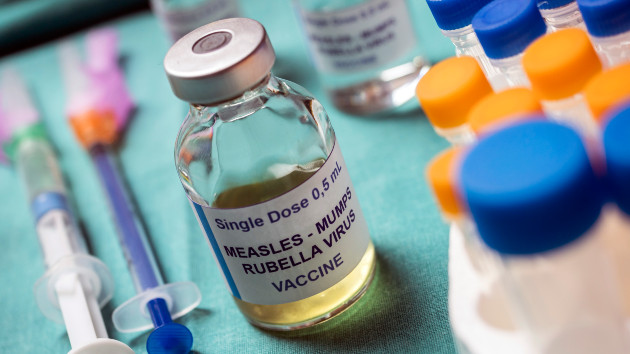
(NEW YORK) — Wyoming is reporting its first measles case in 15 years as the infectious disease continues to spread across the United States.
The state’s Department of Health said on Tuesday that it had confirmed a case in an unvaccinated child in Natrona County, which is located in the central part of the state and includes the town of Casper.
The pediatric case is the first reported in Wyoming since 2010, according to the WDH.
It’s unclear how the child became sick, and no other identifying details were provided including name, age or sex.
A release from the WDH said the child was infectious while in the emergency department waiting room at Banner Wyoming Medical Center in Casper on Thursday, June 24, from 11 a.m. MT to 1 p.m. MT and on Friday, June 25, from 12:55 p.m. MT to 2:55 p.m. MT.
The WDH said it is working with Banner Wyoming Medical Center to notify individuals who may have been exposed to measles during those times.
“We are asking individuals who were potentially exposed to self-monitor for measles symptoms for 21 days past the exposure date and consider avoiding crowded public places or high-risk settings such as daycare centers,” Dr. Alexia Harrist, state health officer with the WDH, said in the release.
Wyoming is the 37th state to confirm a case of measles this year as infections near a 30-year high in the U.S.
As of Wednesday morning, a total of 1,227 cases have been confirmed, according to data from the Centers for Disease Control and Prevention (CDC).
The U.S. is currently on track to surpass the 1,274 cases seen in 2019 and is expected to see the highest number of cases since 1992.
There have been three confirmed deaths so far this year, two among unvaccinated children in Texas and one among an unvaccinated adult in New Mexico.
Among the nationally confirmed cases, the CDC says 95% are among people who are unvaccinated or whose vaccination status is unknown.
Meanwhile, 2% of cases are among those who have received one dose of the measles, mumps and rubella (MMR) vaccine and 3% of cases are among those who received the recommended two doses, according to the CDC.
“Measles is one of the most contagious diseases we know, but it is preventable,” Harrist said in the release. “The MMR vaccine is safe and highly effective, providing long-lasting protection. Two doses of MMR vaccine are about 97% effective in preventing measles, and we recommend that all Wyoming residents ensure they and their children are up to date on MMR vaccinations.”
As of 2023, the latest year for which data is available, at least 93% of kindergartners in Wyoming had received at least one MMR dose, including 96% of kindergartners in Natrona County, where the new case was confirmed, according to the WDH.
(WASHINGTON) — The State Department is taking over programs previously run by the U.S. Agency for International Development (USAID) in a move officials say will restructure U.S. foreign assistance and reorient it toward national interests, as a new study finds the cuts could contribute to millions of deaths by 2030.
Secretary of State Marco Rubio announced in a post on Substack on Tuesday that USAID — which oversaw foreign aid, disaster relief and international development programs — would no longer be providing assistance to other countries.
“As of July 1st, USAID will officially cease to implement foreign assistance,” Rubio wrote. “Foreign assistance programs that align with administration policies — and which advance American interests — will be administered by the State Department, where they will be delivered with more accountability, strategy, and efficiency.”
A senior official at the State Department, who briefed reporters on Tuesday, said the “U.S. foreign assistance policy” would aim to be “linked up diplomatically” with the foreign policy agenda of the Trump administration and U.S. partners.
“Once we get through this transition and the programs are over here, I think the next few months are going to help indicate where we think our vision of the future is,” the official said. “We do not foresee a gap operationally.”
In a statement in February, the State Department said “significant portions of USAID funding are not aligned with the core national interests of the United States.”
In recorded farewell remarks shared privately with USAID staff on Monday, former Presidents George W. Bush and Barack Obama criticized the decision to gut the agency.
Obama calling the dismantling of USAID a tragedy and a “colossal mistake,” according to The Associated Press, which reviewed portions of the video. Bush focused on PEPFAR — the global health initiative launched under his administration to address the HIV/AIDS epidemic — which is credited for saving 25 million lives, the AP reported.
Humanitarian aid organizations said they have been witnessing the effects of USAID cuts, with programs shutting down that helped communities experiencing poverty and conflict.
“It’s an extremely sad day,” Bob Kitchen, vice president of emergency and humanitarian action with the International Rescue Committee (IRC), told ABC News. “I had the pleasure of working with hundreds of committed USAID staff around the world over the last couple of decades. They’ve done amazing work and funded amazing projects, and it’s sad to see like that’ll come predominantly to an end.”
Kitchen said IRC has lost several of its grants and that 40% of its funding came from USAID. As a result, he said several IRC programs are now closed or will soon close, including water and sanitation programs, mobile health clinics and school programs.
“What that looks like … is many thousands of girls who no longer can go to any form of school [In Afghanistan] as a result of the closure of this program,” Kitchen said. “The one that really hits me is we have somehow found ways to keep thousands of girls going to school, informal schools, underground schools. That has all stopped.”
USAID’s closure comes amid a study published in The Lancet on Monday that found cuts to USAID could cause more than 14 million additional deaths by 2030.
Using models, the authors estimated the impact of USAID funding on deaths from 2001 to 2021. The team then used models to estimate effects up to five years from now.
The study found that more than 91 million deaths were prevented by USAID funding to low-income and middle-income countries over the 21-year study period, including a 65% reduction in mortality from HIV/AIDS and a 51% reduction from malaria.
Forecasting models not only predicted millions of additional deaths due to the steep cuts, but also that one-third of those deaths are projected to occur in children younger than age 5.
The State Department official said such studies “misapprehend” the administration’s new vision for foreign assistance and that reported life-and-death impacts “is not what we’re hearing on the ground.”
“You can go back and relitigate all these little decisions. That’s not our focus,” the official said. “That’s not the secretary’s focus. We are excited about what sort of the ‘America First’ foreign assistance agenda is going to look like, and how much impact we can have moving forward.”
The official said the new strategy would, for example, expect partners to take on more prevention work for patients with HIV infections and reduce their reliance on U.S.-funded programs for preventive health care.
They noted that up to 90% of direct beneficiaries are receiving their medication under PEPFAR to date. There will be more investment in ending mother-to-child HIV transmission, the official said.
“The administration has a target of ending mother-child transmission by the time that President Trump leaves office, and we think that we can meet that and we’re going to invest more in that particular space,” the official said.
Medicaid is a joint federal and state health insurance program for disabled and low-income Americans. The Centers for Medicare & Medicaid Services works with state programs to administer Medicaid, which enrolls more than 71.2 million people.
The original measure passed by the House made around $600 billion in cuts to Medicaid, which then faced deeper cuts in the Senate.
New estimates from the Congressional Budget Office project federal spending on Medicaid will be reduced by $1 trillion and that the current version of the bill in the Senate would increase the number of uninsured by 11.8 million by 2034.
Health policy experts and health care workers say sharp Medicaid cuts could result in vulnerable Americans no longer being able to receive care, either by losing coverage or by closing the centers that provide such care.
Work requirements could result in lost coverage
The bill imposes new 80-hour per month work requirements on able-bodied Medicaid recipients aged 19 to 64 who don’t have dependents. These requirements include working or other approved activities, such as volunteering.
There are exemptions for parents or guardians of children under age 14 and those with disabilities. Under the bill’s current text, these work requirements won’t kick in until 2026.
An analysis published last week from the UC Berkley Labor Center found that work requirements could have a devastating impact on older Americans, between ages 50 and 64.
Nari Rhee, director of the Retirement Security Program at the UC Berkeley Labor Center and author of the analysis, told ABC News that after age 50, employment becomes increasingly difficult.
For instance, many older workers become physically unable to continue employment until they reach retirement age.
“Most people hope and plan to retire at something like age 65, but life happens and quite often what happens is people start having health issues,” Rhee said. “If you’ve had blue collar work or manual work, often you started working probably in your late teens. And so, by the time you get into your 50s, your late 50s, your body is just really worn out, and you’re not no longer able to work the kinds of jobs that you used to do.”
She added that some older workers who are physically unable to do the jobs they used to do or who were laid off have a hard time finding employment again due to age discrimination.
Additionally, many older adults are responsible for caring for family members including spouses and parents, which may mean leaving the workplace entirely.
“In practical terms, there are all kinds of legitimate reasons why, especially older adults, might not be able to meet the work requirements in terms of actually putting in the number of hours, and that’s before we even get to all the administrative issues,” Rhee said. “Even if you do work, you might not be able to navigate the red tape.”
AARP, an interest group that focusing on issues affecting those 50 and older in the U.S., sent a letter over the weekend to Sen. Majority Leader John Thune and Sen. Minority Leader Chuck Schumer expressing opposition to a provision that would disqualify people who fail to meet Medicaid work requirements from receiving Affordable Care Act premium tax credits.
“This creates a steep coverage cliff for those in their 50s and early 60s — particularly for those nearing retirement or working part-time — who may be left with no affordable coverage option at all.”
Risk of rural hospitals, health centers closing
Jennifer Mensik Kennedy, president of the American Nurse Association, said cuts to Medicaid could force rural hospitals and community health centers to close.
Although Senate Republicans have proposed a $25 billion rural health stabilization fund due to cuts to the Medicaid provider tax, it is unclear if that will be enough to prevent hospitals from closing.
“These hospitals have been on the verge of tight finances for years, and this could be enough to shut them down,” Mensik Kennedy told ABC News. “If we have cuts to Medicaid, we’re going to see these hospitals start to shutter their doors, and people are going to have to drive three, four, hours to deliver a baby, to go have emergency care to get seen, and that’s got to be unacceptable to everyone.”
Arnulfo De La Cruz, president of SEIU 2015, the nation’s largest long-term care union and California’s largest labor union, concurred, saying cuts to Medicaid would impact states’ ability to provide health coverage and long-term care, particularly for rural and low-income Americans.
“Any cuts to Medicaid, the impact in California would be devastating … Medicaid is really the core of how the long-term care system is structured and funded,” he told ABC News. “Medicaid helps to fund clinics, hospitals, nursing homes, home care — it’s all connected as part of our health delivery system. If you were to dismantle or cut to the extent that they’re talking about, I think you see clinics close, you see hospitals close, you see nursing homes close.”
He went on, “I think it would have a devastating impact on the ability for rural Californians and low-income Californians to be able to access their health care, thereby becoming sicker and having to look to much more high-cost alternatives.”
(NEW YORK) — Rising temperatures, amplified by climate change, are contributing to an increase in cases of sleep apnea, a condition in which breathing repeatedly stops during sleep, according to a new study published in the journal Nature Communications.
“If temperature keeps rising the way they project it to, the burden and prevalence of sleep apnea may double, increasing by 20-100%, depending on greenhouse gas emission reduction,” Bastien Lechat, the study’s author and a senior research fellow at Flinders University in Australia, told ABC News.
Obstructive sleep apnea, or OSA, affects about 1 billion people globally, and 80% of people who have it are unaware and untreated, according to the American Medical Association. Common symptoms of OSA include loud snoring, daytime tiredness, high blood pressure and headaches upon waking, even if “sleeping” eight hours, according to the Mayo Clinic.
OSA has been linked to an increased risk of heart disease, stroke, dementia, diabetes and depression. People with OSA also have two times greater risk of getting in a car accident, according to Lechat.
The study followed over 115,000 people from numerous countries for up to two years, measuring their sleep quality with below-the-mattress sleep monitors and then cross-referencing this information with weather data to evaluate the relationship between temperature and OSA.
When comparing 80-degree Fahrenheit days to days in the 40s, there was a 40 to 45% increase in the frequency or severity of sleep apnea. The risk was even higher for males and individuals who normally sleep longer or have higher body weight.
Extreme heat can exacerbate OSA by making it even harder to sleep, the study noted. Higher temperatures can disrupt the body’s ability to cool down during the night, which interferes with the natural sleep cycle. This can lead to more frequent awakenings, shallower sleep and worsened airway instability, resulting in more apnea events.
Using existing health-economic models, the researchers estimated over 788,000 healthy years of life were lost or disabled in 2023 due to temperature-related increases in OSA, equivalent to a loss of approximately $68 billion, according to the models.
“When you look at the rate of years of life lost per 100,000 people, this is similar to a disorder like Parkinson’s disease, or bipolar disorder, or similar to low physical activity as a risk factor, so it’s a significant burden,” Lechat told ABC News.
Lechat said that increased access to air conditioning and better diagnosis and treatment of OSA could offset some of the increases caused by climate change.
As our planet warms, heat waves are becoming increasingly more common, having doubled in major U.S. cities since the 1980s, according to the federal government’s Fifth National Climate Assessment.
Overnight low temperatures are rising nearly twice as fast as afternoon highs, and this lack of relief during the night poses a significant health risk — particularly for those without access to air conditioning, according to the assessment.
(WASHINGTON) — The Advisory Committee on Immunization Practices (ACIP), made up of members recently hand-selected by Health and Human Services Secretary Robert F. Kennedy Jr., voted 5-1 on Thursday to recommend against flu vaccines containing the preservative thimerosal.
One committee member, Vicky Pebsworth, abstained on each vote.
A few moments before, the CDC’s vaccine advisory committee voted 6-0 to recommend all Americans aged 6 months and older receive an annual influenza vaccine.
This is a developing story. Please check back for updates.
Alyssa Pointer for The Washington Post via Getty Images
(WASHINGTON) — The Centers for Disease Control and Prevention’s vaccine advisory committee voted on Thursday to recommend infants receive a newer monoclonal antibody shot for respiratory syncytial virus (RSV).
The Advisory Committee on Immunization Practices (ACIP) voted 5-2 to recommend clesrovimab, made by Merck, for infants 8 months and younger who are not protected by a maternal vaccine.
In a second vote, the committee voted unanimously to update the resolution for the federal Vaccines for Children program to include details about the newly approved antibody shot. About half of all U.S. children are eligible for free or low-cost vaccines.
Usually, the CDC director signs off on the votes for final recommendation but, because there is currently no CDC director, the final decision will go to Health and Human Services Secretary Robert F. Kennedy Jr.
If signed off by Kennedy, clesrovimab will made available along with another RSV shot made by Sanofi/AstraZeneca.
This marks the first vote of the panel since Kennedy dismissed the entire panel and appointed his own hand-selected members.
Currently, RSV vaccines are recommended for pregnant women between 32 and 36 weeks of pregnancy to pass on protection to a fetus, which should last throughout their first RSV season.
For babies 8 months and younger born to mothers who did not receive a maternal RSV vaccine, monoclonal antibody shots are available.
Monoclonal antibodies are proteins manufactured in a lab and mimic the antibodies the body naturally creates when fighting an infection. They do not activate the immune system as would occur with vaccination. The shot is also recommended for a small group of children from 8 months old through 19 months old who are at increased risk for severe RSV.
During the first day of the meeting, on Wednesday, Dr. Georgina Peacock, director of the Immunization Services Division in the CDC’s National Center for Immunization and Respiratory Diseases (NCIRD), shared CDC data showing 57% of infants born between April 2024 and March 2025 were protected from RSV by maternal vaccination or receipt of nirsevimab, the shot made by Sanofi/AstraZeneca.
Dr. Cody Meissner, one of the new ACIP members, described the vaccine and antibody data, showing its real-world impacts as a “truly spectacular accomplishment.”
“People should understand this is a truly spectacular accomplishment and will have enormous impact on public health,” he said.
Another ACIP member, Retsef Levi, expressed some skepticism, saying he wanted to see more data on how efficacy for the maternal vaccine changes over time, adding that RSV is a “tricky” virus that “fools interventions in unexpected ways.”
In response, Dr. Adam MacNeil of the NCRID said vaccine efficacy does wane over time, but the maternal RSV vaccine protects newborns and infants when they’re at their most vulnerable, before they develop more robust immune systems.
The votes comes after the group announced on Wednesday it would review the current childhood immunization schedule.
Martin Kulldorff, the ACIP’s new chair, said two new work groups would be established, one focusing on the cumulative effects of children and adolescents receiving all recommended vaccines on the schedule and another reviewing vaccines that haven’t been examined for more than seven years.
The latter group may discuss whether the hepatitis B vaccine is necessary at birth before a baby leaves the hospital, according to Kulldorff.
“The number of vaccines that our children and adolescents receive today exceeds what children in most other developed nations receive and what most of us in this room received when we were children,” Kulldorff said.
The American Academy of Pediatrics put out a video on Wednesday, saying immunization policy through ACIP is “no longer a credible process” and that it will continue to publish its own vaccine recommendations for children.
In the morning, CDC staff presented data on COVID-19 vaccines, showing safety and efficacy as well as a reduction in hospitalizations and deaths.
For the 2024-25 updated COVID vaccine against emergency department and urgent care encounters, the CDC found 79% effectiveness for children between nine months and 4 years old, 57% effectiveness among children between five and 17 years old and 34% effectiveness for those aged 18 and older.
Kulldorff asked where the data shows COVID-19 vaccine effectiveness from placebo-controlled trials. Dr. Adam MacNeil, from the CDC’s National Center for Immunization and Respiratory Diseases (NCIRD), said the CDC’s evaluation of effectiveness came from real-world data.
“Randomized clinical control trials are not necessarily comparable to what we’re currently seeing with the vaccine,” MacNeil said. “Where we’re trying to now monitor is the real-world impacts of these vaccines as opposed to clinical trial data, which was certainly extensively documented.”
The ACIP members also discussed questions about potential safety signals surrounding the COVID vaccine, with the CDC determining that myocarditis and pericarditis — inflammation of the heart muscle and the sac around the heart, respectively — are still risks, but no other risks have been found.
ABC News’ Sony Salzman contributed to this report.
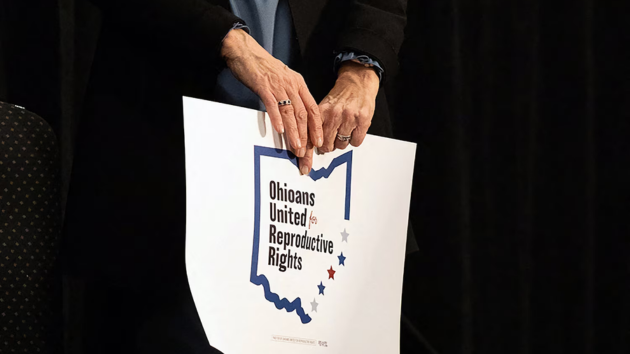
(OHIO) — Republican lawmakers in Ohio are planning on introducing a bill on Wednesday that would ban almost all abortions and criminalize the procedure.
The “Ohio Prenatal Equal Protection Act” would overturn the amendment to the Ohio constitution, voted on in 2023, that establishes “an individual right to one’s own reproductive medical treatment, including but not limited to abortion” before viability.
Reproductive medical treatment includes contraception, fertility treatments and miscarriage care.
Abortions are currently allowed up to 20 weeks since fertilization, according to the Guttmacher Institute, a research group that studies sexual and reproductive rights.
“[It] is a very, very simple and beautiful piece of legislation in that all it does is identify all human beings as persons deserving equal protection of the law, both born humans and pre-born humans,” anti-abortion advocate Austin Beigel, with End Abortion Ohio, told ABC News. “So, it identifies those personhood rights starting at the moment of fertilization, when the new distinct organism is formed, the new human life that being that person now has equal protection under the law.”
Kellie Copeland, executive director of Abortion Forward, which helped pass the 2023 amendment in Ohio, said the bill goes against the will of voters.
“This is the most extreme and anti-life legislation that you can imagine,” she told ABC News. “It would strip Ohioans of their constitutionally guaranteed right to bodily autonomy, and that’s the goal of this legislation.”
When Beigel was asked if he was concerned that the bill may go against the will of the voters, he said he was not because “the will of the voters was evil.”
“In many times in our country’s history, the majority of people have desired evil things. We have discriminated horribly against the Black man and woman, and people wanted that,” he continued. “So, I have no qualms about saying I oppose the majority of the will of the people when the people desire something that is evil.”
Copeland replied that “subjecting people to the loss of bodily autonomy, taking basic human rights away from Ohioans is the real evil that we’re talking about here.”
Beigel said he has been working with Republican state Reps. Levi Dean and Jonathan Newman on the bill, which uses the U.S. Constitution’s equal protection clause — part of the Fourteenth Amendment — to override Ohio’s constitutional amendment. Beigel said the co-sponsors will be announced on Wednesday.
Dean’s and Newman’s offices did not immediately return ABC News’ request for comment.
The bill would ban abortion with no exceptions for rape or incest. The only exceptions would be for a spontaneous miscarriage or to save the life of the pregnant woman.
The bill would also criminalize those who have abortions, not just the providers who perform the procedure.
Copeland she is worried the bill could lead to attacks on people who support abortion rights or who underwent abortions.
“When people equate reproductive health care with murder, that kind of rhetoric invites violence,” Copeland said. “It invites violence that we have seen at abortion clinics that we have seen perpetrated against abortion providers.”
Beigel said the bill does not outlaw contraception and is not designed to outlaw in-vitro fertilization (IVF).
However, he did say that IVF may not be able to function the way that it does now if the bill is passed because it would apply equal protection to “pre-born humans.”
“The courts are going to have to debate the implications of this,” he said. “Is it actually moral to freeze a young human being in a cryochamber and preserve them at the age they are and not let them grow?”
Ohio’s history of abortion bills
In 2019, Ohio lawmakers passed a so-called heartbeat bill that bans abortions after cardiac activity can be detected, which occurs as early as six weeks of pregnancy, before many women know they’re pregnant. It was signed into law by Gov. Mike DeWine.
The ban had no exceptions for rape or incest. The only exceptions were cases of ectopic pregnancies and to prevent the mother’s death or impairment of a major bodily function.
A federal judge blocked the ban in 2019, but it was reinstated just hours after the Supreme Court decision to overrule Roe v. Wade.
Much of the six-week ban was rendered unconstitutional after the amendment went into effect in December 2023, Ohio’s Attorney General Dave Yost said earlier this year.
However, some lawmakers have tried to maintain other parts of the ban, including reporting requirements and a 24-hour waiting period before an abortion can be administered. An Ohio judge temporarily blocked the 24-hour waiting period in August 2024.
Pedro Navio, North America president at Kraft Heinz, said in a statement that the company removed artificial colors, preservatives and flavors from its Kraft macaroni and cheese in 2016 and that its Heinz tomato ketchup has never had artificial dyes.
“As a food company with a 150+ year heritage, we are continuously evolving our recipes, products, and portfolio to deliver superiority to consumers and customers,” Navio’s statement read, in part. “The vast majority of our products use natural or no colors, and we’ve been on a journey to reduce our use of FD&C colors across the remainder of our portfolio. … Above all, we are focused on providing nutritious, affordable, and great-tasting food for Americans and this is a privilege we don’t take lightly.”
It comes after Health and Human Services Secretary Robert F. Kennedy Jr. unveiled a plan in April to start phasing out eight synthetic food dyes in the American food supply.
At a news conference announcing the plan, FDA Commissioner Dr. Marty Makary said health agencies were looking to revoke authorization for two synthetic food colorings and to work with the food industry to eliminate six remaining synthetic dyes used in a variety of food products.
Kennedy said the agencies had reached an “understanding” with major food companies to voluntarily remove artificial food dyes from their products. It’s unclear what action Kennedy could take if the companies don’t comply.
Shortly after Kennedy’s announcement, PepsiCo’s CEO said on an earnings call that the company had already begun phasing out artificial colors. In-N-Out also announced in May it was removing artificial food dyes from menu items.
Other companies, like Kellogg’s, have previously stated their products are safe for consumption, and they are following federal standards set by the FDA.
Some studies have linked dyes to behavioral changes in children as well as to cancer in animals, suggesting this could extend to humans.
Some nutritionists and dietitians say that it’s best to avoid artificial food dyes, while others say more research needs to be done and the potential negative effects are still unclear.
(NEW YORK) — A federal judge in Massachusetts ruled on Monday that directives from the Trump administration that led to the cancellations of several research grants from the National Institutes of Health (NIH) were “void” and “illegal.”
U.S. District Judge William Young said the cancellation of the grants — related to studies involving LGBTQ+ issues, gender identity and diversity, equity and inclusion (DEI) — violated federal law, saying it was a case of racial discrimination and discrimination against the LGBTQ+ community, according to the plaintiffs in the case.
Two lawsuits had been filed against the administration: One led by the American Public Health Association and the other filed by a group of 16 states. Some estimates have suggested that up to $1.8 billion in research funding had been cut. Young, an appointee of President Ronald Reagan, said he was ordering the NIH to restore the grants that were terminated.
In a statement, Andrew Nixon, the director of communications for the Department of Health and Human Services, said the agency stands by its decision to end funding for research “that prioritized ideological agendas over scientific rigor and meaningful outcomes for the American people. Under the leadership of Secretary Kennedy and the Trump administration, HHS is committed to ensuring that taxpayer dollars support programs rooted in evidence-based practices and gold standard science – not driven by divisive DEI mandates or gender ideology.” Nixon said HHS is “exploring all legal options, including filing an appeal and moving to stay the order.”
Among the plaintiffs is Dr. Brittany Charlton, an associate professor at Harvard T.H. Chan School of Public Health, who had all her grants terminated by the NIH.
One of the terminated grants focused on documenting obstetrical outcomes for lesbian, gay and bisexual women and another focused on how discriminatory laws impact mental health among LGBTQ+ teens.
“As a plaintiff, I felt truly seen — it was a rare moment when the deep harm caused to researchers and the communities we serve was acknowledged out loud, in front of the world,” Charlton told ABC News in a statement.
“Sitting there, I felt a wave of relief and hope as the judge condemned the government’s actions and ordered the grants to be reinstated,” the statement continued. “After so much uncertainty and disruption, it finally felt like justice and the value of our research — and the communities at its heart — were being affirmed.”
The terminations came after President Donald Trump passed a flurry of executive orders including vowing to “defend women from gender ideology extremism” and aiming to dismantle DEI initiatives.
According to termination letters sent to researchers at various universities that were reviewed by ABC News, the administration said the canceled projects do not serve the “priorities” of the current administration.
“Research programs based on gender identity are often unscientific, have little identifiable return on investment, and do nothing to enhance the health of many Americans. Many such studies ignore, rather than seriously examine, biological realities. It is the policy of NIH not to prioritize these research programs,” some of the termination letters read.
“The premise…is incompatible with agency priorities, and no modification of the project could align the project with agency priorities,” the letters continued.
ABC News’ Sony Salzman contributed to this report.
Plexi Images/GHI/UCG/Universal Images Group via Getty Images
(NEW YORK) — The U.S. Food and Drug Administration expanded its approval of Moderna’s respiratory syncytial virus (RSV) vaccine on Thursday to include adults under the age of 60 at increased risk of the disease.
Previously, the vaccine, known as mRESVIA, had been licensed for use for those aged 60 and older.
Approval for mRESVIA came after Moderna conducted a late-stage clinical trial showing the vaccine helped boost immune responses in younger adults.
More than one-third of adults between ages 18 and 59 have at least one underlying condition that puts them at increased risk of RSV, according to Moderna.
“RSV poses a serious health risk to adults with certain chronic conditions, and today’s approval marks an important step forward in our ability to protect additional populations from severe illness from RSV,” Stéphane Bancel, CEO of Moderna, said in a press release. “We appreciate the FDA’s review and thank all the participants in our clinical trial as well as the Moderna team for their dedication to protecting people against RSV.”
Although the FDA approves vaccines and may expand approvals for certain age groups, the Centers for Disease Control and Prevention sets recommendations regarding who should get vaccines and when.
Currently, the CDC recommends RSV vaccination only for those aged 75 and older and for those aged 60 and over at increased risk.
The CDC’s independent vaccine advisory committee will need to vote to recommend that the new age group be eligible for the shot, followed by a final recommendation from the director of the CDC.
Earlier this week, Kennedy removed all 17 sitting members of the committee and replaced them with eight new members. It remains unclear how the new members of the panel will decide to approach recommendations for the RSV vaccine.
As of Friday, the CDC director role remains vacant and Health and Human Services Secretary Robert F. Kennedy Jr. has been making final recommendations. In an April meeting, the prior advisory committee voted to recommend RSV vaccination for those aged 50 to 59 with increased risk of disease, but Kennedy did not adopt the recommendations.
Instead, it appears Kennedy plans to have the new committee re-discuss the recommendations for RSV vaccination as well as discuss HPV and COVID vaccinations in their meeting scheduled to be held between June 25 and June 27
Moderna’s RSV vaccine is based on mRNA technology, which some of the new members have expressed skepticism about, especially in relation to COVID-19 vaccines.
Despite availability, RSV vaccination has been lagging. As of April 26, the latest date for which CDC data is available, an estimated 47.5% of adults aged 75 and older and 38.1% of adults aged 60 to 74 with a high-risk condition reported ever having received an RSV vaccine.