

RFK Jr. plans to phase out artificial food dyes in US

RFK Jr. plans to phase out artificial food dyes in US
Andrew Harnik/Getty Images

(WASHINGTON) — Health and Human Services Secretary Robert F. Kennedy Jr. will move to phase out the remaining eight artificial food dyes from America’s food supply within two years, his department announced Monday, a significant escalation in his fight to rid the country’s food of additives that studies suggest could be harmful.

Kennedy and Food and Drug Administration Commissioner Marty Makary will offer details on Tuesday afternoon in Washington, D.C.

Tuesday’s announcement will target artificial dyes that are used in cereal, ice cream, snacks, yogurts and more.

Former President Joe Biden’s administration in January started the process to ban one artificial dye, Red No. 3, which will need to be removed from food by January 2027 and from medications by 2028 because it was shown to cause cancer in rats.

Kennedy will now seek to remove the eight other petroleum-based dyes approved by the FDA.

The secretary is expected on Tuesday to announce the approval of additional natural dyes, a person familiar with the plans told ABC News.

It is not yet clear what enforcement mechanism Kennedy will seek to implement the new changes.

The two-year timeline Kennedy is expected to announce comes after he told food industry leaders at a meeting last month that he wanted their companies to remove artificial dyes from their products by the end of his four-year term, according to a memo describing the meeting, which was obtained by ABC News.

Kennedy’s announcement Tuesday would speed up that process — and alert companies that Kennedy intends to make good on his warning quickly.

From candy to breakfast cereal to medication, synthetic food dyes are in a wide range of products that Americans consume. Studies suggest their vibrant color makes food more appealing and could even increase appetite.

The health effects of the dyes are not fully understood, but many other countries have either banned the additives outright or required food packaging warning labels about the health risks.

All dyes have the potential to spark allergic reactions for a small minority. Several dyes have been linked to hyperactivity and behavioral problems in children or have been shown to cause cancer in mice or rats — but none have shown to cause cancer in humans.

Already, red and blue states alike have taken matters into their own hands in removing artificial food dyes from certain foods. Both West Virginia and California have passed laws to ban a handful of food dyes from school lunches, with plans to extend the ban to a broader, statewide level too.

In West Virginia, the ban on artificial dyes in school lunch will go into effect in August, making it the first state in the country to implement such restraints. In California, it will take effect in 2028.

Twenty-six other states, from Iowa to Washington and from to Texas to Vermont, are considering similar legislation around banning food dyes or other chemical additives in foods, according to a list compiled by the Environmental Working Group, an advocacy organization that focuses on chemicals and toxins.

The Office of Environmental Health Hazard Assessment within California’s Environmental Protection Agency in 2021 concluded a two-year study into seven synthetic food dyes that found associations with certain neurobehavioral outcomes in some children.

Researchers also found that the FDA’s current level of “acceptable daily intake” levels for the dyes may be too high to protect children from the potential behavioral impact, the report said.

Copyright © 2025, ABC Audio. All rights reserved.
Supreme Court hears challenge to Obamacare no-cost preventive health benefits

Supreme Court hears challenge to Obamacare no-cost preventive health benefits
Kayla Bartkowski/Getty Images

(WASHINGTON) — Preventive care health benefits provided at no cost to tens of millions of Americans since 2010 under a popular provision of the Affordable Care Act are in the balance Monday at the U.S. Supreme Court as the justices consider whether the government task force behind the mandate to insurers is unconstitutional.

Among the services the U.S. Preventive Services Task Force designates for no-cost coverage under the federal health law are statins to lower cholesterol; colonoscopies for 45- to 49-year-olds; preexposure prophylaxis (PrEP) medicine to reduce the spread of HIV; medications to lower the risk of breast cancer for women; and lung cancer screenings for smokers.

The case was brought by a group of employers and individuals who oppose some of the task force’s recommendations for covered services on religious groups, specifically the PrEP medication to prevent HIV. They allege the group’s structure violates the Constitution and lower federal courts agreed.

If the justices uphold the decisions, the task force and its recommendations since 2010 could be invalidated — and along with them the guarantee of no-cost preventive services coverage many people enjoy.

“The case is not the kind of existential threat that we have seen in previous Supreme Court cases involving the ACA, but it’s certainly something that could affect a lot of people,” said Larry Levitt, executive vice president at KFF, a nonpartisan health policy group.

At the heart of the dispute is whether the structure of the 16-member task force is illegal under the Constitution’s Appointments Clause. The provision requires “principle officers” of the U.S. government, such as Cabinet secretaries and ambassadors, to be confirmed by the Senate. It stipulates that “inferior officers” who are appointed by Senate-confirmed officials are permissible, provided they are supervised and reviewed.

The plaintiffs allege that members of the task force, who are appointed and supervised by the Health and Human Services secretary, are not properly appointed and have too much power. While they can be removed at will, their recommendations for covered health services cannot be reviewed or overridden by anyone.

“Americans have the constitutionally protected freedom to live and work according to their religious beliefs, and governments exist to defend that freedom,” said Daniel Grabowski, an attorney with Alliance Defending Freedom, a conservative legal advocacy group supporting the plaintiffs. “We urge the Supreme Court to restore this accountability within the federal government and to the American people.”

The Fifth Circuit U.S. Court of Appeals ruled the task force unconstitutional and that its recommendations since 2010 be invalidated.

The Trump administration is defending the constitutionality of the task force and the health secretary’s power to oversee the body’s recommendations.

More than 150 million Americans rely on early screenings and interventions for chronic conditions under no-cost preventive services, according to American medical organizations. Public health groups say a decision striking down the task force could deeply affect the long-term health of Americans and disease prevention efforts. Insurers worry that it could inject instability into the insurance market, while hospital groups fear they may have to shoulder more of the burden from people who are sicker.

“The ACA’s preventive services requirement has been a game-changer, providing access to evidence-based preventive care and early detection of serious medical conditions,” said Wayne Turner, a senior attorney at the National Health Law Program, a nonprofit group that advocates for low-income communities. “The ACA’s coverage and cost-sharing protections are especially important for low-income persons, who will be harmed most if the Supreme Court refuses to allow the ACA provision to stand.”

Oral arguments in the case — Kennedy v. Braidwood Management — will be heard at the Supreme Court on Monday. A decision in the case is expected by the end of June.

Copyright © 2025, ABC Audio. All rights reserved.

White House changes COVID.gov web page to page supporting lab leak theory

White House changes COVID.gov web page to page supporting lab leak theory
Web page for https://www.whitehouse.gov/lab-leak-true-origins-of-covid-19/ on April 18, 2025. Via The White House

(WASHINGTON) — The White House has redirected COVID.gov to a new landing page called “Lab Leak: True Origins of COVID-19,” which makes a five-point argument for the theory that COVID-19 originated from a mistaken lab leak in Wuhan, China. 

The new site appears to use theories from the final report of the Republican-led Select Subcommittee on the Coronavirus Pandemic, released in December 2024. There has never been a consensus or a “smoking gun” to explain what started the pandemic.

The COVID.gov page, as recently as last week, listed resources for testing, treatment, and vaccination against COVID-19, as well as information for Long COVID.

The five pieces of evidence put forth by the White House for the theory include the following assertions: that the “virus possesses a biological characteristic that is not found in nature,” that data shows all cases “stem from a single introduction into humans,” that “Wuhan is home to China’s foremost SARS research lab,” that researchers at that research lab “were sick with COVID-like symptoms in the fall of 2019,” and that “if there was evidence of a natural origin it would have already surfaced.”

The page includes claims that government officials, including former NIAID Director Dr. Anthony Fauci, helped edit and then amplify a research paper on the origins of COVID-19 published in 2020 that supported natural origin theory.

The current page suggests this paper’s explicit intention was to discredit the lab leak theory and remove any doubt that the origins were of natural origin. This is not a new accusation and in the past  Fauci and the paper authors disagreed with the accusations that the paper was manipulated or had any specific goal.

The origins of the pandemic have been hotly debated since its start.

The prevailing theories always seemed to focus on two scenarios: either natural exposure to an infected animal or an accidental lab leak.

With no “smoking gun” and limited access to raw data, discussion of the science has played out in a haze of circumstantial evidence.

In October 2021, the Office of the Director of National Intelligence released a declassified report on the intelligence community’s views on the origin conundrum, which also leaned toward a natural spillover, but represented divided views. A subsequent declassified report released in 2023 also noted that most of the intelligence community was split on the origins of the pandemic. In reports, US agencies generally agreed that the virus was most likely not developed as a biological weapon and that China’s leaders did not know about the virus before the start of the global pandemic. 

The new splash page features a photo of Fauci and the pardon that former President Joe Biden granted him, highlighting that it was for “any offenses.” The page also accuses federal agencies, including NIH and HHS, of breaking laws and violating rules about transparency and cooperation with Congressional investigation. The agencies complied with FOIA requests and other regulatory requests from the committee and also appeared before lawmakers when asked to testify. 

The web page also calls into question the efficacy of social distancing, masking and lockdown. The White House also criticized the response from New York officials.

Fauci testified about the accusations before lawmakers in 2024, saying that accusations about him covering up or influencing research about the lab leak theory are untrue.

“The accusation being circulated that I influenced the scientists to change their minds by bribing them with millions of dollars in grant money is absolutely false, and simply preposterous. I had no input into the content of the published paper,” Fauci said in June of 2024. 

“The second issue is a false accusation that I tried to cover up the possibility that the virus originated from a lab. In fact, the truth is exactly the opposite,” Fauci said during that 2024 hearing.

This is not the first time that the White House has made clear its position on the origins of COVID-19. In January, President Trump said that COVID-19 had “strained” his relationship with President Xi Jinping of China.

“But, I like President Xi very much. I’ve always liked him. We always had a very good relationship. It was very strained with COVID coming out of Wuhan. Obviously, that strained it. I’m sure it strained it with a lot of people, but that strained our relationship,” Trump said in remarks to the World Economic Forum.

ABC News’ Eric Strauss, Sony Salzman and Cheyenne Haslett contributed to this report.

Copyright © 2025, ABC Audio. All rights reserved.
Michigan reports first confirmed measles outbreak since 2019

Michigan reports first confirmed measles outbreak since 2019
Brandon Bell/Getty Images

(MONTCALM COUNTY, Mich.) — Michigan is reporting the state’s first measles outbreak since 2019, defined as at least three or more related cases, according to the Michigan Department of Health and Human Services (MDHHS).

Three cases were confirmed in Montcalm County, according to a MDHHS statement.

Almost 25% of children under 3 years of age in Montcalm County have not received their first dose of the measles, mumps and rubella (MMR) vaccine, according to the MDHHS vaccination data. The state is reporting a total of seven cases so far this year, including those infected in the outbreak.

The Centers for Disease Control and Prevention (CDC) has separately confirmed at least five other states with measles outbreaks, including Texas, New Mexico, Ohio, Kansas and Indiana.

Nationwide, there are over 700 measles cases in at least 24 states. That’s the highest number since 2019, which saw 1,274 cases. Texas makes up the bulk of those cases with over 560 infections, including two deaths among unvaccinated school-aged children.

Measles is one of the most contagious diseases known to humans. Just one infected patient can spread measles to up to nine out of 10 susceptible close contacts, according to the CDC.

Health officials have been urging anyone who isn’t vaccinated to receive the MMR vaccine.

The CDC currently recommends people receive two vaccine doses, the first at ages 12 to 15 months and the second between 4 and 6 years old. One dose is 93% effective and two doses are 97% effective at preventing measles. Most vaccinated adults don’t need a booster.

In the decade before the measles vaccine became available in 1963, an estimated three to four million people were infected every year, according to the CDC, with between 400 and 500 deaths.

ABC News’ Mary Kekatos contributed to this report.

Copyright © 2025, ABC Audio. All rights reserved.

RFK Jr. lays out new studies on autism, shuts down ‘better diagnoses’ as a cause

RFK Jr. lays out new studies on autism, shuts down ‘better diagnoses’ as a cause
Alex Wong/Getty Images

(WASHINGTON) — On the heels of a new report showing that rates of autism diagnoses have again increased, Health and Human Services Secretary Robert F. Kennedy Jr. said he was determined to find the “environmental exposures” behind the rise and directed the National Institute of Health to launch new studies into “everything” — from mold to obesity — that could potentially be a factor.

Kennedy, who prioritizes autism as one of the chronic illnesses he’s determined to tackle in his aim to “Make America Healthy Again,” ardently pushed back against the explanation that a broadening definition of autism spectrum disorder is a meaningful contributor to more autism diagnoses.

Kennedy said he wanted to “move away” from the idea that “the autism prevalence increases — the relentless increases — are simply artifacts of better diagnoses, better recognition or changing diagnostic criteria.”

“This epidemic denial has become a feature in the mainstream media, and it’s based on an industry canard. And obviously there are people who don’t want us to look at environmental exposures,” Kennedy said, speaking at a press conference at the department headquarters on Wednesday in Washington, D.C.

The report Kennedy mentioned — published Tuesday by the Centers for Disease Control and Prevention — estimated that autism prevalence has increased to 1 in 31 children, which Kennedy called “shocking.”

In 2020, the same report found a prevalence of 1 in 36, and over two decades ago in 2000, the rate was 1 in 150.

Experts in the field agree that the rates of diagnoses are increasing and that environmental factors could be at play — but also say most of the increase can be attributed to the expanding definition of autism, which broadened dramatically in recent decades to include subtler features of the illness, including new descriptors as recently as 2013.

“It’s a fair question” to ask why autism prevalence has increased, Dr. Catherine Lord, a psychologist and autism researcher at UCLA’s David Geffen School of Medicine, told ABC News, but she said that it’s also important to acknowledge how much has changed.

“There’s been a huge shift in terms of awareness of autism, particularly awareness of autism without severe intellectual disability, that really changed even since I entered this field,” said Lord.

Studies also suggest that autism risk is heavily rooted in genetics, by as much as 80%.

Dr. Walter Zahorodny, a clinical psychologist and professor who studies autism at Rutgers University, joined Kennedy at Tuesday’s press conference to emphasize that there has been a “true increase” in cases, something he said he has seen throughout his career in New Jersey — though he acknowledged, unlike Kennedy, a wider variety of possibilities, from environmental exposures to other “risk factors.”

“It is a true increase. There is better awareness of autism, but better awareness of autism cannot be driving disability like autism to increase by 300% in 20 years,” Zahorodny said, referring to studies from New Jersey and the CDC report.

Zahorodny said finding the cause was crucial and lamented a lack of progress to “address this question seriously” over his career.

“I would urge everyone to consider the likelihood that autism, whether we call it an epidemic, tsunami or a surge of autism, is a real thing that we don’t understand, and it must be triggered or caused by environmental or risk factors,” he said.

Kennedy on Tuesday acknowledged that the increase in autism diagnoses could be in part caused by increased awareness, but said that still left a large portion of the jump in diagnoses unaccounted for.

He called it “indefensible” to accept awareness as the main reason, describing high stakes of ruined families and “individual tragedy.”

“Autism destroys families, and more importantly, it destroys our greatest resource, which is our children. These are children who should not be suffering like this,” Kennedy said. “These are kids who will never pay taxes, they’ll never hold a job, they’ll never play baseball, they’ll never write a poem, they’ll never go out on a date. Many of them will never use a toilet unassisted.”

“We have to recognize we are doing this to our children, and we need to put an end to it,” he added.

Not every case is as severe as Kennedy described, however; many people diagnosed with autism live highly functional adult lives. The recent CDC report found fewer than 40% of children diagnosed with autism spectrum disorder were classified as having an intellectual disability, meaning an IQ of less than 70.

Dr. Barry Prizant, an adjunct professor in the department of communicative disorders at the University of Rhode Island and director of the private practice Childhood Communication Services, told ABC News that Kennedy’s comments misrepresent what autism is like for families.

“I am not dismissing the challenges. There are considerable challenges, and a lot of those are barriers to services,” he said. “We’ve been doing a parent retreat weekend for 27 years, where we spend a weekend with 60 parents and family members, and we’re not meeting with family members and parents who say, ‘Autism is just a tragedy and it’s hell in our lives.’ They talk about the positives and the negatives, the joys as well as the challenges.”

Autism Speaks also released a statement on Wednesday, calling Kennedy comments “extremely disappointing and damaging.”

“Autism is not a preventable condition,” the nonprofit autism organization said. “The suggestion that it is—especially when linked to environmental toxins without scientific evidence—contributes to decades-old misinformation and distracts from the real needs of autistic people and their families.”

Kennedy said the NIH, led by Dr. Jay Bhattacharya, a former professor at Stanford University, will soon announce a series of new studies aimed at identifying precisely which environmental toxins are to blame. Kennedy cited mold, food, pesticides, medicines, ultrasounds, and the age and health of parents as possible culprits.

Kennedy qualified that the study would provide “some of the answers” by September, which is a variation — welcomed by experts — from his claim to President Donald Trump last week that “by September, we will know what has caused the autism epidemic.”

However, he also claimed on Tuesday: “We know it’s an environmental exposure.”

Asked by ABC News if he would commit to following the science revealed by the studies, regardless of his current expectations on what’s causing the rise in diagnosis, the secretary said yes.

“We’re going to follow the science no matter what it says,” he said.

Medical experts have been studying the potential causes of autism for decades. Research to date suggests that autism is driven by genetics, and the risk may increase when paired with certain outside factors, such as having children at an older age or exposure to pollutants.

“It’s not simple,” Lord said. “If you look at high-quality publications, the findings are small and, in terms of causes other than the genetics, have been quite hard to replicate. Not meaning they’re wrong, but just that we haven’t quite figured out what they should be.”

HHS or NIH have not provided details about how the new studies will be conducted within the given timeframe, but Kennedy pledged transparency, saying the studies would be conducted in the traditional way of funding to academic institutions through the NIH.

Copyright © 2025, ABC Audio. All rights reserved.
4 states aim to prevent food stamps recipients from using program to buy candy, soda

4 states aim to prevent food stamps recipients from using program to buy candy, soda
Steve Pfost/Newsday RM via Getty Images

(WASHINGTON) — Governors in several states have recently announced plans to eliminate some unhealthy foods from their food stamps programs, creating momentum for a key component of Health and Human Services Secretary Robert F. Kennedy’s “Make America Healthy Again” agenda.

The governors of Arkansas, Idaho and Indiana on Tuesday all said they would submit a waiver to the United States Department of Agriculture requesting permission to prevent Supplemental Nutrition Assistance Program recipients from using the money to buy candy and soft drinks.

The move follows a similar announcement from the governor of West Virginia last month.

Secretary of Agriculture Brooke Rollins, whose department oversees SNAP, has said she would approve such waivers. She appeared at a press conference Tuesday alongside Arkansas Gov. Sarah Huckabee Sanders, as Sanders announced her submission of a waiver.

The same morning, Kennedy appeared with Indiana Gov. Mike Braun for a similar announcement.

“You’re setting the stage at the federal level,” Braun told Kennedy.

“This isn’t a usual top-down one-size-fits-all public health agenda,” he said. “We’re focused on root causes, transparent information and real results. We’re taking on big issues like diet-related chronic illness.”

Eating too much added sugar can contribute to health problems such as obesity, type 2 diabetes and heart disease. Guidance from the USDA suggests that added sugar should not represent more than 10 percent of the daily caloric intake for children or adults. Based on a 2,000-calorie intake, that would be 200 calories or approximately 12 teaspoons. However, according to the Centers for Disease Control and Prevention, children are eating 17 teaspoons of added sugar per day on average as of 2017-2018.

Kennedy and Rollins have promoted changes to SNAP and have publicly encouraged governors to submit waivers.

Kennedy appeared last month with West Virginia Gov. Patrick Morrisey as he announced he would submit a waiver to ban soda from SNAP.

“The message that I want to give to the country today and to all the other governors is, get in line behind Governor Morrisey and apply for a waiver to my agency, and we’re going to give it to you. That’s the way we’re going to win this,” Kennedy said that day.

As it stands, according to the USDA website, SNAP recipients can use the money to buy fruits and vegetables; meat, poultry and fish; dairy products; breads and cereals; “other foods such as snack foods and non-alcoholic beverages”; and seeds and plants.

SNAP money may not be used to purchase alcohol or tobacco, among other things.

Experts say the state efforts to add soda and candy to the prohibited list is likely to be effective in shifting SNAP recipients away from junk food.

“If they have to spend their own money on junk food, they’re not going to buy as much junk food,” Marion Nestle, a professor emerita of public health at New York University, told ABC News.

But Nestle indicated it could be difficult for states to define what should be excluded from SNAP benefits.

“Candy can have nuts, it can have raisins, it can have other kinds of things in it that are real foods and are healthier,” she said.

An Idaho bill signed Tuesday by Gov. Brad Little defined candy as “a preparation of sugar, honey, or other natural or artificial sweeteners combined with chocolate, fruits, nuts, or other ingredients or flavorings in the form of confections, bars, drops, or pieces.”

The bill’s definition of candy does not include “any item that contains more than ten percent flour by weight or requires refrigeration.”

Dariush Mozaffarian, director of the Food Is Medicine Institute at Tufts University, told ABC News, “We need to try a lot of different things” to make Americans healthier, and expressed optimism about the state-level efforts to overhaul SNAP.

“If we make the program meet all its goals, including nutrition, which is in its name, then that strengthens the program,” he said.

Vani Hari — a healthy food activist also known as the Food Babe, the founder of Truvani and a front-facing leader of the MAHA movement — called this “a do-or-die moment” for American health.

“We need to question any legislator that doesn’t sign these bills, there is no legitimate reason to allow high fructose corn syrup water in government funded nutritional dollars. Governors who stand with Secretary Kennedy’s vision of MAHA will change the course of history of American health – it’s a do or die moment and we’ve never had momentum like this before,” Hari told ABC News in a statement.

Copyright © 2025, ABC Audio. All rights reserved.
Measles cases linked to Texas outbreak reach 561, with 20 new infections confirmed

Measles cases linked to Texas outbreak reach 561, with 20 new infections confirmed
Raquel Natalicchio/Houston Chronicle via Getty Images

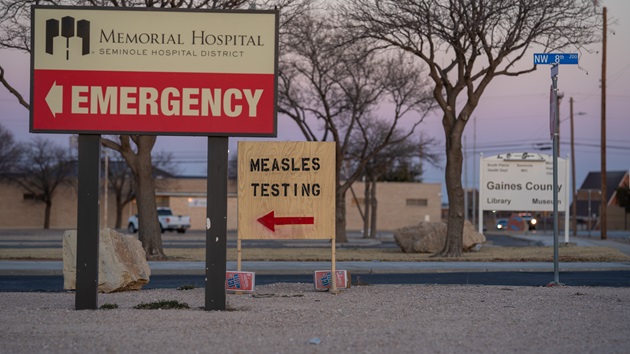
(AUSTIN, Texas) — The measles outbreak in western Texas continues to grow, with 561 confirmed cases, according to new data published Tuesday.

This is an increase of 20 new cases over the last five days.

Almost all of the cases are in unvaccinated individuals or in individuals whose vaccination status is unknown, according to the Texas Department of State Health Services (DSHS).

Four of the cases are among residents who have been vaccinated with one dose of the measles, mumps, rubella (MMR) vaccine. Seven cases are among those vaccinated with two doses.

At least 58 people with measles have been hospitalized so far.

Children and teenagers between ages 5 and 17 make up the majority of cases, followed by children ages 4 and under.

Gaines County, which borders New Mexico, remains the epicenter of the outbreak, with 364 cases confirmed so far, DSHS data shows.

This is a developing story. Please check back for updates.

Copyright © 2025, ABC Audio. All rights reserved.

US reports highest number of measles cases since 2019: CDC

US reports highest number of measles cases since 2019: CDC
Raquel Natalicchio/Houston Chronicle via Getty Images

(NEW YORK) — The U.S. has recorded the highest number of measles cases since 2019, according to new Centers for Disease Control and Prevention data published Friday.

There are now 712 confirmed measles cases across 24 states, an increase of 105 cases from the prior week, the CDC said.

There were 1,274 reported cases in all of 2019.

This is a developing story. Please check back for updates.

Copyright © 2025, ABC Audio. All rights reserved.
RFK Jr. claims curve is flattening in Texas measles outbreak. Does the data agree?

RFK Jr. claims curve is flattening in Texas measles outbreak. Does the data agree?
Jan Sonnenmair/Getty Images

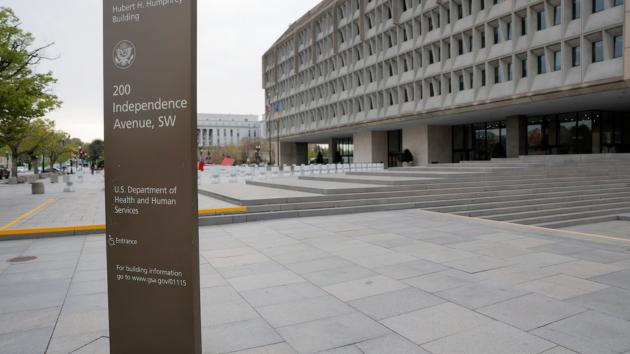
(AUSTIN, TX) — Health and Human Services Secretary Robert F. Kennedy Jr. seemed to imply in recent days that the measles outbreak in western Texas was slowing down.

In a post on X on Sunday, Kennedy remarked on the second death linked to the outbreak, which occurred in an unvaccinated school-aged child.

About 10 minutes later, Kennedy edited the post to add that the curve has been flattening since early March, when he started sending in reinforcements from the Centers for Disease Control and Prevention — supplying clinics with vaccines and other medications.

“Since that time, the growth rates for new cases and hospitalizations have flattened,” he wrote.

However, data from the Texas Department of State Health Services showed that cases are increasing, with more counties in western Texas reporting infections.

Katherine Wells, director of public health for Lubbock, Texas, said last week that public health officials were projecting “a year-long timeline for control of the outbreak.”

“This is going to be a large outbreak, and we are still on the side of increasing number of cases, both due to spread and increased testing capacity,” she said.

Public health specialists told ABC News they are skeptical that the curve is flattening and believe that cases linked to the outbreak are not only increasing, but likely much higher than the official case count.

“This outbreak is far from under control — even if the curve begins to flatten, we still face major risks in under-vaccinated communities across the country,” said Dr. John Brownstein, an epidemiologist and chief innovation officer, as well as an ABC News contributor. “With so many pockets of low vaccination, we’re still on the brink of widespread, sustained transmission unless urgent action is taken.”

Likely more cases in Texas

As of Tuesday, there have been 505 confirmed measles cases in Texas, according to DSHS data.

Between March 28 and April 4, DSHS confirmed 81 cases — one of the highest totals confirmed in a single week since the first cases were identified in late January. The Texas Department of State Health Services does not make hospitalization rates available to the public.

“We know that there have been more cases, at least sustained cases, over the past couple months. We know that the size of the outbreak has jumped pretty substantially over the past month,” Dr. Craig Spencer, an associate professor of the practice of health services, policy and practice at the Brown University School of Public Health, told ABC News.

ABC News has requested a copy of the data that Kennedy is referring to when making claims about the curve flattening, but has not yet heard back from the HHS.

“We don’t have a full picture of what’s happening on the ground because of our inability to reach some communities. And so, I certainly would not feel confident saying that we have plateaued,” he added.

Spencer said one reason he is not comfortable saying the outbreak has plateaued in Texas is that he believes the number of cases is likely an undercount.

Texas DSHS said any cases reported after March 16 are incomplete, and additional cases may be reported.

There have been two confirmed deaths linked to the Texas outbreak and a third death is being investigated in New Mexico in an unvaccinated adult who tested positive after dying.

“We know that there’s really, on average, about one death for every around 1,000 cases,” Spencer said. “We’ve already seen three deaths, which would make you suspect it’s probably more like 3,000 cases.”

“It feels very, very likely that the count is higher than 500,” he said, adding, “It’s not impossible for there to be three deaths among 500 cases, but statistically, one would expect more cases for that number of deaths.”

Dr. Megan Ranney, dean of the Yale School of Public Health, told ABC News there is risk in saying the cases have flattened when the data may suggest otherwise. Namely, she said is worried that people may be dissuaded from getting tested or treated.

“We know that many people are avoiding formal medical care and therefore testing. There is always a delay in reporting even when people are tested,” Ranney said. “I worry that people are afraid to get measles tested or to bring their kid in for care.”

“My other worry is we still want people to take prevention measures and, of course, we know the vaccine is not only the safest way, but also the most effective way to prevent infection with measles,” she continued.

Kennedy promotes catch-all treatments not intended for all measles cases

In a second social media post on Sunday evening, Kennedy shared that he had met the families of the two school-aged children who died of measles in Texas, as well as a third family who reportedly had a daughter in the ICU for three weeks with measles.

Kennedy said he also met with two physicians who have “treated and healed” about 300 children infected with measles in the Mennonite community with aerosolized budesonide and clarithromycin.

Aerosolized budesonide is a steroid used to reduce inflammation in the lungs, making it easier to breathe. Clarithromycin is an antibiotic used to treat bacterial infections.

“If you were to go to any evidence-based treatment guidelines, there is nothing that says you should treat patients with budesonide or clarithromycin,” Spencer said. “Now those are medications that have a broad suite of uses, and so I’m not going to say that they have absolutely no indication for measles, or really anything else.”

He said there are scenarios in which either medication may be used in a measles patient, but it is on a case-by-case basis.

“I don’t think that they’re hurting anyone, but they’re probably not helping anyone,” he added. “They are not at all tools that I would reach to as my first, or really even second, line of tools that I would use in someone presenting with symptoms consistent with measles.”

In an interview with ABC News Live on Monday, Dr. Peter Marks, the former director of the Center for Biologics Evaluation and Research within the Food and Drug Administration — who is reported to have been forced out — said budesonide, clarithromycin and vitamin A — another treatment endorsed by Kennedy — are neither preventatives nor “real treatment” for all cases of measles.

He highlighted the importance of receiving the measles, mumps and rubella, or MMR, vaccine. The CDC currently recommends that people receive two doses of the MMR vaccine, the first at ages 12 to 15 months and the second between 4 and 6 years old. One dose is 93% effective, and two doses are 97% effective against measles or nearly 100% effective against dying of measles after contracting it.

Some people may be at risk for an adverse reaction with any vaccine, so experts say it’s important to discuss the risks and benefits with a health care provider.

“It should be an easy decision, as easy as buying a car seat and strapping your kid in,” Marks said about getting a vaccine if eligible. “You would never drive without your kid strapped into their car seat. You know, if you had an 18-month-old, why wouldn’t you give that child something that could prevent your child from dying of an infection when there’s a one in 1,000 chance if they get measles, they would die from it?”

ABC News’ Dr. Mark Abdelmalek contributed to this report.

Copyright © 2025, ABC Audio. All rights reserved.
Measles cases in Texas outbreak surpass 500 with 24 new infections confirmed over last 5 days

Measles cases in Texas outbreak surpass 500 with 24 new infections confirmed over last 5 days
Subaas Shrestha/NurPhoto via Getty Images

(AUSTIN, Texas) — The measles outbreak in western Texas is continuing to grow, with 24 new cases confirmed over the last five days, according to data published Tuesday.

Almost all of the cases are in unvaccinated individuals or in individuals whose vaccination status is unknown, according to the Texas Department of State Health Services (DSHS).

Three of the 505 cases are among residents who have been vaccinated with one dose of the measles, mumps, rubella (MMR) vaccine. Seven cases are among those vaccinated with two doses.

At least 57 measles patients have been hospitalized so far, DSHS said.

Children and teenagers between ages 5 and 17 make up the majority of cases, followed by children ages 4 and under.

Gaines County, which borders New Mexico, remains the epicenter of the outbreak, with 328 cases confirmed so far, DSHS data shows.

This is a developing story. Please check back for updates.

Copyright © 2025, ABC Audio. All rights reserved.