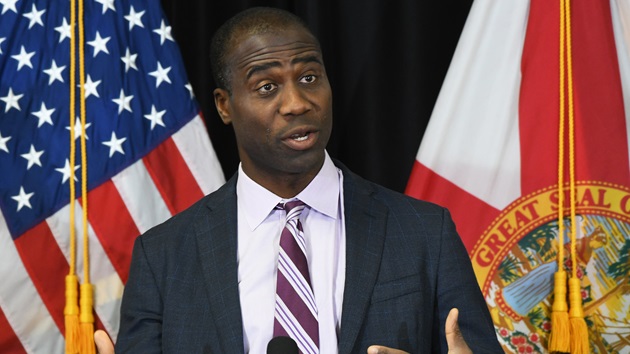
Florida Surgeon General Dr. Joseph Ladapo. (Paul Hennessy/SOPA Images/LightRocket via Getty Images)
(TALLAHASSEE, Fla.) — Florida is moving to “end all vaccine mandates” in the state, Florida Surgeon General Joseph Ladapo announced at a press conference on Wednesday.
This is a developing story. Please check back for updates.
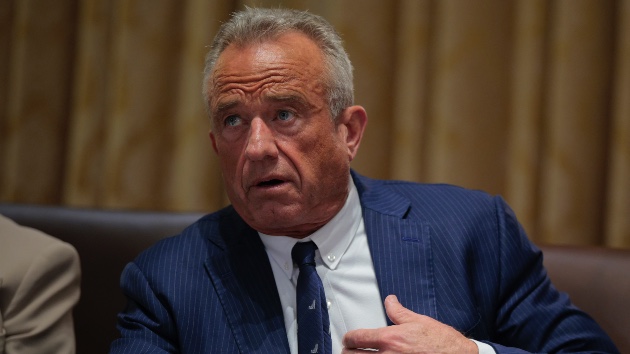
Health and Human Services Secretary Robert F. Kennedy Jr. speaks during a cabinet meeting with U.S. President Donald Trump in the Cabinet Room of the White House on August 26, 2025 in Washington, DC. (Photo by Chip Somodevilla/Getty Images)
(WASHINGTON) — More than 1,000 current and former employees across the Department of Health and Human Services (HHS) signed a letter on Wednesday morning calling for Health Secretary Robert F. Kennedy Jr.’s resignation.
Addressed to Kennedy and members of Congress, the signatories accused the secretary of endangering the health of Americans. Save HHS, the group behind the letter, told ABC News it’s been sent to the Senate Committee on Health, Education, Labor and Pensions; Senate Committee on Finance and the House Committee on Energy and Commerce as well as Majority and Minority leadership.
“We swore an oath to support and defend the United States Constitution and to serve the American people. Our oath requires us to speak out when the Constitution is violated and the American people are put at risk,” the letter reads, in part.
It continues, “Thus, we warn the President, Congress, and the Public that Secretary Kennedy’s actions are compromising the health of this nation, and we demand Secretary Kennedy’s resignation.”
In a statement to ABC News, HHS communications director Andrew Nixon said the CDC “has been broken for a long time” and it will take “sustained reform and more personnel changes” to restore trust in the institution.
“From his first day in office, [Kennedy] pledged to check his assumptions at the door — and he asked every HHS colleague to do the same,” the statement read, in part. “That commitment to evidence-based science is why, in just seven months, he and the HHS team have accomplished more than any health secretary in history in the fight to end the chronic disease epidemic and Make America Healthy Again.”
Employees from almost every agency signed the letter, including the Centers for Disease Control and Prevention, the Food and Drug Administration and the National Institutes of Health. The letter states the employees did so in their personal capacity, on their personal time and without the use of government equipment.
In the letter, HHS employees said Kennedy continues “to endanger the nation’s health” with examples such as the ousting of newly-installed CDC director Susan Monarez, followed by the resignations of four top CDC leaders.
The letter also referenced an interview Kennedy gave to Scripps News last month in which he said trusting experts “is not a feature of either a science or democracy,” which staffers referred to as “ongoing verbal attacks” of the HHS workforce.
Employees also expressed dismay over Kennedy’s June move to remove all 17 members of the CDC’s vaccine advisory panel, the Advisory Committee for Immunization Practices (ACIP) — which makes recommendations on the safety, efficacy and clinical need of vaccines — and replaced them with eight of his own hand-selected members, many of whom have expressed vaccine-skeptic views.
The letter calls out two new members by name, Dr. Robert Malone and Retsef Levi.
Malone — who made some early contributions to mRNA vaccine technology — discussed an unfounded theory, disputed by experts, on a podcast during the COVID-19 pandemic, claiming people were “hypnotized” into believing mainstream ideas about COVID-19, such as vaccination.
Meanwhile, Levi previously said in a post on X that there was “indisputable evidence” that mRNA vaccines cause “serious harm including death, especially among young people,” a claim that has not held up in dozens of research studies.
The letter calls on Trump and Congress to appoint a new health secretary if Kennedy refuses to resign.
“We expect those in leadership to act when the health of Americans is at stake,” the letter states. “We ask other partner organizations to join us in our call for Secretary Kennedy’s resignation and stand in solidarity with those who have already.”
The employees said the petition is in response to a letter sent last month to Kennedy — signed by more than 750 current and former staffers — beseeching him to “stop spreading inaccurate health information.”
Staffers stated the deadly shooting that occurred at the Atlanta headquarters of the CDC on Aug. 8 was “not random” and was driven by “politicized rhetoric.”
The earlier letter called on Kennedy to take a number of actions by Tuesday, Sept. 2, including not spreading inaccurate health information, affirming the scientific integrity of the CDC and guaranteeing the safety of the HHS workforce.
The new letter comes just two days after nine former directors and acting directors of CDC published an op-ed in The New York Times, also accusing Kennedy of endangering the health of Americans.
Additionally, on Tuesday, Kennedy published an op-ed in The Wall Street Journal, saying the CDC has “squandered public trust” and that Trump has asked him to “restore that trust and return the CDC to its core mission.”
(WASHINGTON) — Dr. Richard Besser explains why he and other former directors of the CDC wrote an op-ed criticizing Health Secretary Robert F. Kennedy Jr.’s handling of the CDC and public health. Nine former directors of the Centers for Disease Control and Prevention (CDC) are speaking out, saying Health and Human Services (HHS) Secretary Robert F. Kennedy Jr. is endangering the health of Americans.
Seven former directors and two former acting directors — whose tenures stretch back to the administration of former President Jimmy Carter — published an op-ed in The New York Times on Monday, just days after the ousting of the CDC’s new director Dr. Susan Monarez.
Sources told ABC News that Kennedy and Stefanie Spear, his principal deputy chief of staff, called on Monarez to support changes to COVID vaccine policy and the firings of high-level staff, which Monarez would not commit to.
The directors said Monarez’s removal is the latest in a series of actions that could have a “wide-ranging impact” on “America’s health security.”
One of the co-authors, Dr. Richard Besser, president and CEO of the Robert Wood Johnson Foundation and acting director of the CDC during the administration of former President Barack Obama, said he and his colleagues are stunned at what they’ve seen.
“What we are seeing taking place in the Department of Health and Human Services, and at CDC in particular, is not businesses as usual,” he told ABC News. “There are always changes, different policy priorities when administration changes. But what we’re seeing under the leadership of Secretary Robert F. Kennedy [Jr.] is something different altogether.”
“He has come into his role as Secretary of Health and Human Services with a strong agenda that is centered on dismantling our vaccine system in America and limiting people’s access to these life-saving, health-preserving interventions,” Besser added.
HHS did not immediately reply to ABC News’ request for comment.
In the op-ed, the former directors point to several decisions made by Kennedy including the firing of thousands of federal health workers, touting unproven treatments as measles was spreading in the U.S., and canceling $500 million in federally funded mRNA vaccine research.
The directors also referenced Kennedy’s removal of all 17 members of the CDC’s vaccine advisory committee and replacing them with his own hand-selected members, many of whom have shared vaccine-skeptic views.
Besser said the ousting of Monarez, along with the resignation of at least four top leaders, compelled him and his colleagues to speak out.
He told ABC News that their departures leave the U.S. vulnerable to every day health challenges as well as public health threats.
“We can’t predict when the next pandemic will be here, but we know there will be future pandemics,” Besser said. “There will be other infectious threats. There will be other public health challenges, and with this Secretary performing in the way that he is, it puts us all at risk.”
He said he and the co-authors “don’t agree on everything, but we agree that our federal public health system is in major jeopardy. The CDC, which had been looked to as the world’s leading public health institution, is on life support and needs our attention immediately.”
The op-ed called on Congress to oversee HHS, which it has authority to do. It echoes a social media post from Sen. Bill Cassidy (R-Louisiana), who said the departure of CDC leaders require oversight from the Senate committee he chairs.
The former directors also called on state and local governments to fill funding gaps left behind by some of Kennedy’s actions.
“We represent individuals who served in every administration from Jimmy Carter through Donald Trump, Republicans and Democrats, and we were unified in our feeling that what we’re seeing is extremely alarming and that Congress needs to step up and perform its oversight function,” Besser told ABC News. “And so, we’re hoping that our voices will add to some of the other voices that have been calling this out and that Congress will do its part.”
(NEW YORK) — A large new study conducted in Spain and Italy found that beta blockers, drugs often used to slow the heart rate and lower blood pressure, did not provide clear benefits for heart attack patients whose hearts were still functioning well.
The results of the study, known as REBOOT, were published in the New England Journal of Medicine on Saturday and presented during the European Society of Cardiology Congress 2025 in Madrid, Spain.
The REBOOT trial enrolled more than 8,400 patients recovering from a heart attack whose heart function was above 40% and assigned them to either take a beta blocker or no beta blocker within two weeks of leaving the hospital.
Over the course of approximately 3.7 years, there was no significant difference when it came to rates of death from any cause, repeat heart attacks or hospitalization for heart failure between the two groups, according to the study.
In a “subanalysis” of the study, published in the European Heart Journal, researchers specifically looked at outcomes involving the approximately 1,600 women from the original REBOOT trial and isolated their results.
In this case, beta blockers were associated with an increased risk of death from all causes for these women, compared to women who were not taking beta blockers. In contrast, no excess risk was associated with beta blocker use in men.
However, the authors advised that the results should be interpreted with caution as the women enrolled in REBOOT trial were generally older, sicker, and received less treatment for heart attacks than men.
Second study points to benefits of beta blockers Results from another clinical trial called BETAMI-DANBLOCK — also published Saturday in the New England Journal of Medicine — appeared to yield yet another finding about beta-blocker use after a heart attack.
Results from this trial of more than 5,000 adults diagnosed with a heart attack and either mildly decreased or intact heart function demonstrated that those treated with beta blockers had fewer new heart attacks in the 3 and 1/2-year study period compared to those who did not take beta blockers after their initial heart attack.
Notably, there was no difference in rates of death, heart failure, stroke or other major heart issues between the two groups.
“The major driver was a reduction in non-fatal heart attack at follow-up,” said Dr. Gregg Fonarow, professor of cardiovascular medicine at the University of California, Los Angeles, in an interview with ABC News.
While it is important to acknowledge that the BETAMI-DANBLOCK study found a potential benefit in beta blocker use, it had some limitations. This was a smaller-scale study that combined two clinical trials into one because separately they were not able to enroll enough patients. Different rules for who could join each of the studies in each country may have skewed the results, as well.
“REBOOT was a cleaner study in terms of protocol and inclusion criteria,” said Dr. Steven Pfau, professor of cardiovascular medicine and interventional cardiologist at Yale School of Medicine in New Haven, Connecticut.
Notably, REBOOT challenges over 40 years of standardized practice, which calls for patients admitted to the hospital for a heart attack to be started on beta blockers before or shortly after they are discharged.
Cardiologists’ methods for treating heart attacks and opening blockages in the coronary arteries in a timely fashion have improved drastically over the past 10-20 years, experts say. That’s why, in an age of improved medical therapies and procedural interventions for heart attacks, such as better-performing coronary artery stents, it may be time to rethink the long-standing guidance on beta-blocker use, according to some experts.
“Beta blockers were developed at a time before routine reperfusion therapy for acute heart attacks and the evolution of more potent medications, and care has really evolved,” said Fonarow.
Pfau said that neither study makes a compelling case for beta blockers versus no beta blockers for this select group of patients.
“If beta blockers do have an effect, it is probably small, given the other therapies we have,” he said. “It fits the discussion for both studies that, with the way we currently practice, beta blockers potentially add very little to outcomes after a heart attack for patients with preserved heart function and no other pre-existing reason to be on a beta blocker.”
If patients can take beta blockers safely, they should keep using them for now, Fonarow advised. But he also called for more studies to understand which patients benefit the most from this type of medication.
Additionally, for the week ending Aug. 23, 11.2% of weekly tests came back positive for COVID, up from 3.3% the prior two months, CDC data shows.
Despite the increases, metrics remain much lower than in previous years.
Hospitalization rates are about three times lower than at the same time last year and the percentage of weekly tests coming pack positive is about two times lower compared to the same period last year.
Additionally, over the past two months, roughly 200 Americans have been dying from COVID every week, according to CDC data.
There has been confusion over who may be able to receive a COVID vaccine after the Food and Drug Administration approved updated versions of those shots for those over age 65 and younger Americans who are at high risk for severe disease. Federal health officials have insisted that anyone who wants the shot can receive it.
CDC data shows test positivity has increased above 10% in much of the southwest and western U.S. as kids head to class.
“When the dust settles, I expect it to not be as bad as last year … but that still means that some people are getting sick,” Dr. Peter Chin-Hong, a professor of medicine and an infectious diseases specialist at the University of California, San Francisco, told ABC News. “Fewer people are getting hospitalized, proportionately speaking, but some people are still being hospitalized.”
“The reason why we’re seeing the increase is because of the usual factors of more than six months since a lot of people got COVID [and] new variants,” he continued.
As of the week ending August 30, XFG, an offshoot of the omicron variant, is the dominant variant in the U.S., accounting for an estimated 78% of new COVID cases.
Meanwhile, NB.1.8.1 and LP.8.1, also omicron variant offshoots, make up 14% and 3% of estimated new COVID cases in the U.S., CDC data shows.
Dr. William Schaffner, a professor of preventive medicine and of medicine at Vanderbilt University School of Medicine, told ABC News that because the currently circulating variants are all members of this omicron family, there are no major mutations that make the virus more transmissible or more infectious.
“You can think of them all as cousins,” he said. “Now these cousins do share a couple of characteristics, one is that they appear to be fairly contagious and are quite capable of producing a great deal of mild disease. By mild, I mean not serious enough to get you into the hospital.”
Schaffner continued, “Fortunately, the vaccines that will become available this fall … should provide reasonable protection against serious disease caused by these variants.”
In a press release, Pfizer-BioNTech said its 2025-2026 COVID vaccine will target the LP.8.1 sublineage in line with FDA guidance to more closely match circulating strains.
It remains unclear how COVID vaccinations will be rolled out in the U.S. Recently, CVS said how it offers the shots will vary by state due to “the current regulatory environment.”
In 34 states, Americans can receive the COVID vaccine at a CVS pharmacy. In 13 states and in Washington, D.C., Americans can be vaccinated, depending on age, with a prescription. In three states – Massachusetts, Nevada and New Mexico – the COVID vaccine isn’t being offered.
Chin-Hong said he is worried about low vaccination rates as the country heads into respiratory virus season during the fall and winter months.
“As vaccination rates decline, from both people’s desire as well as structural barriers that are being put up by the federal government, it means that fewer people are going to get vaccines, even if people wanted to,” he said. “I’m worried that … it may mean that we would have some hospitalizations and deaths that we wouldn’t have seen normally if there was a simpler rule around vaccines.”
Schaffner said those who can receive the COVID vaccine should do so, along with the annual influenza vaccine, and advised those with risk factors for severe disease to be more cautious.
“You can get out your mask and put that on when you’re going indoors in crowded environments,” he said. “And if you’re really concerned, as I like to say, do some social distancing. Stream the movie rather than going to the movie.”
ABC News’ Youri Benadjaoud and Cheyenne Haslett contributed to this report.
A sign for the Food And Drug Administration is seen outside of the headquarters on July 20, 2020 in White Oak, Maryland. (Photo by Sarah Silbiger/Getty Images)
(WASHINGTON) — The U.S. Food and Drug Administration is expanding its warning about radioactive shrimp, recalling more brands due to possible contamination.
The federal health agency said earlier this week nearly 18,000 bags of frozen Kroger Mercado Cooked Medium Peeled Tail-Off Shrimp and 26,460 packages of cocktail shrimp, both from Seattle-based Aquastar Corp, were recalled because of potential contamination with the radioactive isotope Cesium-137 (Cs-137).
PT. Bahari Makmur Sejati was added “to a new import alert for chemical contamination to stop products from this firm from coming into the U.S. until the firm has resolved the conditions that gave rise to the appearance of the violation,” the FDA said in a press release.
The shrimp placed under recall alerts may have been prepared, packed or held in “insanitary conditions” during which they became contaminated with Cs-137, the FDA said.
No products have tested positive for Cs-137 in the U.S. marketplace at this time, and no illnesses have been reported to date, according to the FDA.
Cesium is a soft, flexible, silvery-white metal that becomes liquid near room temperature, but easily bonds with chlorides to create a crystalline powder, according to the U.S. Environmental Protection Agency.
Low-dose exposure to Cs-137, such as in water or food, over a long-term period of time can damage DNA within living cells of the body and increase the risk of cancer, the FDA says.
External exposure to large amounts of Cs-137, according to the EPA, can cause burns, acute radiation sickness and even death.
The recalled Kroger shrimp was sold between July 24 and Aug. 11 in 17 states. Impacted stores include Baker’s, Gerbes, Jay C, Kroger, Mariano’s, Metro Market, Pay Less Supermarkets and Pick ‘n Save.
The recalled shrimp weigh two pounds and are packaged in clear plastic bags with has a white label and green stripes on top of each bag. The affected codes include:
• UPC 011110626196, Lot code 10662 5139, Best Before 11/19/2027
• UPC 011110626196, Lot code 10662 5140, Best Before 11/20/2027
The recalled cocktail shrimp was sold only in Walmart stores in 27 states between July 31 and Aug. 16.
“The product was sold in refrigerated condition and has a 12-day shelf life and with various Best if Use By dates,” the FDA release read. “The affected Cocktail Shrimp 6oz is packaged in a clear plastic tray and has a red and white label.”
The recalled products contain the code UPC 19434612191 and the Lot Codes 10662 5106, 10662 5107, 10662 5124 and 10662 5125 at the bottom of the plastic tray.
The FDA warned consumers who have purchased affected shrimp not to consume the products and to dispose of them.
ABC News’ Bill Hutchinson and Sony Salzman contributed to this report.
Susan Monarez, nominee to be the Director of the Centers for Disease Control and Prevention testifies during her confirmation hearing before the Senate Committee on Health, Education, Labor, and Pensions, June 25, 2025 in Washington. (Kayla Bartkowski/Getty Images)
(WASHINGTON) — Lawyers for Centers for Disease Control and Prevention (CDC) Director Susan Monarez said Wednesday evening that she would not leave her post as a top public health official, despite attempts by White House officials and Health and Human Services Secretary Robert F. Kennedy Jr. to oust her for “protecting the public” over “a political agenda.”
“When CDC Director Susan Monarez refused to rubber-stamp unscientific, reckless directives and fire dedicated health experts, she chose protecting the public over serving a political agenda. For that, she has been targeted,” Monarez’s lawyers Mark Zaid and Abbe Lowell said in a statement.
The showdown began as a disagreement over demands from Kennedy and Stefanie Spear, his principal deputy chief of staff, for Monarez to support changes to COVID vaccine policy and the firings of high-level staff, a source familiar with the conversations told ABC News, which Monarez would not commit to.
HHS then announced that Monarez was “no longer director” of the CDC, which touched off a wave of high-level resignations from CDC officials in protest and, ultimately, a fiery response later Wednesday evening from Monarez’s lawyers, who said she wouldn’t resign.
Kennedy, on Fox News on Thursday morning, would not comment on Monarez and argued that the priorities at the CDC need to be re-examined.
“It would be inappropriate for me to comment on a personnel issue,” Kennedy said. “What I will say is President Trump has very, very ambitious hopes for what for CDC right now. CDC has problems. You know, we saw the misinformation coming out of covid. They got the testing wrong. They got the social distancing, the masks, the school closures that did so much harm to the American people.”
Asked about Monarez’s lawyer statement saying that she “refused to rubber-stamp unscientific, reckless directives and fire dedicated health experts,” and the resignations that followed, Kennedy said he was not caught off guard by what happened and continued to claim that the CDC is “in trouble.”
“And we are fixing it, and it may be that some people should not be working there anymore,” Kennedy said.
The White House, which has the authority to dismiss Monarez, followed up late Wednesday night with a statement from spokesperson Kush Desai, who said Monarez was indeed “terminated.”
“As her attorney’s statement makes abundantly clear, Susan Monarez is not aligned with the President’s agenda of Making America Healthy Again. Since Susan Monarez refused to resign despite informing HHS leadership of her intent to do so, the White House has terminated Monarez from her position with the CDC,” Desai said.
But Monarez’s lawyers again pushed back, arguing that because Monarez was appointed by President Donald Trump to the post — the first CDC director to go through a Senate confirmation process — Trump had to personally dismiss her.
“For this reason, we reject the notification Dr. Monarez has received as legally deficient and she remains as CDC Director. We have notified the White House Counsel of our position,” Zaid and Lowell said in a statement.
Monarez, the recently sworn-in director of the CDC, was confirmed by the Senate just four weeks ago.
Monarez was the second nominee for the position, after Trump’s first nominee, Dave Weldon, didn’t appear to have the votes for a Senate confirmation, in part because of his history of vaccine skepticism.
Monarez, during her confirmation hearing, was clear about her support for vaccines: “I think vaccines save lives. I think that we need to continue to support the promotion of utilization of vaccines,” she said in July.
But over the last few months, her boss, Kennedy, has made significant changes to vaccine policy, particularly for COVID vaccines, that have the potential to limit access to the shot.
Earlier Wednesday, Kennedy’s FDA narrowed the scope for who will be approved to get the updated vaccines available this fall and winter.
The latest vaccines were only approved for elderly people — adults aged 65 and older — and for younger people if they have at least one underlying condition that puts them at higher risk for severe illness, departing from the prior guidance that everyone 6 months and older should get vaccinated.
The FDA decision will come before the CDC later this month, where Monarez and a committee of advisers, recently all replaced with handpicked choices by Kennedy, would’ve had the chance to weigh in — and Monarez would’ve ultimately needed to sign off.
In March, Kennedy also oversaw a change to the pediatric vaccine schedule, shifting to a “shared clinical decision making” model that leaves the decision to vaccinate children against COVID to parents, alongside advice from a doctor.
Kennedy has defended the vaccine policy changes as advancing “science, safety, and common sense.”
Following HHS’s statement about Monarez’s departure, four other senior career officials at the CDC also resigned, according to emails obtained by ABC News.
Deb Houry, Chief Medical Officer and Deputy Director for Program and Science at CDC, Dan Jernigan, Director of the National Center for Emerging and Zoonotic Infectious Diseases, and Demetre Daskalakis, Director of the National Center for Immunization and Respiratory Diseases, sent emails to colleagues on Wednesday night informing them that they’d submitted their resignations, each mentioning changing policies at CDC.
Jennifer Layden, Director for the Office of Public Health Data, Surveillance, and Technology, resigned as well.
“I am not able to serve in this role any longer because of the ongoing weaponizing of public health,” Daskalakis wrote in his departure email to colleagues.
“You are the best team I have ever worked with, and you continue to shine despite this dark cloud over the agency and our profession,” he said.
Houry, who has worked at CDC through Democrat and Republican administrations, said “the science at CDC should never be censored or subject to political pauses or interpretations.”
“I am committed to protecting the public’s health, but the ongoing changes prevent me from continuing in my job as a leader of the agency. This is a heartbreaking decision that I make with a heavy heart,” Houry wrote.
Republican Sen. Bill Cassidy, who has oversight of HHS as chair of the Senate committee focused on health, committed Wednesday night to looking into the high-profile departures.
The wave of departures comes during a tumultuous time for the CDC, just a few weeks after a shooting on the main campus in Atlanta that hit multiple buildings. Authorities said they found the alleged shooter had been harboring years-long grievances with the COVID-19 vaccine.
Monarez’s departure was first reported by the Washington Post.
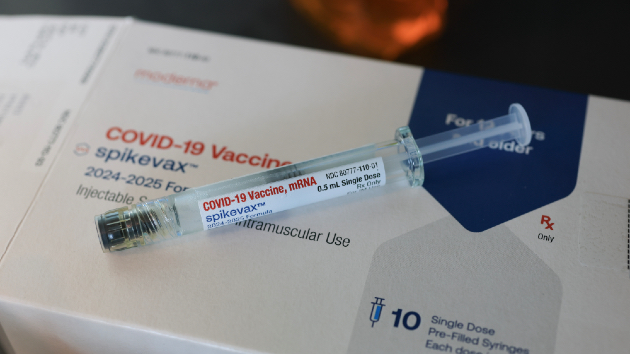
(WASHINGTON) — The Food and Drug Administration on Wednesday approved updated COVID-19 vaccines for some Americans.
The vaccines were approved for use in adults aged 65 and older and for those between ages 5 and 64 with at least one underlying condition that puts them at high risk for severe COVID.
This is a developing story. Please check back for updates.
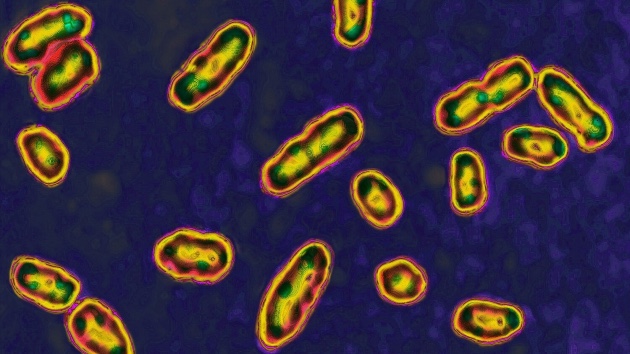
Yersinia pestis, bacteria responsible for the plague, seen under optical microscopy. (Universal Images Group via Getty ImagesP
(VALENCIA COUNTY, N.M.) — A New Mexico man has been diagnosed with plague, marking the state’s first human case this year, according to local health officials.
The patient, a 43-year-old man from Valencia County — located just southwest of Albuquerque — was hospitalized with the condition but has since been discharged, the New Mexico Department of Health (NMDOH) said on Monday.
Recently, the patient had been camping in Rio Arriba County, which borders Colorado, where health officials believe he may have been exposed.
No other identifying information about the man was available, including his name or race/ethnicity.
“This case reminds us of the severe threat that can be posed by this ancient disease,” Dr. Erin Phipps, state public health veterinarian for NMDOH, said in a press release. “It also emphasizes the need for heightened community awareness and for taking measures to prevent further spread.”
Plague is a disease caused by the bacterium Yersinia pestis. It naturally occurs in areas of the western U.S., according to the Centers for Disease Control and Prevention (CDC),
It typically affects wild rodents including wood rats, rock squirrels, ground squirrels, mice, prairie dogs and chipmunks, the CDC said.
Humans can contract the disease after being bitten by an infected flea, coming into contact with contaminated fluid or tissue from an infected animal or by inhaling infected droplets in the air.
The CDC notes that person-to-person spread of plague has not been documented in the U.S. since 1924.
In recent decades, an average of seven human plague cases have been reported each year, according to the CDC.
Plague is a disease caused by the bacterium Yersinia pestis. It naturally occurs in areas of the western U.S., according to the Centers for Disease Control and Prevention (CDC),
It typically affects wild rodents including wood rats, rock squirrels, ground squirrels, mice, prairie dogs and chipmunks, the CDC said.
Humans can contract the disease after being bitten by an infected flea, coming into contact with contaminated fluid or tissue from an infected animal or by inhaling infected droplets in the air.
The CDC notes that person-to-person spread of plague has not been documented in the U.S. since 1924.
In recent decades, an average of seven human plague cases have been reported each year, according to the CDC.
There are three types of plague: bubonic plague, which is associated with enlarged lymph nodes called buboes; septicemic plague, which occurs when the bacteria enter the bloodstream; and pneumonic plague, which is when the infection enters the lungs.
Common symptoms of all three include headache, fever and weakness, according to the CDC.
Plague is treatable with commonly available antibiotics and the chances of full recovery are higher if a patient seeks medical care early, the CDC says.
To reduce the risk of plague, the NMDOH recommends avoiding sick or dead rodents and rabbits; cleaning up areas near the home where rodents could live; using insect repellent when outdoors; and keeping hay and wood as far away from the house as possible.
Additionally, the NMDOH recommends having a sick pet examined immediately by a veterinarian.
Although this is the first human case of plague recorded in New Mexico this year, it is not the first in the U.S.
(WASHINGTON) — The U.S. has confirmed the first case of a flesh-eating parasite in a human, the Department of Health and Human Services (HHS) said on Monday.
New World screwworm (NWS) is a species of parasitic flies that feed on live tissue. The name refers to the way in which maggots screw themselves into the tissue of animals with their sharp mouth hooks, causing extensive damage and often leading to death.
The patient returned from travel to El Salvador, an HHS spokesperson told ABC News in a statement. The risk to the public in the U.S. is very low, they added.
Countries in Central America and Mexico have been dealing with an outbreak of the parasite among livestock.
Panama saw infections among livestock rise from an average of 25 cases annually to over 6,500 in 2023, the U.S. Department of Agriculture (USDA) says. Since then, the parasite has been detected in seven other Central American countries, breaking a previously established barrier that contained the pest to South America for decades.
Screwworm has not been detected in animals within the U.S., the USDA noted. It was largely eradicated for decades in the U.S. through a technique in which male screwworm flies are sterilized and then released into the environment to mate with females until the population dies out.
But given the spread in neighboring countries, “[NWS] is not only a threat to our ranching community — but it is a threat to our food supply and our national security,” the USDA said in a press release where they outlined initiatives to prevent the parasite from crossing into the U.S.
Those initiatives include building a sterile fly production facility in Texas and hiring mounted patrol officers to track wildlife crossing as well as detector dogs to track imports along ports of entry. In May, the USDA banned imports of live cattle, horse and bison from Mexico and has since slowly re-opened trade.
Earlier this month, the FDA issued an Emergency Use Authorization (EUA) for animal drugs to treat or prevent infestations caused by screwworm.
People who travel to outbreak areas, spend time among livestock animals, sleep outdoors, and have an open wound are at greater risk of becoming infested with screwworm, the CDC noted.