
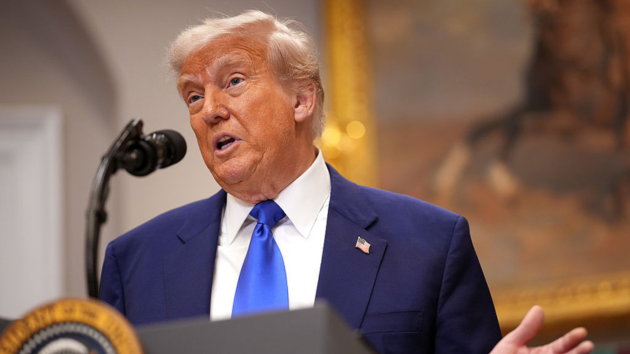
Fed set to make first interest rate decision since outbreak of trade war

Fed set to make first interest rate decision since outbreak of trade war
Spencer Platt/Getty Images

(NEW YORK) — The Federal Reserve is set to announce its first interest rate decision since a global trade war touched off by President Donald Trump’s tariffs sent stocks reeling and triggered concern about a possible recession.

The move arrives less than two weeks after Fed Chair Jerome Powell said tariffs would likely raise prices, while voicing patience as Trump’s economic policies take shape.

“We are focused on parsing the signal from the noise as the situation evolves,” Powell told an economic forum in New York City. “We are not in a hurry.”

Investors expect the central bank to leave rates unchanged on Wednesday, according to the CME FedWatch Tool, a measure of market sentiment.

The Trump administration earlier this month slapped 25% tariffs on goods from Mexico and Canada, though the White House soon imposed a one-month delay for some of the tariffs. A fresh round of duties on Chinese goods doubled an initial set of tariffs placed on China a month prior.

Tariffs imposed on steel and aluminum last week triggered retaliatory tariffs from Canada and the European Union, adding to countermeasures already initiated by China.

Last week, the S&P 500 closed down more than 10% since a peak attained last month, meaning the decline officially qualified as a market correction. It marked the index’s first correction since October 2023. The Dow Jones Industrial Average suffered its worst one-week drop since March 2023.

By some key measures, the economy remains in solid shape, however. A recent jobs report showed steady hiring last month and a historically low unemployment rate. Inflation stands well below a peak attained in 2022, though price increases register nearly a percentage point higher than the Fed’s goal of 2%.

The Fed retreated in its fight against inflation over the final months of last year, lowering interest rates by a percentage point. Still, the Fed’s interest rate remains at a historically high level of between 4.25% and 4.5%.

Stretching back to his first term in office, Trump has repeatedly urged the Fed to lower interest rates.

During a virtual address to the World Economic Forum in Davos, Switzerland, in January, Trump called on the central bank to cut rates days before it was set to announce an interest rate decision.

At the ensuing meeting that month, the Fed decided to hold interest rates steady. Speaking at a press conference in Washington, D.C., after the announcement, Powell declined to comment about Trump’s call for lower interest rates, saying it would be “inappropriate” to respond.

“The public should be confident that we’ll continue to do our work as we always have,” Powell said, adding that the Fed would continue to “use our tools to achieve our goals.”

Copyright © 2025, ABC Audio. All rights reserved.
Tesla board members, executive sell off over $100 million of stock in recent weeks

Tesla board members, executive sell off over 0 million of stock in recent weeks
Tesla board members, executive sell off over $100 million of stock in recent weeks
Jakub Porzycki/NurPhoto via Getty Images

(NEW YORK) — As Tesla stock has fallen in recent weeks, members of the board and an executive at Elon Musk’s company have been selling off millions of dollars in stock, according to filings with the U.S. Securities and Exchange Commission.

Together, four top officers at the company have offloaded over $100 million in shares since early February.

Last week, longtime Musk ally James Murdoch — the estranged son of Fox boss Rupert Murdoch and a board member since 2017 — became the latest to do so, exercising a stock option and selling shares worth approximately $13 million, according to an SEC filing. The sale took place on March 10, coinciding with the stock’s largest single-day decline in five years.

According to one filing, the shares were sold “to cover the exercise price relating to the exercise of stock options to purchase 531,787 shares, which are scheduled to expire in 2025.”

Elon Musk’s brother, Kimbal Musk, who also sits on the board, unloaded 75,000 shares worth approximately $27 million last month, according to a filing.

The chairman of the board, Robyn Denholm, has offloaded more than $75 million dollars worth of shares in two transactions in the past five weeks, federal filings show. The selloffs made by Denholm came as part of a predetermined sales plan.

A number of board members and executives made similar moves in November and December. But the recent sales come at a tumultuous time for Tesla, with the stock falling nearly 50% from a peak in mid-December. The company’s shares have suffered most of those losses since President Donald Trump took office and Musk began his controversial governmental cost-cutting efforts as the head of the newly created Department of Government Efficiency.

“Whenever insiders, including directors, are selling shares, it’s not a positive signal,” Jay Ritter, a professor of finance at the University of Florida, told ABC News.

However, Ritter added, an exception applies to the predetermined sales plan adopted by Denholm in July 2024, which marks a routine effort to avoid the perception an officer unloaded shares based on inside information.

“Filing a plan months ago to sell some of those shares over time is common,” Ritter said.

Tesla did not immediately respond to ABC News’ request for comment.

Seth Goldstein, an analyst at research firm Morningstar who studies the electric vehicle industry, said some of the stock sales may owe to personal financial choices made by individual officers.

“While a sale doesn’t necessarily mean an executive or board member feels negatively about a company’s outlook, it could mean they think the stock is at a fair price or even overvalued,” Goldstein said.

The share selloffs made by board members and executives totaled about $118 million, but the transactions often came after the individuals exercised stock options, the costs of which totaled about $16 million. The officers ended up with a profit of just over $100 million.

ABC News previously reported on concerns from shareholders and pension funds, some of whom have called on Musk to turn his attention back from slashing government spending to running his car company.

Tesla Chief Financial officer Vaibhav Taneja also sold off shares totaling more than $5 million over recent weeks. Some of those transactions came as part of predetermined sales plans, but a transaction earlier this month did not stem from a scheduled sale.

Copyright © 2025, ABC Audio. All rights reserved.
Gold prices are soaring. Is it a good investment amid the stock selloff?

Gold prices are soaring. Is it a good investment amid the stock selloff?
Ni Lifang/VCG via Getty Images

(NEW YORK) — President Donald Trump’s tariffs sent stocks tumbling in recent weeks, but the uncertainty helped propel a different asset viewed as a safe haven: gold.

The price of gold topped $3,000 per ounce for the first time ever last week, and the precious metal continued to hover around that mark in early trading on Monday.

Gold prices have soared 12% so far this year, while the S&P 500 has plummeted nearly 7%. Over that period, the Dow Jones Industrial Average has dropped 2% and the tech-heavy Nasdaq has tumbled 8.5%.

The rush toward gold makes financial sense, experts said. The asset offers investors a hedge against uncertain stock performance, since gold prices often display a degree of independence from movements in equities markets.

However, gold prices carry volatility of their own, some experts added, especially when buyers enter the market at a high point, risking losses instead of providing a security blanket.
“Investors need to be careful,” Campbell Harvey, a professor at Duke’s Fuqua School of Business who studies commodity prices, told ABC News.

“At a time of heightened uncertainty, people look toward a safe haven – and gold is a perceived safe haven. But most people don’t realize that gold is volatile,” Harvey added.

The run-up in gold prices comes amid a market slump set off by an escalating global trade war.

Last week, the S&P 500 closed down more than 10% since its high in February, meaning the decline officially qualified as a market correction. It marked the index’s first correction since October 2023. At the same time, the Dow suffered its worst one-week drop-off since 2023.

“Right now, it’s a very anxious marketplace,” Jim Wyckoff, senior market analyst at Kitco Metals, told ABC News. “That’s been a detriment for stock-market bulls and a boom for gold-market bulls.”

The flight to gold in moments of market crisis draws on decades of evidence, according to an analysis co-authored by Harvey in 2020. The price of gold moved higher during seven of the last nine major stock market selloffs stretching back to the late 1980s, researchers found.

“It’s a good track record, but it’s not a sure thing,” Harvey said. “Even though it went up seven out of nine of these drawdown periods, that doesn’t mean it will be seven out of nine in the next nine drawdowns.”

Last week, Paris-based financial firm BNP Paribas raised its forecast for gold prices, predicting the precious metal would exceed $3,100 an ounce. The company attributed the rosy outlook to economic uncertainty incited by Trump, but it warned such gains would likely fizzle out by the second half of this year.

“The gold market will price in or normalize Trump-driven trade risks, as it typically does with geopolitical risk,” BNP Paribas said in a report shared with ABC News. “Thus, if there is no ongoing escalation in trade tensions, gold prices will, in our view, struggle to maintain further upside momentum.”

Some experts who spoke to ABC News acknowledged the current price boom may eventually lose steam, but they still encouraged investors to add the precious metal to their portfolios as a means of offsetting the heightened risk of stocks.

“Gold offers diversification,” Trevor Yates, an analyst at investment firm Global X, told ABC News. “We see gold warranting a place in the portfolio.”

Investors who add gold for the sake of diversifying their portfolio, however, may want to add other assets alongside it, such as Treasury bonds or real estate, Harvey said.

“There are other safe assets besides gold,” Harvey said. “Don’t put all of your eggs in one basket.”

Copyright © 2025, ABC Audio. All rights reserved.
Harvard says tuition will be free for families making $200K or less

Harvard says tuition will be free for families making 0K or less
Harvard says tuition will be free for families making $200K or less
Harvard Yard/ Andrew Lichtenstein/Corbis via Getty Images)

(CAMBRIDGE, Mass.) — Harvard University on Monday announced that tuition will be free for students from families with annual incomes of $200,000 or less starting in the 2025-26 academic year.

“Putting Harvard within financial reach for more individuals widens the array of backgrounds, experiences, and perspectives that all of our students encounter, fostering their intellectual and personal growth,” Harvard University President Alan M. Garber said in statement.

This is a breaking news story. Please check back for updates.
 

Copyright © 2025, ABC Audio. All rights reserved.
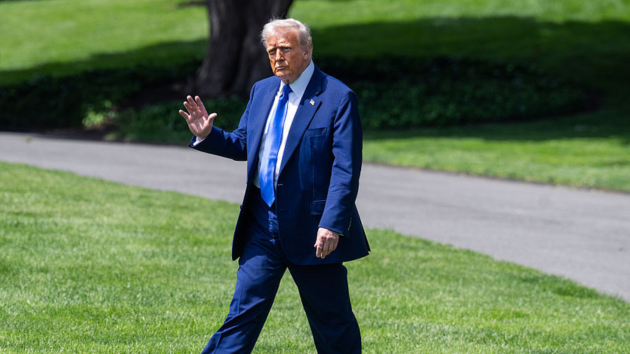
Consumer sentiment sours amid trade war, recession fears: Survey

Consumer sentiment sours amid trade war, recession fears: Survey
lechatnoir/Getty Images

(NEW YORK) — Consumer attitudes soured in March alongside slumping markets and growing concern about a possible recession, University of Michigan survey data on Friday showed. Sentiment worsened more than economists expected.

The figure marked the third consecutive month of dampening consumer attitudes, data showed.

Expectations about future economic conditions worsened in a slew of key areas, including personal finances, labor markets, inflation and stock markets, the survey said.

Consumer sentiment soured among both Democrats and Republicans, though it dropped more among Democrats, data showed.

On Thursday, the S&P 500 closed down more than 10% since a peak attained last month, meaning the decline officially qualified as a market correction. It marked the index’s first correction since October 2023.

The major stock indexes recovered some losses in early trading on Friday.

Consumers expect the inflation rate to rise to 4.9% over the next year, according to the survey, which marks a significant jump in year-ahead inflation expectations compared to survey results in February.

The current inflation rate stands at 2.8%, nearly a percentage point higher than the Federal Reserve’s target of 2%.

President Donald Trump’s tariffs last week set off an escalating global trade war. The U.S. slapped 25% tariffs on Mexico and Canada, some of which were delayed. Trump also imposed a 10% tariff on China, doubling taxes on Chinese imports to 20%.

Trump’s 25% tariffs on all imported steel and aluminum products took effect on Wednesday.

The array of duties on imported goods prompted retaliatory measures from China, Canada and the European Union.

Tariffs of this magnitude are widely expected to increase prices paid by U.S. shoppers, since importers typically pass along a share of the cost of those higher taxes to consumers.

Higher prices and looming economic uncertainty could scare off consumers, experts previously told ABC News. Consumer spending accounts for about two-thirds of U.S. economic activity.

Goldman Sachs last week hiked its odds of a recession from 15% to 20%. Moody’s Analytics earlier this week pegged the probability of a recession at 35%.

This is a developing story. Please check back for updates.

Copyright © 2025, ABC Audio. All rights reserved.
US stocks climb amid signs government may avert shutdown

US stocks climb amid signs government may avert shutdown
Spencer Platt/Getty Images

(NEW YORK) — U.S. stocks climbed in early trading on Thursday, advancing amid signs the federal government may avert a shutdown and recovering some of the losses suffered during an escalating trade war.

The Dow Jones Industrial Average jumped 230 points, or 0.6%, while the S&P 500 increased 0.9%. The tech-heavy Nasdaq climbed 1.3%.

The market upswing comes after Senate Democratic Leader Chuck Schumer announced Thursday night that he plans to vote to keep the government open, signaling that there will almost certainly be enough Democratic votes to advance a House GOP funding bill before a shutdown deadline at the end of the day Friday.

The gains offered relief for investors reeling from a market decline set off last week by President Donald Trump’s tariffs.

On Thursday, the S&P 500 closed down more than 10% since a peak attained last month, meaning the decline officially qualified as a market correction. It marked the index’s first correction since October 2023.

Trump on Thursday stood firm on his tariff policy, despite the losses on Wall Street.

“I’m not going to bend at all,” Trump told reporters at the White House on Thursday. When asked whether he would reconsider a fresh round of tariffs set to go into effect on April 2, Trump offered a one-word reply: “No.”

The Dow Jones Industrial Average and the S&P 500 each closed down more than 1% on Thursday. The tech-heavy Nasdaq declined nearly 2%.

This is a developing story. Please check back for updates.

ABC News’ John Parkinson, Lauren Peller, Allison Pecorin and Rachel Scott contributed to this report.
 

Copyright © 2025, ABC Audio. All rights reserved.
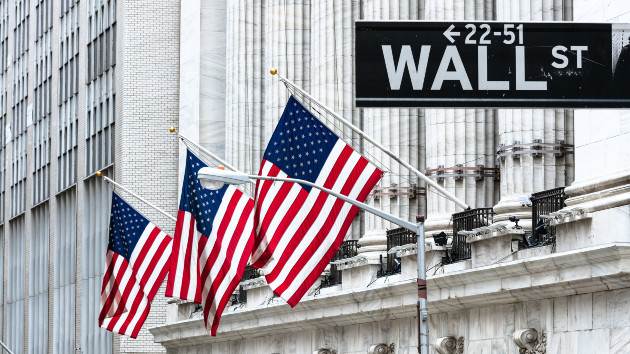
Trump stands firm on tariff plans after threat against EU: ‘I’m not going to bend at all’

Trump stands firm on tariff plans after threat against EU: ‘I’m not going to bend at all’
Makoto Honda / 500px/Getty Images

(WASHINGTON) — President Donald Trump on Thursday stood firm on his tariff policy, hours after threatening to escalate a global trade war with a 200% tariff on champagne and other alcohol products from the European Union.

“I’m not going to bend at all,” Trump told reporters at the White House on Thursday. When asked whether he would reconsider a fresh round of tariffs set to go into effect on April 2, Trump offered a one-word reply: “No.”

U.S. stocks tumbled, erasing some gains in the S&P 500 and tech-heavy Nasdaq a day earlier. Shares of large European winemakers also fell on Thursday in apparent reaction to Trump’s tariff threat.

The threat of additional U.S. tariffs came after the EU announced plans to slap tariffs on $28 billion worth of U.S. goods, including a 50% tariff on whiskey. Those tariffs marked a response to U.S. duties on steel and aluminum imports.

Trump called on the EU to drop its tariff on whiskey, saying the U.S would otherwise “shortly place” a tariff on alcohol products from the EU.

Trump sharply criticized the EU, describing the organization as “one of the most hostile and abusive taxing and tariffing authorities in the World.”

In a post on X, French Trade Minister Laurent Saint-Martin said: “Donald Trump is escalating the trade war he chose to unleash. France remains determined to retaliate together with the European Commission and our partners. We will not give in to threats and will always protect our sectors.”

If Trump moves forward with his tariff threat, the move could have a significant impact on American consumers.

The US is the world’s largest importer of wine and champagne. The US imported nearly $4.9 billion worth of Wine each year, with $1.6 billion imported from France, according to World Bank Data. In 2023, the US imported more than $1.7 billion worth of champagne.

The Distilled Spirits Council of the U.S. is urging the U.S. and EU to come to a resolution that gets the industry back to “zero-to-zero tariffs.”

“This is a model that has allowed spirits exports between the U.S. and EU to flourish and is in line with President Trump’s vision for fair and reciprocal trade,” the council’s President Chris Swonger wrote in a statement.

In his first term, Trump also targeted the alcohol industry. A series of tit-for-tat tariffs hit alcohol products in the U.S. and the EU. The Biden administration suspended those tariffs, but now the industry is once again in the crosshairs. The industry has still been recovering from that first tariff spat.

For the past three years, “U.S. distillers have worked hard to regain solid footing in our largest export market,” Swonger added.

The tariff threats on Thursday mark the latest skirmish in a global trade war. In response to U.S. duties on steel and aluminum, Canada announced retaliatory tariffs applied to $20.7 billion in U.S. goods, government officials said. The U.S. imports more steel and aluminum from Canada than from any other country.

The Trump administration last week slapped a 10% tariff on China, doubling taxes on Chinese imports to 20%. In response, China imposed retaliatory duties on U.S. agricultural goods, deepening a trade war between the world’s two largest economies.

The trade tensions triggered recession fears on Wall Street. Goldman Sachs last week hiked its odds of a recession from 15% to 20%. Moody’s Analytics raised its gauge of the probability of a recession to 35%.

This is a developing story. Please check back for updates.

Copyright © 2025, ABC Audio. All rights reserved.

US stocks down slightly amid trade war and looming government shutdown

US stocks down slightly amid trade war and looming government shutdown
Traders work on the floor of the New York Stock Exchange (NYSE) in New York City.

(NEW YORK) — U.S. stocks dropped slightly lower early Thursday, after a reprieve for the S&P and Nasdaq a day earlier amid President Donald Trump’s trade war.

The Dow Jones Industrial Average fell 150 points in early trading, or 0.4%, while the S&P 500 ticked down 0.25%. The tech-heavy Nasdaq declined 0.35%.

Trading opened minutes after Trump threatened a 200% tariff on champagne and other alcohol products from the European Union, escalating a global trade war that has roiled markets.

A continued back-and-forth over international tariffs is hanging over the U.S. economy, along with a looming government shutdown with a deadline on Friday.

Federal officials said Wednesday that consumer prices climbed 2.8% in February over the same year-earlier month, meaning inflation cooled more than economists expected.

After initially modest gains, the Dow Jones Industrial Average closed on Wednesday down about 0.2%, while the S&P 500 climbed 0.5%. The tech-heavy Nasdaq increased 1.2%.

This is a developing story. Please check back for updates.

Copyright © 2025, ABC Audio. All rights reserved.
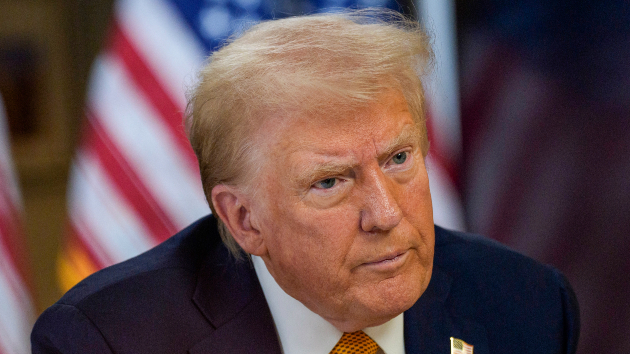
Trump threatens 200% tariff on EU champagne, other alcohol products

Trump stands firm on tariff plans after threat against EU: ‘I’m not going to bend at all’
Makoto Honda / 500px/Getty Images

(WASHINGTON) — President Donald Trump on Thursday threatened a 200% tariff on champagne and other alcohol products from the European Union, escalating a global trade war that has roiled markets and stoked recession fears.

The move came a day after the EU announced plans to slap tariffs on $28 billion worth of U.S. goods, including a 50% tariff on whiskey. Those tariffs marked a response to U.S. duties on steel and aluminum imports.

Trump called on the EU to drop its tariff on whiskey, saying the U.S would otherwise “shortly place” a tariff on alcohol products from the EU.

Trump sharply criticized the EU, describing the organization as “one of the most hostile and abusive taxing and tariffing authorities in the World.”

In a statement a day earlier, Ursula von der Leyen, president of the European Commission, said that the EU “must act to protect consumers and business.”

Stock futures turned lower early Thursday morning, erasing some gains in the S&P 500 and tech-heavy Nasdaq a day earlier. The Dow Jones Industrial Average futures showed a continuation of losses incurred on Wednesday.

Markets have plunged since Trump last week announced 25% tariffs on imports from Mexico and Canada, some of which he soon delayed.

The tariff threats on Thursday mark the latest skirmish in a global trade war. In response to U.S. duties on steel and aluminum, Canada announced retaliatory tariffs applied to $20.7 billion in U.S. goods, government officials said. The U.S. imports more steel and aluminum from Canada than from any other country.

The Trump administration last week slapped a 10% tariff on China, doubling taxes on Chinese imports to 20%. In response, China imposed retaliatory duties on U.S. agricultural goods, deepening a trade war between the world’s two largest economies.

The trade tensions triggered recession fears on Wall Street. Goldman Sachs last week hiked its odds of a recession from 15% to 20%. Moody’s Analytics raised its gauge of the probability of a recession to 35%.

This is a developing story. Please check back for updates.
 

Copyright © 2025, ABC Audio. All rights reserved.

Stock futures even Thursday amid trade war and looming government shutdown

US stocks down slightly amid trade war and looming government shutdown
Traders work on the floor of the New York Stock Exchange (NYSE) in New York City.

(NEW YORK) — Stocks futures were again showing jitters early Thursday, after a reprieve for the S&P and NASDAQ on Wednesday amid President Donald Trump’s trade war.

A back-and-forth over international tariffs is hanging over the U.S. economy, along with a looming government shutdown with a deadline on Friday.

Dow futures evened out ahead of Thursday’s open, after earlier trading down about 0.3%.

Federal officials said Wednesday that consumer prices climbed 2.8% in February over the same year-earlier month, meaning inflation cooled more than economists expected.

After initially modest gains, the Dow Jones Industrial Average closed on Wednesday down about 0.2%, while the S&P 500 climbed 0.5%. The tech-heavy Nasdaq ticked increased 1.2%.

Markets may look on Thursday to a smaller inflation report called the Produce Price Index, which is expected at 8:30 a.m. ET, along with weekly jobless claims, for an indication of the health of the larger economy.

Still, its news out of Washington that is likely to have the biggest impact on the direction of stocks.

This is a developing story. Please check back for updates.

ABC News’ Max Zahn contributed to this report.

Copyright © 2025, ABC Audio. All rights reserved.