(WASHINGTON) — A fresh inflation report to be released on Wednesday will provide the latest test for President Donald Trump’s tariffs as some retailers and economists warn the policy will raise prices.
So far, the economy has defied fears of price hikes, instead giving way to a cooldown of inflation over the months since Trump took office.
Economists expect inflation to have jumped slightly in May, registering year-over-year price increases of 2.4%. That would mark an increase from an inflation rate of 2.3% over the year ending in April, which amounted to the lowest inflation level since 2021.
The small increase in inflation anticipated by economists would keep price levels near the Federal Reserve’s target rate of 2%, putting them well below a recent peak of 9% in 2022.
In recent weeks, Trump has dialed back some of his steepest tariffs, easing the costs imposed upon importers. Such companies typically pass along a share of the higher tax burden in the form of price hikes.
A trade agreement between the U.S. and China in May slashed tit-for-tat tariffs between the world’s two largest economies and triggered a surge in the stock market. Within days, Wall Street firms softened their forecasts of a downturn.
The U.S.-China accord came weeks after the White House paused a large swath of Trump’s “Liberation Day” tariffs targeting dozens of countries. Trump also eased sector-specific tariffs targeting autos and rolled back duties on some goods from Mexico and Canada.
Still, an across-the-board 10% tariff applies to nearly all imports, except for semiconductors, pharmaceuticals and some other items. Those tariffs stand in legal limbo, however, after a pair of federal court rulings late last month.
Tariffs remain in place for steel, aluminum and autos, as well as some goods from Canada and Mexico.
Warning signs point to the possibility of elevated prices over the coming months.
Nationwide retailers like Walmart and Best Buy have voiced alarm about the possibility they may raise prices as a result of the levies.
The Organization for Economic Co-operation and Development, or OECD, said this month it expects U.S. inflation to reach 4% by the end of 2025, which would mark a sharp increase from current levels.
Federal Chair Jerome Powell, in recent months, has warned about the possibility that tariffs may cause what economists call “stagflation,” which is when inflation rises and the economy slows.
Stagflation could put the central bank in a difficult position. If the Fed were to raise interest rates, it could help ease inflation, but it may risk an economic downturn. If the Fed were to cut rates in an effort to spur economic growth, the move could unleash faster price increases.
For now, the Fed appears willing to take a wait-and-see approach. At its last meeting, in May, the Fed opted to hold interest rates steady for the second consecutive time.
“For now, it does seem like a fairly clear decision for us to wait and see,” Powell said at a press conference in Washington, D.C., last month.
The Fed will announce its next rate decision on June 18. Investors peg the chances of a decision to leave rates unchanged at 99.9%, according to the CME FedWatch Tool, a measure of market sentiment.
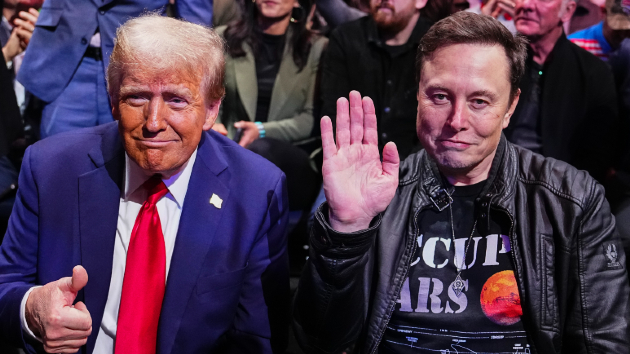
(NEW YORK) — A feud between President Donald Trump and Tesla CEO Elon Musk hammered shares of the electric carmaker on Thursday, before a lull in the acrimony on Friday prompted a recovery of some losses.
Still, as of midday Friday, shares had dropped nearly 10%, wiping out tens of billions of dollars in company value.
The falling out between Trump and Musk raises serious concern for Tesla, threatening crucial regulatory approvals and government subsidies, while risking ire from conservative car buyers who may otherwise have eased sales woes suffered as liberals turned elsewhere, some industry analysts told ABC News.
The outcome remains unclear, however, leaving open the possibility the two sides may patch up the relationship or Tesla could navigate fraught ties with the White House, they added.
The feud “puts massive pressure on Tesla shares with fears that Trump will turn from friend to foe and create a tough regulatory environment for Musk in the Beltway,” Dan Ives, a managing director of equity research at the investment firm Wedbush and a longtime Tesla bull, said in a memo to clients on Friday.
The president and the world’s richest person volleyed tit-for-tat barbs on rival social media platforms Thursday in a public clash that Ives described as “one of the strangest Twilight Zone days we have seen.”
Tesla shares sank as much as 18% on Thursday, before closing down 14%. In early trading on Friday, Tesla climbed nearly 6% as tensions appeared to thaw.
Overall, the stock is down nearly a third from an all-time high in December, which resulted from a sharp rise after the election of Trump.
Tesla remains a top electric carmaker but the company faces growing competition, especially from Chinese firms such as BYD.
Tesla’s profits fell 71% over the first three months of this year, a company earnings release in April showed. The decline coincided with a sales slump at Tesla and came amid worldwide protests against Musk over his role in Trump’s administration.
As car sales slowed, Musk touted a future autonomous car service, dubbed robotaxis, as a growth area for the business. The company plans to roll out its robotaxi test program in Austin, Texas, later this month.
Trump could threaten those aspirations, however, if he pressures federal regulators to deny necessary approvals for the company’s autonomous driving program or renews investigations into the safety of the company’s full self-driving software, analysts said.
“If full self-driving were to be invalidated, that would be a huge hit to Tesla stock and to Musk,” Gordon Johnson, CEO and founder of data firm GLJ Research, who is bearish on Tesla, told ABC News.
Tesla also generates significant revenue from the sale of carbon emissions credits to other car manufacturers, which helps the firms comply with environmental standards set by a range of government entities.
Tesla earned nearly $2.8 billion last year on the collection of such government subsidies while incurring few costs in this area of its business, the firm said in its 2024 annual report.
In theory, Trump could seek to erode state-level emissions standards in a manner that alleviates much of the need for rival carmakers to purchase them. If California were to do away with its emissions credit system, it could cost Tesla roughly $2 billion, a JPMorgan report last month found.
“I can’t stress enough the risk of these credits going away,” Johnson said.
For now, the outcome of the fallout remains unknown and could prove minimal, some analysts told ABC News.
They pointed to the likelihood of at least partial reconciliation between Trump and Musk, who as recently as last week exchanged effusive praise in the Oval Office. All-out government attacks on Tesla would incite a prolonged, combative relationship, analysts said, which may not benefit either side.
The company still offers longstanding, affordable EV models and an extensive battery-charging network.
Observers who focus on the headlines and stock gyrations risk overstating Trump’s role in the fortunes of Tesla anyway, Seth Goldstein, an analyst at research firm Morningstar who studies the EV sector, told ABC News.
“While political fallout and potential retribution will move the stock, I don’t think this is as big an event as Tesla’s other events coming up this year,” Goldstein said, pointing to the robotaxi testing.
Ives, of Wedbush, voiced similar optimism about the possibility of moving past the feud.
“We believe cooler heads will prevail today and into the weekend,” Ives said. “Hopefully.”
(NEW YORK) — The U.S. trade deficit narrowed significantly in April as President Donald Trump sharply escalated tariffs before pausing a large swath of the levies, U.S. Commerce Department data on Thursday showed.
Trump touted the tariffs as an effort to slash the nation’s trade deficit, which the president has said he considers a threat to the nation’s economic prosperity. Many economists disagree, however, saying the trade deficit reflects the consumer-driven engine of the U.S. economy.
The trade gap fell by more than half in April as imports plunged, the data showed. The U.S. registered a trade deficit of about $61 billion in April, marking a sharp decline from a $140 billion trade gap a month earlier.
Imports dropped by 16% in April as some trade barriers took effect, the data showed. Imports had ticked upward a month earlier as some firms rushed to stockpile supply before the levies saddled them with additional costs.
The nation’s trade gap stands well below the $131 billion deficit recorded in January, the month Trump took office.
The outlook is murky for the Trump’s tariff policy and the wider economy.
Trump’s on-again, off-again approach to tariffs leaves in doubt their ultimate level. A pair of court rulings last week thrust Trump’s steepest tariffs into limbo, adding another layer of uncertainty as federal appeals court judges determine whether a significant number of the policies pass legal muster.
The uncertain policy environment facing businesses has coincided with an anxious moment for consumers. Consumer attitudes have soured for four consecutive months as tariffs have taken hold, according to a survey conducted by the University of Michigan.
Consumer spending, which accounts for about two-thirds of U.S. economic activity, could weaken if shopper appetites diminish and import prices rise.
So far, key measures of the economy have largely defied fears of a downturn. The unemployment rate stands at a historically low level and job growth remains robust, though it has slowed from previous highs. In recent months, inflation has cooled, reaching its lowest level since 2021.
The Organization for Economic Co-operation and Development, or OECD, forecast on Tuesday continued growth for the U.S. economy in 2025 and 2026, albeit at a slower pace than last year. Additionally, recession forecasts on Wall Street faded in recent weeks after Trump rolled back some tariffs.
(NEW YORK) — Executives at major corporations, including Target, Goldman Sachs and Pepsi, have invoked the same one-word boogeyman on recent earnings calls: “Uncertainty.”
Concern among companies big and small about the unsteady business environment has centered on President Donald Trump’s tariff policies, which the White House has altered numerous times since Trump took office.
A pair of court rulings last week thrust Trump’s steepest tariffs into limbo, adding another layer of uncertainty as federal appeals court judges determine whether a major swath of the policies pass legal muster.
In response to the tariff shifts, many U.S. companies have opted to put hiring and investment plans on hold out of fear that a fresh levy could otherwise spark regret, experts told ABC News.
That paralysis risks sapping momentum from the economy and tipping the U.S. into a downturn, they added, while acknowledging the ultimate outcome remains unclear.
“These pretty significant policy changes – whether they’re coming out of the administration or the courts – can have a big financial impact on companies,” Gregory Brown, a finance professor at the University of North Carolina, told ABC News. “Profits can turn to losses, and vice versa.”
“It has to be nerve-racking for people on the front lines of this in terms of having their businesses or jobs highly affected,” Brown added.
The Trump administration has rebuked criticism of its on-again, off-again tariff approach, saying the flexibility affords White House officials leverage in trade negotiations with countries targeted by the levies.
Speaking to ABC News’ “This Week” in April, Treasury Secretary Scott Bessent described the posture as “strategic uncertainty.”
“You’re not going to tell the person on the other side of the negotiation where you’re going to end up. And nobody’s better at creating this leverage than President Trump,” Bessent said.
In the meantime, a host of major companies have warned that they may suffer losses due to the lack of clarity.
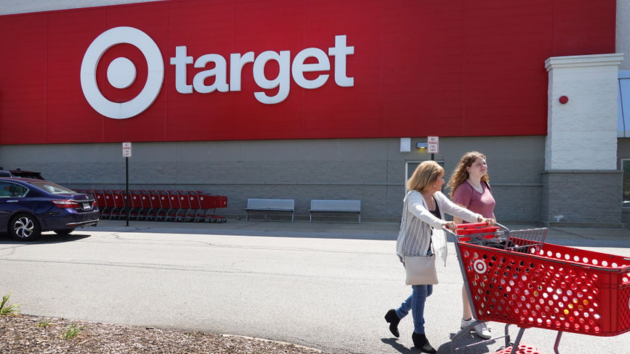
Target CEO Brian Cornell last month warned of “massive potential costs” due to tariffs, lamenting difficulties posed by “the rates we’re facing and the uncertainty about how these rates in different categories might evolve.”
In April, Goldman Sachs CEO David Solomon voiced alarm about possible damage that could result from the murky outlook.
“This uncertainty around the path forward and fears over the potentially escalating effects of the trade war have created material risks to the U.S. and global economy,” Solomon told analysts.
A survey of CEO confidence fell to its lowest level since 2022, the Conference Board found last month. More than half of CEOs expect conditions to worsen over the next six months, the survey said.
The policy uncertainty puts businesses in a bind because they cannot evaluate the costs and benefits of important long-term decisions, such as investment and hiring, Brett House, a professor of professional practice at Columbia University and former deputy chief economist at Scotiabank, told ABC News.
“Companies always have risks ahead of them. They can price those risks in terms of the cost of lending or borrowing and the prices of goods or services,” House said. “In a period of uncertainty, it’s hugely chilling of business activity because there’s almost now way to anticipate what the price of an activity should be.”
The uncertainty facing businesses has coincided with an anxious moment for consumers. Consumer attitudes have soured for four consecutive months as tariffs have taken hold, according to a survey conducted by the University of Michigan.
Consumer spending, which accounts for about two-thirds of U.S. economic activity, could weaken if shopper appetites diminish. In theory, a slowdown of spending could hammer some companies at the same time they attempt to navigate the ever-shifting business environment, some experts said.
“If consumption starts coming down and companies are not investing, that’s when you start to see little parts of gross domestic product come down,” Jadrian Wooten, a professor of economics at Virginia Tech University, told ABC News. “We’re in that danger zone.”
The Federal Reserve Bank of St. Louis released a study in April that found a sudden surge of economic uncertainty could set the conditions for an economic recession.
So far, key measures of the economy have largely defied fears of a downturn.
The unemployment rate stands at a historically low level and job growth remains robust, though it has slowed from previous highs. In recent months, inflation has cooled, reaching its lowest level since 2021.
The Organization for Economic Co-operation and Development, or OECD, forecast on Tuesday continued growth for the U.S. economy in 2025 and 2026, albeit at a slower pace than last year. Recession forecasts on Wall Street faded in recent weeks after Trump rolled back some tariffs.
Brown, of the University of North Carolina, said the uncertainty facing businesses is unmistakable, but its precise economic effect remains to be seen.
“The uncertainty is real,” Brown said. “How much of it really comes to fruition and really shows up in the data — that’s a different question.”
(WASHINGTON) — A digital asset company has collaborated with the firm behind President Donald Trump’s $TRUMP meme coin to launch what it’s calling the “Official $TRUMP Wallet” — but the president’s sons, who run Trump’s crypto businesses, say they have no involvement with the offering.
In a post on X Tuesday, Jack Lu, the CEO of a digital asset marketplace called Magic Eden, said his firm had collaborated with GetTrumpMemes — the firm behind the $TRUMP meme coin — on $TRUMP Wallet, a digital app that allows users to conduct financial transactions. Lu said the venture would allow users to trade the $TRUMP coin and other cryptocurrencies.
But within hours, Eric Trump wrote on social media that “I run @Trump and I know nothing about this project!”
Donald Trump Jr. added that he “has zero involvement with this wallet product,” and teased plans for a separate digital asset wallet under a different Trump-affiliated crypto firm, World Liberty Financial.
Despite those disavowals, the $TRUMP Wallet that launched Tuesday claimed to be the “First and Only Crypto Wallet for True Trump Fans.”
“Our partnership with the $TRUMP team to build @TrumpWalletApp represents our commitment to onboarding mainstream audience deeper into crypto,” Lu wrote on X.
ABC News has reached out to Magic Eden for clarification on the venture.
As of Tuesday afternoon, X — the social media company run by Trump ally Elon Musk — had suspended the account for @TrumpWalletApp. It was not immediately clear why the account was removed.
The $TRUMP Wallet website contains little information about the platform itself, but invites visitors to sign up for a waitlist ahead of a formal launch at some later date. Joining the waitlist also allows users to enter a sweepstakes for a share of $1 million worth of $TRUMP rewards.
Once a crypto skeptic, Trump and his family have fully immersed themselves in the cryptocurrency marketplace in recent months, developing not only the $TRUMP meme coin — a type of digital currency that’s often based on an internet meme — but also a bitcoin mining firm, a stablecoin firm, and a crypto reserve.
Last month Trump held a black tie event for the winners of a contest that awarded invitations to the top investors in his $TRUMP coin — with at least some of the funds flowing directly into the Trump family’s coffers.
Critics have raised concerns about the Trump administration’s regulatory role over cryptocurrencies while the president stands to personally benefit from cryptocurrency ventures.
Asked Tuesday about the potential conflicts of interest in the Trump family’s nascent crypto empire, Donald Trump Jr. said on CNBC that the family “got into [crypto] out of necessity,” claiming the Trump family had been “de-banked.”
“We got into politics and all of a sudden [the banks] wouldn’t take our call,” he said. “We went all in on a concept that makes total sense because we’d actually been the recipients of how quickly that can be shut off.”
(NEW YORK) — The United States’ economic growth forecast was cut sharply on Tuesday by the Organization for Economic Co-operation and Development, or OECD, which attributed the gloomy outlook in part to tariffs issued by President Donald Trump.
The OECD expects the U.S. economy to grow 1.6% in 2025, marking a substantial reduction from a 2.2% expansion forecast in March.
The nation’s economic growth will slow further in 2026, the OECD said, cutting its forecast for that year to 1.5%.
The dampened outlook for the U.S. mirrors a slowdown expected for the global economy, the OECD said, predicting global economic growth to fall from 3.4% in 2024 to 2.9% in 2025.
“Global economic prospects are weakening,” the OECD said in a statement, pointing to an array of factors that includes “substantial barriers to trade” and “heightened policy uncertainty.”
The OECD also warned of a potential upsurge in U.S. consumer prices, saying inflation could approach 4% by the end of 2025. The inflation rate currently stands at 2.3%.
“Higher trade costs, especially in countries raising tariffs, will also push up inflation,” the OECD said.
The OECD forecast echoes concerns raised by Wall Street analysts and Federal Chair Jerome Powell about the possibility that President Donald Trump’s tariffs may cause what economists call “stagflation,” which is when inflation rises and the economy slows.
A growing set of major retailers have warned of possible tariff-driven price hikes, including Nike, Target, Walmart and Best Buy.
Consumer attitudes have soured for four consecutive months as tariffs have taken hold, according to a survey conducted by the University of Michigan.
Consumer spending, which accounts for about two-thirds of U.S. economic activity, could weaken if shopper appetites diminish. In theory, a slowdown of spending could hammer some businesses, prompting layoffs that in turn further shrink consumer activity.
“Global trade tensions are hitting sentiment,” the OECD said.
U.S. tariffs remain above where they stood before Trump’s second term began, but a number of levies have rolled back in recent weeks.
A trade agreement between the U.S. and China last month slashed tit-for-tat tariffs between the world’s two largest economies and triggered a surge in the stock market. Within days, Wall Street firms softened their forecasts of a recession.
The U.S.-China accord came weeks after the White House paused far-reaching “reciprocal tariffs” on dozens of countries. Trump also eased sector-specific tariffs targeting autos, and rolled back duties on some goods from Mexico and Canada.
Trump’s steepest tariffs fell into legal limbo last week, casting uncertainty over a major swath of the president’s signature economic policy.
For now, key measures of the economy remain fairly strong.
The unemployment rate stands at a historically low level and job growth remains robust, though it has slowed from previous highs. In recent months, inflation has cooled, reaching its lowest level since 2021.
(WASHINGTON) — Price increases could hit canned soup, dishwashers, cars and an array of other products as a result of President Donald Trump’s planned hike of steel and aluminum tariffs, experts told ABC News.
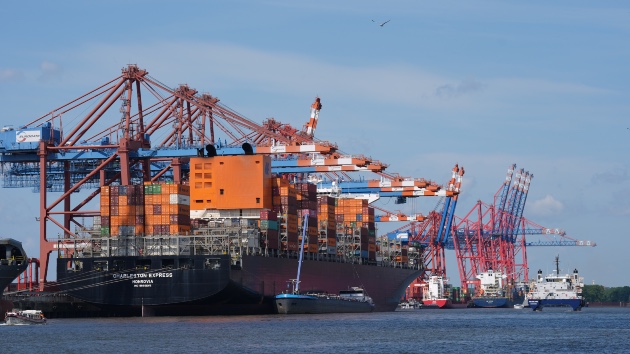
The tariff escalation, set to take effect on Wednesday, ratchets up a tax on all foreign steel and aluminum from 25% to 50%. The move comes alongside a host of other levies, though it arrives days after a pair of federal court rulings cast doubt over the staying power of a large swathe of tariffs.
Trade experts told ABC News the fresh tariffs will likely raise prices for some goods made out of the two metals, since importers of the raw material typically pass along a share of the higher cost to consumers.
“Twenty-five percent tariffs were already high,” Kyle Handley, a professor of economics at the University of California, San Diego, told ABC News. “Fifty percent is incredibly high.”
In a social media post on Sunday, Trump touted the policy as a means of protecting domestic steel producers and safeguarding supply of key materials.
“We’re going to produce our own metal, unleash our own energy, secure our own future, build our Country, control our destiny and we are once again going to put Pennsylvania steel into the backbone of America like never before!” Trump said.
Here are the prices that may increase as a result of the tariff escalation for steel and aluminum:
Cars and trucks
Steel is the top material by weight in a car, accounting for about 60% of its weight, according to the American Iron and Steel Institute.
Once steel imports face stiff taxes, experts forecast the price of steel paid by U.S. manufacturers will rise, meaning higher input costs for automakers. Those companies, they added, are likely to hike prices for consumers as a means of offsetting some of those costs.
William Hauk, a professor of economics at the University of South Carolina who studies international trade, said the new tariff level could raise the price of a car by $2,000 to $4,000.
Trump previously imposed a 25% tariff on cars and car parts, but in April the president said the auto tariffs would not stack on top of steel and aluminum tariffs, meaning levies related to the two metals will count toward tariffs on a given vehicle only once.
Soup, soda and beer
Elevated aluminum tariffs risk higher prices for foods and beverages packaged in aluminum cans, such as beer and soft drinks, some experts said.
Fifty-percent tariffs on steel and aluminum will likely raise the price paid at the grocery store for each can of soup or soda by about 1 cent, Hauk said.
“It isn’t a huge amount on its own but if you think about the number of sodas or beers people have out of aluminum cans in a given year, it adds up over time,” Hauk told ABC News.
The previous set of 25% tariffs on aluminum cost the U.S. beverage industry $1.7 billion between 2018 and 2022, according to the Beer Institute, an industry trade group.
“Paying a tariff-laden price on all aluminum drives up the cost of doing business and makes consumer goods more expensive,” the Beer Institute said in 2022.
Refrigerators and washing machines
Major home appliances — such as refrigerators, dishwashers and washing machines — rely in part on steel, making them vulnerable to potential price increases, Handley said.
“All those things will be even more expensive to produce if the steel and aluminum inputs are more costly, which they absolutely will be,” Handley said.
In the aftermath of steel and aluminum tariffs during Trump’s first term, major appliances showed price increases of between 5% and 10% between June 2018 and April 2019, Jason Miller, a professor of supply chain management at Michigan State University, previously told ABC News, citing a monthly government data release.
Those price hikes far outpaced an overall inflation rate of around 2%.
Hauk, of the University of South Carolina, said the fresh levies will bring steel and aluminum tariffs to their highest levels since the mid-1930s.
“We haven’t seen tariffs on steel and aluminum this high in a long time,” Hauk said. “We’re kind of in uncharted territory.”
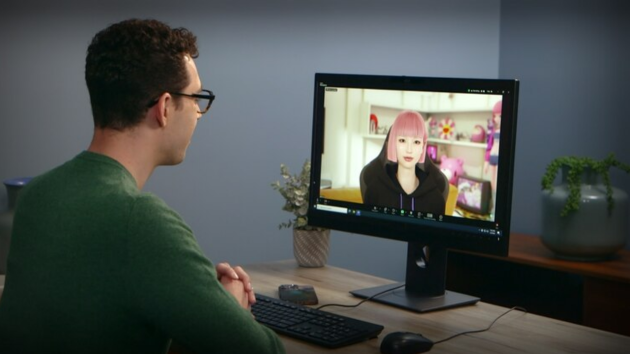
Imma is the creation of a company called Aww, Inc. (ABC News)
(NEW YORK) — Snapchat influencer Caryn Marjorie arrives at the ABC News headquarters in New York City carrying a shopping bag from Apple. She pulls out a brand-new iPhone and turns it on, confirming there are no messages, no missed calls, no notifications. “Do you want to see a magic trick?” she asks.
Marjorie’s team leaks the iPhone’s number to her most loyal fans on social media, and suddenly the room fills with the sound of “dings.” In 10 minutes, she has over 2,000 text messages from her mostly male followers, expressing their adoration. She tries her best to respond, but the messages keep coming.
It’s this level of fandom that led the 25-year-old – who uses the handle @CutieCaryn – to enlist the help of AI to form a more intimate bond with her followers. In 2023, the content creator, inspired by ChatGPT, hired a company to clone her likeness using artificial intelligence, developing a paid audio-driven chatbot service.
“I call Caryn AI a social experiment. It was the very first digital clone of a real human being sent out to millions and millions of people,” Marjorie tells ABC News.
With a chatbot that sounded like her, acted like her, and knew her backstory, she reasoned she could essentially talk to everyone at once, and her fans would be able to get to know her even while she was sleeping. But it “ended up becoming so much more than that,” she says.
Marjorie charged $1 a minute to talk to Caryn AI, marketing it as “your virtual girlfriend.” She says in the first week she made $70,000 with some users talking to the bot for 10 hours a day. Did people fall in love with it? “I think some people felt feelings of love,” she says.
The love for Caryn AI didn’t last.
“There were many times where I, on the back end, would be testing Caryn AI and I would be simulating certain conversations with her just to see what she would spit out,” Marjorie says. “She said something that would have left a person who might have been in a very depressed state to do something very dangerous to themselves.”
Marjorie shared with ABC News two recordings of her chatbot making up stories about her and her family. In one instance, the bot claimed Marjorie had to go to a mental health facility. In another, it claimed her parents were drug addicts. She says both of those stories were lies.
She looked at some of the chat logs from users. “They were confessing their deepest, darkest thoughts, their deepest, darkest fantasies,” she says. “Sometimes they were fantasies with me. That made me uncomfortable.
Would users say those same things to her in real life? She claims the AI would play into those dark fantasies.
Marjorie says, “The way that AI works is it almost becomes a mirror reflection of you. The AI will say the same things back to you that you just said to it and it will validate your feelings.”
Through the uninhibited nature of speaking to a bot online, Marjorie says, “There’s a side to people that not a lot of people know about. There’s a side to people that they keep hidden.”
In less than a year, Caryn shut down her AI, returning to more traditional influencing. She now has bodyguards with her at all times out of fear for her safety.
But AI is successfully gobbling up corners of the social media influencer market, and making very real money.
In Tokyo, there’s pink-haired social media influencer Imma. Her Instagram contains pictures of her with celebrities, attending fashion shows, eating bowls of ramen, and posing with her brother. But as the bio at the top of her profile reveals, she’s a “virtual girl.” Imma is the creation of a company called Aww, Inc.
The company manages her and many other “virtual humans,” creating storylines for them. Imma looks very lifelike, but she’s actually a CGI creation. As part of Imma’s partnership with luxury fashion house Coach, the team turned on her experimental AI chat feature at a pop-up in Japan so she could give style advice to shoppers.
Sara Giusto, a “talent manager” for Imma at Aww, says being a virtual influencer allows Imma to do things real-life influencers can’t.
“We had Imma have a room in IKEA, which is an LED screen, but it looked like a space because we put real furniture in front of it,” Giusto says. “So you can literally walk by the store and she’d be vacuuming, doing a face mask, doing yoga, or just sitting around.”
Despite a CGI creation never needing tangible things, Porsche, BMW, SK-II, and even Amazon Fashion have partnered with Imma as well.
At first glance it may seem counterintuitive to the nature of social media for human look-alikes to find success, a place intended to share very human experiences. But Giusto says, that’s just not the case. “[Imma] had a big fight with her brother a couple of years ago where they blocked each other. And she posted a picture of her crying, and she was like, ‘how do I get back my brother?'”
She says people were commenting their real experiences in response to the exchange.
Even manufactured storylines like these appear to resonate, the proof is in Imma’s nearly 400,000 followers and numerous brand deals. “Gen Z’s don’t really care that she’s virtual. I mean, if a virtual human is interesting and inspiring and you can be friends with them and feel a connection, then I think there’s nothing wrong with it,” Giusto says.
In Barcelona, marketing company The Clueless has a fully AI-driven social media influencer named Aitana.
The young woman looks shockingly life-like, so life-like, Clueless Co-founder Diana Núñez says that despite Aitana’s profile stating she’s AI, “there were real people, even internationally famous people, who DM’d privately, either inviting her to an event or wanting to meet her.”
Aitana serves largely as the face for what the agency offers, creating and renting out AI avatars for brands to use for their marketing campaigns. That’s a lot cheaper than having to plan out expensive photoshoots, buy plane tickets, and handle egos.
“With artificial intelligence models, we don’t depend on enormous logistics, not even on whether it rains or doesn’t rain or if that person is not available that day,” Núñez tells ABC News.
Fashion retailer H&M made headlines when it announced plans to use AI to clone 30 real-life models with their permission. The Clueless actually offers these cloning services, giving influencers the chance to keep posting while off the clock.
Co-founder Rubén Cruz puts it bluntly, “If I was a real influencer, I would be the best friend of Aitana. But the problem is that the real influencers don’t want this, because they don’t think that this will change the world, but it will change the world. Aitana has changed our lives and she doesn’t exist.”
Back in New York, as the interview wraps with Marjorie, she recognizes that the steady march of AI upending every aspect of work and play isn’t slowing down, despite her finding it “dangerous.” She adheres to the mantra “adapt or die,” ready to harness new technology to gain an influencing edge.
She concludes, “I need to continue to be more human-like and almost over prove myself that I’m a real human being in order to compete with these influencers. So, it’s going to get really interesting from here.”
-ABC News’ Maria Olloqui contributed to this report.
(NEW YORK) — Stocks closed higher on Thursday after a panel of federal judges blocked President Donald Trump from slapping some of his far-reaching tariffs on China and other major U.S. trading partners.
A federal appeals court moved to temporarily reinstate the tariffs on Thursday afternoon, however, leaving the ultimate fate of the policy uncertain.
The Dow Jones Industrial Average closed up 117 points, or 0.2%, while the S&P 500 increased 0.4%. The tech-heavy Nasdaq climbed 0.3%
The ruling from the U.S. Court of International Trade late Wednesday marked a major blow for Trump’s tariff policy, invalidating levies on dozens of countries unveiled in a Rose Garden ceremony that Trump had dubbed “Liberation Day.”
Less than a day later, an appeals court opted to revive the policy on administrative grounds, affording the judges additional time to weigh the case.
A set of tariffs focused on Mexico and Canada over their alleged role in the fentanyl trade would also fall victim to the U.S. Court of International Trade’s ruling, if it ends up being upheld. The decision would also invalidate a 10% tariff imposed on goods from nearly all countries.
The Trump administration appealed the ruling within minutes on Wednesday night.
The ruling centered on Trump’s unprecedented invocation of the International Economic Emergency Powers Act as a legal justification for tariffs.
The 1977 law allows the president to stop all transactions with a foreign adversary that poses a threat, including the use of tools like sanctions and trade embargoes. But the measure does not explicitly permit tariffs, putting Trump in untested legal territory.
The ruling Wednesday afforded the Trump administration as many as 10 days to halt the tariffs.
Even before the court’s decision, Trump had rolled back some of the levies at issue.
A trade agreement between the U.S. and China earlier this month slashed tit-for-tat tariffs between the world’s two largest economies and triggered a surge in the stock market. Within days, Wall Street firms softened their forecasts of a recession.
The U.S.-China accord came weeks after the White House paused the reciprocal tariffs. Trump eased duties on some goods from Mexico and Canada.
The ruling did not impact sector-specific tariffs used under separate legal statutes, including levies targeting autos, steel and aluminum.
(NEW YORK) — Stocks were mixed on Thursday after a panel of federal judges blocked President Donald Trump from slapping some of his far-reaching tariffs on China and other major U.S. trading partners.
The Dow Jones Industrial Average fell 25 points, or 0.06%, while the S&P 500 increased 0.3%. The tech-heavy Nasdaq climbed 0.6%
The ruling from the U.S. Court of International Trade late Wednesday marked a major blow for Trump’s tariff policy, invalidating levies on dozens of countries unveiled in a Rose Garden ceremony that Trump had dubbed “Liberation Day.”
Trump later paused those so-called “reciprocal tariffs” for 90 days, embarking on trade negotiations with the target nations that remain ongoing.
A separate set of tariffs focused on Mexico and Canada over their alleged role in the fentanyl trade fell victim to the court’s decision. The ruling also invalidated a 10% tariff imposed on goods from nearly all countries.
The Trump administration appealed the ruling within minutes, leaving the ultimate fate of the tariffs unclear.
The ruling centered on Trump’s unprecedented invocation of the International Economic Emergency Powers Act as a legal justification for tariffs.
The 1977 law allows the president to stop all transactions with a foreign adversary that poses a threat, including the use of tools like sanctions and trade embargoes. But the measure does not explicitly permit tariffs, putting Trump in untested legal territory.
The ruling afforded the Trump administration as many as 10 days to halt the tariffs.
Even before the court’s decision, Trump had rolled back some of the levies at issue.
A trade agreement between the U.S. and China earlier this month slashed tit-for-tat tariffs between the world’s two largest economies and triggered a surge in the stock market. Within days, Wall Street firms softened their forecasts of a recession.
The U.S.-China accord came weeks after the White House paused the reciprocal tariffs. Trump eased duties on some goods from Mexico and Canada.
The ruling did not impact sector-specific tariffs used under separate legal statutes, including levies targeting autos, steel and aluminum.