(NEW YORK) — Stocks dropped in early trading on Wednesday, just hours after a government shutdown began, shuttering some government services and complicating a delicate moment for the nation’s economy.
The Dow Jones Industrial Average fell 87 points, or 0.1%, while the S&P 500 slid 0.4%. The tech-heavy Nasdaq declined 0.6%.
The selloff marked the first sign of shutdown-related strain for markets, which shrugged off the looming impasse a day earlier. Each of the major indexes ticked up on Tuesday, including a record high for the Dow.
The shutdown coincides with a rough patch for the U.S. economy, at least by some key metrics. A recent hiring slowdown has stoked recession fears, while inflation has proven difficult to fully contain.
Fresh hiring data on Wednesday morning deepened concern about the labor market. Private sector employment declined by 32,000 jobs in September, registering well short of economists’ expectations of 45,000 jobs added, according to data firm ADP research.
A government shutdown typically risks only modest damage for the U.S. economy, stemming mainly from furloughed public workers, who temporarily lose out on pay and put a dent in U.S. consumer spending, analysts previously told ABC News.
The impact of a shutdown could be more significant this time around, however, since the wobbly economy may strain under the weight of a potentially prolonged interruption, while a halt in the release of key economic data could make it more difficult for policymakers to steer the economy, they added.
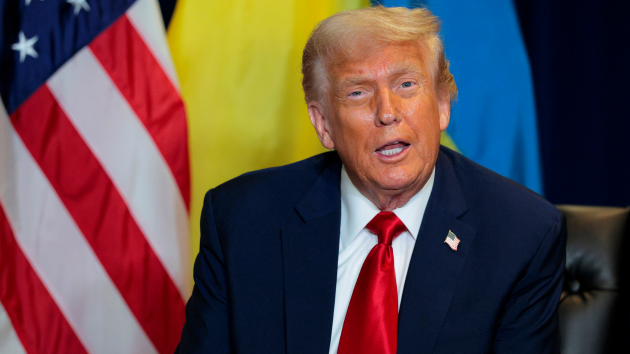
U.S. President Donald Trump speaks during a bilateral meeting with President of Ukraine Volodymyr Zelensky at the 80th session of the UN’s General Assembly (UNGA) at the United Nations headquarters on September 23, 2025 in New York City. World leaders convened for the 80th Session of UNGA, with this year’s theme for the annual global meeting being “Better together: 80 years and more for peace, development and human rights.” (Photo by Chip Somodevilla/Getty Images)
(WASHINGTON) — President Donald Trump on Thursday announced an agreement that will pave the way for social media giant TikTok to come under the control of a group of U.S. investors.
The move comes months after a ban on the China-based app was set to take effect at the outset of this year. Instead, Trump delayed the ban multiple times and appears poised to secure the popular platform for domestic ownership.
Scrutiny has centered on the fate of TikTok’s algorithm, a proprietary formula that fuels the attention-grabbing social media platform. Vice President J.D. Vance, who stood alongside Trump during the Oval Office announcement, said the agreement would bring the algorithm “under the control of American investors,” adding that further details would be unveiled over the coming days.
“This deal really does mean Americans can use TikTok but actually use it with more confidence than they had in the past because their data is secure and it won’t be used as a propaganda weapon like it has in the past,” Vance said.
The U.S.-based version of TikTok will be valued at $14 billion, Vance said.
The agreement received approval from Chinese President Xi Jinping, Trump said. As of Thursday afternoon, China had not publicly confirmed the terms issued by the Trump administration.
Trump said tech giant Oracle would be among the U.S. investors in TikTok, but he did not disclose the full roster of new owners.
Congress passed the ban last spring with overwhelming bipartisan support, granting TikTok a 270-day window to cut its ties with China-based parent company ByteDance or face a ban.
Instead of initiating a sale, TikTok pursued a legal challenge on First Amendment grounds that failed in the Supreme Court.
The unanimous ruling from the nation’s highest court found merit in national security concerns regarding potential user data collection or content manipulation that the Chinese government might undertake.
The app became temporarily unavailable in January, before the Trump administration assured app store owners Google and Apple that law enforcement would not pursue potential violations of the law.
This is a developing story. Please check back for updates.
(NEW YORK) — The U.S. economy expanded significantly more than initially estimated over a recent three-month period, suggesting robust growth despite uncertainty set off by President Donald Trump’s tariff policy, federal government data on Thursday showed.
The U.S. economy grew at an annualized rate of 3.8% in the second quarter in the government’s final estimate, besting a 3.3% rate issued in its second estimate and far exceeding a 3% initial estimate.
The figure marked a sharp acceleration from an annualized contraction of -0.5% over the first three months of 2025. Still, taken together, the data indicates an economic slowdown over the first half of 2025.
A boost in consumer spending helped propel the economic surge over three months ending in June, the U.S. Commerce Department said. Consumer spending, which accounts for about two-thirds of U.S. economic activity, is a key bellwether for the outlook of the nation’s economy.
To some degree, however, Trump’s levies have blurred the GDP findings.
The government’s GDP formula subtracts imports in an effort to exclude foreign production from the calculation of total goods and services. Changes in the reading on this account reveal neither underlying economic weakness nor strength.
The measure of the GDP fell over the first three months of the year, largely due to a surge of imports as firms stockpiled inventory to avoid far-reaching tariffs. Conversely, a drop-off in imports over the second quarter may have inflated the second-quarter GDP figure.
The GDP growth “primarily reflected a decrease in imports, which are a subtraction in the calculation of GDP,” the U.S. Commerce Department said on Thursday.
The fresh data arrives at a wobbly moment for the nation’s economy.
A jobs report earlier this month showed a sharp decrease in hiring in August, extending a lackluster period for the labor market. Meanwhile, a revision of previous hiring estimates days later revealed the U.S. economy added far fewer jobs in 2024 and early 2025 than previously estimated, deepening concern about the health of the U.S. job market.
The weak jobs data has raised alarm among some analysts who told ABC News the U.S. economy may be slipping toward a recession, though the economy has largely averted the type of widespread job losses that often accompany a downturn.
The Federal Reserve cut interest rates last week in an effort to boost hiring. The Federal Open Market Committee (FOMC), a policymaking body at the Fed, projected two additional quarter-point rate cuts over the remainder of 2025.
Five meetings and nine months had elapsed since the Fed last cut interest rates.
A close-up of a Starbucks coffee shop sign on September 8, 2025 in Cardiff, Wales. (Photo by Matthew Horwood/Getty Images)
(NEW YORK) — Coffee giant Starbucks will lay off workers and close stores as part of a $1 billion restructuring plan, CEO Brian Niccol said in a memo to employees on Thursday.
The company will slash 900 employees at its stores in North America, Niccol said. The store closures will amount to a roughly 1% decline in the total number of Starbucks locations in North America in this fiscal year, after accounting for some store openings, Niccol added.
“While we’re making good progress, there is much more to do to build a better, stronger, and more resilient Starbucks,” Niccol said.
Shares of Starbucks ticked slightly higher in pre-market trading after the announcement early Thursday morning.
Starbucks weathered sluggish sales in recent years as customers weathered a years-long bout of elevated inflation, analysts previously told ABC News.
This is a developing story. Please check back for updates.
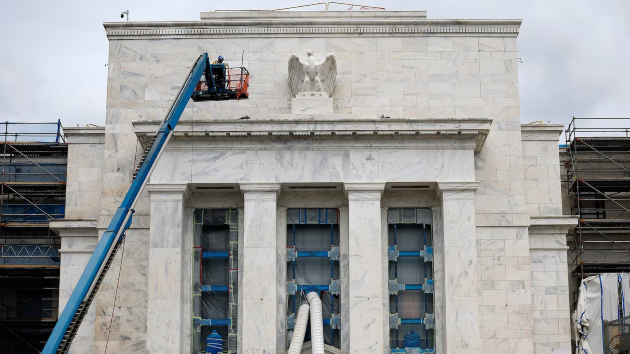
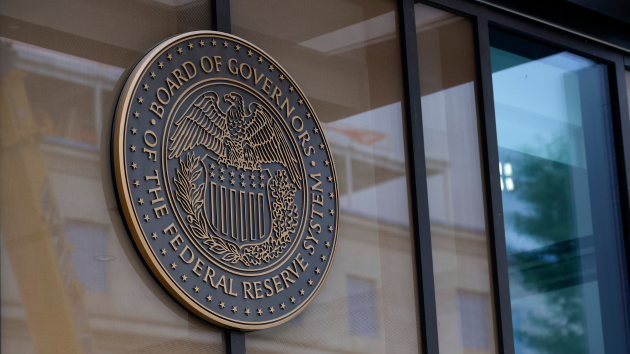
Construction continues on the Marriner S. Eccles Federal Reserve Board Building, the main offices of the Board of Governors of the Federal Reserve System on September 16, 2025 in Washington, DC. (Kevin Dietsch/Getty Images)
(WASHINGTON) — Federal Reserve Chair Jerome Powell warned a recent uptick of inflation, alongside a hiring slowdown, poses a “challenging situation” for central bankers as they aim to steer the U.S. economy through a “turbulent period.”
The Fed, which opted to cut interest rates last week, is guided by a dual mandate to keep inflation under control and maximize employment. Speaking at the Greater Providence Chamber of Commerce, in Providence, Rhode Island, on Tuesday, Powell said a sharp cooldown of hiring over the summer had shifted the balance of risks toward greater concern over the labor market.
“The downside risks to employment have risen,” Powell said.
The remarks came days after the Fed cut interest rates for the first time this year in an effort to boost hiring. The Federal Open Market Committee (FOMC), a policymaking body at the Fed, projected two additional quarter-point rate cuts over the remainder of 2025.
Still, Powell voiced concern about the trajectory for prices, saying “uncertainty around the path of inflation remains high.”
“Two-sided risk mean there is no-risk free path,” Powell added.
The central bank last week delivered a policy long-sought by President Donald Trump, though the size of the rate cut fell short of a larger reduction preferred by Trump.
The announcement marked a flashpoint in the monthslong pressure campaign directed at the Fed by Trump.
In recent weeks, Trump has moved to fire one member of the Fed’s board of governors and secure Senate confirmation for another. Both officials were among the 12 policymakers who cast votes on the interest-rate decision, though their status remained uncertain days before the Fed meeting.
The race to reshape the Fed comes after Trump railed for months against the central bank and Powell for declining to heed his call for lower interest rates. Last week, Powell said the Fed remains “strongly committed to maintaining our independence.”
Stephen Miran, a top White House economic advisor who joined the Fed board last week, cast the lone dissenting vote. Miran voted in favor of a larger half-point rate cut.
Trump recently moved to fire board member Lisa Cook, who sued Trump over her attempted ouster, saying the decision violated her legal protections as an employee at the independent federal agency. Trump said he removed Cook over mortgage fraud allegations against her, which Cook has denied.
Last week, a federal judge issued a preliminary injunction requiring the Fed to let Cook continue serving in her role as a governor of the Federal Reserve System as her lawsuit moves through the courts. The Trump administration appealed the ruling to the Supreme Court.
In recent months, the economy has suffered a sharp hiring slowdown alongside a rise of inflation, setting the conditions for what economists call “stagflation.”
The economic conditions have put Fed policymakers in a bind. If the Fed raises interest rates as a means of protecting against tariff-induced inflation, it risks tipping the economy into a downturn. On the other hand, if the Fed lowers rates to stimulate the economy in the face of a hiring slowdown, it threatens to boost spending and worsen inflation.
(NEW YORK) — The Federal Reserve cut its benchmark interest rate a quarter of a percentage point on Wednesday, opting for its first interest rate cut this year in an effort to revive the flagging labor market.
The central bank delivered a policy long-sought by President Donald Trump, though the size of the rate cut all but certainly fell short of Trump’s desired outcome. The Federal Open Market Committee (FOMC), a policymaking body at the Fed, projected two additional quarter-point rate cuts over the remainder of the year.
Five meetings and nine months have elapsed since the Fed last cut interest rates. The federal funds rate stands between 4% and 4.25%, preserving much of a sharp increase imposed in response to a pandemic-era bout of inflation.
The Fed is guided by a dual mandate to keep inflation under control and maximize employment. In a statement on Wednesday, the FOMC indicated greater concern for slowing employment growth than for rising inflation.
“The Committee is attentive to the risks to both sides of its dual mandate and judges that downside risks to employment have risen,” the FOMC said.
The high-stakes announcement marks a flashpoint in the monthslong pressure campaign directed at the Fed by Trump.
In recent weeks, Trump has moved to fire one member of the Fed’s board of governors and secure Senate confirmation for another. Both officials were on track to be among the 12 policymakers who cast votes on the interest-rate decision, though their status remained uncertain days before the Fed meeting.
Stephen Miran, a top White House economic advisor who joined the Fed board this week, cast the lone dissenting vote. Miran voted in favor of a larger half-point rate cut.
The race to reshape the Fed comes after Trump railed for months against the central bank and its Chair Jerome Powell for declining to heed his call for lower interest rates. In July, Powell stressed the importance of political independence, saying it allows central bankers to make “very challenging decisions” based on “data.”
In a social media post on Monday, Trump reiterated his criticism of Powell, saying the Fed chair “MUST CUT INTEREST RATES, NOW, AND BIGGER THAN HE HAD IN MIND.”
In recent months, the economy has suffered a sharp hiring slowdown alongside an uptick of inflation, setting the conditions for what economists call “stagflation.”
The economic conditions have put Fed policymakers in a bind. If the Fed raises interest rates as a means of protecting against tariff-induced inflation, it risks tipping the economy into a downturn. On the other hand, if the Fed lowers rates to stimulate the economy in the face of a hiring slowdown, it threatens to boost spending and worsen inflation.
Last month, Powell said the central bank faces a “challenging situation,” putting pressure on both sides of the Fed’s dual mission to maximize employment and control inflation.
Still, Powell said, the “balance of risks appears to be shifting” in light of a hiring slowdown made clear in a weak jobs report earlier this year that included sharp downward revisions of job gains over recent months.
Trump recently moved to fire board member Lisa Cook, who sued Trump over her attempted ouster, saying the decision violated her legal protections as an employee at the independent federal agency. Trump said he removed Cook over mortgage fraud allegations against her.
Federal law allows the president to remove a member of the Fed board “for cause,” though no president has attempted such a removal in the 112-year history of the central bank.
Last week, a federal judge issued a preliminary injunction requiring the Fed to let Cook continue serving in her role as a governor of the Federal Reserve System as her lawsuit moves through the courts.
Days later, the Trump administration filed a request with an appeals court asking to remove Cook by Monday, before the scheduled vote on interest rates. That day, an appeals court rejected Trump’s bid, clearing the path for Cook to vote at the Fed meeting. Trump may appeal the ruling to the Supreme Court.
Last month, Trump called on Cook to resign on the same day that Bill Pulte, the director of the Federal Housing Finance Agency, posted on X part of an Aug. 15 letter sent to U.S. Attorney General Pam Bondi accusing Cook of falsifying bank documents and property records to acquire more favorable loan terms, “potentially committing mortgage fraud,” the letter stated.
In a statement provided to ABC News at the time, Cook said she learned from the media about Pulte’s letter seeking a criminal referral over the mortgage application, which predated her time with the Federal Reserve.
“I have no intention of being bullied to step down from my position because of some questions raised in a tweet,” Cook said in the statement last week. “I do intend to take any questions about my financial history seriously as a member of the Federal Reserve and so I am gathering the accurate information to answer any legitimate questions and provide the facts.”
The Senate voted 48-47 on Monday to confirm White House economic adviser Stephen Miran’s nomination to serve as a member of the Board of Governors of the Federal Reserve, paving the way for Miran to cast a vote on interest rates.
Miran has vowed to safeguard central bank independence but said earlier this month that he does not plan to resign from his position within the Trump administration. Miran is filling a vacancy created by the early retirement of Fed board member Adrianna Kugler, whose term was set to end in January.
Miran said he plans to take an unpaid leave of absence from his current role. Miran reached the decision after “advice from counsel,” since his term on the Fed board would last four months, Miran said at a Senate hearing this month.
(NEW YORK) — The Federal Reserve on Wednesday is set to unveil its latest decision on the level of interest rates, hoping to guide the economy through a topsy-turvy stretch of slow hiring and rising inflation.
The high-stakes announcement marks a flashpoint in the monthslong pressure campaign directed at the Fed by President Donald Trump.
In recent weeks, Trump has moved to fire one member of the Fed’s board of governors and secure Senate confirmation for another. Both officials are on track to be among the 12 policymakers who will cast votes on the interest-rate decision, though their status remained uncertain days before the Fed meeting.
The race to reshape the Fed comes after Trump railed for months against the central bank and its Chair Jerome Powell for declining to heed his call for lower interest rates. In July, Powell stressed the importance of political independence, saying it allows central bankers to make “very challenging decisions” based on “data.”
Still, the central bank is widely expected to deliver the policy shift long-sought by Trump, though the size of the rate cut will all but certainly fall short of Trump’s desired outcome.
Powell recently hinted at the possibility of a rate cut, appearing to indicate greater concern for flagging employment growth than for elevated prices. Investors peg the chances of a quarter-point rate cut at about 96% and a half-point cut at nearly 4%, according to the CME FedWatch Tool, a measure of market sentiment.
In a social media post on Monday, Trump reiterated his criticism of Powell, saying the Fed chair “MUST CUT INTEREST RATES, NOW, AND BIGGER THAN HE HAD IN MIND.”
Five meetings and nine months have elapsed since the Fed last adjusted interest rates. The federal funds rate stands between 4.25% and 4.5%, preserving much of a sharp increase imposed in response to a pandemic-era bout of inflation.
In recent months, the economy has suffered a sharp hiring slowdown alongside an uptick of inflation, setting the conditions for what economists call “stagflation.”
The economic conditions have put Fed policymakers in a bind. If the Fed raises interest rates as a means of protecting against tariff-induced inflation, it risks tipping the economy into a downturn. On the other hand, if the Fed lowers rates to stimulate the economy in the face of a hiring slowdown, it threatens to boost spending and worsen inflation.
Last month, Powell said the central bank faces a “challenging situation,” putting pressure on both sides of the Fed’s dual mission to maximize employment and control inflation.
Still, Powell said, the “balance of risks appears to be shifting” in light of a hiring slowdown made clear in a weak jobs report earlier this year that included sharp downward revisions of job gains over recent months.
Trump recently moved to fire board member Lisa Cook, who sued Trump over her attempted ouster, saying the decision violated her legal protections as an employee at the independent federal agency. Trump said he removed Cook over mortgage fraud allegations against her.
Federal law allows the president to remove a member of the Fed board “for cause,” though no president has attempted such a removal in the 112-year history of the central bank.
Last week, a federal judge issued a preliminary injunction requiring the Fed to let Cook continue serving in her role as a governor of the Federal Reserve System as her lawsuit moves through the courts.
Days later, the Trump administration filed a request with an appeals court asking to remove Cook by Monday, before the scheduled vote on interest rates. That day, an appeals court rejected Trump’s bid, clearing the path for Cook to vote at the Fed meeting. Trump may appeal the ruling to the Supreme Court.
Last month, Trump called on Cook to resign on the same day that Bill Pulte, the director of the Federal Housing Finance Agency, posted on X part of an Aug. 15 letter sent to U.S. Attorney General Pam Bondi accusing Cook of falsifying bank documents and property records to acquire more favorable loan terms, “potentially committing mortgage fraud,” the letter stated.
In a statement provided to ABC News at the time, Cook said she learned from the media about Pulte’s letter seeking a criminal referral over the mortgage application, which predated her time with the Federal Reserve.
“I have no intention of being bullied to step down from my position because of some questions raised in a tweet,” Cook said in the statement last week. “I do intend to take any questions about my financial history seriously as a member of the Federal Reserve and so I am gathering the accurate information to answer any legitimate questions and provide the facts.”
The Senate voted 48-47 on Monday to confirm White House economic adviser Stephen Miran’s nomination to serve as a member of the Board of Governors of the Federal Reserve, paving the way for Miran to cast a vote on interest rates.
Miran has vowed to safeguard central bank independence but said earlier this month that he does not plan to resign from his position within the Trump administration. Miran is filling a vacancy created by the early retirement of Fed board member Adrianna Kugler, whose term was set to end in January.
Miran said he plans to take an unpaid leave of absence from his current role. Miran reached the decision after “advice from counsel,” since his term on the Fed board would last four months, Miran said at a Senate hearing this month.
(WASHINGTON) — Twelve policymakers at the Federal Reserve are set to take a high-stakes vote this week on the nation’s benchmark interest rate, attempting to steer the economy through a stormy bout of slow hiring and rising inflation.
In a highly unusual circumstance, however, two of the policymakers stand in limbo – uncertain if they will vote at all – with little more than 48 hours before the announcement.
In recent weeks, President Donald Trump has moved to fire one member of the Fed’s board of governors and secure Senate confirmation for another. The race to reshape the Fed comes after Trump railed for months against the central bank and its Chair Jerome Powell for declining to heed his call for lower interest rates.
The clash over the composition of the Fed board casts uncertainty over the Fed’s meeting on Wednesday, where officials are expected to announce the central bank’s first rate cut since December.
In a social media post on Monday, Trump reiterated his criticism of Powell, saying the Fed chair “MUST CUT INTEREST RATES, NOW, AND BIGGER THAN HE HAD IN MIND.”
Trump recently moved to fire board member Lisa Cook, who sued Trump over her attempted ouster, saying the decision violated her legal protections as an employee at the independent federal agency. Trump said he removed Cook over mortgage fraud allegations against her.
Federal law allows the president to remove a member of the Fed board “for cause,” though no president has attempted such a removal in the 112-year history of the central bank.
Last week, a federal judge issued a preliminary injunction requiring the Fed to let Cook continue serving in her role as a governor of the Federal Reserve System as her lawsuit moves through the courts.
Days later, the Trump administration filed a request with an appeals court asking to remove Cook by Monday, before the scheduled vote on interest rates. In a court filing over the weekend, Cook asked the appeals court to reject Trump’s bid.
Last month, Trump called on Cook to resign on the same day that Bill Pulte, the director of the Federal Housing Finance Agency, posted on X part of an Aug. 15 letter sent to U.S. Attorney General Pam Bondi accusing Cook of falsifying bank documents and property records to acquire more favorable loan terms, “potentially committing mortgage fraud,” the letter stated.
In a statement provided to ABC News at the time, Cook said she learned from the media about Pulte’s letter seeking a criminal referral over the mortgage application, which predated her time with the Federal Reserve.
“I have no intention of being bullied to step down from my position because of some questions raised in a tweet,” Cook said in the statement last week. “I do intend to take any questions about my financial history seriously as a member of the Federal Reserve and so I am gathering the accurate information to answer any legitimate questions and provide the facts.”
Meanwhile, Trump has sought Senate confirmation for Fed board-nominee Stephen Miran, a top economic advisor at the White House. The Senate is expected to vote on Miran’s nomination on Monday night.
Miran has vowed to safeguard central bank independence but said earlier this month that he does not plan to resign from his position within the Trump administration. Miran has been nominated for a vacancy created by the early retirement of Fed board member Adrianna Kugler, whose term was set to end in January.
If confirmed, Miran said he plans to take an unpaid leave of absence from his current role. Miran reached the decision after “advice from counsel,” since his term on the Fed board would last four months, Miran said at a Senate hearing this month.
Five meetings and nine months have elapsed since the Fed last adjusted interest rates. The federal funds rate stands between 4.25% and 4.5%, preserving much of a sharp increase imposed in response to a pandemic-era bout of inflation.
That posture is expected to shift, however. Powell recently hinted at the possibility of an interest rate cut, appearing to indicate greater concern for flagging employment growth than for rising prices.
Investors peg the chances of a quarter-point rate cut this week at 96%, according to the CME FedWatch Tool, a measure of market sentiment.
(NEW YORK) — Mortgage rates have fallen rapidly in recent months, offering homebuyers an opportunity for some borrowing relief if they move ahead with the big-ticket purchase.
The average interest rate on a 30-year fixed mortgage stands at 6.35%, dropping from 6.5% over the week ending on Thursday, which amounted to the largest one-week drop in mortgage rates this year, FreddieMac data shows. As recently as January, the average 30-year fixed mortgage rate exceeded 7%.
The sharp drop in mortgage rates owes in part to government data showing a significant decline in hiring, which has heightened expectations that the Federal Reserve will slash interest rates and in turn put downward pressure on borrowing costs, some analysts told ABC News.
Each percentage point decrease in a mortgage rate can save thousands or tens of thousands in additional cost each year, depending on the price of the house, according to Rocket Mortgage.
“This is a significant drop,” Ken Johnson, a real estate economist at the University of Mississippi, told ABC News.
The trend poses a quandary for homebuyers, the experts added: Do buyers move quickly to snap up a favorable mortgage or wait to see if interest rates fall even further?
Mortgage rates closely track the yield on a 10-year Treasury bond, or the amount paid to a bondholder annually. Bond yields are shaped in part by expectations of the benchmark interest rate set by the Fed, some experts said.
Five meetings and nine months have elapsed since the Fed last adjusted interest rates. The federal funds rate stands between 4.25% and 4.5%, preserving much of a sharp increase imposed in response to a pandemic-era bout of inflation.
That posture is expected to shift, however. Fed Chair Jerome Powell recently hinted at the possibility of an interest rate cut, appearing to indicate greater concern for flagging employment growth than for rising prices.
Investors peg the chances of three quarter-point rate cuts by the end of this year at about 76%, according to CME FedWatch Tool, a measure of market sentiment.
The anticipated decline of interest rates has already been priced into the level of mortgage rates, however, meaning the path of rate cuts would need to become more aggressive than expected in order to push mortgage rates down further, Lu Liu, a professor at the Wharton School at the University of Pennsylvania, told ABC News.
A further slowdown of the job market could prompt the Fed to cut interest rates more than expected, but a continued resurgence of inflation could deter central bankers from easing rates at the risk of exacerbating price increases.
“Expectations of lower near-term rates are being priced in, so current mortgage rates look a bit more attractive,” Liu said.
Julia Fonseca, a professor at the Gies College of Business at the University of Illinois at Urbana-Champaign, cautioned against homebuyers attempting to predict the level of mortgage rates.
“Trying to time the market or predict future rate movements is notoriously hard to do,” Fonseca told ABC News.
Meanwhile, the typical price of a home has fallen in recent months. The median sales price of a home in the U.S. registered at $410,800 over three months ending in June, which marked a decline from a price of $423,100 over the previous three-month period, U.S. Census Bureau data shows.
“Prices have cooled, inventory is up, time on the market is up,” Fonseca said. “All of this suggests it’s a more favorable market for buyers relative to recent years. That said, it’s really hard to predict what will happen with prices in the future.”
If homebuyers move forward with a purchase but later find that mortgage rates have continued to fall, they can opt to refinance their homes, Fonseca added. She suggested homebuyers avoid mortgage contracts that include pre-payment penalties, since such fees could add to the cost of a potential decision to refinance.
“I would be guided by your needs and your personal financial situation, rather than try to make predictions about future prices and future interest rates,” Fonseca added.
President Donald Trump speaks to Treasury Secretary Scott Bessent while watching the men’s singles finals U.S. Open, September 7, 2025 in New York City. (Kevin Dietsch/Getty Images)
(NEW YORK) — Consumer prices rose 2.9% in August compared to a year ago, marking an uptick in price increases as President Donald Trump’s tariff policy intensified. The reading matched economists’ expectations.
The fresh inflation data indicated an acceleration from a 2.7% inflation rate recorded in the month prior, according to the U.S. Bureau of Labor Statistics. Price increases remain below the 3% rate recorded in January, the month Trump took office.
The new report arrives days before the Federal Reserve is set to announce a widely expected quarter-point interest rate cut. The price hike last month may give policymakers pause as they weigh an interest rate cut, since a reduction of borrowing costs could boost spending and put upward pressure on prices.
Egg prices, a longtime symbol of rising costs, were flat in the month of August. Still, the price of eggs stands nearly 11% higher than where it was a year ago. The price of coffee has surged 20% over the past year, the data showed.
Housing costs jumped 0.4% in August, which accounted for the largest share of the overall hike in prices, the BLS said. Food prices rose 0.5% last month, while energy costs climbed 0.7%, the data showed.
In all, prices climbed 0.4% from July to August, which marked the largest monthly increase since December.
In recent months, tariffs modestly contributed to the uptick in overall inflation, analysts previously told ABC News, but overall price increases owed largely to a rise in housing and food products with little connection to Trump’s levies.
The inflation report arrived at a wobbly moment for the nation’s economy. In recent months, inflation has picked up while hiring has slowed, posing a risk of an economic double-whammy known as “stagflation.”
A jobs report last week showed a sharp decrease in hiring in August, extending a lackluster period for the labor market. Meanwhile, a revision of previous hiring estimates on Tuesday revealed the U.S. economy added far fewer jobs in 2024 and early 2025 than previously estimated, deepening concern about the health of the U.S. job market.
The weak jobs data has raised alarm among some analysts that the U.S. economy may be slipping toward a recession, though the economy has largely averted the type of widespread job losses that often accompany a downturn.
The economic conditions have put Fed policymakers in a bind. If the Fed raises interest rates as a means of protecting against tariff-induced inflation, it risks tipping the economy into a downturn. On the other hand, if the Fed lowers rates to stimulate the economy in the face of a hiring slowdown, it threatens to boost spending and worsen inflation.
In response to the flagging labor market, the Fed is expected to cut interest rates when policymakers meet next week. Investors peg the chances of a quarter-point rate cut this month at about 90% and the odds of a half-point cut at roughly 9%, according to CME FedWatch Tool, a measure of market sentiment.
The inflation data on Thursday marks the latest figures unveiled by the BLS since Trump fired BLS Commissioner Erika McEntarfer last month in response to a weak monthly jobs report. Trump claimed without evidence that McEntarfer had manipulated statistics for political reasons.
McEntarfer, a Biden appointee who was confirmed by the Senate in 2024, had served in the federal government for two decades.
“It has been the honor of my life to serve as Commissioner of BLS alongside the many dedicated civil servants tasked with measuring a vast and dynamic economy,” McEntarfer said in a social media post after her dismissal. “It is vital and important work and I thank them for their service to this nation.”
William Beach, a former commissioner of the Bureau of Labor Statistics, who was appointed by Trump, condemned McEntarfer’s dismissal.
“The totally groundless firing of Dr. Erika McEntarfer, my successor as Commissioner of Labor Statistics at BLS, sets a dangerous precedent and undermines the statistical mission of the Bureau,” Beach posted on X.
McEntarfer did not respond to an earlier ABC News request for comment.