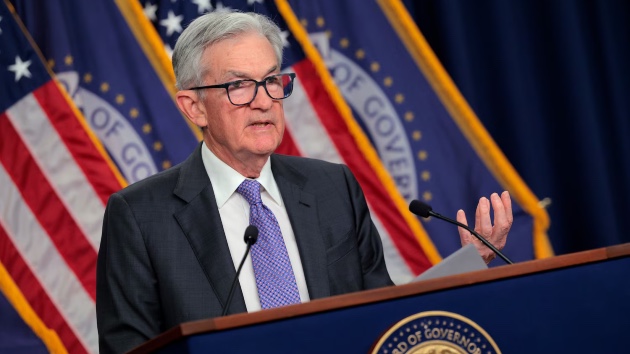
Federal Reserve Chair Jerome Powell speaks during a press conference following the Federal Open Markets Committee meeting at the Federal Reserve on December 10, 2025 in Washington, DC. (Chip Somodevilla/Getty Images)
(WASHINGTON) — Hiring ticked down in December, defying the Federal Reserve’s effort to boost hiring with a recent series of interest rate cuts, a jobs report on Friday showed. The reading fell short of economists’ expectations.
The U.S. added 50,000 jobs in December, which marked a slight drop from 64,000 jobs added in the previous month.
The unemployment rate dropped to 4.4% in December from 4.6% in November, the Bureau of Labor Statistics (BLS) said. Unemployment remains low by historical standards but had ticked up from previous lows.
As in previous months, the healthcare sector accounted for the lion’s share of hiring in December, adding 21,000 jobs, according to the BLS. The food service and social assistance industries also contributed to the hiring figure.
In all, the economy added an average of 49,000 jobs each month in 2025, registering a significant slowdown from 168,000 jobs added per month in 2024, the BLS said.
The fresh data comes two weeks after a blockbuster report on economic growth appeared to rebuke worries about the wider economy prompted by the hiring cooldown.
The U.S. economy grew at a robust annualized rate of 4.3% in the third quarter in the government’s initial estimate, marking an acceleration from 3.8% growth recorded in the previous quarter, the U.S. Commerce Department said in December.
A boost in consumer spending helped propel the economic surge, the department added, suggesting that many consumers continued to open their wallets even as their attitudes worsened.
Meanwhile, inflation dropped in November, the most recent month for which data is available. The cooldown ended a monthslong acceleration of price increases and offered some relief for households strained by cost hikes.
Inflation remains well below a 2022 peak but stands nearly a percentage point above the Fed’s target of 2%.
The onset of elevated inflation alongside sluggish hiring has put the Fed in a difficult position.
The central bank must balance a dual mandate to keep inflation under control and maximize employment. To address pressure on both of its goals, the Fed primarily holds a single tool: interest rates.
Starting in September, the Fed cut interest rates at three consecutive meetings, opting to address the flagging labor market. The benchmark rate stands at a level between 3.5% and 3.75%.
That figure marks a significant drop from a recent peak attained in 2023, but borrowing costs remain well above a 0% rate established at the outset of the COVID-19 pandemic.
Futures markets expect two quarter-point interest rate cuts this year, forecasting the first in April and a second in the fall, according to CME FedWatch Tool, a measure of market sentiment.
After the Fed’s most recent rate cut in December, Fed Chair Jerome Powell suggested the central bank may be cautious about further rate reductions.
“We’re well positioned to wait and see how the economy evolves,” Powell said.
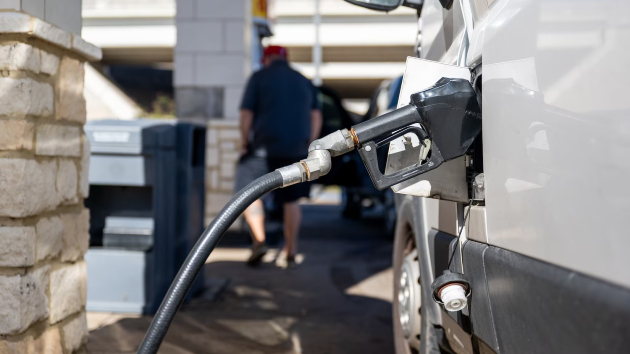
A gas pump is seen in a vehicle on November 26, 2025 in Austin, Texas. (Brandon Bell/Getty Images)
(NEW YORK) — President Donald Trump has repeatedly touted the opportunity for U.S. companies to extract and sell oil from Venezuela, which holds the largest oil reserves in the world.
“We’re going to be taking out a tremendous amount of wealth out of the ground,” Trump said on Saturday, just hours after a U.S. military attack removed Venezuela President Nicolas Maduro.
Venezuelan oil, however, will likely provide little relief for gas prices paid by Americans over the coming months, analysts told ABC News. They cited the relatively small amount of oil at stake in the near term and the glut of crude already flooding global markets.
A more substantial amount of oil could be accessed over the coming years, leading to a potentially noticeable decline in prices at the pump, they added. But that outcome remains uncertain, since oil companies face significant political and logistical hurdles in Venezuela, while wider market conditions could shift in the meantime.
“I would not expect to see a sharp drop because of this event,” Richard Joswick, head of near-term oil analysis at S&P Global Commodity Insights, told ABC News.
Oil executives are set to meet with President Donald Trump at the White House on Friday to discuss investments in Venezuela, a White House official confirmed to ABC News.
Venezuela boasts the biggest proven oil reserve of any country, amounting to roughly 303 billion barrels or about 17% of the world’s reserves, according to the U.S. Energy Information Administration, or EIA, a federal agency.
For decades, however, the nation has struggled to match those holdings with similarly stratospheric output due to lackluster infrastructure and government mismanagement.
Venezuela exported about 749,000 barrels per day last year, totaling less than 1% of global supply, according to data and analytics company Kpler.
In a social media post on Tuesday, Trump said Venezuela would hand over 30 to 50 million barrels of oil to the U.S., which in turn would sell them at their market price. The resulting funds — as much as $2.8 billion at current prices — will “benefit the people of Venezuela and the United States,” Trump said.
Trump has not provided details about the timing of such sales.
The plan proposed Tuesday would likely have little or no effect on U.S. gasoline prices, analysts told ABC News. The amount of oil stipulated by Trump is relatively small, making up the equivalent of between one-third and half of the oil consumed worldwide in a single day, according to data compiled by the EIA.
“Short term, I don’t think we’ll see much of an impact,” Tucker Balch, a finance professor at Emory University, told ABC News. “It’s not a lot of oil right now.”
Even more, oil prices are hovering near their lowest levels since 2021, meaning it will prove difficult to bring prices down further anytime soon, analysts added. Low oil prices stem from a glut of oil alongside relatively slow global economic growth, which has constricted demand for fossil fuels.
“There’s an oversupply and weak demand. More crude won’t make a big difference in the overall price,” Ramanan Krishnamoorti, a professor of petroleum engineering at the University of Houston, told ABC News.
After the military operation, Trump outlined a long-term role for U.S. oil companies in Venezuela, saying the firms would spend money to improve the nation’s infrastructure and output.
“We’re going to have our very large United States oil companies — the biggest anywhere in the world — go in, spend billions of dollars, fix the badly broken infrastructure, the oil infrastructure,” Trump said during a press conference on Saturday at his Mar-a-Lago residence in Palm Beach, Florida.
A U.S.-led effort to extract and sell the massive Venezuelan oil reserves could inject a substantial amount of oil into global markets and noticeably reduce gasoline prices, some analysts said.
Venezuelan oil production topped out at 3.5 million barrels per day in the 1990s, Kpler said. A return to that output would amount to about 4% of global oil supply, S&P’s Joswick, adding that the influx could push down gasoline prices.
“Prices are set on the margin and small imbalances in volume can lead to large shifts in prices,” Joswick said.
A long-term venture would encounter challenges, however, some analysts said.
The infrastructure necessary to ramp up oil production would require tens of billions of dollars of investment over several years, while oil companies involved in the effort would face political risks, according to analysts.
Chevron is currently the only U.S. oil firm operating in Venezuela, as part of a joint venture with the country’s state-owned oil outfit.
ExxonMobil and ConocoPhillips stopped doing business in Venezuela in 2007, after former President Hugo Chavez nationalized the sector. Citing the unlawful seizure of assets belonging to the two oil giants, the World Bank’s International Center for Settlement of Investment ordered Venezuela to pay the firms billions of dollars. Venezuela has only paid a small share of the debt it owes to ExxonMobil and ConocoPhillips.
The policy approach in Venezuela is uncertain over the coming years, while the same goes for the U.S. as a presidential election approaches in 2028, Krishnamoorti said.
“It’s unlikely the oil companies are going to take the bait to go after some significantly difficult oil to produce in a very uncertain U.S. policy and global policy situation,” Krishnamoorti added.
Joswick noted, however, that possible success in accessing Venezuelan oil over the next few years could be a “big incentive for the continuation of similar policies.”
While touting potential U.S. oil interests in Venezuela, the Trump administration has described the operation as a law enforcement function rather than a military attack.
Maduro and his wife, Cilia Flores, are among six defendants named in a four-count superseding indictment that accused them of conspiring with violent, dangerous drug traffickers for the last 25 years. Maduro was indicted on related charges in 2020. He has long denied all the allegations, and he pleaded not guilty on Monday. Flores also pleaded not guilty.
So far, the major oil firms have yet to speak publicly about Trump’s plans.
In a previous statement to ABC News, ConocoPhillips said the firm is keeping tabs on the ongoing situation.
“ConocoPhillips is monitoring developments in Venezuela and their potential implications for global energy supply and stability. It would be premature to speculate on any future business activities or investments,” the company said.
Chevron said it continues to focus on its current operations.
“Chevron remains focused on the safety and wellbeing of our employees, as well as the integrity of our assets. We continue to operate in full compliance with all relevant laws and regulations,” it said in a statement.
ExxonMobil did not respond to a request for comment.
A for sale sign is seen in front of a house in a Spring Branch neighborhood in Houston, Monday, Oct. 27, 2025. Kirk Sides/Houston Chronicle via Getty Images
(NEW YORK) — Mortgage rates this week fell to their lowest level in 15 months, easing borrowing costs for homebuyers eager for a thaw in the housing market in 2026.
The average interest rate on a 30-year fixed mortgage stands at 6.15%, plummeting from a level of 6.89% in May, data from financial services company Freddie Mac showed. Last January, the average 30-year fixed mortgage rate exceeded 7%.
Each percentage point decrease in a mortgage rate can save thousands or tens of thousands in additional cost each year, depending on the price of the house, according to lender Rocket Mortgage.
Sam Khater, the chief economist at Freddie Mac, called the drop in mortgage rates an “encouraging sign for potential homebuyers heading into the new year.”
Mortgage rates closely track the yield on a 10-year Treasury bond, or the amount paid to a bondholder annually. Bond yields are shaped in part by expectations of the benchmark interest rate set by the Federal Reserve.
The sharp drop in mortgage rates over the latter half of 2025 owed in part to data showing a slowdown in hiring, which heightened expectations that the Fed would slash interest rates in an effort to boost the ailing labor market.
Starting in September, the Fed cut interest rates at three consecutive meetings, bringing the benchmark rate to a level between 3.5% and 3.75%. That figure marks a significant drop from a recent peak attained in 2023, but borrowing costs remain well above a 0% rate established at the outset of the COVID-19 pandemic.
After the Fed’s most recent rate cut in December, Fed Chair Jerome Powell suggested the central bank may be cautious about further rate reductions.
“We’re well positioned to wait and see how the economy evolves,” Powell said.
The housing market is suffering from a phenomenon known as the “lock in” effect, some experts previously told ABC News.
While mortgage rates have fallen, they remain well above the rates enjoyed by most current homeowners, who may be reluctant to put their homes on the market and risk a much higher rate on their next mortgage.
In turn, the market could continue to suffer from a lack of supply, making options limited and prices sticky.
Mixed results in recent economic data have clouded the outlook for the economy — and in turn, interest rates.
A jobs report released two weeks ago showed sluggish hiring and an uptick in the unemployment rate. Unemployment remains low by historical standards but has inched up to its highest level in years.
Days later, a report on gross domestic product defied concerns stoked by the hiring slowdown. The U.S. economy grew at a robust annualized rate of 4.3% in the third quarter in the government’s initial estimate, marking an acceleration from 3.8% growth recorded in the previous quarter, U.S. Commerce Department data showed.
Futures markets expect two quarter-point interest rate cuts next year, forecasting the first in April and a second in the fall, according to CME FedWatch Tool, a measure of market sentiment.
Redfin, a Seattle, Washington-based real estate giant, forecasts average 30-year fixed mortgage rates will remain in the low 6% range for most of 2026.
“Mortgage rates will continue their slow slide but remain high relative to the pandemic era,” Redfin said last month.
“Lingering inflation risk and the likelihood that we’ll avoid a recession will keep the Fed from cutting more than the markets have already priced in. That’s why rates may dip below 6% occasionally, but not for any meaningful period,” Redfin added.
Shoppers at the Glendale Galleria in Glendale, CA on Saturday, Dec. 20, 2025. Myung J. Chun / Los Angeles Times via Getty Images
(NEW YORK) — Holiday shopping season sets forth an annual gut check for the U.S. economy, prompting buyers to splurge in a show of optimism or cut back out of fear of what next year holds.
In 2025, shoppers opened their wallets with gusto, though consumers appeared to favor low-cost options and discounts, according to spending data shared with ABC News.
The performance defied concerns overhanging the economy for months, as hiring slowed and inflation ticked higher. Seemingly undeterred, shoppers flexed their strength at the close of this year, offering some reassurance for the wider economy. Consumer spending accounts for about two-thirds of U.S. economic activity.
Holiday sales climbed 3.9% compared to last year, Mastercard SpendingPulse data showed, tracking online and in-store payments from the start of November to Christmas Eve. The data leaves out car sales and does not account for inflation.
The season-long buying spree followed a strong showing early on, as consumers revved up at the outset of the holiday season.
Digital spending on Thanksgiving jumped 5% from a year earlier, totaling $6.4 billion and exceeding expectations, Adobe Analytics data showed. On Black Friday, shoppers topped the previous day’s pace, as spending soared about 9% compared to 2024, adding up to $11.8 billion, Adobe found.
Adobe attributed the strong performance to better-than-anticipated discounts, especially for electronics. Discounts also touched an array of products from furniture to appliances to toys.
The search for price-savings marked a trend that would continue over the coming weeks.
While overall spending jumped, the largest uptick could be found in low-cost categories, according to Placer.ai, a data firm.
For instance, thrift shops and off-price retailers topped the apparel market with traffic up 11.7% and 6.6% respectively, compared to last year, Placer.ai said. Luxury chains and department stores, by comparison, posted meager gains of 1.8%, the data showed.
“Bifurcation has been a defining trend of consumer behavior in 2025 and continued to shape shopping patterns during the holiday season,” said Shira Petrack, head of content at Placer.ai.
Consumer spending among middle- and low-income Americans slowed earlier this year, triggering warnings from restaurant giants such as McDonald’s and Chipotle. A report this month showed consumer sentiment has fallen to its lowest point since a peak of pandemic-era inflation in 2022, University of Michigan data showed.
As of October, roughly half of buyers planned to use a by-now-pay-later plan for holiday shopping as a means of managing their budget, PayPal said.
Still, consumers have continued to power economic growth, even as they have balked at prices.
In the fall, shoppers helped propel the fastest quarterly U.S. economic growth in two years, federal government data last week showed.
The economy grew at a robust annualized rate of 4.3% in the third quarter in the government’s initial estimate, marking an acceleration from 3.8% growth recorded in the previous quarter, the U.S. Commerce Department said.
“Just as they have for several years now, the U.S. consumer continues to carry the baton for the economy,” Bret Kenwell, U.S. investment analyst at eToro, told ABC News in a statement.
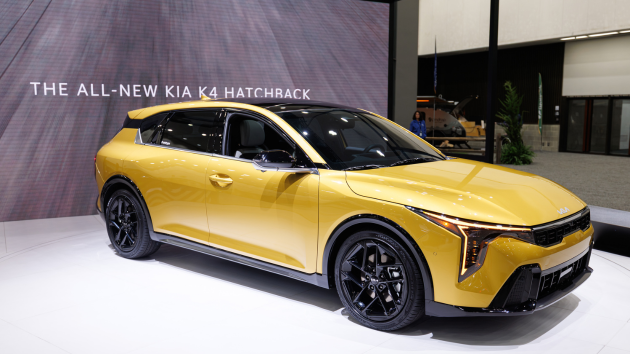
The all-new 2026 Kia K4 Hatchback is on display during the 2025 Los Angeles Auto Show at the Los Angeles Convention Center on November 21, 2025 in Los Angeles, California. (Josh Lefkowitz/Getty Images)
(NEW YORK) — If you’re looking for a new set of wheels next year, the choices can be overwhelming.
From 3-row SUVs to wagons and futuristic electric vehicles, buyers can select from a wide range of powertrains, prices and body styles.
Which models are already generating excitement in the industry? ABC News spoke to several insiders to get their take on the hottest vehicles headed to showrooms.
Mercedes-Benz CLA and GLB
The German automaker has a busy 2026 schedule planned with the launches of several newly updated models, including the CLA sedan, GLB SUV and the flagship S-Class.
Mercedes’ designers reimagined the interior of the GLB, which can be configured for five or seven passengers. The latest model offers greater comfort: headroom has increased as well as legroom for second-row passengers. A new panoramic roof is standard and owners can opt for a “floating” MBUX Superscreen that extends across the entire dashboard.
Buyers have three powertrains from which to choose. There’s a new 1.5-liter, inline-4 gasoline hybrid, and two electrics: the 250+ (268 horsepower) and 350 4MATIC (349 hp). The GLB can charge up to 260 kilometers (162 miles) of range in 10 minutes, according to Mercedes, and the hybrid version drives in electric-only mode at city speeds.
The latest CLA, available as an electric sedan ($47,250 for the 250+ and $49,800 for the 350 4MATIC) and hybrid, may be even more important for the luxury automaker. The entry-level car packs a ton of tech inside, making it “among the most intelligent vehicles from Mercedes-Benz to date,” according to the automaker.
The same four-cylinder turbocharged engine in the GLB powers the CLA220 hybrid, which is mated to an eight-speed dual-clutch transmission. A large, fixed panoramic glass roof in the CLA helps make the interior feel larger and more spacious. The CLA hybrid will be easy to spot at night: its radiator grille is adorned with the Mercedes‑Benz star pattern in chrome.
The electric CLA can travel 374 miles on a charge, according to Mercedes. Underneath the shell is an 800-volt electrical architecture, which allows the 48-volt lithium-ion battery to recoup roughly 200 miles in 10 minutes. DC fast charging up to 320 kilowatts (kW) is possible, too.
“It’s our vision for an EV to charge like fuel. We’re pushing the limits of what is possible with the CLA. Range anxiety will go away,” according to Markus Schäfer, a Mercedes board member and its chief technology officer.
The marque’s suite of advanced driver assistance systems is also available in the CLA models. Pricing for the GLB and CLA hybrid will be announced in 2026.
Kia K4 Hatchback
The K4 Hatchback, a stylish wagon that debuted in April, starts at $24,890 and will be available for sale in early 2026.
“I am so excited for it,” Robby DeGraff, manager of product and consumer insights at AutoPacific, told ABC News. “Hatchbacks might be making a comeback. It has a humongous cargo area and will be fun to drive. In terms of value, this should be a winner.”
A 2.0-liter engine produces 147 horsepower and 132 lb-ft of torque. For a sportier ride, consumers can choose the GT-Line Turbo model ($28,790); the 1.6-liter, turbocharged engine makes 190 hp and 195 lb-ft of torque.
The K4 Hatchback is also a new design for the Korean automaker and comes equipped with features like a heated steering wheel, Harman Kardon audio system and Digital Key technology that allows an owner’s smartphone to function as virtual key.
Degraff said Kia’s latest iteration of the Telluride SUV, now available with a hybrid powertrain, should also be popular with consumers.
“A hybrid Telluride is long overdue — we will see a big take rate for the hybrid version,” he said. “Losing the V6 [engine] will be a bummer for some people … there are shoppers out there that want a V6 in their 3-row SUVs. But the Telluride will be hit no matter what.”
According to Kia, the turbo hybrid powertrain adds more power and acceleration than the previous model: a combined 329 hp and 339 lb-ft of torque. The driving range is an estimated 600 miles. Kia’s flagship SUV, including the X-Line and X-Pro variants, go on sale in Q1 of 2026 and will be assembled at Kia’s plant in Georgia.
“The Telluride changed what Kia is,” according to Tony Quiroga, editor-in-chief of Car and Driver. “There was a ton of value in the first generation. The new Telluride looks more expensive than it will be and probably start around $40,000.”
“This version gives off a Range Rover vibe,” Quiroga added.
Subaru Outback
Subaru packed a ton of new tech in the latest Outback, including a 12.1-inch high-resolution infotainment screen and advanced driver assistance features. Drivers can now enable a Hands-Free Assist function that works at speeds up to 85 mph on highways.
The automaker is calling the 2026 Outback “the most connected and capable Subaru yet” with the “biggest styling updates in the model’s history.”
DeGraff said the SUV’s updated styling – a new front fascia, larger grille and boxier profile – could be “make or break” for consumers, but the amenities are a “good value” and Subaru still offers “the best all-wheel drive system in the entire industry.”
For Quiroga, the design changes make the Outback look more like a traditional SUV versus a lifted wagon.
“The latest Outback has the refinement and practicality of a wagon but is still very car-like. I see that as a plus,” he said.
The seventh-generation Outback starts at $34,995 for the Premium trim.
Chevy Bolt
The polarizing Chevy Bolt, one of the few affordable EVs to be sold in the U.S, will make its return as a 2027 model, though production will be limited.
The Bolt had both its fans and detractors; the unpretentious crossover won over motorists for its range and simplicity at an appealing price.
The latest trims – the Bolt RS and LT – will start under $30,000 and charge 2.5x faster than the previous model. Owners can expect to get 255 miles of range on a fully charged battery. The Bolt also is the first Chevy to be fitted with a NACS [North American Charging Standard] charging port. Deliveries begin in the first half of 2025.
“We really like the old Bolt, it had a ton of practicality,” said Quiroga. “The upcoming Bolt has a bit more range and a newer battery.”
Added DeGraff: “The 2027 Bolt is a clone of the outgoing one but it has more modern tech. It has all the safety features and Super Cruise. For budget shoppers who want to go electric, the Bolt is a home-run product.”
BMW iX3
The all-new iX3, BMW’s first series-production Neue Klasse model, goes on sale in summer of 2026 and will be a “hugely important vehicle” for the marque, according to Alistair Weaver, editor-in-chief of Edmunds.
The compact sport utility vehicle’s ($60,000) two-box design underwent a dramatic metamorphosis, with the latest iteration taller, longer, wider and more commanding. It also has a range of up to 400 miles, according to BMW. Plus, the company’s 800V architecture could be a game-changer for the industry: BWM said iX3 drivers can add nearly 175 miles of range in less than 10 minutes (it has a maximum charging rate of 400 kW). The vehicle’s dual-motor all-wheel drive powertrain makes 463 hp and 476 lb-ft of torque.
“Most EV owners are happy with 300 miles, but this will do 400, and it can recharge almost twice as fast as a Tesla,” Jared Rosenholtz, editor at large for CarBuzz, told ABC News. “Not only is range anxiety gone, but so is motion sickness. You can not feel the regen braking working in the iX3. It’s the smoothest braking I’ve ever felt in my decade of reviewing cars. All of this will be available for just over $60,000, not $100,000.”
(NEW YORK) — The stock market surged to record highs in 2025, hurtling past tariffs, a government shutdown and fears of a bubble in artificial intelligence.
The S&P 500 — the index that most people’s 401(k)s track — climbed about 17% this year, as of Dec. 23. That performance marks a slight slowdown from two consecutive years of more than 20% growth, but the latest uptick extends a run of gangbusters returns.
The yearslong bull market presents a stark choice for investors as the calendar turns to 2026: Flee from ever-higher stock prices or trust that the good times will continue to roll.
Earlier this month, investment bank Morgan Stanley summed up its market forecast with a single question: “Can the bull market endure?”
Analysts attributed the rise of share prices this year to overlapping trends: Resilient corporate earnings, a series of interest-rate cuts meant to boost hiring and near-inexhaustible enthusiasm for artificial intelligence.
Tariffs, which threatened to derail markets in the spring, eased into an afterthought over the latter half of the year.
A day after tariffs were announced on April 2, major stock indexes shed about $3.1 trillion in value. The selloff amounted to the biggest one-day decline in markets since the onset of the COVID-19 pandemic. Days later, a major swathe of the tariffs were suspended, sending the market to one of its largest ever single-day increases.
“While tariffs remain a source of uncertainty, markets are pricing in limited disruption,” JPMorgan Wealth Management said in an investor note last month.
Even as markets proved resilient, the gains this year remained concentrated in a handful of tech giants, known as the magnificent seven: Alphabet, Amazon, Apple, Meta, Microsoft, Tesla and Nvidia. In September, worries over AI threw cold water on those stocks, causing their prices to waver.
In November, blockbuster earnings from chip giant Nvidia helped rebuke AI fears and shake markets out of the doldrums. Nvidia recorded $57 billion in sales over a three-month span, the company said, setting a quarterly sales record and demonstrating near-bottomless demand for the semiconductors at the heart of AI.
Nvidia, the world’s largest company by market capitalization, soared 40% this year, as of Dec. 23.
Still, some analysts have continued to voice concern about the market’s dependence on AI, as tech firms face increased pressure to turn massive capital investment into profits.
“Equity markets may remain exuberant but face rising risks,” investment giant Vanguard said in December, citing AI as a threat to growth.
Other risks abound, some analysts said. Key measures of the U.S. economy have shown mixed results, making the path forward uncertain. Hiring slowed sharply this year, while inflation remained about a percentage point higher than the Fed’s 2% goal. Economic growth withstood headwinds from tariffs and elevated interest rates, but consumer sentiment sputtered.
Ultimately, Vanguard said its baseline expectation remains optimistic, forecasting overall stock returns next year as high as 8%.
Some analysts predicted even better performance in 2026. JPMorgan Wealth Management predicted stock gains next year between 13% and 15%. BNY Wealth estimated the S&P 500 would end 2026 as high as $7,600, which would amount to about a 10% jump from where the index stood on Dec. 23. Morgan Stanley also forecasted an increase in 2026 of 10%.
In response to its own question about whether the bull market could endure, Morgan Stanley answered with little doubt, saying the odds of a recession next year are “extraordinarily low” and the upswing in stocks “still has room to run.”
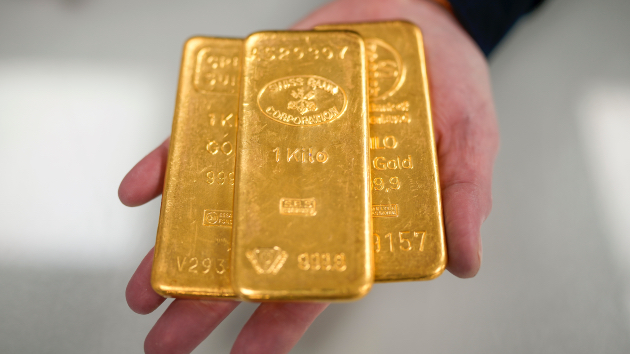
(NEW YORK) — Silver prices on Monday suffered their largest single-day drop in almost five years, before rebounding nearly 8% in midday trading on Tuesday. Some other precious metals, including gold, rode a similar rollercoaster.
The turbulent stretch comes near the end of a banner year for gold and silver, which rose far faster than even the robust stock market. Gold has climbed 66% in 2025, while silver has soared a staggering 160%. The S&P 500, by comparison, has jumped 17% over that span.
Bumpiness in recent days owes in part to the meteoric rise over prior months, some analysts told ABC News, saying investors likely cashed in on those gains by selling off their holdings.
The downturn in prices at the outset of this week followed an adjustment by exchange operator CME Group, which increased the amount futures traders must pony up in order to participate in the topsy-turvy markets for precious metals.
The uptick in the amount of such payments — known as margins — likely deterred some investors and pushed prices lower, analysts added. Prices boomeranged higher on Tuesday, suggesting some investors viewed the dip as a buying opportunity.
“These were some of the worst one-day losses in the history of trading in both gold and silver going back 50 years,” Jim Wyckoff, senior market analyst at Kitco Metals, told ABC News.
“Extreme price volatility in commodity markets is a signal of the final stages of a mature bull market run,” Wyckoff added.
Over the course of the year, heightened geopolitical and economic uncertainty boosted demand for gold and silver, which typically display a degree of independence from movements in stock prices. Volatility in bond markets and a devaluation of the U.S. dollar, meanwhile, unsettled alternative assets typically viewed as safe-haven investments.
The flight to gold in moments of market turbulence draws on decades of evidence, according to an analysis co-authored in 2025 by Campbell Harvey, a professor at Duke’s Fuqua School of Business who studies commodity prices. The price of gold moved higher during eight of the last 11 major stock market selloffs stretching back to the late 1980s, researchers found.
“Gold is a safe-haven asset because people believe it’s a safe-haven asset,” Paolo Pasquariello, professor of finance at the University of Michigan, told ABC News. “It’s a kind of self-fulfilling prophecy.”
However, gold and silver prices carry volatility of their own, especially when buyers enter the market at a high point, risking losses instead of providing a security blanket, analysts said.
The rollercoaster this week could foretell volatility for gold and silver prices in 2026, Pasquariello said, pointing especially to a murky path forward for interest rates.
The Fed cut interest rates three consecutive times over the latter part of this year. Its benchmark rate now stands between 3.5% and 3.75%. That figure marks a significant drop from a recent peak attained in 2023, but borrowing costs remain well above a 0% rate established at the outset of the COVID-19 pandemic.
Policymakers at the central bank appear divided over where interest rates should go next. Three of the 12 voting members on the Federal Open Market Committee, or FOMC — a policymaking body at the Fed — dissented from the most recent quarter-point rate cut, the highest number of dissenters since 2019.
President Donald Trump, who has repeatedly called for lower interest rates, is set to appoint a Fed chair next year. The leadership perch offers a large public platform, but it carries a single vote, like any other member of the FOMC.
Lower interest rates establish financial conditions favorable for gold and silver, since meager interest rates reduce the comparative benefit of interest-bearing investments such as savings accounts. A rate reduction also slashes the cost of borrowing for traders who speculate in precious metals, potentially juicing investment further.
“It looks like there is a significant split at the Federal Reserve about whether to cut interest rates or not,” Pasquariello said. “Markets like gold and silver – which in my mind have sensitivity to this rate uncertainty – will experience volatility the most.”
“People buy gold and silver for a safe haven,” Pasquariello added. “I don’t see that happening in 2026.”
Union leaders and members celebrate the defeat of a measure to overturn the hotel and airport $30 per hour minimum wage at Los Angeles City Hall in downtown, Sept. 9, 2025 in Los Angeles, CA. Gary Coronado/Los Angeles Times via Getty Images
(NEW YORK) — Nearly 20 U.S. states are set to raise their minimum wage in 2026, boosting pay for millions of workers spanning from Arizona to New Jersey.
A mix of Republican- and Democrat-controlled states will raise their wage floors on Jan. 1 in keeping with inflation-adjusted increases or as part of scheduled hikes that take effect at the beginning of each calendar year.
The pay increases will affect about 8.3 million workers, who will gain a combined $5 billion over the course of 2026, according to the left-leaning Economic Policy Institute, or EPI.
Beginning next year, the number of workers living in a state that guarantees a $15 minimum wage will exceed the number living in a state that offers the federal wage floor of $7.25 per hour, the EPI found.
After the wave of wage hikes, Washington will become the state with the highest minimum wage, offering workers $17.13 per hour.
Workers in New York will enjoy the second-highest wage floor, as the state implements a minimum hourly wage of $17 for workers in New York City, Long Island and Westchester. Outside those areas, workers in New York will receive at least $16 per hour.
Overall, the 19 states set to raise their minimum wage on Thursday include: Arizona, California, Colorado, Connecticut, Hawaii, Maine, Michigan, Minnesota, Missouri, Montana, Nebraska, New Jersey, New York, Ohio, Rhode Island, South Dakota, Vermont, Virginia and Washington.
The nation’s highest wage floors will take effect in some of the nearly 50 cities and other localities that will impose minimum pay hikes.
Twenty-nine localities in California will see pay hikes, including a $20.25 an hour wage floor that will take effect in West Hollywood. Eight localities in Washington will increase their minimum wage, among them the country’s highest wage floor: $21.65 an hour in Tukwila.
The latest round of pay increases, however, will not affect 20 states concentrated in the South that lack a minimum wage or offer a minimum wage that does not exceed the federal minimum.
The last federal minimum wage hike took place in 2009, when Congress raised the pay floor to its current level. Since then, the federal minimum wage has lost more than 30% of its value due to inflation, EPI found.
(NEW YORK) — The U.S. economy expanded more than economists expected over a recent three-month period, recording robust growth despite concerns about sluggish hiring and cash-strappped shoppers, federal government data on Tuesday showed.
The U.S. economy grew at an annualized rate of 4.3% in the third quarter in the government’s initial estimate, marking an acceleration from 3.8% growth recorded in the previous quarter.
A boost in consumer spending helped propel the economic surge in gross domestic product (GDP) over three months ending in September, the U.S. Commerce Department said. Consumer spending, which accounts for about two-thirds of U.S. economic activity, is a key bellwether for the outlook of the nation’s economy.
The GDP reading stemmed in part from a rise in exports and a drop-off in imports, which may have resulted from tariffs issued earlier this year by President Donald Trump.
The government’s GDP formula subtracts imports in an effort to exclude foreign production from the calculation of total goods and services.
The strong economic growth in the third quarter appeared to defy fears about the sluggish labor market, which some observers have viewed as a warning sign for the wider economy.
Hiring slowed sharply in recent months. The unemployment rate ticked up to 4.6% in November from 4.4% in September. Unemployment remains low by historical standards but has inched up to its highest level since 2021.
Meanwhile, inflation has hovered nearly a percentage point higher than the Federal Reserve’s target rate of 2%.
Those conditions have put the Fed in a bind, since the central bank must balance a dual mandate to keep inflation under control and maximize employment. To address pressure on both of its goals, the Fed primarily holds a single tool: interest rates.
Earlier this month, the Fed cut its benchmark interest rate a quarter of a percentage point in an effort to boost hiring. The move amounted to the third rate cut this year, bringing the Fed’s benchmark rate to a level between 3.5% and 3.75%.
Interest rates have dropped significantly from a recent peak attained in 2023, but borrowing costs remain well above a 0% rate established at the outset of the COVID-19 pandemic.
Venezuelan President Nicolas Maduro (center) is celebrated by participants at a rally marking the anniversary of a battle on the day Venezuelan opposition leader Machado was awarded the Nobel Peace Prize. (Jesus Vargas/picture alliance via Getty Images)
(NEW YORK) — Oil prices jumped about 3% after President Donald Trump this week threatened to blockade all sanctioned oil tankers traveling in and out of Venezuela.
Venezuela, which has the largest known oil reserves in the world, exports hundreds of thousands of barrels of oil each day.
The threatened blockade risks a reduction of global oil supply and an amplification of geopolitical uncertainty — both of which could further push up oil prices and, in turn, pinch drivers at the pump, some analysts told ABC News.
But, they added, the effect on prices will likely remain muted unless the conflict escalates significantly, since Venezuela accounts for less than 1% of global oil output and most of its oil is sold on the black market.
Here’s what to know about what the threatened U.S. blockade means for oil and gasoline prices:
Where does the blockade stand and how has Venezuela responded? On Tuesday, Trump threatened what he called a “blockade” of all sanctioned oil tankers traveling in and out of Venezuela, ratcheting up pressure on the Venezuelan President Nicolas Maduro, whose government depends in part on revenue derived from oil sales.
“Venezuela is completely surrounded by the largest Armada ever assembled in the History of South America,” Trump wrote in a social media post. “It will only get bigger, and the shock to them will be like nothing they have ever seen before.”
A day later, Maduro said Venezuela would continue to trade oil, defying Trump’s threat.
“Trade in and out will continue — our oil and all our natural wealth that by the constitution and Bolivar’s legacy belongs — our wealth, our land, and our oil — to its only legitimate owner, which for centuries and centuries has been our sovereign people of Venezuela,” Maduro said on Wednesday, originally in Spanish.
The U.S. currently has 11 warships in the Caribbean — the most in decades — but even with an increased military presence, that would likely not be enough to put in place a blockade in the traditional sense, which involves sealing a country’s coastline completely and would effectively have been a declaration of war.
Why has the threatened blockade pushed up oil prices? The threatened blockade of sanctioned oil tankers drove up the U.S. West Texas Intermediate futures price — a key measure of U.S. oil prices — by about 3%, landing the price around $56.50 per barrel.
The measure had dropped to its lowest level since 2021 on Tuesday, just hours before Trump’s announcement. The dip in prices stemmed from a glut of oil alongside relatively slow global economic growth, which has constricted demand for fossil fuels.
“Everybody and their grandmother is bearish on oil prices,” Denton Cinquegrana, chief oil analyst at the Oil Price Information Service, told ABC News.
The threatened blockade disrupted those price doldrums, at least to a minor degree, some experts said.
Venezuela has exported about 749,000 barrels per day this year, with at least half that oil going to China, according to data from Kpler. That oil output amounts to less than 1% of global supply.
The news caused a “knee-jerk reaction” in oil markets due to heightened uncertainty tied to the U.S.-Venezuela conflict, Christopher Tang, a professor at the UCLA Anderson School of Management who studies supply chains, told ABC News. A continued standoff could push oil prices up to around $65 or $70 per barrel, but they’re unlikely to go much higher, Tang added.
“It’s not going to go up to $100 a barrel,” Tang said.
What could the threatened Venezuelan oil blockade mean for gas prices? A jump in oil prices typically brings about an ensuing uptick in the cost of gasoline at the pump, some experts said, since crude oil makes up the key ingredient in auto fuel.
“The single most important price driver of gasoline is crude oil. As crude oil goes up, we expect gasoline to go up,” Timothy Fitzgerald, a professor of business economics at the University of Tennessee who studies the petroleum industry, told ABC News.
The average price of a gallon of gas stands at about $2.88, which marks a 5% decline from a year earlier, AAA data showed. Gas prices are hovering near their lowest level in four years due in part to the low cost of crude oil.