(BURBANK, Calif.) — ) — Disney is set to lay off 7,000 workers, CEO Bob Iger said on the company’s earnings call on Wednesday.
The company is targeting a total of $5.5 billion in cost savings, some of which will come from the reduction in workforce, Iger said.
“This reorganization will result in a more cost-effective, coordinated and streamlined approach to our operations,” Iger said. “I do not make this decision lightly.”
The job cuts will coincide with a restructuring that will divide the company into three core businesses: Disney Entertainment, ESPN and Disney Parks, Iger said.
Disney is the parent company of ABC News.
This is a developing story. Please check back for updates.
(NEW YORK) — Many baby formula milk companies allegedly exploit parents’ emotions and “manipulate” scientific data to boost sales, according to a major new analysis published in The Lancet.
The analysis, led by Professor Nigel Rollins of the World Health Organization, said urgent clampdowns are needed to address misleading claims made by the industry.
It comes on the heels of the formula crisis in the U.S. last year, which saw parents struggling to find formula due to global supply chain issues exacerbated by a large recall of Abbott baby formula after two infants died.
“Part of what we’re exploring in The Lancet breastfeeding series is that the system of influence that commercial formula companies are engaged in is much, much more pervasive and much more influential than maybe previously thought.” study co-author Dr. Cecília Tomori, a breastfeeding expert and associate professor at Johns Hopkins School of Nursing, told ABC News.
Scientific evidence overwhelmingly supports breastfeeding newborns, if possible and desired. Breastfeeding has well-documented health benefits for both the parent and the baby.
According to the Centers for Disease Control and Prevention, babies who are breastfed are at lower risk of illnesses and diseases including asthma, obesity, type 1 diabetes and sudden infant death syndrome.
Babies can also receive antibodies from the mother’s breast milk, which boosts their immune systems and helps protect them from disease.
Meanwhile, mothers who breastfeed lower their risk of breast and ovarian cancer, type 2 diabetes and high blood pressure.
The authors say while many new parents breastfeed, many choose not to, and all choices should be supported.
According to the analysis, formula milk companies use exploitative tactics to sell products such as preying on parents’ fears about their children’s health and development.
For example, companies have said it’s important to introduce formula to help settle the behaviors of babies, such as disrupted sleep and persistent crying, implying that breast milk alone is not enough.
“The formula milk industry uses poor science to suggest, with little supporting evidence, that their products are solutions to common infant health and developmental challenges,” co-author Professor Linda Richter, from Wits University in South Africa, said in a press release. “Adverts claim specialized formulas alleviate fussiness, help with colic, prolong night-time sleep, and even encourage superior intelligence.”
“Labels use words like ‘brain’, ‘neuro’ and ‘IQ’ with images highlighting early development, but studies show no benefit of these product ingredients on academic performance or long-term cognition,” Richter added.
The analysis also alleged that formula milk companies used advertisements to imply formula is an “empowering” choice for working mothers, who often don’t have enough parental leave or support in their places of work.
The authors called for broader societal changes to help offset the exploitative behavior of formula milk companies.
This includes adequate maternity leave with the team imploring “governments and workplaces to recognize the value of breastfeeding and care work, by actions such as extending paid maternity leave duration to align with the six-month WHO recommended duration of exclusive breastfeeding.”
They also recommended that health care systems promote breastfeeding and support women to help them with any breastfeeding help during pregnancy, childbirth and after.
“What we’re arguing here and throughout the series is that breastfeeding is a collective societal responsibility, and also human right, and that we need to come together as a society, and policymakers need to understand how important it is and how important it is to invest and properly fund the structures that actually enable breastfeeding and make it possible,” Tomori said.
“One part of that is addressing the exploitative marketing that’s happening. Other parts of that include all the things that we’re very familiar with in the United States, such as facilitating structures that make it possible,” she added.
ABC News’ Sasha Pezenik contributed to this report.
(WASHINGTON) — President Joe Biden on Tuesday is expected to tout the nation’s economic health in his State of the Union Address, just days after a blockbuster jobs report showed a strong labor market has coincided with a monthslong easing of inflation.
Looking ahead, however, Biden is expected to propose solutions for what he considers an ongoing economic ill: income and wealth inequality.
The wealth of the top 1% increased by $6.5 trillion in 2021, according to a study the Federal Reserve released last year. That wealthiest sliver of Americans controls 32% of the country’s wealth, the study found.
The Biden administration’s agenda, set to be announced Tuesday night, includes two policy proposals: a new tax on billionaires and the sharp increase of a current tax on corporate stock buybacks.
“The idea is to have a commitment to reducing inequality,” Reuven Avi-Yonah, a law professor at the University of Michigan who focuses on corporate taxes, told ABC News. “There’s no indication that the increase in inequality is stopping anytime soon and something should be done about it, so the Democrats say.”
Here’s what to know about Biden’s anticipated tax proposals for wealthy individuals and corporations:
Billionaire’s tax
A key part of Biden’s new economic policy agenda is a billionaire’s tax, which would set a minimum tax for the wealthiest Americans, the White House said.
The Biden administration has offered scant details about the proposal, but it appears to closely resemble a policy that Biden put forward last March. At that time, he called for a tax rate of at least 20% on Americans who bring in at least $100 million per year.
The tax rate would apply both to income and unrealized gains, a measure of the value a person’s unsold investments have accumulated.
“President Biden is a capitalist and believes that anyone should be able to become a millionaire or a billionaire,” the White House said in a statement Tuesday. “He also believes that it is wrong for America to have a tax code that results in America’s wealthiest households paying a lower tax rate than working families.”
Between 2018 and 2020, the nation’s wealthiest 400 families paid an average tax rate of 8%, the White House’s Council of Economic Advisers found.
The wealthiest 25 people saw their worth increase a combined $401 billion between 2014 and 2018, but they paid an average federal income tax of 3.4% on that wealth, ProPublica found last year. By contrast, the median American making $70,000 a year pays an average federal income tax of 14%, the outlet said.
The proposal likely will face staunch Republican opposition, giving it a low probability of becoming law, since Republicans control the House of Representatives, Avi-Yonah of the University of Michigan said.
In response to previous efforts to tax wealthy Americans, Republicans have said the measures disincentivized business investment and wealth creation, hindering economic growth.
“The truth is it will not pass now with Republicans in control of the House,” Avi-Yonah said. “So it’s rhetoric.”
Increase to the tax on stock buybacks
In addition to the billionaire’s tax, the Biden administration is expected to propose a sharp increase of a current tax on corporate stock buybacks.
Companies opt to purchase shares of their own stock as a means of returning money to shareholders, since the move typically raises the price of shares.
The Biden administration takes issue with the practice because it provides money for shareholders while evading the taxes on income imposed when a company disperses money to shareholders through dividends, according to the White House. Instead, stock buybacks return money to investors as capital gains, which are taxed at a lower rate.
“Stock buybacks enable corporations to funnel tax-advantaged payouts to wealthy and foreign investors,” the White House said Tuesday.
The Inflation Reduction Act, signed into law by Biden in August 2022, imposed a 1% tax on stock buybacks. If a company purchases $100 million worth of shares, for instance, it must pay $1 million in tax.
In his State of the Union Address, Biden is expected to propose quadrupling that tax to 4%, the White House said.
As with the billionaire tax, the levy on stock buybacks is expected to face strong Republican opposition and long odds to become law.
Jesse Fried, a professor at Harvard Law School focused on corporate governance, said he opposes a tax on stock buybacks because the measures force companies to either hold onto excess capital or invest it in wasteful initiatives.
Instead, stock buybacks allow companies to return money to shareholders, who can then invest or spend the money, spurring economic activity, he said.
“You’re just going to have more cash bottled up in companies,” he said.
Avi-Yonah, meanwhile, said proponents of a higher tax on stock buybacks argue that the measure could pressure companies to invest money in initiatives with greater social benefit.
Supporters of the policy say companies “should be using money for other things like hiring people,” Avi-Yonah said. “Stock buybacks are regressive and benefit the rich at the expense of everyone else.”
(WASHINGTON) — Federal Reserve Chair Jerome Powell said Tuesday that the central bank’s fight against inflation has “a long way to go,” citing a blockbuster jobs report last week that showed the labor market remains hot despite the Fed’s efforts to cool the economy.
“This process is likely to take quite a bit of time,” Powell said. “It’s not likely to be smooth.”
Consumer prices rose 6.5% over the yearlong period ending in December, which amounts to a significant slowdown from a summer peak but is more than triple the Federal Reserve’s target of 2%.
Speaking at The Economic Club of Washington, D.C., Powell said the “extraordinarily strong” job figures took the Fed by surprise.
The economy added 517,000 jobs in January and the unemployment rate fell to its lowest level in 53 years.
“It’s certainly stronger than anyone I know expected,” Powell said. “We didn’t expect it to be this strong.”
“It kind of shows you why we think this will be a process that takes a significant period of time,” he added.
The Fed recently imposed the latest in an aggressive string of borrowing cost increases as it tries to slash price hikes by slowing the economy and choking off demand. The approach, however, risks tipping the U.S. economy into a recession and putting millions out of work.
Powell has repeatedly said that the Fed will keep its benchmark interest rate elevated until inflation reaches the central bank’s 2% target. That means borrowers face higher costs for everything from car loans to credit card debt to mortgages.
While Powell said the strong jobs report indicates that the fight against inflation remains in its “very early stages,” he considered the labor boom a positive sign.
“It’s a good thing that inflation has started to come down without cost to the labor market,” he said.
The remarks from Powell arrive a day after Treasury Secretary Janet Yellen rejected recession fears in an interview with “Good Morning America” on Monday, saying the economy remains “strong and resilient.”
“You don’t have a recession when you have 500,000 jobs and the lowest unemployment rate in more than 50 years,” Yellen said.
Government data last month showed that the U.S. economy grew robustly at the end of last year.
Still, most economists expect a recession later this year, as interest rate hikes weigh on the economy, according to a survey released by Bloomberg last month. Forecasters expect gross domestic product to fall over the second and third quarters of this year, the survey found.
Since some areas of the economy have defied an expected slowdown, more rate hikes are likely forthcoming, Powell said.
“We think we’re going to need to do further rate increases,” he said. “And we think we’re going to need to hold policy at a restrictive level for a period of time.”
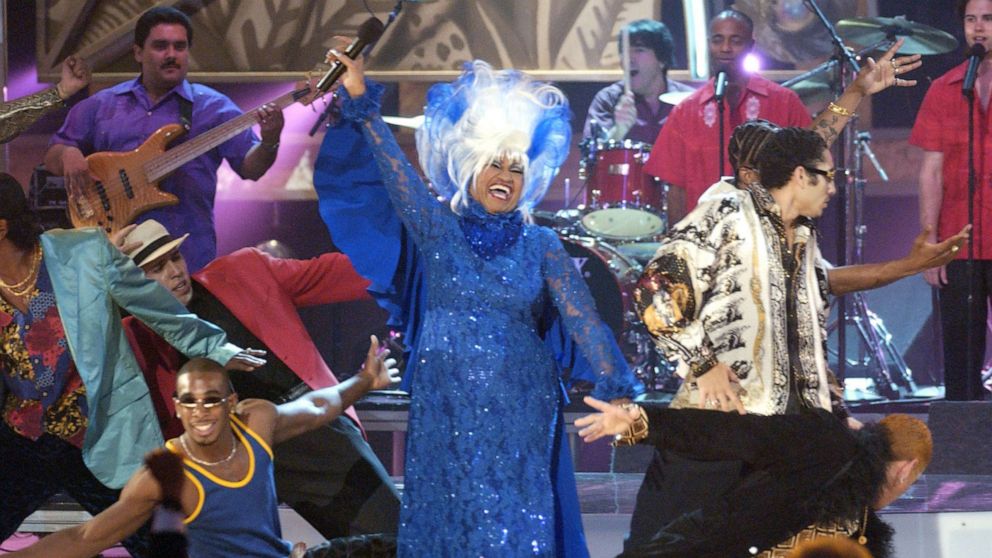
Cruz, who died in 2003, was selected by the United States Mint to be one of the five honorees in the 2024 American Women Quarters Program.
The American Women Quarters Program is a four-year initiative that honors the achievements and services of American women. The U.S. Mint is releasing up to five new designs each year; they began in 2022 and will continue through 2025.
Celia Cruz, also known as Úrsula Hilaria Celia de la Caridad Cruz Alfonso, was one of the 20th century’s most well-known Latin performers and a cultural icon. Cruz is the winner of many distinctions and honors, including five Grammy Awards, a National Medal of Arts and a posthumous Grammy for Lifetime Achievement.
“All of the women being honored have lived remarkable and multi-faceted lives, and have made a significant impact on our Nation in their own unique way,” said Mint Director Ventris C. Gibson, in an official statement. “The women pioneered change during their lifetimes, not yielding to the status quo imparted during their lives. By honoring these pioneering women, the Mint continues to connect America through coins which are like small works of art in your pocket.”
The other women chosen were Patsy Takemoto Mink, who was the first black woman to serve in Congress; Dr. Mary Edwards Walker, who was a Civil War-era surgeon, women’s rights advocate and abolitionist; Pauli Murray, a poet, writer, activist, lawyer and Episcopal priest, as well as a strong advocate for civil rights, and Zitkala-Ša, also known as Gertrude Simmons Bonnin, a writer, songwriter, educator and political activist for the rights of Native Americans.
The designs for the 2024 American Women Quarters are expected to be released in mid-2023.
(NEW YORK) — A major set of changes to the rules for retirement finances took effect this year, but many people may not have noticed. The rules were buried within a 4,000-page long, $1.7 trillion spending measure signed by President Joe Biden in December.
The batch of changes, called Secure Act 2.0, affords people greater flexibility in how and when they withdraw from their retirement accounts. The act also creates the first government-backed database for identifying lost retirement benefits, for instance when a person moves to a new job.
The rules aim to ease retirement finances at a time when most Americans are struggling to set aside a nest egg for their twilight years. Roughly 55% of people say they have fallen behind on their retirement savings, a Bankrate survey found in November.
“There’s a crisis out there — people haven’t saved enough for retirement,” Dan White, an author and founder of the financial advisory firm Daniel A. White & Associates, told ABC News.
“This is a big deal,” he added. “It’s trying to get people incentivized to put away enough money.”
Here’s what you need to know about Secure Act 2.0, the new retirement law:
What is the new retirement law Secure Act 2.0?
As its name suggests, Secure Act 2.0 is not the first of its kind.
The measure builds upon a previous version of the Secure Act — which stands for Setting Every Community Up for Retirement Enhancement — enacted at the outset of 2020.
Like the initial law, Secure 2.0 eases some of the restrictions placed on retirement accounts, but the changes carry some caveats and exceptions that will add complexity as people adapt to the new rules, White said.
“Overall, the Secure Act is very friendly for helping people with retirement,” he said. “At the same time, the government makes everything so stinking complicated.”
Why are the key changes in Secure 2.0 around retirement saving?
Key changes in Secure 2.0 center on the relaxing of restrictions on retirement accounts, such as 401(k) and Roth IRA accounts. For such retirement accounts, individuals must begin pulling out money at a minimum age, even if they’d prefer to leave the accounts untouched.
Secure Act 2.0 raises that minimum age of distribution from 72 to 73 years old, allowing older Americans to push back the time when payouts begin if the individuals have alternative sources of income or frugal spending habits, White said.
Further, the new rules alleviate the penalties for individuals who miss a required minimum distribution from their retirement accounts.
For instance, if a retiree was supposed to take out $10,000 by the end of 2022 but instead took out only $5,000, then under the previous rules he or she paid a 50% penalty for the remaining $5,000. Under Secure 2.0, that penalty has been cut to 25%.
In addition to easing the penalties for those who access a retirement account too late, Secure Act 2.0 softens the blow for some who take out money too early.
Federal law imposes a 10% penalty on any money pulled from a retirement account before age 59.5, but the new rules expand exceptions that allow some individuals to evade such penalties. For example, if a person suffers financial losses due to a natural disaster or contracts a terminal illness, he or she can access retirement accounts early without penalty, White said.
How does Secure 2.0 change how younger Americans put money into retirement accounts?
Besides adding flexibility for withdrawals from retirement accounts, Secure Act 2.0 changes the way the accounts operate in the first place, potentially setting up younger Americans for improved savings down the line, Joel Dickson, the head of enterprise advice methodology at Vanguard, who has closely followed Secure 2.0, told ABC News.
First off, the new rules will take the onus off of workers to initiate new retirement accounts, instead enrolling them automatically when they start a job. Also, Secure Act 2.0 allows retirement accounts to automatically travel with workers when they move from one job to the next, Dickson said.
Plus, the law creates a database for finding lost retirement benefits, helping workers keep track of and collect savings generated at a given employer or over a particular period of time that they may have otherwise overlooked.
“There’s a lot that gets lost in the system today in many ways when people change employers,” Dickson said.
The new rules “make it a little easier for people to know where those resources are and keep track of them over time,” he added.
When do the changes in Secure 2.0 go into effect?
Many of the provisions in the new measure go into effect at different times, leaving the availability of any given offering murky at first glance, Dickson said. People should seek help from an advisor if they’re trying to take advantage of a given rule change on a specific timeline, he added.
Some of the important provisions have already taken effect, including the rule that pushes back the age of an initial required minimum distribution from 72 to 73. The provision that mandates automatic enrollment for all new retirement accounts, like 401(k)s and Roth IRAs, will take effect next year.
“Although Secure 2.0 may be a lot of different individual changes and measures, the broad theme is increasing flexibility and access for people to be able to meet their retirement savings goals,” Dickson said.
(NEW YORK) — AMC Theatres announced a new ticket pricing initiative Monday that has customers paying based on where their seat is located.
The initiative, called Sightline at AMC, is described by the company in a press release as a way for moviegoers to “now have the option to pay less, or more, for a movie ticket based on their seat selection.”
There are three tiers of seats for customers to choose from: Standard Sightline, the most common in auditoriums and the traditional cost of a ticket; Value Sightline, seats in the front row of the auditorium as well as select ADA seats which cost less than Standard Sightline seats; and Preferred Sightline, seats typically in the middle of the auditorium and priced more than Standard Sightline seats.
Value pricing is only available to AMC Stubs members, including the free tier membership, AMC Insider. AMC Stubs A-List members won’t pay the additional charge for the Preferred section.
Sightline at AMC will only be applied to showtimes which begin after 4 p.m. and is not applicable on Discount Tuesdays.
AMC Theaters offering the initiative will provide a detailed map showing the seating sections for customers purchasing tickets online, in the AMC app and at the box office.
“Sightline at AMC more closely aligns AMC’s seat pricing approach to that of many other entertainment venues, offering experienced-based pricing and another way for moviegoers to find value at the movies,” Eliot Hamlisch, executive vice president and chief marketing officer of AMC Theatres, said in a press release.
Hamlisch said the program seeks to deliver an experience to those “who prioritize their specific seat and others who prioritize value moviegoing” by ensuring that guests “have more control over their experience.”
The company said the initiative has rolled out at select locations and is expected to expand to all domestic AMC and AMC Dine-In locations by the end of 2023.
(MOUNTAIN VIEW, Calif.) — If you ever needed artificial intelligence’s help to plan a friend’s baby shower, your time has come, as Google officially unveiled an AI program it’s calling Bard, seemingly its answer to the viral ChatGPT.
Google CEO Sundar Pichai announced Bard on the company’s blog Monday, calling it “an important next step” in AI for the search engine giant.
“Bard seeks to combine the breadth of the world’s knowledge with the power, intelligence and creativity of our large language models,” Pichai said. “It draws on information from the web to provide fresh, high-quality responses.”
The company’s new AI chatbot is based on its Language Model for Dialogue Applications (LaMDA) and is only available to a select group of testers.
Based on a video shared by Pichai on Twitter, users could use Bard to compare two Oscar-nominated movies, come up with ideas for lunch based on the ingredients in a person’s refrigerator or know about the latest discoveries from the James Webb Telescope.
Google said Bard would be widely available to the public in the next few weeks.
“It’s a really exciting time to be working on these technologies as we translate deep research and breakthroughs into products that truly help people,” Pichai said.
Bard is seemingly Google’s answer to ChatGPT, an AI-driven program that exploded in popularity in the last few months after users shared posts of the tool composing Shakespearean poetry, writing music lyrics and identifying bugs in computer code.
Created by artificial intelligence firm OpenAI, ChatGPT, which stands for Chat Generative Pre-Trained Transformer, is a chatbot — a computer program that converses with human users. The program uses an algorithm that selects words based on lessons learned from scanning billions of pieces of text across the internet.
Microsoft, which invested in OpenAI in 2019 and 2021, announced last month that it’s extending its partnership with the firm and investing billions of dollars into the company.
According to Forbes, Microsoft is investing up to $10 billion into ChatGPT and may incorporate it into its Bing search engine.
ABC News’ Arthur Jones II and Max Zahn contributed to this report.
(NEW YORK) — United Airlines is facing a possible $1.15 million fine after allegedly conducting flights with planes that hadn’t undergone a certain safety check, federal regulators said, though United called the check “redundant” given other systems.
The Federal Aviation Administration (FAA) proposed the fine on Monday and said that from June 2018 to April 2021, United removed the fire system warning check from its Boeing 777 pre-flight checklist — an inspection task required in its maintenance specifications manual.
United operated more than 100,000 flights with the Boeing 777 during this time, according to a letter from the FAA.
“Removal of the check resulted in United’s failure to perform the required check and the operation of aircraft that did not meet airworthiness requirements,” the agency said in a news release.
United, however, said it changed its pre-flight checklist in 2018 “to account for redundant built-in checks performed automatically by the 777” and that the FAA reviewed and approved the change at the time.
“The safety of our flights was never in question,” United said in a statement.
The airline said it will review the proposed penalty and “respond accordingly.”
“The fire test on a jetliner, like the 777, is really very comprehensive,” ABC News contributor and former commercial pilot John Nance explained in an interview. “It’s just testing for all the circuitry to make sure that everything is working right.”
“The airplane actually does this itself, but it has been traditional for pilots to follow up and do a test,” Nance said.
(NEW YORK) — FTX’s new chief executive told a bankruptcy court Monday there is “a danger” to authorizing an independent investigation of the crypto exchange’s collapse.
John Ray said he had no use for prior court-supervised investigations into other companies he steered through bankruptcy.
“Neither in Enron nor in Residential Capital did I make use of that report,” Ray testified during a hearing before U.S. Bankruptcy Judge John Dorsey in Delaware. “They’re almost a curated gathering of statements that failed to take real opinions as to what occurred.”
The Enron investigation cost $90 million and the Residential Capital investigation cost $100 million, Ray said, adding that neither was helpful. Ray’s testimony came as the judge considered whether to appoint an examiner in the FTX collapse as requested by the Justice Department.
“This is just too fragile an environment for me to accept yet another seat at the table,” Ray testified. “We’ve come too far to allow that to happen.”
The collapse of FTX spurred criminal charges against its founder, Sam Bankman-Fried, who has pleaded not guilty to eight criminal charges, including fraud and conspiracy.
Ray testified that FTX has furnished 70,000 documents to federal prosecutors, who have asked 156 times for information.
“It’s virtually an ongoing exercise, but the last 90 days have been an extremely intense effort to provide the information the government has requested,” Ray said.
Ray said the company is also working with federal prosecutors in California, New York, Hawaii and Maryland.
FTX has sent confidential messages to political figures, political action funds and other recipients of contributions by Bankman-Fried asking them to return the money by the end of February, the company said in a press release Sunday.
The messages follow an announcement in December that FTX arranged for voluntary return. Otherwise, FTX said in a release Sunday, the company would “reserve the right to commence actions before the Bankruptcy Court to require the return of such payments, with interest accruing from the date any action is commenced.”
Recipients were cautioned that using the money to make a donation to a third party, including a charity, would not prevent FTX from trying to get the money back.