Photo of Wall Street (Matteo Colombo/Getty Images)
(NEW YORK) — Stocks slid on Monday morning in the first trading session since President Donald Trump announced a new 15% tariff on most imported goods, intensifying his effort to impose levies that were struck down by the Supreme Court.
The Dow Jones Industrial Average fell 90 points, or 0.1%, while the S&P 500 dropped 0.1%. The tech-heavy Nasdaq declined 0.1%.
Cryptocurrency prices tumbled in early trading on Monday. The price of bitcoin fell nearly 2%, putting it at about $66,075.
Gold prices jumped to their highest level in three weeks as investors sought the safe-heaven asset amid heightened uncertainty.
In a social media post on Monday, Trump reiterated his criticism of the Supreme Court.
The Supreme Court, Trump said, “accidentally and unwittingly gave me, as President of the United States, far more powers and strength than I had prior.”
Trump retains the power to levy a 15% tariff for up to 150 days under the Trade Act of 1974, which allows the president to address trade disparities with other countries.
Hours after the Supreme Court ruling on Friday, Trump said he would sign an executive order enacting a new 10% “global tariff,” invoking authority under Section 122. On Saturday, Trump escalated the tariff to 15%.
This is a developing story. Please check back for updates.
(NEW YORK) — The U.S. economy slowed more than expected over the final months of 2025, federal government data on Friday showed.
The economy grew at an annualized rate of 1.4% in the fourth quarter in the government’s initial estimate, marking a cooldown from blistering-hot 4.4% growth recorded in the previous quarter.
The slowdown at the end of last year stemmed in part from a decline in the pace of consumer spending, the U.S. Commerce Department said.
The GDP report marks the latest distress signal for U.S. shoppers, who account for about two-thirds of the nation’s economic activity.
Retail sales data last week showed flat performance in December, suggesting possible weakness for shoppers during the holiday season. Meanwhile, credit card debt levels have climbed and consumer sentiment has remained glum.
The fresh reading of gross domestic product on Friday provided a key measure of the country’s economic health as policymakers continued to grapple with an ongoing bout of elevated inflation and sluggish hiring.
Inflation cooled in January, dropping price increases to their lowest level in nine months. While the pullback defied fears of a tariff-induced rise in overall costs, inflation continued to hover above the Federal Reserve’s target rate of 2%.
Meanwhile, a recent jobs report showed stronger-than-expected hiring in January, even though an updated estimate released at the same time indicated a near-paralysis of the labor market last year.
A boost in consumer spending helped propel the surge in GDP over three months ending in September, the U.S. Commerce Department previously said.
Over the past year, hiring has slowed dramatically while inflation has remained elevated, risking an economic double-whammy known as “stagflation.” Those conditions have put the Federal Reserve in a difficult position.
The central bank must balance a dual mandate to keep inflation under control and maximize employment. To address pressure on both of its goals, the Fed primarily holds a single tool: interest rates.
The strain on both sides of the Fed’s mandate presents a “challenging situation” for the central bank, Fed Chair Jerome Powell said in December.
The Fed held interest rates steady at its most recent meeting in January, ending a string of three consecutive quarter-point rate cuts.
Futures markets expect two quarter-point interest rate cuts this year, forecasting the first in June and a second in the fall, according to the CME FedWatch Tool, a measure of market sentiment.
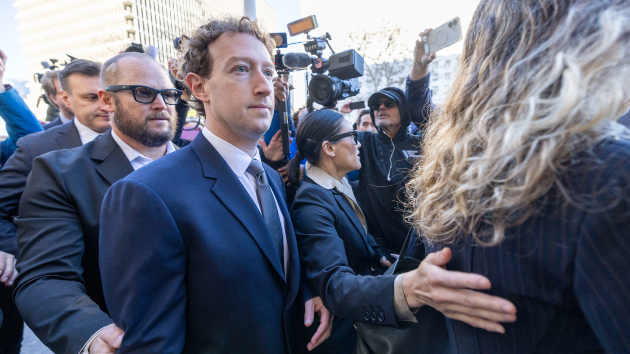
Meta CEO Mark Zuckerberg arrives to the Los Angeles Superior Court at United States Court House on February 18, 2026 in Los Angeles, California. (Jill Connelly/Getty Images)
(LOS ANGELES) — A landmark trial over social media addiction has drawn fresh scrutiny to a decades-old legal shield: Section 230.
The case, which began last Monday in Los Angeles County Superior Court, centers on claims against Meta — the parent company of Facebook and Instagram — and YouTube, which is owned by Google. Plaintiffs argue the companies knowingly built features that encouraged compulsive use among young users, contributing to long-term mental health harm.
The case is the first of more than 1,500 similar lawsuits nationwide to go before a jury, potentially setting a precedent for how tech companies could be held liable for product design. Meta CEO Mark Zuckerberg is testifying in the case on Wednesday.
The companies deny the allegations, arguing that mental health outcomes are shaped by a range of factors beyond social media use. They say they have implemented safeguards aimed at protecting young users, including parental controls and accounts designed specifically for teens.
In a statement to ABC News at the start of the trial, a Meta spokesperson said, “We strongly disagree with these allegations and are confident the evidence will show our longstanding commitment to supporting young people.”
Meta said that the company has made “meaningful changes” to its services, such as introducing accounts specifically for teenage users.
The tech giants are expected to challenge the plaintiff’s argument that there is a direct link between social media use and mental health issues. They may also invoke legal protection long-afforded by Section 230.
Section 230 of the 1996 Communications Decency Act protects social media platforms and other sites from legal liability that could result from content posted by users because they are not deemed to be publishers.
Plaintiffs have sought to circumvent that legal immunity in part by arguing that the platforms are addictive, which amounts to a defect in a product.
Section 230 grants broad protection for internet platforms, saying: “No provider or user of an interactive computer service shall be treated as the publisher or speaker of any information provided by another information content provider.”
Some tech giants, like Meta and Google, have supported reform of Section 230 that would raise the standard that platforms would need to meet in order to qualify for immunity. But the companies largely support preserving the law in some form to protect them from legal liability tied to user-generated content.
Section 230 has garnered backing from some free-speech advocacy groups such as the Electronic Frontier Foundation (EFF). The measure “protects internet users’ speech by protecting the online intermediaries we rely on,” EFF said in a blog post last week, praising Section 230 as “the legal support that sustains the internet as we know it.”
In 2023, the Supreme Court issued a pair of rulings that upheld Section 230, rejecting challenges from users alleging that harm had resulted from online posts.
One of the cases, Gonzalez v. Google LLC, concerned a lawsuit brought by the family of Nohemi Gonzalez, an American woman who was killed in an ISIS terrorist attack in Paris in 2015. The lawsuit against Google, the parent company of YouTube, alleged that YouTube recommended ISIS recruitment videos to users. The high court ruled against the plaintiffs.
Many Democrats argue that Section 230 allows platforms to evade accountability for allegedly permitting harmful or misleading content, claiming the rule lets platforms off the hook for policing too little speech.
Republicans have taken issue with what they consider big tech censorship, saying the legal protection allows the platforms to police too much speech without facing consequences.
In December, Sen. Dick Durbin, D-Ill., and Lindsey Graham, R-S.C., introduced the Sunset Section 230 Act, which would remove the legal protection from federal law within two years. A bipartisan group of seven senators has signed onto the bill but it remains well short of a majority.
ABC News’ Shafiq Najib contributed to this report.
Meta CEO Mark Zuckerberg arrives to the Los Angeles Superior Court at United States Court House on February 18, 2026 in Los Angeles, California. (Jill Connelly/Getty Images)
(LOS ANGELES) — A landmark trial over social media addiction has drawn fresh scrutiny to a decades-old legal shield: Section 230.
The case, which began last Monday in Los Angeles County Superior Court, centers on claims against Meta — the parent company of Facebook and Instagram — and YouTube, which is owned by Google. Plaintiffs argue the companies knowingly built features that encouraged compulsive use among young users, contributing to long-term mental health harm.
The case is the first of more than 1,500 similar lawsuits nationwide to go before a jury, potentially setting a precedent for how tech companies could be held liable for product design. Meta CEO Mark Zuckerberg is testifying in the case on Wednesday.
The companies deny the allegations, arguing that mental health outcomes are shaped by a range of factors beyond social media use. They say they have implemented safeguards aimed at protecting young users, including parental controls and accounts designed specifically for teens.
In a statement to ABC News at the start of the trial, a Meta spokesperson said, “We strongly disagree with these allegations and are confident the evidence will show our longstanding commitment to supporting young people.”
Meta said that the company has made “meaningful changes” to its services, such as introducing accounts specifically for teenage users.
The tech giants are expected to challenge the plaintiff’s argument that there is a direct link between social media use and mental health issues. They may also invoke legal protection long-afforded by Section 230.
Section 230 of the 1996 Communications Decency Act protects social media platforms and other sites from legal liability that could result from content posted by users because they are not deemed to be publishers.
Plaintiffs have sought to circumvent that legal immunity in part by arguing that the platforms are addictive, which amounts to a defect in a product.
Section 230 grants broad protection for internet platforms, saying: “No provider or user of an interactive computer service shall be treated as the publisher or speaker of any information provided by another information content provider.”
Some tech giants, like Meta and Google, have supported reform of Section 230 that would raise the standard that platforms would need to meet in order to qualify for immunity. But the companies largely support preserving the law in some form to protect them from legal liability tied to user-generated content.
Section 230 has garnered backing from some free-speech advocacy groups such as the Electronic Frontier Foundation (EFF). The measure “protects internet users’ speech by protecting the online intermediaries we rely on,” EFF said in a blog post last week, praising Section 230 as “the legal support that sustains the internet as we know it.”
In 2023, the Supreme Court issued a pair of rulings that upheld Section 230, rejecting challenges from users alleging that harm had resulted from online posts.
One of the cases, Gonzalez v. Google LLC, concerned a lawsuit brought by the family of Nohemi Gonzalez, an American woman who was killed in an ISIS terrorist attack in Paris in 2015. The lawsuit against Google, the parent company of YouTube, alleged that YouTube recommended ISIS recruitment videos to users. The high court ruled against the plaintiffs.
Many Democrats argue that Section 230 allows platforms to evade accountability for allegedly permitting harmful or misleading content, claiming the rule lets platforms off the hook for policing too little speech.
Republicans have taken issue with what they consider big tech censorship, saying the legal protection allows the platforms to police too much speech without facing consequences.
In December, Sen. Dick Durbin, D-Ill., and Lindsey Graham, R-S.C., introduced the Sunset Section 230 Act, which would remove the legal protection from federal law within two years. A bipartisan group of seven senators has signed onto the bill but it remains well short of a majority.
ABC News’ Shafiq Najib contributed to this report.
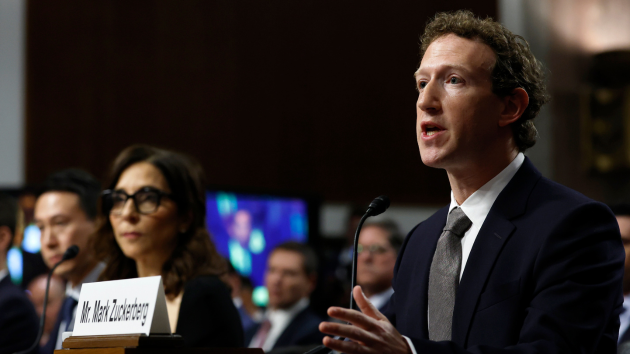
Mark Zuckerberg (R), CEO of Meta testifies before the Senate Judiciary Committee at the Dirksen Senate Office Building on January 31, 2024 in Washington, DC. (Anna Moneymaker/Getty Images)
(WASHINGTON) — Mark Zuckerberg took the stand on Wednesday in a landmark Los Angeles trial alleging that major social media platforms were intentionally designed to be addictive for children and teens.
The case, which began last Monday in Los Angeles County Superior Court, centers on claims against Meta — the parent company of Facebook and Instagram — and YouTube, which is owned by Google. Plaintiffs argue the companies knowingly built features that encouraged compulsive use among young users, contributing to long-term mental health harm.
The lawsuit was brought by a now-20-year-old woman identified as “Kaley” and her mother, who allege she was exposed to addictive design features as a child. Her lawyers claim she got hooked on social media apps starting as young as age 6. She says features like auto-scrolling got her addicted to the platforms — ultimately leading to anxiety, depression and body image issues.
In opening statements, the plaintiffs’ attorney Mark Lanier told the jury the case was “as easy as ABC,” which he said stood for “addicting the brains of children.”
The case is the first of more than 1,500 similar lawsuits nationwide to go before a jury, potentially setting a precedent for how tech companies are held liable for product design.
Zuckerberg has appeared before Congress multiple times to address concerns over youth safety and online harms, but Wednesday marks the first time he will testify before a jury on these claims.
Several parents of children who died by suicide or accidental harm linked to online trends are expected to attend the proceedings. Some previously watched Zuckerberg apologize during a 2024 Capitol Hill hearing, where he acknowledged families who said social media contributed to their children’s deaths.
The companies deny the allegations, arguing that mental health outcomes are shaped by a range of factors beyond social media use. They say they have implemented safeguards aimed at protecting young users, including parental controls and accounts designed specifically for teens.
In a statement to ABC News at the start of the trial, a Meta spokesperson said, “We strongly disagree with these allegations and are confident the evidence will show our longstanding commitment to supporting young people.”
Meta said that the company has made “meaningful changes” to its services, such as introducing accounts specifically for teenage users.
Zuckerberg’s appearance follows testimony last week from Instagram head Adam Mosseri, who disputed characterizing Instagram use as an “addiction,” while acknowledging what he described as “problematic use.”
Mosseri testified that there’s always a tradeoff between “safety and speech,” saying users don’t like it when they remove options from Instagram.
The Los Angeles trial is part of a broader wave of litigation targeting social media companies. Meta is also facing a separate child safety lawsuit in New Mexico, while lawsuits brought by school districts — modeled after tobacco litigation in the 1990s — are expected to head to trial later this year.
Social platforms Snapchat and TikTok were previously named in the lawsuit but reached settlements with the plaintiffs last month.
(NEW YORK) — A thaw in the housing market may deliver relief for homebuyers left out in the cold over recent years, analysts told ABC News.
After the pandemic, a rapid rise in home prices coincided with stubbornly high mortgage rates, shutting out potential buyers.
Glimmers of hope have started to emerge, however. Mortgage rates are falling, wages are rising faster than home prices and homebuyers are scooping up their biggest discounts in years, some analysts told ABC News.
“Housing is becoming more affordable. Are we there yet? No. But we’re on the right path,” Ken Johnson, a real estate economist at the University of Mississippi, told ABC News.
The average interest rate on a 30-year fixed mortgage stands at 6.09%, Freddie Mac data last week showed. A little more than a year ago, the average 30-year fixed mortgage rate exceeded 7%.
Each percentage point decrease in a mortgage rate can save thousands or tens of thousands in additional costs each year, depending on the price of the house, according to Rocket Mortgage.
“It looks like mortgage rates are settling down,” Lawrence Yun, chief economist at the National Association of Realtors (NAR), told ABC News. “That’s great news for homebuyers.”
A measure of housing affordability issued by NAR has improved for seven consecutive months, rising to its highest level since 2022, Yun said. The surge in home prices has slowed while income gains have accelerated, bolstering the purchasing power of homebuyers, some analysts noted.
“Incomes are growing faster than home prices,” Johnson said.
Despite these positive signals, the housing market still faces significant challenges, some analysts said, pointing to a fundamental shortage of housing supply.
The housing market is suffering from a phenomenon known as the “lock-in” effect, Lu Liu, a professor at the Wharton School at the University of Pennsylvania, told ABC News.
While mortgage rates have fallen, they remain well above the rates enjoyed by most current homeowners, who may be reluctant to put their homes on the market and risk a much higher rate on their next mortgage.
“The degree of lock-in is unprecedented in the U.S.,” Liu said, noting the prevalence of 30-year mortgages and the inability for homeowners to transfer a current loan to a new property.
Existing home sales declined by 8.4% in January from the previous month, the NAR said in a report last week.
Alongside the lock-in effect, construction has failed to make up for a years-long shortage of new homes, exacerbating the shortfall.
While the lock-in effect remains a significant factor, its impact may be waning as some home owners encounter major life events or other circumstances that force them to move, even if it entails taking on a loan with a higher mortgage rate, Liu said.
“If they really do have to move, maybe they would be more willing to yield to this economic logic,” Liu added.
If homebuyers do move forward with a purchase, they may benefit from major price discounts, Redfin found this month. In 2025, homebuyers received average discounts that amount to 7.9% off a home’s initial listing price, Redfin said, making it the largest average discount in 13 years.
“Homebuyers are more likely to get discounts than they were in recent years because it’s the strongest buyer’s market in recent history,” said Lily Katz and Asad Khan, co-authors of the Redfin report.
Positive signals for homebuyers will likely continue as elevated mortgage rates weigh on consumer demand, slowing the rise in prices, some analysts said. But, they cautioned, an unexpected spike in mortgage rates could hike borrowing costs for homebuyers or an economic slowdown may crimp purchasing power.
“There is uncertainty over the outlook for interest rates,” Liu said. “So the overall price outlook is uncertain.”
Mark Zuckerberg (R), CEO of Meta testifies before the Senate Judiciary Committee at the Dirksen Senate Office Building on January 31, 2024 in Washington, DC. (Anna Moneymaker/Getty Images)
(WASHINGTON) — Mark Zuckerberg is set to testify Wednesday in a landmark Los Angeles trial alleging that major social media platforms were intentionally designed to be addictive for children and teens.
The case, which began last Monday in Los Angeles County Superior Court, centers on claims against Meta — the parent company of Facebook and Instagram — and YouTube, which is owned by Google. Plaintiffs argue the companies knowingly built features that encouraged compulsive use among young users, contributing to long-term mental health harm.
The lawsuit was brought by a now-20-year-old woman identified as “Kaley” and her mother, who allege she was exposed to addictive design features as a child. Her lawyers claim she got hooked on social media apps starting as young as age 6. She says features like auto-scrolling got her addicted to the platforms — ultimately leading to anxiety, depression and body image issues.
In opening statements, the plaintiffs’ attorney Mark Lanier told the jury the case was “as easy as ABC,” which he said stood for “addicting the brains of children.”
The case is the first of more than 1,500 similar lawsuits nationwide to go before a jury, potentially setting a precedent for how tech companies are held liable for product design.
Zuckerberg has appeared before Congress multiple times to address concerns over youth safety and online harms, but Wednesday marks the first time he will testify before a jury on these claims. Legal experts say a verdict in favor of the plaintiff could weaken the broad liability protections tech companies have long relied on under Section 230 of the 1996 Communications Decency Act, which shields platforms from responsibility for user-generated content.(cut)
Several parents of children who died by suicide or accidental harm linked to online trends are expected to attend the proceedings. Some previously watched Zuckerberg apologize during a 2024 Capitol Hill hearing, where he acknowledged families who said social media contributed to their children’s deaths.
The companies deny the allegations, arguing that mental health outcomes are shaped by a range of factors beyond social media use. They say they have implemented safeguards aimed at protecting young users, including parental controls and accounts designed specifically for teens.
In a statement to ABC News at the start of the trial, a Meta spokesperson said, “We strongly disagree with these allegations and are confident the evidence will show our longstanding commitment to supporting young people.”
Meta said that the company has made “meaningful changes” to its services, such as introducing accounts specifically for teenage users.
Zuckerberg’s appearance follows testimony last week from Instagram head Adam Mosseri, who disputed characterizing Instagram use as an “addiction,” while acknowledging what he described as “problematic use.”
Mosseri testified that there’s always a tradeoff between “safety and speech,” saying users don’t like it when they remove options from Instagram.
The Los Angeles trial is part of a broader wave of litigation targeting social media companies. Meta is also facing a separate child safety lawsuit in New Mexico, while lawsuits brought by school districts — modeled after tobacco litigation in the 1990s — are expected to head to trial later this year.
Social platforms Snapchat and TikTok were previously named in the lawsuit but reached settlements with the plaintiffs last month.
Heart shaped boxes of chocolate are displayed for sale in Key West. (Jen Golbeck/SOPA Images/LightRocket via Getty Images)
(NEW YORK) — Valentine’s Day shoppers may feel jilted by runaway chocolate prices.
Chocolate prices soared 14.4% over the initial weeks of 2026 when compared to the same period a year earlier, nearly doubling the pace of price increases at the start of 2025, according to findings shared with ABC News by intelligence firm Datasembly.
The sharp rise in chocolate prices owes to a cocoa shortage caused primarily by adverse weather and crop disease in West Africa, which accounts for about 70% of the world’s cocoa, some analysts told ABC News.
The dearth of cocoa, analysts said, has ratcheted up input costs for chocolate makers and vaulted retail prices, leading to sticker shock in grocery and candy store aisles.
“There is a record gap between supply and demand,” David Branch, sector manager at the Wells Fargo Agri-Food Institute, told ABC News.
Raw cocoa bean prices have risen dramatically in recent years due to the choke in supply. A metric ton of cocoa beans cost as much $12,000 last year, Branch said. Before the COVID-19 pandemic, cocoa bean prices hovered between $2,000 and $2,500 per metric ton, International Monetary Fund data shows.
In recent months, supply problems have begun to ease, bringing cocoa bean costs down significantly from last year’s peak. A metric ton of cocoa beans now runs about $3,700.
Still, chocolate prices remain highly elevated as chocolate makers sell through candy made with cocoa beans bought earlier, analysts said.
“A lot of manufacturers bought cocoa when prices were high and that’s still very much moving through the supply chain,” David Ortega, a food economist at Michigan State University, told ABC News.
In November, the White House announced framework trade agreements with some Latin American countries in an attempt to ease surging prices for grocery staples such as cocoa. While the U.S. imports a significant share of cocoa from West Africa, supply also comes from Latin American countries like Ecuador, the U.S. Department of Agriculture says.
“Today’s announcements underscore the Administration’s unwavering commitment to fair and balanced trade at every opportunity to protect and strengthen our economic and national security,” the White House said when it unveiled the framework agreements.
Prices remain high for some other imported food items, such as coffee and beef.
Coffee prices surged about 18% in January compared to a year earlier, while ground beef prices climbed more than 17% over that span, Bureau of Labor Statistics data on Friday showed.
Grocery prices are rising at a faster pace than prices overall, climbing 2.9% over the year ending in January, according to BLS data.
Chocolate price hikes will likely ease over the coming months, some analysts said, noting the eventual pass through of lower cocoa prices into the cost of chocolate bought at stores. Analysts emphasized, however, the uncertainty surrounding the outlook due to the chance of weather-related challenges for growers.
Branch, of Wells Fargo, said chocolate prices could even fall by the latter part of this year as manufacturers find cost relief and pass it along to shoppers.
“If market trends stay where they are, we’ll see lower prices for Halloween,” Branch said.
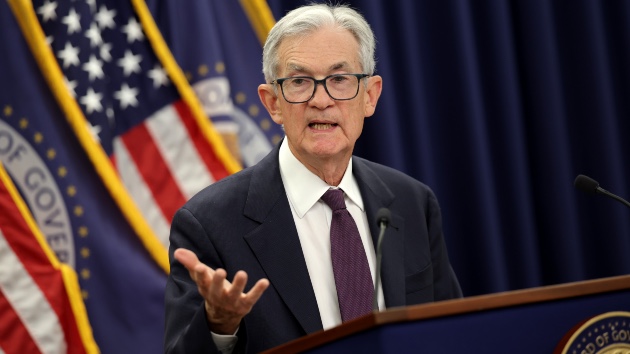
: Federal Reserve Chair Jerome Powell speaks during a press conference following the Federal Open Markets Committee meeting at the Federal Reserve on January 28, 2026 in Washington, (Photo by Kevin Dietsch/Getty Images)
(NEW YORK) — Inflation cooled in January, dropping price increases to their lowest level in nine months and defying fears of a tariff-induced hike in overall costs.
Prices rose 2.4% in January compared to a year earlier, U.S. Bureau of Labor Statistics data on Tuesday showed. The reading came in lower than economists had expected.
Inflation stands at its lowest level since May, but it remains a half-percentage point higher than the Fed’s target rate of 2%.
Affordability remains a concern for many Americans as the political calendar turns closer to election season.
The data arrived days after fresh hiring figures showed stronger-than-expected job growth in January, even though an updated estimate released at the same time indicated a near-paralysis of the labor market last year.
The murky hiring picture marked the latest in a recent series of mixed signals in economic data, which have left observers uncertain about the potential risk posed by elevated inflation alongside sluggish hiring.
Observers closely watched price movements for some household staples, which have faced sharp increases of late.
Coffee prices surged about 18% in January compared to a year earlier, while ground beef prices climbed more than 17% over that span, Bureau of Labor Statistics data showed.
Grocery prices rose at a faster pace than prices overall, climbing 2.9% over the year ending in January, BLS data showed.
Over the past year, hiring has slowed dramatically while inflation has remained elevated, risking an economic double-whammy known as “stagflation.” Those conditions have put the Federal Reserve in a difficult position.
The central bank must balance a dual mandate to keep inflation under control and maximize employment. To address pressure on both of its goals, the Fed primarily holds a single tool: interest rates.
The strain on both sides of the Fed’s mandate presents a “challenging situation” for the central bank, Fed Chair Jerome Powell said in December.
The Fed held interest rates steady at its most recent meeting in January, ending a string of three consecutive quarter-point rate cuts.
The benchmark rate stands at a level between 3.5% and 3.75%. That figure marks a significant drop from a recent peak attained in 2023, but borrowing costs remain well above a 0% rate established at the outset of the COVID-19 pandemic.
Futures markets expect two quarter-point interest rate cuts this year, forecasting the first in June and a second in the fall, according to the CME FedWatch Tool, a measure of market sentiment.
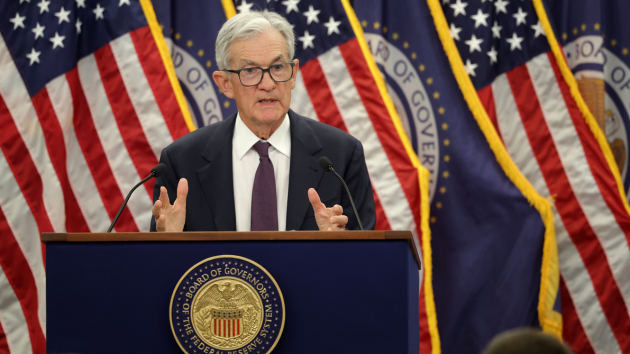
Federal Reserve Chair Jerome Powell speaks during a press conference following the Federal Open Markets Committee meeting at the Federal Reserve on January 28, 2026 in Washington, DC. (Kevin Dietsch/Getty Images)
(NEW YORK) — Hiring increased sharply at the outset of 2026, the year’s first jobs report said, blowing past economists’ expectations and besting sluggish performance from the previous year.
The unemployment rate dropped to 4.3% in January from 4.4% in December, the Bureau of Labor Statistics (BLS) said. Unemployment remains low by historical standards.
The labor market slowed sharply last year, prompting interest rate cuts at the Federal Reserve and concern among some observers about the nation’s economic prospects.
The BLS provided a significant downward revision for job gains in 2025, meaning hiring came in lower than the agency had previously estimated.
The U.S. added 181,000 jobs last year, which amounts to an average of about 15,000 jobs added per month, the BLS said. That updated estimate stands well below a prior count of 584,000 jobs added last year.
The performance in January registered well above the lackluster hiring of a typical month last year.
The U.S. Bureau of Labor Statistics delayed the release of the January data due to a partial government shutdown last week, which helps explain why the jobs report was issued on a Wednesday in the middle of the month, rather than its customary release on the month’s first Friday.
The jobs report arrived weeks after a series of job cuts that slashed tens of thousands of workers combined at a handful of name-brand companies.
Amazon said last month it planned to cut about 16,000 employees as it seeks to “strengthen” its business by reducing “layers” and “bureaucracy” within its workforce.
A day earlier, UPS announced it plans to cut as many as 30,000 employees this year. Pinterest also unveiled an effort to slash 15% of its staff, according to a securities filing. The company boasts about 4,500 employees worldwide, a securities filing shows.
So far, the cooling labor market has avoided widespread job losses, making the recent flurry of layoffs an outlier, analysts previously told ABC News. The high-profile cuts reflect trends in tech and some other sectors, however, where companies have reversed a pandemic-era hiring blitz and pivoted in response to artificial intelligence.
The Fed slashed interest rates three consecutive times last year in an effort to boost the flagging labor market. In January, the Fed opted to hold interest rates steady, taking a cautious approach due in part to elevated inflation.
The benchmark rate stands at a level between 3.5% and 3.75%. That figure marks a significant drop from a recent peak attained in 2023, but borrowing costs remain well above a 0% rate established at the outset of the COVID-19 pandemic.
Still, Fed Chair Jerome Powell appeared to view the economy in a favorable light, saying it is expanding at a “solid pace” during a Jan. 28 press conference.
“While job gains have remained low, the unemployment rate has shown some signs of stabilization,” Powell added.
Futures markets expect two quarter-point interest rate cuts this year, forecasting the first in June and a second in the fall, according to CME FedWatch Tool, a measure of market sentiment.